The Great Peace Dance
Reading edition
A spring day in Alaska! Since early dawn we had paddled swiftly along in a world wrapped in a blue haze. On our right tall fir trees rose mistily from the shore. On our left the faint line of lofty mountain ranges melted into the blue grey of a cloudless sky. The seagulls spiraled high overhead, then, swooping low, were lost in the white-capped waves. The tang of the sea filled our nostrils and the rising wind whipped the spray in our faces and sent the blood tingling through our veins.
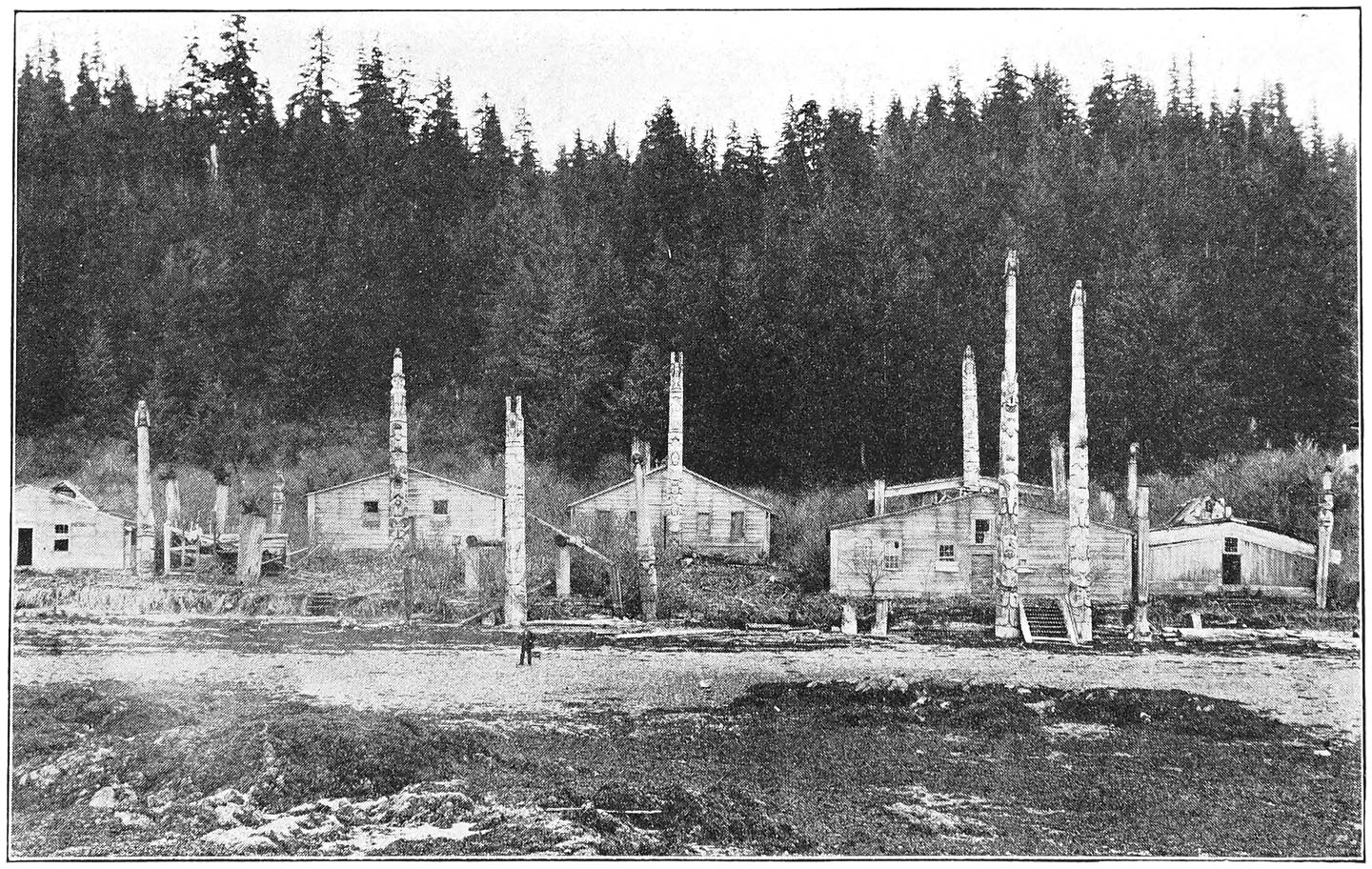
We rounded a jutting point and came in sight of the deserted village of Kasaan. Lofty totem poles were etched against the sky. Some leaned drunkenly toward decaying lodges half buried in underbrush.
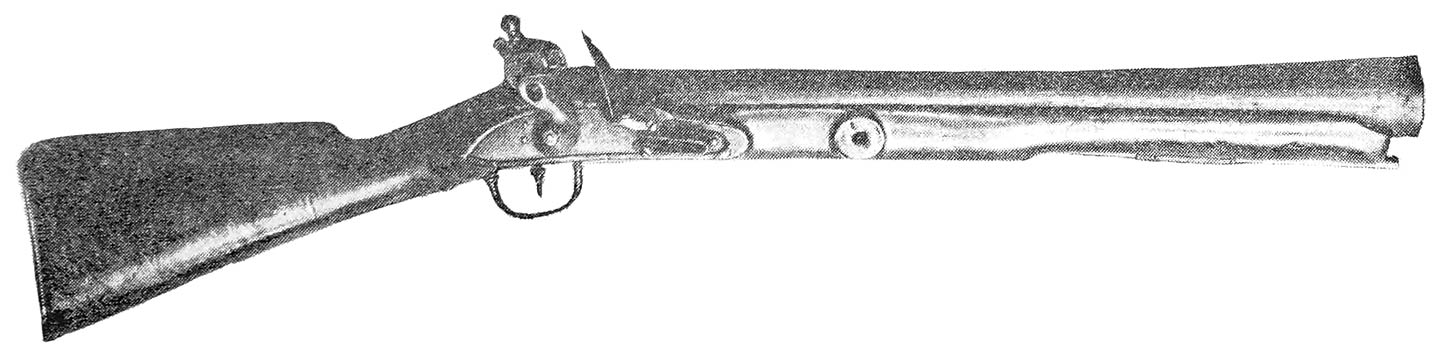
Gun used by Hydahs in the Last Big Fight with the Tsimpseans
“Here was fought the last great battle between the Tsimpseans and Hydahs,” said the Story Teller. “My mother has many times told me the tale as it was told to her by her grandfather, who took a Hydah maiden for his wife. She was a blood relation of Chief Skowel, he who was greatest of all the Hydah chiefs.”
The rain had begun to fall, so we landed and as we cooked our breakfast over the campfire he told me the story.
“You must know that some of my people came from far to the southward and settled near the Stikine River many, many moons ago. There the Hydahs came seeking safety from their enemies, the Tsimpseans. The streams were full of fish. There were deer in the forest and game was plentiful. They settled there and became rich and had many elaidi (slaves).
Courtesy Mrs. F. J. Hunt
“We came in sight of the deserted village of Kasaan”
“See how the totem poles in front of Chief Skowel’s lodge rise high above all the others! That tells how big a chief he was. In his lodge was danced the great peace dance which ended the long war between the Hydahs and the Tsimpseans.
“Farther back than my grandfather’s father can remember the Hydahs and the Tsimpseans had made war upon each other. They made raids at night and the maidens and young braves taken prisoners were treated as slaves. Every time a chief became sick or died, a totem pole was raised, or a potlatch given, some of these slaves were killed and their bodies thrown on the beach to be eaten by the crows. The number of holes in the ears of a chief told how many potlatches he had given.
“One day the Hydahs looked and saw that the water was black with canoes. The Tsimpseans were coming to make war upon them. Twenty young Hydah braves got into two big canoes and went to meet them. They offered to make peace with them. But the Tsimpseans had long looked with longing eyes on their rich hunting grounds, and refused.
“The Tsimpseans had seven canoes and over a hundred men. But the Hydahs had two guns which they had traded many furs for from the Pale Faces far to the Northward at Sheet-kah (Sitka). They shot off the guns and the noise was like the roar of thunder. Their enemies leaped backward in terror. Their canoes were overturned and so many were killed that the water was red with blood.
“They called upon Sha-nung-et-lag-e-das (God) but he heard them not.
“So the Tsimpseans surrendered and Chief Skowel gave a great peace dance. The two tribes were drawn up facing each other. Then a young brave from each side advanced and choosing one of his former foes carried him off to his side. He was not allowed to walk throughout the long ceremony and was treated with the greatest honor. This was to show that they would now treat each other as brothers and freely visit each other’s camp fires.
“If you will visit my lodge in Ketchikan, a day’s journey to the northward,” concluded the Story Teller, “I shall show you one of the guns used in that last big fight. It was given to me by my grandmother, she who was a blood relation of Chief Skowel. She told me it was made in Sheet-kah (Sitka) in the days when the Russians made many guns and cannons and built great ships to send over the Big Water. It is a flint lock and made fine and strong. Many come to see it and offer me plenty furs or bags of the white man’s money for it.”
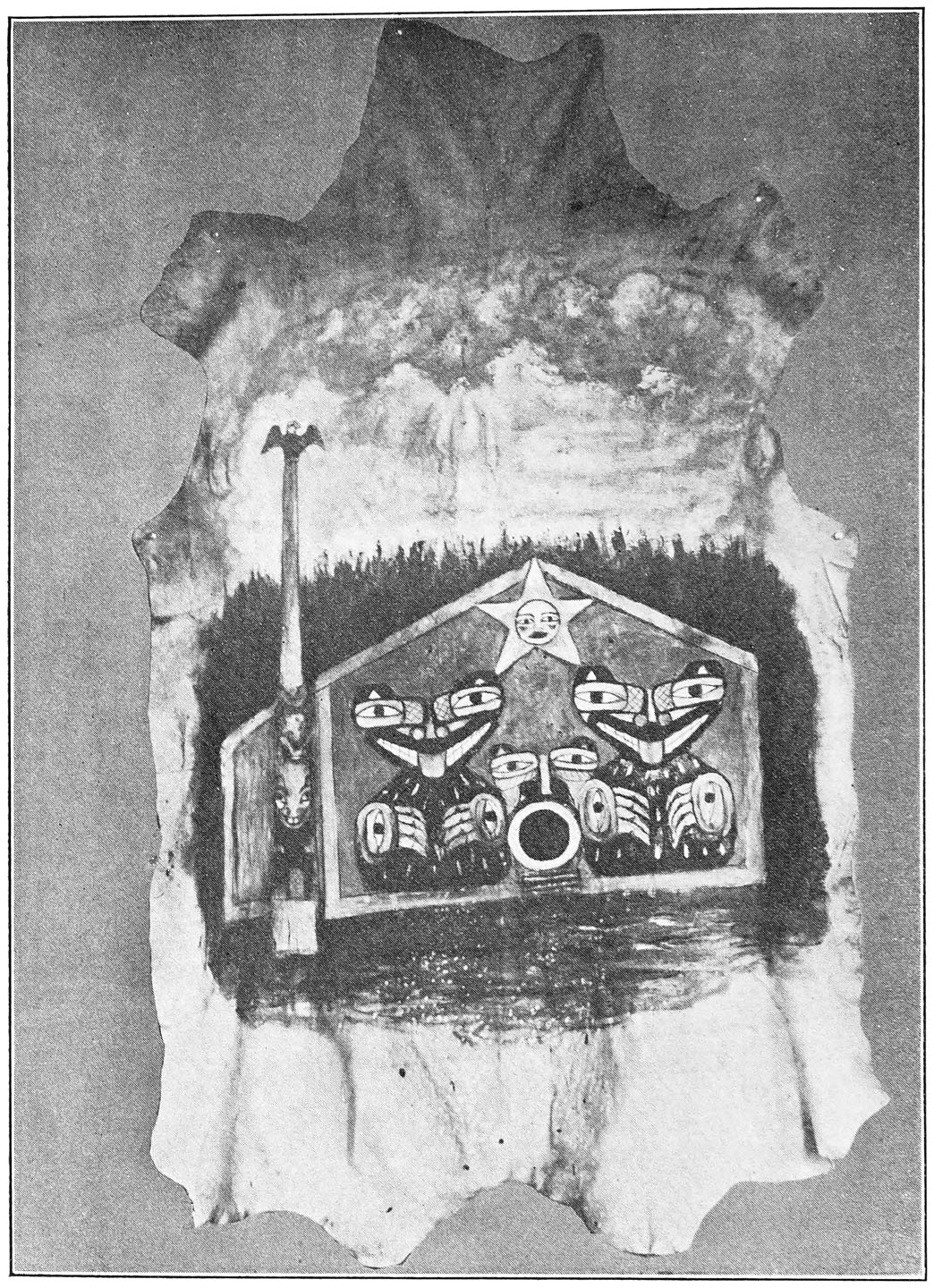
“The Star House had a round door”
[
Contents
]