Volume 12 — CHAPTER I—THE CRUSADERS IN EGYPT (continued 2)
Reading edition
In the year 1768 the celebrated Ali Bey headed a revolt against the Turks, which he maintained for several years with complete success. A period of good but vigorous government lasted Curing the years in which he successfully resisted the Ottoman power. Ali’s generals also gained for him considerable influence beyond the borders of Egypt. Muhammed Abu Dhahab was sent by him to Arabia and entered the sacred city of Mecca, where the sherif was deposed. Ali also despatched an expedition to the eastern shores of the Red Sea, and Muhammed Bey, after his successes in Arabia, invaded Syria and wrested that province from the power of the sultan. The victorious soldier, however, now plotted against his master and took the lead in a military revolt. As a result of this, Ali Bey fell into an ambuscade set by his own rebellious subjects, and died from poisoning m 1786. Thus terminated the career of the famous Mamluk, a man whose energy, talents, and ambition bear a strong resemblance to those of the later Mehe-met Ali.
Muhammed Bey, the Mamluk who had revolted against Ali Bey, now tendered his allegiance to the Porte. To the title of Governor of the Metropolis was also added that of Pasha of Egypt. He subdued Syria, and died during the pillage of Acre.
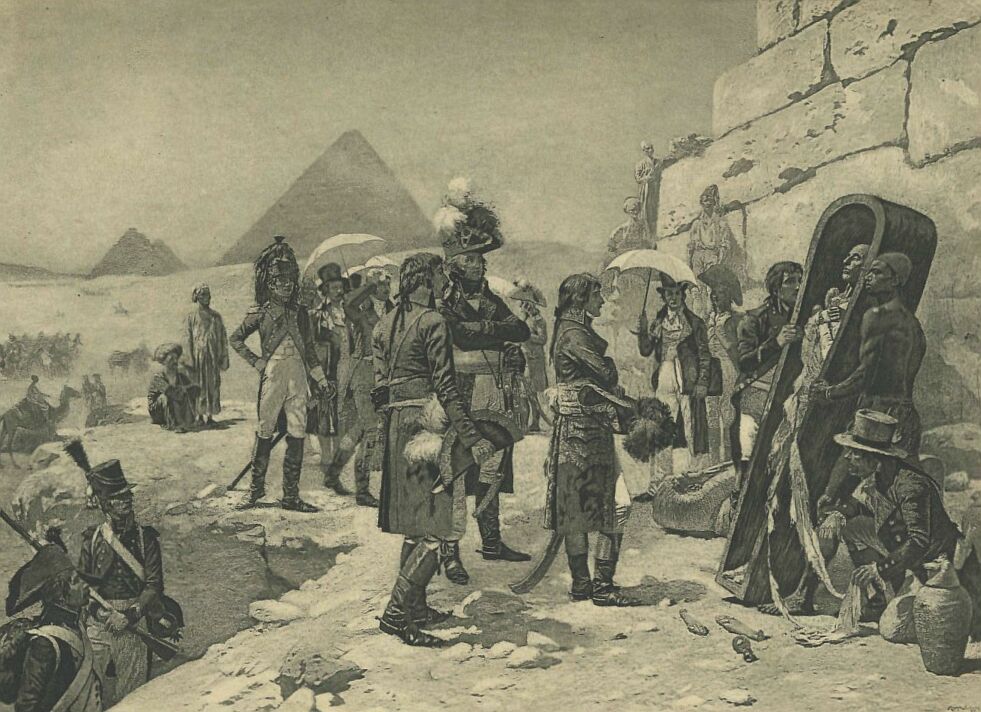
From painting by M. Orange
After his death violent dissensions again broke out. The Porte supported Ismail Bey, who retained the post of Governor of the Metropolis (Sheikh el-Beled) until the terrible plague of 1790, in which he perished.
His former rivals, Ibrahim and Murad, now returned; and eight years later were still in the leadership when the news was brought to Egypt that a fleet carrying thirty thousand men, under Bonaparte, had arrived at Alexandria on an expedition of conquest.