Chapter VII · THE USE OF BADGES, KNOTS, AND THE REBUS
Reading edition
Definition of a Badge; Difference between Crests and Badges; Examples of Badges; The Ostrich-Feather Badge; The White Hart, etc.; Introduction of Badges into Heraldry; Their Prevalence; Allusive Badges; Badges of obscure Origin; Knots and Badges; The Rebus.
Closely allied with crests, but borne and used in an entirely different way, are the devices called badges.
The whole history of these is in itself of great interest, and the facility with which they lend themselves to artistic heraldic decoration renders badges of peculiar value.
A badge is, properly speaking, any distinctive device, emblem, or figure assumed as the mark or cognisance of an individual or family; and it should be borne alone, without any shield, torse, or other accessory. But a badge may be and often was, like a crest, accompanied by a word, reason, or motto. There is however this important difference between a crest and a badge, that the crest was pre-eminently the personal device of its owner, while his badge might also be used by his servants and retainers. Such a use of the badge still survives in the 'crest' on the buttons of liveried servants.
The most famous and best known badge is that of the three ostrich feathers encircled by a crown or coronet borne by the Prince of Wales. It was probably introduced by Queen Philippa, who is known to have possessed plate ornamented with 'a black scocheon of ostrich feathers,' perhaps allusive of the Comté of Ostrevant, the appanage of the eldest sons of the house of Hainault. A single ostrich feather, alone or stuck in a scroll, occurs after 1343 in several seals of Edward prince of Wales, and on his tomb at Canterbury the shield of his own arms alternates with his mother's black shield with three silver ostrich feathers, each transfixing a scroll with the word ich diene; over the shield is likewise a scroll inscribed with the same words (fig. 85). John of Gaunt duke of Lancaster is said to have borne an ostrich feather powdered with ermine tails, and Thomas of Woodstock duke of Gloucester, the youngest of Queen Philippa's sons, bore the feathers with a strap (which some have regarded as a Garter) extended along the quill (fig. 86). The Queen's great-grandson, Richard duke of York and earl of March (1436), bore the feather with a chain similarly placed; perhaps Edmund of Langley, his grandfather, had done the same. Henry of Lancaster, the son of John of Gaunt, on his seal as earl of Derby in 1385 (pl. XXIV C) and on that as duke of Hereford in 1399, has an ostrich feather stuck in the end of a scroll which is entwined about the feather and inscribed with the significant word souvereyne, and the same word is repeated many times on his tomb as King Henry IV at Canterbury.
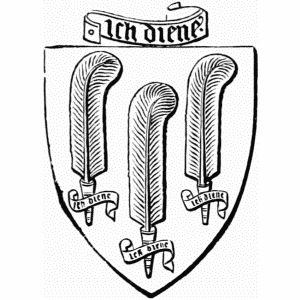
Fig. 85. Shield with ostrich-feather badge from the tomb of Edward prince of Wales (ob. 1376) at Canterbury.
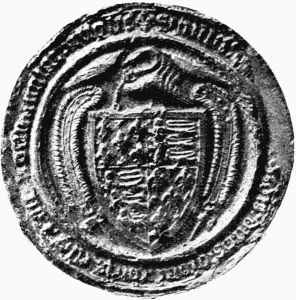
Fig. 86. Seal of Thomas of Woodstock duke of Gloucester with ostrich-feather and Bohun swan badges.
Another notable badge is the couched white hart of King Richard II, with which may be named the white hind borne by his kinsman, Thomas Holand earl of Kent (pl. XVIII B).
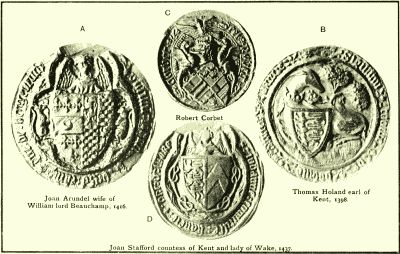
PLATE XVIII.—Examples of supporters.
A Joan Arundel wife of William lord Beauchamp, 1416.
B Thomas Holand earl of Kent, 1398.
C Robert Corbet
D Joan Stafford countess of Kent and lady of Wake, 1437.
The fetterlock-and-falcon (fig. 87) and the white rose of the house of York, the white lion of the earls of March, the rayed rose of Edward IV, and the silver boar of Richard III are of course well-known badges; as well as the red and the red and white roses, the crowned fleur-de-lis, and the Beaufort portcullis, used by the Tudor kings (fig. 88).
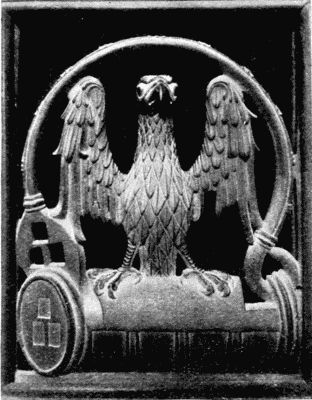
Fig. 87. Fetterlock-and-falcon badge of the house of York, from Henry VII's chapel at Westminster.
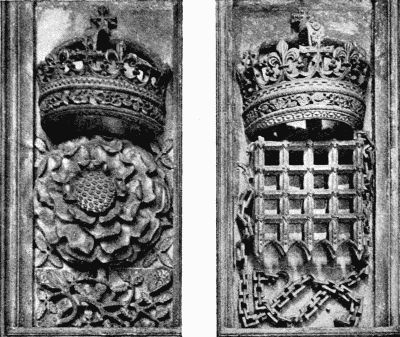
Fig. 88. Crowned rose and portcullis from King's college chapel at Cambridge.
When badges first came into use in this country is uncertain, but after the middle of the fourteenth century they abound. They are foreshadowed by the free treatment of earlier decorative heraldry, such as the little leopards on the footgear and pillows of King Henry III's gilt-latten effigy at Westminster, and the plate with its lozengy diaper of leopards on which it lies; also the lozengy diaper of castles and lions which covers the metal plate whereon lies the effigy of Queen Eleanor of Castile.
Many badges, too, originated in devices borrowed from various sources and arranged about the shield on seals, as in figs. 89 and 90, which are only two out of a number of such appended to the Barons' Letter.
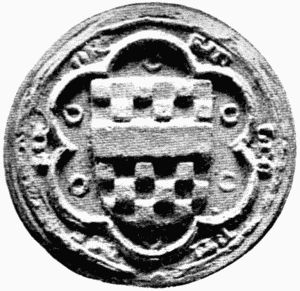
Fig. 89. Seal of Robert de Clifford, with arms surrounded by rings in allusion to his mother Isabel Vipont.
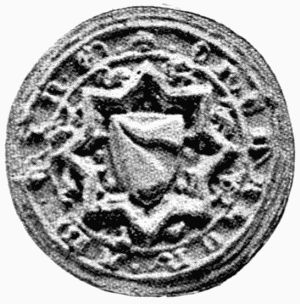
Fig. 90. Seal of Robert de Toni as CHEVALER AU CING with the arms encircled by swans and talbots.
The famous white swan badge of the Bohuns (fig. 91) is found perched upon the shield in the seal of Humphrey Bohun earl of Hereford and Essex, 1298 (pl. XIX B). Later on its neck was encircled by a crown for a collar, with a chain attached, and in this form it appears on the seals of Thomas of Woodstock, who married Eleanor Bohun (fig. 86), and on that lady's brass at Westminster. It was also borne by the sons and descendants of King Henry IV by his wife Mary Bohun.
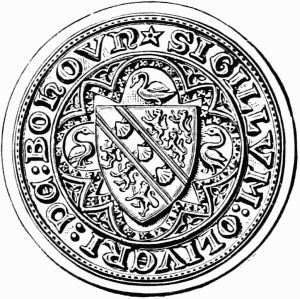
Fig. 91. Seal of Oliver Bohun with swans about the shield.
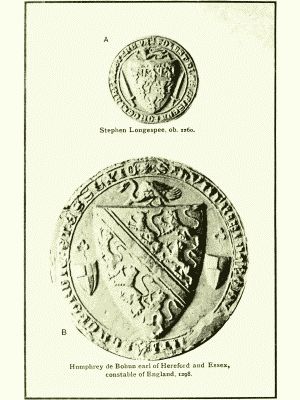
PLATE XIX.—Origin of supporters.
A Stephen Longespee, ob. 1260.
B Humphrey de Bohun earl of Hereford and Essex, constable of England, 1298.
The gilt-latten effigies of Richard II (fig. 92) and Anne of Bohemia have their dresses pounced all over with badges, such as the white hart, the sun-burst, and the broom sprigs on that of the king, and the ostrich and a peculiar knot on that of the queen. In 1380 Edmund Mortimer earl of March left a bequest of 'our large bed of black satin embroidered with white lions and gold roses, with scocheons of the arms of Mortimer and Ulster,' and in 1385 Joan princess of Wales bequeathed to her son the King (Richard II) 'my new bed of red velvet embroidered with ostrich feathers of silver and leopards' heads of gold with boughs and leaves issuing from their mouths.' In 1397, Sir Ralph Hastings, whose arms were a red maunch or sleeve on a gold ground, and his crest a bull's head, left bequests of a silver bason and laver 'stamped with a bull's head (cum capite tauri), a vestment of red cloth of gold with orfreys before and behind worked with maunches (cum maunches) and with the colours of mine arms,' and six salts stamped with maunches. In 1388 John of Gaunt duke of Lancaster mentions in his will 'my great bed of cloth of gold, the field powdered with roses of gold set upon pipes of gold, and in each pipe two white ostrich feathers,' also 'my new vestment of cloth of gold the field red worked with gold falcons.' Two falcons holding hanging locks in their beaks are also shown on one of the duke's seals (pl. XXI A). In 1400 Thomas Beauchamp earl of Warwick left a bed of silk embroidered with 'bears of mine arms'; and in 1415 John lord le Scrope mentions in his will documents sealed cum signato meo de Crabb, and in a codicil made in 1453 he bequeaths 'j fayre pile of coppis conteyning xij coppis of gilt, with crabbis in ye myddes, and two coveryngis to thame with crabb.' In the north of England a crab is often called a scrap, whence its assumption by the Scropes.
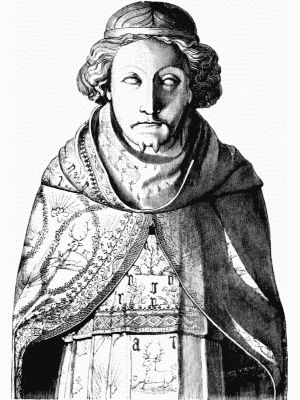
Fig. 92. Gilt-latten effigy at Westminster of King Richard II, pounced with badges, etc.
Such examples as the foregoing could be multiplied indefinitely, but they will suffice to show the prevalence of badges and the many ways in which they were used. They of course abounded on seals as well as on monuments of all kinds, and in conjunction with architecture. Under this last head may be quoted such examples as the arches in Wingfield church, Suffolk (fig. 93), studded with leopards' heads, wings, and Stafford knots, commemorative of Michael de la Pole earl of Suffolk (ob. 1415) and his wife Katharine Stafford; the porch and other parts of Lavenham church, displaying the boars and molets of John de Vere earl of Oxford; bishop Courtenay's chimney-piece in the bishop's palace at Exeter (fig. 94); and the great displays of Tudor badges on the deanery gateway at Peterborough (fig. 95), the gatehouses at Christ's (fig. 96) and St. John's Colleges (fig. 172) at Cambridge, and the noble chapel of King's College. Special mention must also be made of the magnificent bronze doors of Henry VII's chapel at Westminster, than which no more beautiful example of the use of badges for decorative purposes could possibly be found (fig. 97).
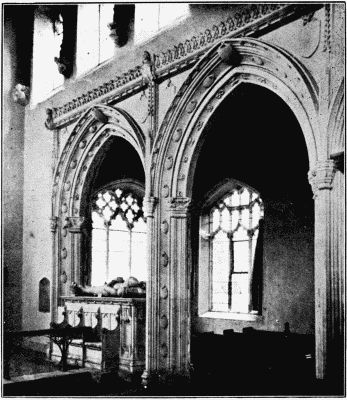
Fig. 93. Piers and arches in Wingfield church, Suffolk, with badges of Michael de la Pole earl of Suffolk (ob. 1415) and his wife Katharine Stafford.
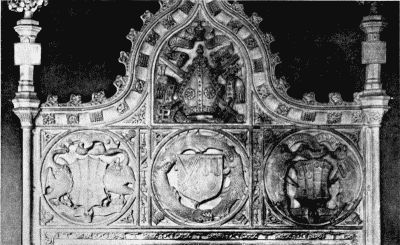
Fig. 94. Chimney-piece in the Bishop's Palace at Exeter with the arms and badges of bishop Peter Courtenay, 1478-87.
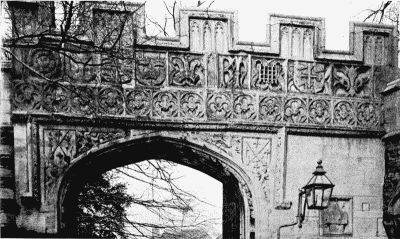
Fig. 95. Gateway to the Deanery at Peterborough. Built by Robert Kirkton abbot 1497-1526.
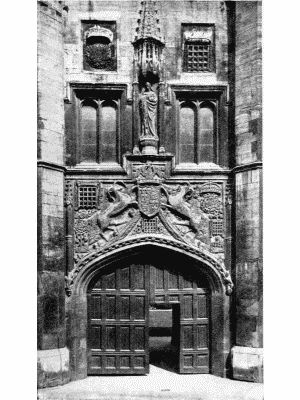
Fig. 96. The gatehouse of Christ's College, Cambridge.
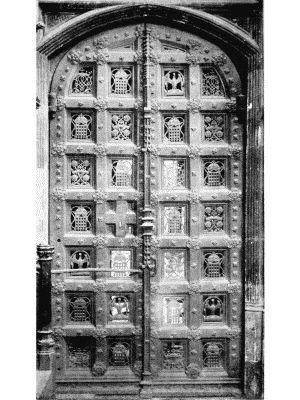
Fig. 97. Bronze door with badges of York and Beaufort, from the Lady chapel of Westminster abbey church.
The sources of badges were various. As a matter of fact a man's badge was often the same device as his crest, like the Courtenay dolphin, or the boar of the Veres, or the sickle of the Hungerfords. Sometimes the badge was derived from a part of the arms, such as the leopards' heads and the wings of the de la Poles, the water-bougets of the Bourchiers (fig. 98), the silver molet of the Veres (fig. 99), and the Phelip eagle (fig. 100). If by chance a badge could have any punning or allusive meaning it was the more popular, and it then often served as a rebus. The boar (verre) of the Veres (fig. 99), the crab or scrap of the Scropes, the pike or luce of the Lucys, the long swords of Longespee (pl. XIX A), the gray or badger of Richard lord Grey of Codnor (fig. 102), and the wood-stock or tree stump of Thomas duke of Gloucester, who was born at Woodstock, are all good examples of a practice that should be followed whenever possible, even in these degenerate days.
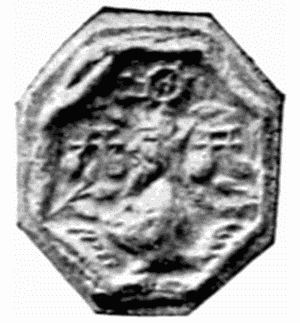
Fig. 98. Signet with badge and crested helm of Lewis lord Bourchier, 1420.
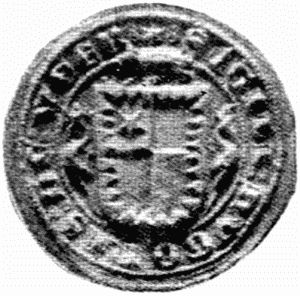
Fig. 99. Seal of Hugh de Vere with boar badge and two wivers as supporters. From the Barons' Letter.
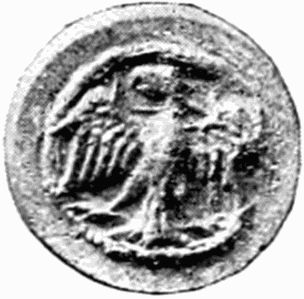
Fig. 100. Signet of William Phelip lord Bardolf (c. 1410) with eagle badge derived from his arms.
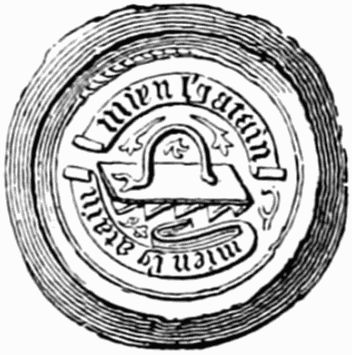
Fig. 101. Signet with flote badge and word of Sir William Oldhalle in 1457.
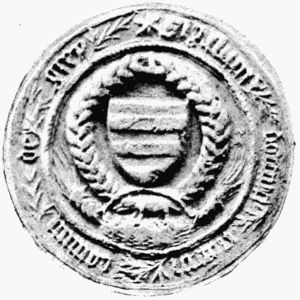
Fig. 102. Seal with badge (a gray or badger) of Richard lord Grey of Codnor, 1392.
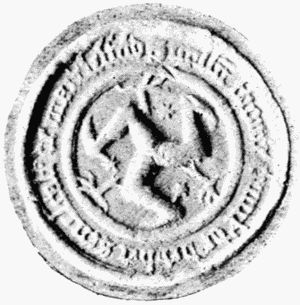
Fig. 103. Seal of Thomas lord Stanley as earl of Derby and seneschal of Macclesfield, 1485, with the eagle's claw badge of Stanley and the legs of the Isle of Man.
But in a large number of cases the badge has a different and often quite obscure origin, like the Bohun swan, the Percy crescent and swivel, the Beauchamp bear and ragged staff, the Lovel hanging-lock, the Zouch eagle and crooked billet, and the Berkeley mermaid.
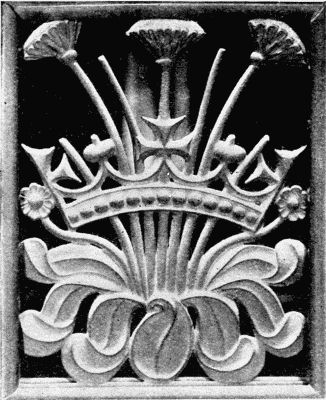
Fig. 104. Daisy plant (marguerite) badge of the Lady Margaret Beaufort, from Henry VII's chapel at Westminster.
A few families, e.g. the Staffords (fig. 105), the Bourchiers, and the Wakes, used as a badge some special form of knot, and attention has already been called to the peculiar knots pounced upon the effigy of Queen Anne of Bohemia. Interesting examples of the Bourchier knot may be seen on the tomb of archbishop Thomas Bourchier at Canterbury, and on the brass of Sir Humphrey Bourchier at Westminster (fig. 106), and a good instance of the application of the knot is afforded by the seal of Joan Stafford countess of Kent and lady of Wake, who encircles her impaled shield with a cordon of Stafford knots (pl. XVIII D). On the tomb at Lowick (Northants) of Edward Stafford earl of Wiltshire (ob. 1498) the shields are encircled with cordons of Stafford knots with another Stafford badge, the nave of a wheel, alternating with the knots (fig. 107). On the canopy of the tomb at Little Easton in Essex of Henry Bourchier earl of Essex (ob. 1483) and his wife Isabel, sister of Richard duke of York, is a badge formed by placing a Bourchier knot within a fetterlock of York.
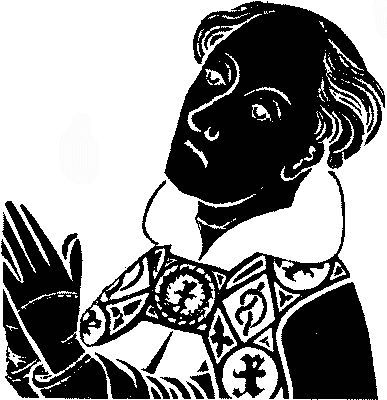
Fig. 105. Part of the brass at Exeter of canon William Langeton, kinsman of Edward Stafford bishop of Exeter, 1413, in cope with an orphrey of [X]'s and Stafford knots.
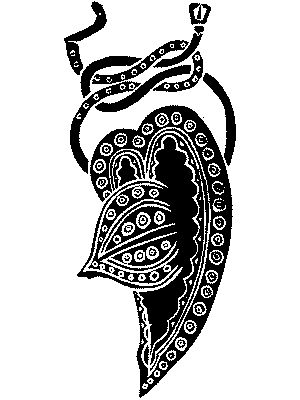
Fig. 106. Elbow-piece and Bourchier knot, from the brass of Sir Humphrey Bourchier (ob. 1471) in Westminster abbey church.
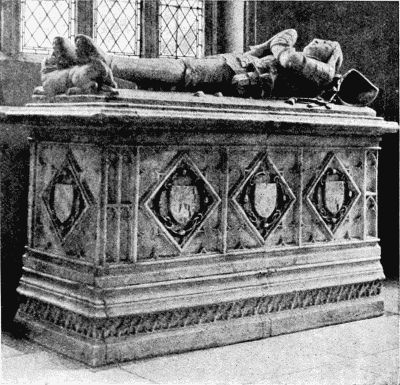
Fig. 107. Alabaster tomb and effigy of Edward Stafford earl of Wiltshire (ob. 1498) in Lowick church, Northamptonshire.
Mention has been made above of the rebus. This was invariably a badge or device forming a pun upon a man's surname, and at one time was exceedingly popular. It no doubt originated in the canting or allusive heraldry of earlier days, like the boars' heads of the Swynburnes, the trumpets of the Trumpingtons, the hammers (Fr. martel) of the Martels, or the scallop shells of the Scales. The ox crossing a ford in the arms of Oxford, and the Cam and its great bridge in the arms of Cambridge are also kindred examples. A large number of rebuses on names ending in 'ton' are based upon a tun or barrel, like the lup on a ton of Robert Lupton provost of Eton 1503-4, or the large church (kirk) and ton of abbot Kirkton on the deanery gate at Peterborough (fig. 108), or the beacon rising from a ton of bishop Thomas Beckington at Wells (fig. 109). The gold wells of bishop Goldwell and the harts lying in water of bishop Walter Lyhart in their cathedral church at Norwich are well known, as are probably the eye and the slip of a tree which form, together with a man falling from a tree (I slip!), the rebuses of abbot Islip at Westminster (fig. 110). An ox, the letter N, and a bridge make the rebus of canon John Oxenbridge in his chantry chapel at Windsor, while an eagle and an ox with ne on his side gives the name of prior John Oxney at Christchurch, Canterbury. Two large hares with a spring or well rising between them crouch at the feet of bishop Harewell's effigy at Wells; and dean Gunthorpe's oriel window in the deanery there is decorated with guns (fig. 111). Sir John Pechey's arms (azure a lion ermine with a forked tail and a gold crown), in a window in Lullingstone church, Kent, are encircled by a wreath of peach-branches, with peaches charged with the letter e for the final syllable of his name (fig. 112).
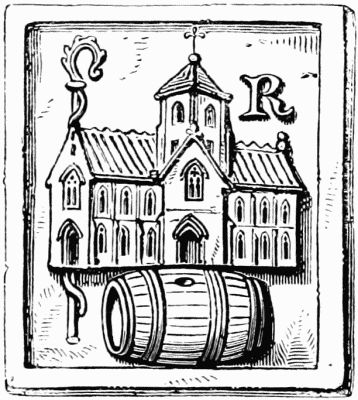
Fig. 108. Rebus of abbot Robert Kirkton, from the Deanery Gate at Peterborough.
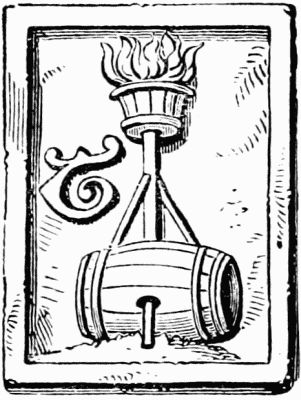
Fig. 109. Rebus of Thomas Beckington bishop of Bath and Wells, 1477.
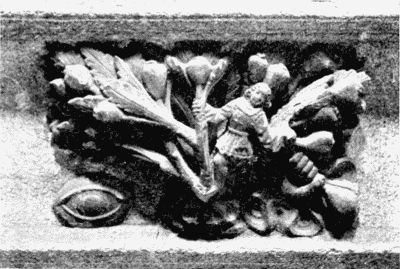
Fig. 110. Rebus of John Islip abbot of Westminster, from his chantry chapel.
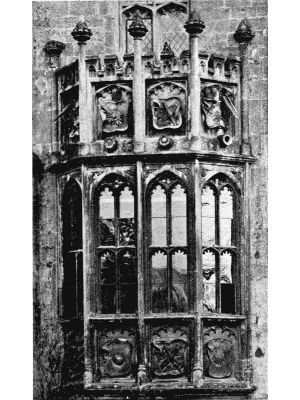
Fig. 111. Oriel window in the Deanery at Wells with badge of King Edward IV, and rebus of Dean Gunthorpe.
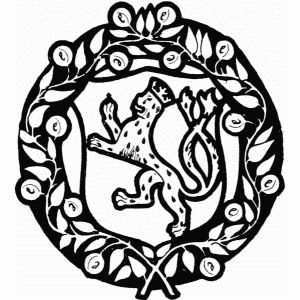
Fig. 112. Arms and rebus of Sir John Pechey (ob. 1522), from painted glass in Lullingstone church, Kent.
Here again it is needless to multiply examples of rebuses, but the fun to be got out of them is ample justification for urging their adoption and use in connexion with decorative heraldry.[7]