Part 3 — Translator’s Appendix.
John Matthews translation
The Viola.
The terms “Viola”, “Tenor”, “Bratsche”, “Alto”, and “Quinte”, are all used in different countries to designate that member of the violin family which is tuned a fifth lower than the violin. In England it is commonly known as the Tenor, from the fact of its playing a part in the string quartet analogous to that of the tenor voice in relation to the other voices in part-singing. In Italy it was termed the “Viola di braccio” to distinguish it from the larger viols which rested on the ground or were supported by being placed between the performer’s knees. “Viola” or “Alto” the Italians now term it, the music written for it being in the alto clef (middle C on the 3ʳᵈ line):—
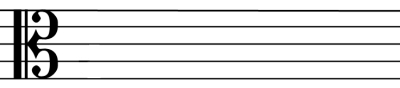
The German term “Bratsche” is simply a corruption of “Braccio”. “Quinte” is the name by which it is usually called in France, indicating that it is tuned a fifth lower than the violin.
The tuning is as follows:—
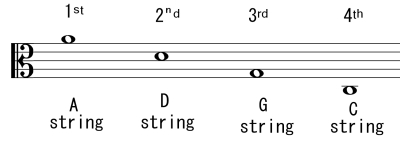
The G and C are both covered strings.
Occasional high passages necessitate the employment of the treble or “violin” clef. Although its three upper strings are identical in pitch with the three lowest of the violin, the quality is quite different, the viola being more reedy and penetrating. This is due to the disproportion between the deeper tuning of the instrument and its dimensions, which are only about one-seventh greater than those of the violin. Tenors were formerly made in several sizes. The ponderous instruments of Gaspar da Salo and other Italian makers are of greater interest to collectors than of practical utility, requiring arms of exceptional length to play them. The large sized Violas were known as the “Viola tenore”, and the ordinary sized instrument as the “Viola alto”, and the two had often separate parts assigned to them in the same composition, down to the time of Handel. Hence the survival of the two names Alto and Tenor, applied in our own day to the same instrument.
The rich and sympathetic quality of tone of the viola renders it eminently suited for the performance of Nocturnes, Elegies, and melodies of a pathetic or tragic character. Some beautiful compositions have been specially written for it, and it is to be regretted that these are so very seldom heard in public.
From the penetrating character of the tone, new violas are invariably harsher than new violins or violoncellos, but fortunately several good makers of the last century have left a number of instruments which have now become matured, and the demand being so much less than for violins, a good medium sized viola may often be obtained at about half the cost of a violin of the same quality.
Mr. Hermann Ritter of Heidelberg has in recent years endeavoured to revive the large tenor under the name of Ritter’s Viola Alta. Several of these instruments have been made, and they have been used with good effect at the Bayreuth Wagner Festivals.
Vidal’s measurements of a Stradivarius Viola dated 1723, are as follows:—
in.
Length of body (from base of button to tail pin) 16³/₁₆
Breadth (upper bouts) 7⁵/₁₆
” (lower ” ) 9¹⁵/₃₂
” (inner ” ) 5⁵/₃₂
Height of ribs (upper bouts) 1¹⁷/₃₂
” ” ” (lower ” ) 1⁹/₁₆
NB. For Guide through Viola Literature see page 179.
GUIDE THROUGH VIOLIN LITERATURE.
The Roman Figures (I, Ia, Ib, II, etc.) indicate the Steps to which the respective works belong.
Violin Methods.
Courvoisier, C. Violin School. (7600 a-c).
An elaborate method in three parts, with five supplementary parts constituting a “School of Velocity” (7603 a-e), with copious explanations given in English, German and French.
David, F. Violin School.
Hofmann, R. The First Instruction in Violin Playing, complete (5668) or in 2 Bks. (5668 a, b). (Der erste Unterricht im Violinspiel.) Op. 92.
The first elements are explained in a very thorough and systematic manner. For young amateurs it has moreover the advantage of engaging their interest by the frequent use of well known melodies in the places of dry meaningless figures.
Kayser, H. E. Popular Violin Tutor (Elementary). Op. 65. (7606.)
A clear and systematic primer which leads the pupil on by the aid of favourite melodies will be always attractive for young beginners.
Mazas. Petite Méthode.
Popular Instructor in Violin Playing (2 Bks.). (7623 a, b).
Simple and progressive, making much use of operatic airs and national melodies.
Ritter, E. W. Practical School (10 Bks.). (7610 a-k).
The explanatory text is clear and to the point.
Scholz, Richard. School of Artistic Violin Playing. A theoretical and practical Instruction Book, in all matters relating to style, for moderately advanced players. Op. 9. (5681).
Excellent work for style and phrasing. Clear and exhaustive explanations of every chapter make the work particularly useful, especially for those who have not the opportunity for individual teaching.
Schoen, M. Practical Course of Instruction (12 Bks.). (7611-22).
Spohr, L. Violin School.
This monumental work is of great utility to advanced students, but is seldom used for beginners by experienced teachers, the exercises being not sufficiently graduated as to difficulty.
Schröder, Prof. C. Catechism of Violin and Viola Playing. 3ʳᵈ Edition (9212).
Technical Exercises.
Casorti. Technique of the Bow.
Courvoisier. L’École de la Vélocité. (7603 a, b).
The School of Velocity. Book 1, Systematic Finger Exercises. Book 2, Studies of Scales and Chords in systematic order.
Dancla. Op. 74. École du Mécanisme.
Kreuz, E. Scales and Arpeggios (3 Bks.). (5664 a-c).
Lütgen, H. Scales and Exercises. (8663).
Ritter. Scale and Chord Exercises. (5676).
Wohlfahrt, F. Daily Exercises. (7624).
Studies.
Step I. First position only, and in easy keys.
Böhmer, C. 75 Exercises in Intonation, through all keys. Op. 54. (E. Heim.) 2 Books. (5643 a, b).
An excellent work greatly facilitating the knowledge of extreme keys. Book 2 belongs to the next step.
Courvoisier, C. The School of Velocity.
Book I. Systematic finger exercises. (7603 a). Exercises in all possible fingerings of the first position. Book II. Studies of Scales and chords in systematic order. (7603 b). Book III. Melodic Studies in Major Keys. (7603 c). Books IV and V belong to following steps.
Gradus ad Parnassum. A Collection of Studies in progressive order, selected, carefully revised, fingered, and edited, with annotations and remarks by E. Heim:—
Book I. First Position. 30 Elementary Studies in the most practicable major keys. By Alard, Bach, Corelli, Dont, Heim, Hermann, Hofmann, Kayser, Kreuz, Ritter, Spohr, and Steffani. (5471).
Book II. First Position. 18 More advanced Studies in major and minor keys. Easy double-stopping. Enharmonic change. By Bach, Corelli, Handel, Hermann, Kreuz, Spohr, and Steffani.—Half Position. 16 Studies, changing from First to Half Position. By Alard, Dont, Hermann, Kreuz, and Wichtl. (5472).
10 books of Graduated Studies revised by Ernst Heim, containing all the material for a serious study of the Violin, each book corresponding in difficulty with the same book of his Violin Duets (Arena), see page 120 and his Violin and Piano pieces (Palaestra), see pages 128, 129.
Hering, C. Op. 16. 25 Studies for 2 Violins in all major and minor keys; revised, phrased, and fingered by E. Heim. The Scales as contained in 2ⁿᵈ Violin part to be played by the student. (5618).
Hermann, F. Le Commencement de l’Etude. (5612 a, b).
In two books, containing familiar airs interspersed with easy studies, with a 2ⁿᵈ violin part.
Hofmann, R. The First Instruction in Violin Playing. (Der erste Unterricht im Violinspiel.) Op. 92. 2 Books. (5668 a, b).
A thorough elementary course leading on to the following work of the same author.
Op. 90, Book I. 80 Melodic Studies. (5666 a).
A well graduated course. Book 2 belongs to the next grade, and would prove an excellent preparation for Kayser’s 36 Studies. (8662 a).
Kreuz, E. Progressive Studies. Op. 34, Bk. 1. (5663 a).
Contains 40 progressive exercises gradually introducing the notes of C major in the 1ˢᵗ position.
Scale and Arpeggio Manual for the Violin, arranged with a special view to the requirements of candidates at the various Local Examinations, by A. Laubach. (5672).
This Manual is written for Students of all Grades.
Popular Instructor in Violin Playing:—
Part I. Elementary and First Position. (7623 a).
Schön, M. Practical Course of Instruction:—
Part I. ABC of Violin Playing. Introductory School. (7611).
” II. First Steps in practical Violin Playing.

” III. Progressive exercises in the first position
” IV. and in all Scales. In 3 Books. (7612-14).
Parts V to XII belong to the following Grades.
Steffani, R. 12 Progressive Studies, in the first position. (5683).
Step II. First four Positions.
Alard, D. Op. 10. Études mélodiques et progressives. (5640).
also with 2ⁿᵈ Violin in 2 Books. (5600 a, b).
Böhmer, C. 75 Exercises in Intonation, through all keys. Op. 54. (E. Heim.) Book 2. (5643 b).
Courvoisier, C. The School of Velocity.
Book IV (12 Melodic Studies in the first position, Minor). (7603 d).
Dont, J. 24 Exercices préparatoires aux études de R. Kreutzer et P. Rode. Op. 37. (7604).
except Nos. 6, 8, 9 and 15 which belong to Step III.
Gradus ad Parnassum. A Collection of Studies in progressive order, selected, carefully revised, fingered, and edited, with annotations and remarks by E. Heim:—
Book III. First Position. Chords and easy Arpeggios. Chromatic Passages. Second Position. Changing from First to Second Position, (Alard, Dont, Heim, Hermann, Hofmann, Hohmann, Kayser, Ritter, Spohr, Steffani, etc.) (5473).
Book IV. Third Position. Changing between First and Third Positions. Portamento and Tremolo. (Bach, de Bériot, Corelli, Dont, Fiorillo, Haydn, Hofmann, Kayser, Kreutzer, Mazas, Wenzel Pichl, Righini, Scarlatti, Spohr, and Wichtl.) (5474).
Graduated Studies revised by Ernst Heim; each book corresponds in difficulty with the same book of his Violin Duets “Arena”, see page 121 and his Violin and pianoforte pieces “Palaestra”, see page 133.
Hermann, F. Op. 24, Bk. 1. 30 Studies in the 1st position. (5659).
also with 2ⁿᵈ Violin. (5613).
Hofmann, R. Melodic Studies. Op. 90, Book 2. (5666 b).
Kayser, H. E. Violin Studies, carefully revised and fingered, with instructive annotations by Ernst Heim:—
36 elementary and progressive Studies (introductory to those of Kreutzer). Op. 20. Complete (8662) or in 3 Books. (8662 a-c).
Minute instructions are given by Mr. Heim at the end of each study as to the manner of execution, the part of the bow to be used, and various fingerings. Each 10 bars are also numbered to simplify the repetition of single portions of a study.
An edition is published with a separate part for a 2ⁿᵈ violin (5610 a-c), also one with pianoforte accompaniment (7397 a-c).
Kreuz, E. Progressive Studies. Op. 34, Bks. 2 and 3. (5663 b, c).
Book 2 contains 20 progressive studies in the sharp major and minor keys, Book 3, 20 in the flat major and minor keys.
Mazas, F. 75 Melodic and Progressive Studies for the Violin. Op. 36. Revised and fingered by C. Courvoisier:—
Bk. I. 30 Special Studies. (7607 a). Bk. II. 27 Brilliant Studies. (7607 b).
Popular Instructor in Violin Playing:—
Part I. Elementary and First Position. Part II. Higher Positions. (7623 b).
Schön, M. Practical Course of Instruction:—
Book V. 46 short Exercises for the Violin with a second violin. (7615).
Step III. First five Positions.
Corelli, Arcangelo. Œuvres revues par Joachim et F. Chrysander. (In score.) 8vo:—
Livre I., Op. 1. Sonate da Chiesa a tre (Due Violini, e Violone, o Arcileuto col Basso per l’Organo). In Roma, 1683. Op. 2. Sonate da Camera a tre (Due Violini, e Violone, o Cembalo). In Roma, 1685. (4936 a).
Livre II., Op. 3. Sonate da Chiesa a tre (Due Violini, e Violone, o Arcileuto, col Basso per l’Organo). In Modena, 1689. Op. 4. Sonate da Camera a tre (Due Violini, e Violone, o Cembalo). In Bologna, 1694. (4936 b).
Livre III., Op. 5. Parte Prima. 6 Sonate a Violino Solo e Violone, o Cimbalo. Parte Seconda. Preludii, Allemande, Correnti, Gighe, Sarabande, Gavotte, e Follia a Violino Solo e Violone o Cimbalo. (4936 c).
Livre IV., V., Op. 6. Concerti Grossi con duoi Violini, e Violoncello di Concertino obligati, e duoi altri Violini, Viola e Basso di Concerto Grosso ad arbitrio che si potranno radoppiare. In Roma. 1712. 2 Livres. (4936 d, e).
Dont, Jacques. 20 Exercices progressives, pour le Violon (avec accompagnement d’un second Violon), Op. 38. (7605).
The last of these exercises belong to Step IV.
Gradus ad Parnassum. A Collection of Studies in progressive order, selected, carefully revised, fingered, and edited, with annotations and remarks by E. Heim:—
Book V. Fourth Position. 15 Studies, changing between the 1st and 4th Positions. By de Bériot, Cramer, Dont, Hofmann, Kayser, Kreutzer, Mazas, and Rode.—Fifth Position. 25 Studies, changing between the 1st and 5th Positions. By de Beriot, Dont, Hofmann, Kayser, Kreutzer, Maurer, Mazas, and Rode. (5475).
Graduated Studies revised by Ernst Heim, each book corresponds in difficulty with the same book of his Violin Duets “Arena”, see page 124, and his Violin and Piano pieces, “Palaestra”, see page 142.
Hermann, F. Op. 24, Bk. 2. 25 Studies in the 1st, 2nd and 3rd positions. (5660 a, b).
Hofmann, R. Op. 91. 40 Studies in all positions, for practice in shifting. 2 Bks. (5667 a, b).
Kayser, H. E. 36 elementary and progressive Studies (introductory to those of Kreutzer) carefully revised, fingered, and with instructive annotations by Ernst Heim. Op. 20, Bk. III. (8662 c).
also with Second Violin (5610 c), or with Pianoforte Accompaniment (7397 c).
Kreuz, E. Progressive Studies. Op. 34, Bks. 4 and 5. (5663 d, e).
Book 4 contains “Introduction of the 2nd and 3rd positions. 15 studies and major and minor scales through all keys in the first three positions.” Book 4 contains 12 short technical exercises and 15 studies in the first three positions, introducing various technical difficulties and arpeggios through all keys.
Schön, M. Practical Course of Instruction:—
Bk. VIII. Fundamental Instructions in the study of the positions, with examples and easy melodious Duettinos for two Violins in various major and minor keys (Third Position). (7618).
Book IX. The same (Second Position). (7619).
Step IV. All Positions.
Blagrove, H. 12 Studies. (9415).
Courvoisier, C. The School of Velocity.
Book V. Special Studies in Shifting. (7603 E).
Dancla. Op. 2. 6 Studies, (5644).
Fiorillo, F. 36 Études en forme de Caprices (Ernst Heim) (5654).
These studies impart great flexibility to the bowing, together with much practice in the higher positions.
A careful revision of fingering and bowing with the addition of expression marks and part of bow to be used distinguish E. Heim’s Edition from all others.
The same, revised by Carl Courvoisier. (5655).
The fingering and phrasing has been carefully marked on the basis of the Joachim School. He avoids slurs of too great length which impair the power of tone.
Gradus ad Parnassum. A Collection of Studies in progressive order, selected, carefully revised, fingered, and edited, with annotations and remarks by E. Heim:—
Book VI. Sixth Position. 10 Studies, changing between the 1st and 6th Positions. By Fiorillo, Hofmann, Kreutzer, Mazas, and Rode.
Seventh Position. 20 Studies, changing between the 1st and 7th Positions. By Alard, de Bériot, Fiorillo, Hofmann, Kayser, Kreutzer, Maurer, Mazas, Rode, and Wichtl. (5476).
Book VII. Eighth to twelfth Positions. 30 Studies arranged according to their Musico-Technical object, independent of Position.
A. Studies on the Shake and Passing Shake. By Alard, Bruni, Cramer, David, Dont, Fiorillo, Heim, Kayser, Kreutzer, Mazas, Rode, Rolla, Schubert, and Spohr. (5477).
Graduated Studies revised by Ernst Heim, each book corresponds in difficulty with the same book of his Violin Duets, “Arena”, see page 125, and his Violin and piano pieces, “Palaestra”, see page 151.
Hermann, F. Op. 24, Bk. 3. 25 Studies, 3rd to 7th positions. (5661).
also with 2ⁿᵈ Violin accompaniment. (5615).
Kayser, H. E. Violin Studies, carefully revised, fingered, and with instructive annotations by Ernst Heim:—
16 Studies (comprising studies in the half, 1st, 2nd, 3rd, 4th, 5th, 6th, and 7th Positions). Op. 28. (8660).
16 Studies (to follow the 36 Studies, Op. 20). Op. 30. (8661).
This carefully revised edition is particularly useful by frequently giving two or more different fingerings for one and the same study or single passage. The numbering of every tenth bar is also useful in studying sub-sections.
Kreutzer, R. 42 Studies. New Edition, revised and fingered by Ernst Heim. (5671).
The original text has been carefully adhered to. The revision (fingerings, bowing and marks of expression) show the same care which distinguishes all Heim’s editions, while the explanatory remarks make this Edition particularly valuable.
The same, revised and phrased by Carl Courvoisier (5665).
Courvoisier’s Edition gives very good advice on the choice of position. While Heim has kept closely to the original text giving advice to the manner of rendering it, Courvoisier preferred to give his own phrasing etc. in the text, e. g. the cadencial figures in the first study.
Kreuz, E. Progressive Studies. Op. 34, Bks. 6 and 7. (5663 f, g).
Book 6. 6 studies in the 4th and 5th positions, and 6 studies in the first six positions in flat keys, major and minor.
Book 7. 12 studies in the first six positions in sharp keys, major and minor.
Mazas, F. Op. 36, Bk. III. 18 Studies for Artists. (7607 c).
Schön, M. Practical Course of Instruction:—
Book XI. Fundamental Instructions, examples and pieces in the form of exercises for the study of the positions (Fourth, Fifth, Sixth, and Seventh Positions. (7621).
Book XII. 12 Exercises for the Violin. (7622).
Scholz, Richard. School of Artistic Violin Playing. A theoretical and practical Instruction Book, in all matters relating to style, for moderately advanced players. Op. 9. (5681).
Excellent work for style and phrasing. Clear and exhaustive explanations of every chapter make the work particularly useful especially for those, who have not the opportunity for individual teaching.
Wessely, Hans. Comprehensive Scale Manual. (5686).
Step V. Difficult. (Octaves, Springing Bow, Staccato etc.).
Bériot, C. de. 6 Études brillantes. (5646).
Also, published with pianoforte accompaniment (7339 a, b).
Campagnoli. 7 Divertissements. Edited by G. Jensen. 7601.
Gradus ad Parnassum. A Collection of Studies in progressive order, selected, carefully revised, fingered, and edited, with annotations and remarks by E. Heim:—
Book VIII. Studies arranged according to their Musico-Technical object, independent of Position:—
7 Studies on Staccato. By Fiorillo, Kreutzer, Mazas, Rode, and Schubert.
7 Studies on Springing Bow, Spiccato, Saltato. By Benda, Bruni, David, Kayser, Mazas, and Wieniawski.
7 Studies on Octave passages. By Fiorillo, Kayser, Kreutzer, and Mazas.
8 Studies on Double Stops and Chords. By Dont, Fiorillo, Kayser, Kreutzer, St. Lubin, and Wichtl. (5478).
Book IX. Studies arranged according to their Musico-Technical object, independent of Position:—
8 Studies on Double Stops and Chords. By de Bériot, David, Dont, Fiorillo, Kalliwoda, Kreutzer.
4 Studies on the Double Shake. By Cramer, Fiorillo, Gaviniés, and Rode.
3 Studies on “Flying Staccato,” thrown stroke. By Alard and Mazas.
5 Studies on Arpeggios (difficult). By David, Dont, Mazas, and Meerts.
10 Studies on tenths and other large intervals. By Dont, Fiorillo, Gaviniés, Mazas, H. Ries, and Rovelli. (5479).
Graduated Studies revised by Ernst Heim, each book corresponds in difficulty with the same book of his Violin Duets, “Arena,” see page 126, and his Violin and piano pieces, “Palaestra,” see page 156.
Rode, P. 24 Caprices in the form of Studies for the Violin. Revised and fingered by Ernst Heim. (5679).
The original text has been adhered to, with very clear indications of positions, fingerings, bowing and marks of expression by Ernst Heim.
Rode, P. Caprices, revised by Carl Courvoisier 5678.
Courvoisier does not adhere altogether to the original text, but uses his own discretion, here as elsewhere he is careful to avoid very long bows which would counteract the production of a broad and powerful tone.
Vieuxtemps, H. Op. 16. 6 Concert Studies.
Step VI. Very difficult.
Gaviniés, P. 24 Études 24 Matinees.
Gradus ad Parnassum. A Collection of Studies in progressive order, selected, carefully revised, fingered, and edited, with annotations and remarks by K. Heim:—
Book X. A. 17 Studies in the Polyphonic Style.—Prelude. Fugue. Fughetta. By Bach, Campagnoli, and Pichl.—B. 13 Concert Studies, Harmonics and Pizzicato with the left hand. By Alard, Dancla, Leonard, Lipinsky, Mazas, Paganini, Prume, and Wieniawski. (5480).
Graduated Studies revised by Ernst Heim. Each book corresponds in difficulty with the same book of his Violin Duets, “Arena”, see page 127, and his Violin and piano piece, “Palaestra”, see page 158.
Wieniawski, H. L’École moderne. Études-Caprices. Op. 10. E. Heim. (5687).
Pieces for Violin Solo.
Step I. In the first position.
Hermann, Fr. 50 favourite Melodies. 5465 a.
Hofmann, R. Potpourris on Popular Melodies from Classical and Modern Operas and Oratorios. Arranged by R. Hofmann. 45 Books
in the first position:—
Le Postillon. (5401a).
La Sonnambula. (5402a).
Norma. (5403a).
Le Calife de Bagdad (5404a).
La Dame Blanche. (5405a).
La Fille du Régiment. (5406a).
Lucia di Lammermoor. (5407a).
Orpheus. (5408a).
The Messiah. (5409a).
The Creation. (5410a).
Zampa. (5411a).
Wildschütz. (5412a).
Czar und Zimmermann. (5413a).
Joseph. (5414a).
St. Paul. (5415a).
Il Seraglio. (5416a).
Il Flauto Magico. (5417a).
Don Giovanni. (5418a).
Der Freischütz. (5419a).
Step II. In various positions.
Gurlitt. Our Favourite Tunes. (7608).
Hofmann, Richard. Potpourris on Popular Melodies from Classical and Modern Operas and Oratorios. Arranged by R. Hofmann. 45 Books.
The Bohemian Girl. (5420a).
Egmont. (5421a).
Fidelio. (5422a).
L’Elisire d’Amore. (5423a).
Lucrezia Borgia. (5424a).
Iphigénie en Aulide. (5425a).
Judas Maccabaeus. (5426a).
Das Nachtlager in Granada. (5427a).
Hans Heiling. (5428a).
A Midsummer Night’s Dream. (5429a).
Elijah. (5430a).
Les Huguenots. (5431a).
Le Prophète. (5432a).
Le Nozze di Figaro. (5433a).
Die lustigen Weiber von Windsor. (5434a).
Maritana. (5435a).
Oberon. (5436a).
Preciosa. (5437a).
Der fliegende Holländer. (5438a).
Lohengrin. (5439a).
Rienzi. (5440a).
Tannhäuser. (5441a).
Il Barbiere. (5442a).
Guillaume Tell. (5443a).
Masaniello. (5444a).
Faust. (Gounod) (5445a).
Duets for 2 Violins.
Step I. First Position.
Alard, D. Progressive Duets, revised and fingered by E. Heim:—
Book I., Op. 22. Elementary. 1st position. (5599 a).
Book II., Op. 22. Elementary. 1st position. (5599 b).
This excellent work should form every student’s companion from the first beginning until a degree of considerable technical skill has been reached. It gains much by E. Heim’s careful revision as to the fingering, bowing and all marks of expression.
Arena. A collection of Duets for two violins, arranged in progressive order, carefully marked and annotated by E. Heim:—
Book I. First position. 8 Easy Duets in the most frequently used keys, by Wichtl, Dancla, Alard, and de Bériot. (11801 s).
Book IA. First position. 6 Easy Duets in the most frequently used keys, by Blumenthal, Kalliwoda, and Mazas. (11801 a).
Book II. First position. 5 Easy Duets in major and minor occurrence of easy double-stopping and chords, by Pleyel, Bruni, Mazas, Thomas, and Ries. (11802 s).
Book IIa. First position. 5 Easy Duets in major and minor (occurrence of easy double-stopping and chords), by C. Gurlitt, Kalliwoda, Pleyel, and Mazas. (11802 a).
20 Books of graduated Duets revised by Ernst Heim, each book corresponding in difficulty with the same book of his Violin Studies (Gradus ad Parnassum), see page 111, and his Violin and Piano pieces (Palaestra), see pages 128, 129.
Dancla, C. Op. 25. 3 Duos faciles. (5601).
Gurlitt. Op. 150. Duos faciles et progressifs. (5605).
Except one or two more suited to Step II.
Our Favourite Tunes. Arranged. (7609).
Some of these belong to Step II.
Heim, Ernst. Abecedarian in Violin Playing. 45 Elementary Pieces for Violin with accompaniment of a second Violin. 2 Books. (5598 a, b).
Also published with Piano Accompaniment. (11461 a, b).
Hermann, Fr. 50 Favourite Melodies. (5465 b).
Hofmann, Richard. 30 short, instructive Melodic Pieces. Op. 113. (5624).
Potpourris on Popular Melodies from classical and modern Operas and Oratorios, arranged by Richard Hofmann. 45 Books.
Step 1. (in the first position):—
Le Postilion. (5401b).
Sonnambula. (5402b).
Norma. (5403b).
Calife de Bagdad. (5404b).
Dame Blanche. (5405b).
Fille du Régiment. (5406b).
Lucia di Lammermoor. (5407b).
Orpheus. (5408b).
Messiah. (5409b).
Creation. (5410b).
Zampa. (5411b).
Wildschütz. (5412b).
Czar und Zimmermann. (5413b).
Joseph. (5414b).
St. Paul. (5415b).
Il Seraglio. (5416b).
Il Flauto Magico. (5417b).
Don Giovanni. (5418b).
Freischütz. (5419b).
Mazas, F. Duos faciles et progressifs. 2 Bks. (5608 a, b).
Pleyel. Op. 8. 6 Duos. (7597).
Reinecke. Op. 122a. 10 Petits Morceaux. (5630).
Delightful little “bits”, short and very easy.
Ritter, E. W. 30 Exercices faciles. Bk. I. (5631 a).
Schön, M. 18 short modern Duets for two Violins. In various major and minor keys (First Position). (7616). 6 easy and melodious Duettinos for two violins. In various major and minor keys (First Position). (7617).
Step II. First four Positions.
Alard, D. Progressive Duets, revised and fingered by E. Heim:—
Book III, Op. 22. Elementary. 1st and 2nd positions. (5599 c).
This excellent work should form every student’s companion from the first beginning until a degree of considerable technical skill has been reached. It gains much by E. Heim’s careful revision as to the fingering, bowing and all marks of expression.
Album opératique. (5639).
Arena. A collection of Duets for two violins, arranged in progressive order, carefully marked and annotated by E. Heim:—
Book III. Easy Duets, with change between first and second positions, by Mazas, Geminiani, Hering, and Ries. (11803 s).
Book IIIA. Easy Duets, with change between first and second positions, by Geminiani, Mazas, C. G. Müller, and Blumenthal. (11803 a).
Book IV. Duets up to the third position, by Ignaz Lachner, Alard, and Hering. (11804 s).
Book IVA. Duets up to the third position, by C. Gurlitt. Ignaz Lachner, and Viotti. (11804 a).
Book V. Duets up to the fourth and fifth positions, by Hering, Mozart, Kreutzer, and H. Ries. (11805 s).
Graduated Duets revised by Ernst Heim; each book corresponds in difficulty with the same book of his Violin Studies, “Gradus ad Parnassum”, see page 112, and his Violin and piano pieces, “Palaestra”, see page 133.
Dancla, C. Op. 24 and 25. Duos faciles. 2 Bks. (5602-3).
Gurlitt. Our Favourite Tunes. Arranged by F. Hermann. (7609).
Hering, Carl. 2 Duos, both in the first, and occasionally the half and second positions. Op. 15. Revised, phrased, and fingered by Ernst Heim. (5617).
Hofmann, Richard. 14 instructive Melodic Pieces. Op. 114. (5625).
— Potpourris on Popular Melodies from classical and modern Operas and Oratorios, arranged by Richard Hofmann. 45 Books.
Bohemian Girl. (5420b).
Egmont. (5421b).
Fidelio. (5422b).
L’Elisire d’amore. (5423b).
Lucrezia Borgia. (5424b).
Iphigénie en Aulide. (5425b).
Judas Maccabaeus. (5426b).
Nachtlager. (5427b).
Hans Heiling. (5428b).
A Midsummer Night’s Dream. (5429b).
Elijah. (5430b).
Huguenots. (5431b).
Le Prophète. (5432b).
Figaro. (5433b).
Merry Wives of Windsor. (5434b).
Maritana. (5435b).
Oberon. (5436b).
Preciosa. (5437b).
Der fliegende Holländer. (5438b).
Lohengrin. (5439b).
Rienzi. (5440b).
Tannhäuser. (5441b).
Il Barbiere. (5442b).
Guillaume Tell. (5443b).
Masaniello. (5444b).
Faust. (Gounod.) (5445b).
Kalliwoda. Op. 243. Duos faciles et brillants. 3 Bks. (5606 a-c).
Kayser, H. E. Violin Studies, carefully revised, fingered, and with instructive annotations by Ernst Heim:—
36 elementary and progressive Studies (introductory to those of Kreutzer). Op. 20. Bks. 1 and 2. (5610 a, b).
16 Studies (comprising studies in the half, 1st, 2nd, 3rd, 4th, 5th, and 7th Positions). Op. 28. (5619).
Nos. 10 and 11 Step III, and 12 to 16 Step IV.
16 Studies (to follow the 36 Studies, Op. 20). Op. 30. (5620).
Nos. 6 and 8 Step III; Nos. 4, 5, 9, 11, 12, 13 and 16 Step IV.
Lachner, I. Op. 96, 97 and 98. Sonatinas in A, D and B♭. (5621-2-3).
There is an air of brightness and humour in these sonatinas which reminds one of Haydn and Mozart. Without making great demands upon the technique of the player, the sonatinas are brilliant and diversified, and although they chiefly appeal to the young they are never childish. Op. 98 with its charming “Rococo” colouring is sure to make friends upon acquaintance.
Mazas, F. Duos faciles et progressifs; Letters C, D & E. 3 Bks. (5608c-e).
Pleyel, I. Op. 48. 6 Sonatinas. (7598).
Ries, H. Progressive Duets. (Ernst Heim) 9 Books:—
Book I. First position. Easy double-stopping. (5629a). Book II. First and second positions. (5629b).
These melodious and graceful compositions are rendered more valuable by the careful revision of fingering, bowing and marks of expression. They contain a wealth of technical devices.
Ritter, E. W. 30 Exercices faciles. Bk. 2. (5631b).
Thomas, E. 4 Duos. (5634a, b).
Step III. Five Positions.
Alard, D. Progressive Duets, revised and fingered by E. Heim:—
Book IV., Op. 22. Elementary. 3rd position. (5599d). Book V., Op. 23. Easy. 3rd position. (5599e). Book VI., Op. 23. Easy. 3rd position. (5599f). Book VII., Op. 23. Easy. 3rd position. (5599g).
This excellent work should form every student’s companion from the first beginning until a degree of considerable technical skill has been reached. It gains much by E. Heim’s careful revision as to the fingering, bowing, and all marks of expression.
Arena. A collection of Duets for two violins, arranged in progressive order, carefully marked and annotated by E. Heim:—
Book V. Duets up to the fourth and fifth positions, by Hering, Mozart. Kreutzer, and H. Ries. (11805 s).
Book Va. Duets up to the fifth position, by J. S. Bach, Mozart, and Polledro. (11805 a).
Graduated Duets revised by Ernst Heim. Each book corresponds in difficulty with the same book of his Violin Studies “Gradus ad Parnassum”, see page 114, and his Violin and Piano pieces, “Palaestra”, see page 142.
Dont. 20 Exercices progressifs. Op. 38. (7605).
Gurlitt. Op. 105. Ouverture des Marionettes. (7596). Op. 137. “Commedietta” Ouverture. (7599).
Hermann. Op. 26. Morceaux mélodiques; Bks. 1, 2, 3. (Piano ad lib). (5328 a-c).
Kayser, H. E. Violin Studies, carefully revised, fingered, and with instructive annotations by Ernst Heim:—
36 elementary and progressive Studies (introductory to those of Kreutzer). Op. 20. Book 3. (5610 c).
Molique, B. 3 Duets. Op. 3. 3 Books. (10008 a-c).
Mozart, W. A. Op. 70. 12 Duets. 4 Bks.
Pleyel, I. Op. 23. Duos. (1085 d).
— Op. 24. Duos. (1085 e).
— Op. 44. Duos. (5628).
Ries, H. Progressive Duets, (Ernst Heim).
Book III. Up to third position. (5629 c).
These melodious and graceful compositions are rendered more valuable by the careful revision of fingering, bowing and marks of expression. They contain a wealth of technical devices.
Rode, P. Op. 1. 6 Duos. 2 Bks.
Viotti. Concert duets. 13 Bks.
Step IV. All Positions.
Alard, D. Progressive Duets, revised and fingered by E. Heim:—
Book VIII. Op. 23. Easy. 5th position. (5599 h). Book IX. Op. 27. Brilliant. 7th position. (5599 i). Book X. Op. 27. Brilliant. All positions. (5599 k). Book XI. Op. 27. Brilliant. All positions. (5599 l). Book XII. Op. 27. Brilliant. All positions. (5599 m).
This excellent work should form every student’s companion from the first beginning until a degree of considerable technical skill has been reached. It gains much by E. Heim’s careful revision as to the fingering, bowing and all marks of expression.
Arena. A collection of Duets for two violins, arranged in progressive order, carefully marked and annotated by E. Heim:—
Book VI. Duets up to the sixth and seventh positions, by H. Ries, Haydn, and Alard. (11806 s).
Book VIa. Duets up to the sixth position, by Hauptmann and Blumenthal. (11806 a).
An excellent collection of graduated Duets revised by Ernst Heim; each book corresponds in difficulty with the same book of his Violin Studies “Gradus ad Parnassum”, see page 115, and his Violin and Piano pieces, “Palaestra”, see page 151.
Hauptmann, M. Op. 2. 2 Duets. (1082).
— Op. 16. 3 Duos. (5611).
Hermann. Op. 26. Morceaux mélodiques. Bks. 4, 5. (5328 d, e).
Kayser, H. E. Violin Studies, carefully revised, fingered, and with instructive annotations by Ernst Heim:—
16 Studies (comprising studies in the half, 1st, 2nd, 3rd, 4th, 5th, 6th, and 7th Positions). Op. 28. (5619).
Nos. 1-9 belong to II; 10 and 11 to III.
16 Studies (to follow the 36 Studies, Op. 20). Op. 30. (5620).
Nos. 1-3, 7, 10, 14, 15 belong to II; Nos. 6 and 8 to III.
Mayseder. 3 celebrated Duets. Op. 30, 31, and 32. (10007 a-c).
Ries, H. Progressive Duets. (Ernst Heim).
Book IV. Up to sixth position. (5629 d). Book V. Up to seventh position. (5629 e). Book VI—IX. In all positions. 4 Books. (5629 f-i).
These melodious and graceful compositions are rendered more valuable by the careful revision of fingering, bowing and marks of expression. They contain a wealth of technical devices.
Step V. Difficult.
Arena. A Collection of Duets for Two Violins, arranged in progressive order, carefully marked and annotated:—
Book VII. 2 Duets in all positions (difficult), by Hauptmann and De Bériot. (11807 s).
Book VIIA. 3 Duets in all positions (difficult), by Haydn, J. B. Viotti, and Campagnoli. (11807 a).
Book VIII. 2 Duets in all positions (very difficult), by F. Ries, and Hauptmann. (11808 s).
Book VIIIA. Duets in all positions. (Very difficult), by C. de Bériot, and M. Hauptmann. (11808 a).
Graduated Duets revised by Ernst Heim; each book corresponds in difficulty with the same book of his Violin Studies, “Gradus ad Parnassum”, see page 117, and his Violin and piano pieces, “Palaestra”, see page 156.
Hermann. Op. 24. Études spéciales. On double stops, shifting &c. (5615 a).
— Op. 26. Morceaux mélodiques. Bk. 6. (5328 f).
Kalliwoda. Op. 234. Grand Duo brillant. (5607).
Rode. 24 Caprices in the form of Studies, with 2nd Violin by Ludwig Abel; revised by E. Heim. (5632).
The addition of an excellent second violin part by Ludwig Abel combined with the careful revision which characterises Heim’s work, and the numbering of every fifth bar, will make this edition welcome to all students.
Step VI. Concert Duets.
Heim, Ernst. Arena. A Collection of Duets for 2 Violins, arranged in progressive order, carefully marked and annotated:—
Book IX. 2 Concert Duets, by Spohr and H. Ries. (11809 s).
Book IXA. Concert Duets. Nos. 33 and 34 by Spohr, No. 35 by Mazas. (11809 a).
Book X. 3 Concert Duets by Spohr. (11810 s).
Book XA. Concert Duets, by M. Hauptmann & L. Spohr. (11810 a).
Spohr, L. Op. 3, 39, 67, 148, 150 and 153. 14 Grand Duets. (7 Bks.).
These are the finest and most difficult duets for two violins.
Duets for Violin and Violoncello.
Kreutzer. Sonatas. Op. 16 and 17. 2 Bks. II.
Beethoven. 3 Duets. III.
Haydn, J. Duet in D. III.
Hoffmann, H. A. 6 Duos. Op. 5. III.
Leonard & Servais. Grand Duo de Concert (Airs Anglais). VI.
Duets for Violin and Organ.
Album. 10 Pieces. (2450).
Nos. 1, 2, 3 and 6. II. Nos. 5, 6, 7, 8. III. Nos. 4, 9 and 10. IV.
Becker, A. Op. 20. Adagio. (2078). IV.
Henkel, H. 3 Tonsätze von J. S. Bach, arr. No. 1, Berceuse; 2, Sarabande; 3, Toccata. (7326). II.
Jensen, Gustav. Arioso e Rondo patetico. Op. 40. (5380). IV.
Lachner, I. 2 Pieces. Op. 66. No. 1, Andantino; 2, Nocturno. IV.
Mozart. Andante Cantabile from Violin Concerto. Op. 121. Arr. by I. Lachner. IV.
Rheinberger, J. Op. 150. 6 Pieces. No. 1, Theme with variations; 2, Abendlied; 3, Gigue; 4, Pastorale; 5, Elegie; 6, Overture.
Spohr. Adagio from 9th Violin Concerto, arr. by I. Lachner. IV.
Pieces for Violin with piano accompaniment.
Step I A. First Position, Elementary.
The simplest pieces only (rhythmically, as well as technically) are included under this head, the melodies being almost entirely either in minims and crotchets, or in crotchets and quavers.
Palaestra. A Collection of Pieces, Sonatas, Suites, and Concert Pieces for Violin Solo with Pianoforte Accompaniment: arranged in progressive order, carefully marked and annotated by Ernst Heim:—
An excellent collection of graduated pieces revised by Ernst Heim, each book corresponds in difficulty with the same book of his Violin Studies, “Gradus ad Parnassum”, see page 111, and his Violin Duets, “Arena”, see page 120.
Book IA. Contents.—4 Pieces on the open strings by Ritter, Reinecke, etc., and 7 easy Pieces in the easiest keys, first position, by Ritter, Moffat, Aprile, Saint-George, etc. (11471 a).
Book IB. 9 easy Pieces in the easiest keys, first position by Moffat, Heim, Reinecke, and Gurlitt. (11471 b).
Book IC. Supplement to Books a and b. Piece on the open strings by Bordogni, and 9 easy Pieces in the easiest keys by Moffat, Ritter, Concone, Stephen Heller, Volkmann, Laubach, etc. (11471 c).
Fitzenhagen, W. Petits Morceaux. (Violin part within the compass of a Fourth):—
Op. 38. No. 1. Ave Maria.
Heim, Ernst. Abecedarian in Violin Playing. Elementary Pieces in progressive order. Nos. 1-25. Bk. 1. (11461 a).
Most useful and attractive collection for young beginners.
Hering, Carl. 16 Pieces in progressive order. Op. 14. Revised and marked for teaching purposes by Ernst Heim. (11493).
Nos. 1-10. Nos. 11-16 belong to the following grade.
—Short Drawing Room Pieces.
A very attractive set beginning with a little prelude for the open strings only. Book 1 contains 7 melodious little pieces, books 2 and 3 belong to the next division.
Kreuz, E. Op. 25. 30 Melodies. 3 Bks. (7515 a-c).
Laubach, A. 3 Pieces (Menuetto, Nocturne [Ib], Marche militaire).
Moffat, A. 6 Easy Pieces for young Violinists. (7525).
Rieding, O. 6 Easy Pieces.
Nocturne, Impromptu, Romance, Nos. 4, 5 and 6 belong to Ib.
Ritter, E. W. 12 Short Pieces.
Book 1 contains three little pieces for the open strings only.
Book 2 utilizes only the 1st and 2nd fingers.
Book 3 introduces the 3rd, and Book 4 the 4th finger.
Wurm, Marie. Lullaby.
Step Ib. First Position, Easy and progressive.
In the easiest keys only, but containing a little more movement and rhythmic variety.
Palaestra. A Collection of Pieces, Sonatas, Suites, and Concert Pieces for Violin Solo with Pianoforte Accompaniment; arranged in progressive order, carefully marked and annotated by Ernst Heim:—
Book IIA. Easy Pieces in major and minor keys, and in the first position, by Mendelssohn, Ritter, Laubach, and R. Hofmann. (11472 a).
Book IIB. Easy Pieces in major and minor keys, and in the first position, by R. Hofmann, Handel, and L. Nicole. Occurrence of easy double-stopping, chords, and easy ornaments, by Laubach, Meo, and Haydn. (11472 b).
Book IIC. Supplement to Books a and b. Pieces by Wolfermann, Stephen Heller, Tschaïkowsky, Kreuz, and Kullak. (11472 c).
An excellent Collection of Graduated Violin and Piano pieces revised by Ernst Heim; each book corresponds in difficulty with the same book of his Violin Duets, “Arena”, see page 120, and his Violin Studies, “Gradus ad Parnassum”, see page 111.
Beazley, J. C. 6 Little Pieces. Book 1, “A stray thought,” “On the lake”, and “A happy moment”; Book 2, “Eventide”. “Meditation” and “March”.
Clark, Scotson. Melody in A.
Danbé, J. 6 Petits Morceaux. Cantabile & Allegro, Petite Valse, Caprice, Adagio and Rondo, Minuet, Petite Barcarolle.
Melodious and attractive to young pupils.
Fitzenhagen, W. Petits Morceaux. (Violin part within the compass of a fourth):—
3 Morceaux. Op. 38. No. 2, Barcarolle; No. 3. Mazurka.
Morceaux. Op. 39. No. 1, Cavatine; No. 2, Ländler; No. 3, Tarantelle.
Very effective little pieces within the compass of a fourth; with very attractive piano accompaniments.
Gurlitt, C. Our Favorite Tunes. Melodies, Ancient and Modern. (7375).
—Morceaux de Salon (faciles). Op. 146:—
Ländler, Neues Leben, Nocturno, Impromptu. (8677 a).
—Two miniature Sonatas (in first position). Op. 180 in F and D. (7500).
An excellent introduction to concerted playing for musically intelligent young beginners.
—The Chase. (Die Jagd.) Op. 190, No. 6.
Hauptmann, M. 3 Sonatinas. (7384).
The rudimentary features of the sonata form are here packed into a very small compass indeed; all three movements of No. 1 occupying only one page in the violin part.
Heim, E. Abecedarian in Violin Playing. Elementary Pieces, transcribed and arranged in progressive order.
Book II. Nos. 26-45. (11461 b).
Hering, Carl. 16 Pieces in progressive order. Nos. 11-16. Op. 14. Revised and marked for teaching purposes by Ernst Heim. (11493).
— 8 pieces. Op. 21. (Ernst Heim.) (11494).
— 10 Petits Morceaux. Op. 66. (7392).
— Short Drawing Room Pieces. Bks. 2 and 3.
Hermann, F. 50 favourite Melodies; the Violin Part in the first position. (5465 c).
The same are also arranged for violin solo, (5465 a); 2 violins and piano, (5465 d); Violin, violoncello and piano. (5465 f).
Hill, Claud H. Three Pieces. No. 1, Prelude; No. 2, Allegretto; No. 3, Gavotte.
Hoby, C. Album of Duets. Romance, Bourrée, Fairy Tale, Alla Mazurka.
Especially pleasing is No. 3. No. 1 contains a few bars only playable to those prepared to enter on II.
Hofmann, Richard. Op. 101. No. 1, Animation.
—Potpourris on popular Melodies from classical and modern operas and oratorios.
Adam. Der Postilion. (5401 c).
Bellini. Nachtwandlerin. (Sonnambula). (5402 c).
Bellini. Norma. (5403 c).
Boieldieu. Le Calife de Bagdad. (5404 c).
Boieldieu. La Dame Blanche. (5405 c).
Donizetti. La Fille du Régiment. (5406 c).
Donizetti. Lucia di Lammermoor. (5407 c).
Gluck. Orpheus. (5408 c).
Handel. The Messiah. (5409 c).
Haydn. The Creation. (5410 c).
Hérold. Zampa. (5411 c).
Lortzing. Wildschütz. (5412 c).
Lortzing. Czar und Zimmermann. (5413 c).
Méhul. Joseph. (5414 c).
Mendelssohn. St. Paul. (5415 c).
Mozart. Il Seraglio. (5416 c).
Mozart. Il Flauto Magico. (5417 c).
Mozart. Don Giovanni. (5418 c).
Weber. Der Freischütz. (5419 c).
Horrocks, A. E. Rigaudon.
Kayser. Op. 65. Exercises and Popular Melodies. (7398).
Kirchner, Th. 4 Albumblätter. (F. Hermann.) (7400).
Koch, F. Petite Suite. (Allegretto, Arietta, Scherzo, Romanzetta, Alla Marcia.) Op. 12. (7508).
Kreuz, E. Op. 30. 6 easy Pieces. (7518).
— Op. 36. 6 easy Pieces. 2 Bks. (7519 a, b).
March Album, Book 1. Edited by Hermann. (8686 a).
Contains 14 Marches by Lully, Couperin, Rameau, Handel, Haydn, &c.
Meo, Alfonso. The Dolly’s Dance.
Moffat, A. Album. 12 pieces (in the easier positions). (7524).
—English Classical Album. 12 Pieces for Violin, with figured Bass, by English Masters of the 17th and 18th centuries. (7523).
— 12 Classical Pieces (in the first position). 2 Books. (7526 a, b).
— 12 Pieces by English Masters of the 17th and 18th Centuries. (7537).
These pieces are well written for the violin. They are, moreover, melodious and have interesting accompaniments.
Nicole, L. Minuet and Gavotte.
Our Favourite Tunes. From a collection of ancient and modern Melodies by C. Gurlitt. Arranged by Fr. Hermann. (7388).
Pleyel. Op. 8. 6 Duos. (Hermann). (7545).
Reinecke. Op. 122 a. 10 Petits Morceaux. (7541).
No. 9 belongs to II.
— Op. 213. 10 Petits Morceaux. (7542).
Characteristic little pieces with interesting piano part.
Rieding, Oskar. 6 Easy Pieces. Nos. 4, 5 and 6, “Tempo di Valse”, “Polonaise” and “Air varié”.
Ritter, E. W. Brilliant Duets. (The Violin part in the first position):—
No. 1. Variations on “The Carnival of Venice”. (7550 a).
No. 2. Stradella, by Flotow. (7550 b).
No. 3. Variations. “Rule, Britannia”. (7550 c).
No. 4. Rondo, “The Bay of Biscay”
and “Hearts of Oak”. (7550 d).
No. 5. “Logie O’Buchan”. Fantasia. (7550 e).
— 12 Short Pieces:—Book IV. (For all four fingers.)
No. 8. March; No. 9, Gavotte; No. 10. Intermezzo; No. 11. Romance; No. 12, Tarantella.
Schmitt, J. 2 Sonatinas. Edited and fingered by Emile Thomas. (7572).
Taubert, W. Serenade. (M.F. 17)
Terschak, A. Popular Melodies:—
Vol. I. England. 18 Popular Melodies. (8698 a).
Vol. II. Scotland. 20 Popular Melodies. (8698 b).
Vol. III. Ireland. 18 Popular Melodies. (8698 c).
Tschaïkowsky. Favourite airs from the opera “Eugène Onégin”. Arranged by V. Sorreno. (5469 a).
Volkmann. “In the Mill”. (No. 1 of “Musical Picture Book”). (M.F. 59).
Wurm, Marie. March in D.
Step II. First four Positions.
Palaestra. A Collection of Pieces, Sonatas, Suites, and Concert Pieces for Violin Solo with Pianoforte Accompaniment; arranged in progressive order, carefully marked and annotated by Ernst Heim:—
Book IIIa. Rather more difficult pieces in the first position; Occurrence of chords, double-stopping, and ornaments: 3 Pieces by Saint-George and J. S. Bach. Employment of the half position: 3 Pieces by Gurlitt, Reinecke, and Scotson Clark. (11473 a).
Book IIIb. Employment of the half position: 2 Pieces by Dolmetsch and Schubert. Second position; changing from first to second position: 4 Pieces by Crescentini, Boccherini, Scotson Clark, and Senaillé. (11473 b).
Book IIIC. Supplement to Books A and B. Pieces by Wolfermann, Scotson Clark, Nicole, Kullak, Loeschhorn, and A. Krug. (11473 c).
Book IVa. Pieces up to the third position; change between the first and third position without Portamento: Pieces by J. S. Bach and Veracini. Change between first and third positions with Portamento: Pieces by Mathilde Heim-Brem, Strelezki, and Ignaz Lachner. (11474 a).
Book IVb. Pieces up to the third position: change between the first, second, and third positions: Pieces by Gurlitt, Haydn, and Ignaz Lachner. Change between the half, first, second, and third positions: Pieces by Handel and Mendelssohn. (11474 b).
Book IVc. Supplement to Books A and B. Pieces by F. David, A. Jensen, De Bériot, H. Ries, and N. W. Gade. (11474 c).
An excellent Collection of Graduated Violin and piano pieces revised by Ernst Heim; each book corresponds in difficulty with the same book of his Violin Duets, “Arena”, see page 121 and his Violin Studies, “Gradus ad Parnassum”, see page 112.
Adam, A. Christmas. (M.F. 108).
Agrell, J. Sonata, edited by W. Abert. (11305).
Albums. Arranged by F. Hermann, containing pieces by modern composers:—
Vol. XV. Strelezki, Minuet à l’Antique; Arensky, Serenade; Dobrzynsky, Les Larmes; Gautier, Le Secret; Raff, Chanson Suisse, Rubinstein, Barcarole; Squire, Gavotte Humoristique; Field, Notturno; Weber, Maienblümchen Walzer. 7322 p).
Album Opératique. Vol. 1. 12 Melodies; Vol. 2. 15 Melodies. (8689 a, b).
Ariosti, Attilio. 6 Sonatas Lezioni for Viola d’amore, transcribed by G. Saint-George. (11311 a-f).
Atkinson, J. A. Petite Valse. Op. 1.
Bach, Emanuel. Solfegietto. Arr. by Oscar Wagner.
Bach, J. S. Gavotte in D. (Hermann, C. V. M. 9).
— Gavotte from 6th Sonata. (9401 c).
— Fifth Prelude from “Das Wohltemperirte Klavier”. F. Hermann. (M.F. 95).
— My heart ever faithful. F. Hermann. (M.F. 115)
Beazley, J. C. Sonatina in F.
— Sonatina in D minor. (7327).
Beethoven. Andante Cantabile from Trio. Op. 97. (M. F. 98).
Bennett, W. Sterndale. The Lake. (M.F. 78).
Boccherini, L. Minuet in A.
Brooks, W. Op. 48. Album Lyrique. 4 Pieces. (7333).
Burgmüller. 3 Nocturnes. (8673).
Busoni. Op. 28. Bagatellen. No. 3. (2449).
Christmas-Album. 10 Pieces suitable for Christmastide, arranged by F. Hermann. Albums, Vol. XIV. (7322 o).
Adam, Christmas; Gruber, Tyrolese Christmas Hymn; Bach, Aria from the Christmas Oratorio; Gurlitt, Andante religioso; Reinecke, Chorus of Angels; Goltermann, Berceuse; Grieg, Christmas Song; Bortnianski, Adoration; Mendelssohn, Christmas Piece; Gounod, L’Angelus.
Clark, S. Marche aux Flambeaux. (9403 a).
— Marche indienne. (9403 b).
— Marche militaire. (9403 c).
— Procession March. (9403 d).
— Pilgrims’ March. (9403 e).
— Meditation.
— Melody in D.
— 12 Morceaux (Original pieces). (7350).
One or two are for those entering Step III, but all are easy.
Clementi, C. 6 Sonatinas. Op. 36. Violin part by M. Reger. (7351).
Courvoisier, C. Bagatelles. 6 petites Pièces. Op. 35. (9404).
— Recreations. Easy Pieces. Op. 48. (Pastorale, Gavotte and Musette, Romance, Scherzo, Barcarolle, Waltz.) (7355).
Czibulka. Gavotte de la Princesse. Arr. par Fr. Hermann, (9406 g).
D’Alquen, F. Nocturne in G.
Dancla, J. C. 12 Mélodies. Arr. by C. Gurlitt. (7361).
David, Ferd. Gondellied. (Hermann.) (M.F. 69). Kinderlied. (Hermann). (M.F. 12). Remembrance (Souvenir.)
De-Angelis, G. Due Pezzi facili. Op.9. (Berceuse, Gavotta.) (7325).
Diabelli. Sonata in F. (W. Abert.) (11373).
— Sonata in G. (E. Thomas.) (7347).
Dolmetsch, A. Romance.
Dorn, Ed. Grande Marche impériale. (9406 a).
D’Ourville, Leon. Gondolina. Arranged by E. Thomas.
— Soirées Musicales. Arranged by R. Hofmann:—The Mill. The Smithy. Spinning Song. Swing Song.
Dussek. Op. 20. 6 Sonatinas. (2507).
Gade, N. W. Elegie. (M.F. 13). Spring-flower. (M.F. 32)
Gautier, L. Le Secret. (M.F. 114).
Gavotte Album. 14 of the most celebrated Italian, French, and German Gavottes by Corelli, Couperin, Rameau, Bach, Handel, Martini, Gluck, &c. F. Hermann). (8687).
Gluck, C. W. Andantino affettuoso (Jensen, V. 22).
Gounod, C. L’Angelus, arranged by F. Hermann. (M.F. 113).
— Minuet, arranged by Cornelius Gurlitt.
Goltermann, G. Op. 114. Sonatine in F. (7381).
Gungl, J. Oberländler. (M.F. 19).
Gurlitt, C. Morceaux de Salon (faciles). Op. 146:—
Bk. II. Ländlicher Tanz, Elegie, Aufschwung, Romanze. (8677 b).
Bk. III. Barcarolle, Andante religioso, Fantasie, Capriccio. (8677 c).
Pleasing and useful teaching pieces, Book III containing the most difficult of the set, leading into next Step. Also published folio size in separate Nos. — Snow-flakes (Schneeflocken). Short Pieces. Op. 164:—
Book I. Humoreske, Notturno, Ständchen, Bauerntanz. (7382 a).
Book II. Elegie, Canzonetta, Impromptu, Ländler. (7382 b).
Book III. Rêverie, Intermezzo, Adagio. Valse noble. (7382 c).
Twelve pleasing and graceful teaching pieces, also in separate Nos.
— Idylle in D.
— Op. 190, No. 7. “Under the Village Lime-Tree”.
— Andantino in B flat, from the Sonatina, Op. 134, No. 2.
Handel, G. F. 2 Suites, arranged by G. Jensen:—
No. 1 in D. (7378 a) No. 2 in E minor. (7378 b).
Jensen has been particularly happy in the selection of the pieces which form these Suites and his thorough knowledge of the great master’s style has enabled him to provide accompaniments which breathe Handelian spirit, and are in themselves full of interest.
— Adagio religioso ed Allegro (Jensen, V. 19).
— Sonata III. (A maj.). Arr. by F. Hermann. (7376).
— Sonata XII. (F. maj.). (Dr. Riemann.) (7502).
— Sonatas for Flute with Basso continuo, arranged; with marks of expression by Gustav Jensen. (7385).
— Sarabande. (M.F. 96).
Hartog, Henri. Les Cloches. 5me Morceau de Salon.
Haydn, J. Serenade. (Jensen. V. 2).
— Adagio recitativo. (Jensen. V. 3).
— Ox Minuet. (M.F. 43).
Hauptmann. Sonata. Op. 6. (F. Hermann.) (7383).
Hauser. Die Plume (Preghiera). (M.F. 55).
— Dorflied. (M.F. 56).
Heim, Ernst. Abendlied (Evening Song).
Hennessy, Swan. Op. 7. “In the Mountains”.
Two poetical little pieces entitled “Mittagsstille” (Noon), and “Zwiegespräch” (Duet in Canon).
Henkel, H. Sicilienne.
Henselt, A. La Fontaine. (M.F. 35).
Hermann, F. Sonatina in G. (7389 a).
— Op. 28, No. 2. Sonatina in D. (7390 a).
— Dance Movements from the works of Great Masters.
The following are suitable for this Step:—
Bach, Sarabande. (7387 a).
Cherubini. Ballet music. (7387 h).
Handel, Scherzo. (7387 b).
Gluck, Musette. (7387 l).
Hoffmann, J. Cantilena in A.
Hofmann, Richard. Op. 78. 4 Pieces:—Scherzino, Romance, Gavotte. Minuet.
— 8 Vortragsstücke. Op. 103:—No. 1. Intermezzo. 5. Berceuse.
— Three Short Pieces, Op. 110; No. 3. Scherzo.
— Wiegenlied (E. Heim).
Hofmann. Potpourris on popular Melodies from classical and modern operas and oratorios.
Balfe. The Bohemian Girl. (5420 c).
Beethoven. Egmont. (5421 c).
Beethoven. Fidelio. (5422 c).
Donizetti. L’Elisire d’amore. (5423 c).
Donizetti. Lucrezia Borgia. (5424 c).
Gluck. Iphigénie en Aulide. (5425 c).
Handel. Judas Maccabaeus. (5426 c).
Kreutzer. Das Nachtlager in Granada. (5427 c).
Marschner. Hans Heiling. (5428 c).
Mendelssohn. A Midsummer Night’s Dream. (5429 c).
Mendelssohn. Elijah. (5430 c).
Meyerbeer. Les Huguenots. (5431 c).
Meyerbeer. Le Prophète. (5432 c).
Mozart. Le Nozze di Figaro. (5433 c).
Nicolai. Die lustigen Weiber von Windsor. (5434 c).
Wallace. Maritana. (5435 c).
Weber. Oberon. (5436 c).
Weber. Preciosa. (5437 c).
Holländer, G. Op. 3. Spinnerlied.
Jansa, L. Op. 54. Concertino. (7391).
— “Les Fleurs des Opéras”, edited and fingered by Courvoisier. 20 Bks. (7441-7460).
— Second Series. 7 Books. (7463-7469).
Jensen, A. Ländler. (M.F. 8).
Jensen. Wanderbilder. 2 Bks. (2129 a, b).
Nos. 7, 10, 11 of these charming pieces belong to III.
Kayser. 36 Elementary and Progressive Studies, Op. 20 (introductory to those of Kreutzer), revised by E. Heim.
Books I and II. (7397 a, b).
Book III belongs to the following step.
Kearne, L. Canzonetta.
Kirchner, F. Op. 184 a. Slumber Song.
— Hunting Sketch, No. 3. Op. 608.
Kirchner, Th. Feuillet d’Album. (M.F. 15).
Kreuz, Emil. Chant d’amour. Op. 44, No. 2.
Kuhlau, F. Sonatines. Op. 88. (Emile Thomas):—No. 1, en Ut (in C). 3. en La bémol (in A minor).
Lachner, I. Op. 93. 3 Morceaux de Salon: No. 2. Tarantelle; 3. Danse des Matelots. (7511 b, c).
No. 1, Nocturne belongs to III.
— Op. 108. 4 Duos. Nocturne, Grande Polonaise, Ländliche Idylle (Country Idyll), Böhmischer Original-Bauerntanz (Bohemian Peasants’ Dance).
— Op. 94. No. 1, Siesta; No. 2, Grande Polonaise.
— Op. 99. Sonatina in A. (7503).
— Op. 100. Sonatina in B♭. (7504).
— Op. 101. Sonatina in G. (7505).
Three excellent sonatinas for young pupils.
Lachner’s music recalls much of the spirit of Haydn,—it is straightforward, healthy and genial in character. The influence of Schumann and the somewhat complicated rhythmical feeling introduced by many modern German composers into their otherwise technically easy pieces (rendering them difficult to be understood by young beginners who are not specially gifted) are here conspicuous by their absence.
Langer. G. Op. 20. “Grossmütterchen.” Ländler.
Laubach, F. 24 Scottish Songs, arranged. (7513).
Lee, Maurice. Cantilena.—Gavotte de Louis XV.—Rêve céleste, Morceau de Salon.
— Gavotte du Duc de Richelieu. (9406 f).
— Sylvana. Menuet. (9406 c).
Liszt. F. Consolation. (M.F. 16).
Lully. J. B. Entrée de l’Opéra, “Les Songes funestes d’Atys”. (Hermann, C.V.M. 5).
— Gavotte et Rondeau d’Alceste. (A minor). (Hermann, C.V.M. 6).
March Album. Bk. 2. Edited by Hermann. (8686 b). Contains 5 Marches by Beethoven, 3 by Cherubini, and 1 by Lesueur.
Martini, G. B. Gavotta. (Jensen, V. 16).
Mendelssohn. 4 Marches (Wedding March, War March, March from Italian Symphony, Lied ohne Worte in E minor). Bk. 5 of March Albums. (8686 e).
— Christmas Piece. Op. 72. No. 2. (M.F. 112).
Meo, Alfonzo. The Cubanese Dance.
Moffat, A. Bourrée et Musette. Gigue anglaise. Hebridean Jorram (Hebriden Schifferlied). Mélodie élégiaque. Pierrette. Danse Gracieuse. Fantasia on English Airs. Fantasia on Irish Melodies.
Mozart, W. A. Allegretto (Sonata in G). (7324 c).
— Rondo (Sonata in F). (7324 c).
— Sonata in D arranged from the Pianoforte Duet Sonata, Op. 3, No. 1, by W. Abert. (11566).
— Romanze aus der “Nacht-Musik” (Jensen, V. 17).
Nölck, A. Berceuse. Op. 92.
Our Favorite Tunes. (Hermann.) (7388).
Nos. 1, 2, 5 and 14 belong to I b).
Papini, G. Deux Airs Napolitains. No. 1 in D; No. 2 in D.
Pergolese, G. B. Air. (M.F. 116).
Pleyel. Op. 48. Six Sonatinas. (F. Hermann.) (7546).
Porpora, Niccolo. La Chasse. Pianoforte Accompaniment, arranged from the original figured Bass by A. Moffat.
Poznanski, J. B. La Paresse.
Rameau, J. P. Menuet et Passepieds de “Castor et Pollux”. (Hermann, C.V.M. No. 7).
— Rigodon (Dardanus). (M.F. 99).
— Rigodon en Rondeau (Dardanus). (M.F. 100).
Reber, H. Berceuse in G.
Reinecke, C. Miniature Sonatina in C. Op. 122, No. 9.
— Sonate miniature, in B minor.
— 2 Miniature Sonatas (in first position). Op. 213. Nos. 11 & 12. (7543).
These four sonatinas would suitably follow those of Gurlitt under I.
— Abendgebet. (M.F. 18).
— Tears (Thränen). (M.F. 40).
— Chant d’amour. (M.F. 51).
— Farandole. (M.F. 86).
Rheinberger, J. Masurek. (M.F. 20).
Ries, F. Sonatinas in F, in A minor, and in C. (Thomas). (7547).
Roeckel, J. L. Croquis musicaux. 6 Morceaux. 2 Books. (7563 a, b).
No. 1. À l’antique. No. 2. Mazourka-Caprice. No. 3. Simple Mélodie. No. 6. Sous la lune.
Nos. 4 and 5 belong to III.
— Air du Dauphin. (9406 d).
— La Kermesse de St. Cloud. (9406 e).
Rubinstein, A. Romance (F). (M.F. 24).
Saint-George. L’ancien régime. Petite Suite. (7570a).
— Entre nous. Morceau de Salon.—Tristesse.—Vieille Histoire.
Schmitt, J. Sonatina in C. (E. Thomas).
Schubert. Three Sonatinas. (E. Thomas). (7571).
No. 1 in D, No. 3 in G; No. 2 belongs to III.
— Moment musical. (M.F. 5).
— Ballet de Rosamonde. (M.F. 28).
— Menuet favori. (M.F. 52).
— Divertissement à la hongroise. (M.F. 93).
— Am Meer. Arr. by Emile Thomas.
— Romance from “Rosamonde.” Arr. by Emile Thomas.
— Serenade. Arr. by Emile Thomas.
Schubert, F. (Dresden). Cantabile. (M.F. 84).
— Romanza espressiva. (M.F. 101).
Schumann, R. Schlummerlied. (M.F. 26).
— “Revery” and “At the Fireside” (Hermann).
— Album. 56 Pieces arr. by F. Hermann. (7574).
— Scenes of Childhood (Kinderscenen). Easy Pieces. Op. 15. Arranged by F. Hermann. (7575).
Nos. 12 and 13 belong to IV.
— Album for the Young (Jugend-Album). Op. 68. Arranged by F. Hermann. (7576).
No. 4 belongs to Ia. Nos. 2, 23 and 42 to Ib. No. 22 to III, and 33 to IV.
Schytte, L. Berceuse. (M.F. 82).
Senaillé, J. B. Aria in G minor. (Jensen, V. 7).
— Sonate. (Jensen). (7405).
Simon, A. Berceuse. Edited and fingered by Ernst Heim.
Smith, Sydney. The Lily of the Valley, op. 14. Arranged.
Spohr, L. Romanze in A. (M.F. 22).
— Barcarolle from 3 Duettinos op. 135. (8695).
— Larghetto in G. (M.F. 92).
Squire, W. H. Gavotte sentimentale.
— Reverie.
— Serenade in A.
— Bourrée. Op. 24.
— Meditation. Op. 25.
Strelezki, A. “L’Absence”, Mélodie.
— Mélodie réligieuse.
— 4ième Menuet à l’Antique. (M.F. 103).
Struss, Fritz. 2 Characteristic Pieces. Op. 12.
No. 1. Gondoliera.
Sutcliffe, W. Andante in E.
Tartini, G. Larghetto (G minor). (Jensen, V. 6).
Thomas, Emile. Air de Ballet.
— Danse Lente.
— Sanssouci Valse.
— Polka.
— Danse rustique. Light salon pieces in simple rhythms.
— Sonatine en Ut (C).
Tschaïkowsky, P. Album of Favourite Pieces:—
1. Mazurka; 2. Sweet Dream; 3. Neapolitan Song; 4. Autumn Song; 5. Barcarolle; 6. Andante cantabile; 7. Chant sans paroles; 8. Troïka; 9. Christmas. Edited and partly arranged by Fr. Hermann. (7590).
Nos. 1, 6, 7, 8 and 9 belong to II.
— Chanson triste. (M.F. 85).
— Chant sans Paroles. (M.F. 27).
Valle de Paz, E. del. Op. 29, No. 2. Minuet.
Veracini, A. Sonata in A minor. (G. Jensen.) (7416).
Veracini, F. M. Minuet. (Jensen, V. 5).
— Sarabanda e Danza rustica. (Moffat.) (7589).
Volkmann, R. Musical Picture Book. Arranged by F. Hermann:—
No. 4. On the Lake. (M.F. 62).
No. 6. The Shepherd. (M.F. 64).
Weber, C. M. von. Lonely. (Krug.)
— Maienblümchen. (F. Hermann). (M.F. 105).
— Sonatina in C for 4 hands, arranged. (Abert.) (11765).
Witting, C. Andante alla Siciliana.
Wolfermann, A. Fantasia No. 1 in G, No. 2 in G.
Melodious pieces, containing excellent practice.
— Romance. No. 1 of 3 pieces.
Step III. First five Positions.
Palaestra. A Collection of Pieces, Sonatas, Suites, and Concert Pieces, for Violin Solo with Pianoforte Accompaniment: arranged in progressive order, carefully marked and annotated by Ernst Heim:—
Book Va. Pieces with change from first to fourth position, by Lachner, Gurlitt, Hofmann, and Moffat. Piece with change from first to fifth position, by Lully. (11475a).
Book Vb. Pieces up to the fifth position, by Spohr, Geminiani, Mozart, and Handel. (11475b).
Book Vc. Supplement to Books A and B. Pieces by Liszt, Jensen, Heller, Gade, and David. (11475c).
Palaestra, a collection of graduated pieces, revised by Ernst Heim, offers the most suitable material for the study of style and phrasing; each book corresponds in difficulty with the same book of his Violin Duets. “Arena”, see page 124, and his Violin Studies, “Gradus ad Parnassum”, see page 114.
Album de Danses. Vols. 1 and 2, containing some of the most celebrated dances by Johann and Josef Strauss. (7319a, b).
Album pour Violon et Piano. 15 Vols. Arranged by F. Hermann. (7322 a-n).
A number of favourite pieces, such as Rubinstein’s “Melody in F”, Raff’s “Cavatina”, etc., are contained in these books, the majority being suited to III, but a few to the next Step.
Arensky, A. Serenade in G. (M.F. 102).
Bach, J. S. Air and Gavotte (from the Orchestral Suite in D). (Jensen, V. 1).
— Andante. (Sonata in A minor, No. 3.) (Jensen, V. 13).
— Concertos in A minor and E minor.
— Largo from a flute Sonata. (Jensen, V. 20).
— Siciliano from a flute Sonata. (Jensen, V. 21).
— Sonata in G minor. (7434).
— 3 Tonsätze, arr. von H. Henkel. (1. Berceuse; 2. Sarabande; 3. Toccata.) (7326).
Barthélemon, E. H. Sonata in E minor. (7421).
Batiste, E. Voix céleste. (M.F. 70).
Becker, J. Romance. (M.F. 42).
Beethoven-Album. (Arranged by F. Hermann). (7329).
Beethoven. 2 Romances in G and F. (Jensen, V. 10, 11). (7331).
Two of the choicest gems of violin literature. One of the best and clearest editions is that fingered and edited by G. Jensen.
Benda, Franz. 8th Sonata in A minor. (7433).
Bennet, W. Sterndale. Overture, “Parisina”. (8671a).
— Overture, “The Naïades”. (8671b).
— Overture, “The Wood Nymphs”. (8671c).
Bériot, C. de. 6me Air varié. (7335).
— 7me Air varié. (7338).
— 12 Mélodies Italiennes. 2 Bks. (7334a, b).
— La Verginella. (M.F. 87).
Blagrove, Stanley. Rêverie.
Borch, Gaston. Berceuse in G. Op. 50.
— Romance in G. Op. 57. (11326).
Borders, W. Morceau à l’Irlandaise. Op. 87.
— Romance and Bolero. Op. 88. Duo Concertante.
Borghi, L. Sonata No. 2, in A major. (7413).
— Sonata No. 4, in G minor. (7414).
Brahms, J. Op. 39. Walzer. (9402).
— Ungarische Tänze. 4 Bks.).
Simplified arrangement by F. Hermann.
Brauer, Max. Meditation on “Little Study”, by Schumann (Ernst Heim).
Burgmüller. Nocturne. (M.F. 91).
Campagnoli. Etude. (Hermann, C.V.M. 3).
Chamber Music. Edited by H. Holmes. A selection from the Solo Sonatas of Corelli, Tartini, Bach and Handel. (8679).
Chopin, F. Mazurka. (M.F. 34).
— Marche funèbre. (M.F. 89).
Corelli, A. 12 Sonatas. Op. 5 (Gustav Jensen). Bound, with Portrait. (7354*).
Part I. (Sonatas 1 to 6). (7354a).
Part II. (Sonatas 7 to 12). (7354b).
The accompaniments to these beautiful Sonatas are the work of a true artist, who, with all the technical resources at his command, worked in reverential spirit with regard to the style and character of the old Master. The accompaniments are varied and very interesting in their wealth of contrapuntal device and figuration. The careful way in which all the ornaments are written out, and the bowing and fingering add still further to the value of this fine edition.
The same work in Score by Joachim and Chrysander:—
Livre III. Op. 5, Parte Prima: 6 Sonate a Violino Solo e Violone, o Cembalo. Parte Seconda: Preludii, Allemande, Correnti, Gighe, Sarabande, Gavotte e Follia a Violino Solo e Violone, o Cembalo. (4936c).
— Follia con variazioni. (G. Jensen). (7419).
After a lapse of two centuries the study of Corelli is still indispensable. The above new edition has been admirably done by G. Jensen, who has availed himself of the ornaments as played by Corelli.
Danbé, J. Mazurka de Salon.
David, Ferd. 6 Salonstücke. Op. 24. Revised by Fr. Hermann. (7349).
— Op. 30. “Bunte Reihe”. (F. Hermann). (7363a, b). 24 pieces in two books.
No. 1 is an attractive Scherzo. No. 5, a graceful Gondellied. No. 16, a good wrist study, No. 24, an equally good staccato leggiero study. In others, the keys of 5 and 6 sharps and flats are freely used.
— Romance in F sharp major (original key).
— Romance in F major (transposed).
— Scherzo. (M.F. 2).
— Ungarisch. Op. 30, No. 19. (Fr. Hermann).
De-Angelis, G. Andante religioso. Op. 7.
— Biondina. Mélodie. Op. 10.
— Petite Légende.
Del Valle de Paz, E. 3 Capricci. Op. 15. (7362).
— Op. 28, No. 1. Sérénade Italienne.
— Op. 32, Album. (Improvisation, Tarantelle, Melodie, Adieu, Serenatella, Canzonetta amorosa, Bourrée, Mazurka.) (7364).
Delibes, L. “Sylvia”. Introduction and Valse Lente.
— “Sylvia”. Barcarolle and Pizzicati. Arranged by M. Marsick.
Dobrzynski, I. F. Les Larmes. (M.F. 104).
Dunkler, E. Morceau de Salon, revised by Hermann. (M.F. 48).
Dussek. Op. 69, No. 1. Sonata in B♭. (E. Thomas.) (7360).
A very favourite work.
Dvorak. Op. 15. Ballade. (7365).
Ellerton. Duo in D minor. Op. 56. (8675).
Ersfeld, C. Op. 15. Romance in B♭. (7373).
Gabriel-Marie. Sérénade Badine.
Gade, N. W. Op. 6. Sonata in A. (7369).
— Op. 21. Sonata in D minor. (7374).
Geminiani, F. Sonatas No. 1 in A major (7401), No. 2 in B minor (7402), No. 8 in D minor (7411).
— Selected Sonata movements. (7412).
German, Edward. Song without Words. (11441).
— Saltarelle. (7370).
— Three Dances from “Henry VIII”.
Godard, B. Berceuse de “Jocelyn”.
Goltermann. Op. 13. 2 Salon Pieces. (Les Adieux and Le Rêve.) (1996).
— Berceuse.
Gounod, C. Serenade. (M.F. 72).
— Meditation on Bach’s 1st Prelude. (M.F. 118).
Grieg, E. Christmas Song, arr. by F. Hermann. (M.F. 110).
Guillaume. Op. 4. Mélancolie; Romance.
Gurlitt, C. Op. 134. Sonatinas:— No. 1, in A major (7372a); No. 2, in F (7372b).
True and unsophisticated melody distinguish these two Sonatinas. The Andante of the first is particularly fine.
Handel. Largo. Aria, “Ombra mai fu”, arr. by R. Hofmann.
— Sonatas in A (7422), in G minor (7426), in D (7427), in E (7377).
— Suites Nos. 1 and 2. (Jensen). (7378a, b).
These Suites belong to II except for a bar in each.
Hartog. “Home, sweet home”. Variations. (7380).
— Berceuse, Ier Morceau de Salon.
Hauser, M. Le Désir. (M.F. 4).
— Le Rêve. (M.F. 11).
— Barcarolle. (M.F. 54).
— Hungarian Dance.
— 6 Songs without Words. (7506).
Melodious and characteristic salon pieces.
Haydn. Variations “Gott erhalte Franz den Kaiser”. (Thomas).
Heller & Ernst. Pensées fugitives. (Fr. Hermann):—
Bk. I. (Passé, Souvenir, Romance, Lied, Agitato, &c.). (7386a).
Bk. II. (Rêverie, Un Caprice, Inquiétude, Prière pendant l’orage, Intermezzo, and Thème original et variations). (7386b).
Brilliant and fanciful. Very grateful drawing room pieces.
Heller, Stephen. Rondeau. (M.F. 88).
Henkel, H. Gavotte moderne. Op. 81.
Movements from the works of Great Masters. The following may be taken in this Step:—
Beethoven. Allegretto, (7387 f): Haydn. Nachtwächter Menuett. (7387 c): Marschner. Tanzmusik. (7387i): Monsigny, Chaconne. (7387 m): Mozart. All’Ongarese. (7387 g): Mozart. Minuet. (7387 e): Rameau. Chaconne and Musette. (7387 k).
Herrmann, E. Op. 12. Barcarolle. (8678).
Hoffmann, J. Bolero.—Danse des sorcières.—Zingaresca, Morceau caractéristique.—Robin Adair. Fantaisie brillante.
Hofmann, Richard. Short Study (Kleine Studie). Op. 110, No. 2.
Holländer, V. Polonaise. (11501).
Hurlstone. W. Sonata in D minor. (7507).
Ireland, John. Berceuse.
Jensen, A. Träumerei.
As arranged by Wilhelm; this makes a fine solo for the fourth string.
— Serenade (Ständchen). Arranged by Hermann. (M.F. 58).
— Wanderbilder. Nos. 7, 10 and 11. (2129 a, b).
Jensen, G. Op. 25. Suite in A minor. (8680).
Prélude from the same.
Barcarolle from the same.
— Op. 28. Three Pieces.
— Op. 31. 3 Morceaux Caractéristiques. (7394).
— Op. 36. 2nd Romance in B♭.
— Op. 38. Berceuse.
Kayser. 36 Elementary and Progressive Studies. Op. 20 (introductory to those of Kreutzer), revised by E. Heim. Book III. (7397 c).
Kjerulf, H. Frühlingslied. (M.F. 75).
Kreuz. E. “Frühlingsgedanken.” Op. 9. (7510).
— Four Pieces. Op. 28. (7517).
— Cavatina in E♭. Op. 44. No. 1.
— Sérénade napolitaine. Op. 44, No. 3.
— Le rêve. Morceau. Op. 45. No. 3.
Kücken, F. 6 Duos. (8681 a-f).
Kuhlau. Op. 88. 4 Sonatinas. Nos. 2, 3 and 4. (7399).
Lachner, Ignaz. Morceaux de Salon. Op. 93:— No. 1. Nocturne.
Leclair, J. M. Andante, Gavotta e Minuetto. (Jensen, V. 18).
— Sarabanda and Tambourino. (Jensen, V. 4).
— Tambourin. (Hermann, C.V.M. 8).
— Sonate IV. (G. Jensen). (7245).
Le Jeune, A. Coronation March.
Loeschhorn, A. A Child’s Dream (Des Kindes Traum). Characteristic piece, arranged by Ernst Heim.
Loew, J. Albumblatt. (M.F. 6).
Lully, J. B. Gavotte in D minor. (Hermann, C.V.M. 10).
Mac Cunn, Hamish. Op. 30. “Highland Memories”, Suite of 3 Scottish Scenes: “By the Burnside”, “On the Loch” and “Harvest Dance”. (7520).
Three interesting and quite uncommon pieces.
— Three Romantic Pieces. Op. 27. No. 1. L’Espérance. No. 2. Sérénade. No. 3. Rêve d’amour.
Mackenzie, A. C. Op. 37, Nos. 3 and 4 “Benedictus” and “Zingaresca”.
Mallard, C. “Sehnsucht und Hoffnung”.
March Album. Bks. 3 and 4. Edited by Hermann. (8686c, d).
Martini, G. B. Siciliana. (Jensen, V. 15).
Matras, Maud. Ballade. Op. 8. (7534).
Mendelssohn. Op. 4. Adieu à Berlin. (8683).
Moffat, Alfred. La Gracieuse. Mazurka.
— Légende.
— Mazurka hongroise.
— Fantasia on Scottish Melodies.
Molique, B. 6 Morceaux Caractéristiques. Op. 41. (Ernst Heim). (11562).
— Op. 47. 6 Mélodies. 2 Books. (9405a, b).
No. 6 is especially piquant.
Monsigny. Rigaudon. (7387d).
Moszkowski, M. Op. 8. 5 Valses. (7527)
— Op. 21. Album Espagnol. (7529).
Arranged by E. Thomas from the piano duets.
— Op. 23. “From Foreign Parts”. (E. Thomas). (7531)
— Mélodie. (M.F. 1).
Mozart, W. A. 18 Sonatas.
Mozart’s sonatas, although presenting no special technical difficulties, require great delicacy and refinement in rendering. Nos. 8, in C, 11, in G, and 18, in F, might be first studied.
— Andante, Minuet and Rondo (Haffner Serenade). (7418).
— Larghetto, from clarionet Quintet. (Jensen. V. 14).
— Andante in E♭ (Sonata in B♭). (7324b).
— Adagio, edited by E. Heim. (11567).
— Adagio. (M.F. 94).
Nicodé, J. L. Barcarolle. (M.F. 31).
Noskowski, S. Op. 23. Cracovienne Mélancolique. (M.F. 77).
— Op. 27. Cracovienne in A. (M.F. 74).
Papini, Guido. Trois Morceaux de Salon. (8685):—
No. 1. Gavotte. No. 2. Romance sans Paroles. No. 3. Scherzettino.
Papini’s compositions belong to the better class of salon music, being especially melodious and attractive.
Pfeiffer, G. Op. 77. Gigue dans le genre ancien. (Thomas). (11630).
Pitt, Percy. Canzonetta. Op. 8, No. 1.
Pleyel. Op. 44. (Hermann). (7544).
Pugnani, G. Sonata in E. (7404).
Raff, Joachim. Pastorale. Op. 85. No. 2.
— Chanson suisse. (M.F. 106).
Renard, F. Berceuse. (M.F. 44).
Ries. Romance. (M.F. 9).
Ritter. Operatic Duets. The following can be taken in this Step:—Sonnambula, (9407c); La Favorite, (9407d); Lucia di Lammermoor, (9407e); Zampa, (9407f); Zauberflöte, (9407g); Lohengrin, (9407h); Tannhäuser, (9407i); Oberon, (9407k); Taming of the Shrew, (9407l); Flying Dutchman, (9407m); Fra Diavolo (9407a).
Rode, P. Op. 10. Air Varié. (Jensen V. 12). (8691).
Roeckel, J. L. Croquis musicaux.
No. 4. Thème dansant. No. 5. Dans la barque.
Rubinstein, A. 3 Salon Pieces, Op. 11, edited by E. Heim:
Allegro appassionato. (7562a).
Andante. (7562b).
Allegro. (7562c).
— Romance (E flat). (M.F. 37).
— Mélodie. (M.F. 41).
— Russian Songs. (M.F. 67).
— Barcarolle. (M.F. 107).
Saint-George, G. Désir.
— Canzonetta.
Scharwenka, X. Op. 20. Tone Pictures. (9408).
— Danse Polonaise. (M.F. 23).
Scholtz, H. 3 Albumblätter. (M.F. 47).
Schubert, F. Sonatine, Op. 137, No. 2, in A minor. Revue et doigtée par Emile Thomas.
— Ave Maria. Arr. by Emile Thomas.
Schubert, F. (of Dresden). L’Abeille (The Bee).
— Allegretto grazioso. (M.F. 83).
Schumann. Op. 94. 3 Romances. (7581).
— Abendlied. (M.F. 3).
— Op. 102. 5 Stücke im Volkston. (7583).
— Op. 113. Märchenbilder. (7584).
— Warum. (M.F. 90).
Simonetti, A. Rêverie.
Somervell, Arthur. Whims. (No. 3 of 3 Original Pieces).
Somis, G. B. Adagio and Allegro. (7403).
Spohr, L. Barcarole. (M.F. 30).
— Alla Tedesca. (M.F. 39).
Squire, W. H. Serenade. Op. 15. (7122 b).
— Op. 26. Humoresque.
— Gavotte humoristique. (7586).
Strelezki, A. Appassionata.
— “Asphodel”, Chant sans paroles.
— Cavatina en Ré majeur.
— Romanza in E flat.
— En Valsant.
Struss, Fritz. 2 Characteristic Pieces. Op. 12:— No. 2. Idylle.
Sutcliffe, W. Romance.
Svendsen, J. S. Op. 26. Romance in G. (7587).
Tartini. Andante Cantabile (8th Sonata). (Jensen. V. 8).
— Giga in D. (Jensen. V. 9).
— Sonatas Nos. 4 and 10 of Op. 1. (7407).
— Sonata No. 8 in C minor. (7408).
— Sonata in C major, and Giga in D. (7409).
— Pastorale. Hermann, C.V.M.2).
Thirlwall. Favourite Airs, with Variations:—
No, 6. Old English Song (Malibran’s Favourite). (9412 f). Good study for the bow.
Thomas, Emile. 1ère Fantasie sur les Airs écossais.
— 2de Fantasie sur les Airs écossais.
— Danse Sicilienne.
— Danse des Fées.
— Légende.
— Méditation réligieuse.
Thomé, F. Op. 25. Simple Aveu.
Tschaïkowsky. Andante Cantabile. (M.F. 45).
— Romance, (M.F. 81).
— Troika. (M.F. 76).
— Album of Favourite Pieces:— 1. Mazurka. 2. Sweet Dream. 3. Neapolitan Song. 4. Autumn Song. 5. Barcarolle. 6. Andante cantabile. 7. Chant sans paroles. 8. Troïka. 9. Christmas. Edited and partly arranged by Fr. Hermann. (7590).
Nos. 2. 3. 4. and 5 III.
Veracini, F. M. Concert Sonata in E minor. (7424).
Vivaldi, A. Sonata in A. (7423).
Vieuxtemps, H. Op. 40. No. 1. Romance in F.
Volkmann, R. Hungarian Sketch. (M.F. 38).
— The Knights. (M.F. 46).
— Musical Picture Book (arranged by Hermann). Nos. 2, “The Postillion”: 3. The Russians are coming: 5. “The Cuckoo and the Wanderer”.
Wagner, R. Album-Leaf. (8699).
— Rienzi’s Prayer. (M.F. 65).
— Spinning Song (from Flying Dutchman). (M.F. 68).
Walger, Carl. Serenade.
Weber, C. M. von. Invitation à la Valse. (Thomas).
Wieniawski. Op. 12. No. 2. Chanson polonaise. (7494).
— “Kuyawiak”, 2de Mazurka. (7493).
— Gigue. (7492).
Effective and brilliant pieces. No. 1 of Op. 12 belongs to IV.
Wilhelmj, A. Walter’s Preislied (from the “Meistersinger”).
Wüerst, R. Op. 25. Two Romances.
Wurm, Marie. Estera Gavotte. (M.F. 79).
Step IV. All Positions.
Palaestra. A Collection of Pieces, Sonatas, Suites, and Concert Pieces for Violin solo with Pianoforte accompaniment; arranged in progressive order, carefully marked and annotated by E. Heim:—
Book VIa. Pieces up to the sixth position, by Max Brauer, C. Gurlitt, and J. S. Bach. (11476a).
Book VIb. Pieces up to the seventh position, by E. Thomas, R. Orlando Morgan, and J. Hoffmann. (11476b).
Book VIc. Supplement to Book A and B. Pieces by C. Ersfeld, C. Gurlitt, B. Molique, M. Hauser, and A. Strelezki. (11476c).
Book VIIa. Pieces up to the thirteenth position by A. Strelezki, P. Rode, de Angelis, and A. Moffat. (11477a).
Book VIIb. Pieces up to the thirteenth position by Beethoven, Baillot, de Angelis, and G. Papini. (11477b).
Book VIIc. Supplement to Books A and B. Pieces by Molique, Mazas, and de Bériot. (11477c).
Palaestra, a collection of graduated pieces, revised by Ernst Heim, offers the most suitable material for the study of style and phrasing; each book corresponds in difficulty with the same book of his Violin Duets, “Arena”, see page 125 and his Violin Studies, “Gradus ad Parnassum”, see page 115.
Bach, J. S. Aria from the Suite for Orchestra, arranged as a Concert Piece on the fourth string by Ernst Heim.
Bache, F. E. Romance. Op. 21. (7664).
Baillot, P. Rondo sur un Air Moldavien. (Hermann, C.V.M.4).
Becker, A. Op. 20. Adagio. (2078).
Beer-Walbrunn. Op. 3. Short Fantasia in G min. (2930).
Beethoven. 6 Quartets. Op. 18. F, G, D, C minor. A and B flat. Arranged by F. Hermann. (7341-6).
Beethoveniana. 3 Bks. Extracts from the pianoforte Sonatas, arranged for violin and piano by F. Hermann. (7330a-c).
Bériot, C. de. Op. 32. 2nd Concerto in B minor.
— Op. 100. Scène de Ballet (E. Heim).
Bortniansky. Adoration. (M.F. 111).
Coleridge-Taylor, S. Op. 9. Two Romantic Pieces, “Lament” and “Merry-making”. (7352).
— Op. 14. Legend (from the Concertstück), (7353).
Of decided originality; for musically gifted students only.
— Valse-Caprice. Op. 23. (7358).
— Danse nègre, from “African Suite.” Op. 35. (6100d).
— A Negro Love-Song. Op. 35, No. 2. (7359b).
Corelli. Adagio and Allegro. (Hermann, C.V.M. 1).
Cui, César. Berceuse.
Danbé, J. Berceuse.
David, Ferd. Etude. (M.F. 36).
De-Angelis, G. Pensée mélancolique. Op. 8.
Ernst. Elegy. (7366).
Field. Nocturnes (Hermann). (2128).
Fleurs des Opéras. Tannhäuser. (Courvoisier). (7470).
Goltermann, G. Berceuse. (M.F. 109).
Gounod. Faust. Potpourri by R. Hofmann. (5445 c).
Gurlitt, C. Op. 105. Ouverture des Marionettes. (7371).
— Op. 137. “Commedietta” Ouverture. (8676).
Grieg, E. Op. 8. Sonata in F.
— Op. 13. Sonata in G minor (7522).
— Op. 45. Sonata in C minor.
Three of the freshest and most poetical of modern sonatas.
Hartog, Henri. Prière, 3me Morceau de Salon.
— Réverie, 2d Morceau de Salon.
Hauser, M. Chanson de Berceau. (M.F. 53).
— Ungarisch. (M.F. 71).
Haydn. Andante. (M.F. 97).
Heller, Stephen. Feuillet d’Album. Transcrit par h. W. Ernst. (E. Heim).
Henselt, A. Chant d’amour. (M.F. 29).
Hiller, F. Zur Guitarre. (M.F. 49).
Hoffmann, J. Bourrée; Gavotte.
Hofmann, Richard. Potpourris on Popular Melodies from classical and modern Operas and Oratorios, arranged by R. Hofmann:—
Wagner. Der fliegende Holländer. (5438 c).
Wagner. Lohengrin. (5439 c).
Wagner. Rienzi. (5440 c).
Wagner. Tannhäuser. (5441 c).
Rossini. Il Barbiere di Seviglia. (5442 c).
Rossini. Guillaume Tell. (5443 c).
Auber. Masaniello. (5444 c).
Gounod. Faust. (5445 c).
— 8 Vortragsstücke. Op. 103:— No. 2. Barcarola. 3. Aria. 4. Bolero. 6. Zigeunertanz. 7. Cavatina. 8. Perpetuum mobile.
Holländer, G. Op. 50. Waldmärchen.
Jensen, Gustav. Op. 39. Capriccio.
Jensen, G. Bolero in D minor.
Kalliwoda, J. W. Op. 237. Ländler. (M.F. 57).
Kreuz, E. Op. 20. Barcarolle, from Concerto.
Lassen, E. Liederstrauss. (M.F. 50).
Belongs to III, except the opening on the G string.
Leclair. “Le Tombeau”. Sonata. (7428).
Molique, B. 6 melodies. Op. 36. (Ernst Heim). (11561).
Moffat, A. Melodie amoureuse.
— Punchinello. Gavotte.
Morgan, R. Orlando. Ballade. Op. 28.
Moszkowski, M. Op. 17, No. 2. Minuet (E. Thomas).
— Op. 23. “Les Nations” (arranged by Nachèz). (7530).
A less difficult arrangement by E. Thomas is also published. (7531).
— Valse brillante. Arranged by Emile Thomas. (7532).
Mozart, W. A. Adagio and Rondo. (7420).
Noskowski, S. Dumka. Op. 29. (Emile Thomas.)
— Zingaresca. Op. 27. (M.F. 80).
— Les Larmes. Op. 36, No. 1.
Palmer, G. A Dream. Nocturne.
Papini, G. Deux Airs Suédois. (11622).
Parkyns, Beatrice. Berceuse.
Popper, D. Romance. (7548).
Rachmaninoff, S. Romance in D minor.
— Hungarian Dance.
Raff, Joachim. Six Morceaux. Op. 85:—No. 1, Marcia; No. 3, Cavatina; No. 4, Scherzino; No. 5, Canzona; No. 6, Tarantella.
These pieces dedicated to the late Ludwig Straus are gems of violin literature. The Cavatina is one of the most popular violin pieces.
— Méditation. (M.F. 25).
— Op. 73, 78, 128, 129, 145. 5 Sonatas. (2568 a-e).
Some movements of these fine Sonatas belong to V.
Reger, Max. Op. 1. Sonata in D minor. (7535).
Op. 3. Sonata in D major. (7536).
Rode. Concerto No. 7.
Rubinstein, A. Op. 13. Sonata in G.
One of the composer’s most genial works.
— Sonata in D. Op. 18. (7564).
Saint-George, G. Chant sans Paroles.
Sauret, E. Souvenir d’Orient. 6 Morceaux, Op. 63:—
Book 1. Souvenir de Constantinople. Danse et Ronde. (11694 a).
Book 2. La Revue, Gondoliera et A Péra. (11694 b).
Interesting pieces, full of oriental colouring.
— Morceaux caractéristiques. Op. 47:—
No. 1, Canzona; No. 2, Impromptu.
— Scènes Villageoises. Op. 50. 5 Morceaux de Salon:—
No. 1, Le Matin; No. 2, Pastorale; No. 3, Vieille chanson;
No. 4, Danse; No. 5, Idylle.
Scharwenka, Xaver. Op. 3. Cinq Danses polonaises. Arranged by G. Holländer:—
No. 2 (F sharp minor); No. 3 (D major).
Nos. 1, 4 and 5 belong to V.
— Phantasiestück. (M.F. 33).
Schubert. Op. 70, 159, 160 and 162.
Schumann. Op. 105 and 121, Sonatas in A minor and D minor. (7579, 7580).
— Op. 73. Fantasiestück.
Simonetti, A. Mazurka.
Sinding. Op. 10. Suite. (2477).
— Op. 27. Sonata in E major. (2826).
— Op. 30. Romance. (2827).
— Op. 61. 4 Pieces. 3 Bks. (3050 a-c).
Sinding’s compositions rank among the finest works by modern Scandinavian composers. The Suite Op. 10, resembles in style the “Holberg” Suite by Grieg.
Sitt, Hans. Op. 71. No. 1. Romance.
— Op. 71. No. 2. Nocturne.
— Op. 71, No. 3. Scherzo-Tarantelle.
Sjögren. Op. 19. Sonata in G minor. (2215).
This composer is a highly talented member of the modern Scandinavian School.
Smetana. 2 Salon-Pieces. (2634 a-b).
Fine and characteristic pieces of the famous Czechian master.
Somervell, Arthur. 3 Original Pieces:—
No. 1, Romance; No. 2, Barcarolle.
Spohr, L. Op. 2. Concerto in D minor.
— Op. 135. Three Duettinos. (No. 2, Scherzo; 3. Sarabande). (8695).
The Barcarolle, No. 1, belongs to II.
— Op. 95. Duet in G minor. (9409).
— Op. 112. Duet in E. (9410).
— Op. 113. Hamburg Sonata. (9411).
— 3 Adagios from the Violin Concertos (Fr. Hermann). (11705).
Stanford, Villiers. Légende.
Strelezki, A. Romanza in F.
— Serenade. Op. 191, No. 4. (Thomas).
Sutcliffe, W. Gavotte Romantique.
Thirlwall. Favourite Airs, with Variations:—
No. 1. English Air. (9412 a).
No. 2. Scotch Air (Annie Laurie). (9412 b).
No. 3. Irish Air (Sprig of Shillelagh). (9412 c).
No. 4. Welsh Air (Poor Mary Ann). (9412 d).
No. 5. Northumbrian Air (Weel may the Keel row). (9412 e).
No. 7. No. 7. Ye Banks and Braes. (9412 g).
No. 8. No. 8. Carnaval de Venise. (9412 h).
These pieces are excellent bowing exercises.
Thomé, F. 1er Andante Religioso. Op. 70.
Tschaïkowsky. Christmas. (Noël). (M.F. 117).
— Sérénade mélancolique. Op. 26.
Vieuxtemps, H. Rêverie. Adagio. Op. 22, No. 3. (7594 c).
— Elégie. Op. 30. Revised by K. Scholz. (7595).
— Souvenir de Beauchamps. Op. 32, No. 1. (Fr. Hermann.) (11751).
— Suite. Op. 43. (2582 a).
Volkmann, R. Chant du Troubadour, Morceau de Salon, Op. 10. Revu par R. Scholz.
Wagner, R. March (from Tannhäuser). (M.F. 73).
Weber. 6 Sonatas. Complete (David). (191).
Wichtl. Fantasias on National Songs. Op. 119:—
No. 1. Home, sweet Home. (9413 a).
No. 2. Long, long ago. (9413 b).
No. 3. The Red Sarafan. (9413 c).
No. 4. Santa Lucia. (9413 d).
No. 5. Robin Adair. (9413 e).
No. 6. Die drei Rosen. (9413 f).
Wieniawski, H. Légende. Op. 17. (7495).
Wüerst, R. Russian Suite. F. Hermann. (7501).
Step V. Difficult. (Octaves, Springing Bow, Staccato etc.)
Palaestra. A Collection of Pieces, Sonatas, Suites, and Concert Pieces for Violin Solo with Pianoforte Accompaniment; arranged in progressive order, carefully marked and annotated by Ernst Heim:—
Book VIIIa. Concert Piece with employment of staccato, by Spohr. Concert pieces with employment of springing bow by Bach and Paganini. (11478 a).
Book VIIIb. Concert pieces with octave passages by Noskowski and Coleridge-Taylor. Concert Pieces with double-stop and chord passages by Beethoven and J. Hoffmann. (11478 b).
Book VIIIc. Supplement to Books A and B. Concert Pieces by David, Vieuxtemps, Sauret and Wieniawski. (11478 c).
Book IXa. Concert Sonatas in classical style by Leclair and Tartini. (11479 a).
Book IXb. Concert Pieces in modern style by Ernst and Spohr. (11479 b).
Book IXc. Supplement to Books a and b. Concert Pieces in modern style by Wieniawski, Nicodé, and Vieuxtemps. (11479 c).
Palaestra, a collection of graduated pieces, revised by Ernst Heim, offers the most suitable material for the study of style and phrasing; each book corresponds in difficulty with the same book of his Violin Duets, “Arena”, see page 126 and his Violin Studies, “Gradus ad Parnassum”, see page 117.
Beethoven. Ten Sonatas. Joachim. (3031).
Op. 47 (known as the “Kreutzer”), the grandest of all violin sonatas, and Op. 30, No. 2 in C minor, belong to this Step, the other sonatas being less difficult. Op. 12, No. 1, and Op. 24, should first be taken by students passing from Mozart’s Sonatas to those of Beethoven.
— Op. 61. Concerto. (Wilhelmj). (189 a).
Bériot, C. de. Op. 30. Le Tremolo. Caprice. (9419).
— Op. 55. 5th Concerto in D.
Bériot and Osborne. Fantasia on “William Tell”.
Berlioz, Hector. Rêverie et Caprice. Romance, Op. 8. (E. Heim.) (11321).
Böhm, C. Op. 314, No. 2. Cavatina.
Bruch, M. Op. 42. Romanza in A minor.
Coleridge-Taylor, S. Hiawathan Sketches. Op. 16. No. 1, A Tale; No. 2. A Song; No. 3, A Dance. (7356).
—Two Gipsy Movements. Op. 20. (No. 1, A Gipsy Song; No. 2, A Gipsy Dance). (7357).
David, Ferd. Introd. and Variations on Air by Mozart. Op. 11. (8674).
Eller, L. Op. 3. Concert Fantasia on Styrian Melodies.
Hauser. Op. 43. Hungarian Rhapsody. (2567 a).
Holländer, G. Op. 10. Romance.
Kreutzer. Concertos, Nos. 13, 14, 18, 19. (1091 a-d).
Laub. Op. 7. Romance & Impromptu. (1092).
—Op. 8. Polonaise. (1093 a).
Lauterbach. Tarantelle. (2203).
Leonard, H. Op. 2. Souvenir de Haydn.
Lipinsky. Op. 21. Concert militaire. (2642).
Mackenzie, A. C. Op. 47, No. 1, Highland Ballad.
Mendelssohn. Op. 64. Concerto.
Moszkowski. Op. 16. No. 1. Ballade; No. 2, Bolero. (7528 a, b).
Nicodé, J. L. Romance. Op. 14.
Nicodé is one of the most talented and interesting among modern composers.
Paganini, N. Moto Perpetuo. Revised and the original Orchestral accompaniment arranged for the Pianoforte by Ernst Heim.
A most useful wrist study.
— Variations de bravoure sur Moïse.
A fine study for the G string.
Ragghianti, J. Aria di Danza (“La Monferina”).
An excellent study for saltato bowing.
Rust, F. W. Sonata in D minor.
Sauret, E. Op. 47, No. 3. Scène Polonaise. (11693).
Scharwenka, Xaver. Danses polonaises (Five Polish Dances.) Op. 3. Arrangées par G. Holländer. Nos. 1, 4 and 5. (7565).
Sinding. Op. 60. Concerto No. 2 in D major. (2976).
Sitt, Hans. Op. 21. 2nd Concerto in A minor.
Tartini. Trille du Diable. Sonata.
Vieuxtemps, H. Fantaisie-Caprice. Op. 11. (Hermann.) (7592).
— Fantaisie. Op. 21. (Fr. Hermann). (11750).
— Andante & Rondo. Op. 29. (2576).
— Rondino (Hermann). Op. 32, No. 2. (11752).
— Fantasia appassionata. Op. 35. (2580).
Wieniawski, H. Adagio élégique. Op. 5. (R. Scholz). (7498).
Step VI. Very difficult. (Concertos etc.)
Palaestra. A Collection of Pieces, Sonatas, Suites, and Concert Pieces for Violin solo with Pianoforte accompaniment; arranged in progressive order, carefully marked and annotated by Ernst Heim:—
Book Xa. Concert Pieces in the Polyphonic style by Bach and Ernst. (11480 a).
Book Xb. Concert Pieces in the virtuoso style by Ernst and Paganini. (11480 b).
Book Xc. Supplement to Rooks a and b. Concert Pieces in the virtuoso style by Moszkowski and Vieuxtemps. (11480 c).
Palaestra, a collection of graduated pieces, revised by Ernst Heim, offers the most suitable material for the study of style and phrasing; each book corresponds in difficulty with the same book of his Violin Duets, “Arena”, see page 127, and his Violin Studies, “Gradus ad Parnassum”, see page 118.
Bach. Chaconne. (2474).
This edition of Bach’s great work is of special interest and value, as in it the accompaniments provided by Mendelssohn and Schumann may be compared.
— Adagio and Fugue from 5th Violin Sonata. (B. Molique.) (9401 a).
Brahms, J. Op. 77. Concerto.
Bruch, M. Op. 26. Concerto in G minor.
Dancla, C. Op. 50. Romance and Bolero.
A favorite and brilliant piece.
— Op. 53. Élégie et Barcarolle.
David, Ferd. Andante et Scherzo capriccioso. Op. 16. (E. Heim.) (7348).
Ernst, H. W. Fantaisie brillante sur la Marche et la Romance d’Otello de Rossini. Op. 11. (Ernst Heim.) (11401).
— Op. 22. Hungarian Melodies. (2849).
— Op. 23. Concerto in F minor. (2850).
Hauser. Op. 34. Bird on the tree. (2565).
Joachim, J. Op. 11. Hungarian Concerto.
Laub. Op. 8. Polonaise. (Wilhelmj). (1093 b).
Paganini. First Concerto in E flat. (1991).
— Le Streghe (Witches’ Dance).
— Le Carnaval de Venise.
— I Palpiti.
— Celebrated Compositions. (1990).
Rubinstein. Op. 46. Concerto in G major. (1339).
Sarasate, M. Airs Espagnols.
Spohr, L. 7th Concerto in E minor.
— 8th Concerto in A minor (Gesangscene).
— 9th Concerto in D minor.
Vieuxtemps. Fantaisie sur Norma. Op. 18. (2573).
— Second Concerto in F♯ min. Op. 19. (2574).
— 6 Morceaux de Salon. Op. 22:—
No. 1. Morceau brillant. (7594 a).
No. 2. Air varié. (7594 b).
No. 4. Souvenir du Bosphore. (7594 d).
No. 5. Tarentelle. (7594 e).
No. 6. L’Orage. (7594 f).
— Concerto in D min. Op. 31.
— La Chasse. Op. 32, No. 3 (Hermann). (11753).
— St. Patrick’s Day. Popular Melody. Op. 33, No. 2. (7497).
— Ballade et Polonaise. Op. 38. (7593).
Wieniawski, H. Polonaise de Concert. Op. 4. (R. Scholz). (7491).
— Souvenir de Moscou. Airs Russes. Op. 6. (R. Scholz). (7499).
— Capriccio-Valse. Op. 7. (Fr. Hermann). (11771).
— Romance sans Paroles. Op. 9. (Fr. Hermann). (11772).
— Carnaval Russe. Op. 11. (Fr. Hermann). (11773).
— Scherzo-Tarantelle. Op. 16. (Fr. Hermann). (11774).
String Trios.
Three Violins.
Hermann, Fr. The First Practice in Ensemble Playing. 32 Short Pieces, arranged. 2 Books. (5291 a, b). Ib.
Hofmann, Richard. 4 Pieces in an easy style for the use of Music-schools, Academies, etc. Op. 104. (5292). III.
Lachner, Ignaz. 3 Sonatinas. Op. 92:—II.
No. 1, in B flat major. (5293 a). 2, in G major. (5293 b). 3, in A. (5293 c).
Wohlfahrt, F. Op. 88. Melodic pieces. 2 Bks. I.
Wichtl. 3 Trios. Op. 79. II.
Two Violins and Violoncello.
Corelli, Arcangelo. Œuvres revues par J. Joachim et F. Chrysander. (In Score.) 8vo.:—
Livre I. Op. 1. 12 Sonate da Chiesa a tre (Du Violini, e Violone, o Arcileuto col Basso per l’Organo). In Roma, 1683. Op. 2:—12 Sonate da Camera a tre (Due Violini, e Violone, o Cembalo). In Roma, 1685. (4936 a). II.
Livre II. Op. 3. 12 Sonate da Chiesa a tre (Due Violini, e Violone, o Arcileuto col Basso per l’Organo). In Modena, 1689. Op. 4. 12 Sonate da Camera a tre (Due Violini, e Violone, o Cembalo). In Bologna, 1694. (4936 b). II.
— 6 Sonate da Camera a tre (due Violini, e Violone, o Cembalo). Opera IV. Arranged for 2 Violins and Violoncello (in parts), with all necessary indications for the mode of executing, for bowing and fingering by Gustav Jensen. (5303). I and II.
Gurlitt, Cornelius. Op. 105. Ouverture des Marionettes. (7312). II.
— Op. 137. “Commedietta” Ouverture. (5310). II.
— Our Favourite Tunes. (5345). I.
Handel. Zwei Suiten nach Händel’schen Original-Compositionen herausgegeben von Gustav Jensen. (5312). II.
Herrmann, E. Petites Variations faciles. Op. 13. (5332). Ib.
Pleyel, I. J. Œuvres. Arrangées par F. Hermann:—
— Op. 8. Six Trios. (7305). I.
— Op. 44. 3 Trios. (5353). III.
— Op. 48. Six Sonatinas. (5354). II and III.
Reinecke, C. Toy symphony (with 9 toy instruments). (7115). II.
Wanhal. 15 Trios Faciles. (5360). I.
Two Violins and Viola.
Hofmann, Richard. Op. 112. Trio. (5323). II and III.
Violin, Viola, and Violoncello.
Pleyel, I. J. Op. 44. 3 Trios. (5365). II and III.
Haydn. Op. 53. 3 Trios. III.
Mozart. Divertimento. Op. 19. III and IV.
Beethoven. Op. 8, 25. Serenade and Trios. IV.
Pianoforte Trios.
Piano, Violin, and Violoncello.
Barnett, John Francis. Trio. Op. 49, in C minor. (9299). IV.
Beethoven. 6 Quartets. Op. 18. Arranged by F. Hermann. 6 Books. (9291-96). IV.
Beethoveniana. Extraits des Sonates pour Piano de Beethoven arrangés par Fr. Hermann:—
Livre A. Op. 7; Op. 10, No. 2; Op. 26; Op. 27, No. 2. (7242 a). III.
Livre B. Op. 10, No. 3. Complete. (7242 b). III.
Livre C. Op. 2. No. 3; Op. 13; Op. 14. No. 2; Op. 31. No. 3. (7242 c). III.
Bennett, W. Sterndale. Chamber Trio. Op. 26. (9659). III.
Brahms, Johannes. Trio. Op. 8. (7246). V.
Dancla, J. C. 12 Mélodies. Arr. by Cornelius Gurlitt. (7248). Ib.
Dussek. J. L. Favourite Sonata. Op. 37. (7249). II.
Ellerton. Trio, in A. Op. 27. (9304). III.
— Trio, in G. Op. 45. (9305). II.
— Trio, in E minor. Op. 46. (9306). II.
— Trio, in C minor. Op. 47. (9307). II.
— Trio, in F. Op. 48. (9308). II.
Gade, Niels. Novelletten. Op. 29. (7257). IV.
— Trio. Op. 42. (7256). IV.
Gurlitt. C. Op. 105. Ouverture des Marionettes. (7258) II.
— Op. 137. “Commedietta” Ouverture. (7261). II.
— Our Favourite Tunes. Arranged by F. Hermann. (9310). Ia and b.
— Op. 181. Miniature Trio. (7259). II.
The same refinement of conception which characterises all Gurlitt’s compositions pervades also this work which on account of its simplicity is very suitable for beginners.
— Op. 129. Trio im leichten Style. (7260). II.
Happily conceived for youthful minds. The composer has been wise in giving as much importance and melodic interest as possible to every instrument.
— Op. 171. Third Trio (im leichteren Style). (7255). III.
The technique of this Trio makes greater demands than Op. 129, but the brilliant spirit pervading this work which appeals to slightly more advanced pupils, will amply repay its study.
Hennessy, Swan. Lieder an den Mond: 1. Um Mitternacht; 2. In der Frühe; 3. Am Abend. Op. 10. (9309). Ib.
Hermann, F. Sonatine en sol majeur. (7389 b). Ib.
— Sonatine en ré majeur. (7390 b). II.
Horsley. Trio in A. Op. 7. (9660). IV.
Hudson, J. W. Trio in D. (7263). II.
Ivimey, J. W. Trio. Op. 1, in D. (7262). IV.
An excellent Op. 1. Interesting subjects well developed.
Kalliwoda. 1st Grand Trio in F minor. Op. 121. (9661). IV.
Kreuz, Emil. Trio facile. Op. 31. (7264). I.
Mayseder. 4th Grand Trio, in G. Op. 59. (9662). V.
Meyer, L. Trios faciles (Kinder-Trios):—
No. 1, in G. (9317 a). Ib.
2, in G. (9317 b). Ib.
3, in F. (9317 c). Ib.
These are not only easy and excellent in form, but their contents appeal to youthful minds, and they are invaluable to awaken the love for chamber music in children.
Molique. 1st Trio, in B flat. Op. 27. (9663). IV.
Pleyel, I. J. Œuvres arrangés par F. Hermann:—
— Op 8. Six Trios. (7272). I.
— Op. 48. Six Sonatinas. (5261). II and III.
Potpourris on Popular Melodies from classical and modern Operas and Oratorios. Arranged by R. Hofmann. 45 Books.
Series I. (in the first position). I and II.
Le Postillon. (5401 e).
La Sonnambula. (5402 e).
Norma. (5403 e).
Le Calife de Bagdad. (5404 e).
La Dame Blanche. (5405 e).
La Fille du Régiment. (5406 e).
Lucia di Lammermoor. (5407 e).
Orpheus. (5408 e).
The Messiah. (5409 e).
The Creation. (5410 e).
Zampa. (5411 e).
Wildschütz. (5412 e).
Czar und Zimmermann. (5413 e).
Joseph. (5414 e).
St. Paul. (5415 e).
Il Seraglio. (5416 e).
Il Flauto Magico. (5417 e).
Don Giovanni. (5418 e).
Der Freischütz. (5419 e).
Series II. (in various positions). II and III.
The Bohemian Girl. (5420 e).
Egmont. (5421 e).
Fidelio. (5422 e).
L’Elisire d’Amore. (5423 e).
Lucrezia Borgia. (5424 e).
Iphigénie en Aulide. (5425 e).
Judas Maccabaeus. (5426 e).
Das Nachtlager in Granada. (5427 e).
Hans Heiling. (5428 e).
A Midsummer Night’s Dream. (5429 e).
Elijah. (5430 e).
Les Huguenots. (5431 e).
Le Prophète. (5432 e).
Le Nozze di Figaro. (5433 e).
Die lustigen Weiber von Windsor. (5434 e).
Maritana. (5435 e).
Oberon. (5436 e).
Preciosa. (5437 e).
III and IV.
Der fliegende Holländer. (5438 e).
Lohengrin. (5439 e).
Rienzi. (5440 e).
Tannhäuser. (5441 e).
Il Barbiere di Seviglia. (5442 e).
Guillaume Tell. (5443 e).
Masaniello. (5444 e).
Faust. (5445 e).
Saint-George, G. L’ancien régime. Petite Suite. (7570 c). Ib.
Schumann, R. Trio. Op. 63. In D minor. (7274). V.
— Trio. Op. 80. In F. (7273). V.
— Phantasiestücke. Op. 88. (7275). V.
— 3rd Trio, in G. Op. 110. (7276). V.
Silas, E. Trios.
No. 1, in C minor. (10051). IV.
2, in A (Op. 27). (10052). III and IV.
3, in C (Op. 46). (10053). III.
Sinding. Op. 64. Trio in A min. (3051). VI.
Sitt. Op. 63, Nos. 1 & 2. Trios. (2835 a and b). II.
Spohr. Trio, in E minor. Op. 119 (W. S. B. Woolhouse). (9664 a). IV.
— Trio, in F. Op. 123. (W. S. B. Woolhouse). (9664 b). V.
— Trio, in A. Op. 124. (W. S. B. Woolhouse). (9664 c). V.
— Trio, in B flat. Op. 133. (W. S. B. Woolhouse). (9664 d). V.
— Trio, in G minor. Op. 142. (W. S. B. Woolhouse). (9664 c). V.
Turner, Bradbury. Trio in C minor. (9329). II.
Volkmann, R. Trio in B flat minor. Op. 5. (7286). III.
Pianoforte and Two Violins.
Boyce, William. Sonata in A major. (G. Jensen). (7432). II.
Corelli, Arcangelo. 6 Sonate da Camera a tre (due Violini, e Violone, o Cembalo). Opera IV. With Pianoforte Accompaniment worked out from the Figured Bass of the Author, and with all necessary indications for the mode of executing, for bowing and fingering by Gustav Jensen. (5302). I and II.
Gurlitt, Cornelius. Op. 105. Ouverture des Marionettes. (7307). II.
— Op. 137. “Commedietta” Ouverture. (5306). II.
— Our Favourite Tunes. 40 Melodies, ancient and modern. (5333). II.
Hermann, F. 50 Favourite Melodies. (5465d). I.
— Morceaux mélodiques. Op. 26. 6 Books. (5328a-f). Bks. 1-3 III. Bks. 4-6 IV and V.
Herrmann, E. Petites Variations faciles. Op. 13. (5332). Ia.
Langer, Gustav. Grossmütterchen. (Granny.) Ländler. Op. 20. II.
Pleyel, I. J. (Œuvres, arrangées par F. Hermann:—
— Op. 8. Six Trios. (7308). I.
— Op. 44. 3 Trios. (5334). III.
— Op. 48. Six Sonatinas. (5336). I.
Potpourris on Popular Melodies from classical and modern Operas and Oratorios. Arranged by R. Hofmann. 45 Books.
Series I. (in the first position). I and II.
Le Postilion. (5401d).
La Sonnambula. (5402d).
Norma. (5403d).
Le Calife de Bagdad. (5404d).
La Dame Blanche. (5405d).
La Fille du Régiment. (5406d).
Lucia di Lammermoor. (5407d).
Orpheus. (5408d).
The Messiah. (5409d).
The Creation. (5410d).
Zampa. (5411d).
Wildschütz. (5412d).
Czar und Zimmermann. (5413d).
Joseph. (5414d).
St. Paul. (5415d).
Il Seraglio. (5416d).
Il Flauto Magico. (5417d).