CATALOGUE OF THE WORKS OF GOYA
Reading edition
PORTRAITS
1. King Charles III.
The King is standing in hunting costume, wearing a black three-cornered hat, ample grey cloak, gaiters, etc. In his right hand a carbine, in his left, white gloves. At his feet his favourite white dog is lying, with collar inscribed ‘Rey nuestro señor.’
Background, an arid landscape, with shrubs; mountains beyond. (A copy is to be found in the Royal Palace, Madrid, and another in the possession of the Duque de Fernan Nuñez.)
The Prado, Madrid. Doubtful.
2. King Charles III.
The King wears court dress.
Portrait painted in 1787.
The Bank of Spain, Madrid.
3. The Family of King Charles IV.
This important composition includes fourteen full-length figures. The King standing in the centre; at his right the Queen, holding by the hand the Infante Don Francisco de Paula. To the right of the Queen, the Infanta Doña Maria Isabella; the Prince of the Asturias and his wife, Marie Antoinette; the Infante Don Carlos; the Infanta Maria Josefa, sister of the King; further on, the artist painting. To the left of the King, the Infante Don Antonio; Prince Louis of Parma and his wife, carrying their infant in her arms; and the Infanta Charlotte-Joaquine.
Canvas 2·80 by 3·36.
The Prado, Madrid.
4. Studies for the preceding picture.
(a) King Charles IV.
(b) Queen Maria Luisa.
(c) The Infante Ferdinand.
(d) The Infante Don Carlos. The Prado, Madrid.
(e) The Infante Don Francisco de Paula.
(f) The Infante Don Antonio, Brother of Charles IV.
The Prado, Madrid.
(g) Prince Louis of Parma, Son-in-law of Charles IV.
The Prado, Madrid.
(h) Princess Isabella, afterwards Queen of Naples.
(i) Doña Maria Josefa, Sister of Charles IV.
(j) The Infant Son of Prince Louis of Parma, represented with a toy guitar in his hands.
This sketch was sold in Paris in 1873 for 12,800 francs.
(k) Maria Luisa, Princess of Parma.
The Prado, Madrid.
5. King Charles IV.
The King in Court dress.
Ministerio de Hacienda, Madrid.
6. Repetition of the preceding.
The University of Madrid.
7. Repetition of the preceding.
Escuela de Ingenieros de Caminos.
8. King Charles IV.
The King wears a gorgeous crimson costume.
Boadilla del Monte.
9. King Charles IV.
The King, in Court dress, is represented standing.
The War Office, Madrid.
10. King Charles IV.
The King wears the uniform of the Royal Body-guard. He is standing.
11. King Charles IV.
The property of the Marqués de Casa Torres, Madrid.
12. King Philip IV.
The King is hunting the wild boar. This picture by Goya is a copy of the painting by Velazquez, now in the National Gallery, London, which was in the Royal Palace, Madrid, until it was presented by Ferdinand VII. to the late Lord Cowley, of whom it was purchased for the National Gallery in 1846.
The hunt is taking place in an enclosed space of ground, in the front of which there are many spectators; hills and foliage fill the background. Among the numerous small figures in the picture are portraits of King Philip IV., the Count-Duke of Olivares, the Cardinal Infante, Don Fernando de Bourbon; the arquebus-carrier of the King, Don Juan Mateos.
Queen Isabella de Bourbon and her maids of honour are present in their coaches.
Prado, Madrid.
13. King Charles IV.
A life-size figure of the King, standing; he wears hunting costume.
Capodimonte, Naples.
14. King Charles IV.
A repetition of the preceding.
The Royal Palace, Madrid.
15. King Charles IV.
The King wears the uniform of the Royal Body-guard. He is standing, bare-headed, with a cane in his hand.
The Prado, Madrid.
16. King Charles IV.
This is a repetition of the preceding, on canvas.
The Royal Palace, Madrid.
17. King Charles IV.
The King, mounted on a piebald horse, is in the uniform of the Royal Body-guard.
The Prado, Madrid.
18. Maria Luisa of Parma, wife of Charles IV.
The Queen carries an open fan in her right hand.
Academia de la Historia, Madrid.
19. Maria Luisa of Parma.
A repetition of the preceding.
20. Maria Luisa of Parma.
A repetition of the preceding.
Don Luis de Navas, Madrid.
21. Maria Luisa of Parma.
The Queen wears a large hat, and has a fan in her hands, which are crossed.
Boadilla del Monte.
22. Maria Luisa of Parma.
Repetition of the preceding. Canvas.
Don Aureliano de Beruete, Madrid.
23. Maria Luisa of Parma.
This is a copy of the preceding.
24. Maria Luisa of Parma.
Ministerio de Hacienda, Madrid.
25. Maria Luisa of Parma.
Repetition of the preceding.
The University of Madrid.
26. Maria Luisa of Parma.
Repetition of the preceding (full-length portrait).
The Queen wears a hat with feathers.
The War Office, Madrid.
27. Maria Luisa of Parma.
Repetition of the preceding.
The Queen wears a lace dress.
The figure is three-quarter length.
Inscribed ‘Maria Luisa de Parma.’
Casa de la Diputacion, Madrid.
28. Maria Luisa of Parma.
This is a companion picture to No. 10 (Charles IV.).
The Queen wears a turban as head-dress.
A three-quarter length portrait.
The Marqués de Casa Torres, Madrid.
29. Maria Luisa of Parma.
The Queen wears a bright-coloured gown, and for head-dress a turban.
This is the companion picture to No. 11 (Charles IV.).
Capodimonte, Naples.
29A. Maria Luisa of Parma.
Repetition of No. 28.
The Royal Palace, Madrid.
30. Maria Luisa of Parma.
The Queen is represented full face, a turban on her head; heavy ear and finger rings; a fan in her right hand.
The property of Mr. Havemeyer, New York.
31. Maria Luisa of Parma.
The Queen is dressed in black, and wears a mantilla.
Formerly in the possession of Godoy, Prince of the Peace.
The Prado, Madrid.
32. Maria Luisa of Parma.
Equestrian portrait of the Queen in the uniform of the Royal Body-guard.
The Prado, Madrid.
33. Maria Luisa of Parma.
The Queen wears a black dress and mantilla.
The Royal Palace, Madrid.
34. Maria Luisa of Parma.
The Queen is reclining on a couch.
35. Maria Luisa of Parma.
The property of General Sir J. Meade, London.
36. Maria Luisa of Parma.
The Queen carries a child in her arms.
The property of M. Billotte, Paris.
37. Equestrian Portrait of King Ferdinand VII.
The King is mounted on a charger. He wears a tight-fitting coat, riding breeches and boots; a hat with a white feather. The right arm is extended.
Academia de San Fernando, Madrid.
38. King Ferdinand VII.
Sketch of the preceding in oils.
39. King Ferdinand VII.
The King is standing dressed in general’s uniform.
The Prado, Madrid.
40. King Ferdinand VII.
In coronation robes.
The Prado, Madrid.
41. King Ferdinand VII.
Repetition of the preceding.
Signed ‘F. Goya.’
Palacio del Canal Imperial de Aragon, Zaragoza.
42. King Ferdinand VII.
A study of the entire figure.
The Post Office, Madrid.
43. King Ferdinand VII.
Casa de la Diputacion, Pamplona.
44. King Ferdinand VII.
A study on canvas.
Ministerio de la Gobernacion, Madrid.
45. King Ferdinand VII.
Study on canvas.
46. King Ferdinand VII.
A bust. On his shoulders the royal purple cloak with ermine collar. He wears the insignia of the Golden Fleece.
The property of the Vizconde de Val de Erro, Madrid.
47. The Infanta Margarita and Playmates.
After Velazquez (Las Meninas).
The property of Herr Steinmeier, Cologne.
48. The Family of the Infante Don Luis de Bourbon, Brother of Charles III.
Don Luis and his wife are seated at a round table; their two children near them. A hairdresser is powdering the lady’s hair; she wears a dressing-gown. Members of the household are present, and Goya himself is represented with his palette and brushes in hand. Heavy curtains in crimson and blue velvet form the background.
Boadilla del Monte.
49. The Infante Don Luis de Bourbon.
A study.
It bears on the reverse the inscription: ‘Retrato del Serenissimo Señor Infante Don Luis Antonio de Borbon, que de q a 12 de la Mañana, dia 11 de Sept. del año 1783, hacia Don Francisco Goya.’
Boadilla del Monte.
50. The Infante Don Luis de Bourbon.
Repetition of the preceding.
51. The Infante Don Luis de Bourbon.
Three-quarter portrait, in Court costume.
Boadilla del Monte.
52. The Infante Don Luis de Bourbon and the Architect Don Ventura Rodriguez.
The property of M. Joan Stchoukine, Paris.
53. The Infante Don Luis Maria de Bourbon, Archbishop of Toledo, as a Child.
With the inscription: ‘Al S D Luis Maria, hijo del Ser Infante D Luis y de la muy ilustre S D Mar. Ter. Vallabriga a los seis años y tres meses de edad.’
Boadilla del Monte.
54. The Infante Don Luis Maria de Bourbon.
Boadilla del Monte.
55. The Infante Don Luis Maria de Bourbon.
Repetition of the preceding.
The property of the Marqués de Casa Torres, Madrid.
(Another copy in the Church of Monserrat at Rome.)
56. Doña Maria Teresa de Vallabriga, Condesa de Chinchon, Wife of the Infante Don Luis de Bourbon.
Companion picture to No. 49. Bears the date 1783. It bears an inscription and the artist’s name.
57. Doña Maria Teresa de Vallabriga, Condesa de Chinchon.
Repetition of the preceding.
58. Doña Maria Teresa de Vallabriga, Condesa de Chinchon.
Three-quarter length portrait.
59. Doña Maria Teresa de Vallabriga, Condesa de Chinchon.
Equestrian portrait.
60. Doña Maria Teresa de Bourbon.
Bears an inscription by the painter.
Boadilla del Monte.
61. Doña Maria Teresa de Bourbon.
Full-length figure, standing.
Boadilla del Monte.
62. Doña Maria Teresa de Bourbon.
Boadilla del Monte.
63. Doña Maria Teresa de Bourbon.
The entire figure, seated.
Boadilla del Monte.
64. King Joseph Buonaparte.
This portrait is in private hands.
65. The Emperor Francis of Austria.
Doubtful.
His right hand holds a telescope, his left rests on a cannon marked with the letter N. White uniform.
66. Doña Manuela Giron y Pimentel, Duquesa de Abrantes.
Bears her name and the painter’s signature, 1816.
The property of the Dowager Duquesa de Abrantes, Madrid.
67. Æsop.
After Velazquez.
The property of M. Sortez, Paris.
68. 13th Duque de Berwick y Alba.
Half-figure, on canvas.
The property of the Duque de Medina Sidonia, Madrid.
69. 13th Duque de Berwick y Alba.
Private property, Madrid.
70. Doña Maria Teresa Cagetana de Silva, Duquesa de Berwick y Alba.
Painted in 1795.
She is represented full face, her hair falling on her shoulders; a coral necklace and gold bracelets. Her right hand points to the painter’s signature. She is dressed in white with a large flame-coloured sash. At her feet is a pet-dog. Landscape background.
Signed left-hand bottom corner.
71. Doña Maria Teresa Cagetana de Silva, Duquesa de Berwick y Alba.
The property of Sir Julius Wernher, Bart., London.
72. The Duquesa de Alba.
In black, and wearing a mantilla. On her forefinger is a ring, on the bezel of which is inscribed the name ‘Alba.’
Signed by the artist.
The property of M. P. Soliège, Paris.
73. The Duquesa de Alba.
The property of Don Rafael Barrio, Madrid.
74. The Duquesa de Alba.
Life-size bust.
The property of the Duque de Medina Sidonia, Madrid.
75. The Duquesa de Alba.
Half-length figure, life size.
Dressed in green. She wears a fichu. Her hair is powdered.
The property of M. Bamberger, Paris.
76. The Duquesa de Alba.
Formerly in the Urzaiz Collection in Seville.
77. Conde de Altamira.
He is seated. The head is shown in profile. Full-length, life-size figure on canvas.
The Bank of Spain, Madrid.
78. Doña Maria Ignacia Alvares de Toledo, Condesa de Altamira.
On canvas, full-length figure, life size.
The Countess is represented with her daughter.
The property of M. Leopold Goldschmidt, Paris.
79. Altamirano, Auditor to the Court of Seville.
He is bare-headed, wears a brown suit, with a frill and light-flowered vest.
Oval canvas, life-size bust.
The property of Messieurs Boussod and Valadon, Paris.
80. Don José Maria Arango, the Andalusian Painter.
Painted in 1816, when he was twenty-nine.
The property of Don J. Masensio, Seville.
81. Don Gabriel de Aristizabal, Lieutenant-General of Marines.
Standing, half-length, he wears the gala uniform of a lieutenant-general of the Armada. In a buttonhole is seen the Cross of Charles II.
It bears an inscription.
Formerly in the Naval Museum, Madrid.
82. Azara, the Naturalist.
He wears the uniform of a naval brigadier. Half-length portrait.
Azara family, Madrid.
83. The Marquesa de Baena.
The property of Don J. Zuloaga, Eibar.
84. Doña Feliciana Bayeu.
She wears a silk handkerchief round her neck; in her hair blue and pink ribbons.
An inscription in left-hand bottom corner.
Life-size bust, on canvas.
The property of Don C. Ferriz, Madrid.
85. Don Francisco Bayeu y Subias, Goya’s Brother-in-law.
He is seated almost full face, wears a grey suit, and holds a brush in his right hand.
The Prado, Madrid.
86. Don Francisco Bayeu y Subias.
He stands before a canvas; holds a brush in his right hand.
The Museum, Valencia.
87. Don Ramon Bayeu and his Wife.
88. Father-in-law and Mother-in-law of Goya.
Two miniatures.
The property of Don Alejandro de Pidal, Madrid.
89. Don Manuel Lapeña, Marquis of Bondad Real.
Bears the inscription ‘D. Manuel Lapeña. P^r Goya año 1779.’
Photo by Moreno.
Canvas 2·25 by 1·40.
The property of Don Joaquín Argamasilla, Madrid.
90. The Marquesa de Caballero.
Bears the inscription ‘Exma Sra. Mar de Caballero, Goya 1807.’
Canvas 1·06 by 0·54.
Photo by Moreno. Reproduction Plate 55.
The property of the Marqués de Cervera, Madrid.
91. Don Francisco, Conde de Cabarrus.
Painted in 1788 for the sum of 4500 reales.
Photo by Moreno.
Canvas 2·10 by 1·27.
The Bank of Spain, Madrid.
92. The Marquesa de Cadalso.
Canvas 1·06 by 0·84.
Half-length figure, life size.
She wears flowers in her hair, and carries a fan in her hand.
The property of ‘D. G.,’ Madrid.
93. Don Juan Camaron y Melia, Director of the Academia de San Carlos in Valencia.
Bears the inscription ‘D. Joh. Camaron y Melia en la Edad de 38 A.’
Canvas 0·65 by 0·56.
The property of Feligre Calvo, Madrid.
94. Don Pedro Rodriguez, Count of Campomanes.
Viñaza, p. 269.
95. Doña Francisca Caudado.
Dressed in gauze, with a black mantilla and long yellow kid gloves. She is seated at the foot of a tree.
Viñaza, p. 264. Canvas 1·63 by 1·18.
The Museum, Valencia.
96. Doña F. Caudado.
Yriarte, p. 147.
Canvas 1·020 by 0·745.
Herr Gans, Frankfurt am Main.
97. Don Manuel Cantin y Lucientes.
Canvas 0·55 by 0·44.
98. Don M. Careda.
99. Don Isidoro de Castagnedo.
100. Don Juan Augustin Cean Bermudez.
101. The Wife of D. Juan Augustin Cean Bermudez.
102. Don Felix Colon y Lariategui, the Author.
103. Don Joaquin, Archbishop of Valencia.
104. The Secretary of the Archbishop of Valencia.
105. Doña Lorenza Correa, the Singer.
106. Joaquin Rodriguez Costellares, the Bull-fighter.
107. Don Joaquin Maria de Ferrer, President of the Council of Ministers.
108. Doña Manuela de Alvarez Coiñas y Tomas de Ferrer.
109. Don Mariano Ferrer.
110. Don José Moñino, Conde de Floridablanca y Goya.
111. Don José Moñino, Conde de Floridablanca.
112. Don José Moñino, Conde de Floridablanca.
113. Don Antonio Faraster.
114. Jacques Galos, the Printer.
115. Don Manuel Garcia, the celebrated Musician.
116. Don Ignacio Garcini, the Engineer.
117. Doña Josefa Castilla Portugal de Garcini.
118. Joaquin Rodriguez Costellares, the Bull-fighter.
119. Joaquin Rodriguez Costellares, the Bull-fighter.
120. Don Juan Antonio Cuervo, Director of the Academia de San Fernando.
121. Doña Maria Ildefonsa Dabalos y Santa Maria.
122. Don Juan Martin, nicknamed El Empecinado.
123. Doña Tadea Arias de Enriquez.
124. Don Carlos España, Conde de España.
125. Doña Josefa de Alvarado Lero, Marquesa de Espeja.
126. Don Rafael Esteve y Vilella.
127. Fray Miguel Fernandez.
128. Don Carlos Gutierrez de los Rios, Duque de Fernán Nuñez.
129. Monsieur Gasparini.
130. Don Miguel de Muzquiz, Conde de Gausa.
131. Don Manuel Godoy, Prīncipe de la Paz.
132. Don Manuel Godoy, Prīncipe de la Paz.
133. Doña Juana Galarza de Goicoechea.
134. Don Cornelio van der Gosen.
135. Don Francisco de Goya y Lucientes.
136. Don Francisco de Goya y Lucientes.
137. Don Francisco de Goya y Lucientes.
138. Don Francisco de Goya y Lucientes.
139. Don Francisco de Goya y Lucientes.
140. Don Francisco de Goya y Lucientes.
141. Don Francisco de Goya y Lucientes.
142. Don Francisco de Goya y Lucientes.
143. Don Francisco de Goya y Lucientes.
144. Don Francisco de Goya y Lucientes.
145. Don Francisco de Goya y Lucientes.
146. Don Francisco de Goya y Lucientes.
147. Don Francisco de Goya y Lucientes.
148. Don Francisco de Goya y Lucientes.
149. Don Francisco de Goya y Lucientes and the Duquesa de Alba.
150. D. Francisco de Goya y Lucientes and Dr. Arieta.
151. Doña Josefa Bayeu y Goya, the Painter’s Wife.
152. Doña Hermengilda Goya y Bayeu, Daughter of the Painter, aged 18 months.
153. Don Francisco Javier de Goya y Bayeu, Son of the Artist.
154. Don Francisco Javier de Goya y Bayeu.
155. Don Francisco Javier de Goya y Bayeu.
156. Doña Gracia Lucientes y Goya, Mother of the Painter (?).
157. Doña Gracia Lucientes y Goya (?).
158. Doña Gumersinda de Goicoechea y Goya, Daughter-in-law of the Painter.
159. Mariano de Goya y Goicoechea, Marques de Espinar, Grandson of the Painter, as a Child (ten years).
160. Doña Rita de Goya.
161. Don J. M. de Goicoechea.
1789.
162. The same.
Signed, 1810.
163. Mariano de Goya, Grandson of the Painter.
164. Ferdinand Guillemardet, French Ambassador.
1798.
165. Condesa de Haro.
Madrid.
166. The Minister Jovellanos.
Madrid.
167. The same.
Gijon.
168. The Painter Asensio Julia, ‘el Pescadoret.’
Signed. The Comtesse de Paris.
169. The same.
M. Bamberger.
170. The Milkmaid of Bordeaux.
Madrid.
171. Francisco Larrumbe.
The Bank of Spain, Madrid.
172. The Marquesa de Lazan.
Madrid.
173. The Bookseller of the Calle Carretas.
174. The Actress Rita Luna.
Madrid.
175. Manuel Lucientes, aged twelve.
Zaragoza.
176. Llorente, Historian of the Inquisition.
Doubtful. Madrid.
177. The Duque de San Carlos.
1815. Zaragoza.
178. The Actor Isidoro Maiquez.
Madrid.
179. Don Juan Antonio Melon.
180. Menippus (after Velazquez).
181. The Conde de Miranda.
182. The Condesa Miranda de Castañar.
183. Don Pedro Mocarte, the Singer.
184. Doña Maria Amalia Zuargo de Acedo, Marquesa de Monte Hermoso.
185. Doña Vincenta Solis, Duquesa de Montellano.
186. The Family of the Condesa de Montijo.
187. Don Leandro Fernandez de Moratin, the Poet.
188. Don Leandro Fernandez de Moratin, the Poet.
189. Marshal Mouchy, Governor of French Guiana.
190. Don Juan Bautista de Muguiro.
191. Don José Luis de Munárriz.
192. Marqués de Nibbiano.
193. Don Manuel Osorio.
194. Don Pedro de Alcantara Tellez Giron y Pacheco, Marqués de Penafiel, 9th Duque de Osuna; with his wife, Doña Maria Josefa Pimentel Tellez Giron Borga, Condesa and Duquesa of Benavente and Osuna, and their four eldest children—D. Francisco de Borga, 10th Duque; D. Pedro de Alcantara, Prīncipe de Anglona; Da. Josefa Manuela, later Marquesa de Camarasa; and Da. Joaquina Maria del Pilar, Marquesa de Santa Cruz.
195. Cardinal Lorenzana.
Toledo.
196. Admiral Mazaredo.
Madrid.
197. The Toreador Martineto.
Madrid.
198. The Poet Melendez Valdez.
Barnard Castle.
199. José Pio de Molina.
199A. Don Evaristo Perez de Castro.
Madrid.
200. The 9th Duque de Osuna.
Paris.
201. The 10th Duque de Osuna, aged ten.
Doubtful. Madrid.
202. The same.
Paris.
203. The Duquesa del Parque.
Madrid.
204. Doctor Peral.
National Gallery, London. Presented in 1904.
205. General Palafox, Duque de Zaragoza.
Equestrian portrait. The Prado.
206. Manuel Garcia de la Prada.
1810. Paris.
207. Antonio Cobos de Porcel.
Painted on wood.
Granada.
208. Doña Isabel de Porcel.
National Gallery, London.
209. Don Manuel de la Prada.
Paris.
210. Tiburcio Perez.
Madrid.
211. Don Mariano de Urquijo.
Academia de la Historia, Madrid.
212. Tomas Perez Estala.
Madrid.
213. Don Pantaleon Perez de Nenin.
1808. Madrid.
214. Don Ramon de Pignatelli.
Several copies at Zaragoza and Madrid.
215. The Marquesa de Pontejos.
216. Don Martin Zapater y Claveria.
1790. Zaragoza.
217. The same.
1797. An oval. Zaragoza.
217A. Don Ramon de Posada y Solo.
Madrid.
218. The Conde de Puñonrostro.
Madrid.
219. General Ricardos.
Madrid.
220. The Architect Ventura Rodriguez.
Madrid.
221. The same.
Copy of a picture which is lost.
Academia de San Fernando, Madrid.
222. Bishop Rojas.
Doubtful.
Academia de la Historia, Madrid.
223. Don Manuel Romero, Minister of Joseph Buonaparte.
Madrid.
224, 225, 226. The Toreador José Romero.
Madrid and Seville.
227. The Marqués de San Adrian.
Madrid.
228. The Marquesa de San Adrian.
Madrid.
229. Doña Joaquina Tellez Giron, Marquesa de Santa Cruz.
Madrid.
230. Marquesa de Santiago,
Mentioned by Conde de la Viñaza.
231. Don Miguel Cayetano Soler.
Mentioned by Goya himself.
232. Don Ramon Satué, Alcalde de Corte.
1823. Madrid.
233. Manuel Silvela.
Madrid.
234. Doña Maria Apodaca de Sesma.
Madrid.
235. The Marquesa de la Solana.
Madrid.
236. The Engraver Selma.
Engraved by Selma himself.
237. Don Bartolomé Sureda.
In possession of Señora Sureda.
238. Doña Teresa Sureda, Wife of preceding.
Companion picture of preceding; in possession of Señora Sureda.
239. The Conde de Teba.
Mentioned by the Conde de la Viñaza.
240. The Actress Maria del Rosario Fernandez, surnamed La Tirana.
Academia de San Fernando, Madrid.
241. The same.
Painted in 1794. Madrid.
242. ‘Tio Paquete,’ a well-known Madrid Mendicant.
Madrid.
243. The Duque de Trastamara, aged twelve.
Madrid.
244. The Marques de Tolosa.
The Bank of Spain, Madrid.
245. General Urrutia.
The Prado, Madrid.
246. Don José de Vargas Ponce, Naval Officer and Man of Letters.
Signed by Goya.
Academia de la Historia, Madrid.
247. The Architect Don Juan de Villanueva.
Academia de San Fernando, Madrid.
248. The Marqués and Marquesa de Villafranca with their Son.
In the possession of the Duque de Medina Sidonia, Madrid.
249. The Marquesa de Villafranca.
Same owner.
250. The Dowager Marquesa de Villafranca.
Same owner.
251. Doña Catalina Viola.
Mentioned by the Conde de la Viñaza.
252. The Duke of Wellington.
Unfinished. Equestrian portrait.
Strathfieldsaye.
253. The same.
Madrid.
254. Don Bernardo Yriarte, a Collector of Pictures.
Paris.
255. Don Toro Zambrano.
The Bank of Spain, Madrid.
256. Doña Antonia Zarate.
Madrid.
257. The same.
Madrid.
258. Doña Lola Jiménez.
Paris.
259. A Lady about twenty-five years of age, believed to have been the Painter’s Mistress.
M. Bamberger, Paris.
260. A Lady playing a Guitar, said to have been the Painter’s Mistress.
M. de Pommereal, Paris.
261. Ferdinando IV., King of Naples.
Marqués de la Vega Inclan, Madrid.
Portraits unidentified:—
262. Group of Heads.
Formerly at San Telmo, Seville. Comtesse de Paris.
263. An Actor.
Formerly in the collection of Don V. de Carderera.
Madrid.
264. A Child.
A boy of about seven years.
Mme. de Lacy, Bordeaux-Caudéron.
265. Victoriano Her ...
An infant. Signed ‘F. Goya, Año 1806.’ Doubtful.
Herr Kleinschmidt. Cassel.
266. A Spanish Gentleman.
Painted in 1815. Museum, Castres.
267. A Spanish Gentleman of the Old School.
Don Manuel Soler y Alarcon, Madrid.
268. A Spanish Gentleman.
Doubtful.
Formerly in collection of Don Sebastian de Borbon y Braganza, Aranjuez.
269. A Spanish Gentleman of the early years of the nineteenth century.
M. Ch. Cherfils, Biarritz.
270. A Spanish Gentleman in costume of the seventeenth century.
Doubtful.
Formerly in Collection Cepero, Seville.
271. A Spanish Gentleman.
Don José Toran, Valencia.
272. A Spanish Gentleman.
Don Enrique Salazar, Bilbao.
273. A Spanish Gentleman.
Formerly in Collection Candamo, Paris.
274. An Old Man.
Formerly in collection of Don Sebastian de Borbon y Braganza, Aranjuez.
275. An Old Man.
Signed ‘Fco. Goya.’
Don José Lázaro Galdeano, Madrid.
276. A Little Girl.
In a white dress.
Don Patricio de Lozano, Madrid.
277. A Little Girl.
Of five or six years, in peasant’s dress.
Marqués de Casa Torres, Madrid.
278. A Little Girl.
Of about five years.
Mme. de Lacy, Bordeaux-Caudéron.
279. A Little Girl.
In company of a dog.
Mme. de Lacy, Bordeaux-Caudéron.
280. A Girl.
Royal Museum of Painting and Sculpture, Brussels.
281. A Girl.
This portrait was long regarded as a presentment of Charlotte Corday.
Heirs of Baron N. de Rothschild, Paris.
282. A Girl.
M. C. G——, Paris.
283. A Woman. Seated figure.
Purchased Antwerp, 1898—29,000 francs.
The Louvre, Paris.
284. A Woman. Standing figure.
The Louvre, Paris.
285. A Woman, in a garden.
M. C. G——, Paris.
286. A Woman, seated on a sofa.
Purchased in Paris, 1882—1100 francs
M. C. G——, Paris.
287. A Woman.
Head covered with white mantilla.
This picture was at the San Telmo, Seville.
Comtesse de Paris.
288. A Woman.
White dress, black ribbons.
Don Aureliano de Beruete, Madrid.
289. A Woman.
Don Joaquin Gutierrez Martin, Madrid.
290. A Woman.
In décolletée dress; black mantilla.
M. Dannat, Paris.
291. A Woman.
In ‘Maja’ costume.
Don José Maria Cienfuegos, Gijon.
292. A Woman.
This canvas has been considerably cut from its original dimensions.
M. H. Rouart, Paris.
293. A Woman.
In décolletée dress.
M. H. Rouart, Paris. Doubtful.
294. A Woman.
Her face framed in black mantilla.
Painted on panel.
Formerly in Wilson Collection. Paris sale, 1881.
295. A Woman.
With curling chestnut hair upon her forehead; bodice décolletée.
Signed ‘Goya.’
Purchased in Paris, 1900—7500 francs.
Formerly in Debrousse Collection.
296. A Woman.
In pink dress, with hair powdered.
Marqués de la Ve a Inclan, Madrid.
297. A Woman.
In ‘Maja’ costume; her long black hair falls about her shoulders.
Mme. de Lacy, Bordeaux-Caudéron.
298. A Woman.
Seated figure; a little dog in her lap. M. C. G——, Paris.
299. A General of the French Republic.
Sold in Paris for 3600 francs.
Tapestry Cartoons.
300. A Nun.
Painted at Bordeaux.
Aranjuez.
The following Oval Busts were formerly in the Palace of San Telmo, Seville:—
1. King Charles IV.
Oval Bust. Life size.
In the possession of the Comtesse de Paris.
2. Queen Maria Luisa.
Oval Bust. Life size.
Companion picture to the foregoing.
Comtesse de Paris.
3. The Infante Fernando, Prince of the Asturias (afterwards Fernando VII.).
Oval bust. Life size.
Comtesse de Paris.
4. The Infanta Doña Isabel, afterwards Queen of Naples.
Comtesse de Paris.
HISTORICAL SUBJECTS
1. The 2nd of May 1808.
The people of Madrid attacking the French cavalry in the Puerta del Sol.
The Prado, Madrid.
2. The 3rd of May 1808.
A group of Spanish patriots being shot by French troops at Madrid.
The Prado, Madrid.
3. Episode of the War of Independence.
A heap of slain in the foreground.
Aranjuez.
4. Episode of the War of Independence.
Two women defending themselves against the French soldiery.
Aranjuez.
5. Episode of the War of Independence.
Women, one with a child, struggling against French soldiery.
Biarritz.
6. A Battle.
Women endeavouring to come between the French troops and the Spanish peasantry. Doubtful.
Hamburg.
7. A Battle.
Marqués de Casa Torres, Madrid. Doubtful.
8. An Assembly of Notables.
Museum of Castres, France.
9. Sketch of the preceding, described as ‘The Congress.’
Royal Museum, Berlin.
10. Promulgation of the Decree of Expulsion against the Jesuits.
Sketch. Sold in Paris for 500 francs.
11. Execution of the Decree of Expulsion against the Jesuits.
Sold in Paris in 1898.
12. Making Cannon-balls by Moonlight in the Hills of Tardienta.
The Royal Palace, Madrid.
13. Making Powder in a Valley of the Sierra de Tardienta.
The Royal Palace, Madrid.
14. The Tribunal of the Holy Inquisition.
Academia de San Fernando, Madrid.
By a decree dated 12th September 1901 it was ordered that the pictures at the Academia de San Fernando be transferred to the Prado Museum.
15. The Inquisition: Judges, Monks, and Condemned.
The Royal Museum, Brussels.
16. Dungeon of the Inquisition.
The Bowes Museum, Barnard Castle, England.
17. Monk flogging a Woman; several Onlookers.
Don José de la Bastida, Madrid.
18. The Flagellants.
A procession of penitents advancing in order and scourging each other.
Academia de San Fernando, Madrid.
19. The Garotte.
Clothed in a san-benito, the criminal has just expired. A crowd, horrified.
Museum, Lille.
20. The Pilgrimage to Lombas.
Sold in Paris, 1875.
21. The Procession.
Monks and pilgrims traversing a barren country.
Conde de Candilla, Madrid.
22. Hannibal surveying Italy from the Apennines.
This picture earned for Goya the second prize offered by the Academy of Parma in 1772.
VARIOUS SUBJECTS
1. Venus.
Mentioned by the Conde de la Viñaza as forming part of Godoy’s collection at Madrid.
2 and 3. The Madhouse.
Academia de San Fernando, Madrid, and copy in the collection of Don A. de Beruete, Madrid.
4. ‘La Maja Vestida’ and ‘La Maja Denuda.’
The two famous pictures in the Academy of San Fernando at Madrid are regarded as portraying a favourite of Manuel Godoy, the ‘Prince of the Peace’; others maintain that they are portraits of the painter’s mistress. Both paintings are from the same model. The one represents a young and beautiful woman reclining at full length upon a couch, her shoulders sustained by soft cushions, her head somewhat advanced by her hand crossed at the back of her neck, the upper part of the left arm supported by the cushions. Her lustrous, expressive eyes are turned towards the spectator. She is habited in Oriental costume, a diaphanous yellow vest, and clinging skirt beneath, of tender rose colour, revealing the contour of the lower limbs.
The second figure is entirely nude, and in precisely the same attitude as the companion picture. Relieved of the head-dress, her curling tresses fall luxuriantly about her shoulders; the lace-bedecked pillows and drapery upon the couch in charming contrast with the lovely flesh-tints. In short, these life-size figures are amongst the choicest examples of the master. Had Goya always painted thus it had been vain to blame, and useless to praise him.
5. The Majas of the Balcony.
Two young women are seated on a balcony, one in a white robe with black mantilla, the other in a dark dress with white mantilla. Behind them two attendant cavaliers.
Duque de Marchena, Madrid.
6. The Majas of the Balcony.
Repetition of foregoing with variations.
Comtesse de Paris.
7. The Majas of the Balcony.
Repetition.
Formerly at Salamanca. Bought in Paris, 1875, by ‘C.G.’
8. The Majas at the Theatre.
In the front of a box three young ladies are seated; a gentleman standing behind.
Don Joaquin Miguel y Polo, Valencia. Doubtful.
9. A Cavalier playing the Guitar.
The Prado, Madrid.
10. A Cavalier.
He is represented smoking a cigarette. A lace frill about his neck; a black cape is thrown across his left shoulder.
Academia de Bellas Artes, Cadiz. Doubtful.
11. A Maja, veiled.
Standing on a terrace, the lady lightly lifts a black scarf from her head. Black skirt, red shoes. To her left a block of stone; a cloak on the ground.
Herr H. O. Miethke, Vienna. Doubtful.
12. Two Girls.
Two girls in white mantillas are followed by a young man.
W. Rotheinstein, Esq., London.
13. Two Girls at a Window.
Are exchanging pleasantries with a student passing the house.
Doña S. España, Briviesca.
14. Youth.
A girl is confiding the contents of a letter to another. In the distance young women are hanging linen to dry.
Museum, Lille. Doubtful.
15. Old Age.
Two faded beauties in ball-dress are discussing their earlier days. One is looking in a mirror, on which is inscribed, ‘Que tal?’ (Can this be me?). In the middle distance, Time, with a besom, prepares to sweep them from the world. Companion picture to the preceding.
Museum, Lille. Doubtful.
16. The Knife-Grinder.
Bare-headed, in his shirt sleeves, engaged at his trade.
Formerly in the Esterhazy Collection, Vienna; now in the National Gallery, Buda-Pesth.
17. The Water-Carrier.
A woman holding in her right hand a large pitcher which rests upon her hip. From her left hand is suspended a basketful of tumblers. Companion picture to the preceding.
Formerly in the Esterhazy Collection; now in the National Gallery, Buda-Pesth.
18. Girl delivering a Letter.
Formerly in the collection of Don Ricardo Heredia.
Paris sale, 1890.
19. Children at Play.
Stirling-Maxwell Collection, Keir, Perthshire.
20. Children Playing.
Stirling-Maxwell Collection, Keir, Perthshire.
21. Children Playing.
M. Mège, Paris.
22. The School.
A number of young urchins look on at the schoolmaster whipping one of their number.
M. Mège, Paris.
23. Fight between Brigands and Soldiers.
The scene is on the bank of a river.
Sold from the collection of Don Eustaquio Lopez, 1866.
24. Priest and Brigand.
At the gate of a convent the bandit El Margaroto points with a carbine at Fra Pedro de Zaldivia, who offers the brigand a pair of shoes.
M. Lafitte, Madrid.
25. Priest and Brigand.
Fra Pedro de Zaldivia seizes the carbine of El Margaroto, and brings retribution upon the bandit. Three brethren are hastening to the monk’s assistance.
M. Lafitte, Madrid.
26. Brigands in a Convent.
Fight between monks and bandits.
M. Lafitte, Madrid.
27. Priest and Brigands.
A bandit attempts to escape. The monk, having possession of a carbine, wounds him in the leg. In the background a horse is galloping away.
M. Lafitte, Madrid.
28. Priest and Brigand.
El Margaroto submits to the priest, who, master of the situation, in turn threatens the brigand.
M. Lafitte, Madrid.
29. Priest and Brigand.
The bandit, conquered, yields to the priest, who binds him securely. In the background countrymen are hastening to the scene.
M. Lafitte, Madrid.
30. Bandits.
A post-chaise held up by Spanish highwaymen.
Marqués de Castro Serna, Madrid.
31. Bandits.
Two women are supplicating brigands to spare their lives; a third is lying dead.
In this picture the colour is said to be wholly laid on with a knife.
Mentioned by Z. Aranjo.
32. Brigands stopping a Carriage.
Marqués de Riscal, Madrid. Doubtful.
33. Brigands.
A brigand is holding a woman to the ground; a monk, inactive, is contemplating the scene. In the background, two women, stripped, are tied to trees.
Formerly in possession of Don Constantino Ardanaz. Mentioned by Aranjo.
34. Brigands.
A kneeling woman struggling with a bandit. In the distance two bandits are carrying a dead woman.
Formerly in the possession of Don Constantino Ardanaz, Madrid. Mentioned by Aranjo.
35. Brigands.
At the entrance to a cave a bandit is murdering a woman bound to a rock.
Marqués de la Romana, Madrid.
36. Brigands.
Slaughter of a group of men, women, and children.
Marqués de la Romana, Madrid.
37. Brigands’ Cave.
In the cave, brigands are stripping women whom they have captured.
Marqués de la Romana, Madrid.
38. Brigands’ Cave.
A brigand slaughtering a woman.
Marqués de la Romana, Madrid.
39. Brigands’ Cave.
Bandits asleep.
Marqués de la Romana, Madrid.
40. The Promenade.
A lady and gentleman conversing as they walk. Tradition has it that the two persons represented are the Duquesa de Alba y Goya.
Marqués de la Romana, Madrid.
41. The Plague Terror.
The stricken ones, stretched upon the ground, are tended by scared doctors.
Marqués de la Romana, Madrid.
42. Interior.
Several women have met together for a gossip.
Marqués de la Romana, Madrid.
43. The Monk’s Visit.
A monk and a young woman.
Marqués de la Romana, Madrid.
44. Brigands Quarrelling.
Museum, Besançon.
45. Brigands Quarrelling.
An old man, seated, is looking on.
Museum, Besançon.
46. A Cannibal Scene.
Eight men are gathered round a fire; one is grinning, and holding in his right hand a human arm, in his left a head. His companions, naked like himself, are engaged in the orgie.
Museum, Besançon.
47. A Cannibal Scene.
At the foot of a cliff men occupied in stripping and carving corpses.
Museum, Besançon.
48. The Funeral of the Sardine.
An episode at the close of the carnival at Madrid. Men and women are masquerading on the banks of the Manzanares.
Academia de San Fernando, Madrid.
49. A Carnival Scene.
Masked figures dance extravagantly at the entrance of a cave.
M. Ch. Cherfils, Biarritz.
50. A Carnival Scene.
A singer entertaining his audience.
Museum, Bayonne. Doubtful.
51. A Masquerade.
In the foreground two principal figures are dancing; others engaged in flirtation and conversation.
Duquesa de Villahermosa, Madrid.
52. Children’s Masquerade.
Don Patricio Lozano, Madrid.
53. Bal Champêtre.
Groups of peasants dancing under an arch.
Mentioned by Aranjo.
54. Bal Champêtre.
A village population dancing; spectators on a hill.
Paris.
55. Bal Champêtre.
Same subject as Goya’s tapestry cartoon.
Conde de Torrecilla, Madrid.
56. A Popular Pastime.
Near an old city-gate in ruins delighted spectators are regarding a number of girls dancing.
Formerly in collection of Don Eustaquio Lopez. Sold 1866.
57. A Fête.
Don Juan Perez Calvo, Madrid.
58. Outside the Booth.
Mountebanks attracting an audience at a fair.
Marqués de Castro Serna, Madrid.
59. The Tight-Rope Dancers.
A comic troupe, in which it is said there is an allusion to Queen Maria-Luisa and Godoy.
Marqués de Castro Serna, Madrid.
60. The Greasy Pole.
The pole is erected in the foreground; in mid-distance a village built on a rock; mountainous background.
Marqués de Casa Torres, Madrid.
61. The Bonfire.
Don Cristobal Ferriz, Madrid.
62. The Bonfire.
Repetition of preceding.
Conde de Villagonzalo, Madrid.
63. The Puppet Merchant.
A toyman offering his wares; women and children around him; a gentleman seated, whose features recall those of the painter.
Formerly in Martinet Collection. Paris sale, 1896.
64. The Balloon.
A balloon rises, while a considerable group of persons watch its ascent.
Formerly in Madrazo Collection, Madrid.
65. The Siesta.
Two couples asleep on a lawn.
66. The Picnic.
Same subject as No. 1 of Goya’s tapestry cartoons.
Marqués de Torrecilla, Madrid.
67. The House of the Cock.
The patio of an inn. Reproduced as No. 3 of Goya’s Tapestry Cartoons.
Formerly in Yriarte Collection. Paris sale, 1898.
68. The Inundation.
Marqués de Castro Serna, Madrid.
69. The Hurricane.
Surprised by a tornado, a crowd of people run distractedly.
Formerly in collection Eustaquio Lopez. Sale, 1866.
69A. The Burning Village; an Episode of War.
The inhabitants fleeing from their burning houses.
Marqués de Castro Serna, Madrid.
Reproduction of Disasters of War, No. 44.
70. An Aragonese.
Formerly in collection of M. Vallet, Bordeaux.
71. Peasants.
A group of three; a young man, a girl, and an old woman.
Formerly in collection Vallet. Paris sale, 1884.
72. The Angler.
On the bank of a winding river a solitary figure.
Formerly in collection of Don J. M. d’Estoup de Murcia. Doubtful.
73. Country Scene.
Formerly in collection of Don J. M. d’Estoup de Murcia. Doubtful.
74. Sea Piece.
Formerly in collection of Don J. M. d’Estoup de Murcia. Doubtful.
75. The Infuriated Dog.
The maddened animal tries to break away from his chain.
M. Carvalhido, Paris.
76 and 77. Sketches.
Two sketches for equestrian portraits; one for that of the Duke of Wellington and the other for that of General Palafox. Both sketches mentioned by Conde de la Viñaza.
78. The Bride’s Toilette.
A maid is drawing on the bride’s stockings.
Conde Esteban de Collantes, Madrid.
79. Can she say ‘Yes’?
Reproduction of Caprice No. 2. Doubtful.
80. Scraping Acquaintance.
Reproduction of Caprice No. 35.
Conde Esteban de Collantes, Madrid.
81. One of the Fates!
Reproduction of Caprice No. 44.
Museum, Bordeaux.
82. Even unto Death!
Reproduction of Caprice No. 55.
Formerly in the collection Lacour, Bordeaux.
Doubtful.
83. The Register.
Reproduction of Caprice No. 57.
Monsieur ‘X,’ Florence. Doubtful.
84. ‘Swallow that, you dog!’
Reproduction of Caprice No. 58.
Monsieur ‘X,’ Florence. Doubtful.
85. ‘You will not always escape!’
Reproduction of Caprice No. 72.
Paris sale, 1899. Doubtful.
86. ‘It is better to let it alone.’ (Mejor es holgar.)
Reproduction of Caprice No. 73.
Paris sale, 1899, with preceding. Doubtful.
87. Two grotesque half-length figures.
Formerly in the Spanish Gallery of the Louvre. M. Comartin, Paris.
88. Caprice.
Marqués de Casa Jimenez.
89. Caprice.
A monk throwing books and papers in the fire.
Formerly in collection of Don Constantino Ardanaz, Madrid.
90. Caprice.
Don Alejandro Pidal, Madrid.
91. Caprice.
Three balloons in the air; one carrying a donkey, the second a bull, the third a child.
Formerly in Madrazo Collection, Madrid.
92. Caprice.
Doña Carmen Berganza de Martin, Madrid.
Signed ‘Goya, año 1795.’
93. Caprice.
Tradition says that two of the persons represented in the picture are Don Luis Berganza and a little negress picked up by the Duquesa de Alba. In the right-hand corner is written ‘Luis Berganza, año 1795, Goya.’
Doña Carmen Berganza de Martin, Madrid.
94. Caprice.
Mme. de Lacy, Bordeaux-Caudéron. Doubtful.
95. Caprice.
Mme. de Lacy, Bordeaux-Caudéron. Doubtful.
96-117. Caprices.
Formerly in collection Leon Daguerre Hospital de Madrid. Doubtful.
118-133. Caprices.
Formerly in collection of Don José Maria d’Estoup de Murcia. Doubtful.
134. Dogs and Hunting Accessories.
Design for tapestry. The Prado, Madrid.
135. Dead Turkey.
The Prado, Madrid.
136. Dead Birds.
The Prado, Madrid.
137. Bull-Fight.
The bull is charging. Village background.
Academia de San Fernando, Madrid.
138. Bull-Fight.
A stirring scene in a provincial arena.
Mme. de Lacy, Bordeaux-Caudéron.
139. A Galloping Picador.
The Prado, Madrid.
140. Death of the Picador.
The picador is impaled on a horn of the bull.
At the Carlin sale, Paris, 1872—4600 francs.
141. Bull-Fight.
The scene is enacting in a cloud of dust. A picador extricating himself from his disembowelled horse.
142. Bull-Fight.
The picture represents an arena divided after the manner of lists at a tournament; a bull on either side of the barrier attacking or attacked.
Sold in Paris, 1875, for 7500 francs.
143. Bull-Fight.
A dense crowd in the foreground watching the course of the contest.
M. Sigismond Bardac, Paris.
144. Bull-Fight.
The bull has overthrown a toreador, whose companions hasten to his assistance. Companion to the preceding.
M. Sigismond Bardac, Paris.
145. Retaliation.
Three bulls have turned upon their custodians and borne them to the earth.
W. Mackay, Esq., London.
146. Bull and Picador.
A picador, accompanied by chulos and toreadors, attacks the bull.
Marqués de Baroja, Madrid.
147. Bulls at Home.
Bulls enclosed in their arroyo under the care of horsemen and picadors in laced costumes.
Carlin sale, Paris, 1872—5100 francs.
148. Bull at liberty in the Place de Madrid.
Duque de Veragua, Madrid.
149. Bulls attacking a Procession.
Sir J. G. J. Sinclair, Bart., Thurso Castle, Caithness.
150. The Madhouse.
In a large hall, lunatics engaged in various forms of dementia.
Academia de San Fernando, Madrid.
151. The Madhouse.
A repetition of the foregoing.
Don Aureliano de Beruete, Madrid.
Pictures from Goya’s house presented to the Prado Museum by Baron d’Erlanger:—
152. Meeting of Witches.
153. La Romeria de San Isidro.
Man playing on guitar to a group of people.
154. Galician Shepherds Fighting.
155. The Procession.
156. Caprice.
Flying persons pointing to a castle.
157. The Fates.
158. The Maja.
Said to be a portrait of the Duquesa de Alba.
159. Saturn devouring his Children.
160. Dog swimming in a Rough Sea.
161. Judith and Holofernes.
162. Two Monks.
163. Listening to the News.
164. Woman laughing at a Suffering Man.
165. Wizards preparing a Philtre.
PAINTINGS FROM THE ALAMEDA OF OSUNA
M. Paul Lafond enumerates twenty-three pictures formerly at the Alameda de Osuna, sold some years ago, and now dispersed.
The collection of the Duque de Montellano includes:—
1. The Swing.
Girl, on a swing pushed by a young man.
2. The Greasy Pole (climbed by Children).
3. The Accident.
A girl falling off a donkey.
4. A Coach stopped by Brigands.
The collection of the Marquesa de Villamayor includes:—
5. Building the Church.
Two workmen carrying a wounded comrade.
6. The Procession.
The collection of Don Ricardo Traumann includes:—
7. Summer.
Same subject as The Harvesters (Tapestry Cartoons).
The collection of Don Pedro Fernandez Duran includes:—
8. The Hermitage of San Isidro.
9. The Wounded Mason.
Same subject as No. 34 of the Tapestry Cartoons.
In the Prado is:—
10. The Romeria de San Isidro.
Madrid and the Manzanares are seen in the background.
In the National Gallery, London, besides those already enumerated, are:—
11. The Bewitched.
A priest pouring oil into a lamp held by a goat.
12. The Picnic (La merienda campestre).
The present possessors of the following are unknown:—
13. Bulls Grazing.
14. Spring.
Same subject as The Flower Girl, No. 31 Tapestry Cartoons.
15. The Vintagers.
Same subject as No. 33 Tapestry Cartoons.
16. Winter.
Same subject as The Snow, No. 36 Tapestry Cartoons.
17. The Rustic Dance.
Same subject as No. 2 Tapestry Cartoons.
18. Caprice.
Man kneeling watches demons.
19. A Witches’ Conventicle.
20. Caprice.
Three nude persons consulting a witch.
21. Caprice.
Cloaked man crossing a mountain.
22. Don Juan and the Comendador.
23. The Poor.
Same subject as No. 35 Tapestry Cartoons.
DRAWINGS AND STUDIES
M. Paul Lafond enumerates:—
One set of 228 drawings.
The Prado, Madrid.
Another set, now broken up, including 300 pieces.
Another set of 38.
Belonging to Don Aureliano de Beruete.
Another set of 20.
Sold in Paris in 1869.
Another set of 38.
In the possession of the Marqués de Casa Jimenez.
Another set of 3.
Belonging to M. Cherfils, of Paris.
Another set of 4.
Sold in Paris, 1899.
Another set.
Belonging to Don Mariano Fortuny.
Another set of 6.
Sold in Paris, 1869.
Another set of 3.
Belonging to Don Ricardo de Madrazo.
Another set.
Belonging to Don B. Montanez.
Another set of 9.
Belonging to M. H. Rouart.
Another set of 2.
Belonging to M. A. Beurdelez.
And 81 different drawings and studies. Scattered through various collections, and some of doubtful origin.
DECORATIVE PAINTINGS
1. Agriculture.
Represented by a female figure, amply draped, holding a sickle, and gracefully accepting fruit and flowers. In the upper part of the picture, which is painted in distemper on canvas, are two signs of the Zodiac, Scorpio and Libra. Landscape background. Circular medallion.
Library of the Minister of Marine, Madrid.
2. Industry.
In the foreground two women are busy at their spinning-wheels. In the distance other figures are occupied in similar work. Circular medallion.
Library of the Minister of Marine, Madrid.
3. Commerce.
Seated at a table two figures in Moorish costume are writing; in the mid-distance two others are examining a book. In the foreground bales of goods and a stork. Circular medallion.
Library of the Minister of Marine, Madrid.
4. An Allegory.
In the upper part of the picture Fame is sounding a trumpet. The heraldic shield of Madrid is supported by a classic figure; while a child holds aloft a medallion on which is inscribed ‘2 de Mayo.’ The date is an allusion to the massacre in the streets of Madrid and the downfall of Joseph Buonaparte.
Ayuntamiento, Madrid.
5. An Allegory.
In the foreground a child leans against a column having upon it geometric figures; two children support a tablet inscribed with algebraic numbers. In the background groups of students. The arms of Spain prominent in the centre of the picture.
6. Truth the Daughter of Time.
A small picture in the collection of Don José Martinez Espinosa, Madrid.
7. The Apotheosis of Music.
On a rock from which a cascade descends, a presiding genius is seated; near her, in the air, three nude figures are floating; one holds a baton with which he is conducting an angelic choir, another bears a trumpet, and a third the cymbals. A group composed of three mortals hearken attentively.
In the possession of Don Luis Navas, Madrid.
8. Spain creating History.
Old Chronos is taking by the hand a figure bearing the records of Spain. A classic figure, seated, pen in hand, prepares to enrol the chronicles.
In the possession of Don Luis Navas, Madrid.
RELIGIOUS SUBJECTS
1. Apparition of Our Lady of the Column.
Painted upon the altar-screen of the church of Fuendetodos, Aragón.
2. Our Lady of Sorrows.
Goya mentions this painting in a letter to his friend Zapater in 1775, but its situation is unknown.
3. The Symbol of the Trinity.
The emblematic triangle: angels and archangels adore the holy token.
A fresco in the church of Notre-Dame del Pilar, Zaragoza.
4. Our Lady, Queen of Martyrs.
The Virgin, seated enthroned on clouds, is surrounded by angels, saints, and martyrs.
A fresco in the church of Notre-Dame del Pilar, Zaragoza.
5. Our Lady, Queen of Martyrs.
Goya’s study for the preceding fresco.
Chapter of the church of Notre-Dame del Pilar, Zaragoza.
6. Two Divine and two Cardinal Virtues: Faith, Charity; Fortitude and Patience.
Frescoes in the church of Notre-Dame del Pilar, Zaragoza.
7. St. Brulno, Bishop of Zaragoza.
Full length. Is in the attitude of benediction; in his left hand a pastoral staff.
Church of Notre-Dame del Pilar, Zaragoza.
8. St. Bernard of Sienna preaching before Alfonso, King of Aragon.
The king and his courtiers are surrounded by a large congregation attending the sermon. In the crowd Goya is himself represented.
Church of San Francisco el Grande.
9. St. Bernard.
A study for the preceding picture.
In the collection of the Marqués de Torrecilla, Madrid.
10. St. Bernard.
A second study for the same subject.
Belonging to the Zapater family, Zaragoza.
11. St. Bernard.
A third study for the same subject. The figure of Goya is omitted.
In the collection of the Marqués de Torrecilla, Madrid.
12. The Assumption.
Altar-screen of Chinchon parish church.
13. The Immaculate Conception.
Full length, life size.
Calatrava College, Salamanca.
14. St. Benedict.
Full length, life size.
Calatrava College, Salamanca.
15. St. Bernard.
Full length, life size.
Calatrava College, Salamanca.
16. St. Raymond.
Full length, life size.
Calatrava College, Salamanca.
17. The Marques de Lombay, afterwards canonised as St. Francis of Borgia, quitting his Family in order to live the Spiritual Life.
Valencia cathedral.
18. A study for the preceding subject.
In the possession of the Marqués de Santa Cruz, Madrid.
19. St. Francis of Borgia exhorting a Dying Man to Repentance.
Valencia cathedral.
20. A study for the preceding subject.
Marqués de Santa Cruz, Madrid.
21. The Betrayal of Christ.
Jesus in the midst of a crowd. Judas points Him out to the Roman soldiery.
Toledo cathedral.
22. A sketch for the preceding subject.
Don Luis Rotondo, Madrid.
23. Christ crucified.
This picture, although ascribed by some to Goya, is believed to be by his brother-in-law, Francisco Bayeu.
Toledo cathedral.
24. A Pietá.
Archbishop’s palace, Toledo.
25. Death of St. Joseph.
Church of Santa Ana, Valladolid.
26. Death of St. Joseph.
Don A. de Beruete, Madrid.
27. SS. Bernard and Robert.
A kneeling man receiving baptism from the saints.
Church of Santa Ana, Valladolid.
28. St. Luitgarde praying before a Crucifix.
A palm branch in the foreground.
Church of Santa Ana, Valladolid.
29. St. Omeline praying.
Church of Santa Ana, Valladolid.
30. Miracle of St. Antony.
A corpse, resuscitated, rises from the tomb at the bidding of the saint.
Church of St. Antonio de la Florida, Madrid.
31. Miracle of St. Antony.
Sketch for the principal group of preceding.
Conde de Villagonzalo, Madrid.
32. Angels and Cherubim.
Church of St. Antonio de la Florida, Madrid.
33. Sketch for preceding.
Conde de Villagonzalo, Madrid.
34. Christ crucified.
The Prado, Madrid.
35. Holy Family.
The Prado, Madrid.
36. Holy Family.
Duque de Noblejas, Madrid.
37. Saints Justa and Rufina, the Guardians of Seville.
In the distance, the Giralda. Signed.
38. Sketch for preceding.
Don Pablo Bosch, Madrid.
39. St. Joseph de Calasanz.
Church of St. Antonio, Madrid.
40. Study for preceding, with some differences.
M. Leon Bonnat, Paris.
41. St. Peter offering Bread to a Figure emerging from a Tomb.
Cathedral, Valladolid.
42. St. Blas.
Church of Urrea de Gaen, Aragon.
43. St. Francis. Pictures said to be in America.
44. St. John. Pictures said to be in America.
45. The Possessed.
A priest expelling devils.
The Prado, Madrid.
46. Tobias and the Angel.
Pascual Galvo family, Valladolid.
47. Tobias and the Angel.
Sketch. Zapater family, Zaragoza.
48. Apparition of St. Isidore to King Ferdinand III. under the Walls of Seville.
Don A. Canovas, Madrid.
49. The Nativity.
Don P. Lozaño, Madrid.
50. St. Peter.
Don A. Pidal, Madrid. Signed.
51. The Garden of Olives.
Schools of San Antonio, Madrid. Signed.
52. St. Isabel tending Lepers.
Sketch. Don C. Velasco, Madrid.
53. Bishop in Ecstasy.
Zapater family, Zaragoza.
54. Head of John the Baptist.
Conde de Villagonzalo, Madrid.
55. The Murder of St. Thomas à Becket.
Sold in Paris, 1892.
56. St. Hermengilde in Prison.
Sketch. Don C. Velasco, Madrid.
57. A Thanksgiving.
In a church a young woman with her infant kneels before the priest, who pronounces the benediction.
Formerly in the Madrazo Gallery, Madrid.
58 and 59. Studies for the preceding.
Respectively in the possession of the Marques de Torrecilla and Conde Esteban de Gollantes, Madrid.
60. The Viaticum.
A priest, accompanied by many figures, carries the Viaticum to a dying man.
Mme. de Lacy, Bordeaux-Caudéron. Doubtful.
61. Interior of the Church of La Seo, Zaragoza.
A priest preaching to his congregation.
Mme. de Lacy, Bordeaux-Caudéron. Doubtful.
62. Interior of a Church, with Figures.
Formerly in the Aroza Collection, Paris.
THE TAPESTRY CARTOONS
A series of forty-six Cartoons executed by Goya between 1776 and 1791, for reproduction on tapestry. The Prado, Madrid.
1. Lunch on the Banks of the Manzanares.
2. The Dance at San Antonio de la Florida.
Dancing on the banks of the Manzanares.
3. The Scuffle at the Venta Nueva (New Inn).
4. Al fresco scene.
Couples courting in a wooded Andalusian scene.
5. The Toper.
6. The Parasol.
Youth holds a parasol over a girl.
7. The Kite.
8. The Card-Players.
9. Children playing with a Bladder.
10. Children gathering Fruit.
11. A Blind Man playing the Guitar.
12. La Feria; or, the Fair of Madrid.
13. The Crockery Seller.
14. The Soldier and the Girl.
15. La Acerolera.
Girl passes through a group of men.
16. Playing at Soldiers.
17. Children playing with a Cart.
18. Playing at Pelota.
19. The See-Saw.
20. The Washerwomen.
21. La Novillada.
A village bull-fight.
22. The Dog.
23. The Fountain.
24. The Tobacco Guard (Preventive Service).
25. The Child in the Tree.
26. The Child and the Bird.
27. The Woodcutters.
28. The Singer.
29. The Rendezvous.
30. The Doctor.
31. The Flower-Girl.
32. The Harvesters.
33. The Vintagers.
34. The Wounded Mason.
35. The Poor Woman.
36. The Snow.
37. A Village Wedding.
38. Women at the Fountain.
39. Playing at Giants.
40. The Swing.
41. Fighting on Stilts.
42. Girls tossing a Manikin in a Sheet.
43. Children climbing a Tree.
44. Blindman’s-Buff.
45. Child on a Sheep.
(46. The Hunter and his Dogs.)
Sometimes included in the list.
THE CAPRICES (LOS CAPRICHOS)
A set of eighty engravings in aqua-fortis and aqua-tinta, executed between 1796 and 1812. A facsimile edition was published by the Artistic Library of Barcelona in 1885, and another by Messrs. Boussod and Valadon at Paris in 1888:—
1. Francisco Goya y Lucientes, Painter.
2. El sí pronuncian....
‘They say yes, and give their hand to the man that first presents himself.’
3. Que viene el Coco.
‘Here comes the Bogey!’
4. El de la Rollona.
A lackey with a man dressed as a child in leading-strings. Believed to symbolise the helplessness and dependence of the rich on their servants.
5. Tal para qual.
‘Birds of a feather flock together.’
6. Nadie se conoce.
Masked persons in conversation. Supposed to suggest that in this world we know each other only by appearances, which are really misleading.
7. Ni así la distingue.
‘Not thus can he distinguish her.’ A gallant scanning a young woman through an eye-glass. Similar meaning to preceding.
8. Que se la llevaron.
‘Kidnapped!’ A woman carried off by masked and hooded men.
9. Tántalo.
‘Tantalus.’ A man, wringing his hands, supports a swooning woman. Possibly points the same moral as the saying, Si vieillesse pouvait....
10. El amor y la muerte.
‘Love and death.’ A woman supporting a dying man.
11. Muchachos al aíro.
Four Andalusian brigands seated round a tree.
12. A caza de dientes.
‘Tooth-hunting.’ A woman trying to extract the tooth of a man hanging.
13. Están calientes.
‘They are hot.’ Monks at table. An ironical suggestion in the title.
14. Qué sacrificio!
‘What a sacrifice!’ Young girl bestowed in marriage on an ugly old man.
15. Bellos consejos.
‘Good counsel.’ Duenna gives worldly advice to a young girl, who listens with attention.
16. Dios la perdone....
‘May God pardon her—it was her mother.’ Young lady turns scornfully from a beggar-woman. A rebuke to upstarts, forgetful of the ties of kindred.
17. Bien tirada está.
Girl drawing up her stocking in presence of an aged duenna.
18. Y se le quema la casa.
‘And his house is burning.’ Old man, seemingly drunk, does not perceive that his house is on fire.
19. Todos caer.
‘All will fall.’ Women pluck a bird which has a man’s head. Similar fowls hovering above. Suggests that men of all classes, undismayed by the fate of others, fall a prey to women.
20. Ya van desplumados.
‘They are already plucked. Young women, encouraged by old men, chasing birds furnished with men’s heads.
21. Qual la descañonan.
‘How they pluck her!’ Lawyers, in feline shape, plucking a bird provided with a woman’s head.
22. Pobrecitas!
‘Poor little things!’ Two women, hooded, escorted or annoyed by two cloaked men.
23. Aquellos polvos.
‘Dust and Ashes.’ A female victim of the Inquisition listening to the sentence read by a familiar of that tribunal.
24. No hubo remedio.
‘There was no remedy.’ A woman, stripped to the waist and mounted on an ass, is led away by the officers of the Inquisition.
25. Si quebró el cántaro.
‘Because he broke the pitcher.’ Mother chastising her boy.
26. Ya tienen asiento.
‘Now they have seats.’ Two women, nude from the waist downwards, carry their chairs on their heads. Meaning obscure.
27. Quién más rendido?
‘Which is the more bored?’ A gallant paying his oft-repeated compliments to a lady, who is weary of such empty homage.
28. Chitón!
‘Hush!’ A lady of fashion makes a sign to an old dame leaning on a stick. Allusion to the fashion in Spain of confiding billets doux to beggars at the church doors.
29. Esto sí que es leer.
‘This is what he calls reading.’ A man of fashion reads in a desultory manner, while his valets attend to his toilette. Possibly a skit on some minister of state.
30. Porqué esconderlos?
‘Why hide them?’ A miser, possibly an ecclesiastic, endeavours to hide some bags of money from four persons who deride him. May be intended as a skit on the clergy, whose wealth was a matter of common knowledge.
31. Ruega por ella.
‘She prays for her.’ Girls at their toilette, and an old woman praying. Meaning obscure.
32. Porque fué sensible?
‘Why was she sensitive?’ A young girl weeping in a dungeon. This may imply that people of excessive sensibility carry their own prison or torture-chamber with them.
33. Al Conde Palatino.
‘To the Count Palatine.’ A richly dressed charlatan extracting teeth. Allusion, probably, to the practice of such gentry of representing themselves as physicians to foreign potentates.
34. Las riende el sueño.
‘Sleep comforts them.’ Women asleep in prison.
35. Le descañona.
‘They shave him.’ Young man shaved by girls.
36. Mala noche.
‘A bad night.’ Women out in a stormy night.
37. Si sabrá más el discípulo?
‘Will the pupil know more [than the master]?’ A donkey, of dignified demeanour, teaching a little ass.
38. Brabisimo!
‘Bravissimo!’ A donkey applauds a monkey who plays on the guitar. Possibly a skit on Charles IV. and Godoy.
39. Asta su abuelo.
‘As far as his grandfather.’ An ass contemplates the portraits of other asses. Satire on those who seek to establish long pedigrees for themselves.
40. De qué mal morirá?
‘Of what will he die?’ An ass feels a dying man’s pulse. Perhaps a reflection on the faculty was intended.
41. Ni más ni menos.
‘Neither more nor less.’ A donkey sits for his portrait to a monkey, who is painting a horse. Satire on artists who paint pictures of those whom they have never seen.
42. Tú que no puedes.
‘Thou who canst not....’ Two men staggering under the weight of two asses. The men represent the people, the asses perhaps the governing classes.
43. El sueño de la razon produce monstruosos.
‘The sleep of reason induces monstrous thoughts.’ Bats and owls fly round a sleeping man, and place a pencil in his hand wherewith to reproduce his vision.
44. Hilan delgado.
‘They spin linen.’ Old women spinning.
45. Mucho hay que chupar.
‘There is a lot to taste.’ Around a basket full of new-born children sit three topers. Meaning obscure.
46. Corrección.
‘Correction.’ Fantastic figures with heads of birds and animals. Said to be an allusion to the Holy Office.
47. Obsequio à el maestro.
‘Homage to the master.’ Wizards and witches offering a new-born infant to their chief.
48. Soplones.
‘Blowers.’ Devil on a cat is rousing some sleeping monks.
49. Duendecitos.
‘Little ghosts.’ Three monstrous beings in clerical garb. Attack on the clergy.
50. Los chinchillas.
Two persons with costumes heraldically decorated, their eyes closed, and with padlocks on their ears, are being fed by a third, blindfolded, and with ass’s ears. Allusion to the aristocracy, represented to be the victims of superstition and ignorance.
51. Se repulen.
‘They polish each other’s nails.’ Three demons clawing each other.
52. Lo que puede un sastre!
‘What a tailor can do!’ Devotees prostrate themselves before an ecclesiastical vestment hung on a tree. The meaning is obvious.
53. Que pico de oro!
‘What an Orator!’ A parrot preaching to friars and others.
54. El vergonzoso.
‘How shameful.’ A man is eating from a dish held by another person. The suggestion does not lend itself to explanation.
55. Hasta la muerte.
‘Till death.’ A hideous old crone trying on a head-dress before a mirror to the amusement of a number of spectators.
56. Subir y bajar.
‘Ascent and fall.’ A monstrous satyr, representing Vice, is holding up a manikin [Godoy], while other figures are falling headlong.
57. La filiación.
‘Well mated.’ An espousal ceremony. The bride has an animal’s head, and carries her own face in her lap. The bridegroom is a hideous and repulsive-looking dwarf. A woman makes an entry in a book. Meaning obscure.
58. Trágala, perro.
‘Swallow that, dog!’ A monk threatens with an enormous syringe a kneeling priest surrounded by other monks.
59. Y aun no se van!
‘And yet they do not go!’ Two withered wretches uphold a slab of stone which threatens to overwhelm them. Not impossibly this may symbolise the determined clinging to life of even the most wretched.
60. Ensayos.
‘Essays.’ An enormous goat surveys a nude man and woman who are rising in the air. Meaning obscure.
61. Volaverunt.
A handsome young woman flying through the air supported by three crouching figures. Said to represent the Duquesa de Alba.
62. Quien lo creyera?
‘Who would believe it?’ Two naked wretches fighting in mid-air are falling into the jaws of monsters.
63. Miren que grabes!
‘How grave they are!’ Men with the heads of birds and donkeys riding on grotesque-looking beasts.
64. Buen viaje!
‘Bon voyage!’ Winged monsters or witches flying through the darkness.
65. Donde va mamá?
‘Where is mamma going?’ A fat woman carried through the air by three demons, one of whom rides an owl. A cat holds a parasol over the group.
66. Allá va eso.
‘Beware!’ A man and a woman with outspread wings flying in the company of a cat and a serpent.
67. Aguarda que te unten.
‘Wait till you have been anointed!’ A goat leaps upwards while two grotesque wretches endeavour to anoint its hoofs. Alleged by some to be a derisive allusion to the sacrament of extreme unction.
68. Linda maestra!
‘Pretty mistress!’ Two witches preceded by an owl.
69. Sopla.
‘She blows!’ Woman using a child as a bellows.
70. Devota profesion!
‘Devout profession!’ A woman with ass’s ears, seated astride a satyr, recites from a book at the direction of two ecclesiastics.
71. Si amanece, nos vamos.
‘The dawn is breaking, we’ll be off.’ Breaking up of a witches’ party.
72. No te escaparás.
‘You will not escape.’ A girl trying to elude winged creatures with men’s heads.
73. Mejor es holgar.
‘It’s better to do nothing.’ A man assists a woman to disentangle a skein. Girl stands by amused.
74. No grites, tonta.
‘Don’t grizzle, idiot.’ A girl alarmed at two comical monkish phantoms. A variation of the artist’s favourite theme of bogeys raised by monks.
75. No hay quién nos desate?
‘Will no one set us free?’ A man and a woman tied to the same tree. Satire on marriage.
76. Esta Vmd? pues, como digo, etc....
‘Are you there? Well, then, as I say.... Well, be careful! If not....’ Nonsensical orders issued by a fat, ridiculous-looking officer.
77. Unos á otros.
‘From one to the other.’ Old dotards attacking a third who is playing at ‘ball.’ May be intended to convey a satire on the aged who pretend to the activities and energy of youth.
78. Despacha, que despiertan.
‘Be quick, they waken.’ An old woman apparently awaking her fellow-servants.
79. Nadie nos ha visto.
‘Nobody has seen us.’ Monks drinking in a cellar.
80. Ya es hora.
‘It is the hour.’ Monks stretching themselves and yawning.
Sometimes included in Los Caprichos are the following:—
81. Sueño de la mentira y de la inconstancia.
‘A dream of falsehood and inconstancy.’ In the collection of Don V. Carderera.
82. Women lamenting, while a Man gives a Dog some Medicine.
Very rare.
83. Woman sleeping in a Prison, her Feet chained to the Wall.
Very rare.
THE DISASTERS OF WAR
A set of eighty prints in aqua-tinta. Published by the Academia de San Fernando in 1863:—
1. Tristes presentimientos....
‘Sad presentiments.’ An emaciated man, symbolical of the Spanish people, kneels in a supplicating attitude, and regards the sky, which is filled with portentous monsters.
2. Con razón ó sin ella.
‘With or without reason.’ Two peasants attacking French troops.
3. Lo mismo.
‘All the same.’ Similar subject.
4. Las mujeres dan valor.
‘Women inspire courage.’ Women resisting soldiers.
5. Y son fieras.
‘And are like wild beasts.’ Similar subject.
6. Bien te se está.
‘A good thing.’ French soldiers dying.
7. Que valor!
‘Courage!’ The Maid of Zaragoza.
8. Siempre sucede.
‘What always happens.’ French soldiers put to flight.
9. No quieren.
‘They will not.’ Women resisting soldiers.
10. Tampoco.
‘Nor they.’ Similar subject.
11. Ni por esas.
‘Not for these.’ Similar subject.
12. Para eso habeis nacido?
‘Were you born for this?’ Man falls dying on a heap of slain.
13. Amarga presencia.
‘A bitter sight.’ Woman witnessing maltreatment of her husband by soldiers.
14. Duro es el paso.
‘Hard is the way.’ Hanging of prisoners.
15. Y no hay remedio.
‘And there was no remedy.’ Execution of prisoners.
16. Se aprovechar.
‘They avail themselves.’ Troops stripping the slain.
17. No se convienen.
‘They do not agree.’ Battle piece. Dispute between French officers.
18. Enterrar y callar.
‘Bury and be silent.’ Weeping man and woman gaze on a heap of slain.
19. Ya no hay tiempo.
‘There is no time.’ Fruitless appeal by women to a French officer.
20. Curarlos y a otra.
‘To heal them and each other.’ Wounded guerrillas.
21. Será lo mismo.
‘It will be the same.’ Wounded men; woman weeping.
22. Tanto y más.
‘As many and more.’ Heap of slain.
23. Lo mismo en otras partes.
‘The same elsewhere.’ Similar subject.
24. Aun podrán servir.
‘They are still of use.’ Sick people carrying the wounded.
25. Tambien estos.
‘And there also.’ Wounded in an ambulance.
26. No se puede mirar.
‘That cannot be seen.’ People lying on the ground threatened by the muskets of the troops.
27. Caridad.
‘Charity.’ Corpses being thrown into a ditch.
28. Populacho.
‘The populace.’ Mutilating a corpse.
29. Lo merecia.
‘He deserved it.’ Soldier’s body being dragged by cords.
30. Estragos de la guerra.
‘The tragedy of war.’ Men and women projected headlong into a cellar.
31. Fuerte cosa es!
‘Might is stronger than right!’ Prisoners being hanged by the French.
32. Por qué?
‘Why?’ Prisoner being tortured by three soldiers.
33. Que hay que hacer mas?
‘What more is there to do?’ Similar subject.
34. Por una navaja.
‘For a knife.’ Corpse of executed assassin on a scaffold.
35. No se puede saber por qué.
‘No one knows why.’ Eight men garrotted with labels round their necks.
36. Tampóco.
‘Neither.’ French soldier watches a man hanging from a tree.
37. Esto es peor.
‘This is worse.’ Mutilated corpse impaled on a tree.
38. Barbaros!
‘Barbarians!’ Execution of a prisoner.
39. Grande hazaña—Con muertos!
‘Great prowess—With the dead!’ Three horribly mutilated corpses.
40. Algun partido saca.
‘He turns it to account.’ Man fighting a wild beast.
41. Escapan entre las llamas.
‘They escape through the flames.’
42. Todo va revuelto.
‘Everything in confusion.’ Friars fly hither and thither.
43. Tambien esto.
‘These also.’ Similar subject.
44. Yo lo ví.
‘I saw it.’ People flying from a village. Mother dragging away her children.
45. Y esto tambien.
‘And this also.’ Similar subject.
46. Esto malo.
‘This is bad.’ Soldiers slaughtering monks.
47. Así sucedió.
‘Thus it happened.’ Soldiers, watched by a monk, despoiling a church.
48. Cruel lástima!
‘Cruel misfortune!’ A man imploring succour near a heap of slain.
49. Caridad de una muger.
‘A woman’s charity.’ Women tending the wounded.
50. Madre infeliz.
‘Unhappy mother!’ Child, weeping, beholds its mother carried off by soldiers.
51. Gracias á la almorta.
‘Thanks to the blue vetch.’ Woman distributing grain to the afflicted.
52. No llegan á tiempo.
‘Too late.’ Women arrive too late to help a companion.
53. Espiró sin remedio.
‘He died without help.’ Group of persons round a corpse.
54. Clamores en vano.
‘No help.’ Starving people vainly beseech a French dragoon for help.
55. Lo peor es pedir.
‘To beg is the worst of all.’ Starving men vainly appeal for help to a French lady.
56. Al cementerio!
‘To the cemetery.’ Corpse being carried to the graveyard.
57. Sanos y enfermos.
‘The quick and the dead.’ The hale and the sick both taking refuge in a vault.
58. No hay que dar voces.
‘Of no use to cry.’ Group of starving and afflicted persons.
59. De qué sirve una taza?
‘Of what use is one cup?’ Woman carrying a cupful of nourishment to a group of starving women.
60. No hay quien los socorra.
‘There is nobody to help them.’ Three men prostrate, another standing; all feel the approach of death.
61. Si son de otro linaje?
‘Are they of another race?’ Frenchmen remain indifferent to the appeal of some starving wretches.
62. Las camas de la muerte.
‘The deathbeds.’ Women weeping over a heap of slain.
63. Muertos recogidos.
‘The dead collected.’ A heap of slain.
64. Carretadas al cementerio.
‘Cart-loads for the cemetery.’ Carts being loaded with corpses.
65. Qué alboroto es este?
‘What means this tumult?’ A French officer writes at a table. People taking to flight.
66. Extraña devocion.
‘Strange devotion.’ People adoring relics carried on the back of an ass.
67. Esta no lo es menos.
‘This is not less so.’ Procession of the image of Our Lady of Sorrows.
68. Qué locura!
‘What madness!’ A monk, surrounded by objects of popular devotion.
69. Nada.
‘Nothing.’ A spectre emerging from the tomb writes the word ‘Nada’ on a sheet of paper.
70. No saben el camino.
‘They do not know the way.’ A procession of ecclesiastics tied together by ropes. ‘The blind leading the blind.’
71. Contra el bien general.
‘Against the general good.’ An old man with bat’s ears writing in an open book. An allusion probably to some unpopular statesman.
72. Las resultas.
‘The consequences.’ The above personage and other vampires drinking the blood of a corpse, representing Spain.
73. Gatesca pantomima.
‘Cat’s pantomime.’ A monk, birds of prey, and others doing homage to a cat (Godoy?).
74. Esto es lo peor.
‘This is the worst.’ A wolf signing a document; a monk in attendance.
75. Farándula de charlatanes.
‘Meeting of quacks.’ Monks with heads of asses, parrots, and pigs.
76. El buitre carnivoro.
‘The carnivorous vulture.’ A huge vulture pursued by a crowd of monks and soldiers.
77. Que se rompe la cuerda.
‘May the rope break.’ King Joseph represented walking on a rope.
78. Se defiende bien.
‘He defends himself well.’ A horse (Spain) defending himself against wolves.
79. Murió la verdad.
‘Truth died.’ Truth represented as a young woman crowned with laurels.
80. Si resucitará?
‘Will she revive?’ The same figure appearing about to arise from the grave.
(79 and 80 appear to refer to the abolition of the Constitution by Fernando VII.)
81. Fiero monstruo.
‘Bold monster.’ An enormous cat devouring human beings.
82. Esto es lo verdadero.
‘There is Truth.’ Truth is represented by a young woman leaning on the shoulder of a husbandman.
(81 and 82 are not usually included in the series Disasters of War.)
LA TAUROMAQUIA (TAUROMACHIA)
A set of thirty-three prints in aqua-fortis and aqua-tinta finished about 1815.
1. Hunting Bulls across Open Country in the Olden Time.
2. Hunting the Bull on Foot.
3. Moors hunting the Bull across Country.
4. Moors bull-fighting in an Enclosure.
5. The Moor Gazul is the first to fight the Bull according to modern rules.
6. Moors using their Burnouses to irritate the Bull.
7. Origin of the Banderilla.
8. Moor attacked by a Bull.
9. Spaniard wearing a Turban killing a Bull in the Arena.
10. Charles V. kills a Bull in the Arena at Valladolid.
11. The Cid spearing a Bull.
12. People hamstringing a Bull.
13. Horseman places some Banderillas without the Help of the Chulos.
14. The Student of Falces, enveloped in his Cape, plays with the Bull.
15. The famous Martincho plants Banderillas.
16. Martincho seizes the Bull by the Tail and the Horns.
17. Moors using Donkeys instead of Horses.
18. Intrepidity of Martincho at Zaragoza.
19. Similar Exploit.
20. Exploit of Juanito Apiñani at Madrid.
21. Spectators killed by the Bull at Madrid.
22. The Woman Picador, Pajuelera, at Zaragoza.
23. Mariano Ceballos in the Arena.
24. Ceballos mounted on a Bull.
25. Bull being baited with Dogs.
26. Picador overthrown by the Bull.
27. Fernando del Toro in the Arena.
28. Rendon killing a Bull with one Blow at Madrid.
29. Pepe-Illo in front of the Bull.
30. Pedro Romero in the Arena.
31. Flaming Banderillas.
32. Bull overthrowing Picadors.
33. Death of Pepe-Illo in the Arena.
The plates 34 to 40 do not properly belong to the series.
34. Variation of plate No. 24.
35. Combat between the Bull and Picadors mounted on Donkeys harnessed to a Carriage.
36. Scene in the Bull-Ring.
37. Bull carrying a wounded Toreador impaled on his Horns.
38. Bull carrying dead Toreador impaled on his Horns.
39. Variation of plate No. 25.
40. Variation of plate No. 18.
41. The Bulls. A study of the animals in various attitudes.
This plate belongs to Monsieur Lucas of Paris, and does not properly belong to this set.
LOS PROVERBIOS (THE PROVERBS)
A collection of eighteen plates, now the property of the Academia de San Fernando, Madrid.
1. Six Women tossing a dead Donkey and some Puppets in a Blanket.
2. Soldiers flying from a Tree draped to represent a Ghost.
3. Ten Persons seated on a rotten Branch over an Abyss listening to an Orator.
4. A gigantic Peasant dances, with Castanets, before Mannikins.
5. A Man riding on a winged Monster carries off a Woman.
6. A Man, seemingly in a Condition of Fury, throws down an old Man, who begs for Mercy.
7. A Man and Woman joined together at the Shoulders. A Crowd kneels before the Man.
8. Persons apparently preparing to run a Sack-Race.
9. A fantastic Personage offers some Kittens to two Women.
10. A Woman dragged along by a Horse. In the Background an Animal about to devour a Woman.
11. A two-headed Woman pursued by two Persons, who give up the chase.
12. Majos and Majas dancing.
13. Men, with wings attached, attempting to fly.
14. Two fantastic Persons exchange Salutations; an odd Crowd of Spectators.
15. Monk preaching, while a Soldier throws himself into an Abyss.
16. Angry Woman quarrelling with a three-armed Man.
17. Persons deriding a blind Man, who is defended by a Dog.
18. An old Man attended by Monsters approaches a Corpse.
The following plates do not properly belong to the series:—
19. A Crowd watching some Trees tricked out as Ghosts.
Belongs to M. E. Lucas.
20. A young Woman rides a Horse on a Trapèze.
21. Moors offering an open Book and a Collar to an Elephant.
The property of M. E. Lucas. Published in 1877 under the title of ‘Otros leyes por el pueblo’ (Other laws for the people).
Printed by T. and A. Constable, Printers to His Majesty at the Edinburgh University Press
PLATE 1.
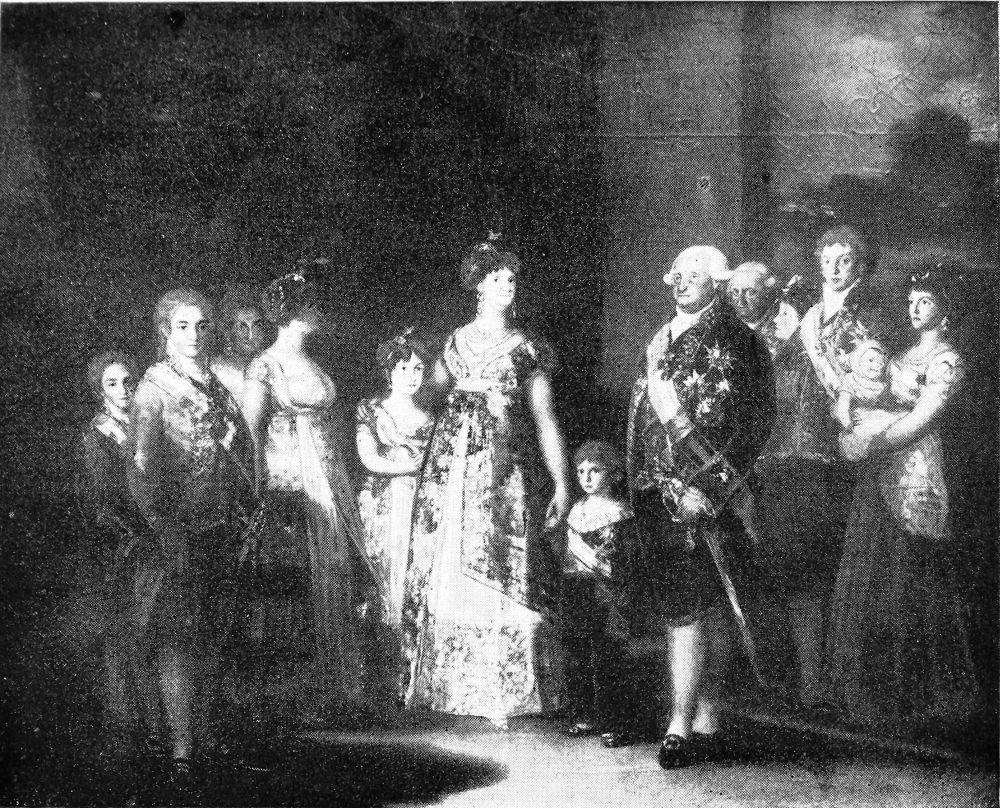
THE FAMILY OF CHARLES IV.
(Prado, Madrid.)
PLATE 2.
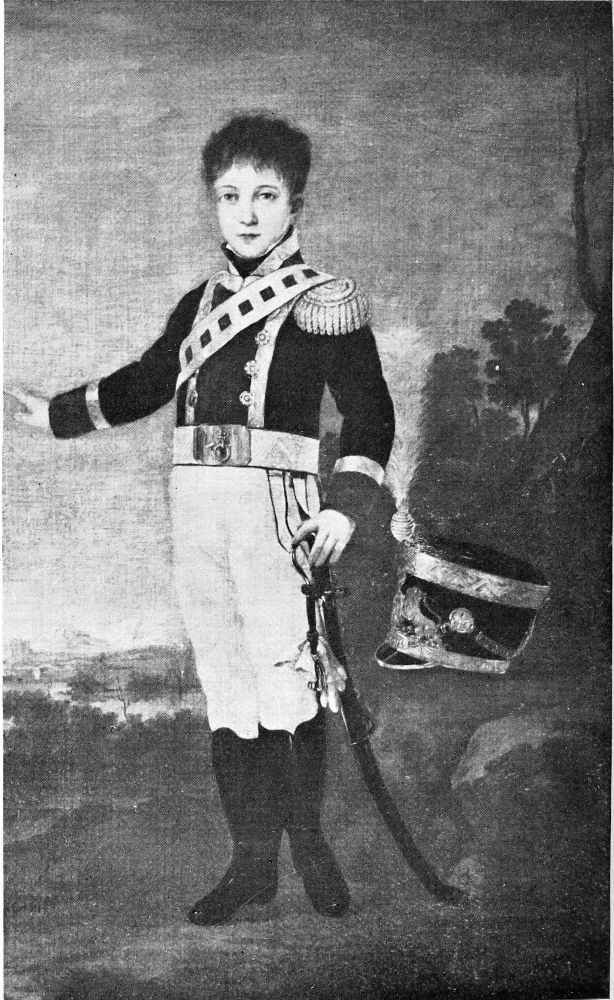
THE INFANTE DON CARLOS.
(Prado, Madrid.)
PLATE 3.
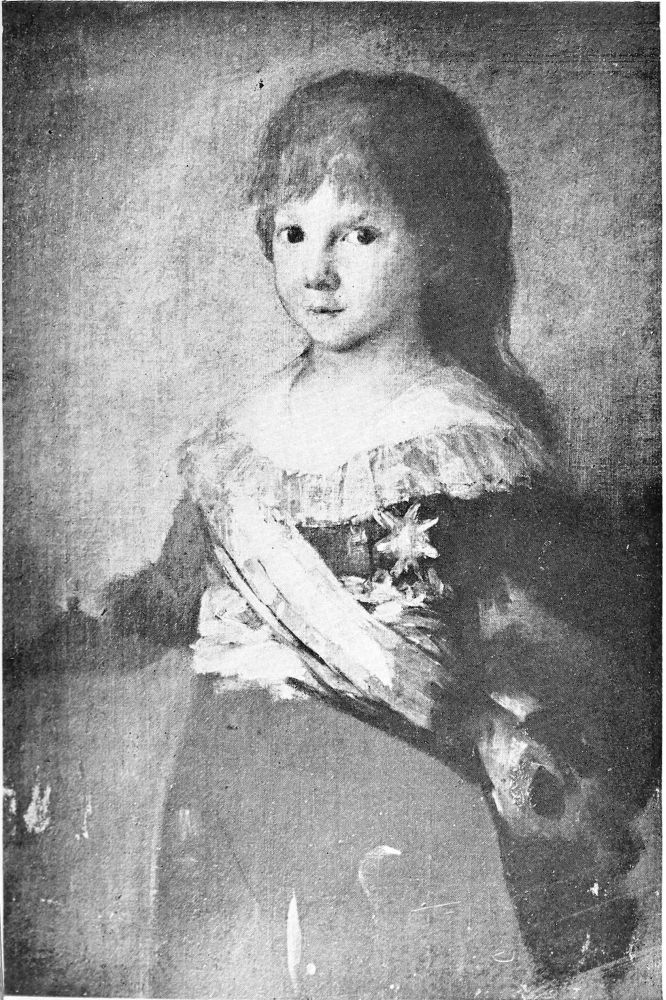
THE INFANTE FRANCISCO DE PAULA ANTONIO.
(Prado, Madrid.)
PLATE 4.
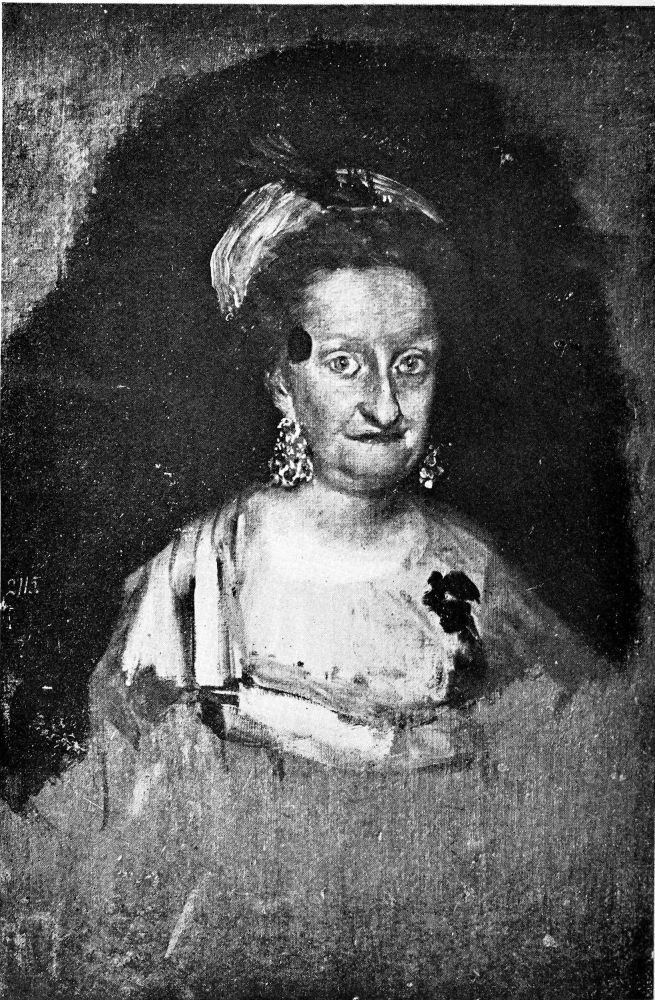
THE INFANTA MARIA JOSEFA.
(Prado, Madrid.)
PLATE 5.
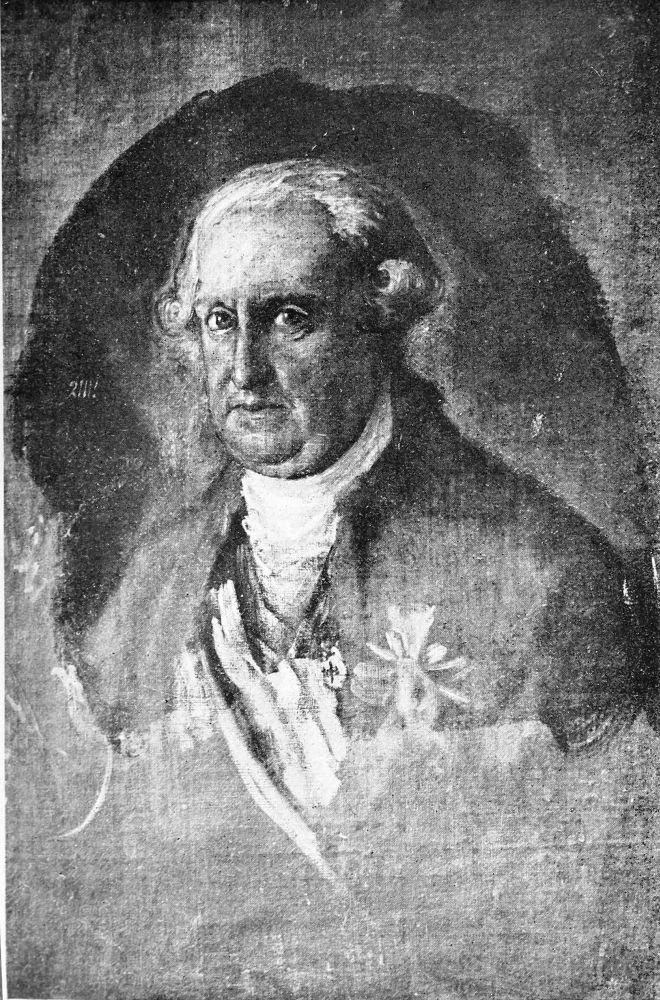
THE INFANTE DON ANTONIO, BROTHER OF CHARLES IV.
(Prado, Madrid.)
PLATE 6.
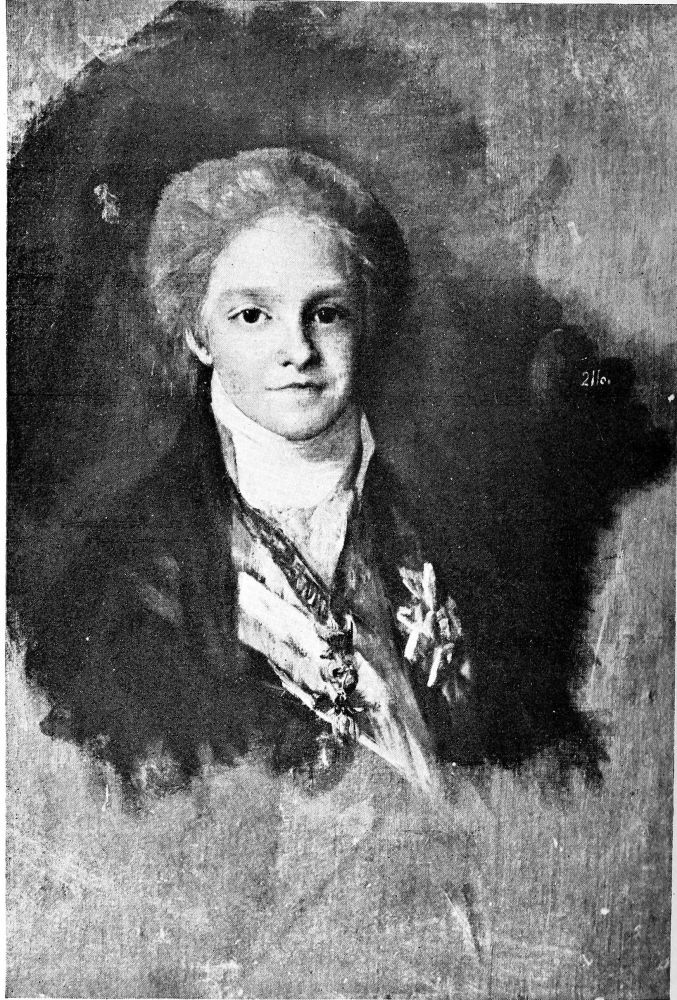
THE INFANTE DON CARLOS MARIA ISIDRO.
(Prado, Madrid.)
PLATE 7.
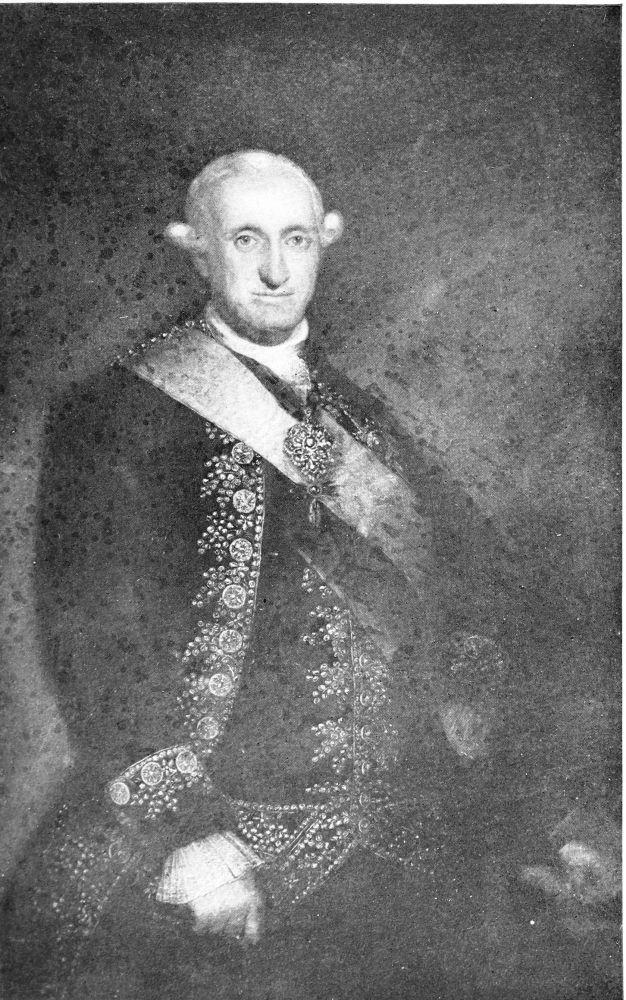
KING CHARLES IV.
(Ministerio de Hacienda, Madrid.)
PLATE 8.
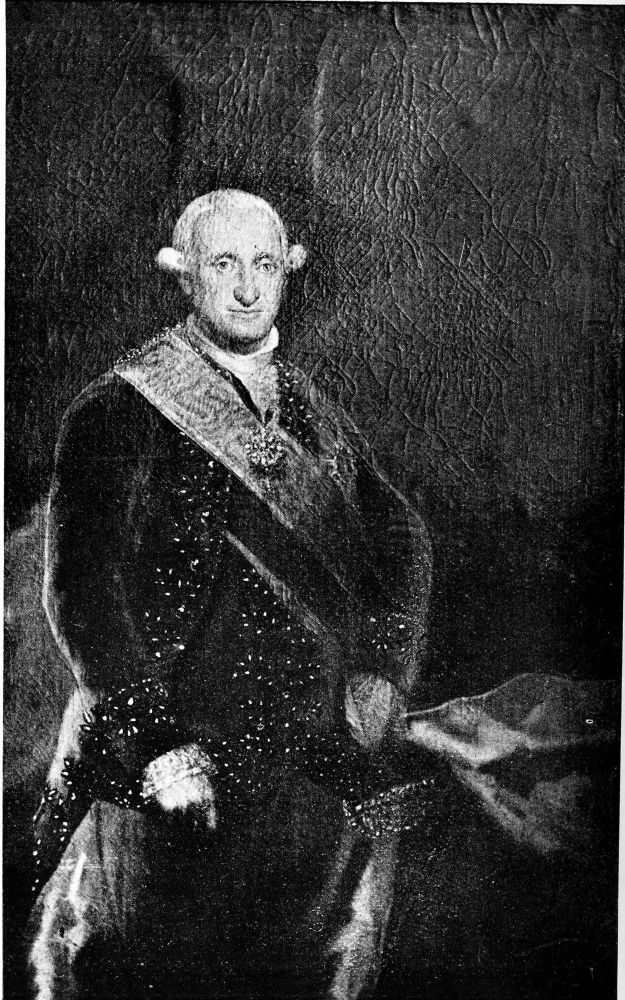
KING CHARLES IV.
(Ministerio de Hacienda, Madrid.)
PLATE 9.
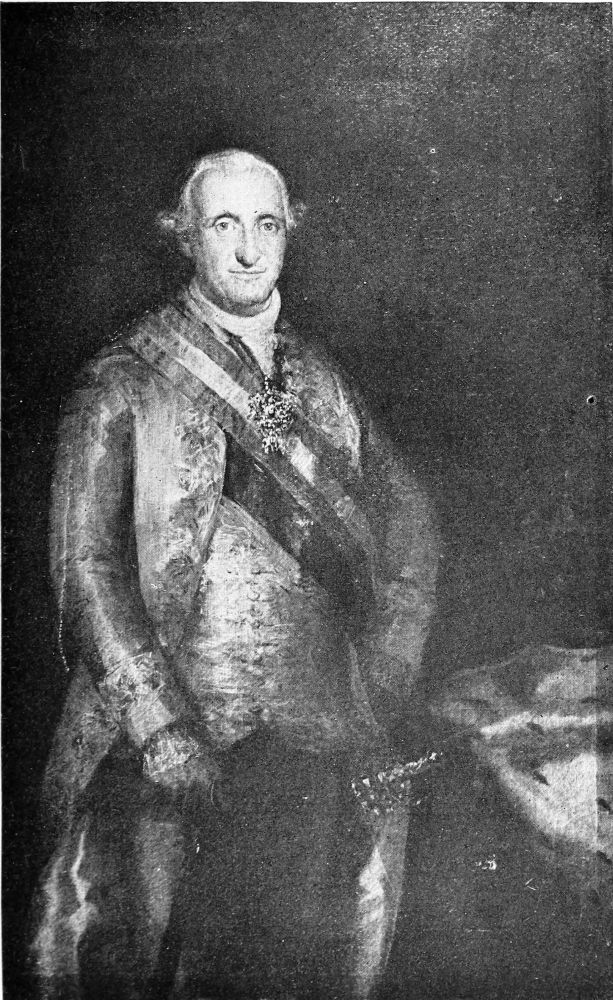
KING CHARLES IV.
PLATE 10.
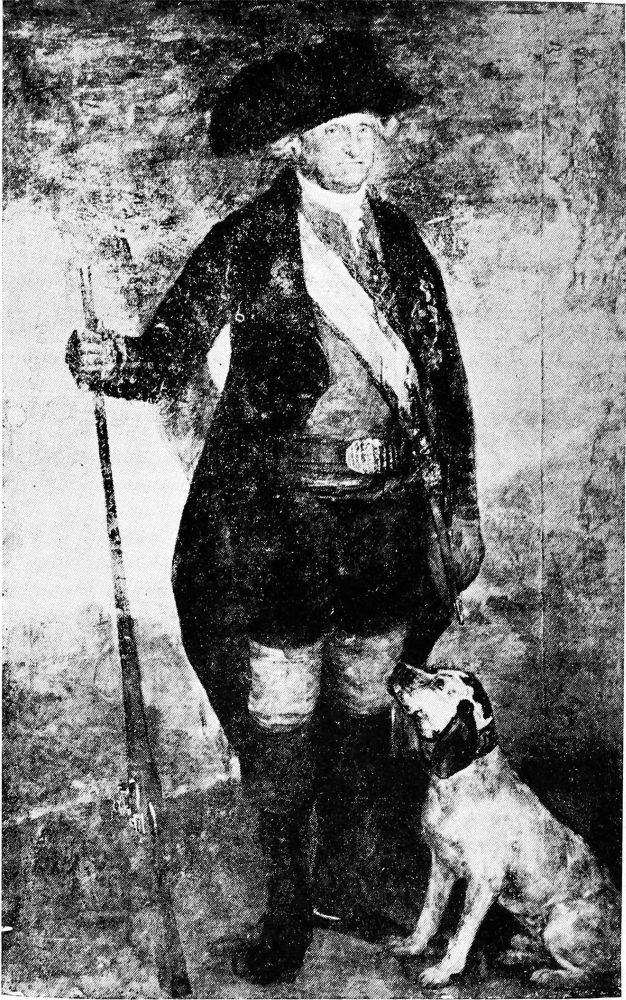
KING CHARLES IV.
(Royal Palace, Madrid.)
PLATE 11.
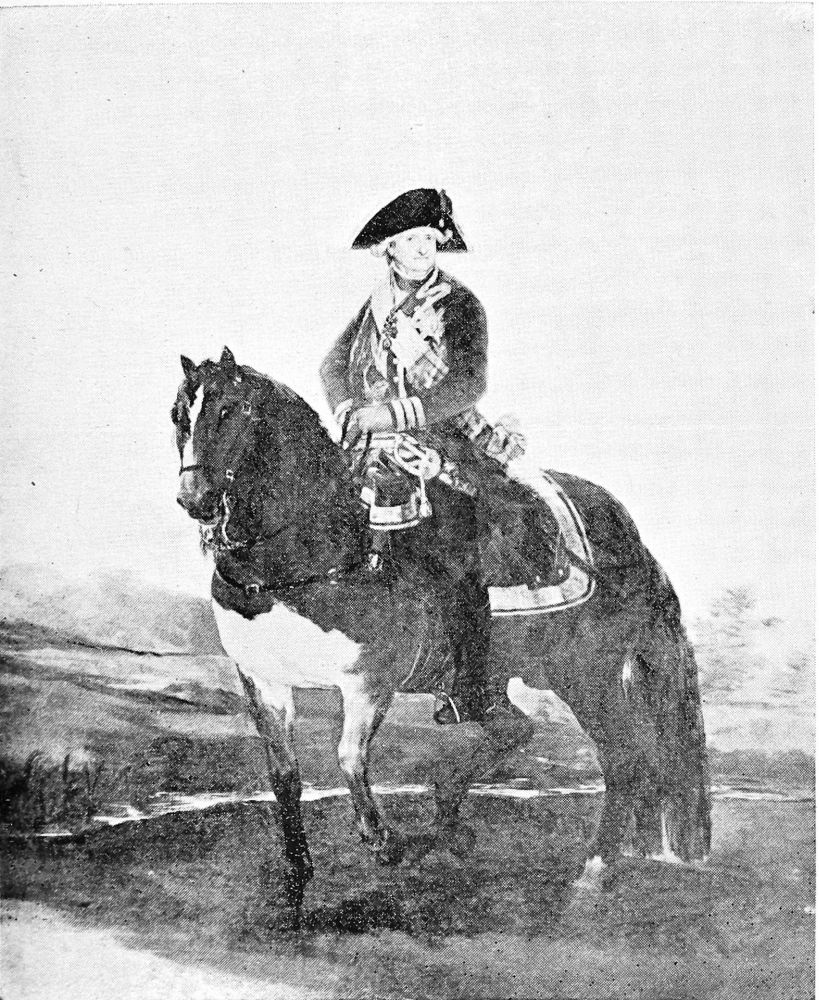
KING CHARLES IV.
(Prado, Madrid.)
PLATE 12.
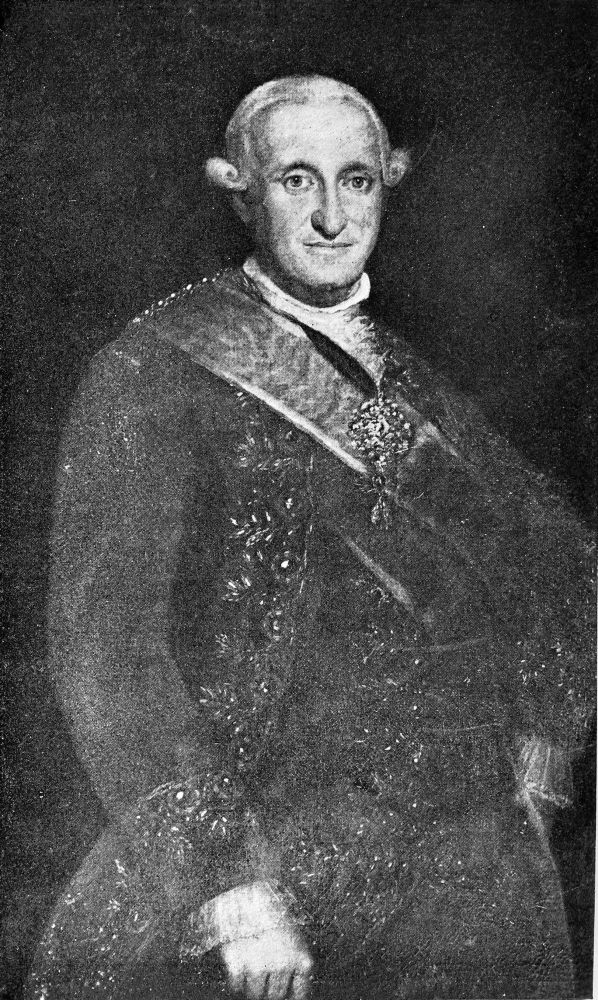
KING CHARLES IV.
(Marques de Casa Torres, Madrid.)
PLATE 13.
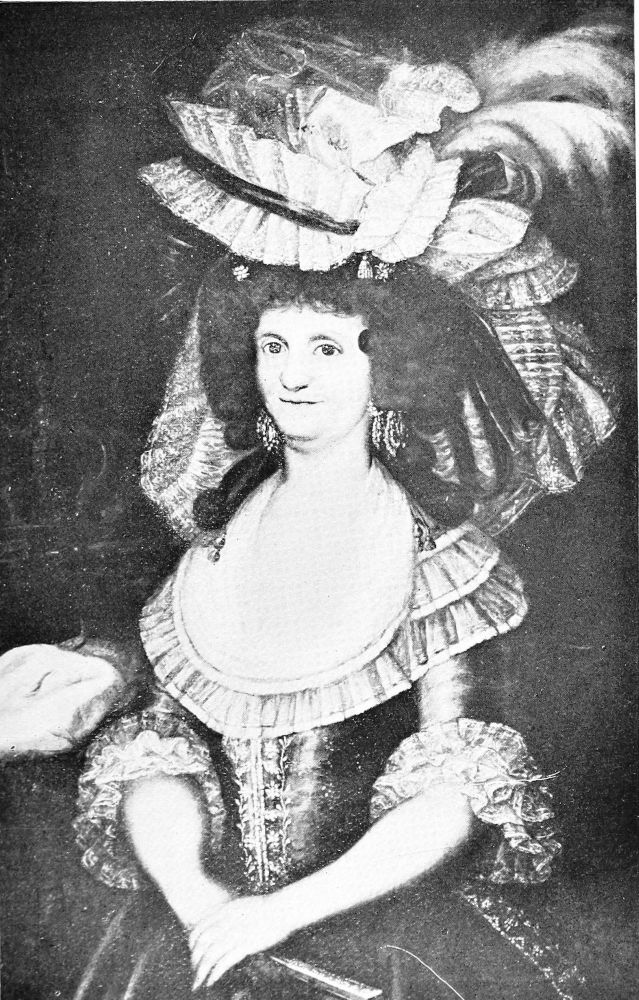
QUEEN MARIA LUISA.
(Don A. de Beruete, Madrid.)
PLATE 14.
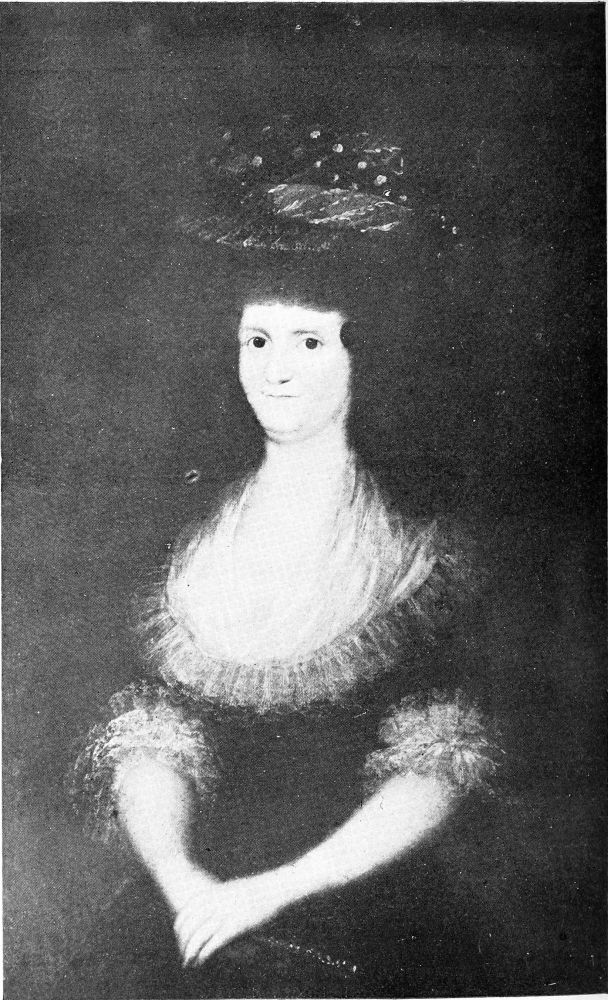
QUEEN MARIA LUISA.
(Don José Lázan.)
PLATE 15.
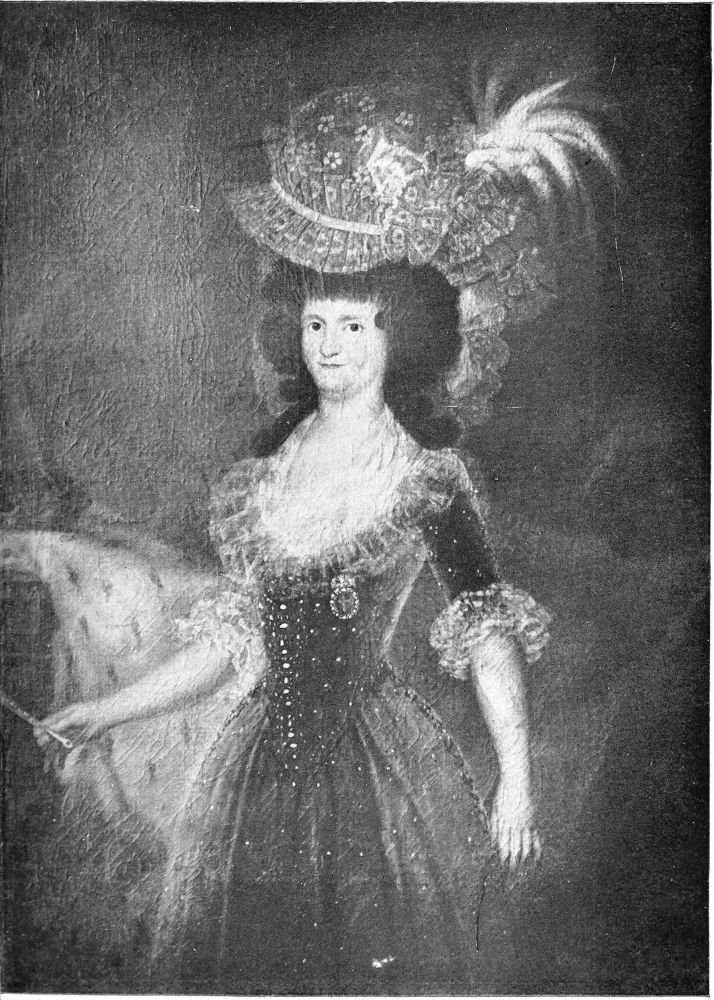
QUEEN MARIA LUISA.
(Ministerio de Hacienda, Madrid.)
PLATE 16.
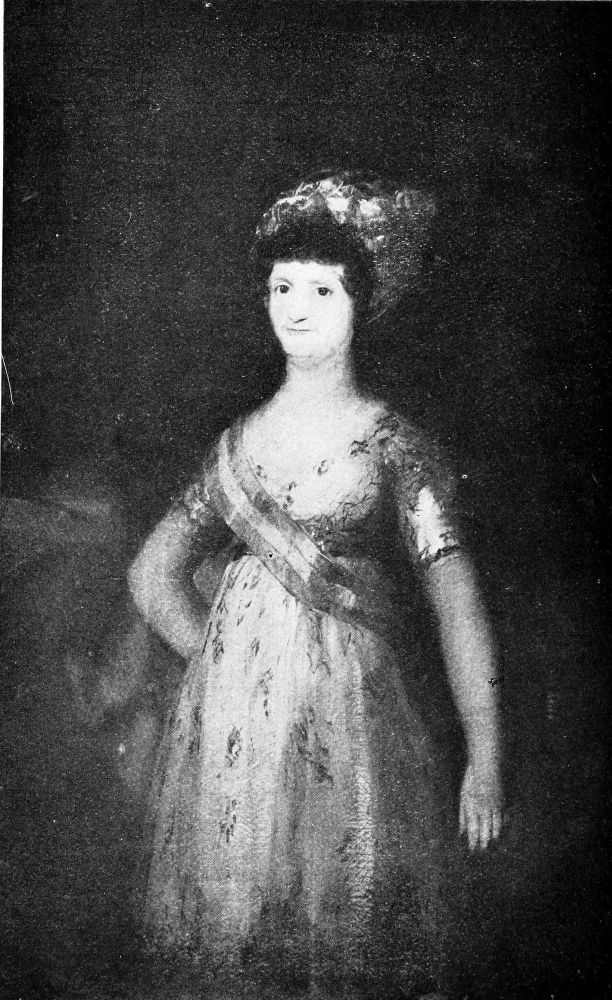
QUEEN MARIA LUISA.
(Marques de Casa Torres, Madrid.)
PLATE 17.
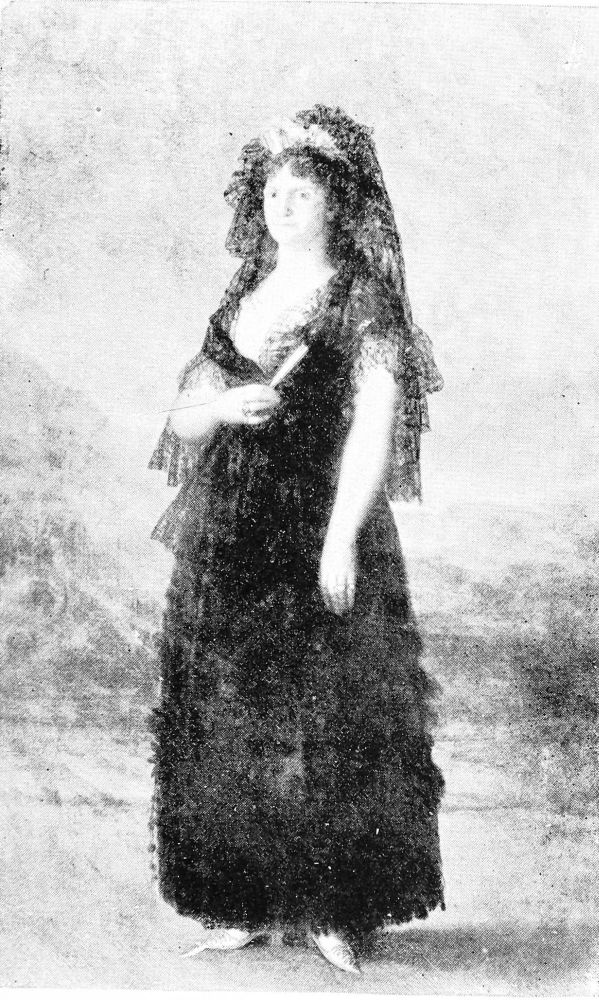
QUEEN MARIA LUISA.
(Prado, Madrid.)
PLATE 18.
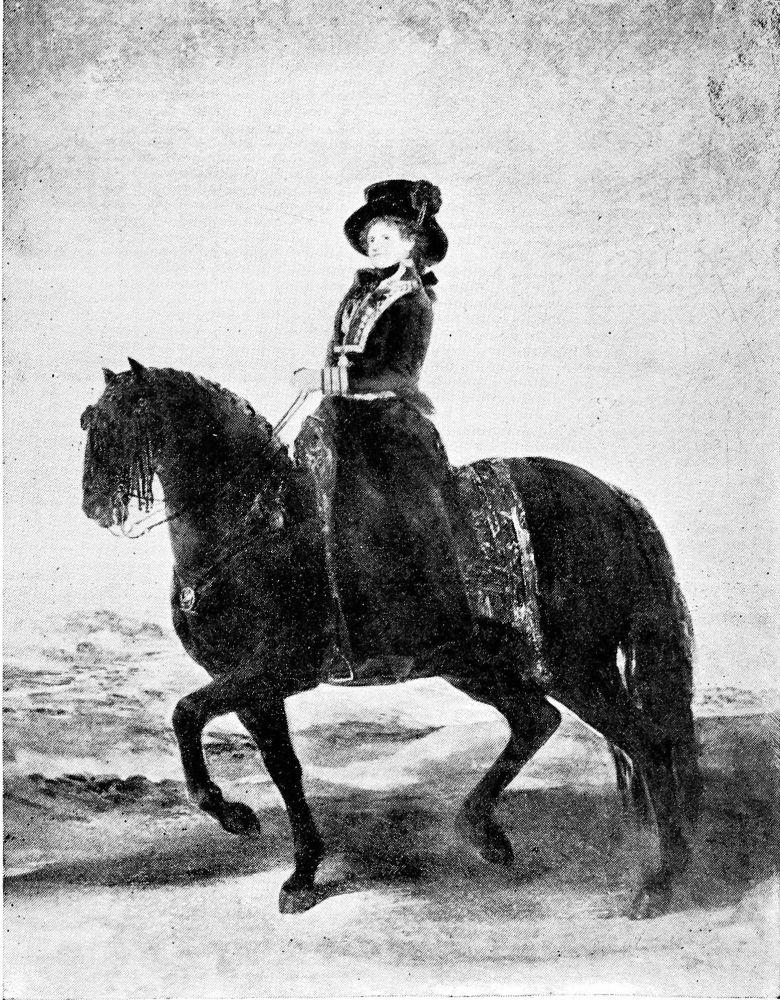
QUEEN MARIA LUISA.
(Prado, Madrid.)
PLATE 19.
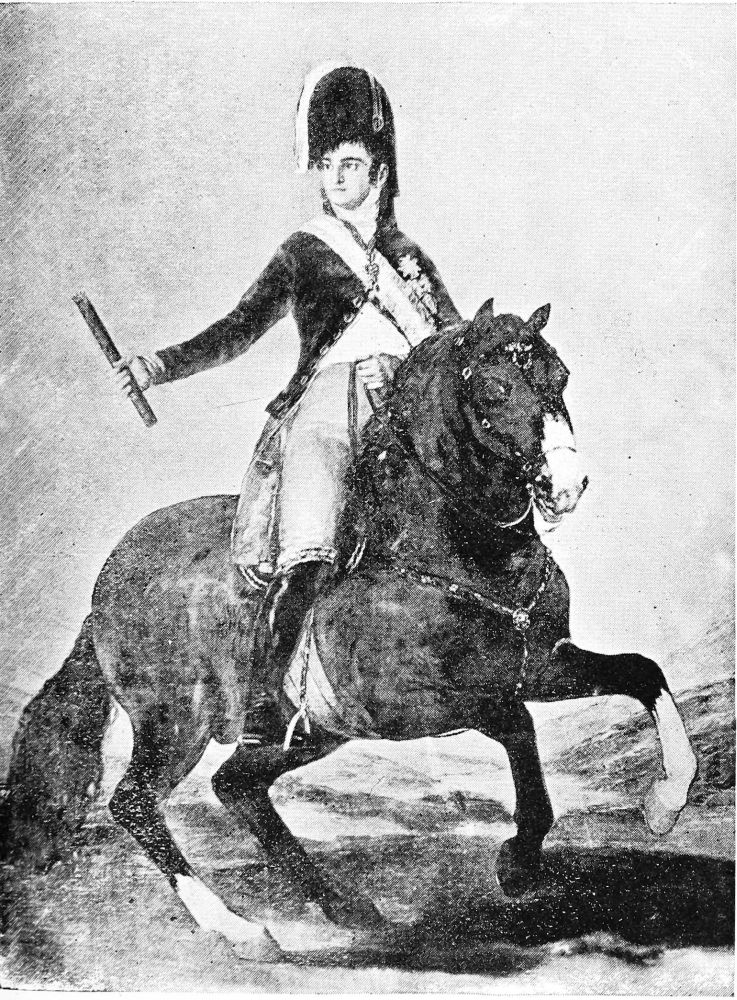
FERDINAND VII.
(Academy of St. Ferdinand, Madrid.)
PLATE 20.
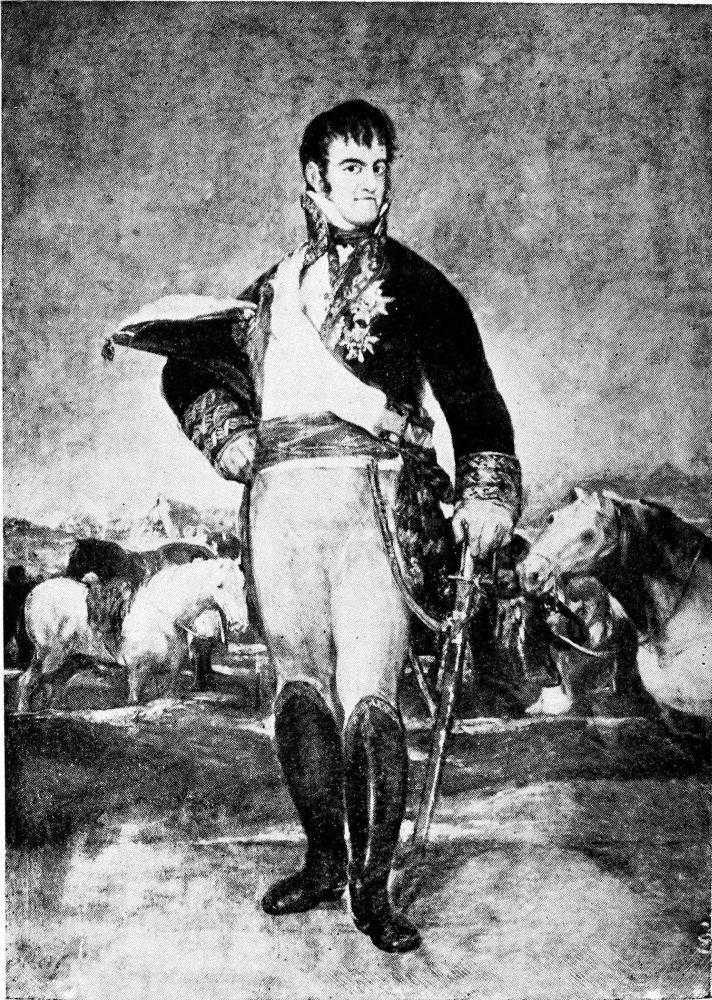
FERDINAND VII.
(Prado, Madrid.)
PLATE 21.
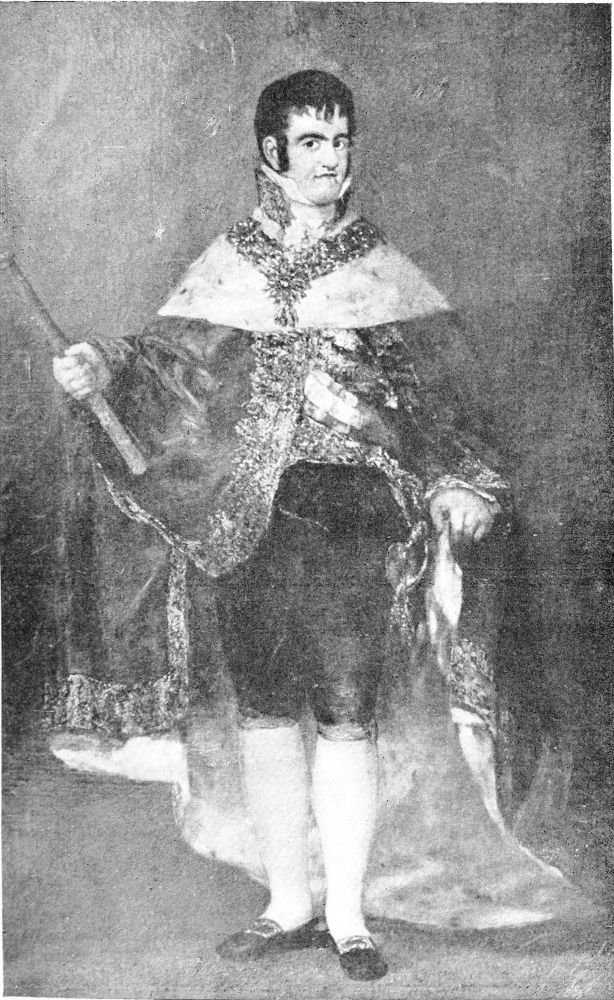
FERDINAND VII.
(Prado, Madrid.)
PLATE 22.
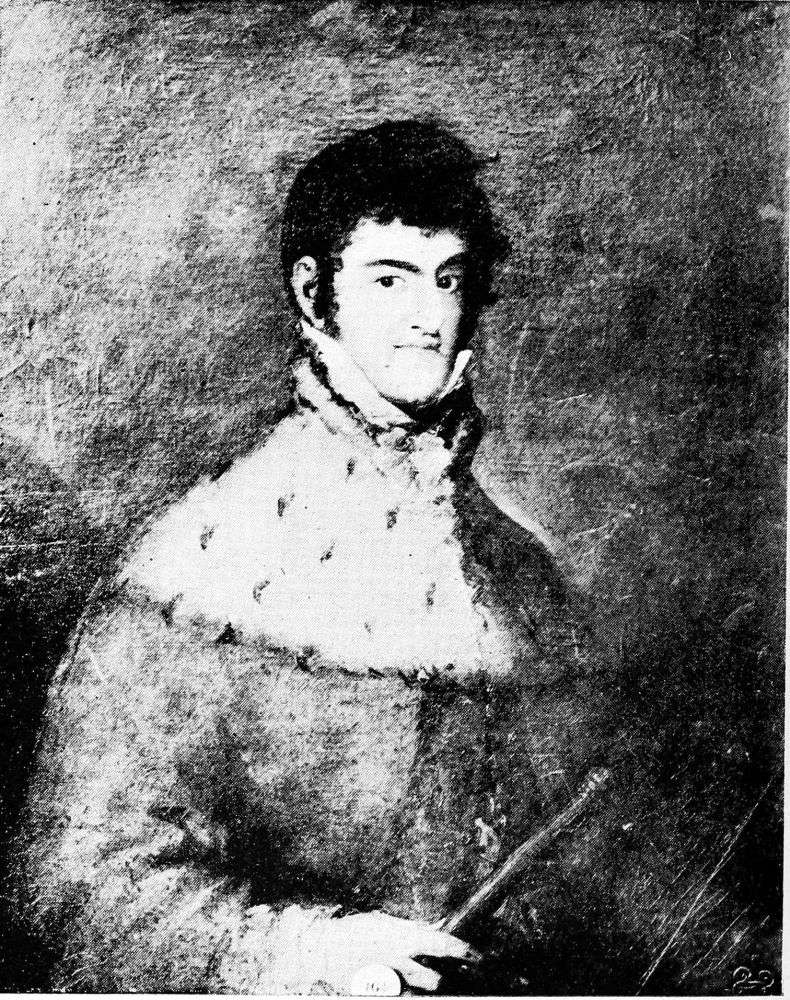
FERDINAND VII.
(Ancient Collection of Eustaquio Veate.
PLATE 23.
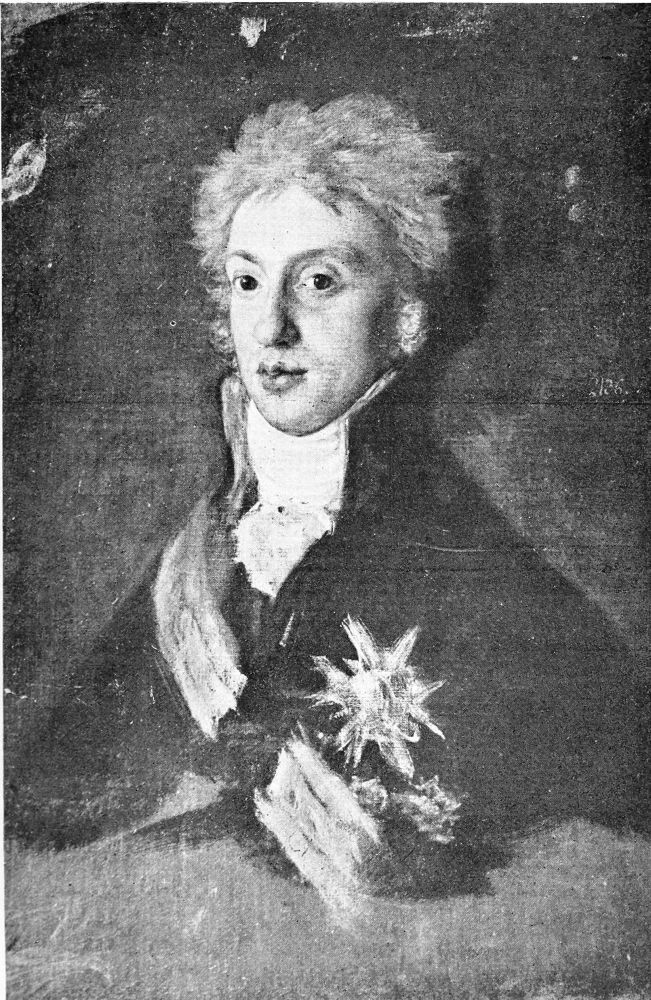
DON LUIS, PRINCE OF PARMA.
(Prado, Madrid.)
PLATE 24.
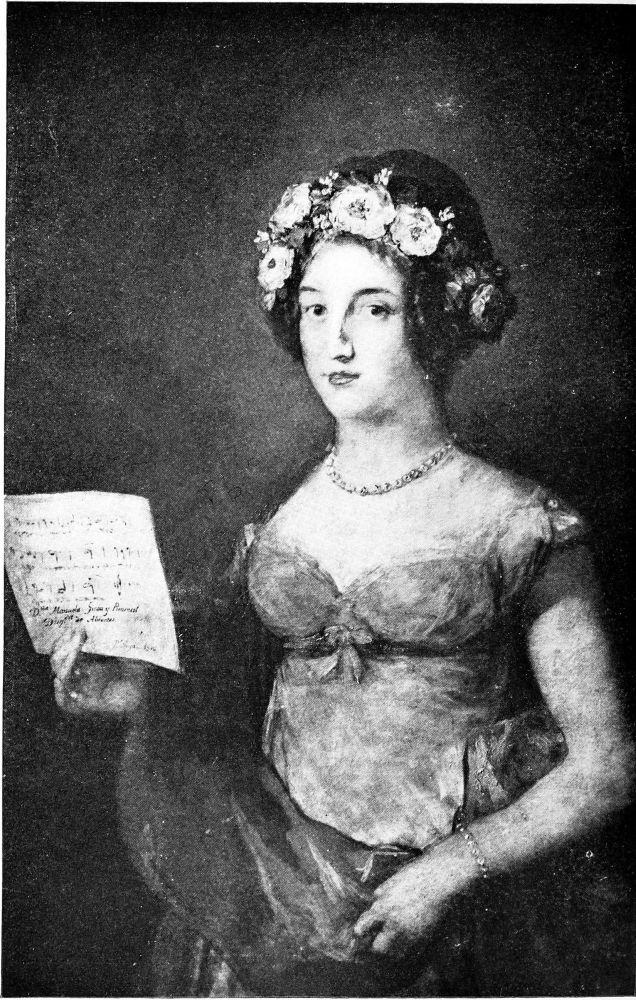
THE DUCHESS OF ABRANTES.
(Duquesa de Abrantes, Madrid.)
PLATE 25.
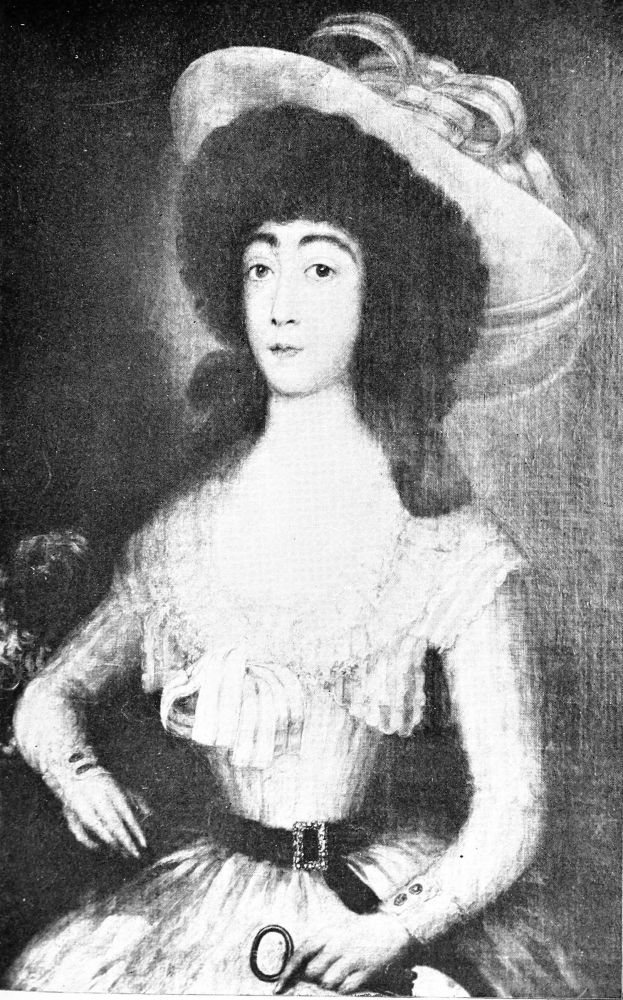
THE DUCHESS OF ALBA.
(Don Rafael Barrio.)
PLATE 26.
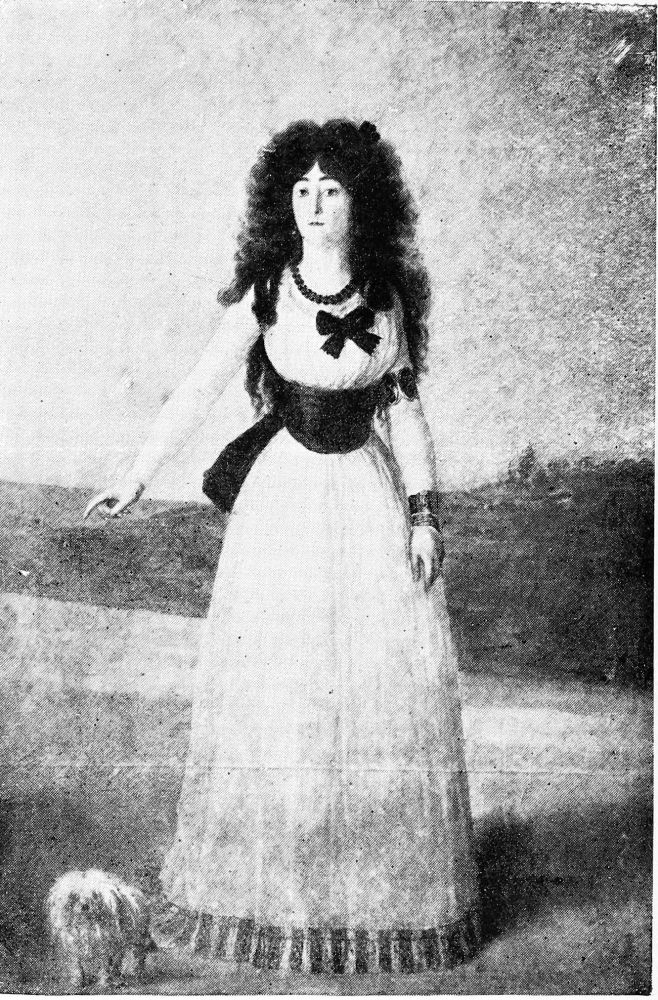
THE DUCHESS OF ALBA.
(Palacio de Liria, Madrid.)
PLATE 27.
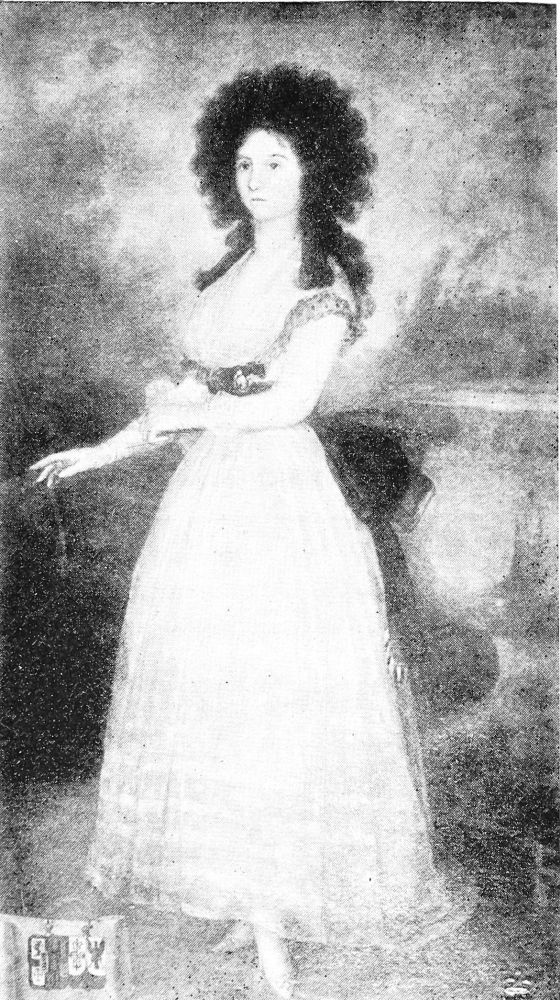
THE DUCHESS OF ALBA.
(The Duke of Alba, Madrid.)
PLATE 28.
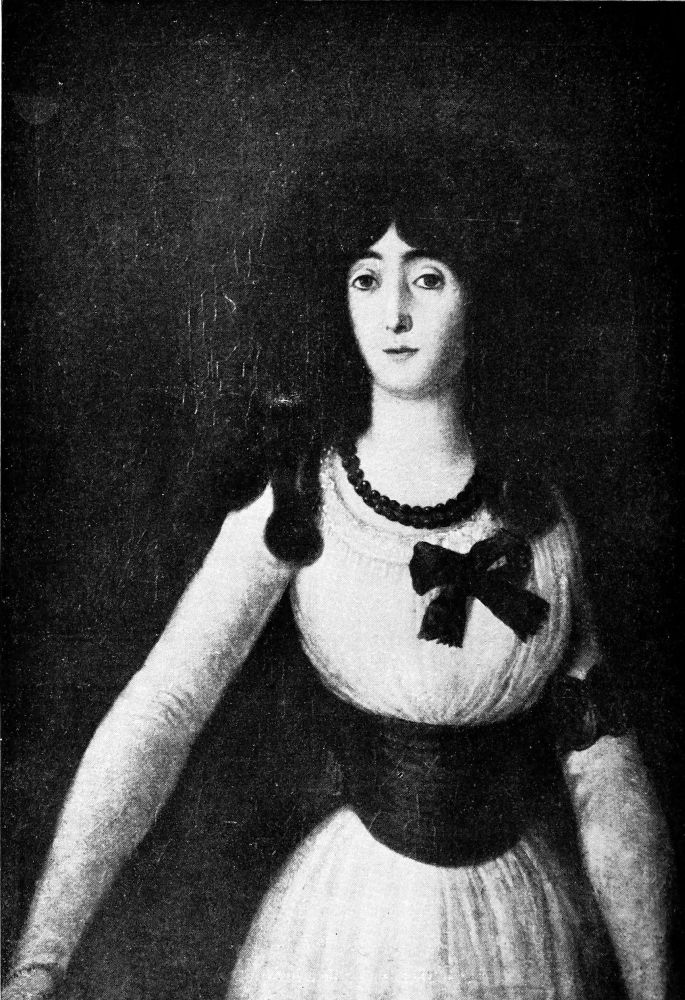
THE DUCHESS OF ALBA.
PLATE 29.
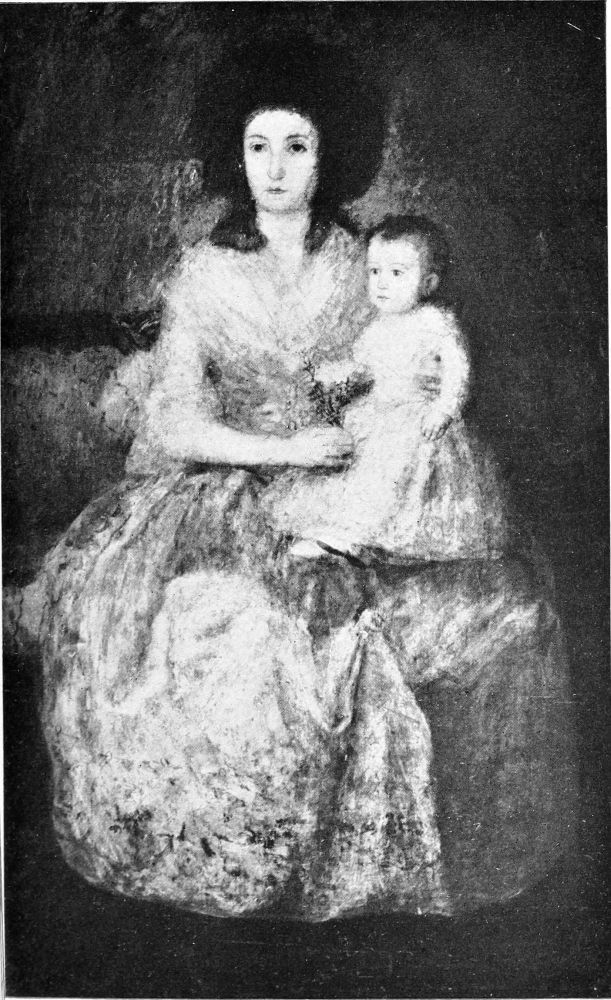
THE CONDESA DE ALTAMIRA AND DAUGHTER.
(Marques de Cervera.)
PLATE 30.
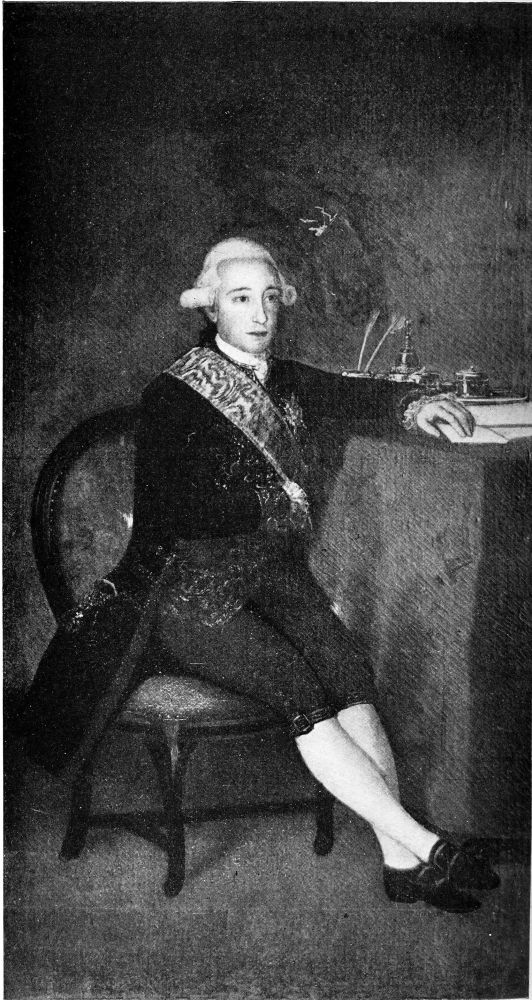
THE COUNT OF ALTAMIRA.
(The Bank of Spain, Madrid.)
PLATE 31.
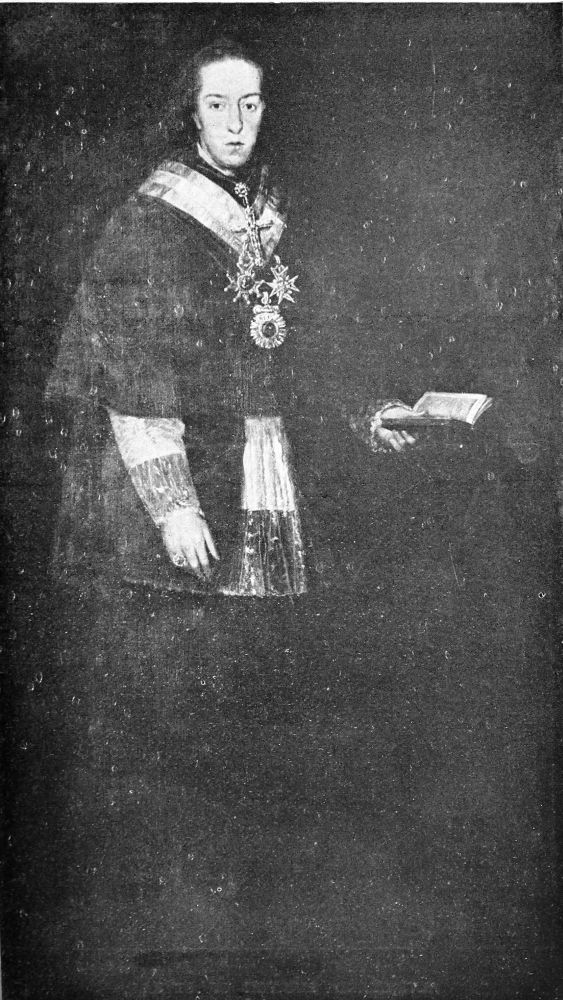
THE INFANTE DON LUIS DE BORBON.
(Marques de Casa Torres, Madrid.)
PLATE 32.
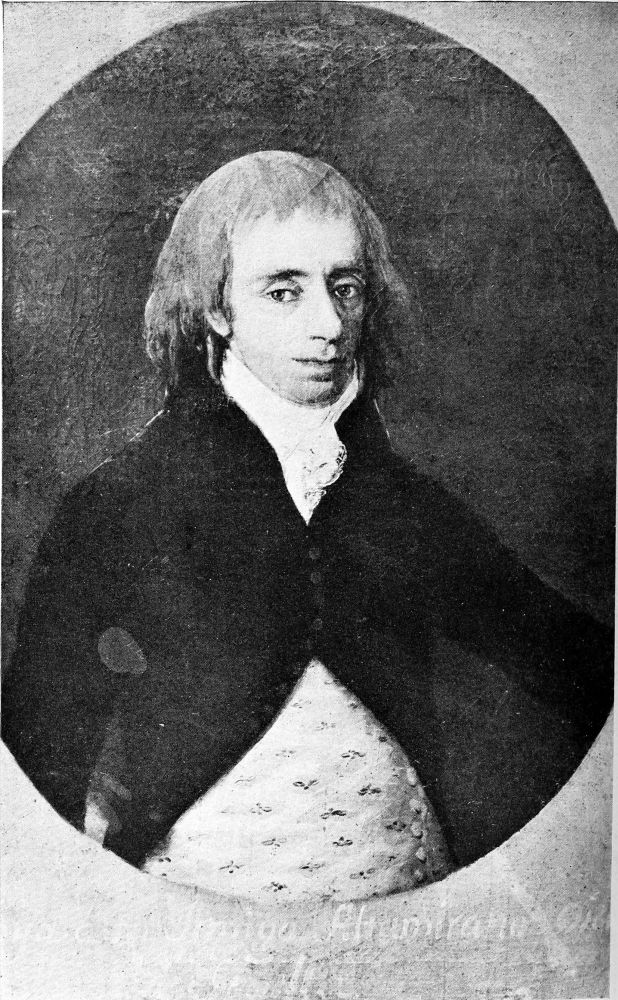
ALTAMIRANO AUDITOR OF SEVILLE.
(Marques de la Vega Inclan.)
PLATE 33.
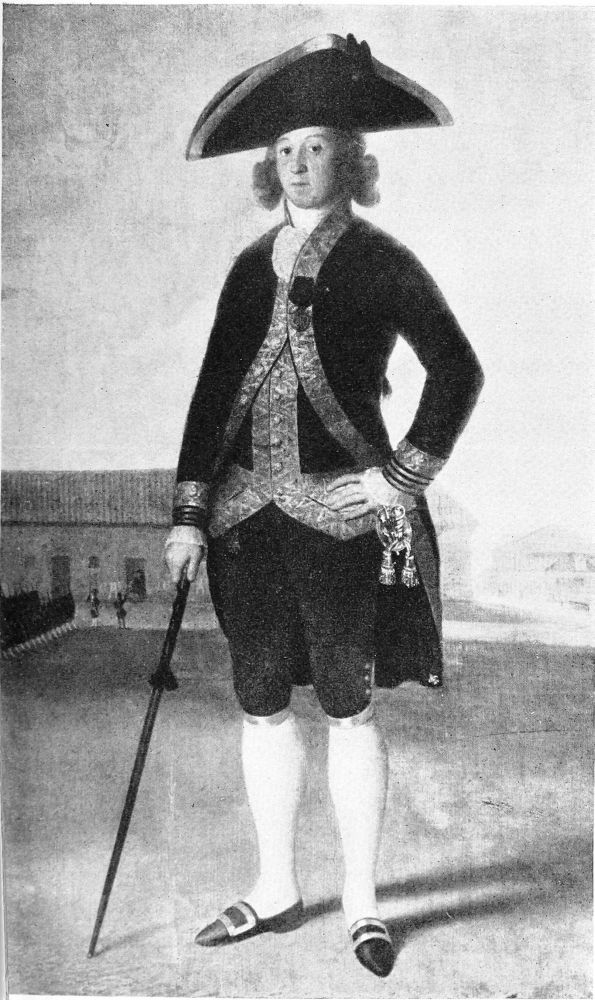
DON MANUEL LAPEÑA, MARQUES DE BONDAD REAL.
(Don Joaquin Argamanilla.)
PLATE 34.
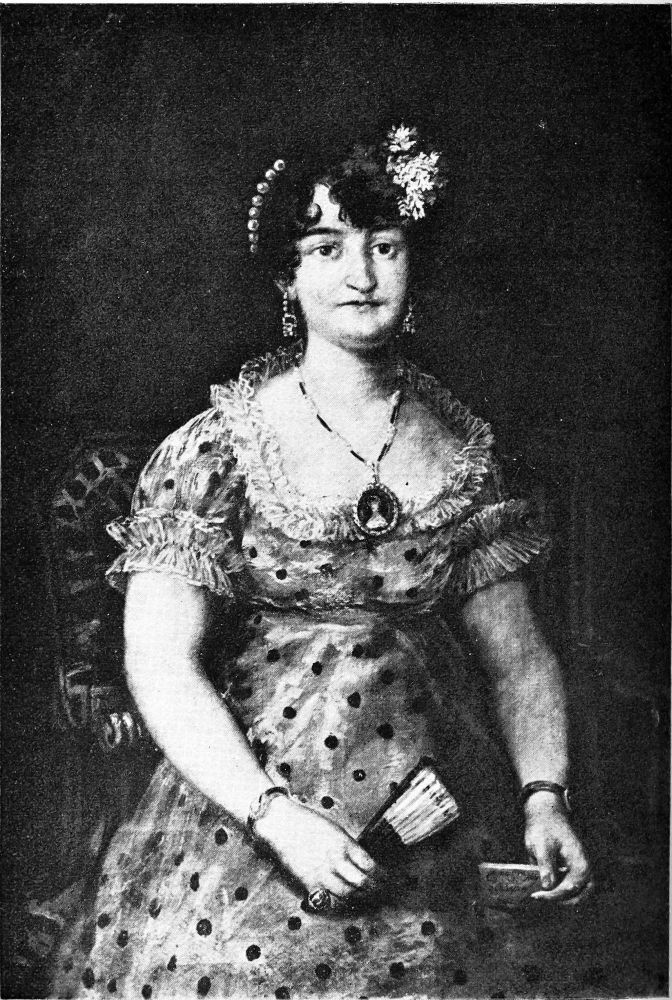
THE MARQUESA DE CABALLERO.
(Marques de Corvera.)
PLATE 35.
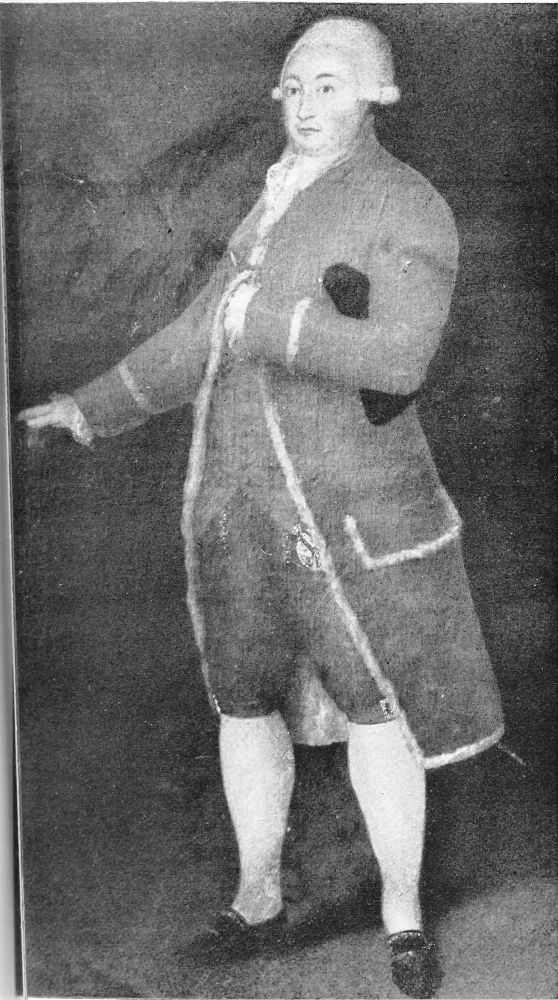
CONDE DE CABARRUS.
(Bank of Spain, Madrid.)
PLATE 36.
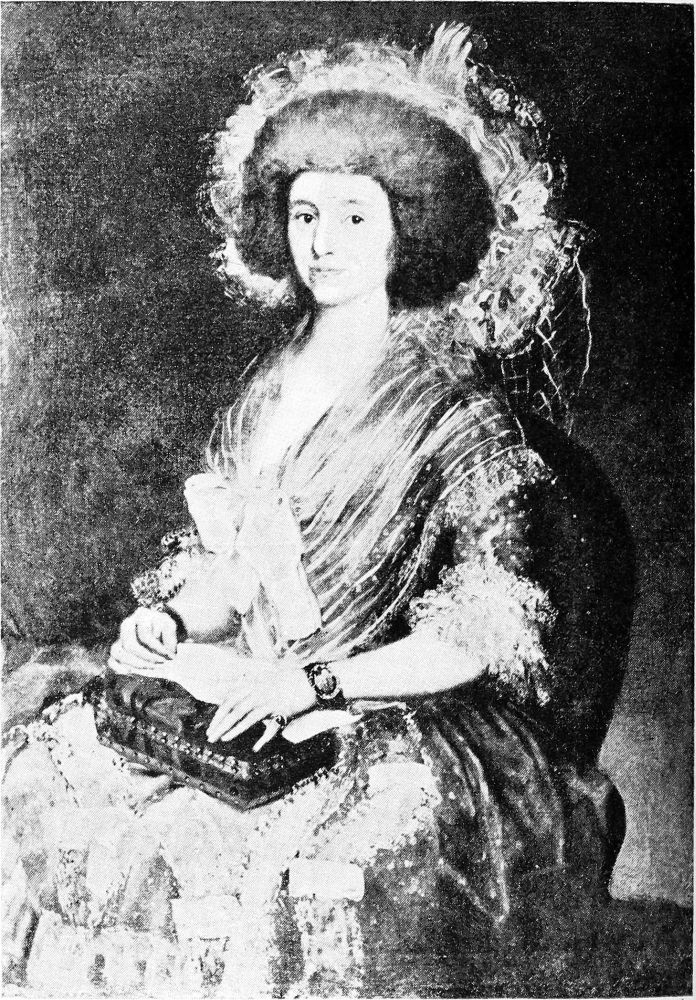
THE WIFE OF CEAN BERMUDEZ.
(Marques de Casa Torres, Madrid.)
PLATE 37.
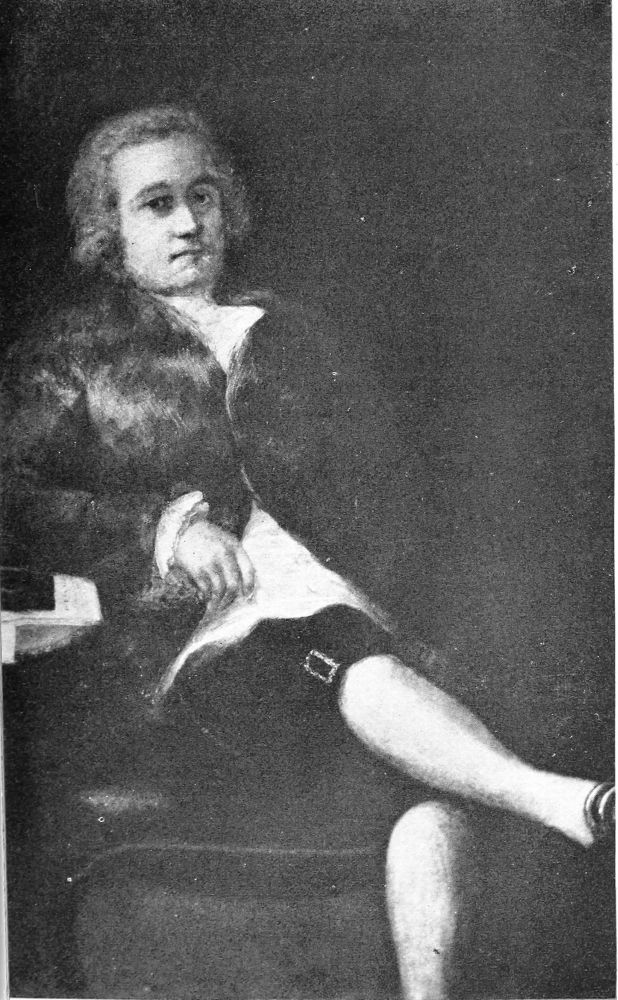
J. CEAN BERMUDEZ.
(Marques de Corvera, Madrid.)
PLATE 38.
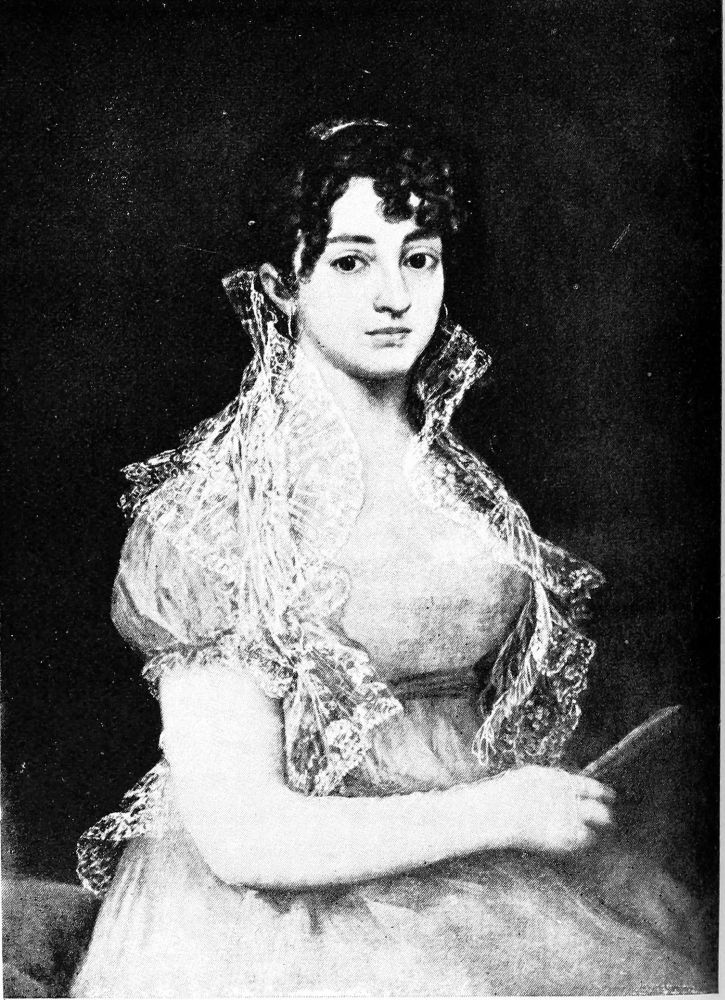
DOÑA LORENZO CORREA.
(M. Bischoffsheim, Paris.)
PLATE 39.
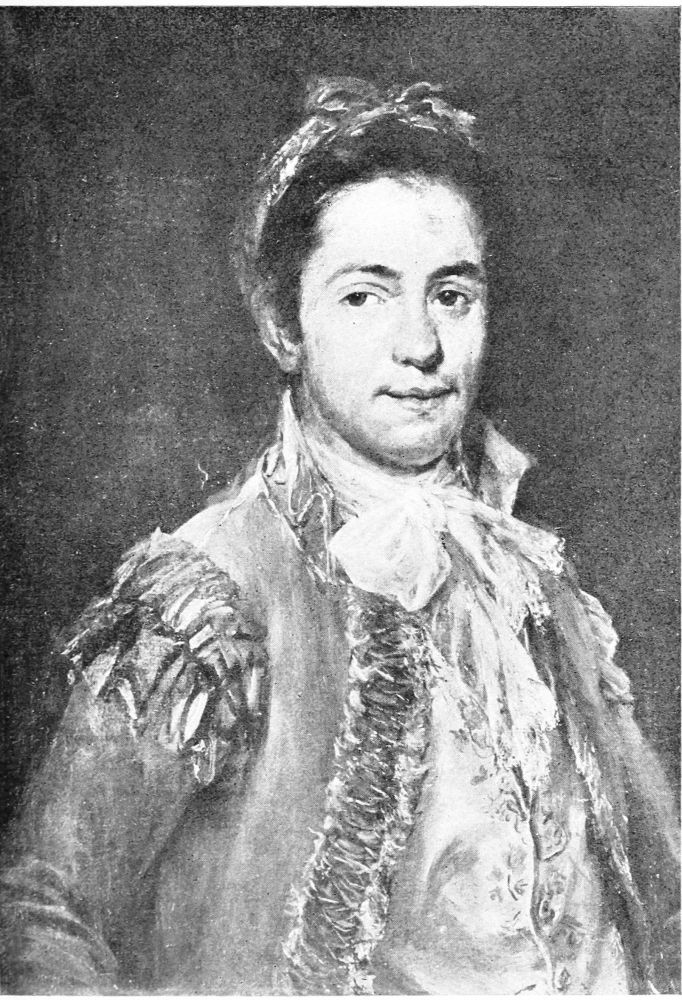
THE TOREADOR COSTILLARES.
(Don José Lazaro.)
PLATE 40.
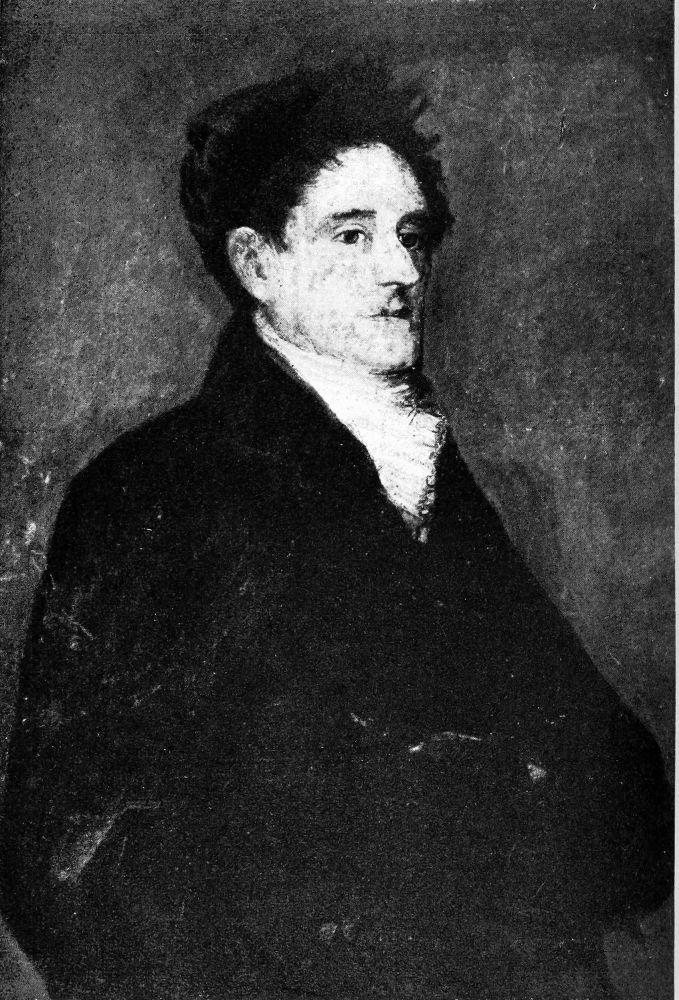
DON JOAQUIN MARIA FERRER.
(Count of Candilla.)
PLATE 41.
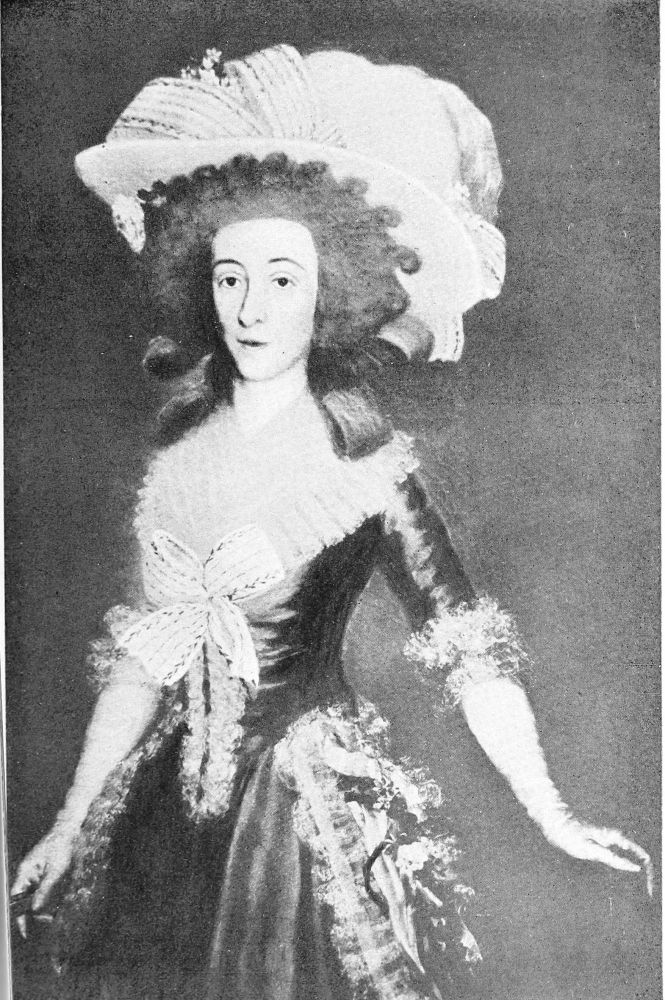
CONDESA-DUQUESA DE BENAVENTE Y OSUNA.
(Madrid.)
PLATE 42.
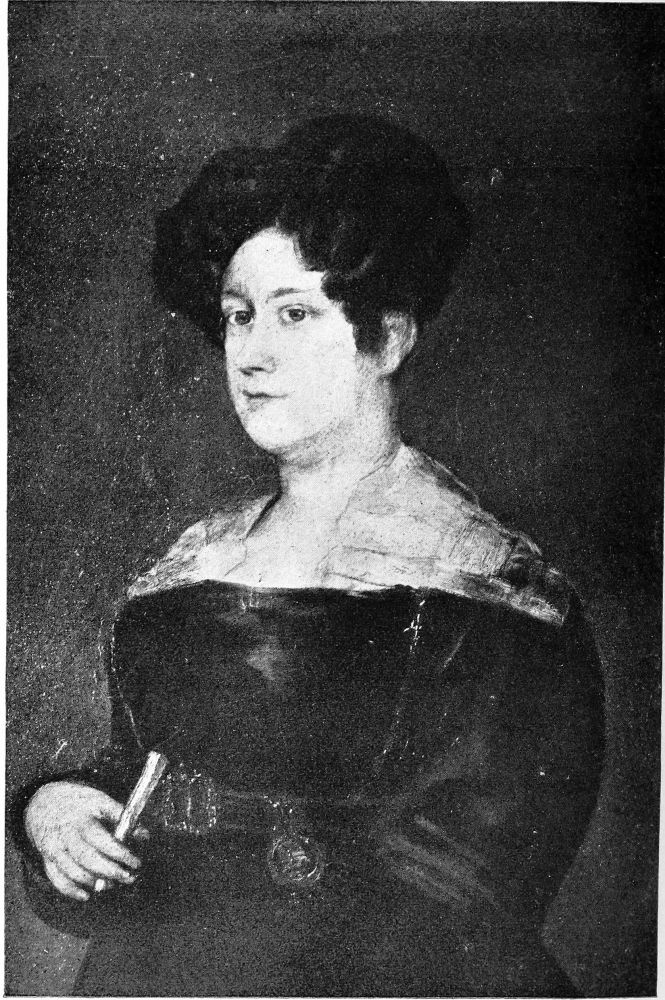
DOÑA MANUELA DE ALVAREZ COIÑAS.
(Marquis of Baroja.)
PLATE 43.
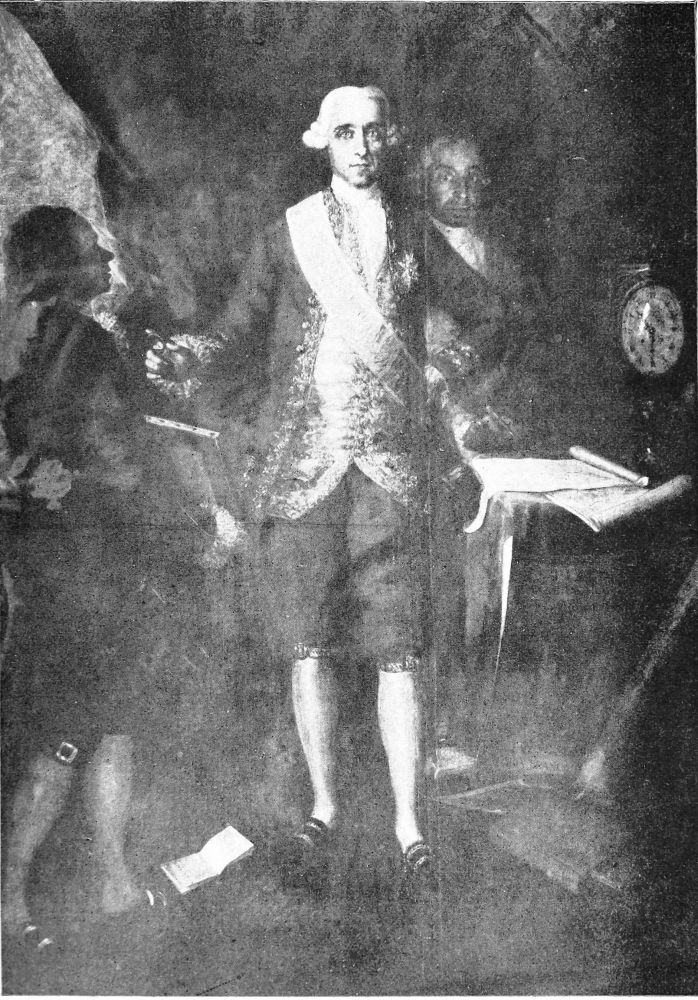
FLORIDA BLANCA.
(Marquesa de Martorell.)
PLATE 44.
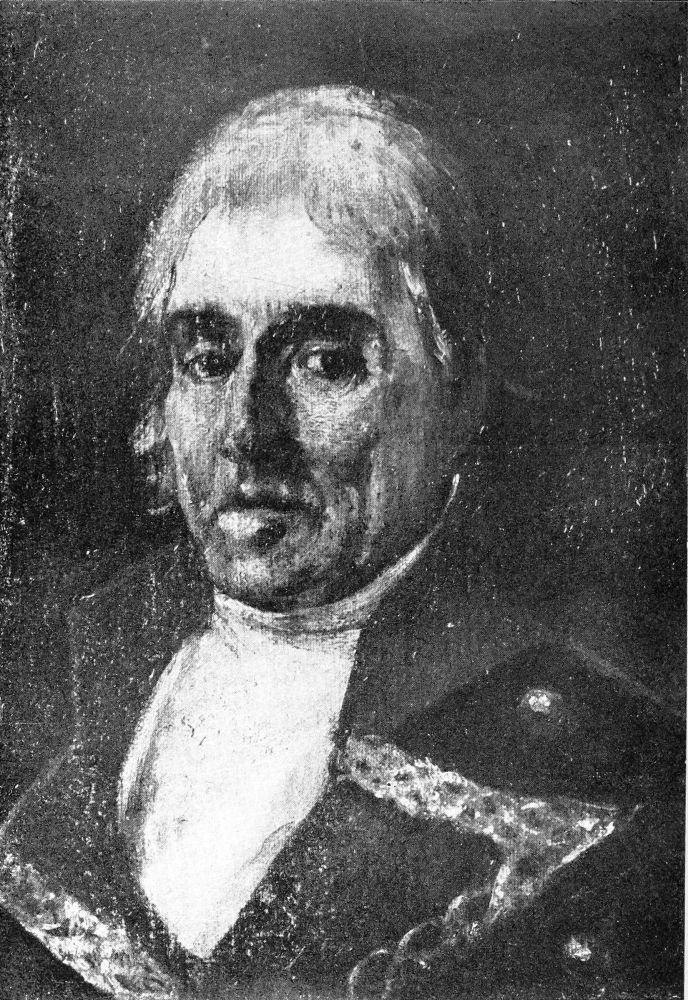
DON ANTONIO FORASTER.
(Don J. Millan.)
PLATE 45.
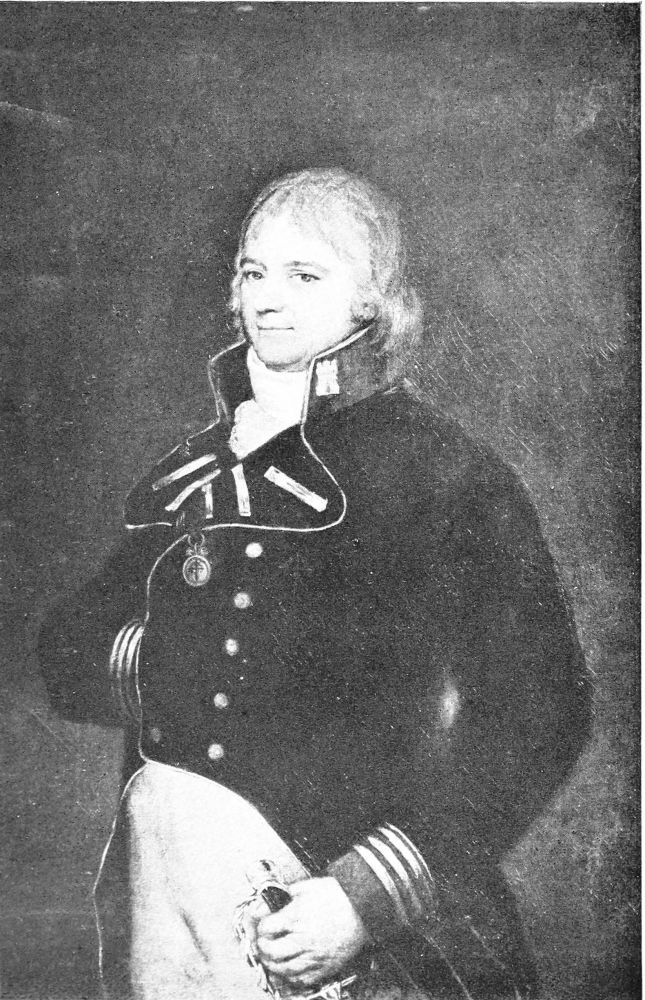
THE ENGINEER IGNACIO GARCINI.
(The Garcini Family, Madrid.)
PLATE 46.
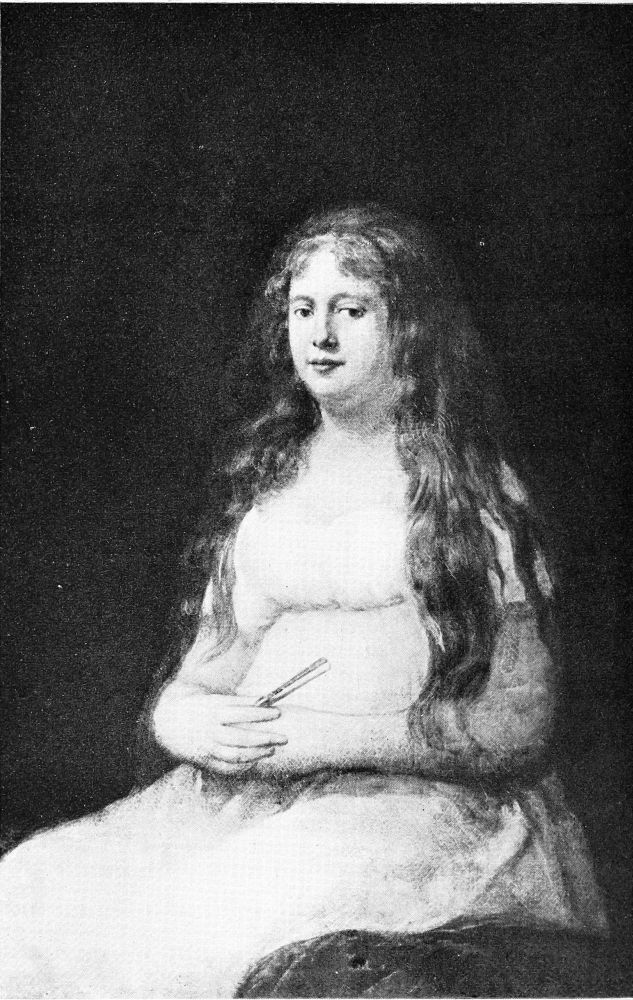
DOÑA JOSEFA CASTILLA-PORTUGAL.
(Don Vicente Garcini.)
PLATE 47.
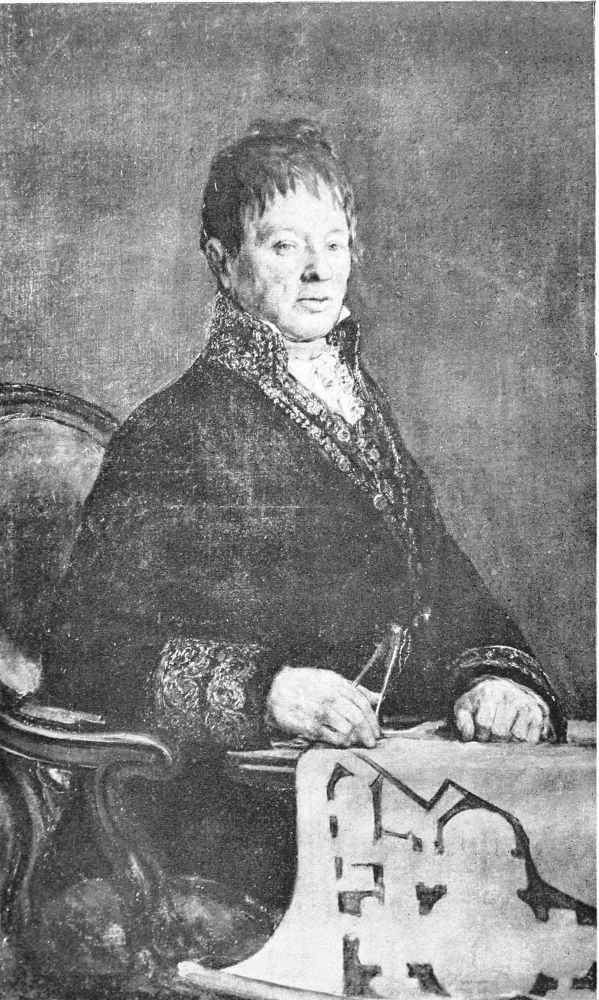
DON JUAN ANTONIO CUERVO.
(D. F. Duran.)
PLATE 48.
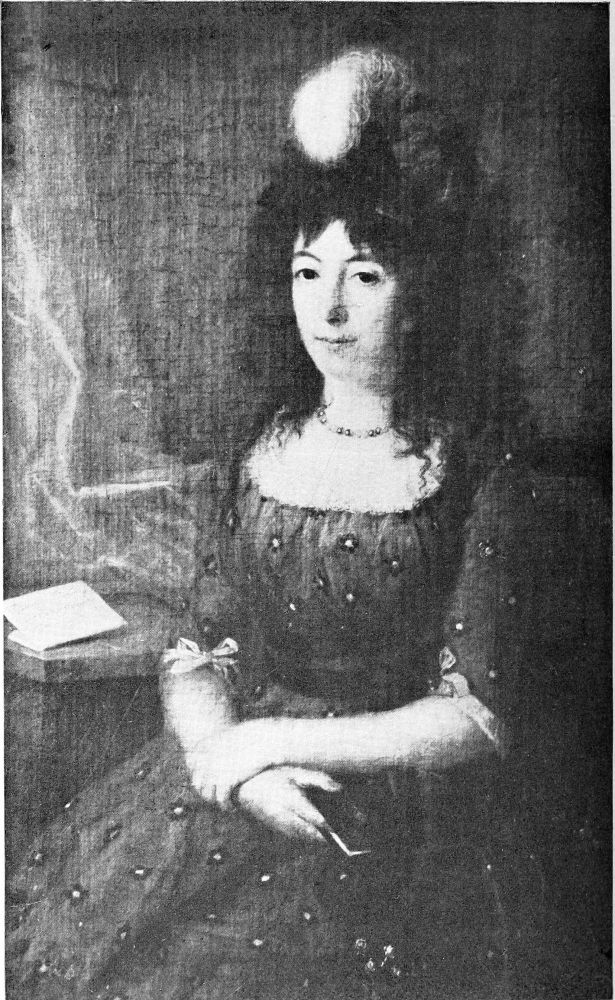
DOÑA MARIA ILDEFONSO DABALOS.
(Count of Villagonzalo.)
PLATE 49.
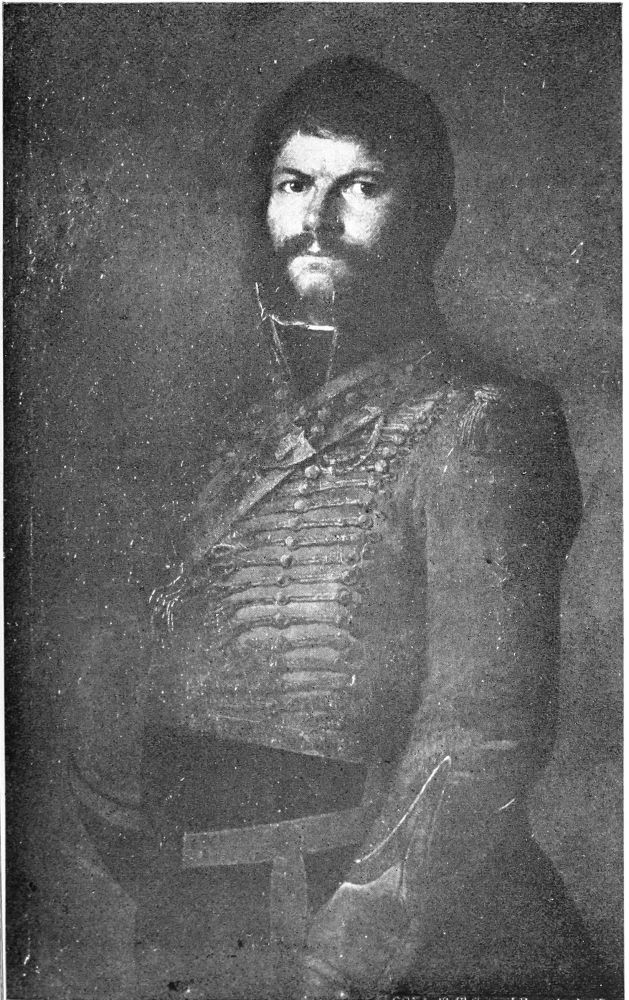
GENERAL DON JUAN MARTIN, SURNAMED EL EMPECINADO.
(Don Luis Navas.)
PLATE 50.
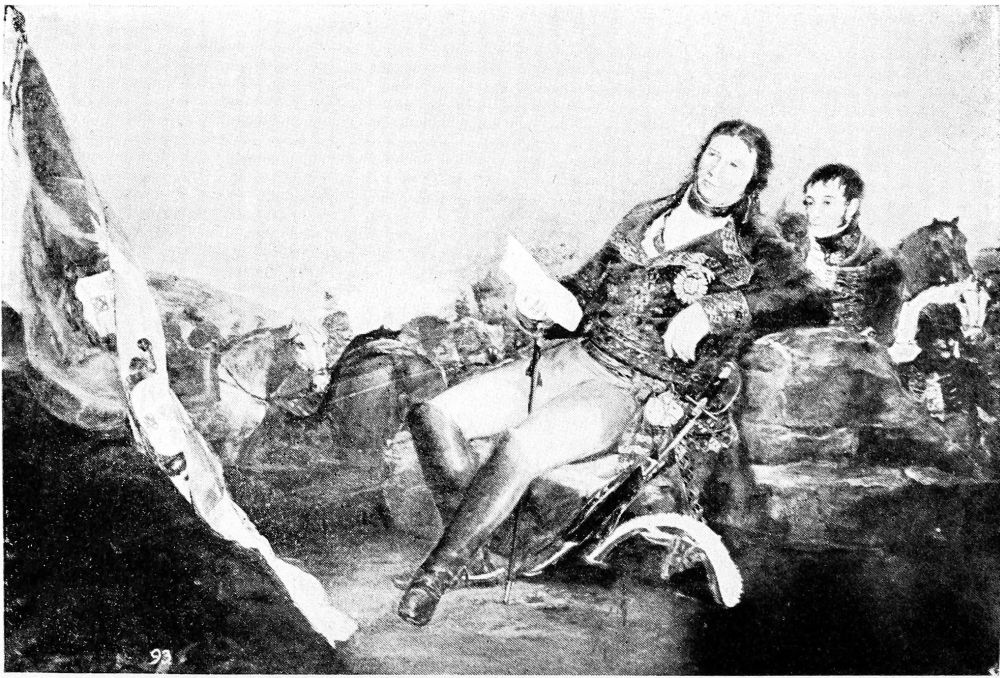
GODOY, PRINCE OF THE PEACE.
(Academy of St. Ferdinand, Madrid.)
PLATE 51.
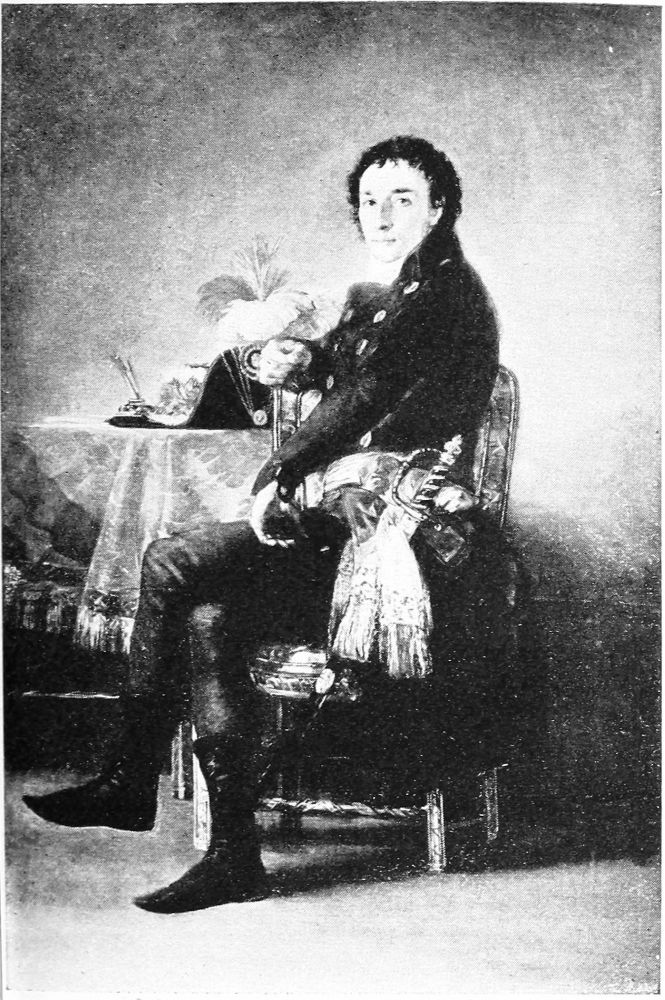
F. GUILLEMARDET, AMBASSADOR OF THE FRENCH REPUBLIC TO SPAIN, 1798.
(Louvre, Paris.)
PLATE 52.
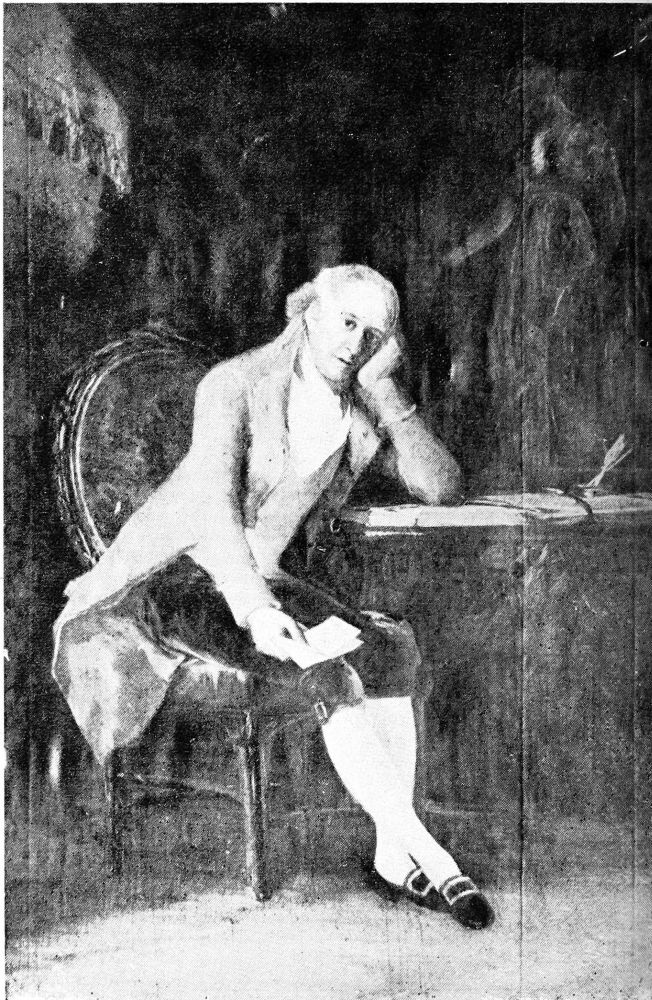
JASPAR MELCHOR DE JOVELLANOS.
(Marquesa de Villamajor, Madrid.)
PLATE 53.
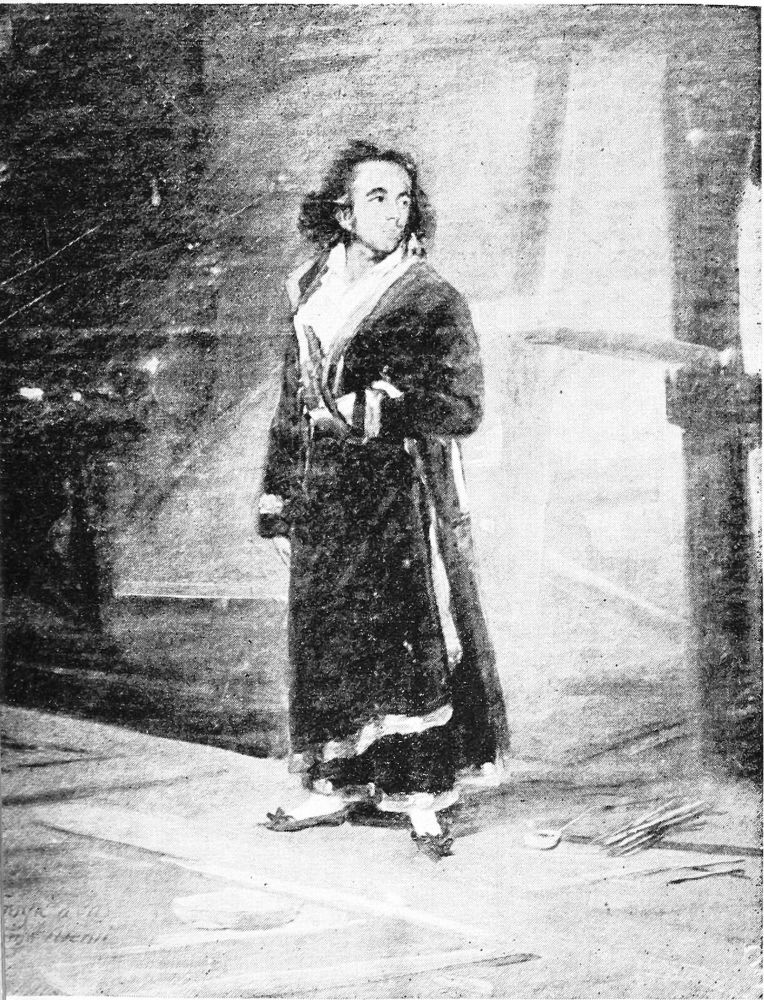
ASENSIO JULIA (‘EL PESCADORET’).
(Comtesse de Paris.)
PLATE 54.
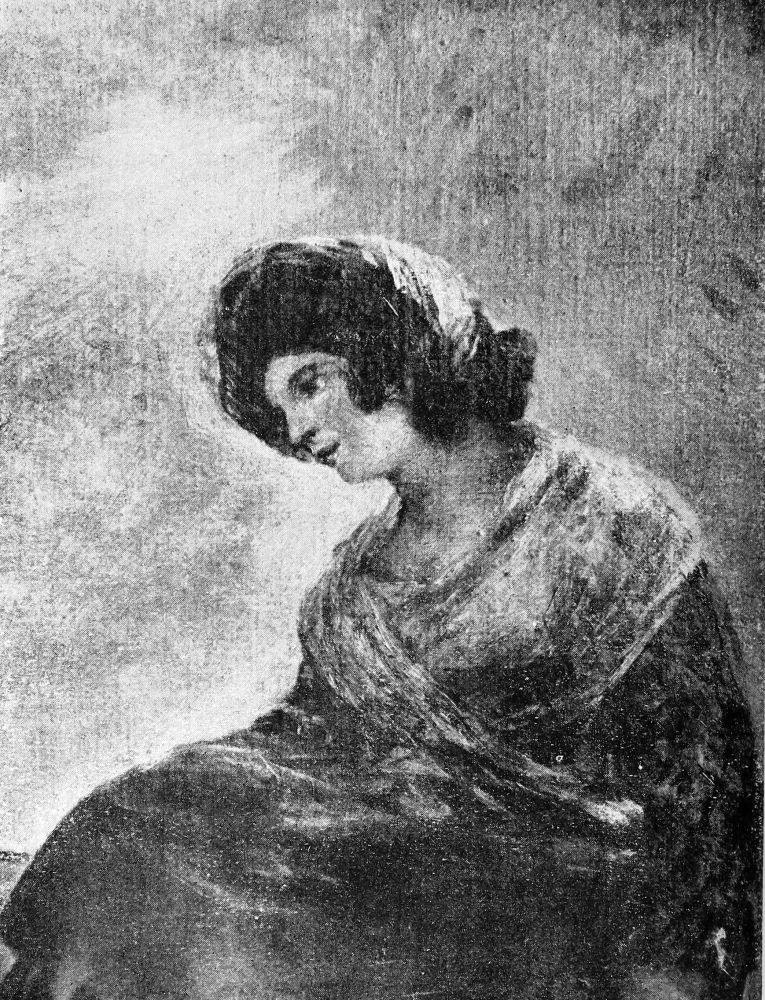
THE MILKMAID OF BORDEAUX.
(Condesa Vinda de Muguiro.)
PLATE 55.
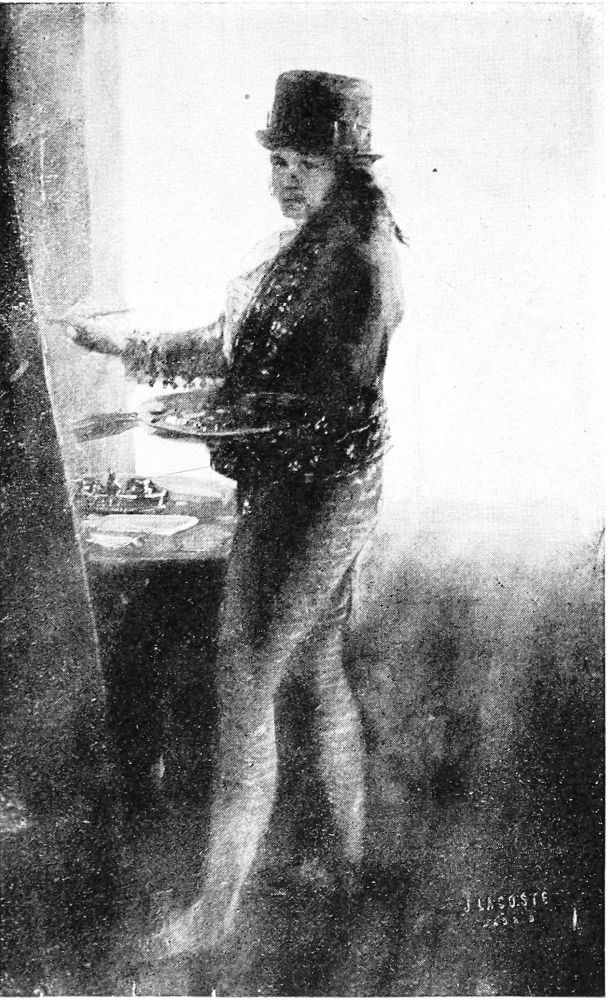
THE PAINTER ASENSIO JULIA (‘EL PESCADORET’).
(Louvre.)
PLATE 56.
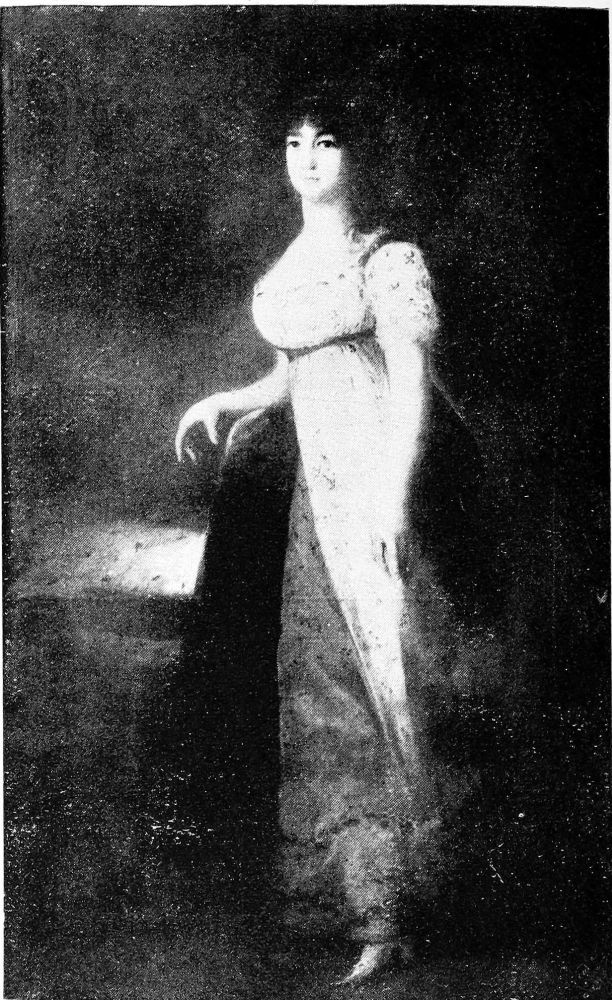
THE MARQUESA DE LAZAN.
(Comtesse de Montijo.)
PLATE 57.
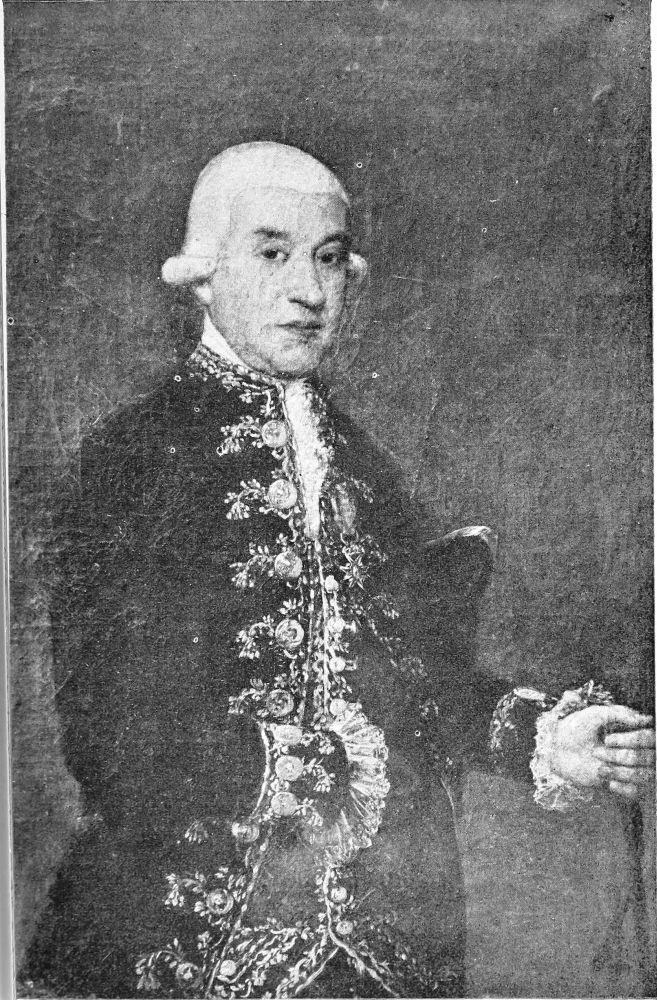
DON FRANCISCO LARRUMBE.
(The Bank of Spain, Madrid.)
PLATE 58.
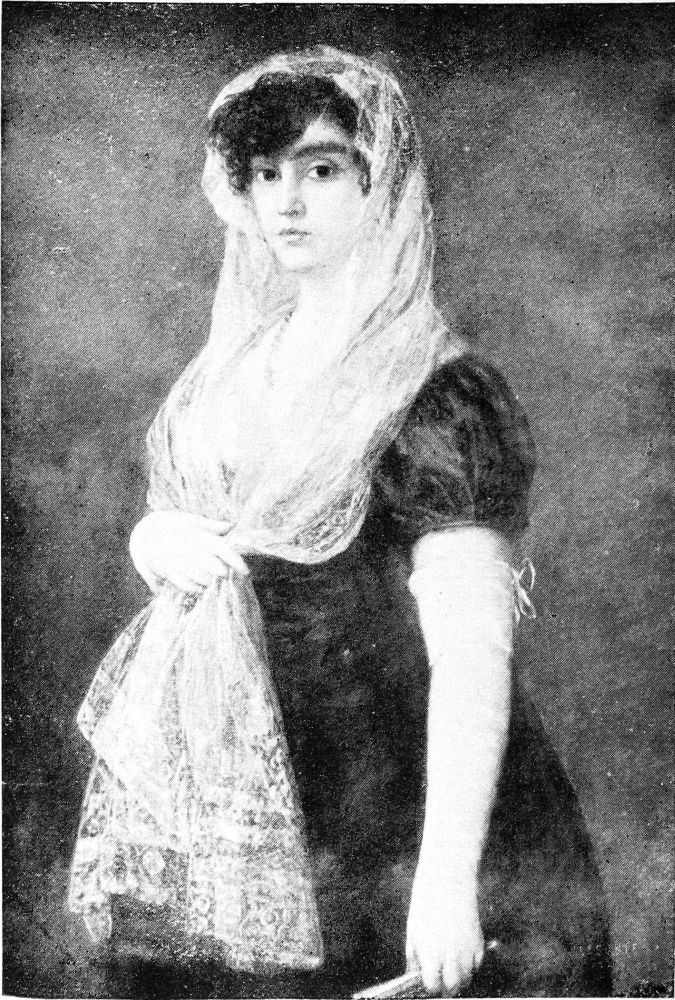
THE FAMOUS BOOKSELLER OF THE CALLE DE CARRETAS.
(Don Benito Garriga.)
PLATE 59.
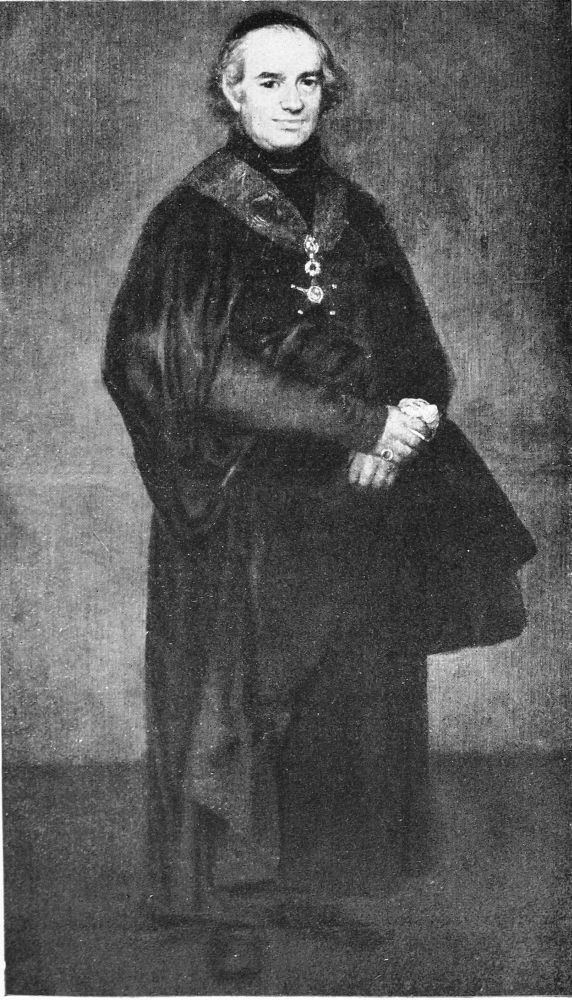
DON J. ANTONIO LLORENTE, HISTORIAN OF THE INQUISITION.
(Don Francisco Llorente y Garcia de Vinuesa.)
PLATE 60.
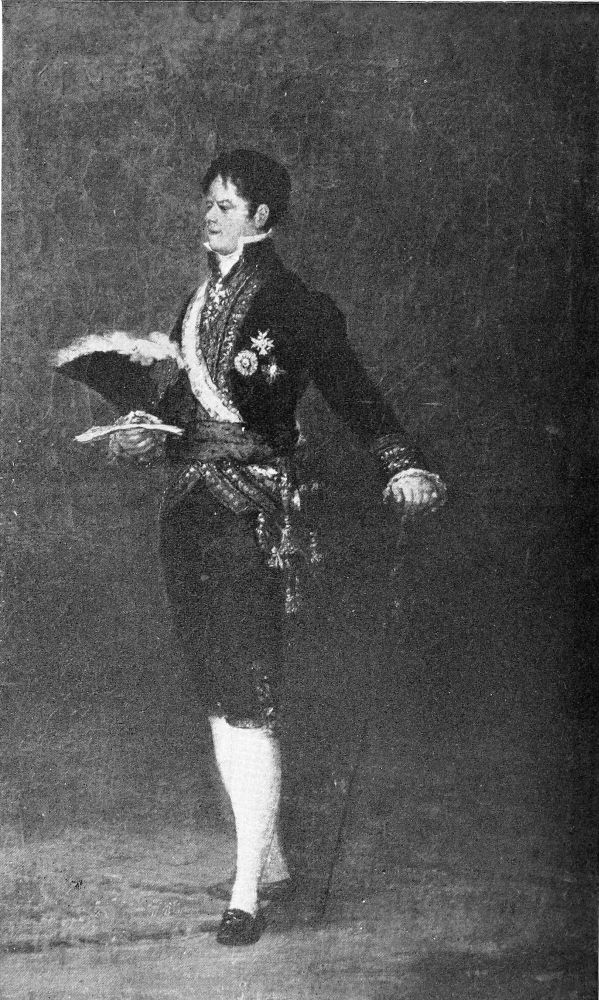
THE DUKE OF SAN CARLOS.
(Marques de la Torrecilla.)
PLATE 61.
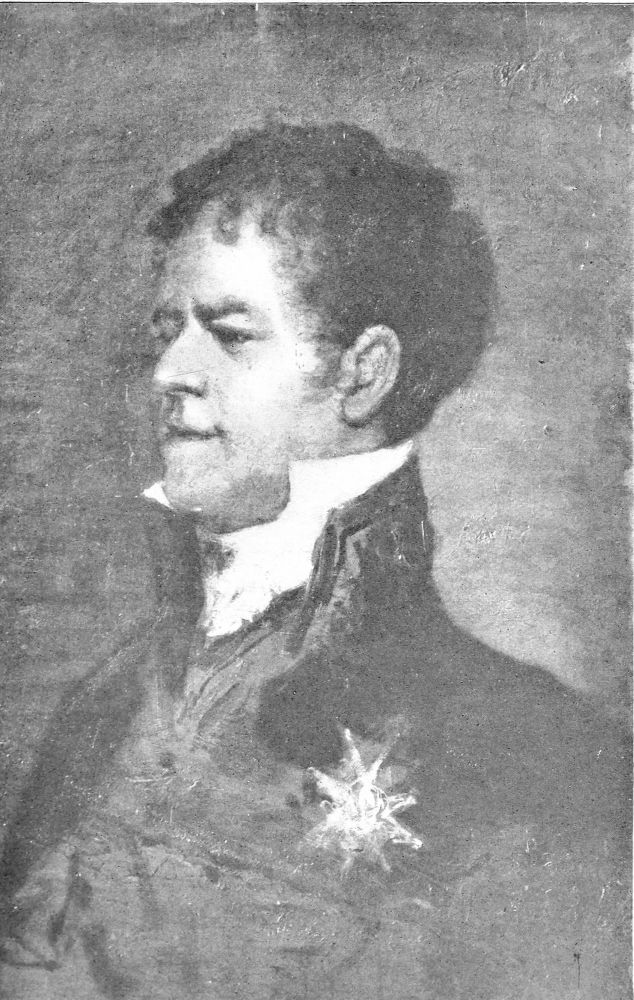
THE DUKE OF SAN CARLOS.
(Conde de Villagonzalo.)
PLATE 62.
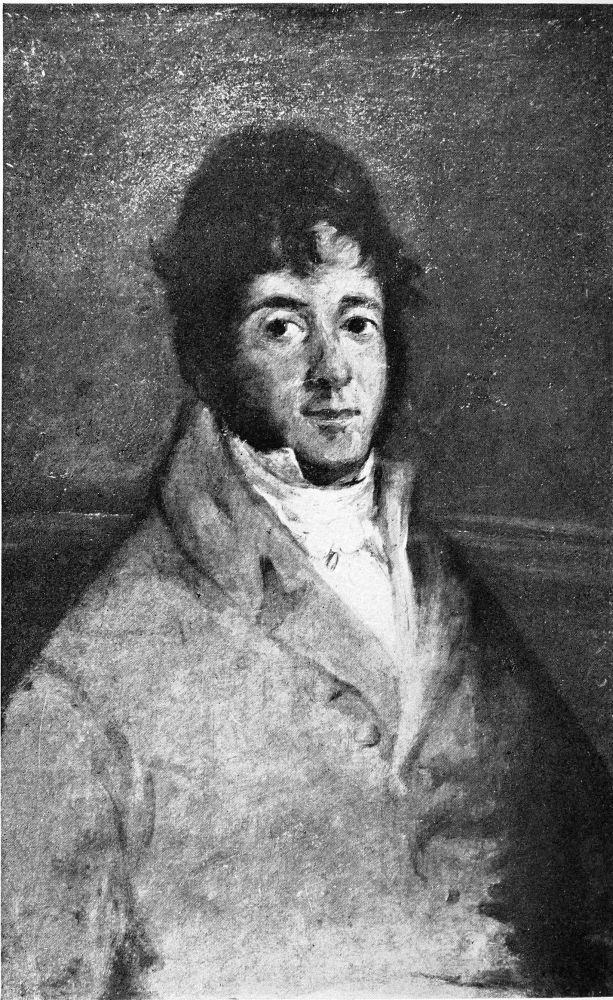
THE ACTOR ISIDORO MAIQUEZ.
(Prado, Madrid.)
PLATE 63.
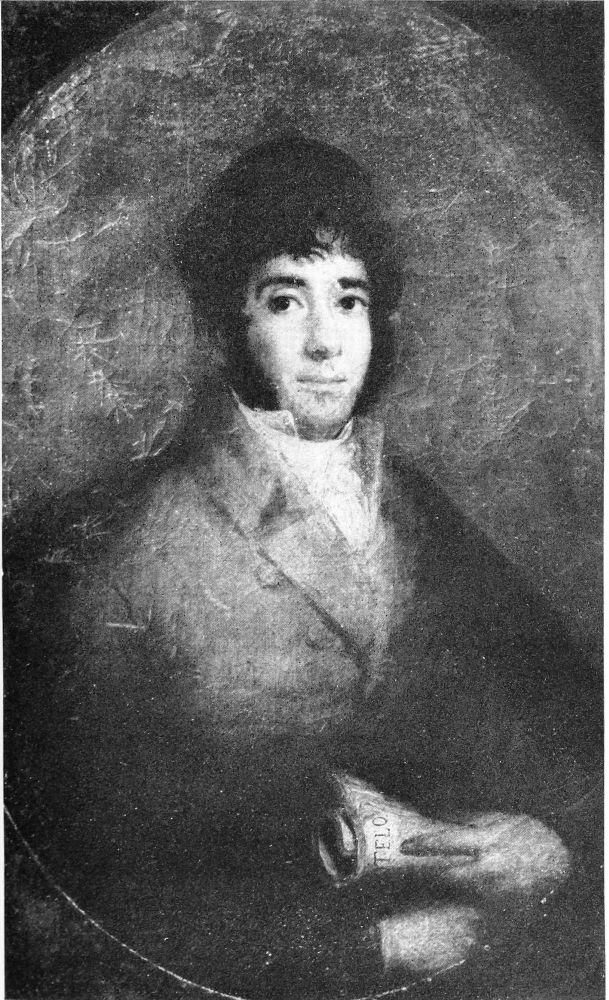
THE ACTOR ISIDORO MAIQUEZ: REPETITION OF THE FOREGOING.
(Marques de Casa Torres, Madrid.)
PLATE 64.
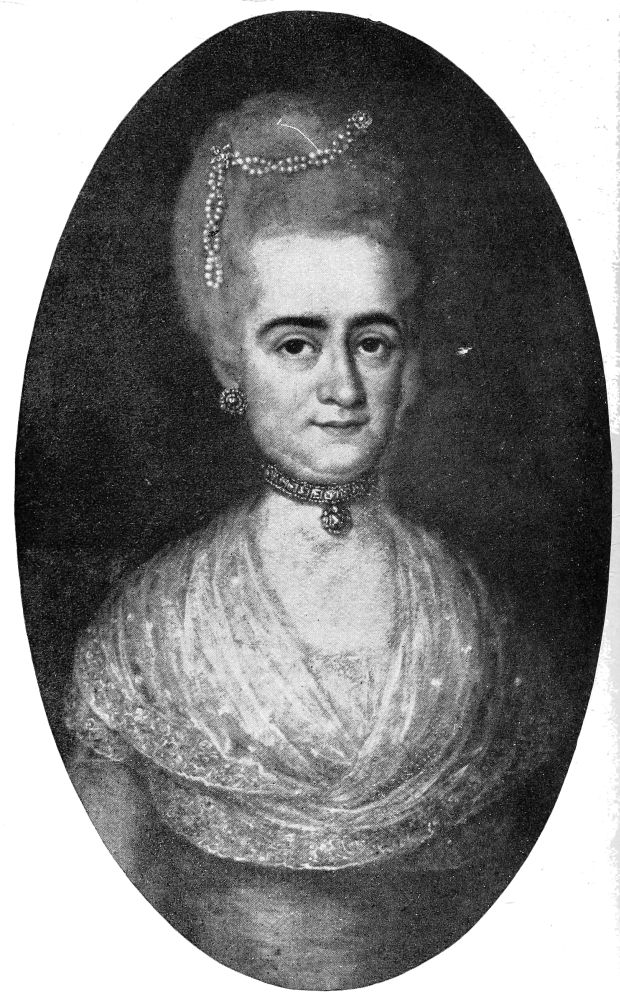
THE COUNTESS OF MIRANDA DEL CASTAÑAR.
(Formerly in Montijo Collection.)
PLATE 65.
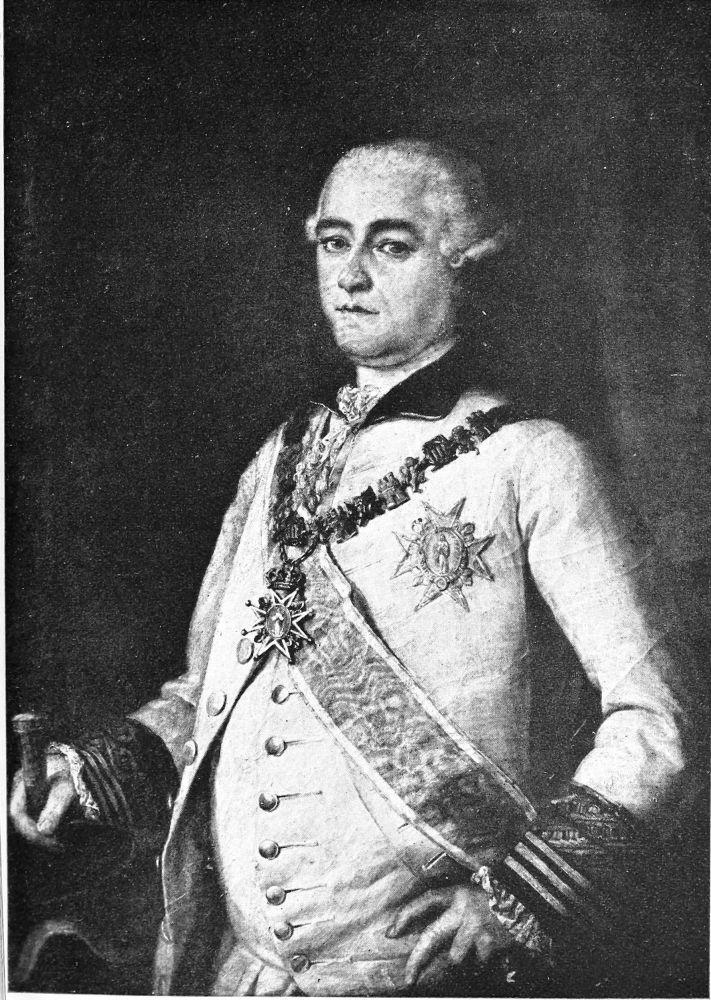
THE CONDE DE MIRANDA.
PLATE 66.
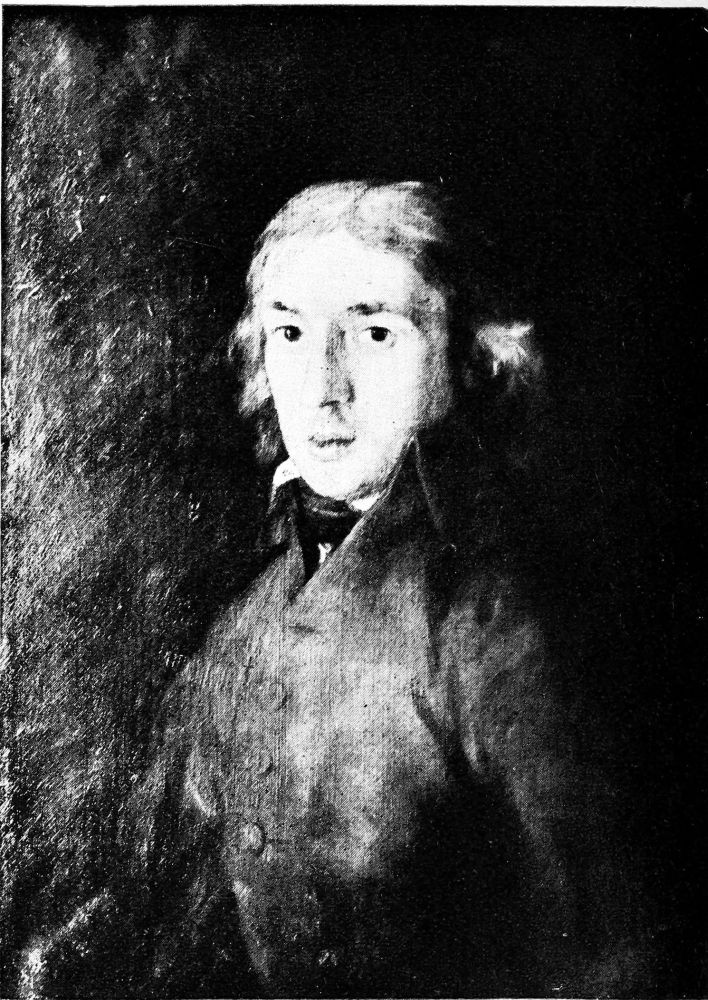
LEANDRO FERNANDEZ DE MORATIN.
(Academy of St. Ferdinand, Madrid.)
PLATE 67.
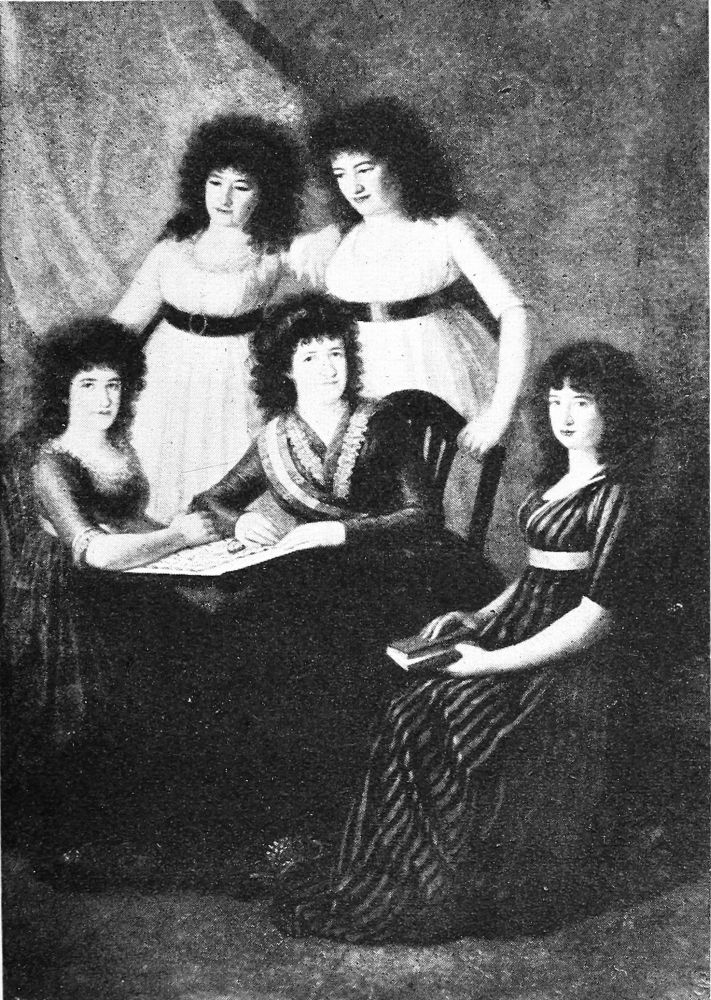
THE FAMILY OF THE COUNTESS OF MONTIJO.
(Palacio de Liria, Madrid.)
PLATE 68.
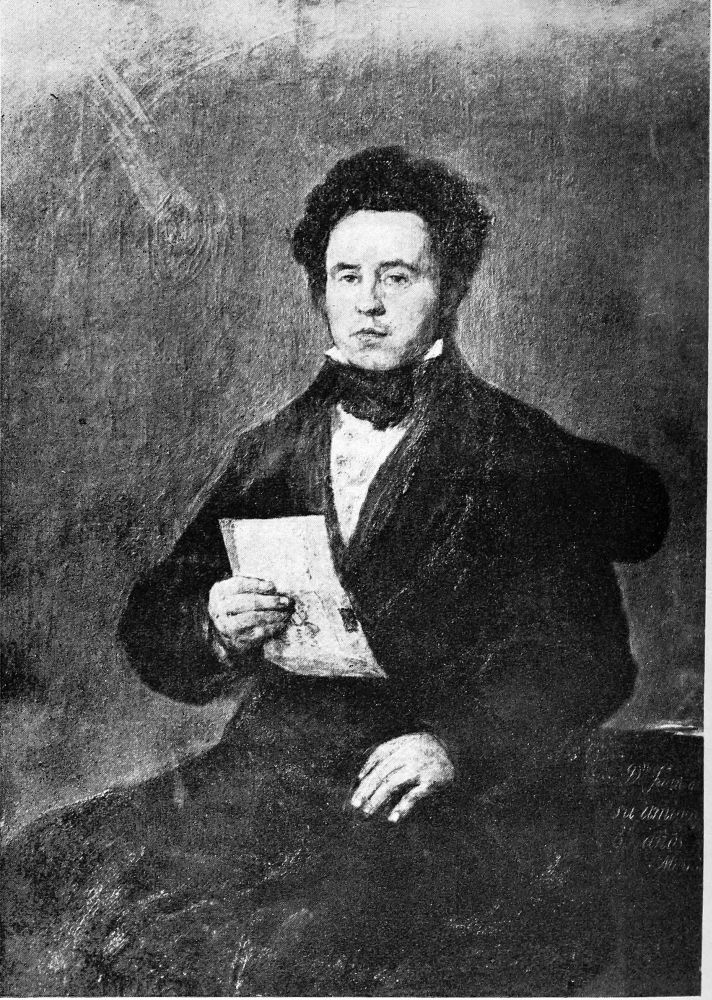
SEÑOR J. B. DE MUGUIRO.
(Condesa Vinda de Muguiro.)
PLATE 69.
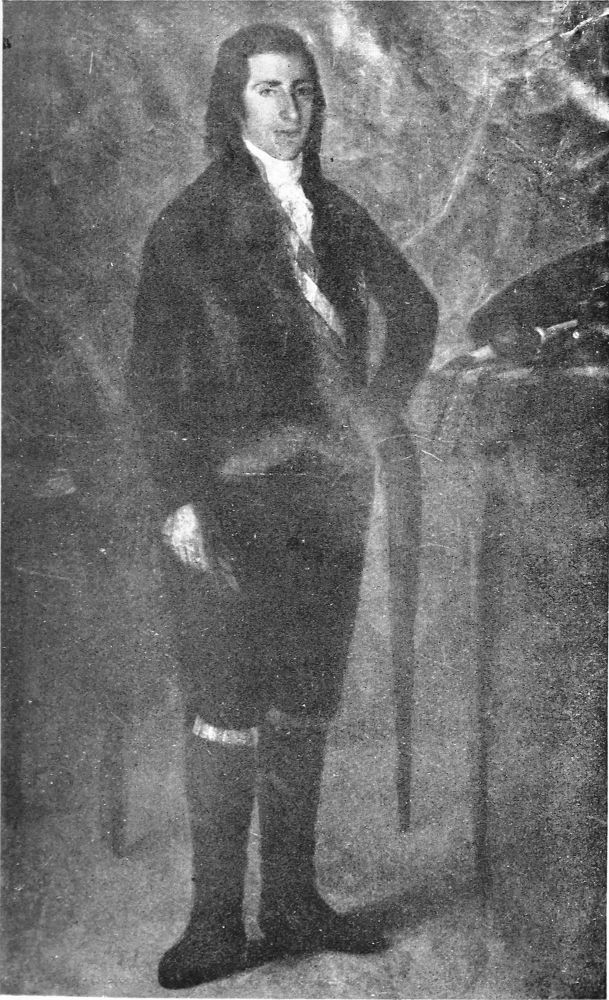
THE MARQUES DE CASTRO TERREÑO.
PLATE 70.
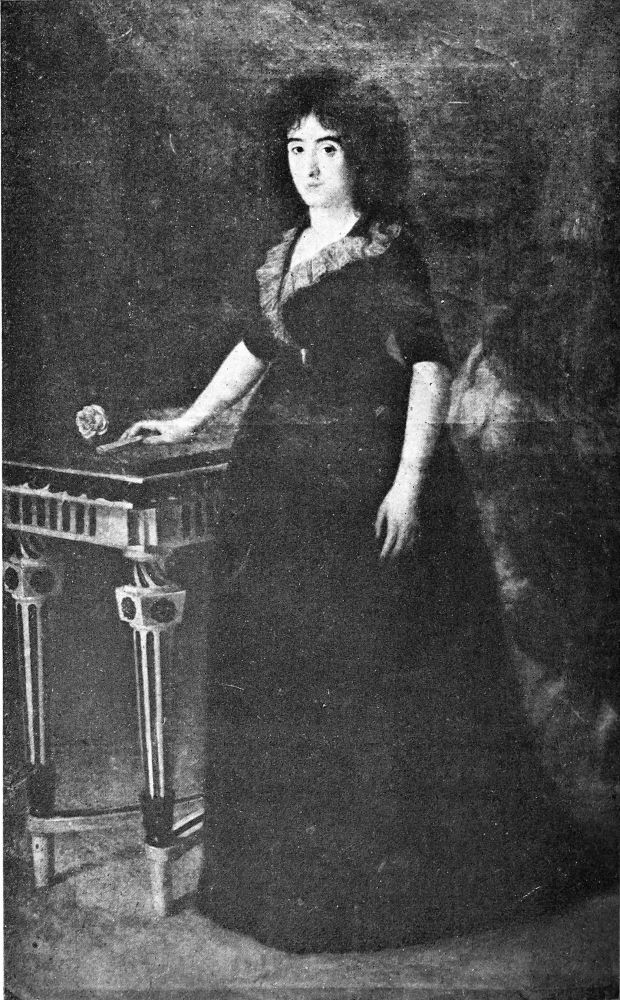
THE MARQUESA DE CASTRO TERREÑO.
PLATE 71.
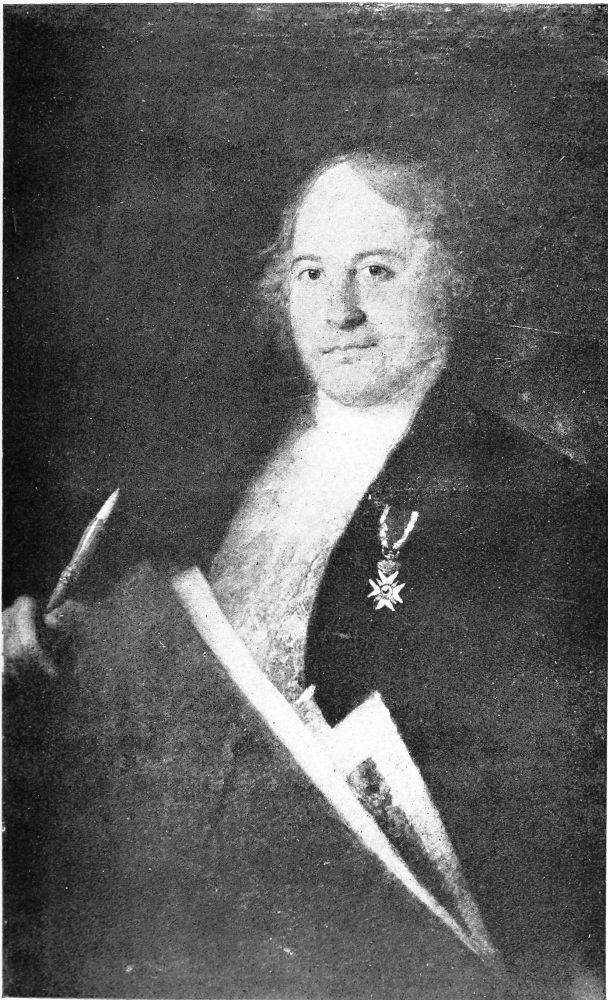
CAMARÓN.
(Doña E. Camarón.)
PLATE 72.
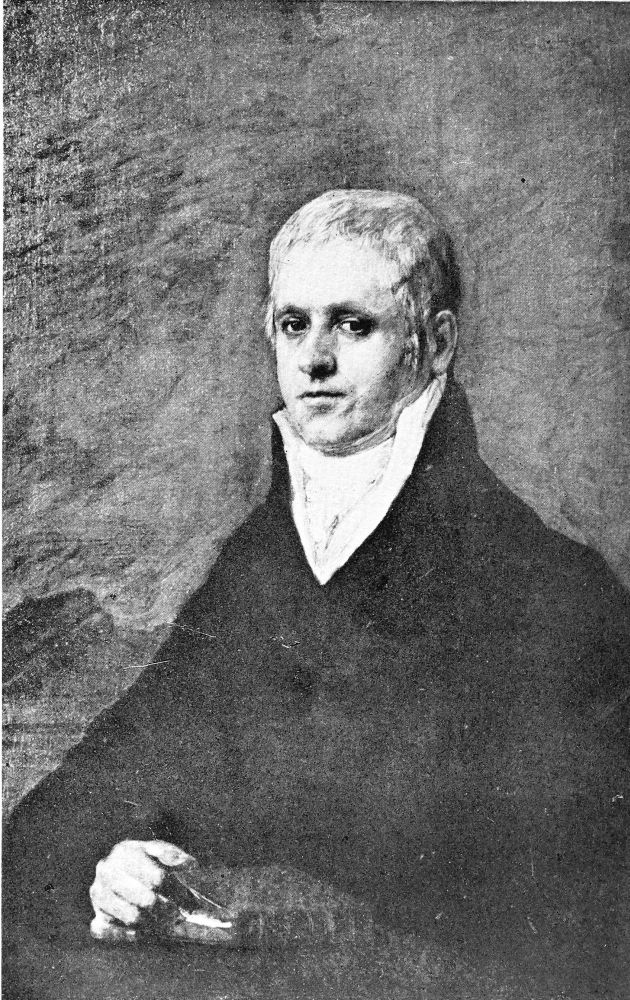
MUÑARRIZ.
(Academy of St. Ferdinand, Madrid.)
PLATE 73.
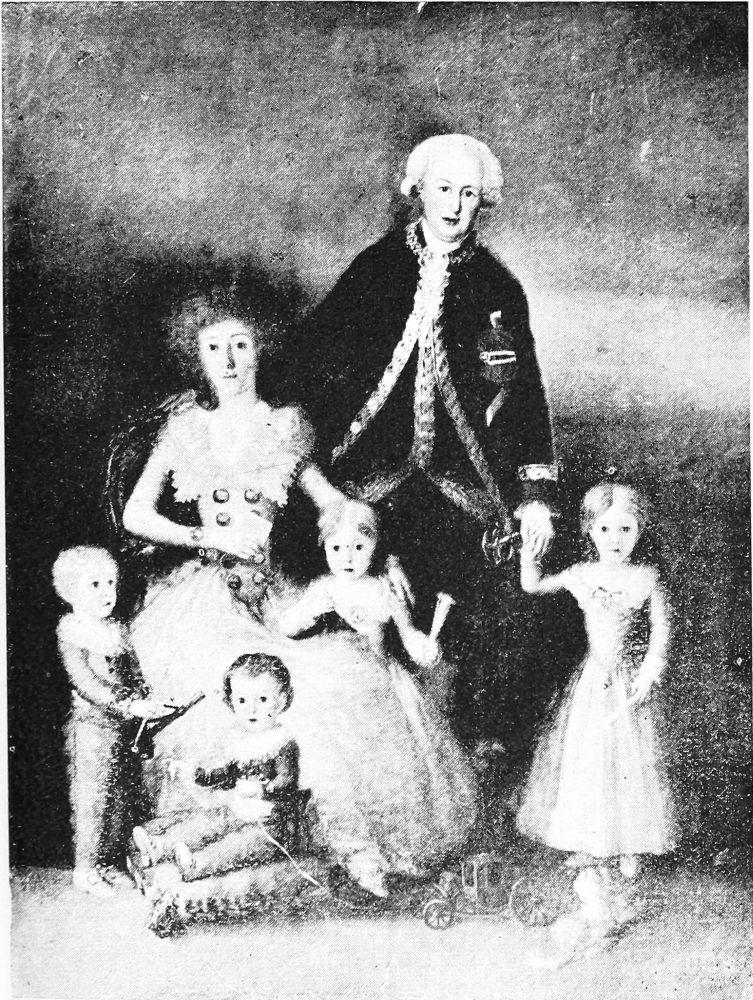
THE DUKE OF OSUNA, WITH HIS FAMILY.
(Prado, Madrid.)
PLATE 74.
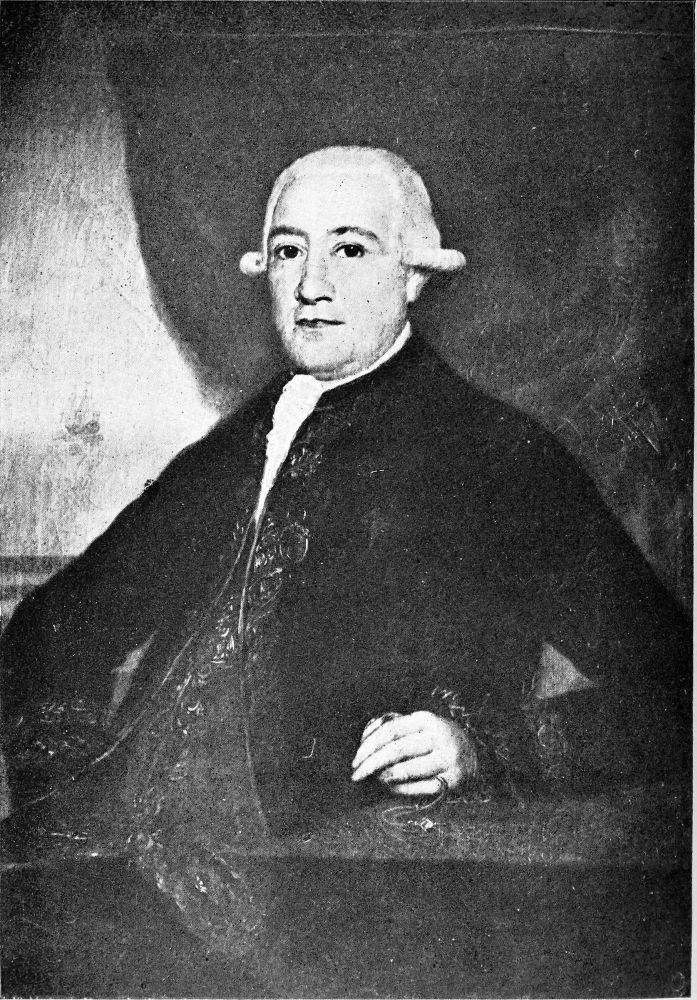
ADMIRAL MAZAREDO.
(Don M. Hernando.)
PLATE 75.
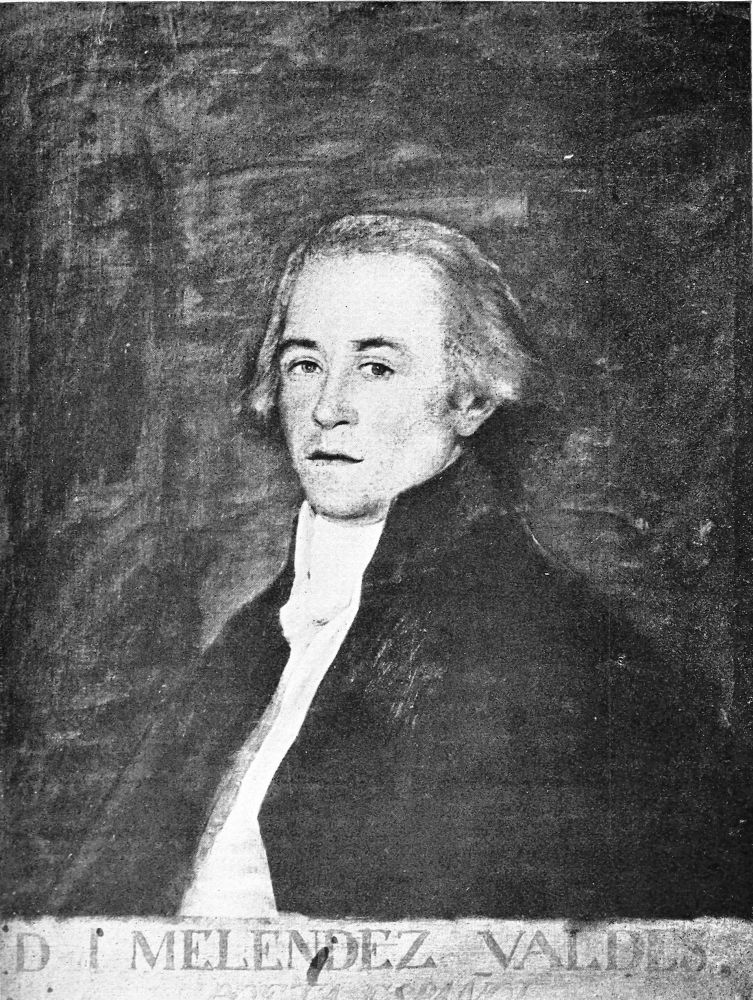
MELÉNDEZ VALDÉS.
(Señor Suárez Inclán.)
PLATE 76.
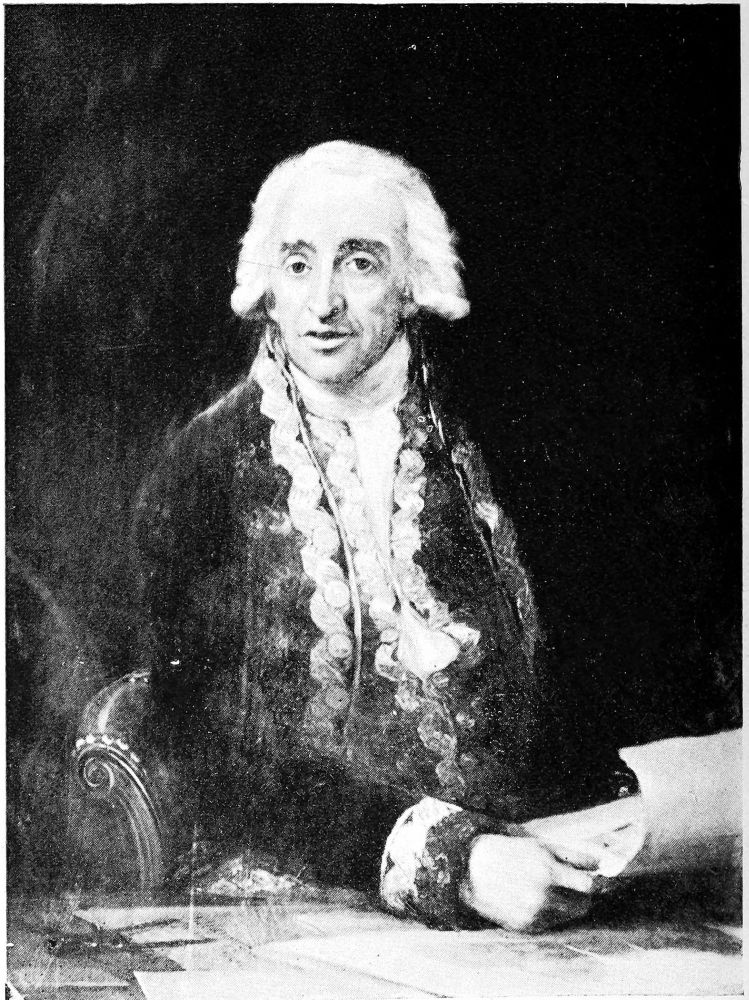
THE DUKE OF OSUNA.
(Formerly in the Collection of the Duke of Osuna.)
PLATE 77.
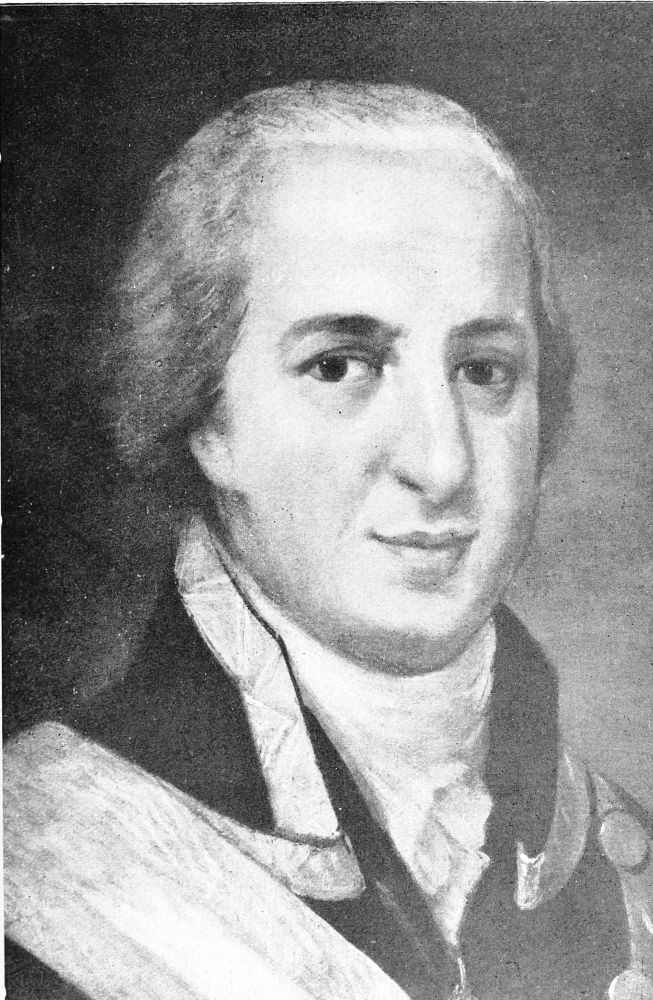
THE DUKE OF OSUNA.
(? Marquesa de Villamajor, Madrid.)
PLATE 78.
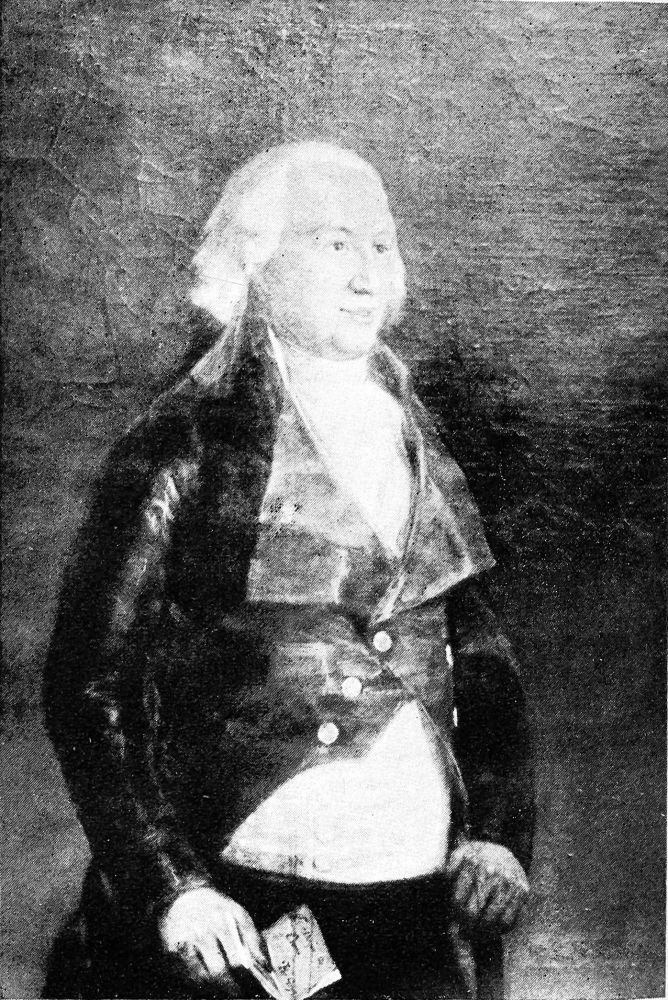
THE DUKE OF OSUNA.
(M. Duniat, Paris.)
PLATE 79.
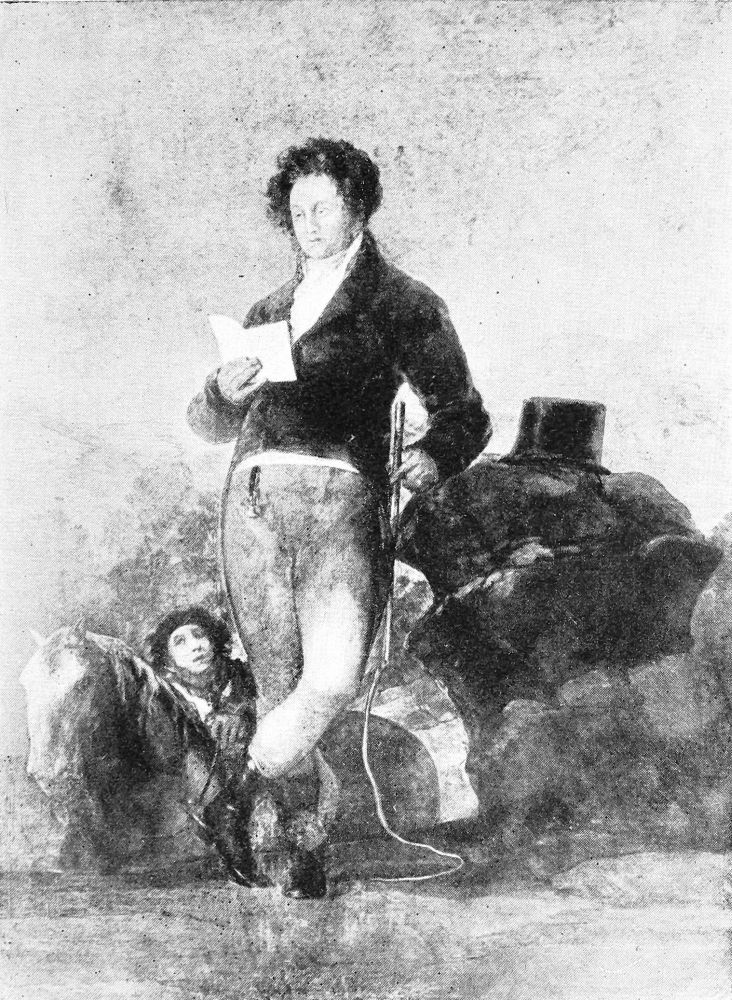
THE DUKE OF OSUNA.
(Formerly in the Palace of the Duke of Osuna, Madrid.)
PLATE 80.
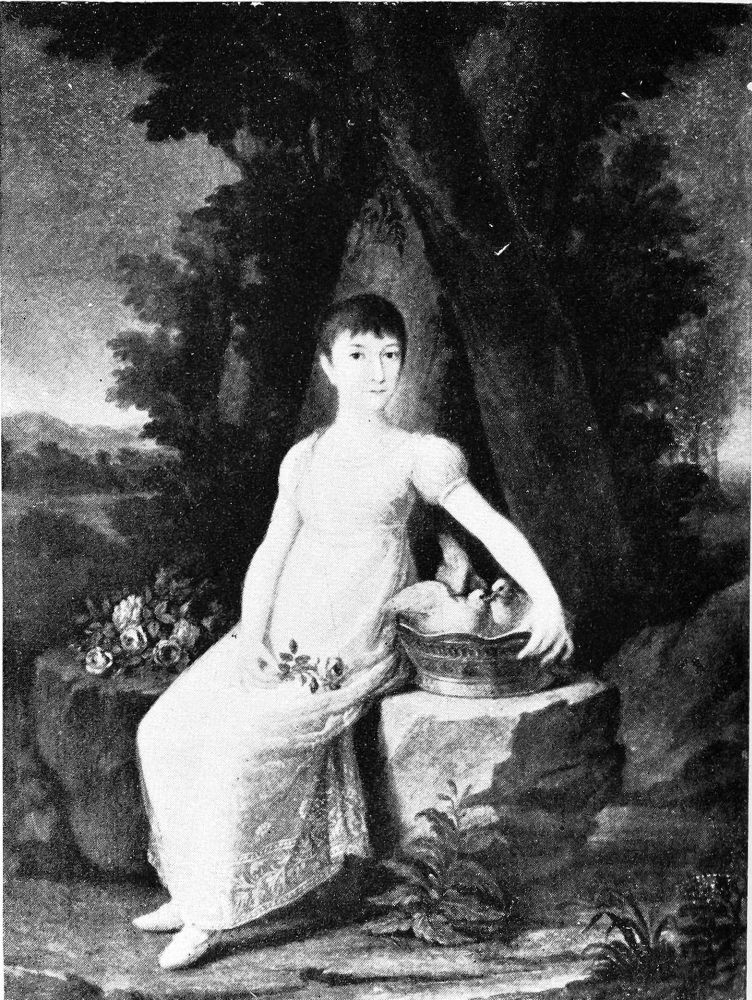
DUCHESS DEL PARQUE.
(Marques de la Vega, Madrid.)
PLATE 81.
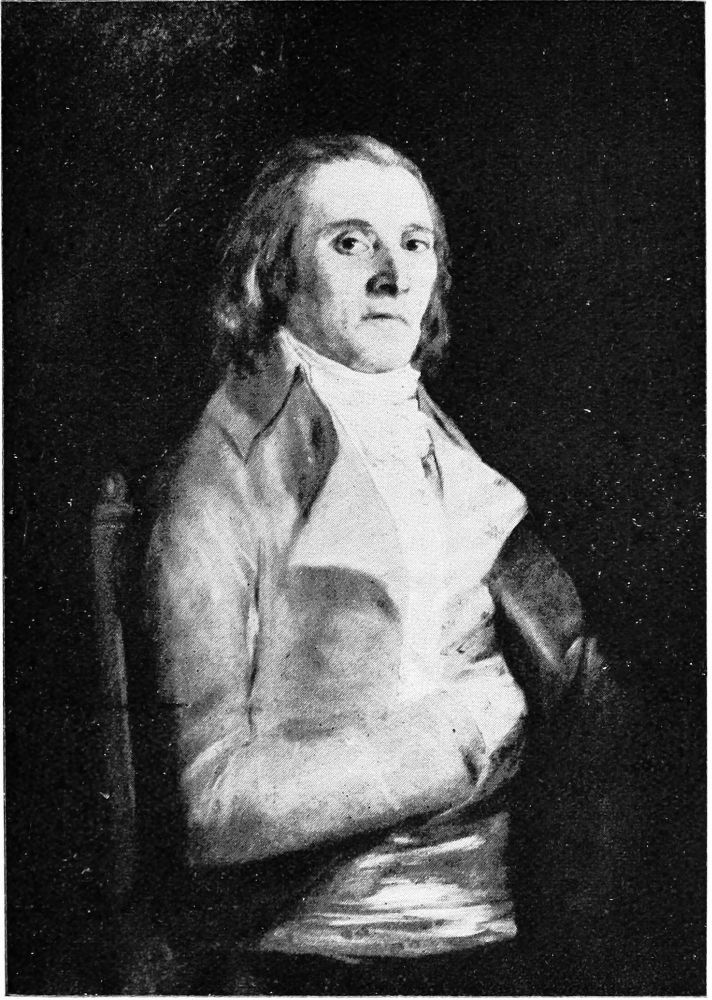
DOCTOR PEYRAL.
(National Gallery, London.)
PLATE 82.
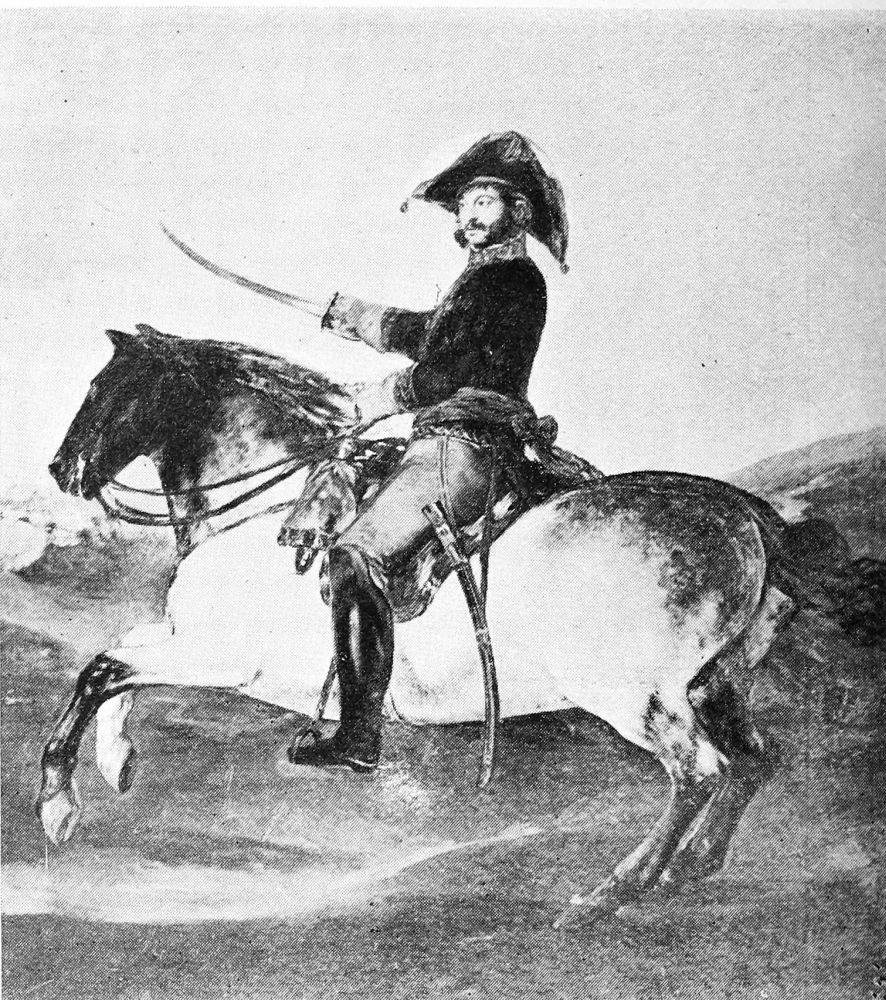
GENERAL PALAFOX.
(Prado, Madrid.)
PLATE 83.
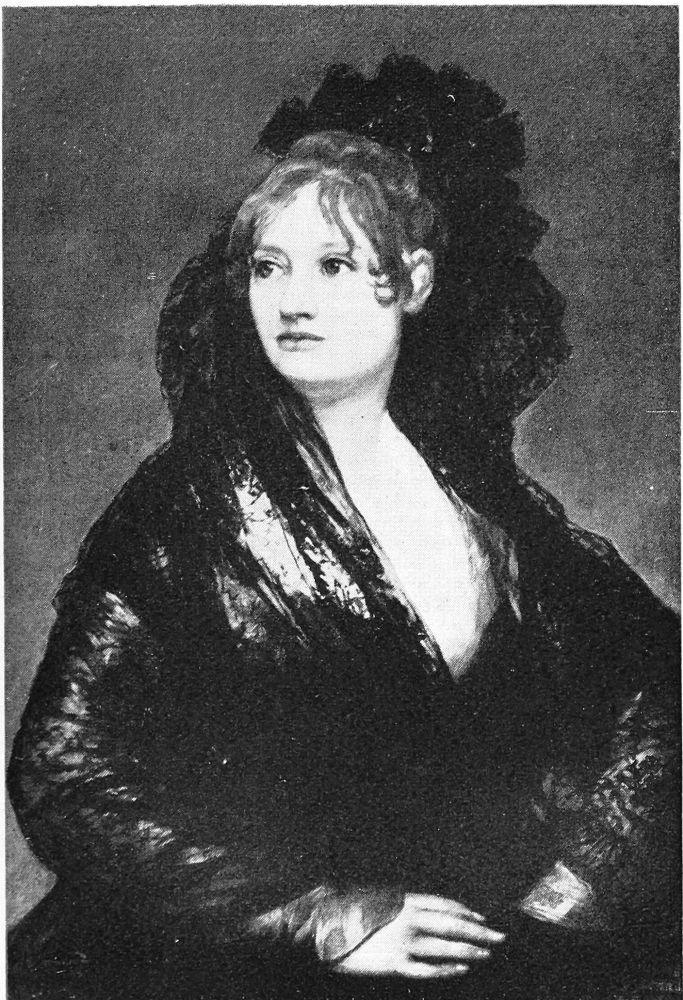
DOÑA ISABEL CORBO DE PORCEL.
(National Gallery, London.)
PLATE 84.
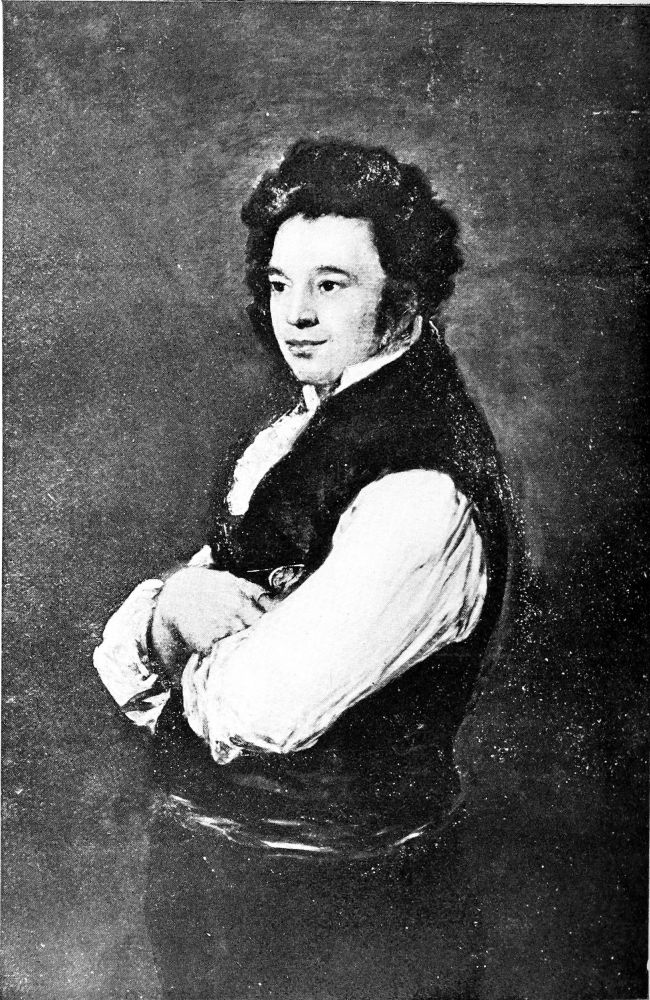
DON TIBURCIO PEREZ.
(D. F. Duran and Cuervo.)
PLATE 85.
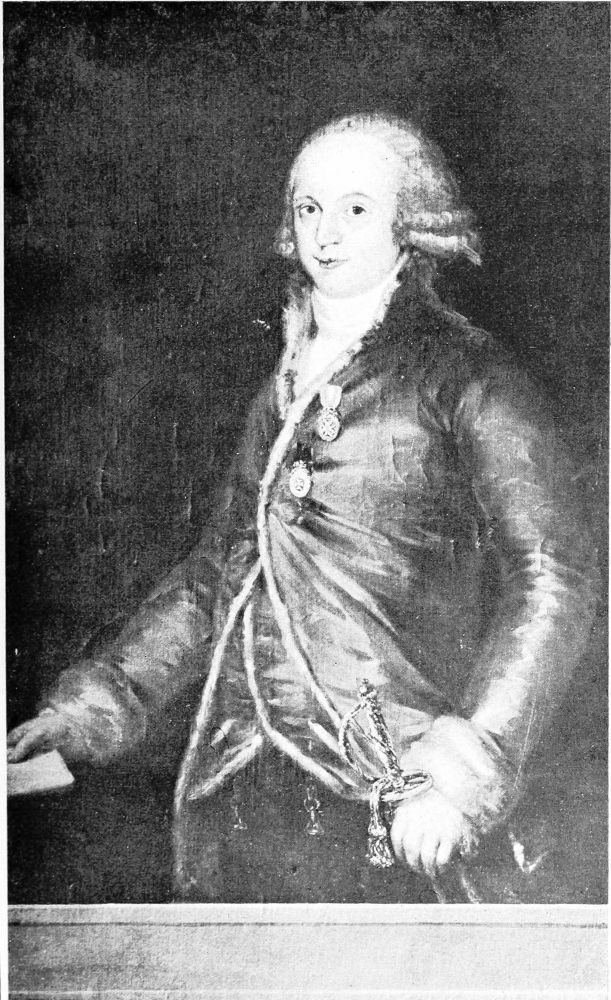
DON MARIANO LUIS DE URQUIJO.
(Academy of History, Madrid.)
PLATE 86.
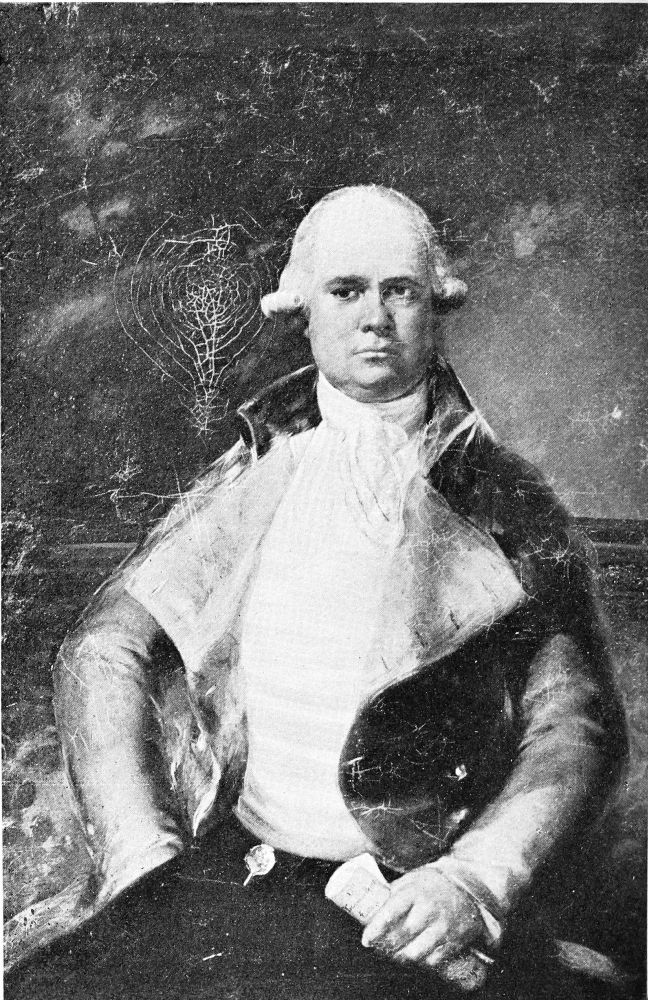
DON TOMÁS PÉREZ ESTALA.
(Countess of Cedillo.)
PLATE 87.
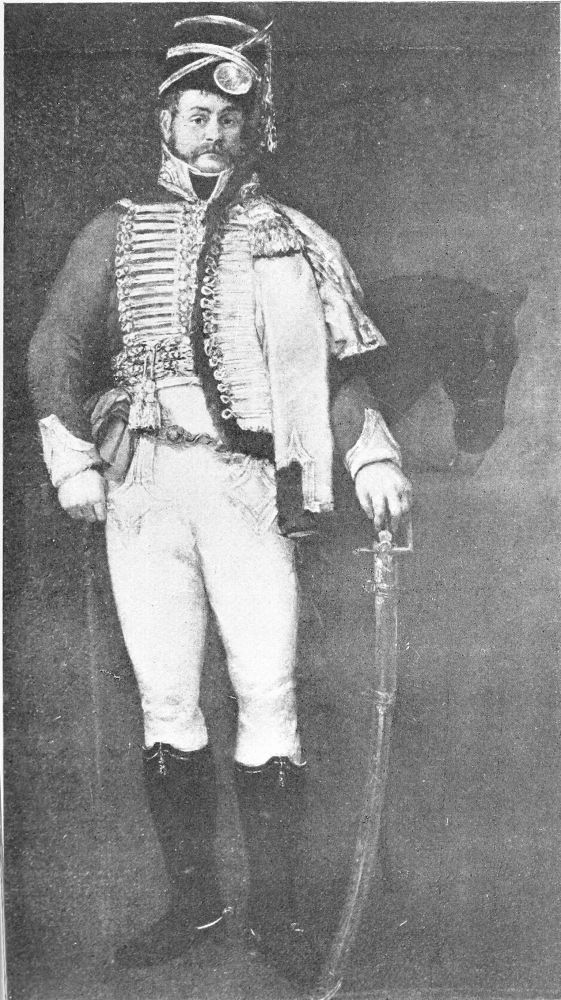
DON PANTALEÓN PEREZ DE NENIN.
(Don P. Labat.)
PLATE 88.
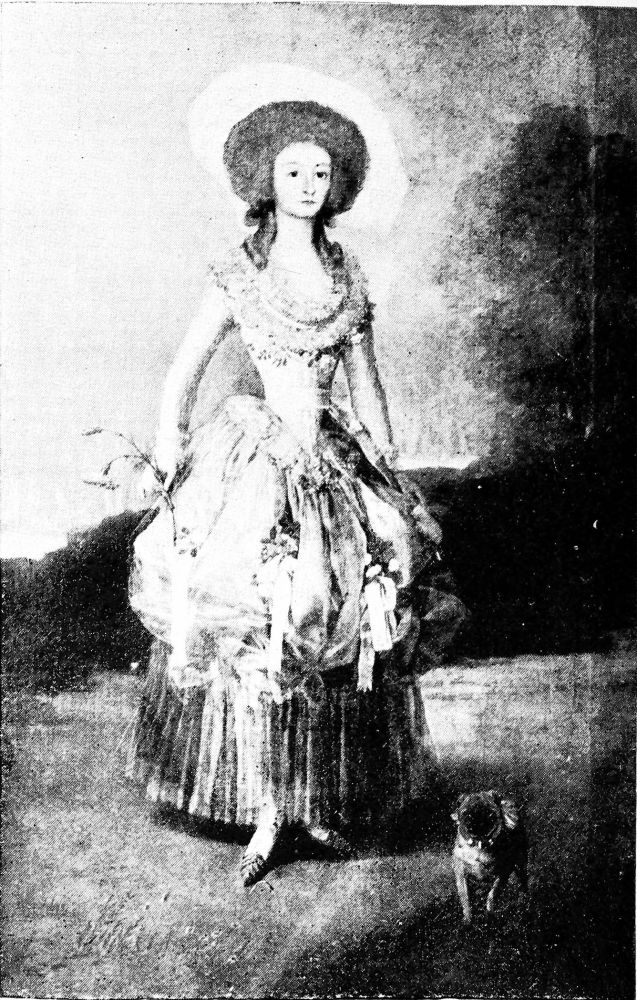
THE MARQUESA DE PONTEJOS.
(Marques de Martorell.)
PLATE 89.
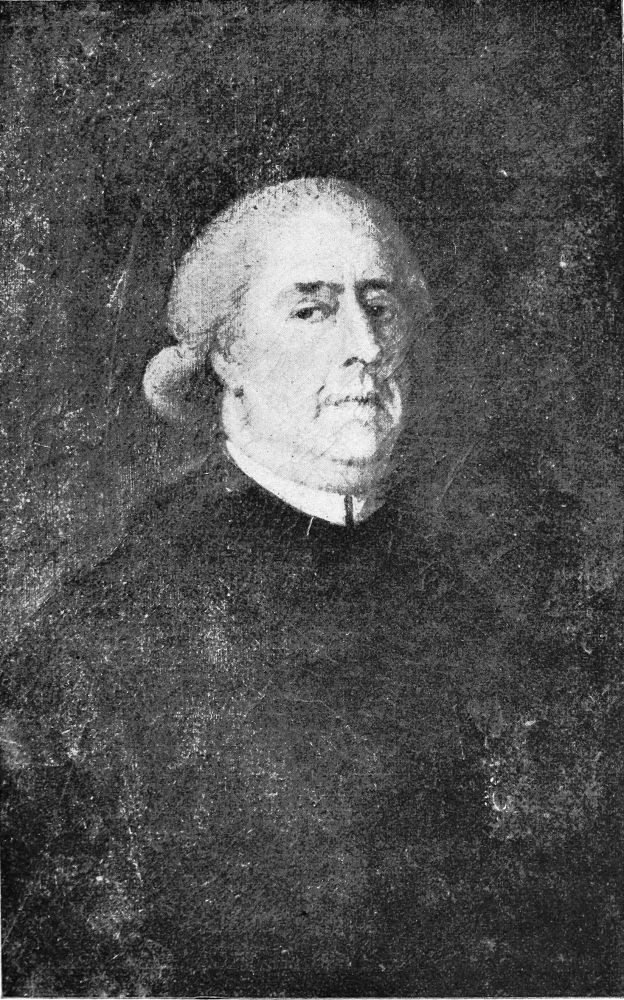
DON RAMON PIGNATELLI.
(Duquesa de Villahermosa.)
PLATE 90.
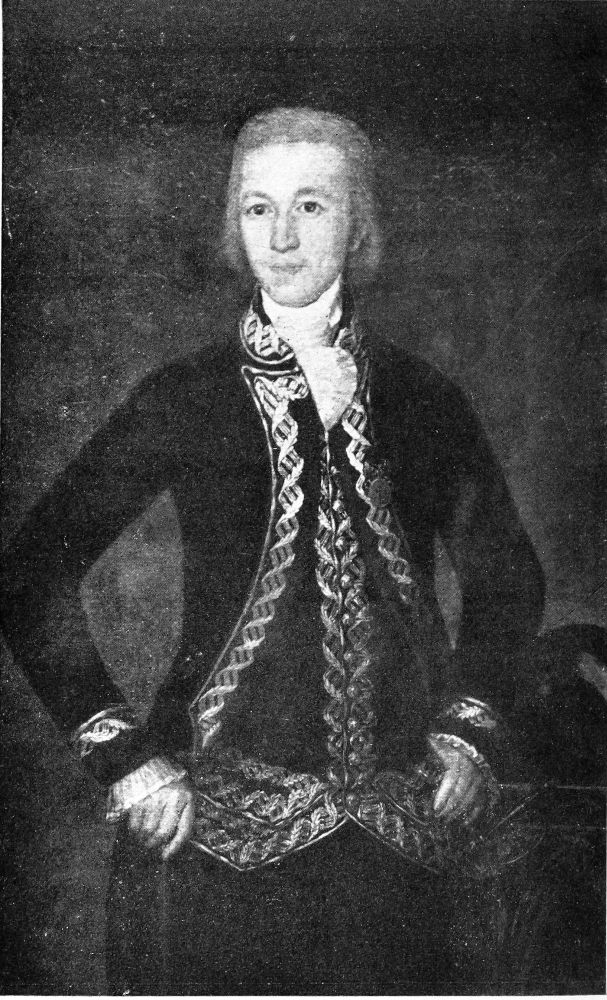
GENERAL RICARDOS.
(Madrid.)
PLATE 91.
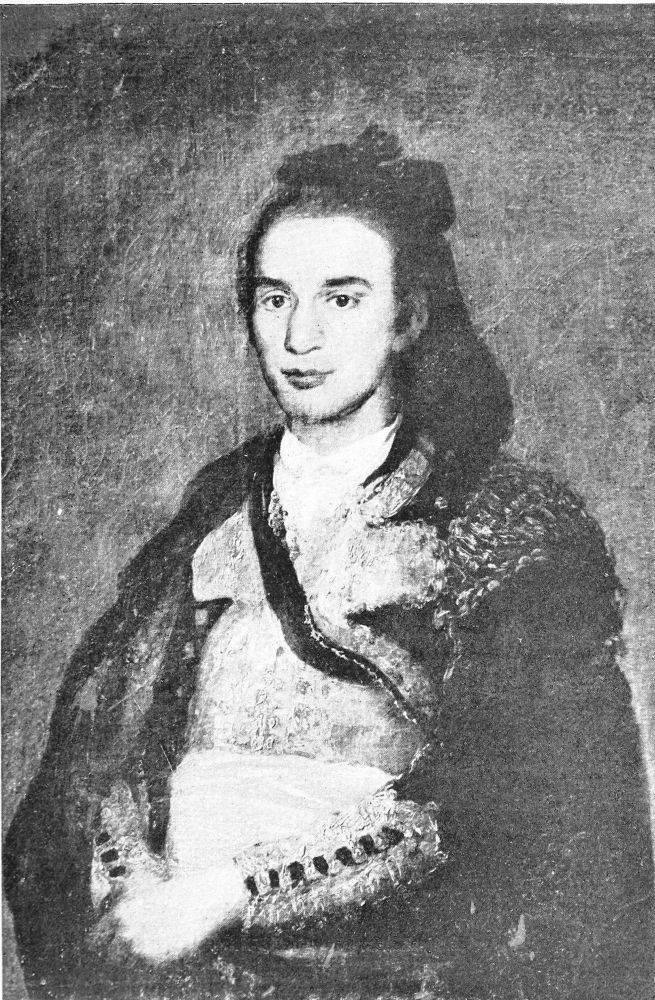
THE TOREADOR JOSÉ ROMERO.
(Madrid.)
PLATE 92.
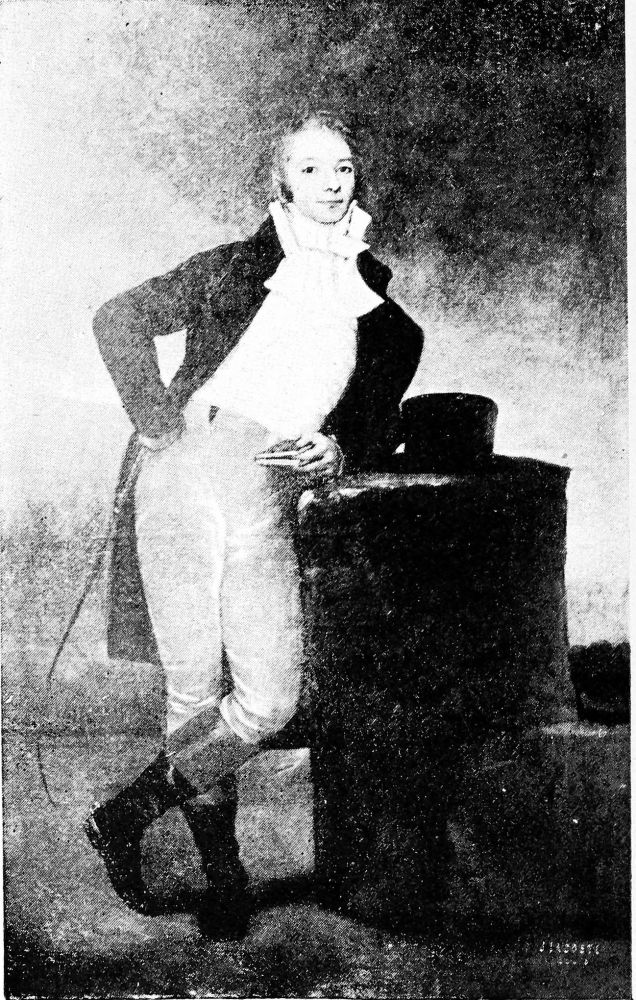
MARQUES DE SAN ADRIÁN.
(In the Collection of the Family.)
PLATE 93.
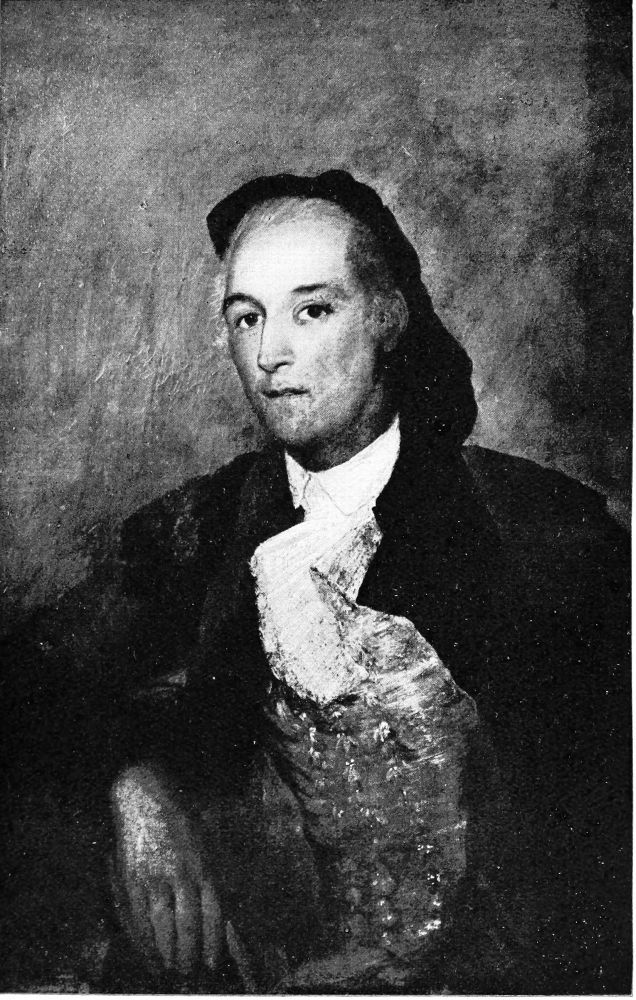
THE MATADOR PEDRO ROMERO.
(Duke of Veragua.)
PLATE 94.
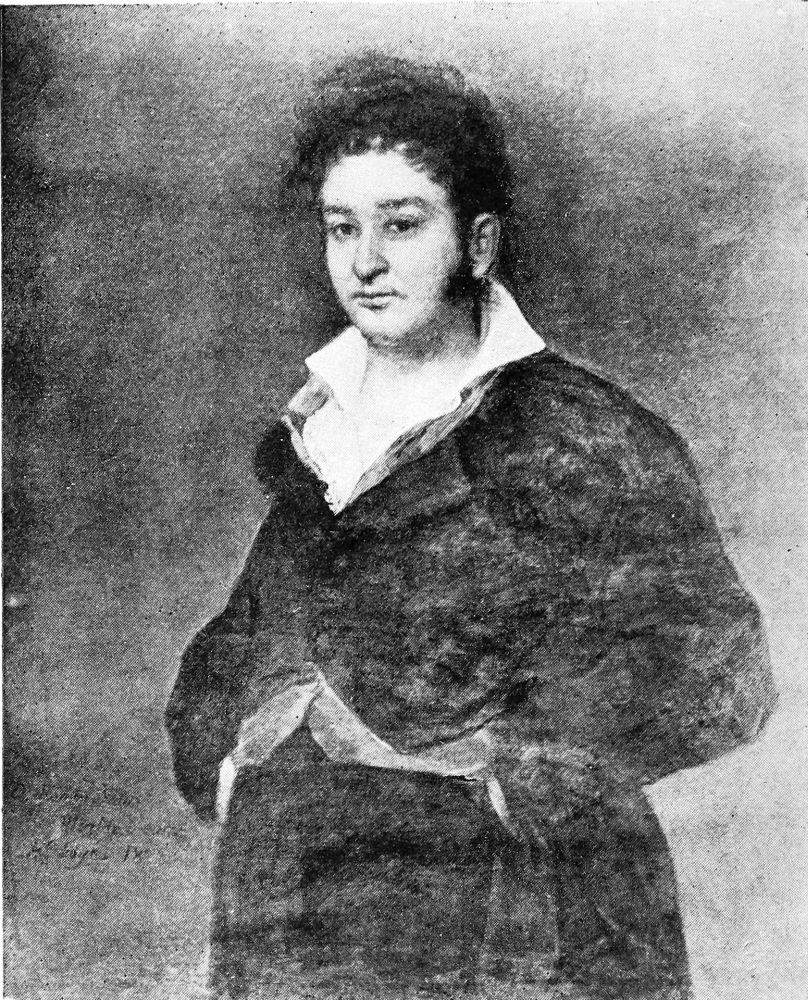
RAMON SATUE, IN 1823 (ALCAIDE DE CORTE).
(Dr. Benito Garriga.)
PLATE 95.
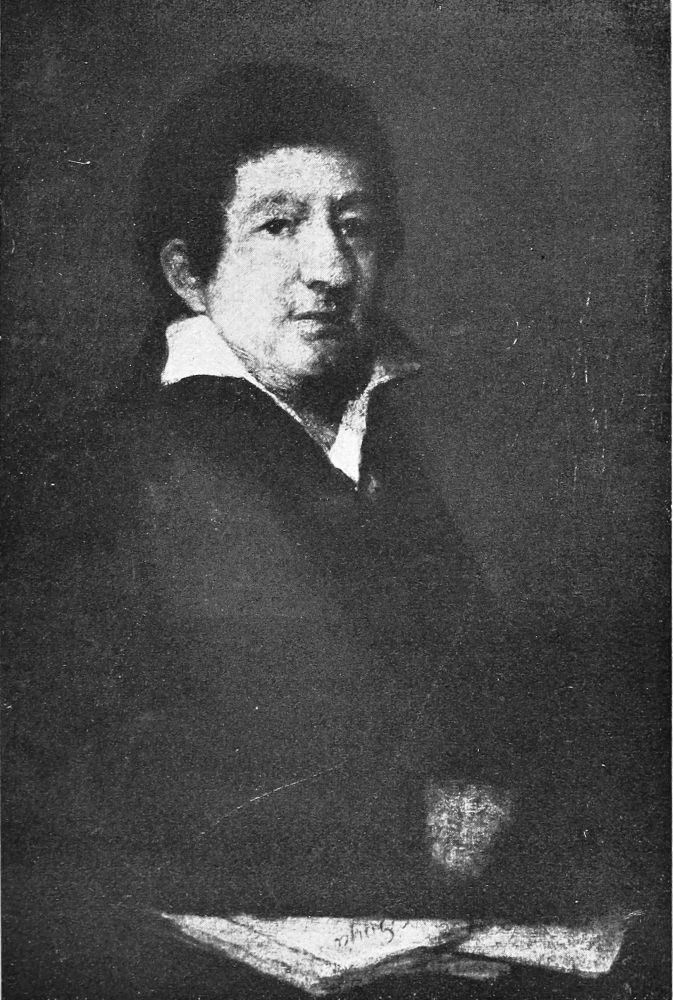
DON MANUEL SILVELA.
(Don F. Silvela.)
PLATE 96.
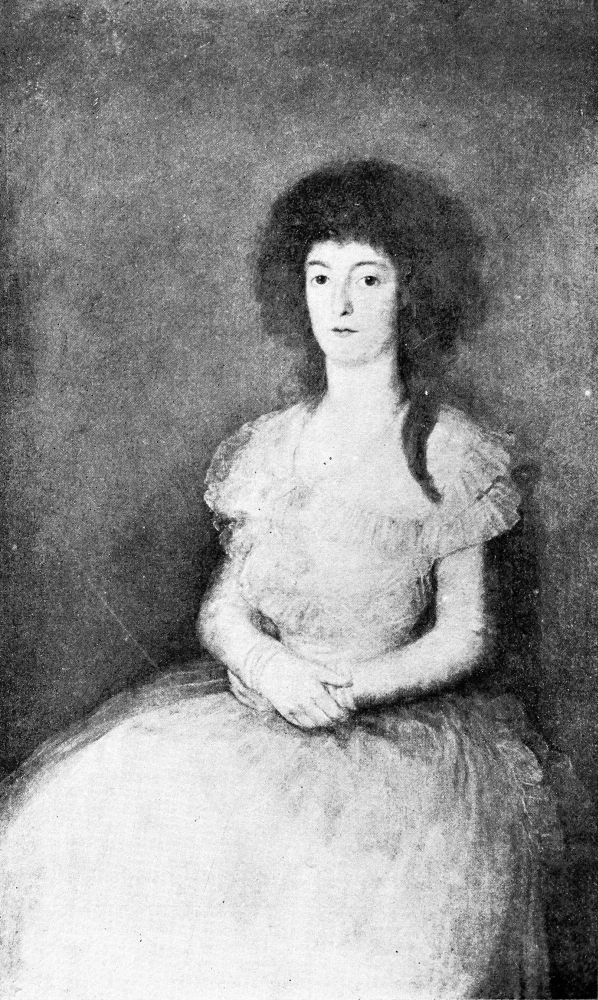
DOÑA MARIA TERESA APODACA DE SESMA.
(Don Andres Arteta.)
PLATE 97.
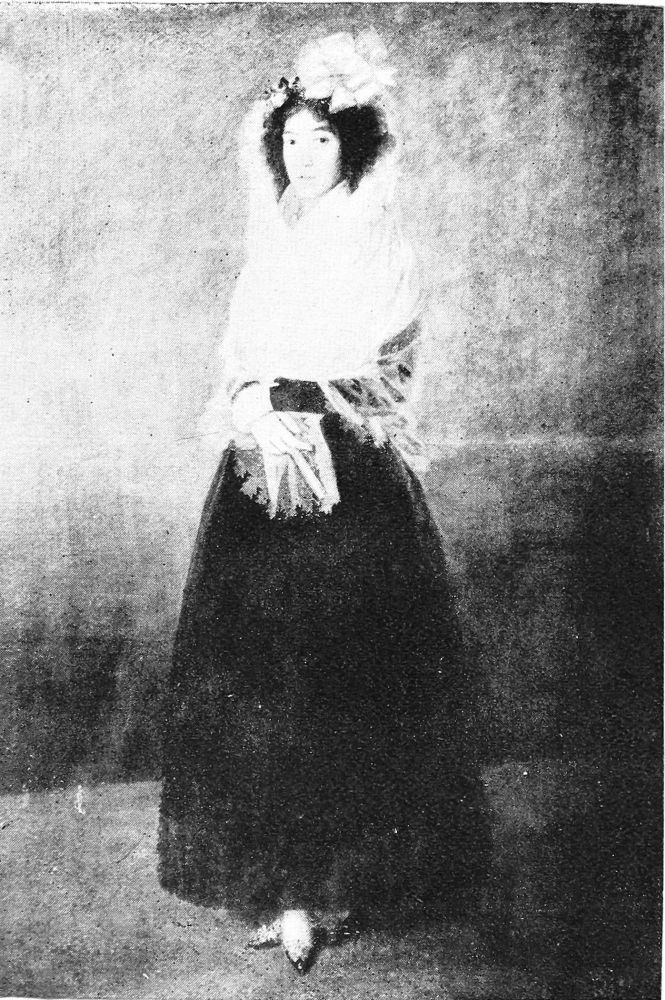
MARQUESA DE LA SOLANA.
(Marques del Socorro.)
PLATE 98.
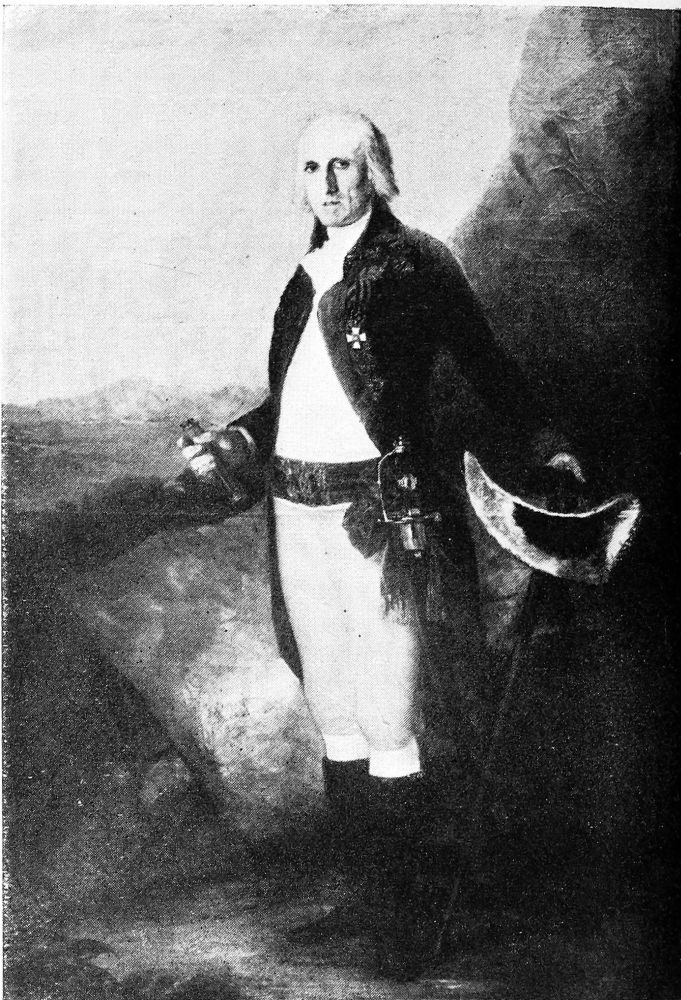
GENERAL URRUTIA.
(Prado, Madrid.)
PLATE 99.
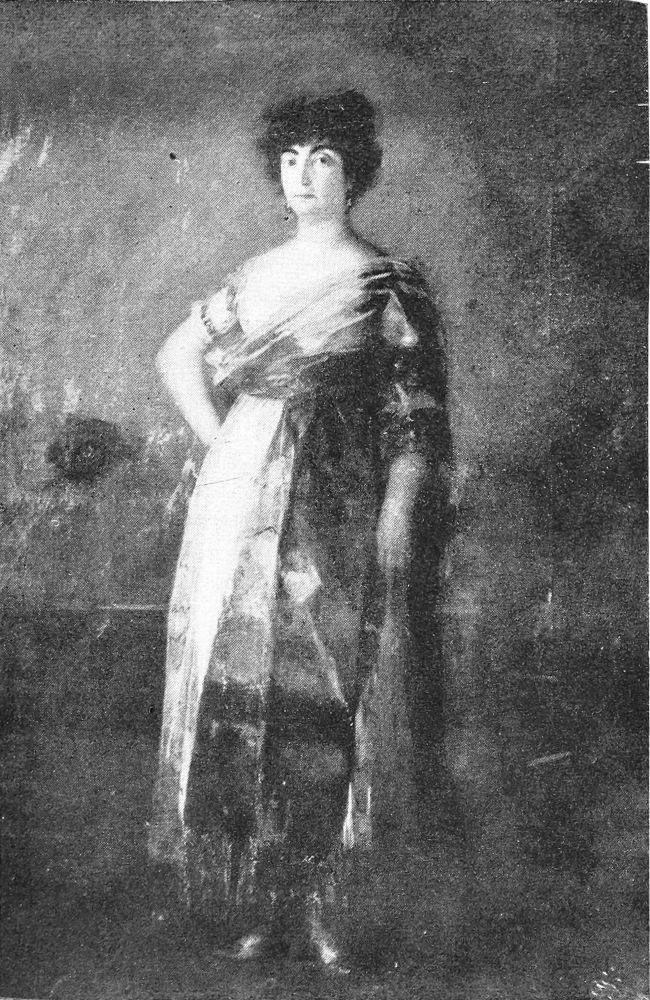
MARIA DEL ROSARIO FERNANDEZ, SURNAMED ‘LA TIRANA.’ A CELEBRATED ACTRESS.
(Academy of St. Ferdinand, Madrid.)
PLATE 100.
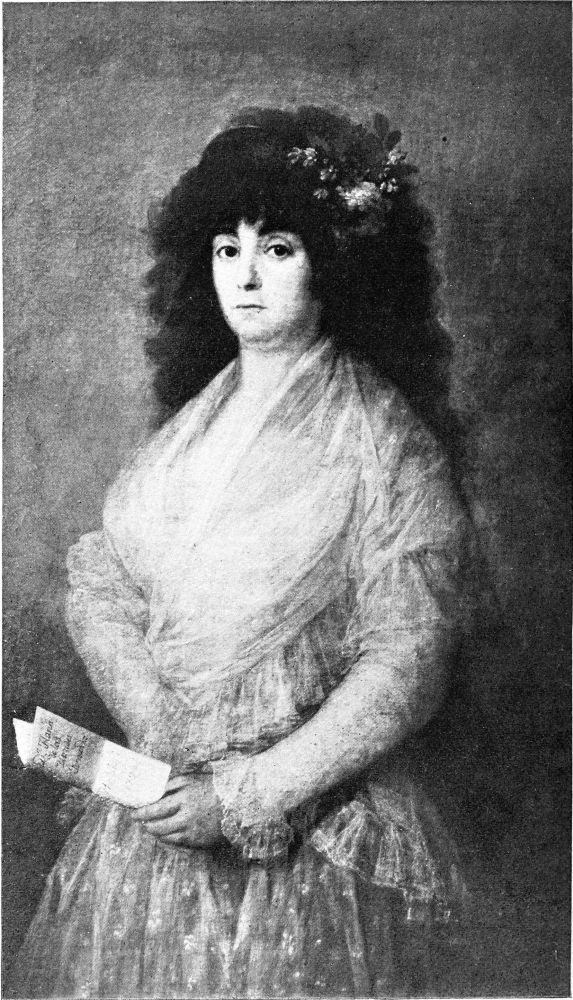
THE ACTRESS MARIA DEL ROSARIO FERNANDEZ, SURNAMED ‘LA TIRANA.’
(Conde de Villagonzalo.)
PLATE 101.
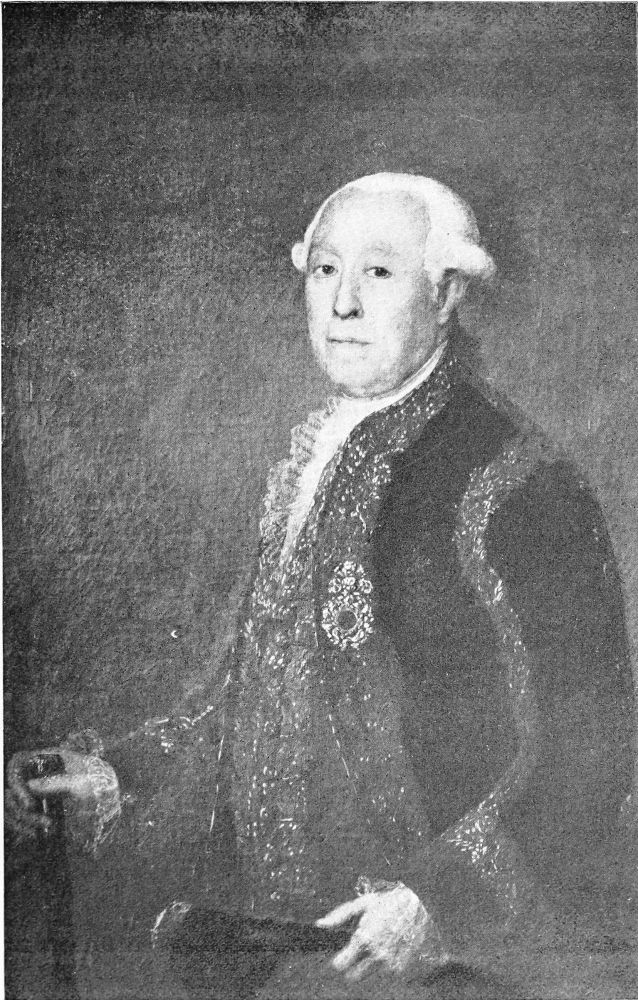
THE MARQUES DE TOLOSA.
(Bank of Spain, Madrid.)
PLATE 102.
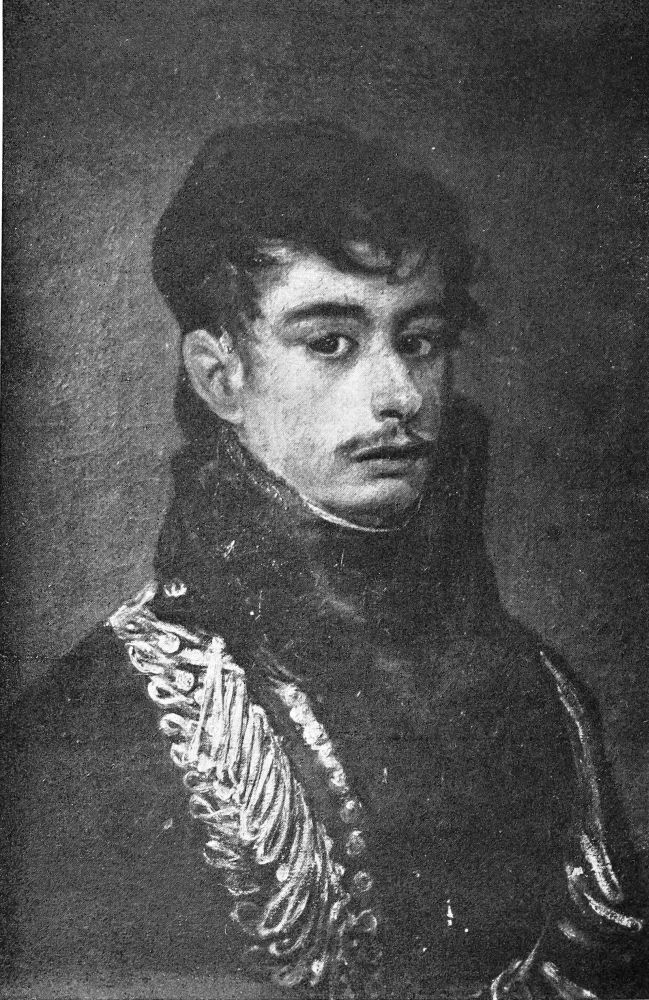
THE CONDE DE TEBA.
(Don J. Lázaro.)
PLATE 103.
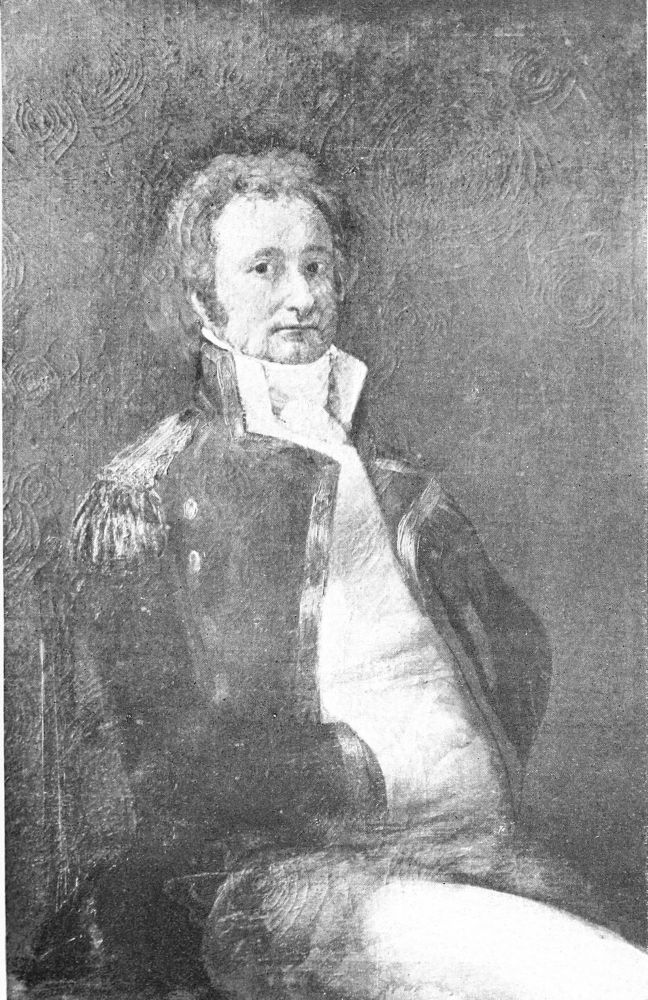
JOSÉ DE VARGAS PONCE.
(Academy of History, Madrid.)
PLATE 104.
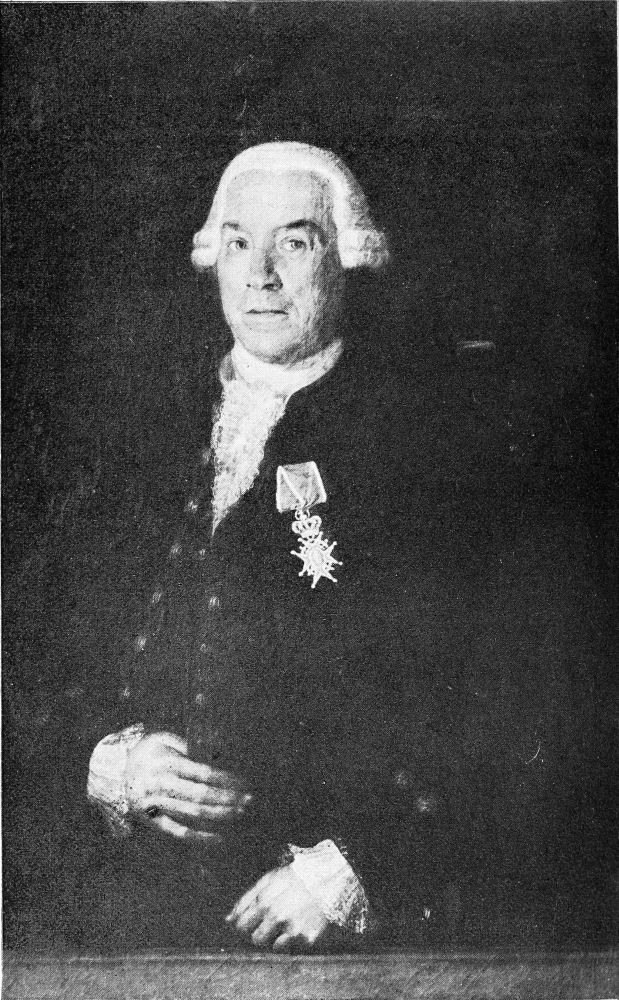
DON JOSÉ DE TORO ZAMBRANO.
(Bank of Spain, Madrid.)
PLATE 105.
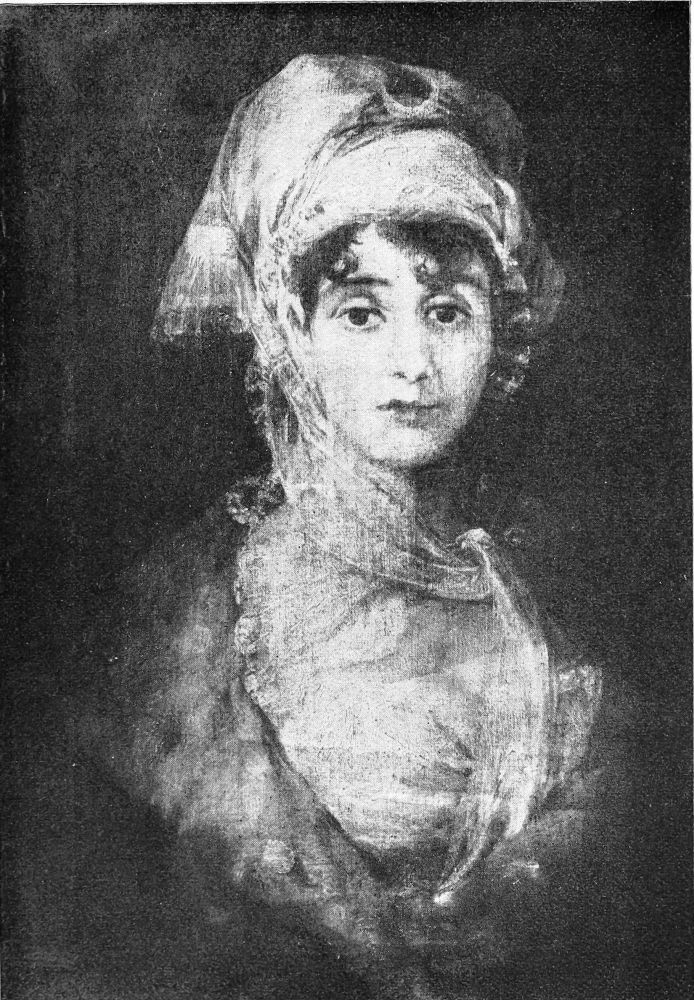
DOÑA ANTONIA ZARATE.
(Señora Vinda de Albacete.)
PLATE 106.
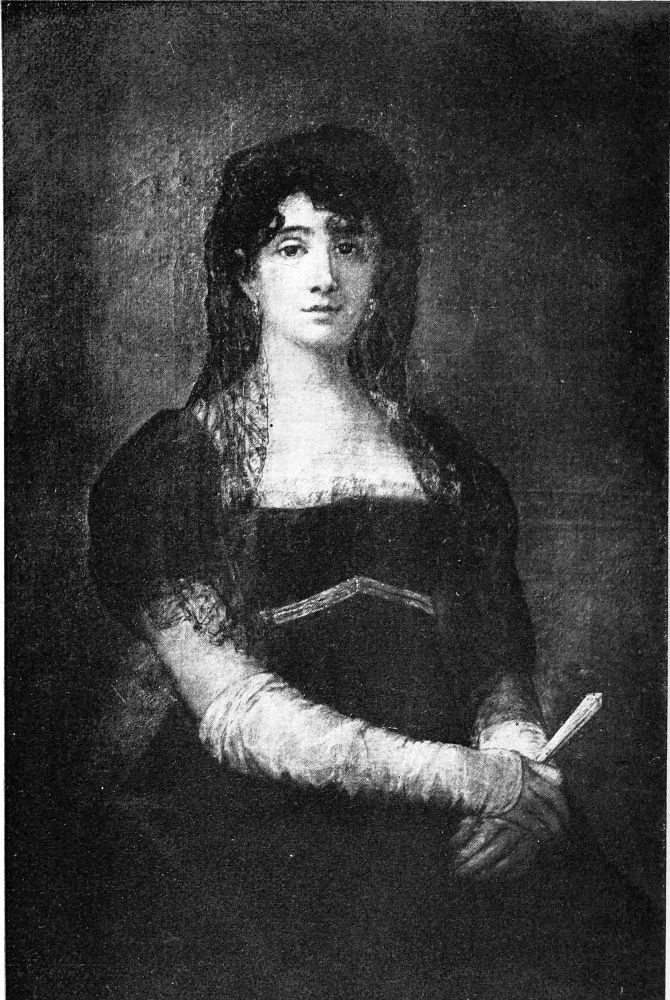
DOÑA ANTONIA ZARATE.
(Señora Vinda de Albacete.)
PLATE 107.
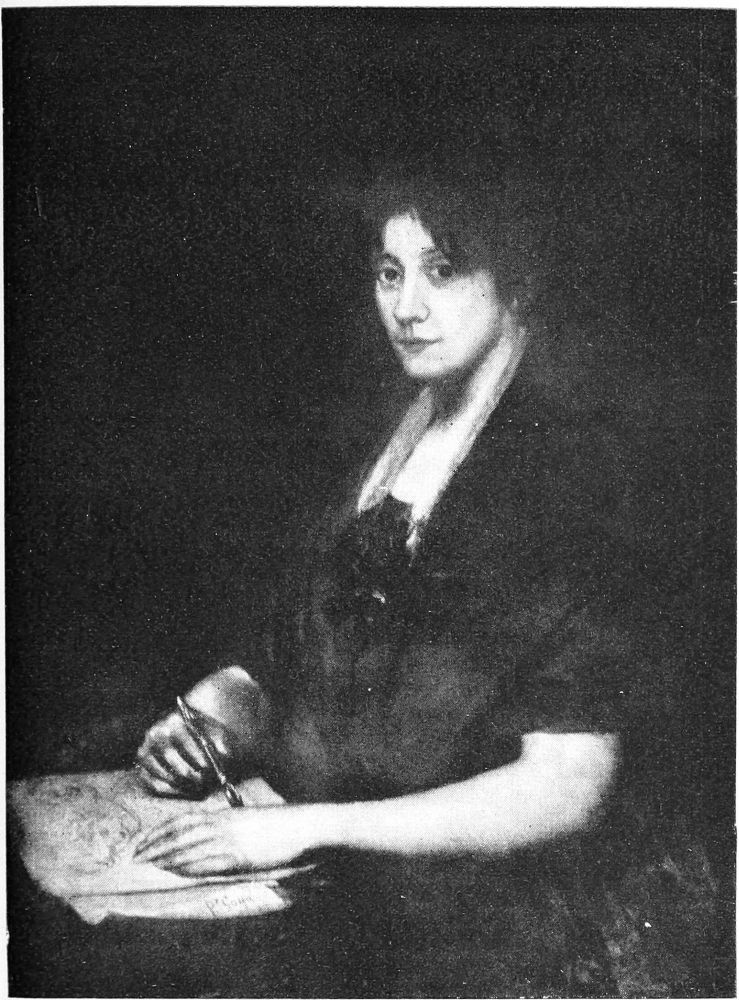
DOÑA LOLA ZIMENEZ.
(M. Chiramy, Paris.)
PLATE 108.
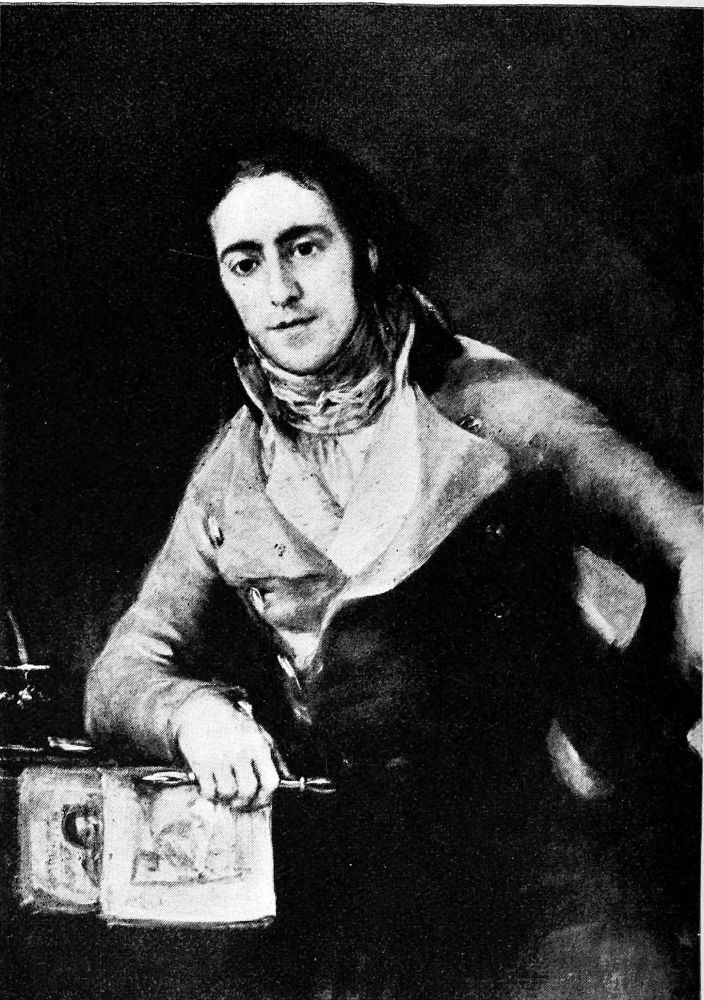
DON EVARISTO PEREZ DE CASTRO, PRESIDENT OF THE COUNCIL OF CASTILE.
(Louvre, Paris.)
PLATE 109.
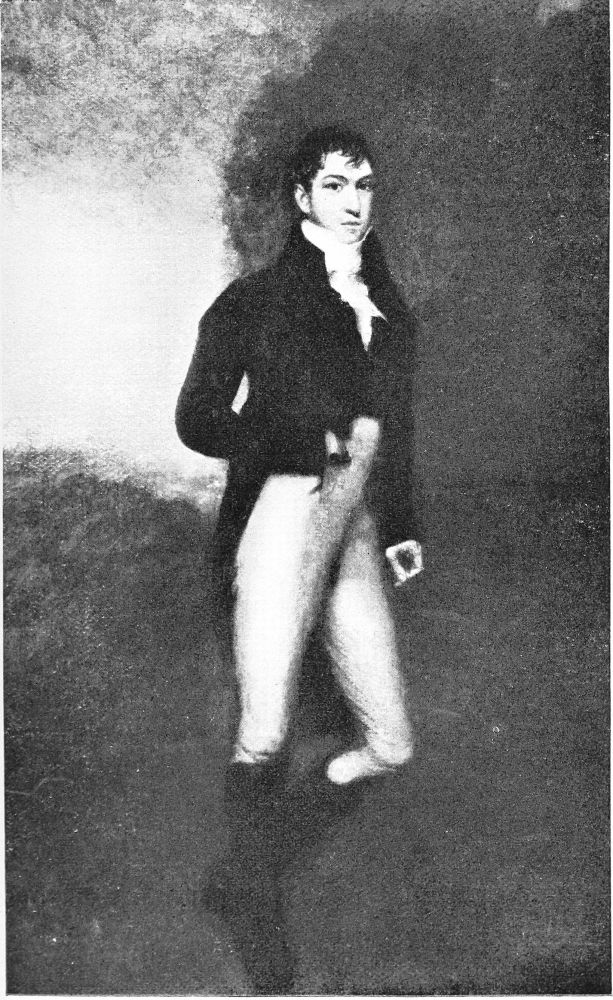
DON JUAN JOSÉ MATEO ARIAS DAIRLA.
(Marquesa de Almaguer.)
PLATE 110.
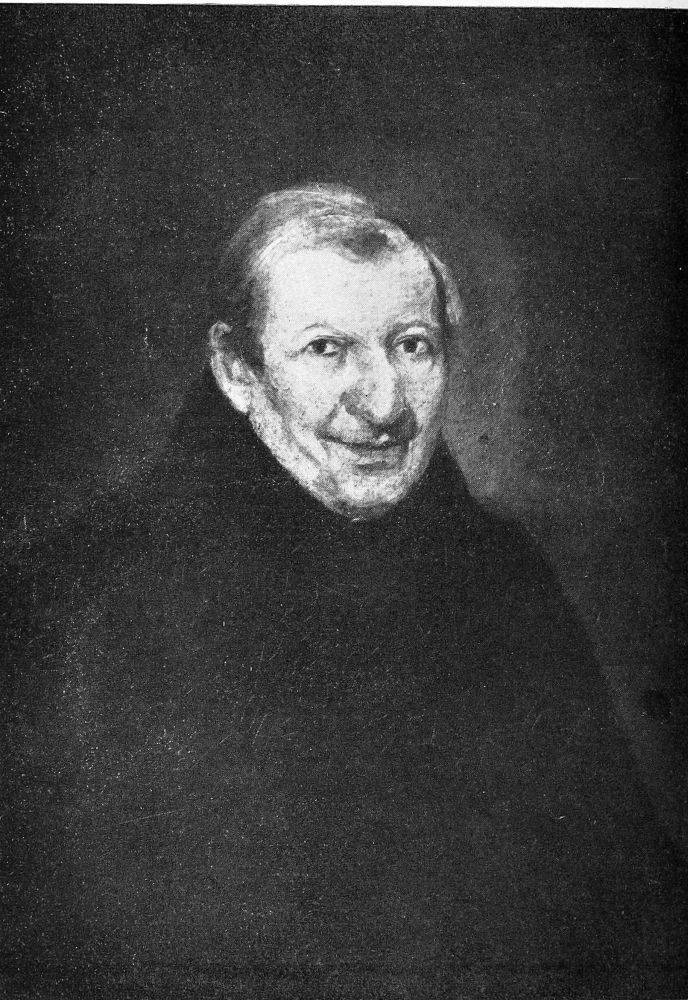
FATHER LASCANAL.
(Don J. Lázaro.)
PLATE 111.
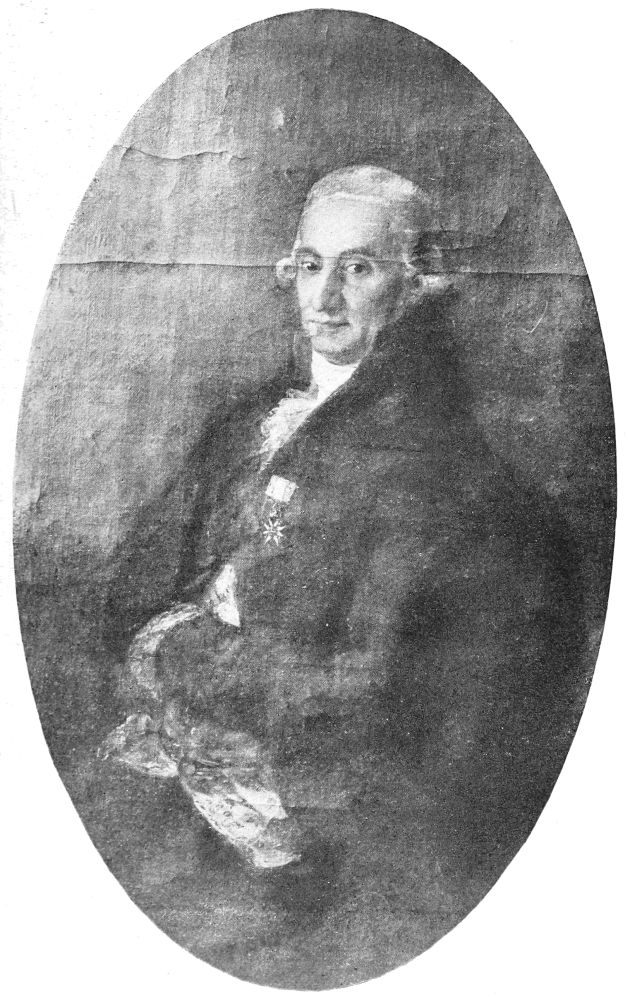
DON RAMON DE POSADA Y SOTO.
(Don Jose Maria Perez Caballero.)
PLATE 112.
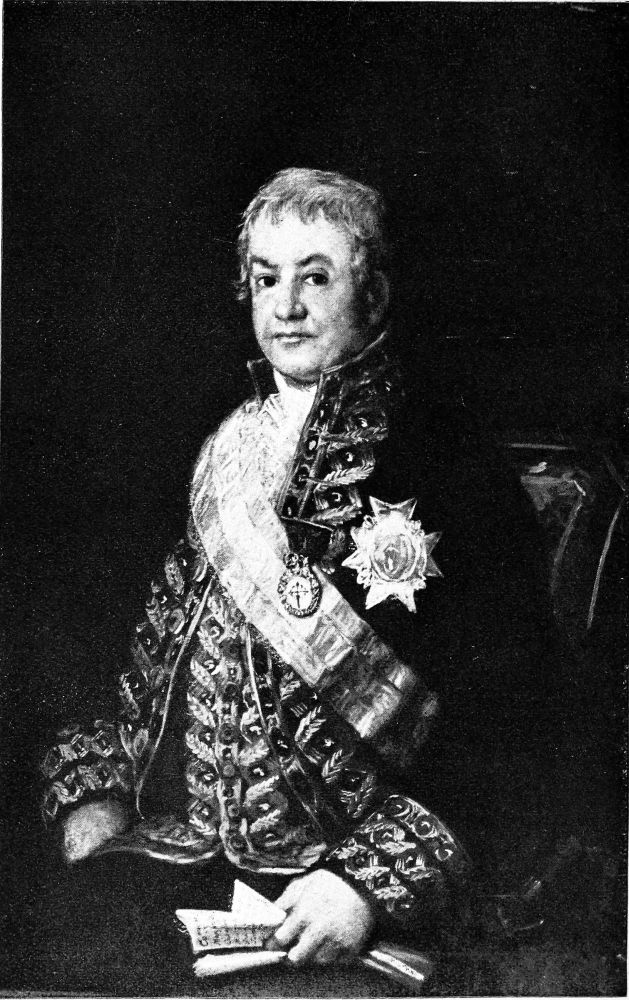
MARQUESA DE CABALLERO.
(Marques de Corvera, Madrid.)
PLATE 113.
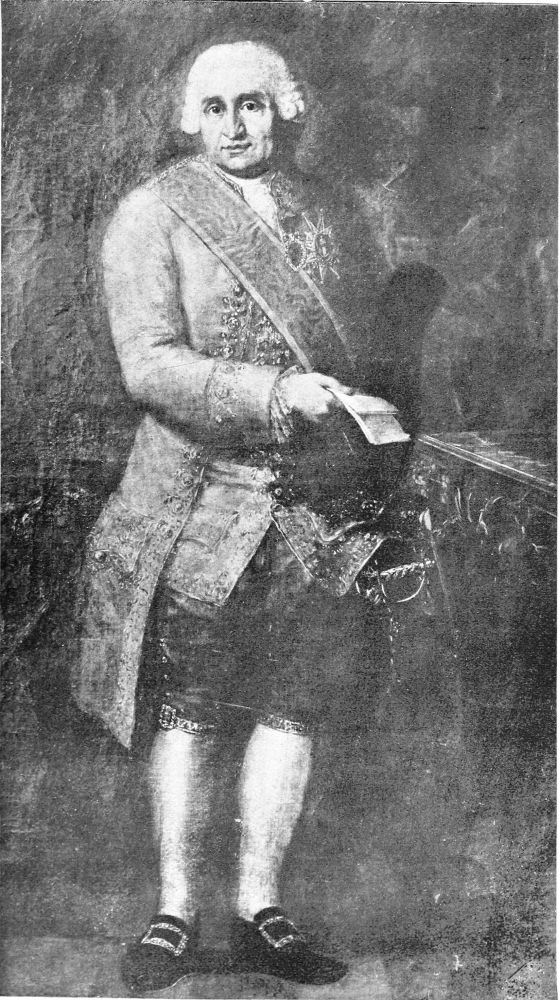
THE CONDE DE GAZINZA.
(Marques de Casa Torres, Madrid.)
PLATE 114.
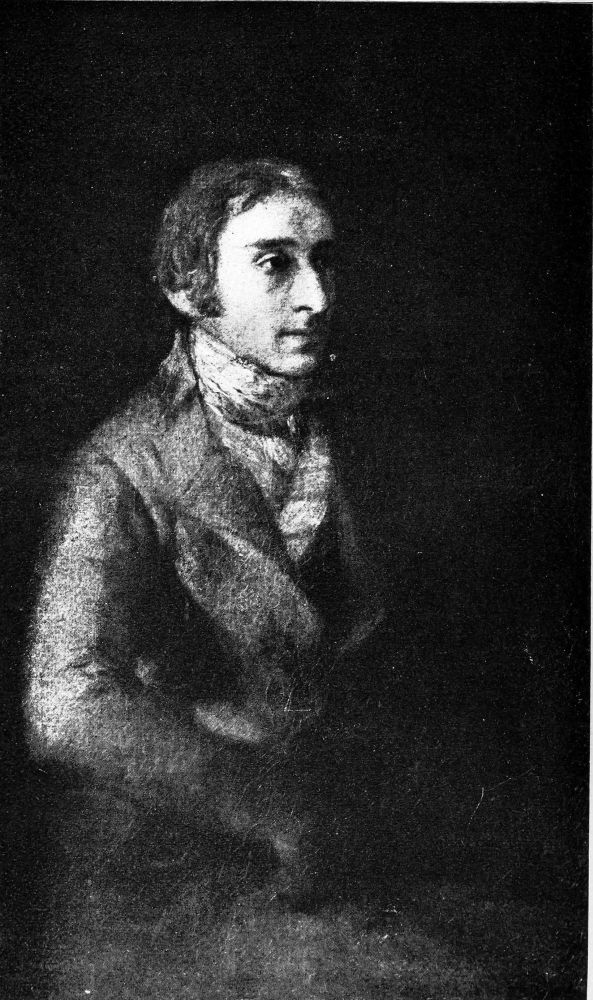
MORATIN.
(Don F. Silvela.)
PLATE 115.
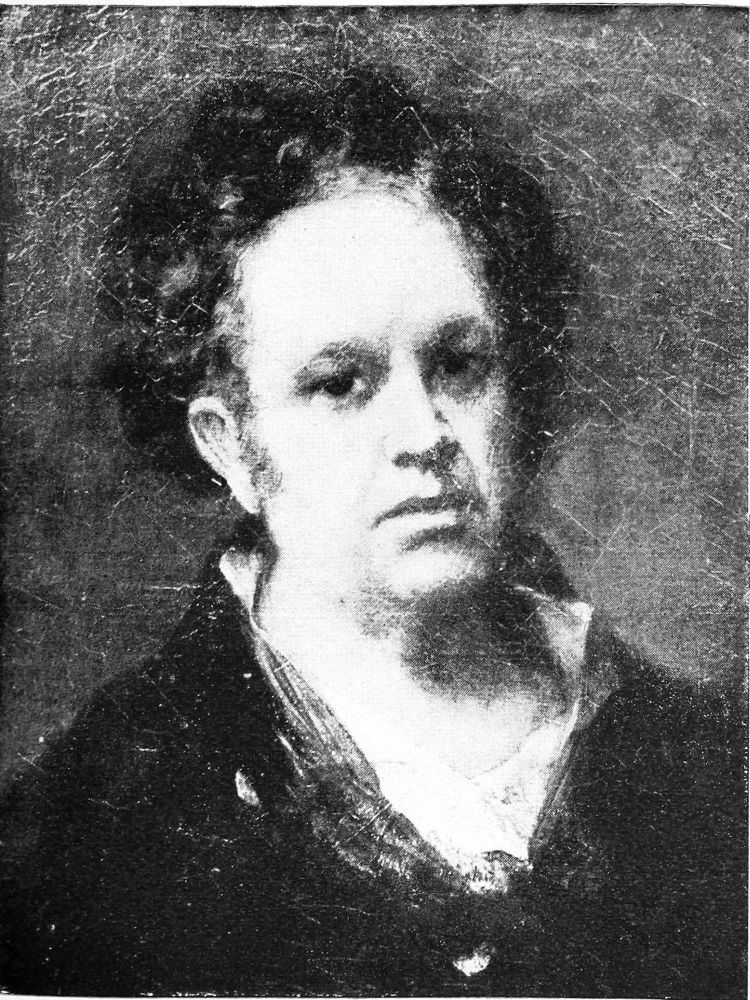
PORTRAIT OF THE ARTIST, BY HIMSELF.
(Academy of St. Ferdinand, Madrid.)
PLATE 116.
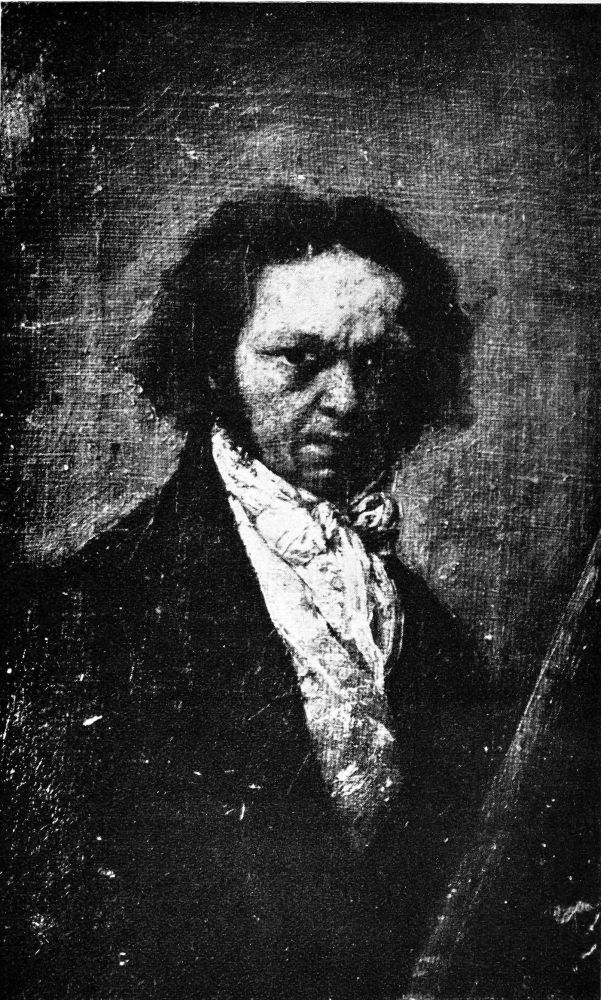
PORTRAIT OF THE ARTIST, BY HIMSELF.
(D. A. Pidal.)
PLATE 117.
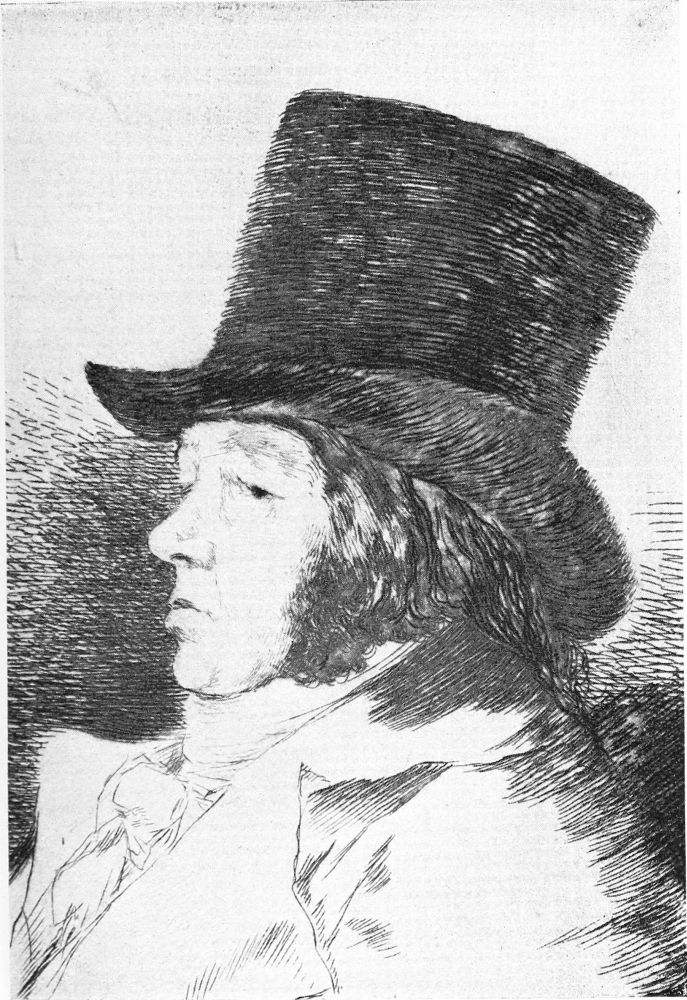
PORTRAIT OF THE ARTIST, BY HIMSELF.
PLATE 118.
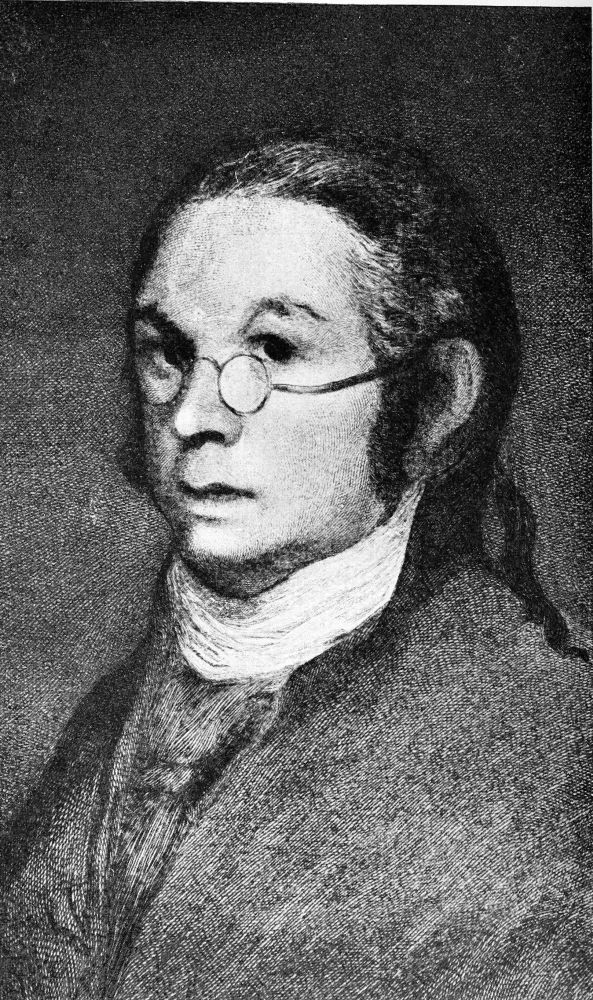
PORTRAIT OF THE ARTIST, BY HIMSELF.
(M. Leon Bonnet.)
PLATE 119.
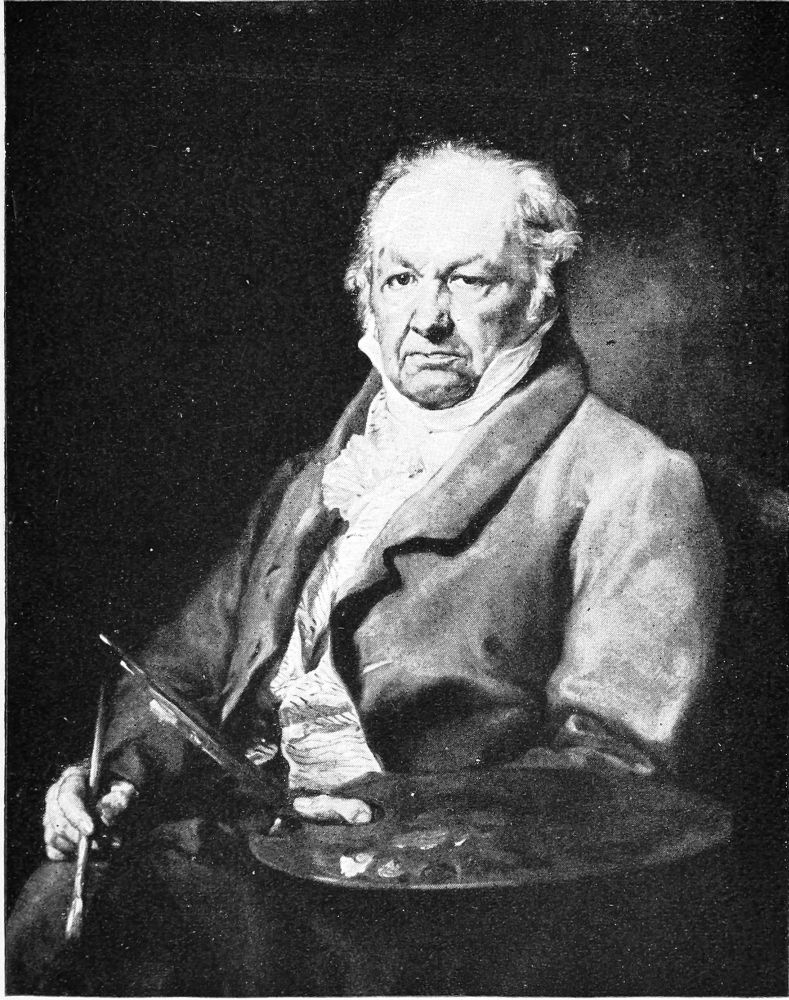
GOYA AT THE AGE OF 80, BY VINCENTE LOPEZ.
(Prado, Madrid.)
PLATE 120.
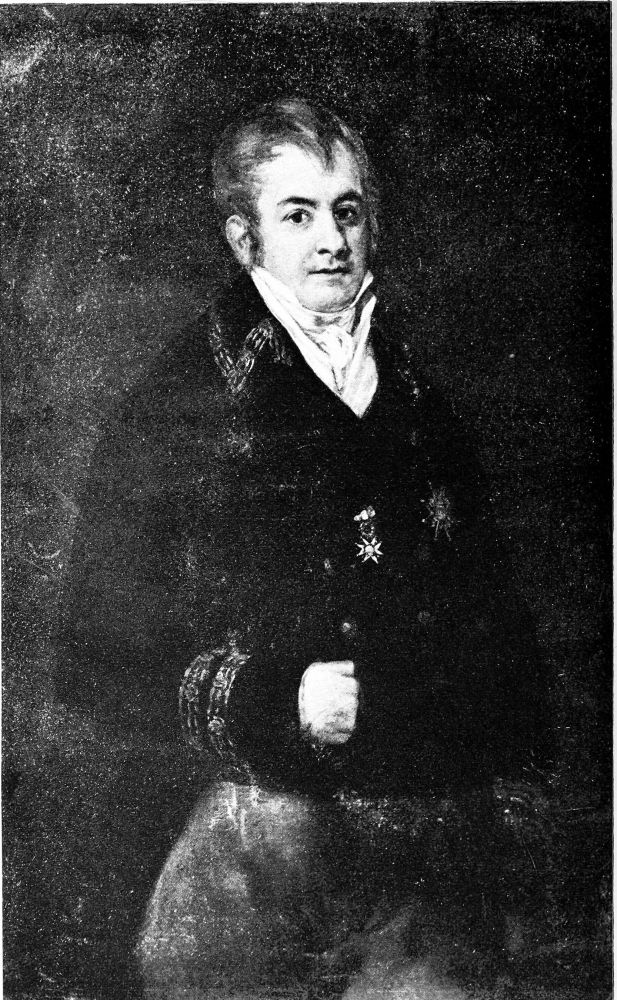
DON J. B. DE GOICOECHEA.
(Don Felipe Modet.)
PLATE 121.
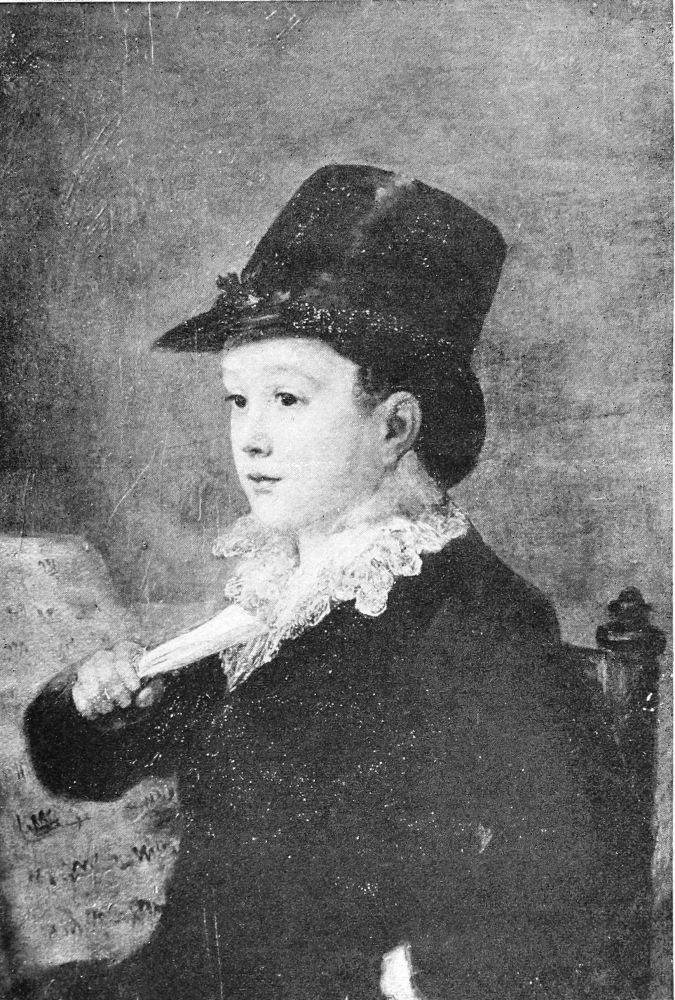
GOYA’S GRANDSON.
(Marques de Alcañices.)
PLATE 122.
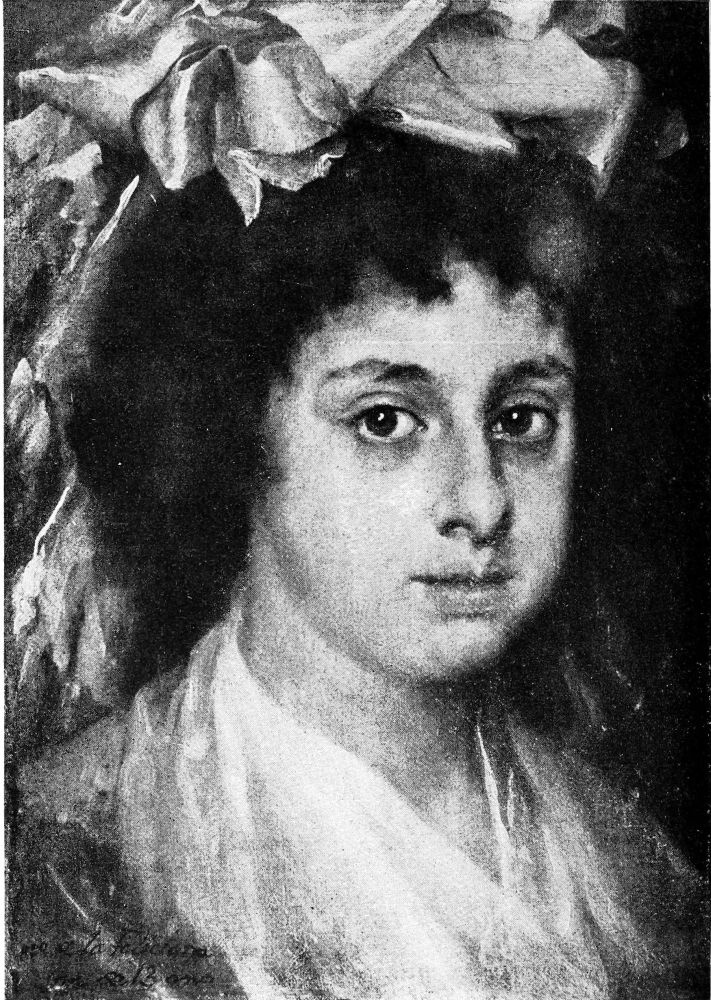
DOÑA FELICIANA BAYEU.
(D. C. Ferriz.)
PLATE 123.
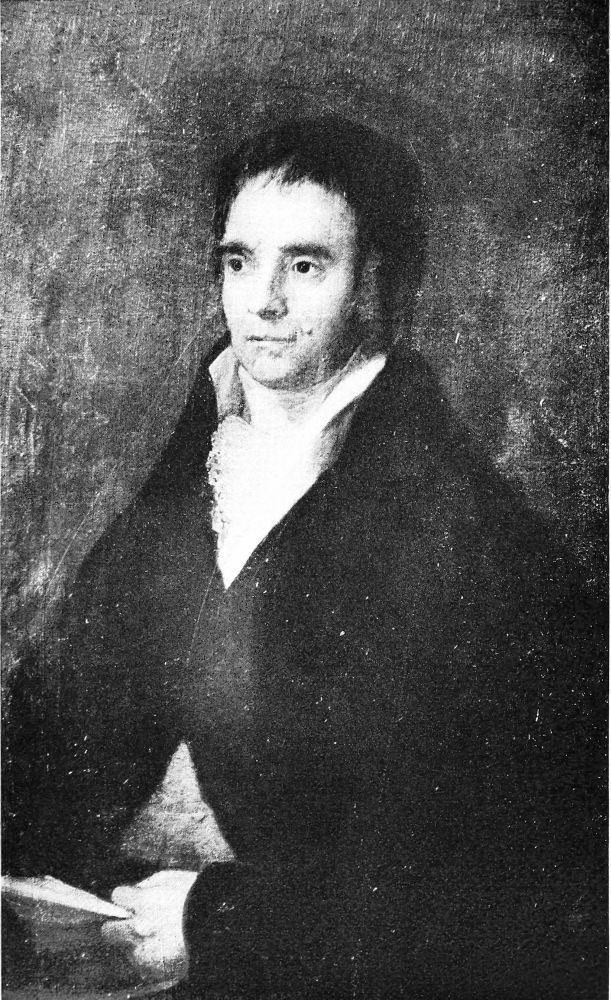
DON JUAN MARTIN DE GOICOECHEA.
(Marques de Casa Torres, Madrid.)
PLATE 124.
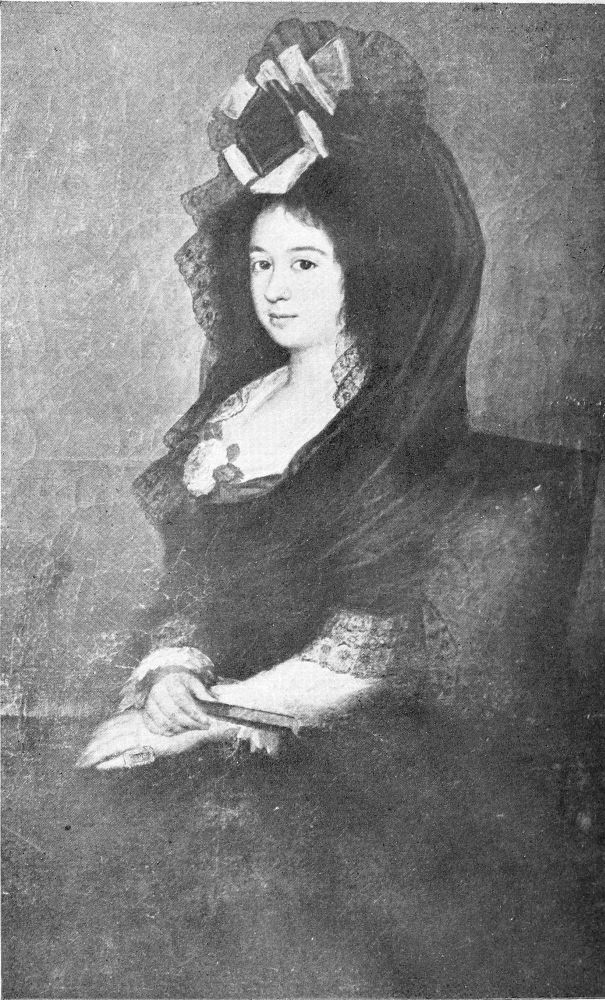
DOÑA NARCISA BARAÑONA DE GOICOECHEA.
(Don Felipe Modet.)
PLATE 125.
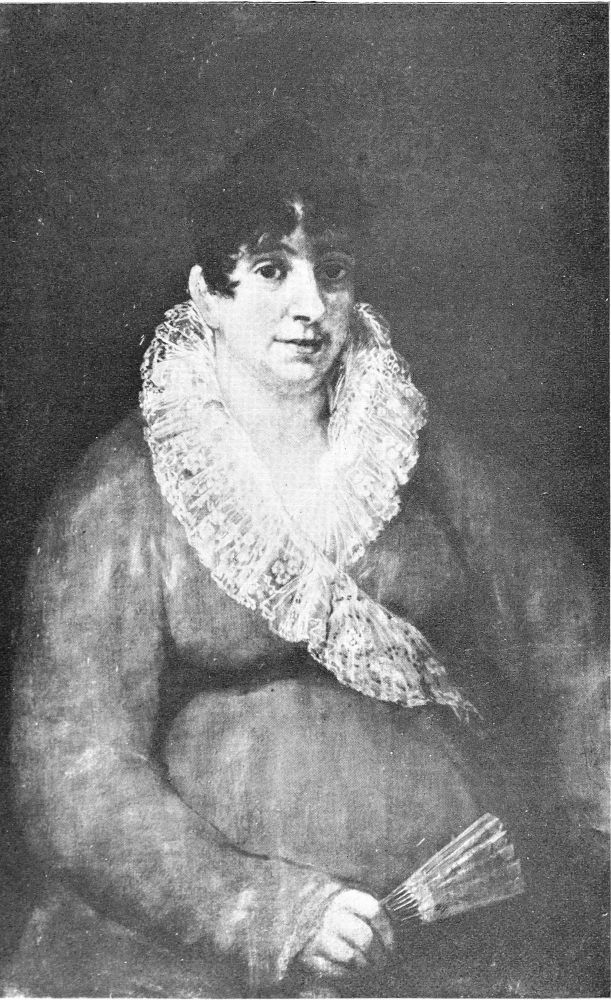
DOÑA JUANA GALARZA DE GOICOECHEA.
(Marques de Casa Torres, Madrid.)
PLATE 126.
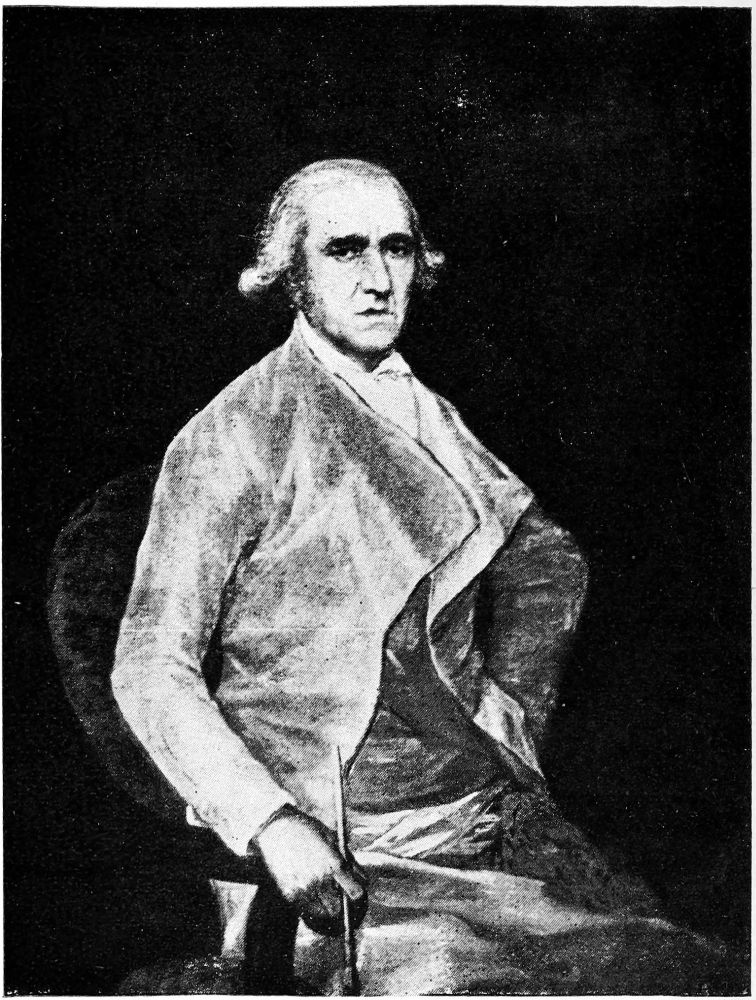
THE PAINTER, FRANCISCO BAYEU, BROTHER-IN-LAW OF GOYA.
(Prado, Madrid.)
PLATE 127.
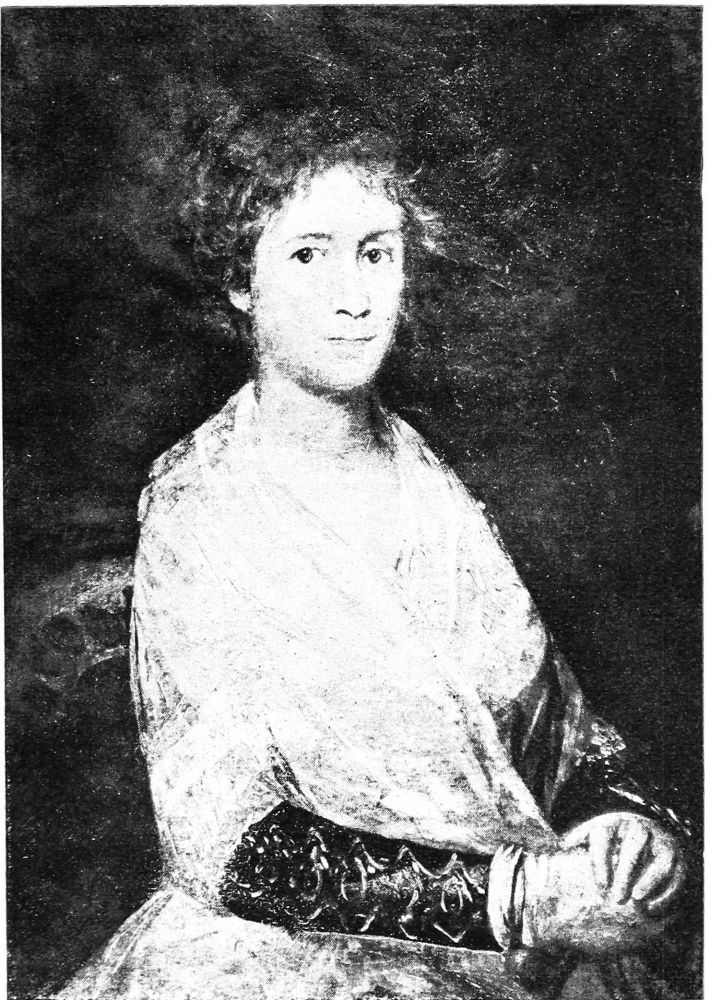
JOSEFA BAYEU, GOYA’S WIFE.
(Prado, Madrid.)
PLATE 128.
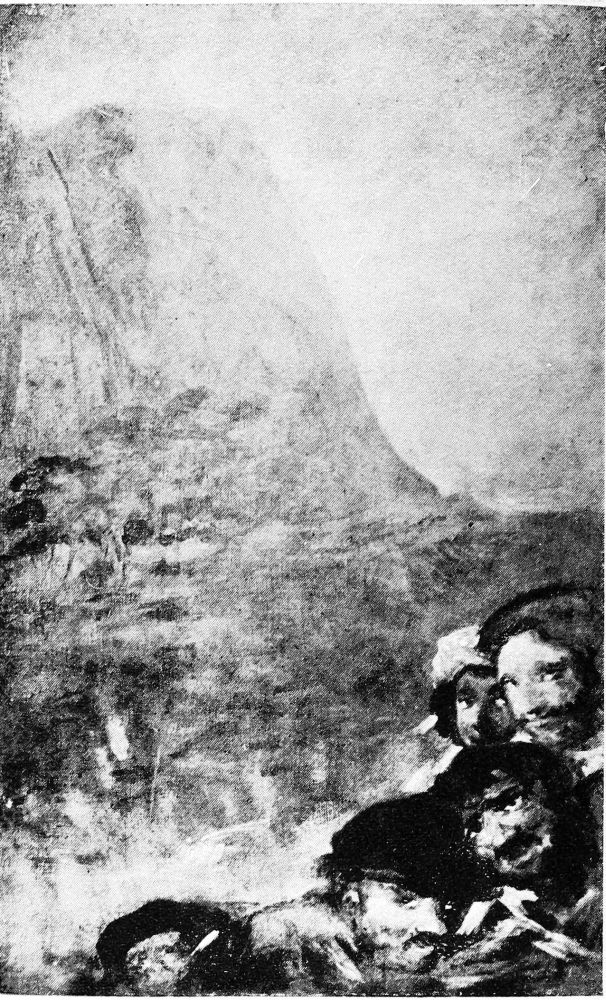
GROUP OF HEADS.
(Formerly in the Palace of San Telmo, now in the Collection of the Comtesse de Paris.)
PLATE 129.
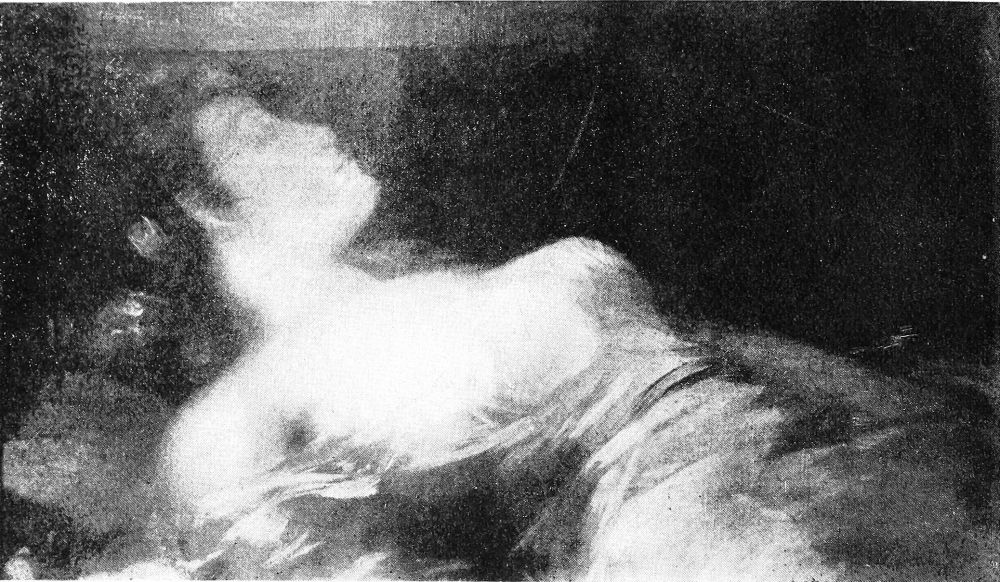
PORTRAIT STUDY OF A WOMAN.
PLATE 130.
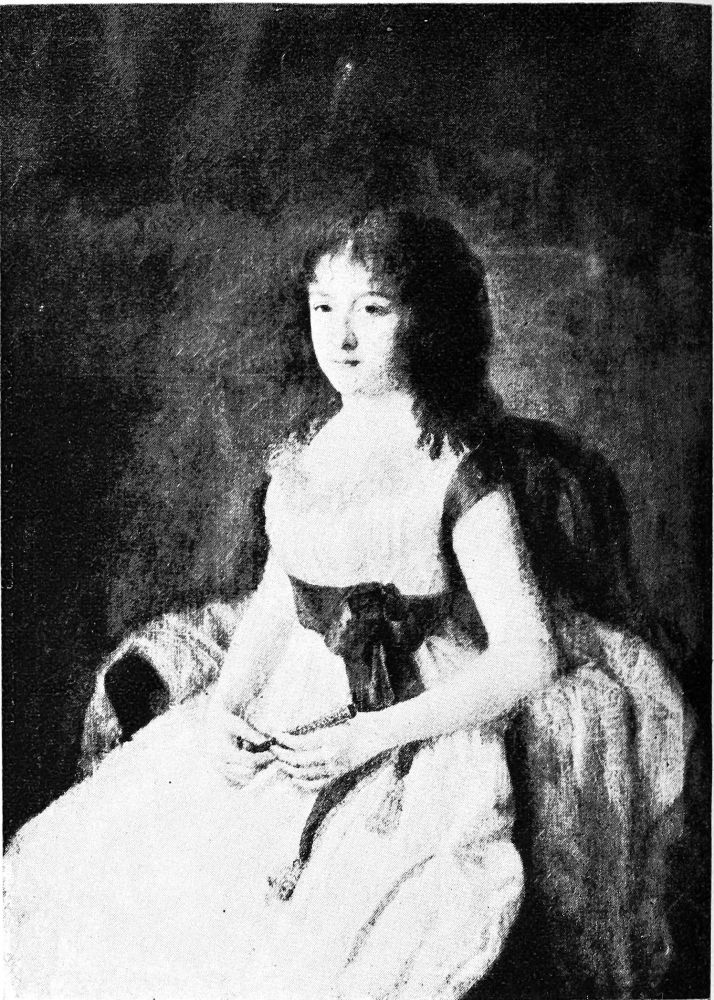
PORTRAIT OF A YOUNG GIRL.
(Private Property.)
PLATE 131.
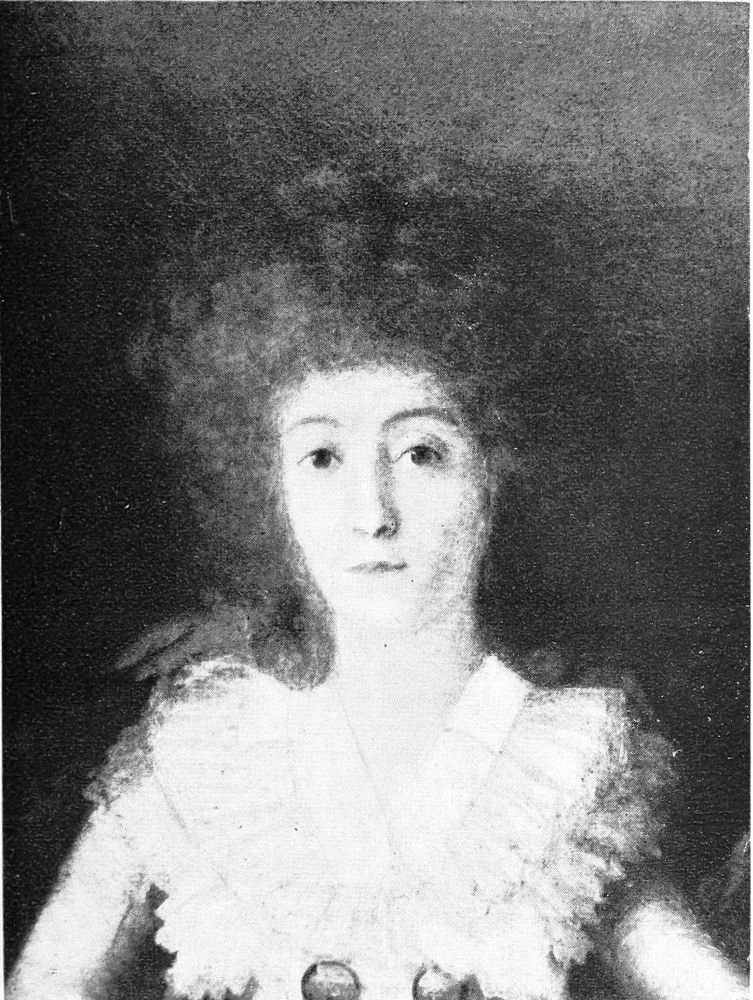
PORTRAIT OF A LADY.
PLATE 132.
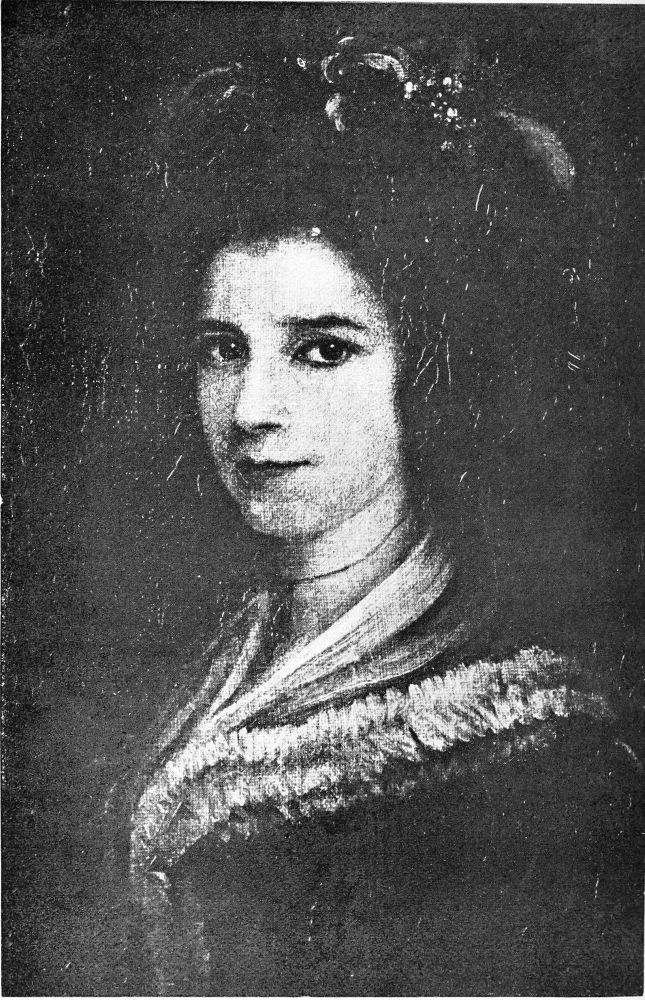
PORTRAIT OF A LADY.
(Conde de Peñalvez.)
PLATE 133.
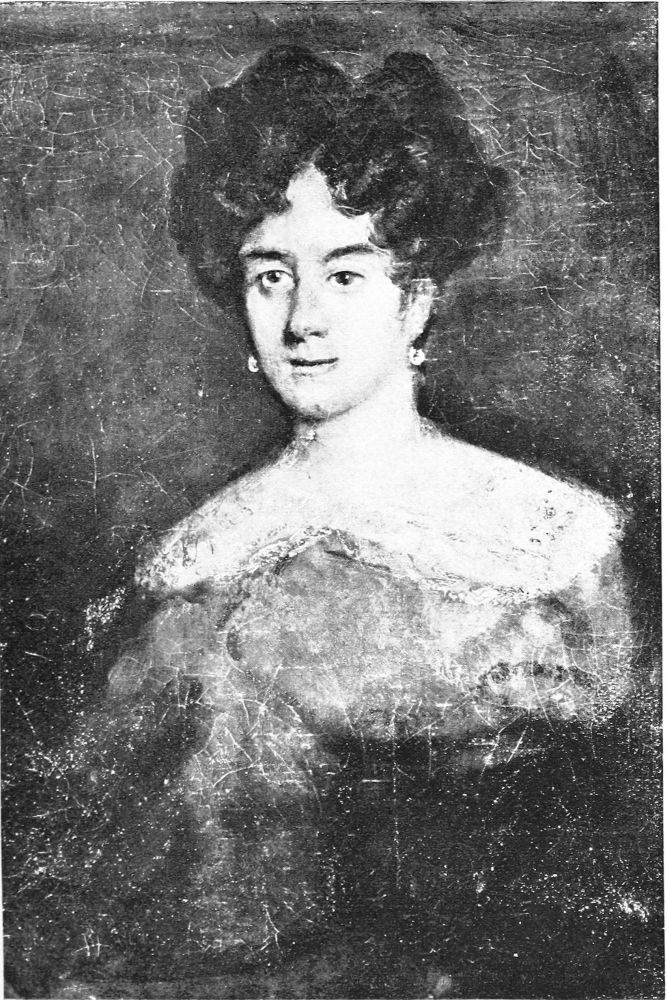
PORTRAIT OF A LADY.
(Don José Lázaro.)
PLATE 134.
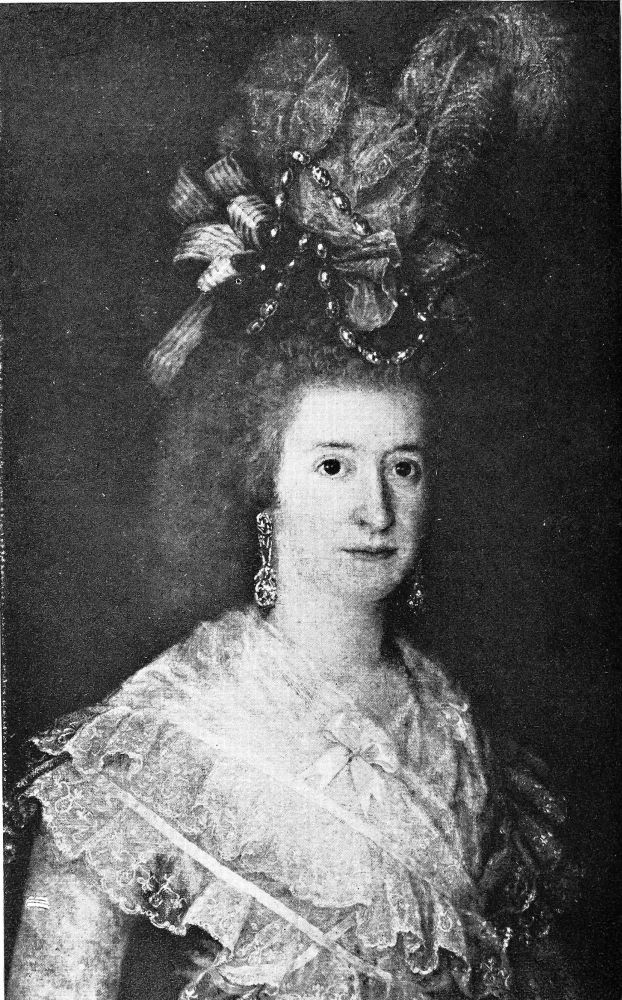
PORTRAIT OF A LADY.
(Don A. de Beruete.)
PLATE 135.
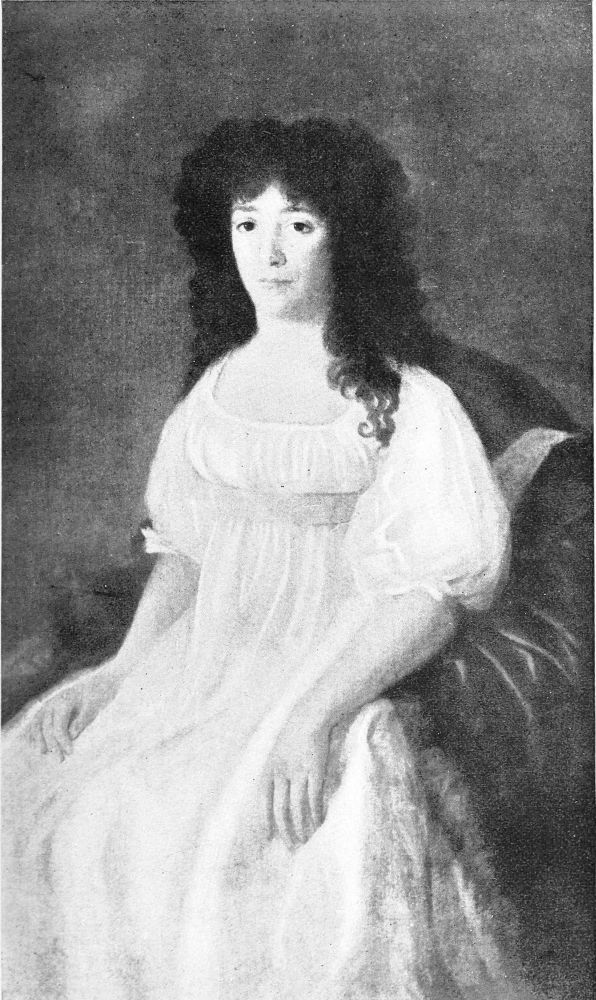
PORTRAIT OF A LADY.
(Don A. de Beruete.)
PLATE 136.
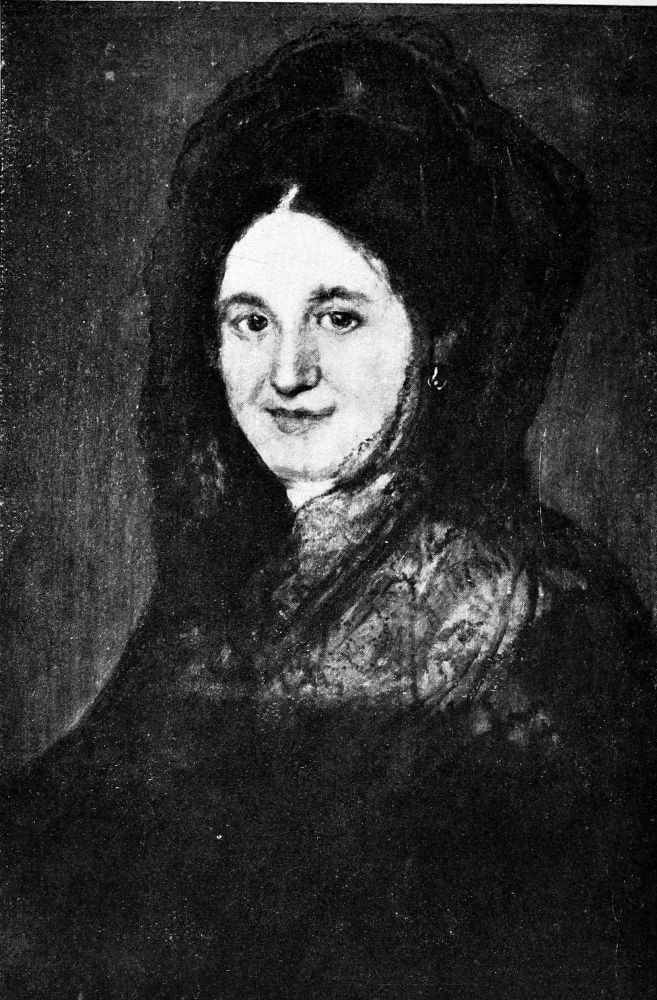
PORTRAIT OF A LADY.
(Don A. de Beruete.)
PLATE 137.
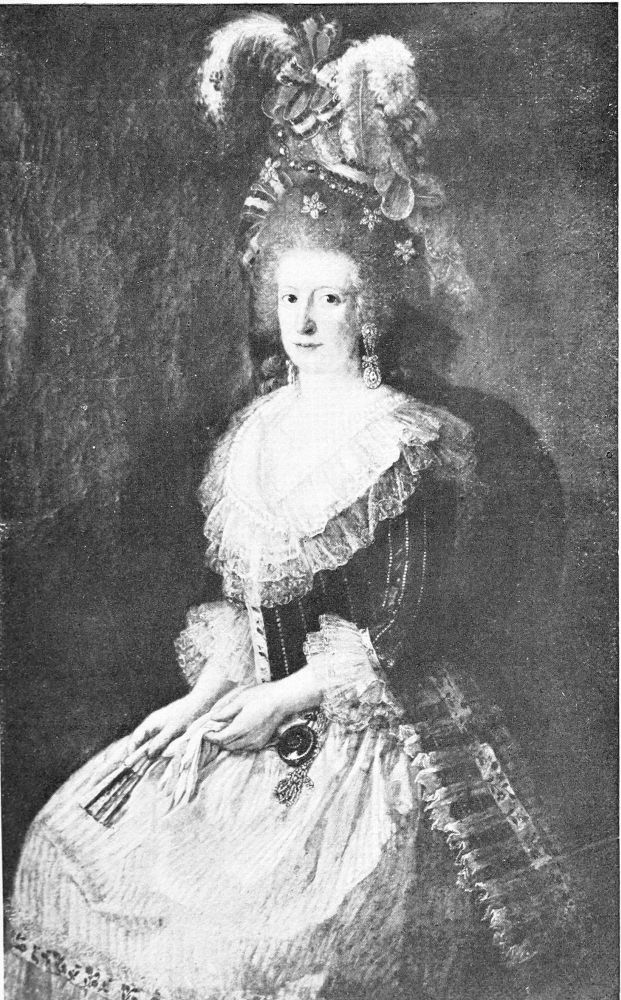
PORTRAIT OF A LADY.
(Don R. Garcia.)
PLATE 138.
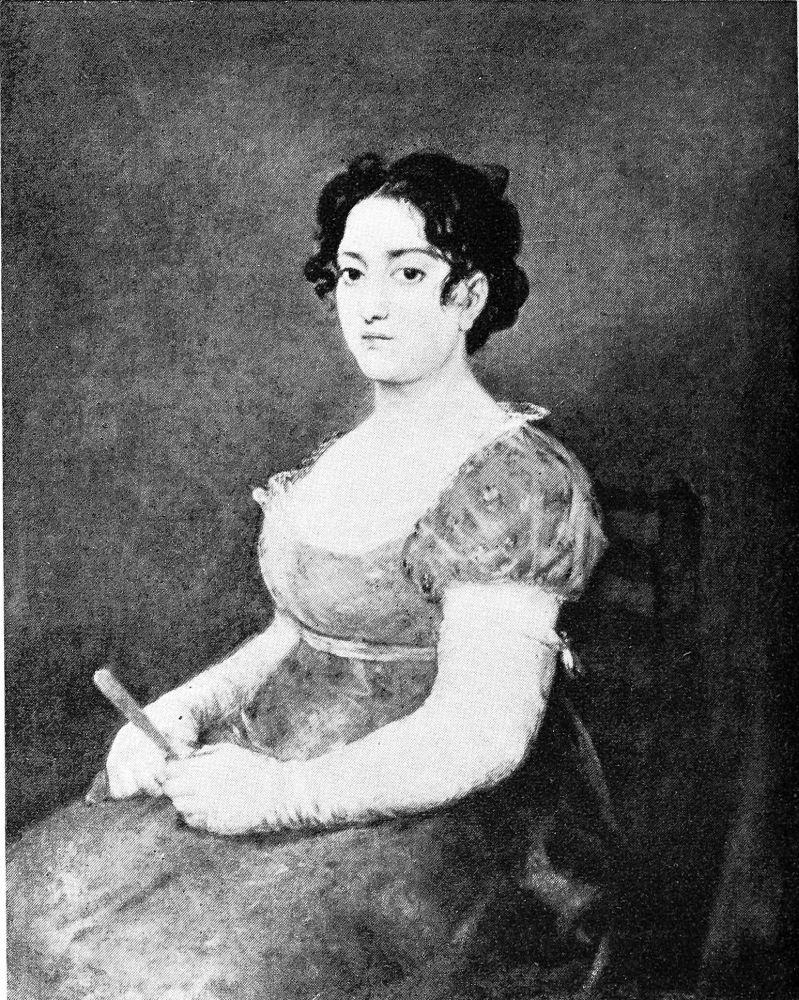
PORTRAIT OF A WOMAN.
(Louvre, Paris.)
PLATE 139.
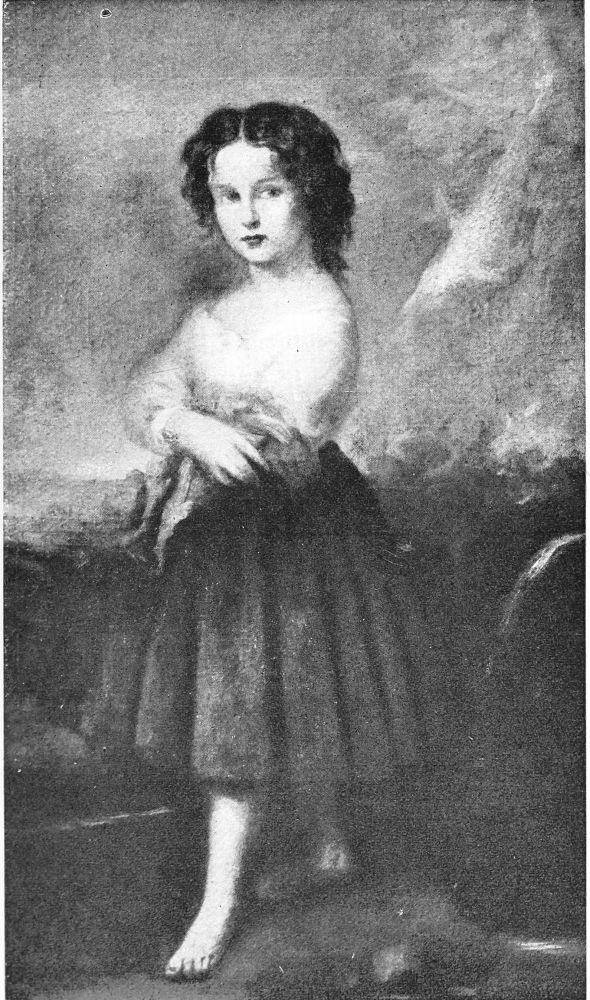
A LITTLE GIRL.
(Marques de Casa Torres, Madrid.)
PLATE 140.
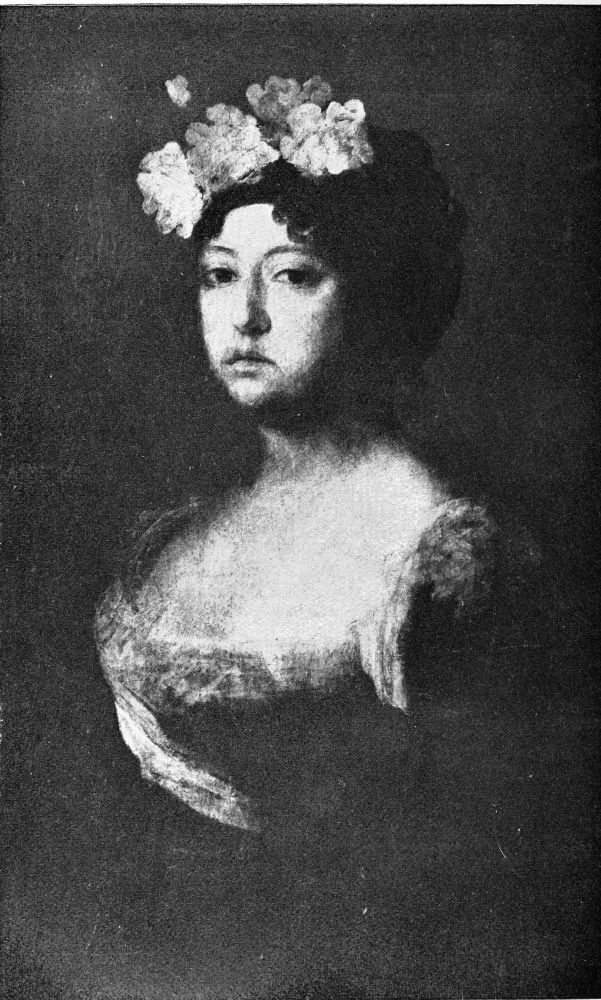
PORTRAIT OF A LADY.
(Don J. Gutierrez Martin.)
PLATE 141.
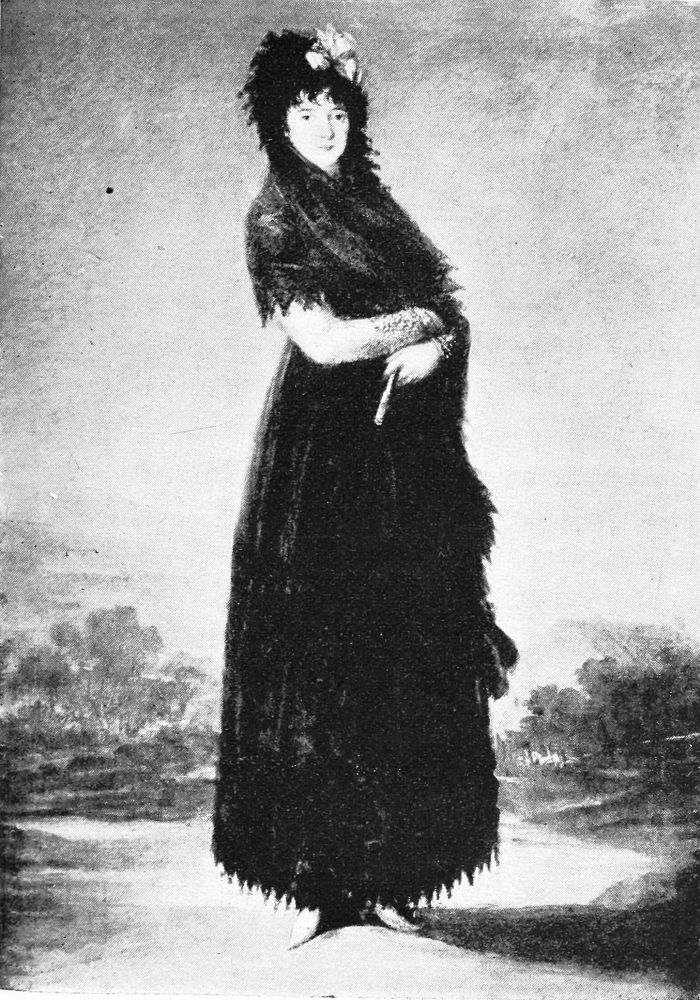
YOUNG SPANISH WOMAN.
(Louvre, Paris.)
PLATE 142.
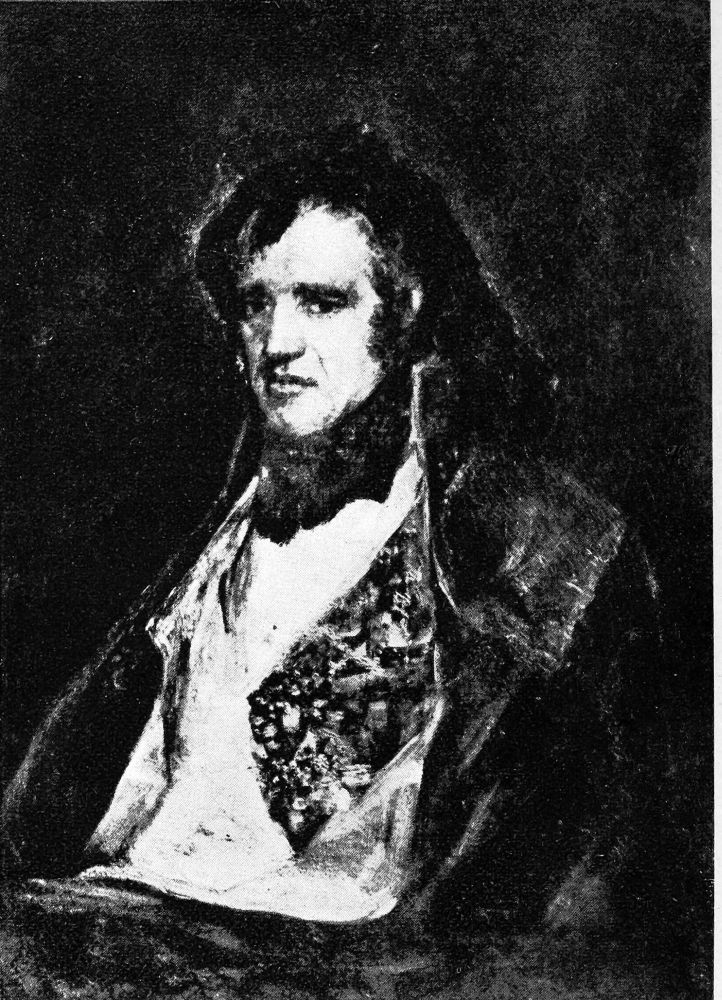
PORTRAIT OF A MAN.
(Private Collection.)
PLATE 143.
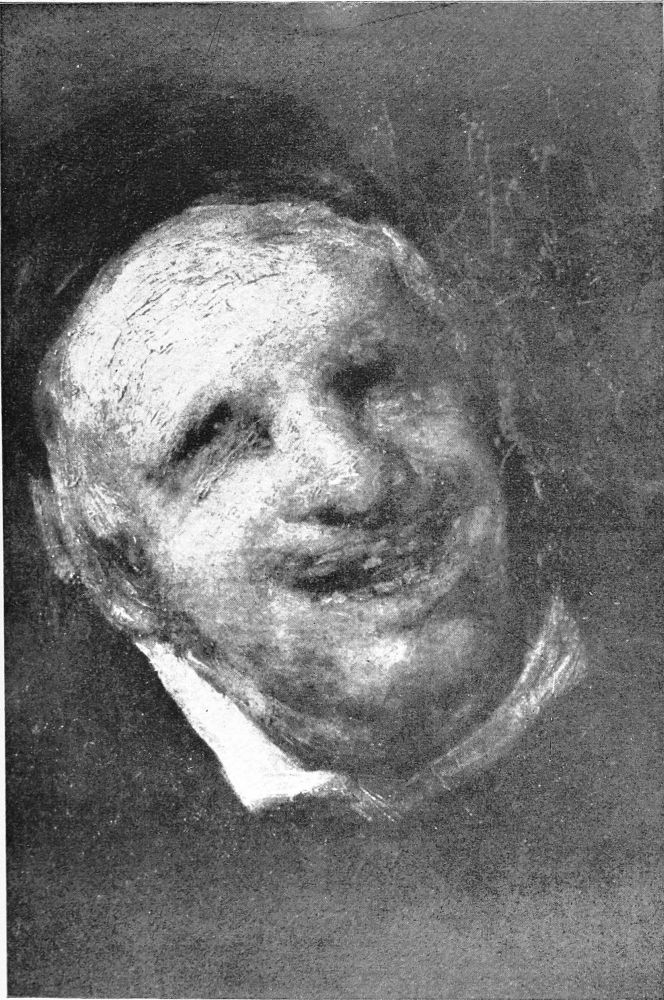
THE OLD MAN.
(Conde de Da. Marina.)
PLATE 144.
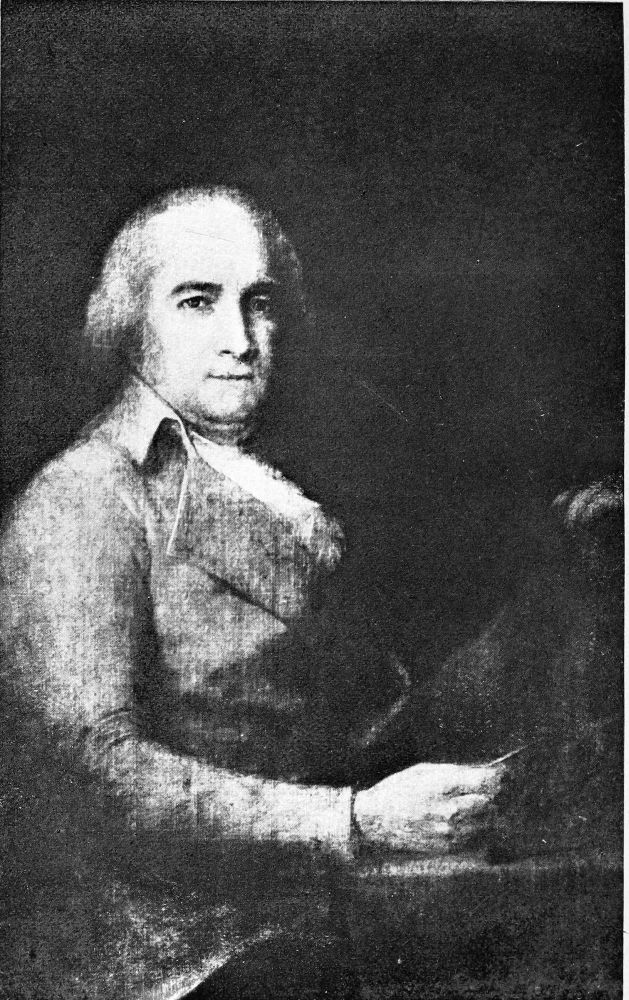
PORTRAIT OF AN ARCHITECT.
PLATE 145.
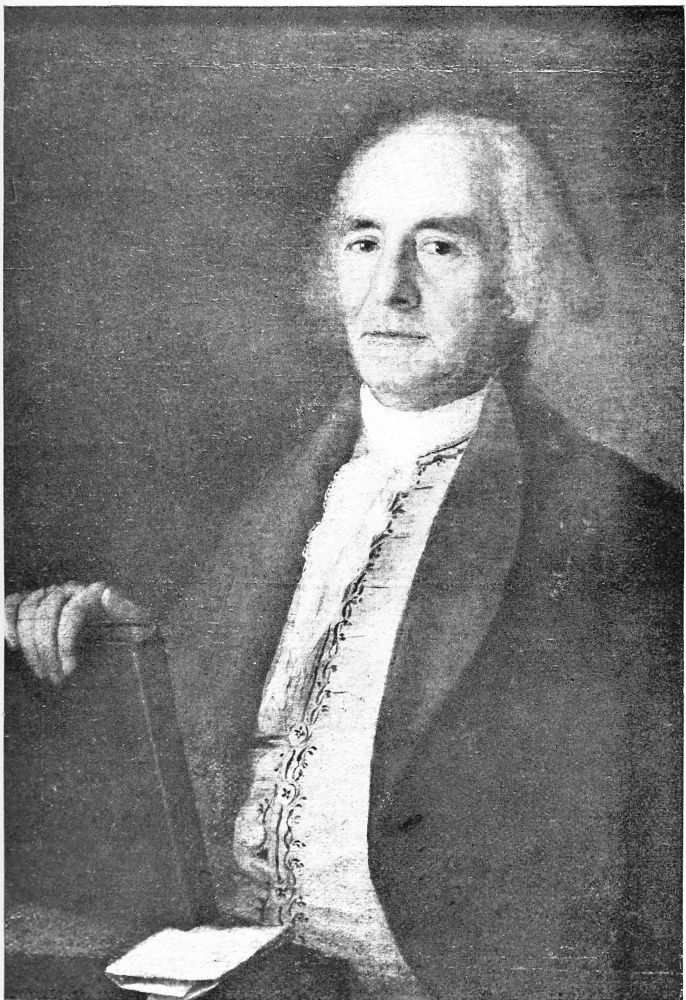
PORTRAIT OF A DOCTOR.
PLATE 146.
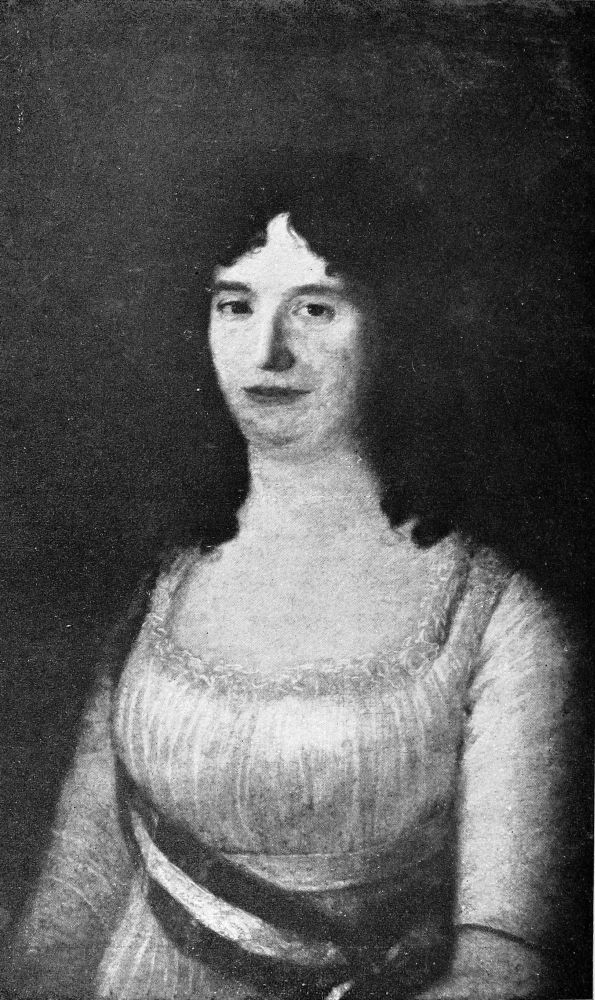
PORTRAIT OF A LADY.
PLATE 147.
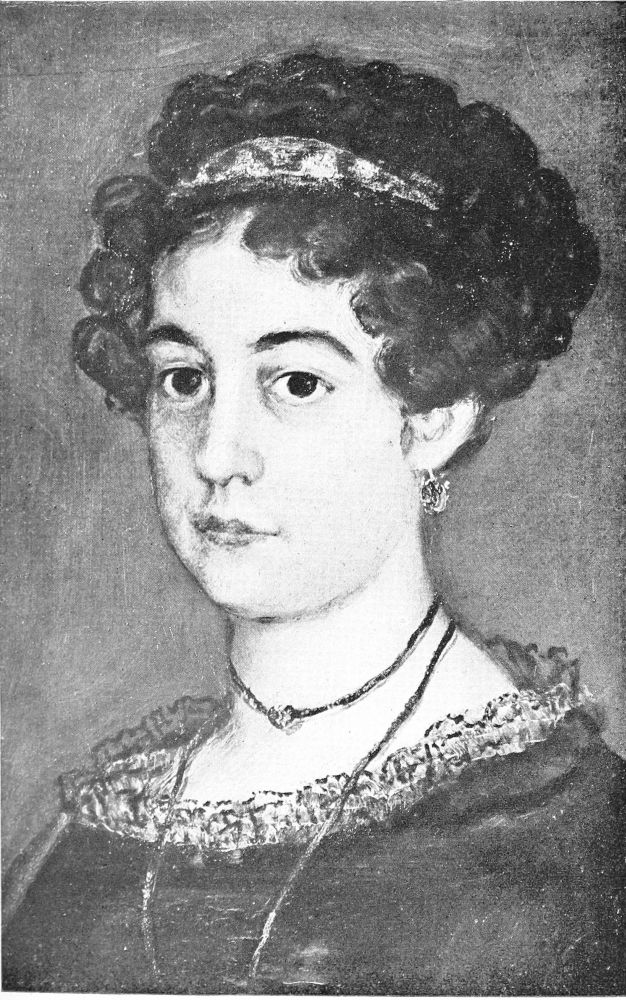
PORTRAIT OF A LADY.
PLATE 148.
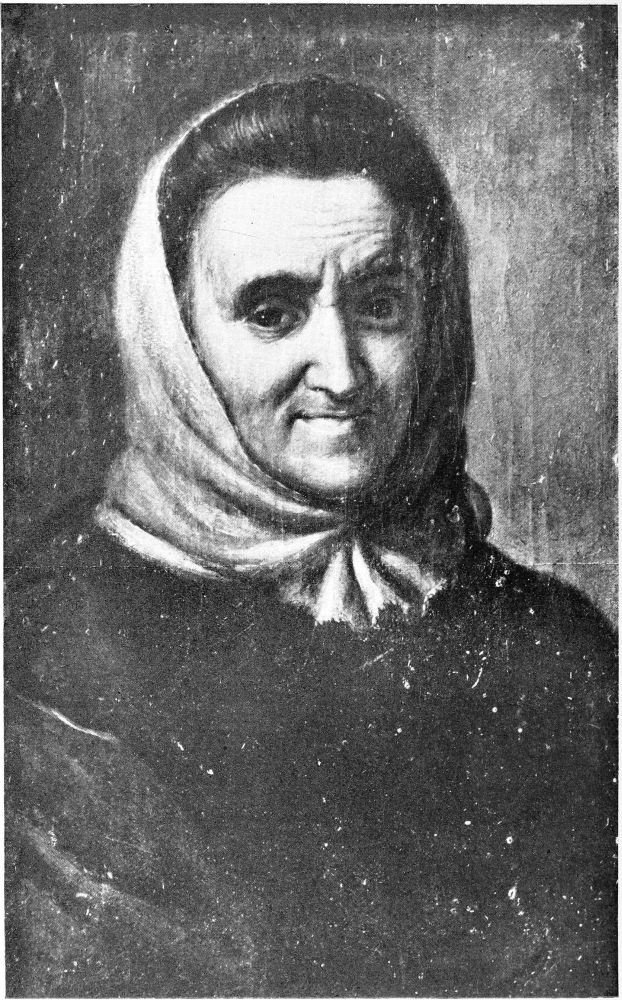
PORTRAIT OF A LADY.
PLATE 149.
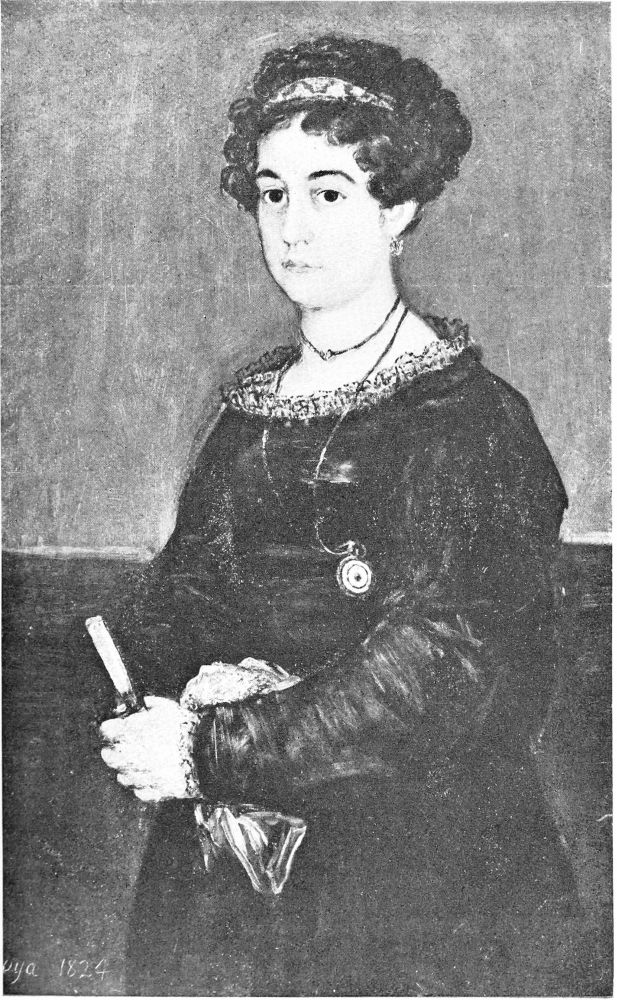
PORTRAIT OF A LADY.
PLATE 150.
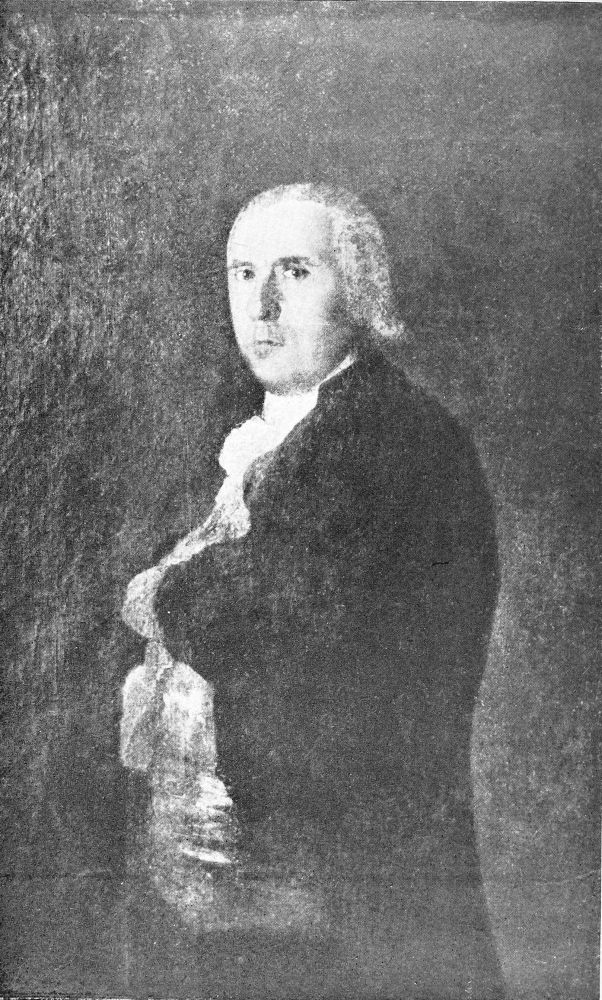
PORTRAIT OF A MAN.
PLATE 151.
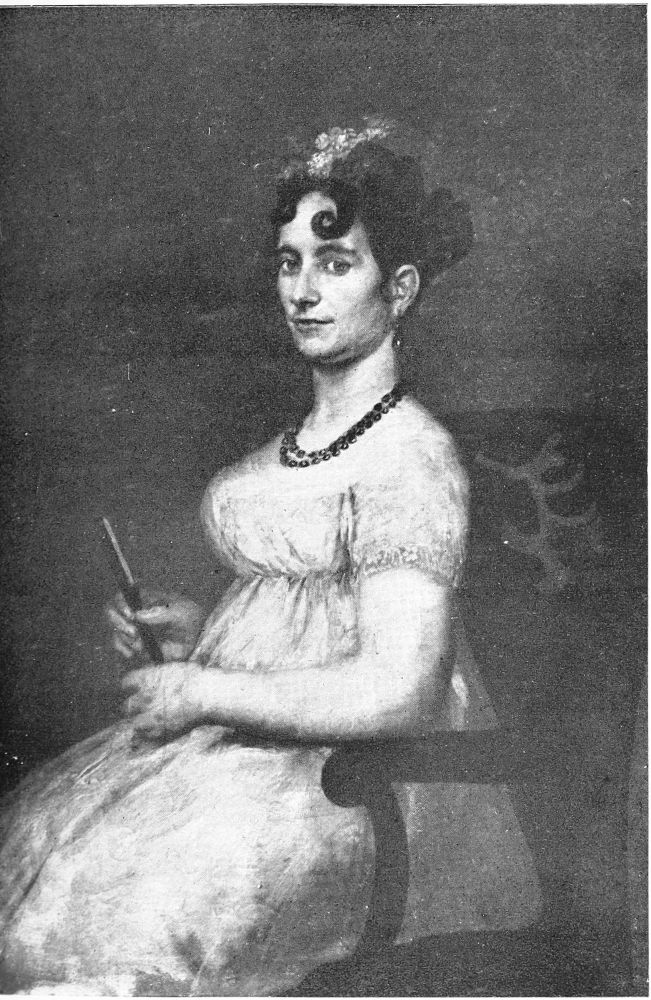
PORTRAIT OF A LADY.
(Señor Orossen.)
PLATE 152.
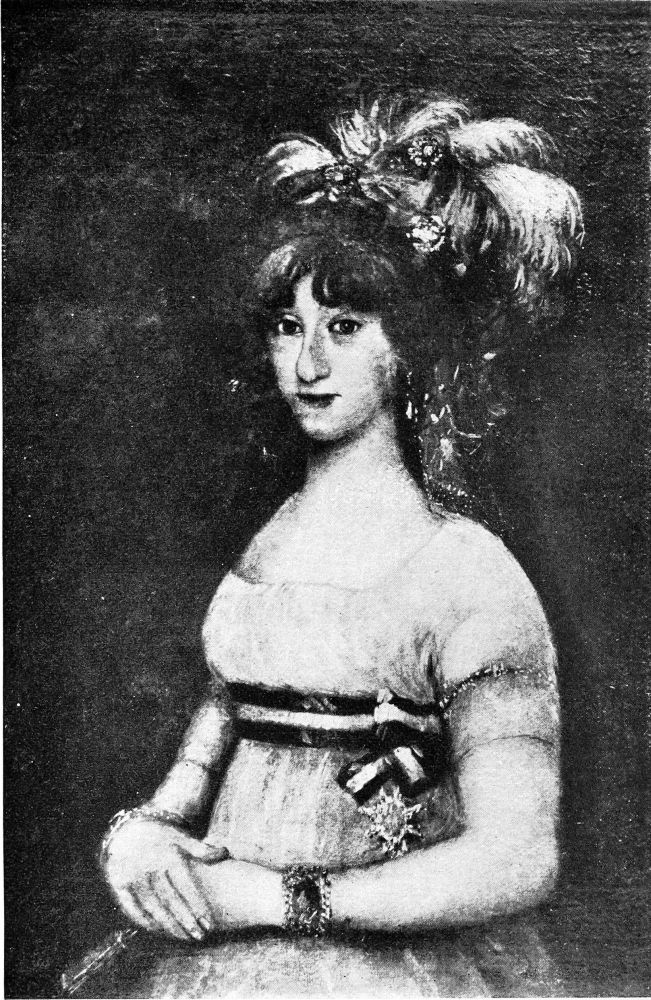
PORTRAIT OF A LADY.
PLATE 153.
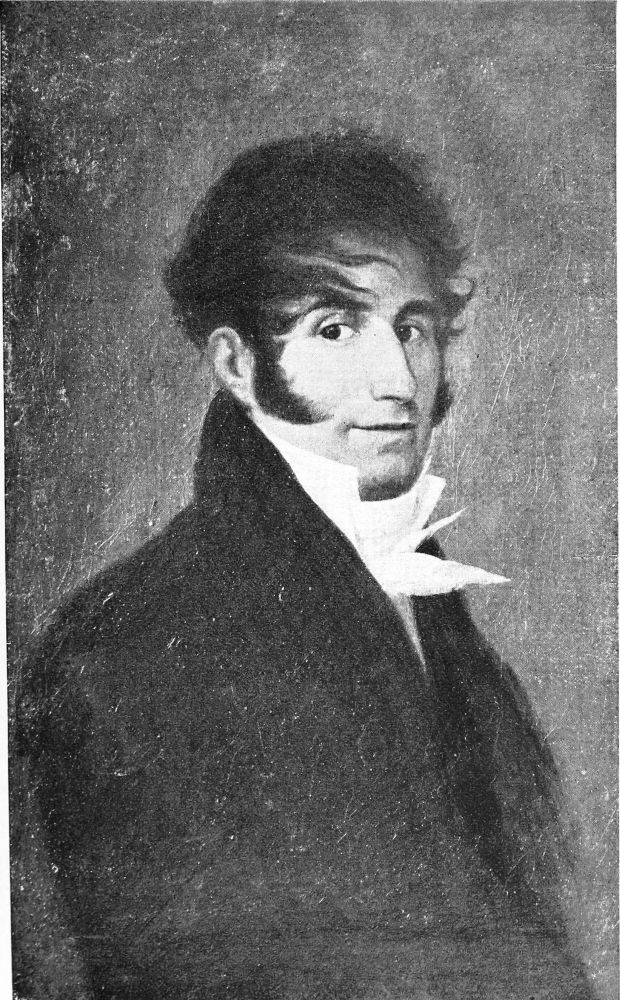
PORTRAIT OF A GENTLEMAN.
PLATE 154.
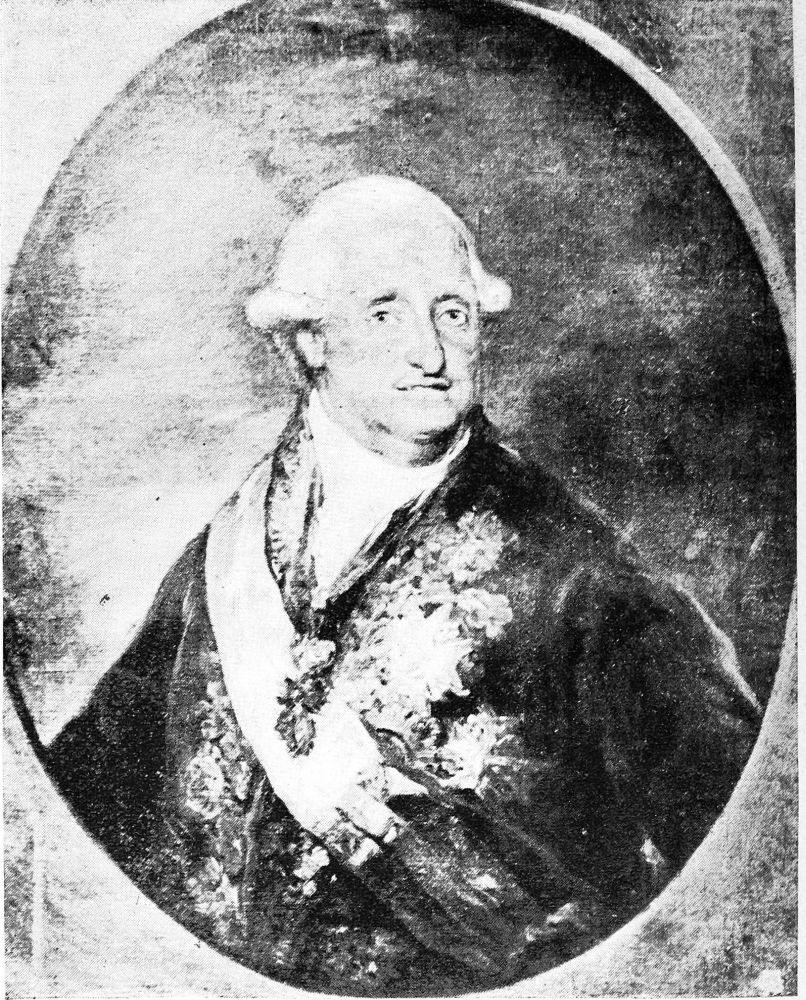
CHARLES IV.
(Comtesse de Paris.)
PLATE 155.
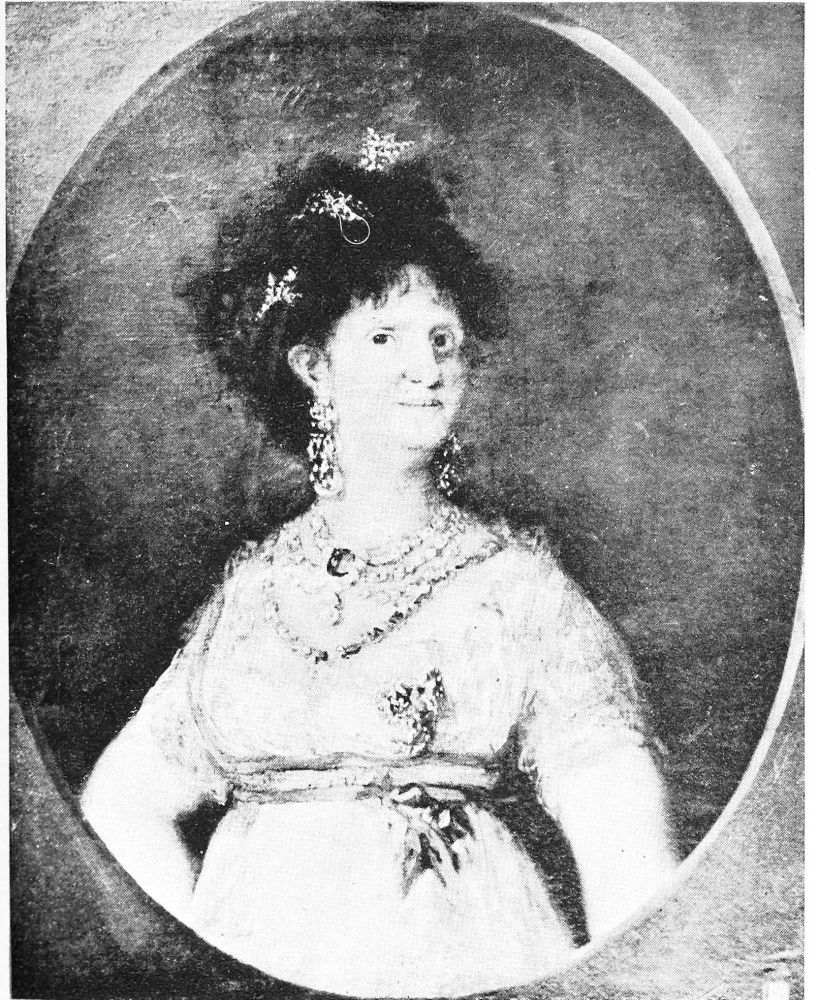
QUEEN MARIA LUISA.
(Comtesse de Paris.)
PLATE 156.
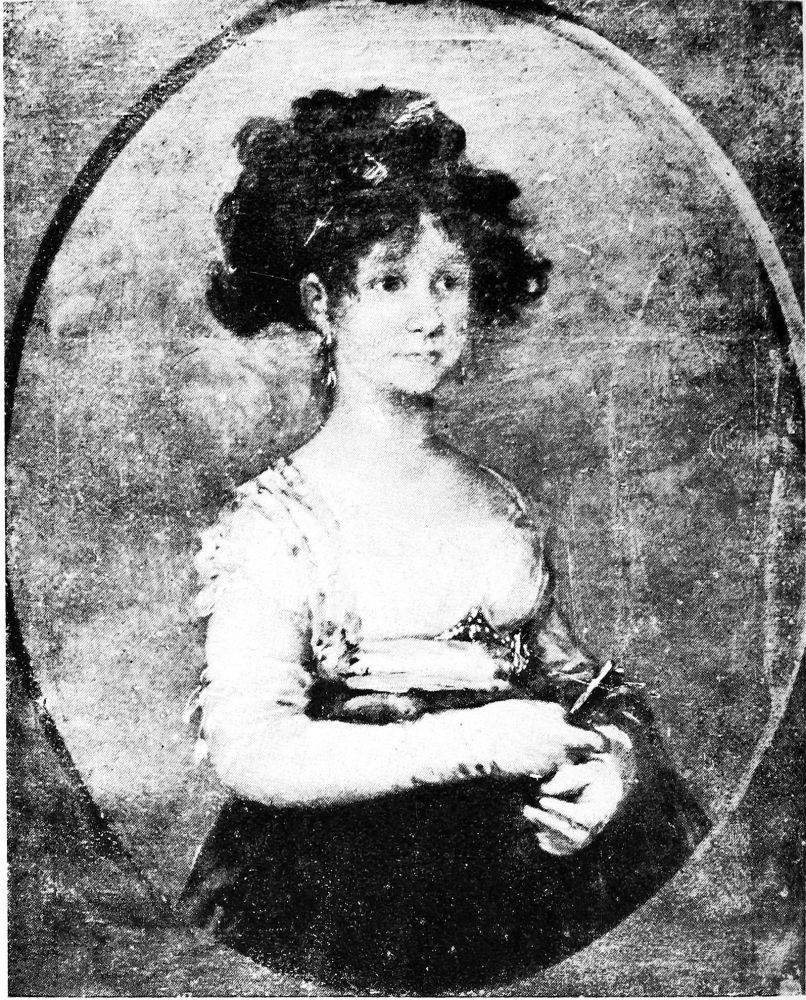
THE INFANTA ISABEL, AFTERWARDS QUEEN OF THE TWO SICILIES, AT THE AGE OF 12 YEARS.
(Comtesse de Paris.)
PLATE 157.
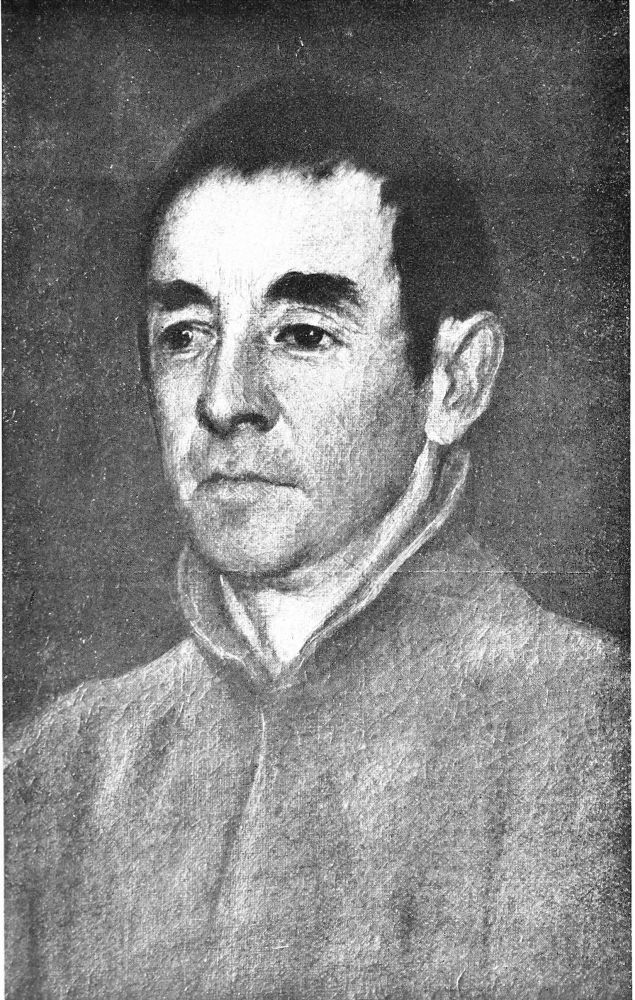
PORTRAIT OF A MAN.
PLATE 158.
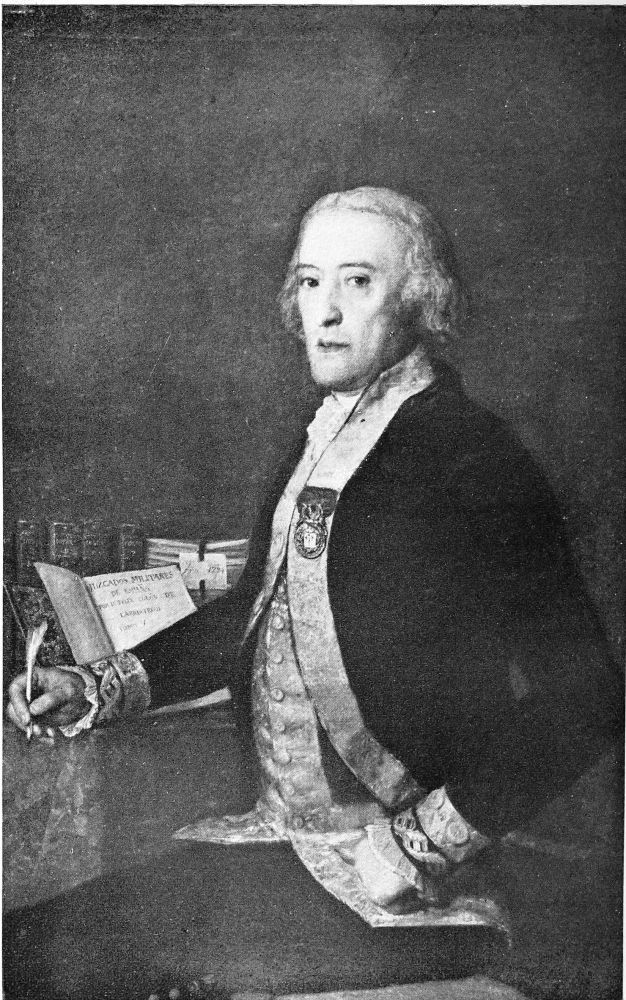
DON FELIX COLON, SPANISH AUTHOR.
(Don Ricardo Traumann, Madrid.)
PLATE 159.
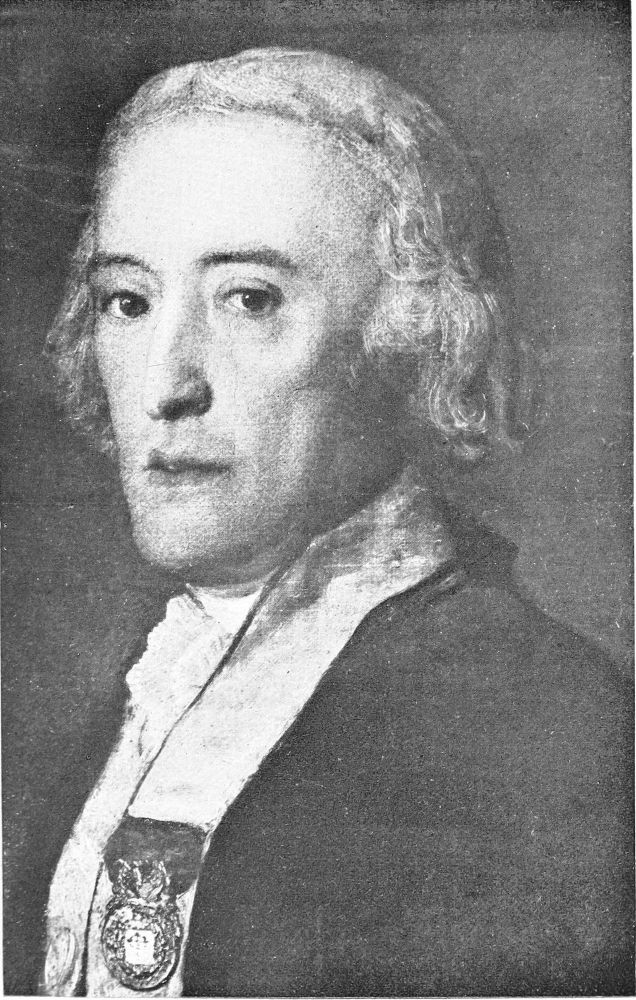
(FRAGMENT) DON FELIX COLON, SPANISH AUTHOR.
(Don Ricardo Traumann, Madrid.)
PLATE 160.
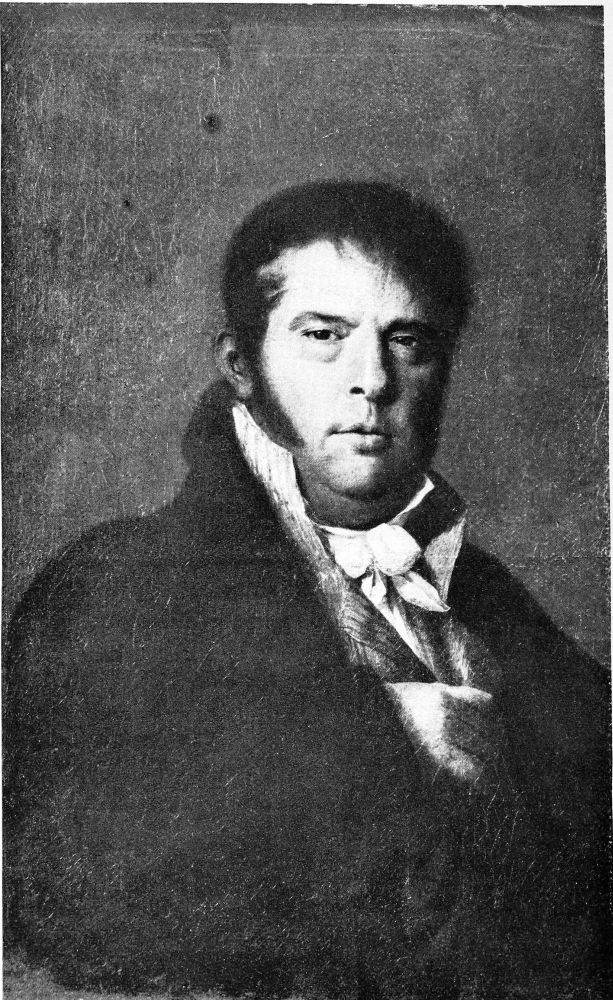
PORTRAIT OF A MAN.
PLATE 161.
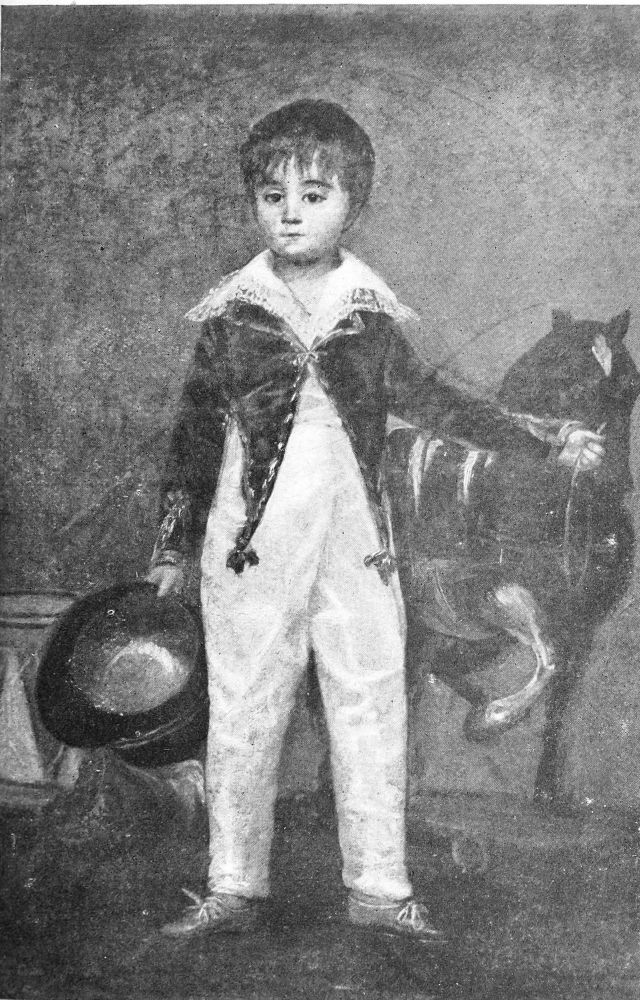
PORTRAIT OF A BOY.
PLATE 162.
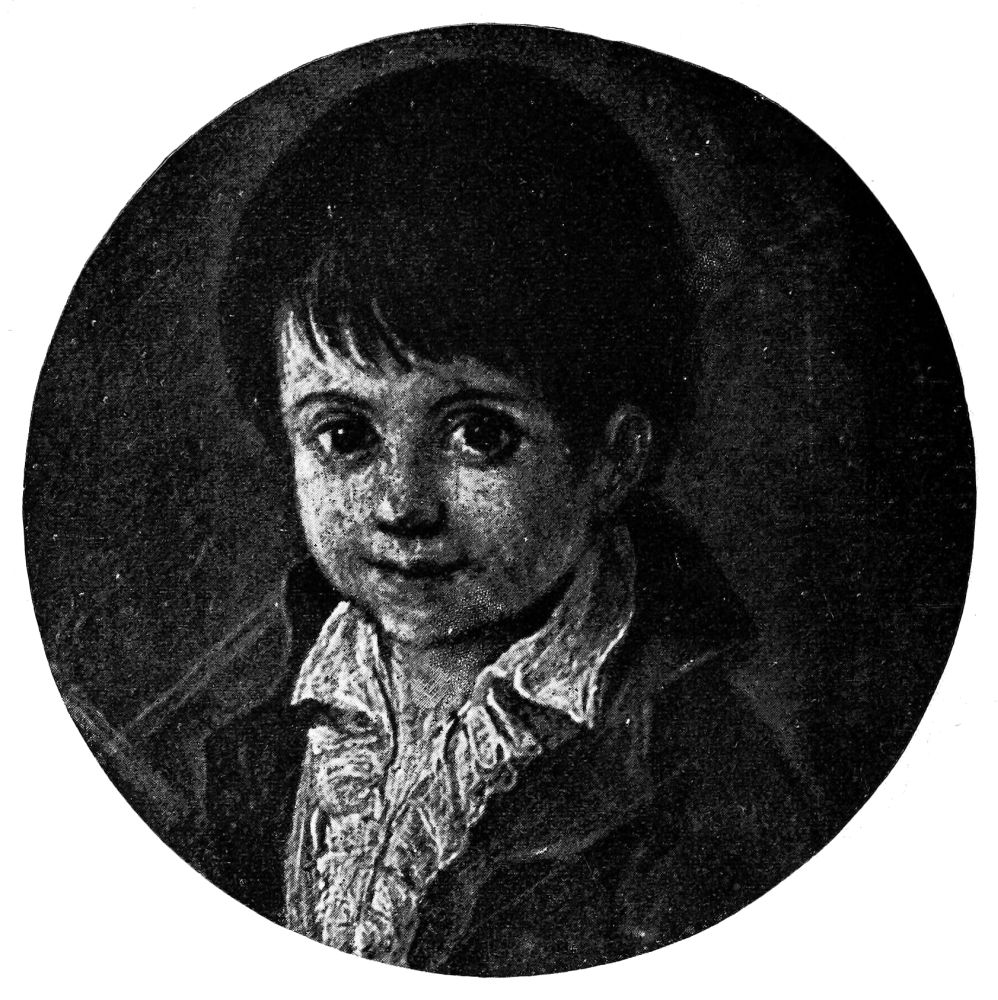
PORTRAIT OF A BOY.
PLATE 163.
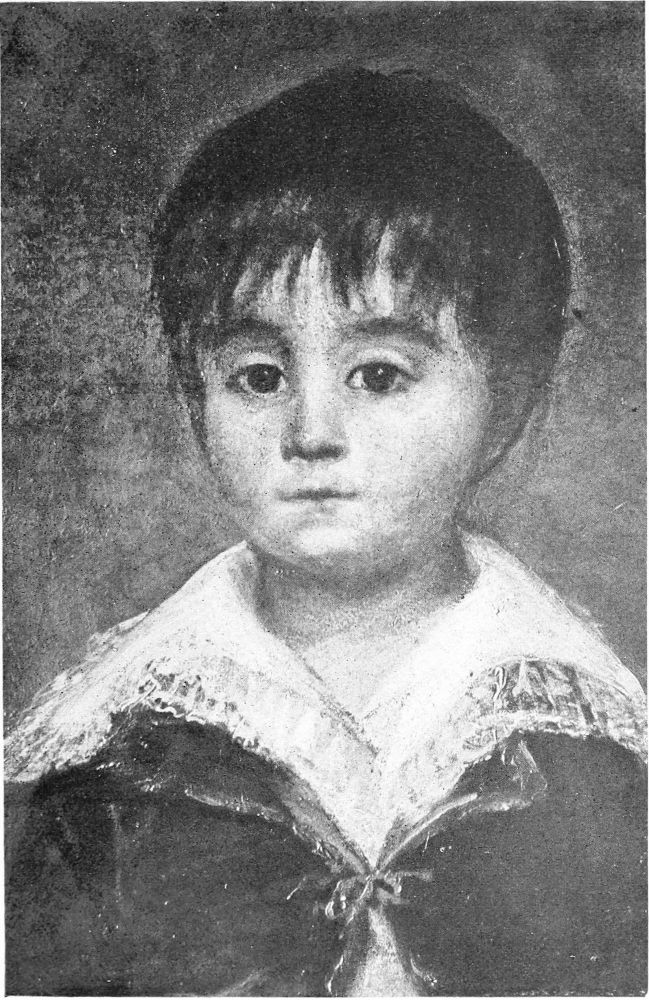
PORTRAIT OF A BOY.
PLATE 164.
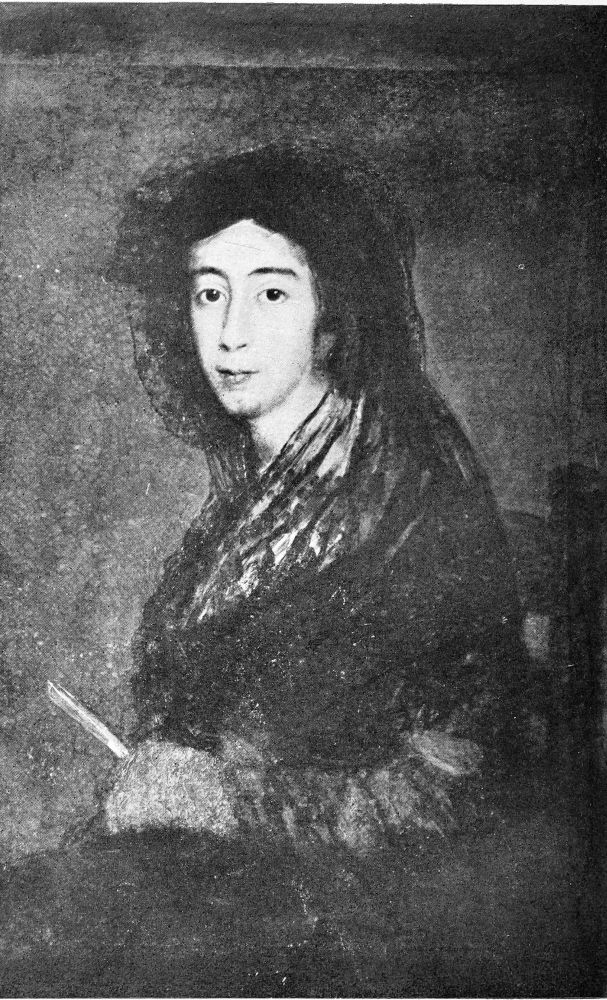
PORTRAIT OF A LADY.
PLATE 165.
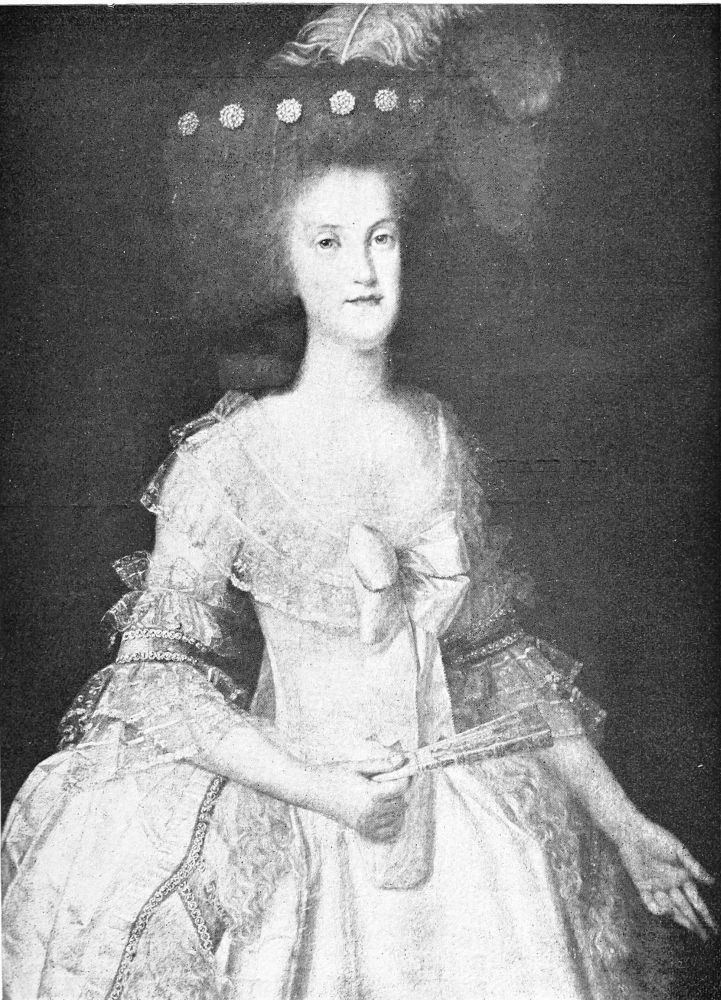
PORTRAIT OF A LADY.
PLATE 166.
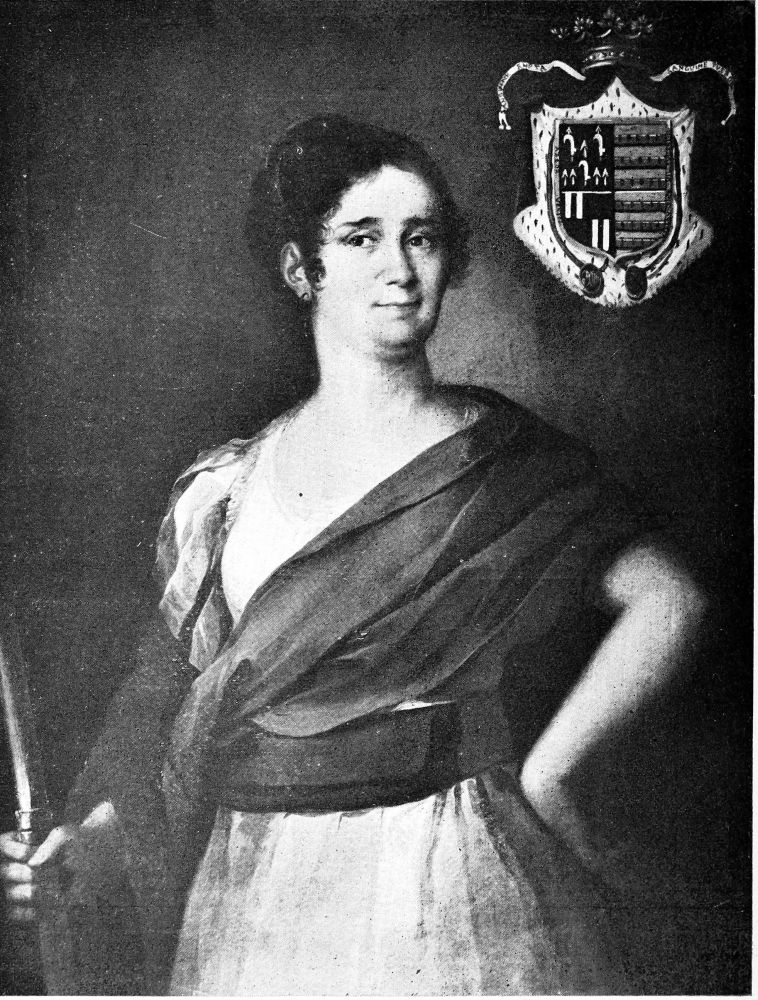
PORTRAIT OF A LADY.
PLATE 167.
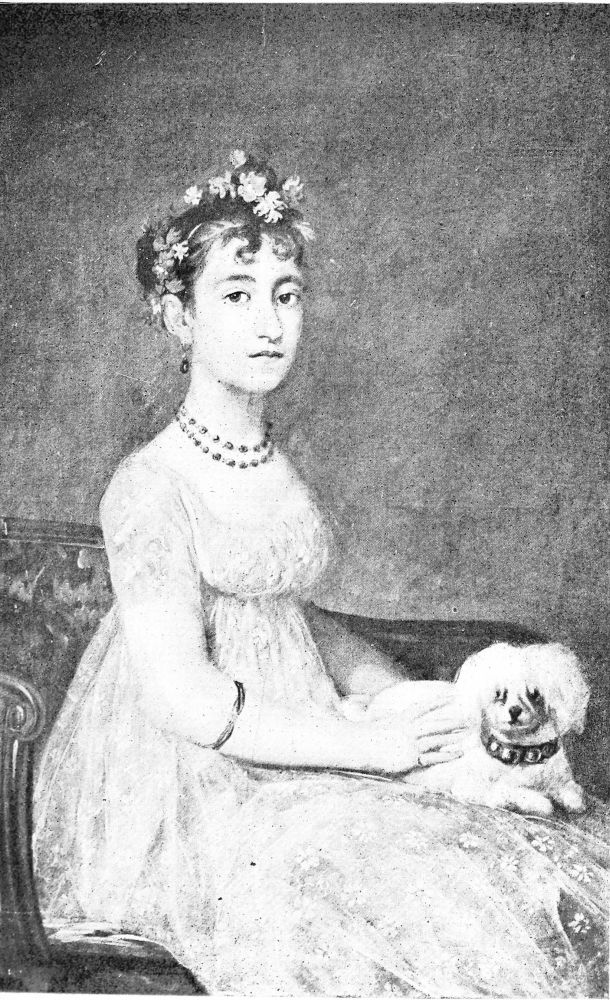
PORTRAIT OF A YOUNG LADY.
(Mons. C. G., Paris.)
PLATE 168.
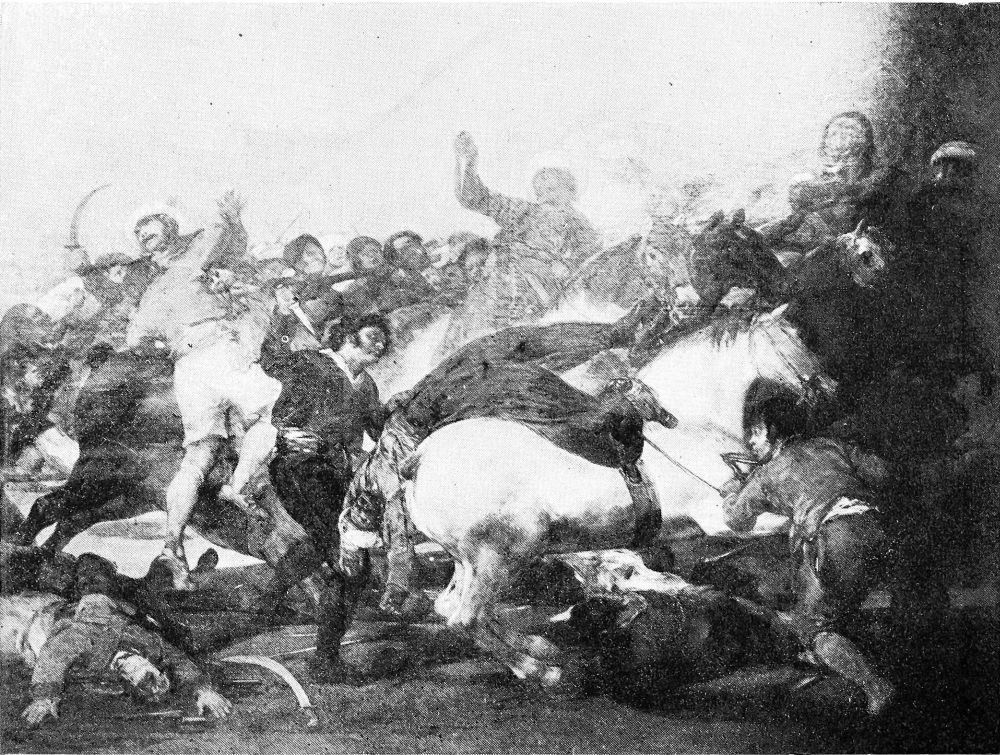
EPISODE OF THE FRENCH INVASION OF 1808. THE STRUGGLE IN THE PUERTA DEL SOL BETWEEN THE CITIZENS AND THE CAVALRY OF THE IMPERIAL GUARD.
(Prado, Madrid.)
PLATE 169.
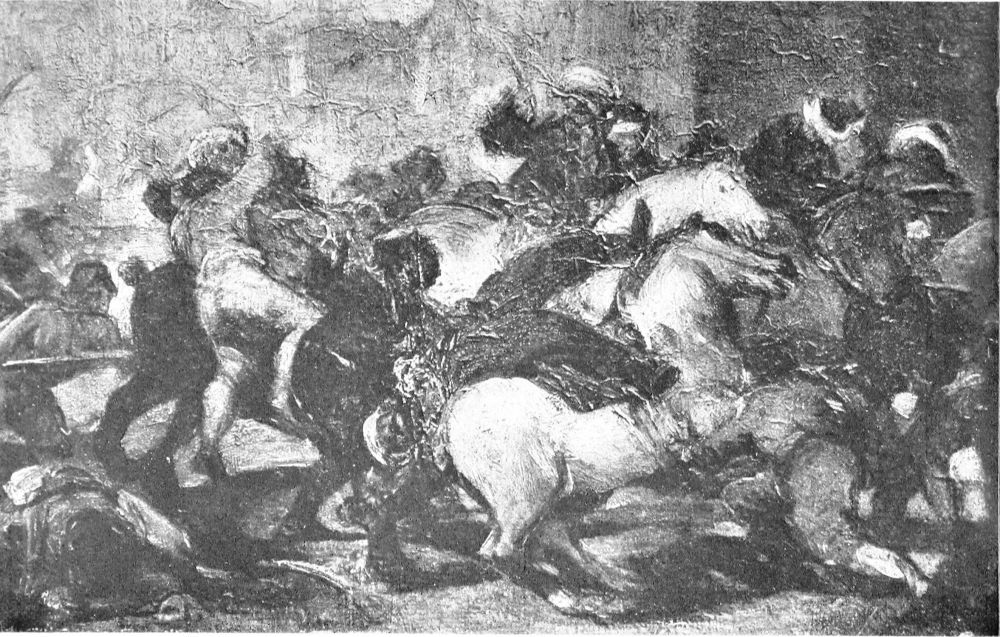
ATTACK ON MURAT’S CAVALRY BY THE PEOPLE OF MADRID MAY 2ND, 1808 (SKETCH).
(Duquesa de Villahermosa.)
PLATE 170.
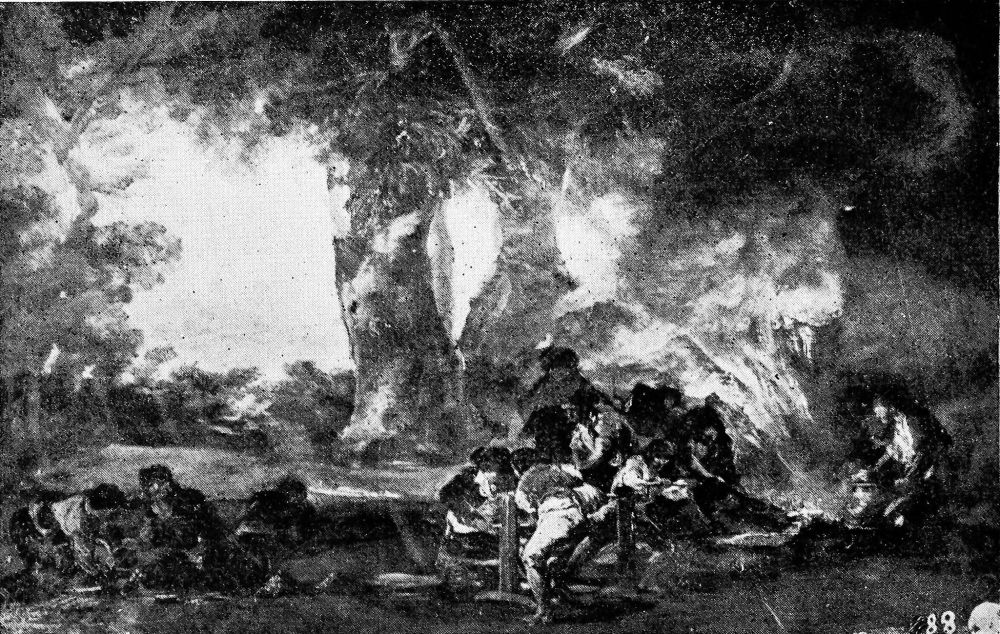
CASTING BULLETS BY MOONLIGHT IN THE HILLS OF TARDIENTA.
(Royal Palace, Madrid.)
PLATE 171.
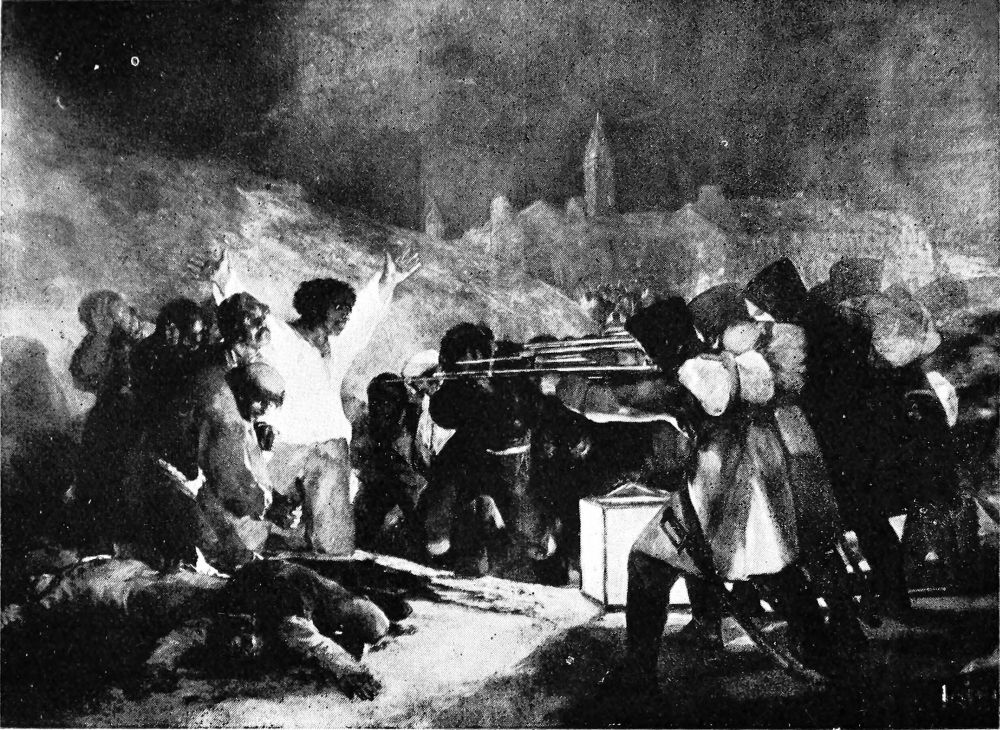
SCENES OF THE 2ND MAY 1808: A GROUP OF CITIZENS OF MADRID BEING SHOT BY THE TROOPS OF MURAT.
(Prado, Madrid.)
PLATE 172.
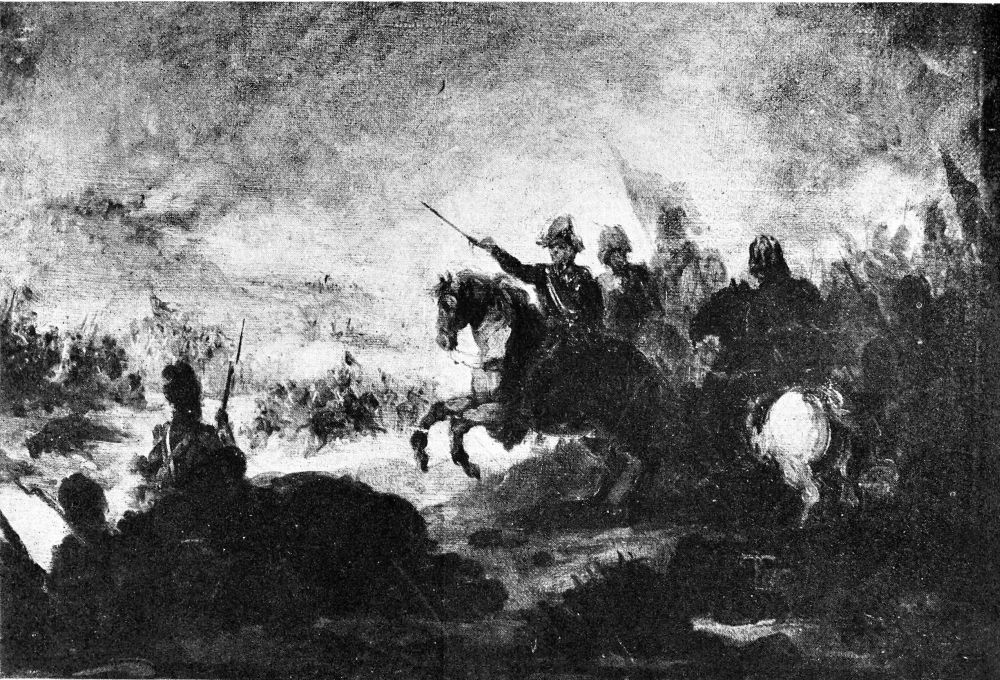
BATTLE-SCENE.
(Marques de Casa Torres, Madrid.)
PLATE 173.
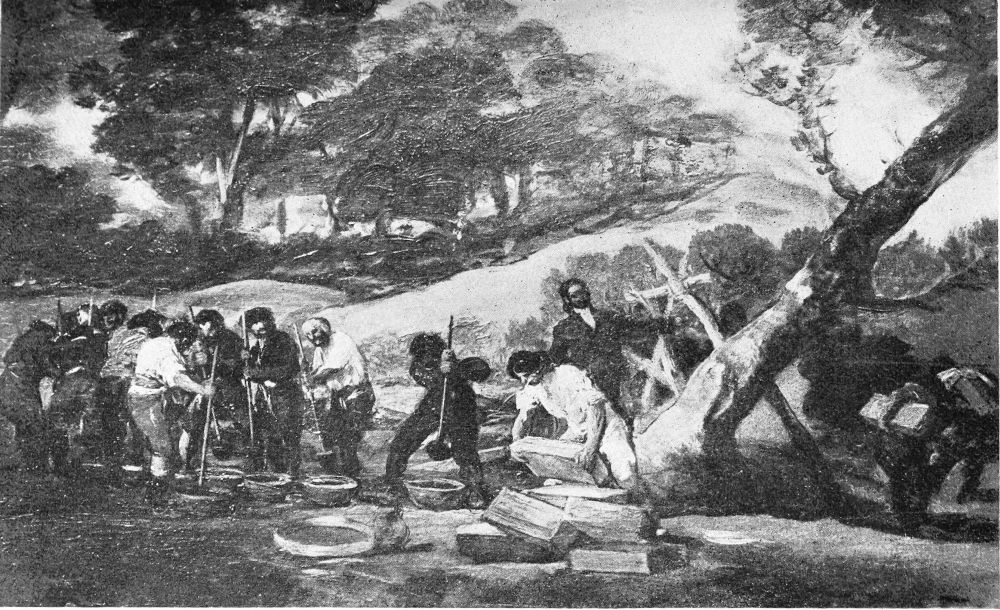
MANUFACTURING POWDER IN THE SIERRA DE TARDIENTA.
(Royal Palace, Madrid.)
PLATE 174.
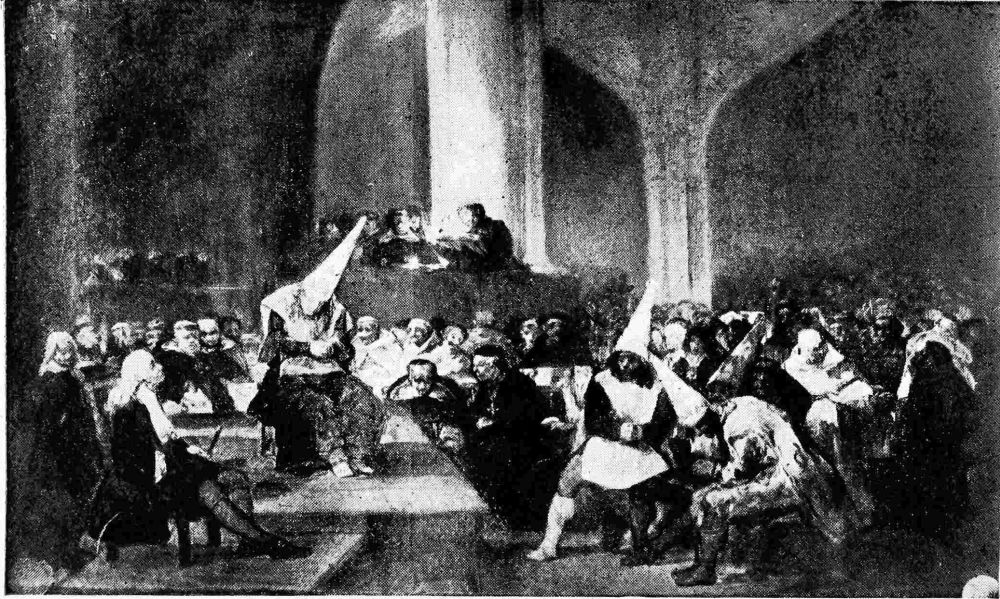
THE TRIBUNAL OF THE INQUISITION.
(Prado, Madrid.)
PLATE 175.
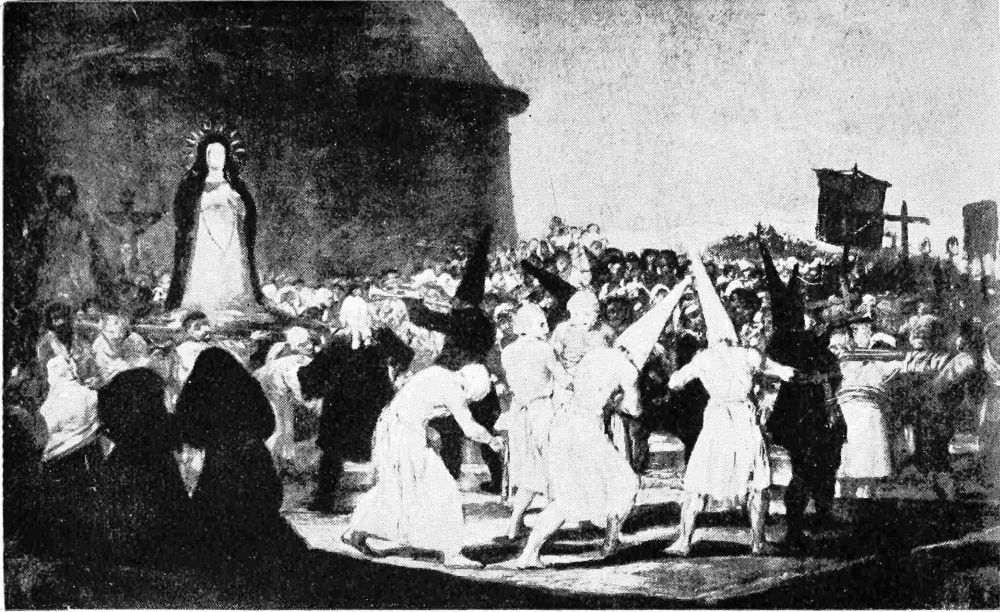
THE PROCESSION OF FLAGELLANTS.
(Academy of St. Ferdinand, Madrid.)
PLATE 176.
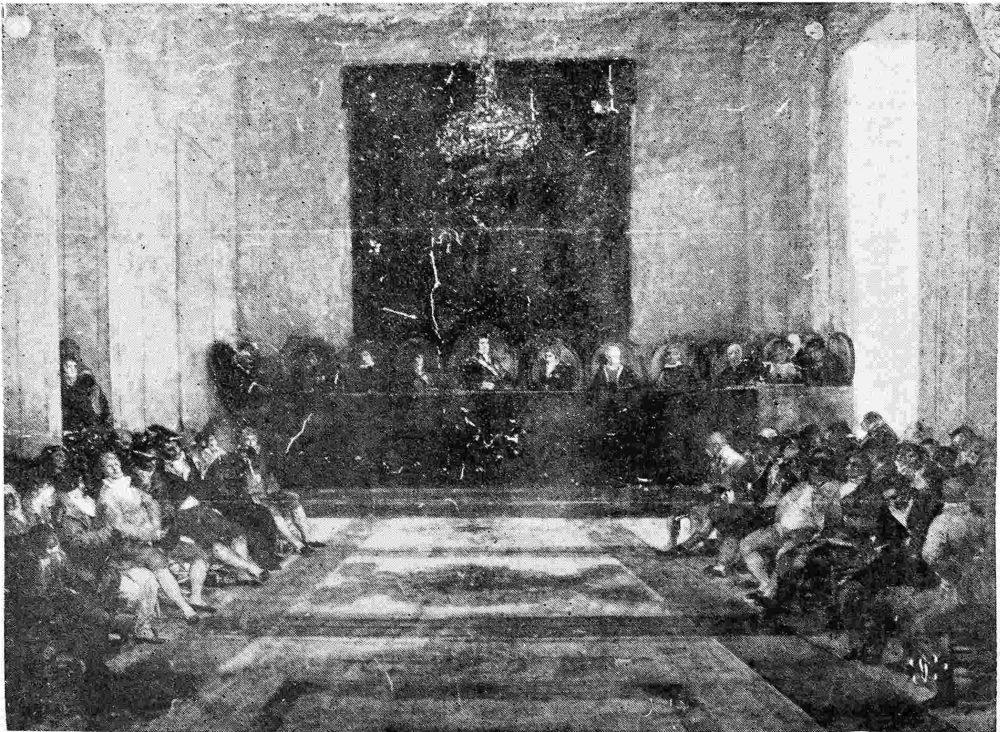
A MEETING OF THE COMPANY OF THE PHILIPPINES PRESIDED OVER BY FERDINAND VII.
PLATE 177.
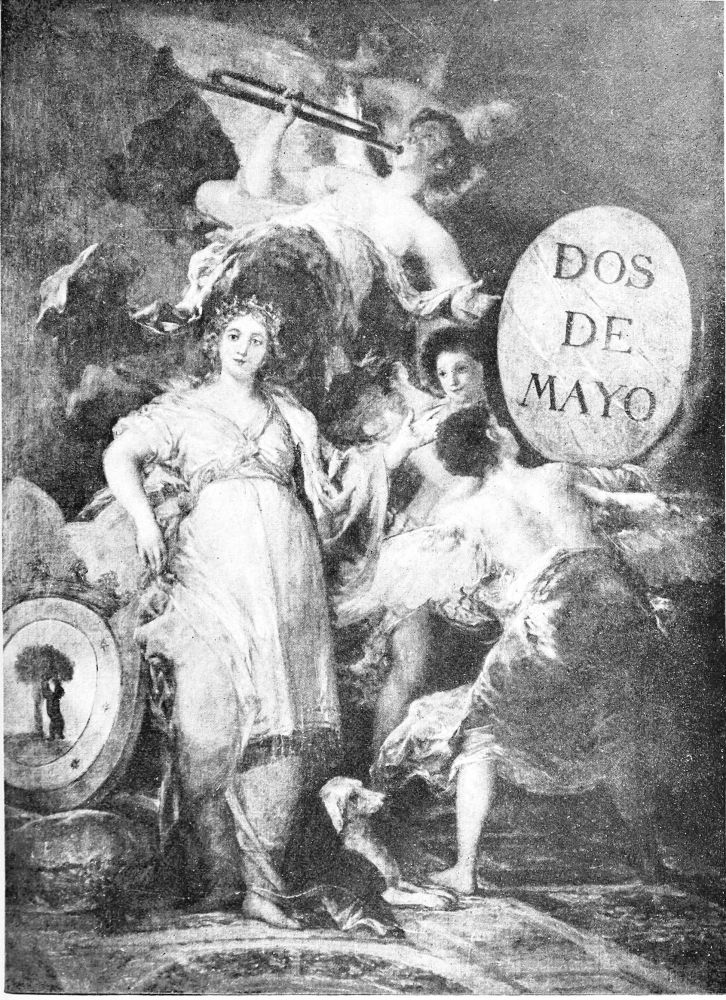
THE CITY OF MADRID: AN ALLEGORY.
(The Corporation of Madrid.)
PLATE 178.
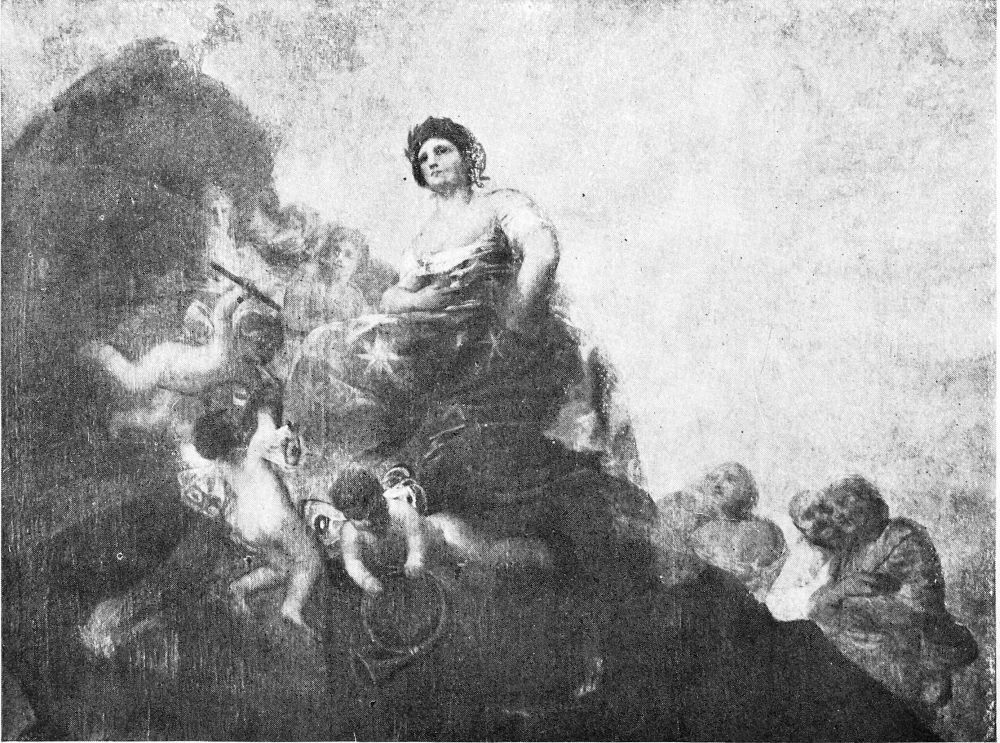
MUSIC: AN ALLEGORY.
(Don Luis Navas.)
PLATE 179.
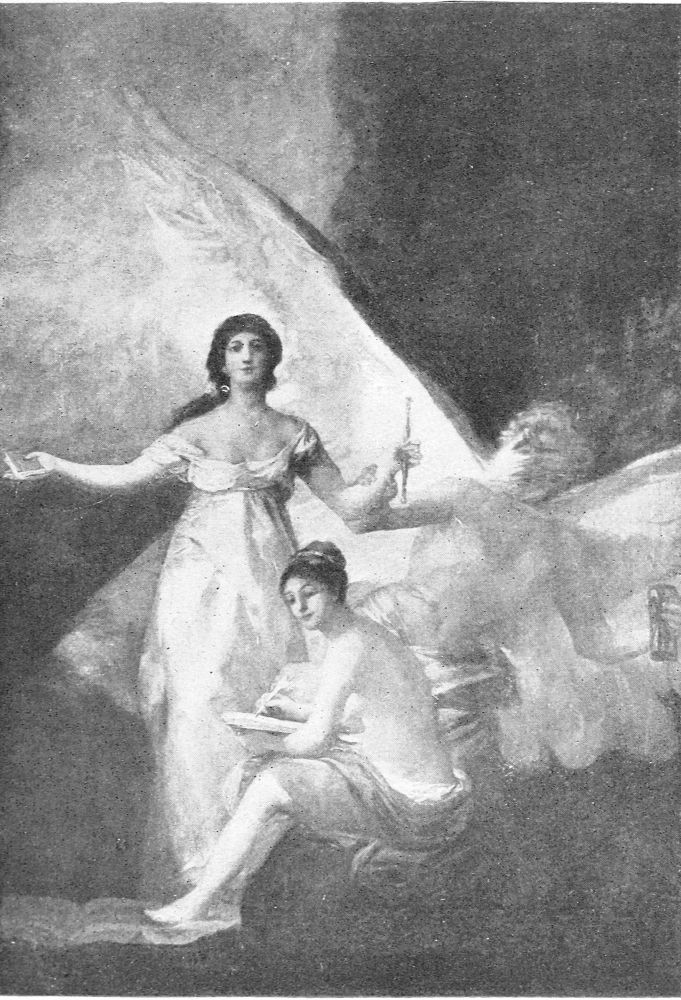
SPAIN MAKING HISTORY.
(Don Luis Navas.)
PLATE 180.
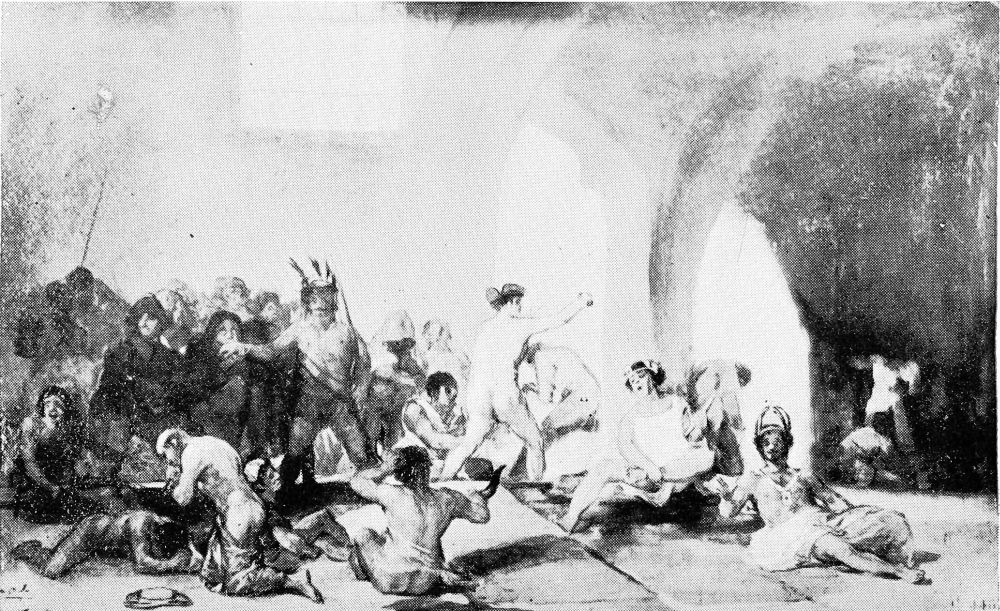
THE MADHOUSE.
(Prado, Madrid.)
PLATE 181.
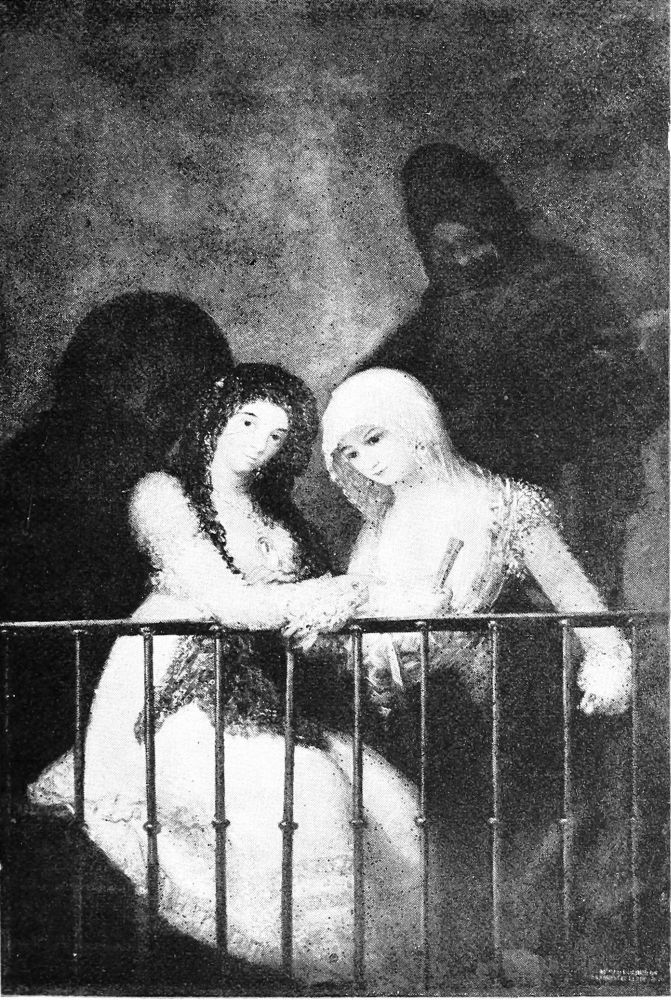
THE MAJAS OF THE BALCONY.
(Collection of the Duque de Marchesa.)
PLATE 182.
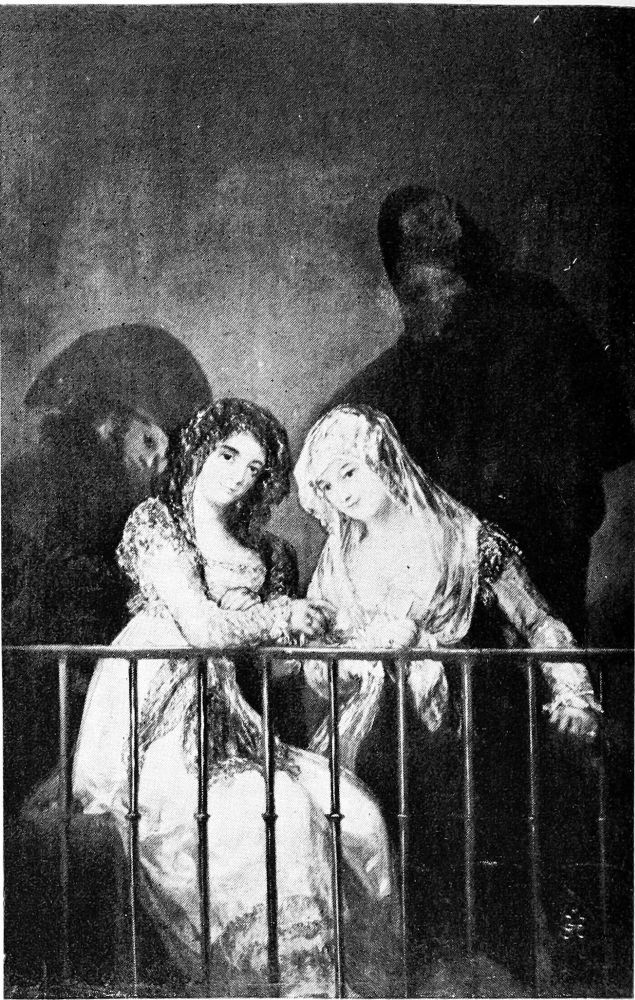
THE MAJAS OF THE BALCONY.
(Repetition of the Foregoing, with Variations.)
PLATE 183.
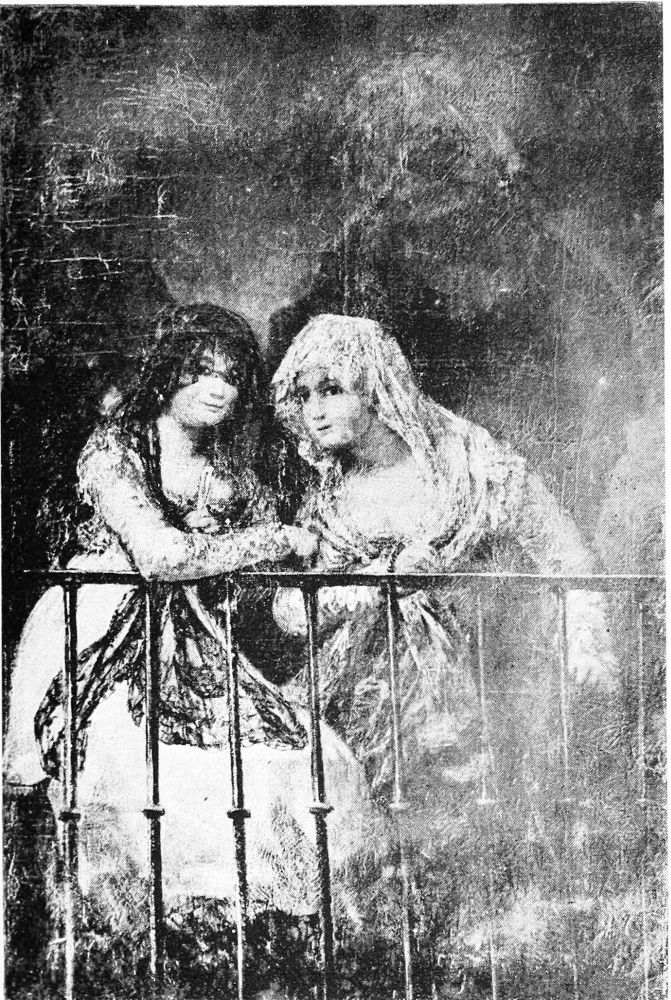
THE MAJAS OF THE BALCONY.
(Repetition of the Foregoing, with Variations.)
PLATE 184.
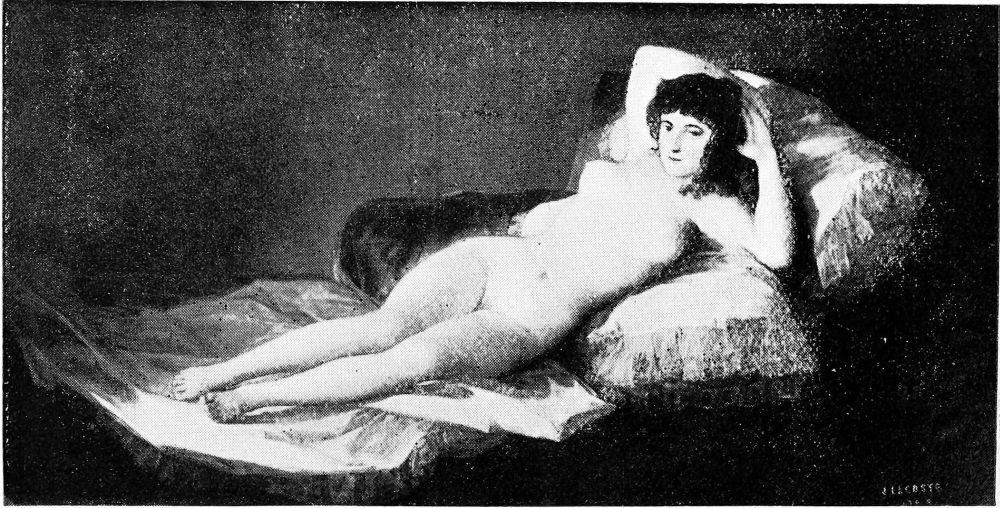
LA MAJA (NUDE).
(Prado, Madrid.)
PLATE 185.
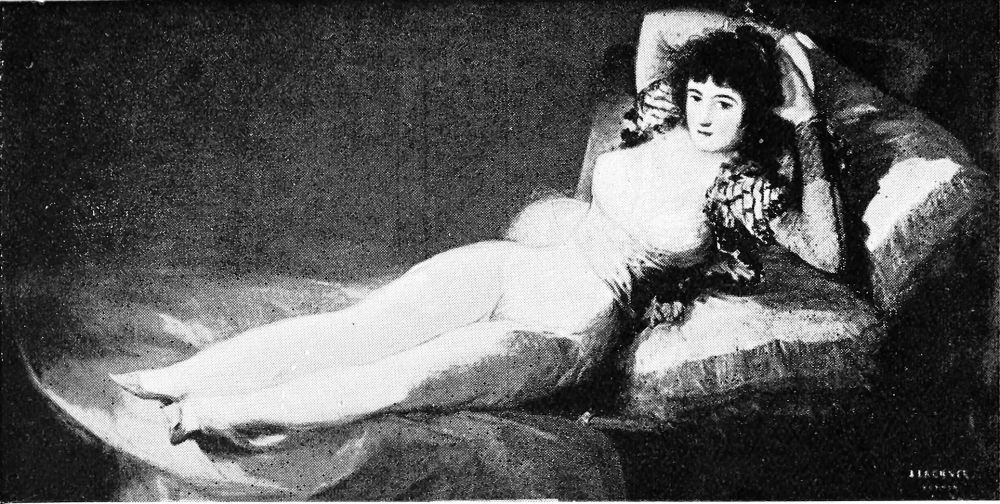
LA MAJA (CLOTHED).
(Prado, Madrid.)
PLATE 186.
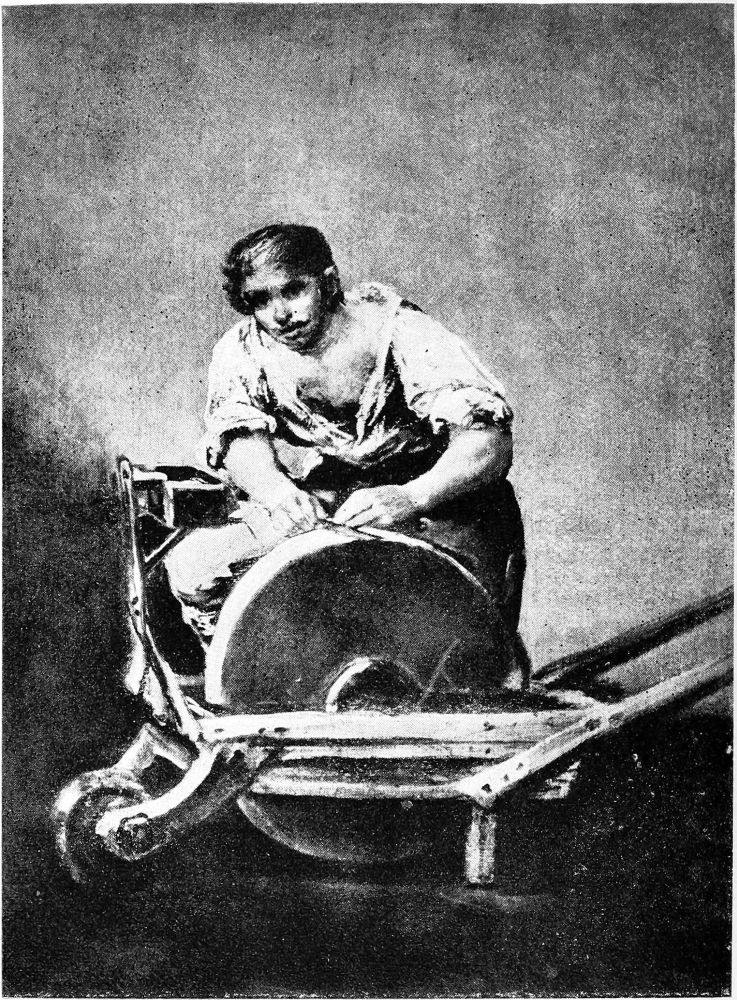
THE KNIFE-GRINDER.
(Budapest.)
PLATE 187.
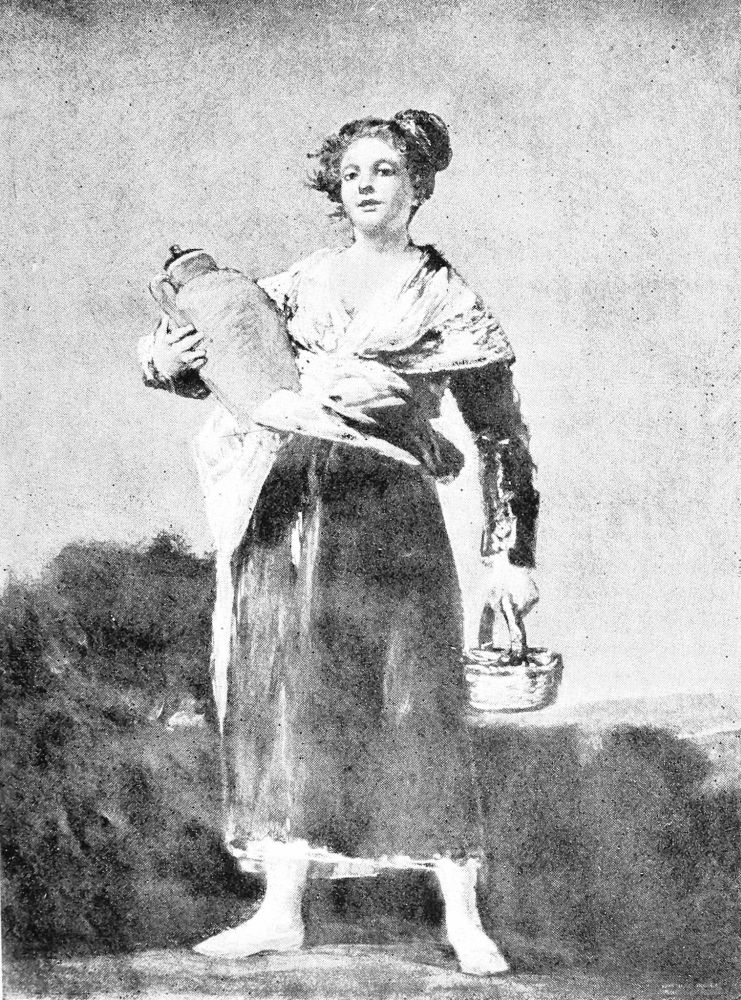
THE WATER-CARRIER.
(Budapest.)
PLATE 188.
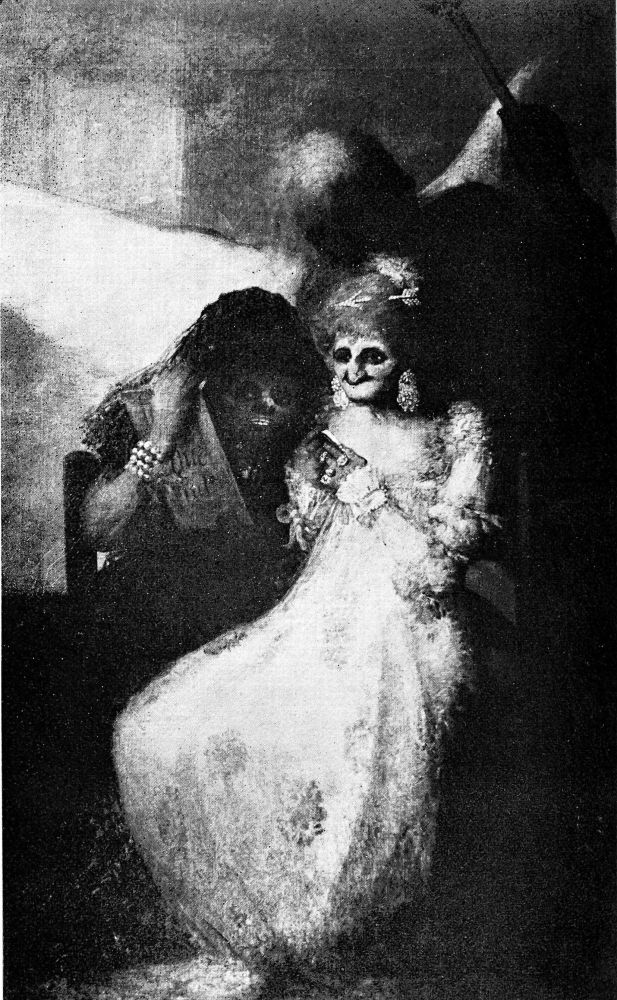
OLD AGE
(Lille Museum.)
PLATE 189.
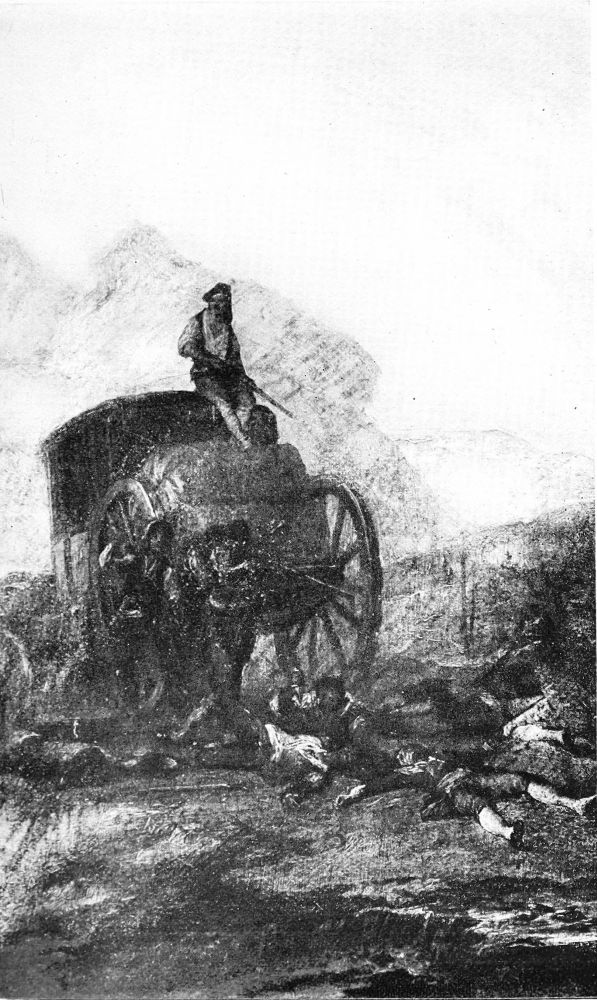
ROBBERY OF A COACH.
(Marques de Castro Serna.)
PLATE 190.
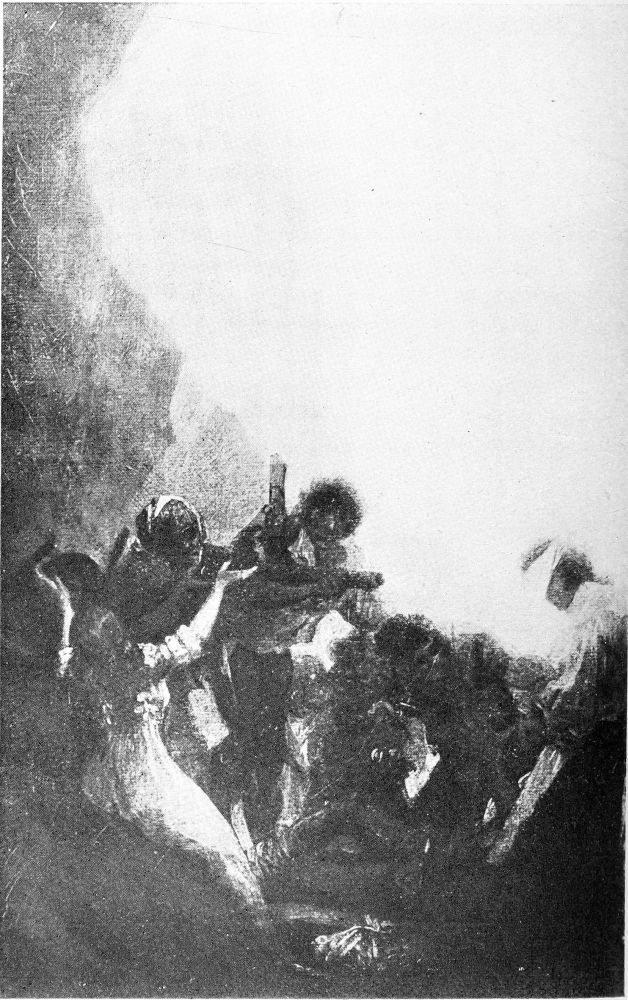
BRIGANDS.
(Marques de la Romana.)
PLATE 191.
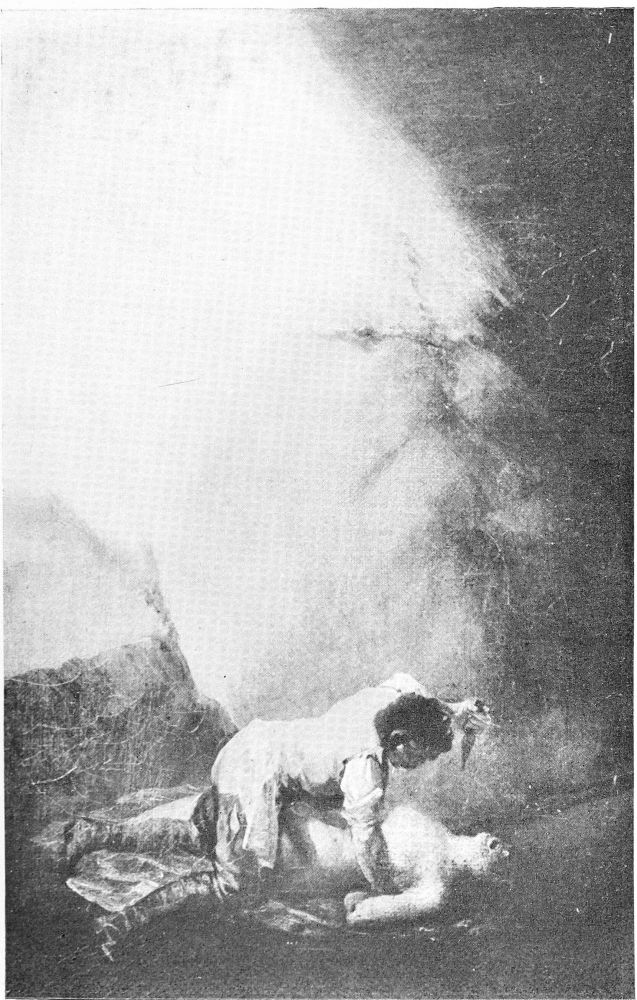
BRIGAND MURDERING A WOMAN.
(Marques de la Romana.)
PLATE 192.
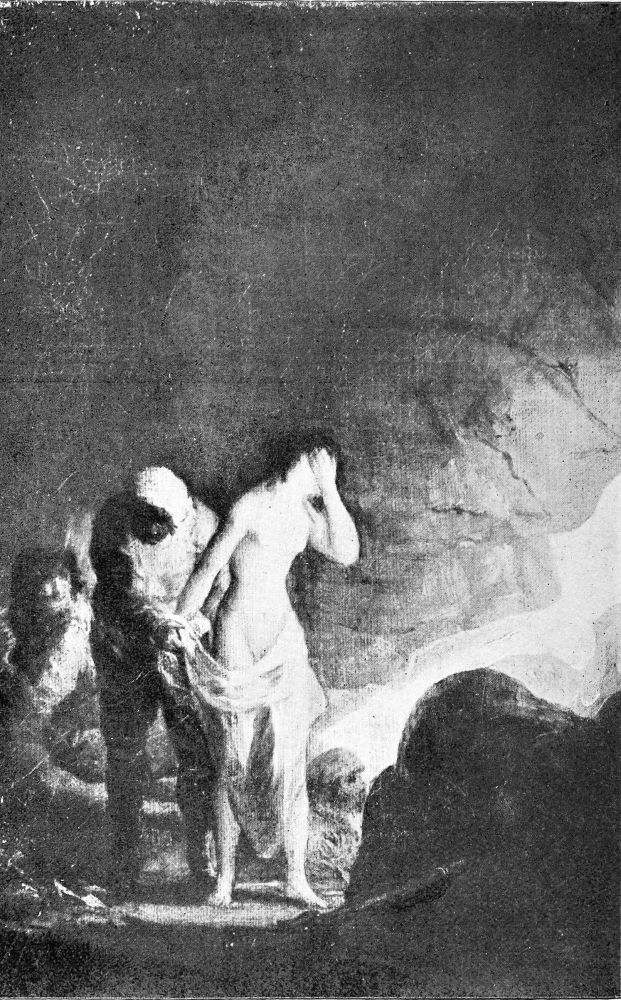
BRIGANDS STRIPPING THEIR CAPTIVES.
(Marques de la Romana.)
PLATE 193.
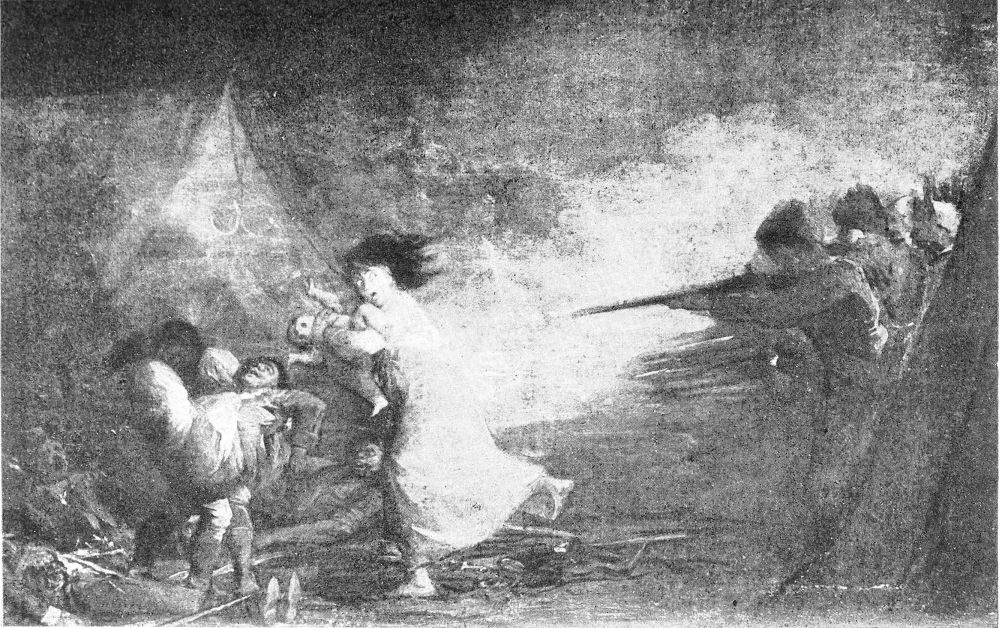
MURDER BY BRIGANDS.
(Marques de la Romana, Madrid.)
PLATE 194.
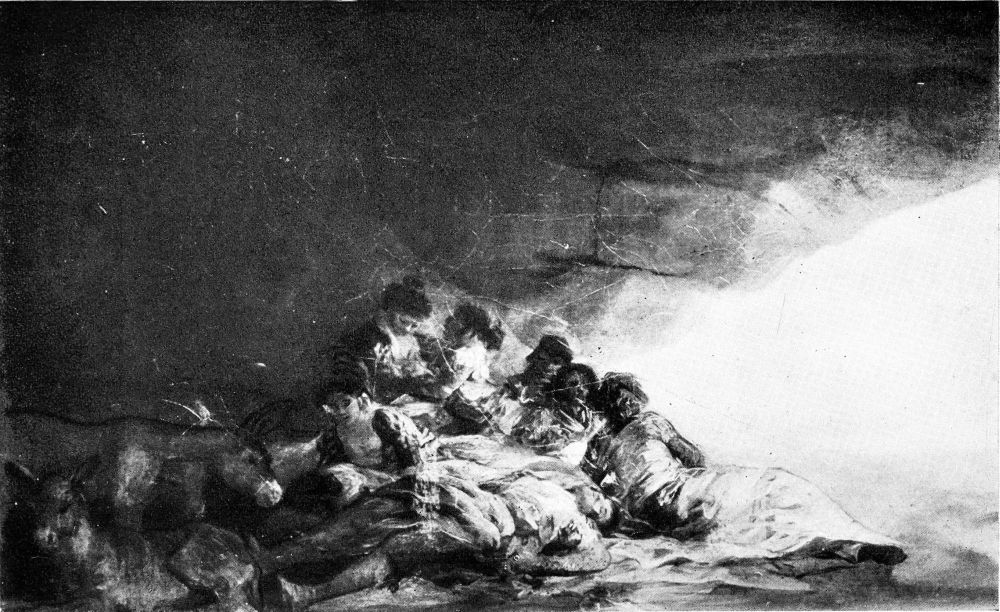
BRIGANDS’ CAVE
(Marques de la Romana, Madrid.)
PLATE 195.
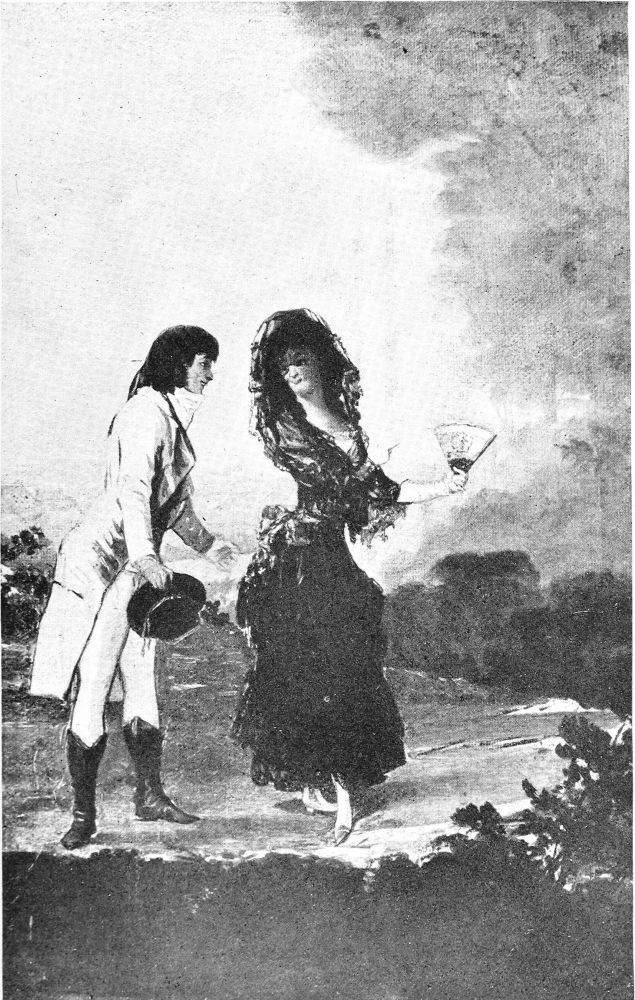
GOYA AND THE DUCHESS OF ALBA.
(Marques de la Romana.)
PLATE 196.
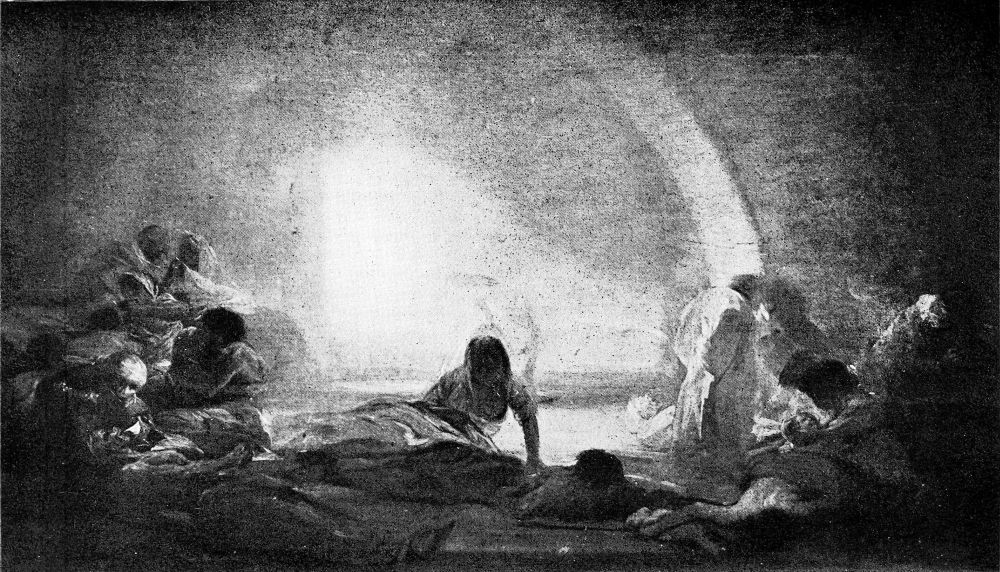
THE PLAGUE TERROR.
(Marques de la Romana.)
PLATE 197.
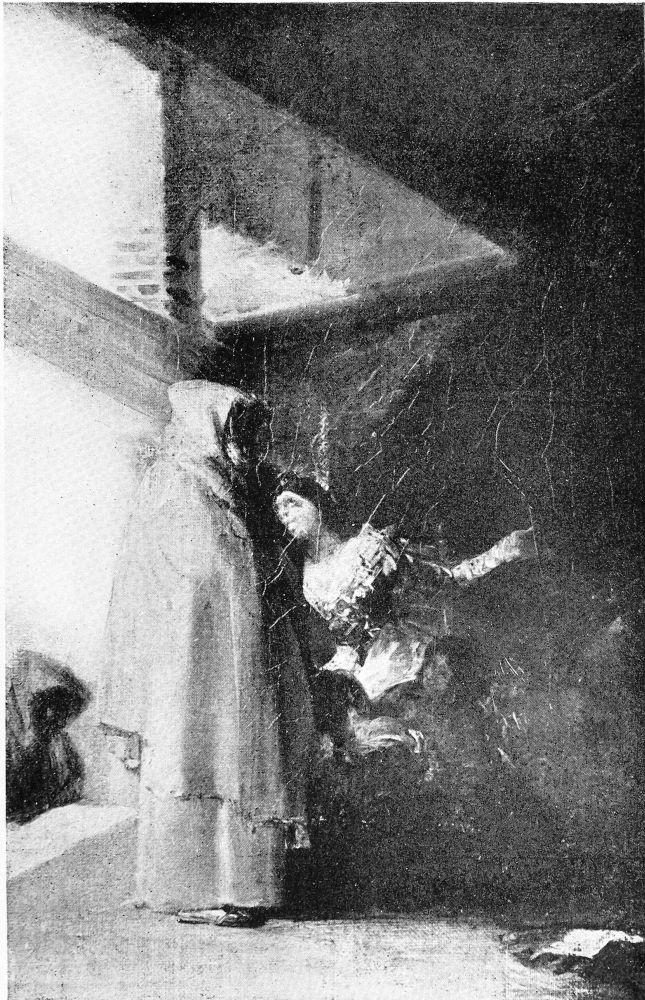
THE MONK’S VISIT.
(Marques de la Romana.)
PLATE 198.
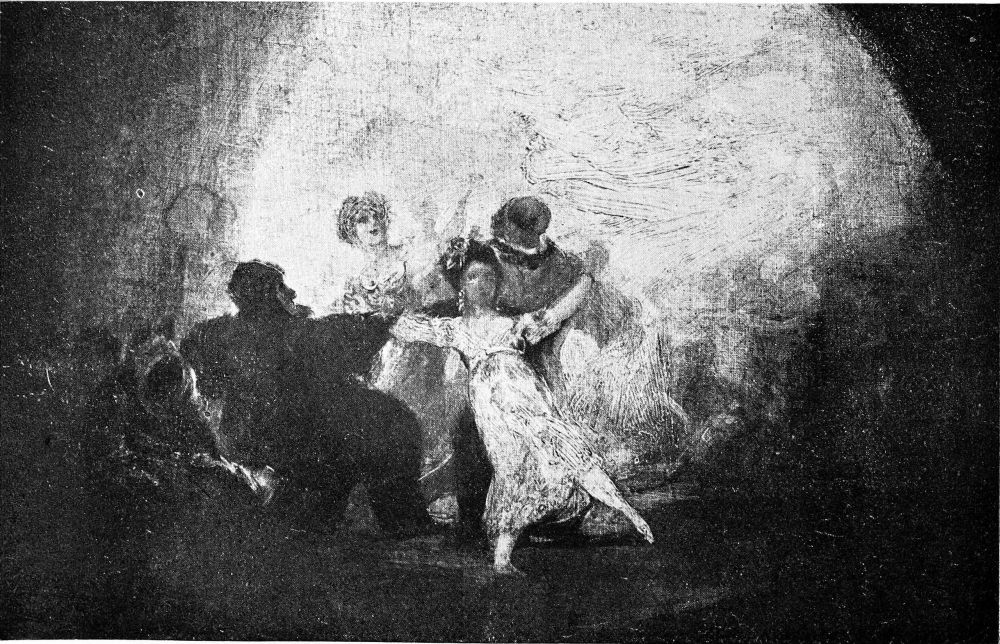
A MASQUERADE.
(Duquesa de Villahermosa, Madrid.)
PLATE 199.
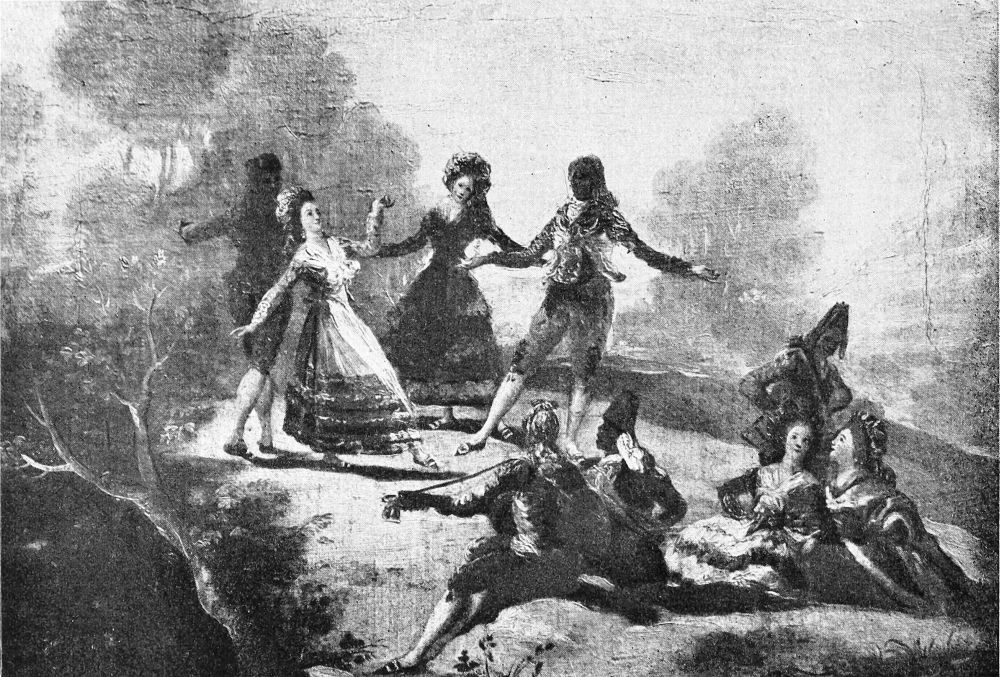
THE DANCE.
(Marques de la Torrecilla.)
PLATE 200.
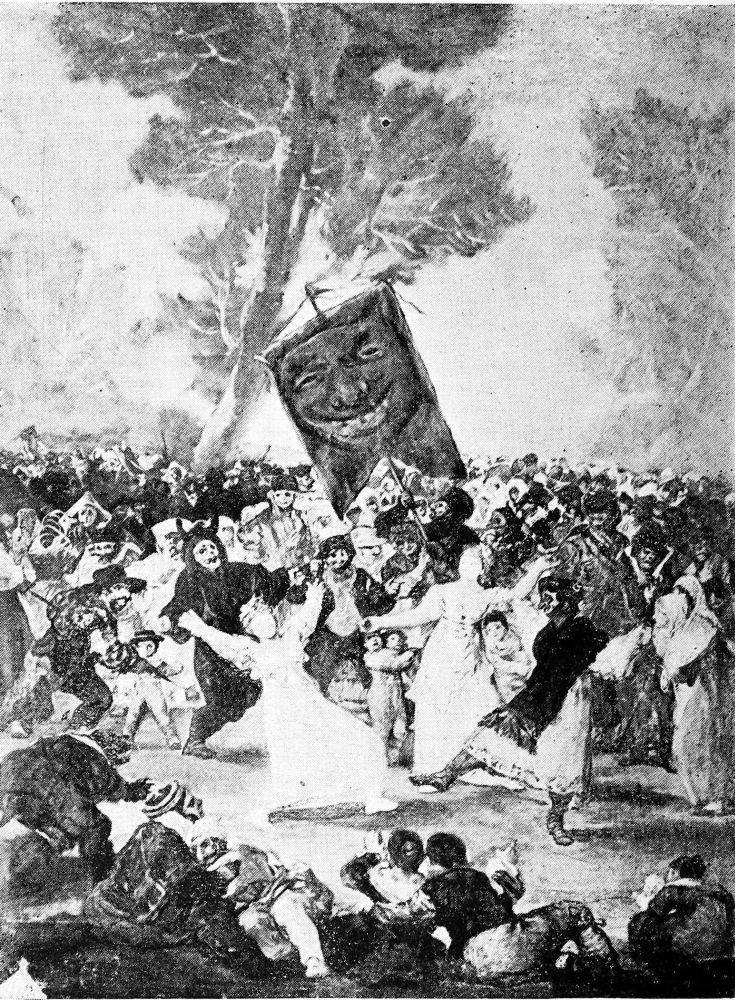
THE FUNERAL OF THE SARDINE: CARNIVAL SCENE.
(Academy of St. Ferdinand, Madrid.)
PLATE 201.
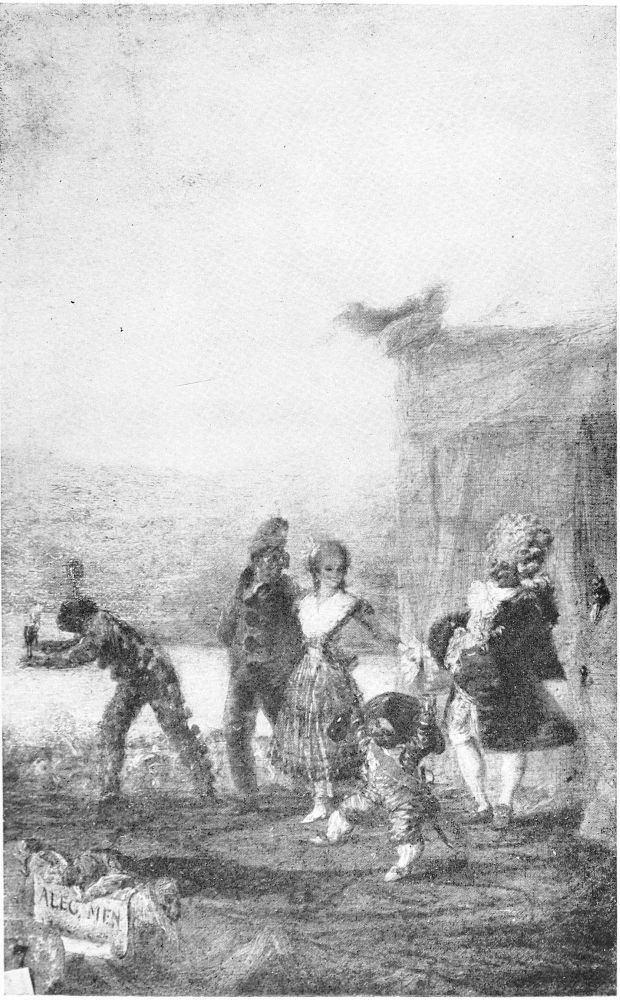
THE BOOTH AT THE FAIR.
(Marques de Castro Serna.)
PLATE 202.
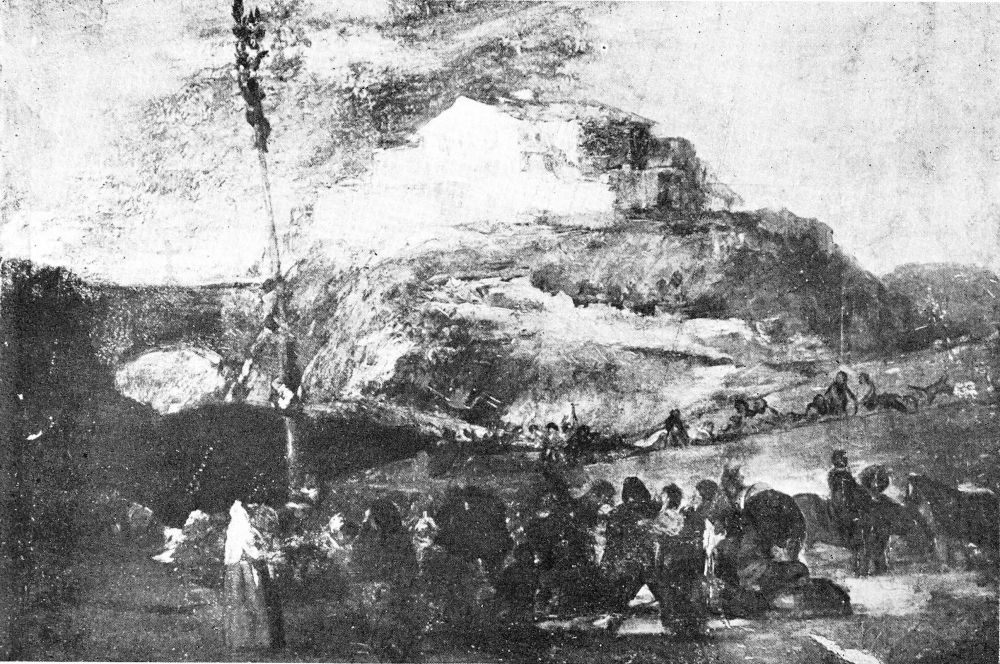
THE GREASY POLE.
(Marques de Castro Torres.)
PLATE 203.
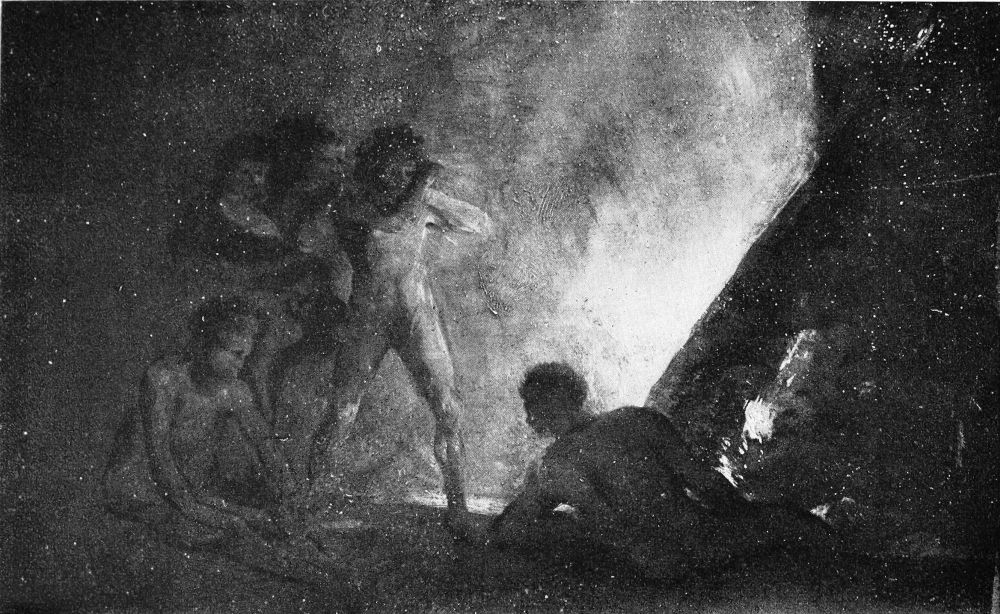
THE BONFIRE.
(Conde de Villagonzalo.)
PLATE 204.
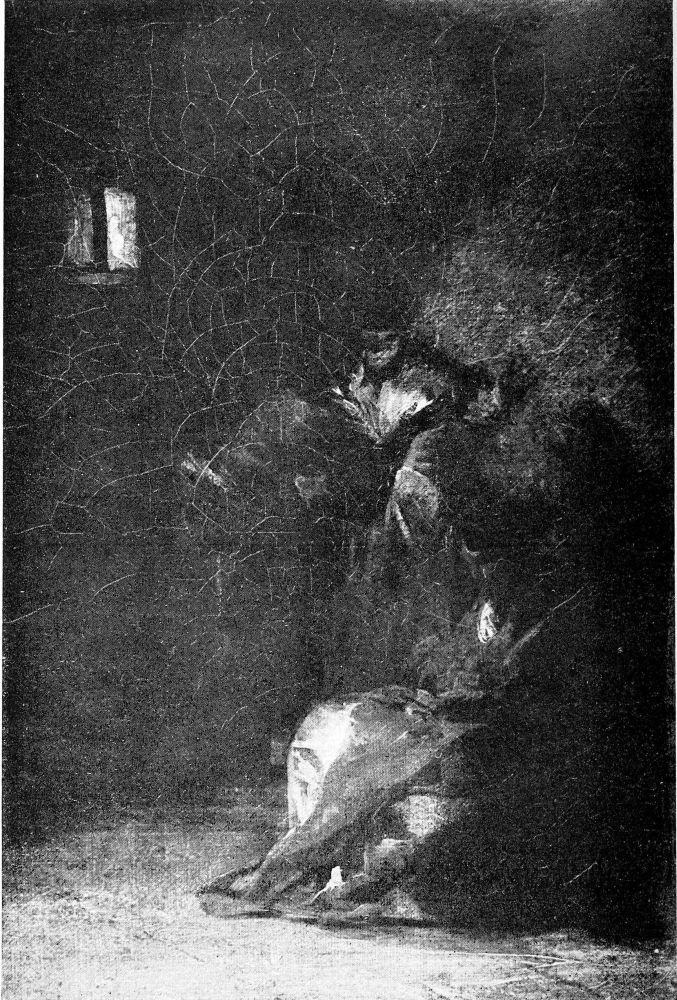
NOCTURNAL SCENE.
(Marques de la Romana.)
PLATE 205.
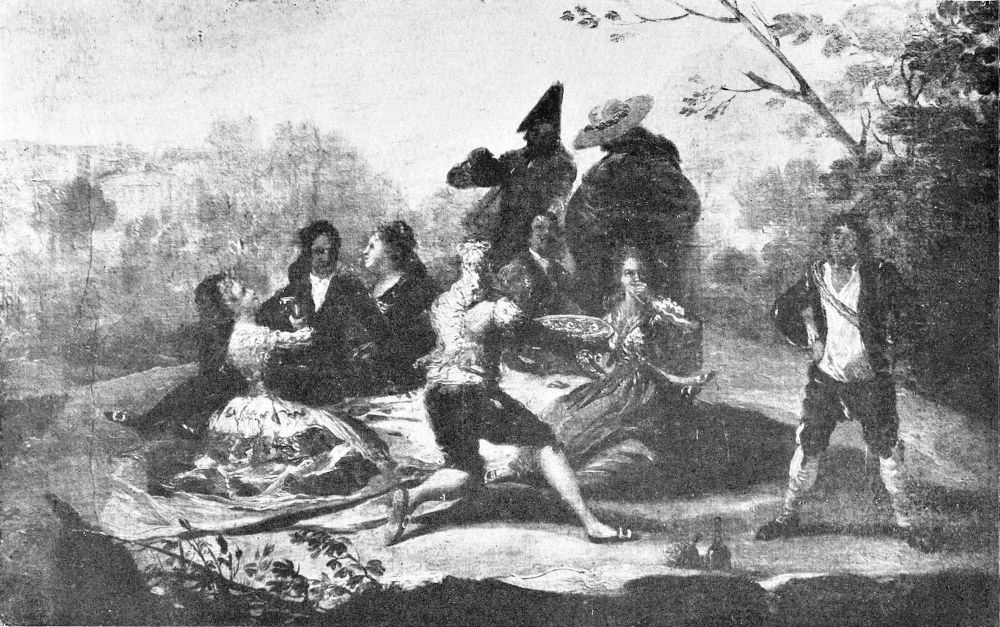
THE PICNIC.
(Marques de la Torrecilla.)
PLATE 206.
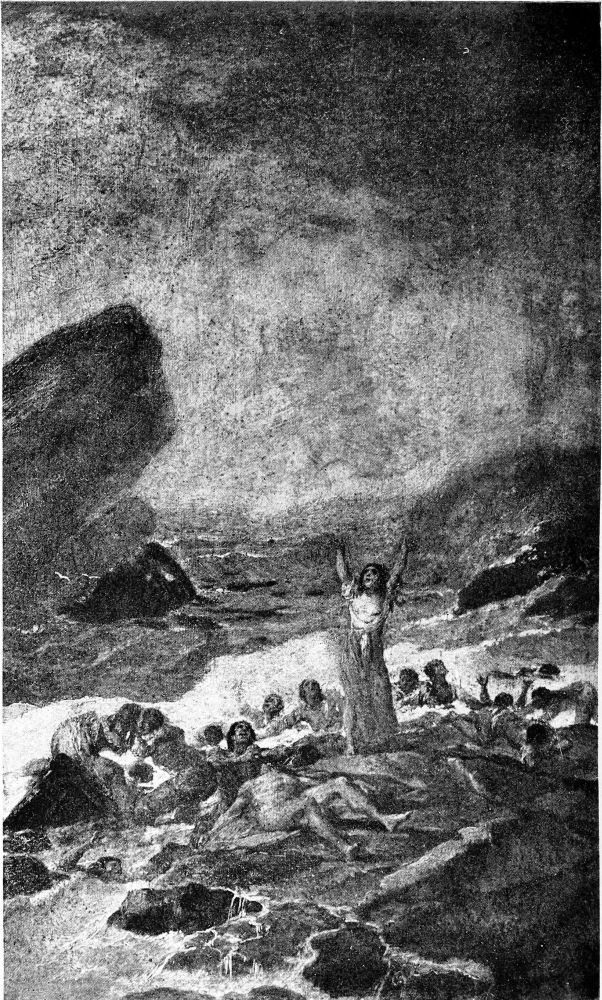
THE INUNDATION.
(Marques de Castro Serna.)
PLATE 207.
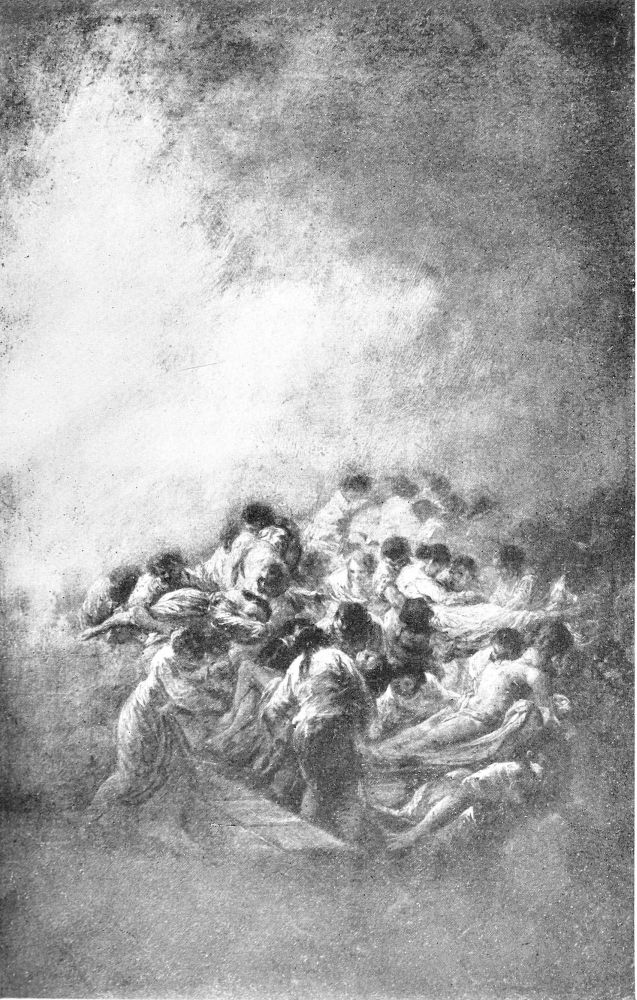
THE VILLAGE ON FIRE.
(Marques de Castro Serna.)
PLATE 208.
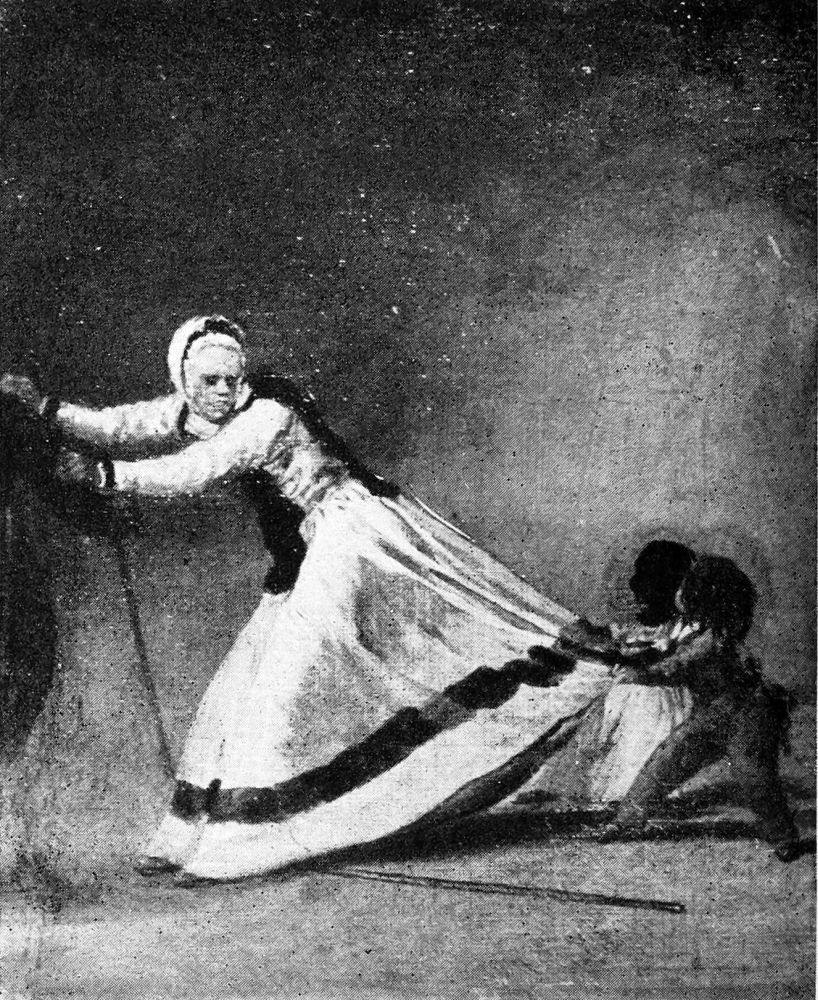
CAPRICE.
(Doña C. Berganza de Martin.)
PLATE 209.
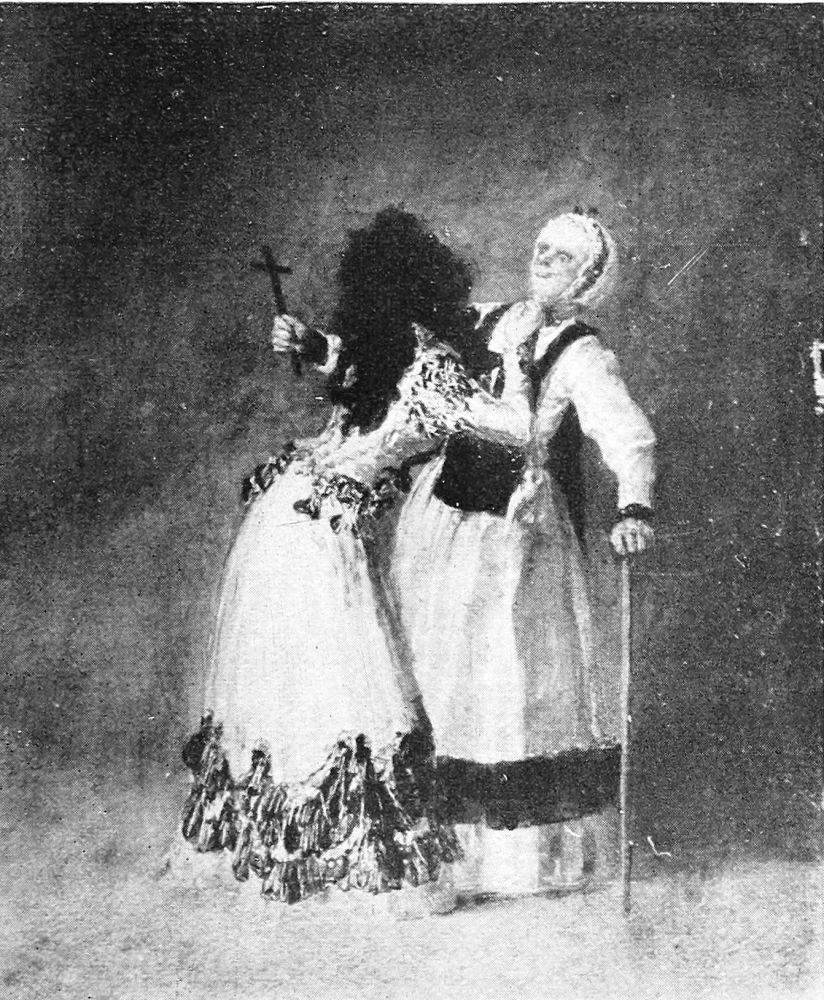
CAPRICE.
(Doña C. Berganza de Martin.)
PLATE 210.
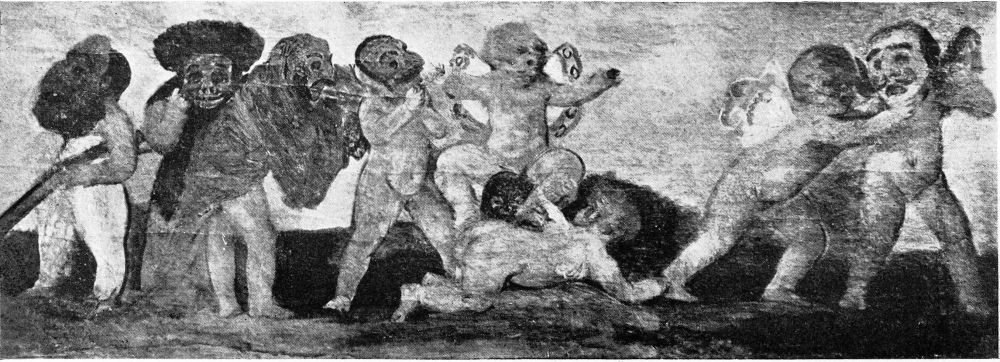
CAPRICE.
(Don A. Pidal.)
PLATE 211.
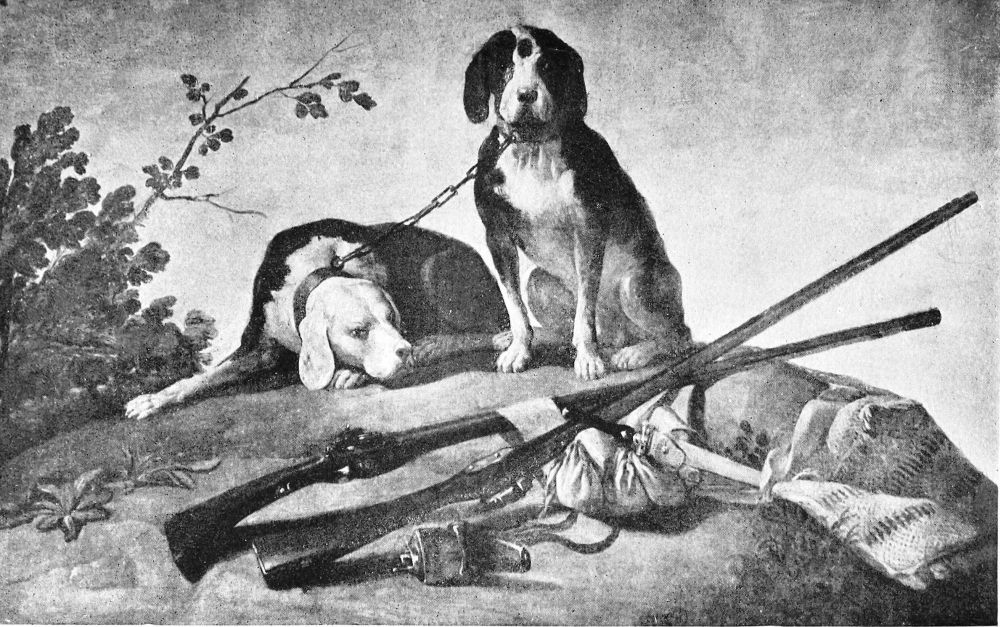
DOGS AND GUNS: DESIGN FOR TAPESTRY.
(Prado, Madrid.)
PLATE 212.
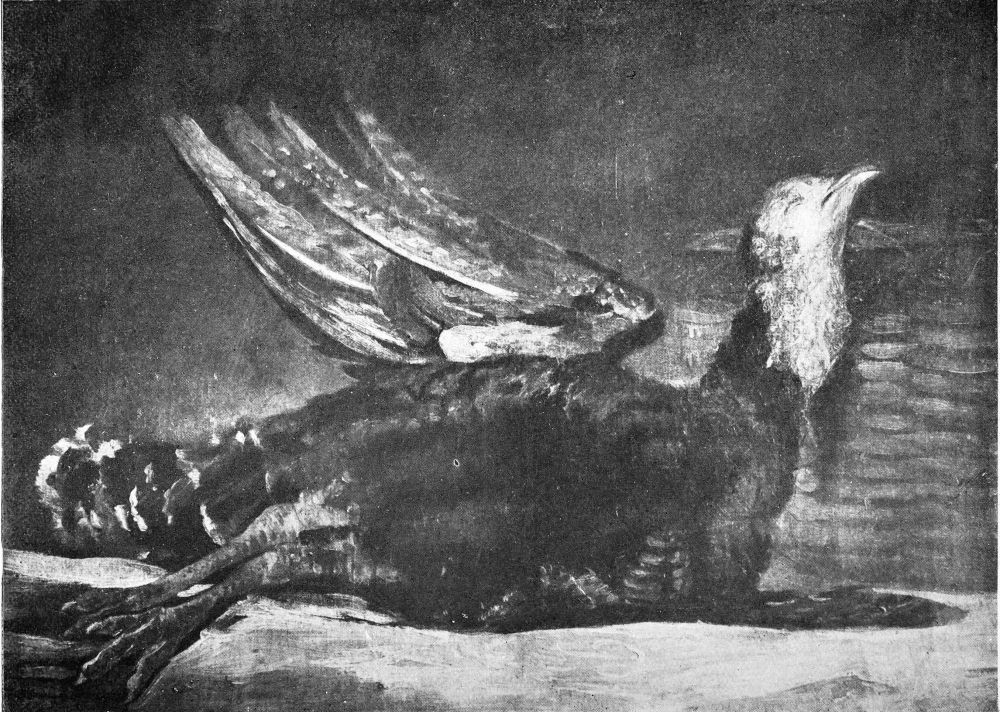
A DEAD BIRD.
(Prado, Madrid.)
PLATE 213.
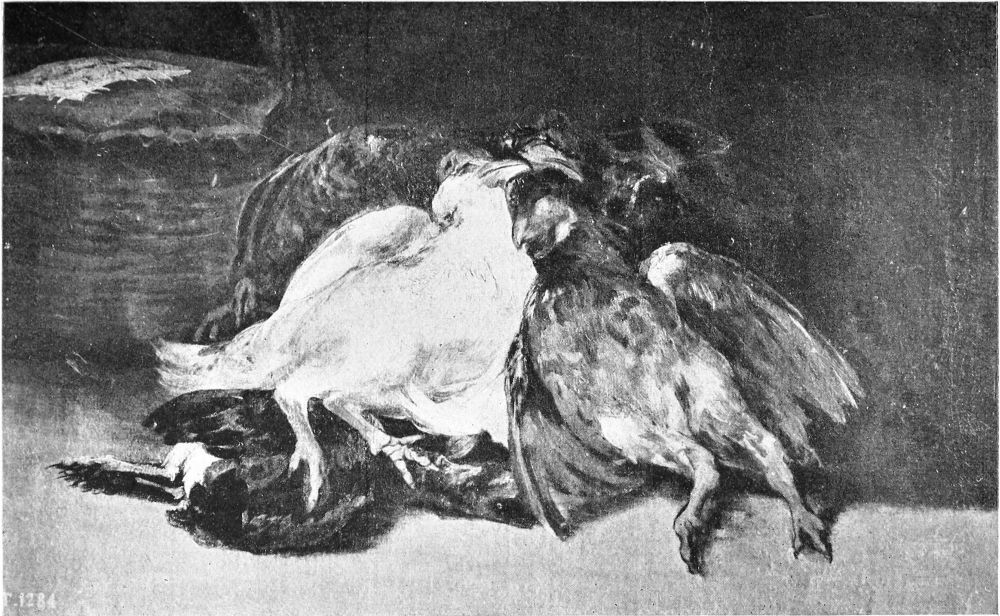
DEAD BIRDS.
(Prado, Madrid.)
PLATE 214.
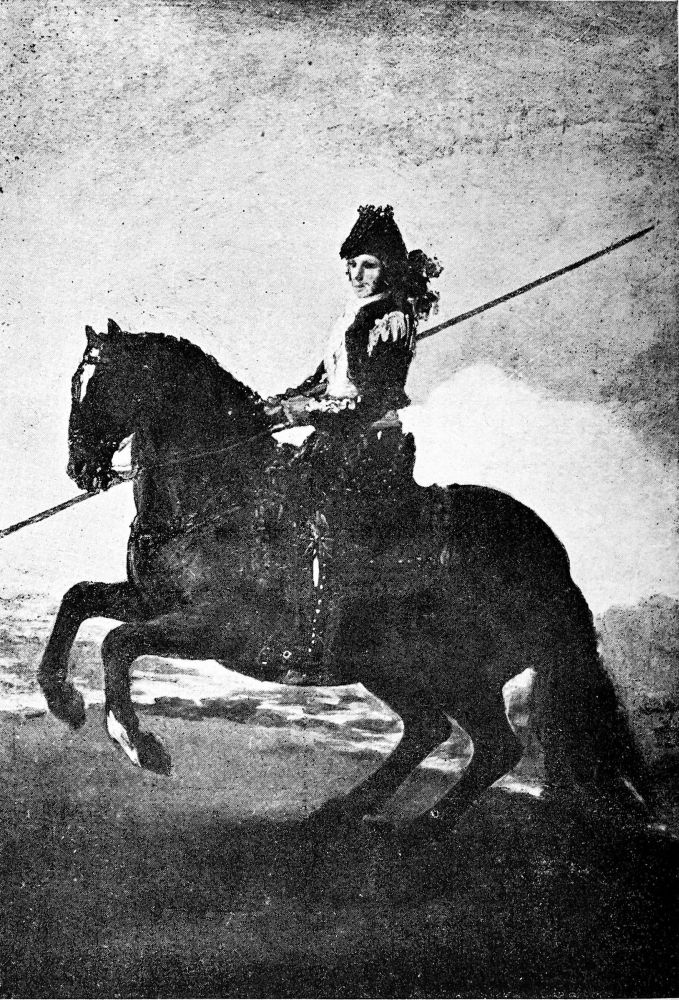
A PICADOR ON HORSEBACK.
(Prado, Madrid.)
PLATE 215.
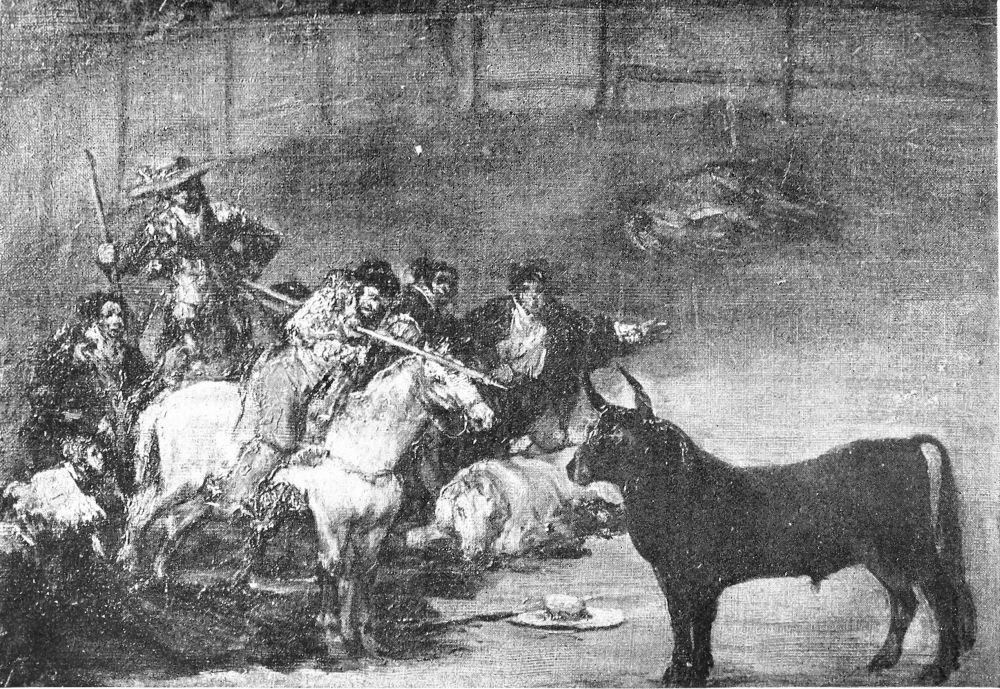
PICADOR AND BULL.
(Marques de Baroja, Madrid.)
PLATE 216.
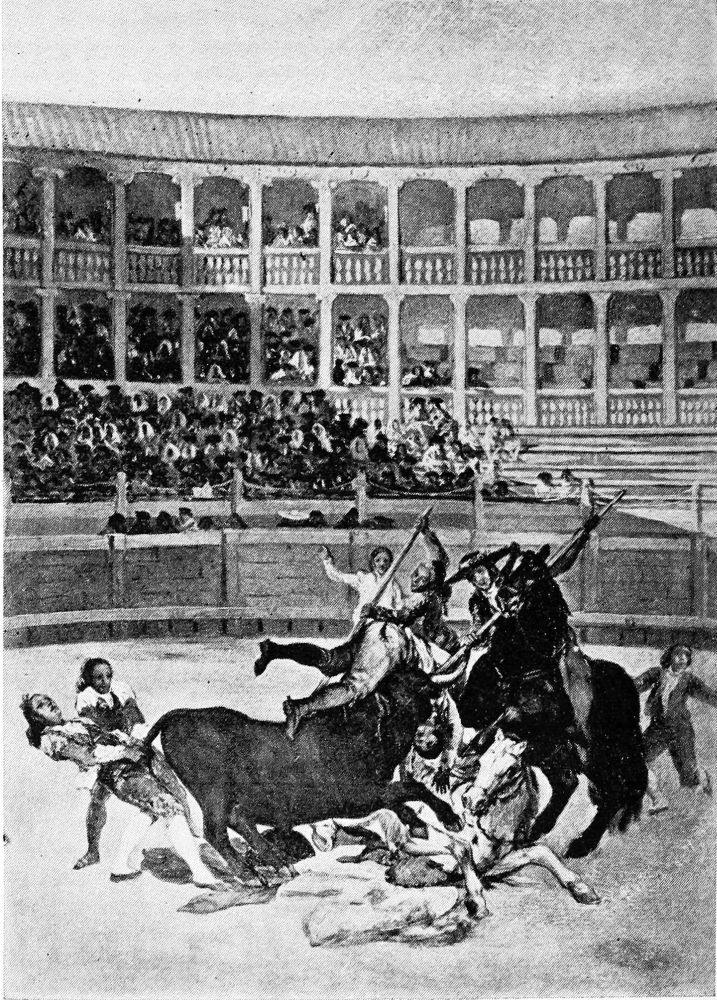
DEATH OF THE PICADOR.
(Paris.)
PLATE 217.
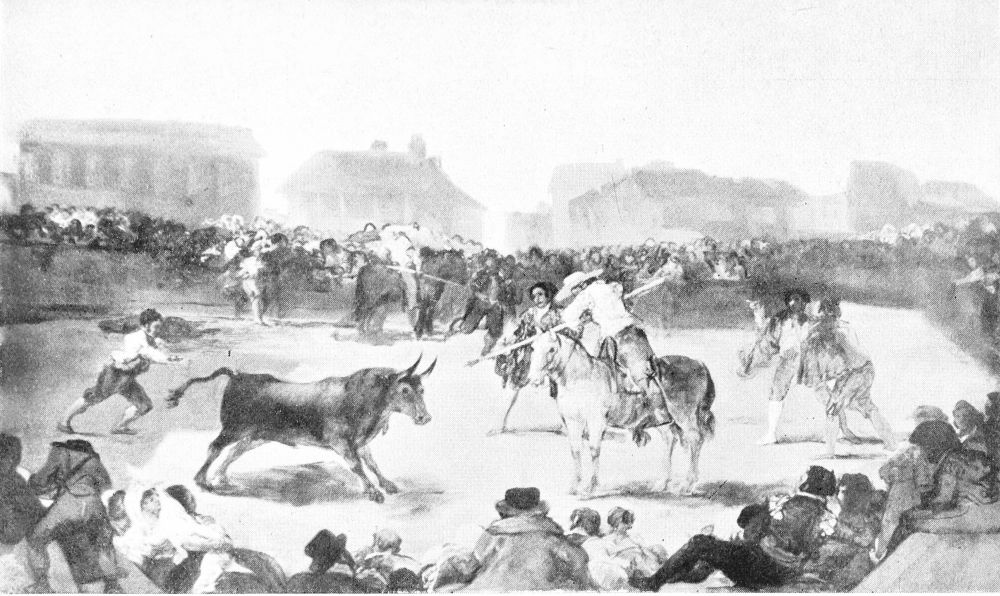
A BULL-FIGHT.
(Bequeathed to the Royal Academy.)
PLATE 218.
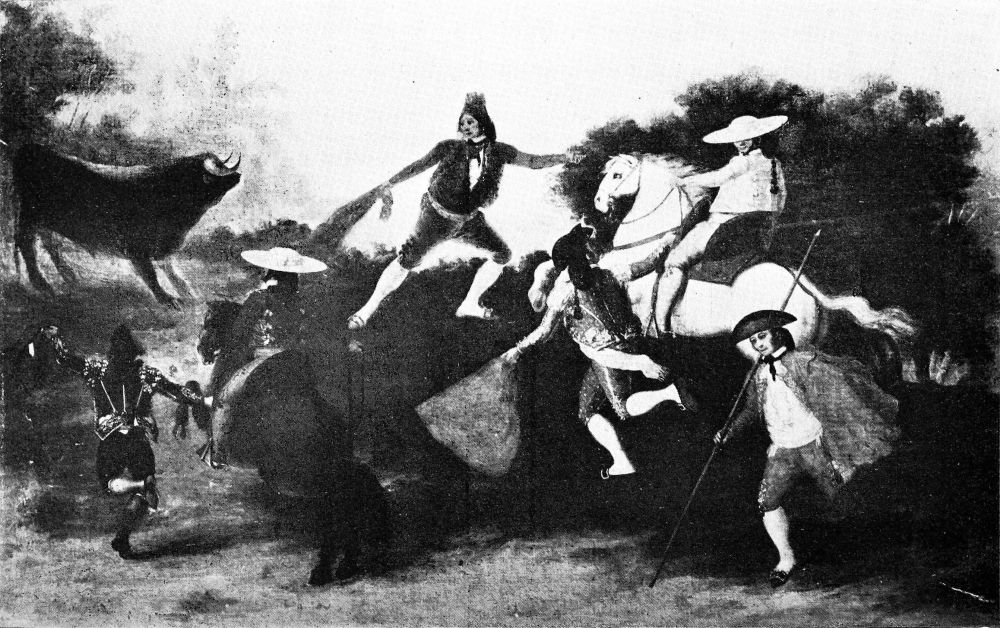
A BULL ESCAPED FROM THE ARENA.
(Duque de Veragua.)
PLATE 219.
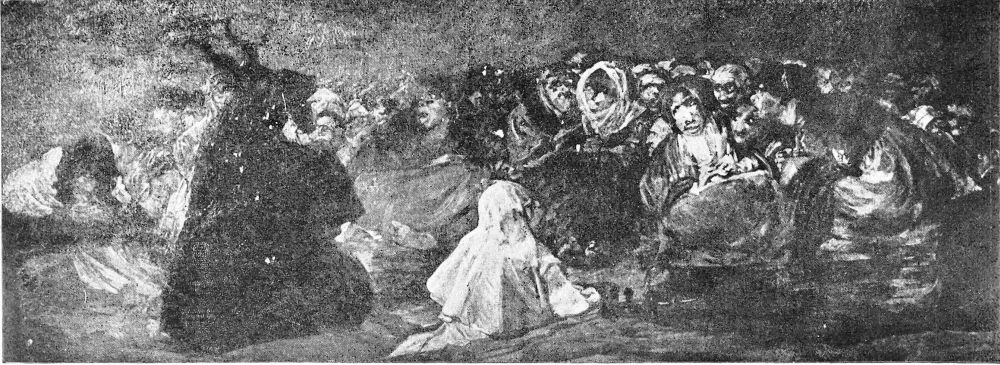
MEETING OF WITCHES.
(Prado, Madrid.)
PLATE 220.
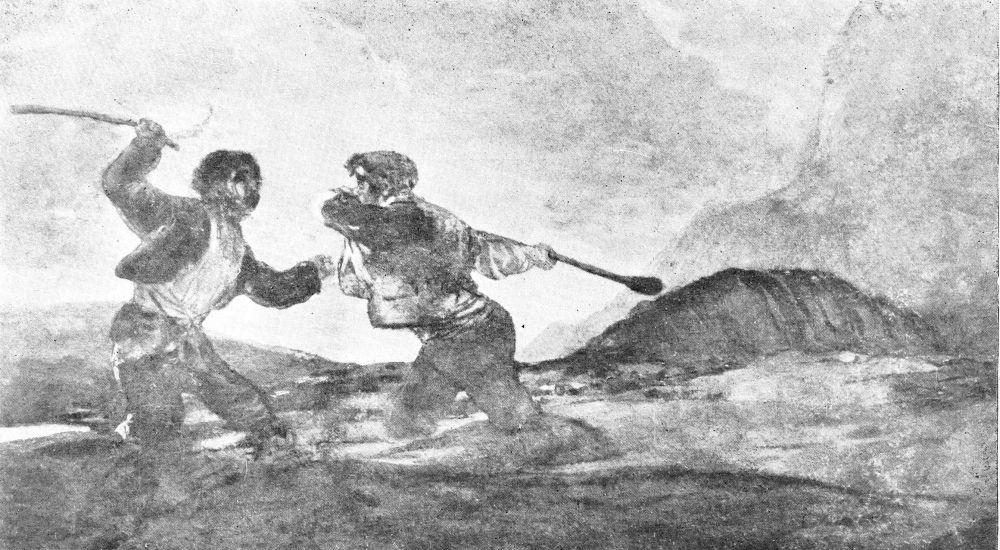
GALICIAN SHEPHERDS FIGHTING.
(Prado, Madrid.)
PLATE 221.
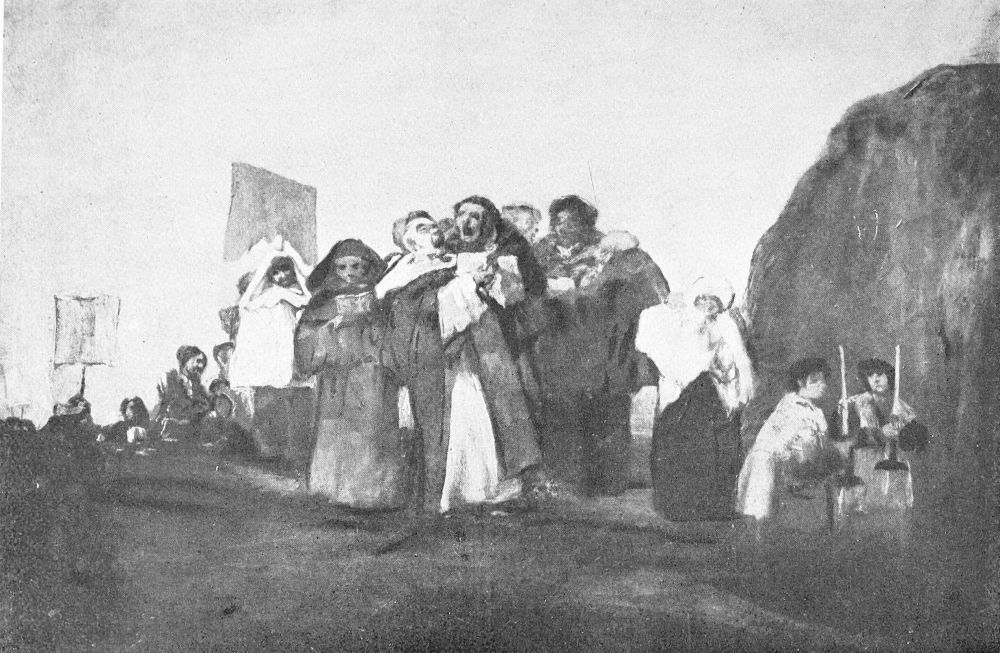
THE PROCESSION.
(Conde de Candilla.)
PLATE 222.
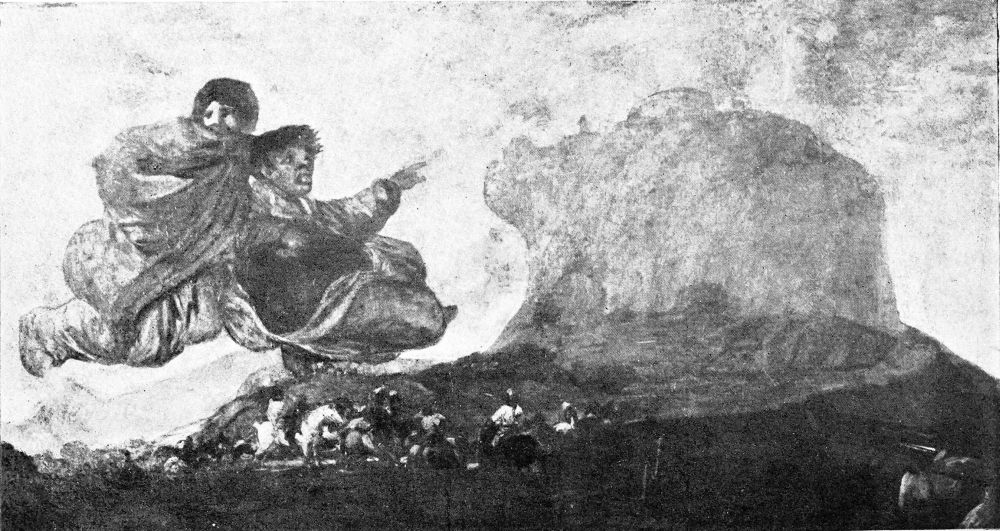
CAPRICE.
(Prado, Madrid.)
PLATE 223.
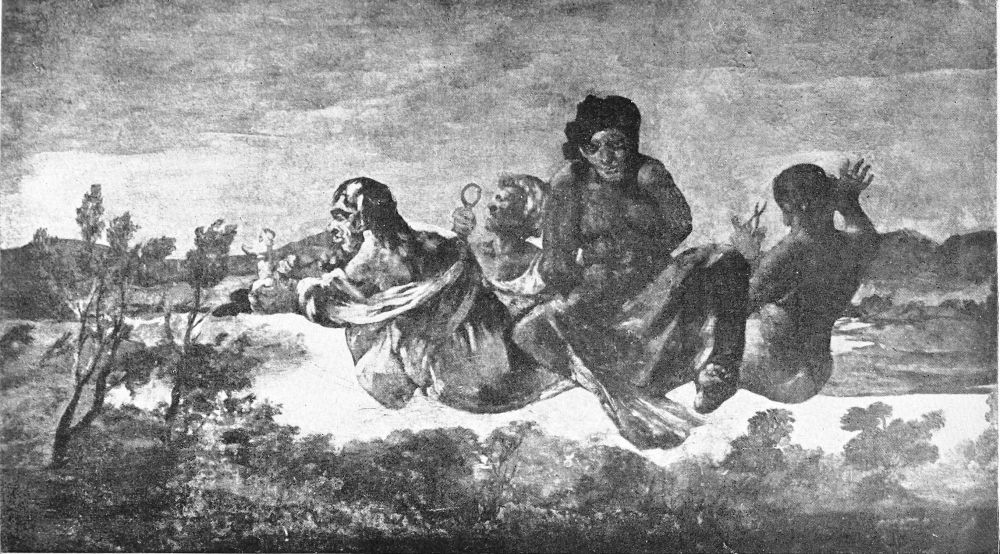
THE FATES.
(Prado, Madrid.)
PLATE 224.
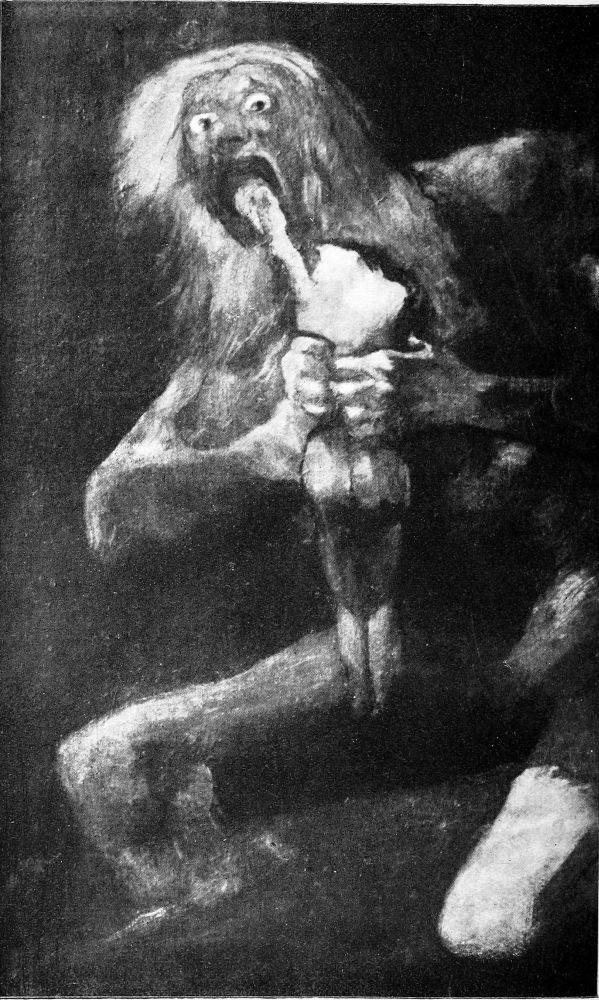
SATURN DEVOURING ONE OF HIS CHILDREN.
(Prado, Madrid.)
PLATE 225.
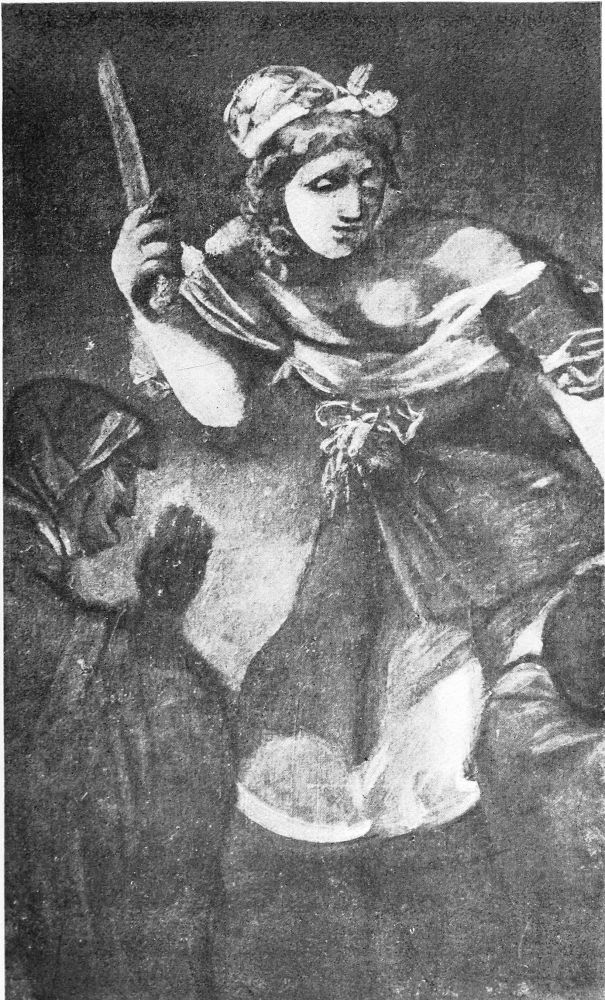
JUDITH AND HOLOFERNES.
(Prado, Madrid.)
PLATE 226.
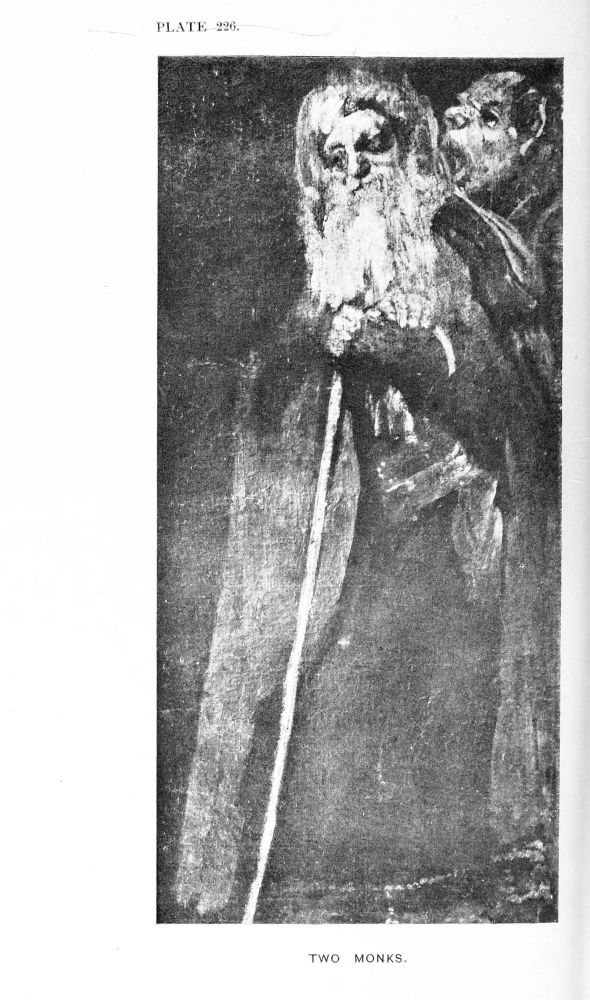
TWO MONKS.
PLATE 227.
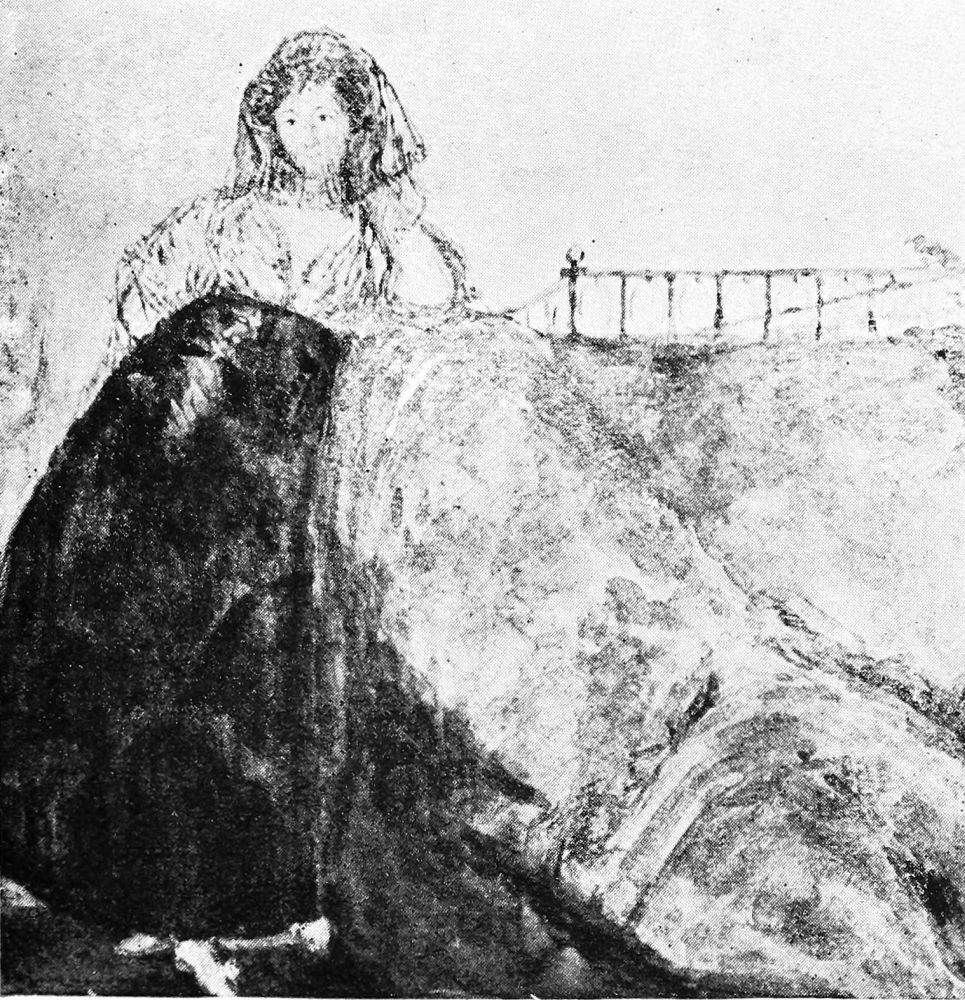
THE MAJA.
(From Goya’s Country House, near Madrid.)
PLATE 228.
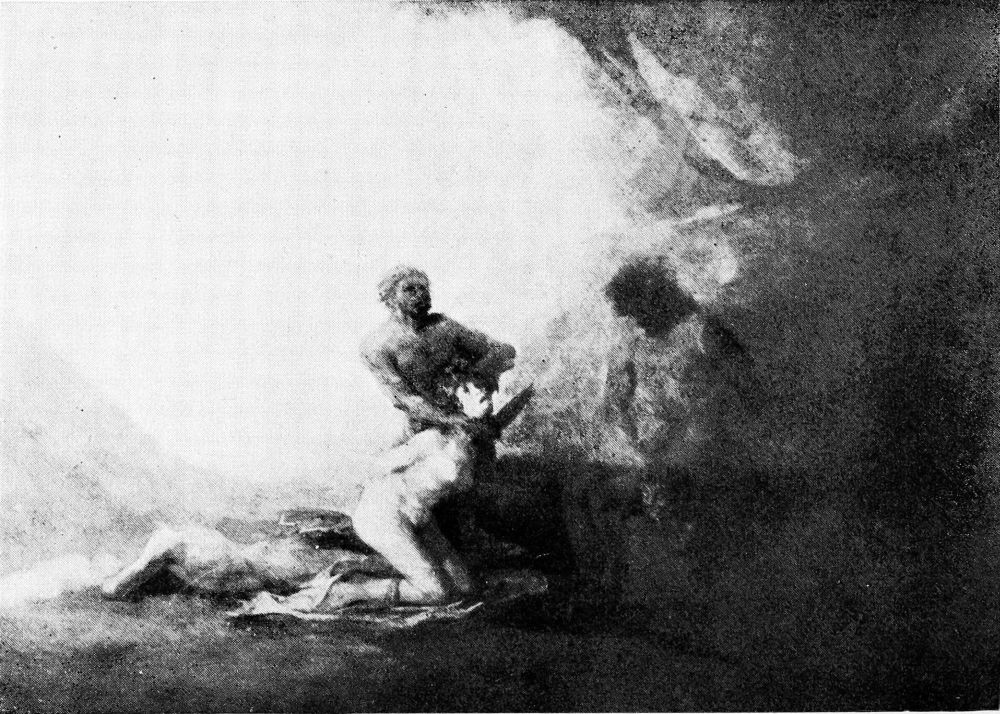
A CAPRICE.
PLATE 229.
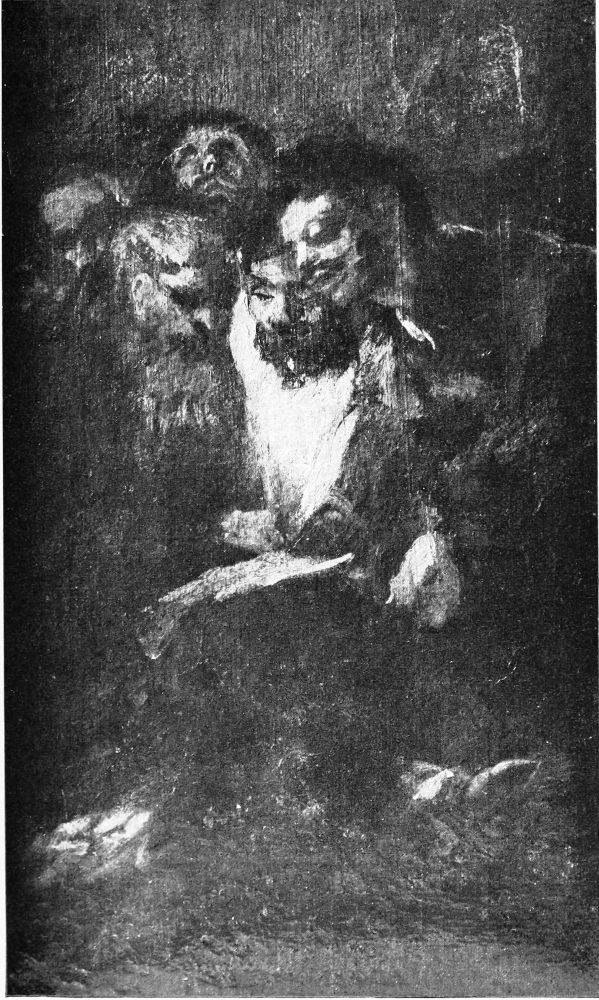
LISTENING TO THE NEWS.
(Prado, Madrid.)
PLATE 230.
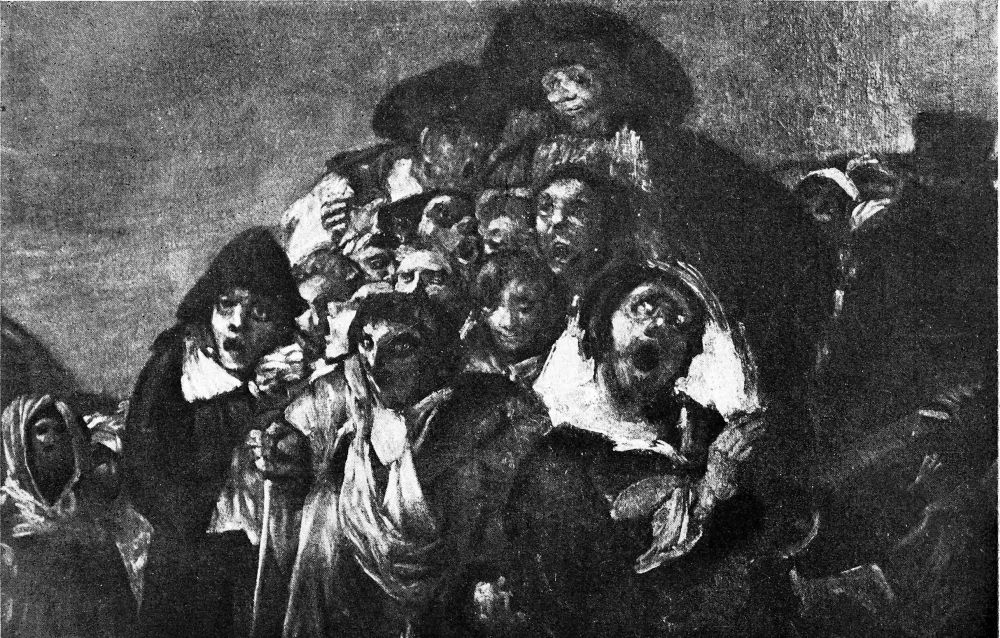
A GROUP OF WITCHES.
(Prado, Madrid.)
PLATE 231.
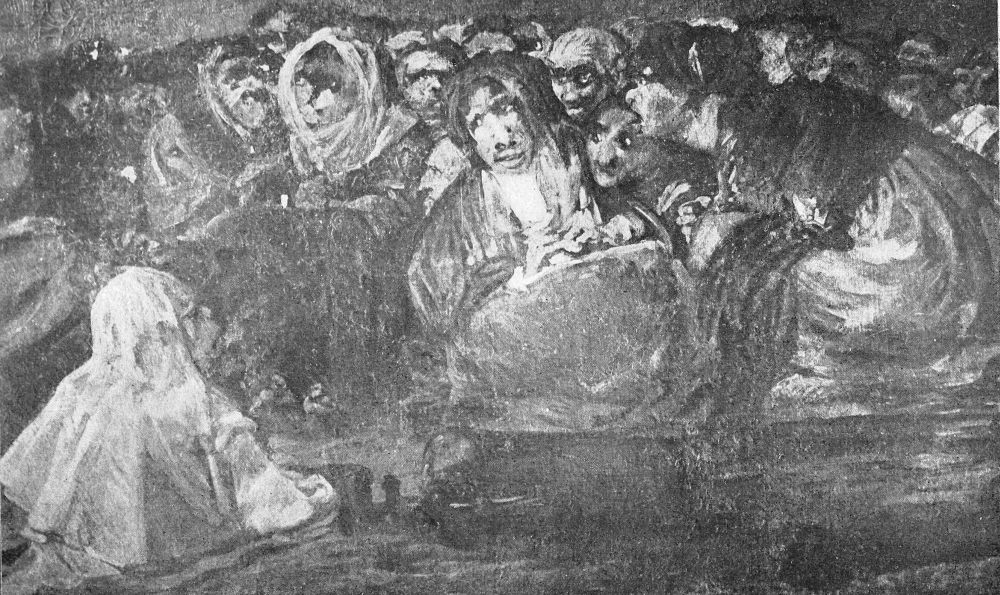
A GROUP OF WITCHES.
(Prado, Madrid.)
PLATE 232.
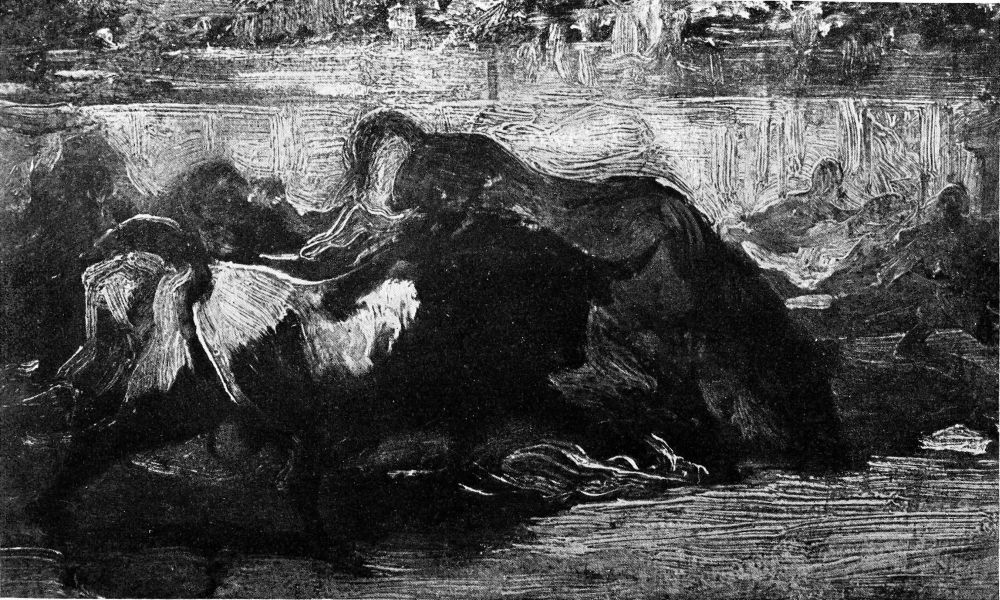
THE BULL-FIGHT.
PLATE 233.
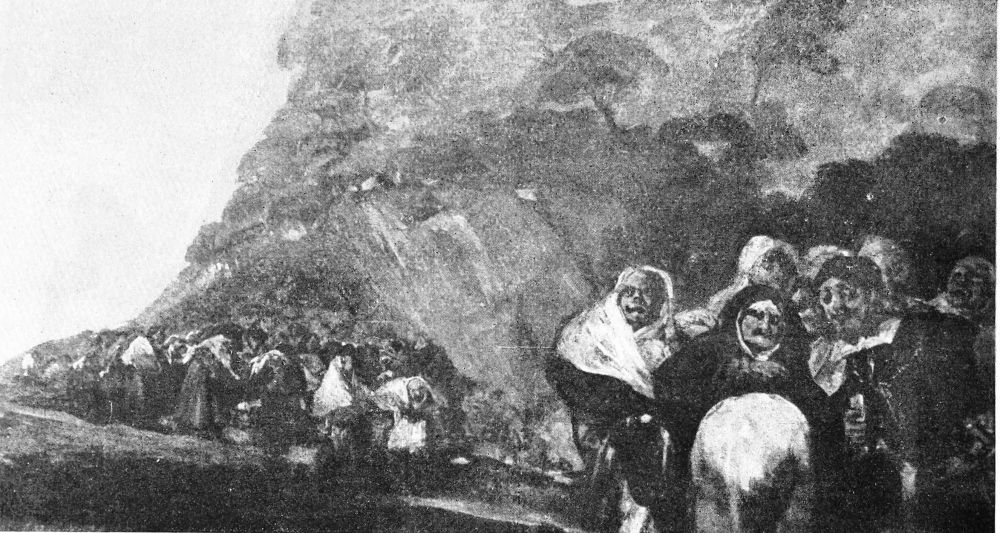
PILGRIMAGE TO THE FOUNTAIN OF SAN ISIDRO.
(Prado, Madrid.)
PLATE 234.
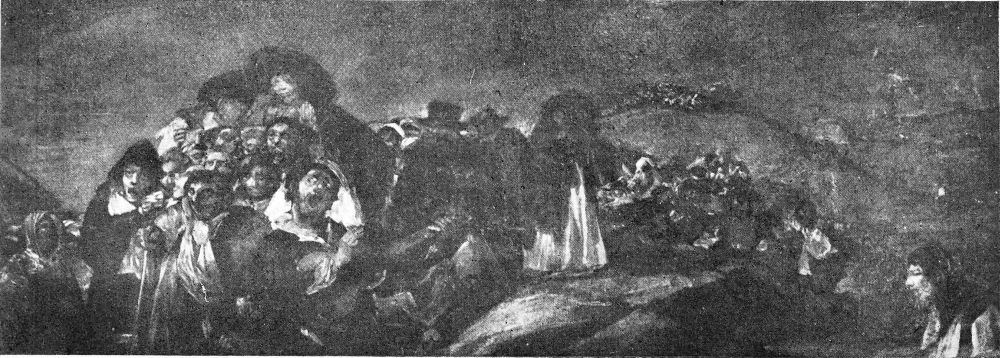
MEETING OF WITCHES.
(Prado, Madrid.)
PLATE 235.
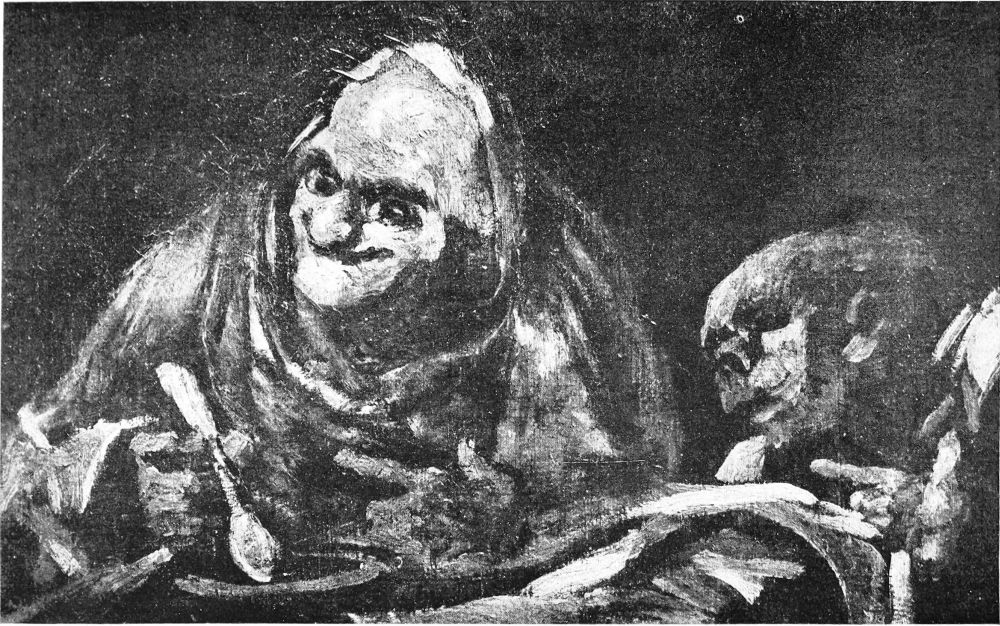
TWO OLD PEOPLE EATING PORRIDGE.
(Prado, Madrid.)
PLATE 236.
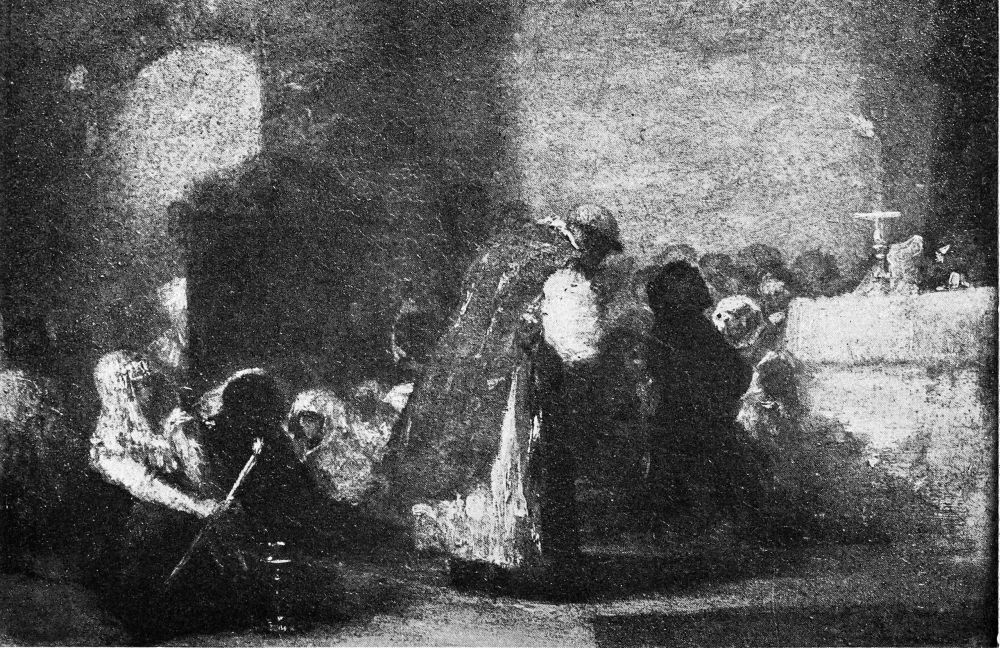
THE MASS OF PARIDA.
(Marques de la Torrecilla.)
PLATE 237.
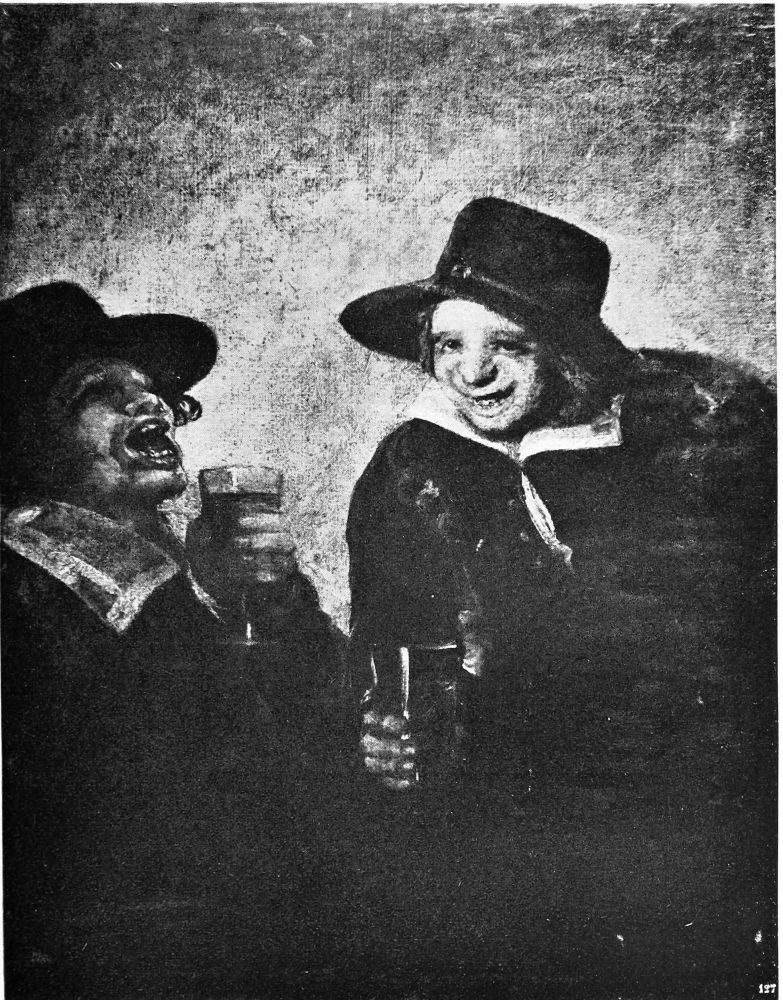
THE TOPERS.
PLATE 238.
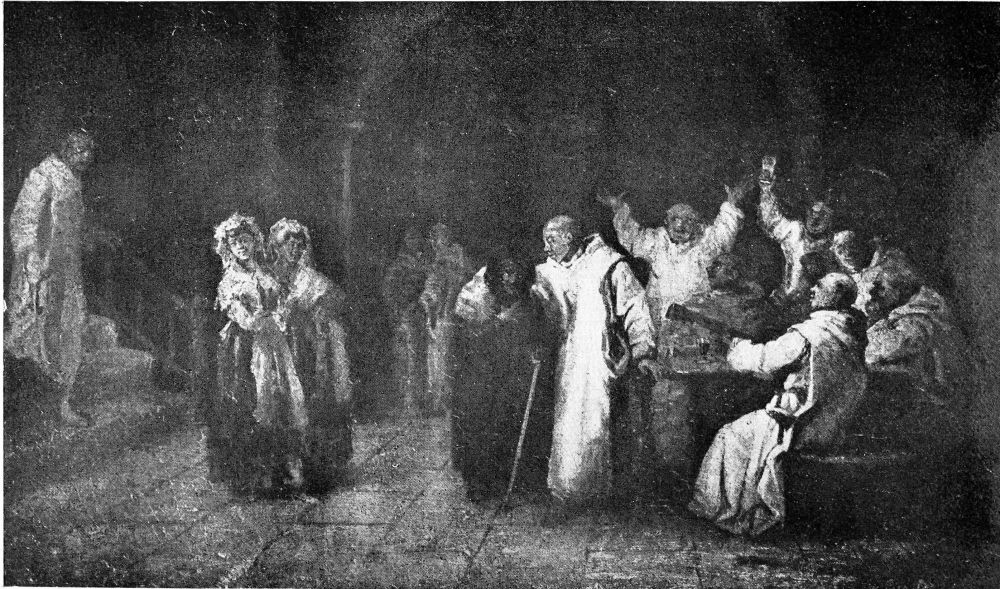
WOMEN OF MADRID, AND FRIARS.
(Marques de Casa Torres.)
PLATE 239.
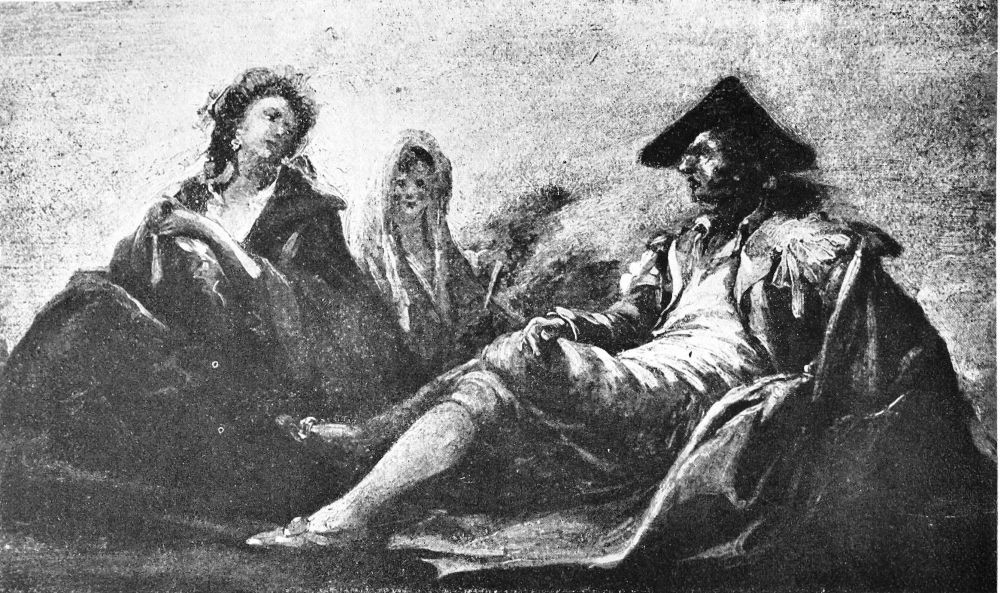
THE MAJAS AND THE MAJO.
PLATE 240.
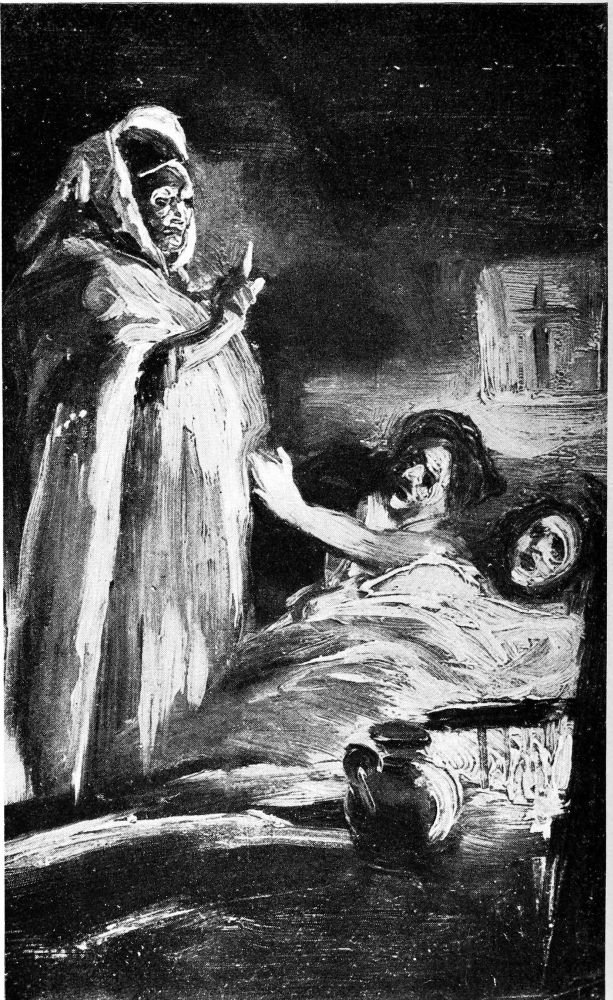
THE WITCH.
PLATE 241.
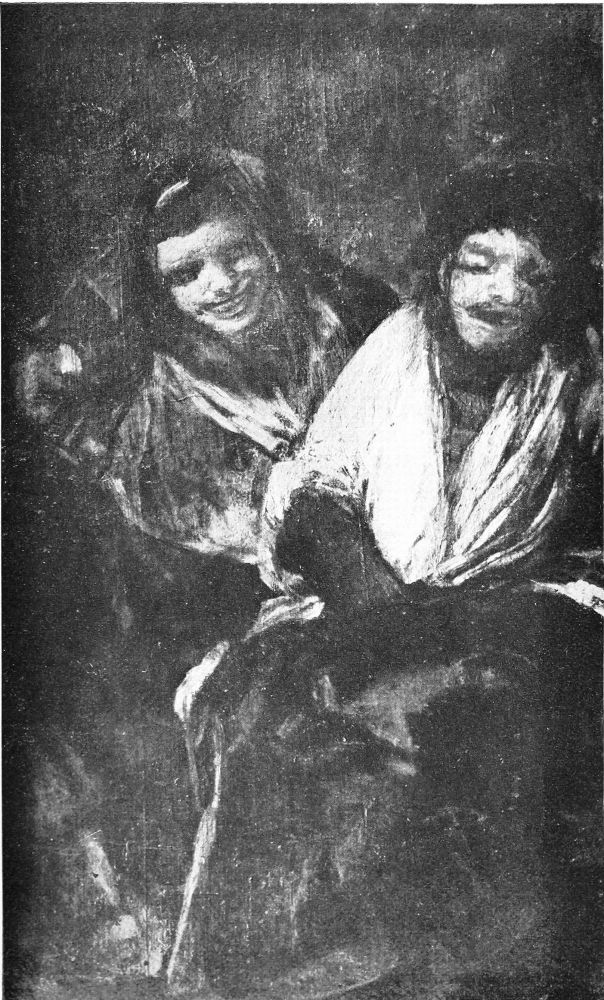
LAUGHING WOMEN.
(Prado, Madrid.)
PLATE 242.
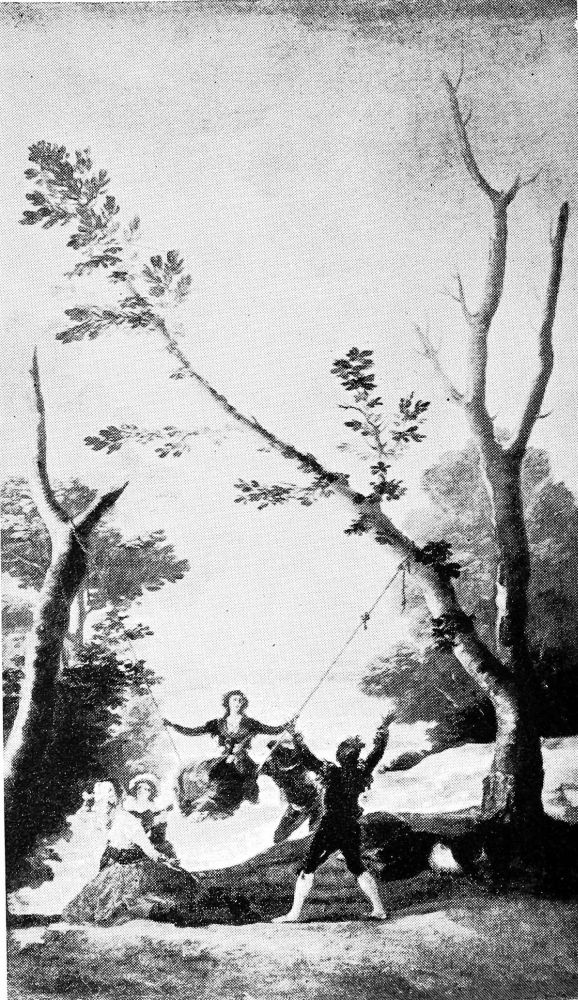
THE SWING.
(Duke de Montellano.)
PLATE 243.
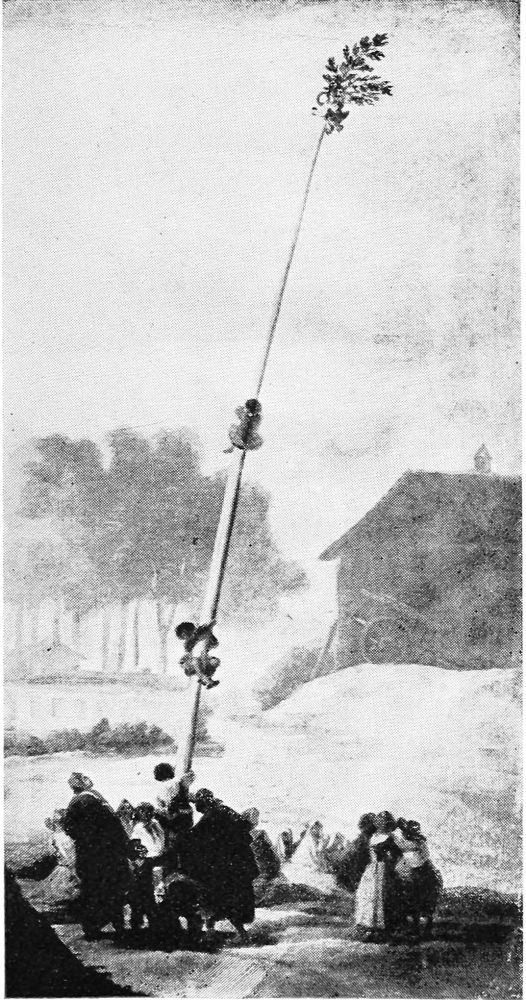
THE GREASY POLE.
(Duke de Montellano.)
PLATE 244.
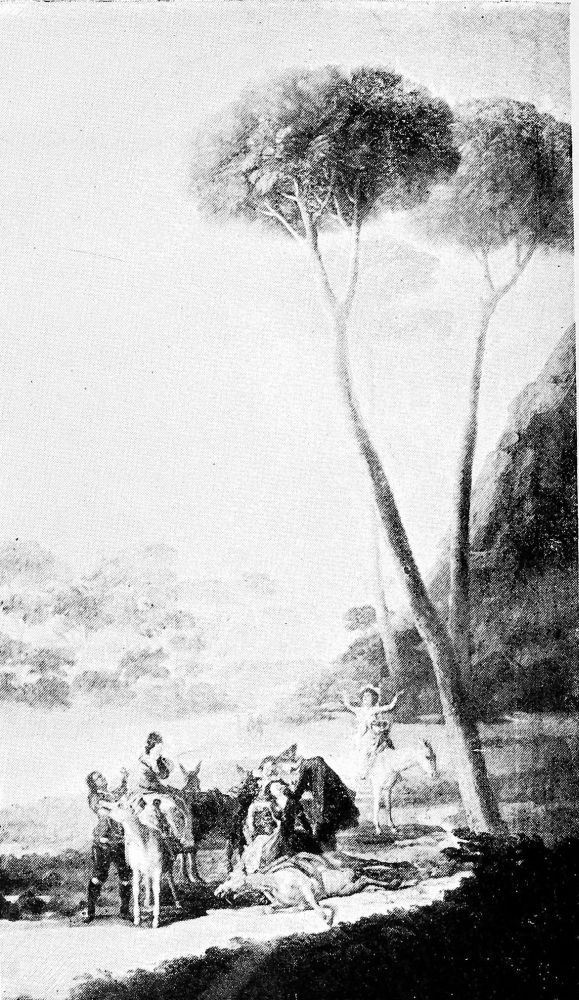
THE ACCIDENT.
(Duke de Montellano.)
PLATE 245.
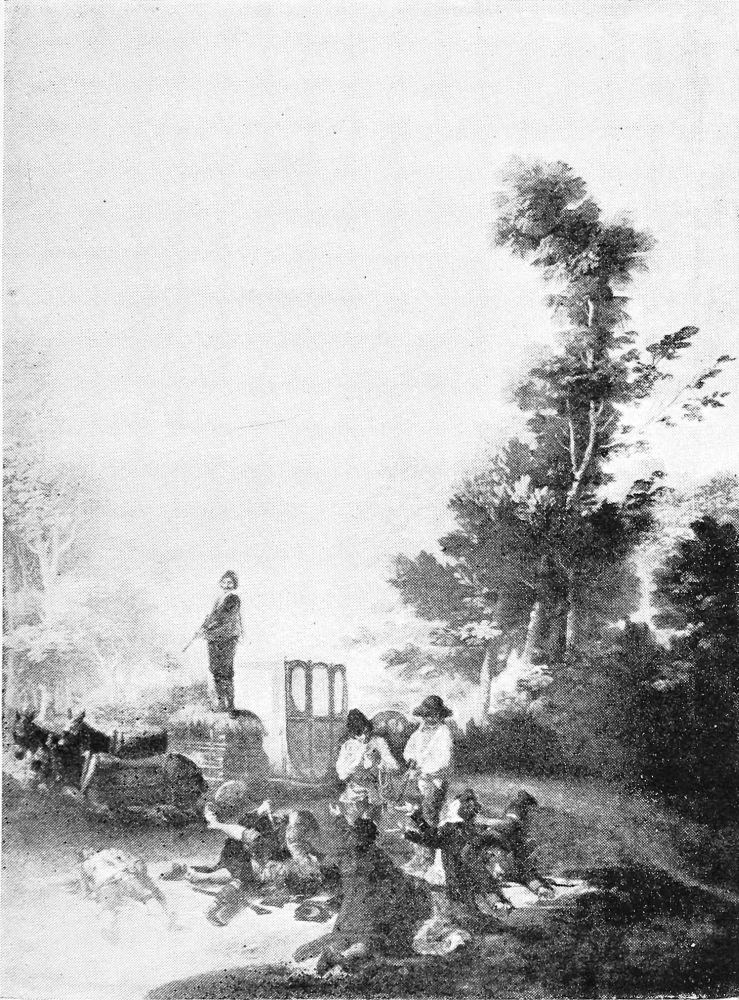
COACH ATTACKED BY BANDITS.
(Duke de Montellano.)
PLATE 246.
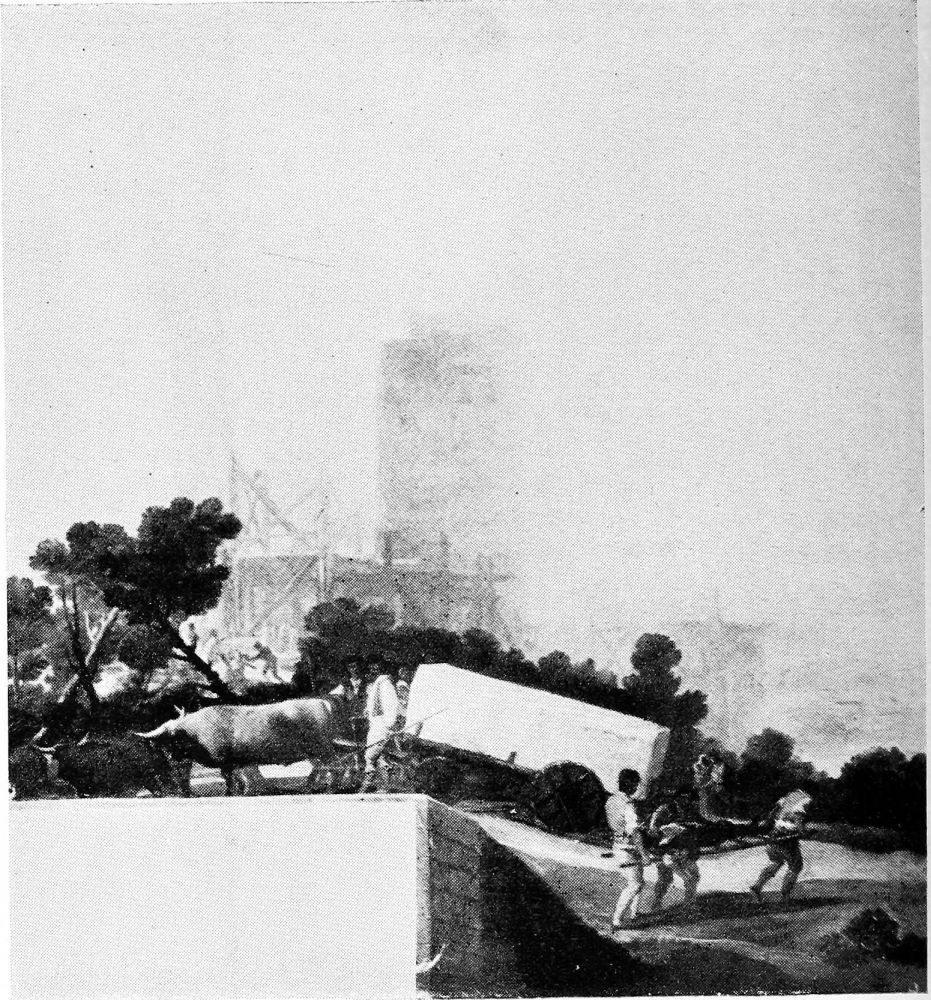
BUILDING THE CHURCH.
(From the Collection of the Duque de Osuna.)
PLATE 247.
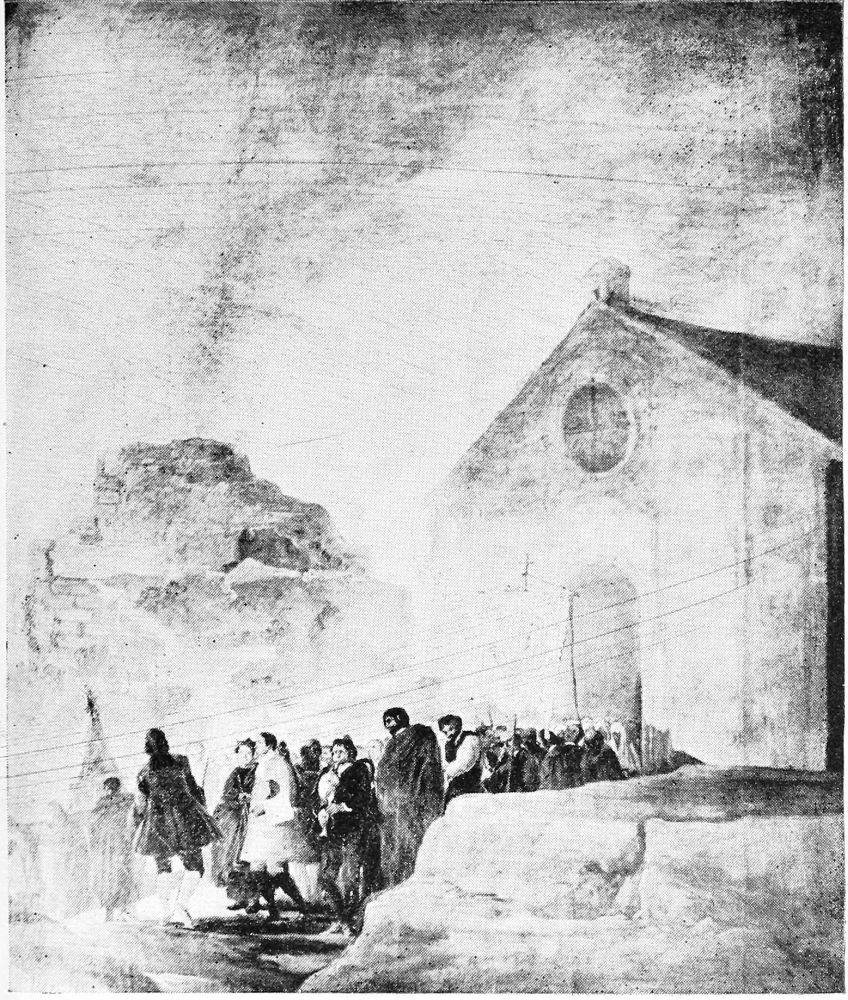
THE VILLAGE PROCESSION.
(From the Collection of the Duque de Osuna.)
PLATE 248.
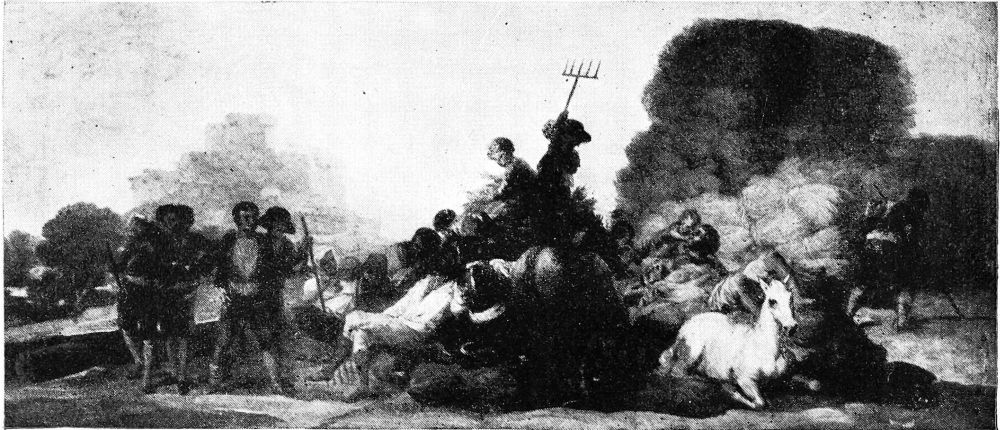
SUMMER: THRESHERS OF WHEAT.
(Don Ricardo Traumann.)
PLATE 249.
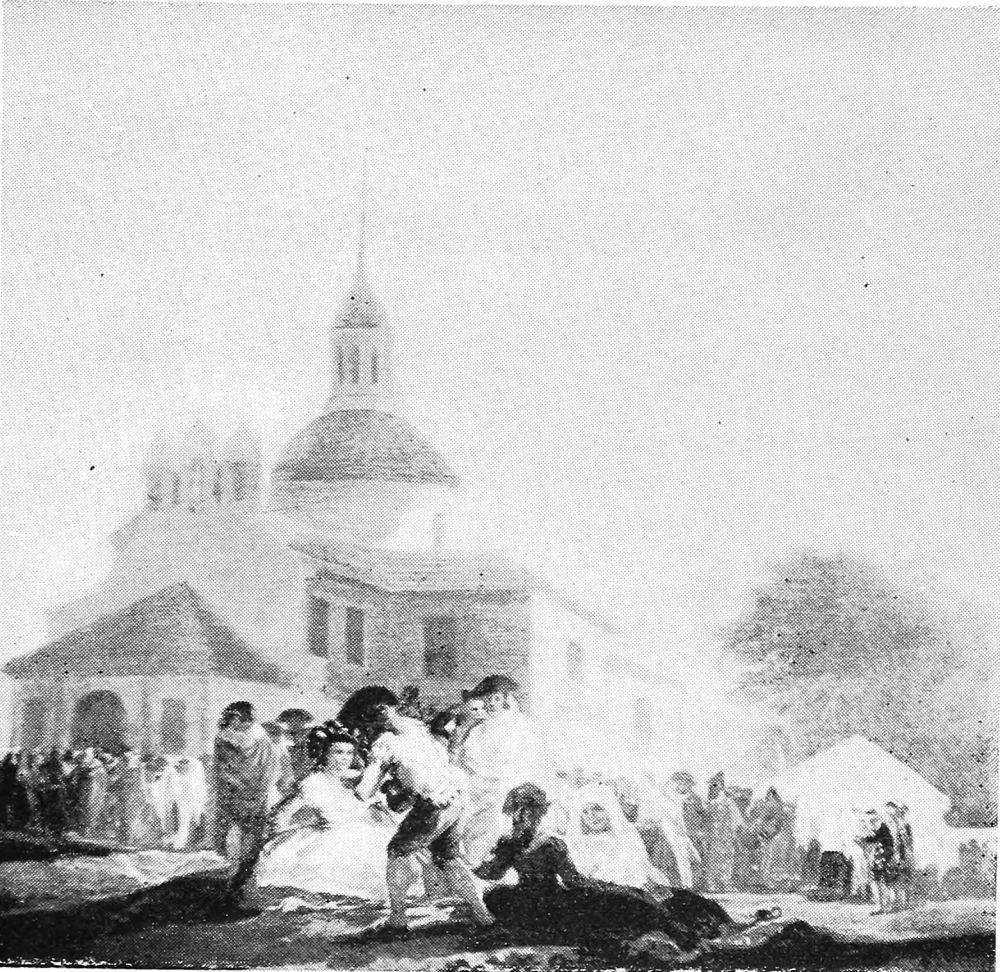
THE HERMITAGE OF SAN ISIDRO.
(Don P. F. Durán.)
PLATE 250.
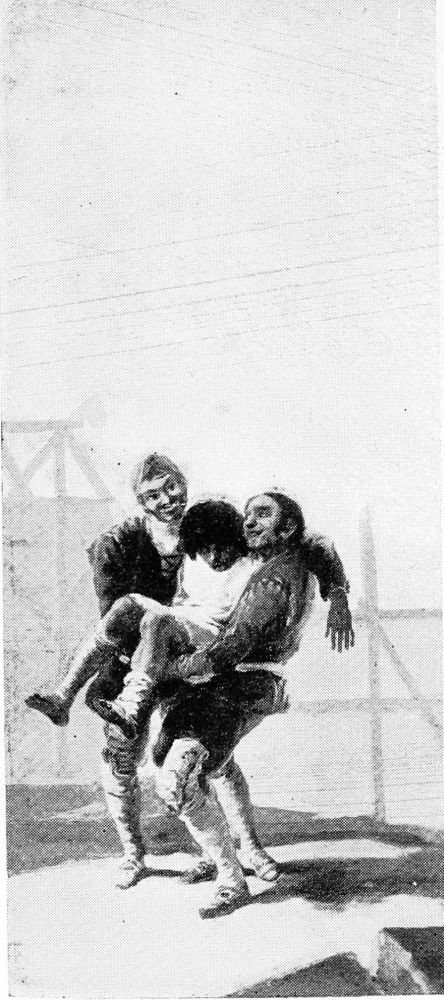
THE WOUNDED MASON.
(Don P. F. Durán.)
PLATE 251.
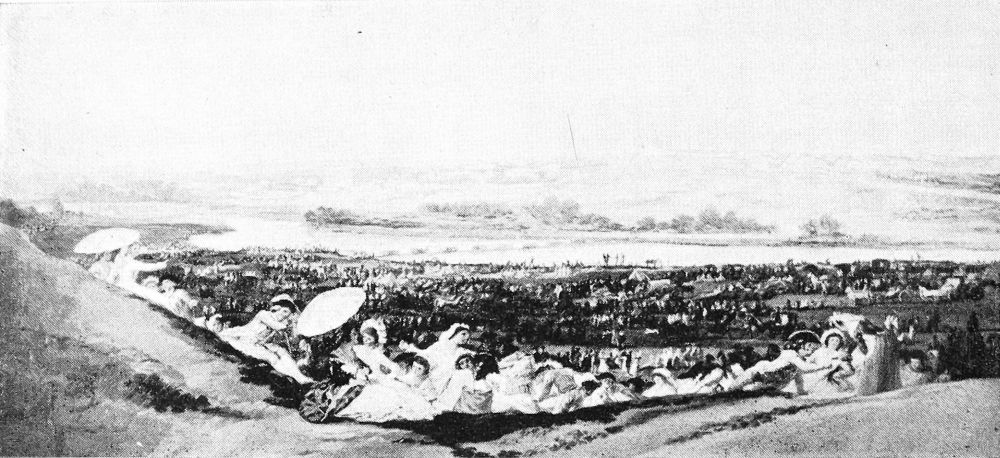
THE HERMITAGE OF SAN ISIDRO.
(Prado, Madrid.)
PLATE 252.
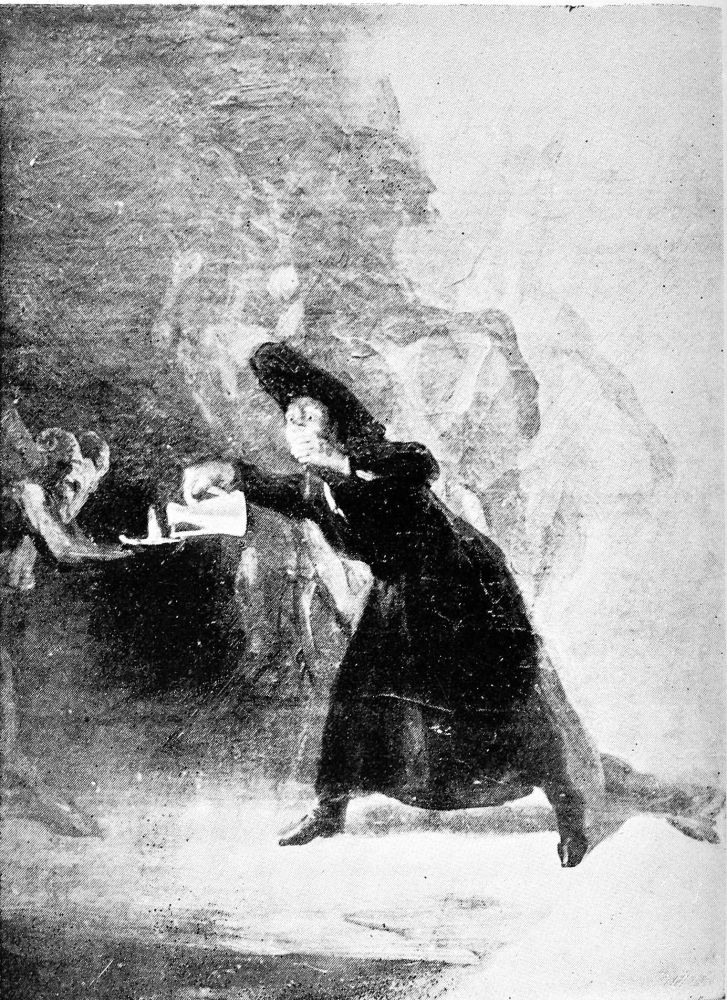
SCENE FROM THE PLAY ‘EL HECHIZADO POR FUERZA’—BEWITCHED BY FORCE.
(National Gallery, London.)
PLATE 253.
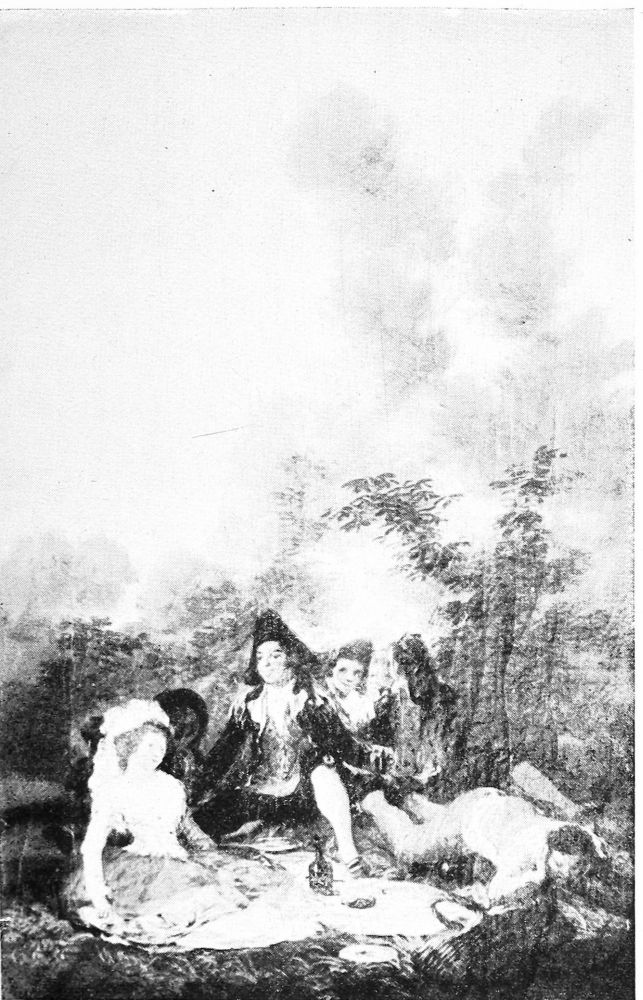
THE PICNIC.
(National Gallery, London.)
PLATE 254.
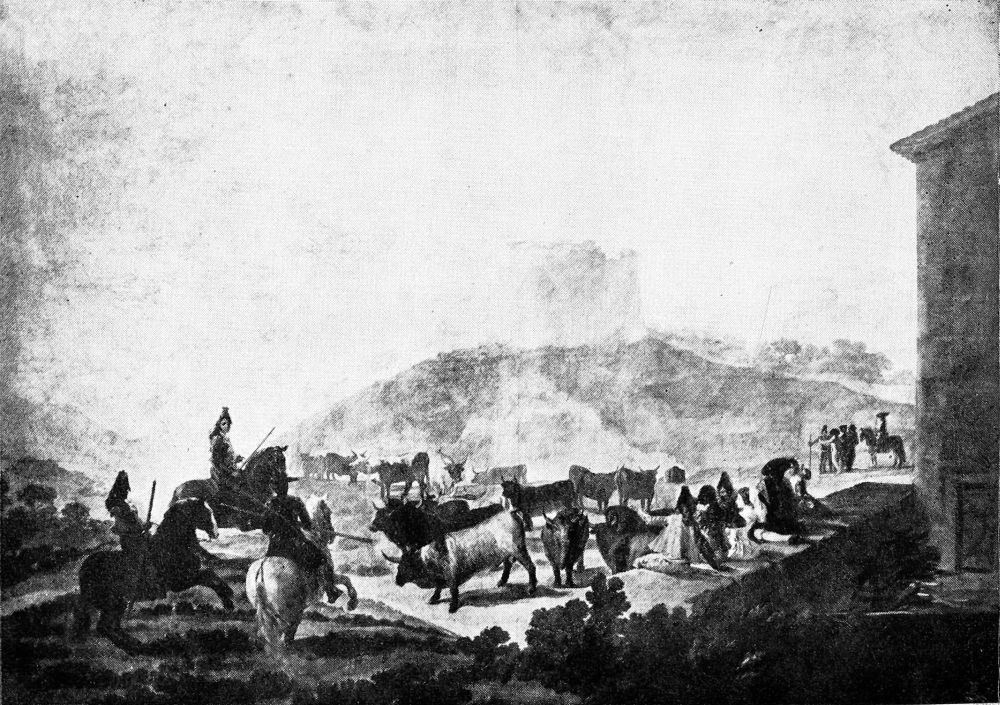
HERD OF BULLS COMING FROM THE MUÑOZA.
(From the Collection of the Duque de Osuna.)
PLATE 255.
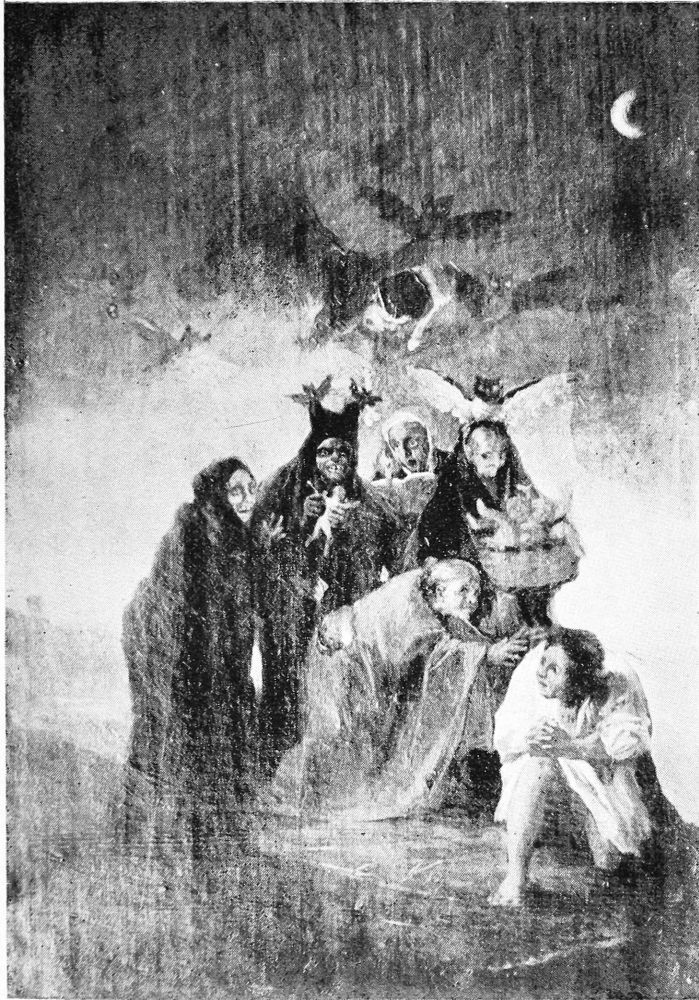
A CAPRICE.
(From the Collection of the Duque de Osuna.)
PLATE 256.
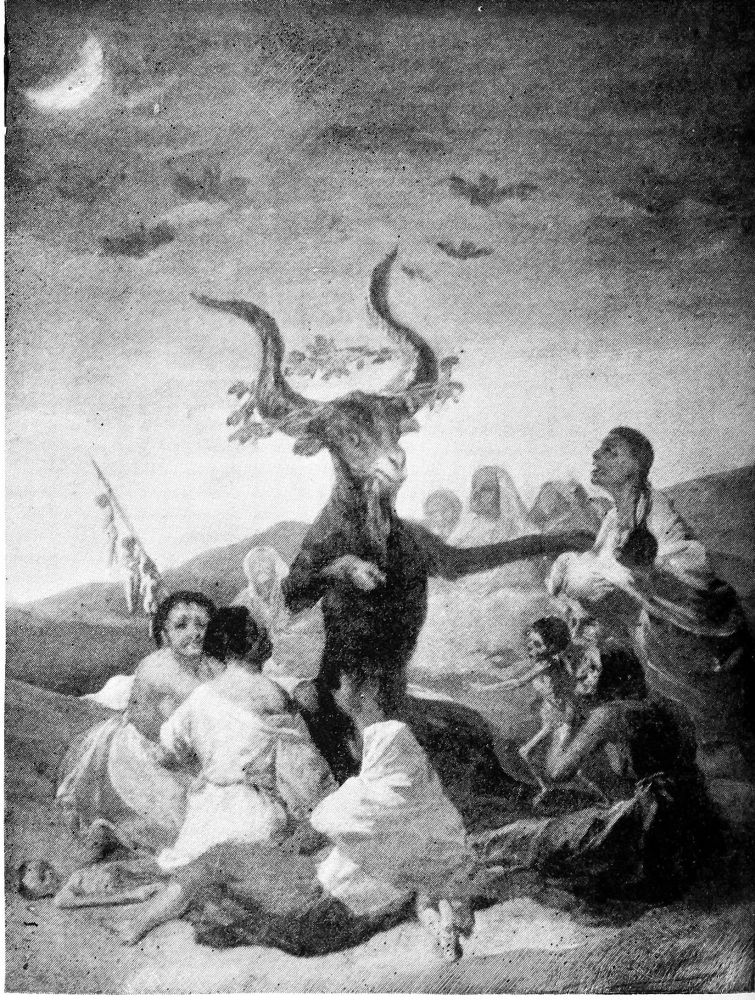
A WITCHES’ CONVENTICLE.
(From the Collection of the Duque de Osuna.)
PLATE 257.
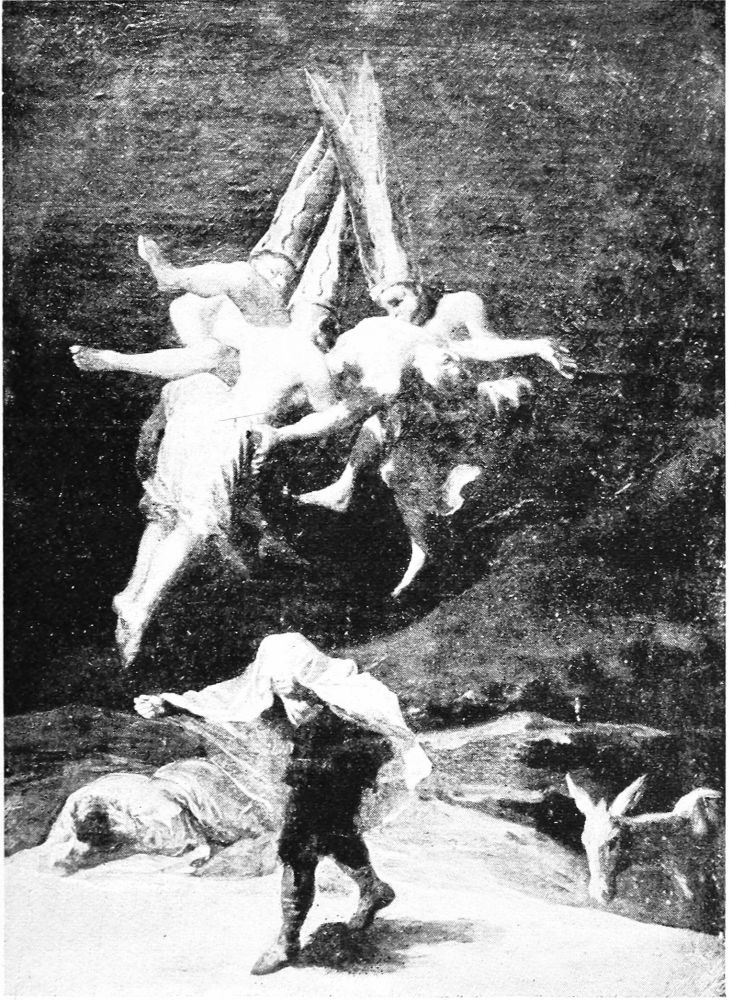
SORCERY SCENE.
(From the Collection of the Duque de Osuna.)
PLATE 258.
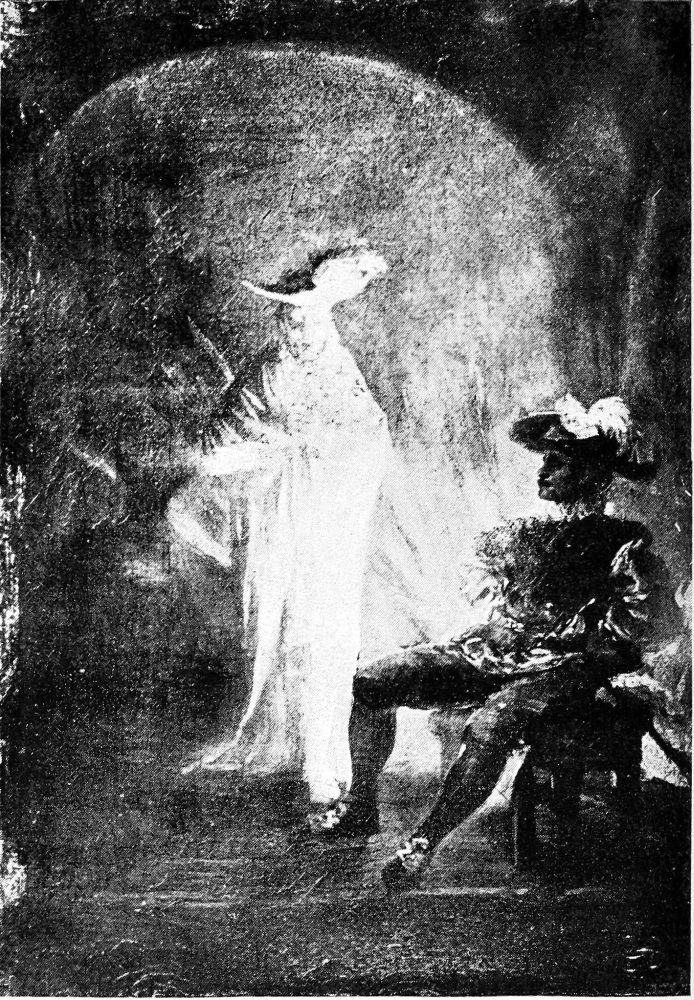
DON JUAN AND THE COMENDADOR.
(From the Collection of the Duque de Osuna.)
PLATE 259.
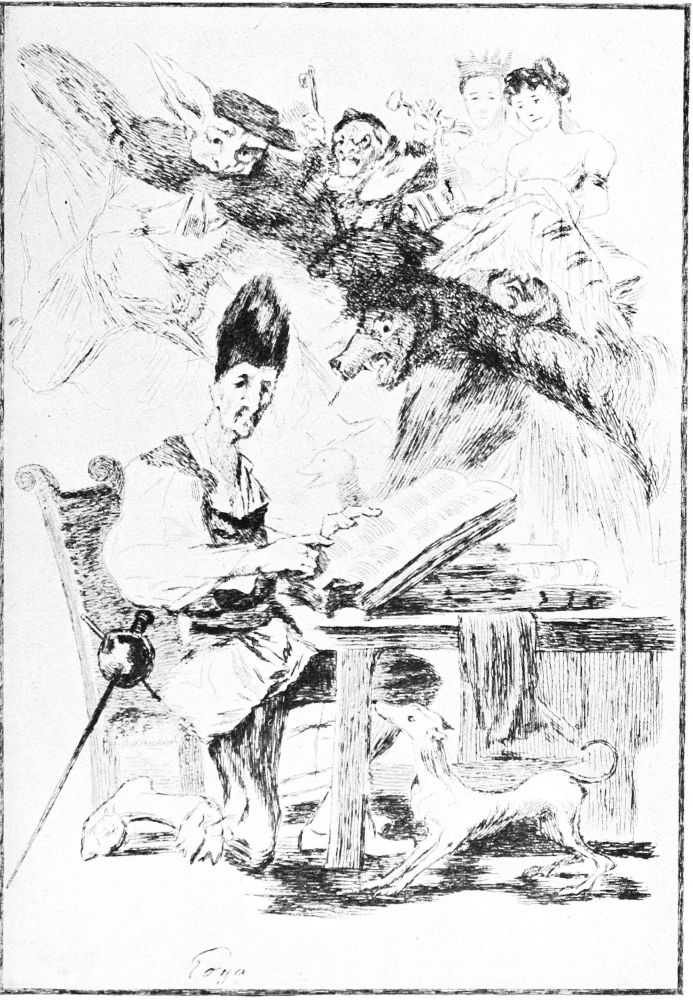
DON QUIXOTE.
PLATE 260.
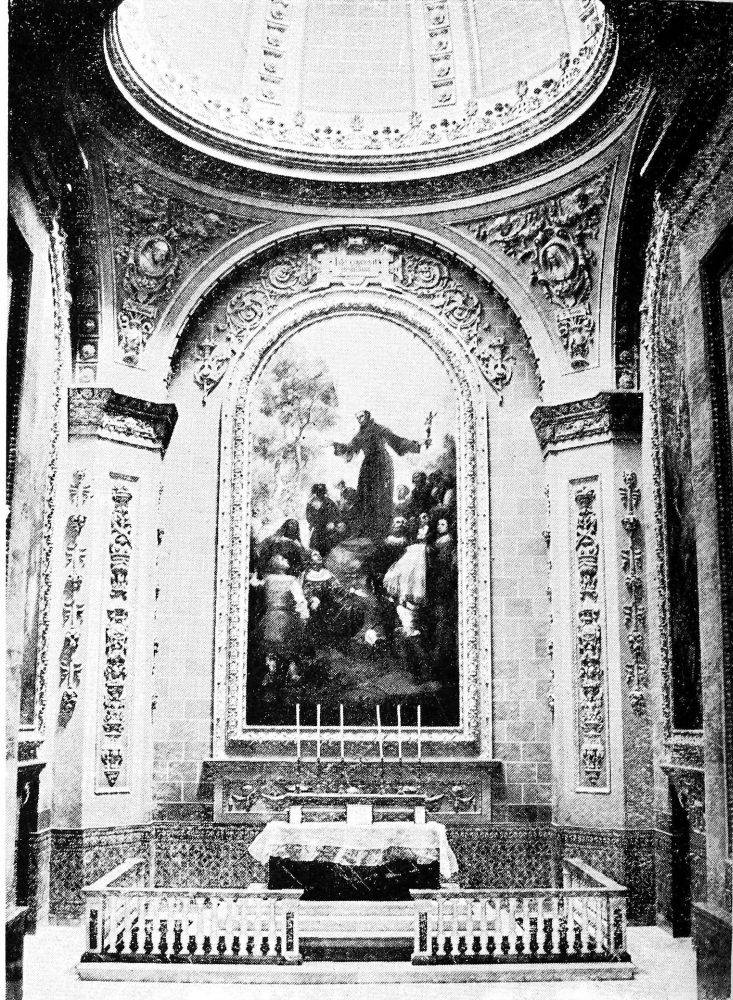
ST. BERNARD OF SIENA.
(Church of San Francisco el Grande.)
PLATE 261.
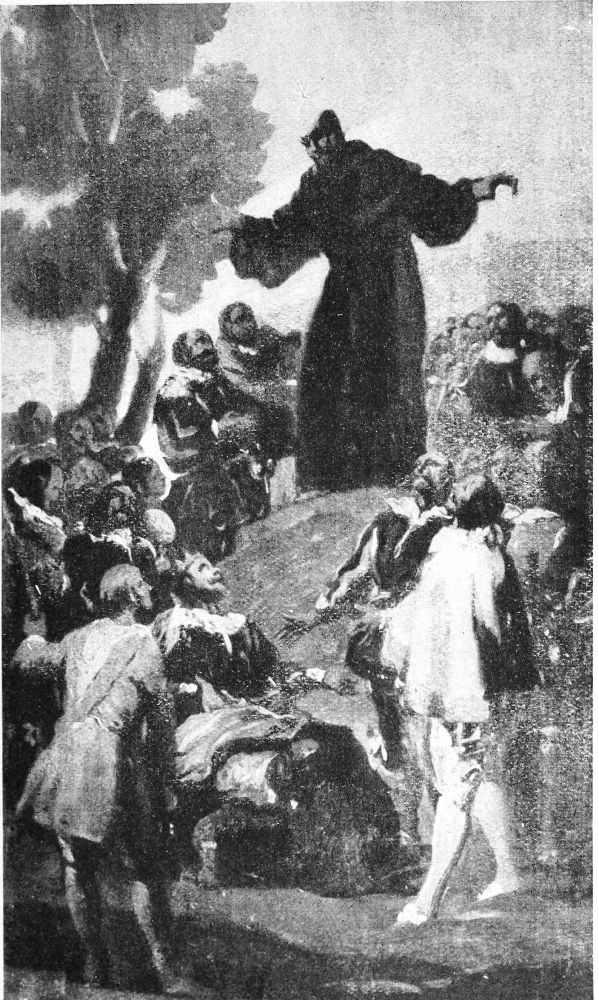
ST. BERNARD OF SIENA.
(Marques de Torrecilla.)
PLATE 262.
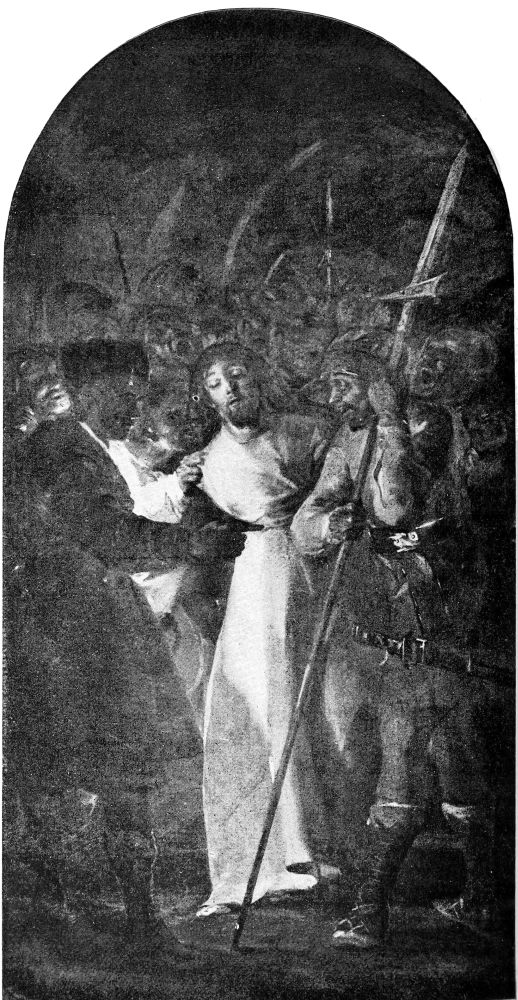
CHRIST TAKEN BY THE SOLDIERS.
(Toledo Cathedral.)
PLATE 263.
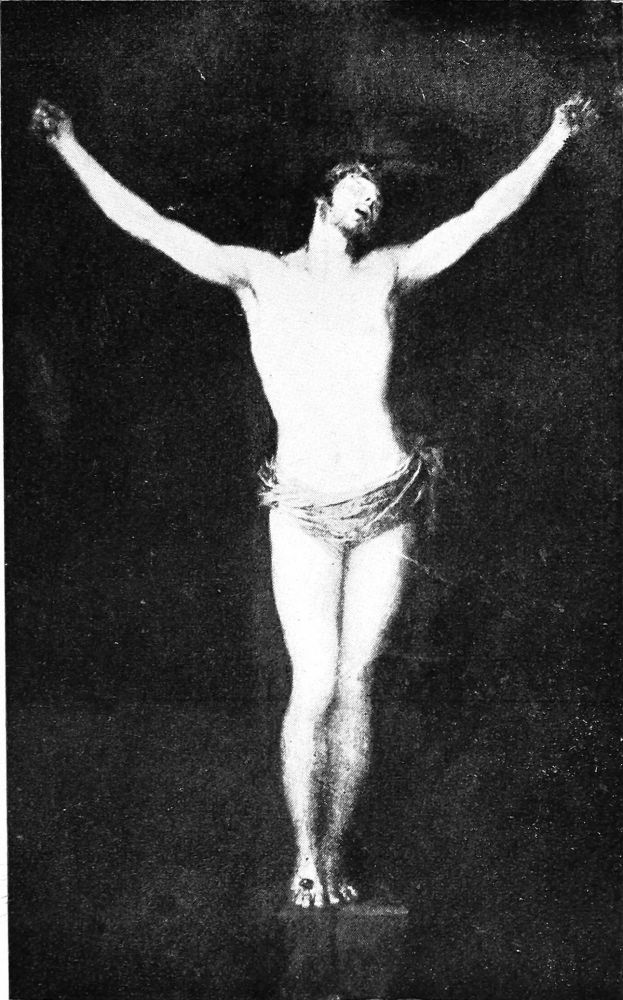
CHRIST ON THE CROSS.
(Prado, Madrid.)
PLATE 264.
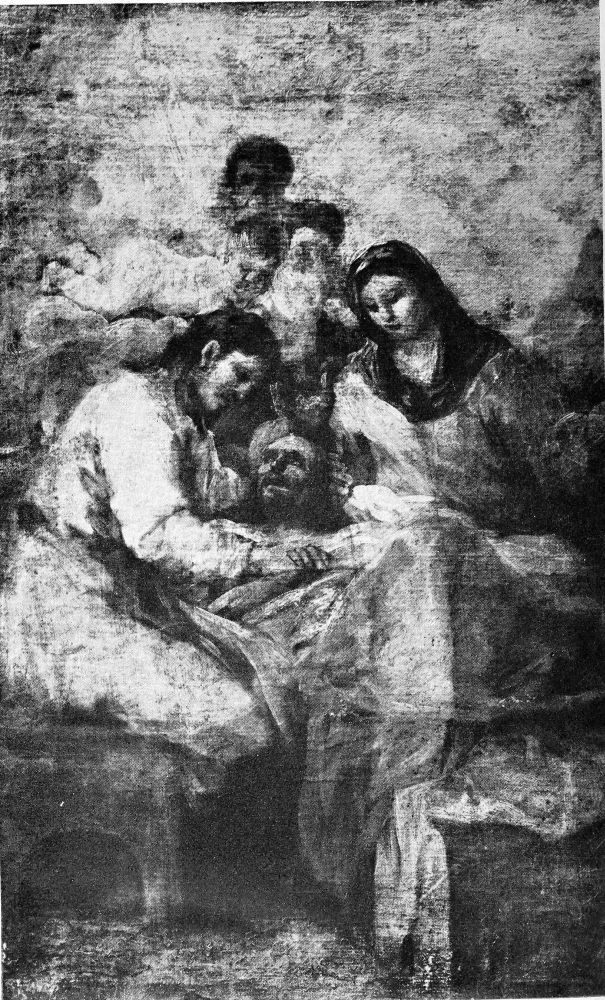
THE DEATH OF ST. JOSEPH.
(Don A. Beruete, Madrid.)
PLATE 265.
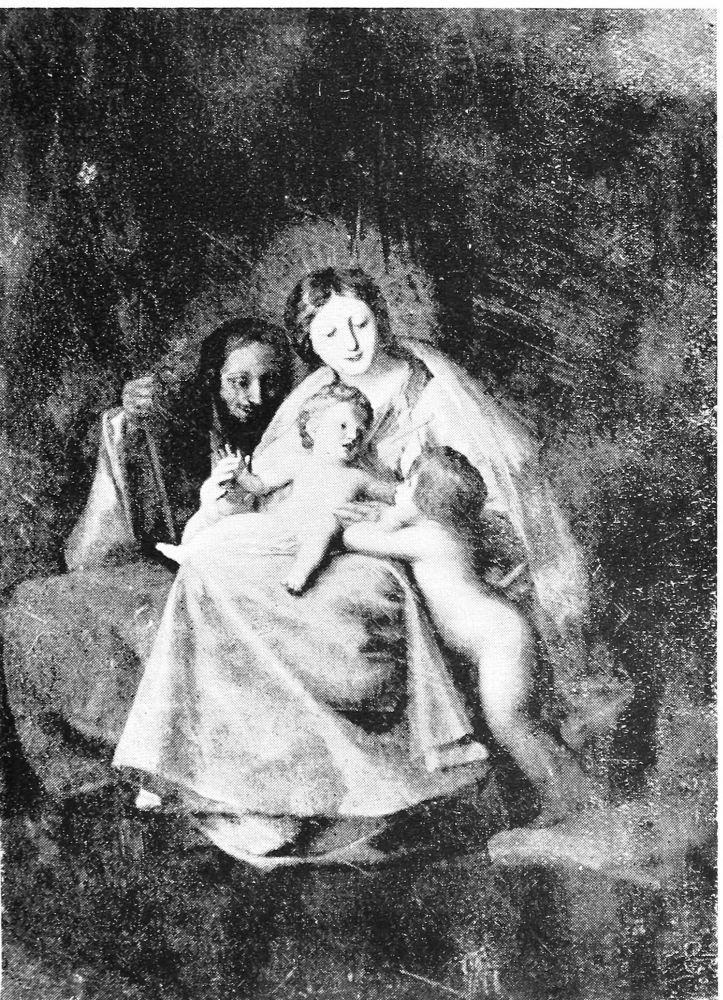
THE HOLY FAMILY.
(Prado, Madrid.)
PLATE 266.
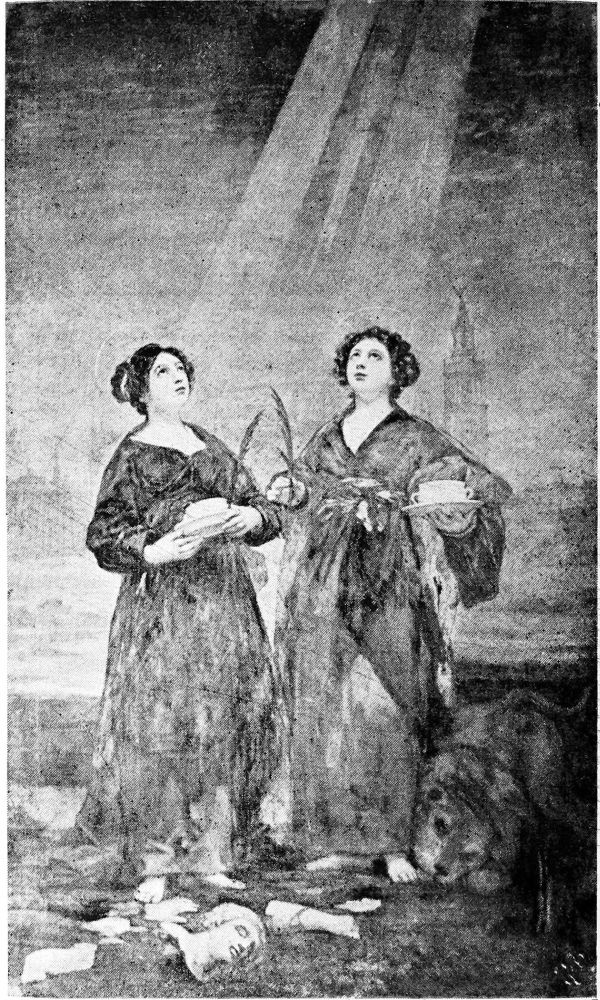
ST. JUSTA AND ST. RUFINA.
(Seville Cathedral.)
PLATE 267.
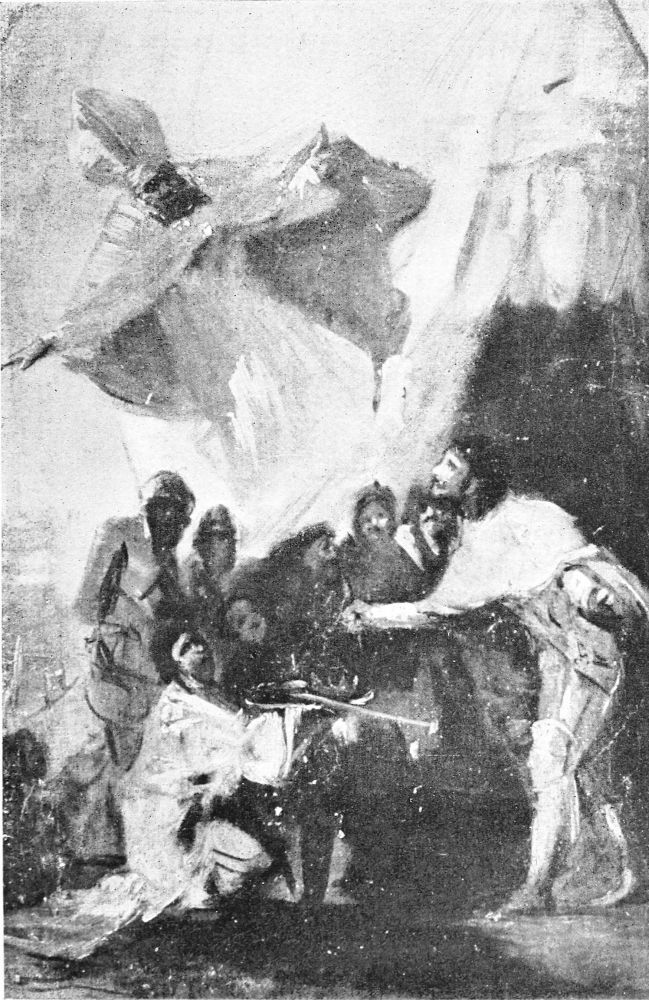
APPARITION OF ST. ISIDORE TO KING FERDINAND III.
(Don A. Canovas, Madrid.)
PLATE 268.
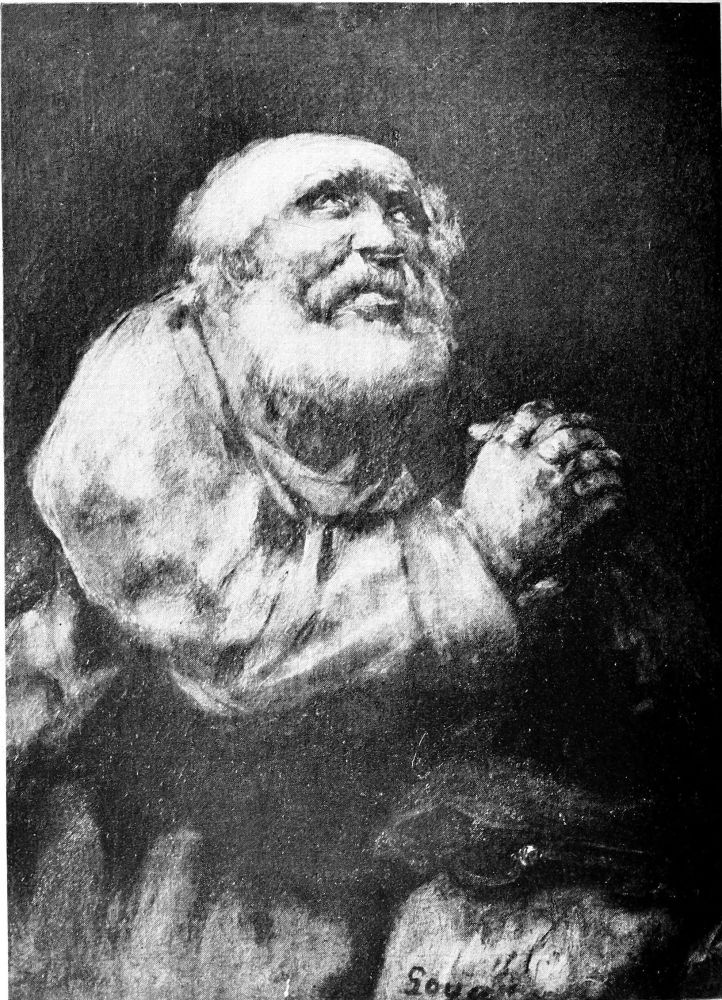
ST. PETER.
(Don A. Pidal, Madrid.)
PLATE 269.
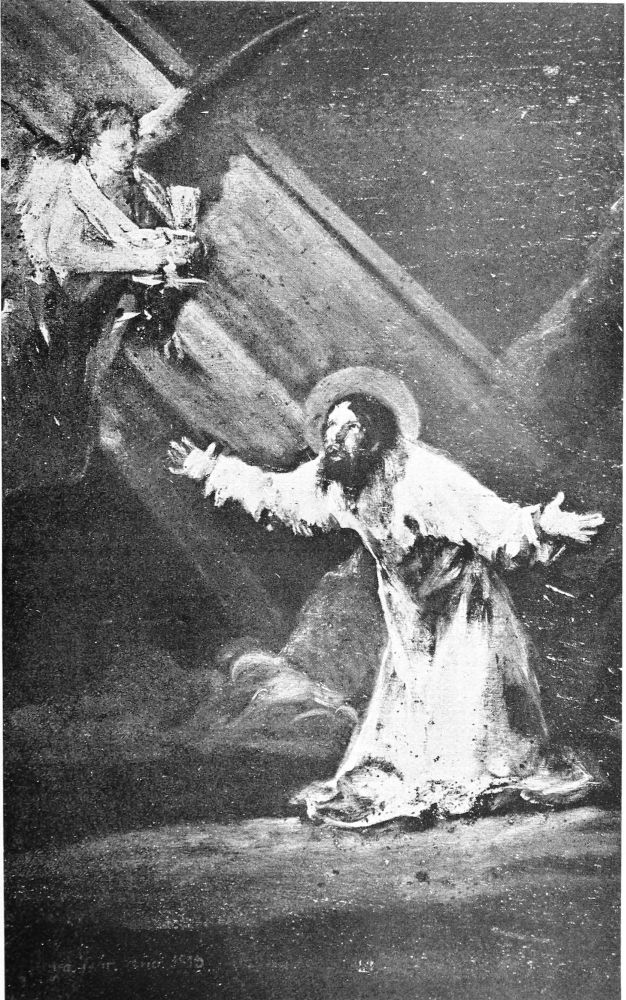
THE PRAYER IN THE GARDEN OF GETHSEMANE.
(The Rector of San Antonio.)
PLATE 270.
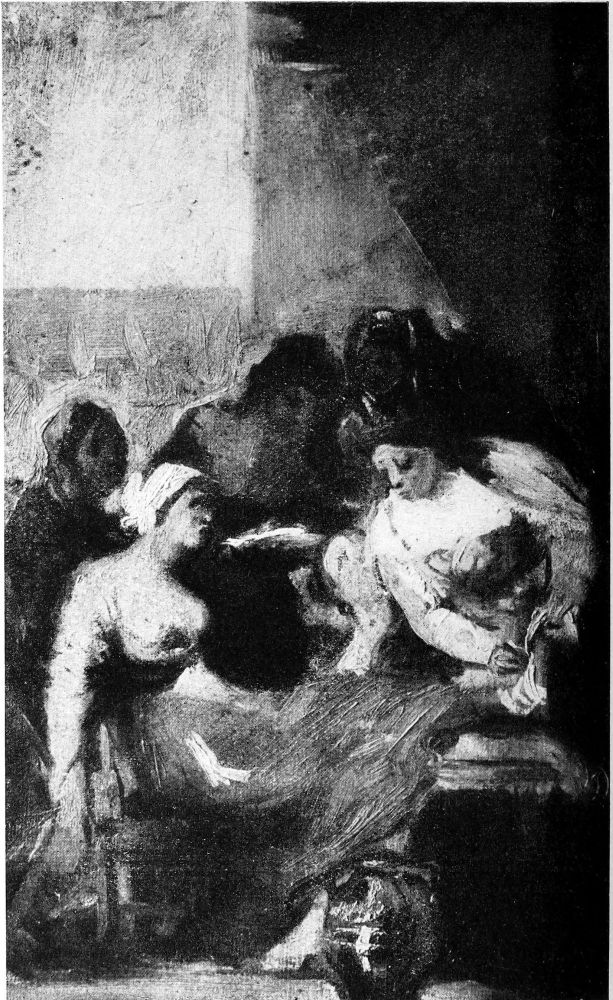
ST. ELIZABETH OF HUNGARY HEALING LEPERS.
(D. Clemente Velasco.)
PLATE 271.
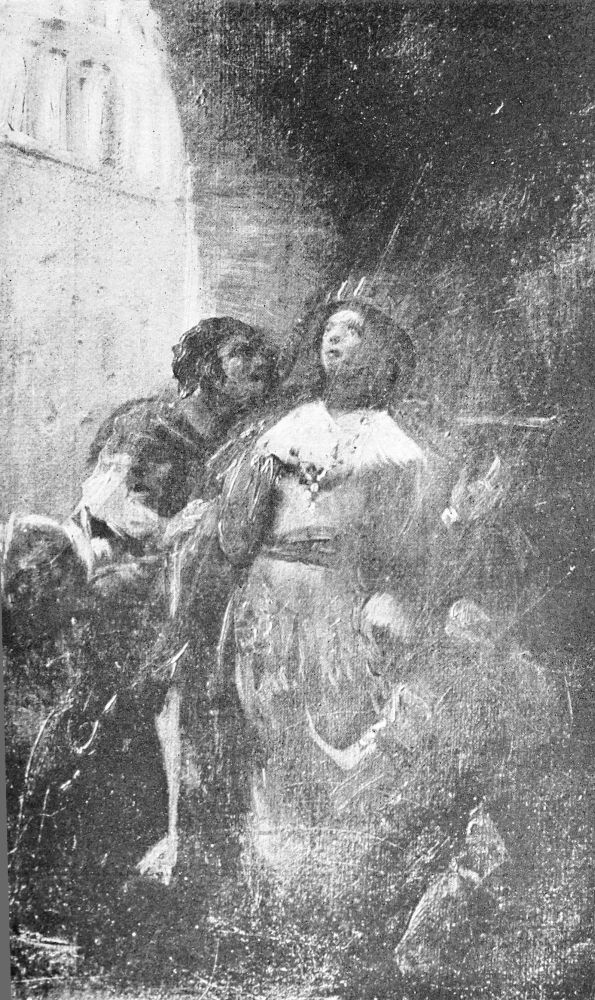
ST. HERMENEGILD IN PRISON.
(D. Clemente Velasco.)
PLATE 272.
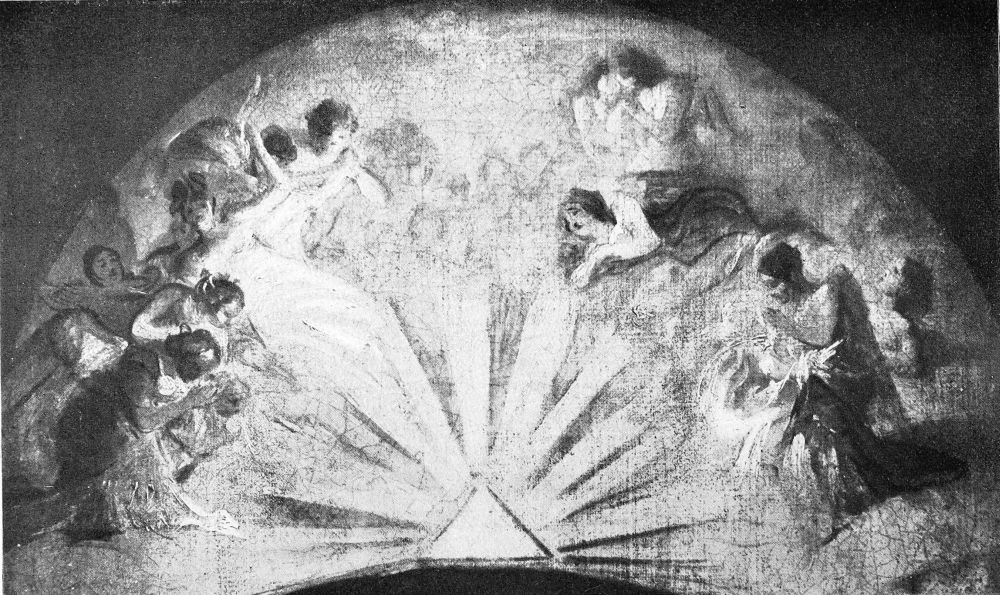
ANGELS AND CHERUBIM.
(Conde de Villagonzalo.)
PLATE 273.
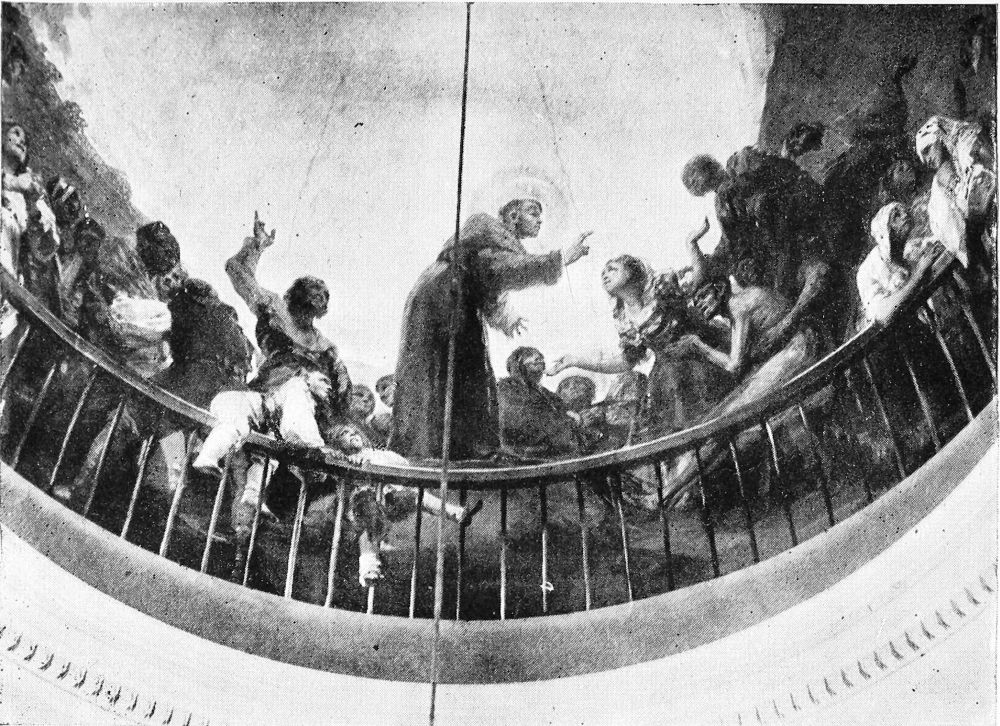
FRESCO OF THE CUPOLA OF SAN ANTONIO DE LA FLORIDA, 1ST SECTION.
PLATE 274.
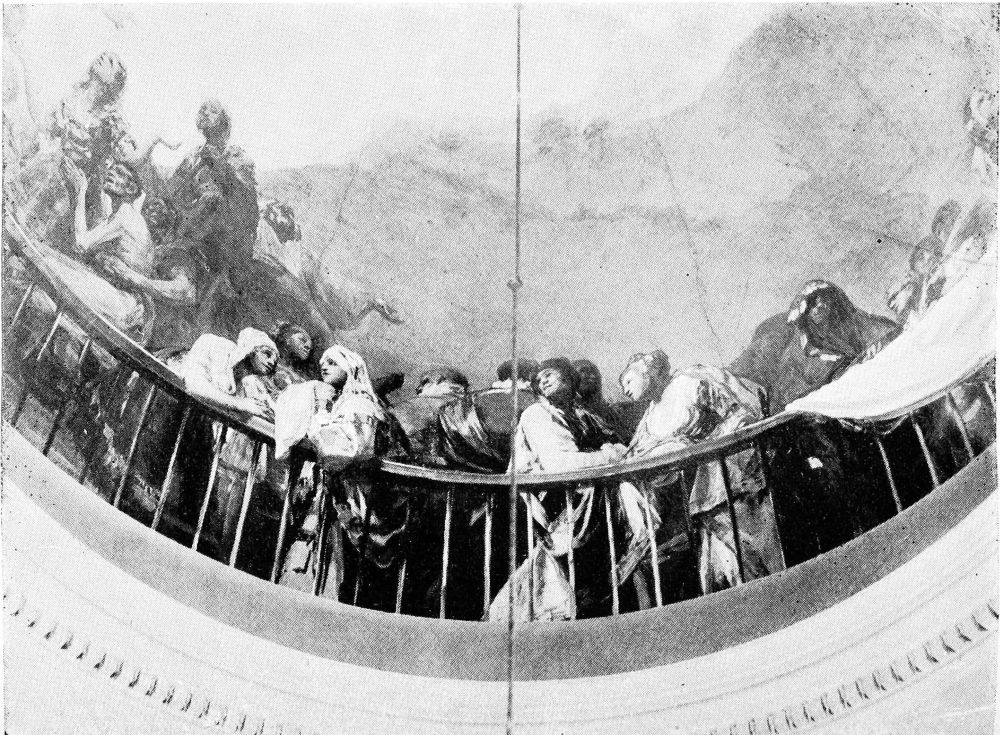
FRESCO OF THE CUPOLA OF SAN ANTONIO DE LA FLORIDA, 2ND SECTION.
PLATE 275.
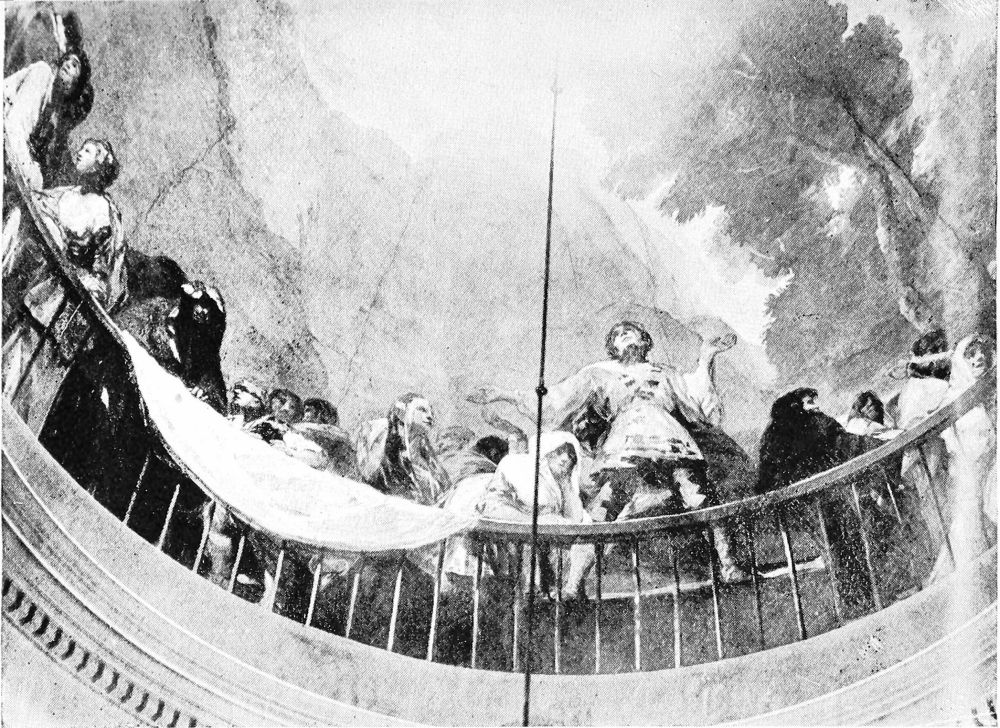
FRESCO OF THE CUPOLA OF SAN ANTONIO DE LA FLORIDA, 3RD SECTION.
PLATE 276.
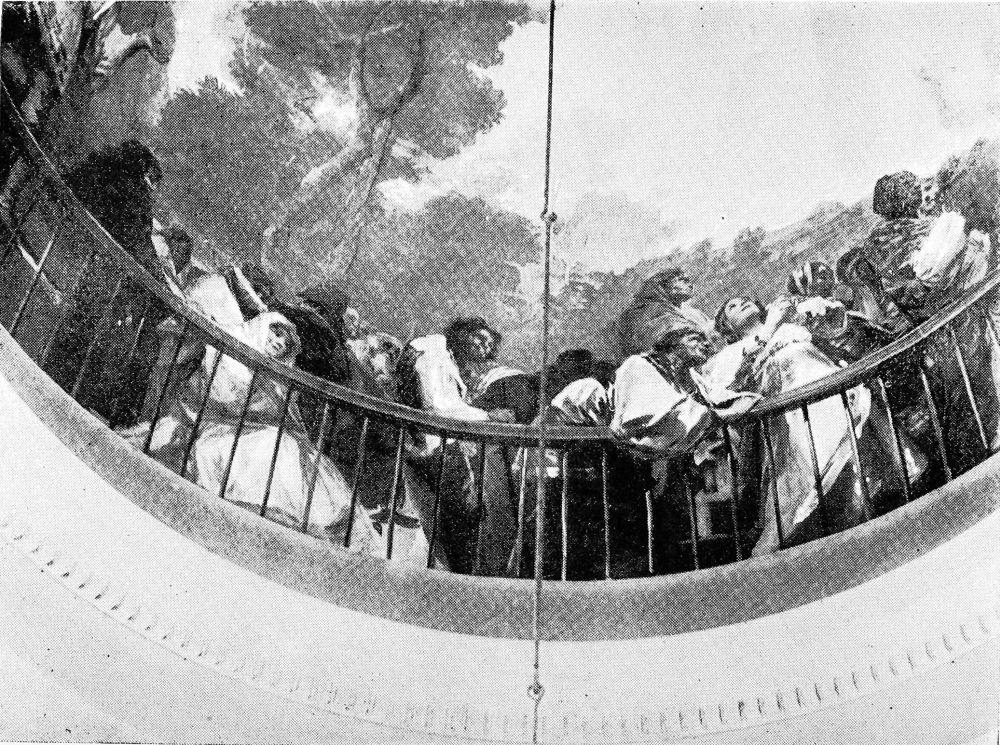
FRESCO OF THE CUPOLA OF SAN ANTONIO DE LA FLORIDA, 4TH SECTION.
PLATE 277.
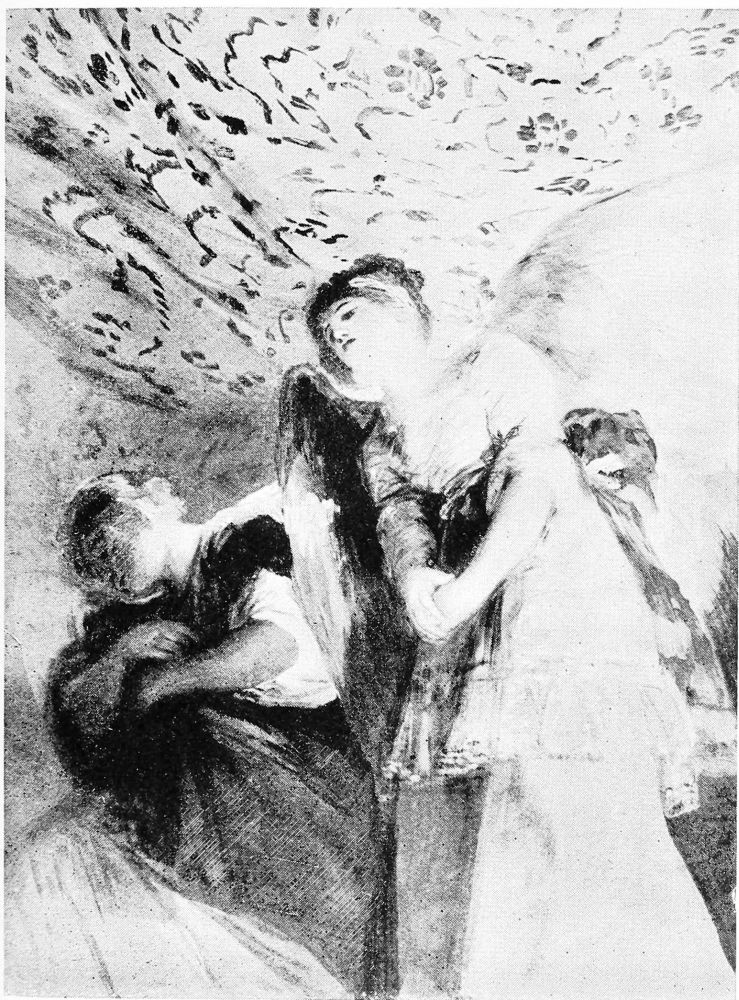
GROUP OF ANGELS FROM SAN ANTONIO DE LA FLORIDA.
PLATE 278.
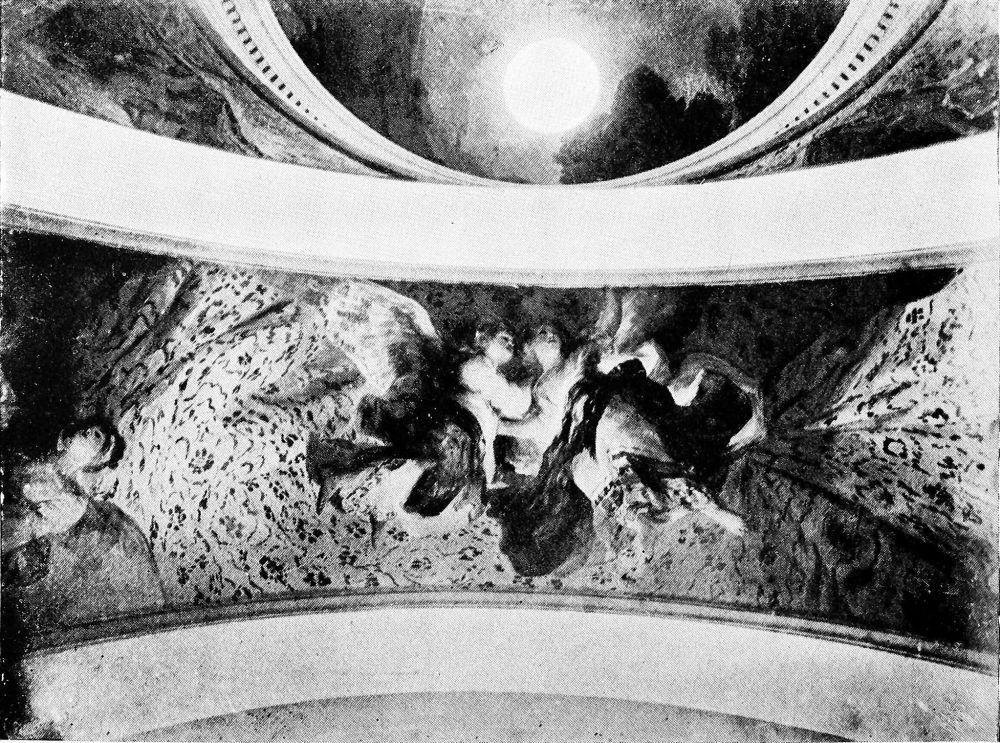
FRESCO OF SAN ANTONIO DE LA FLORIDA.
PLATE 279.
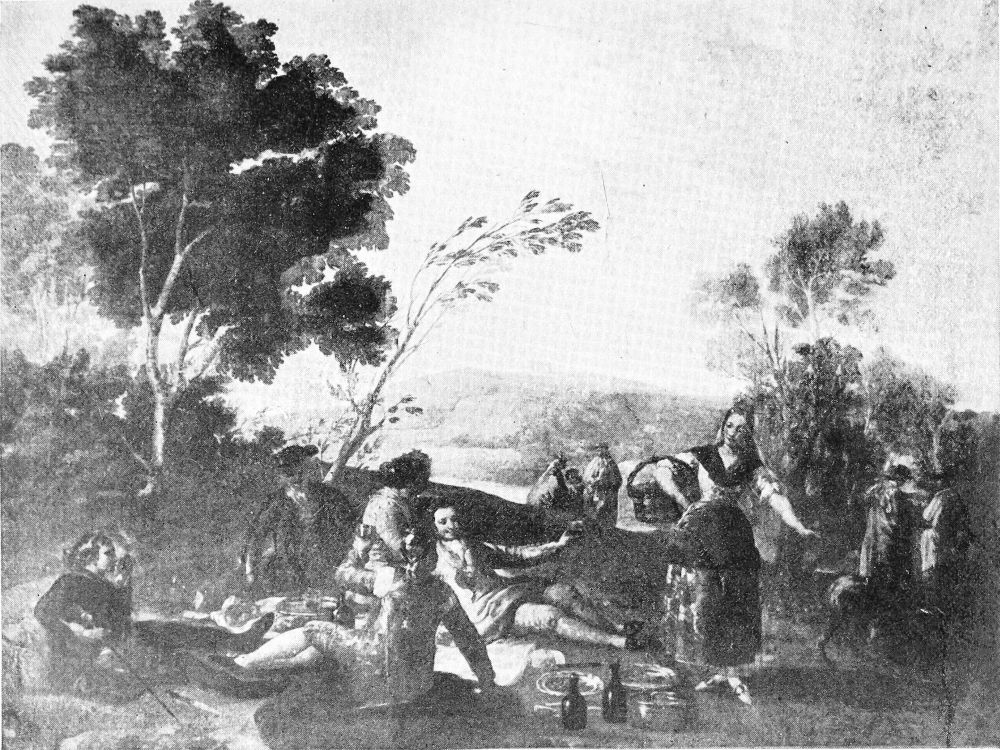
LUNCH ON THE BANKS OF THE MANZANARES: TAPESTRY CARTOON.
(Prado, Madrid.)
PLATE 280.
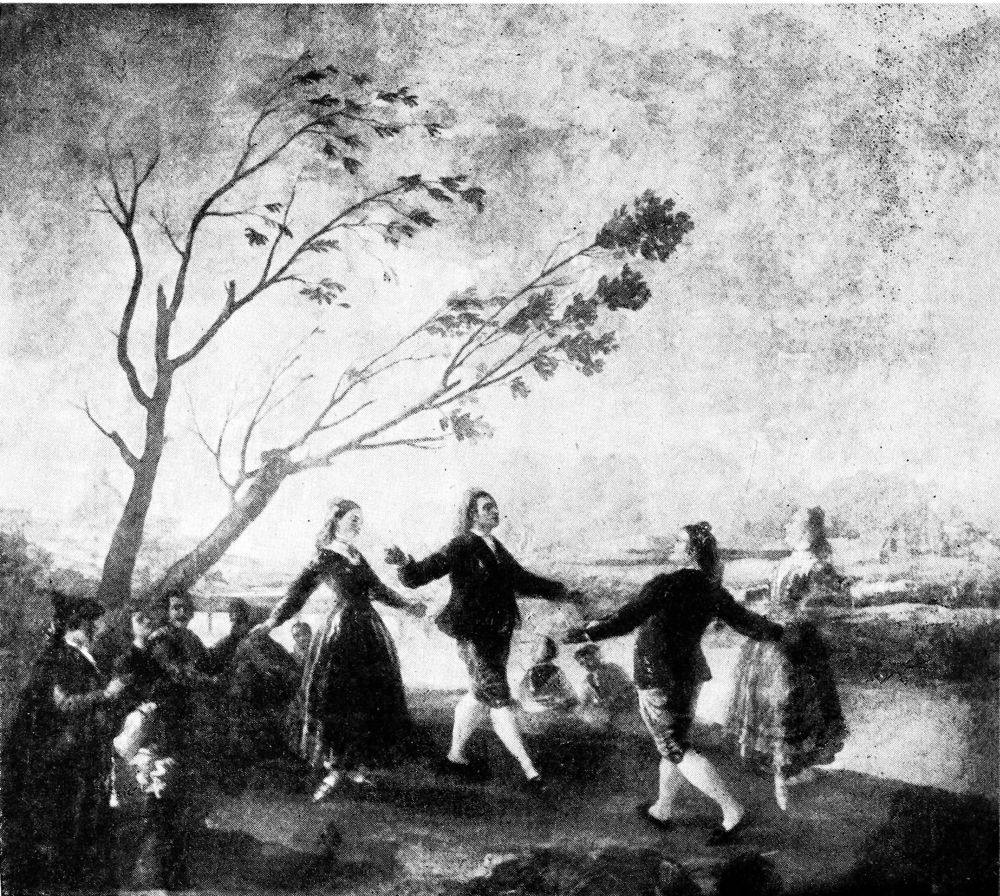
DANCE AT SAN ANTONIO DE LA FLORIDA: TAPESTRY CARTOON.
(Prado, Madrid.)
PLATE 281.
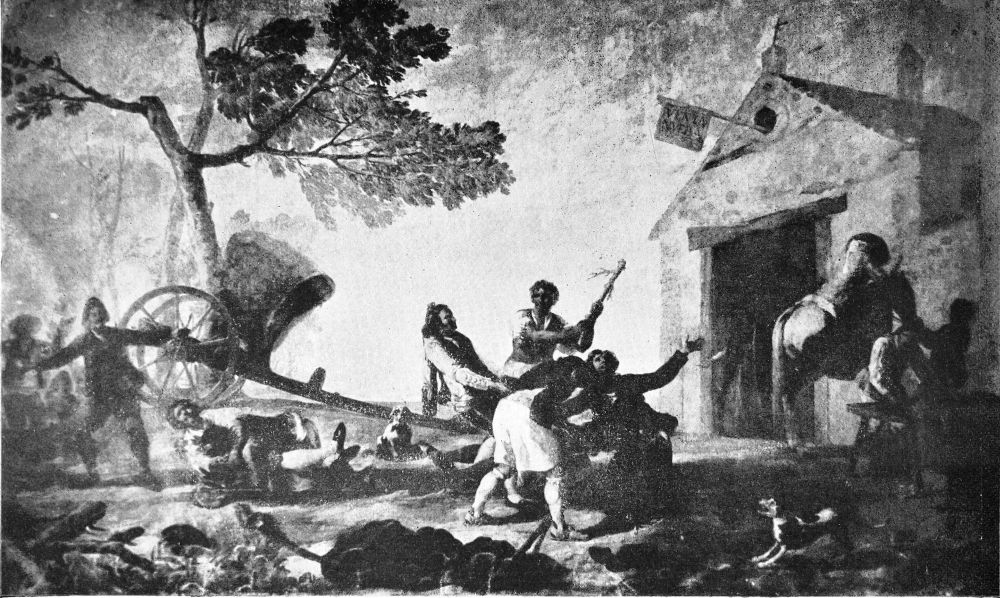
THE SCUFFLE AT THE VENTA NUEVA: TAPESTRY CARTOON.
(Prado, Madrid.)
PLATE 282.
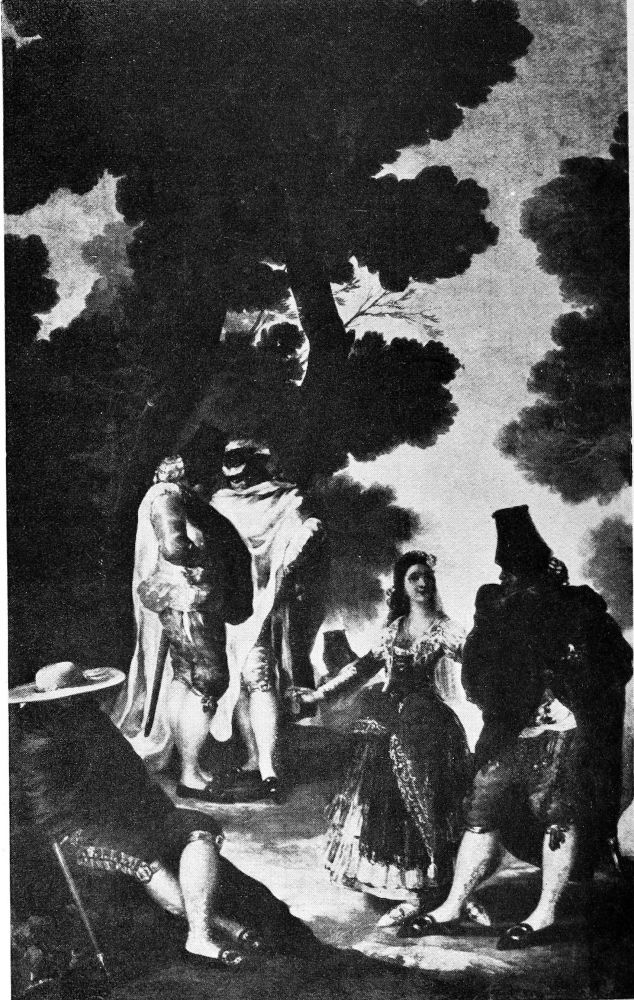
AL FRESCO SCENE: TAPESTRY CARTOON.
(Prado, Madrid.)
PLATE 283.
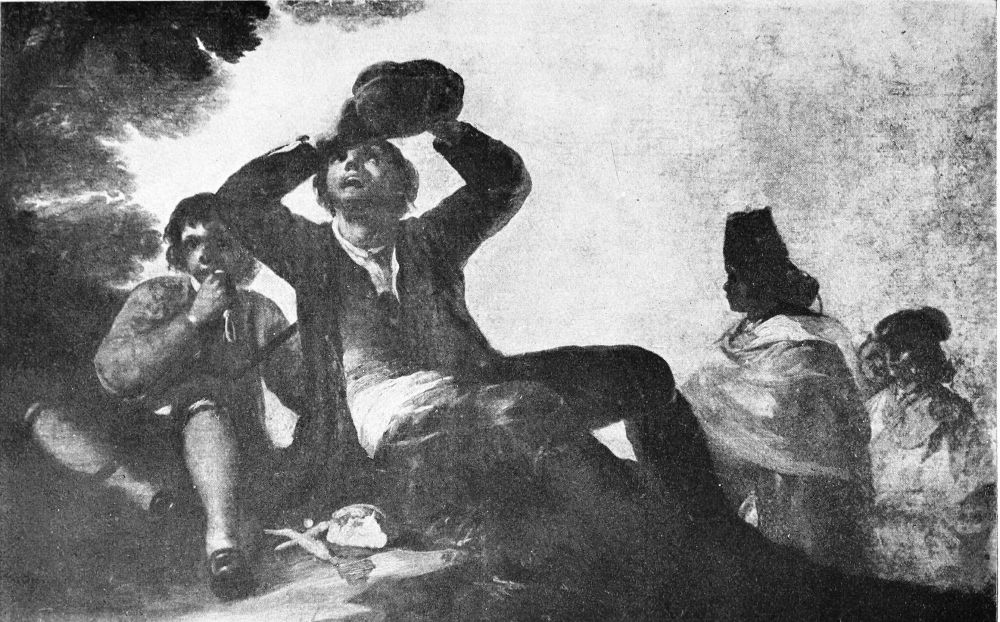
THE DRINKER: TAPESTRY CARTOON.
(Prado, Madrid.)
PLATE 284.
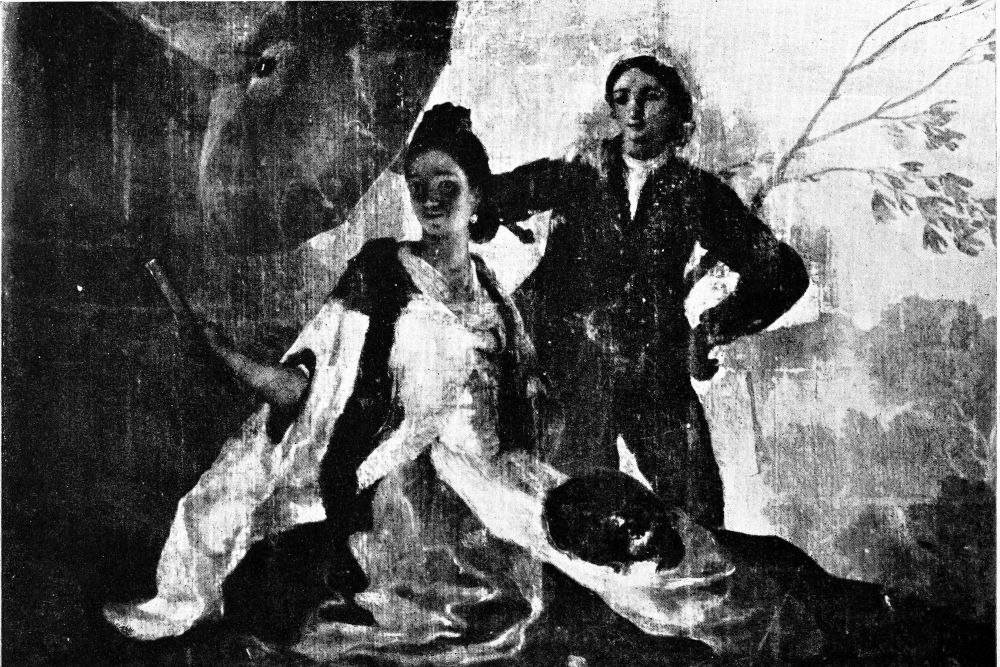
THE PARASOL: TAPESTRY CARTOON.
(Prado, Madrid.)
PLATE 285.
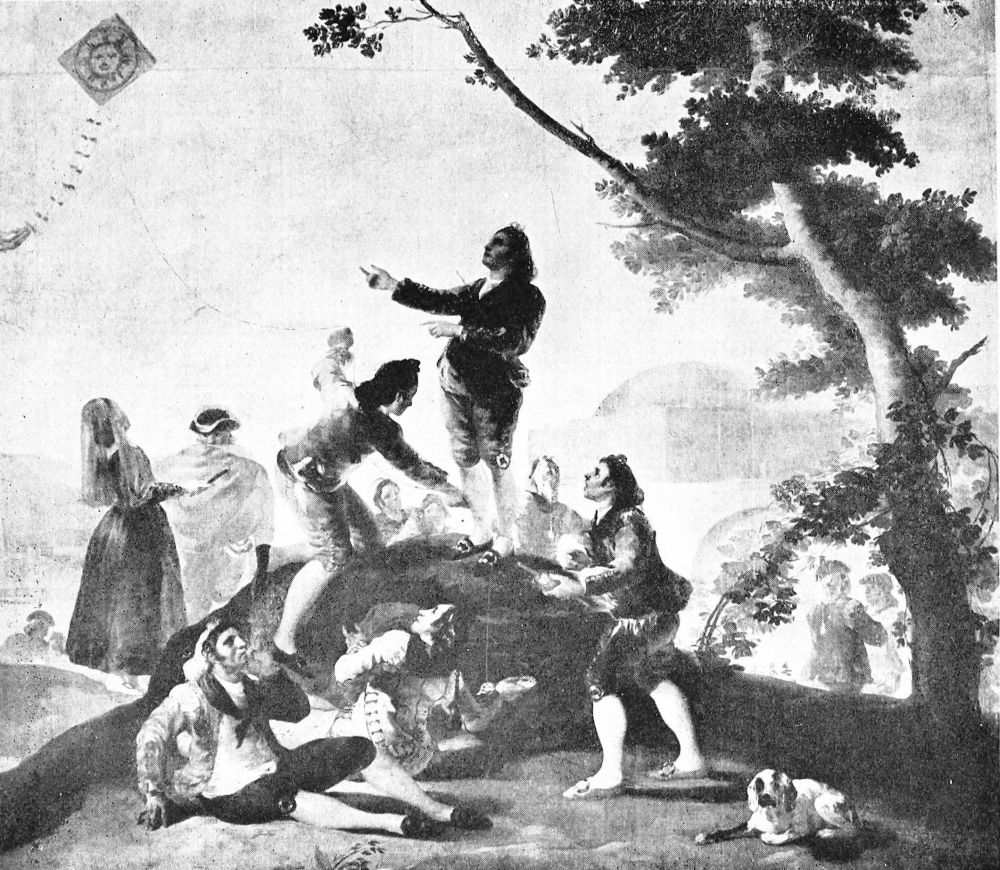
THE KITE: TAPESTRY CARTOON.
(Prado, Madrid.)
PLATE 286.
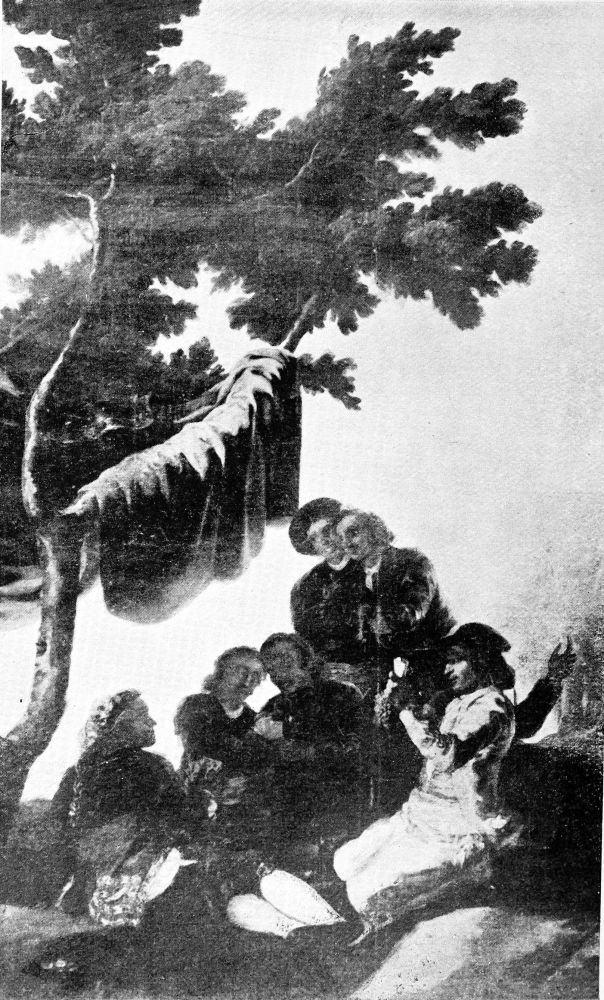
THE CARD-PLAYERS: TAPESTRY CARTOON.
(Prado, Madrid.)
PLATE 287.
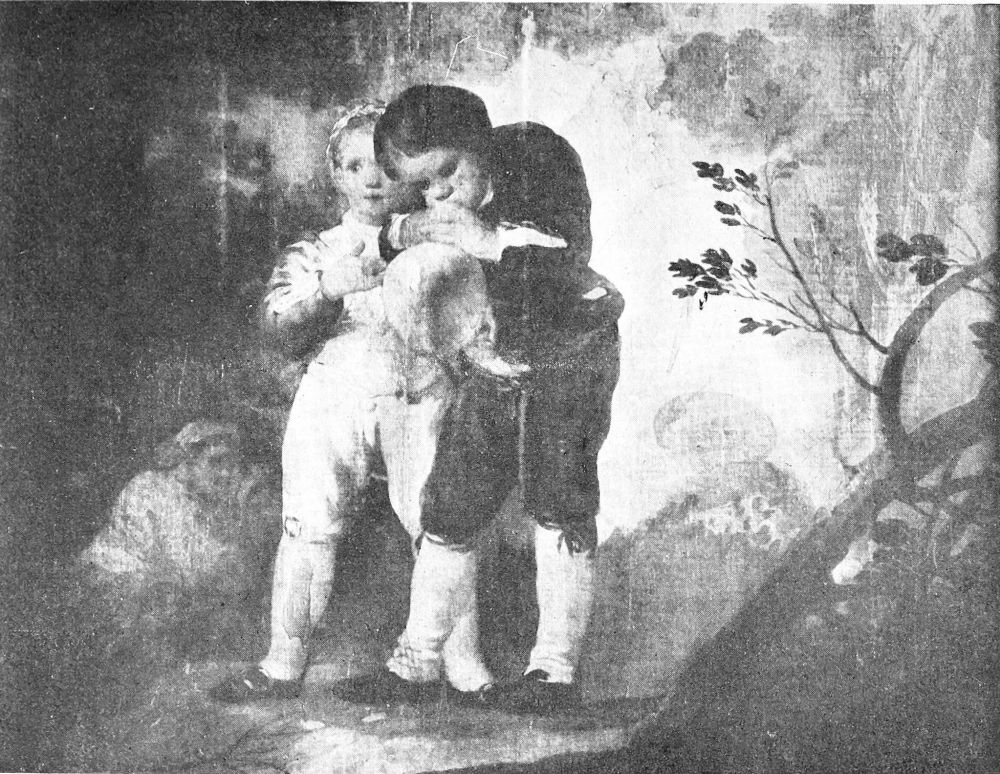
CHILDREN WITH A BLADDER: TAPESTRY CARTOON.
(Prado, Madrid.)
PLATE 288.
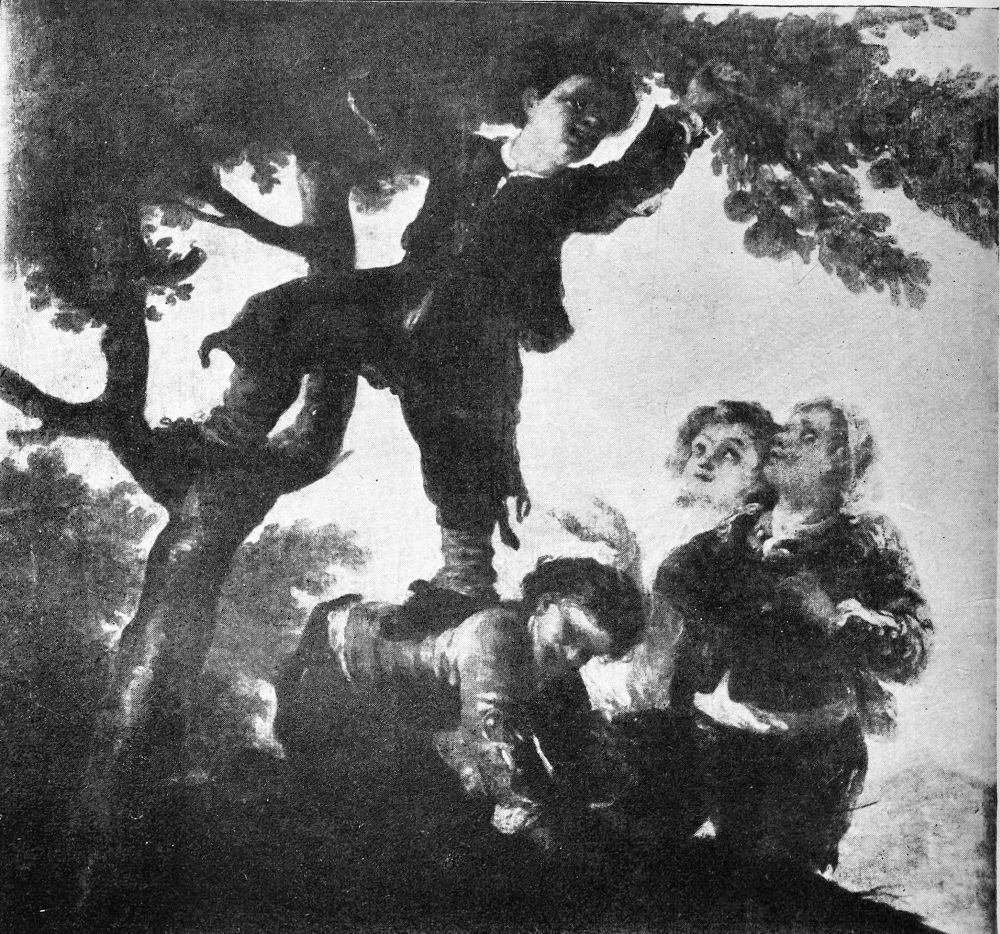
BOYS PICKING FRUIT: TAPESTRY CARTOON.
(Prado, Madrid.)
PLATE 289.
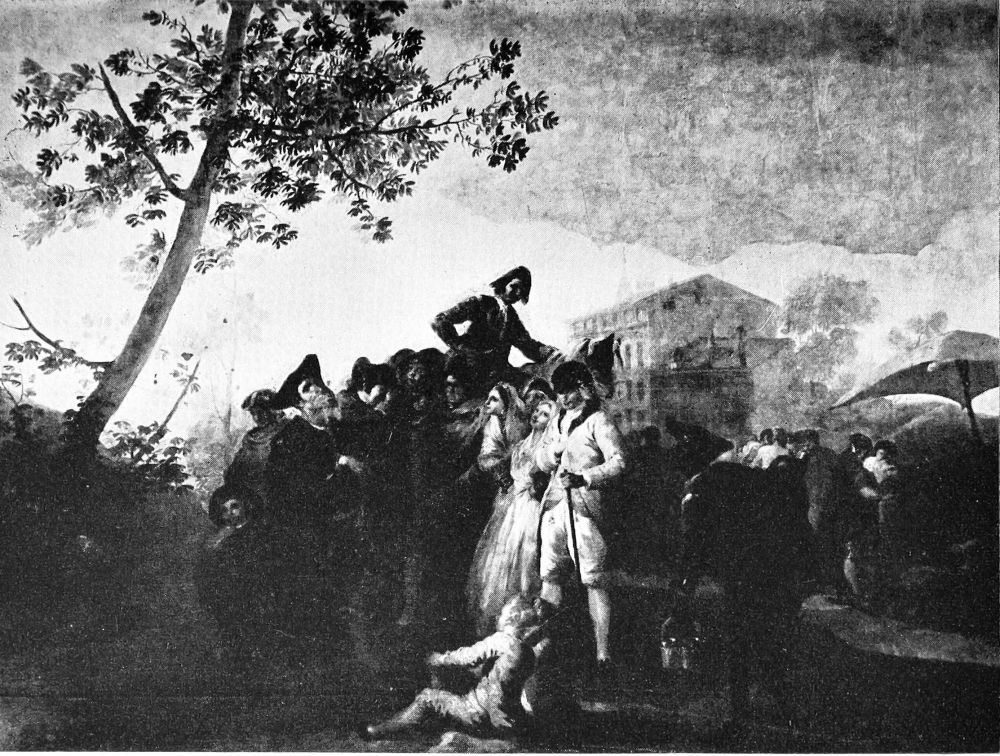
BLIND MAN PLAYING THE GUITAR: TAPESTRY CARTOON.
(Prado, Madrid.)
PLATE 290.
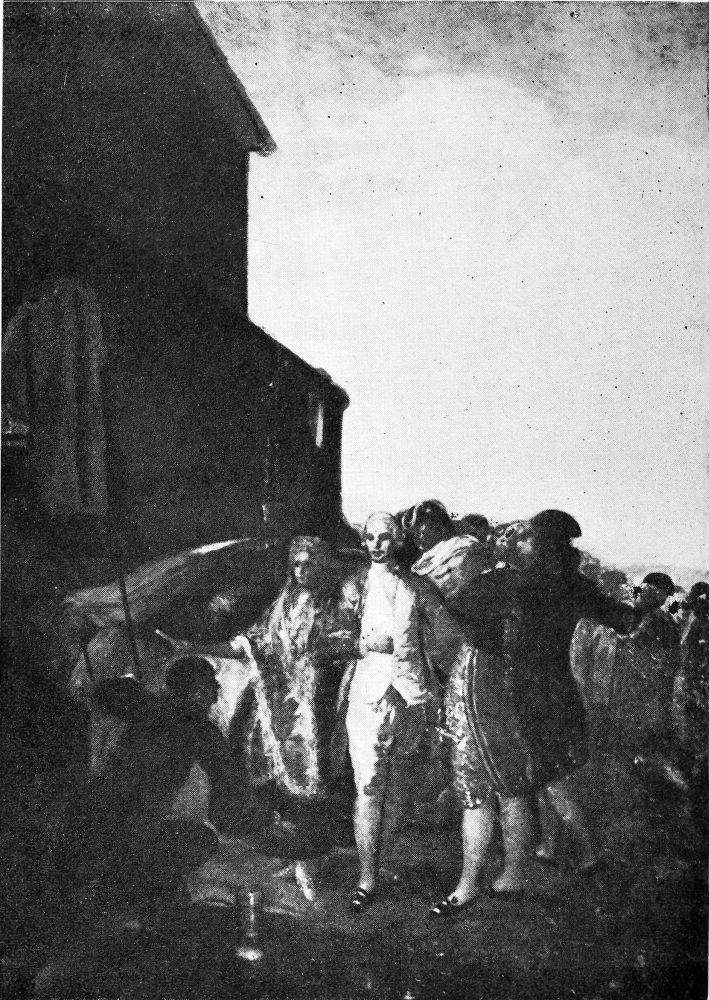
THE FAIR OF MADRID: TAPESTRY CARTOON.
(Prado, Madrid.)
PLATE 291.
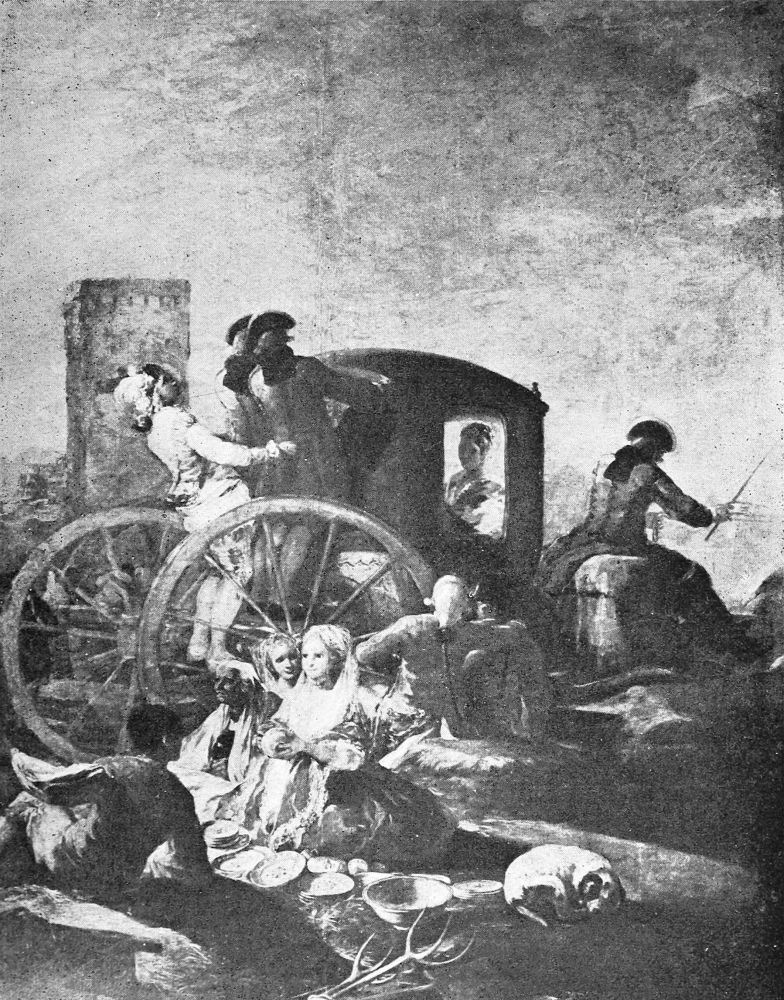
THE CROCKERY SELLER: TAPESTRY CARTOON.
(Prado, Madrid.)
PLATE 292.
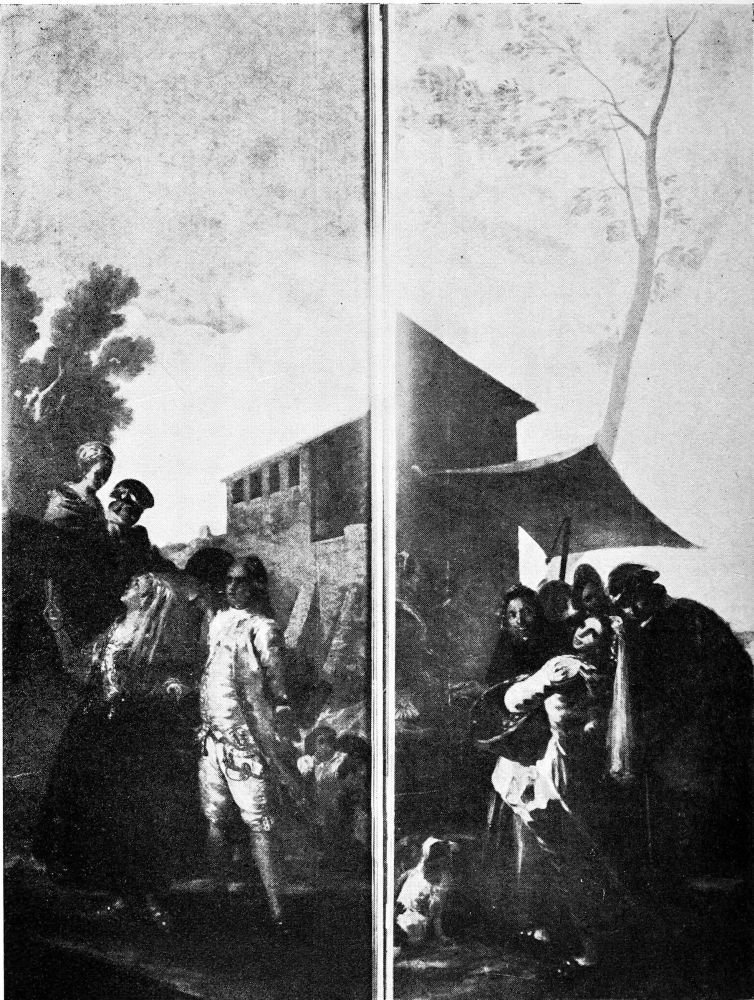
THE SOLDIER AND THE GIRL.
LA ACEROLERA.
TAPESTRY CARTOONS.
(Prado, Madrid.)
PLATE 293.
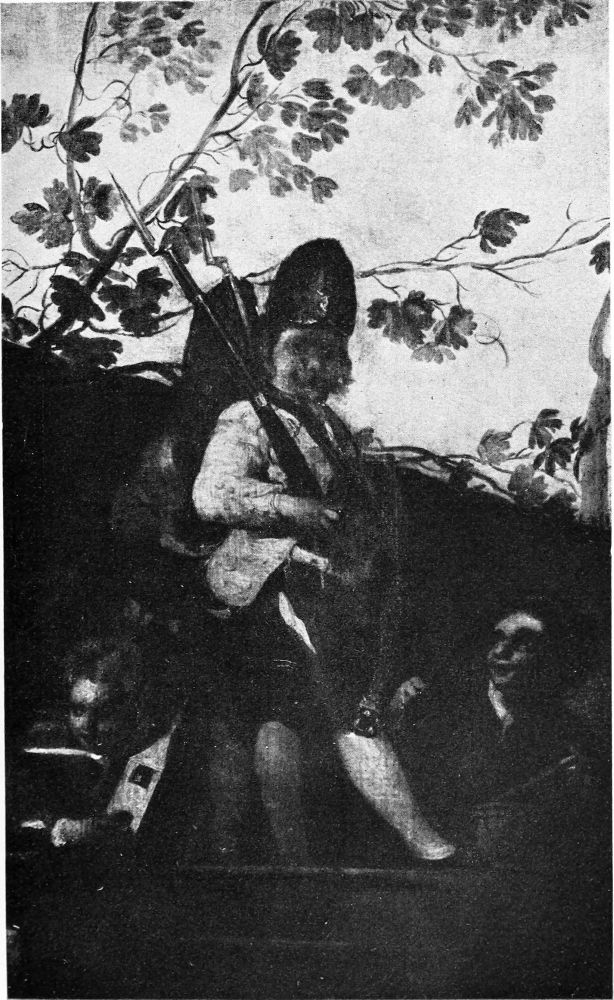
PLAYING AT SOLDIERS: TAPESTRY CARTOON.
(Prado, Madrid.)
PLATE 294.
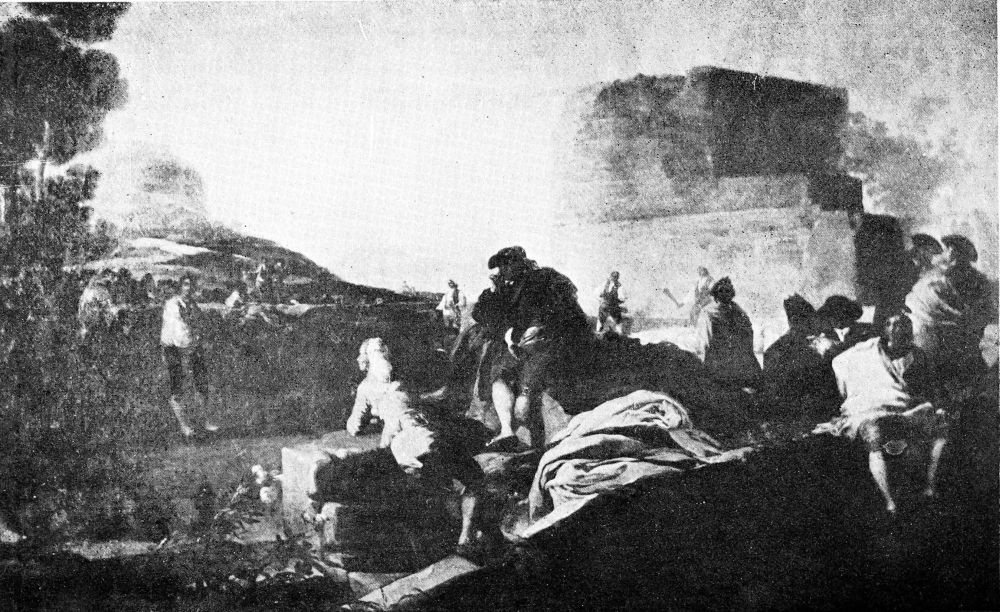
THE GAME OF PELOTA: TAPESTRY CARTOON.
(Prado, Madrid.)
PLATE 295.
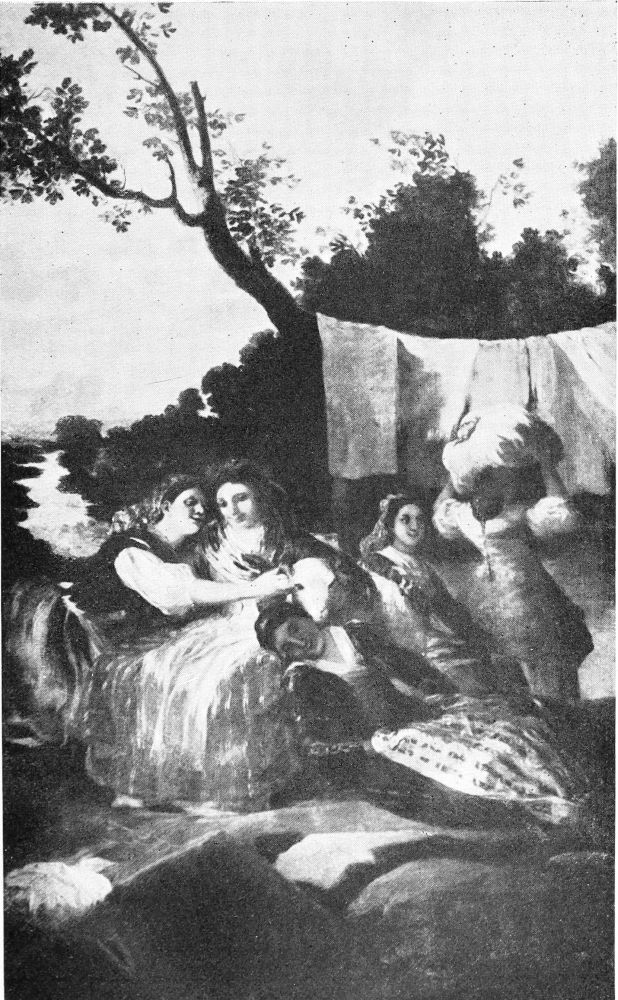
THE WASHERWOMEN: TAPESTRY CARTOON.
(Prado, Madrid.)
PLATE 296.
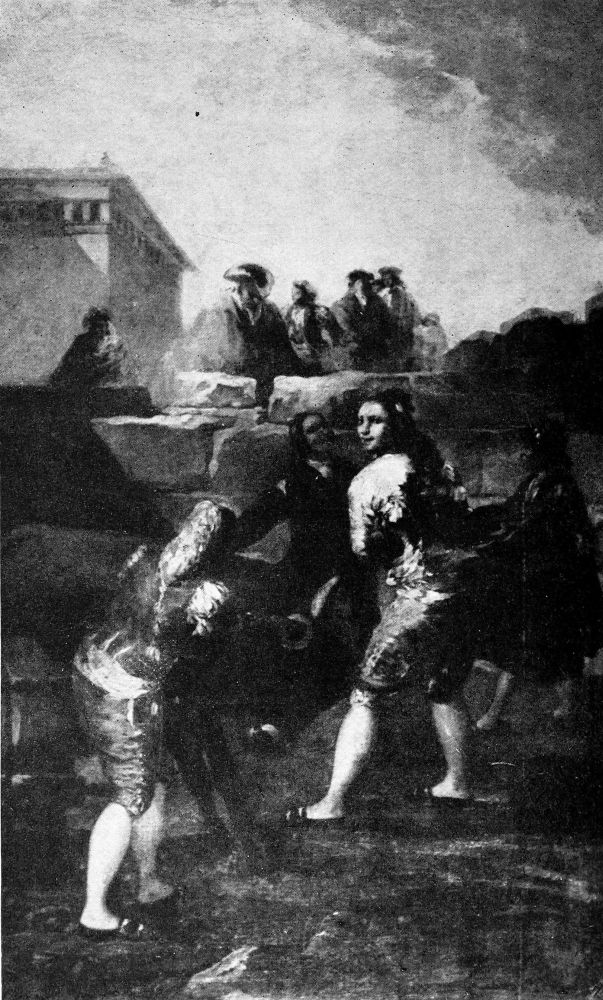
LA NOVILLADA: TAPESTRY CARTOON.
(Prado, Madrid.)
PLATE 297.
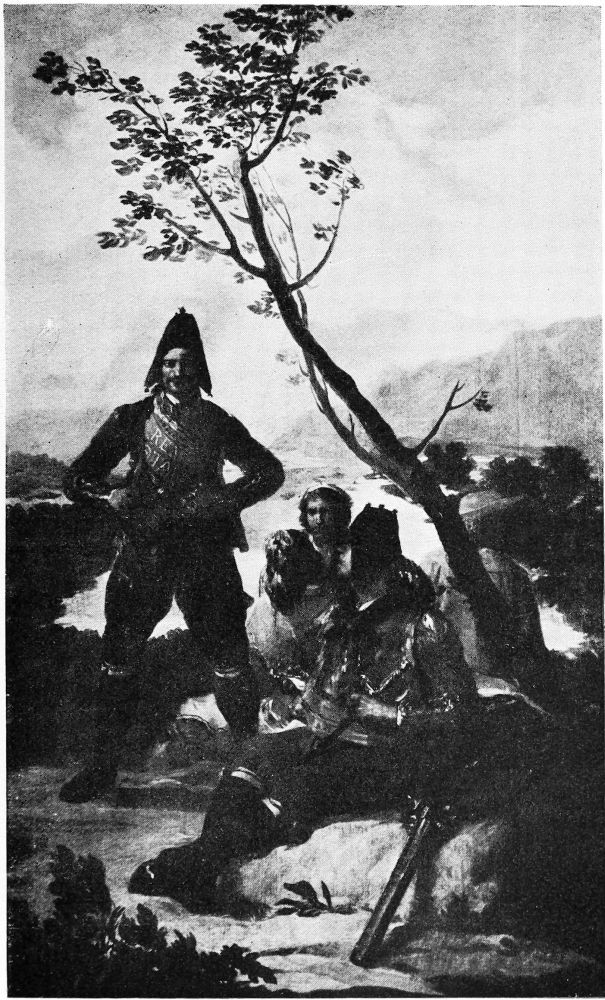
THE TOBACCO GUARD: TAPESTRY CARTOON.
(Prado, Madrid.)
PLATE 298.
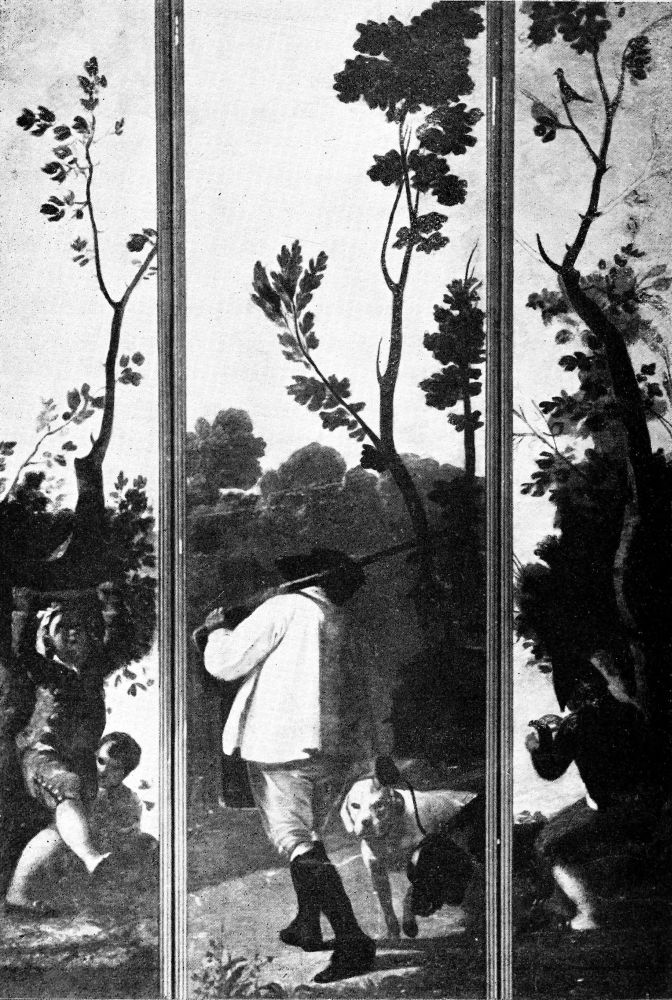
CHILDREN CLIMBING A TREE.
THE HUNTER AND HIS DOGS.
THE CHILD AND THE BIRD.
TAPESTRY CARTOONS.
(Prado, Madrid.)
PLATE 299.
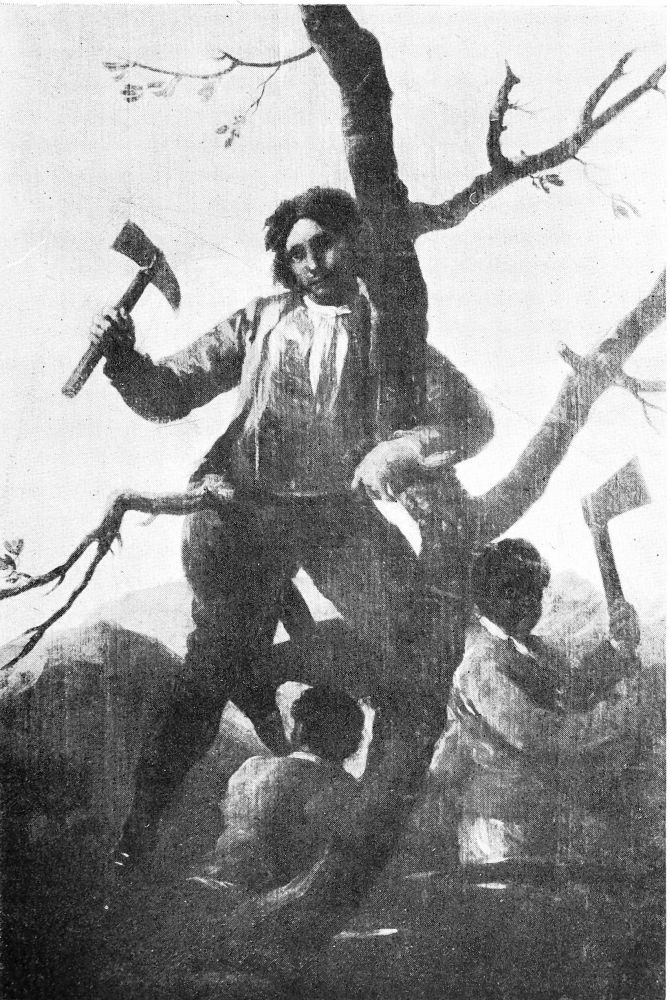
THE WOODCUTTERS: TAPESTRY CARTOON.
(Prado, Madrid.)
PLATE 300.
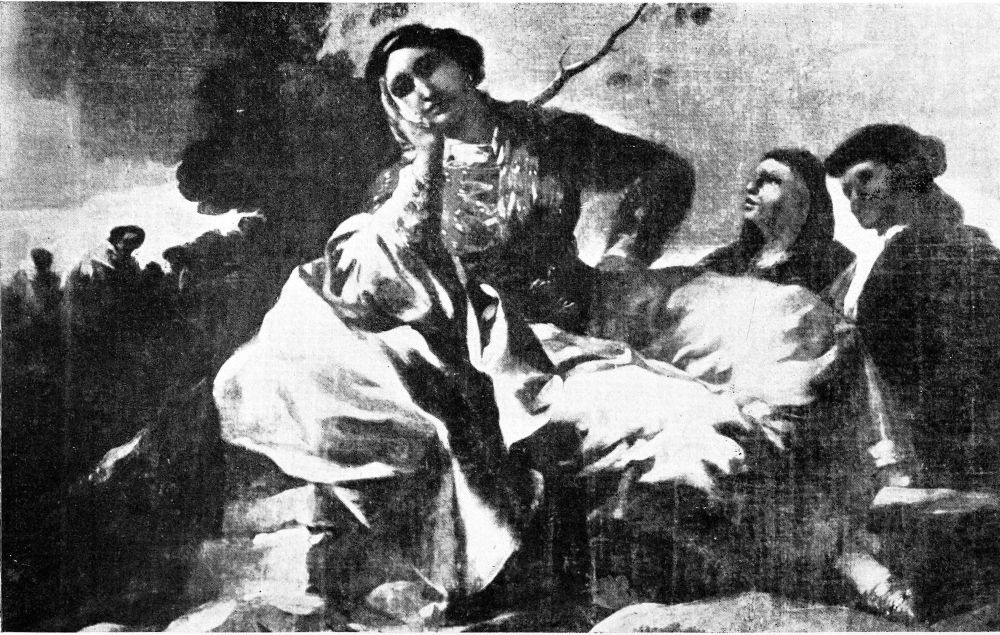
THE RENDEZVOUS: TAPESTRY CARTOON.
(Prado, Madrid.)
PLATE 301.
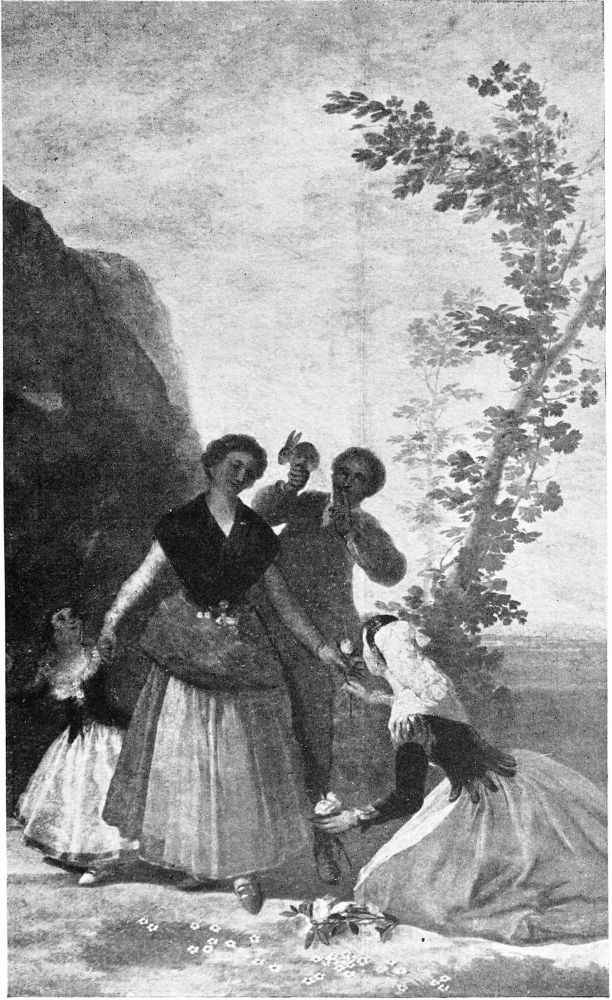
THE GARDENER: TAPESTRY CARTOON.
(Prado, Madrid.)
PLATE 302.
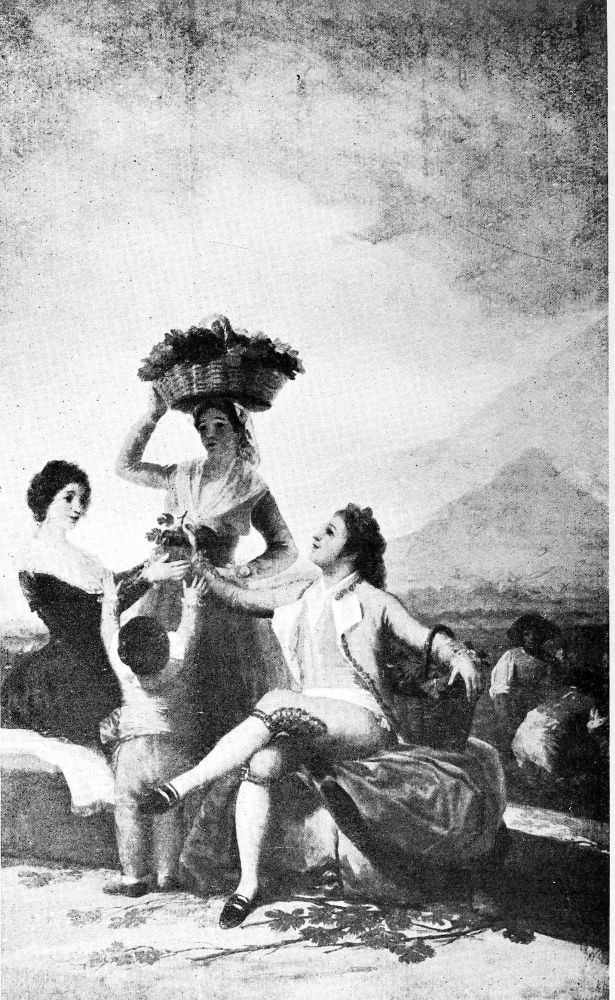
THE VINTAGERS: TAPESTRY CARTOON.
(Prado, Madrid.)
PLATE 303.
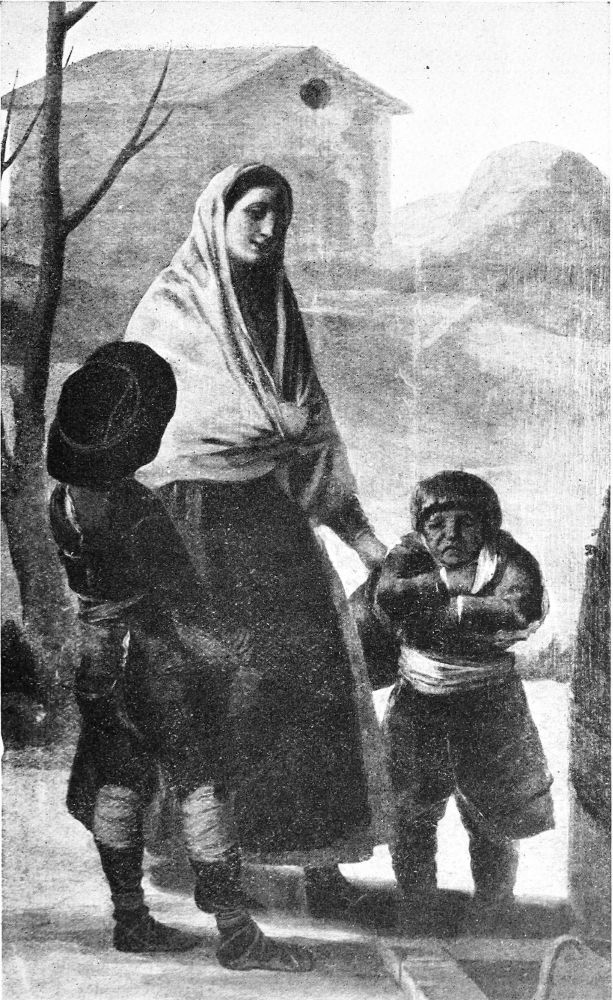
POOR WOMAN AT THE FOUNTAIN: TAPESTRY CARTOON.
(Prado, Madrid.)
PLATE 304.
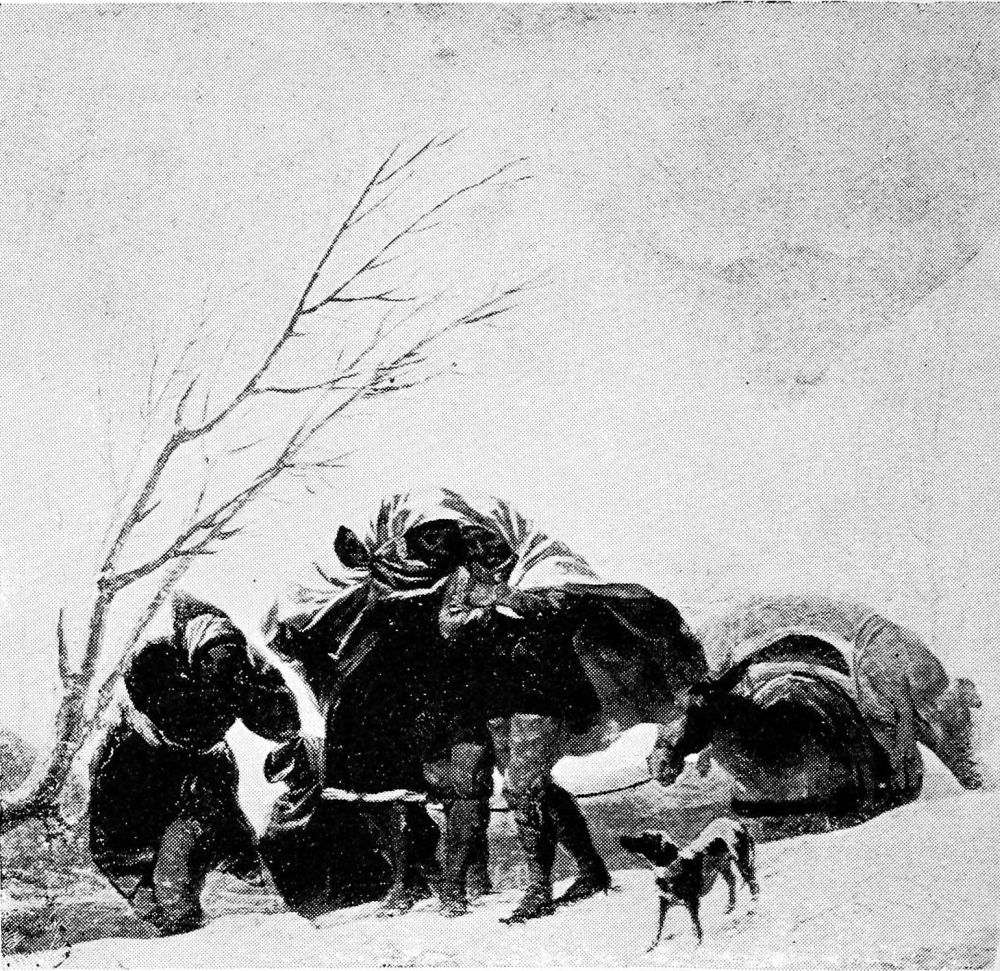
WINTER: TAPESTRY CARTOON.
(Prado, Madrid.)
PLATE 305.
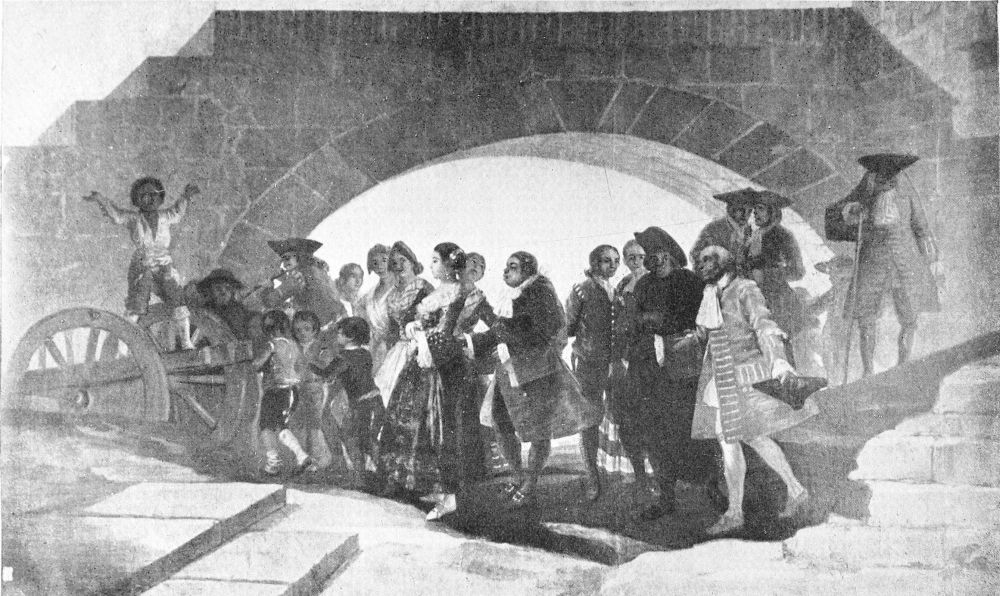
THE WEDDING: TAPESTRY CARTOON.
(Prado, Madrid.)
PLATE 306.
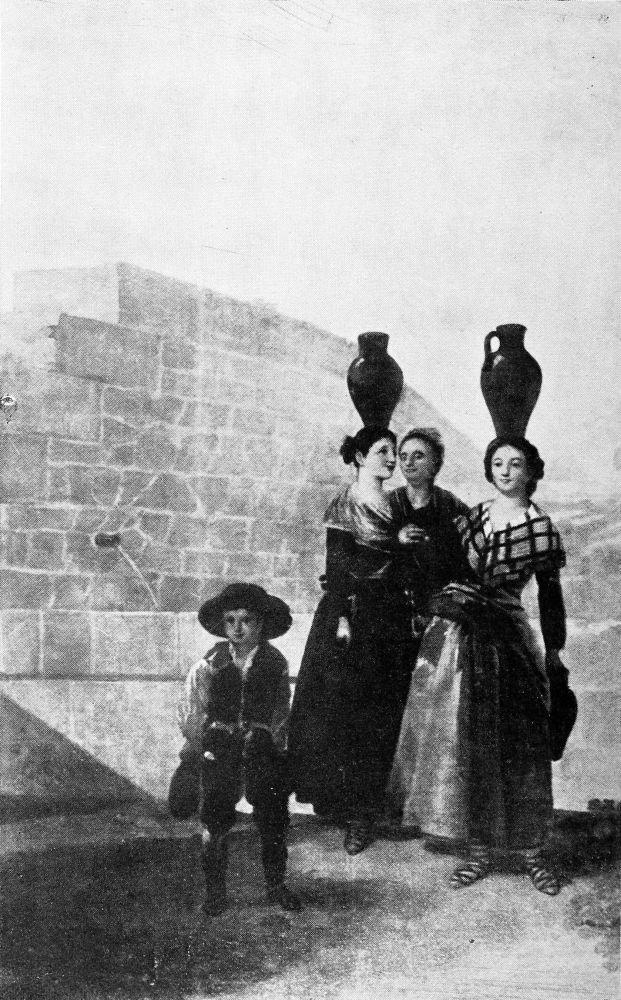
WOMEN AT THE FOUNTAIN: TAPESTRY CARTOON.
(Prado, Madrid.)
PLATE 307.
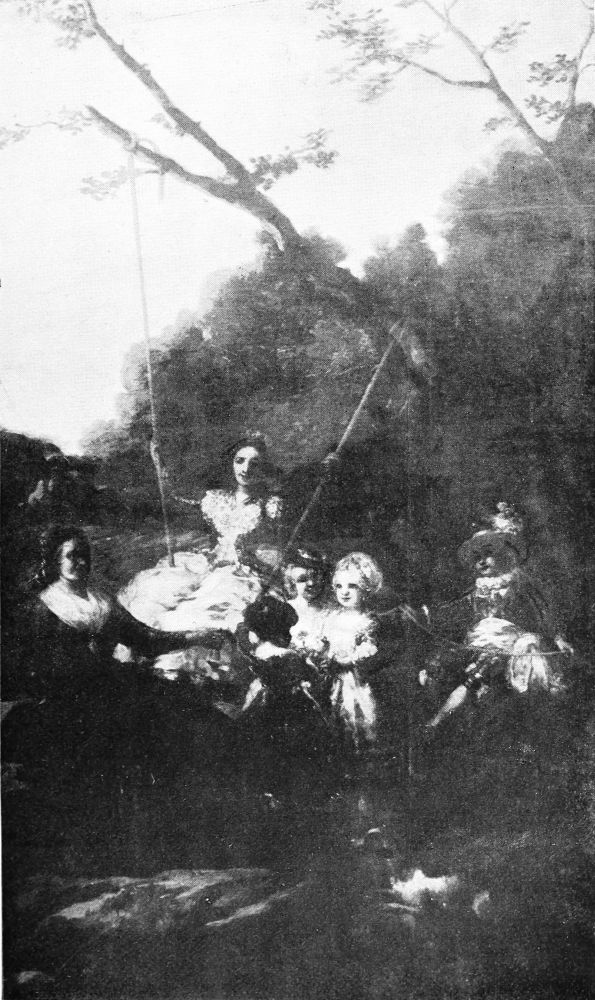
THE SWING: TAPESTRY CARTOON.
(Prado, Madrid.)
PLATE 308.
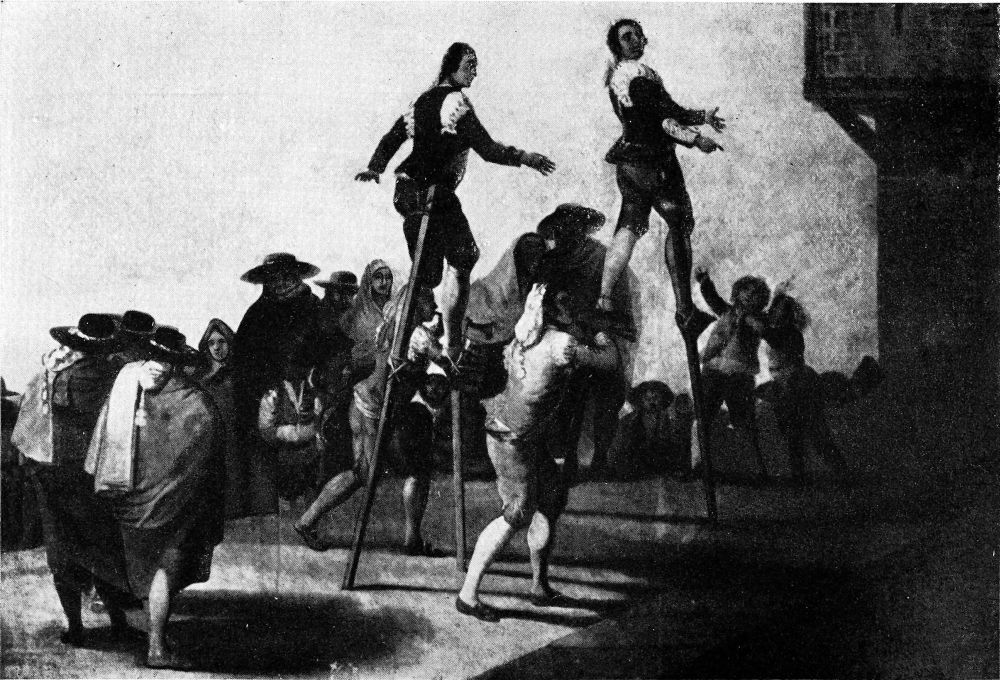
THE STILT-WALKERS: TAPESTRY CARTOON.
(Prado, Madrid.)
PLATE 309.
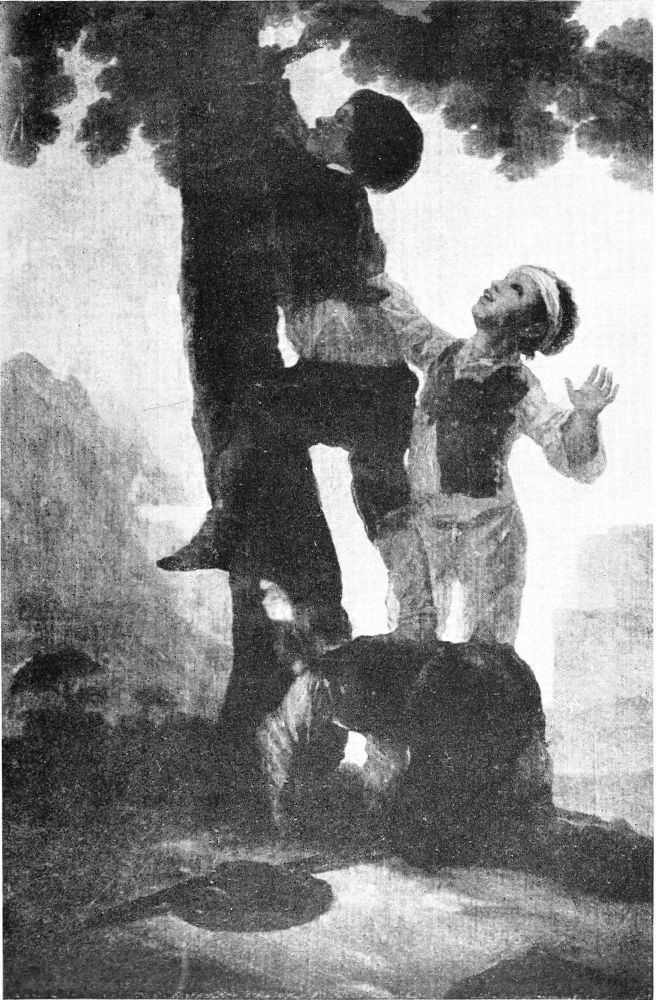
BOYS CLIMBING A TREE: TAPESTRY CARTOON.
(Prado, Madrid.)
PLATE 310.
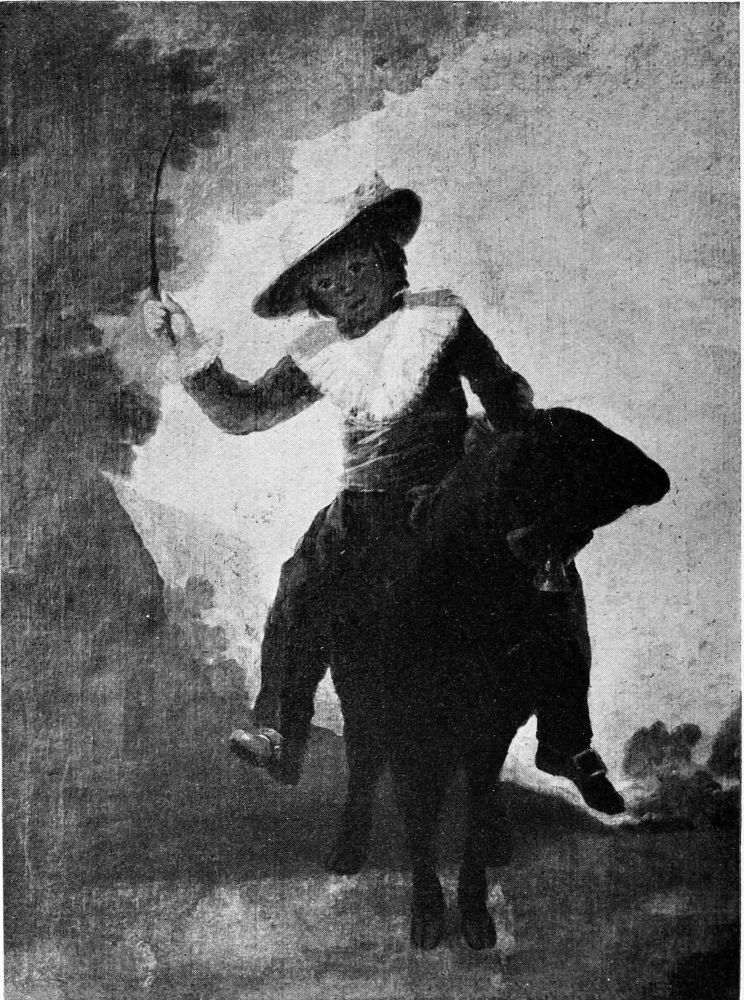
BOY ON A SHEEP: TAPESTRY CARTOON.
(Don Gabino Stuyk, Madrid.)
CAPRICES
PLATE 311.
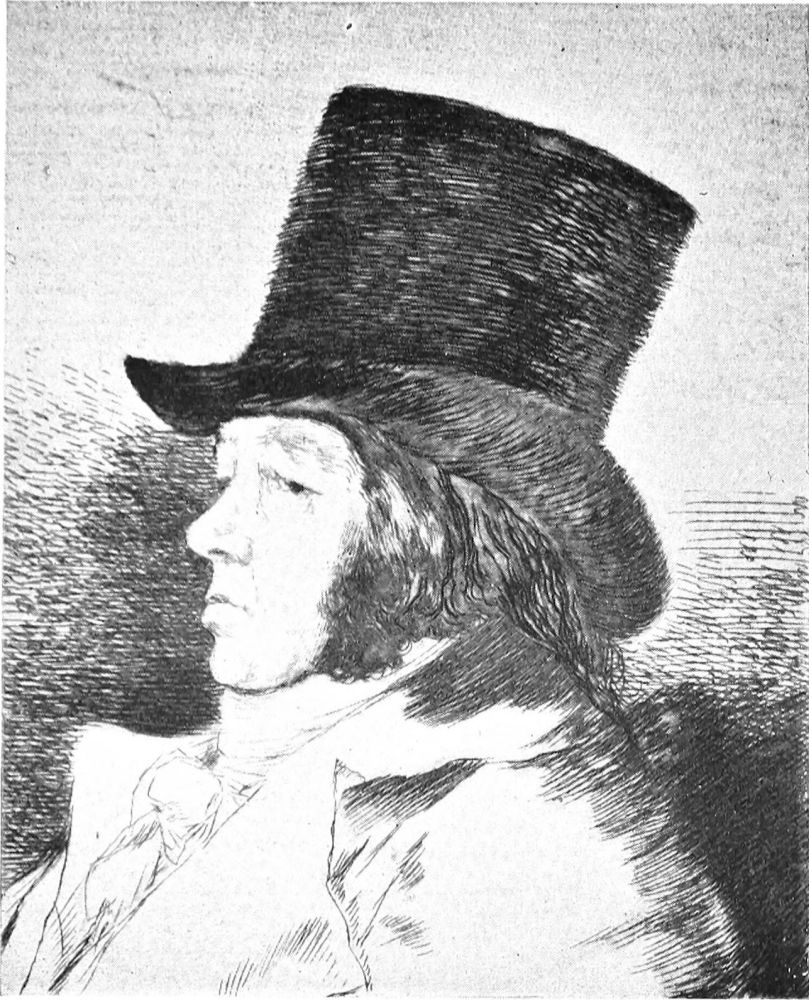
1. FRANCISCO GOYA Y LUCIENTES, PAINTER.
PLATE 312.
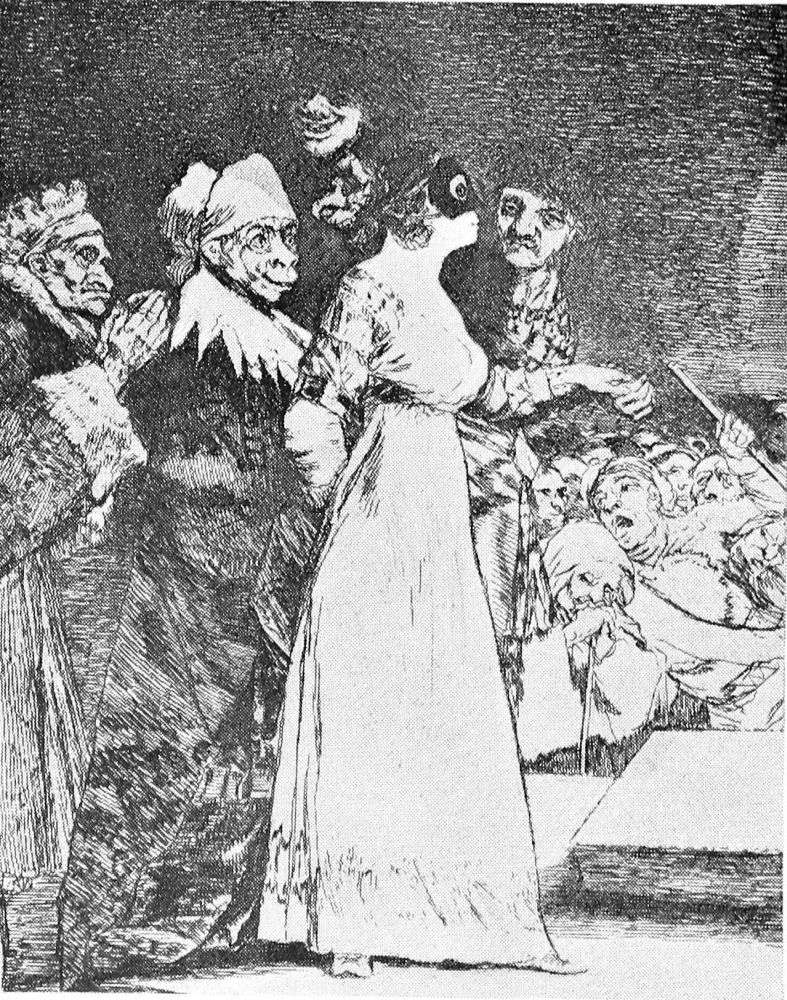
2. EL SI PRONUNCIAN.
PLATE 313.
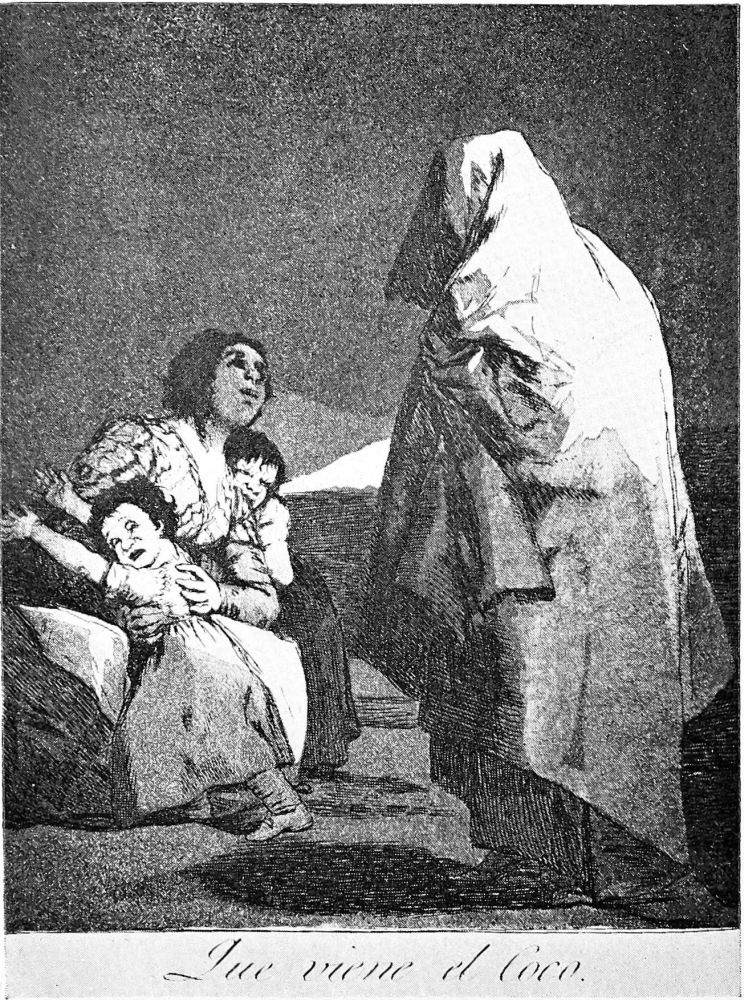
3. HERE COMES THE BOGEY!
PLATE 314.
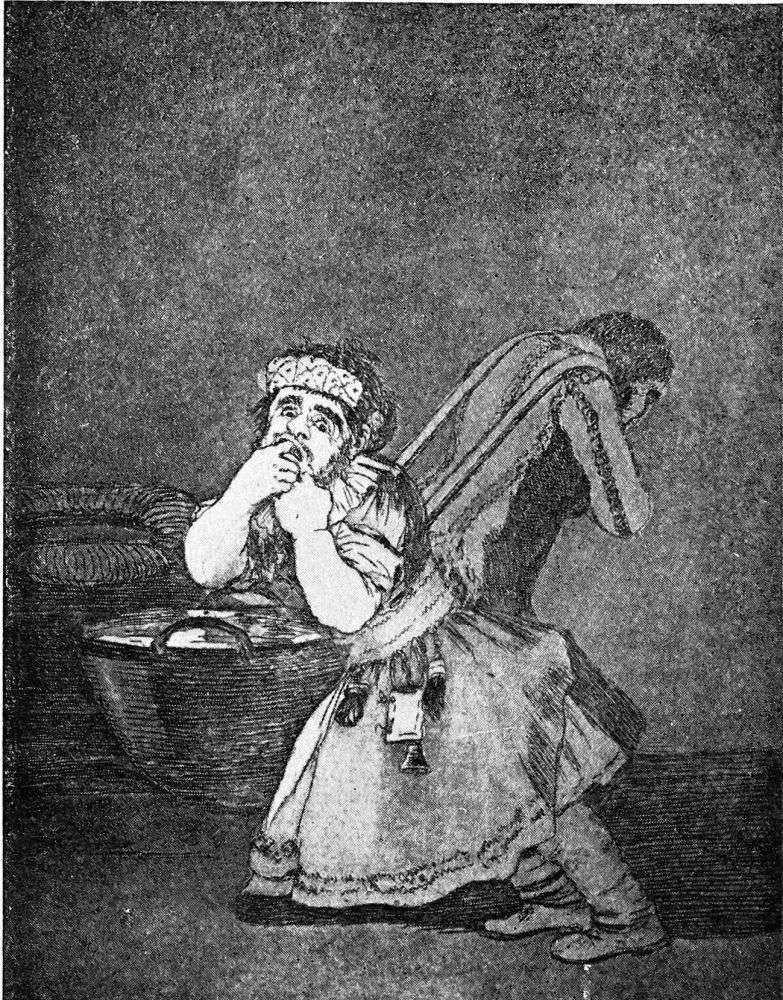
4. EL DE LA ROLLONA.
PLATE 315.
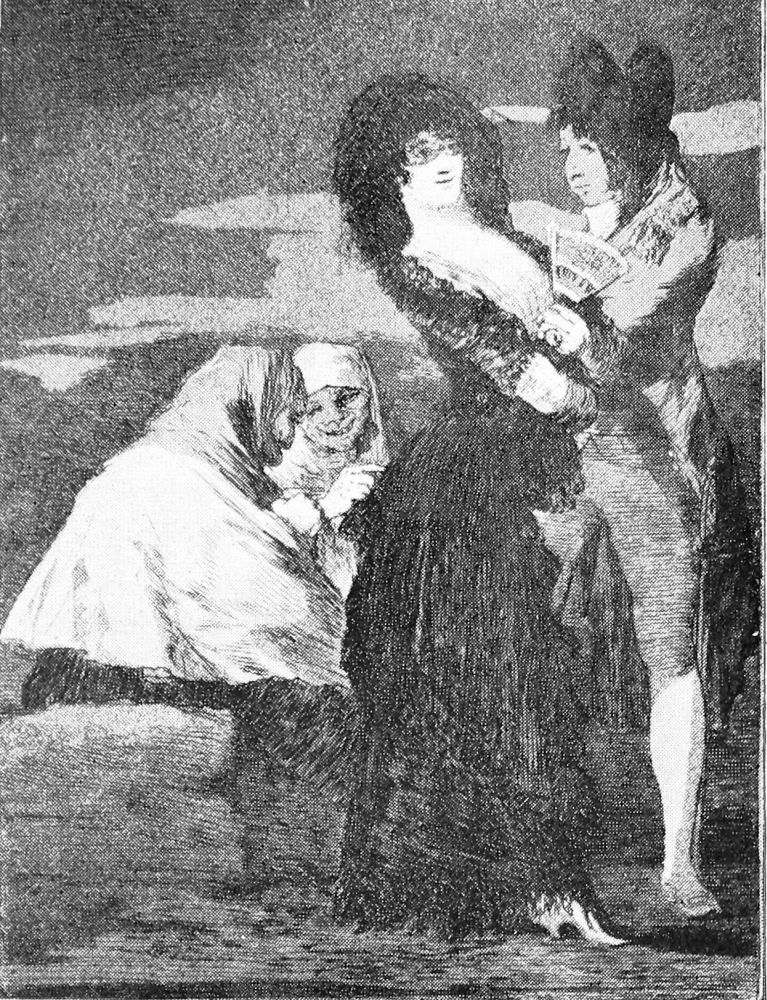
5. BIRDS OF A FEATHER.
PLATE 316.
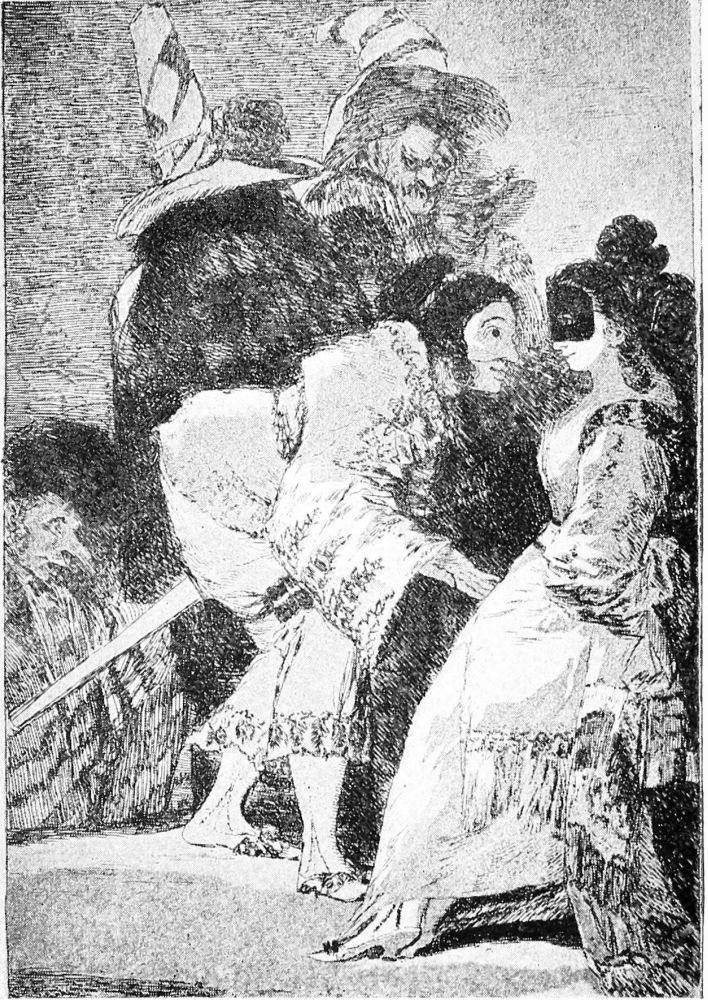
6. APPEARANCES ARE DECEPTIVE.
PLATE 317.
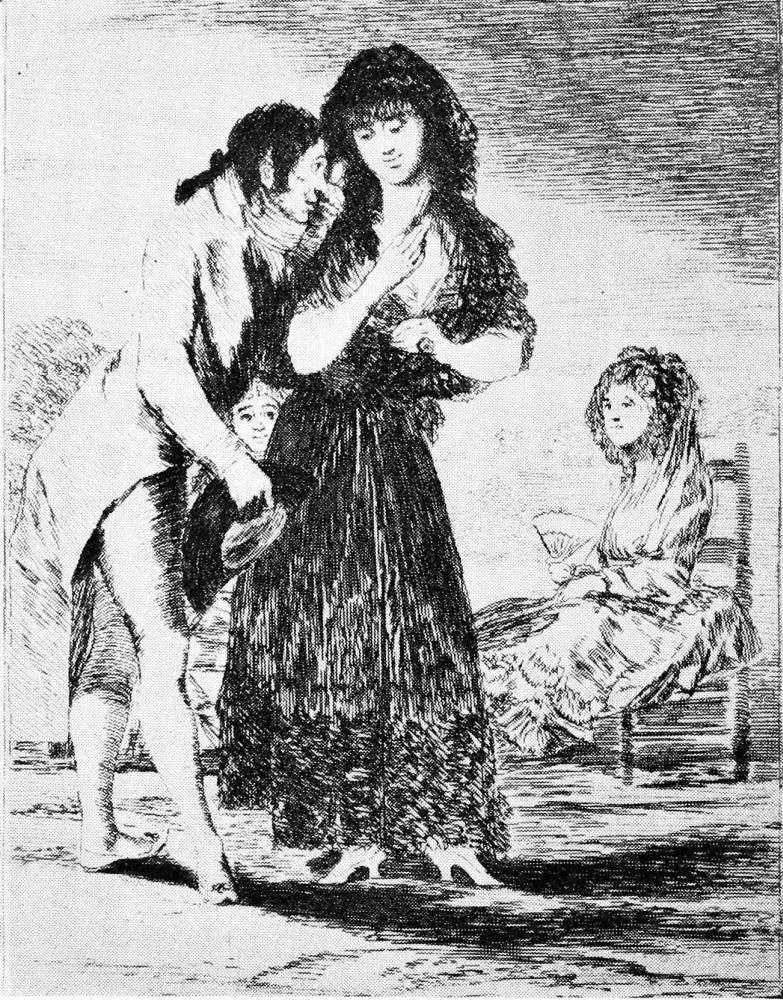
7. NOT THUS CAN HE DISTINGUISH HER.
PLATE 318.
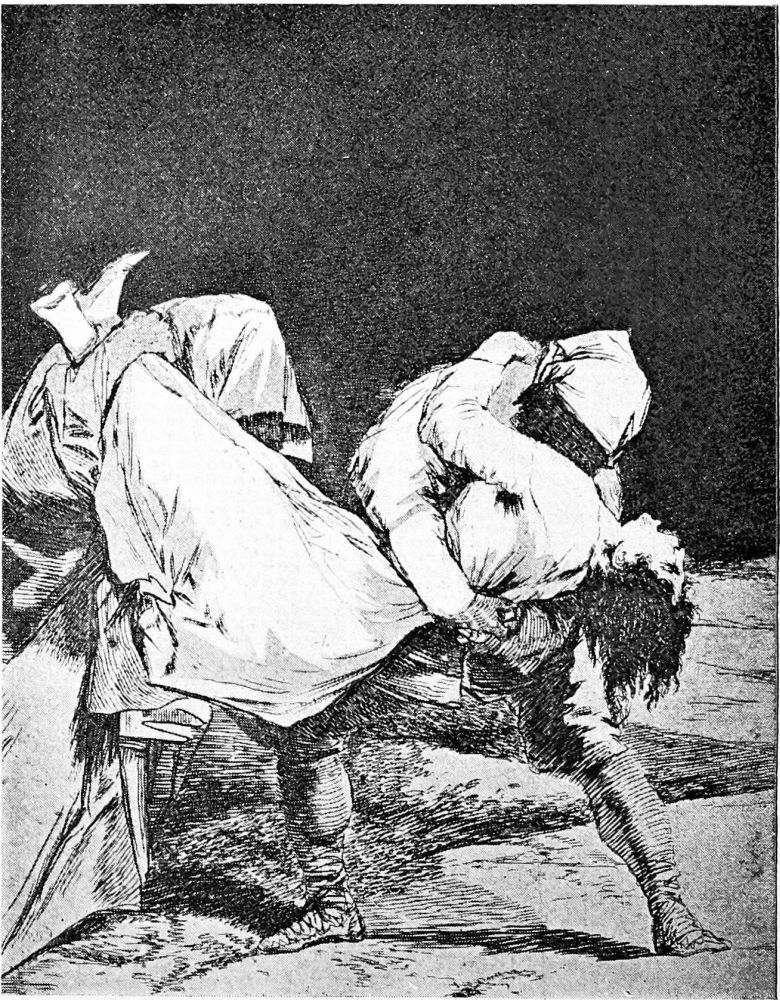
8. KIDNAPPED!
PLATE 319.
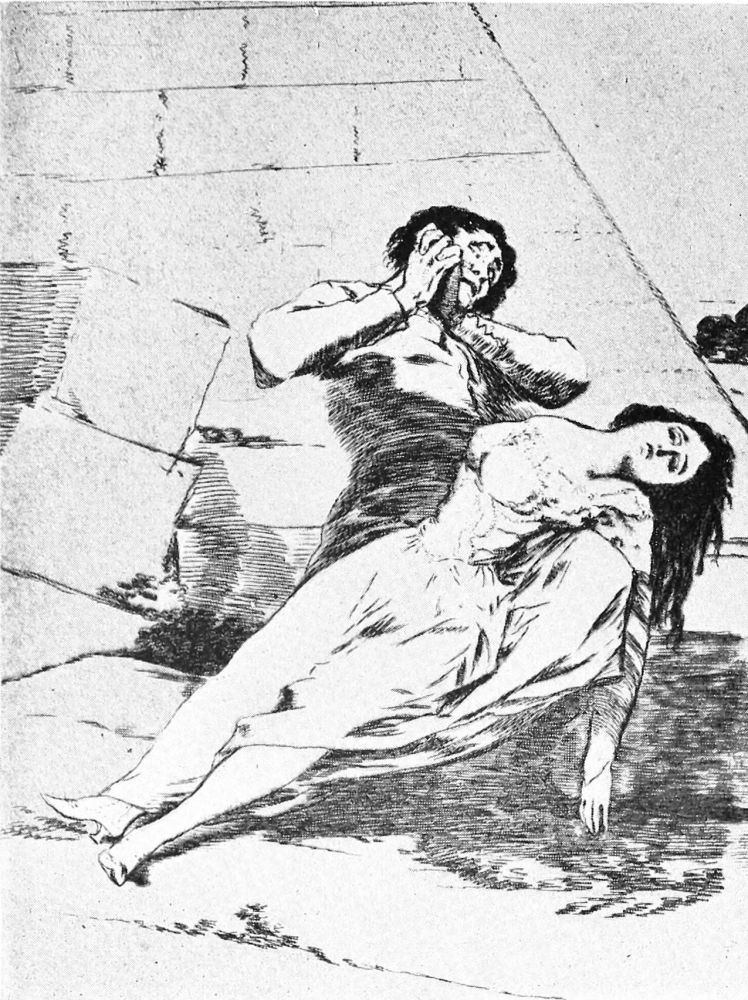
9. TANTALUS.
PLATE 320.
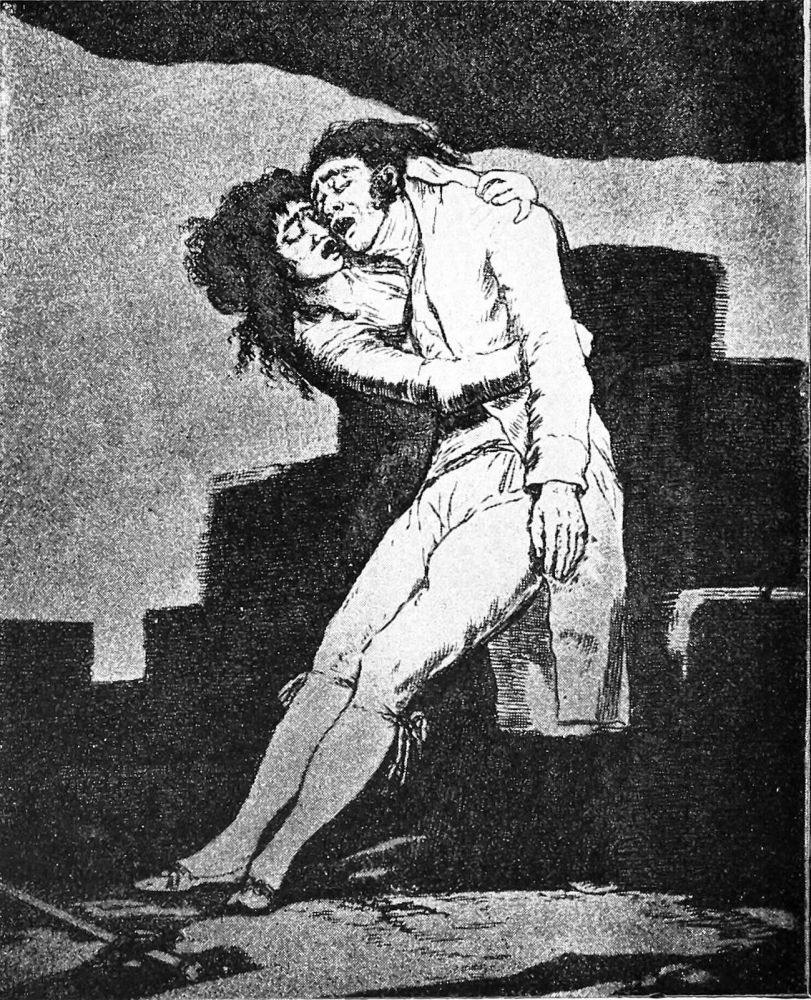
10. LOVE AND DEATH.
PLATE 321.
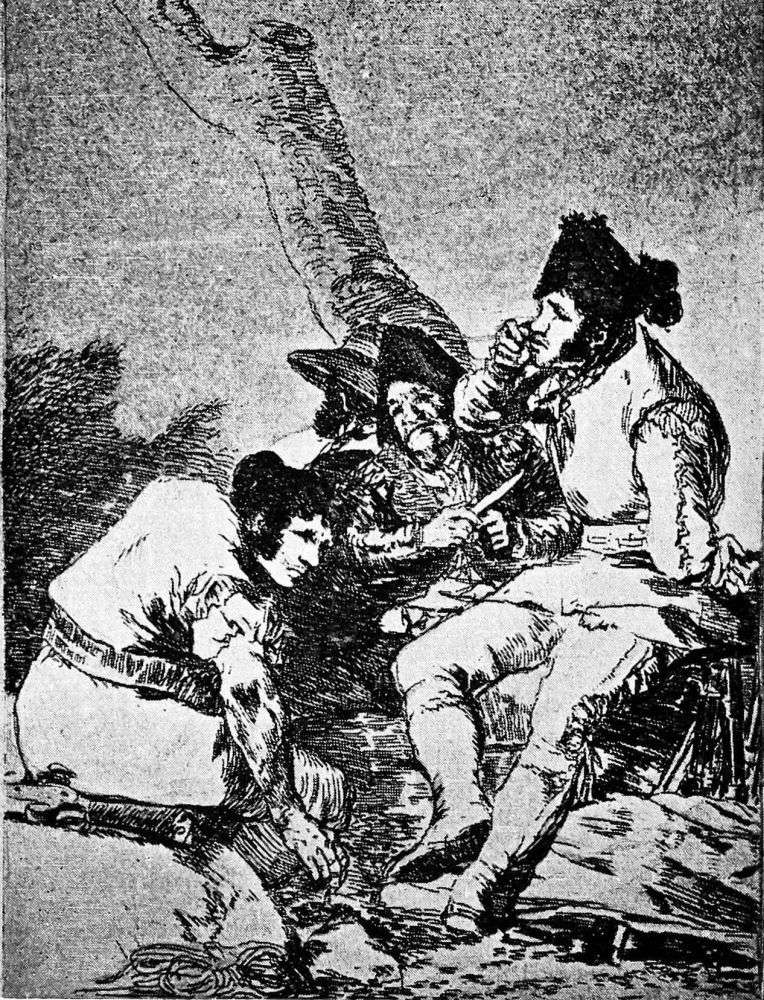
11. ANDALUSIAN BRIGANDS.
PLATE 322.
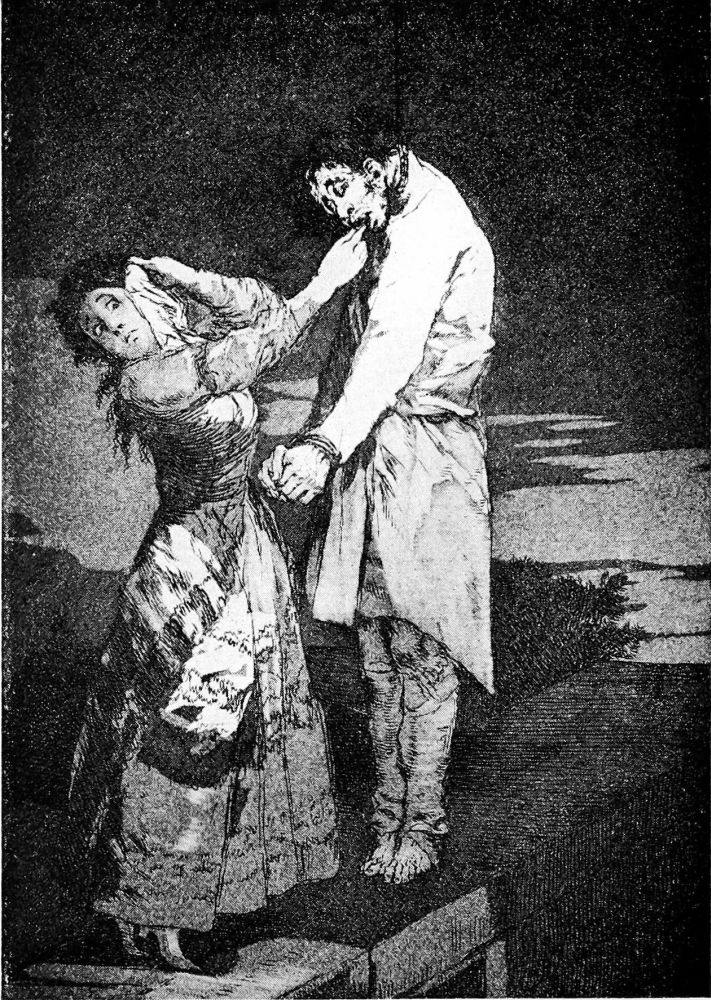
12. TOOTH-HUNTING.
PLATE 323.
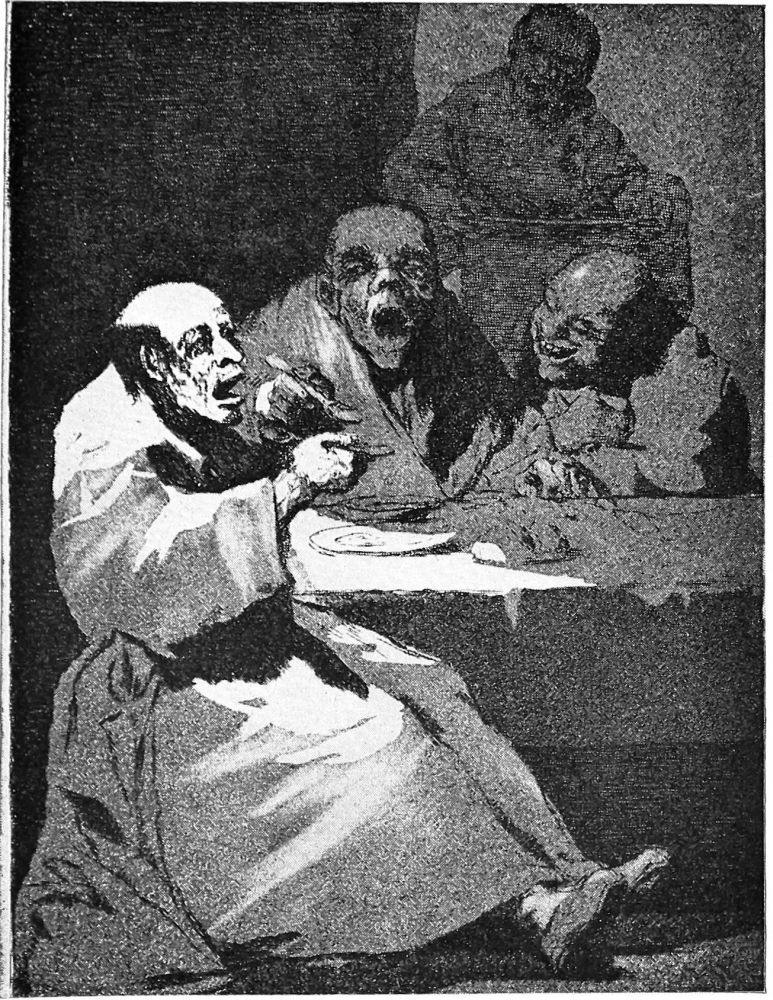
13. THEY ARE HOT!
PLATE 324.
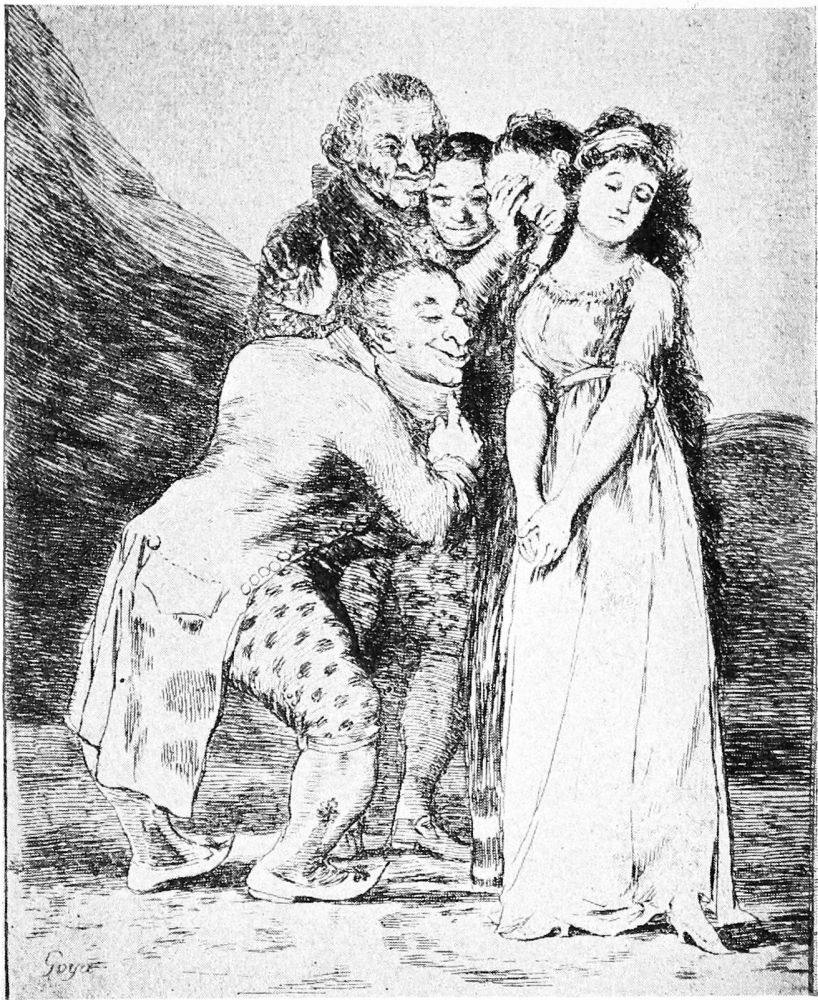
14. WHAT A SACRIFICE!
PLATE 325.
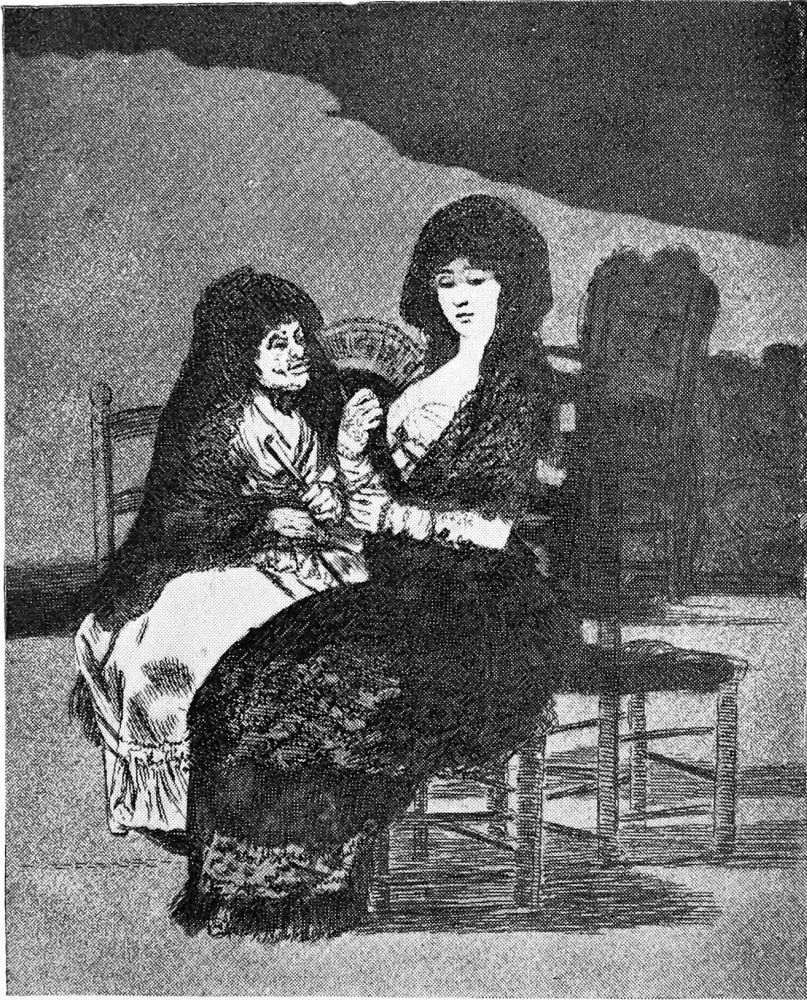
15. GOOD COUNSEL.
PLATE 326.
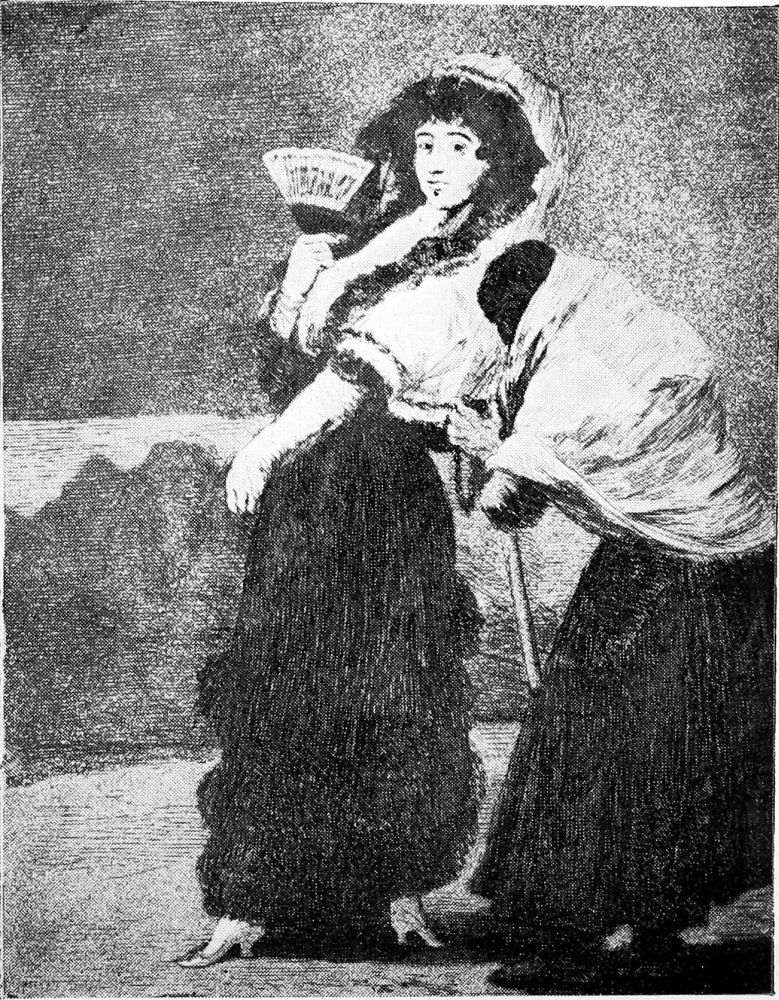
16. ‘MAY GOD PARDON HER!’
PLATE 327.
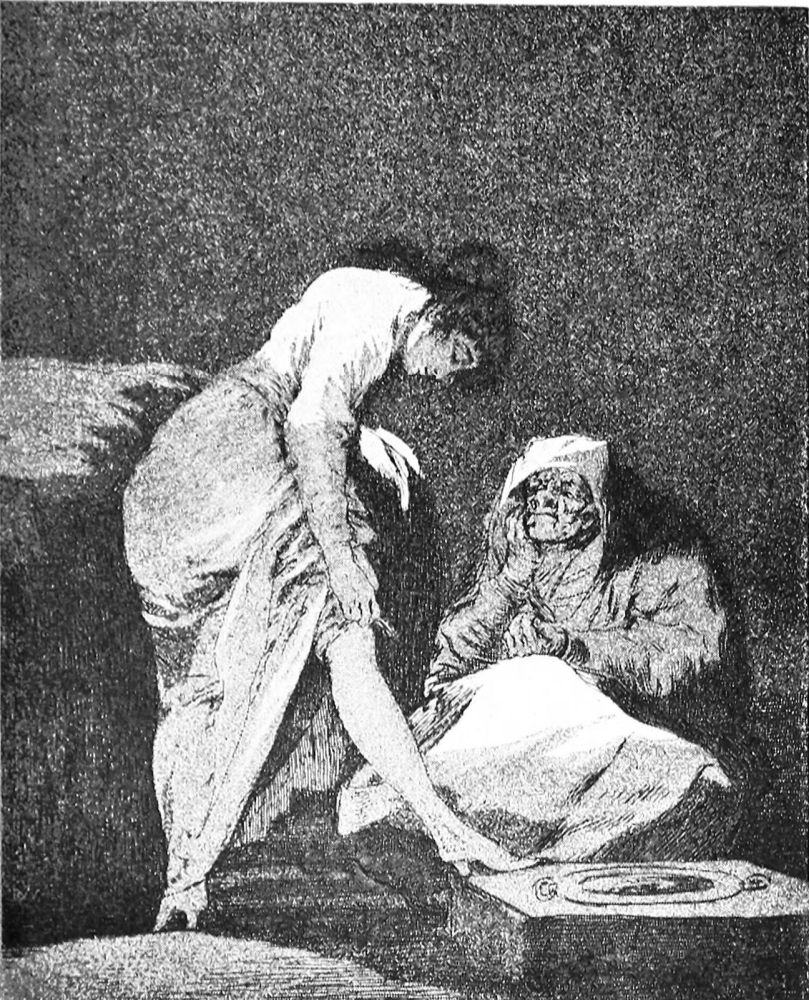
17. BIEN TIRADA ESTÁ.
PLATE 328.
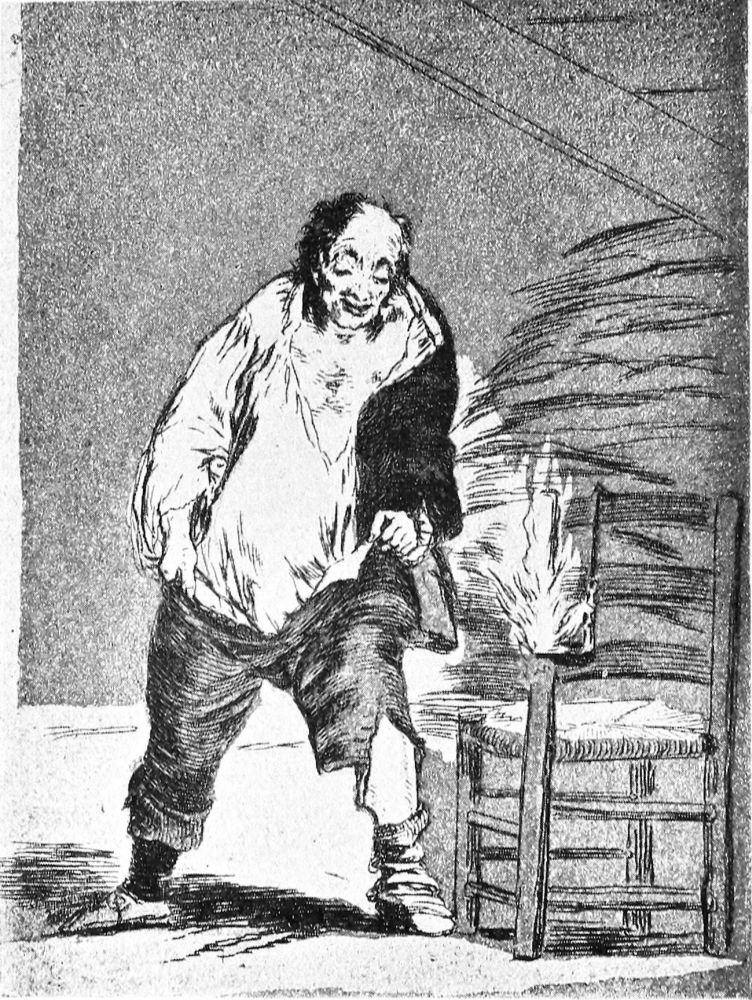
18. ‘AND HIS HOUSE IS BURNING!’
PLATE 329.
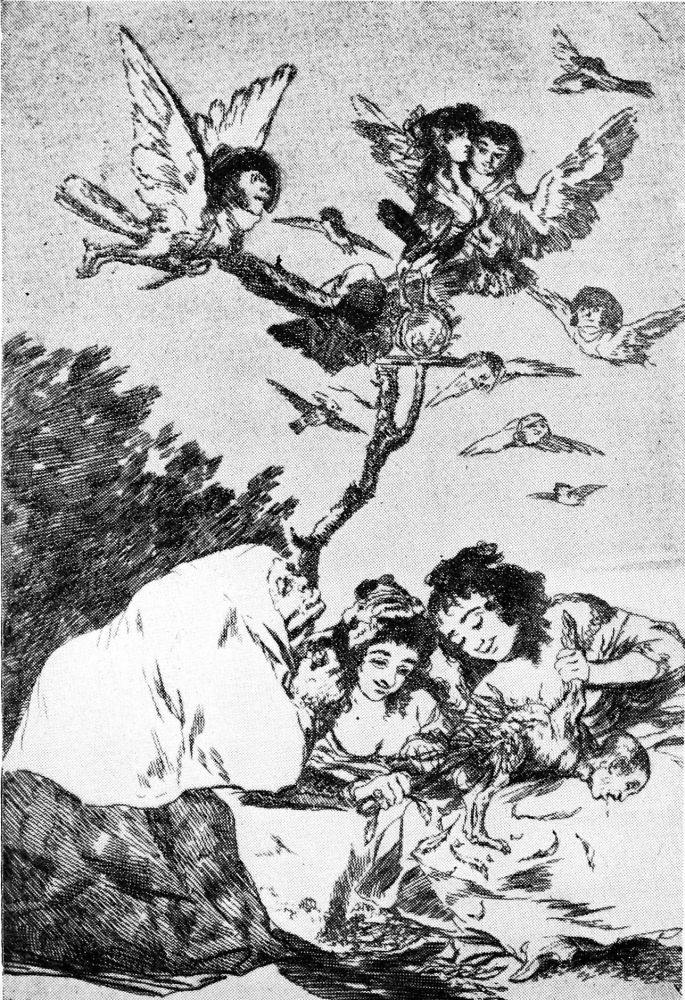
19. ‘ALL WILL FALL.’
PLATE 330.
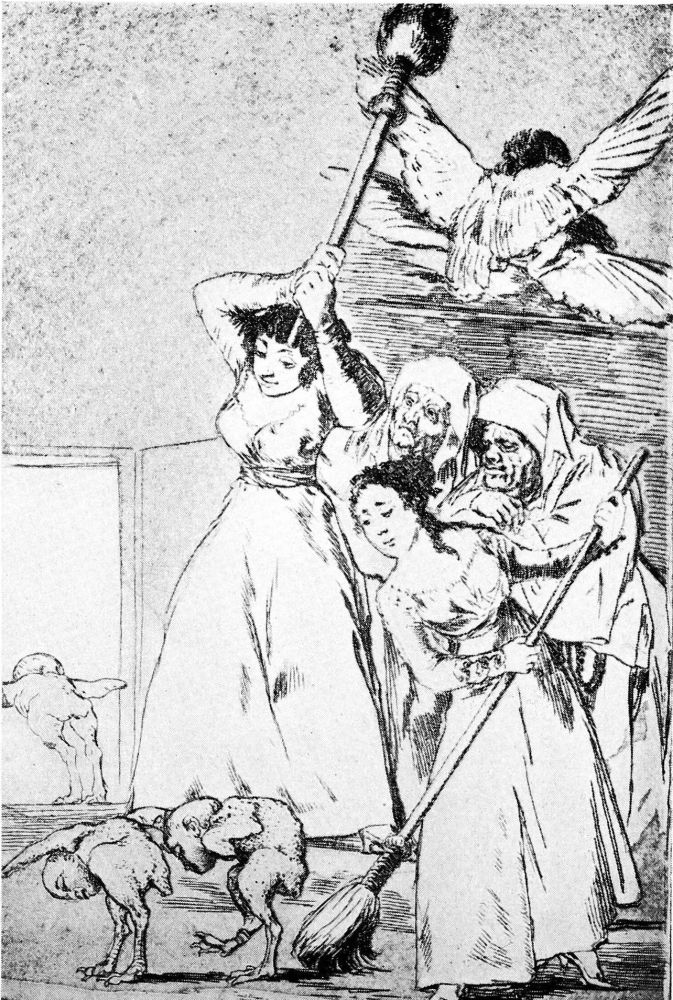
20. THEY ARE ALREADY PLUCKED.
PLATE 331.
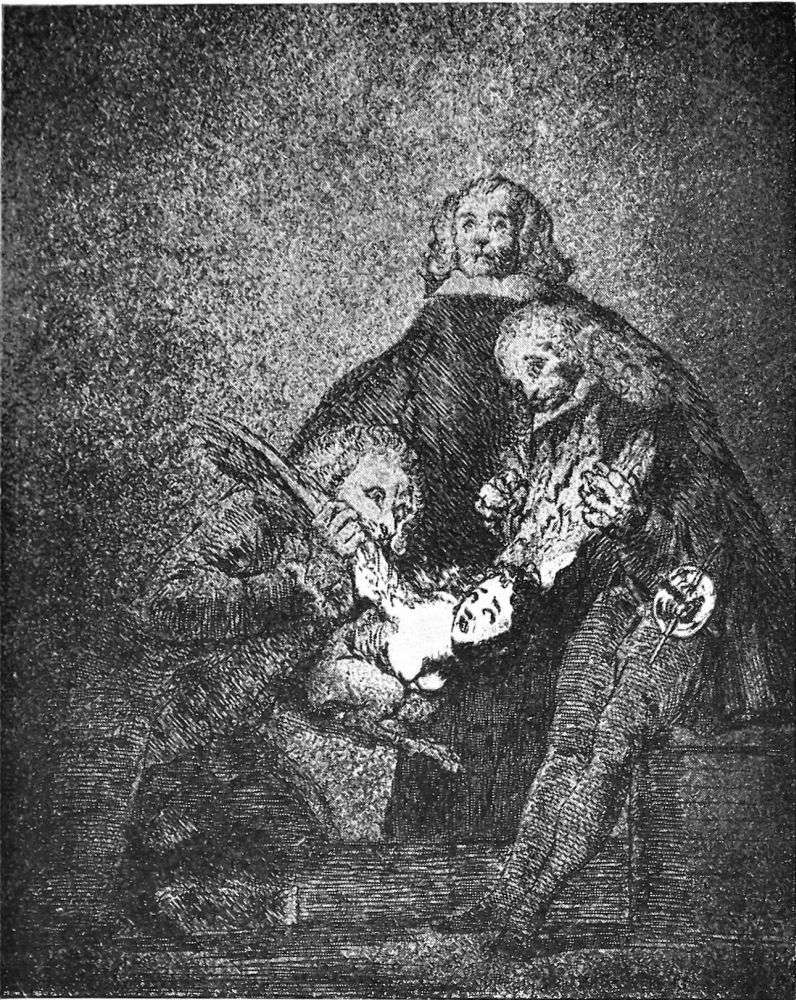
21. HOW THEY PLUCK HER!
PLATE 332.
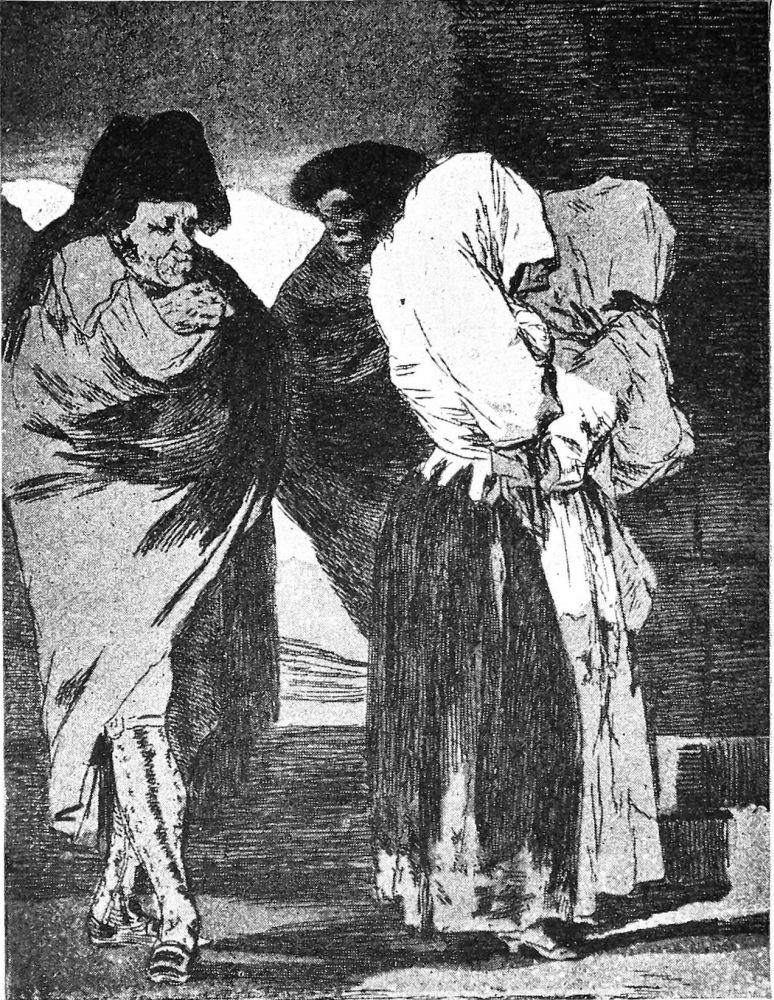
22. POOR LITTLE THINGS!
PLATE 333.
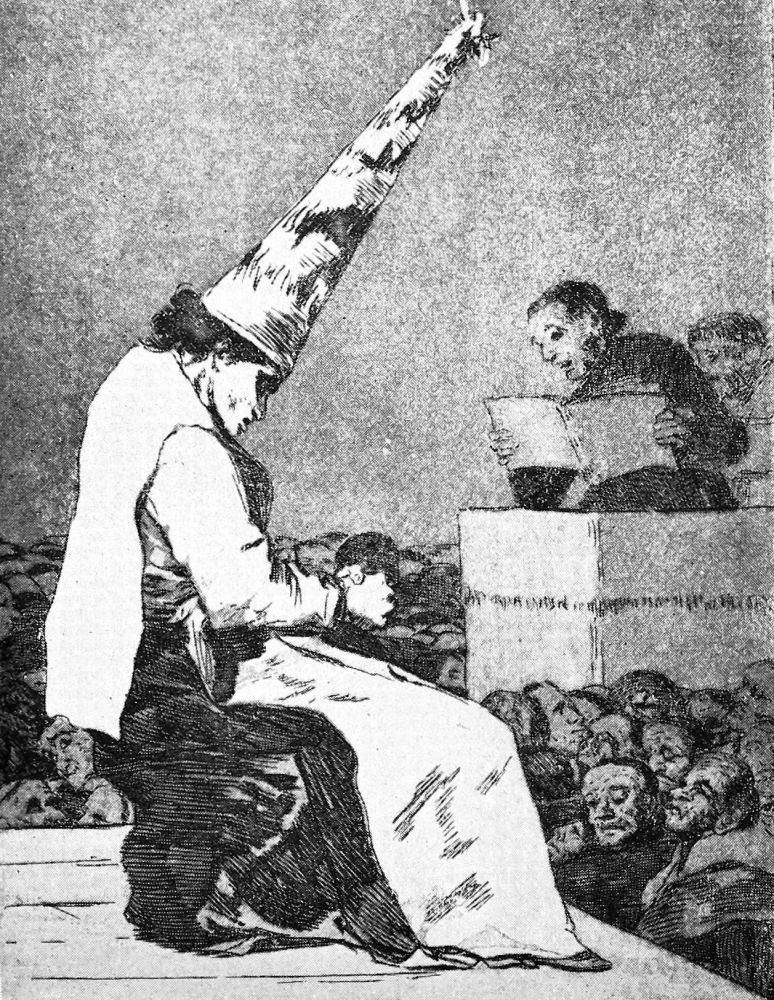
23. THIS DUST.
PLATE 334.
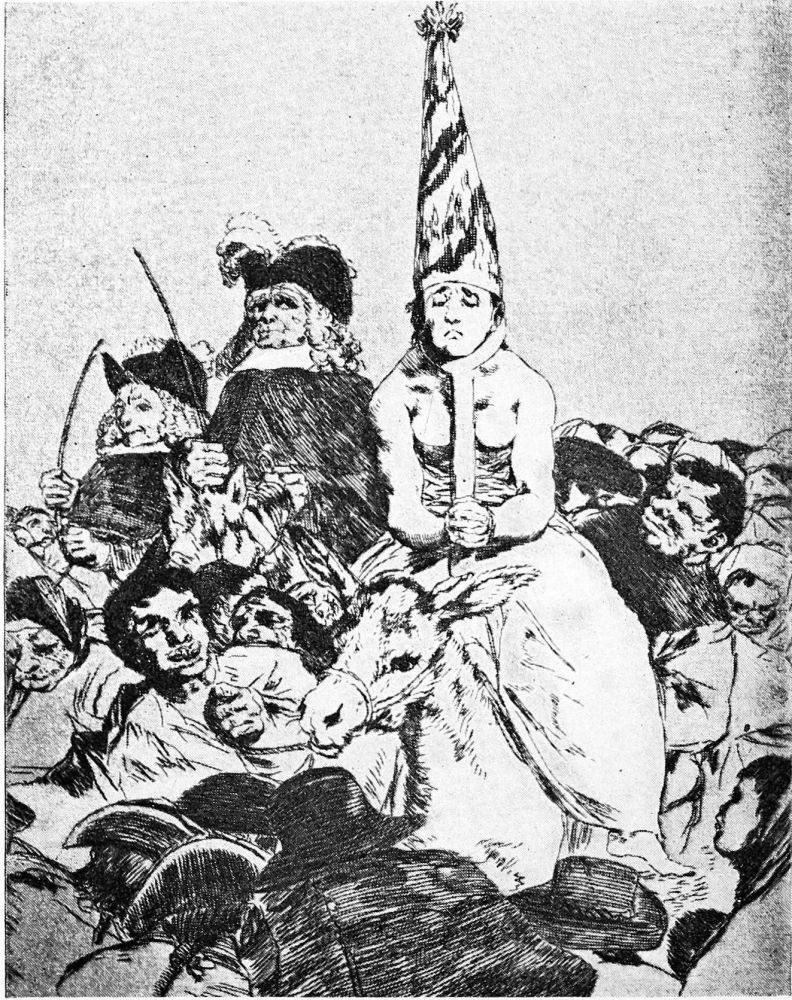
24. THERE WAS NO REMEDY.
PLATE 335.
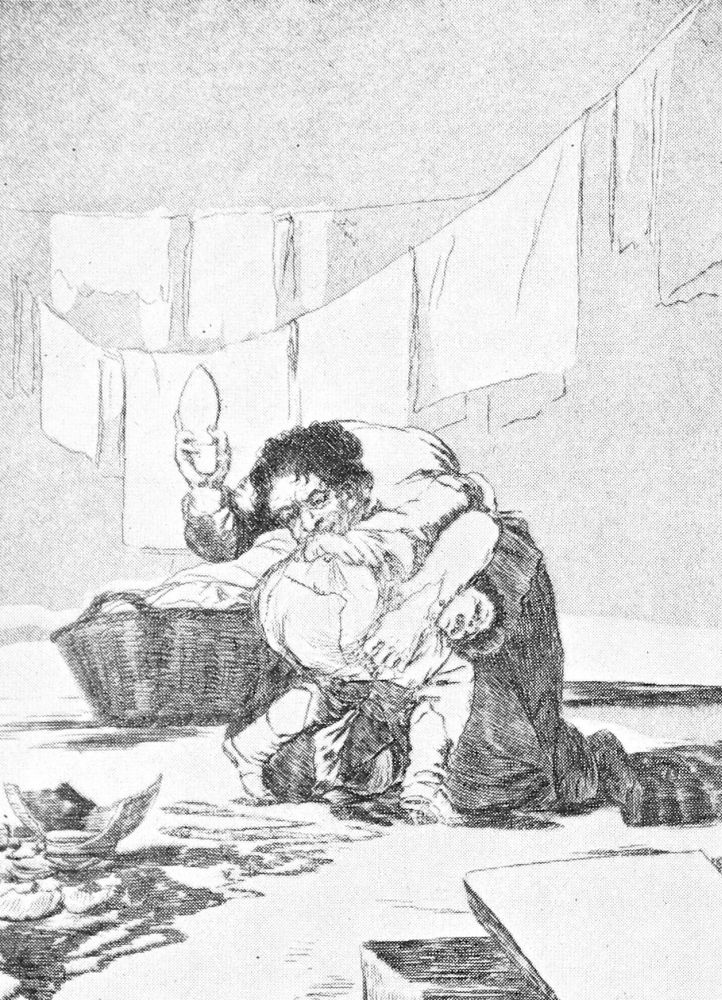
25. BECAUSE HE BROKE THE PITCHER.
PLATE 336.
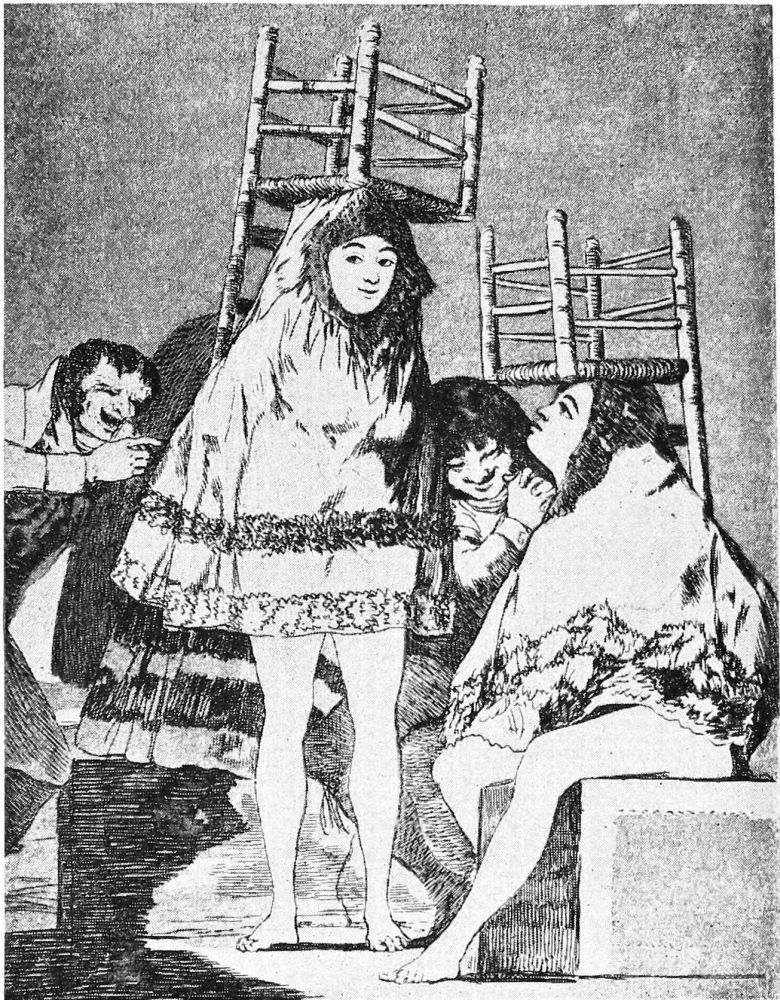
26. NOW THEY HAVE A SEAT.
PLATE 337.
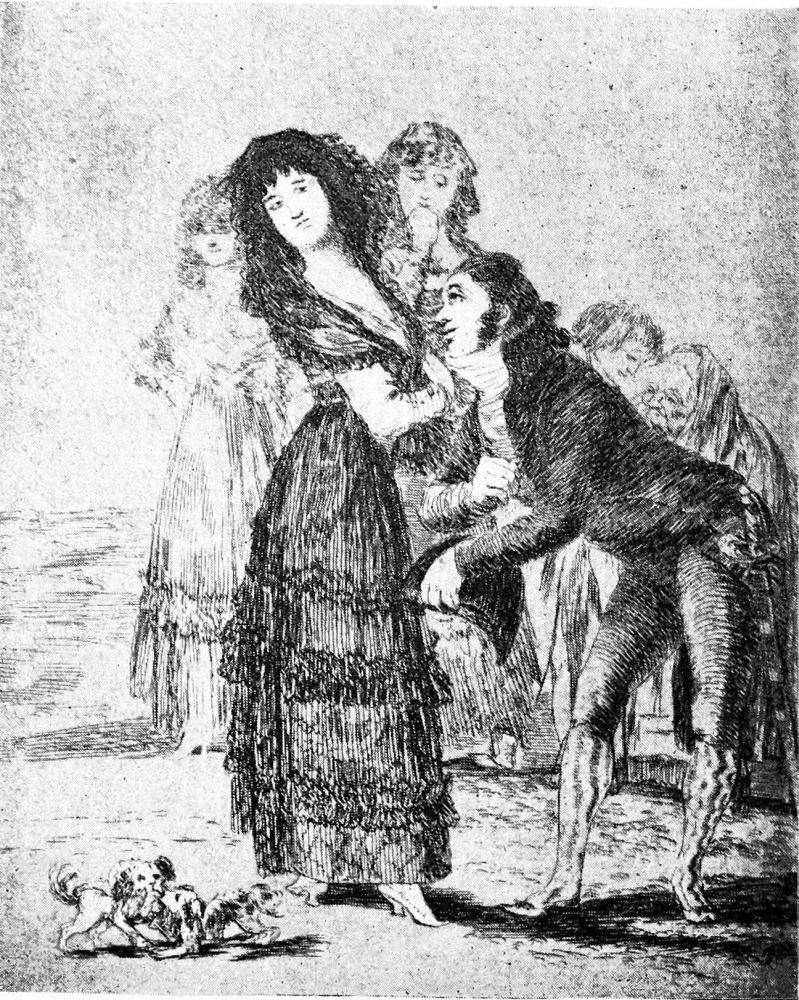
27. WHICH IS THE MORE BORED?
PLATE 338.
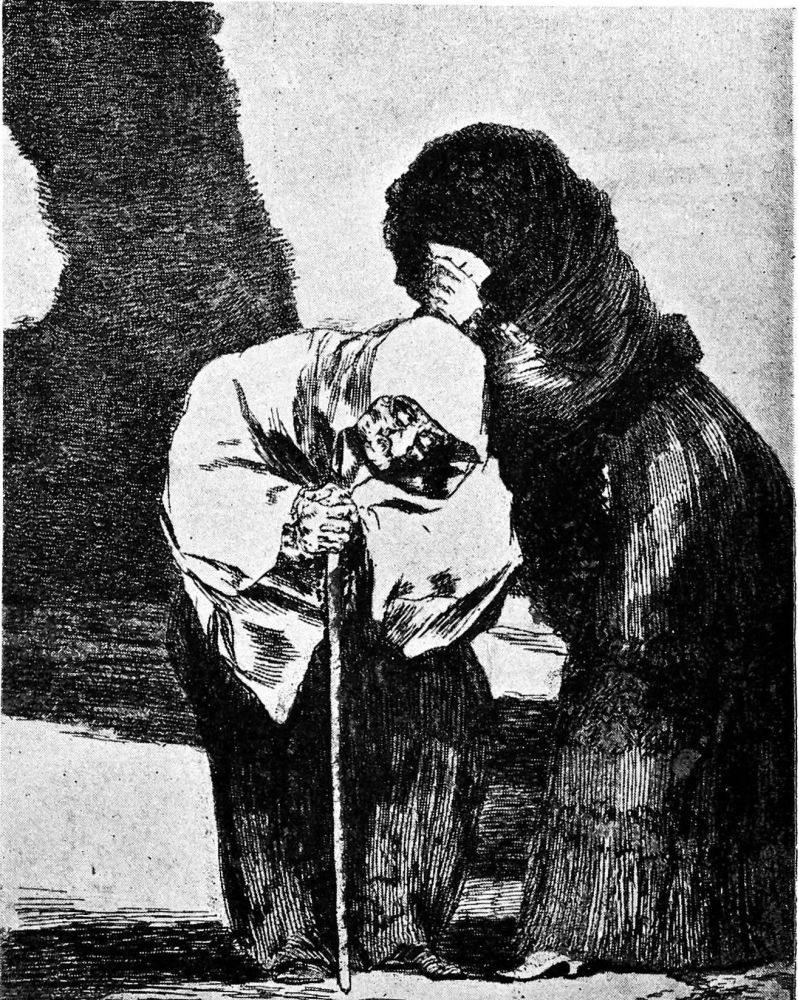
28. HUSH!
PLATE 339.
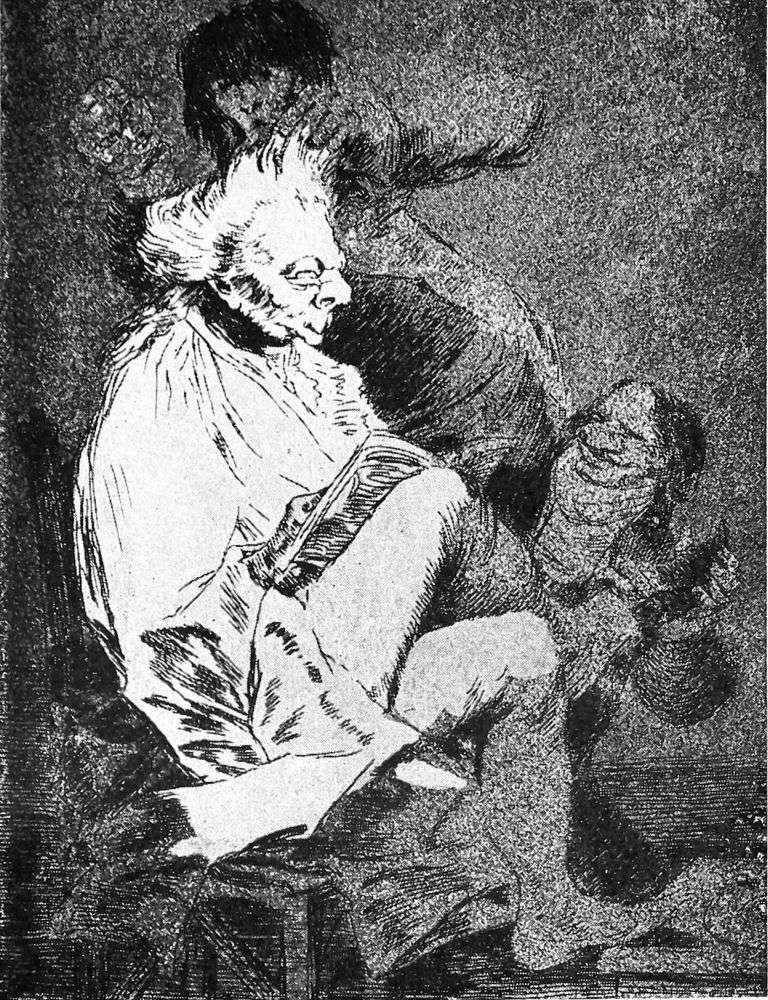
29. THIS IS WHAT HE CALLS READING.
PLATE 340.
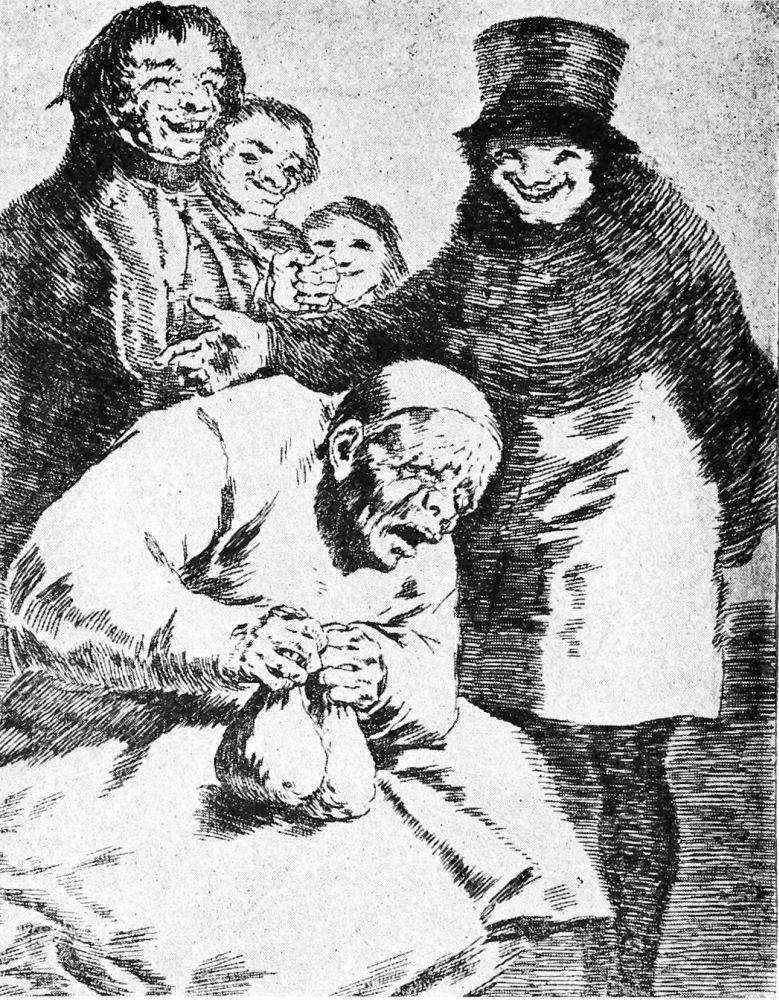
30. WHY HIDE THEM?
PLATE 341.
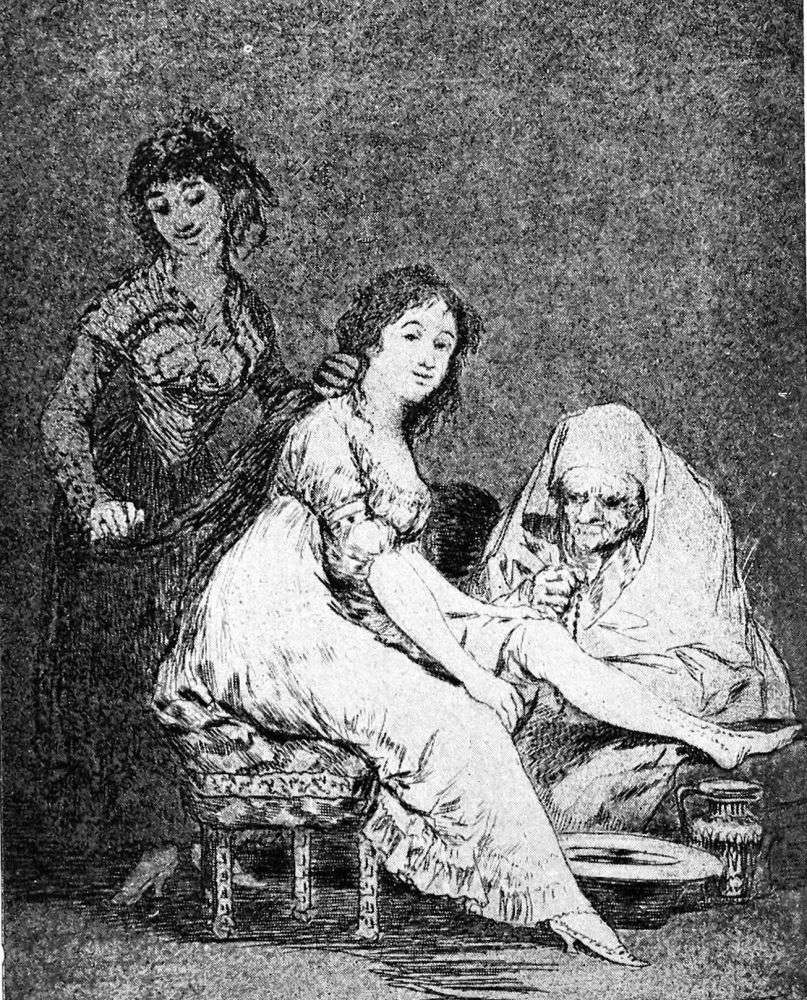
31. SHE PRAYS FOR HER.
PLATE 342.
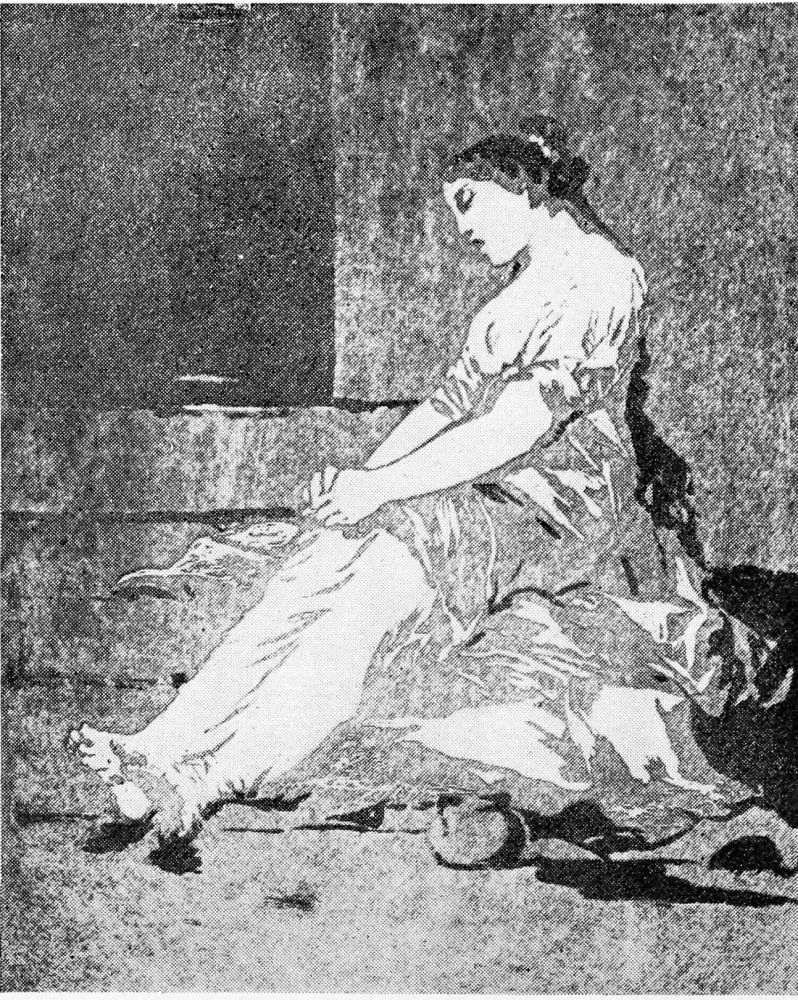
32. WHY WAS SHE SENSITIVE?
PLATE 343.
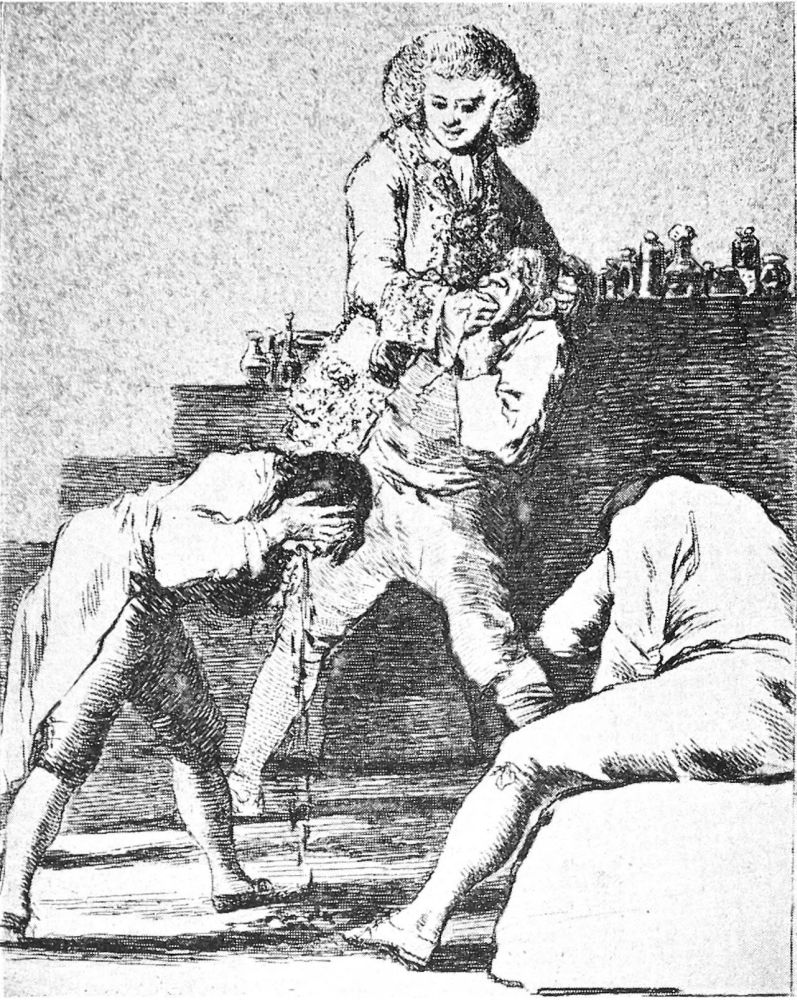
33. ‘TO THE COUNT PALATINE.’
PLATE 344.
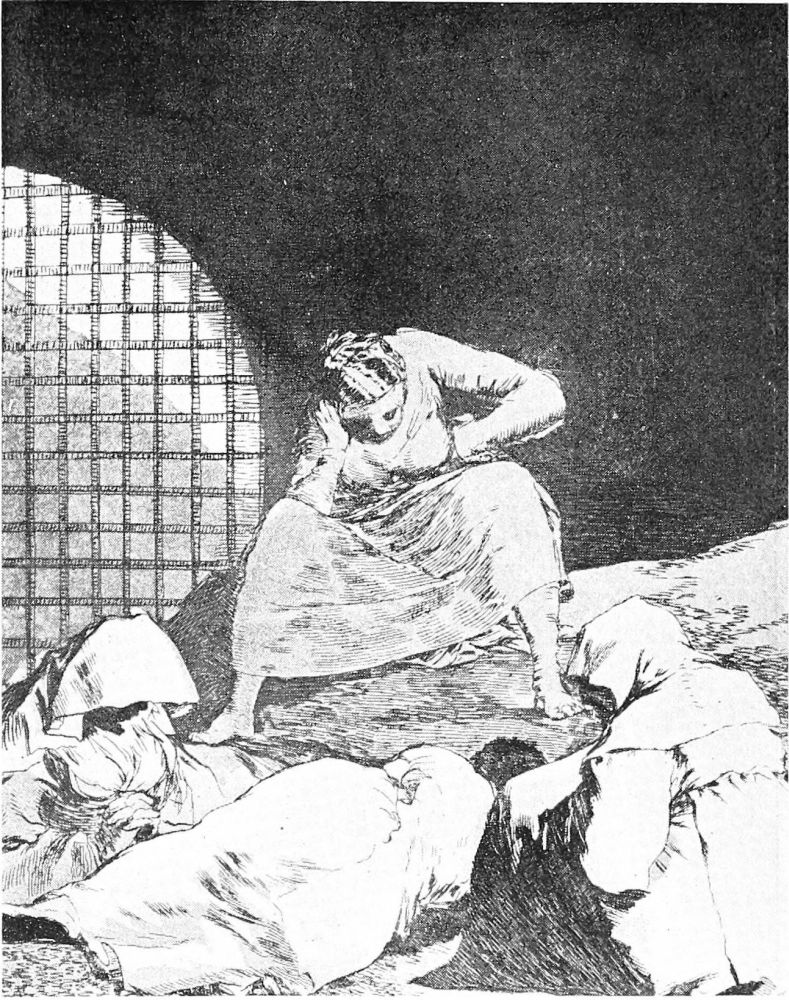
34. SLEEP CONQUERS THEM.
PLATE 345.
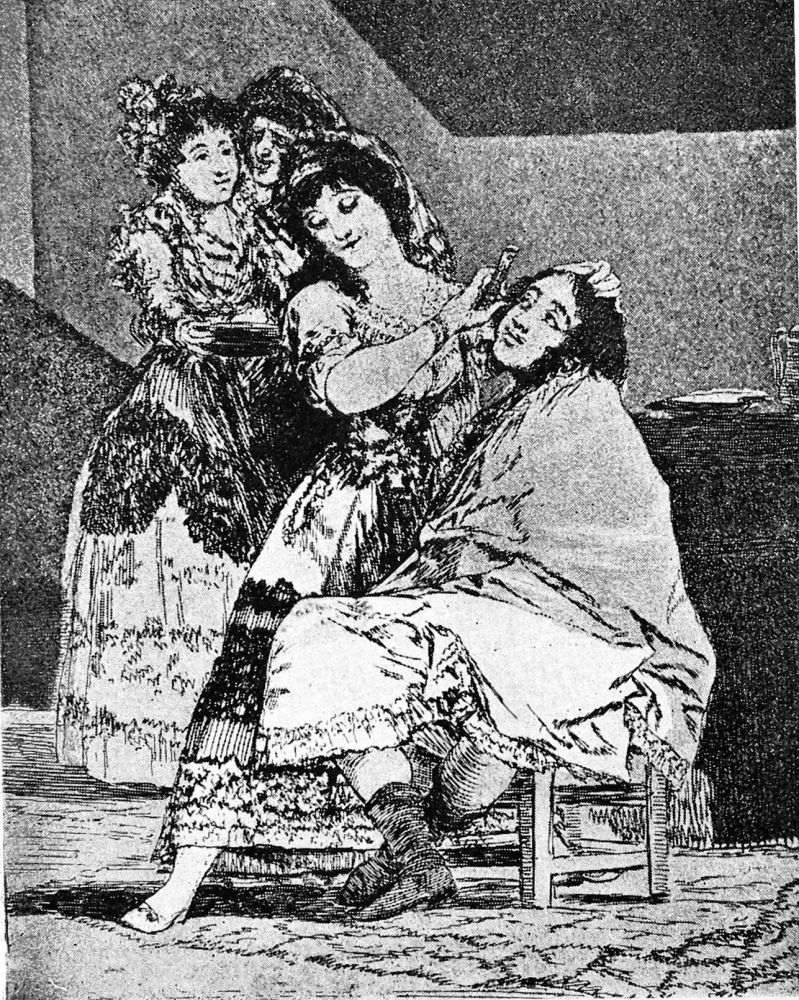
35. THEY SHAVE HIM.
PLATE 346.
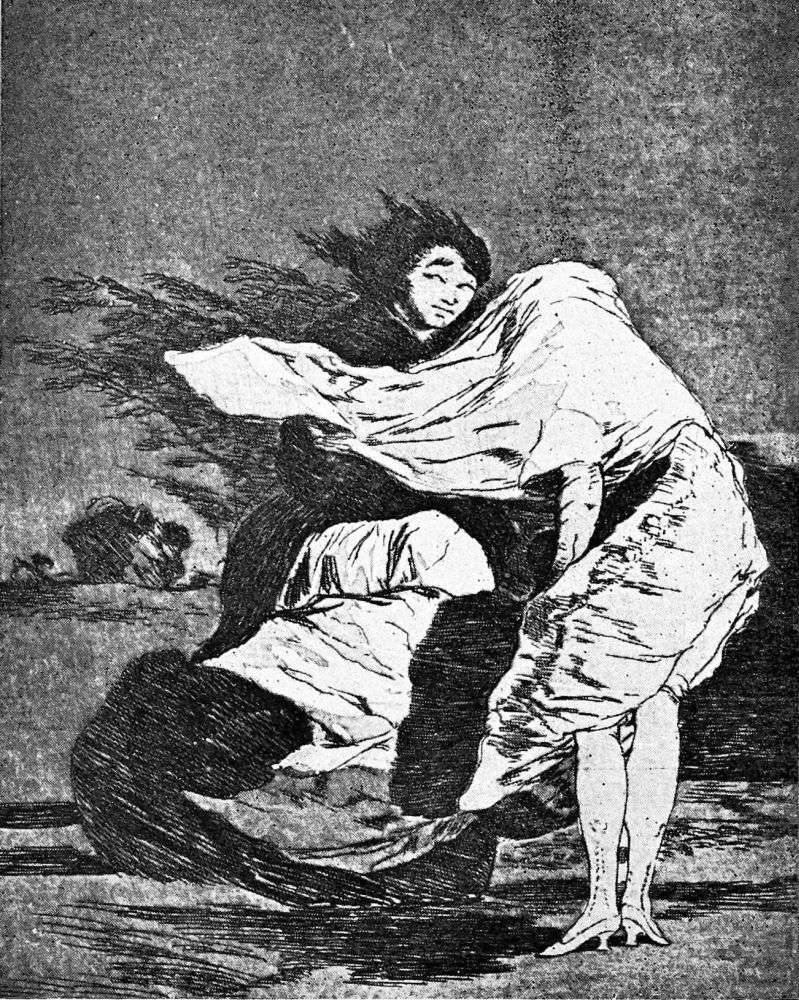
36. A BAD NIGHT.
PLATE 347.
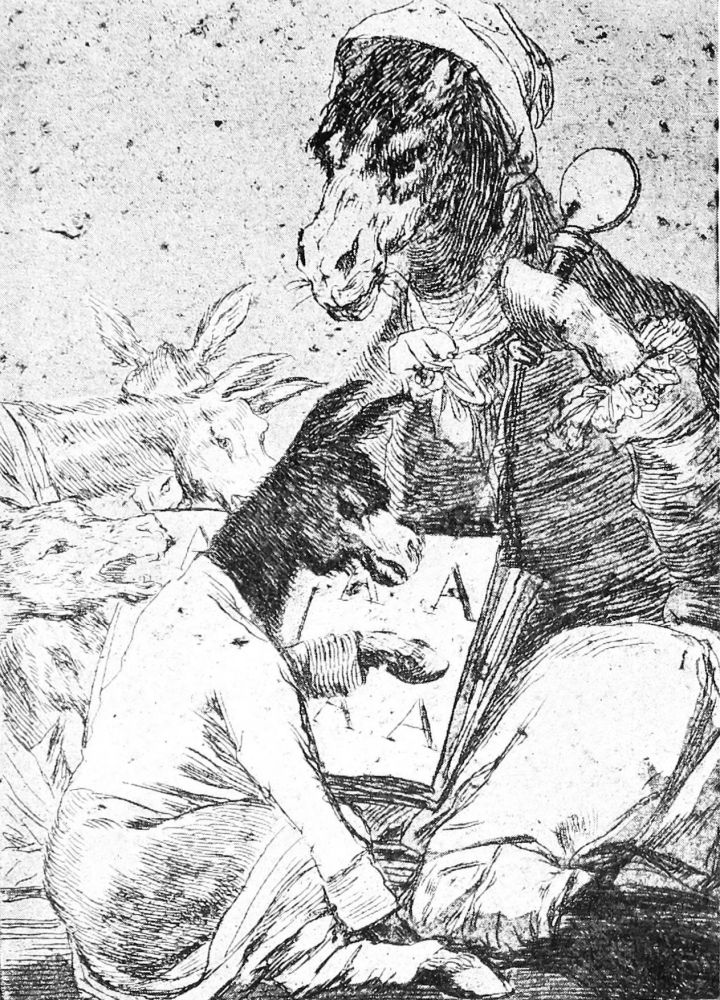
37. WILL THE PUPIL KNOW MORE THAN THE MASTER?
PLATE 348.
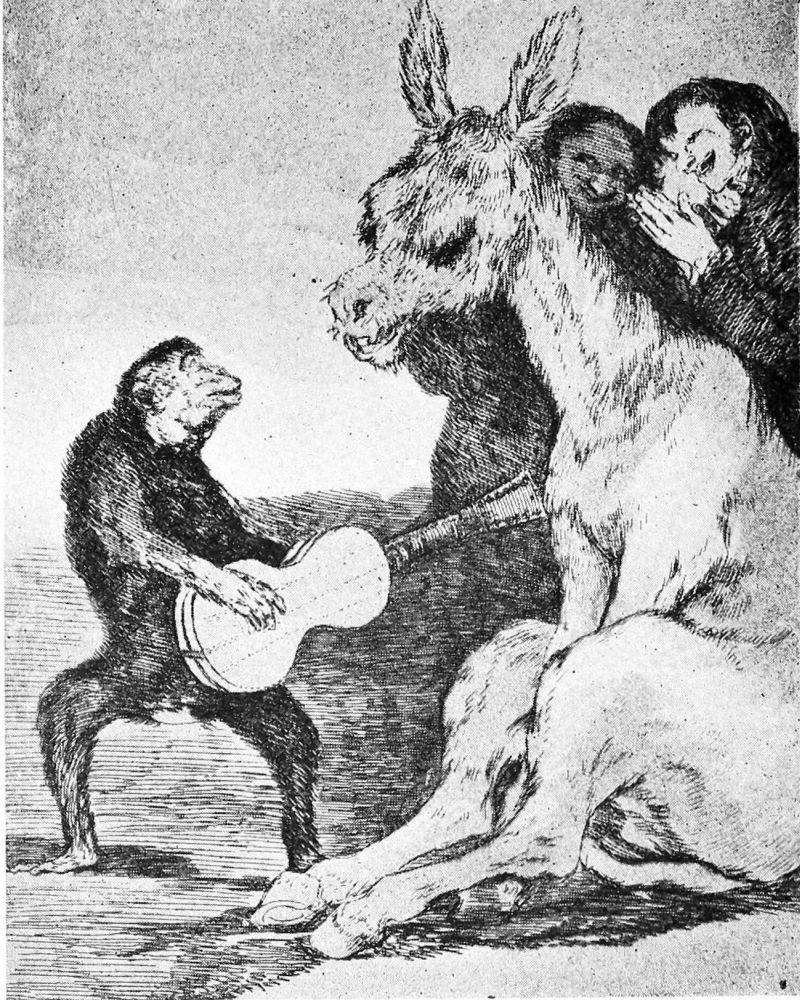
38. BRAVISSIMO!
PLATE 349.
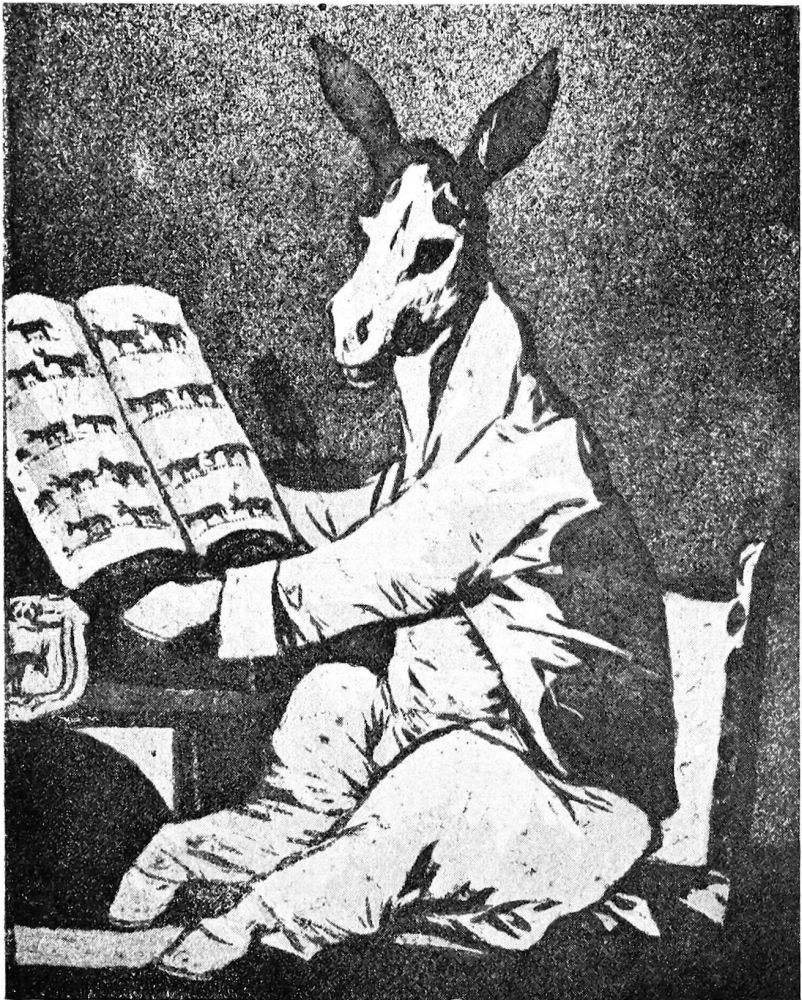
39. AS FAR AS HIS GRANDFATHER.
PLATE 350.
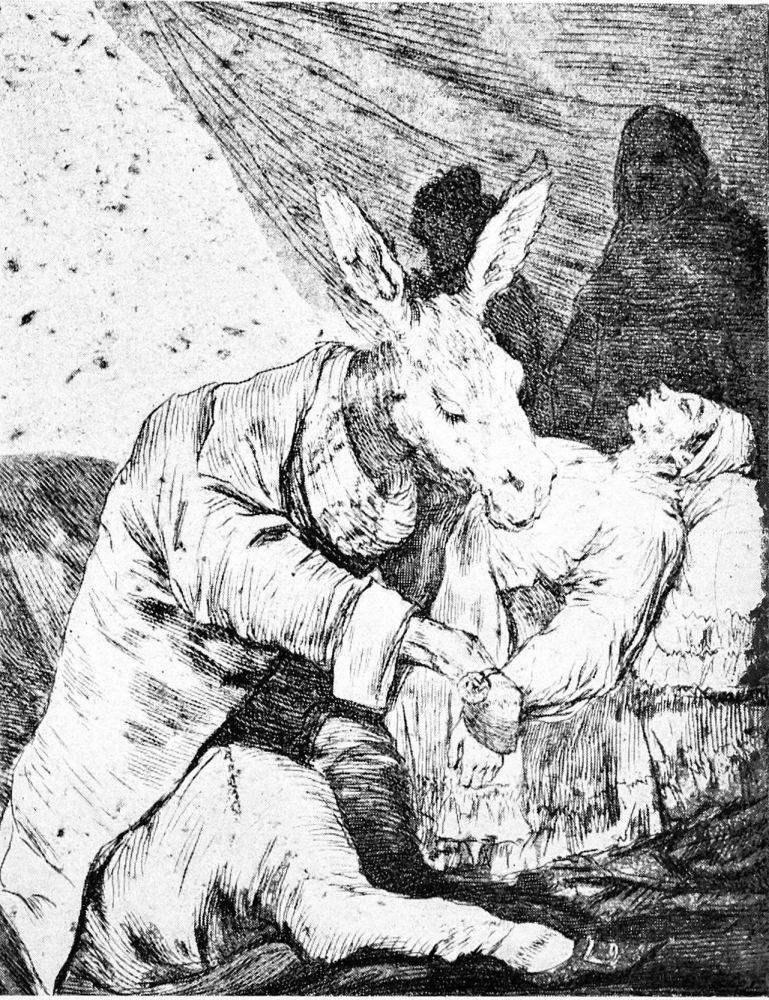
40. OF WHAT ILL WILL HE DIE?