Front matter
Reading edition
DEPARTMENT OF THE INTERIOR March 3, 1849
UNITED STATES DEPARTMENT OF THE INTERIOR
Fred A. Seaton, Secretary
NATIONAL PARK SERVICE
Conrad L. Wirth, Director
HISTORICAL HANDBOOK NUMBER EIGHTEEN
This publication is one of a series of handbooks describing the historical and archeological areas in the National Park System administered by the National Park Service of the United States Department of the Interior. It is printed by the Government Printing Office and may be purchased from the Superintendent of Documents, Washington 25, D. C. Price 25 cents.
FORT PULASKI NATIONAL MONUMENT · Georgia
by
Ralston B. Lattimore
NATIONAL PARK SERVICE HISTORICAL HANDBOOK SERIES No. 18
Washington, D.C., 1954
The National Park System, of which Fort Pulaski National Monument is a unit, is dedicated to conserving the scenic, scientific, and historic heritage of the United States for the benefit and inspiration of its people.
NATIONAL PARK SERVICE DEPARTMENT OF THE INTERIOR
Contents
COCKSPUR ISLAND, 1733-1829 1
THE NEW FORT ON COCKSPUR 4
“DON’T TREAD ON ME” 10
UNDER THE GEORGIA FLAG 14
THE GREAT EXPEDITION 17
GENERAL LEE RETURNS TO FORT PULASKI 19
INVESTMENT OF FORT PULASKI 22
THE NEW WEAPON 23
GILLMORE SETS THE STAGE 28
EVE OF BATTLE 29
BOMBARDMENT 31
SURRENDER 33
SIGNIFICANCE OF THE SIEGE 35
“THE IMMORTAL SIX HUNDRED” 38
THE LAST SALUTE 40
COCKSPUR ISLAND AFTER 1865 42
GUIDE TO THE AREA 49
HOW TO REACH THE MONUMENT 55
ADMINISTRATION 55
ABOUT YOUR VISIT 56
RELATED AREAS 56
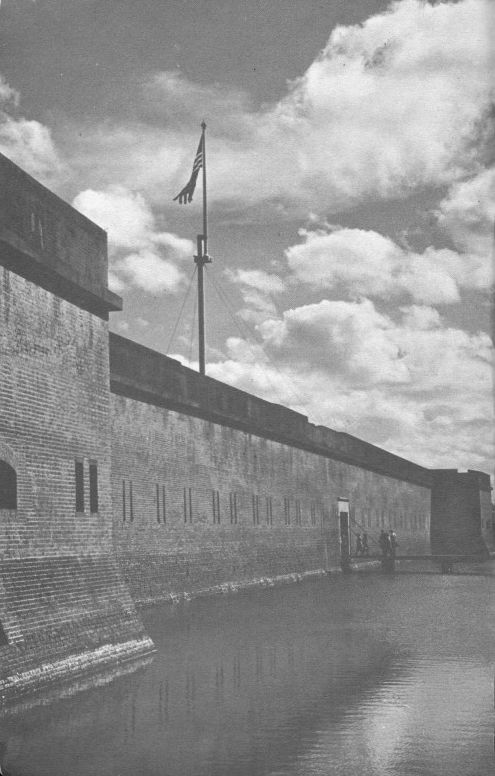
The walls and moat of Fort Pulaski, Photo by Franklin Dulany.
From the dawn of history to the present, men have labored unceasingly to surround their homes with impregnable fortifications while at the same time they have tried to discover more powerful weapons to smash through the defenses of other men. The Romans and the Chinese had their great walls; the feudal lords of the Middle Ages had their moated castles; and to modern times belong the Maginot and the Siegfried Lines and the atom bombs. In these great efforts, and countless others like them, man has confidently sought permanent security. But no man or nation has yet devised a refuge safe against new weapons and new tactics of a determined enemy. The age-old struggle between offense and defense is the principal story of Fort Pulaski.
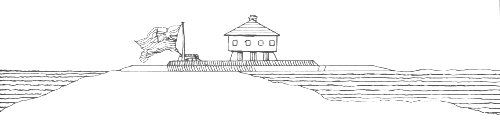
Sketch above: Fort George, 1761. From a drawing by de Brahm.