STORIES ABOUT ALL SORTS OF THINGS
Reading edition
107
NECTAR GUIDES.
The bee is always in a hurry. She flies from flower to flower as fast as she can.
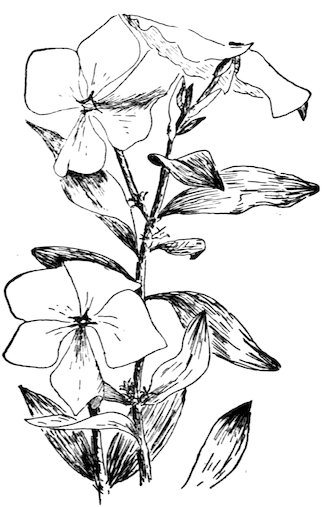
She sees the flowers far off and comes straight to them, choosing the brightest. She has learned that the bright flowers hold much honey and often have guides to the nectary, so that she does not have to hunt about, but, alighting on a flower, follows the bright guide. Sometimes it is a spot in front of the nectary and sometimes a line leading to it. It leads her at once by the shortest path to the nectar, and since she is in such haste, the nectar guides are her good friends, helping her to save time.
108
CELLS.
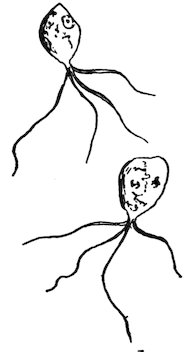
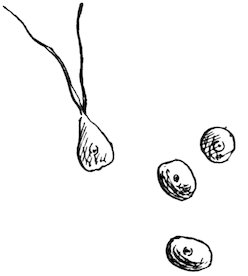
Cells are a matter of importance.
To be sure there are cells and cells, and some are much more important than others.
For instance, there are prison cells, more’s the pity, and anther cells and honeycomb cells and ovary cells and many more like them. All these are small, hollow spaces with walls around them.
But there is another kind of cell, more important than all these others put together, and they are not hollow and do not always have a wall.
Perhaps you are not very much interested in cells, but you had better be in these we are going to talk about, for they have a great deal to do with football games and dancing and going to parties and picnics. In fact, without them there could be no football and no dancing and no parties nor picnics.
All these things depend upon cells. So we may as well begin at once to find out what they are.
109These cells that we are going to talk about are alive. They are made of protoplasm. You do not know what protoplasm is? I can tell you it is time you did then, for if it had not been for protoplasm you would not be in the land of the living. The protoplasm made you; so if you are not interested in it, I think you ought to have been a cabbage or a squash or a liriodendron or some other thoughtless vegetable not expected to be interested in protoplasm.
Like a good many other interesting things, protoplasm cannot usually be seen by the naked eye; it is in such small quantities that it takes a microscope to find it. And when you have found it, so far as its looks are concerned, it would hardly seem to pay for the trouble, for to the eye it is nothing but a colorless, jelly-like substance. It looks more like the white of an egg than anything else. But remember it is not safe to judge protoplasm or people by looks alone.
Napoleon was small, and he was not handsome; yet if you had seen him, you would have seen the greatest man living in the world at that time.
So when you look at protoplasm you see something very much more wonderful than it seems. In fact, the great Napoleon himself owed his physical 110life to protoplasm, as did also Shakespeare and Plato, and every person who has ever lived, for protoplasm is the only living matter in the world.
You cannot understand that all in a minute, but you begin to see that protoplasm is rather important, and as well worth knowing about as the latest fashion in bicycles or sleeve patterns.
Sometimes a bit of protoplasm lives all by itself. It is just a little speck of colorless, jelly-like substance. Yet it can do a number of things. One little creature, which is only a bit of protoplasm, has a name much larger than itself. We call it “Amœba.”
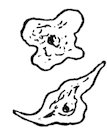
Rather a pretty name, on the whole, and very uncommon. I doubt if you know a single person by that name.
It is a name, too, that everybody ought to know.
Well, as I told you before, and shall probably tell you a great many more times, for I do not want you to forget it, the amœba is only a bit of protoplasm.
Yet it can go about. You watch it some fine day under your microscope and see it travel. It runs out a little, thin bit of its body, so and then the rest of the body sort of pulls itself up to that. In this way, by putting out little finger-like projections and drawing the rest of the body up to them, it can move quite a distance if you give it 111time enough. You can imagine so changeable a creature as the amœba can scarcely be found twice of the same shape, and how its friends recognize it is more than I can tell. Suppose you were in the habit of changing your shape whenever you moved, being long and thin one minute, short and thick another, having fourteen arms one day and none the next? How could you expect people to know you when they met you?

But perhaps the amœba has an unsocial nature and does not care whether it is recognized or not.
Because it changes its shape so often the amœba has received its pretty name. For “amœba,” you must know, comes from a Greek word meaning “change.”
It is sometimes called “Proteus” for the same reason. Of course you know all about Proteus, the sea god who lived at the bottom of the ocean and paid homage to the great god Neptune, who was ruler of the seas. Proteus took care of the sea calves, and he had a queer way of changing his shape whenever he chose. He used to go to sleep on the rocks while the calves were sunning themselves, and because he was very wise and could help people who were in trouble, they used to go there and catch him. But he was not as friendly as he was wise, and would 112never tell anything unless forced to; and when he found himself a prisoner, he would at once change his form, and so try to escape by frightening his captors. He had a pleasant habit of all at once changing into an enormous serpent and opening a mouth full of frightful teeth; then, if that did not frighten badly enough, he would all at once turn into a bull or a raging fire or a fierce torrent. He has been known to change into a dozen dreadful things in as many minutes, so no wonder his name has come to mean “something that changes.” And no wonder the amœba is called “proteus,” not that it indulges in any such outrageous transformations as the sea god, for it never does anything worse than change the shape of its own little jelly-like body.
Although it can move along, I do not think it would amount to much in a race, as it only moves a few inches in the course of a day; still that is a good deal, considering its size.
A great deal depends upon size in this world.
You could go as far in ten seconds as a snail could in as many hours. The distance would not count for much as far as you are concerned, but it would be a good day’s work for the snail. So when an amœba travels a few inches, that counts for as much in its life as a long day’s walk of a good many miles would 113in yours, or as a few hundreds of miles on a railway train.
The amœba can do more than travel. If you touch one it will shrink together, showing that this little bit of protoplasm has a sort of feeling power.
When it is hungry it eats. For an amœba can get as hungry as anybody.
Hunger does not depend upon size. You can get as hungry as an elephant, although you cannot eat as much. You would starve to death, too, as soon as an elephant, perhaps sooner. An amœba no doubt gets as hungry as you do, and it certainly would starve to death if it did not have something to eat.
How can it eat without a mouth? Just as easily as it can travel without feet. You do not know protoplasm if you think it cannot eat when it is hungry. Very likely the reason it travels about is because it wants to find something good to eat. It does not care for roast turkey and cranberry sauce, nor for apple pie and plum pudding.
That is not what it is looking for. It is looking for some tiny speck of food smaller than itself.
It lives in the water, of course. It would dry up if it were out in the air. You should think it would melt in the water? Well, it does not, any more than a jellyfish melts. When it comes to some little 114speck of dead plant or animal, or, for all I know, to some living speck small enough, it proceeds to eat it.
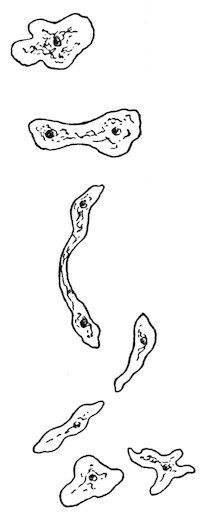
It glides over it in the way you know about, and wraps the food speck up in its body. Then it draws out all the good part of the food into its own substance and goes on, leaving behind the waste particles.
Do you not think that is a good deal for an amœba to be able to do? But it can do more than this; it can divide itself in two and make two amœbæ out of one.
The little amœba is called a “cell.” After awhile you will see why. The whole amœba is just one cell.
As to whether it is a plant or an animal you will have to ask the amœba, for I cannot tell you. Some think it is a plant and some say it is an animal.
I do not think it makes much difference which you say it is.
A bit of protoplasm living by itself is called a “cell.”
Many plants and animals have, like the amœba, only one cell. Very often the little one-celled being has a thick outside wall. The protoplasm changes 115part of the food into a hard substance, that is, it builds itself a wall.
Very often cells live together in colonies instead of living alone. In such cases, the first cell divides into two cells, but the two stay together instead of entirely separating. Then each of these two cells divides again, and the four cells stay together, and so it goes on until a large body is built up of many cells.
The truth is, plants are only collections of cells which have agreed to work together. Where there is but one cell, it has to do all sorts of work; but where there are many, some do one kind of work, some another,—just as Robinson Crusoe, living all alone on the island of Juan Fernandez, had to do all sorts of things for himself: make his own shoes and clothes, get his own food and cook it, build his own house, and gather his own wood. But in a town one set of men makes shoes, another chops wood, another raises vegetables and grain, another grinds the grain, and another bakes the bread; then they all exchange with each other, and everybody has enough—or ought to have.
So in the plant made of many cells. One set of cells makes hard walls to protect the plant. Another set draws up water from the earth for all the cells 116in the plant, for living things require a great deal of water. Another set takes gas from the air and changes it into food. Another set makes tubes for the sap to flow through. Other sets do other things. Each set of cells does something for the whole plant.
If you look at a leaf or a bit of skin from a stem under a microscope, you will see they are built up of cells, as a house is built of bricks. Only the cells are not placed regularly like the bricks in a house, and they are not solid like bricks. The walls of these cells are sometimes hard and sometimes soft, sometimes tough and sometimes tender; but the walls were all built by the protoplasm that lived in them. Sometimes the protoplasm leaves the little house it has built and goes somewhere else.
Then the empty, wall-surrounded space is left like a cell of honeycomb before the honey is put in, or an anther cell after the pollen has fallen out and left nothing in it.
Before microscopes were as perfect as they are now, these empty spaces with their surrounding walls were discovered. Even where the cells contained protoplasm the microscope was not strong enough to reveal it, so only the cell walls were seen.
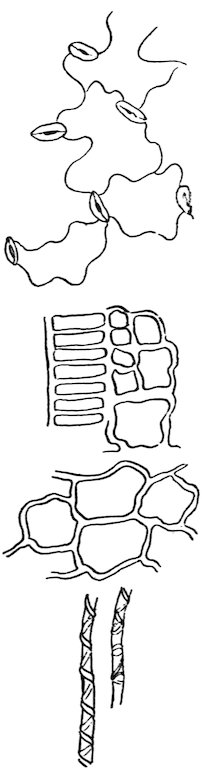
Some of the cells in one plant.
It was soon known that plants were built up of these little compartments, and because they resembled 117cells in being small and shut in by walls, they were called “cells.” After awhile it was discovered that the living part of the plant was the colorless, jelly-like protoplasm which lived in the cells. Yet later, particles of wall-less protoplasm were found building up plants and animals. What were these soft little protoplasmic atoms to be called?
The plant was really built up by them, and only part of them had walls, so they were called by the name the people had already given to the walled spaces which they supposed built up the plant, and so got the name of “cells,” which is not at all an appropriate name.
There is nothing quite so easy as to be mistaken, you see, and the botanists, having seen that the plant was built of little compartments, and never suspecting the presence of the living protoplasm lurking in some of them, had called the compartments “cells”; later, when the protoplasm was discovered to be the real builder, the old name was kept. So you see how the amœba came to be called a “cell.”
There are a great many different kinds of cells in one plant.
118But every living cell has very much the same powers as the amœba, though in many of them some one power is developed at the expense of all the rest. In this way different sets of cells are able to perform different kinds of work, and do it very well indeed.
The amœba is not the only single-celled creature. There are a great many different kinds of single-celled plants or animals, and some of them take very curious and beautiful forms, with streamers floating about them.
Such are not protean, like the amœba; they do not change their shapes.
Plants are not the only things that have cells. Animals, too, are built up of them. Animal cells are usually softer than plant cells, because they very often have no hard walls. Bone cells of course have hard walls, and there are others, but most of the animal cells are without walls.
So you see all living things are built of cells, and the living part of the cells is the protoplasm.
You yourself are built up of millions of cells, and without the help of protoplasm you would not be living, for protoplasm made your cells, and protoplasm is the only thing in you that is alive. Your muscles are made of muscle cells, and the protoplasm in them moves, and when the muscle cells all move 119together, that moves your arm or your leg or your head or some other part of your body.
Since your muscle cells devote themselves to moving, they do not try to do much else; so other cells digest the food which the blood carries to the muscle cells. Yet other cells build a good thick skin to protect the soft muscles, and yet another set of cells thinks for the muscles, and tells them where and when and how to move. Each set of cells has its own work.
Your brain is made up of nerve cells, and the protoplasm in them in some way enables you to think and feel. Your bone cells are hard and resisting, your sinew cells strong and flexible. So each part of your body is made up of different kinds of cells.
But what has all this to do with football and parties and picnics you would like to know?
Why, a great deal, to be sure. If it were not for cells and protoplasm there would be no people.
And how could you have football games and picnics without people, I should like to know?
120
POLLEN CELLS.
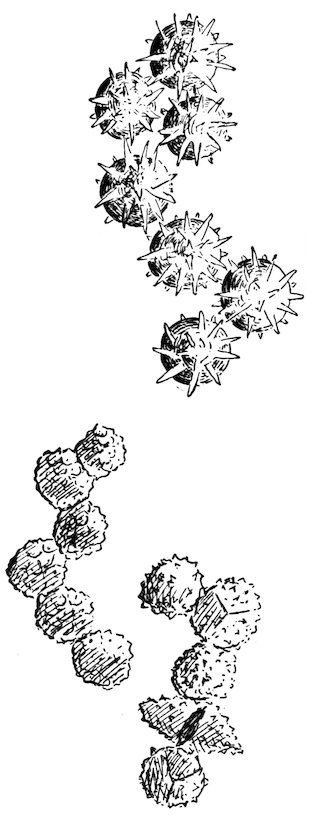
In the dark little dungeon cells of the anthers, the pollen grains lie. Hundreds, and sometimes thousands of them, are packed in there as closely as they can be. But they do not mind it, not in the least. They grow and get ripe, and as soon as this happens, their prison door opens and out they pour.
They are funny little things, not at all what they seem to be. For you would think they were just little specks of dust of almost no shape at all. But that is your fault, or rather the fault of your eyes.
You see your eyes were not meant to look at things so tiny as pollen grains. You can see a common ball or even a small shot very well indeed; but when it comes to pollen grains you are as blind as a mole. You will have to put on your spectacles to see that, I can tell you, and very powerful spectacles they will have to 121be, too. The best spectacles for you to look through are the ones we call a microscope. Just put your eye to that tube and you will see what you will see, for there are pollen grains at the other end—pollen grains from several kinds of flowers; there are some in the corner from our friend the morning-glory. And now you know what I meant when I said you could not see a pollen grain; for those little specks of dust have all at once become large and important objects. Some are round and some are not, and all are creased or pitted or ridged or covered with little points or marked in some other way. Now you see why they stick so easily to the hairs on the bee or the butterfly or whatever comes visiting the flowers for nectar. They are not smooth, but all roughened over by these ridges and points.
And this is not the end of it. You have not yet seen a pollen grain. You have only seen the outside of one.
For it has an inside. You think it is too small to have anything inside of it?
I can tell you things much smaller than that have something inside of them. The truth is, these things seem so small because we are so large. If we were as small as they, they would not seem small at all. They would seem a very ordinary size indeed, and 122we would expect them to have an outside and an inside.
The truth is, pollen grains are hollow. They are as hollow as the baby’s rubber ball. But they are not empty. The baby’s rubber ball is not empty; it is full of air. These pollen grains are not full of air. If you were to see what is in them, you might not think it very important, but that would be a great mistake, for they are full of—protoplasm!
The truth of the matter is, the pollen grain is a cell; it has a wall outside and is made of protoplasm inside.
Protoplasm, you remember, is the material out of which every living thing is made. You are made from protoplasm yourself; flowers are made from it, too, and leaves and birds and everything that lives.
So you see if a pollen grain is filled with protoplasm, that is rather a serious matter.
This pollen grain, small as it is, has a tough outer skin. It is not as tough as leather, but it is tough for so small a grain, and is strong enough to keep the protoplasm from running out.
The protoplasm in the pollen grain is what the ovule needs to nourish it and make it able to grow. The ovule, too, is a cell filled with protoplasm, and the protoplasm of the pollen and of the ovule must 123somehow come together before the ovule can do any more growing.
You know how the bees and butterflies and all sorts of insects carry the pollen from flower to flower and dust the stigmas with it. You may think that when a pollen grain is safely landed on a stigma then the rest is easy enough. But if you suppose the pollen grain can pass through the style you are very much mistaken. It cannot even pass through the stigma. It is true, the tissues of both style and stigma are rather loose, and that the style is sometimes hollow. But, as far as I know, the pollen never passes through. Small as it is, it is too large to get through the tiny openings in the stigma, and then, you know, the stigma is sticky and holds it fast.
Here is an interesting state of affairs! The ovule cell is waiting for protoplasm, and the pollen cell is anchored safe and fast at the stigma.
But you may be sure there is a way out of this difficulty.
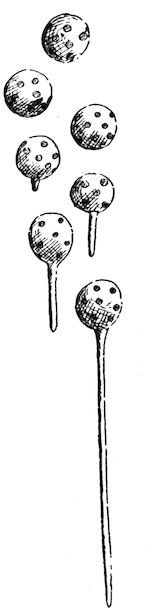
To begin, the pollen grain has two coats, a tough outer one and a delicate inner one. There are openings, or at least weak places, in the outer coat, and after the pollen has lodged on the moist stigma, the protoplasm inside swells and comes bulging through these weak places. The inner coat is forced out, as 124though some extremely small fairy had stuck her finger through the wall from the inside and pushed out a part of the inner lining. Well, this finger-like part that comes through the wall does not break open, but begins to grow. It grows longer and longer until a tube is formed, a tube so small that only the microscope can enable us to see it.
This tube pushes its way through the stigma into the style; there it continues to grow like a long root, only it is not a root, and it is hollow; and the protoplasm from the inside of the pollen grain runs down this tube.
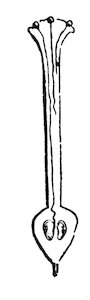
You can guess what happens next. The tube grows and grows; it finds plenty of nourishment in the tissue of the style, which is made of material suitable to feed it. Of course, it grows down the style into the ovary, because the style opens into the ovary.
When it reaches the ovary it finds its way to an ovule, and goes in at a little door which the ovule keeps open for it.
Now, you see, there is an open path between the pollen grain and the ovule, and the protoplasm from 125the pollen grain which has run down the tube enters the ovule. Here it passes out of the tube by breaking through the delicate wall, and unites with the protoplasm of the ovule.
Thus the ovule is fertilized. It is nourished and strengthened, and at once begins to grow into a seed.
Meantime the shell of the pollen lies on the stigma, a little dried-up, empty thing. Its work is done. Thanks to the bee or the butterfly or some other flower-loving friend, it has been taken to the right place, and all that was living in it, its protoplasm, goes on living in the little ovule.
The pollen grains the bees carry home have a very different fate. They are crushed and soaked and kneaded with honey and fed to baby bees.
But the flowers are willing the bees should have some to live on, and so each flower makes thousands more than it needs. You see, if it did not give the bees something to eat, they would not come and they could not live on honey alone; they, too, need the protoplasm in the pollen to nourish them.
Some kinds of flowers use their own pollen. They do not need the bees and do not want them. So they keep their pollen shut up tightly and do not make any honey to coax the bees to come. But nearly all 126flowers wish to have other pollen than their own. And this they can only get by the help of other people’s wings, as they have none of their own.
127
THE POLLEN.
What does the pollen do?
It helps the ovule change to a seed.
It feeds the bees and the wasps and the flies.
But above all, it helps the ovule change to a seed.
128
THE ANTHERS.
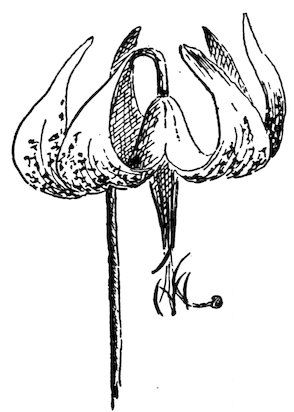
Anthers, anthers, full of pollen,
Cunning cupboards of the bee,
Stamen flour amply hiding,
What have you for me, for me?
What have you for me?
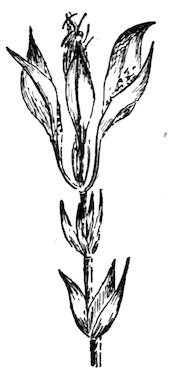
Pollen have I, plenty of it,
Pollen for my darling bee;
Pollen every day I blossom
For my bee, but none for thee,
For thee, none for thee.
129
OVULE CELLS.
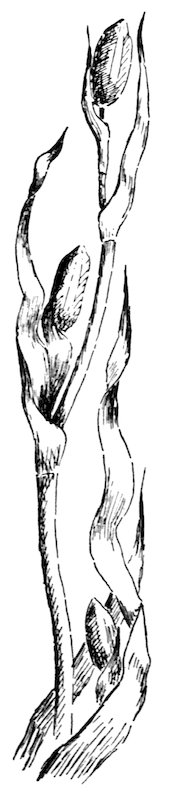
You will be glad to know that the little ovules at the heart of the morning-glory and of all other flowers are single cells.
They have an outside wall and are filled with protoplasm.
When a pollen cell is formed from the inside of the anther, it separates and is no longer connected with anything. This is not the case with the ovule. It is fastened to the ovary by a little stem, for it will stay there and grow; and it must have a way to get food from its parent plant. It gets the food through this little stem.
You know what happens when the flower opens.
The bees bring pollen, and the protoplasm of the pollen joins that of the ovule. As soon as this happens the ovule begins to change. We say it grows. It gets the food to grow on from the mother plant through the little stem which is fastened to the inside of the ovary.
130The protoplasm in the ovule first divides and makes two cells instead of one. These two cells do not entirely separate from each other. They stay together to do their work. Soon each of them divides into more cells. These cells again divide, and this continues until a great many cells are formed. Meantime the ovule has increased in size as well as complexity, and its cells do several different kinds of work. In the morning-glory, for instance, some build a hard outer wall about the young plant; this is the seed-case. Other cells form two little leaves; others make a little stub of a stem. So the change goes on until the single-celled ovule becomes a many-celled seed with a young plant rolled up under its walls. If you open a morning-glory seed you can see this little baby plant, only you will have to soak the seed first to soften the food that is stored about the young plant.
The cells made this food to nourish it, and it stays dry and hard until the rain moistens it in the spring, when it gets soft, like boiled starch, and is then ready for the little plant to use. When the ovules grow on one plant and the pollen comes from another, the seeds will contain the protoplasm of two different plants.
Now protoplasm remembers the plant it came from, and tries to make the new plant like it.
131The ovule protoplasm tries to make the seed remember the plant it grows on, and the pollen protoplasm tries to make the pollen remember the plant it comes from.
So if the pollen comes from a plant bearing white flowers, it wants the seeds to grow into white-flowered plants. But if the ovules which fertilizes it grow on a pink-flowered plant, they try to make the seeds grow into pink-flowered plants. Now what happens? Very likely some of the flowers will be white and some of them pink. Some will take after the plant the pollen came from and some after the one the ovule came from. But sometimes the flowers will be a mixture of both plants and will be pink and white.
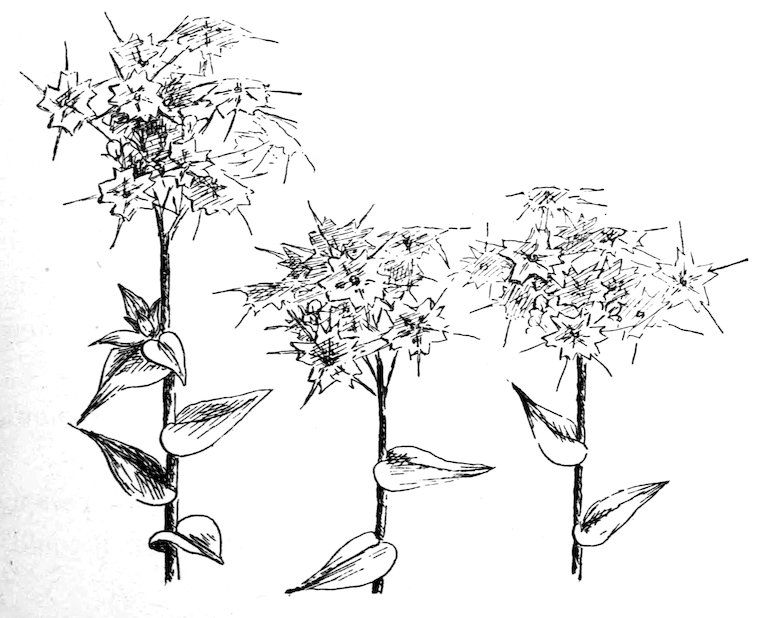
132The ovule is the mother part of the plant and the pollen is the father part, and sometimes the seed-children take after the mother, sometimes after the father, and sometimes after both.
This is very strange and we cannot quite understand it. How can the protoplasm remember the exact shade and color of the plant it came from? How can it make seeds that grow into plants just like the old plants?
Protoplasm, you are a great, a very great mystery!
By knowing about pollen and ovules we are able to help form a great many lovely new flowers and fruits.
We get variegated flowers by fertilizing a flower of one color with pollen from a flower of another color.
When we do this we must cover over the plant with a piece of netting just before it blossoms, so the bees and butterflies cannot get ahead of us and fertilize the plant. Then we must put a bit of pollen from one flower on the stigma of the flower we want to experiment with.
We must always use the pollen from the same kind of a plant, however.
It would be of no use to put nasturtium pollen on a morning-glory stigma, for instance, for it could 133not affect the ovule in the least. The protoplasm knows in some way its own plant and will not fertilize any other.
This is a very good thing, otherwise we might have a funny mixture of all sorts of plants.
Many delicious fruits have been produced by fertilizing one plant with pollen from another.
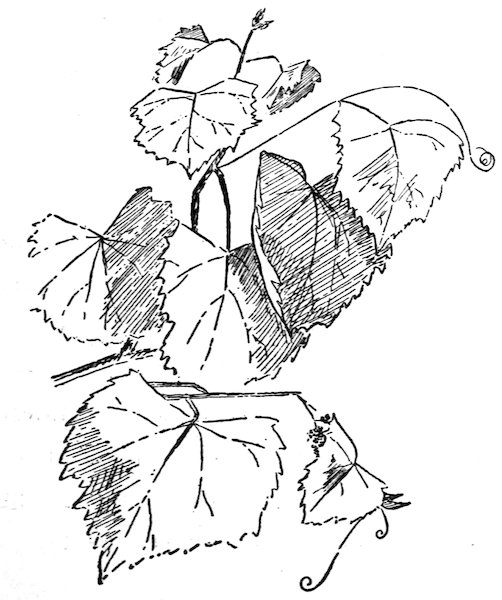
New varieties of grapes and berries are constantly obtained in this way.
If you live on a farm or have a garden, you might try to develop some new kinds of berries or fruits. You might not succeed, but it would do no harm to try.
134
CHLOROPHYLL.
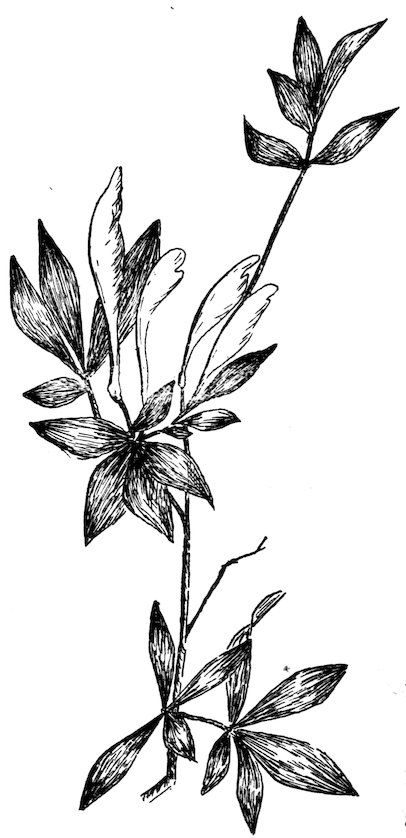
Chlorophyll is plant green.
That is what the word means.
We are so used to seeing green leaves that we think very little about it.
It probably never has occurred to most of us that the green coloring matter of plants can be of much importance. Yet it is one of the most important things in the world.
Like many other things, it is not what it seems. It is not merely a dye as one might suppose, but much more than that.
We cannot really see what it is without a microscope, and when we look at a piece of green leaf through the microscope we are surprised to find the leaf is not green at all.
135It is colorless like glass, but in the cells just behind the skin cells we see little roundish green bodies packed away. These are the chlorophyll grains, and when there are a great many of them close together they show through the skin and make the whole plant green.
The skin protects them, you see, and yet it is transparent and allows the light to get to them, which is a matter of great importance to the chlorophyll grains, for they are hard workers, but cannot do a single thing without sunlight.
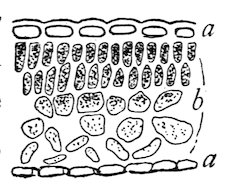
Chlorophyll grains lie just behind the skin cells in all parts of the plant that look green. The cells they lie in are often long with their short ends towards the skin. Leaves contain several layers of chlorophyll cells. The inner ones are not long like the outer ones, and do not contain so many chlorophyll grains. In the illustration, a, a represent the upper and lower skin and b the cells containing chlorophyll. The under side of a leaf usually has fewer chlorophyll grains in its cells, for the light is not so bright there, and chlorophyll needs plenty of light.
Sometimes the cells in the middle of a leaf, that is, halfway between the upper and lower surfaces, have no chlorophyll at all.
136Now what do you suppose is the work the chlorophyll grains have to do?
You never could guess, so I may as well tell you at once. If it is not making sugar, it is something very like it. To begin at the beginning, which is a long way from sugar, but which will certainly bring us to it, I must tell you that these little round green chlorophyll people have a strong attraction for carbon dioxide, which you know is a gas and is always found in the air. You know, too, we breathe it out as an impurity. Probably you did not know it had anything to do with sugar, but it has a very great deal to do with it.
The chlorophyll grains attract carbon dioxide as strongly as a magnet attracts bits of iron. The carbon dioxide in the air goes through the pores in the leaf skin, right through everything to the cell where the chlorophyll lies. You know carbon dioxide is made of carbon and oxygen. The plant needs a great deal of carbon, for nearly all its hard parts are made of it. Wood for one thing is nearly all carbon.
As soon as carbon dioxide comes where chlorophyll is, the chlorophyll, which of course is chiefly made of protoplasm, tears it to pieces. It pulls the carbon away from the oxygen and the oxygen 137rushes out through the pores back into the air. But the carbon stays behind.
You see oxygen is a gas and carbon is a solid. When carbon and oxygen unite in a certain way, they make another gas, our carbon dioxide.
It is very queer that carbon should have the form of a gas when united with oxygen, and I cannot explain it here. You must just remember that it is so.
When the oxygen flies away into the air again and leaves the carbon behind, the work of the chlorophyll has but just begun. Raw carbon is of no use whatever,—no more use than carbon dioxide, which we know is good for nothing to the plant or else the chlorophyll would not tear it to pieces.
But if the chlorophyll can only get a little water, something worth while will happen. This it can always do, as the roots take good care to send it plenty.
Water, you know, is made of two gases, hydrogen and oxygen, united together.
Here, you see, gases unite and make a liquid. Well, chlorophyll has a way of its own of uniting the carbon it took away from the carbon dioxide with the hydrogen and oxygen it gets from the water and forming a solid, which the plant cannot live without.
138Now what do you suppose this new solid is? Probably you never could guess.
It is starch, just starch!
Chlorophyll makes starch out of carbon, hydrogen, and oxygen.
Sometimes it makes sugar and oil out of them, but its work is most generally starch-making.
The carbon, you remember, it gets from the carbon dioxide of the air, and the hydrogen and oxygen from the water the roots send it.
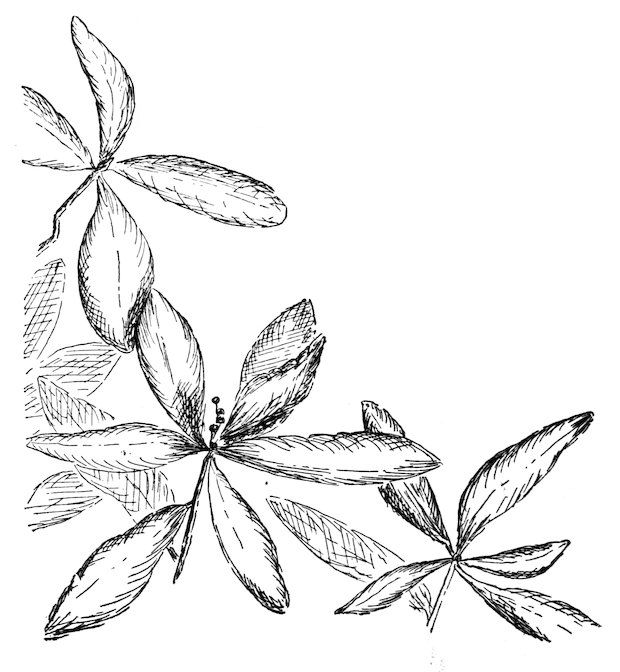
The strangest thing about all this is, chlorophyll is the only thing that can make starch.
Perhaps you do not think starch worth making such a fuss about. But wait a moment.
There is more to starch than you ever dreamed of. Really and truly, if it were not for starch you would not be alive to-day, and I would not,—in short nobody would.
All our lives depend upon starch. So when we come right down to the truth, our lives depend 139upon chlorophyll, because that makes all the starch there is in the world.
You do not think our lives depend upon starch? Wait and see.
Chlorophyll makes starch. Never forget that as long as you live. Forget your own name if you want to, but do not forget that chlorophyll makes starch.
You see starch is the raw material of which plants are made.
After the chlorophyll has made starch, the starch is dissolved, or melted you would likely say, and so is carried all over the plant in the sap. Some parts of the plant change the starch into sugar; for sugar is made of the same things as starch, only in it the carbon, hydrogen, and oxygen are put together a little differently, just as you can make several kinds of cake from flour, butter, sugar, milk, and eggs by stirring them together differently and mixing them in different proportions.
You cannot make cake without flour, sugar, eggs, and milk, and usually butter. But if you have these ingredients you can make a great many kinds of cake.
Starch is the material of which the plant makes a large part of its substance.
140Some parts of the plant that need sugar make it from the starch, and we find more or less sugar in all plants. There is, as you know, a great deal in the nectar of flowers, but other parts of the plant need it too, so sugar is a matter of importance to plants as well as to people. But sugar, remember, is made generally from starch, no matter in what part of the plant we find it.
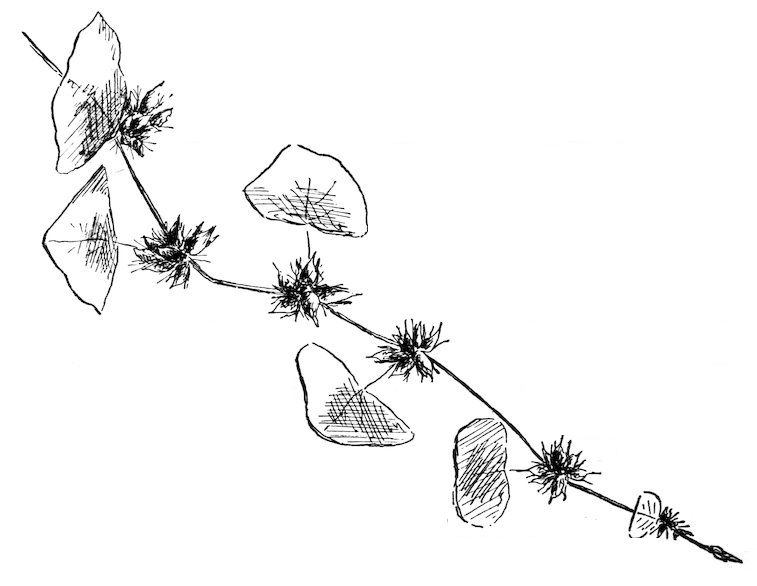
The sweet sap in the sugar maple is made from starch; so is the sweet juice of the sugar beet and of the sugar cane. All the sugar we use, excepting that in homeopathic pills, is made from starch. The sweet juice of fruits, berries, apples, peaches, oranges, contains sugar, which the plant has made from starch. In green fruit the starch has not yet been changed into sugar, so it is not pleasant to the taste.
Some parts of the plant need thick walls, like wood or bark, and these are made by the protoplasm from starch; they are not sugar, however, but a very tough, firm substance so unlike sugar that you wonder how it can be made of the same materials. But it is, for starch is the substance from which both are made.
141There are other things in the plant besides starch, and there are things which are not made from starch; for instance, there are acids and minerals of different kinds and there is protoplasm, but the greater part of every green plant is formed from starch.
Some plants make more starch than they need at once, so they store it away for future use, just as people raise extra supplies of wheat and corn, and store them away until they want them.
The potato plant, for instance, stores a large quantity of starch in the potatoes underground. A potato is nearly all starch, and the sweet potato stores up sugar as well as starch in its underground parts.
The potatoes have a reason for this, and, if let alone, would use up the starch and sugar another season; but we do not let them alone, as you know. We too need starch, and so we dig up the potatoes and eat them instead of leaving them for the plant.
A great many plants store up starch in their seeds that the young plant may have food enough to start growing. All our grains do this. Wheat, rye, oats, barley, rice, corn, and all other grains are only the seeds of plants which have been stored full of starch. Peas and beans are also starch-filled 142seeds. Cabbages store food made from starch in their big thick leaves. Beets store sugar and other starch-food materials in their thick roots; so do carrots and parsnips and turnips. Onions store it in their bulb leaves underground.
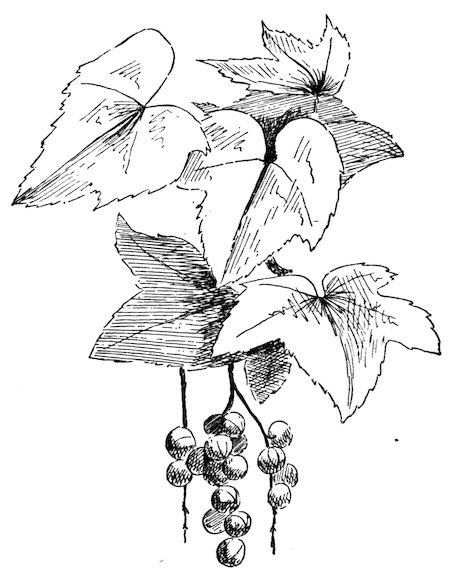
You begin to see now how important starch is to our lives. Nearly all the vegetables and grains and fruits we eat are composed almost entirely of starch or the materials of starch. Even meat is made from starch, for what do the animals we kill for meat live on?
143Why, plants of course, and chiefly the starch they find in plants.
So now we are just where we started,—we see we really do owe our lives to starch, and we owe starch to chlorophyll, so of course, we owe our lives to chlorophyll. I wonder if we shall think of this next time we look at the green leaves everywhere in the fields and woods.
I wonder if these green leaves will not look more beautiful than ever when we think of the work they are doing.
144
ROOT CELLS.
Roots do their work underground as a rule.
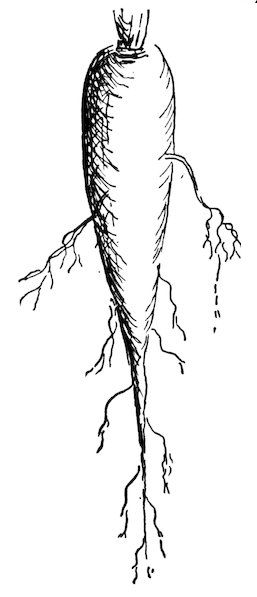
You might prefer not to be a root, if you had your choice; you might prefer to be a leaf or a flower.
I have never heard that the roots complained of their work, however. For one thing, it is easier. All they have to do is to hold the plant fast, suck up juices from the earth, and in some cases store away food material,—that is, if they are regular, well-behaved, everyday, underground roots.
Sometimes, however, roots come out of the ground and do all sorts of things,—cling to walls and hang in the air and perform in other unroot-like ways; but these are not what we are talking about. We are talking of roots, such as those of the morning-glory and nasturtium and geranium, which stay underground and behave themselves.
145Since it is dark where they live, they have no chlorophyll grains, and do not have to make starch. They merely use up the starch that comes to them from above.
Since they are not blown about by the wind, they do not need complicated, stiff, supporting tissues like tree trunks. On the whole, they are rather a simple people. They are made of cells, of course. But there are not so many kinds of cells in them as in the stems and leaves.
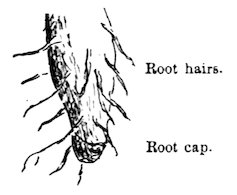
They have skin cells, but no pores. Out of their skin cells grow their most interesting and important parts. These are called root hairs. They are made of cells lying next each other, like other hairs, but they do all the sucking up of food materials for the whole root. These root hairs draw the water and other food out of the soil for the use of the plant, and the rest of the root only stores it up and conducts it to the stem and leaves above and anchors the plant to the ground.
The root’s work as an anchor is important, as you can imagine.
Just suppose that plants had no strong roots twisting around stones and bits of earth underground and holding them fast! What a time there would be whenever the wind blew.
146Even a light breeze would be worse than a cyclone at present, for it would send the wheat in the wheatfields flying before it.
All the plants would go hurry-skurry wherever the wind blew—excepting the morning-glories and others that were twined about trellises or fences or rocks; and even they would be blown all out of shape.
And when a strong wind came, if the trees had no roots to anchor them they would go hurry-skurry in the direction in which the wind blew, even if they were balanced so that they could not fall over; and we should see the forests sliding about the country and probably right on our houses, knocking them down, so we would not be able to have any houses, but would have to live in caves. It is a very good thing for us that the plants are held fast by their roots.
Well, the root hairs do the most important work of the plant after all. It is they who go poking their noses through the soil, and with their cells draw up water and potash and nitrogen and sulphur and iron and many other things which have become dissolved in the water. They are even able to dissolve rocks and such delicacies for themselves.
Now a growing root tip is a very delicate thing. 147You could not expect it to go pushing its tender tip through the hard earth without some kind of protection. And it does not: it wears a cap. This cap fits over the tip of the root and is hard. The cap is not alive, that is, the outside of it is not. The growing part of the root tip is just behind the cap.
The root tip grows by adding on new cells and so pushes the root cap ahead of it. The hard root cap finds its way between the particles of earth and so opens a channel for the growing root tip behind it.
The cap wears off on the outside as the bark does on a tree, and, like that, is continually renewed from the inside where the cells are alive.
148
SKIN CELLS.
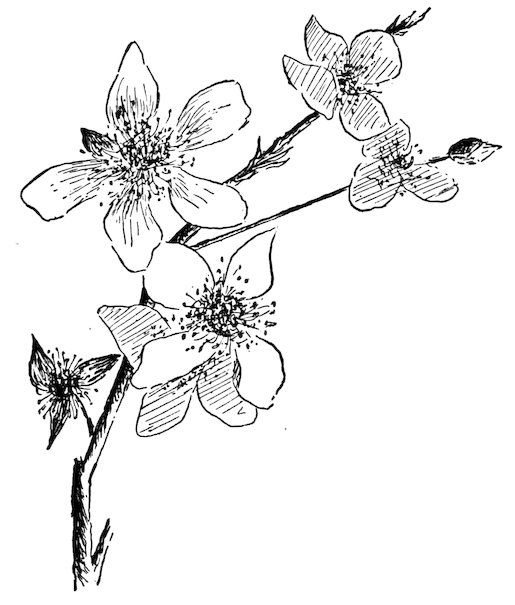
Skin covers over and protects what is underneath. It is thin compared with what it covers, but it is important, as we discover when we lose a piece of our own skin. A fluid substance or even blood oozes out, and the spot where the skin is off is very painful.
Plants have a skin too, and it does for them what our skin does for us. It is tough and protects the soft inner parts and keeps the sap from oozing out.
Skin, of course, is built up of cells. These cells generally lie close together, touching each other, except at certain spots, where there is an opening.
Skin cells are usually long and wide, and their outer walls, as you would expect, are thicker than the inside walls. The protoplasm builds up hard material on the outside to protect the rest of the 149leaf or stem. Leaves and young stems and roots and flower parts all have skin.
The skin is alike in all in a general way, just as all houses are alike in a general way. They all have a roof, walls, partitions, doors, and windows, though these are of different sizes and arranged differently in different houses to suit the needs of the people who live in them. So with plants. The skin cells are different in size and shape and thickness in different plants to suit the needs of the plants, though in all there is a general resemblance.
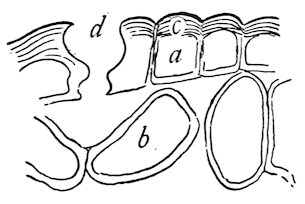
Here is a row of skin cells (a) with other cells (b) back of them. See how thick the skin cells are on the outside (c). They are very tough there too. d is an opening between two cells, and all is magnified several hundred times.
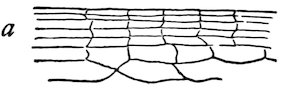
Sometimes there are several layers of skin cells where the plant needs a particularly thick skin; a in the illustration is an example of such a skin.
But it would not do to have an air-tight skin, even for a plant.
Our own skins are full of holes, or pores, as you know, to let out the extra water and other waste 150materials in what we call perspiration. The plants need such an arrangement as much as we do. So in their skin we find pores. You see the plant needs a great deal of water. The water is used in making the substance of the plant. It is also used in the sap to carry food about from place to place. Sap contains a great deal of water in order that it may flow easily. This water cannot all be used by the plant, and when it comes up from the roots in the sap a large part of it has to be got rid of by the leaves.
If the skin were solid, the water could not escape. But you know what protoplasm can do.
If the skin needs pores, it will make them. And this is how it does it.
If you peel off a bit of skin from the under side of a leaf and put it under the microscope, you will see something like this.
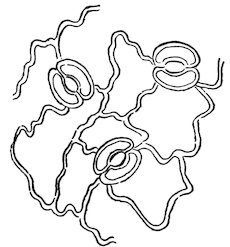
The round forms are the pores. The crooked lines between are the edges of the cell walls, and you are looking at them right through the outer wall of the skin, which is transparent like glass, otherwise you could not see the edges of the partitions.
Let us look at these pores, or stomata as we must call them, if we want to talk like botanists.
151One of the stomata is called a “stoma”; stoma comes from the Greek and means a “mouth,” or “opening.” These little mouths, or stomata, are made of two cells lying close together. These cells reach through the skin into an open space back of it.
There are open spaces between many of the inner plant cells, and there is always one behind a stoma. There are very few spaces between skin cells, excepting, of course, the openings between the two cells of a stoma. The two cells which make a stoma are called “guard cells,” because they guard the opening into the plant.
They are shaped, you see, something like half-moons. When the plant is full of water these half-moons swell up and their edges are drawn apart—so.
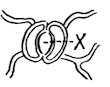
This, you see, makes an opening (x) into the plant. This little mouth through the skin opens into the space back of the skin, and this space connects with other spaces all through the plant. Through these stomata all parts of the plant can communicate with the outer air. The extra water and other waste materials pass out through the open stomata and air and other gases pass in and out.
Now, if the air outside is very dry and the earth is dry so that the roots are not able to send up 152much water, these wise little guard cells do not swell up and separate.
They are too good gatekeepers for that. They straighten out, their edges meet—so— and the opening is closed.

Now the water cannot so readily escape and the plant will not wither so soon. In dry climates the stomata are often surrounded by hairs which prevent too rapid evaporation; these hairs are often thick enough to make the plant look woolly. In fact, many plants have hairs upon those parts of the leaves where the stomata are found; they not only prevent too rapid evaporation, but also keep the rain or dew from getting into the stomata and closing them up. They hold off the water so that it cannot wet that part of the leaf.
There are a great many stomata on one leaf,—on some kinds as many as thousands to a square inch.
Usually, among land plants, there are more on the under side of the leaf, and in very dry places all are on the under side. The sun shining on the upper side would often cause too great evaporation, so the stomata are found underneath. In very hot, dry air there will be a little evaporation, even when the stomata are closed.
153But when we come to look at leaves that lie on the surface of the water, like water lily leaves, of course the stomata are all on top, as that is the only part of the leaf the air can reach.
Many water plants have their stomata above, for you see there is no danger of their water supply running short.
It is very important for a plant to keep its pores open and it is quite ingenious in contriving ways to do this. Perhaps hairs are most frequently used.
They often cover the under side of the leaf where the stomata are thickest, or are found in lines along the leaf, when the stomata are distributed in this way.
But, you say, rain cannot get to the under side of the leaf. No, but dew can. Dew wets the under side of the leaf quite as much as the upper side, for dew does not fall, as some people think, but is deposited all over the surface of a cool object like a leaf, for dew is nothing but the vapor in the air which is deposited in the form of water at night.
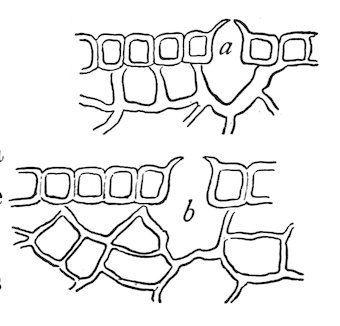
To see better how the stomata work, here is a side view of one closed (a) and one open (b).
Stomata, you see, are the doors 154to the plant through which things pass in and out. Not only water goes out through them, but also other waste substances, such as oxygen and carbon dioxide.
You must not suppose because so many things go out at the doors that nothing goes in; for air passes in and also carbon dioxide.
Carbon dioxide passes out from the plant and in from the air! That seems curious, but you must remember the plant has to use its stomata for both lungs and mouths,—lungs to breathe out impure air, which contains carbon dioxide, and mouths to take in carbon dioxide, which is one of its principal foods.
Besides stomata, plant skin has other kinds of special cells. These other cells form hairs or prickles or scales or glands. The hairs, prickles, and scales form on the outside of the skin, as you can see by the illustration.
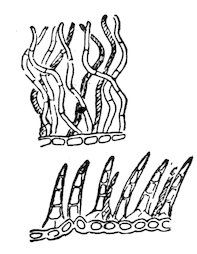
On the side of a regular skin cell the protoplasm builds a small cell; this grows long and divides and makes two; these may again divide, and so on until the plant has as long a hair as it needs. Sometimes the hair is made of but one long cell.
Hairs, as we know, protect the plant from too great evaporation and from changes of temperature; 155they also keep the dew and rain from settling in the stomata and filling them up so they cannot do their work.
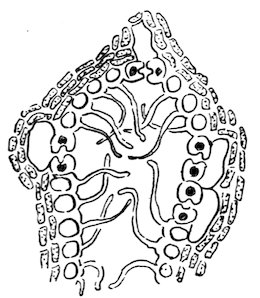
Here is a picture of four stomata, growing about a hollow filled with hairs. These hairs prevent the outside water from running in and wetting the stomata.
Prickles and some kinds of hairs and scales protect the outside of the plant from animals. When the animals bite the plant, these things stick into their mouths and they are glad to let it alone.
If you want to be sure that prickles and hairs protect the outside of a plant, go take hold of a nettle!
Madam Nettle does not wish to be taken hold of nor eaten nor touched by cows or sheep or anything else.
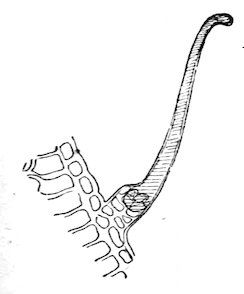
So her skin has hairs on it that sting. The hairs are very sharp and they are hollow. There is a poisonous juice inside, something the protoplasm has made; and when the sharp end of a hair sticks into your finger, the little turned-up end breaks off, and the poisonous juice gets into the wound and irritates and causes the finger to swell a little.
156There is a way to take hold of a nettle so that it cannot sting. The little poison-filled hairs all point up, as you see in the picture. So if you stroke the nettle or draw your hand over it from root to tip, it cannot hurt you. Your hand presses the hairs flat against the stem and they cannot stick into you.
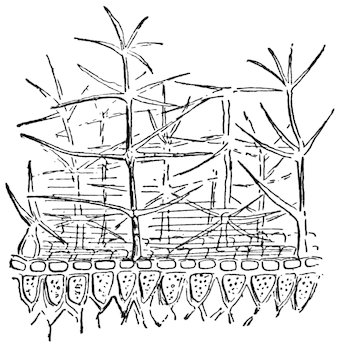
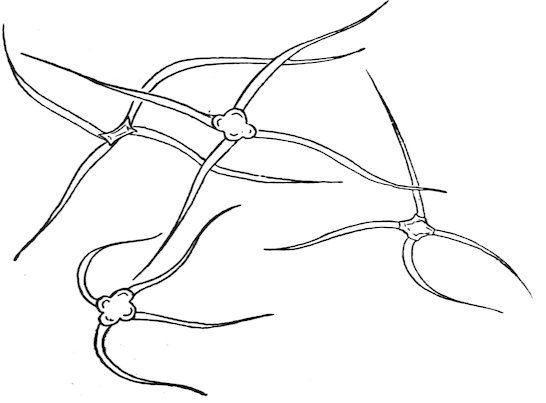
Sometimes hairs branch and make a thick network, like felt, over the leaf. They do this in the mullein, and here is a picture of mullein hairs very highly magnified.
Prickles and scales are made of cells as hairs are.
All parts of the plant above ground and sometimes the roots are covered with skin, but only the parts above ground are covered with hairs or prickles. Some plants are abundantly supplied with these protections; others manage to get along without them.
Plants very often have glands in their skins. These glands are merely cells which take certain things from the sap and pour them out on the outside of the plant.
Glands secrete their fluids inside the skin cells, and these fluids finally break through the outer wall of the skin cell and so get to the surface, or else they 157pass through stomata specially provided for them. They sometimes cover the surface of the plant with a sticky substance, as is the case with young birch twigs.
Glands also secrete the gum or resin which covers up the winter buds and keeps out the rain, and which makes the young leaves of the cherry shine so.
Some plants secrete wax which covers leaves or stems or fruits. Bayberry berries are covered with white wax, of which fragrant candles can be made.
Bayberry grows abundantly all along the New England coast, and friends of Thoreau used to make these fragrant candles as Christmas presents. Whenever Thoreau went to visit them, he insisted upon having a bayberry candle to go to bed by.
The bloom on cabbage leaves and on plums and other fruits is made of tiny scales of wax.
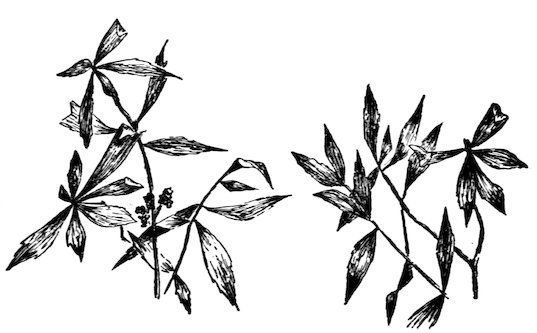
Bayberry.
Wax is a very good substance to keep the plant dry. You may be sure the plant knows this and often uses it about the stomata. You see, the object is to 158allow water to pass freely out of the stomata by evaporation, but not, as a rule, to pass into them. So the clever plants often have wax instead of hairs as a protection to the stomata. It would not do at all to let the stomata get closed up, so they are always protected in some way. Sometimes little projections grow out of the skin, close to the stomata. The raindrops fall upon these little knobs and stay there, instead of settling down into the stomata. You see, the pegs are very small, and when the rain falls on them there is a layer of air below them which the water cannot displace, and which prevents it from going any farther.
If you want to know just where the stomata are situated in a leaf, plunge it in water, then shake the drops off and notice what part of the leaf has not been wet. Wherever the leaf is dry, there are the stomata. In many plants, as, for instance, the jewelweed, it is quite impossible to wet the leaf. Soak it in water for an hour, and when you take it out it is dry! The parts that cannot be wet usually have a silvery, glistening appearance. Put the leaf in water and notice where it glistens; there are the stomata,—sometimes all over the under side of the leaf, sometimes in lines or patches, sometimes on both sides of the leaf.
159Wax, gum, and resin are not the only things plant glands secrete. There are the glands in the flower cups that secrete nectar. In some plants this breaks through the delicate plant skin and runs into and fills up the little hollows or horns we call nectaries. In others the nectar is provided with stomata by means of which it can escape from the interior of the plant.
You may be surprised to learn that the flower is not the only part of the plant that can secrete nectar!
In some plants the stipules do it, and in some even the stems.
This is not to call visitors to the flowers, but perhaps to keep them away. Where ants trouble the flowers, certain kinds have invented this very clever way of stopping the unwelcome visitors. They do not want the ants to take the honey from the flowers, so they secrete honey on the leaves or stems, and the ants take that instead of traveling on to the flowers.
Of course each living skin cell contains protoplasm. The protoplasm lies in a thin layer against the walls and builds, builds, builds, until the skin is thick enough.
When a good thick wall has been built, the protoplasm passes out through tiny openings in the inner 160wall into the inside cells, where it goes to work doing something else. The skin cells are then empty of protoplasm; they are only filled with air, and we say they are dead cells. Their hard walls are a good protection to the plant. In stems there is often a layer of thick cells behind the skin cells which also protects. These are called cork cells.
All very young plants have their stems covered with living skin.
Older plants, particularly woody ones, have their stems covered with the tough, dead skin. And trees have finally a thick layer of dead cork cells. In tree trunks the skin cells have disappeared entirely. The skin protected the young shoot; then its empty cells finally peeled off, as the cork cells formed underneath and made a thick bark. The bark then does the work of the skin. It protects the stem. It becomes very thick sometimes, as layers are constantly added beneath. The outside of the bark keeps peeling and scaling off.
Of course there are no stomata in bark. We find them only in the living skin. Bark does not need stomata, as it does not regulate the water supply. The young green parts of the plant do that by means of their covering of living skin. Living skin is usually transparent like glass.
161It is tough and yet transparent. You see, the light must get through it to the cells which lie behind it.
There is usually no green color in skin. Sometimes there are other coloring materials, though not as a rule.
The living skin covers the leaf or stem or other part of the plant like a window of tough glass. Even where the skin is several cells thick, the light can pass through, just as it can through thick glass.
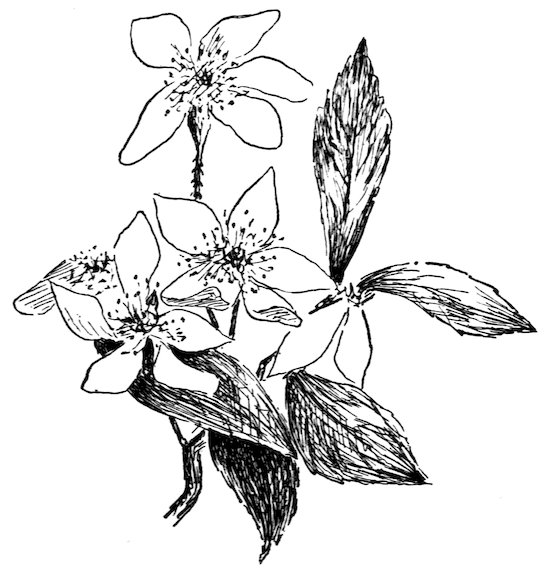
162
TUBE CELLS.

The top of a tree is a long way from the roots. Yet the leaves must have food from the roots, and the roots must have food from the leaves.

It is not an easy matter to move all this food material up and down, you may be sure.
I wonder how you would manage it?
Why, you say, if I had to raise sap from under the ground to the top of the tree, I should certainly build some pipes and have a pump at the top.
That is the way the plant has decided. So pipes there are, plenty of them,—pipes or tubes of many sizes and shapes.
You know how cells grow, lying next each other. Well, tube cells are long and contain protoplasm in the beginning. They lie end to end. But, you see, it would not be very easy for the sap to pass through millions of cell walls on its way up.
163So when the protoplasm has built a row of cells with good thick walls, it passes out through thin places or openings it has left in the walls. The end partitions between the tube cells are thin and break away, and lo and behold! we have a long, strong tube with nothing in it but air. Up this tube the sap creeps or down it the sap runs. A great many of these tubes, which are as fine as hairs or much finer in some cases, are needed in a plant. They run all through the stems and out into the leaves. They are collected into bundles, and form part of the veins and the framework of leaves. I do not know what the plant would do without them.
But what makes the sap run up the tubes?
Now you are asking questions! It took a long time for people to find that out, for there is more than one reason why the sap runs up.
For one thing, the root cells keep drawing in water and other things, and the fluid already in is pushed up by that behind; so there is a sort of pump at the bottom of the plant, you see,—a force pump. The sun shining on the leaves and stems evaporates the water above, and the water below then easily takes its place; so there is a sort of suction pump at the top.
164Then the tubes are so very fine that the fluid in them tends to move up, just as water will soak up into a towel if the fringe happens to get into the water; for you know that if you hang a towel so that the fringe dips into a basin of water, after awhile the whole towel will be wet, as a result of what we call capillary attraction. For all these reasons the sap creeps up the stems through the tubes the cells have made.
Every plant has these tubes, from the tiniest weed in the garden to the tallest forest tree. Although so small, they are often very prettily marked by lines and dots.
165
STRENGTHENING CELLS.
Plants need something more than cells of working protoplasm and something more than tubes, just as we need more than flesh and blood vessels.

We would be in a sad plight if we had no bones to keep us in place, and plants would be in a sad plight if they had no—well, not exactly bones, but something to serve the same purpose.
Think of the weight a tree has to bear. You could not begin to lift the crown of a large tree, yet the tree trunk has to hold it up in the air. Not only that,—it has to hold on to it when the wind blows, which is a much harder task. Even small bushes and tender garden plants have quite a weight to bear and quite a task to keep their leaves and stems from being blown away. They could never hold on to them if it were not for the wood and other tough cells they have,—never in the world.
These wood cells and other tough cells are made by protoplasm, of course.
The protoplasm builds them very much as it does the tube cells, long and slender, as you see in the 166picture at the beginning of the chapter, and then when the hard, tough walls are all done, the protoplasm slips out and leaves the strong framework of tough fibres to do its duty. This framework is not only strong, it is elastic, so it can bend easily. If it were not, the first strong wind or the first thing that happened to bend the plant would snap it off short.
You cannot break wood easily, and, if you do succeed, it always bends more or less first. Some wood bends more easily than others, as you know. A willow twig can be tied into a knot, it bends so easily.
Nearly all land plants have these stiffening cells. They run out of the stems down into the leaves and help make their framework of “veins.” The tubes and the strengthening fibres run along in bundles side by side. You see this saves space. If the tubes and strengthening fibres each took a different road, that would not leave much space for the chlorophyll and other working cells. But all the tubes and fibres are closely packed together and run lengthwise, through the stem. All around these long fibres are placed the other cells which are not long and do not form tubes or fibres. Most of those other cells in the leaf contain chlorophyll. They 167contain protoplasm, and do the work of transforming food materials into plant material.
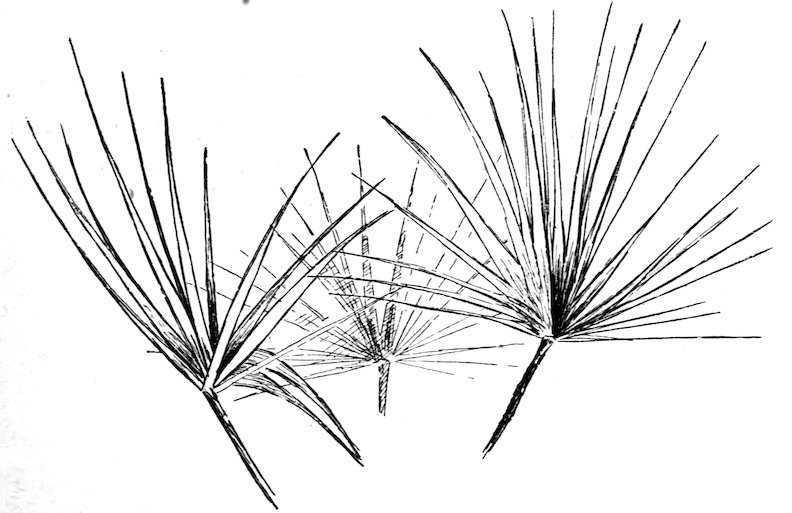
168
WE AND THE PLANT PEOPLE.
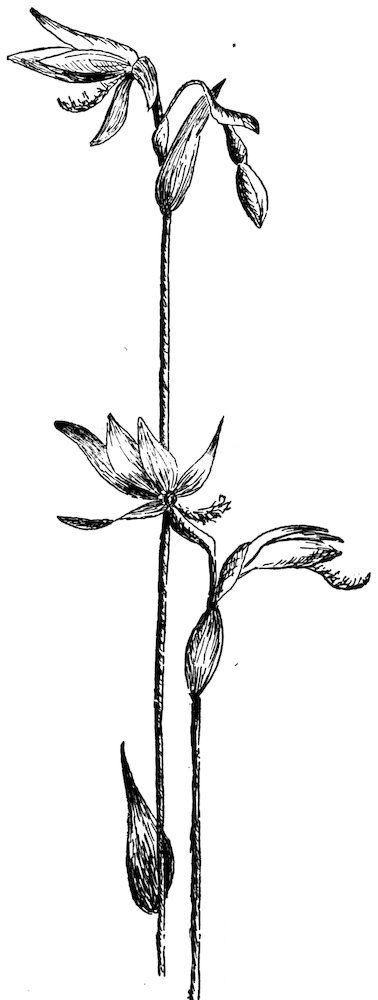
We live and the plants live. Probably neither we nor the plants spend much time thinking about what we owe to each other.
The plants are excusable for this, for they are not great thinkers, at least so far as we know.
But we owe so much to them, we ought to stop and think about it once in a while. We are indebted to them not only for the food we eat, but for the air we breathe.
We know about chlorophyll and the starch it makes, and how this starch is stored up in potatoes and wheat and corn and rice and all sorts of food grains and vegetables.
We know, too, how the roots suck up substances from the earth which we need in our bodies, and how they are stored away with the starch or sometimes by 169themselves. We know, in short, how all the food we eat is made first or last by the plants. Not only do we owe our food to the plants, but all animals do.
You see, animal cells are not able to take carbon dioxide and water and ammonia and other gases and minerals and work them up into living cells.
The plants have to do this for them; and then the animals eat the plants, for animal cells are able to work starch and sugar and plant protoplasm over into animal protoplasm, which can build all sorts of animal cells. So all the animals in the world get their food from the plant world. If the plants were to stop living, all the animals in the world would soon starve to death. The word “animals,” you know, means every living thing that is not a plant; in this sense flies and bees and oysters and caterpillars are animals as well as dogs and cats and such large creatures. Last of all, we ourselves are animals.
So the animal world would be in a sad predicament if anything should happen to the plants.
But there is more to thank the plants for than food. That is a pretty large item certainly; but what do you think of having to thank them for the air we breathe as well? Yet this we shall have to do if we begin thanking them at all.
170You know about oxygen, of course. It is one of the gases that make up the air; and I may as well remind you that air is composed principally of oxygen and nitrogen gases,—about four times as much nitrogen as oxygen, but the oxygen is the most important to us. We do not use the nitrogen in the air at all probably. It serves the purpose of diluting the oxygen, which would be too strong for us if it were not mixed with nitrogen. But what we do use is the oxygen.
That goes into our lungs, and some of it does not come out again. It passes into the lung cells and from them into the blood, and is carried by it all over our bodies to all the millions of cells.
We need a great deal of oxygen, and if the supply should be cut short we would die.
All animals need oxygen; even the worms in the ground and the fishes and oysters in the water must have it. So great quantities are being used up all the time.
Now, you know, when the plants pull carbon dioxide to pieces, they keep the carbon and return the oxygen to the air. In this way we get it to breathe.
But there is more than this to the matter in hand. We are all the time breathing out carbon dioxide as 171an impurity; so are all the millions upon millions of animals in the world.
The air might in time contain enough carbon dioxide to kill us if there were not some way of getting rid of it. You know what that way is.
The plants use it up. So by giving oxygen into the air and taking out carbon dioxide, the plants keep the air fit for us and all animals to breathe.
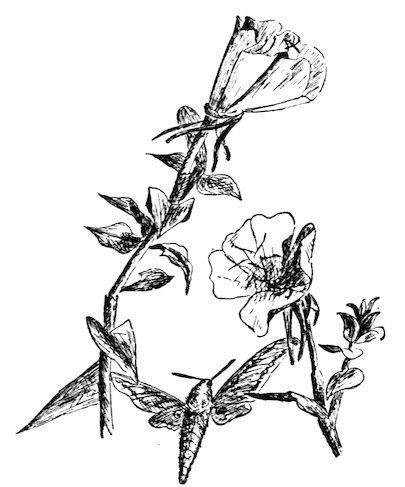
But there is more than this we have to thank them for.
They shade the earth and regulate the rainfall and the water supply.
Where forests grow there are always streams of water, and the large water courses are kept full the year round.
The Mississippi River depends upon the far-away forests for its broad stream.
The spreading crowns of the trees shade the earth and prevent the water which falls as rain or dew from evaporating rapidly. It collects into streams and flows through the land, keeping the earth fresh and beautiful.
More than this,—large forests cause the rain to fall and the dew to collect. Their leaves condense 172the moisture in the air and cause it to fall as rain or be deposited as dew.
When people recklessly cut down the forests in a country, the water courses dry up, and even the largest rivers are affected.
When the spring rains fall over a country whose trees have been cut away, the water rushes down the little streams all at once and causes a terrific flood in the large rivers. It soon drains away; then the rivers fall lower and lower until they nearly dry up. This state of affairs is a great calamity, because the people can no longer raise crops on the land near where the old forests stood, for it is parched and dry months at a time.
Moreover, boats laden with coal and grain and all sorts of things can no longer pass up and down the rivers, because the water is too low.
People ought to think of these things and not destroy too much forest land. After awhile we shall have to go to work and plant trees instead of cutting them down or burning them; but it takes a long time for trees to grow, and a wiser way would be for us to take care of those we have.
You have heard a great deal about plants eating and the good they do us by eating the carbon dioxide in the air. They take this in through their leaves, 173and you remember they take in all their other food materials—water, nitrogen compounds, sodium, potassium, magnesium, and many other substances—through their roots.
But they do more than eat; they also breathe.
They breathe everywhere over the surface of their bodies where there are stomata or where the skin is not too thick for the air to penetrate it.
And I must tell you they breathe just as we do,—that is, they take in air, use the oxygen, and give off the carbon dioxide.
It seems rather inconsistent of them to take in carbon dioxide as food and throw it off as a waste at the same time, but that does not trouble them; they do not care whether they are consistent or not. And it is true they take in carbon dioxide and give off oxygen, and take in oxygen (in the air) and give off carbon dioxide, in one breath as it were.
You see, it is different parts of protoplasm at work that does this; one part—that in the chlorophyll bodies—is attracting carbon dioxide, breaking it up, and casting out oxygen. Other protoplasm in the cells outside the chlorophyll bodies attracts and uses the oxygen, while the carbon dioxide comes to the stomata from different parts of the plant as a 174waste material, just as it comes to the cells of our lungs to be cast out.
So plants, by breathing, make the air a little impure, but they destroy or break up so much more carbon dioxide than they make that on the whole they act as powerful purifiers of the air.
When we think of the great forests of the tropics, all overgrown with luxuriant vegetation, we may remember that those tangles of vines and trees and strange growths are our friends no less than the grass and bushes in our dooryard.
For there is a carrier always at work bringing the pure air to us and carrying away the impure air which we create. This carrier is the air currents. The great winds sweep about the earth, bearing the oxygen from the forests to the crowded cities, and sweeping away the carbon dioxide from the cities to the fields and woods. The winds, too, stir up the water where the water plants and fishes live, and help keep it full of air for the things in it to breathe; the tides and currents help, so as far down in the water as there are living things, you may be sure there is air for them to breathe. There would not be air enough for you, because you need so much; but for them there is plenty.
Swirling around the earth go the winds, carrying 175the oxygen to the people and the carbon dioxide to the plants, for the plants are as glad to get the carbon dioxide we breathe out as we are to get the oxygen they give off.
And we are glad, when we come to think about it, that we are able to give them something in return for all they give to us.
You see, we need each other,—plants and people, and the winds are friends to us both.
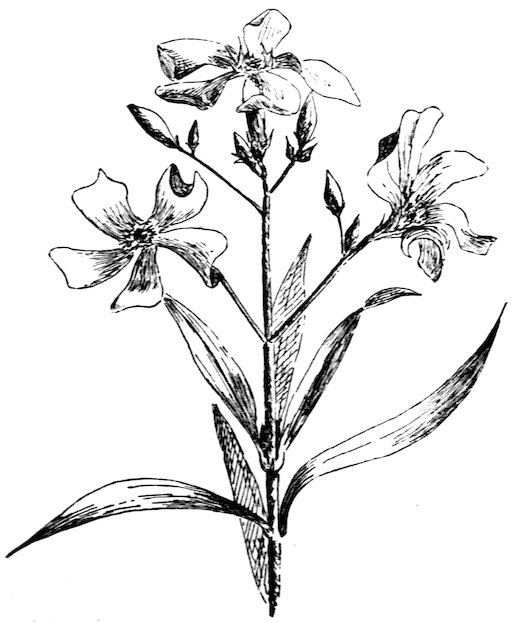
176
WHAT ARE THE FLOWERS MADE OF?
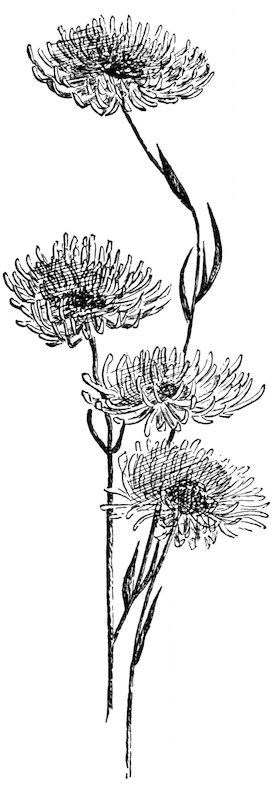
I think flowers are “made of sugar and spice and everything nice.” At least, if it is not that, it is something very like it, as I have good reason to believe.
What flowers and all other parts of the plant are made of depends upon protoplasm; and if protoplasm can make sugar and spice and build up flowers that way, we should like to know it.
We do know about sugar and how the little green chlorophyll people run their starch factories in all the green parts of the plant,—under the skin of stems sometimes as well as of leaves, for wherever a stem is green, we may be sure chlorophyll is at work making starch in it. And we know how the protoplasm in the different cells changes the starch into sugar.
We know, too, how wood and other tough substances are made of starch.
177But there is something else in plants as important as starch and very different,—the protoplasm. Protoplasm itself is not made entirely of starch; it requires materials not found in starch.
These materials are nitrogen, sulphur, and phosphorus.
Nitrogen is the most important, and this the plant gets chiefly through the roots.
Nitrogen is found in the earth combined with hydrogen and other substances. The protoplasm tears to pieces these nitrogenous substances which the roots suck up, and so enables the plant to take the nitrogen.
The other two substances which the protoplasm needs, sulphur and phosphorus, the plant gets partly from the air and partly from the earth.
Sulphuric acid exists in very small quantities in the air and goes in through the stomata, attracted, no doubt, by the protoplasm inside. But other sulphurous and phosphorous compounds are taken up by the roots.
So we see protoplasm is complicated. It contains carbon, hydrogen, oxygen, nitrogen, sulphur, and phosphorus united in a very complicated way.
Although protoplasm itself is made only of carbon, hydrogen, oxygen, nitrogen, sulphur, and phosphorus, 178it can make use of a great many other things. When the protoplasm of certain cells wants to build hard, tough walls, it uses potash and soda or even silica, which you know glass is made of. Just draw a blade of sedge grass through your fingers if you want to feel the silica in it. You will probably cut your fingers, but that will help make you remember about silica. Then the protoplasm uses iron to color the petals and other parts of the plant. It uses magnesia, too, and salt and lime and a number of other materials for building walls or making dyes or something else.
Every material in our own bodies is found in plants, and sometimes the plants have materials that we do not have.
Of course materials are put together differently in plants from what they are in us. When Mother Nature combines her carbon, hydrogen, oxygen, nitrogen, sulphur, phosphorus, magnesia, iron, and all the other things to make a plant, she does not go to work as she would if she were going to make an animal.
Just what the difference is it would be difficult to tell, but there is a difference.
Plants contain a good deal of sugar as a rule, and if you remember cloves you will admit that at least 179some flowers are made of spice, for cloves are the dried flower buds of the clove tree.
Cinnamon is the bark of a plant, and if you are acquainted with orange trees you will be willing to say they are “made of sugar and spice and everything nice,” for the whole tree, wood, bark, stems, leaves, flowers, and fruit, is fragrant and spicy.
Oil is another common substance in plants, and it is made from the materials of starch which, as we know, are carbon, hydrogen, and oxygen; cotton-seed oil, olive oil, and castor oil we are all familiar with.
All nuts contain a great deal of oil, and the skin of a fresh-picked orange is so full of it that it runs down our fingers when we cut the orange.
All the things in a plant—starch, sugar, oils, spices, wood, bark—everything is made by the wonderful protoplasm in the cells.
Starch and the food taken up by the roots pass through all parts of the plant by the sap tubes, and as the sap goes along, each living cell draws into itself the substances from the sap that it needs, and these it combines into the things it wants to make. Some of the cells in an orange skin, for instance, attract out of the sap the materials to make the fragrant, stinging oil that fills the fresh skin, while other cells attract the materials to build the white cottony covering 180inside the outer skin, and so the cells in each part of the plant take out what they need to build with.
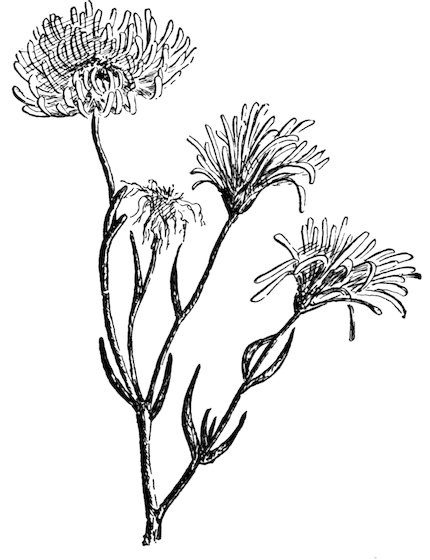
181
WHAT BECOMES OF THE FLOWERS?
Early in the spring the snowdrops and crocuses peep out, and then they go away.
We do not think much about it, for other flowers have come in their places.
Spring beauties and bloodroots shine in the woods, and then they go away. But the mandrakes have come with their umbrella leaves, and then the columbines and roses ask for a welcome.
After awhile we can find no more mandrakes and columbines, only yellow apples and brown seed-pods.
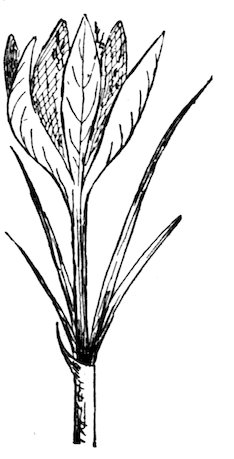
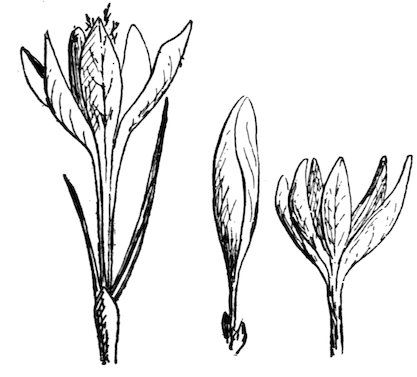
Jack-in-the-Pulpit jumps up quite early in the summer, and then we cannot find him, only in the late summer we sometimes come across little clusters of bright red berries lying on the ground.
We would scarcely suspect them of having any 182relation to Jack, yet they are his berries. But what has become of Jack?
In the autumn the rose leaves fall off, and there is left only red stems and red berries.
The morning-glory vine wilts and turns black at the first frost; it sinks to the ground and we see it no more, or else its stems linger brown and hard for a time, but in the end it all disappears. What has become of it?
And the nasturtiums—what a wreck the frost makes of them! The leaves are wilted and black; the stems, too, are soft and lie flat on the ground.
Why, you say, the frost has killed them. But that does not at all tell what has become of them. Besides, the frost did not kill the snowdrops and crocuses and blood roots and spring beauties nor Jack-in-the-Pulpit nor the umbrella leaves of the mandrakes. Yet they are all gone. All we can find of Jack and the mandrakes are red berries and yellow apples. Not a sign of the snowdrops or spring beauties or crocuses is left.
If you will just step down with me under the earth a few inches I will show you something.
Make believe you are a gnome or a fairy and can see as well in the dark earth as anywhere else and come along. Now look about.
183Did you ever dream of anything so cunning in all your life? Everywhere and everywhere old mother earth is packed full of little white and brown bulbs.
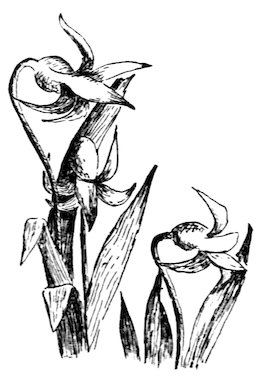
There they are as snug as peas in a pod, thousands of them, in every direction as far as you can see.
And besides these bulbs, there are thick, fleshy root stems, red and brown and yellow, everywhere and everywhere. Do you want to know who they are?
They are our little friends of the early summer,—snowdrops and crocuses and spring beauties and dogtooth violets; mandrakes, too, and Jack-in-the-Pulpit.
These bulbs and thick roots are full of plant food; and this is where the plant has gone to. It has curled up, so to speak, in these bulbs and roots and gone to sleep till next spring. Then it will wake up. It will hardly wait for the snow to go off before it pushes out a bud. The snowdrop does not wait, but sometimes blossoms right under the snow. In a few days the woods that looked so dead and bare are as gay as you please. That is because the plants sleeping in the bulbs and thick underground stems have waked up. They have eaten the rich food 184stored up there and have grown like magic. Up into the sunshine they spring; they wave sweet flowers; they call the little insects that have ventured out to come and taste their nectar and bring them pollen.
Their leaves are green and delicate, but they work hard, for the plants have used up the food in the bulbs or in the thick underground stems, and the leaves and roots must make new bulb material or store away more food in the thick underground parts.
It is spring, and the air is moist and warm. It rains often, and the plants have all the water they need.
What fun it must be to come out in the world! What joy to unfold bright flowers in the shadowy woods! They dance on their stems and ripen their seeds; before the slow roses have thought of opening their eyes, the bulb people and the underground-stem people have done all their work of growing. The seeds are ripe and ready to be scattered; new bulbs are packed full of plant food, and fresh food is stored in the thick underground stems. The bulb people and the underground-stem people have had a good time.
They were up early in the summer and saw the sweet, fresh world; their leaves worked hard, and their work is all done now.
185They are tired and want to sleep. They fear the heat and dryness of the summer. They do not want to be crowded by the other plants that are beginning to look out everywhere.
“We will go to sleep and let the other plants have our places; we have had our share of the air and the water and the dear sunshine,” they seem to say. “We have caught the sunbeams and stored them away in our bulbs and roots, and we will now rest.”
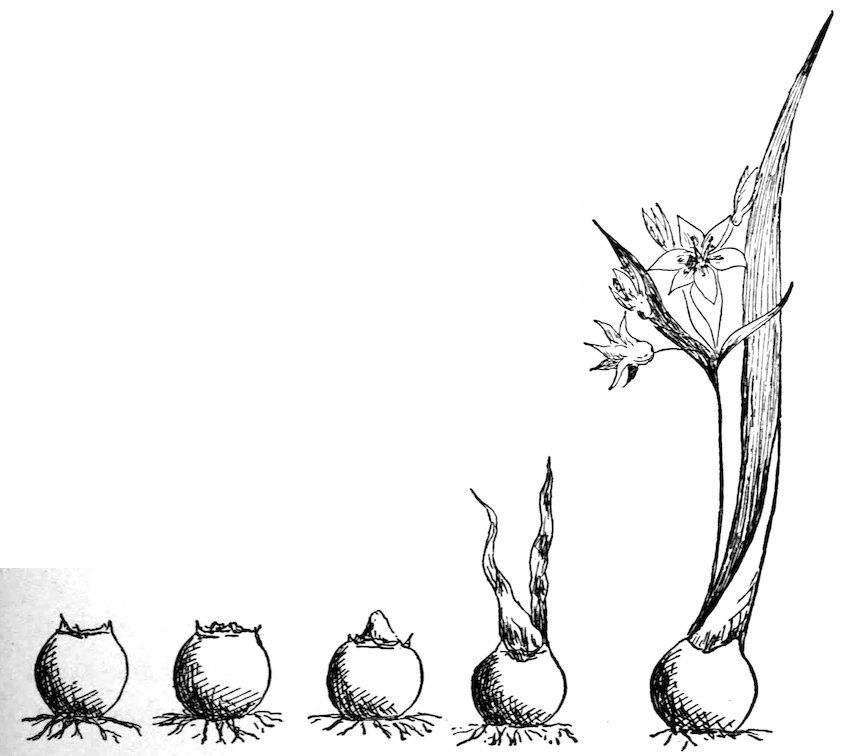
So they go to sleep. They open the channels from the leaves to the bulbs and the underground stems, and then all the living part of the leaves passes quickly down into the part that lies underground. There is only left the hard framework of the leaves. This is not alive; it never was alive. The living part of the leaf built it for a house to live and do its work in; now the house is empty: the living part has run down into the bulb or the underground stem. The part of the leaf that is left soon falls to pieces, as any old 186abandoned house will do. It falls on the ground; the rain soaks it, and it crumbles apart. It changes into food for other plants. It is not lost; it is taken up by other plants and again built into good plant material.
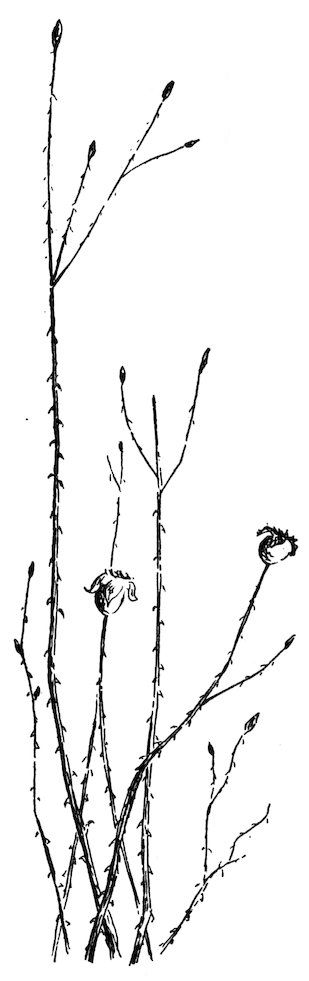
So it is with the seed-pods; when the seeds fall out, the part that is left behind is not alive. All the living part has gone out of the dry pods down into the bulbs or the underground stems; and the pods, too, crumble to pieces and make good food for other plants.
But the seeds are alive. They lie in the earth and wait for the time to come when they may wake up and make new plants with young bulbs or thick underground stems.
But how about the roses? Do they not die in the fall? Why, what are you thinking of? Do they not wake up next spring and cover their stems with leaves and flowers? Dead bushes could not do so.
You see how it is. The leaves work all summer long. They store up food in the roots and the stems. When the frost comes and pinches them, 187they know it is time to stop work and go to sleep for the winter. They have roots down in the ground. And now you know as well as I do how they manage it.
When the leaves have done their work and fed the flowers and the stems and the seeds, and when the stems and the roots are stored full of food, the leaves stop working. The green little cells that made them so bright all summer go away; the living part of the plant and the rich juices find their way into the roots and stems. Only the dead frames of the houses that the living parts of the leaves built in which to do their work are left. They are dry and lifeless; they never were alive. The living protoplasm has left them and unhinged them so that they soon fall off.
You know what becomes of them. They change into a great many substances. The little particles in them let go of each other and unite with other particles. In this way gases are made which go out into the air, but some parts are solid minerals which the roots took out of the earth to build the frame of the leaves. All these minerals fall back into the earth for the roots to use again next year.
So you see the leaf frame simply changes back 188again into the gases and minerals of which it had been made by the leaves and the roots.
As the protoplasm withdraws from the leaves of the rose bushes and of many other plants, particularly the trees, the resting time of the plant is announced by the most brilliant colors, the result of certain changes going on within the leaf. These bright colors that make our autumn woods so entrancing are not dependent upon the frost, as many think, but upon certain changes going on within the leaf itself as it ripens, just as fruit, when it ripens, takes on glowing colors. The bright autumn leaves are ripe leaves getting ready to fall. Why do you suppose leaves fall? It is better that they should; the sooner they fall, the sooner they will be converted into leaf mould to feed other plants. So the plants have a way of gathering their ripe harvest of leaves.
The falling of the leaf is not an accident, nor is it dependent upon the wind; when the time comes, the leaves go down, wind or no wind, though doubtless the wind helps them. When they are fully ripe, the leaves let go! The cells that connect the leaf stem with the branch shrivel and shrink until the leaf is entirely separated from the parent plant; when this happens, the leaf falls. The ripe leaf is less juicy 189than the young leaf; its juices have departed and left the stiff, lifeless framework and the hardened skin, with the emptied cells beneath, to find their way to the earth.
But while the trees and bushes, the bulbs and underground stems store away the living part of the plant, what about the morning-glories and nasturtiums? They do not send their living part into roots or stems, for they do not grow again another year. What now becomes of them?
They die, you say. I do not say that. I say they change. Of course the seeds live on. The morning-glory seeds, and the seeds of all the plants that grow wild in a climate like ours, are not hurt by the cold.
You very well know that some of the life of the plant is folded up in the seeds. But the vines and leaves seem to be hurt by the cold. They fall limp to the ground. They change. The little particles of which they are made let go of each other; they unite with other particles in new ways. They float off in the air as gases.
These gases are carried about by the wind and meet new plants, which build them into their leaves and stems.
Part of the particles in the frosted vine do not become gases; they let go of other particles and sink 190down as minerals, to be taken up by plant roots another season. Other parts lie on the earth in the form of rich vegetable mould, which is also taken and built into new plants. So when our morning-glory or nasturtium vine disappears, it is not lost; it has only changed its form.
Instead of being a nasturtium, its particles may find themselves built into a dozen different plants.
So what we call death is only change. Not an atom of any plant is lost.
Besides, if no plants changed back again into gases and minerals, there could be no growth and no flowers in the world. There would be no material to make new plants, and no room for new plants to grow.
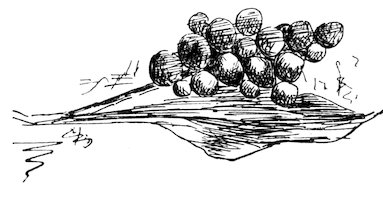
There would be no room for seeds to sprout and no need of seeds, so the plants, which never do anything that is not necessary, would not make any seeds; and if there were no seeds, there would be no flowers. What a dreary earth it would be if plants never changed—if they never, as we say, died! The same old plants living forever,—no flowers, no opening buds, no tender spring green, no bright autumn colors.
It is good that the plants die, or change, as I prefer to call it.
191
NOTHING BUT LEAVES.
After all, that is what a rose is,—nothing but leaves; and what a violet is and a lily and a nasturtium and a honeysuckle and all the flowers you can name.
You do not believe it? That is because you know so very little about leaves. When you know more, you will believe it, see if you do not.
Perhaps when you know where the flowers came from and how they came to be flowers at all, you will change your mind about several things. Anyway, there is one thing you do know, because you have studied geography and about the stars and about the earth’s crust and all that.
You know that once upon a time there were no flowers in all the round old earth. You do not 192know it? Why, of course you do. You know that once upon a time there was no life on the earth, at least not what we call life now. It was so hot nothing could live, not even a salamander, which they say lives in the fire, although, of course, this is not true, and it could no more live in the fire than you could.
Well, we are told that once the earth was about as hot as the sun is now,—just a mass of blazing gases and melted rocks and metals.