VOLUME X SLICE I Evangelical Church Conference to Fairbairn, Sir William (continued 9)
Reading edition
Smokeless Propellants.—Gunpowders and all other explosive mixtures or compounds containing metallic salts must form smoke on combustion. The solids produced by the resolution of the compounds are in an extremely finely-divided state, and on being ejected into the atmosphere become more or less attached to water vapour, which is so precipitated, and consequently adds to the smoke. The simplest examples of propellants of the smokeless class are compressed gases. Compressed air was the propellant for the Zalinski dynamite gun. Liquefied carbon dioxide has also been proposed and used to a slight extent with the same idea. It is scarcely practical, however, because when a quantity of a gas liquefied by pressure passes back again into the gaseous state, there is a great absorption of heat, and any remaining liquid, and the containing vessel, are considerably cooled. Steam guns were tried in the American Civil War in 1864; but a steam gun is not smokeless, for the steam escaping from the long tube or gun immediately condenses on expansion, forming white mist or smoke.
At the earliest stage of the development of guncotton the advantage of its smokeless combustion was fully appreciated (see Guncotton). That it did not at once take its position as the smokeless propellant, was simply due to its physical state—a fibrous porous mass—which burnt too quickly or even detonated under the pressure required in fire-arms of any kind. In the early eighties of the 19th century it was found that several substances would partly dissolve or at least gelatinize guncotton, and the moment when guncotton proper was obtained as a colloid or jelly was the real start in the matter of smokeless propellants.
Guncotton is converted into a gelatinous form by several substances, such as esters, e.g. ethyl acetate or benzoate, acetone and other ketones, and many benzene compounds, most of which are volatile liquids. On contact with the guncotton a jelly is formed which stiffens as the evaporation of the gelatinizing agent proceeds, and finally hardens when the evaporation is complete. Whilst in a stiff pasty state it may be cut, moulded or pressed into any desired shape without any danger of ignition. In fact guncotton in the colloid state may be hammered on an anvil, and, as a rule, only the portion struck will detonate or fire. Guncotton alone makes a very hard and somewhat brittle mass after treatment with the gelatinizing agent and complete drying, and small quantities of camphor, vaseline, castor oil and other substances are incorporated with the gelatinous guncotton to moderate this hard and brittle state.
All the smokeless powders, of which gelatinized guncottons or nitrated celluloses are the base, are moulded into some conveniently shaped grain, e.g. tubes, cords, rods, disks or tablets, so that the rate of burning may be controlled as desired. The Vieille powder, invented in 1887 and adopted in France for a magazine rifle, consisted of gelatinized guncotton with a little picric acid. Later a mixture of two varieties of guncotton gelatinized together was used. In addition to guncottons other explosive or non-explosive substances are contained in some of these powders. Guncotton alone in the colloid state burns very slowly if in moderate-sized pieces, and when subdivided or made into thin rods or strips it is still very mild as an explosive, partly from a chemical reason, viz. there is not sufficient oxygen in it to burn the carbon to dioxide. Many mixtures are consequently in use, and many more have been proposed, which contain some metallic salt capable of supplying oxygen, such as barium or ammonium nitrate, &c. , the idea being to accelerate the rate of burning of the guncotton and if possible avoid the production of smoke.
The discovery by A. Nobel that nitroglycerin could be incorporated with collodion cotton to form blasting gelatin (see Dynamite) led more or less directly to the invention of ballistite, which differs from blasting gelatin only in the relative amounts of collodion, or soluble nitrated cotton, and nitroglycerin. Ballistite was adopted by the Italian government in 1890 as a military powder. Very many substances and mixtures have been proposed for smokeless powder, but the two substances, guncotton and nitroglycerin, have for the most part kept the field against all other combinations, and for several reasons. Nitroglycerin contains a slight excess of oxygen over that necessary to convert the whole of the carbon into carbon dioxide; it burns in a more energetic manner than guncotton; the two can be incorporated together in any proportion whilst the guncotton is in the gelatinous state; also all the liquids which gelatinize guncotton dissolve nitroglycerin, and, as these gelatinizing liquids evaporate, the nitroglycerin is left entangled in the guncotton jelly, and then shares more or less its colloidal character. In burning the nitroglycerin is protected from detonation by the gelatinous state of the guncotton, but still adds to the rate of burning and produces a higher temperature.
Desirable Qualities.—Smokelessness is one only of the desirable properties of a propellant. All the present so-called smokeless powders produce a little fume or haze, mainly due to the condensation of the steam which forms one of the combustion products. There is often also a little vapour from the substances, such as oils, mineral jelly, vaseline or other hydrocarbon added for lubrication or to render the finished material pliable, &c. The gases produced should neither be very poisonous nor exert a corrosive action on metals, &c. The powder itself should have good keeping qualities, that is, not be liable to chemical changes within ordinary ranges of temperature or in different climates when stored for a few years. In these powders slight chemical changes are generally followed by noticeable ballistic changes. All the smokeless powders of the present day produce some oxide of nitrogen, traces of which hang about the gun after firing and change rapidly into nitrous and nitric acids. Nitrous acid is particularly objectionable in connexion with metals, as it acts as a carrier of oxygen. The fouling from modern smokeless powders is a slight deposit of acid grease, and the remedy consists in washing out the bore of the piece with an alkaline liquid. The castor oil, mineral jelly or camphor, and similar substances added to smokeless powders are supposed to act as lubricants to some extent. They are not as effective in this respect as mineral salts, and the rifling of both small-arms and ordnance using smokeless powders is severely gripped by the metal of the projectile. The alkaline fouling produced by the black and brown powders acted as a preventive of rusting to some extent, as well as a lubricant in the bore.
Danger in Manufacture.—In the case of the old gunpowders, the most dangerous manufacturing operation was incorporation. With the modern colloid propellants the most dangerous operations are the chemical processes in the preparation of nitroglycerin, the drying of guncotton, &c. After once the gelatinizing solvent has been added, all the mechanical operations can be conducted, practically, with perfect safety. This statement appears to be correct for all kinds of nitrated cellulose powders, whether mixed with nitroglycerin or other substances. Should they become ignited, which is possible by a rise of temperature (to say 180°) or contact with a flame, the mixture burns quickly, but does not detonate.
As a rule naval and military smokeless powders are shaped into flakes, cubes, cords or cylinders, with or without longitudinal perforations. All the modifications in shape and size are intended to regulate the rate of burning. Sporting powders are often coloured for trade distinction. Some powders are blackleaded by glazing with pure graphite, as is done with black powders. One object of this glazing is to prevent the grains or pieces becoming joined by pressure; for rods or pieces of some smokeless powders might possibly unite under considerable pressure, producing larger pieces and thus altering the rate of burning. Most smokeless powders are fairly insensitive to shock. All these gelatinized powders are a little less easily ignited than black powders. A slightly different cap composition is required for small-arm cartridges, and cannon cartridges generally require a small primer or starter of powdered black gunpowder.
It is desired that a propellant shall produce the maximum velocity with the minimum pressure. The pressure should start gently so that the inertia of the projectile is overcome without any undue local strain on the breech near the powder chamber, and more especially that as more and more space is given to the gases by the movement of the projectile up the gun to the muzzle, gas should be produced with sufficient rapidity to keep the pressure nearly uniform or slightly increasing along the bore. The leading idea for improvements in relation to propellants is to obtain the greatest possible pressure regularly developed, and at the same time the lowest temperatures.
(W. R. E. H.)
Law.—In 1860 an act was passed in England “to amend the law concerning the making, keeping and carriage of gunpowder and compositions of an explosive nature, and concerning the manufacture and use of fireworks” (23 & 24 Vict. c. 139), whereby previous acts on the same subject were repealed, and minute and stringent regulations introduced. Amending acts were passed in 1861 and 1862. In 1875 was passed the Explosives Act (38 & 39 Vict. c. 17), which repealed the former acts, and dealt with the whole subject in a more comprehensive manner. This act, containing 122 sections, and applying to Scotland and Ireland, as well as to England, constitutes, with various orders in council and home office orders, a complete code. The act of 1875 was based on the report of a committee of the House of Commons, public opinion having been greatly excited on the subject by a terrible explosion on the Regent’s Canal in 1874. Explosives are thus defined: (1) Gunpowder, nitroglycerin, dynamite, guncotton, blasting powders, fulminate of mercury or of other metals, coloured fires, and every other substance, whether similar to those above-mentioned or not, used or manufactured with a view to produce a practical effect by explosion or a pyrotechnic effect, and including (2) fog-signals, fireworks, fuses, rockets, percussion caps, detonators, cartridges, ammunition of all descriptions, and every adaptation or preparation of an explosive as above defined. Part i. deals with gunpowder, providing that it shall be manufactured only at factories lawfully existing or licensed under the act; that it shall be kept (except for private use) only in existing or new magazines or stores, or in registered premises, licensed under the act. Private persons may keep gunpowder for their own use to the amount of thirty pounds. The act also prescribes rules for the proper keeping of gunpowder on registered premises. Part ii. deals with nitroglycerin and other explosives; part iii. with inspection, accidents, search, &c. ; part iv. contains various supplementary provisions. By order in council the term “explosive” may be extended to any substance which appears to be specially dangerous to life or property by reason of its explosive properties, or to any process liable to explosion in the manufacture thereof, and the provisions of the act then extend to such substance just as if it were included in the term “explosive” in the act. The act lays down minute and stringent regulations for the sale of gunpowder, restricting the sale thereof in public thoroughfares or places, or to any child apparently under the age of thirteen; requiring the sale of gunpowder to be in closed packages labelled; it also lays down general rules for conveyance, &c. The act also gives power by order in council to define, from time to time, the composition, quality and character of any explosive, and to classify explosives, and such orders in council are frequently made including new substances; those in force will be found in the Statutory Rules and Orders, tit. “explosive substance.” The Merchant Shipping Act 1894 imposes restrictions on the carriage of dangerous goods in a British or foreign vessel, “dangerous goods” meaning aquafortis, vitriol, naphtha, benzine, gunpowder, lucifer matches, nitroglycerin, petroleum and any explosive within the meaning of the Explosives Act 1875. The act is administered by the home office, and an annual report is published containing the proceedings of the inspectors of explosives and an account of the working of the act. Each annual report gives a list of explosives at the time authorized for manufacture or importation, and appendices containing information as to accidents, experiments, &c.
Practically every European country has legislated on the lines of the English act of 1875, Austria taking the lead, in 1877, with an explosives ordinance almost identical with the English act. The United States and the various English colonies also have explosives acts regulating the manufacture, storage and importation of explosives. (See also Petroleum.)
(T. A. I.)
Bibliography.—M. Berthelot, Sur la force des matières explosives (Paris, 1883); P.F. Chalon, Les Explosifs modernes (Paris, 1886); W.H. Wardell, Handbook of Gunpowder and Guncotton (London, 1888); J.P. Cundill, A Dictionary of Explosives (London, 1889 and 1897); M. Eissler, A Handbook of Modern Explosives (London, 1896, new ed. 1903); J.A. Longridge, Smokeless Powder and its Influence on Gun Construction (London, 1890); C. Napier Hake and W. Macnab, Explosives and their Power (London, 1892); G. Coralys, Les Explosifs (Paris, 1893); A. Ponteaux, La Poudre sans fumée et les poudres anciennes (Paris, 1893); F. Salvati, Vocabolario di polveri ed explosivi (Rome, 1893); C. Guttmann, The Manufacture of Explosives (London, 1895 and later); S.J. von Romocki, Geschichte der Sprengstoffchemie, der Sprengtechnik und des Torpedowesens bis zum Beginn der neusten Zeit (Berlin, 1895); Geschichte der Explosivstoffe, die rauchschwachen Pulver (Berlin, 1896); P.G. Sanford, Nitro-explosives (London, 1896); L. Gody, Traité théorique et pratique des matières explosives (Namur, 1896); R. Wille, Der Plastomerite (Berlin, 1898); E. Sarrau, Introduction à la théorie des explosifs (1893); Théorie des explosifs (1896); O. Guttmann, Manufacture of Explosives (London, 1895); E.M. Weaver, Notes on Military Explosives (New York, 1906); M. Eissler, The Modern High Explosives (New York, 1906); Treatise on Service Explosives, published by order of the secretary of state for war (London, 1907). Most of the literature on modern explosives, e.g. dynamite, &c. , is to be found in papers contributed to scientific journals and societies. An index to those which have appeared in the Journal of the Society of Chemical Industry is to be found in the decennial index (1908) compiled by F.W. Renant.
1 Not necessarily heat energy entirely. A number of substances—acetylides and some nitrogen compounds, such as nitrogen chloride—decompose with extreme violence, but little heat is produced.
EXPRESS (through the French from the past participle of the Lat. exprimere, to press out, by transference used of representing objects in painting or sculpture, or of thoughts, &c. in words), a word signifying that which is clearly and definitely set forth or represented, explicit, and thus used of a meaning, a law, a contract and the like, being specially contrasted with “implied.” Thus in law, malice, for which there is actual evidence, as apart from that which may be inferred from the acts of the person charged, is known as “express.” The word is most frequently used with the idea of something done with a definite purpose; the term “express train,” now meaning one that travels at a high speed over long distances with few intermediate stoppages, was, in the early days of railways, applied to what is now usually called a “special,” i.e. a train not running according to the ordinary time-tables of the railway company, but for some specific purpose, or engaged by a private person. About 1845 this term became used for a train running to a particular place without stopping. Similarly in the British postal service, express delivery is a special and immediate delivery of a letter, parcel, &c. , by an express messenger at a particular increased rate. The system was adopted in 1891.
In the United States of America, express companies for the rapid transmission of parcels and luggage and light goods generally perform the function of the post office or the railways in the United Kingdom and the continent of Europe. Not only do they deliver goods, but by the cash on delivery system (see Cash) the express companies act as agents both for the purchaser and seller of goods. They also serve as a most efficient agency for the transmission of money, the express money order being much more easily convertible than the postal money orders, as the latter can only be redeemed at offices in large and important towns. The system dates back to 1839, when one William Frederick Harnden (1813-1845), a conductor on the Boston and Worcester railway, undertook on his own account the carrying of small parcels and the performance of small commissions. Obliged to leave the company’s service or abandon his enterprise, he started an “express” service between Boston and New York, carrying parcels, executing commissions and collecting drafts and bills. Alvin Adams followed in 1840, also between Boston and New York. From 1840 to 1845 the system was adopted by many others between the more important towns throughout the States. The attempt to carry letters also was stopped by the government as interfering with the post office. In 1854 began the amalgamation of many of the companies. Thus under the name of the Adams Express Company the services started by Harnden and Adams were consolidated. The lines connecting the west and east by Albany, Buffalo and the lakes were consolidated in the American Express Company, under the direction of William G. Fargo (q.v.), Henry Wells and Johnston Livingston, while another company, Wells, Fargo & Co., operated on the Pacific coast. The celebrated “Pony Express” was started in 1860 between San Francisco and St Joseph, Missouri, the time scheduled being eight days. The service was carried on by relays of horses, with stations 25 m. apart. The charge made for the service was $2.50 per ½ oz. The completion of the Pacific Telegraph Company line in 1861 was followed by the discontinuance of the regular service.
The name “express” is applied to a rifle having high velocity, flat trajectory and long fixed-sight ranges; and an “express-bullet” is a light bullet with a heavy charge of powder used in such a rifle (see Rifle).
EXPROPRIATION, the taking away or depriving of property (Late Lat. expropriare, to take away, proprium, i.e. that which is one’s own). The term is particularly applied to the compulsory acquisition of private property by the state or other public authority.
EXPULSION (Lat. expulsio, from expellere), the act of driving out, or of removing a person from the membership of a body or the holding of an office, or of depriving him of the right of attending a meeting, &c. In the United Kingdom the House of Commons can by resolution expel a member. Such resolution cannot be questioned by any court of law. But expulsion is only resorted to in cases where members are guilty of offences rendering them unfit for a seat in the House, such as being in open rebellion, being guilty of forgery, perjury, fraud or breach of trust, misappropriation of public money, corruption, conduct unbecoming the character of an officer and a gentleman, &c. It is customary to order the member, if absent, to attend in his place, before an order is made for his expulsion (see May, Parliamentary Practice, 1906, p. 56 seq.). Municipal corporations or other local government bodies have no express power to expel a member, except in such cases where the law declares the member to have vacated his seat, or where power is given by statute to declare the member’s seat vacant. In the cases of officers and servants of the crown, tenure varies with the nature of the office. Some officials hold their offices ad vitam aut culpam or dum bene se gesserunt, others can be dismissed at any time and without reason assigned and without compensation. In the case of membership of a voluntary association (club, &c. ) the right of expulsion depends upon the rules, and must be exercised in good faith. Courts of justice have jurisdiction to prevent the improper expulsion of the member of a voluntary association where that member has a right of property in the association. In the case of meetings, where the meeting is one of a public body, any person not a member of the body is entitled to be present only on sufferance, and may be expelled on a resolution of the body. In the case of ordinary public meetings those who convene the meeting stand in the position of licensors to those attending and may revoke the licence and expel any person who creates disorder or makes himself otherwise objectionable.
Expulsion of Aliens.—Under the Naturalization Act of 1870, the last of the civil disqualifications affecting aliens in England was removed. The political disqualifications which remained only applied to electoral rights. In the very exceptional cases in which it was retained in the statute book, expulsion was considered to have fallen into desuetude, but it has been revived by the Aliens Act of 1905 (5 Edw. VII. c. 13). Under this act powers are given to the secretary of state to make an order requiring an alien to leave the United Kingdom within a time fixed by the order and thereafter to remain outside the United Kingdom, subject to certain conditions, provided it is certified to him that the alien has been convicted of any felony or misdemeanour or other offence for which the court has power to impose imprisonment without the option of a fine, &c. , or that he has been sentenced in a foreign country with which there is an extradition treaty, for a crime not being an offence of a political character. There are also provisions applicable within one year, after the alien has entered the United Kingdom in the case of pauper aliens. Precautions are taken to prevent, as far as possible, any abuse of the power of expulsion. Under the French law of expulsion (December 3, 1849) there are no such precautions, the minister of the interior having an absolute discretion to order any foreigner as a measure of public policy to leave French territory and in fact to have him taken immediately to the frontier.
EXTENSION (Lat. ex, out; tendere, to stretch), in general, the action of straining or stretching out. It is usually employed metaphorically (cf. the phrase an “extension of time,” a period allowed in excess of what has been agreed upon). It is used as a technical term in logic to describe the total number of objects to which a given term may be applied; thus the meaning of the term “King” in “extension” means the kings of England, Italy, Spain, &c. (cf. Denotation), while in “intension” it means the attributes which taken together make up the idea of kinghood (see Connotation). In psychology the literal sense of extension is retained, i.e. “spread-outness.” The perception of space by the senses of sight and touch, as opposed to semi-spatial perceptions by smell and hearing, is that of “continuous expanse composed of positions separated and connected by distances” (Stout); to this the term “extension” is applied. The perception of separate objects involves position and distance, but these taken together are not extension, which necessarily implies continuity. To move one’s finger along the keys of a piano gives both the position and the distance of the keys; to move it along the frame gives the idea of extension. By expanding this idea we obtain the conception of all space as an extended whole. To this perception are necessary both form and material. It should be observed the actual quality of a stimulus (rough, smooth, dry, &c. ) has nothing to do with the spatial perception as such, which is concerned purely with what is known as “local signature.” The elementary undifferentiated sensation excited by the stimuli exerted by a continuous whole is known as its “extensive quantity” or “extensity.” The term has to do not with the kind of object which excites the sensation, but simply with the vague massiveness of the latter. As such it is distinguishable in thought from extension, though it is not easy to say whether and if so how far the quantitative aspect of space can exist apart from spatial order. Extensity as an element in the complex of extension must be carefully distinguished from intensity. Mere increase of pressure implies increase of intensity of sensation; to increase the extensity the area, so to speak, of the exciting stimulus must be increased. Thus the extensity (also called “voluminousness,” or “massiveness”) of the sensation produced by a roll of thunder is greater than that produced by a whistle or the bark of a dog. It should be observed that this application of the idea of extensity to sensation in general, rather than to the matter which is the exciting stimulus, is only an analogy, an attempt to explain a common psychic phenomenon by terminology which is intrinsically suitable to the physical. As a natural consequence the term represents different shades of meaning in different treatises, verging sometimes towards the physical, sometimes towards the psychic, meaning.
In connexion with extension elaborate psycho-physical experiments have been devised,.e.g. with the object of comparing the accuracy of tactual and visual perception and discovering what are the least differences which each can observe. At a distance two lights appear as one, just as two stars distinguishable through a telescope are one to the naked eye (see Vision): again if the points of a compass are brought close together and pressed lightly on the skin the sensation, though vague and diffused, is a single one.
See Psychology and works there quoted; also Space and Time.
EXTENUATING CIRCUMSTANCES. This expression is used in law with reference to crimes, to describe cases in which, though an offence has been committed without legal justification or excuse, its gravity, from the point of view of punishment or moral opprobrium, is mitigated or reduced by reason of the facts leading up to or attending the commission of the offence. According to English procedure, the jury has no power to determine the punishment to be awarded for an offence. The sentence, with certain exceptions in capital cases, is within the sole discretion of the judge, subject to the statutory prescriptions as to the kind and maximum of punishment. It is common practice for juries to add to their verdict, guilty or not guilty, a rider recommending the accused to mercy on the ground of grave provocation received, or other circumstances which in their view should mitigate the penalty. This form of rider is often added on a verdict of guilty of wilful murder, a crime as to which the judge has no discretion as to punishment, but the recommendation is sent to the Home Office for consideration in advising as to exercise of the prerogative of mercy. Quite independently of any recommendation by the jury, the judge is entitled to take into account matters proved during the trial, or laid before him after verdict, as a guide to him in determining the quantum of punishment.
Under the French law (Code d’instruction criminelle, art. 345), it is the sole right and the duty of a jury in a criminal case to pronounce whether or not the commission of the offence was attended by extenuating circumstances (circonstances atténuantes). They are not bound to say anything about the matter, but the whole or the majority may qualify the verdict by finding extenuation, and if they do, the powers of the court to impose the maximum punishment are taken away and the sentence to be pronounced is reduced in accordance with the scale laid down in art. 463 of the Code pénal. The most important result of this rule is to enable a jury to prevent the infliction of capital punishment for murder. In cases of what is termed “crime passionel,” French juries, when they do not acquit, almost invariably find extenuation; and a like verdict has become common even in the case of cold-blooded and sordid murders, owing to objections to capital punishment.
EXTERRITORIALITY, a term of international law, used to denominate certain immunities from the application of the rule that every person is subject for all acts done within the boundaries of a state to its local laws. It is also employed to describe the quasi-extraterritorial position, to borrow the phrase of Grotius, of the dwelling-place of an accredited diplomatic agent, and of the public ships of one state while in the waters of another. Latterly its sense has been extended to all cases in which states refrain from enforcing their laws within their territorial jurisdiction. The cases recognized by the law of nations relate to: (1) the persons and belongings of foreign sovereigns, whether incognito or not; (2) the persons and belongings of ambassadors, ministers plenipotentiary, and other accredited diplomatic agents and their suites (but not consuls, except in some non-Christian countries, in which they sometimes have a diplomatic character); (3) public ships in foreign waters. Exterritoriality has also been granted by treaty to the subjects and citizens of contracting Christian states resident within the territory of certain non-Christian states. Lastly, it is held that when armies or regiments are allowed by a foreign state to cross its territory, they necessarily have exterritorial rights. “The ground upon which the immunity of sovereign rulers from process in our courts,” said Mr Justice Wills in the case of Mighell v. Sultan of Johore, 1804, “is recognized by our law, is that it would be absolutely inconsistent with the status of an independent sovereign that he should be subject to the process of a foreign tribunal,” unless he deliberately submits to its jurisdiction. It has, however, been held where the foreign sovereign was also a British subject (Duke of Brunswick v. King of Hanover, 1844), that he is amenable to the jurisdiction of the English Courts in respect of transactions done by him in his capacity as a subject. A “foreign sovereign” may be taken to include the president of a republic, and even a potentate whose independence is not complete. Thus in the case, cited above, of Mighell v. Sultan of Johore, the sultan was ascertained to have abandoned all right to contract with foreign states, and to have placed his territory under British protection. The court held that he was, nevertheless, a foreign sovereign in so far as immunity from British jurisdiction was concerned. The immunity of a foreign diplomatic agent, as the direct representative of a foreign sovereign (or state), is based on the same grounds as that of the sovereign authority itself. The international practice in the case of Great Britain was confirmed by an act of parliament of the reign of Queen Anne, which is still in force. The preamble to this act states that “turbulent and disorderly persons in a most outrageous manner had insulted the person of the then ambassador of his Czarish Majesty, emperor of Great Russia,” by arresting and detaining him in custody for several hours, “in contempt to the protection granted by Her Majesty, contrary to the law of nations, and in prejudice of the rights and privileges which ambassadors and other public ministers, authorized and received as such, have at all times been thereby possessed of, and ought to be kept sacred and inviolable.” This preamble has been repeatedly held by our courts to be declaratory of the English common law. The act provides that all suits, writs, processes, against any accredited ambassador or public minister or his domestic servant, and all proceedings and judgments had thereupon, are “utterly null and void,” and that any person violating these provisions shall be punished for a breach of the public peace. Thus a foreign diplomatic agent cannot, like the sovereign he represents, waive his immunity by submitting to the British jurisdiction. The diplomatic immunity necessarily covers the residence of the diplomatic agent, which some writers describe as assimilated to territory of the state represented by the agent; but there is no consideration which can justify any extension of the immunity beyond the needs of the diplomatic mission resident within it. It is different with public ships in foreign waters. In their case the exterritoriality attaches to the vessel. Beyond its bulwarks captain and crew are subject to the ordinary jurisdiction of the state upon whose territory they happen to be. By a foreign public ship is now understood any ship in the service of a foreign state. It was even held in the case of the “Parlement Belge” (1880), a packet belonging to the Belgian government, that the character of the vessel as a public ship was not affected by its carrying passengers and merchandise for hire. In a more recent case an action brought by the owners of a Greek vessel against a vessel belonging to the state of Rumania was dismissed, though the agents of the Rumanian government had entered an appearance unconditionally and had obtained the release of the vessel on bail, on the ground that the Rumanian government had not authorized acceptance of the British jurisdiction (The “Jassy,” 1906, 75 L.J.P. 93).
Writers frequently describe the exterritoriality of both embassies and ships as absolute. There is, however, this difference, that the exterritoriality of the latter not being, like that of embassies, a derived one, there seems to be no ground for limitation of it. It was, nevertheless, laid down by the arbitrators in the “Alabama” case (Cockburn dissenting), that the privilege of exterritoriality accorded to vessels had not been admitted into the law of nations as an absolute right, but solely as a proceeding founded on the principle of courtesy and mutual deference between different nations, and that it could therefore “never be appealed to for the protection of acts done in violation of neutrality.”
The exterritorial settlements in the Far East, the privileges of Christians under the arrangements made with the Ottoman Porte, and other exceptions from local jurisdictions, are subject to the conditions laid down in the treaties by which they have been created. There are also cases in which British communities have grown up in barbarous countries without the consent of any local authority. All these are regulated by orders in council, issued now in virtue of the Foreign Jurisdiction Act 1890, an act enabling the crown to exercise any jurisdiction it may have “within a foreign country” in as ample a manner as if it had been acquired “by cession or conquest of territory.” A very exceptional case of exterritoriality is that granted to the pope under a special Italian enactment.
(T. Ba.)
EXTORTION (Lat. extorsio, from extorquere, to twist out, to take away by force), in English law the term applied to the exaction by public officers of money or money’s worth not due at all, or in excess of what is due, or before it is due. Such exaction, unless made in good faith (i.e. in honest mistake as to the sum properly payable), is a misdemeanour by the common law and is punishable by fine and (or) imprisonment. Besides the punishment above stated, an action for twice the value of the thing extorted lies against officers of the king (1275, 3 Edw. I. c. 26). There are numerous provisions for the punishment of particular officers who make illegal exactions or take illegal fees: e.g. sheriffs and their officers (Sheriffs Act 1887), county court bailiffs (County Courts Act 1888), clerks of courts of justice, and gaolers who exact fees from prisoners. A gaoler is also punishable for detaining the corpse of a prisoner as security for debt. The term “public officer” is not limited to offices under the crown; and there are old precedents of criminal proceedings for extortion against churchwardens, and against millers and ferrymen who demand tolls in excess of what is customary under their franchise.
The term extortion is also applied to the exaction of money or money’s worth by menaces of personal violence or by threats to accuse of crime or to publish defamatory matter about another person. These offences fall partly under the head of robbery and partly under blackmail, or what in French is termed chantage.
See Russell on Crimes (6th ed., vol. i. p. 423; vol. iii. p. 348).
EXTRACT (from Lat. extrahere, to draw out), in pharmacy, the name given to preparations formed by evaporating or concentrating solutions of active principles; tinctures are solutions which have not been subjected to any evaporation. “Liquid extracts” are those of a syrupy consistency, and are generally prepared by treating the drug with the solvent (water, alcohol, &c.) and concentrating the solution until it attains the desired consistency. “Ordinary extracts” are thick, tenacious and sometimes even dry preparations; they are obtained by evaporating solutions as obtained above, or the juices expressed from the plants.
Extraction, in chemical technology, is a process for separating one substance from another by taking advantage of the varying solubility of the components in some chosen solvent. The term “lixiviation” is used when water is the solvent. In laboratory practice all the common solvents are employed. With small quantities it may suffice to shake the substance with the solvent, the mixture being heated if necessary, filter and distil or otherwise remove the solvent from the distillate. For larger quantities continuous extraction is advisable. This may be carried out in many forms of apparatus; one of the most convenient is the Soxhlet extractor, in which the extract siphons into the flask containing the solvent, and so maintains the quantity of available solvent practically constant. Continuous extraction is generally the practice in technology. One of the most important applications is in the fat and gelatine industries.
EXTRADITION (Lat. ex, out, and traditio, handing over), the surrender of an alleged criminal for trial by a foreign state where he has taken refuge, to the state against which the alleged offence has been committed. When a person who has committed an offence in one country escapes to another, what is the duty of the latter with regard to him? Should the country of refuge try him in its own courts according to its own laws, or deliver him up to the country whose laws he has broken? To the general question international law gives no certain answer. Some jurists, Grotius among them, incline to hold that a state is bound to give up fugitive criminals, but the majority appear to deny the obligation as a matter of right, and prefer to put it on the ground of comity. And the universal practice of nations is to surrender criminals only in consequence of some special treaty with the country which demands them.
There are two practical difficulties about extradition which have probably prevented the growth of any uniform rule on the subject. One is the variation in the definitions of crime adopted by different countries. The second is the possibility of the process of extradition being employed to get hold of a person who is wanted by his country, not really for a criminal, but for a political offence. In modern states, and more particularly in England, offences of a political character have always been carefully excluded from the operation of the law of extradition.
1. United Kingdom.—The Extradition Acts 1870-1873 (33 & 34 Vict. cc. 62, and 36 & 37 Vict. c. 60) and the Fugitive Offenders Act 1881 (44 & 45 Vict. c. 69) deal with different branches of the same subject, the recovery and surrender of fugitive criminals. The Extradition Acts apply in the case of countries with which Great Britain has extradition treaties. The Fugitive Offenders Act applies—(1) as between the United Kingdom and any British possession, (2) as between any two British possessions, and (3) as between the United Kingdom or a British possession and certain foreign countries, such as Turkey and China, in which the crown exercises foreign jurisdiction.
Conditions of Surrender.—In spite of some earlier authorities it has long been settled that in English law there is no power to surrender fugitive criminals to a foreign country without express statutory authority. Such authority is now given by the Extradition Acts 1870-1873, but only in the case of the offences therein specified, and with regard to countries with which an arrangement has been entered into, and to which the acts have been applied by order in council. The acts are further to be applied, subject to such “conditions, exceptions and qualifications as may be deemed expedient” (s. 2); and these conditions, &c. , are invariably to be found in the extradition treaty which is set out in the order in council applying the Extradition Acts to a particular country. To support a demand for extradition from Great Britain it is therefore necessary to show that the offence is one of those enumerated in the Extradition Acts, and also in the particular treaty, and that the acts charged amount to the offence according to the laws both of Great Britain and of the state demanding the surrender.
Surrender of Subjects.—A further question arises where a state is called on to surrender one of its own subjects. Some of the treaties, such as those with France and Germany, stipulate that neither contracting party shall surrender its own subjects, and in such cases a British subject cannot be surrendered by his own country. The treaties with Spain, Switzerland and Luxemburg provide for the surrender by Great Britain of her own subjects, but there is no reciprocity. Other treaties, such as those with Austria, Belgium, Russia and the Netherlands, give each party the option of surrendering or refusing to surrender its own subjects in each particular case. Under such treaties British subjects are surrendered unless the secretary of state intervenes to forbid it. Lastly, some treaties, such as that with the United States, contain no restriction of this kind, and the subjects of each power are freely surrendered to the other. Surrender by Great Britain is also subject to the following restrictions contained in s. 3 of the Extradition Act 1870:—(1) that the offence is not of a political character, and the requisition has not been made with a view to try and punish for an offence of a political character; (2) that the prisoner shall not be liable to be tried for any but the specified extradition offences; (3) that he shall not be surrendered until he has been tried and served his sentence for offences committed in Great Britain; and (4) that he shall not be actually given up until fifteen days after his committal for extradition, so as to allow of an application to the courts.
Political Offences.—The question as to what constitutes a political offence is one of some nicety. It was discussed in In re Castioni (1890, 1 Q.B. 149), where it was held, following the opinion of Mr Justice Stephen in his History of the Criminal Law, that to give an offence a political character it must be “incidental to and form part of political disturbances.” Extradition was accordingly refused for homicide committed in the course of an armed rising against the constituted authorities. In the more recent case of In re Meunier (1894, 2 Q.B. 415), an Anarchist was charged with causing two explosions in Paris—one at the Café Véry resulting in the death of two persons, and the other at certain barracks. It was not contended that the outrage at the cafe was a political crime, but it was argued that the explosion at the barracks came within the description. The court, however, held that to constitute a political offence there must be two or more parties in the state, each seeking to impose a government of its own choice on the other, which was not the case with regard to Anarchist crimes. The party of anarchy was the enemy of all governments, and its effects were directed primarily against the general body of citizens. The test applied in the earlier case is perhaps the more satisfactory of the two.
With regard to the provision that surrender shall not be granted if the requisition has in fact been made with a view to try and punish for an offence of a political character, it, was decided in the case of Arton (1896, 1 Q.B. 108) that a mere suggestion, that after his surrender for a non-political crime, the prisoner would be interrogated on political matters (his alleged complicity in the Panama scandal), and punished for his refusal to answer, was not enough to bring him within the provision. The court also held that it had no jurisdiction to entertain a suggestion that the request of the French government for his extradition was not made in good faith and in the interests of justice.
Extradition Offences.—The following is a list of crimes in respect of which extradition may be provided for under the Extradition Acts 1870-1873, and the Slave Trade Act 1873. Extradition Act 1870:—(1) Murder; (2) Attempt to murder; (3) Conspiracy to murder; (4) Manslaughter; (5) Counterfeiting and altering money, uttering counterfeit or altered money; (6) Forgery, counterfeiting, and altering and uttering what is forged or counterfeited or altered; (7) Embezzlement and larceny; (8) Obtaining money or goods by false pretences; (9) Crimes by bankrupts against bankruptcy law; (10) Fraud by a bailee, banker, agent, factor, trustee or director, or member or public officer of any company made criminal by any law for the time being in force; (11) Rape; (12) Abduction; (13) Child-stealing; (14) Burglary and housebreaking; (15) Arson; (16) Robbery with violence; (17) Threats by letter or otherwise with intent to extort; (18) Crimes committed at sea: (a) Piracy by the law of nations; (b) Sinking or destroying a vessel at sea, or attempting or conspiring to do so; (c) Assault on a ship on the high seas, with intent to destroy life or to do grievous bodily harm; (d) Revolt, or conspiring to revolt, by two or more persons on board a ship on the high seas against the authority of the master; (19) Bribery. Extradition Act 1873:-(20) Kidnapping and false imprisonment; (21) Perjury and subornation of perjury. This act also extends to indictable offences under 24 & 25 Vict. cc. 96, 97, 98, 99, 100, and amending and substituted acts. Among such offences included in various extradition treaties are the following:—(22) Obtaining valuable securities by false pretences; (23) Receiving any money, valuable security or other property, knowing the same to have been stolen or unlawfully obtained; (24) Falsification of accounts (see In re Arton, 1896, 1 Q.B. 509); (25) Malicious injury to property, if such offence be indictable;. (26) Knowingly making, without lawful authority, any instrument, tool or engine adapted and intended for the counterfeiting of coin of the realm; (27) Abandoning children; exposing or unlawfully detaining them; (28) Any malicious act done with intent to endanger the safety of any person in a railway train; (29) Wounding or inflicting grievous bodily harm; (30) Assault occasioning actual bodily harm; (31) Assaulting a magistrate or peace or public officer; (32) Indecent assault; (33) Unlawful carnal knowledge, or any attempt to have unlawful carnal knowledge, of a girl under age; (34) Bigamy; (35) Administering drugs or using instruments with intent to procure the miscarriage of women; (36) Any indictable offence under the laws for the time being in force in relation to bankruptcy. Slave Trade Act 1873 (36 & 37 Vict. c. 88, s. 27):—(37) Dealing in slaves in such manner as to constitute a criminal offence against the laws of both states.
The United Kingdom has extradition treaties with practically all civilized foreign countries; and though it is not practicable to state which of the statutory extradition offences are included in each, it may be said generally that crimes 1 to 17 inclusive are covered in all, though Rumania has reserved the right to refuse, and Portugal does refuse, to surrender for a crime punishable with death.
The act of 1873 provides for the surrender of accessories before and after the fact to extradition crimes, and most of the treaties contain a clause by which extradition is to be granted for participation in any of the crimes specified in the treaty, provided that such participation is punishable by the laws of both countries. Several of the treaties also contain clauses, providing for optional surrender in respect of any crime not expressly mentioned for which extradition can be granted by the laws of both countries.
It is further to be noted that the restrictions on surrender in the Extradition Acts apply only to surrenders by Great Britain. Foreign countries may surrender fugitives to Great Britain without any treaty, if they are willing to do so and their law allows of it, and such surrenders have not infrequently been made. But when surrendered for an extradition crime, the prisoner cannot be tried in England for any other crime committed before such surrender, until he has been restored, or has had an opportunity of returning, to the foreign state from which he was extradited.
Procedure.—To obtain from a foreign country the extradition of a fugitive from the United Kingdom, it is necessary to procure a warrant for his arrest, and to send it, or a certified copy, to the home secretary together with such further evidence as is required by the treaty with the country in question. In most, cases an information or deposition containing evidence which would justify a committal for trial in Great Britain will be required. The home secretary will then communicate through the foreign secretary and the proper diplomatic channels with the foreign authorities, and in case of urgency will ask them by telegraph for a provisional arrest. For the arrest in the United Kingdom of fugitive criminals whose extradition is requested by a foreign state, two procedures are provided in ss. 7 and 8 of the act of 1870:—(1) On a diplomatic requisition supported by the warrant of arrest and documentary evidence, the home secretary, if he thinks the crime is not of a political character, will order the chief magistrate at Bow Street to proceed; and such magistrate will then issue a warrant of arrest on such evidence as would be required if the offence had been committed in the United Kingdom. (2) More summarily, any magistrate or justice of the peace may issue a provisional warrant of arrest on evidence which would support such a warrant if the crime had been committed within his jurisdiction. In practice a sworn information is required, but this may be based on a telegram from the foreign authorities. The magistrate or justice must then report the issue of the warrant to the home secretary, who may cancel it and discharge the prisoner. When arrested on the provisional warrant, the prisoner will be brought up before a magistrate and remanded to Bow Street, and will then be further remanded until the magistrate at Bow Street is notified that a formal requisition for surrender has been made; and unless such requisition is made in reasonable time the prisoner is entitled to be discharged. The examination of the prisoner prior to his committal for extradition ordinarily takes place at Bow Street. The magistrate is required to hear evidence that the alleged offence is of a political character or is not an extradition crime. If satisfied in these respects, and if the foreign warrant of arrest is duly authenticated, and evidence is given which according to English law would justify a committal for trial, if the prisoner has not yet been tried, or would prove a conviction if he has already been convicted, the magistrate will commit him for extradition. Under the Extradition Act, 1895 the home secretary, if of opinion that removal to Bow Street would be dangerous to the prisoner’s life, or prejudicial to his health, may order the case to be taken by a magistrate at the place where the prisoner was apprehended, or then is, and the magistrate may order the prisoner to be detained in such place. After committal for extradition, every prisoner has fifteen days in which to apply for habeas corpus, and after such period, or at the close of the habeas corpus proceedings if they are unsuccessful, the home secretary issues his warrant for surrender, and the prisoner is handed over to the officers of the foreign government.
The Extradition Acts apply to the British colonies, the governor being substituted for the secretary of state. Their operation may, however, be suspended by order in council, as in the case of Canada, where the colony has passed an Extradition Act of its own (see Statutory Rules and Orders).
Fugitive Offenders Act.—There are no extradition treaties with certain countries in which the crown exercises foreign jurisdiction, such as Cyprus, Turkey, Egypt, China, Japan, Corea, Zanzibar, Morocco, Siam, Persia, Somali, &c. In these countries the Fugitive Offenders Act 1881 (44 & 45 Vict. c. 69) has been applied, pursuant to s. 36 of that statute, and the measures for obtaining surrender of a fugitive criminal are the same as in a British colony. The act, however, only applies to persons over whom the crown has jurisdiction in these territories, and generally is expressly restricted to British subjects.
Under this act a fugitive from one part of the king’s dominions to another, or to a country where the crown exercises foreign jurisdiction, may be brought back by a procedure analogous to extradition, but applicable only to treason, piracy and offences punishable with twelve months’ imprisonment with hard labour or more. The original warrant of arrest must be endorsed by one of several authorities where the offenders happen to be,—in practice by the home secretary in the United Kingdom and by the governor in a colony. Pending the arrival of the original warrant a provisional arrest may be made, as under the Extradition Acts. The fugitive must then be brought up for examination before a local magistrate, who, if the endorsed warrant is duly authenticated, and evidence is produced “which, according to the law administered by the magistrate, raises a strong or probable presumption that the offender committed the offence, and that the act applies to it,” may commit him for return. An interval of fifteen days is allowed for habeas corpus proceedings, and (s. 10) the court has a large discretion to discharge the prisoner, or impose terms, if it thinks the case frivolous, or that the return would be unjust or oppressive, or too severe a punishment. The next step is for the home secretary in the United Kingdom, and the governor in a colony, to issue a warrant for the return of the prisoner. He must be removed within a month, in the absence of reasonable cause to the contrary. If not prosecuted within six months after arrival, or if acquitted, he is entitled to be sent back free of cost.
In the case of fugitive offenders from one part of the United Kingdom to another, it is enough to get the warrant of arrest backed by a magistrate having jurisdiction in that part of the United Kingdom where the offender happens to be. A warrant issued by a metropolitan police magistrate may be executed, without backing, by a metropolitan police officer anywhere, and there are certain other exceptions, but as a rule a warrant cannot be executed without being backed by a local magistrate.
(J. E. P. W.)
2. United States.—Foreign extradition is purely an affair of the United States, and not for the individual states themselves. Upon a demand upon the United States for extradition, there is a preliminary examination before a commissioner or judge before there can be a surrender to the foreign government (Revised Statutes, Title LXVI.; 22 Statutes at Large, 215). It is enough to show probable guilt (Ornelas v. Ruiz, 161 United States Reports, 502). An extradition treaty covers crimes previously committed. If a Power, with which the United States have such a treaty, surrenders a fugitive charged with a crime not included in the treaty, he may be tried in the United States for such crime. Inter-state extradition is regulated by act of Congress under the Constitution of the United States (Article IV. s. 2; United States Revised Statutes, s. 5278). A surrender may be demanded of one properly charged with an act which constitutes a crime under the laws of the demanding state, although it be no crime in the other state. A party improperly surrendered may be released by writ of habeas corpus, either from a state or United States court (Robb v. Conolly, 111 U.S. Reports, 624). On his return to the state from which he fled, he is subject to prosecution for any crime, though on a foreign extradition the law is otherwise (Lascelles v. Georgia, 148 U.S. Reports, 537).
(S. E. B.)
See Sir E. Clarke, Treatise upon the Law of Extradition (4th ed., 1904); Biron and Chalmers, Law and Practice of Extradition (1903).
EXTRADOS (extra, outside, Fr. dos, back), the architectural term for the outer boundary of the voussoirs of an arch (q.v.).
EXTREME UNCTION, a sacrament of the Roman Catholic Church. In James v. 14 it is ordained that, if any believer is sick, he shall call for the elders of the church; and they shall pray over him, anointing him with oil in the name of the Lord; and the prayer of faith shall save him that is sick, and the Lord shall raise him up; and if he have committed sins, it shall be forgiven him.
Origen reprobated medical art on the ground that the prescription here cited is enough; modern faith-healers and Peculiar People have followed in his wake. The Catholic Church has more wisely left physicians in possession, and elevated the anointing of the sick into a sacrament to be used only in cases of mortal sickness, and even then not to the exclusion of the healing art.
It has been general since the 9th century. The council of Florence A.D. 1439 thus defined it:—
“The fifth sacrament is extreme unction. Its matter is olive oil, blessed by a bishop. It shall not be given except to a sick person whose death is apprehended. He shall be anointed in the following places: the eyes, ears, nostrils, mouth, hands, feet, reins. The form of the sacrament, is this: Through this anointing of thee and through its most pious mercy, be forgiven all thy sins of sight, &c. ... and so in respect of the other organs. A priest can administer this sacrament. But its effect is to make whole the mind, and, so far as it is expedient, the body as well.”
This sacrament supplements that of penance (viz. remission of post-baptismal sin) in the sense that any guilt unconfessed or left over after normal penances imposed by confessors is purged thereby. It was discussed in the 12th century whether this sacrament is indelible like baptism, or whether it can be repeated; and the latter view, that of Peter Lombard, prevailed.
It was a popular opinion in the middle ages that extreme unction extinguishes all ties and links with this world, so that he who has received it must, if he recovers, renounce the eating of flesh and matrimonial relations. A few peasants of Lombardy still believe that one who has received extreme unction ought to be left to die, and that sick people may be starved to death through the withholding of food on superstitious grounds. Such opinions, combated by bishops and councils, were due to the influence of the consolamentum of the Cathars (q.v.). In both sacraments the death-bed baptism of an earlier age seems to survive, and they both fulfil a deep-seated need of the human spirit.
Some Gnostics sprinkled the heads of the dying with oil and water to render them invisible to the powers of darkness; but in the East generally, where the need to compete with the Cathar sacrament of Consolatio was less acutely felt, extreme unction is unknown. The Latinizing Armenians adopted it from Rome in the crusading epoch. At an earlier date, however, it was usual to anoint the dead.
In the Roman Church the bishop blesses the oil of the sick used in extreme unctions on Holy Thursday at the Chrismal Mass,1 using the following prayer of the sacramentaries of Gelasius and Hadrian:—
“Send forth, we pray Thee, O Lord, Thy holy spirit, the Paraclete from Heaven, into this fatness of oil, which Thou hast deigned to produce from the green wood for refreshment of mind and body; and through Thy holy benediction may it be for all that anoint, taste, touch, a protection of mind and body, of soul and spirit, unto the easing away of all pain, all weakness, all sickness of mind and body; wherefore Thou hast anointed priest, kings and prophets and martyrs with thy chrism, perfected by Thee, O Lord, blessed and abiding in our bowels in the name of our Lord Jesus Christ.”
See L. Duchesne, Origines du Culte Chrétien (Paris, 1898).
(F. C. C.)
1 The oil left over from the year before is burnt.
EYBESCHÜTZ, JONATHAN (1690-1764), German rabbi, was from 1750 rabbi in Altona. He was a man of erudition, but he owed his fame chiefly to his personality. Few men of the period so profoundly impressed their mark on Jewish life. He became specially notorious because of a curious controversy that arose concerning the amulets which Eybeschütz was suspected of issuing. These amulets recognized the Messianic claims of Sabbatai Sebi (q.v.), and a famous rabbinic contemporary of Eybeschütz, Jacob Emden, boldly accused him of heresy. The controversy was a momentous incident in the Jewish life of the period, and though there is insufficient evidence against Eybeschütz, Emden may be credited with having crushed the lingering belief in Sabbatai current even in some orthodox circles.
(I. A.)
EYCK, VAN, the name of a family of Flemish painters in whose works the rise and mature development of art in western Flanders are represented. Though bred in the valley of the Meuse, they finally established their professional domicile in Ghent and in Bruges; and there, by skill and inventive genius, they changed the traditional habits of the earlier schools, remodelled the primitive forms of Flemish design, and introduced a complete revolution into the technical methods of execution familiar to their countrymen.
1. Hubert (Huybrecht) van Eyck (? 1366-1426) was the oldest and most remarkable of this race of artists. The date of his birth and the records of his progress are lost amidst the ruins of the earlier civilization of the valley of the Meuse. He was born about 1366, at Maeseyck, under the shelter or protection of a Benedictine convent, in which art and letters had been cultivated from the beginning of the 8th century. But after a long series of wars—when the country became insecure, and the schools which had flourished in the towns decayed—he wandered to Flanders, and there for the first time gained a name. As court painter to the hereditary prince of Burgundy, and as client to one of the richest of the Ghent patricians, Hubert is celebrated. Here, in middle age, between 1410 and 1420, he signalized himself as the inventor of a new method of painting. Here he lived in the pay of Philip of Charolais till 1421. Here he painted pictures for the corporation, whose chief magistrates honoured him with a state visit in 1424. His principal masterpiece, the “Worship of the Lamb,” commissioned by Jodocus Vijdts, lord of Pamele, is the noblest creation of the Flemish school, a piece of which we possess all the parts dispersed from St Bavon in Ghent to the galleries of Brussels and Berlin,—one upon which Hubert laboured till he died, leaving it to be completed by his brother. Almost unique as an illustration of contemporary feeling for Christian art, this great composition can only be matched by the “Fount of Salvation,” in the museum of Madrid. It represents, on numerous panels, Christ on the judgment seat, with the Virgin and St John the Baptist at His sides, hearing the songs of the angels, and contemplated by Adam and Eve, and, beneath him, the Lamb shedding His blood in the presence of angels, apostles, prophets, martyrs, knights and hermits. On the outer sides of the panels are the Virgin and the angel annunciate, the sibyls and prophets who foretold the coming of the Lord, and the donors in prayer at the feet of the Baptist and Evangelist. After this great work was finished it was placed, in 1432, on an altar in St Bavon of Ghent, with an inscription on the framework describing Hubert as “maior quo nemo repertus,” and setting forth, in colours as imperishable as the picture itself, that Hubert began and John afterwards brought it to perfection. John van Eyck certainly wished to guard against an error which ill-informed posterity showed itself but too prone to foster, the error that he alone had composed and carried out an altarpiece executed jointly by Hubert and himself. His contemporaries may be credited with full knowledge of the truth in this respect, and the facts were equally well known to the duke of Burgundy or the chiefs of the corporation of Bruges, who visited the painter’s house in state in 1432, and the members of the chamber of rhetoric at Ghent, who reproduced the Agnus Dei as a tableau vivant in 1456. Yet a later generation of Flemings forgot the claims of Hubert, and gave the honours that were his due to his brother John exclusively.
The solemn grandeur of church art in the 15th century never found, out of Italy, a nobler exponent than Hubert van Eyck. His representation of Christ as the judge, between the Virgin and St John, affords a fine display of realistic truth, combined with pure drawing and gorgeous colour, and a happy union of earnestness and simplicity with the deepest religious feeling. In contrast with earlier productions of the Flemish school, it shows a singular depth of tone and great richness of detail. Finished with surprising skill, it is executed with the new oil medium, of which Hubert shared the invention with his brother, but of which no rival artists at the time possessed the secret,—a medium which consists of subtle mixtures of oil and varnish applied to the moistening of pigments after a fashion, only kept secret for a time from gildsmen of neighbouring cities, but unrevealed to the Italians till near the close of the 15th century. When Hubert died on the 18th of September 1426 he was buried in the chapel on the altar of which his masterpiece was placed. According to a tradition as old as the 16th century, his arm was preserved as a relic in a casket above the portal of St Bavon of Ghent. During a life of much apparent activity and surprising successes he taught the elements of his art to his brother John, who survived him.
2. John (Jan) van Eyck (? 1385-1440). The date of his birth is not more accurately known than that of his elder brother, but he was born much later than Hubert, who took charge of him and made him his “disciple.” Under this tuition John learnt to draw and paint, and mastered the properties of colours from Pliny. Later on, Hubert admitted him into partnership, and both were made court painters to Philip of Charolais. After the breaking up of the prince’s household in 1421, John became his own master, left the workshop of Hubert, and took an engagement as painter to John of Bavaria, at that time resident at the Hague as count of Holland. From the Hague he returned in 1424 to take service with Philip, now duke of Burgundy, at a salary of 100 livres per annum, and from that time till his death John van Eyck remained the faithful servant of his prince, who never treated him otherwise than graciously. He was frequently employed in missions of trust; and following the fortunes of a chief who was always in the saddle, he appears for a time to have been in ceaseless motion, receiving extra pay for secret services at Leiden, drawing his salary at Bruges, yet settled in a fixed abode at Lille. In 1428 he joined the embassy sent by Philip the Good to Lisbon to beg the hand of Isabella of Portugal. His portrait of the bride fixed the duke’s choice. After his return he settled finally at Bruges, where he married, and his wife bore him a daughter, known in after years as a nun in the convent of Maeseyck. At the christening of this child the duke was sponsor, and this was but one, of many distinctions by which Philip the Good rewarded his painter’s merits. Numerous altarpieces and portraits now give proof of van Eyck’s extensive practice. As finished works of art and models of conscientious labour they are all worthy of the name they bear, though not of equal excellence, none being better than those which were completed about 1432. Of an earlier period, a “Consecration of Thomas à Becket” has been preserved, and may now be seen at Chatsworth, bearing the date of 1421; no doubt this picture would give a fair representation of van Eyck’s talents at the moment when he started as an independent master, but that time and accidents of omission and commission have altered its state to such an extent that no conclusive opinion can be formed respecting it. The panels of the “Worship of the Lamb” were completed nine years later. They show that John van Eyck was quite able to work in the spirit of his brother. He had not only the lines of Hubert’s compositions to guide him, he had also those parts to look at and to study which Hubert had finished. He continued the work with almost as much vigour as his master. His own experience had been increased by travel, and he had seen the finest varieties of landscape in Portugal and the Spanish provinces. This enabled him to transfer to his pictures the charming scenery of lands more sunny than those of Flanders, and this he did with accuracy and not without poetic feeling. We may ascribe much of the success which attended his efforts to complete the altarpiece of Ghent to the cleverness with which he [reproduced the varied aspect of changing scenery, reminiscent here of the orange groves of Cintra, there of the bluffs and crags of his native valley. In all these backgrounds, though we miss the scientific rules of perspective with which the van Eycks were not familiar, we find such delicate perceptions of gradations in tone, such atmosphere, yet such minuteness and perfection of finish, that our admiration never flags. Nor is the colour less brilliant or the touch less firm than in Hubert’s panels. John only differs from his brother in being less masculine and less sternly religious. He excels in two splendid likenesses of Jodocus Vijdts and his wife Catherine Burluuts. The same vigorous style and coloured key of harmony characterizes the small “Virgin and Child” of 1432 at Ince, and the “Madonna,” probably of the same date, at the Louvre, executed for Rollin, chancellor of Burgundy. Contemporary with these, the male portraits in the National Gallery, and the “Man with the Pinks,” in the Berlin Museum (1432-1434), show no relaxation of power; but later creations display no further progress, unless we accept as progress a more searching delicacy of finish, counterbalanced by an excessive softness of rounding in flesh contours. An unfaltering minuteness of hand and great tenderness of treatment may be found, combined with angularity of drapery and some awkwardness of attitude in the full length portrait couple (John Arnolfini and his wife) at the National Gallery (1434), in which a rare insight into the detail of animal nature is revealed in a study of a terrier dog. A “Madonna with Saints,” at Dresden, equally soft and minute, charms us by the mastery with which an architectural background is put in. The bold and energetic striving of earlier days, the strong bright tone, are not equalled by the soft blending and tender tints of the later ones. Sometimes a crude ruddiness in flesh strikes us as a growing defect, an instance of which is the picture in the museum of Bruges, in which Canon van der Paelen is represented kneeling before the Virgin under the protection of St George (1434). From first to last van Eyck retains his ability in portraiture. Fine specimens are the two male likenesses in the gallery of Vienna (1436), and a female, the master’s wife, in the gallery of Bruges (1439). His death in 1440/41 at Bruges is authentically recorded. He was buried in St Donat. Like many great artists he formed but few pupils. Hubert’s disciple, Jodocus of Ghent, hardly does honour to his master’s teaching, and only acquires importance after he has thrown off some of the peculiarities of Flemish teaching. Petrus Cristus, who was taught by John, remains immeasurably behind him in everything that relates to art. But if the personal influence of the van Eycks was small, that of their works was immense, and it is not too much to say that their example, taken in conjunction with that of van der Weyden, determined the current and practice of painting throughout the whole of Europe north of the Alps for nearly a century.
See also Waagen, Hubert and Johann van Eyck (1822); Voll, Werke des Jan van Eyck (1900); L. Kämmerer on the two families in Knackfuss’s Künstler-Monographien (1898).
(J. A. C.)
EYE, a market-town and municipal borough in the Eye parliamentary division of Suffolk; England; 94½ m. N.E. from London by the Great Eastern railway, the terminus of a branch from the Ipswich-Norwich line. Pop. (1901) 2004. The church of St Peter and St Paul is mainly of Perpendicular flint work, with Early English portions and a fine Perpendicular rood screen. It was formerly attached to a Benedictine priory. Slight fragments of a Norman castle crown a mound of probably earlier construction. There are a town hall, corn exchange, and grammar school founded in 1566. Brewing is the chief industry. The town is governed by a mayor, 4 aldermen and 12 councillors. Area, 4410 acres.
Eye (Heya, Aye) was once surrounded by a stream, from which it is said to have derived its name. Leland says it was situated in a marsh and had formerly been accessible by river vessels from Cromer, though the river was then only navigable to Burston, 12 m. from Eye. From the discovery of numerous bones and Roman urns and coins it has been thought that the place was once the cemetery of a Roman camp. William I. gave the lordship of Eye to Robert Malet, a Norman, who built a castle and a Benedictine monastery which was at first subordinate to the abbey of Bernay in Normandy. Eye is a borough by prescription. In 1205 King John granted to the townsmen a charter freeing them from various tolls and customs and from the jurisdiction of the shire and hundred courts. Later charters were granted by Elizabeth in 1558 and 1574, by James I. in 1604, and by William III. in 1697. In 1574 the borough was newly incorporated under two bailiffs, ten chief and twenty-four inferior burgesses, and an annual fair on Whit-Monday and a market on Saturday were granted. Two members were returned to each parliament from 1571 till 1832, when the Reform Act reduced the membership to one. By the Redistribution Act of 1885 the representation was merged in the Eye division of the county. The making of pillow-lace was formerly carried on extensively, but practically ceased with the introduction of machinery.
EYE (O. Eng. eáge, Ger. Auge); derived from an Indo-European root also seen in Lat. oc-ulus, the organ of vision (q.v.).
Anatomy.—The eye consists of the eyeball, which is the true organ of sight, as well as of certain muscles which move it, and of the lachrymal apparatus which keeps the front of it in a moist condition. The eyeball is contained in the front of the orbit and is a sphere of about an inch (24 mm.) in diameter. From the front of this a segment of a lesser sphere projects slightly and forms the cornea (fig. 1, co). There are three coats to the eyeball, an external (protective), a middle (vascular), and an internal (sensory). There are also three refracting media, the aqueous humour, the lens and the vitreous humour or body.
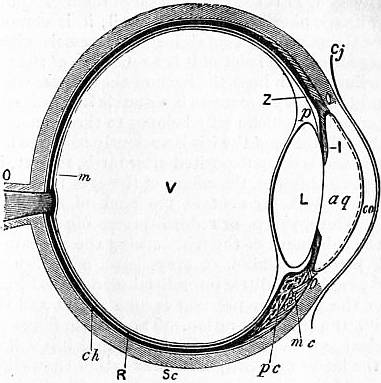
Fig. 1.—Diagrammatic Section through the Eyeball.
cj, Conjunctiva. co, Cornea. Sc, Sclerotic. ch, Choroid. pc, Ciliary processes. mc, Ciliary muscle. O, Optic nerve. R, Retina. I, Iris. aq, Anterior chamber of aqueous humour. L, Lens. V, Vitreous body. Z, Zonule of Zinn, the ciliary process being removed to show it. p, Canal of Petit. m, Yellow spot. The dotted line behind the cornea represents its posterior epithelium.
The protective coat consists of the sclerotic in the posterior five-sixths and the cornea in the anterior sixth. The sclerotic (fig. 1, Sc) is a firm fibrous coat, forming the “white of the eye,” which posteriorly is pierced by the optic nerve and blends with the sheath of that nerve, while anteriorly it is continued into the cornea at the corneo-scleral junction. At this point a small canal, known as the canal of Schlemm, runs round the margin of the cornea in the substance of the sclerotic (see fig. 1). Between the sclerotic and the subjacent choroid coat is a lymph space traversed by some loose pigmented connective tissue,—the lamina fusca. The cornea is quite continuous with the sclerotic but has a greater convexity. Under the microscope it is seen to consist of five layers. Most anteriorly there is a layer of stratified epithelium, then an anterior elastic layer, then the substantia propria of the cornea which is fibrous with spaces in which the stellate corneal corpuscles lie, while behind this is the posterior elastic layer and then a delicate layer of endothelium. The transparency of the cornea is due to the fact that all these structures have the same refractive index.
The middle or vascular coat of the eye consists of the choroid, the ciliary processes and the iris. The choroid (fig. 1, ch) does not come quite as far forward as the corneo-scleral junction: it is composed of numerous blood-vessels and pigment cells bound together by connective tissue and, superficially, is lined by a delicate layer of pigmented connective tissue called the lamina suprachoroidea in contact with the already-mentioned perichoroidal lymph space. On the deep surface of the choroid is a structureless basal lamina.
The ciliary processes are some seventy triangular ridges, radially arranged, with their apices pointing backward (fig. 1, pc), while their bases are level with the corneo-scleral junction. They are as vascular as the rest of the choroid, and contain in their interior the ciliary muscle, which consists of radiating and circular fibres. The radiating fibres (fig. 1, mc) rise, close to the canal of Schlemm, from the margin of the posterior elastic lamina of the cornea, and pass backward and outward into the ciliary processes and anterior part of the choroid, which they pull forward when they contract. The circular fibres lie just internal to these and are few or wanting in short-sighted people.
The iris (fig. 1, I) is the coloured diaphragm of the eye, the centre of which is pierced to form the pupil; it is composed of a connective tissue stroma containing blood-vessels, pigment cells and muscle fibres. In front of it is a reflection of the same layer of endothelium which lines the back of the cornea, while behind both it and the ciliary processes is a double layer of epithelium, deeply pigmented, which really belongs to the retina. The pigment in the substance of the iris is variously coloured in different individuals, and is often deposited after birth, so that, in newly-born European children, the colour of the eyes is often slate-blue owing to the black pigment at the back of the iris showing through. White, yellow or reddish-brown pigment is deposited later in the substance of the iris, causing the appearance, with the black pigment behind, of grey, hazel or brown eyes. In blue-eyed people very little interstitial pigment is formed, while in Albinos the posterior pigment is also absent and the blood vessels give the pink coloration. The muscle fibres of the iris are described as circular and radiating, though it is still uncertain whether the latter are really muscular rather than elastic. On to the front of the iris, at its margin, the posterior layer of the posterior elastic lamina is continued as a series of ridges called the ligamentum pectinatum iridis, while between these ridges are depressions known as the spaces of Fontana.
The inner or sensory layer of the wall of the eyeball is the retina; it is a delicate transparent membrane which becomes thinner as the front of the eye is approached. A short distance behind the ciliary processes the nervous part of it stops and forms a scalloped border called the ora serrata, but the pigmented layer is continued on behind the ciliary processes and iris, as has been mentioned, and is known as the pars ciliaris retinae and pars iridica retinae. Under the microscope the posterior part of the retina is seen to consist of eight layers. In its passage from the lens and vitreous the light reaches these layers in the following order:—(1) Layer of nerve fibres; (2) Layer of ganglion cells; (3) Inner molecular layer; (4) Inner nuclear layer; (5) Outer molecular layer; (6) Outer nuclear layer; (7) Layer of rods and cones; (8) Pigmented layer.
The layer of nerve fibres (fig. 2, 2) is composed of the axis-cylinders only of the fibres of the optic nerve which pierce the sclerotic, choroid and all the succeeding layers of the retina to radiate over its surface.
The ganglionic layer (fig. 2, 3) consists of a single stratum of large ganglion cells, each of which is continuous with a fibre of the preceding layer which forms its axon. Each also gives off a number of finer processes (dendrites) which arborize in the next layer.
The inner molecular layer (fig. 2, 4) is formed by the interlacement of the dendrites of the last layer with those of the cells of the inner nuclear layer which comes next.
The inner nuclear layer (fig. 2, 5) contains three different kinds of cells, but the most important and numerous are large bipolar cells, which send one process into the inner molecular layer, as has just been mentioned, and the other into the outer molecular layer, where they arborize with the ends of the rod and cone fibres.
The outer molecular layer (fig. 2, 6) is very narrow and is formed by the arborizations just described. The outer nuclear layer (fig. 2, 7), like the inner, consists of oval cells, which are of two kinds. The rod granules are transversely striped, and are connected externally with the rods, while internally processes pass into the outer molecular layer to end in a knob around which the arborizations of the inner nuclear cells lie. The cone granules are situated more externally, and are in close contact with the cones; internally their processes form a foot-plate in the outer molecular layer from which arborizations extend.
The layer of rods and cones (fig. 2, 9) contains these structures, the rods being more numerous than the cones. The rods are spindle-shaped bodies, of which the inner segment is thicker than the outer. The cones are thicker and shorter than the rods, and resemble Indian clubs, the handles of which are directed outward and are transversely striped. In the outer part of the rods the visual purple or rhodopsin is found.
The pigmented layer consists of a single layer of hexagonal cells containing pigment, which is capable of moving towards the rods and cones when the eye is exposed to light and away from them in the dark.
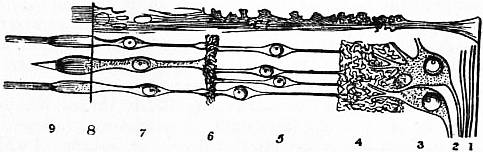
Fig. 2.—Diagrammatic section through the retina to show the several layers, which are numbered as in the text. Ct, The radial fibres of the supporting connective tissue.
Supporting the delicate nervous structures of the retina are a series of connective tissue rods known as the fibres of Müller (fig. 2, Ct); these run through the thickness of the retina at right angles to its surface, and are joined together on the inner side of the layer of nerve fibres to form the inner limiting membrane. More externally, at the bases of the rods and cones, they unite again to form the outer limiting membrane.
When the retina is looked at with the naked eye from in front two small marks are seen on it. One of these is an oval depression about 3 mm. across, which, owing to the presence of pigment, is of a yellow colour and is known as the yellow spot (macula lutea); it is situated directly in the antero-posterior axis of the eyeball, and at its margin the nerve fibre layer is thinned and the ganglionic layer thickened. At its centre, however, both these layers are wanting, and in the layer of rods and cones only the cones are present. This central part is called the fovea centralis and is the point of acutest vision. The second mark is situated a little below and to the inner side of the yellow spot; it is a circular disk with raised margins and a depressed centre and is called the optic disk; in structure it is a complete contrast to the yellow spot, for all the layers except that of the nerve fibres are wanting, and consequently, as light cannot be appreciated here, it is known as the “blind spot.” It marks the point of entry of the optic nerve, and at its centre the retinal artery appears and divides into branches. An appreciation of the condition of the optic disk is one of the chief objects of the ophthalmoscope.
The crystalline lens (fig. 1, L) with its ligament separates the aqueous from the vitreous chamber of the eye; it is a biconvex lens the posterior surface of which is more curved than the anterior. Radiating from the anterior and posterior poles are three faint lines forming a Y, the posterior Y being erect and the anterior inverted. Running from these figures are a series of lamellae, like the layers of an onion, each of which is made up of a number of fibrils called the lens fibres. On the anterior surface of the lens is a layer of epithelial cells, which, towards the margin or equator, gradually elongate into lens fibres. The whole lens is enclosed in an elastic structureless membrane, and, like the cornea, its transparency is due to the fact that all its constituents have the same refractive index.
The ligament of the lens is the thickened anterior part of the hyaloid membrane which surrounds the vitreous body; it is closely connected to the iris at the ora serrata, and then splits into two layers, of which the anterior is the thicker and blends with the anterior part of the elastic capsule of the lens, so that, when its attachment to the ora serrata is drawn forward by the ciliary muscle, the lens, by its own elasticity, increases its convexity. Between the anterior and posterior splitting of the hyaloid membrane is a circular lymph space surrounding the margin of the lens known as the canal of Petit (fig. 1, p).
The aqueous humour (fig. 1, aq) is contained between the lens and its ligament posteriorly and the cornea anteriorly. It is practically a very weak solution of common salt (chloride of sodium 1.4%). The space containing it is imperfectly divided into a large anterior and a small posterior chamber by a perforated diaphragm—the iris.
The vitreous body or humour is a jelly which fills all the contents of the eyeball behind the lens. It is surrounded by the hyaloid membrane, already noticed, and anteriorly is concave for the reception of the lens.
From the centre of the optic disk to the posterior pole of the lens a lymph canal formed by a tube of the hyaloid membrane stretches through the centre of the vitreous body; this is the canal of Stilling, which in the embryo transmitted the hyaloid artery to the lens. The composition of the vitreous is practically the same as that of the aqueous humour.
The arteries of the eyeball are all derived from the ophthalmic branch of the internal carotid, and consist of the retinal which enters the optic nerve far back in the orbit, the two long ciliaries, which run forward in the choroid and join the anterior ciliaries, from muscular branches of the ophthalmic, in the circulus iridis major round the margin of the iris, and the six to twelve short ciliaries which pierce the sclerotic round the optic nerve and supply the choroid and ciliary processes.
The veins of the eyeball emerge as four or five trunks rather behind the equator; these are called from their appearance venae vorticosae, and open into the superior ophthalmic vein. In addition to these there is a retinal vein which accompanies its artery.
Accessory Structures of the Eye.—The eyelids are composed of the following structures from in front backward: (1) Skin; (2) Superficial fascia; (3) Orbicularis palpebrarum muscle; (4) Tarsal plates of fibrous tissue attached to the orbital margin by the superior and inferior palpebral ligaments, and, at the junction of the eyelids, by the external and internal tarsal ligaments of which the latter is also known as the tendo oculi; (5) Meibomian glands, which are large modified sebaceous glands lubricating the edges of the lids and preventing them adhering, and Glands of Moll, large sweat glands which, when inflamed, cause a “sty”; (6) the conjunctiva, a layer of mucous membrane which lines the back of the eyelids and is reflected on to the front of the globe, the reflection forming the fornix: on the front of the cornea the conjunctiva is continuous with the layer of epithelial cells already mentioned.
The lachrymal gland is found in the upper and outer part of the front of the orbit. It is about the size of an almond and has an upper (orbital) and a lower (palpebral) part. Its six to twelve ducts open on to the superior fornix of the conjunctiva.
The lachrymal canals (canaliculi) (see fig. 3, 2 and 3) are superior and inferior, and open by minute orifices (puncta) on to the free margins of the two eyelids near their inner point of junction. They collect the tears, secreted by the lachrymal gland, which thus pass right across the front of the eyeball, continually moistening the conjunctiva. The two ducts are bent round a small pink tubercle called the caruncula lachrymalis (fig. 3, 4) at the inner angle of the eyelids, and open into the lachrymal sac (fig. 3, 5), which lies in a groove in the lachrymal bone. The sac is continued down into the nasal duct (fig. 3, 6), which is about ¾ inch long and opens into the inferior meatus of the nose, its opening being guarded by a valve.
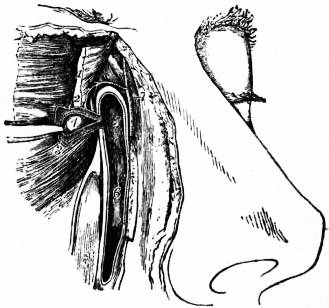
Fig. 3.—Lachrymal Canals and Duct.
1, Orbicular muscle. 2, Lachrymal canal. 3, Punctum. 4, Caruncula. 5, Lachrymal sac. 6, Lachrymal duct. 7, Angular artery.
The orbit contains seven muscles, six of which rise close to the optic foramen. The levator palpebrae superioris is the highest, and passes forward to the superior tarsal plate and fornix of the conjunctiva. The superior and inferior recti are inserted into the upper and lower surfaces of the eyeball respectively; they make the eye look inward as well as up or down. The external and internal recti are inserted into the sides of the eyeball and make it look outward or inward. The superior oblique runs forward to a pulley in the inner and front part of the roof of the orbit, round which it turns to be inserted into the outer and back part of the eyeball. It turns the glance downward and outward. The inferior oblique rises from the inner and front part of the floor of the orbit, and is also inserted into the outer and back part of the eyeball. It directs the glance upward and outward. Of all these muscles the superior oblique is supplied by the fourth cranial nerve, the external rectus by the sixth and the rest by the third.
The posterior part of the eyeball and the anterior parts of the muscles are enveloped in a lymph space, known as the capsule of Tenon, which assists their movements.
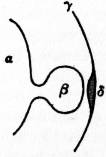
Fig. 4. Diagram of Developing Eye (1st stage). Fig. 5. Diagram of Developing Eye (2nd stage).
α, Forebrain. β, Optic vesicle. γ, Superficial ectoderm. δ, Thickening for lens. β, Optic cup. δ, Invagination of lens. Other letters as in fig. 4.
Embryology.—As is pointed out in the article Brain, the optic vesicles grow out from the fore-brain, and the part nearest the brain becomes constricted and elongated to form the optic stalk (see figs. 4 and 5, β). At the same time the ectoderm covering the side of the head thickens and becomes invaginated to form the lens vesicle (see figs. 4 and 5, δ), which later loses its connexion with the surface and approaches the optic vesicle, causing that structure to become cupped for its reception, so that what was the optic vesicle becomes the optic cup and consists of an external and an internal layer of cells (fig. 6 β and δ). Of these the outer cells become the retinal pigment, while the inner form the other layers of the retina. The invagination of the optic cup extends, as the choroidal fissure (not shown in the diagrams), along the lower and back part of the optic stalk, and into this slit sinks some of the surrounding mesoderm to form the vitreous body and the hyaloid arteries, one of which persists.1 When this has happened the fissure closes up. The anterior epithelium of the lens vesicle remains, but from the posterior the lens fibres are developed and these gradually fill up the cavity. The superficial layer of head ectoderm, from which the lens has been invaginated and separated, becomes the anterior epithelium of the cornea (fig. 6, ε), and between it and the lens the mesoderm sinks in to form the cornea, iris and anterior chamber of the eye, while surrounding the optic cup the mesoderm forms the sclerotic and choroid coats (fig. 7, η and ζ). Up to the seventh month the pupil is closed by the membrana pupillaris, derived from the capsule of the lens which is part of the mesodermal ingrowth through the choroidal fissure already mentioned. The hyaloid artery remains, as a prolongation of the retinal artery to the lens, until just before birth, but after that its sheath forms the canal of Stilling. Most of the fibres of the optic nerve are centripetal and begin as the axons of the ganglionic cells of the retina; a few, however, are centrifugal and come from the nerve cells in the brain.
Fig. 6.
Diagram of Developing Eye (3rd stage).
δ, Solid lens. ε, Corneal epithelium. Other letters as in figs. 4 and 5.
Fig. 7.
Diagram of Developing Eye (4th stage). The mesodermal tissues are dotted.
ζ, Choroid and Iris. η, Sclerotic and Cornea. θ, Vitreous. ε, Aqueous. κ, Eyelids.
The eyelids are developed as ectodermal folds, which blend with one another about the third month and separate again before birth in Man (fig. 7, κ). The lachrymal sac and duct are formed from solid ectodermal thickenings which later become canalized.
It will thus be seen that the optic nerve and retina are formed from the brain ectoderm; the lens, anterior epithelium of the cornea, skin of the eyelids, conjunctiva and lachrymal apparatus from the superficial ectoderm; while the sclerotic, choroid, vitreous and aqueous humours as well as the iris and cornea are derived from the mesoderm.