MOVEMENTS, BEHAVIOR, AND ECOLOGY OF TIMBER WOLVES IN NORTHEASTERN MINNESOTA
Reading edition
L. David Mech, L. D. Frenzel, Jr., Robert R. Ream, and John W. Winship
The largest population of wolves (Canis lupus) remaining today in the continental United States outside of Alaska is in northern Minnesota. As of mid-1970 this population was not legally protected, and the species, which once ranged over almost all of North America, is now considered by the U.S. Department of the Interior to be in danger of extinction in the contiguous 48 States. Until the present research, the only field studies of Minnesota wolves were those of Olson (1938 a, b) and Stenlund (1955). Those investigations provided much useful general information about Minnesota wolves and gave the present authors an excellent background with which to begin more detailed investigations.
This paper reports on the basic aspects of a series of studies that began in 1964, and concentrates primarily on wolf movements and activity, social behavior, hunting behavior, and population organization. Most of the data were collected during January, February, and March 1967; February, November, and December 1968; and January through August 1969. A total of 192 days was spent in the field.
According to a distribution map of wolf subspecies (Goldman 1944), the race of wolves in our study area is Canis lupus lycaon. However, evidence presented by Mech and Frenzel (see page 60) suggests that there may be strong influence by C. l. nubilus, a more western race of wolf formerly thought to be extinct (Goldman 1944).
Between 1965 and the present, wolves in the study area were neither protected nor bountied, and the influence of trapping and hunting is thought to have been negligible.
THE STUDY AREA
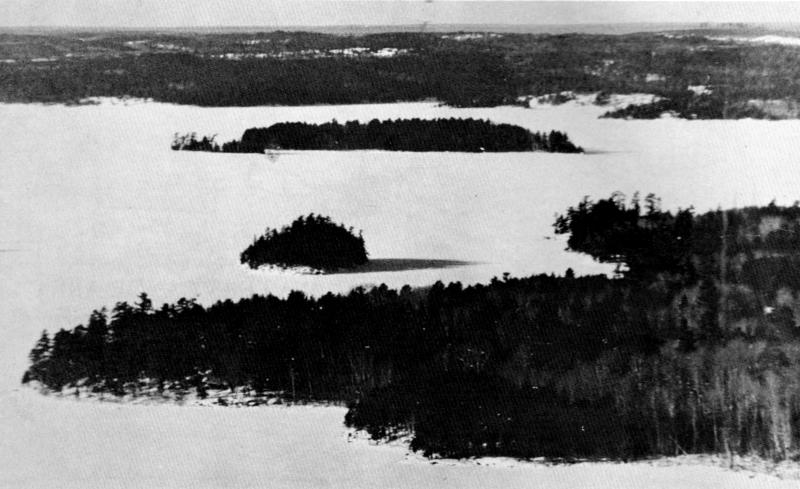
This study was conducted in the Superior National Forest (fig. 1) in northern St. Louis, Lake, and Cook Counties of northeastern Minnesota (92° west longitude, 48° north latitude), an area well described by Stenlund (1955). Most of the data were collected from within and immediately south of the Boundary Waters Canoe Area, a special wilderness region in which travel by motorized vehicles is restricted. The total study area encompasses approximately 1.5 million acres, and numerous lakes and rivers comprise about 15 percent of this area (fig. 2). The topography varies from large stretches of swamps to rocky ridges, with altitudes ranging from 1,000 to 2,300 feet above sea level (fig. 3). Winter temperatures lower than -30° F. are not unusual, and snow depths generally range from 20 to 30 inches on the level. However, an important exception occurred in early 1969 when depths of 45 inches and more accumulated in much of the area. Further details on snow conditions in the study area during the period of this investigation are given by Mech et al. (see page 51). Conifers predominate in the forest overstory, with the following species present: jack pine (Pinus banksiana Lamb.), white pine (P. strobus L.), red pine (P. resinosa Ait.), black spruce (Picea mariana (Mill.) B.S.P.), white spruce (P. glauca (Moench) Voss), balsam fir (Abies balsamea (L.) Mill.), white cedar (Thuja occidentalis L.), and tamarack (Larix laricina (DuRoi) K. Koch). However, as a result of extensive cutting and fires much of the conifer cover is interspersed with large stands of white birch (Betula papyrifera Marsh.) and aspen (Populus tremuloides Michx.). Detailed descriptions of the forest vegetation were presented by Ohmann and Ream (1969).
Figure 1 (left half)—Map of the study area. (Click for larger image.)
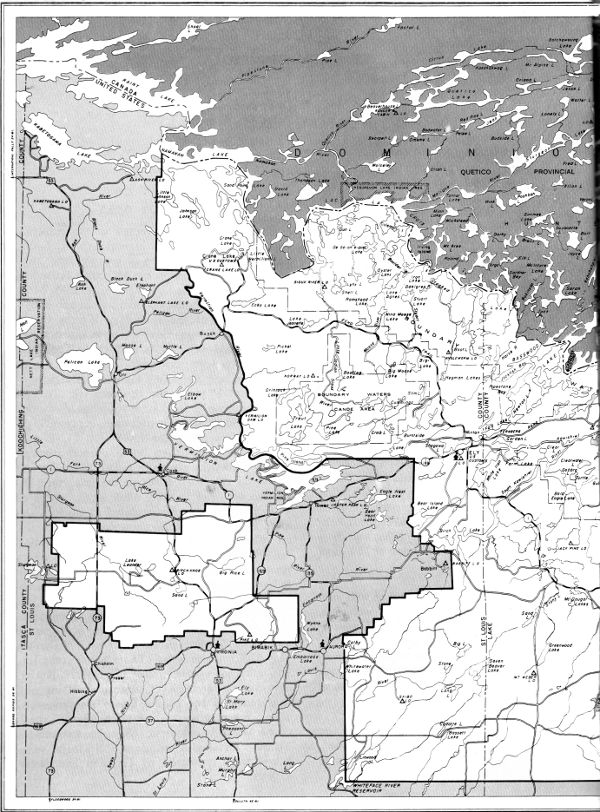
Figure 1 (right half)—Map of the study area. BOUNDARY WATERS CANOE AREA SUPERIOR NATIONAL FOREST (Click for larger image.)
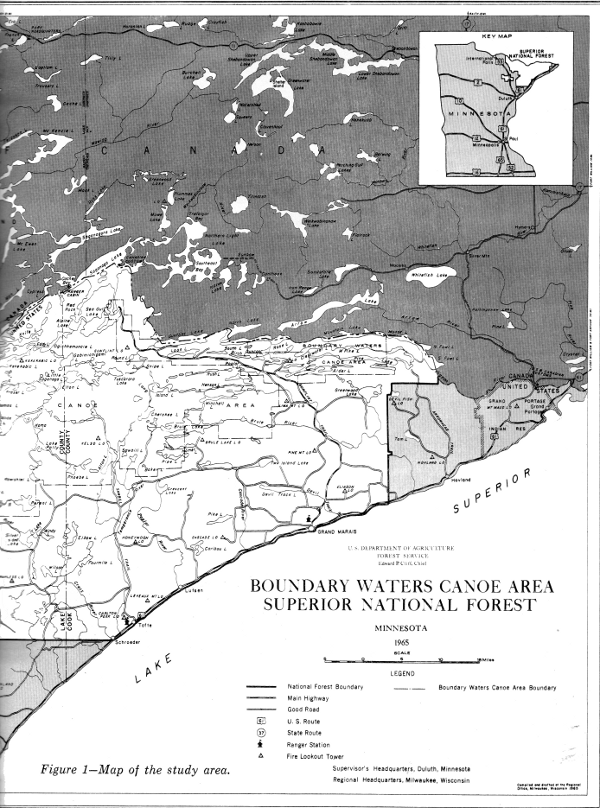
Figure 2.—Lakes are common throughout most of the study area. (Photo courtesy of L. D. Mech.)
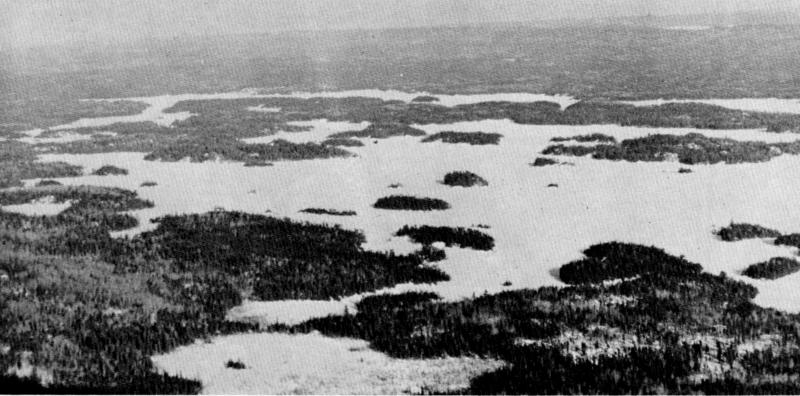
Figure 3.—Ridges, islands, swamps, and bays are part of the variable topography in the Superior National Forest. (Photo courtesy of L. D. Mech.)
METHODS
The observations discussed in this paper were all made from aircraft, the method of flying being that reported by Burkholder (1959) and Mech (1966a). The following aircraft were used (in order of size): Aeronca Champ,[1] Supercub, Cessna 172, Cessna 180, and Cessna 206. The smaller aircraft were excellent for holding in tight circles during observations but had the disadvantage of being slow and cold; the larger planes could cover the study area much more quickly and were more comfortable, but were not as maneuverable during observations. For radiotracking, to be discussed below, the best compromise seemed to be a Cessna 172.
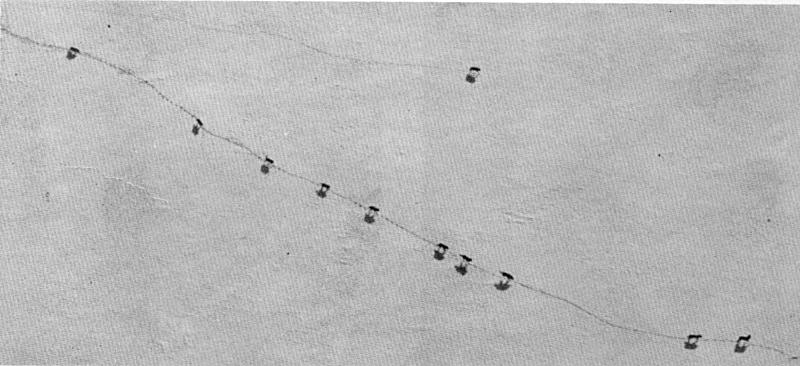
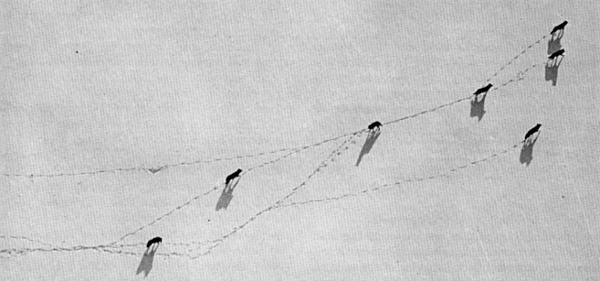
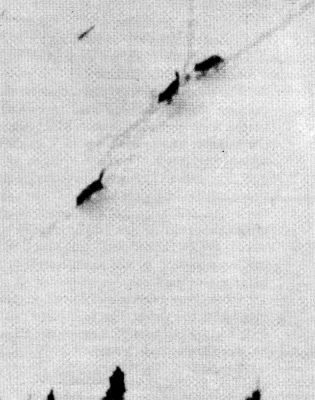
To make observations of wolves, we flew over frozen waterways until tracks were found, and then followed the tracks until we lost them or saw the wolves (fig. 4). Several times we located wolves directly just by scanning the lakes. However, because there seemed to be a number of packs in the area, and because most wolves were the same color (with the exception of a few black or white individuals) (see Mech and Frenzel, page 60), it usually was not possible to follow packs from one day to the next and be certain of identification. Moreover, it was impossible to locate any pack at will because most wolves also spent much time inland.
Figure 4.—An important technique used in the study involved aerial tracking and observing of wolf packs. (Photo courtesy of L. D. Frenzel.)
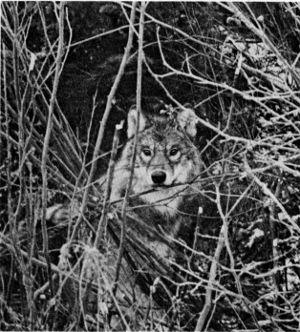
Therefore, to facilitate our observations and to obtain data on wolf movements and extent of range, we began a radiotracking program in 1968-69. A professional trapper, Robert Himes, was employed to capture the wolves. Using Newhouse No. 4 and 14 steel traps at scent-post sets, he caught two wolves, and captured another with a live-snare similar to that used by Nellis (1968); the senior author trapped two additional wolves (fig. 5).
Figure 5.—A wolf caught in a trap. (Photo courtesy of D. L. Breneman.)
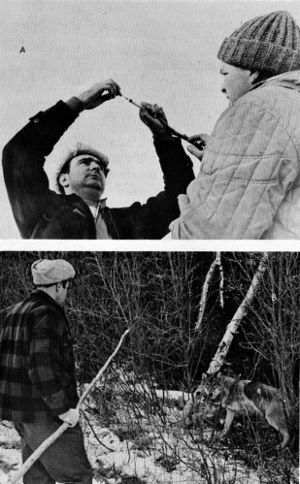
The four wolves held in steel traps were restrained by a choker (fig. 6), and then anesthetized by intramuscular injections (fig. 7A, B) of a combination of 30 mg. of phencyclidine hydrochloride (Sernylan, Parke-Davis Co.) and 25 mg. promazine hydrochloride (Sparine, Wyeth Laboratories) as prescribed by Seal and Erickson (1969); these drugs proved most satisfactory.
Figure 6.—A choker was used to restrain wolves caught in traps. (Photo courtesy of D. L. Breneman.)
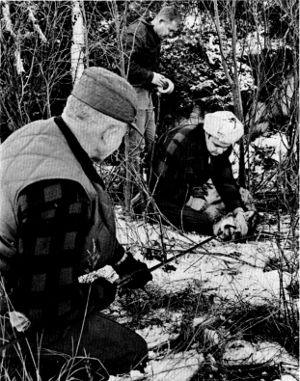
Figure 7.—A. A small hypodermic syringe is loaded with drugs. B. The loaded syringe is used on the end of a pole. (Photos courtesy of D. L. Breneman.)
The fifth wolf (a female), which was captured around the chest by the live-snare, was handled without drugs. A forked stick was used to hold down her head (Kolenosky and Johnston 1967), and she offered no resistance (fig. 8). Evidently she went into shock or some other psychophysiological state of unconsciousness, for after her release she remained on her side and did not move for 1.5 hours, despite our prodding during the first few minutes (fig. 9). Then suddenly she leaped up and ran off.
Figure 8.—Once pinned by the forked stick, the wolf ceased struggling. (Photo courtesy of Richard Bend.)
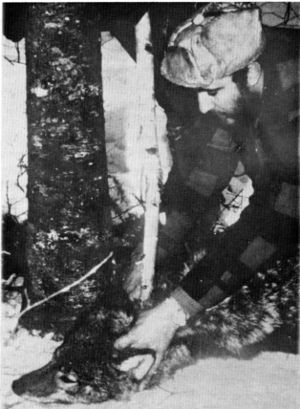
Figure 9.—After release, the wolf lay still for 1½ hours before jumping up and running off. (Photo courtesy of L. D. Mech.)
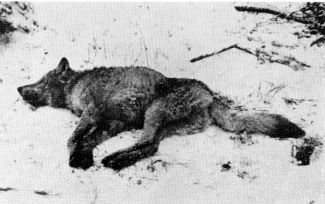
Figure 10.—A radio transmitter collar was placed around the neck of each trapped wolf. (Photo courtesy of D. L. Breneman.)
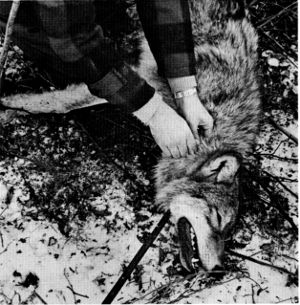
Figure 11.—Each ear of the wolf was tagged with identifying numbers. (Photo courtesy of Richard Bend.)
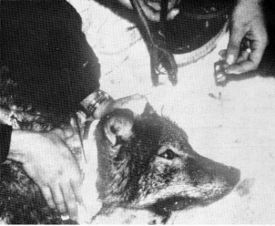
Each wolf was examined, outfitted with a radio transmitter collar 15 inches inside circumference (fig. 10) and tagged with identification numbers in both ears (fig. 11). Each transmitter was of a different frequency in the 150 MHz range, emitted a pulsed signal ranging from 75 to 350 pulses per minute, and had a calculated life of at least 300 days (fig. 12). Two types of 12-inch whip antennas were used on the transmitters: one type extended up the side of the collar and then stuck out above for 6 inches; the other was fully attached inside the collar and extended up one side, around the top, and partly down the other side. The transmitter, batteries, and antenna were molded into a collar of acrylic weighing 11 ounces (Mech et al. 1965).[2] All radio equipment functioned flawlessly for at least 5 months, and one transmitter continued operating for at least 9 months.
Figure 12.—Each radio collar had a different frequency tuned to special receivers, which allowed each wolf to be identified. (Photo courtesy of D. L. Breneman.)
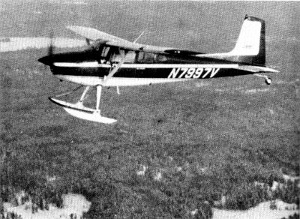
For tracking radio-equipped wolves, a directional yagi antenna (fig. 13) was attached to each of the wing struts of an aircraft and connected inside to a portable receiver. The usual tracking technique was to fly at 1,500 to 3,000 feet elevation to the last known location of the wolf being sought (fig. 14). If a signal was not obtained at that point, the aircraft spiraled upward until the signal was found or until 10,000 feet altitude had been reached. If the signal still was not heard, a search pattern was flown at 10,000 feet. The range of the signal from this altitude was 15 to 35 miles; at 3,000 feet it was 10 to 15 miles. Collars with antennas molded fully inside gave only about two-thirds the range of those protruding partly, but could be expected to last longer because the antennas could not break off. It is unknown whether any protruding antennas did break during the study, but on January 5, 1970, one wolf was recaptured, and its antenna had broken.
Figure 13.—Directional yagi antennas fastened to the wing struts of the aircraft were necessary to "home in" on the wolves. (Photo courtesy of U.S. Bureau of Sport Fisheries and Wildlife.)
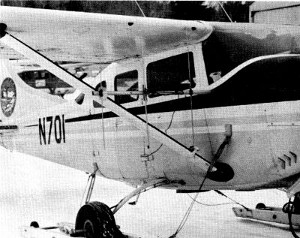
Figure 14.—The tracking aircraft was usually flown at altitudes of 1,500 to 3,000 feet. (Photo courtesy of Dick Shank.)
When a signal was received, the aircraft was headed in the approximate direction of the source until the signal strength reached a peak; a 90° turn was then made in the direction the signal seemed the strongest. A series of these maneuvers soon narrowed the area to the point where visual search was possible. After practice and experience with this technique, we could locate the approximate source of the signal within 10 to 30 minutes after first receiving it.
Even though the radiotagged wolves spent most of their time inland, often in stands of conifers, they were frequently observed from the aircraft. The technique was to circle at 300 to 800 feet altitude around a radius of a quarter mile from the point where the strongest signal emanated. From December through April, 65 percent of the wolves located by radio were sighted; the rate was much higher for more experienced personnel. A pack of five wolves that was tracked was seen 31 times out of 33 attempts during February and March.
Whenever wolves were located, radiotagged or not, observations were made from an altitude that did not disturb them. Packs varied in the concern shown the aircraft, but only one or two ran from it. The radiotagged wolves, and a pack of 10 to 13 animals, were habituated to the aircraft and usually could be observed from altitudes of 500 feet and less without disturbance (fig. 15).
Almost all the radiotracking was done from aircraft, but when inclement weather prevented flying, some attempts from the ground succeeded when wolves were close enough to roads. The usual range on the ground was 0.75 to 1.50 miles. One wolf was approached to within 35 feet through radiotracking.
Figure 15.—The wolves studied soon became accustomed to the aircraft and could then be observed during their natural activity. (Photo courtesy of L. D. Mech.)
FOOTNOTES:
RESULTS AND OBSERVATIONS
Aerial observations made during this study involved 490 hours distributed as follows: January, February, March 1967—124 hours; February 1968—10 hours; December 1968 through August 1969—356 hours. Seventy-seven observations involving a total of 323 wolves were made (table 1), excluding animals located through radiotracking.
One male and four female wolves were radiotagged, and they and their associates were followed intermittently for periods of 5 to 8 months (table 2). All except one initially suffered some injury to a foot. Three of these animals were seen limping, but only in one case was the limp judged extreme enough to have significantly affected the movements or behavior of the animal. In that one case, the wolf (No. 1057) was caught in a steel trap on an extremely cold night, and her foot froze. After that she was often seen hopping on three legs. She was not able to keep up with her pack, which consisted of 10 to 13 members, and her movements were much restricted compared with those of other wolves. However, she was frequently observed feeding on fresh kills, and may even have made them herself.
Table 1.—Sizes of wolf population units observed in northeastern Minnesota
Population unit[3] (number of wolves) Wolf observations
Winter 1966-67 Winter 1968-69 Total Winters[4] 1948-53
Number Percent Number Percent Number Percent Number Percent
1 8 31 17 33 25 32 48 43
23126129122422
3312245676
4——7147976
527486887
6312487976
727123444
8312366833
9——242333
10272445——
11————————
12——121111
13——2423——
Total number of wolves109—214—323—318—
Total number of observations26—51—77—112—
Mean population unit size4.2 —4.2 —4.2 —2.8 —
FOOTNOTES:
Table 2.—Background information on five radiotagged wolves studied in northeastern Minnesota
Wolf Estimated weight[5] (pounds) Usual associations Location captured Date captured Last date located Days located General condition
Number Sex
Number
1051M 75 None[6] T62N-R7W-S18 Nov. 27/68 Apr. 24/69 84 Good, but two toes frozen in trap; animal limped lightly for 5-6 wks.
1053 F 60 None T62N-R8W-S13 Dec. 10/68 Aug. 29/69 72 Thin; top of foot cut in trap but no broken bones or frozen toes; limped for at least 10 wks.
1055 F 60 Another wolf intermittently T61N-R10W-S26 Jan. 5/69 May 30/69 65 Thin; two toes lightly frozen; no limp ever noticed.
1057 F 60 Pack of 13[7] T66N-R5W-S33 Jan. 8/69 Apr. 24/69 47 Thin; front foot frozen in trap; lost use of foot and could not stay with pack.
1059 F 65 Pack of 5 T62N-R11W-S26 Jan. 22/69 Aug. 29/69 51 Good but thin; captured in snare; no apparent injury.
FOOTNOTES:
The precise ages of the radiotagged wolves were unknown. All individuals, however, had sharp unworn teeth, indicating that they were all relatively young. No. 1051, the only male studied, had testes 2.0 cm. long and 1.5 cm. wide; their volume therefore would be less than 4.5 cc. The small size of these testes, compared with the 7 to 28 cc. reported by Fuller and Novakowski (1955) as the volume of the testes from wolves taken during fall, would indicate that 1051 had not yet matured. Since the animal's testes and canine lengths were considerably greater than those of pups caught in a later study, we presume 1051 was 18 or 30 months old.
Two of the females, No. 1055 and No. 1059, both captured in January, had vulvas that seemed to be beginning to swell. No. 1059 was killed by a trapper about a year later, on January 10, 1970, and an examination revealed that she had bred in 1969 and carried five fetuses. Sectioning her incisors and reading the apparent annulations indicated that she probably was 3+ or 4+ years old.[8]
Three of the wolves were basically lone individuals. One of these, No. 1051, was captured on a night when tracks of at least two other wolves came by the trap, and this could mean that he had been part of a pack. However, it is also possible that these were merely tracks of non-associated wolves that were also traveling through the area. In any case, 1051 was not seen associating with any other wolf until 4 months after he was caught, and even then the association seemed to be temporary and casual. It could be argued that capture, handling by humans, or wearing a collar prevented him from regaining old associations or making new ones. However, the wolves radiotagged by Kolenosky and Johnston (1967) were quickly accepted back into their packs, and so were two of ours. Thus we conclude that 1051 probably was a lone wolf when captured.
When 1053 was trapped, her tracks were the only ones in the area, and she was never seen closely associating with another wolf. No. 1055 probably was with another wolf when captured, as evidenced by tracks. About a month after she was radiotagged she associated with another wolf intermittently for about 2 weeks, after which she was only seen alone.
No. 1057 and No. 1059 were both members of packs. No. 1057 was captured during the night after a pack of 13 wolves was seen heading toward the area; 5 days later she was seen with 10 other wolves, which no doubt represented this same pack. This wolf's association with the pack was interrupted, however, because of the foot injury sustained during capture. When 1059 was caught, tracks of two other wolves were seen in the immediate vicinity, and one of the animals was seen within a quarter mile of the trapped wolf. Three days after 1059's release, and perhaps sooner, she was back with her pack, with which she remained at least through March.
The detailed histories of the associations of the radiotagged wolves will be discussed in a later section.
Radiotagged wolves were tracked every day that weather permitted during December, January, and February; every week during March, April, and May; and once a month during June, July, and August (fig. 16). Information was obtained for a total of 570 "wolf-days"—a wolf-day being a day in which one radiotagged wolf was located; a pack of five being located for 1 day would constitute 5 wolf-days.
Figure 16.—Distribution of the days on which data were obtained for each of the radiotagged wolves. Because tracking success was 99 percent, this also represents the distribution of effort. During June, July, and August, wolves 1053 and 1059 were located 1 day each month.
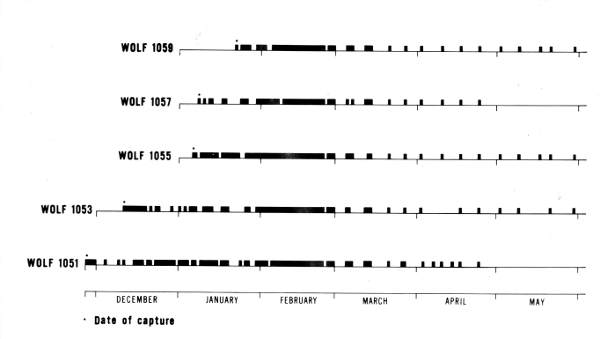
The last day that animals 1051 and 1057 were heard from was April 24, 1969. Both had traveled long distances during the previous week and may have moved out of range. Signals from wolf 1055 were last heard on May 30; this animal had also been ranging widely. Circles with radii of at least 50 miles around the last known locations of each wolf were searched unsuccessfully for the signals. During all subsequent tracking nights for the remaining wolves, the missing animals were also sought, but to no avail. Before the last dates that signals from these animals were heard, attempts to locate marked animals from the air had failed in only three instances.
FOOTNOTES:
Daytime Activity Patterns
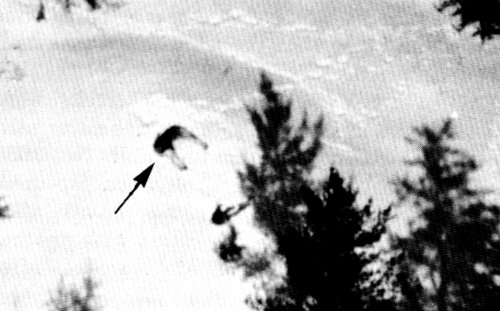
When radiotagged wolves were located, notes were kept on the type of activity they were engaged in; the results are summarized in figure 17. In a total of 171 observations made between 9:00 a.m. and 6:00 p.m., the wolves were resting 62 percent of the time, traveling 28 percent and feeding 10 percent. They tended to travel more before 11:00 a.m. and after 3:00 p.m., although resting still composed at least 45 percent of the activity during every hour (fig. 18).
These results generally agree with the statement by Mech (1966a) that wolves on nearby Isle Royale tend to rest about 11:00 a.m. and begin traveling again about 4:00 p.m. However, it does appear that the Minnesota wolves spend much more of the day resting than do the Isle Royale animals. The difference may be caused by the difference in pack sizes studied. The Isle Royale pack of 15 to 16 may have had to travel more to find enough food to feed all its members than did the lone wolves and pack of five in the present study.
Figure 17.—Percentage of time spent by radiotagged wolves in various types of activity throughout the day, from December through April.
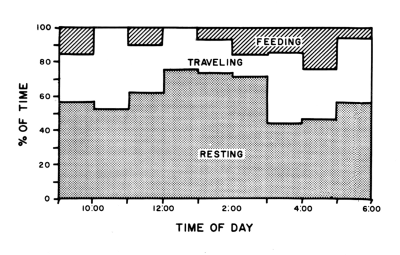
Figure 18.—Generally the wolves rested during most of the day. (Photo courtesy of L. D. Mech.)
Movements and Range
Wolf movement is greatly hindered by deep, soft snow, so during winter travel, wolves frequently use areas where they sink into the snow the least. In our study area, frozen waterways are used extensively where possible, just as reported by Stenlund (1955). Where few lakes or rivers exist, wolves follow railroad beds and logging roads, often soon after a plow or other vehicle has driven on them. In cutting cross country through deep snow, wolves travel single file and tend to stick to windblown ridges and to trails of deer and moose. Wolves that have ranges small enough to cover in a few days form a network of their own trails, which they can maintain merely by traveling regularly over them. Packs on Isle Royale depended a great deal on such a system of trails (Mech 1966a), and so did Pack No. 1059 in our study area.
Wolf packs can travel up to 45 miles in a day but it is usually larger packs that do so (Stenlund 1955, Burkholder 1959, Mech 1966a, Pimlott et al. 1969). In our study area we sometimes saw evidence of long moves by large packs along strings of lakes and waterways. However, most of our movement data pertain to lone wolves and a pack of five. The daily travel of these animals was usually much less than that reported for large packs.
Our radiotracking data provide an index to the extent of travel for each wolf rather than the actual amount of travel, for it is based on straight line distances between consecutive points at which an animal was found. This measure will be referred to as the "net daily distance."
Much variation was found in the net daily distances of wolves, with the longest ranging from 4.5 miles for 1057 to 12.8 for 1055 (table 3). The mean net daily distance for each animal, excluding days with no net movement, varied from 1.5 to 3.6 miles. The movements of these wolves may have been affected by the snow depth and penetrability, for mean and maximum net daily distances suddenly increased for all animals between February 23 and 28, when snow penetrability had decreased to a point where walking wolves would be expected to sink in only about 6 inches (table 4). Other possible explanations for the wolves' sudden increase in movements will be discussed below.
The straight line distances traveled between consecutive weekly locations (called the "net weekly distances") showed a similar variation (table 3). The maximum net weekly distance for each wolf varied from 4.6 miles for 1059 to 49.0 for 1055, with means ranging from 2.9 to 15.6 miles for the same wolves. No doubt 1059's net weekly distances were relatively short because her total range and that of her pack were much smaller than those of the other wolves.
It is difficult to obtain comparable measures of the extent of the ranges covered by each of the radiotagged wolves because their patterns of travel varied so much. Thus the figures given in table 5 should be regarded only as gross indicators of the minimum range of each animal. The area figures are especially deceiving in the case of 1055, for she had a horseshoe-shaped range, much of which apparently was not used.
Table 3.—Straight line distances (miles) between consecutive locations of radiotagged wolves
Wolf number Net daily distances Net weekly distances
Days data obtained Days no net movement Days movement Mean net distance per day Mean net distance per day excluding days of no movement Range Weeks data Mean net distance per week Range
Number Number Percent Number Percent Miles Miles Miles Number Miles Miles
1051 54 13 24 41 76 2.0 2.6 0.0-12.0 22 12.7 1.0-46.0
1053 37 20 54 17 46 1.0 2.1 0.0-05.0 23 6.3 0.0-23.6
1055 46 7 15 39 85 2.9 3.6 0.0-12.8 21 15.6 1.7-49.0
1057 29 11 38 18 62 1.0 1.5 0.0-04.5 15 4.6 0.0-31.0
1059 26 1 4 25 96 2.5 2.6 0.0-05.6 18 2.9 0.0-04.6
Nevertheless, one major piece of information is obvious from the figures: 1059's pack of five wolves had a much smaller range than any of the other uninjured animals—approximately 43 square miles when figured by the minimum-area method (Mohr 1947). The next smallest range was that of 1051 (excluding the area of his later dispersal—see below), which was some seven times the size of the pack's range.
Table 4.—Straight line distances (miles) traveled between consecutive days ("net daily distance") by radiotagged wolves in northeastern Minnesota during February 1969
Wolf number Mean net daily distance Greatest net daily distance
Feb. 1-23 Feb. 23-28 Feb. 1-23 Feb. 23-28
10511.13.52.34.8
10530.72.53.05.0
10552.76.28.012.8
10571.01.54.04.5
10592.23.14.05.6
There is little published information on the movements and ranges of lone wolves with which to compare our data. Mech (1970) summarized information regarding ranges of packs. Reported ranges varied from 36 square miles for a pack of two wolves in Minnesota (Stenlund 1955) to 5,000 square miles for a pack of 10 in Alaska (Burkholder 1959). Considering only data based on intensive study in the same general region (Minnesota, Isle Royale, and Ontario) as our study area, the largest range reported was 210 square miles for a pack of 15 to 21 wolves on Isle Royale (Mech 1966, Jordan et al. 1967). On a per-wolf basis, the ranges in this region varied from 6 to 28 square miles per wolf. Our pack of five with its range of 43 square miles would have about 9 square miles per wolf.
A more accurate assessment of the ranges of the radiotagged wolves requires an individual discussion for each.
No. 1051.—The range of 1051 was composed basically of three distinct areas (fig. 19). Within 10 days after being released, the wolf left the general area of his capture (Area A near Isabella Lake) and traveled to Area B along Highway 1, some 17 miles to the southwest. From December 9 to January 4 wolf 1051 remained in Area B, which covers about 45 square miles. Between January 4 and 6 he returned to Area A and stayed in 13 square miles until February 3. Between February 3 and 5 he shifted to Area C east of Snowbank Lake, 11 miles northwest of Area A. He remained in that 16-square-mile area until February 25, then suddenly left and headed 8 miles to the northeast.
Table 5.—Extent of ranges used by radiotagged wolves
Miles Miles Sq. miles Sq. miles
1053 31.1 22.0 392 31
1055 55.4 24.9 997 40
1057 32.3 3.8 77 14
1059[12] 8.4 8.0 43 39
FOOTNOTES:
Figure 19.—Locations and range of wolf 1051. Lines are NOT travel routes; rather they merely indicate sequence of locations. Only selected lakes are shown.
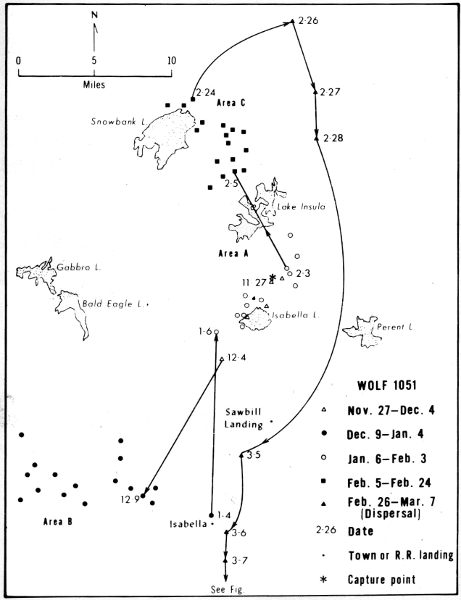
From February 26 until April 24 the movements of 1051 were strongly indicative of dispersal (fig. 20). His average weekly straight line move during that period was 25 miles (compared with 6 miles per week before this period), and until March 14 he maintained an almost straight south-southwest heading to a location west of the town of Castle Danger. After that the animal traveled a series of northwest-southwest alternations that on April 3 took him east of Big Sandy Lake to a point 129 miles southwest of where he had begun the dispersal. There he remained for about 2 weeks, but between April 17 and 24 he traveled 26 miles northwest. We last saw him at 3:30 p.m. on April 24 heading northwest through a swamp 15 miles southeast of Grand Rapids, approximately 122 miles from where he had started. The total of straight line distances between 16 consecutive pairs of locations taken at intervals of from 1 to 8 days was 226 miles, which is the minimum distance the wolf traveled during his dispersal.
Figure 20.—Dispersal of wolf 1051. Lines merely indicate sequence of locations. Only selected lakes are shown.
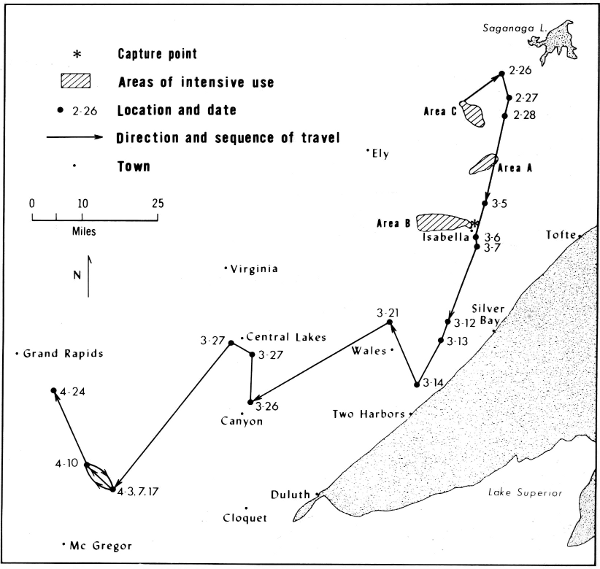
We observed 1051 for distances of up to 5 miles during these travels; he maintained a steady trot that seemed faster than usual, and he appeared intent on heading in a straight line. He did chase deer during his travels, and twice was seen feeding on carcasses. In the area where he remained for about 2 weeks, he was twice seen closely associated with another wolf. This relationship will be discussed later.
An extensive search was made for 1051's signals on May 2 in an area of at least 50 miles radius from his last known location, but it was unsuccessful. On each subsequent tracking flight, the wolf's frequency was also monitored with no success. Possible explanations for the loss of the signal from this wolf include the following: (1) premature expiration of the transmitter, (2) capture of the wolf and breakage of the transmitter, (3) loss of the exposed antenna and consequent reduction of range, and (4) travel of the wolf out of range of the tracking aircraft.
During 1051's travels a number of interesting events took place:
Nov. 27, 1968—Captured and radiotagged
Dec. 4, 1968—Crossed road in front of tracking truck
Dec. 8, 1968—Moved to Area B
Dec. 9, 1968—Surprised on the ground at distance of 35 feet
Dec. 18, 1968—Chased by loggers with axes
Dec. 25, 1968—Almost shot by trapper who saw collar and withheld fire
Jan. 5, 1969—Returned to Area A
Jan. 13, 1969—"Bumped" twice on logging road by loggers in auto but no apparent injury
Feb. 4, 1969—Moved to Area C
Feb. 26, 1969—Began long-range southwest movement considered to be dispersal
Mar. 14, 1969—Seen feeding on old carcass within 200 yards of houses, dogs, and a man walking
Mar. 27, 1969—Chased two deer across 4-lane State highway 53
Apr. 3, 1969—Found with another wolf at point farthest south in his range
Apr. 24, 1969—Last contact with this animal; was seen traveling NW
Wolf 1053.—This wolf was basically a scavenger who subsisted for long periods on the remains of old carcasses. She was known to have visited the remains of at least four deer and three moose, and she stayed near one moose carcass from February 8 to 20, at least during the day. Between her date of capture, December 10, and February 28, 1053 traveled about in an area of 31 square miles in the Arrow Lake-Maniwaki Lake region (fig. 21).
Figure 21.—Locations and range of wolf 1053. Only selected lakes are shown.
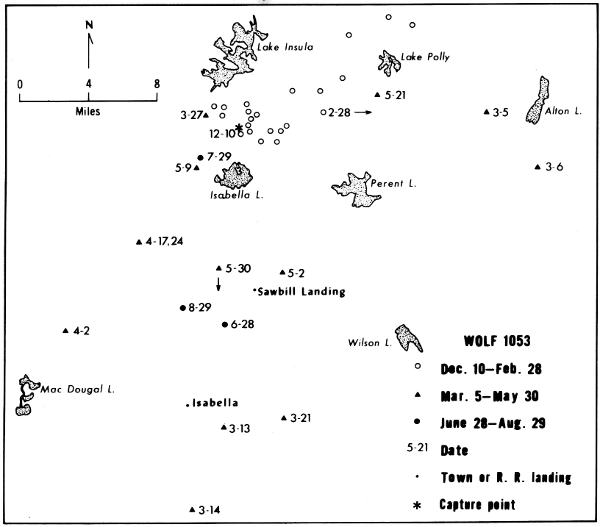
Between February 28 and March 6 she suddenly moved 13 miles to the east-southeast near the Sawbill Trail, and during the next week she traveled a straight line distance of 24 miles southwest to a point southeast of the town of Isabella. Her subsequent travels eventually took her over a much larger area. Before February 28, 1053's average weekly straight line distance was 2 miles, but after that date it increased to 11 miles.
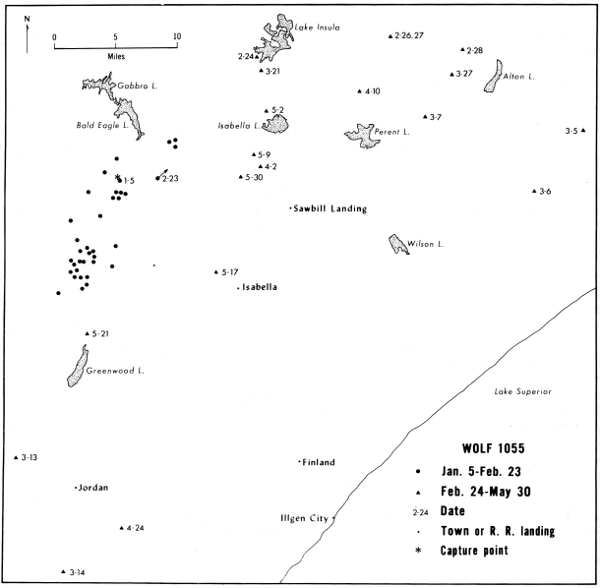
Wolf 1055.—The range of this animal from January 5, when she was captured, to February 23 covered about 40 square miles near Stony Lake, Slate Lake, and the Jack Pine Lookout Tower (fig. 22), and her mean weekly distance was 4 miles. Between February 23 and 24, however, she traveled 13 miles northeastward, the beginning of a series of long moves. By March 5, 1055 had reached Crescent Lake, a point 39 miles east-northeast of her previous area of intensive use. She then gradually headed back toward the west and south during the next 10 days and within the next month repeated this pattern. When her signal was heard last on May 30, 1055 was near Martin Landing in the center of her range. Her mean net weekly distance after February 23 had increased to 22 miles.
Figure 22.—Locations and range of wolf 1055. Only selected lakes are shown.
Wolf 1057.—The movements of 1057 cannot be considered normal because freezing of a front foot prevented her accompanying the pack of which she was a member. Nevertheless, even data from an abnormal animal can provide some information. On January 13, 5 days after capture and release on Red Rock Lake, 1057 was located 4 miles from the capture point with a pack of 10 other wolves. She was limping and fell behind when they moved. Five days later she was again seen with the pack 12 miles away between Knife Lake and Kekekabic Lake. She then remained in about 14 square miles of that general area through April 17 (fig. 23).
Figure 23.—Locations and range of wolf 1057. Only selected lakes are shown.
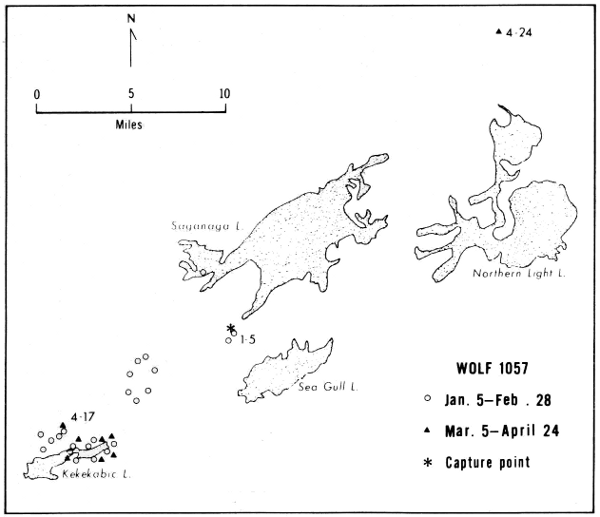
Suddenly on April 24, 1057 was found in Ontario some 31 miles northeast of her location of the previous week. That was the last time we heard her signal even though on May 2 we scanned an area with a radius of 35 miles from her last known location and listened for her signal during every subsequent flight.
Wolf 1059.—This animal was a member of a pack of three to five wolves (see next section). The movements of the group varied little and were concentrated in the August Lake, Omaday Lake, and Keeley Creek area in about 43 square miles (fig. 24). Contrary to animals 1051, 1053, and 1055, this pack did not suddenly begin a series of longer weekly movements in late February. Both before and after February 28, the average weekly straight line movement of the pack was just less than 3 miles.
Figure 24.—Location and range of wolf 1059 and pack. Only selected lakes are shown.
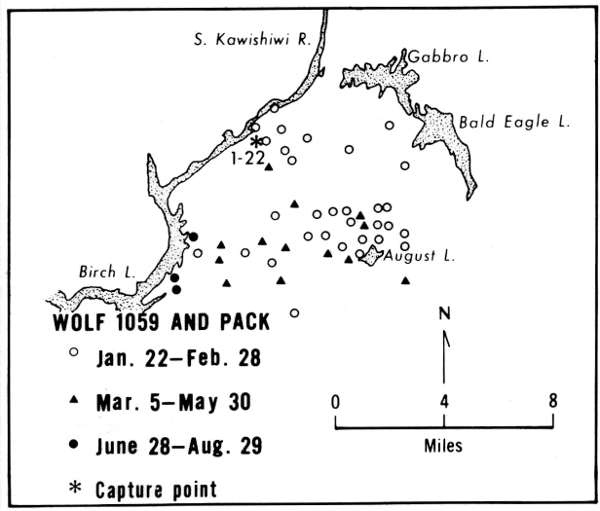
Probably these animals did begin traveling more in late February, for their net daily distances did increase at that time along with those of the other wolves (table 4). However, the increased travel took place within the restricted area of the pack's usual range rather than in new areas as occurred with the other wolves.
Because 1059 was later found to have bred and carried five fetuses, her movements during whelping season (late April and early May) are of interest. Her locations on both April 24 and May 2 were within 250 yards of each other, which might indicate that she was denning. On May 9, however, she was 2.5 miles east of these locations, on the 17th and 21st was 2 miles west of them, and on the 30th was 3 miles north of them.
In early January 1970, Wolf 1059 was killed by a trapper in the southeast corner of her pack's 1969 range.
Summer locations.—Signals from only 1053 and 1059 were heard during summer, and then tracking attempts were made only on June 28, July 29, and August 29. Locations for 1053 on those occasions were near Kelly Landing and Isabella Lake, within her previous range. Wolf 1059 was found each time within 2 miles outside of the southwest corner of the pack's winter and spring range.
Wolf Associations, Social Behavior, and Reproduction
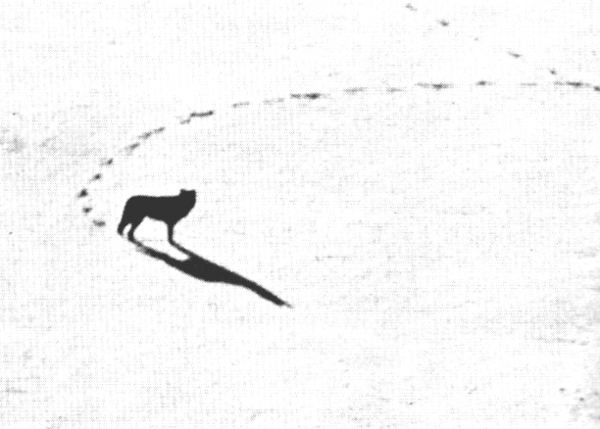
In our study area, population units of wolves exist as both single animals (lone wolves) and packs. In a total of 77 observations, lone wolves constituted 32 percent of the sightings (fig. 25), with packs of from 2 to 13 members making up the remainder (Table 1). On the basis of the number of wolves seen, rather than the number of observations, lone wolves accounted for only 25 (8 percent) out of 323.
Figure 25.—Only 8 percent of the wolves observed were lone wolves. (Photo courtesy of L. D. Frenzel.)
These figures compare favorably with reports in the literature as summarized by Mech (1970). In five areas studied, lone wolves made up from 24 to 60 percent of the observations of population units, and from 8 to 28 percent of the wolves seen. In our study area during 1948 to 1953, lone wolves constituted 43 percent of the observations and 15 percent of the wolves (Stenlund 1955).
The average size of the population units observed during our study (total number of wolves seen divided by the number of observations) was 4.2, which is significantly larger (95 percent level) than the average seen in this area (2.8) from 1948 to 1953. This is also larger than that reported from any other area of comparable size (table 6).
Table 6.—Mean sizes of wolf population units reported from various areas
Area Observations Wolves Mean size of population unit Largest pack size Authority calculated from
Number Number
Alaska 310 1,041 3.4 12 Kelly 1954
Alaska 1,268 4,823 3.8 21 R. A. Rausch[13]
Lapland 118 311 2.5 12 Pulliainen 1965
E. Finland 460 984 2.1 12 Pulliainen 1965
Minnesota 112 318 2.8 12 Stenlund 1955
Minnesota 77 323 4.2 13 Present study
FOOTNOTES:
The largest pack seen in our study area included 13 members, and there apparently were at least two such packs. Although larger packs than this have been reported, any group containing more than 8 to 10 members is unusually large (Mech 1970).
Wolf sociology is a complex subject and is still not well understood, so the following detailed observations of the associations between our radiotagged wolves and others are given. Associations are defined as relationships in which two or more wolves relate in a close, positive manner.
As mentioned earlier, 1051 may or may not have been associated with other wolves when he was captured. However, although this animal was observed 55 times throughout winter and spring, only twice was he seen associating with another wolf. Probably the same individual was involved each time, because the location was about the same (the vicinity of the juncture of Aitkin, Carlton, and St. Louis Counties).
The first occasion was on April 3. Wolf 1051 in the previous week had moved 46 miles straight line distance from the northeast. He was then observed lying peacefully within 15 feet of another wolf near a freshly killed deer. The very proximity of the two animals implied a positive relationship. On April 7, 10 and 14, 1051 was seen 1 mile, 10 miles, and 8 miles from the kill and was alone each time.
However, on April 17, 1051 was back in the general vicinity of the kill, and he and another wolf were resting on an open hillside about 100 feet from each other. As we descended for a closer look, the smaller animal arose and headed to the larger, presumably 1051 because he had not been disturbed by the aircraft. The larger wolf did not arise for several seconds, but eventually followed the other into the woods. No tail raising or other expressive posturing was seen in either wolf. One week later 1051 was 26 miles northwest of the kill traveling alone.
Wolf 1053 was never seen less than 80 yards from another wolf, and there was no evidence that she ever associated with a conspecific. Even when she was seen 80 yards from the other wolf, both were resting, and when the strange wolf left, 1053 made no attempt to accompany or follow it.
No. 1055 apparently had been traveling with another wolf when caught on January 5, and tracks showed that the individual had remained near her until we arrived to handle her. Tracks found on January 7 and 10 suggested that 1055 was with another animal, but that animal was not seen during any of the six times 1055 was observed through February 1. However, from February 5 to 19, 1055 was with another wolf on eight of the 12 times she was seen. The two animals were observed resting, traveling, hunting, and feeding together. On February 20, and thereafter, 1055 was alone all 14 times she was seen.
It is possible that 1055's associate was killed between February 19 and 20. About March 6, a 63-pound male wolf pup was found dead (by Mr. Charles Wick, USDA Forest Service) within about 50 feet of a highway and less than a mile from where 1055 and her associate were seen on February 19. Because of the snow conditions, it was judged that the wolf had been killed (probably by an automobile) sometime in February.
Wolf 1057, whose foot froze during capture, was a member of a pack of 10 to 13 wolves, and was seen with the pack on January 13 and 18. After that she was usually found alone, although on at least five occasions she was with one or more wolves:
Period No. of observations Associations
Jan. 13110 other wolves
Jan. 14-171None
Jan. 18110 or 11 other wolves
Jan. 19-292None
Jan. 3011 other wolf
Jan. 31 to Feb. 22None
Feb. 3-422 other wolves
Feb. 511 other wolf
Feb. 6-136None
Feb. 1413 other wolves
Feb. 15-225None
Feb. 23110 to 13 other wolves
Feb. 24 to Apr. 246None
February 23 she was with the pack at a kill in her usual area, and although the pack left that night, 1057 remained near the kill the next day. Presumably this animal would have traveled with pack if she could have.
Figure 26.—One of the radiotagged wolves was a member of this pack of five. (Photo courtesy of L. D. Mech.)
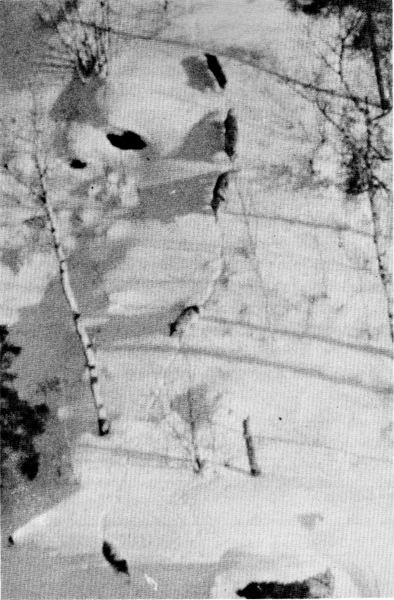
No. 1059 was part of a pack that included three to five members (fig. 26). From January 25, the first time she was observed after release, through April 2, the animal was seen 19 times with two other wolves, eight times with at least three others, and eight times with four others. She was never seen alone until April 17; both times after this when she was seen, May 9 and 21, 1059 was also alone.
Some insight into the fluctuating size of this pack was obtained on February 27 when the five animals were followed for 2 hours. During that time two members (one of which was larger than the other) often lagged behind the other three by as much as a mile. These two romped and played considerably, with one carrying a stick or a bone part of the time. Eventually they caught up again to the other three. The behavior of the two lagging wolves would be consistent with the hypothesis that they were either pups or a courting pair of adults. In either case, they seemed to be an actual part of the pack even though they temporarily traveled separately.
The fact that 1059 was observed traveling alone three times from April 17 to May 21 may be further evidence that the pack had a den in the area at that time. The presence of a den allows individual pack members to venture off singly and return each day to a known social center, as Murie (1944) observed, so they do not need to travel with each other to maintain social bonds. Wolves in our area breed during the latter half of February (see below), and the young should be born in the latter half of April. Since dens are prepared a few weeks in advance (Young 1944), pack members might be expected to begin traveling singly in mid-April.
Some information on social relations within our radiotagged pack of five was also obtained. One of the members could often be distinguished from the others by its reddish cast and this individual appeared to be the pack leader or alpha male (Schenkel 1947). In urinating, this animal lifted his leg, a position seen almost exclusively in males. Except for only two temporary occasions, this animal always headed the pack, which usually traveled single file. The second wolf in line generally was noticeably small, possible a female, and the third wolf was twice identified as 1059 on the basis of sightings of her collar.
The leader often gained a lead on the other wolves, especially during a chase (see below), much as reported for a lead wolf on Isle Royale (Mech 1966a). Upon returning to the lagging members of the pack, this animal usually held his tail vertically, an expression of social dominance (Schenkel 1947). On two occasions he led chases against strange wolves and demonstrated the highest motivation (see below).
Figure 27.—Feces, urine, and scratching in a conspicuous spot indicate a wolf "scent post." (Photo courtesy of L. D. Mech.)
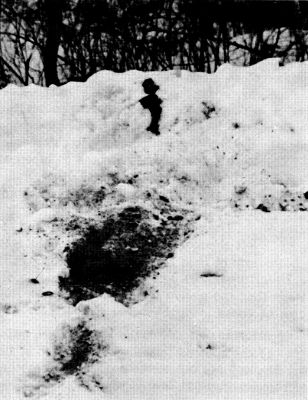
The leader was also the most active in his reactions when scent posts were encountered. Because the function of scent-marking behavior is still unknown, it is important that detailed descriptions of the natural behavior of free-ranging wolves around scent posts be made available (fig. 27). Thus the following excerpt from field notes by Mech dated February 27, 1969, is presented:
"When they [the three wolves] came to a small frozen pond, where the wolf trail [which they had been following] branched and there were some packed down areas, they became quite excited [fig. 28]. This was especially true of the reddish wolf. He nosed several spots, and scratched around them. Usually his tail was vertical. He defecated at one spot, and right afterwards another wolf did. After about 2 minutes that pack went on.
Figure 28.—A pack of wolves investigating a scent post. The raised tails indicate their excitement. (Photo courtesy of L. D. Mech.)
"About 15 minutes later the 2 'satellite' wolves arrived at this spot, hesitated, nosed around but continued on after less than a minute.
"The three wolves meanwhile came to a junction of 2 logging roads. There they nosed around, scratched, and acted much as described above. Again the reddish wolf was most active and had its tail up.
"When the last 2 wolves came to this spot, they nosed around, ran back and forth, and 1 defecated. They then headed on a different branch of the trail than the first 3 had gone on just 10 minutes before.
"The first 3 wolves meanwhile were running along a logging road but eventually they circled and one other than the reddish one headed across a swamp toward the last 2. Then the reddish one and the other followed this one, and they met the last 2 on a ridge. There was the usual tail wagging, then all headed off together in a new direction. They passed the first scent post again and there was some nosing by the reddish wolf but little hesitation.
"When they traveled, one wolf lagged behind by 150 yards. The wolf just ahead of it had its tail vertical part of the time, as did the reddish leader.
"Soon the pack came upon another area packed with wolf tracks on a pond. There they followed every little trail, nose to the ground, wagged tails, grouped together often, chased each other, rolled over, etc. for 6 minutes. The reddish animal had tail up most of the time.
"The wolves continued on, and we left them about 1 mile S.W. of the S.W. arm of Bald Eagle Lake [at 6:05 p.m.]."
Unfortunately it was not known whether the trails that the wolves were following were their own or those made by other wolves.
Significant aspects of the above observation are (1) the spirited initiative of the leader, (2) the amount of time spent in scratching, urinating, and defecating, (3) the decision of the last two wolves to take a different route from that of the first three even though their goal seemed to be to catch up to the first three, and (4) the fact that the scent posts were located at trail junctions. In the last regard, we often noted from the ground that wolves urinated at the junction of newly formed human trails heading perpendicularly from roads they were following.
Copulation in wolves was only observed once during our study, on February 19, 1969. Two members of a group of four were seen coupled for 2 minutes on Kekekabic Lake. On Isle Royale, which is at the same latitude, copulations were witnessed on February 21, 24 and 27 (Mech 1966a).
On April 17, a den west of Big Moose Lake known to have been used at least intermittently for 13 years was seen from the air to have fresh activity of some kind in the snow in front of it, and on April 24 we saw a wolf at the mound. A few days later, two local human residents unaware of our interests approached this den and looked in. An adult wolf, presumably the bitch, leaped over their heads and fled the area. The men then dug up the den and removed six pups whose eyes had not yet opened.
Intraspecific Intolerance and Indifference
Instances of chasing or attack by a pack of wolves on conspecifics not a part of their group have been described by Murie (1944) and Mech (1966a). Observations of such behavior are important in trying to determine conclusively whether or not wolves are territorial. Pimlott et al. (1969, p. 75) wrote "It still is not clear, however, whether or not their use of range should be defined as territorial." Mech (1970) summarized the available evidence for territoriality in wolves and postulated that it may be spatiotemporal such that packs might avoid each other at any particular point in time but over a long period might cover the same area at different times. A number of our observations are pertinent to this question, for we have evidence of both, tolerance and intolerance between population units of wolves.
Two direct cases of intolerance were observed, both involving the radiotagged pack and other wolves within the usual range of the pack. Following is a direct quote from the field notes of Mech:
"Feb. 7, 1969—about 11:30 a.m.—aerial and visual—1059 and 2 other wolves traveling overland about halfway between Heart L. and August L. (R10W-T61 N. Sect. 17 center). They were traveling quickly and intently along a fresh wolf trail, with a lighter reddish individual in the lead. The other 2 animals were darker colored, and one of them was smaller than the other. One of them must have been 1059.
"We soon found that about half a mile ahead of the pack was a dark wolf hurrying away from the three. This animal often looked back and ran whenever it encountered good running conditions. It soon became obvious that the pack of 3 was chasing this individual. Because it [the lone wolf] often broke its own trail, the pack gradually gained on this animal. The single wolf flushed a deer which ran when the wolf was about 75 feet away and floundered in the snow, but the wolf continued hurrying on by.
"Although the deer ran only about 50 yards and stopped, the pack of 3 also hurried on by. The single wolf flushed another deer, ignored it, and continued by, as did the pack of 3. The chase continued for 2 miles as we watched, into the N.E. corner of Sect. 18 and then into the N. Central part of Sect. 8, and the pack got to within 150 yards of the single wolf.
"However, at this point, the 2 darker members of the pack had fallen about 100 yards behind the lead one. The lead animal stopped and waited for them, as it had done a few times before. It then turned around and headed back to these animals. When they met, the reddish animal's tail was held vertically and there was much tail wagging by all for about 1 minute. Then all animals lay down for a minute and then went up on a knoll. There was much activity and 'playing' on the knoll. (12:10 p.m.)
"The single wolf continued running and looking back for at least another mile. We left at 12:21 p.m.
"At 4:07 p.m. we saw a single wolf running across a small lake and looking behind it about 8 miles N.W. of these animals. The creature behaved the same as the one being chased today, and we wondered whether it could be the same animal."
On February 18, 1969, Ream made a similar observation, as follows (quoted from his field notes):
"Got visual sighting on 1059 with 3 other wolves at 11:55 about a mile west of Omaday Lake and they were running along fairly fast on a trail. When we circled a second time we saw 2 wolves curled up sleeping on a knoll ahead (south) of the running pack. We then realized the running wolves were on the trail of the sleeping wolves and when the pack of 4 with "red" in the lead was about 50 yards from the knoll the 2 sleeping wolves jumped up and charged away in the opposite direction full tilt, and split and went in 2 directions. When the pack reached the knoll they started off on the trail of the wolf that headed N.E. and then changed and went after the one that headed S.W. The reddish wolf was in the lead and really picked up the pace. Although the reddish wolf seemed to gain on the chased one 3 or 4 times, the pack as a whole couldn't catch up, even though the single was breaking trail. The reddish wolf, after gaining, always stopped and waited for the others or went back to find them. They chased this wolf for 2½ to 3 miles, all the way down to Highway 1 at a point 3.0 miles from the lab [Kawishiwi Field Station, U.S. Forest Service]. There was a dense patch, 10-15 acres, of woods just before Highway 1 and we lost sight of the chased wolf for a while and also the 4 when they entered it, but shortly we found that the chased one had somehow doubled back and was heading N.E. again. The pack was apparently confused for at one point 3 of them were wandering back and forth on Highway 1, apparently looking for the trail of the chased wolf. Two of these paralleled the Highway for a couple hundred yards and then stopped on top of a hill, apparently resting. During this chase both the single wolf and the pack chased up deer from their route of travel and didn't seem to pay much attention to them, even though some were really floundering in the deep snow. We finally stopped watching all of this at 1:30 p.m. and proceeded on our rounds."
On February 21 we also saw a single wolf running and looking behind several times on Ojibway Lake. Even when it saw a fisherman on the lake within 1/8 mile, it continued across to the opposite shore seeming most intent on avoiding whatever was on its trail. Presumably it had also been chased by a pack.
The cases of tolerance or indifference that we witnessed between wolves involved our lone animals. On January 27, 1051 was at a kill he had made the day before, and another wolf was sitting within 100 feet looking toward the carcass. Eventually the unidentified wolf left without approaching any closer. A lone wolf was also seen near 1053 in the general vicinity of a moose carcass, which probably both were feeding on at different times. Three such observations were made, on February 10, 15, and 18; and on February 21 another wolf was also seen near 1053 some 2.5 miles away from the moose carcass. In all cases, the two animals were 80 to 200 yards apart in open country and must have been aware of each other's presence.
Hunting, Killing, and Feeding Behavior
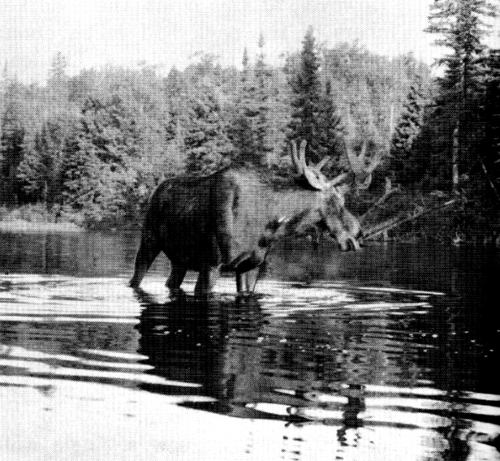
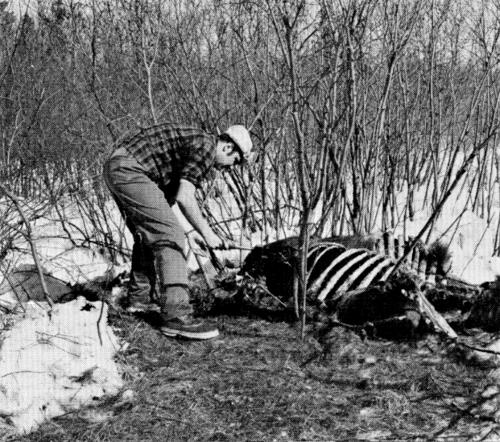
The primary prey of most wolves in our study area is the white-tailed deer (fig. 29), but some moose (fig. 30) are also killed. We have examined the remains of six moose that were eaten by wolves, two of which were killed by them (fig. 31). One was found on February 25, 1967, on Gillis Lake and the other on March 7, 1969, on Twinkle Lake. These locations are within 3 miles of each other, suggesting that a wolf pack in that area may be more accustomed to preying on moose than other packs. The other four moose carcasses were found in other parts of the study area, but circumstances were such that the causes of death of those animals could not be determined. A discussion of the details of wolf-moose relations in our study area must await the collection of additional data.
Figure 29.—The main prey of wolves in northern Minnesota is the white-tailed deer. (Photo courtesy of L. D. Mech.)
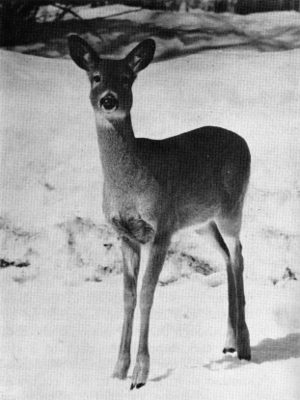
Figure 30.—Moose are also killed by wolves. (Photo courtesy of Allan Taylor.)
The remains of 93 wolf-killed deer, and 49 probable wolf-kills, were examined for age, sex, and condition and were compared with a sample of 433 hunter-killed deer from the same general area. The wolf-killed deer were generally much older than the hunter-kills and had a significantly higher percentage of jaw and limb abnormalities (see Mech and Frenzel, page 35).
Figure 31.—Only a few wolf-killed moose were located during the study. (Photo courtesy of Laurence Pringle.)
Until recently the only observations of wolves hunting deer were those reported by Stenlund (1955) for northern Minnesota. He described two reports of actual observations and two reports of interpretations of tracks in the snow, all successful hunts. Since that time several descriptions of successful and unsuccessful hunts have also been published (Mech 1966b, Rutter and Pimlott 1968, Pimlott et al. 1969, Mech 1970). Nevertheless, many more observations must be made before generalizations can be formed.
During the present study we were able to witness a number of hunts from the air and piece together others based on tracks. The following descriptions are quoted from the field notes of Mech:
"26 January 1967. About 3/4 mile N.E. of Alice Lake.
"Jack Burgess [pilot] and I were following a pack of 8 wolves, when at 4:15 they veered from their former line of travel, about 30°. They were then about 200 yards from 2 deer. They began wagging their tails when about 175 yards from the deer. One deer, on the edge of a steep bank, was lying, but one was standing about 75 yards N. of it in open hardwoods. The wolves continued toward the latter deer.
"This deer remained standing in the same place until the wolves approached to within about 100 feet of it. The lead wolf stopped, when that distance from the deer, and the others caught up but also stopped when within about 25 feet behind the lead wolf. By this time the deer, whose body was facing away from the wolves, had its head turned back over its shoulder toward the wolves. The wolves and the deer remained absolutely still while staring at each other, 100 feet apart, for 1-2 minutes, while we made several circles.
"Suddenly the deer bolted, and instantly the wolves pursued. I am fairly certain that it was the deer that bolted first, but could be mistaken. The action was almost simultaneous. The deer headed toward the other deer near the top of the high bank. This animal had been lying but had arisen when the wolves were about 150 yards away.
"The lead wolf followed in the deer's trail, but the others cut toward the bank. This flushed the second deer (near the edge of the bank), which ran down the bank. Meanwhile when the first deer reached the edge of the bank, it headed due W. along the top of it. Only the lead wolf pursued this animal. The other deer had headed down the bank to the S.E., and at least a few of the wolves followed it.
"We could not watch both deer, so we continued following the first. The deer had no trouble in snowdrifts, but the wolf was hindered by them. The wolf followed the deer for about 200 yards along the top of the bank, and then gave up after losing ground. The wolf had run a total distance of about 250-275 yards. He then lay down and rested.
"We noticed at least 3 wolves stopped part way down the bank in the trail of the second deer. However, we did not see the remaining wolves or the second deer.
"Eventually (after about 5 minutes), these wolves joined the first, and all rested. At 4:25 p.m., one wolf started toward a third deer, which had been lying under a tree while the former chase took place. The deer was about 150 yards from where the wolves rested, and it had stood before the wolf started toward it. We could not see whether the deer or wolf bolted first, but suddenly both animals were bounding away. The wolf chased the deer about 125 yards and gave up after losing ground. The other wolves followed slowly in its trail, and all assembled and rested. The deer continued running for at least 1/4-mile."
"27 February 1969. 2 miles N. of August Lake.
"1059's pack of 5 was heading N.E. at 4:10 p.m. when they got to within 100 yards of 2 standing deer. The deer had been standing alertly in a shallow draw, and when at least 2 wolves got to within 100 yards, they fled. The wolves began running after them.
"The deer were in snow up to their bellies and had to hesitate slightly at each bound. But they ran fast. We could only see one wolf very much [of the time]. It was also having a difficult time in the snow, and after a total run of about 250 yards (100 to the deer's original location and 150 after the deer), the wolf lay on the snow and rested about 10 minutes. The deer ran only about 200 yards more and stood alertly for the next 20 minutes at least. The wolves then went on.
"27 March 1969. About 2 miles S.E. of Central Lakes, Minnesota.
"At 3:00 p.m. while we were following wolf 1051 by aircraft in above location, we saw a deer running very quickly on top of the crusted snow and then stand and watch its backtrail. About 1½ minutes later we saw 1051 running along the same route. We did not see when the deer fled again, but saw it running about 100 yards from the wolf and doubling back paralleling its original route. When the wolf got near the approximate doubling-back point, he lay down and rested for about 5 minutes. The deer continued fleeing for about 350 yards, stopped, and for several minutes faced its backtrail. The wolf finally continued on in his original direction, giving up the chase.
"At 4:30 p.m.—1½ miles S. of Central Lakes, Minnesota—Wolf 1051 had come to within 100 yards of [four-lane] Highway 53 and was hesitant to approach it. Several cars were going by in both directions. Thus the wolf headed S. parallel with the highway about 150 yards E. of it.
"Suddenly two deer, which we had noticed S. of the wolf earlier, fled across the highway. The wolf soon got to the point where they crossed, hesitated about a minute and then ran across. No cars came at that time.
"We could not always see the deer or the wolf when W. of the road because there were several patches of evergreens. The wolf did head straight W. after crossing the road. Then about 250 yards W. of this point we saw a deer come out onto an old woods road which lay in a N.W.-S.E. axis. The deer ran N.W. on the road and then we saw the wolf where the deer had come out onto the road. While the deer ran N.W., the wolf cut into the woods to his right, N.E. We could not see it then but presumed it was running N.W. paralleling the road.
"After the deer had run about 50 yards up the road, it also headed N.E. into the evergreens. Within a few seconds it fled right back out and started S.E. down the road. The wolf was about 50 feet behind it and began gaining.
"When the deer got back to where the wolf had headed into the woods from the road before, it also headed N.E. into the woods. The wolf was then about 20 feet away and the deer was headed N. around in a circle with the wolf closing in on the outside. The wolf did not emerge from the evergreens for at least 15 minutes, nor did we see the deer, so I presume the wolf killed the deer. [But see entry for April 1.]
"1 April 1969. Dan Frenzel and I searched the area described on March 27 for 1 hour and found no sign of a kill. Old wolf tracks were seen, but only a single wandering track. No concentration such as usually seen at kills. Best conclusion is that 1051 did not kill the deer where seen from the air March 27."
We also saw 1055 and her associate actually kill a deer, on February 6, 1969, but we did not realize what was going on and it happened so fast that we only saw a wolf rushing and biting at the front end of the downed animal. The chase had to have lasted only a few seconds.
In addition to the above direct observations, we also were able to piece together from tracks in the snow the chase and successful encounter between a single wolf and a deer in two instances. In the first case, on January 25, 1967 (11:50 a.m.), we arrived at the scene (near Grub Lake, just N. of Snowbank Lake) within an hour of the encounter, and the wolf was still feeding on the deer, which had been a 2½-year-old female. Mech examined the area from the ground and made the following observations:
"The deer had come S.W. down the middle of the lake at a fast walk, turned around, backtracked a few yards and headed to the N.W. shore of the lake. Meanwhile a wolf had come at a trot along the deer's track, but it had cut to the N.W. shore about 50 yards N.E. of where the deer had. When still on the ice about 15 feet from shore, the wolf began running as evidenced by his long bounds. He continued running inland about 50 feet from shore toward the deer. The deer had walked inland from the shore and may have stood there about 25 feet from shore. Suddenly it had bounded away. The bounding wolf track was in the same trail as the deer's for about 25 yards but then it paralleled the deer's about 5 feet away on the inland side. After about 125 yards from where the deer flushed, the deer was pulled down. It was not on its side but rather had sunk into the snow in more-or-less of an upright position.
"Apparently the deer had just about reached the shore when the wolf noticed it, and it detected the wolf. At this time the wolf must have been up the shore about 50 yards where his tracks first showed he began bounding. There was no sign that the wolf had spotted the deer on the lake and had tried to cut it off from shore by running inland along the shore and then waiting for the deer to come inland. Once the wolf had begun bounding, he continued until he pulled the deer down.... Sign showed that the deer dropped within about 20 feet of where she had begun bleeding."
The second case involved a 5½-year-old buck, No. M-28, which had arthritis of his right hind foot and probably had defective gait (see Mech and Frenzel p. 35). The attack took place on Basswood Lake on February 2, 1967, and excerpts from field notes by Mech follow:
"A single wolf had killed this deer after chasing, following, or tracking the deer about 3.75 miles. The deer's last 350 yards was a fast walk—the tracks were one in front of the other and about 2 feet apart, and there was no leaping or bounding. Same with the wolf—a fast trot.
"Where the tracks came together, the deer apparently had fallen, but there was no blood. From there, the deer dragged its feet or the wolf for about 25 feet and then went down again. The wolf circled the deer, and for the next 150 feet, the 2 animals had fought or scuffled and then the deer had gone down where we found it.
"The 4-mile persistence of this wolf—whether tracking, following, or chasing the deer—is remarkable [compared with most chases] and makes me believe the wolf had good reason to believe it could kill the deer."
Our observations of wounds on fresh kills confirm the following description by Stenlund (1955, p. 31) of the location and manner of attack of wolves on deer: "No evidence of hamstringing of deer was found on freshly killed carcasses, although the possibility does exist. Usually deer are run down from behind, the wolf or wolves biting at the hind flanks and abdomen, or at the hind flanks and head region simultaneously."
On each kill, all the flesh and much of the skin and bones were eaten, at least during the winters of 1966-67 and 1967-68. This was also true during December 1968 and much of January 1969. However, during February and March 1969 when an unusual accumulation of snow had built up, most of the kills were only partly eaten (see Mech et al., page 51). In previous years deer freshly killed by single wolves were sometimes found with only a few pounds of flesh or viscera missing. However, in each case the carcasses were almost completely cleaned up within a few days, often by packs to which the single wolves may have belonged (Mech 1970).
Usually the first parts of a carcass to be eaten are the hams and part of the viscera from the coelomic cavity. In one case where a wolf was interrupted while feeding it was apparent that the animal had been stripping the omental fat from the carcass. This may be the wolf's favorite part of a deer, for the stomach of one wolf that we examined in January 1967 contained nothing but such fat.
The average consumption and kill rate of deer by wolves has not yet been determined, but we have some information bearing on the subject. Because our data were obtained during a winter of unusually deep snow, and it was obvious that wolves were killing more deer than they could eat at the moment (see Mech et al., page 51), our figures should be considered much higher than average. However, they should be useful in that they probably represent the maximum kill rate not only throughout the year but also throughout a period of many years.
By observing each of our radiotagged wolves whenever possible and noting whether or not it was feeding on a kill, we learned that our wolves generally remained close to their kills for periods of from 1 to 7 days, depending on how recently they had eaten (fig. 32). Thus, when a wolf was found at a new location each day, the assumption could be made that the animal did not currently have a kill.
Figure 32.—Periods spent by radiotagged wolves and their associates feeding on kills judged to be their own. This does not include periods when they were known to be feeding on carrion. (Click for larger image.)
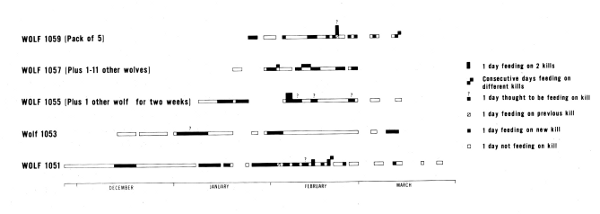
Figure 33.—Radiotagged wolf (upper left) found at kill (lower right). (Photo courtesy of L. D. Frenzel.)
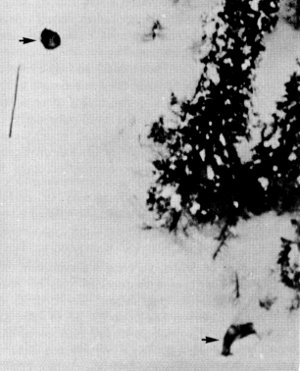
We assumed that wolves found at fresh kills (fig. 33) had made them unless there was evidence to the contrary as with 1053, the scavenger. When a wolf was found at one location for several consecutive days but could not be observed, we assumed it was feeding on a kill, since whenever wolves were observed remaining in the same location for several days they were seen feeding. Thus a range of possible number of kills per wolf was determined, with the lower limit being the known minimum and the upper limit the possible maximum. When more than one wolf fed on a kill, as with the pack, the figures were calculated on a per-wolf basis.
In this way we obtained data on a total of 468 wolf-days and found a total kill of 35 to 48 deer (table 7). This averages out to a kill rate of one deer per 10 to 14 days per wolf. The figure varied considerably among individuals—1051 had the highest rate of one kill per 6.3 to 7.2 days, and each wolf in 1059's pack had the lowest rate (except for 1053, the scavenger) of one deer per 14.0 to 18.0 days.
It is significant that the pack of five wolves had a lower kill rate per wolf than did single wolves and pairs. This is explainable because the ability of wolves to kill deer during early 1969 was much greater than usual (see Mech et al., p. 51). Thus single wolves probably could kill deer just as easily as could packs, but they did not need to share them. This differs markedly from the situation on Isle Royale, where lone wolves usually feed only on moose remains left by packs (Mech 1966a, Jordan et al. 1967).
That lone wolves had more of a food surplus than those in the pack is confirmed by the figures on the average number of days that the various wolves fed on kills (table 7). Wolf 1051 spent an average of only 2.2 to 2.4 days feeding at each of his kills, whereas 1059's pack of five spent an average of 5.8 to 7.5 wolf-days at each kill. Further confirmation is found in the fact that even when most wolves were leaving their kills partly uneaten, a pack of 8 to 10 wolves (probably that to which 1057 belonged) was seen completely devouring a kill.
Table 7.—Kill rate of deer by radiotagged wolves and their associates
Wolf number Wolves Dates Wolf-days of data Kills Wolf-days per kill[14] Wolf-days feeding Wolf-days feeding per kill
Number Number Number Mean Number Number Mean Number
1051 1 Nov. 26 to Apr. 3 101 14-16 6.3-7.2 33-40 2.2-2.4
1053[15] 1 Dec. 14 to Mar. 27 75 2-3 25.0-37.5 9-18 4.5-6.0
1055 1-2 Jan. 9 to Mar. 14 61 4-9 6.7-15.0 13-25 2.8-3.3
1057 1-13 Jan. 24 to Feb. 28 51 5-7 7.3-10.2 25-33 4.7-5.0
1059 5 Jan. 25 to Mar. 14 180 10-13 14.0-18.0 75 5.8-7.5
Before Feb. 1 142 7-9 [18]15.7-20.3 39-56 5.1-5.6
After Jan. 31 326 28-39 8.4-11.6 106-125 3.2-3.8
FOOTNOTES:
Therefore it is probable that the kill rate per wolf for members of the pack of five is much closer to the usual average winter kill rate. It can still be considered higher than the usual winter rate, however, because this pack also was leaving some of its kills partly uneaten.
A reasonable approximation of the average kill rate during most winters would be the rate found for our radiotagged wolves before February 1, because the relations among the wolves, the deer, and the snow during that period were not unlike those of most winters. The average kill rate per wolf before February 1 was estimated at one deer per 15.7 to 20.3 days.
After this period, the rate increased to about one deer per 8.4 to 11.6 days, and an estimated 50 percent of the available food was left uneaten (see Mech et al., page 51). This implies that the kill rate during February and March was about twice as high as usual. On this basis, the usual kill rate would be estimated at one deer per 16.8 to 23.2 days, which checks well with the rate found before February (one deer per 15.7 to 20.3 days). Thus we feel that an estimated kill rate of about one deer per 18 days per wolf is a close approximation of the average kill rate for most winters. This is about 50 percent less than the kill rate of one deer per 4 days estimated by Stenlund (1955) for two packs of three wolves (one deer per 12 days per wolf). However, it compares favorably with the actual kill rate of one deer per wolf per 17.6 days found for a pack of eight wolves in Ontario.[19]
Once the average rate of kill is known, the average food consumption per wolf can be calculated. The average deer (considering both fawns and adults) from the Superior National Forest during winter weighs about 113 pounds (calculated from Erickson et al. 1961), and an arbitrary 13 pounds can be deducted from this for inedible portions. This leaves 100 pounds of deer per wolf per 18 days, or 5.6 pounds per wolf per day. This figure is much less than the 10 to 14 pounds estimated consumption rate for wolves feeding on moose on Isle Royale (Mech 1966a). However, much variation can be expected in an animal whose physiology must be adapted to a feast-or-famine existence.
Wolves can be maintained in captivity on 2.5 pounds of meat per day, and large active dogs (Canis familiaris) require 3.7 pounds per day, so it is likely that the minimum daily requirement for wolves in the wild is about 4.0 pounds per day (Mech 1970). This figure agrees well with the estimated consumption rate for our study area.
FOOTNOTES:
Relative Population Density
Censusing wolves in a 1.5-million-acre study area is a difficult task, and we have no direct information on which to base a population estimate. However, some deductions can be made about the relative population densities in our study area between the period 1948 to 1953 and the period of the present study, 1967 to 1969.
R. A. Rausch (1967a) hypothesized that the frequency of large packs is higher when population density is high, and presented evidence supporting this idea. On this assumption, a comparison of pack-size distributions between various periods can indicate relative population densities between periods. The advantage of this method is that it eliminates the usual type of year-to-year biases in wolf censuses such as might result from differences in precise census route, type of aircraft, skill of observers, and other conditions. Only a difference that would cause a bias in the size of the packs seen would be of importance.
Therefore, we tested the difference in size distributions of population units between the 1948-53 study period and the present period (table 1), using a Kolmogorov-Smirnov two-sample test (Siegel 1956). The average "pack" size in the earlier years was 2.8, compared with 4.2 at present; thus pack sizes are significantly larger at present (95 percent level). This indicates that the population density from 1967 to 1969 may have been higher than from 1948 to 1953. This apparent change may be attributable to a reduction in snaring, trapping, and aerial hunting that took place between the two periods as a result of changes in State game regulations.
A similar comparison between our observations from 1967 and those from 1968-69 (table 1) shows no significant difference between these years, so it appears that the density of wolves in our area has remained about the same over the period of three winters. This agrees with the results of several other studies summarized by Mech (1970) in which wolf populations unaffected by man have been found to remain relatively stable from year to year.
DISCUSSION AND CONCLUSIONS
The movements, behavior, and ecology of the wolves in our study area during winter are variable, and are influenced considerably by snow conditions. This may explain the fact that in late February 1969 wolves 1051, 1053, and 1055 suddenly extended their travels and range (fig. F-34 and table 4).
However, increased travel may have resulted from other factors. For one thing, the wolves apparently did not need to spend so much time hunting as before. Because of the deep snow, the ability of wolves to capture deer increased, and the animals had a surplus of food. Perhaps under such conditions wolves may use more of their energy for traveling than for hunting.
Figure 34.—Net weekly (straight-line) distances traveled by three radiotagged wolves.
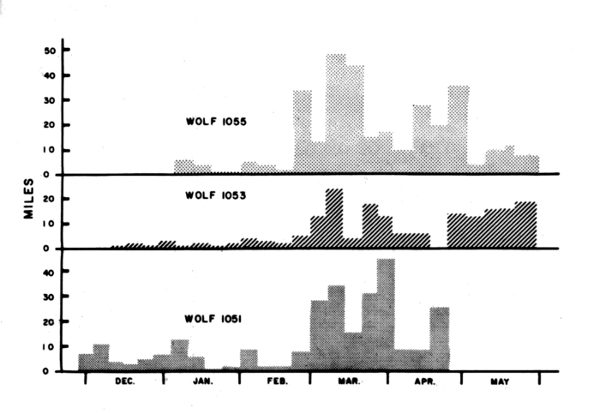
In this respect it is interesting that 1051 moved right out of his area and traveled into country that presumably was unknown to him. Wolves 1053 and 1055 each ventured into an area that was almost devoid of deer and that even had few moose in it. Without sufficient fat reserves in all these animals, it would seem disadvantageous for them to have made these travels.
Evidently wolves can obtain enough food in much smaller areas than these three animals used after February. Both 1059's pack of five and 1057 lived in relatively small areas throughout the winter and seemed to survive well. Before late February, 1051, 1053, and 1055 did also. Thus some factor other than food must have influenced the movements of these three animals from late February through April.
The fact that the increased movement began during the breeding season makes one suspect a relationship between the two. One possibility is that the factors increasing the hormonal flow associated with breeding in adults stimulate a hormone output in immature or subordinate individuals that causes an increase in their movements. An alternative is that the breeding behavior of resident packs involves the beginning of, or an increase in, aggression toward neighboring nonmembers. This might force the lone animals to shift about over large areas in avoidance of such aggression.
Whatever the cause of the changes in movements of these animals, the fact that the pack used a much smaller area than any of the lone wolves may be of central importance in trying to understand the organization of the wolf population. The following pieces of information are also pertinent to such an understanding: (1) the pack, which can be presumed to include a breeding pair (Mech 1970), chased other wolves in its area; (2) the lone wolves, which apparently did not breed, were tolerant of, or indifferent to, other lone wolves in their areas; (3) the ranges of the lone wolves overlapped considerably (fig. 35); (4) the lone wolves seemed to avoid certain large areas that one might logically think would have been visited by them (fig. 35); and (5) packs of wolves were sometimes observed in these large areas (fig. 35).
Figure 35.—Locations of all radiotagged wolves and unmarked packs observed during winter 1968-69, except dispersal of 1051 out of the study area. Only selected lakes shown. (Click for larger image.)
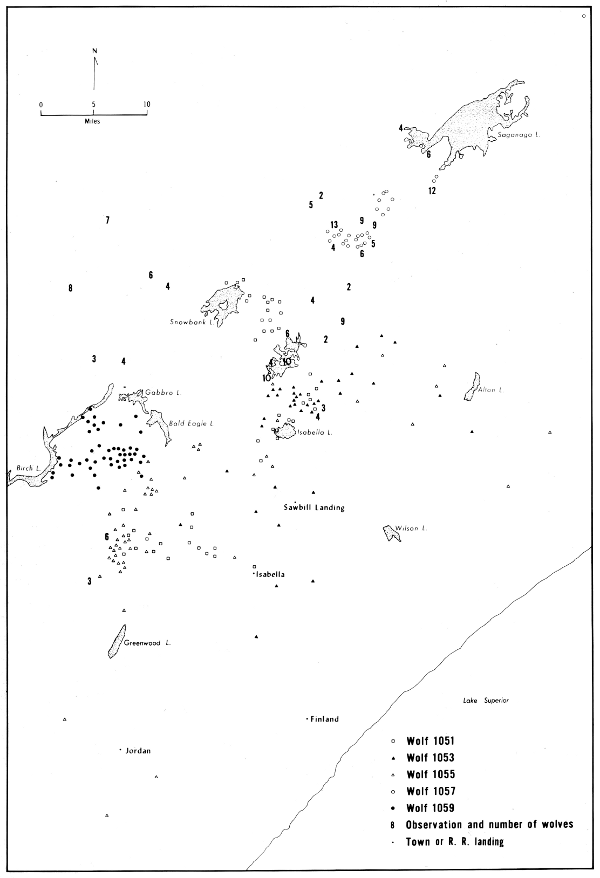
From the above information it can be hypothesized that the wolf population consists basically of groups of breeding packs defending territories of limited size, with lone wolves and other nonbreeding population units that are tolerant of each other shifting about in much larger nonexclusive areas among these territories. The information from Isle Royale (Mech 1966a, Jordan et al. 1967) is consistent with this idea, but the area of that island (210 square miles) is too small to allow untested extrapolations to be made about spacing in much larger wolf populations. Data from Algonquin Park, Ontario (Pimlott et al. 1969) also strongly suggest this hypothesis. However, the packs studied there could not be identified with certainty, and little information was obtained about nonbreeding population units.
To test the proposed hypothesis with certainty, a larger number of identifiable breeding and nonbreeding population units from the same general area must be followed during at least one winter. This will be the main objective of our next study.
SUMMARY
During the winters of 1966-67, 1967-68, and 1968-69, aerial observations of timber wolves (Canis lupus) were made in the Superior National Forest in northeastern Minnesota, where the primary prey is white-tailed deer (Odocoileus virginianus). In 480 hours of flying during the study, 77 sightings involving 323 wolves were made. In addition, during 1968-69, five radiotagged wolves and their associates were tracked via receivers in aircraft for a total of 570 "wolf-days." Visual observations were made during 65 percent of the times the wolves were located from December through April.
The average size of each population unit (including single wolves, pairs, and packs) observed was 4.2, although packs of as many as 13 wolves were sighted. Radiotagged wolves spent most of their daylight hours resting during winter, and when traveling, hunting or feeding during the day, tended to do so before 11:00 a.m. and after 3:00 p.m.
Considerable variation was discovered in the movement patterns of individual wolves, with straight line distances between consecutive daily locations ranging from 0.0 to 12.8 miles, and between weekly locations, 0.0 to 49.0 miles. A pack of five wolves used a range about 43 square miles in extent, whereas lone wolves covered areas many times this size. One animal in an apparent dispersal was tracked a straight line distance of 129 miles between extreme points.
A reddish male wolf was the leader of the pack of five and led two observed chases after alien wolves in the pack's territory. This animal was also most active during scent marking by the pack. Lone wolves were apparently indifferent to other wolves, and thus exclusive areas, or territories, were not observed among lone wolves.
Hunts involving a total of seven deer were observed and described, and two successful attacks on deer were interpreted from tracks in the snow. Wolves generally consumed all the flesh and much of the hair and bones from kills, except during February and March 1969 when extreme snow conditions increased the vulnerability of deer to an unusual degree. At that time kills were found that were partly or totally uneaten. The kill rate by radiotagged wolves and associates during the winter of 1968-69, based on 468 wolf-days of data, varied from one deer per 6.3 days to one per 37.5 days per wolf, with the average being one deer per 10 to 13 days. The rate was much lower per wolf for members of the pack of five than for lone wolves, and much lower before February 1, 1969, than after. The average rate of kill during more usual winters was estimated to be about one deer per 18 days. This is a consumption rate of about 5.6 pounds of deer per wolf per day.
Indirect evidence based on comparisons of pack-size distributions for different periods indicates that the wolf density in the study area may have increased since 1953, but that it has remained the same from 1967 to 1969.
On the basis of data presented in this paper, the following hypothesis about the organization of the wolf population studied is proposed: The wolf population consists basically of groups of breeding packs defending territories of limited size, with lone wolves and other nonbreeding population units, tolerant of each other, shifting about in much larger nonexclusive areas among these territories.
ACKNOWLEDGMENTS
This study was supported by Macalester College, the U.S. Bureau of Sport Fisheries and Wildlife, the USDA Forest Service, the Minnesota Department of Conservation, and the New York Zoological Society. Special thanks are due the following for their help and cooperation with this project: Mr. J. O. Wernham, former Supervisor, Mr. L. T. Magnus, Wildlife Biologist, numerous District Rangers, and other supporting personnel of the Superior National Forest, Mr. J. T. Morgan, North Central Forest Experiment Station; and Mr. S. E. Jorgensen and Mr. C. E. Faulkner, U.S. Bureau of Sport Fisheries and Wildlife.
Drs. C. T. Cushwa, L. F. Ohmann, Catherine Ream, and D. G. Schneider aided in the field work. Mr. W. W. Cochran provided advice and suggestions on the radiotracking technique, Dr. U. S. Seal furnished the drugs and the advice on their use with wolves, and Mr. R. Himes contributed significantly in the wolf trapping. Mr. L. Ringham, Ontario Department of Lands and Forests, granted permission for research personnel to radiotrack wolves crossing into Quetico Park, Canada. Numerous students from Macalester College also contributed to the field effort.
Thanks are also due pilots Robert Hodge, Pat Magie, Ken Bellos, Don Murray, Jack Burgess, and several others, who along with pilot-biologist John Winship, expertly flew the aircraft used in the study.
This report was reviewed by the following biologists: Mr. G. B. Kolenosky, Dr. P. A. Jordan, Mr. M. H. Stenlund, and Dr. D. L. Allen.
Mr. Wallace C. Dayton, Miss Elizabeth Dayton, and the Quetico-Superior Foundation, all of Minneapolis, generously contributed funds to support Mech during the preparation of the paper.
LITERATURE CITED
Burkholder, B. L. 1959. Movements and behavior of a wolf pack in Alaska. J. Wildl. Manage. 23: 1-11.
Erickson, A. B., Gunvalson, V. E., Stenlund, M. H., Burcalow, D. W., and Blankenship, L. H. 1961. The white-tailed deer of Minnesota. Minn. Dep. Conserv. Tech. Bull. 5, 64 p.
Fuller, W. A., and Novakowski, N. S. 1955. Wolf control operations, Wood Buffalo National Park, 1951-1952. Can. Wildl. Serv., Wildl. Manage. Bull. Ser. 1, No. 11, 23 p.
Goldman, E. A. 1944. The wolves of North America, Part II. Classification of wolves, p. 389-636. Washington, D. C.: The Amer. Wildl. Inst.
Jordan, P. A., Shelton, P. C., and Allen, D. L. 1967. Numbers, turnover, and social structure of the Isle Royale wolf population. Amer. Zool. 7: 233-252.
Kelly, M. W. 1954. Observations afield on Alaskan wolves. Alaska Sci. Conf. Proc. 5: 35 (and mimeo).
Kolenosky, G. B., and Johnston, D. H. 1967. Radio-tracking timber wolves in Ontario. Amer. Zool. 7: 289-303.
Mech, L. D. 1966a. The wolves of Isle Royale. U. S. Nat. Park Serv. Fauna Ser. 7. 210 p.
Mech, L. D. 1966b. Hunting behavior of timber wolves in Minnesota. J. Mammal. 47: 347-348.
Mech, L. D. 1970. The wolf: the ecology and behavior of an endangered species. 389 p. New York: Natural History Press, Doubleday.
Mech, L. D., Kuechle, V. B., Warner, D. W., and Tester, J. R. 1965. A collar for attaching radio transmitters to rabbits, hares, and raccoons. J. Wildl. Manage. 29: 898-902.
Mohr, C. O. 1947. Table of equivalent populations of North American small mammals. Amer. Midl. Nat. 37: 223-249.
Murie, A. 1944. The wolves of Mount McKinley, U. S. Nat. Park Serv. Fauna Ser. 5, 238 p.
Nellis, C. H. 1968. Some methods for capturing coyotes alive. J. Wildl. Manage. 32: 402-405.
Ohmann, L. F., and Ream, R. R. 1969 Vegetation studies in the BWCA—a brief report on plant communities. Naturalist 20(1): 20-29.
Olson, Sigurd F. 1938a. Organization and range of the pack. Ecology 19: 168-170.
Olson, Sigurd F. 1938b. A study in predatory relationship with particular reference to the wolf. Sci. Mon. 46: 323-336.
Pimlott, D. H., Shannon, J. A., and Kolenosky, G. B. 1969. The ecology of the timber wolf in Algonquin Provincial Park. Ont. Dep. Lands and Forests Res. Rep. (Wildlife) 87, 94 p.
Pulliainen, E. 1965. Studies of the wolf (Canis lupus L.) in Finland. Ann. Zool. Fenn. 2: 215-259.
Rausch, R. A. 1967. Some aspects of the population ecology of wolves, Alaska. Amer. Zool. 7: 253-265.
Rutter, R. J., and Pimlott, D. H. 1968. The world of the wolf. 202 p. Philadelphia and N. Y.: J. B. Lippincott Co.
Schenkel, R. 1947. Expression studies of wolves. Behaviour 1: 81-129. (Translation from German by Agnes Klasson.)
Seal, U. S., and Erickson, A. W. 1969. Phencyclidine hydrochloride immobilization of the Carnivora and other mammals. Fed. (Symp. Lab. Anim. Anesthes.) Proc. 28: 1410-1419.
Siegel, S. 1956. Non-parametric statistics for the behavioral sciences. 312 p. New York: McGraw-Hill.
Stenlund, M. H. 1955. A field study of the timber wolf (Canis lupus) on the Superior National Forest, Minnesota. Minn. Dep. Conserv. Tech. Bull. 4, 55 p.
Young, S. P. 1944. The wolves of North America, Part I. 385 p. Washington, D. C.: The Amer. Wildl. Inst.