AN ANALYSIS OF THE AGE, SEX, AND CONDITION OF DEER KILLED BY WOLVES IN NORTHEASTERN MINNESOTA
Reading edition
L. David Mech and L. D. Frenzel, Jr.
The selective effect of predation on prey populations is of significance in studies of evolution and population dynamics. Selective predation can be an important agent in the process of natural selection, and it influences the extent to which predators limit the numbers of their prey.
One of the predators most commonly chosen for investigating the selective effect upon prey is the wolf (Canis lupus). Because animals preyed upon by wolves generally are large, their remains can be more easily located and examined. It already has been established that in most areas wolves kill primarily young, old, and other inferior members of such prey populations as Dall sheep (Ovis dalli), moose (Alces alces), caribou (Rangifer tarandus), bison (Bison bison), and musk-oxen (Ovibos moschatus); evidence for this generalization has been summarized by Mech (1970).
However, only recently has it been shown that this generalization may extend to predation on the smallest hoofed prey of the wolf in North America, the white-tailed deer (Odocoileus virginianus). Pimlott et al. (1969) demonstrated a difference between the age structure of 331 deer killed by wolves during winter in Algonquin Park, Ontario, and 275 deer assumed to represent the actual population in the same area. Whereas only 13 percent of the deer from the population at large were estimated to be more than 5 years old, 58 percent of the wolf-kills were in this age category.
We employed a similar analysis for deer killed by wolves in northeastern Minnesota, but used a more refined aging technique and included comparisons of the age and sex structures of various subsamples of wolf-kills. Whereas the Ontario research involved a prey population unlimited by man, our work was carried out on both a hunted population and on one relatively unhunted. Further comparisons were made between deer killed during periods of normal snow conditions and those taken during unusually high snow accumulations. The incidence of various abnormalities in wolf-killed deer was also compared with that in hunter-killed animals.
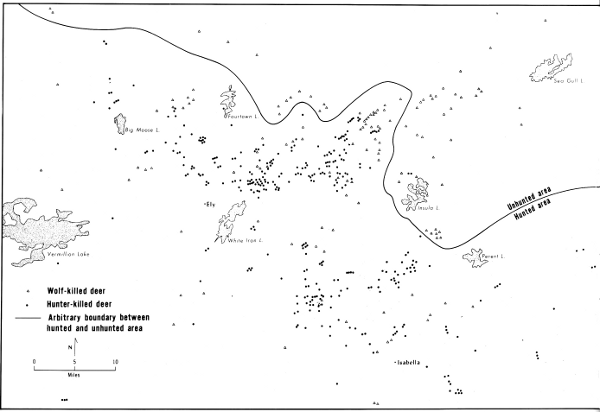
The study was carried out in the Superior National Forest in northern St. Louis, Lake, and Cook Counties of northeastern Minnesota (fig. 1), in conjunction with other aspects of wolf research (see Mech et al. p. 1).
Figure 1.—The study area showing locations where wolf-killed and hunter-killed deer were taken. Line arbitrarily separates the hunted area from the wilderness area. (Click for larger image.)
METHODS
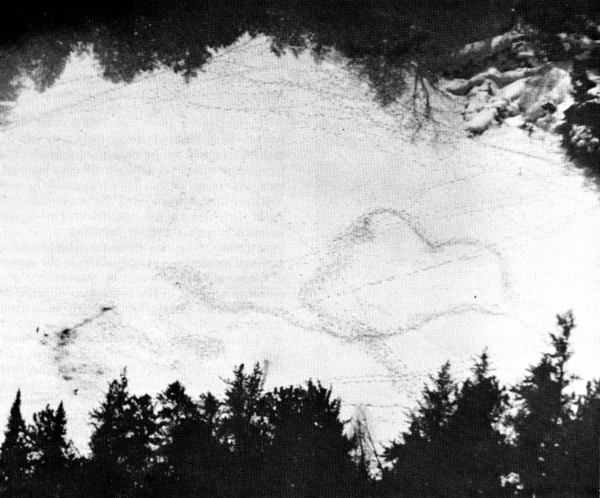
The investigation began in February 1966 and continued through March 1969; the basic objective was to examine as many wolf-killed deer as possible and compare their ages, sex, and condition with a large sample of deer from the population at large in the same area. Wolf-kills were examined only during December through March when they could be found from the air. Aircraft ranging in size from an Aeronca Champ to a Cessna 206 were used to fly over frozen lakes at altitudes up to 2,000 feet to locate wolves (fig. 2), wolf tracks, or kills (fig. 3). We often discovered kills by tracking a wolf pack.
Figure 2.—Wolves were located from the air, usually on frozen lakes. (Photo courtesy of L. D. Mech.)
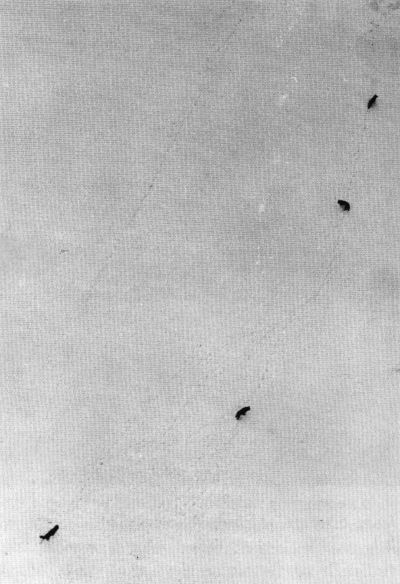
Figure 3.—Wolf-kills were easily spotted from aircraft. (Photo courtesy of L. D. Mech.)
During the winter of 1968-69 this method of finding kills was supplemented by radiotracking five wolves and their associates via aircraft (see Mech et al., p. 1). The latter technique resulted in increased discovery of inland kills.
A deer carcass was judged killed by wolves if the death had been recent, if tracks or other sign indicated that wolves had fed upon it, and if no other possible cause of death was discovered. Carcasses fed on by wolves but not clearly identifiable as kills were labeled "probable" wolf-kills. Although the cause of death of the specimens in this latter category could not be determined with certainty, there was no reason to believe other agents were involved.
In addition to the wolf-kills examined by project personnel, data and lower jaws from deer judged killed by wolves were contributed by other biologists, game wardens, forest rangers, and others whose competence was known. Nevertheless, if certain identification of carcasses as wolf-kills was not possible, the data were relegated to the "probable" wolf-kill category.
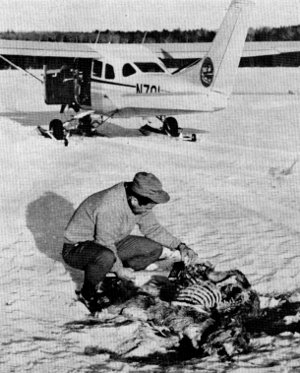
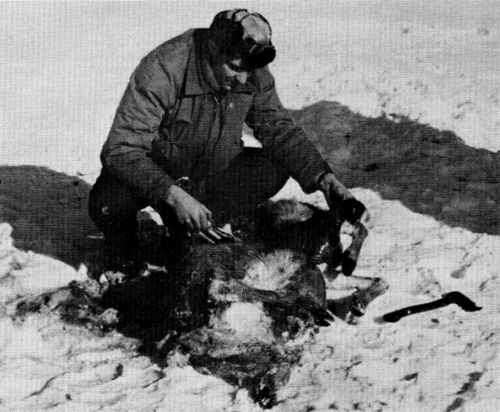
Whenever possible, kills discovered from the air were examined on the ground (fig. 4). Often only skeletal parts remained, but soft parts were also examined when available. Femur marrow, heart, lungs, liver, kidneys, reproductive tracts, and omenta were usually inspected in the field for fat, parasites, and abnormalities, and the degree of subcutaneous back fat was also noted. Hoofs and lower legs were checked, and those showing pathological conditions or abnormalities were collected and examined by the Veterinary Diagnostic Laboratory of the University of Minnesota. All lower jaws found were collected, aged, and examined for dental abnormalities and pathological conditions.
Figure 4.—As many wolf-killed deer as possible were examined from the ground. (Photo courtesy of L. D. Mech.)
In November 1967 and 1968 hunter-check stations were operated on the study area (fig. 5), and deer bagged by hunters were field-checked for age (Severinghaus 1949) and hoof abnormalities. As many lower jaws as possible were collected from field-checked deer and other deer killed in the area for age determination and examination for abnormal dentition.
Figure 5.—Information about hunter-killed deer in the study area was obtained through hunter-check stations. (Photo courtesy of L. D. Frenzel.)
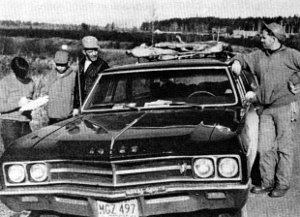
An assumption was made that the age structure and incidence of abnormalities in the sample of hunter-killed deer would be reasonably representative of those in the population at large, an assumption also implicit in a similar comparison made by Pimlott et al. (1969). In this respect, the following statements by Maguire and Severinghaus (1954, p. 109) about deer in New York State are pertinent: "It may be concluded that, considering the open season as a whole, wariness does not significantly distort the age composition of the [deer] kill in relation to that of the corresponding wild population, except possibly for buck seasons of only 1 or 2 days duration.... A reliable appraisal of the age composition of the kill by hunting may be obtained through the operation of roadside checking stations." However, in critically reviewing the present paper Severinghaus stated that in States such as Minnesota, with fewer hunters and higher hunter success rates, age compositions of deer from checking stations may not be the same as those of wild populations. Reviewers Peek and Downing also made similar comments.
Nevertheless, for our comparison with wolf-killed deer it is not necessary that the hunter-kill age structure be exactly representative of the age structure of the actual deer population. All that is required is that there be reasonable agreement between the two. The hunting regulations in our study area allow a 9-day period of taking deer of any age or sex, and a single hunter may legally shoot as many deer as he and his party or associates have permits for. Thus there is no reason for selective hunting, and we feel confident that the age structure of the hunter-kill in our study area does basically represent that of the deer herd at large.
Two laboratory techniques were used for determining the ages of deer from the lower jaws or mandibles—a tooth replacement and wear technique (Severinghaus 1949) and an incisor-sectioning method (Gilbert 1966). The tooth-wear technique requires only the molariform teeth but it is more subjective and inaccurate, particularly in older deer (Ryel et al. 1961). Incisor sectioning requires only incisors and appears to be much more accurate.
However, because the incisors had been lost from many of the wolf-kills, and because the tooth-wear technique was used at checking stations, both methods were applied in the laboratory. Mr. David W. Kuehn (1970) sectioned and aged the incisors. Fortunately there was a sufficiently large sample of mandibles with molariform teeth and incisors from both wolf-killed and hunter-killed deer to enable us to devise a table showing the actual ages (based on incisor-sectioning) of each of the jaws assigned to various tooth-wear classes. This table was then used to distribute the ages of specimens that contained only molariform teeth. For example, because it was found that 37 percent of the jaws aged 4½ years old by tooth wear were actually 5½ years old, we assigned 37 percent of the incisorless jaws aged 4½ by tooth wear to the 5½-year category. Similarly, another conversion chart comparing field age determinations of hunter-killed deer with ages based on incisor sectioning of the same jaws was employed to distribute the ages of field-aged, hunter-killed deer for which jaws or incisors could not be collected.
RESULTS
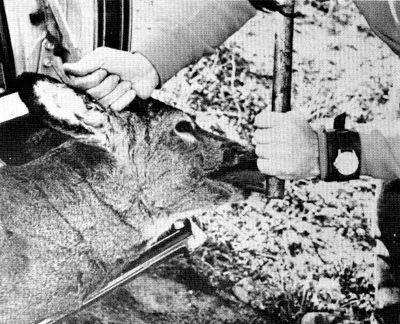
Figure 6.—All hunter-killed deer examined were checked for age. (Photo courtesy of L. D. Frenzel.)
We flew a total of 480 hours during this and related research, mainly during January through March 1967 and December 1968 through March 1969; about one-third of this time was devoted primarily to searching for kills. Jaws were examined from 93 wolf-kills and 49 probable wolf-kills.
Hunter-check stations yielded information from 335 deer (fig. 6), and data on 98 additional hunter-killed deer were contributed by other hunters. Incisors were collected from 82 of 214 hunter-killed deer checked that were older than yearlings; comparisons were then made between ages of the deer based on incisor sectioning and those based on field checks using the wear method. Similarly, incisors were sectioned from 195 wolf-killed and hunter-killed deer older than yearlings that had been aged by the tooth-wear method in the laboratory, so that these two methods could be compared (Kuehn 1970). (Note: incisor-sectioning is unnecessary for fawns and yearlings because animals of these ages can be aged objectively by the progress of tooth replacement.)
Because age or sex distributions might differ in the various subsamples of deer examined during this study, these parameters were compared in subsamples of both wolf-kills and hunter-kills (table 1). No significant differences were found in the age or sex structures between the known wolf-kills and "probable" wolf-kills, so these subsamples were pooled and considered wolf-kills for all subsequent comparisons.
Three significant differences in sex ratio were found among the subsamples of wolf-kills: (1) wolves killed more female fawns than male fawns, but more male adults than female adults (table 2); (2) more of the adults killed in the hunted area were females, while in the wilderness more males were taken (table 3); and (3) after January 1969, when snow was unusually deep, 57 percent of the deer killed were females, compared with only 38 percent before this date.
Table 1.—Results of statistical comparisons between various samples of deer kills from northeastern Minnesota
Sample size Sample description VS Sample size Sample description Results of comparisons Direction of difference
93 Known 49 Probable Nonsig.[23] Nonsig. —
42 Jan.-Mar. 1967 83 Dec. 1968-Mar. 1969 Nonsig. Nonsig. —
66 Male 61 Female Nonsig. — —
50 Wilderness area 92 Hunted area Nonsig. Nonsig. —
41 Adult, wilderness 64 Adult, hunted area — Sig., 99 percent More females in hunted area
66 Before Feb. 1969 77 After Jan. 1969 Nonsig.[26] Sig., 95 percent More females after Jan.
105 Adults 22 Fawns — Sig., 95 percent More female fawns
Hunter-kills: Hunter-kills:
110 Field aged, 1967 225 Field aged, 1968 Nonsig. Nonsig. —
335 Field aged 98 Lab. aged Nonsig. Nonsig. —
132 Lab. aged, males 79 Lab. aged, females Nonsig. — —
89 Field aged, fawns 246 Field aged, adults — Sig., 95 percent More male adults
433 Hunter-kills 142 Wolf-kills Sig., 99 percent — Older deer in wolf-kill
321 Hunter-kills excluding fawns 118 Wolf-kills excluding fawns Sig., 99 percent — Older deer in wolf-kill
FOOTNOTES:
Table 2.—Sex ratios of hunter-killed deer and wolf-killed deer from northeastern Minnesota
Age Hunter-killed deer Wolf-killed deer
Number Percent male Percent female Number Percent male Percent female
Fawns 108 50 50 22 41 59
Adults 315 68 32 105 54 46
In the comparisons of the subsamples of hunter-kills, the only statistically significant difference found was that the adult subsample had a higher proportion of males than the fawn subsample. No significant difference was found in the age structures of the subsamples, so these were all pooled into a sample of 433 hunter-kills for comparison with the wolf-kills. For the same reason, the entire sample of 142 wolf-killed deer was used for a comparison with the hunter-killed sample.
Table 3.—Sex ratios of wolf-killed deer from wilderness areas and from hunted areas
Age Wilderness area Hunted area Total
Number Percent male Percent female Number Percent male Percent female Number Percent male Percent female
Fawns 4 0 100 18 50 50 22 41 59
Adults 41 71 29 64 44 56 105 56 44
Wolf-killed deer in our sample, with an average age of 4.7 years, were significantly older (99 percent level) than hunter-killed deer, with an average age of 2.6 years. For example, deer 5 years of age and older made up 48 percent of the wolf-kills but only 10 percent of the hunter-kills (table 4). The oldest hunter-killed deer in our sample was 9½ years old, but the oldest wolf-killed deer was 14½ (fig. 7).
Because of a possible bias against fawns in the method of collecting data from wolf-kills (to be discussed later), the age structure of the sample of wolf-kills excluding fawns was tested against that of the sample of hunter-kills excluding fawns. The result once again was a highly significant difference between these two age structures (table 1).
As an additional test of the degree to which the age structure of the wolf-killed deer might differ from that of the actual population, we compared our wolf-kill age structure with the age structure of a hypothetical deer population. This was considered advisable just in case the hunter-kill data were poorly representative of the age structure of the actual deer herd. Several hypothetical age structures were constructed and compared according to advice from Downing.[27] In all cases, the comparisons produced the same basic results as the tests with the hunter-killed sample. An example of one comparison is given in figure 7.
A further result obtained by aging the wolf-killed deer pertained to the young individuals killed. The deciduous first incisors of fawns and the deciduous premolars of yearlings are usually replaced with permanent teeth by December (Severinghaus 1949). Of 24 wolf-killed fawns examined, however, three (13 percent) taken during January, February, and March had not yet replaced their deciduous first incisors. Of the 13 yearlings found during this same period, nine (70 percent) had failed to replace their deciduous premolars, and two (15 percent) had just replaced them (one deer killed in February and one killed in March).
FOOTNOTES:
Table 4.—Age and sex distribution of deer killed by wolves and hunters in northeastern Minnesota
Age (years) Wolf-killed deer Hunter-killed deer
Number of: Percent Number of: Percent
Males Females Unknown Total Males Females Unknown Total
Fawns 9 13 2 24 17 54 54 4 112 26
1+ 5 7 1 13 9 63 26 1 90 21
2+ 3 8 5 16 11 42 19 2 63 15
3+ 2 4 2 8 6 47 16 1 64 15
4+ 6 3 4 13 9 32 22 1 55 13
5+ 12 9 — 21 15 15 12 1 28 6
6+ 9 2 1 12 8 3 — — 3 —
7+ 12 4 — 16 11 7 4 — 11 3
8+ 4 2 — 6 4 5 1 — 6 1
9+ 4 2 — 6 4 1 — — 1 —
10+ — 3 — 3 2 — — — — —
11+ — 1 — 1 } 4 — — — — —
12+ — — — — — — — — —
13+ — 1 — 1 — — — — —
14+ — 2 — 2 — — — — —
Total 66 61 15 142 100 269 154 10 433 100
Mandibles from the 142 wolf-killed deer and 259 hunter-killed deer were examined closely for abnormal dentition (table 5, figs. 8-10) (Mech et al. 1970) and pathological conditions (table 6), and the lower limbs of 75 wolf-kills and 126 hunter-kills were also checked for abnormalities and pathology (table 7, fig. 11). Statistical comparison showed that the incidence of each condition was significantly higher in the sample from wolf-killed deer (table 8).
Jaw necrosis found in our specimens was similar to that described by Murie (1944) for Dall sheep and Mech (1966a) for moose. Generally animals with this condition are old, and ours were no exception.
Figure 7.—Comparison between the age structures of deer killed by wolves, deer killed by hunters, and a theoretical population from the same general area of northeastern Minnesota.
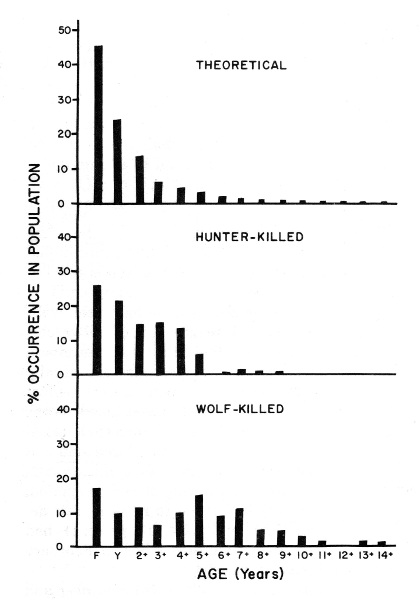
Figure 8.—Deciduous first premolar (arrow), usually not present in deer, was found in specimen M-31.
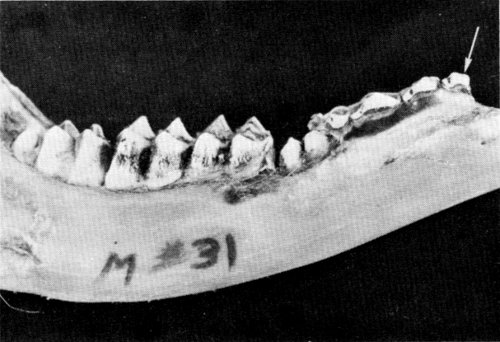
Figure 9.—A permanent first premolar (arrow) was discovered in M-8.
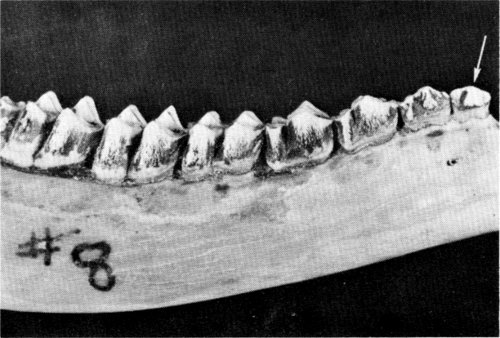
Figure 10.—An extra set of fourth premolars (arrows) occurred in specimens M-96.
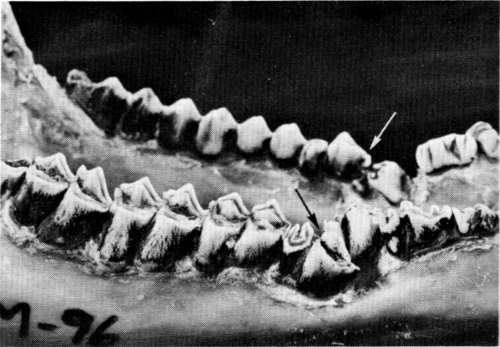
Table 5.—Abnormalities in the mandibular dentition of deer from the Superior National Forest, Minnesota
Years
M-8 F 3+ Wolves Right P1 present (fig. 9)
Left Normal; no P1 present outside or inside jaw
M-31 F 17 mon. Wolves Both Deciduous P1 present (fig. 8) and permanent P1 present inside left ramus; right side not examined internally
M-45 M 4+ Wolves Right P2 rotated 90°
Left P2 absent
M-52 M 4+ Wolves Right P2 absent
Left Normal
M-96 F 2+ Hunters Right 2 permanent P4s present; both crooked in orientation (fig. 10)
Left P2 diagonal; P3 normal; P4 below gumline, pointed posteriorly and wedged against M1; appears to have pushed out original P4 (fig. 10)
M-117 M 5+ Hunters Right Third column of M3 reduced
M-191 M 4+ Wolves Right Third column of M3 absent although rudimentary root present
Left Third column of M3 much reduced, peg-like, and almost separate
M-225 — 4+ Wolves Right P2 absent
Left P2 situated diagonally
M-234 F 5+ Wolves Right Third column of M3 reduced
M-254 M 2+ Hunters Right P2 slightly crooked in orientation
Left P2 slanting posteriorly and crowding P3
M-272 M 5+ Hunters Right Third column of M3 reduced, peg-like, and almost separate
Left Third column of M3 peg-like and separated from second column by 4 mm.
M-296 F 5+ Wolves Right Normal
Left Extra permanent P4 crowding original P4; much like M-96
M-369 M 3+ Hunters Right Permanent P2 still not emerged but appears to be wedged against root of P3
FOOTNOTES:
Table 6.—Pathological conditions in the lower jaws of deer killed by wolves or hunters[30]
Specimen number Sex Age Cause of death Approximate date of death Condition
Years
M-70 M 6½ Wolves Feb. 1968 Lump in left side of mandible near M1 and M2
M-192 M 7½ Wolves Jan. 1969 Large lump in left diastema apparently from healed fracture
M-206 M 8½ Wolves Jan. 1969 Light necrosis around base of teeth
M-218 M 3½ Wolves Feb. 1969 Large lump in left diastema apparently from healed fracture
M-228 F 11½ Wolves Mar. 1969 Heavy necrosis around molars and extending into bone; half of each M3 destroyed, both roots and crown
M-236 F 14½ Wolves Feb. 1969 Light necrosis around base of teeth
M-402 F 10½ Hunters Nov. 1968 Heavy necrosis and lumps on both sides of mandible
FOOTNOTES:
The following organs were excised from wolf-killed deer and examined grossly in the field for parasites and abnormalities (fig. 12): lungs (six animals, normal); heart (seven animals, normal); liver (four animals, one small unidentified tapeworm cyst). Twin fetuses were found in each of two adult does examined.
Twelve deer were checked for body fat in one or all of the following areas: back (subcutaneous), kidneys, heart, omenta. Of these animals, seven had large amounts of fat, but five were almost depleted of fat from these stores. These five were all killed in February or March 1969; three were fawns, and two were yearlings that had not yet shed their deciduous premolars.
Of 69 animals examined for femur marrow condition, two had fat-depleted marrow. One was a fawn killed in March 1969 that had not shed its deciduous first incisors, and the other was a 5½-year-old buck killed in February 1966.
A fawn and a yearling that had died in February 1969 from unknown causes also had fat-depleted, marrow. These animals might have been killed by wolves, for wolves had fed on them. However, they could have died from malnutrition and been eaten as carrion.
Table 7.—Pathological conditions in the lower limbs of deer killed by wolves or hunters
Specimen number Sex Age Cause of death Condition
Years
M-28 M 5½ Wolves Right hind foot: "Old healed ankylosis of the pastern joint ... a spontaneously healed bacterial arthritis with the destroyed joint cavity filled in by solid bone. This deer probably had defective gait"[31] (fig. 14).
M-29 F 5½ Wolves Front foot: "A 3×4×5 cm. fibrous mass in the subcutis about the digital flexor tendon on the volar surface of the metacarpus. The surface was denuded, ulcerated, and superficially infected by surface bacteria.... Probably did detract from the animal's speed of flight"[31] (fig. 15).
M-37 F 7½ Wolves Hind foot: "Probable that the lesion was at one time an active bacterial bone marrow infection that had eventually fistulated to the skin.... Regional tendons and their sheaths were also present among this inflammation and scarring, and it would be fair to assume that the animal's agility was impaired to some extent."[31]
M-115 M 4½ Hunter Right front hoof: Broken at tip.
M-196 F 4½ Wolves Left front foot: "Two severe transverse lacerations on the volar surface. Each was approximately 4 cm. in length. One was located at the margin of the heel, and the other was located several cm. proximad. The more proximal wound had severed the flexon tendons, and the consequent uselessness of the limb was suggested by the splayed toes, the unmarred hoof wall and unworn soles"[32] (fig. 16).
M-227 M 9½ Wolves Left hind leg: "A diffuse swelling of the distal metatarsal bone, the surface of which was studded with small osteophytic spicules. The major flexor and extensor tendons were forced to assume a convex course over the summits of the dorsal and plantar surfaces of the defect, but the tendon sheaths were clean and the normal wear on soles of the involved toes suggested that functional deficit and pain were probably minimal ... quite certainly a callus from previous fracture"[32] (fig. 17).
FOOTNOTES:
Figure 11.—The jaws and legs of kills were inspected closely for abnormalities. (Photo courtesy of L. D. Frenzel.)
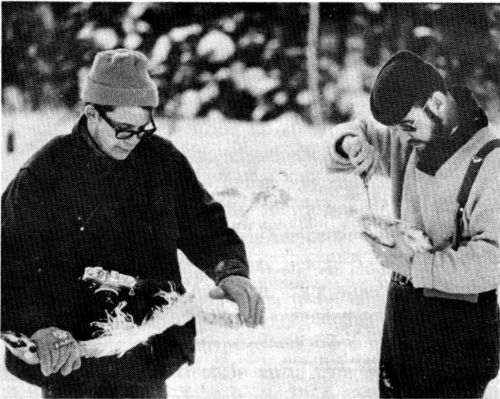
Figure 12.—When internal organs were present in kills, they were examined in the field. (Photo courtesy of L. D. Mech.)
DISCUSSION AND CONCLUSIONS
It has been established that wolves hunting Dall sheep (Murie 1944), caribou (Crisler 1956), moose (Mech 1966a), and other species usually have a low percentage of success. In the case of a pack of 15 wolves hunting moose on Isle Royale during winter, only 4.6 percent of all the moose detected by the pack were killed; considering only the moose that the wolves caught up to or held at bay, the kill rate was 7.6 percent (Mech 1966a).
What little evidence there is about wolves hunting deer indicates that the success rate is also low with this prey species, at least in winter. The senior author has now observed a total of 14 deer being chased by wolves in northeastern Minnesota, mostly by packs of five, seven or eight wolves (Mech 1966b, and see Mech et al., p. 1). In only one case (6.7 percent) did the wolves (a pair) succeed in catching their prey.
Low hunting success rates imply that the circumstances influencing hunts are seldom favorable enough, or the prey animals encountered are seldom vulnerable enough for the wolves to succeed. When the evidence cited earlier that most wolf-killed animals are inferior members of their populations is considered, the most cogent explanation for the low hunting success of wolves is that relatively few prey animals are vulnerable.
Table 8.—Incidence of various abnormalities and pathological conditions in wolf-killed deer compared with that in hunter-killed deer
Condition Wolf-kills Hunter-kills Level of significance
Deer in sample Deer with condition Deer in sample Deer with condition
Number Number Percent Number Number Percent Percent
Dental abnormalities 142 8 5.6 259 5 1.9 [34]90
Pathology of lower limbs 75 5 6.7 126 1 0.8 95
FOOTNOTES:
Age Structure
Our data strongly indicate that in northeastern Minnesota wolves prey much more heavily on the older members of the deer population, at least during winter (fig. 7). Substantial vulnerability to wolves seems to begin at about the age of 5 years (fig. 13), because the percentage of wolf-killed deer in each year class increases from 9 percent for 4½-year-old animals to 15 percent for 5½-year-olds (table 4). Indeed, 48 percent of the wolf-kills were aged 5½ and over, which compares favorably with the Ontario figure of 58 percent for these age classes (Pimlott et al. 1969).
Figure 13.—Relative rates of predation on deer of various ages, based on comparisons of the ages of wolf-killed deer with those of a theoretical population (dashed line) and those of the hunter-killed population. See figure 7.
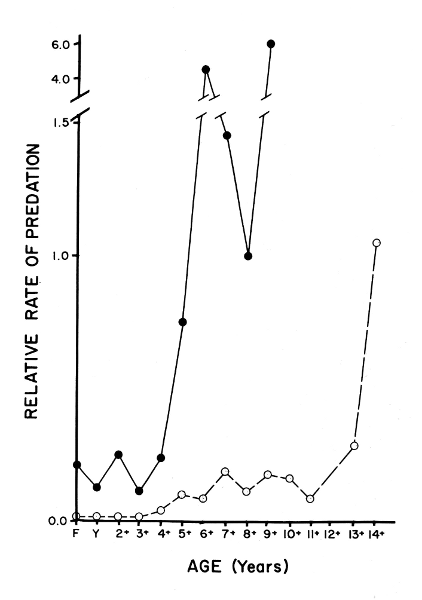
These figures assume added significance when compared with a sample of deer killed by hunters in the same general area (fig. 1). Only 10 percent of the hunter-killed deer were 5½ years old or older, and the percent killed in each year class dropped off suddenly from 13 percent aged 4½ to 6 percent aged 5½. If the age structure of the hunter-kill sample is reasonably representative of the age structure of the population at large, the wolf-kill data show that wolf predation in our study area during winter has a definite selective effect on the deer population.
There is no direct way of knowing that the age structure of the hunter-killed deer represents the age structure of the deer population at large. However, sampling hunter-kills is the most practical means available for gaining an index to the age structure of the existing herd. Further, there are three indirect pieces of evidence indicating that the hunter-kill sample represents the actual age structure of the population, just as Maguire and Severinghaus (1954) found in New York. First, our sample has the basic theoretical form expected of a stable deer herd; i.e., the youngest year class contained the most members, and each older cohort included fewer (fig. 7). Second, the age structure of our sample has the same form as most other deer age structures from widely diverse areas, (Ontario, Pimlott et al. 1969; southern Minnesota, Erickson et al. 1961; Massachusetts, Shaw 1951). Third, there is no reason to believe that in our area rifle hunting is especially selective for any particular age classes. In talking with large numbers of hunters, we have learned that most shoot at any and all deer they happen to see.
Even if the age structure of the hunter-kill sample did not approximate that of the actual herd, the comparison of the wolf-kill with the theoretical population dictates the same conclusion: the rate of kill of older deer by wolves was several times greater than that of younger deer, excluding fawns (fig. 13). In any case, if the actual deer population in our study area had an age structure similar to that of our sample of wolf-kills (which would be the only age structure that would contradict our conclusion), its numbers would be declining by orders of magnitude each year, and there would now be only a remnant population. Such obviously is not the case.
The only other question that might arise from a comparison of the age structure of our wolf-killed deer with that of the hunter-killed deer concerns the area from which each sample was taken. Fifty of our wolf-kills came from a region almost inaccessible to hunters (fig. 1). However, the other 92 came from the same general area as the hunter-kills. Nevertheless, there was no statistically significant difference in age structure between the wolf-kills from the wilderness versus those from the hunted area (table 1). This fact also suggests that the human hunting in the area is relatively light and has little effect on the age structure of the deer population in the area.
Wolves may also be taking a disproportionately high number of fawns, although our data do not show this. Nevertheless, there may be a bias against fawns in our method. It is not unusual to discover the remains of a wolf-killed deer so completely eaten that there is no indication left of the animal's age. Because fawns often are only about half the size of adult deer, and their skeletons have not yet completely ossified, the chances are better that fawns will be more completely eaten. Pimlott et al. (1969) also recognized this possible bias, although their data did indicate that wolves were killing a higher percentage of fawns than occurred in the population.
Our study does support the other conclusion of Pimlott et al. (1969), based on a study of 331 kills, that wolf predation on deer during winter shows a definite selection for older animals. It does not agree with the tentative conclusion of Stenlund (1955) that wolves in the Superior National Forest do not prey disproportionately on old deer. However, Stenlund's conclusion was based on 36 kills and on the assumption that only deer at least 7 years old were "old." Deer 5 years old and older composed 33 percent of Stenlund's sample, a figure considerably higher than the 10 percent in these age classes in our hunter-kill sample (table 4). Thus Stenlund's data do not contradict our conclusion.
The age of 5 years seems to be the beginning of the period of vulnerability for adult deer. Although 5 years might not seem especially old, there are two aspects of significance concerning deer of this age and older. First, they are in the second half of the life span for most members of the species, and their alertness and ability to bolt quickly away might be expected to decline. It is of interest in this regard that Klein and Olson (1960, p. 87) believed 5 years of age to be "the upper limit of physiological efficiency" of black-tailed deer (Odocoileus hemionus) in Alaska. Second, up to the age of at least 4½ years, and perhaps beyond, the apparent weight-load-on-track of deer increases with age (Kelsall 1969). Thus older deer would sink farther into the snow than younger ones, and their escape might be slowed and hindered more. For further discussion of the effect of snow on the vulnerability of deer, see Mech et al. (p. 51).
Sex Ratio
Statistical tests comparing a number of subsamples of both wolf-killed deer and hunter-killed deer showed a series of significantly different sex ratios (tables 1)-3. The ratio of males to females in the fawn cohort of the hunter-kill, which is probably the most representative of the actual fawn sex ratio, was even (table 2). With wolf-kills, however, a significantly higher percentage of females was taken in the fawn subsample (59 percent) than in the adult subsample (46 percent). These results compare favorably with those of Stenlund (1955), who found that from 1948 to 1953 in the same area as the present study 68 percent of 19 sexable fawn wolf-kills were females and 44 percent of 63 sexable adult wolf-kills were females.
If the sex ratio of fawns began even, and more females than males were killed by wolves, then a higher proportion of males would be left in the adult population, unless some other mortality factor kills more male fawns. Thus it is not surprising that in the wilderness area, where little or no hunting is done, the sex ratio of wolf-kills in the adult cohort is significantly heavy toward males (71 percent: 29 percent). This was also true of the wolf-kills in Algonquin Provincial Park, where males made up 57 percent of the total sexable wolf-kill (Pimlott et al. 1969). The latter figure may even have been higher if calculated for adults alone, for a preponderance of female fawns in the Algonquin Park data (such as occurred in our and Stenlund's samples) would tend to obscure the preponderance of males in the adult sample.
The adult subsample of hunter-kills also contained a higher percentage of males (66 percent : 34 percent). Although this might also reflect the influence of wolf predation on female fawns, it probably is more a result of the greater movement of bucks during the hunting season, which overlaps with the rutting season. Even the sex ratio of adult deer killed in wolf-free areas shows a preponderance of males (Erickson et al. 1961).
However, it appears that the higher harvest of bucks by human hunters does markedly affect the sex ratio of the deer population in the hunted area, for the wolf-kill of adults in that area contained a significantly higher percentage of does (56 percent) than did the wolf-kill of adults in the wilderness area (29 percent).
Evidently the hunter harvest is not heavy enough to affect the age structure of the deer population to any marked degree, for no significant difference in age structure was found between the wolf-kill in the hunted area and that in the wilderness area (table 1). This does not conflict with the conclusion that hunting affects the sex ratio of the deer herd, because it would take much less to influence a population characteristic having two classes (sex) than one having 14 (age).
One additional difference in the sex ratio was found between two other subsamples of the wolf-kill—that is, the wolf-kill before and after an unusually high snow accumulation, which reached its peak about February 1, 1969 (table 1). Of a total of 77 animals killed before this snow condition occurred (including those from previous years), 38 percent were females. Of 44 animals killed after the heavy accumulation, 57 percent were females. One possible explanation for this is that females may normally be less vulnerable to wolf predation, for Kelsall (1969) has shown that they probably have a lighter weight-load-on-track than males. Thus when snow conditions changed greatly, making deer generally much more vulnerable to wolves (see Mech et al., p. 35), a preponderance of does suddenly might have become available. There is some evidence that does may be generally less vulnerable under most conditions, for all seven of our wolf-killed deer over 10 years old were females, and the oldest was over 14.
Condition of Wolf-Killed Deer
Figure 14.—Arthritis in right hind foot of specimen M-28. (Photo courtesy of University of Minnesota Veterinary Diagnostic Laboratory.)
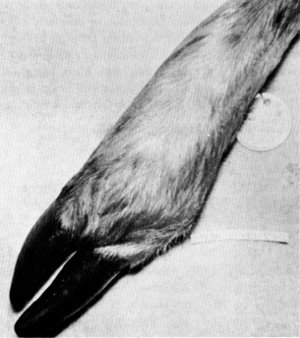
Figure 15.—Infection and fibrous mass in a front foot of specimen M-29. (Photo courtesy of University of Minnesota Veterinary Diagnostic Laboratory.)
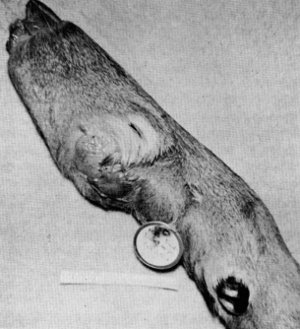
Figure 16.—Injury to left front foot of specimen M-196. (Photo courtesy of L. D. Mech).
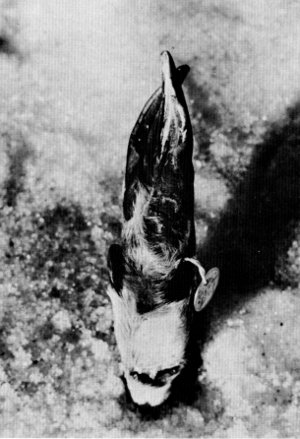
Figure 17.—Healed fracture of left hind leg of specimen M-227. (Photo courtesy of University of Minnesota Veterinary Diagnostic Laboratory.)
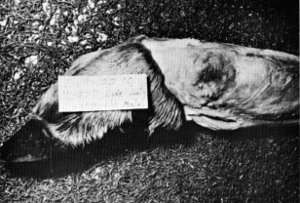
Because the data show that wolves in our study area tend to kill a disproportionate number of older deer, it is not surprising to discover that wolves also tend to capture a disproportionate number of individuals with abnormalities and pathological conditions (table 8). The explanation for such selection is obvious in regard to the abnormalities of the lower limbs (figs. 14-17): deer with injured or abnormal limbs simply cannot run as fast or as agilely as normal animals (table 7). Our observations show that deer usually depend on their alertness and speed to escape approaching wolves (Mech 1966b, Mech et al., p. 1). Any trait or condition that tended to interfere with either alertness or speed would decrease an individual's chance of escape.
It is more difficult to explain how dental abnormalities or pathological conditions of the mandible (figs. 8-10) would predispose an individual to wolf predation. However, in the case of dental abnormalities the genetic or environmental conditions that caused the abnormality might also have caused some other trait that increased the animal's vulnerability. Or the abnormal condition itself may have caused a further, more critical, disruption of the animal's physiology or behavior, which in turn predisposed it to wolf predation.
The finding of several wolf-kills with poor fat stores could indicate that primary or secondary malnutrition was a factor in the animals' deaths. However, it would take a statistical comparison between the fat stores of the deer at large and those of the wolf-kills to establish this.
The discovery that 13 percent of the fawns and 84 percent of the yearlings killed during January, February, and March had not yet shed their deciduous incisors and premolars, respectively, also fits well with the rest of our information. Evidently some unusual factor had caused the delay in tooth development and replacement. One possibility is that the animals were born in August or September, much later than normal. Although most deer in Minnesota are born in May and June, there are records of births in July and August. In addition, a fetus 181 to 200 days old was found in a doe killed on September 26 (Erickson et al. 1961).
An alternate explanation for the delay in tooth replacement is that the animals were suffering from malnutrition or nutrient deficiency. Severinghaus[35] has evidence that yearling bucks that have not replaced their deciduous premolars during November, and thus are aged at 17 months (Severinghaus 1949), generally have shorter, narrower antlers and fewer points than 18-and 19-month-old individuals. Degree of antler development in turn is considered related to nutritional state (Latham 1950). Thus it is reasonable to conclude that animals behind in tooth development and replacement, whether this is caused by age or diet, are physiologically inferior.
Most of the abnormal conditions discussed above pertain to the skeletal parts of wolf-kills. If the soft parts of a large number of kills could be examined thoroughly, one might discover a much higher incidence of diseases and other pathological conditions.
In conclusion, our data on both age and condition of wolf-killed deer show that at least during winter, wolves in our study area usually do not kill just any deer they discover, although they do try to. Evidently, most deer can usually escape wolf predation. The most frequent exceptions are those 5½ years old and older, those born late, those suffering from poor nutrition, those with abnormalities or pathological conditions, and possibly fawns.
The above conclusions parallel those of Murie (1944), Crisler (1956), Mech (1966a), and Pimlott et al. (1969) for wolves preying on Dall sheep, caribou, moose, and deer respectively, and further substantiate the claim by Mech (1970) that they can be extended to wolves preying on most, if not all, species of large mammals under most conditions. It is also apparent from the data presented above that deer over 5 years of age and those with abnormalities of the jaw or lower limbs represent such a small percentage of the total population that they are seldom taken by human hunters. In this respect, competition between timber wolves and human hunters appears to be minimal in the study area.
FOOTNOTES:
SUMMARY
White-tailed deer (Odocoileus virginianus) killed by wolves (Canis lupus) during winter in a relatively unhunted wilderness area and in an immediately adjacent hunted area of Minnesota were compared with deer killed by hunters in the same general area, and with a hypothetical population. Deer killed by wolves were significantly older. Statistical comparisons also showed the following: (1) hunters generally killed an even sex ratio of fawns, and a disproportionate number of adult bucks, (2) wolves took a higher percentage of female fawns than female adults, a disproportionate number of bucks in the wilderness area, and a higher percentage of does in the hunted area. The latter fact evidently reflects the higher hunter success on males in the hunted area. Significantly higher incidences of abnormalities and pathological conditions of both mandibles and lower limbs were found in wolf-killed deer than in hunter-killed deer, and these conditions are described. It is concluded that wolf predation on white-tailed deer in the study area during winter generally is selective in that it tends to remove members of the prey population that are old, debilitated, or abnormal. Apparently these classes of deer represent such a small percentage of the population that they are seldom taken by human hunters.
ACKNOWLEDGMENTS
This study was supported by Macalester College, the New York Zoological Society, the Minnesota Department of Conservation, the USDA Forest Service, and the U.S. Bureau of Sport Fisheries and Wildlife. Pilots Robert Hodge, Pat Magie, John Winship, Jack Burgess, Don Murray, and Walt Neumann aided substantially in obtaining jaws from wolf-killed deer. Students from the Macalester College Biology Department and personnel of the USDA Forest Service and the Minnesota Department of Conservation helped secure mandibles from both wolf-killed and hunter-killed deer. The interest of Mr. John E. Peninger and of many deer hunters in contributing the jaws is also greatly acknowledged.
Mr. David W. Kuehn sectioned the incisors of the deer jaws and determined their ages. Dr. Donald M. Barnes of the University of Minnesota Veterinary Diagnostic Laboratory examined the abnormal lower limbs, described their pathology, and provided photos of specimens used herein.
Mr. Wallace C. Dayton and Miss Elizabeth Dayton and the Quetico-Superior Foundation, all of Minneapolis, financed Mech during the preparation of this paper.
The following individuals read the manuscript and offered many helpful suggestions: Mr. R. L. Downing, Mr. C. W. Severinghaus, Mr. J. M. Peek, Dr. C. T. Cushwa, Mr. M. H. Stenlund, and Dr. R. R. Ream.
LITERATURE CITED
Crisler, Lois. 1956. Observations of wolves hunting caribou. J. Mammal. 37: 337-346.
Downie, N. M., and Heath, R. W. 1959. Basic statistical methods. 289 p. New York: Harper and Bros.
Erickson, A. B., Gunvalson, V. E., Stenlund, M. H., Burcalow, D. W., and Blankenship, L. H. 1961. The white-tailed deer of Minnesota. Minn. Dep. Conserv. Tech. Bull. 5, 64 p.
Gilbert, F. F. 1966. Aging white-tailed deer by annuli in the cementum of the first incisor. J. Wildl. Manage. 30: 200-202.
Kelsall, J. P. 1969. Structural adaptations of moose and deer for snow. J. Mammal. 50: 302-310.
Klein, D. R., and Olson, S. T. 1960. Natural mortality patterns of deer in southeast Alaska. J. Wildl. Manage. 24: 80-88.
Kuehn, D. W. 1970. An evaluation of the wear method as a criterion for aging white-tailed deer. M.S. Thesis., Univ. Minn.
Latham, R. M. 1950. Pennsylvania's deer problem. Penn. Game News, Spec. Issue 1. (Cited from: Allen, D. L. 1962. Our Wildlife Legacy.)
Maguire, H. F., and Severinghaus, C. W. 1954. Wariness as an influence on age composition of white-tailed deer killed by hunters. N. Y. Fish and Game J. 1: 98-109.
Mech, L. D. 1966a. The wolves of Isle Royale. U.S. Nat. Park Serv. Fauna Ser. 7, 210 p.
Mech, L. D. 1966b. Hunting behavior of timber wolves in Minnesota. J. Mammal. 47: 347-348.
Mech, L. D. 1970. The wolf: the ecology and behavior of an endangered species. 389 p. New York: Natural History Press, Doubleday.
Mech, L. D., Frenzel, L. D., Jr., Karns, P. D., and Kuehn, D. W. 1970. Mandibular dental anomalies in white-tailed deer from Minnesota. J. Mammal. 51: 804-806.
Murie, A. 1944. The wolves of Mount McKinley. U.S. Nat. Park Serv. Fauna Ser. 5, 238 p.
Pimlott, D. H., Shannon, J. A., and Kolenosky, G. B. 1969. The ecology of the timber wolf in Algonquin Provincial Park. Ont. Dep. Lands and Forests Res. Rep. (Wildl.) 87, 92 p.
Ryel, L. A., Fay, L. D., and Van Etten, R. C. 1961. Validity of age determination in Michigan deer. Mich. Acad. Sci., Art, and Letters 46: 289-316.
Severinghaus, C. W. 1949. Tooth development and wear as criteria of age in white-tailed deer. J. Wildl. Manage. 13: 195-216.
Severinghaus, C. W. 1955. P. R. Rep. W-28-R-9: Job 1A, April 13, 1955.
Shaw, S. P. 1951. The effect of insufficient harvests on an island deer herd. N.E. Wildl. Conf. (Mimeo).
Siegel, S. 1956. Non-parametric statistics for the behavioral sciences. 312 p. New York: McGraw-Hill.
Stenlund, M. H. 1955. A field study of the timber wolf (Canis lupus) on the Superior National Forest, Minnesota. Minn. Dep. Conserv. Tech. Bull. 4, 55 p.