What to Look For
Reading edition
Differences in size, shape, plumage patterns and colors, wing beat, flocking behavior, voice, and habitat—all help to distinguish one species from another.
Flock maneuvers in the air are clues. Mallards, pintails, and wigeon form loose groups; teal and shovelers flash by in small, compact bunches; at a distance, canvasbacks shift from waving lines to temporary V's.
Closer up, individual silhouettes are important. Variations of head shapes and sizes, lengths of wings and tails, and fat bodies or slim can be seen.
Within shotgun range, color areas can be important. Light conditions might make them look different, but their size and location are positive keys. The sound of their wings can help as much as their calls. Flying goldeneyes make a whistling sound; wood ducks move with a swish; canvasbacks make a steady rushing sound. Not all ducks quack; many whistle, squeal, or grunt.
Although not a hard and fast rule, different species tend to use different types of habitat. Puddle ducks like shallow marshes and creeks while divers prefer larger, deeper, and more open waters.
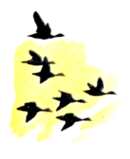
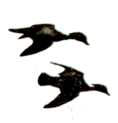

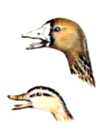
Flock Pattern | Silhouette | Color Areas | Sound