Part 2 — Cowpens Battleground
Reading edition
Cowpens was one of the most skillfully fought battles in the annals of the American military. It pitted a young and ruthless commander of British dragoons—a man widely feared and hated in the South—against a brilliant tactician and experienced leader of American militia. The fighting was short and decisive. In less than an hour, three-fourths of the British were killed or captured, many of them the best light troops in the army. For Cornwallis, the rout was another in a series of disasters that led ultimately to final defeat at Yorktown.
The park that preserves the scene of this battle is located in upstate South Carolina, 11 miles northwest of Gaffney by way of S.C. 11. The original park on this site was established in 1929 on an acre of ground marking the point of some of the hardest fighting. For the bicentennial of the battle, the park was expanded to over 842 acres, and many new facilities—among them a visitor center, roads, trails, and waysides—were built.
The battlefield is small enough for visitors to stroll around and replay the maneuvers of the opposing commanders. A 1¼-mile trail loops through the heart of the park. Two of the first stops are at the lines held by Howard’s Continentals and Pickens’ militia. Farther along the trail you can stand where Tarleton formed his troops into a line of battle. From this point, the trail up the Green River Road covers ground over which the British advanced at sunrise that cold January morning. The pitched fighting between Continentals and redcoats that decided the contest occurred just beyond the bend in the road.
The land is currently being restored to its appearance at the time of the battle. In 1781, this field was a grassy meadow dotted with tall hardwoods. A locally known pasturing ground, it was used by Carolina farmers to fatten cattle before sending them to low-country markets.
Tarleton in his memoirs described it as an “open wood ... disadvantageous for the Americans, and convenient for the British.” He expected to break through the rebel lines, as he had so often done in the past, and ride down the fleeing remnants with his cavalry.
Morgan saw the same ground as favoring him and based his plan of battle on a shrewd appraisal of both his foe and his own men. He was happy enough that there was no swamp nearby for his militia to flee to and unconcerned that there were no natural obstacles covering his wings from cavalry. He knew his adversary, he claimed, “and was perfectly sure I should have nothing but downright fighting. As to retreat, it was the very thing I wished to cut off all hope of.... When men are forced to fight, they will sell their lives dearly.” So Morgan deployed his men according to their abilities and handled them in battle with rare skill. They rewarded him, militia and regular alike, with what was probably the patriots’ best-fought battle of the war.
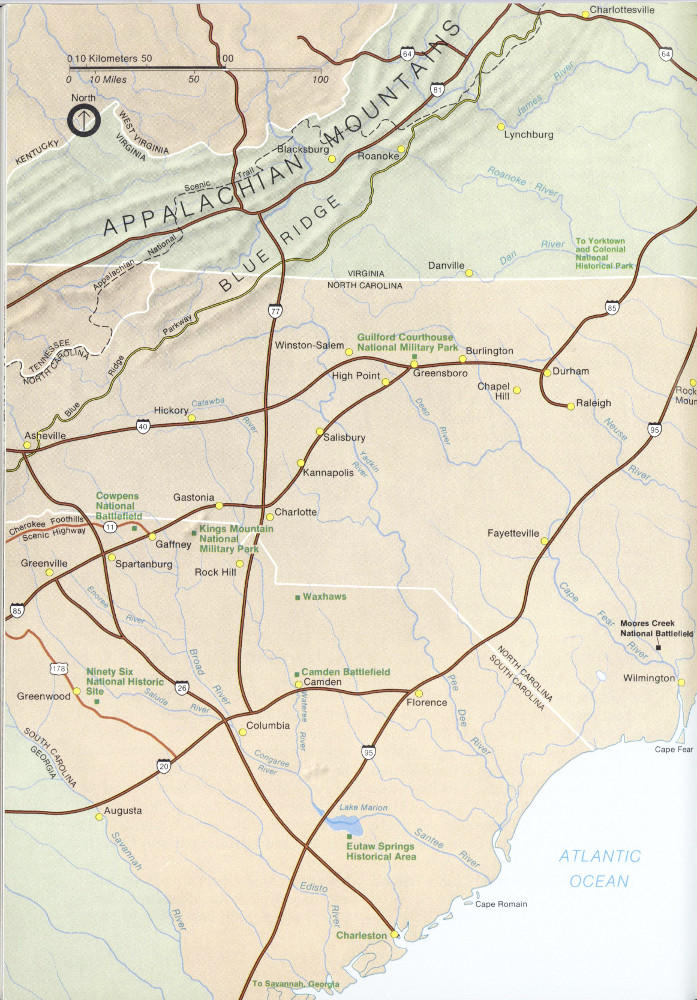
Cowpens was only one battle in a long campaign. For perspective, nine other sites of the War in the South are described on the following pages. Several of them are administered by public agencies; a few are barely marked and may be hard to find. Travelers will find two works useful: Landmarks of the American Revolution by Mark M. Boatner III (1975) and The Bicentennial Guide to the American Revolution, Volume 3, The War in the South by Sol Stember (1974).
89
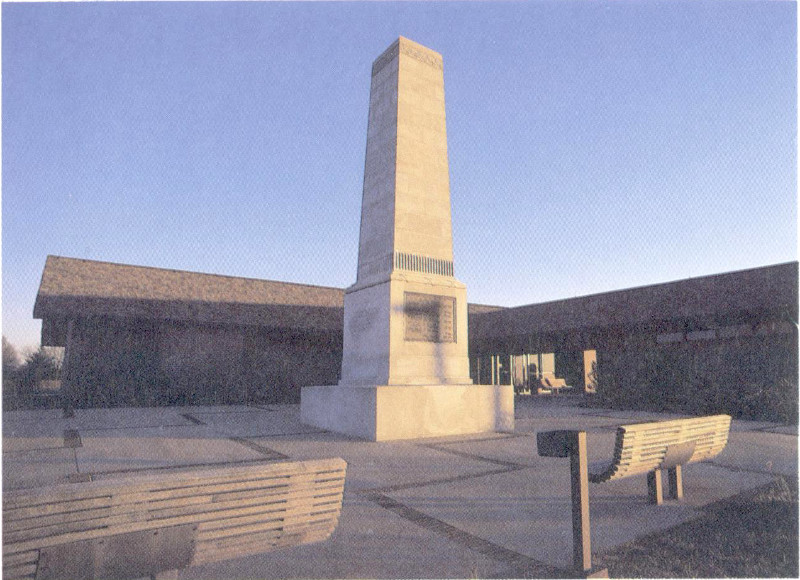
This monument was erected by the government in 1932 to commemorate the battle. It originally stood in the center of Morgan’s third line but was moved to this location when the new visitor center was built for the Bicentennial.
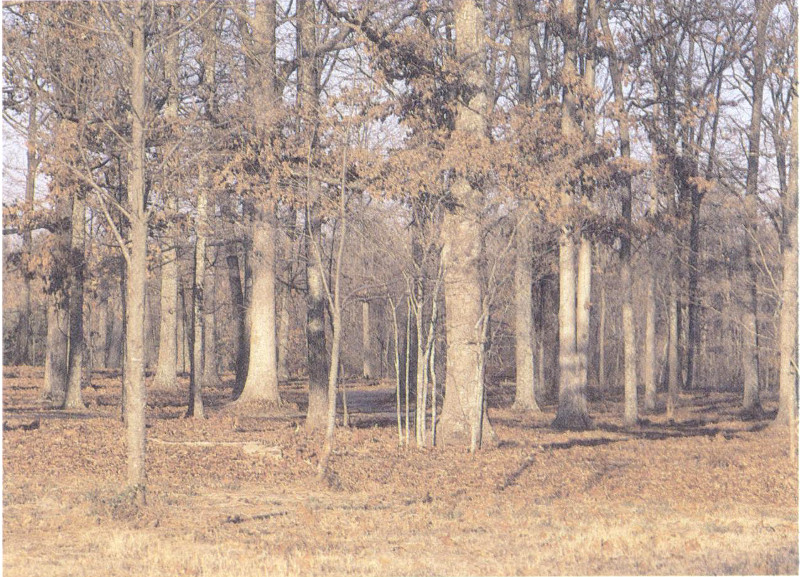
These hardwoods along the patriots’ third line suggest the open woods that contemporaries agree covered the Cowpens at the time of the battle.
90
VIRGINIA
Appalachian National Scenic Trail
Blacksburg
Roanoke
Lynchburg
James River
To Yorktown and Colonial National Historical Park
Blue Ridge Parkway
NORTH CAROLINA
Danville
Winston-Salem
Guilford Courthouse National Military Park
Burlington
High Point
Greensboro
Durham
Chapel Hill
Raleigh
Hickory
Salisbury
Fayetteville
Moores Creek National Battlefield
Kannapolis
Gastonia
Charlotte
Wilmington
SOUTH CAROLINA
Cowpens National Battlefield
Gaffney
Kings Mountain National Military Park
Spartanburg
Rock Hill
Waxhaws
Ninety Six National Historic Site
Camden Battlefield
Camden
Florence
Columbia
Eutaw Springs Historical Area
Charleston
GEORGIA
Augusta
91
The Road to Yorktown
Savannah 1778-79
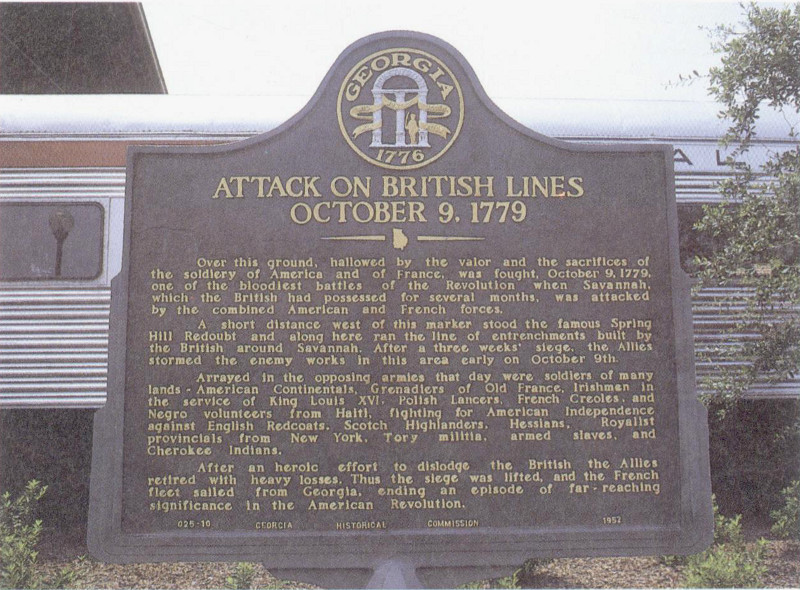
The British opened their campaign against the South with the capture of this city in late 1778. They went on to conquer Georgia and threaten the Carolinas. To retake the city, French and American infantry opened a siege in the fall of 1779. The British repulsed the allied attacks with great losses. Some of the hardest fighting swirled around Spring Hill Redoubt. Nothing remains of this earthwork. A plaque on Railroad Street is the only reminder of the battle.
Charleston 1780
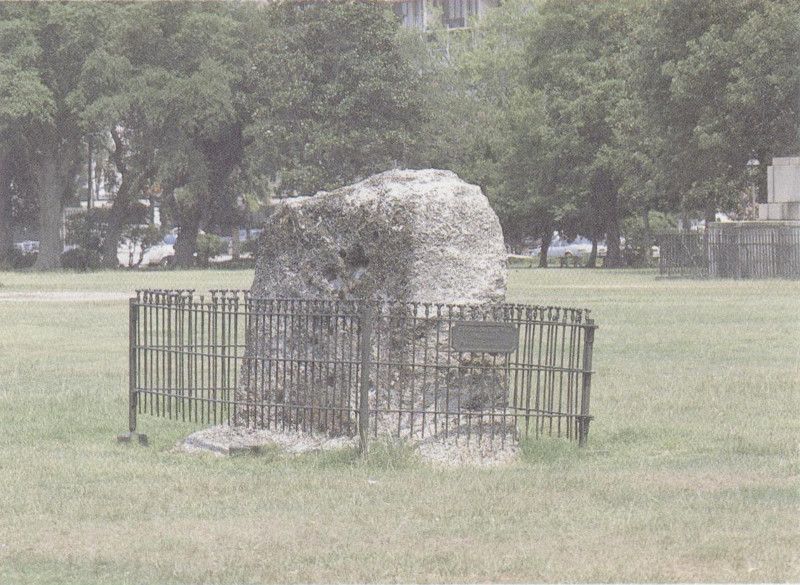
The British laid siege to this city in spring 1780. Trapped inside was the entire Southern army, 5,000 troops under Gen. Benjamin Lincoln. When Lincoln surrendered, it was one of the most crushing defeats of the war for the Continentals. Only a few evidences of the war remain, among them a tabby wall (part of the patriots’ defensive works) in Marion Square and a statue of William Pitt, damaged in the shelling, in a park in the lower city.
Waxhaws 1780
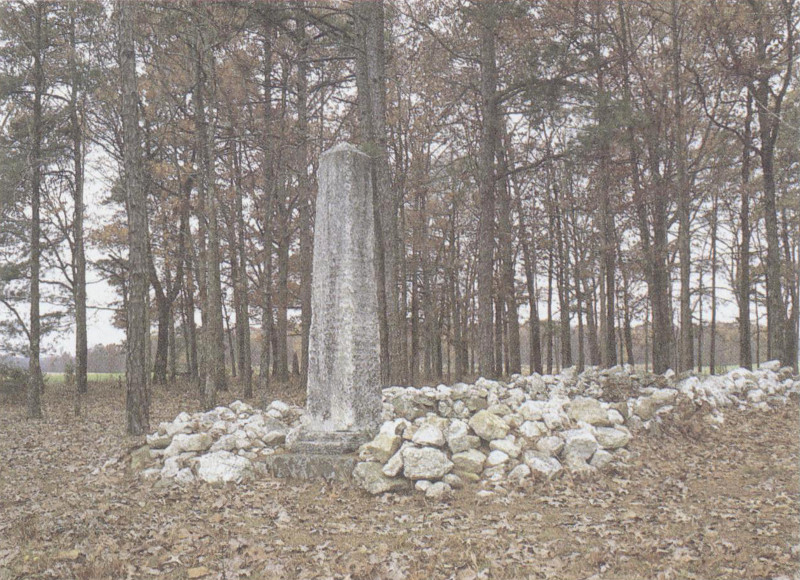
The only sizable force not trapped inside Charleston was a regiment of Continentals under Abraham Buford. Pursuing hard, Tarleton caught them on May 29, 1780, in a clearing. His dragoons and infantry swarmed over Buford’s lines. The result was a slaughter. Many Continentals were killed trying to surrender. The massacre inspired the epithet “Bloody” Tarleton.
Site located 9 miles east of Lancaster, S.C., on Rt. 522. Marked by a monument and common grave.
92
Camden 1780
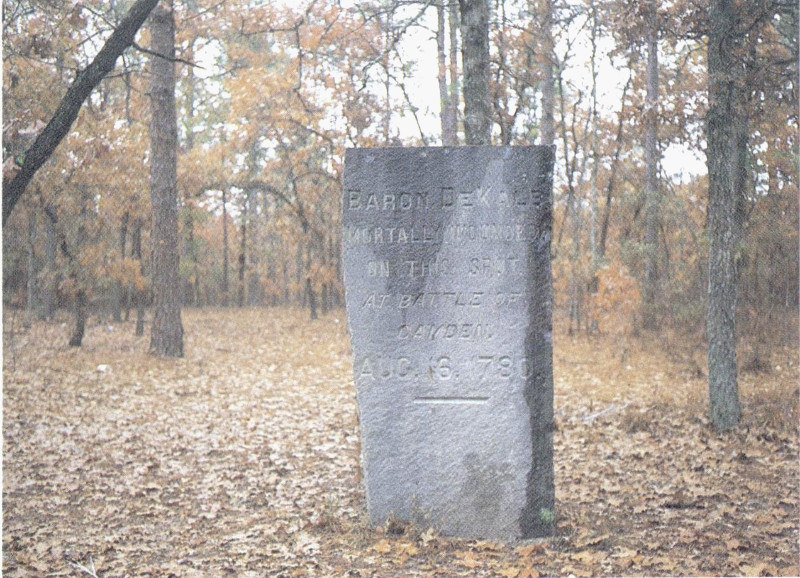
After the fall of Charleston, Congress sent Gates south to stop the British. On August 16 he collided with Cornwallis outside this village. The battle was another American disaster. The militia broke and ran, and the Continentals were overwhelmed. This defeat was the low point of the war in the South. Historic Camden preserves remnants of the Revolutionary town. The battlefield is several miles north of town. This stone marks the place where the heroic DeKalb fell.
Kings Mountain 1780
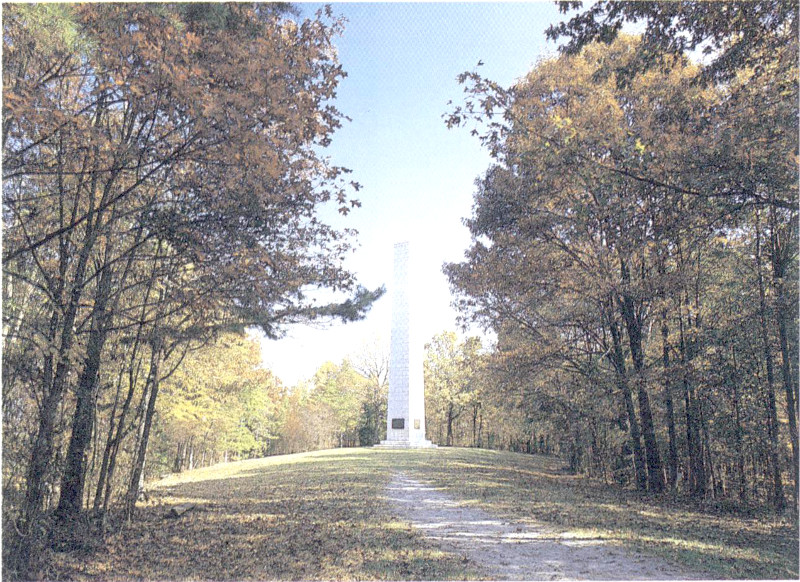
When Cornwallis invaded North Carolina in autumn 1780, he sent Patrick Ferguson ranging into the upcountry. A band of “over-mountain” men—tired of his threats and depredations—trapped him and his American loyalists on this summit. In a savage battle on October 7, they killed or wounded a third of his men and captured the rest. The defeat was Cornwallis’s first setback in his campaign to conquer the South. Administered by NPS.
Guilford Courthouse 1781
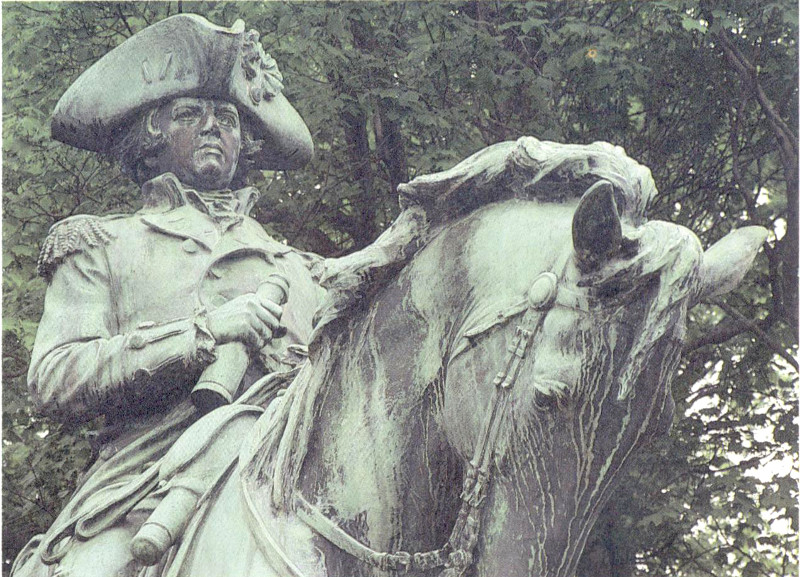
Armies under Nathanael Greene and Cornwallis fought one of the decisive battles of the Revolutionary War here on March 15. In two hours of hard fighting, Cornwallis drove Greene from the field, but at such cost that he had to break off campaigning and fall back to the coast.
Located on the outskirts of Greensboro, N.C. Administered by the National Park Service.
93
Ninety Six 1781
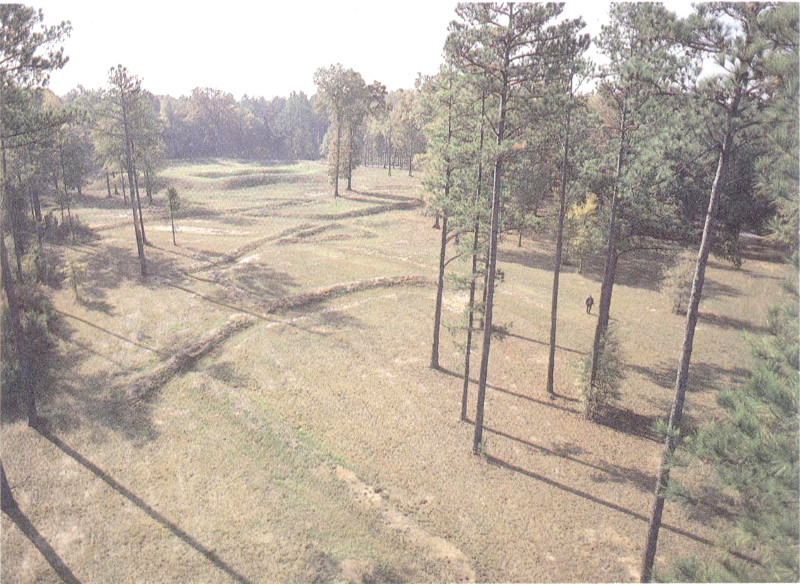
Located on the main trading route to the Cherokees, this palisaded village was the most important British outpost in the South Carolina back country. Greene laid siege to the garrison here from May 22 to June 19, 1781, but could not subdue the post. A relief force raised the siege, which was soon evacuated and burned. The star fort and some buildings have been reconstructed.
Park administered by the National Park Service.
Eutaw Springs 1781
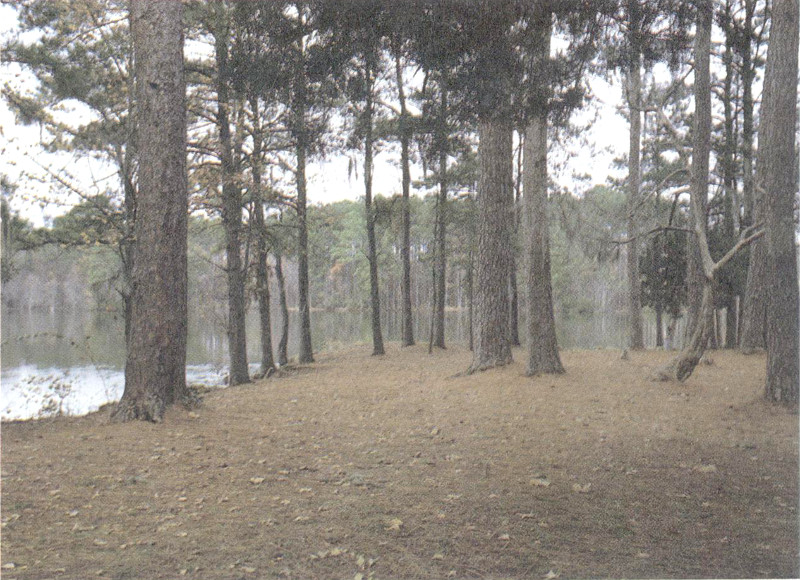
The last major battle in the lower South (September 8, 1781), Eutaw Springs matched Greene with 2,200 troops against 1,900 redcoats. The outcome was a draw. The British retreated to Charleston, and there they remained the rest of the war.
A memorial park stands on Rt. 6. just east of Eutawville, S.C. The original battlefield is under the waters of Lake Marion.
Yorktown 1781
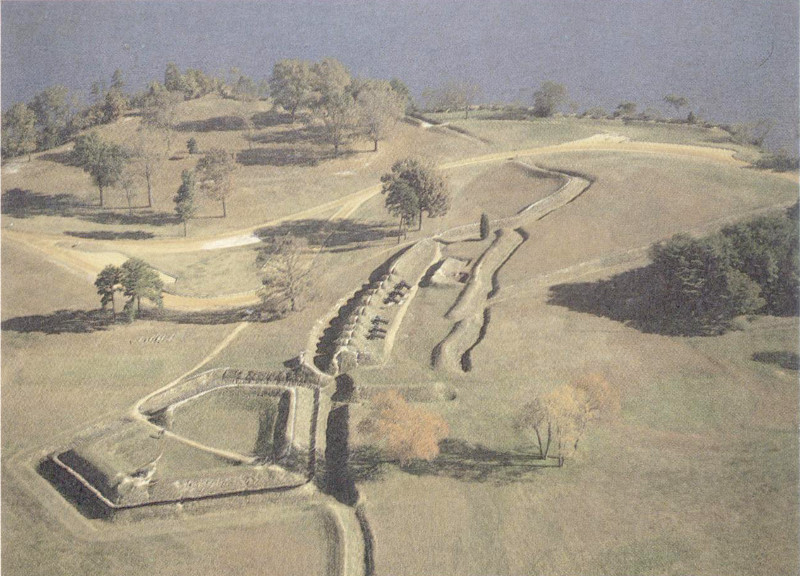
Cornwallis’s surrender at this little port town on October 19, 1781, brought the war to an effective end. The victory was a consequence of the Franco-American alliance. French ships blockaded the harbor and prevented resupply, while Washington’s powerful force of Continentals and French regulars besieged the British by land. After a long bombardment and a night attack that captured two redoubts, Cornwallis asked for terms.
Administered by NPS.
94
For Further Reading
For those who wish to explore the story of Cowpens in more depth, the following books will be helpful. Daniel Morgan, Revolutionary Rifleman by Don Higgenbotham (1961) is a well-paced, solidly researched narrative of the Old Wagoner’s adventurous life. Still valuable, especially for its wealth of quotations from Morgan’s correspondence, is James Graham’s Life of General Morgan (1856). On the struggle for the South Carolina back-country, Ninety Six by Robert D. Bass (1978) is the best modern study. Edward McCrady’s two-volume work, A History of South Carolina in the Revolution (1901), is also useful. For personal anecdotes about the savage civil war between rebels and loyalists, Traditions and Reminiscences, Chiefly of the American Revolution in the South by Joseph Johnson, M.D. (1851) is a basic source book. Equally illuminating is James Collins’ Autobiography of a Revolutionary Soldier, published in Sixty Years in the Nueces Valley (1930). Biographies of other men who participated in Cowpens are not numerous. Skyagunsta by A. L. Pickens (1934) mingles legend and fact about Andrew Pickens. Piedmont Partisan by Chalmers G. Davidson (1951) is a balanced account of William Lee Davidson. James Jackson, Duelist and Militant Statesman by William O. Foster (1960) is a competent study of the fiery Georgia leader. The Life of Major General Nathanael Greene by George Washington Greene (1871) gives the reader a look at the battle from the viewpoint of the American commander in the South. For the British side of the story, one of the best accounts is Banastre Tarleton’s A History of the Campaign of 1780 and 1781 in the Southern Provinces of North America (1787), available in a reprint edition. The Green Dragoon by Robert D. Bass (1957) gives a more objective view of Tarleton’s meteoric career. Two other useful books are Strictures on Lt. Col. Tarleton’s History by Roderick Mackenzie (1788), an officer who fought at Cowpens with the 71st Regiment, and The History of the Origin, Progress and Termination of the American War by Charles Stedman (1794), a British officer who was extremely critical of Tarleton. Both are available in reprint editions. Cornwallis, the American Adventure by Franklin and Mary Wickwire (1970) has an excellent account of Cowpens—and the whole war in the South—from the viewpoint of Tarleton’s commander. Rise and Fight Again by Charles B. Flood (1976) ably discusses the influence of Cowpens and other Southern battles on the ultimate decision at Yorktown.
—Thomas J. Fleming
95