DESERT (continued 2)
Reading edition
Suddenly the tense silence broke in a hideous shriek, and in a moment a chorus of shrieks followed the first, remote, inhuman, like the shrieking of tortured souls. Malchus halted, chilled with terror, and looking anxiously ahead at Serapion he saw that he too had stopped. His right arm moved; he was making the sign of the Cross; and Malchus remembered what the hermit had told him of the evil spirits that haunted the desert, taking the form now of human beings, now of hyenas and jackals. Following the hermit's example, he too made the sign of the Cross and whispered a prayer as he moved again on his way.
So through the long night they tramped onward, and as, amid the weariness of the body and the fears of the mind, his thoughts turned for shelter to the beautiful green hollow in the ravine, and he realized, with a tremulous ecstasy mixed with tragic regret, that he had cast love and beauty, quiet happiness and the warm joys of the body, behind him forever. Ahead of him lay only solitude, desolation, and strange fears, a life of fierce discipline for soul and body, a terrible and wonderful life whose grimness held for his restless and fanatic soul the keen, indestructible beauty of a diamond.

Chapter Six
Upon a high, desolate terrace looking eastward across descending waves of desert to where the Nile gleamed like the track of a snail under the long ramparts of the further shore, Serapion's cell stood half sunk in the loose sand. A mound of sand, driven up by the prevailing wind, buried its northern wall to within a few feet of the roof. The southern and western walls were less deeply buried, and on the eastern side a little trench which the hermit kept clear of the encroaching sand led up to the door. There was no sign of other habitation; the little hut stood alone, a solitary watch tower beneath which the illimitable desert extended north, east, and south, its pure unbroken desolation changing hour by hour from the blandest to the most sinister beauty, but always unreal, unearthly as some waste of the unpeopled moon.
The sun was dropping toward the west; soon it would dip below the sandy ridge that rose behind the cell, and Malchus sat in the sand, leaning his back against the south wall, and watched the slanting shadow which would soon inclose him. It was the moment when the long-hoped-for respite from the torrid heat of the day descends like balm upon the desert. Malchus sighed and leaned back his head against the warm stone wall. He felt as weak as if he were at the end of a severe illness, and when he drew in his breath his head, filled with a strange dizziness, seemed to grow light and unsubstantial. The desert journey had been long and exhausting. With little interval for rest the hermit and his undesired disciple had toiled on through hours of torrid daylight and moonlit darkness, and it was night again when they reached their journey's end.
Following Serapion cautiously, Malchus had watched him in the snowy moonlight as he entered his cell, and had then crept round to the back of it and lain down in the sand. He had no plan for the future. It was sufficient for him that he had arrived at his journey's end. Now Serapion could hardly refuse to help him. To prove to him that he was capable of severe asceticism, Malchus had determined to eat no more of his loaf. It lay in the wallet at his side, an endless temptation. His only indulgence was to take a little sip of water from his leather bottle twice a day. When first he had arrived he had sunk, from sheer exhaustion, into a heavy sleep which had lasted till long after dawn. But the following night, soon after he had fallen asleep, a wild howl close beside him had roused him in terror and he had seen a dog-like shape with drooping hind quarters slinking away through the moonlight. Those drooping hind quarters thrilled him with horror; they suggested something foul and unnatural, half vermin and half devil, and the thought that some such prowling creature might fall upon him while he slept had thrown him into a condition of alternate sleep and startled waking which was more exhausting than sleeplessness. Sometimes those shriller shrieks which had terrified him as he crossed the desert by night had broken out not far from where he lay, and he had seen black dog-like shapes moving along the sky line of the rising ground behind the cell.
Two days passed and Malchus neither saw nor heard the smallest sign of Serapion; yet each morning, shortly after dawn, he was aware, as if by some new sense, that the hermit issued from his cell and after a few moments went in again, and on the third day, as dawn was breaking, he saw him standing, a pale wraith on the pale sand, looking at him. He stood for so long that it seemed impossible to Malchus that, if he had been human, he would not have moved. Then, without word or sign, he turned and the wall of his cell hid him from view. Another day passed and that sole appearance of Serapion took on in Malchus's memory the nature of a vision. Worldly realities began to fade into something less apprehensible but more intense; his life passed like a strange, slow dream whose mood fluctuated with the oppression of the daytime, the sweet, too brief respite of evening, the dread of night, and the blessed consolation of returning dawn. At dawn and again at noon and nightfall he tried to meditate and pray, but when he did so a strange, serene apathy came upon him, like the apathy of the dying, and it seemed as if his heart and brain had dissolved into a mist. And by degrees his thoughts dwindled to nothing but thoughts of food and drink.
At night he dreamed of meat and wines. He sat again in his old home or in the house of a friend and watched the slaves enter, carrying dishes of delicious viands to which the desire of his soul reached out in delighted anticipation. Then the great crystal flagons would be set upon the tables; but always as the guests began to take their places he awoke to his gnawing hunger and remembered once more that he would never again eat dainty food; and, racked by the craving of his belly, he felt that he could have sold his immortal soul for food. Even in his waking moments, visions of food and drink began to tantalize him and often he would find that he had fallen into a long revery in which he was devising elaborate meals and lingering lovingly over the details. Then, with an effort of the will, he would banish these vain imaginings from his mind and try to fix his thoughts upon God and the soul.
At other times he lost the sense of hunger and fell into a mood of tremulous exaltation in which his senses seemed to have been refined of all that is earthly and physical. In that mood he ceased to be aware of the past or the future and existed in a present of subtle and fragile ecstasy too keen to be called pleasure and too exalted for pain. This state would hold him for hours and then it would crumble as if consumed by its own intensity, and in its place would come a black and mundane despair, or again that tyrannous craving for food which excluded all else. On the fourth day of his fast he had yielded so far to his craving as to open his wallet and take out the fragment of bread. The torrid heat of the desert had dried it to the hardness of a brick, but to Malchus, as he crouched on his knees, holding it in his hands as if it were some holy relic, it seemed a thing more precious than pure gold. He ran his hands lovingly over it, feeling a delight in the associations which it evoked. Then he bowed his head to it and smelled it, and instantly, as he ravenously drew in the savor of it, his bodily nature became one vibrating chord of desire. He felt the spittle collect in his mouth, and in another moment he would have been gnawing wolfishly at the crust if he had not, by a supreme effort of will, flung it far from him on to the sand and, with a cry like the cry of a wounded animal, covered his eyes with his hands. The smell of the bread still lingering on his hands prolonged his struggle, but soon he had gained a firmer control of himself and, bowed down as he was, he fell into a long, passionate prayer.
When he opened his eyes again he saw before him on the sand a shadow like the shadow of a tree trunk. He raised his head. Serapion stood there gazing at him. Malchus felt the heart leap in his breast, but he neither moved nor spoke. He remembered the fierceness with which Serapion had rejected him in the desert and he expected that now he would be still more angry. But the old man was contemplating him calmly and with a look in which there was no trace of anger, and presently Malchus heard the quiet voice which had stirred him so deeply when they had talked in Alexandria.
"What do you seek?"
"I seek to become a hermit," Malchus replied.
"While I watched you just now," said Serapion, "the evil spirits were hovering about your head in the likeness of flies. If I had not rebuked them they would have settled on you."
"I am ready to war with evil spirits," Malchus answered, "and with God's help I shall overcome them."
"I have told you," said the hermit, "that, being a man long accustomed to ease and luxury, it is impossible for you to become a hermit. If you wish to fly from your former life, return at least to the village on Lake Mareotis where we entered the desert, and work for your living there in the fields."
But still Malchus persisted. "Tell me what I ought to do to become a hermit, and I will do it."
"I have told you," answered the old man, quietly, "that it is not possible for you to become a hermit, but if you wish to lead the holy life, go to a desert monastery; there they will receive you. Here I live alone and often I eat only once in five days, and even then I do not eat a full meal."
He said this to dissuade Malchus from his impossible ambition. But Malchus replied: "For the last four days, my father, I have eaten nothing. There on the sand are the remains of the loaf which I last tasted before the end of our journey."
The old man, gazing at Malchus, knew that what he said was true. "Rise up," he said, "and get the bread which you threw away, and come into the cell."
Malchus obeyed. The doorway of the cell opened into a little room whose floor was the bare sand, and its walls the same rough stones as the exterior. A table stood near the door, on it a mug and two earthenware dishes, and a bench beside it; on the floor lay a sheepskin and a great heap of dried palm leaves, and from pegs in the wall hung a full sack and a goatskin containing water. A doorless opening led to a small inner chamber having an altar and a wooden crucifix, and, at the height of a man standing, a little window guarded by two wooden bars.
Malchus stood in the doorway with his fragment of loaf in his hand, waiting to be invited to enter; but Serapion took no notice of him. He was lifting down the water skin from its peg and, untying the neck, he poured some water into a dish. Then, going to the sack, he took out a little loaf and, dipping it in the water, began to eat. Malchus expected that he would invite him to eat, too, but Serapion had, it seemed, forgotten him, and Malchus, unable to endure the sight of another man eating, turned away his eyes and leaned his weary body against the door-post.
When Serapion and finished eating he stood up and began to chant the psalm called "De Profundis." Malchus stood upright and, as Serapion proceeded to chant the same psalm many times over, he joined in the chanting. When Serapion had chanted the psalm twelve times he fell on his knees and began to pray aloud, saying prayers up to the number of twelve. He did all these things in order to test the patience and forbearance of Malchus. But Malchus joined gladly in the psalms and prayers, for he felt that he was now receiving direction and help in what he should do.
When they had finished it was already late in the evening and, as Serapion seemed again to have forgotten him, Malchus resolved to return to his place outside. It seemed to him now a terrible thing to be going back to that state of spiritual torpor which came upon him in his loneliness whenever he had conquered the fierce obsession of bodily hunger; and so he turned, before leaving his cell, to Serapion.
"Will you not give me some rule, my father," he asked, "for meditation and prayer, for it is hard, without experience, to know how best to turn the soul to God."
Serapion was silent. He was considering the case of this young man so stubbornly determined to take upon himself the hard life of the hermit. He considered how he had fasted for four days and then, when bitterly disappointed in his hope of food, had been glad to join in the long psalm-singing and prayers, and how he had lain in the open unprotected for four nights and was ready now to go back uncomplaining to his place. And seeing so much good will waiting only for guidance to express itself in good works, the hermit was touched and, stretching out his hand in the dark, he took Malchus by the cloak and drew him back into the cell and toward the doorway of the small inner chamber. "Go in," he said, "and twelve times throughout the night you shall recite the psalm which we recited this evening. This you must do standing, but between every repetition kneel down and meditate upon the words until they become the very words of your soul crying to God."
Malchus groped his way into the little oratory and stood before the altar. To spend the night within four walls, undisturbed by the fear of prowling beasts, was for him the most blessed ease. Though his body was feeble from fasting and his brain dizzy from lack of sleep, his soul was warm with happiness at the prospect of passing the night as Serapion had instructed him, for it seemed now that he had been rescued from his own doubt and ignorance and that Serapion was beginning to relent toward him. He was glad that he had been set to perform not only a discipline of the soul, but also a discipline of the body. Once during the night, as he knelt in meditation, it seemed to him that his soul floated away from his body, and he saw his body bowed down before the altar and, standing upon the altar above him, the figure of a man with wings. Great wings they were, curving high above his shoulders and reaching downward to his heels, and every feather of them was plumed with rays of light. The figure grew clearer, brighter, it seemed to pulsate with the intensity of its brightness. Then Malchus's soul began to return to his body, his body roused itself with a little shudder, and he sat up on his heels and stared at the dark altar with a dazed mind. But the memory of the vision filled him with encouragement and he raised his aching body and stood again to recite the psalm.
When the daylight returned an unearthly peace had settled upon him. The voice of Serapion called him from the outer chamber, and Malchus found him standing at his table before a heap of dried palm leaves.
"My father," he said to the old man, "I feel that my soul is at rest."
The hermit looked up from a palm leaf which he was tearing into strips. "For a little while," he replied, "that is well."
"And it is not always well for the soul to be at rest?"
"No, my son, for it is by war and strife, and not by rest, that the soul advances in spiritual excellence."
"Is it then wrong to pray to be delivered from strife?"
"When strife comes upon us we must pray, not that the strife may be removed, but that we may have patience to overcome the strife."
"And what if I find myself for a long time at peace?"
"Then you must pray to God to let the strife return to you."
"But if strife is good, why do they that seek God fly from the towns and villages where, as I well know, there is endless strife for the soul?"
"Because worldly strife blinds and oppresses the soul; but here in the desert a man finds only the strife of the heart which is the path of spiritual excellence. Here the spirit is free from those other kinds of strife—the strife which arises from the ears, the eyes, and the mouth. But now," he said, "you must watch me so as to learn how to make mats and ropes of palm leaves. These dried palm leaves must be split up into ribbons, and when we have a good supply of ribbons we must lay them in the trough to soak."
As he spoke he was splitting up the leaves into long, narrow strips, tearing the leaf always along the grain, and when Malchus saw how the splitting was done he took a leaf and began to tear it in the same way.
"This," the old man went on, "is the easiest part of the work. It needs no more than a little care and neatness. But when we have finished the splitting I can show you at once how to plait, for I set some other strips to soak last night, that we should not be delayed by having to wait for these to soak, for the soaking is a matter of some hours."
The hermit ceased to talk and he and Malchus continued to work on the heap of leaves till Malchus's fingers, unhardened as yet by manual work, were covered with painful cuts from the sharp-edged leaves. When the whole heap was finished, the hermit stooped and, turning back the sheepskin which lay on the floor, disclosed a stone trough from which he lifted a dripping sheaf of ribbons which had been soaking all night. These he laid on the table and, having done so, threw into the trough those which they had just split. "Now," he said, "you must watch carefully;" and choosing the most suitable strips, he began slowly but with the deftness and precision of an expert to plait the first rows of a narrow mat. Having done so, he took the work to pieces and repeated the operation three times. And when he had plaited it again a fourth time he handed the piece to Malchus. "Now," he said, "take it, and take these soaked strips, too, and sit down outside in the shadow of the cell and continue from the point at which I stopped. Take also the sheepskin there, so that you can lay the strips on it and keep them out of the sand. When you have woven to the length of your arm, let me see what you have done."
Malchus obeyed, and for three hours he sat laboring patiently at the work, while the free ends of the strips escaped repeatedly from his inexperienced fingers and worked themselves loose, and the chafing of the strips hurt the cuts in his fingers, which were becoming more and more painful. When at last he had woven an arm's length he took it in for Serapion to inspect. The old man examined it critically, and then without a word unplaited all that Malchus had done. "The weaving is very loose," he said. "See that it is closer next time."
Malchus humbly took up the unraveled strips and went out to begin again. It was now the height of noon. Sky, sand, and surrounding air radiated a sultry glow, and Malchus, becoming every hour more feeble, felt as if he were imprisoned in an oven. So far from gaining any facility in weaving, it seemed to him that he was becoming more and more clumsy and, to add to his difficulties, the strips, creased and twisted by the first weaving, would not conform to a new texture. His fingers were bleeding now; the blood was staining the strips; and when after two hours he had finished, he found that his weaving was as loose as before. When he went in despair to show this new attempt to Serapion, the old man looked up impatiently and remarked, after a scornful glance at the work, that it was no better than before. "Take it to pieces and begin again," he ordered, and Malchus, concealing his bitter discouragement, went out and did so, trying again to improve the work. But by this time the strips were so creased and strained that even the greatest adept could have made nothing of them, and when Malchus, after a long, disheartening struggle, had finished, he saw that the weaving was now looser than ever. Tears of vexation stood in his eyes. He had been at work for over six hours and he was exhausted in body and mind. The pain from his fingers aggravated the pain in his heart and he felt that if Serapion set him to do the work for a fourth time he would be unable to prevent himself from breaking into sobs. But when Serapion had again examined the work, he laid it aside without remark and, turning to Malchus, asked him, "Will you eat, my son?"
The sudden release from the long strain almost snapped the feeble cord of Malchus's self-control. Tears ran down his cheeks, but with a last effort he mastered himself. "You know best, my father," he answered, "what is right for me to do."
The hermit, without further speech, set a dish of water on the table and, bringing a shell full of salt and four small loaves from the sack, he signed to Malchus to sit down with him at the table. Then he gave Malchus one of the loaves, and himself took Malchus's dry and sandy fragment, and they began to eat together, dipping their loaves in the water to soften them.
The hard, stale stuff seemed to Malchus more delicious than the rarest of the delicacies he had tasted at the feasts of Alexandria. The savor of it on his tongue and in his nostrils filled all his physical being with delight; but he forced himself to eat slowly, trembling lest his gluttony should become apparent to Serapion and should discredit him in his eyes.
When they had finished, Serapion spoke again. "My son," he said, "will you eat another loaf?"
"If you will eat another, my father, I will do so," answered Malchus; "but if you will not, neither will I."
"I have had enough," Serapion replied, "for I am a hermit and I have eaten already to-day."
"Then, I, too, have had enough," said Malchus, "for I seek to become a hermit."
Serapion dropped the other two loaves into the sack again, for he knew that after so long a fast it would be better for Malchus to eat no more; and seeing that his strength was almost spent for lack of repose, he bade him lie down in the cell and sleep, "for fasting and watching," he said, "are in themselves worth nothing, but only in so far as they minister to the soul."
Chapter Seven
Malchus had been with Serapion for forty days and during all that time he had followed with gladness the orderly rule of life which the hermit prescribed. His thoughts and desires, surfeited of the refined sensuality of his former life, turned easily to this new life in which every privation and every act of discipline was for him a revolt against the hated past. It seemed as if his mind had been purged of desire, for during all that time he was untroubled by the lusts of the flesh; and as Serapion permitted him every evening to eat a small meal of bread and salt or of dried dates, the dreams and reveries concerning food and wine had ceased to molest him. He had soon mastered the art of plaiting palm leaves and could now make ropes, mats, and baskets which would be good enough to sell; and when the hours of prayer and meditation were over he fell to work on a mat or basket, rejoicing to see his own handiwork grow under his fingers. Only twice during these forty days had any human soul penetrated into the empty desert which inclosed them. Once when Malchus was chanting a psalm in the oratory he was surprised by the sound of a strange voice calling out a greeting which was answered by the voice of Serapion. At the sound of it Malchus forgot his chanting and, driven by curiosity, began to listen avidly to the conversation which followed the greeting. But Serapion called to him, bidding him continue his devotions, and putting a great constraint upon himself, he forced himself to continue until he had finished the appointed service. By that time there was silence in the cell, and when he came into the outer room he found Serapion alone. The old man did not speak, and Malchus, knowing that this silence was intended as a rebuke to his curiosity, took up a half-woven basket and went out. Far below him, swaying faintly above its black shadow on the immaculate sweep of the desert, a figure no larger than a weevil toiled southward toward the remoter deserts of Thebaid; and who he was and why he had come to the cell Malchus never knew.
The second visitor had come a few days later, leading an ass laden with baskets and sacks. An hour before he arrived, Malchus, who sat weaving a basket outside the cell, had seen a small dark blot moving upon the stainless face of the desert. He had watched it until it split into two blots, one larger than the other, and then tiny moving images of man and beast had grown slowly to creatures of natural size. When they had reached the foot of the slope below the cell, the driver had left his beast and climbed the sliding bank alone. He carried a leather sack slung over his left shoulder. The ass stood patiently below, flapping each ear alternately; from where he sat, Malchus could see the swarm of flies swaying like smoke about its head. The man had reached the top of the slope. It was evident that he did not see Malchus, for he approached the cell cautiously, as if hoping to escape notice. But before he could reach the door Serapion came out, and after they had greeted each other he took from the stranger the sack he was carrying, and then held out his hand. The stranger made a gesture of refusal. "Do not repay me, brother," he said, "for by accepting them as a gift you will confer a blessing on me."
"Take the payment that is your due, brother," answered Serapion; "for has not the Lord Jesus commanded us to owe no man anything?"
The stranger took the money that Serapion offered. "It shall go, then, to some one who has need of it," he said. That was the end of their talk. Serapion carried the sack into the cell, and presently brought it back empty; the stranger took it and with a brief farewell departed, and it seemed to Malchus a marvelous thing that, living alone in that inhuman desolation, the hermit should not be tempted to delay his visitor in talk.
When he had finished weaving the basket, Malchus returned to the cell and found the hermit standing by the table, which was covered with many little loaves of bread and a jar of oil. "By God's mercy," he said, "Brother Apollonius has brought us enough food for thirty days, and so I shall be spared the journey to the monastery in Nitria, which is the nearest place where bread can be obtained. That brother was once a merchant in Alexandria, but, being desirous to lead the holy life, he left his business and departed to Nitria; and since he was unable either to learn any handicraft or to watch and fast to any great degree, he took upon himself to go at regular intervals to Alexandria and buy there the things required by the brethren; and besides this, he carries pomegranates and raisins and eggs and other needful things to them that are sick among the hermits that live round about Nitria. Nor is that all; for when that is done, he goes forth, as now, to visit the hermits who live many miles beyond, bringing to them the things without which a man cannot live. But for this he is unwilling to receive payment, doing it for God's sake, and often when I have been absent from this cell, or praying in the oratory, I have afterward found food set upon the window-sill or left at the door. So has Brother Apollonius found for himself a way in which he can serve God and benefit the faithful."
While he was speaking, Serapion had taken from the sack the loaves which still remained there. There were only three of them. "See!" he said to Malchus. "If Brother Apollonius had not come to-day, I should have had to set out for Nitria to-morrow." Then with Malchus's help he dropped all the new loaves into the sack till it hung from its peg full-bellied as the carcass of a hind which a hunter has slung by the feet from the wall of his cabin.
"But the water skin, too, is almost empty," said Malchus.
"To-morrow," replied Serapion, "I am going to refill it."
He spoke as if it were an easy matter, and Malchus supposed, therefore, that there must be some spring not far off. But Serapion told him that the nearest spring was five miles away; "and this spring," he said, "is dry for two months of the year, and when last I filled the skin from it, on the day before I started for Alexandria, I saw that it was beginning to run dry. It will be quite dry by this time and so I must go to the river."
"But the river is many miles away," said Malchus.
"It is fifteen miles from here," answered the old man, "and as there is no moon at present I shall have to start early so as to reach the river before nightfall. At the first hint of daylight I shall start back, and before sunset I shall be here."
"I will come and help you," said Malchus, "for the skin, when full, must be a heavy load."
But the hermit would not allow Malchus to accompany him, and next day, when Malchus had finished his prayers, he found that Serapion was gone and the skin was gone from the wall, and, running out-of-doors, he espied, far off, the small figure which had grown so familiar to him during the long journey from Alexandria. Already it was halfway across the plain which extended, smooth as a sea of milk, from the foot of the steep descent beneath him to the next great wave of the desert. For a long time Malchus stood watching it with a strange sinking at the heart. Then he turned to his plaiting, and when he looked again Serapion had vanished over the next crest.
For the first time Malchus was face to face with utter solitude, and at the sense of it a profound loneliness descended upon him. He discovered now that, even during the hours when he had been unable to see or hear Serapion, he had always, by some unknown sense, felt the comfort of his companionship. For little by little, without being aware of it, he had fastened upon the old man all those bonds of human affection which he had so ruthlessly severed when he fled from Alexandria. Serapion had become for him his father, his mother, and his dear friend, and, deprived of him, he was deprived of everything. Everything but himself, for now, as in a fever, he had become sharply aware of himself as a thing separate from all else. At the same time vivid memories of his former life began to assail him. One after another they flowed through his mind, each with its own keen emotion; and last of all the face of Helena flashed upon his inner eye with the heart-shaking clearness of reality. He cried out aloud and, not knowing what he did, sprang to his feet and ran into the cell, as though to take refuge from some specter or prowling beast. There he fell on his knees and hid his face in his hands. The discovery that he had not, after all, escaped from the past, that he bore it still stored up within him and ready to spring to life and torture him in his moments of weakness, filled him with bitter discouragement. Crouching there immovable, he prayed passionately for strength, and after a while strength came to him and he rose from his knees and returned to his weaving. He had by now become so expert that he could work blindfold, and he sat now with his head cloth drawn over his face to keep off the flies which through the hot hours incessantly plagued every living thing. But now the hot, veering note of their buzzing brought comfort to him, for it raised a screen of sound between him and the huge silence which inclosed him, and soon the busy monotony of manual labor lulled his heart into resignation, and at last even into contentment. He was completing the largest mat he had yet made, and when he had finished the last rows he secured the loose ends and, standing up, spread it out on the sand. The texture was beautifully close and even. Malchus heaved a sigh of accomplishment and surveyed it with pleasure. But as he did so there came into his mind the occasion on which he had first completed a mat of sound workmanship and had carried it proudly to Serapion. Serapion had examined it carefully, nodding his head many times over it, and had then, without comment, spent an hour in pulling it to pieces. The ruthless destruction of his handiwork had pained Malchus deeply, and for the first time his heart had risen in revolt against the hermit; but he had controlled his tongue and had gone out and lain for an hour sulking behind the cell. By that time his pride had submitted and he was at peace again. In the evening Serapion had recited many times over the verses which contain that command of the Lord Jesus, "Set not your affections upon things of the earth"; and when Malchus had learned it by heart Serapion had set him to meditate upon it, "and do not forget, my son," he had said, "that to cast off the world of men is nothing, for unless a man has also cast off the smallest earthly delight, his soul is still of this world." And next morning, as Malchus went out to work, Serapion had looked up and said to him, "You have now mastered the art of plaiting leaves."
That memory now rose to rebuke his pleasure in the mat which he had just finished, but this time he did not revolt against the rebuke; he only lamented his failure to progress in the attainment of perfection, and in order to purge from his heart the smallest taint of pride, he sat down and sternly set himself to pick the beautiful mat to pieces. It was a slow process, not only because the mat was large, but also because he was taking care not to strain the ribbons, for he was determined to weave them into baskets. And when at last he had quite undone the work of many days, he set to work at once on the first of the baskets and worked on until it was finished.
By that time the sun had set. Arched immeasurably above the earth, the sky, deep beyond deep, was one great flame of scarlet. Blood-red and luminous, the desert from horizon to horizon blazed it back until in that world of sultry, all-pervading glow the very air seemed red. It was a moment of mysterious intensity, the symbol, it seemed, of that august sacrifice in which the divine blood had been poured upon the world as an atonement for the sins of man. Malchus, caught into a holy exaltation, stood with uplifted arms; the huge gray crucifix of his shadow extended down the long slope from his feet. "Redeem me also, O blessed Lord," he prayed; "burn out my sins with the fire of thy blood."
The moment faded. The face of the desert grew ashen-gray and soon the earth-floored, heaven-roofed furnace had changed to a pallid and desolate cavern from whose emptiness the chilled heart recoiled. Malchus lowered his arms, and as he did so a sudden draught fluttered past him and within a few feet from where he stood a little whirlwind troubled the sand. It grew, and soon a grim and threatening wraith rose upward to a giant's height and towered above him. The whirling sand had gathered itself into a human body. Malchus, speaking aloud the name of Christ, made the Sign of the Cross, and the life went out of the wraith and it collapsed into dust before his eyes. But the sight of it had troubled him. It was as if it had arisen, hard upon the divine mystery of the sunset, as a sign of that other mystery in which are hidden the powers of darkness and evil. A cold spasm shook his body, and, gathering together his work, he retreated into the cell and by the last vestiges of twilight ate his single meal of bread and salt.
He ate slowly because he dreaded the long, empty hours of darkness which lay before him; for now, for the first time, he realized complete isolation. He stared at the darkness of the cell and it seemed to him that it was thick and spongy, a gloom grown palpable. But the silence was more terrible than the darkness; its infinity and its horrible imminence shriveled his soul; its intensity seemed every moment to be on the point of concentrating into some terrible climax. Later in the night, he knew, it would break in those shrieks and howls which were even more harrowing than silence itself, and he found himself dreading the moment when the first howl should come. Yet silence and darkness and all the fears of the night could do nothing, he well knew, against the perfect safety to be found in prayer, and his mind turned to the oratory. But he felt a strange reluctance to move. If he moved, he felt, he would loose all these waiting terrors that had gathered silently about the cell. He controlled himself sternly and, standing up, repeated aloud the psalm which begins, "Save me, O God; for the waters are come even unto my soul." The sound of his own voice reassured him and the silence moved farther away.
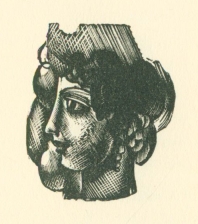
When he had repeated the psalm twice he groped toward the oratory and paused for a moment in the doorway. Though he heard and saw nothing, he knew that the oratory was not empty. He waited with beating heart, and suddenly a fluttering, intermittent draught smote his face with soft, impalpable blows. Fear clutched at his heart, a fear which leaped up into horror at a sudden pattering of hands against the bars of the little window. With his right hand Malchus made the holy sign upon the darkness and repeated again the same psalm. When he had finished it he paused again, and now he could feel that the cell was empty. Then with a braver heart he entered and began his nightly prayers and meditations, and as he prayed aloud a warm sense of security settled upon him. Only when he stopped praying and fell to meditating did the terrible silence return, pouring in upon him through the window, welling coldly through the doorway, bringing a sense of the draughty void that encompassed him, till his soul struggled as if in deep water, and again he took refuge in prayer. He prayed until his words stumbled into nonsense and his body swayed like a tree in the wind, and, feeling that he was going to fall, he leaned against the wall of the cell. The relief of even that little respite sent a wave of luxurious numbness through his body; his heavy eyelids dropped for a moment as if by their own weight. Then slowly the dark form of a human head took shape upon a background of cloudy gold. It cleared, brightened, took on color and life, and the face of Helena gazed at him with shining eyes and parted lips of kindling passion. His own lips moved and he muttered her name with slow, incredulous delight.
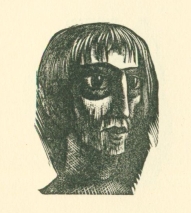
Instantly long, derisive shrieks broke in upon the silence, then other shrieks, and others still, filling the night with an infernal chorus which roused into ghastly life the boundless void about the cell. Malchus sprang shuddering from his dream. His body was cold with fear, for he was convinced now that these nightly shrieks were in very truth the voices of those powers of evil which tower up out of the sand or lurk expectant in the silence, waiting for the moment when one of the faithful, flagging in the endless contest, should yield to them an accession of power. He prayed loudly and fervently, and soon the shrieks grew fainter, dying in bayings and howlings miles away down the wilderness.
For the remainder of the night Malchus, beating his breast and wrestling with bodily exhaustion and flagging spirits, persevered in prayer, remembering what Serapion had told him of the power of prayer. For once, Serapion had said, when he and the Abba Macarius had stood by night in the open desert, they had seen a great column of light set upon a hilltop and reaching up into the sky, and the blessed Macarius had told him that it was the prayers of the monks in the great monastery of Nitria ascending to the everlasting throne. And at last, as if in answer to Malchus's prayers, a gray, watery light filled the cell and the little window became a gleaming square, pure and clear as the gleam on a silver shield. Malchus, cold and exhausted, felt his soul thrilled by the blessed redemption of daylight, and, dragging his stiffened body into the outer chamber, he opened the door and went out.
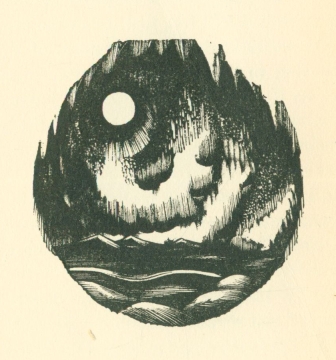
Below him the infinite gray desert lay dwarfed and shrunk beneath a vast sheaf of golden light springing far beyond the blue hills which bordered the Nile. It was as though the prayers of all faithful throughout the length and breadth of Egypt had been gathered together into the east. And somewhere, an invisible atom in the lower grayness, Malchus knew that Serapion must at that moment be toiling back to him under the heavy load of the water skin.
Chapter Eight
With the return of day Malchus's mind grew calm again and he remembered the terrors and struggles of the night as a man remembers vaguely the fever that has left him. Throughout the day he followed scrupulously the appointed order of his life, but as the day declined the prospect of Serapion's return roused in him an expectancy so keen that he could with difficulty prevent himself from running down the hill and starting off across the plain to meet the old man. But this, he knew, would displease him, and he resolved that Serapion should find him faithfully observing his duties. He denied himself even the relief of glancing from time to time across the desert for a first sight of him; but he could not quell his inward excitement, and as he sat weaving with the head cloth drawn over his face his nerves were alert and tense for the moment of Serapion's return. Even if he neither saw nor heard him, he would know instinctively that he was near. But hour followed hour, and Malchus, having finished another basket, lifted his cowl and saw that the sun was setting. He gathered together his work and moved with a heavy heart toward the cell. When he reached the door he saw Serapion standing within; he had prepared the table for a meal. Malchus's heart leaped into his throat; his impulse was to fling away his work and throw himself at the old man's feet. He checked the impulse and waited, humble and expectant, for Serapion to turn and greet him, and when he neither turned nor spoke Malchus shrank back, chilled into himself. As he laid away his work the old man's quiet voice broke the silence, "Have you eaten, my son?" and when Malchus replied that he had not, Serapion brought another loaf from the sack and they ate in silence.
Next morning, an hour before the dawn, Malchus heard the voice of Serapion calling to him from outside. He rose from his knees and, going into the outer chamber, opened the door of the cell. It was as if he had opened a door on eternity. Before him lay the bare, dead world of a burned-out planet, an ancient world, crushed and exhausted by the weight of never-ending time. At these twilight intervals mankind with its loves and angers and unearthly ideals shrank to a thing of no more account than a heap of stones or a fume of sand endlessly agitated in the eddies of a pool. Even the face of the world itself lost its separate reality and became a part of the expression of some divine or infernal mood, a mystery never to be fathomed by the mind, but waking in the soul an untranslatable echo. Malchus stood for a moment thrilled and appalled before he moved out to the edge of the terrace where the figure of the hermit stood so lifeless and immovable that Malchus could hardly believe that the voice which had called him had issued from it. So intense was the silence that it seemed that, when at last it broke, the whole of creation would be shivered with it.
But when Serapion spoke his voice was no more than a mote in the silence. "My son," he said, "the time has come for you to depart."
Malchus made no reply. Ever since Serapion had relented toward him and taken him into his cell he had deluded himself with the hope that he might remain always with the old man as his servant. Serapion had become a vital part of his life and the sudden discovery that he himself had no part in the life of Serapion chilled him like the presence of death. His only friend was casting him off and he felt that the heart in his body was shriveling and dying. Serapion did not even care what happened to him, for he added nothing to the order that he must depart; and though he had from the first refused to advise Malchus in his choice of the hermit life, saying that such a choice must come from within and not from without, yet now this indifference cut him to the heart. He did not know how careful Serapion's treatment of him had been from the beginning, nor that many of the things which had seemed to be accidental occurrences had been arranged by the old man in order to show Malchus to himself and give him the needful experience out of which to make his choice. He did not even perceive that before sending him away Serapion had given him a foretaste of that absolute solitude which was the hermit's daily life, and then had waited until that experience had sunk into his mind and spread its influence there.
He stood for a long while silent with lowered head, struggling with his emotions. Then, laying aside all shame, he fell on his knees before Serapion. "Let me stay with you, my father," he begged. "Let me be your servant."
He knew that his request was craven, that he had weakly fallen away from that unshakable resolve with which he had clung to the hermit despite the fierce repulse he had received. Where was that courage now? He waited like a fawning animal for the hermit's reply.
Serapion replied without looking at him, "He who is a servant himself has no need of a servant."
"Where, then, shall I go?" whined Malchus.
"Your own heart must tell you where to go, my son. But, for to-day, go out into the desert a mile or two from here and spend the time till nightfall in meditation. Then return and tell me what you have decided, for to-morrow you must depart."
Malchus turned away in despair and began to descend the sandy slope to the plain below. At the bottom he turned to the right and followed the base of the hill which wavered away southward. It was strange, after having lived so long within the little circle about Serapion's cell, to be wandering alone in the boundless waste of sand. The forty days which he had passed with Serapion seemed to include the whole of his life. The rest was dreams, for the days of his former life had receded far behind him. But the sufferings through which he had passed had left him feeble and over-sensitive, and as an uprooted plant seeks roothold in the smallest handful of earth, so his broken spirit clung to Serapion. Faced with the necessity of severing himself again from human ties, he shrank and shuddered as a sick man shudders at the knife.
He had fallen unconsciously into the patient, unhurrying tread which he had learned during the long desert journey. The line of the sandhills now curved westward and, finding a shady hollow carved out of the hill face, he turned into it. A clatter startled the hollow; he had disturbed two great birds which towered suddenly upward and vanished over the sandbank, leaving behind them a heap, half skeleton, half carrion. Malchus hesitated. He had long grown accustomed to do violence to his old fastidiousness, but he remembered that, now that the birds were gone, the carrion would become a gathering place for swarms of flies, and so he turned aside and, finding another hollow a little farther on, he entered it and sat down.
It was the first time in his new life that he had set himself to meditate on earthly matters. Hitherto his meditations had been a discipline of the soul, teaching it to ascend by means of prayer into the presence of God. Now, having shared for a while the life of a hermit, he must decide whether he had the will and the strength to follow that life himself. But he had made that decision once for all when he had left Alexandria and followed the steps of Serapion. Why, then, should he decide again? But Malchus knew that in truth he must decide again, for the first decision was made in ignorance and under the impulsion of a great storm of passion. Now he must decide out of experience and a quiet mind. Yet in his present mood how difficult it would have been to decide if he had not had that first impetuous decision to fire his will. For now his will was weak and passive, he could, of himself, have willed nothing positive. That strong craving for a life of self-discipline and fierce austerity had died down now to a mere acquiescence; now he felt strongly only about the things from which he recoiled, for from his old life he still recoiled with all the force of his being.
An hour passed, then another, and by degrees, as a flower draws moisture from the soil in which it grows, his mind drank in something of the peace and silence which surrounded him. The shock had spent itself. He grew reconciled to the thought that he must leave Serapion. With the return of calm he could see more deeply into the hidden places of his spirit and he perceived that the days of stern discipline through which he had passed had planted in him a growing fervor, an aspiration which was becoming gradually more and more clear, as if the whole strength of body and soul were drawing itself together and fusing into one burning core. He felt, too, and mistook it for a virtue, the fanatic's pride in those mortifications of the flesh which in themselves are less than nothing. And as he fell to pondering again the hermit's life, the most arduous and the most exalted that man can pursue, his soul took fire and he longed to submit himself to the fiercest rigors of which man is capable. In the intensity of his emotions he rose to his feet and stood upright with glaring eyes and hands crossed upon his breast. The life he had chosen lay visibly before him, a ravaged waste beset with hunger and thirst and parching heat, with foul beasts and devils and the hidden terrors and torments of endless nights, and at the end of it that high Paradise of green boughs through which the wings of archangels moved like great lilies of scarlet and gold about the ineffable throne of God. From the wilderness around him he reached out his arms toward that remote salvation, struggling toward it across the obstacles that clogged his steps. But in a moment the vision had faded and he stood again englobed in the parched and glaring gold dust of the sandy hollow. In the exaltation of his dream he had staggered forward in the loose sand, and now he stood blindly wondering which of the two worlds was the real one, telling himself that this world of sand and heat which was so often present to his mind was but a ghost, and that the true reality was that spirit world to which the soul ascended only in the rare moments of divine ecstasy. As the sun dropped into the west and the material world melted again into the nightly holocaust, he knew that he stood on the edge of eternity and looked for a moment through the veil of things seen into the unspeakable mystery beyond; and as he turned back toward Serapion's cell, walking through the sunset as the three holy children walked through the fiery furnace, he felt that his mind had grown stern and unshakable as adamant....
When Serapion heard that Malchus was resolved to take upon himself the burden of the hermit he was filled with gladness. "Blessed be God and the Lord Jesus," he said, "who have given you the strength to choose aright. Far be it from me now, my son, to discourage you. Know then that six miles from here, to the south, there stands a lonely cell. Fifty years ago the blessed Poemon built it with his own hands and lived in it till the day when he rendered his soul to God. He died in the act of prayer, for when two of the brethren found him his dead body was bowed before the crucifix. Last time I went by the cell it was falling into ruin; it is for you to rebuild it. To-morrow, then, at dawn we will set out and you shall take with you tools—for I have some here—to help you to restore the place. You shall take also a half of our loaves and the water skin that I have just filled."
"But I cannot take the water skin, my father, for you have no other."
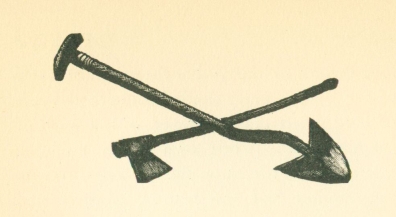
"Do not trouble yourself about that. If it were not right that you should have it, I would not give it to you. But go out now and scoop away the sand from the south wall of this cell. You will find buried there an ax and a spade."
While Serapion had been speaking, that tremulous sense, half fear, half delight, which is the very spirit of life, had crept into Malchus's heart and, going out as Serapion had directed him, he found the ax and the spade and brought them into the cell.
"To-night," said the hermit, "you must sleep, for when we have need of the body we must minister to the body."
Chapter Nine
The air was gentle and cool when they started southward next morning an hour before the dawn, carrying the spade and ax, the water skin, and two large baskets full of loaves. The desert, pale and impalpable as mist, lay gray and smooth before them, and Malchus felt that he was withdrawing still farther from the living world of men and rivers and green things, pushing on into a realm void of all outward life, the very battle ground of the soul. His heart was firm; with every breath he seemed to inhale a courage and power that were not of this world. Soon the long sky line on their left had lightened to a pale, crystalline green which before long became so intense that the eastward facets of every stone, every sandy hummock and tuft of hard desert grass, gleamed with a wash of greenish light. Their own slowly plodding figures were modeled on the left sides, even to the smallest fold and feature, in green and gray, and sharp green edges danced upon the ax and spade and the burdens that rose and fell with their moving backs. And as if that light were sensibly cold, a cool breath from the east touched cheek and hand and leg. Then quite suddenly night had become day, for green had flushed into saffron and saffron into orange. Malchus looked behind him. Unbroken desert stretched northward; the high ledge on which Serapion's cell was perched, so humanly familiar to him that it had come to be for him the very center and meaning of the northern desert, was lost in formless desolation. But the south, in this morning light, held nothing sinister; its pure solitude wore the pale, flushed beauty of a flower, and as they tramped onward Malchus drew into his nostrils a subtle tremulous peace which thrilled both body and soul. He closed his eyes for a moment and it seemed that his brain tingled with its gentle intoxication. In the depths of his mind, like dusky weeds waving on the bottom of a dark pool, the knowledge that to-night and every night henceforward he would be alone, utterly alone in this empty world, sent up a bubble of pain into his consciousness, and for a moment he lived again through the emotions of his one solitary night in Serapion's cell. But soon his exaltation of mind had exorcised all human weakness and he strode along at the hermit's side, strong and full of courage. The sun grew fierce; their lips clove to their teeth and the spittle turned thick in their mouths, and as they moved stubbornly on they were surrounded by the acrid fume of their own sweat.
It was still early when Serapion pointed to a hill not far ahead of them. Gaunt and bare, it rose above the plain like a ruined city which the desert had swallowed. But there had never been any city there; it was primeval rock and sand, and century by century the winds and rains were eating it down to the level nonentity of the desert.
Serapion stretched out an arm. "Upon that eastern slope," he said, "a broken rock juts from the smooth line of the hill."
Malchus shaded his eyes with his hand. "Yes," he said, "I see it, midway between the summit and the level ground."
"That is the cell of the blessed Poemon," said Serapion. "In half an hour we shall reach it."
Malchus stared at the small tooth-like projection, and in face of the iron reality his heart sank. How willingly at that moment would he have bound himself to tramp on forever through the hot sand at Serapion's side. Vain wish, for step by step the cell became more real, more inescapable. Soon it would reach its full stature and swallow him forever....
Like two great vultures about a foundered ewe, Malchus and Serapion, the only moving things in a motionless world, paced about the cell, examining it carefully and scarring the virgin face of the sand with their footprints. The cell, like Serapion's, was a small square divided by a partition into an outer chamber and a small inner oratory. The eastern wall, which had contained the door, had fallen into ruin, and with it the roof had collapsed, and a part of the other walls, but the oratory was still intact, though it was half filled with drifted sand which, year by year, had been blown in through the doorway and window.
"Here, my son," said Serapion, "is a refuge already prepared for you. See how God has preserved the inner room, which is the place of prayer, for a sign to you that however much the outer man is afflicted and maimed, the soul within is a refuge which no power can destroy."
Malchus took up the spade and, going into the cell, began to shovel the sand from the oratory. It was hard work for a body weakened by long fasting, and as he labored the sweat ran down his body and fell from his face in drops into the sand. He labored all morning and on, with flagging strength, into the afternoon; but before he had half cleared the chamber he was breathless and exhausted. Meanwhile Serapion had been scooping away the sand outside the cell with his hands and had brought to light some of the stones of the ruined wall and also a wooden door and a great earthenware trough. They rested for a while in the shadow of the cell and ate and drank a little, "for," Serapion said, "when the body labors for the soul it is worthy of its hire. To-morrow," he continued, "you must pile these loose stones into a heap ready to hand for rebuilding, for if you do not the sand will soon bury them again. But, as you see, we have found none of the old roofing. The thatch has long since been scattered by the winds and who knows what has happened to the fallen beams. But two miles westward from here there is a grove. It is the place of which I told you, where there is a spring at which I fill my water skin. There you can cut some new beams for your roof and gather reeds or grass for the thatch. There, too, you will find fallen palm leaves for your weaving. Take up the ax and we will set out now. There I shall leave you, for I must go back to my cell. There is no wind, and will not be to-day or to-night, so you will easily find your way back here by following our footprints. But first let us move the loaves and water skin into the oratory and set up the door to close the entrance."
When this had been done, Malchus and Serapion set out slowly through the burning sand.... Malchus stood alone under tall palm trees whose fans wove a shady roof overhead. There were other trees, too, and parched herbage and spiny thickets. The ground was strewn with fallen palm leaves and here and there a fallen tree or a broken branch. The pool of the water spring was parched dry; withered leaves stuck like scabs to its white stones. Not a breath stirred. A silence more awful than the open silence of the desert held the place under a spell. Malchus felt himself crushed by the weight of its solitude. Serapion had just left him, carrying with him a great bunch of dry palm leaves which he had collected for his weaving, and Malchus, standing there alone, felt that there was no longer any reason for living. For some minutes he stood immovable, lost in a mournful revery; then with a great effort he flung off his oppression as if it had been a physical burden and took up the ax.
He chose a fallen bough of suitable thickness and began to lop off the twigs and then to hack it into equal lengths. The wood was hard and the loud ring of the ax broke profanely on the silence. He cut three roof timbers; it was the most he could carry; and he realized for the first time how many journeys to the grove he would have to make before he had collected enough wood to cover his roof. Now he hoisted the three timbers on to his shoulders, and, straightening his back, began to move away. Burdened as he was, his feet plowed deeply into the loose sand and several times he had to throw down the timbers to ease his bruised shoulders.
By the time he had come within the sight of his cell the light was reddening toward sunset. The scene before him reminded him of that other sunset when Serapion had gone away to fill the water skin. The same process would repeat itself now—the brief glaring holocaust of earth and heaven, and then the ashen death which so quickly followed it, and Malchus remembered the grim wraith which had taken substance before his eyes out of the sand. But Serapion had warned him not to allow his mind to indulge in idle imaginings, and, having thrown down his burden, he began to collect together some of the scattered stones of the ruin into an orderly pile. But before he could do much the light faded and he lifted away the door from the entrance of the oratory, went in, and, having set up the door again behind him, began to pray. It had been a strenuous day, and body and soul thrilled with a sense of accomplishment. He prayed easily and joyfully, asking for strength and blessing in the life that lay before him.
As the rolling tracts of desert stretched every way from the small point of earth which was his cell, so, it seemed to Malchus, his future life stretched forward into the years, clear and smooth from the moment in which he stood. He confronted it calmly, and a sense of greatness—the greatness of time and of space and the great spaces of the spirit before which the other greatnesses are as nothing—filled his soul. He rose refreshed from his prayer, and having eaten a loaf he lay down to sleep, for Serapion had warned him that during the period in which he labored daily at the rebuilding of his cell it would be necessary for him to take more food and sleep than at other times.
Throughout all that time Malchus lived contented, his energy divided between prayer and hard bodily labor. His body was healthy with the daily toil and his mind, sufficiently occupied by the work, kept clean and limpid; the turbid sediment of past miseries, vain regrets, and tormenting desires, had sunk away into unconsciousness. The cell growing daily before his eyes, the difficulties of inexperience confronted and solved, the expeditions to the grove for wood and later for stones—for he used up all the stones he could find near the cell and still needed more—kept his life free from monotony, and it was not until, after many weeks, the work was nearing completion that he remembered that the life he was living was not the hermit's life, but only the preparation for it. Then he began to look forward with something like fear to the day when all would be finished, for then there would again be a great emptiness in his life. Then he would stand face to face with himself once more and it would need all his strength to live worthily in the sight of God. Then would come an end, or almost an end, to his journeys to the grove and his life outside his cell, for Serapion had told him that the hermit must never leave his cell except in case of necessity. Malchus knew that the life he was leading at present was not in itself profitable, for though it protected him from evil, it did not enable him to advance in spiritual excellence. It was a life apart from good or evil, like the life of an animal: and, thinking how calm and even pleasant it had become to him, he remembered how Serapion had said that it was not well, except for a very little while, for the soul to be at rest.
That night he awoke in sudden fear with the sense that evil was close to him, and next morning he saw that the sand round about his cell was pitted by many footprints. They were the footprints of cloven-footed creatures. One of them, larger it seemed than the rest, had entered the doorless outer chamber and had stood at the very door of the oratory, and Malchus, knowing that the powers of evil were drawing closer about him, thenceforward forced himself to work and pray more strenuously and to eat and sleep less.

Chapter Ten
And with the end of the labor of building came the end of contentment; for now all the easy purposes had gone out of his life and there remained only the high purpose of the hermit, too remote and difficult, it seemed, except for the rare moments of ecstasy. For some time he lived sunk in a profound depression. His body, deprived of healthy labor, rose up and tormented him. He prayed for long hours both day and night, but no comfort came to him from his prayers and it seemed to him that time had swept onward and left him stagnating, body and soul, in a shallow pool. His cell became hateful to him, and the weaving with which he tried to combat idleness was now a joyless drudgery. He felt nothing of that spiritual zeal which he had hoped would come to him when he had finally laid aside all worldly cares. Far from it. His life grew torpid and inert, lower than the life of the lowest beasts. His soul was an empty husk, his body vile, and his mind, emptied of all living occupation, began more and more to lose itself in the past. Old memories crowded about him and imprisoned him in their ghostly being and it was only by a fierce and exhausting watchfulness that he was able to drive them off. But they took revenge upon him by returning to him in his sleep, and he would wake horror-stricken from long rambling dreams of feasts and, worse, of sudden meetings with Helena or one of his earlier loves. One night Helena stood close beside him and touched him, sending a shudder through his flesh, half rapture and half terror, and he awoke suddenly with the sense of her penetrating every bone in his body. His cell was dark and cold as a tomb; a terrible silence held the desert and he felt the invisible presence of evil waiting breathless to fasten upon him. He sprang up and, beating his breast with his clenched fists, he prayed with a loud voice to shut out the unendurable silence. Could it be that in the sight of God a man was responsible even for his dreams? The violence of his nature was roused once again. By a great effort he threw off the deadly torpor which oppressed him and resolved to submit himself to a still more rigorous rule of life. Thereafter he ate only once in two days and slept for three hours only in forty-eight. He left his cell only once, at dawn, for his need, and when he did so he covered his face with his cloak for fear that the beauty of the world should weaken his spirit; and, that no opening should be left through which idle thoughts and waking dreams could assail him, he set himself an unalterable routine of recitation, prayer, meditation, and manual labor.
So he lived for many weeks; but in vain. For even when he had so schooled his body that his mouth and belly had almost ceased to clamor for water and food, his mind tormented him by urging him continually to go out from his cell, and whenever he ate or drank, the evil spirit of unrest tempted him, whispering, "Sip a little more water and eat another small crust of bread, for when these are finished it will be necessary for you to go out and seek more." But one morning, when only three more loaves remained, he opened the door of his cell and found a sackful of loaves leaning against it; and he took in the loaves, understanding that they had been sent for a sign that he must not leave his cell. But next day, when he was weaving, he finished the last of the palm leaves, and the spirit of unrest said, "Now at least you must go out, for unless you collect more leaves you will be without work for your hands." But Malchus hardened his resolve and, taking the largest mat he had woven, he picked it to pieces and so provided himself with enough material for many days' work. But soon he had finished the last drop of his supply of water and the spirit of unrest within him was glad, because now he would have to go to the grove to draw water, since man cannot live for long without water. But Malchus was strict with himself and determined that he would wait for a whole day without water, so that he might discover beyond doubt if it was God's will that he should go out of his cell. And throughout the next day no water came; his lips and tongue were parched and even the little water in the trough had been sucked up by the heat, so that he could not soak the leaf strips for his weaving. Then joy sprang into his heart and he took down the water skin and went out into the sunlight.
The day was still mild and it was a relief to move his cramped limbs and to gaze once again into the pure, unconfined freedom of the desert. The air was clean and cool against his skin and he recalled that moment in the green hollow when he had lowered himself slowly and rapturously into the pool. His progress was slow because of the deep, powdery sand and the weakness of his body, but it had now become natural to him that the ground on which he walked should always be sand, and he plodded on undistressed till the delightful green of the grove came in sight, and then took him to its shadowy heart. The spring, as he had expected, was flowing again. Where the white, parched stones had been, a crystal basin stood brimful, and the spell of the water had called up a fresh leafy fringe about it with flowers springing up among the green. Sprays of silver bubbles twirled up through the dark, clear, solid water. It was as if the spirit of peace and coolness had taken form in a crystal. Malchus sat down by the spring and wept. He made no attempt to restrain his tears, but allowed them to flow on, finding a relief in them as though all the hard and stubborn things in his heart were melting away. After he had sat there for a long time he rose and filled the water skin and, laying it down by the spring, he began to collect the fallen palm leaves. And as he roved from palm tree to palm tree with his eyes continually on the ground, the pleasure-lover in him kept asking him why he should not always live in this grove and why Serapion should not live there, too. What had they gained by living solitary in the barren desert that they could not have gained by living here? Then the fanatic in him showed him to himself as the great saint depending on no earthly support whether of human love, earthly beauty or pleasant food and drink; and, thinking of the weeks during which he had lived in solitude and of the exiguous diet he had endured, he grew reconciled to his arid life, for was he not already of that company of chosen souls whose lives are beautiful in the sight of God?
He had collected enough palm leaves, and now he raised his eyes from the ground. He had wandered a long way from the spring, and, hoisting the bunch of leaves on his shoulder, he turned and began to make his way back to it, for there he had left the water skin. When he reached the spring he was astonished to see a man sitting beside it. His hair was grizzled; he was almost an old man. Two newly skinned pelts lay on the ground beside him. He had laid them with the inward sides uppermost to dry in the sun. The livid surfaces shone like polished granite and flies buzzed loudly about them.
"Where do you come from?" Malchus asked him, "and how long have you been in the desert?"
"I am a hunter, as you see," the stranger replied, "and I have been in this country for eleven months. During all that time you are the first man I have seen."
The two, unwilling to part in that inhuman solitude, stayed long in talking, their eyes scanning each other as if in wonder at the sight of a human creature. At length, with a sigh Malchus took up his water skin and, full of sadness and discouragement, journeyed toward his cell. When his knees began to fail under him and it became necessary for him to rest a little, he threw down his burden and, lying down beside it, fell into a melancholy meditation. Then he rose to his knees and smiting himself upon the face cried out: "O Malchus, well may you think that you have done nothing, for you have not endured even the solitude of this hunter, who is a man of the world and no hermit." And he went on his way even more slowly than ever, for despair was upon him, and he felt a great reluctance to return to his cell. It was as though during those few hours of liberty he had escaped into another world—a tender world of green leaves, running water, and human sympathy—and at the first sight of his cell across the sandhills he felt like one returning to prison. Yet he knew that it was his true self which was driving him back and which told him now that he had sinned that day in lingering beyond what was necessary in the grove and delaying in talk with the hunter....
With the night, as if it were the instant sign of his relapse, the creatures of darkness gathered about his cell, howling in a dismal, mocking chorus, answered by wilder shrieks from the distance, as though other hordes were hastening up from the heart of the desert. Once there was a beating upon his door, as if the evil spirits, grown bolder, were clamoring for entrance. Then a long silence; and Malchus listened, his forehead wet with fear, for he knew that the demons had not departed, but were lurking silent about him. Suddenly some soft, light thing struck him on the face. He flung out his arms in terror and loathing, and there followed a wild beating of hands against the bars of his window. He dared not raise his voice for fear he should betray the corner in which he cowered; but he prayed silently, fervently, and without remission, often making the holy sign upon the darkness. Then, as if tortured by the sign, the creatures set up their howls again. It seemed that they were all round the cell; he could hear them breathing and buffeting against the door. It was not until the dawn was near that all became silent again, and now it seemed that the silence was empty. The evil spirits had gone. Malchus, exhausted by fear and the urgency of his praying, fell asleep.
Many hours later he awoke to a gentle, continuous noise, as if heavy drops were pattering on the sand or the sands themselves on every side were seething and shuffling with a life of their own. His fears leaped up once more, but when he opened his eyes he saw that the sun was shining. The honest light of day restored his courage and he rose and opened the door of his cell. His heart leaped to his throat, but next moment he was reassured, for when he had realized what he saw it was harmless enough. A large flock of sheep was passing his door. The expanse of broad, woolly backs spread before him, each with its own agitated movement. It was like the Nile in flood, its surface broken into hundreds of muddy waves and eddies. At the edges of the flock he saw the meek shaven heads, and here and there the pink strip of a panting tongue. The rank, oily smell of fleeces filled the air. An old shepherd was leading them—the only upright figure in the humble crowd—and seeing Malchus at his door, he turned aside to speak to him, sitting down by the cell with his back against its wall. He was a Lybian and it was with some difficulty that they conversed. The flock, deprived of its leader, stood still, and as Malchus and the shepherd talked, their talk was accompanied by a chorus of melancholy bleating. Above its long droning rose individual voices of every tone from the deep and guttural to the plaintive wail. It was a sound infinitely hopeless, like the crying of children led into captivity.
"What are you doing here in the desert?" Malchus asked the shepherd. "There is nothing here for your sheep to eat."
"I am taking them down to the marsh of Scete to eat the green herb," the shepherd replied. "My village is twenty miles from here, and once a year, after the flooding of the river, we lead the flocks down to eat of the herb. Now they are hungry and exhausted, as you see, but I hope to bring them to the marsh by midnight."
He wore a little bag slung about his shoulders, and now he pulled it round on to his lap and opened it. Malchus saw that it contained a bunch of some kind of greenery. "What is this?" he asked.
"This is my food," the old man replied.
"And have you nothing else to eat?"
The shepherd shook his head. "For the last thirty years," he answered, "I have eaten nothing else. I eat once a day and drink as much water as I need. By living thus I am more free than if my body needed the food which can be found only in villages and human habitations. I am free, too, of the need of money and I give the wages paid me by the owner of the sheep to those of my people who need it." While speaking the shepherd had risen to his feet, and the wide expanse of woolly backs, as if in response to his movement, was stirred once again by numberless agitations. Then Malchus fell down at the feet of the shepherd: "O my father," he wailed, "I imagined in my pride that I had attained to abstinence, but you are worthy of a greater reward than I, for I have eaten bread which is made for me by others and have drunk water which another has drawn for me."
The old man looked down upon Malchus in bewilderment, and then as if wishing to escape, turned and moved slowly upon his way. And immediately the flock began to advance, jostling together and then expanding; then, closing together again, it settled into its habitual density, following the slow steps of its shepherd.
"When do you return?" Malchus shouted after the old man.
The shepherd slowly turned his head. "You will not see me again," he shouted back. "They will graze along the marsh northward for several days and we shall return another way."
Soon the faintest sound of them had drained away into the silence of the desert, and by noon even the sight of them was no more than a pale irregular stain on a linen cloth....
During that day Malchus found that his despair, so far from having been relieved by his recent escape from solitude, had increased. Pondering in his cell upon his meetings with the hunter and the shepherd, he understood that God had driven him out of his cell in order that he might learn from them that all he had achieved in the life of solitude and fasting was in itself nothing and that others had accomplished much more in the mere course of their business; and as he examined his life, he knew that, for all his desire to pursue excellence, it was stagnant. Yet what else could he do but pray? Despair came upon him, and thenceforward he was even more restless than before. He found himself inventing small reasons to leave his cell, and when he had set his mind against them he felt none of the triumph of conquest, but only a darker despair. And more and more he was tormented by dreams, dreams that rose from his buried desires, setting before him fearful temptations to which sometimes he yielded with a frenzied self-abandonment. Then he awoke with the terror of sin upon him and the dreadful certainty that evil—evil in the material form of horrible physical presences—was closing inexorably about him. In the worst of all these dreams it seemed that his whole life had become a mockery and a snare. It was the familiar scene of a feast at the house of Diocles, the scene that haunted him so persistently. He himself, in the dream, kept changing from the old Malchus to Malchus the hermit; for his impulse was to obey his desires, but when he began to do so immediately a freezing fear held him back. And all the material things of his dream changed, too, from one nature to another. He reached out his hand to a peach, but when it touched his lips it was changed to vileness and corruption. The wine in his glass turned in his mouth to mud and sand. Last of all, Helena, leaping from one of the couches as the girl Thaïs had done at that last feast in the house of Diocles, came across the dining hall toward him with her lovely, half-mocking smile. He smiled back at her, stretching out his arms; but, when she drew nearer, a white terror like leprosy laid hold of him and he thrust her off, covering his face with one hand. But Helena forced herself upon him, bending over him, weighing upon him; and gazing up at her in mortal terror, he saw that she had changed to a vile hag with parched skin and bleared and yellow eyes. He struggled wildly. A great weight on his chest smothered his cries, but at length he broke through the dream into consciousness as through a thicket of terrifying deceits. He was awake now, but still some foul creature was fastened upon him. He felt its weight; the filthy stench of it sickened him. He thrust out his hands and they touched coarse hair. Then a great cry burst from him and he was free. Close under his window a loud howling broke out. Showers of sand fell upon his face and the door of his cell swung to and fro on its hinges. He sprang to his feet and ran out in terror into the open. There he was received into clouds of wind-blown sand, and, rushing on through the storm, he descended the slope, half running and half falling, to the level ground below. He ran on in the blind hope that he was running toward Serapion, and at last, stumbling in the clogging sand, he fell on his face and lay where he fell, insensible.
Chapter Eleven
When he came to himself the night was gone. The dawn, an unfathomable dome of cool yellow flame, towered immensely above the yellow aisles and ambulatories of the desert.
Having spent some time in prayer, he went on his way northward, confident that when he came within the region of Serapion's cell he would recognize it. But as he labored on, the country was still strange—a land, it seemed, never before visited by living thing—and the hour passed by at which he should have arrived, and the sun rose toward noon, dropping its fiery weight upon the sand and striking up again from the baked sand with the heavy glow of a furnace, till it seemed to Malchus that he was being tortured before a great fire. His lips were gummed to each other and some nerve or artery in his brain pulsed as if it would burst and destroy him. When noon was long past, he turned round in despair, but, thinking it possible that he had wandered out too far in the direction of the river, he bore a little to the westward as he made his way south again. But still the desert had an alien face, and as it drew on toward evening he gave up all hope that he would find his way and, exhausted, bewildered, and full of a vague dread, he was on the point of lying down to rest when he saw that he was standing a few yards from the foot of the familiar slope. Above him he could see the upper part of the cell itself, and outside, near the edge of the slope, a figure was standing immovable with arms raised sideways in the form of the Cross. At the sight of it he reeled and fell, as though some tension within him had snapped. It was as if all his troubles had suddenly fallen from him. He was so weak that he had to climb the slope on his hands and knees.
When he reached the terrace, Serapion had lowered his arms and was waiting as though he had expected him. "Prisoner! Prisoner!" he called out to him. "Why have you cast away your liberty?" And Malchus knew that by liberty Serapion meant the liberty of his cell, and that he called him prisoner because in his wisdom he had understood that he was a slave to his unrest. Seeing that Malchus was exhausted, Serapion made him sit down outside the cell and, bringing out water and bread and some dried dates, he bade him eat and drink; and Malchus told the old man all his troubles, asking him if in the sight of God a man was responsible for his dreams.
"Have you not read," answered Serapion, "what our Redeemer answered Satan when Satan had said that he would send his people against the people of God? 'And if they do evil unto thy chosen ones,' said Satan, 'I cannot help it, and I will trip them up even though I can do so only in dreams of the night.' But our Redeemer replied: 'If a still-born child can inherit his father's possessions, then also dreams shall be accounted a sin to my chosen ones.'"
"And what of evil thoughts?" asked Malchus.
"It is Satan, not we, who sows them," Serapion replied; "but it is our business not to welcome them. Evil thoughts are like the savors of boiled meat and roast meat that issue from a cook-house. All who go past smell the savors, but one man will go in and eat, and another, who does not wish to eat, will smell the savors as he passes and go on his way."
Then Malchus spoke of the spirit of unrest which had taken hold of him, urging him ceaselessly to go forth from his cell, and he told Serapion how, when at last he had been compelled to go out, he had met the hunter and the shepherd and learned from their manner of life that his own fasting and loneliness were as nothing, "so that now," he said, "my life seems vain and as it were without salt and I do not any longer derive profit from the relaxation of weaving. It is as though God had turned his face from me. What then, must I do?" he asked; "for whether I stay in my cell and fight the temptation or whether I yield to it and go out, my trouble continues. Help me, my father, with your wisdom and experience, for if you do not, the powers of evil will fasten upon me inescapably."
The old man looked kindly upon Malchus and, sitting down beside him, began to instruct him. "When the spirit of unrest is upon you," he said, "you must fight against it and not fly from it, for if you go out of your cell you will find that from which you fly wherever you go. But when you have conquered the temptation you can go out, for then you will go out in a state of peace. But even if you cannot escape from this trouble, still you must stay in your cell, since this, for the hermit, is the first of rules. Go back, then, when you have had some sleep here, and close the door of your cell. But, for the rest, you must eat, drink, and sleep as much as you desire and you must give up the weaving, for this is no longer profitable to you."
"But if I give up fasting, watching, and labor," said Malchus, in amazement, "shall I not be falling away still more from the hermit rule?"
"Have I not told you, my son," answered Serapion, "that fasting, watching, solitude, and labors, and even virginity itself, are in themselves nothing, but are good only as a means to spiritual excellence?"