REQUIREMENTS FOR OBTAINING AND MAINTAINING A STAND OF CRIMSON CLOVER.
Reading edition
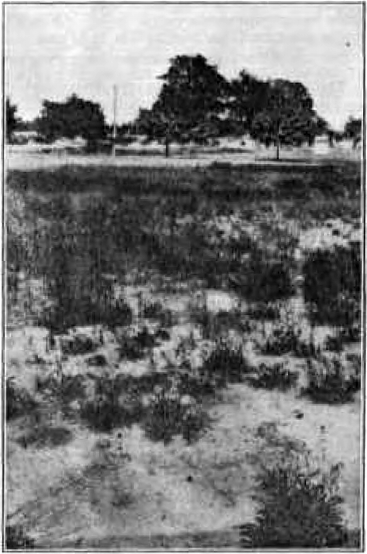
Fig. 2.—A crimson-clover failure on ground too poor in humus.
Unless the conditions of soil and moisture are exactly right it is not an easy matter to establish a satisfactory stand of crimson clover, even in the sections where it is most extensively produced. (Fig. 2.) The lack of timely rains in late summer is responsible for most of the failures to obtain a satisfactory stand. The young seedlings are very easily killed by the hot sun or lack of moisture. On the other hand, if the seeding be delayed too long, as, for instance, in waiting for the proper conditions of soil moisture, the plants will be unable to make sufficient growth to withstand the winter. Briefly speaking, crimson clover should be seeded shallow on a moist, reasonably fertile, well-drained, well-settled seed bed. Inoculation in some form should be provided, especially when seeding it for the first time on any fields in sections comparatively new to this crop.
Crimson clover is not adapted to the white-clay lands in their present condition in some portions of the Atlantic Coastal Plain. Such fields should be seeded to soy beans or cowpeas when a leguminous crop is desired for soil improvement or other purposes.[2] Crimson clover does not do well on rough, newly cleared land and it ordinarily requires the production of two or three crops or a special preparation by liming, manuring, and inoculating before such land presents conditions satisfactory for seeding. It is usually better to sow rye for a winter cover and cowpeas for a summer crop if a cover crop is thought to be needed. In any section where crimson clover has not been previously grown the first seeding should be on a small scale to determine whether or not it is a practicable crop for the locality in question.
PREPARATION OF THE SEED BED.
The seed bed for crimson clover should be firm, moist, well settled, and fine on top. Any efforts that may be expended to conserve the soil moisture previous to seeding are usually justified, especially if there be any lack of rainfall during the month previous or the month following seeding. Where the clover is seeded in an intertilled crop, such as corn, cotton, or tomatoes, the customary cultivation received by these crops is ordinarily sufficient for the needs of crimson clover. Where grain-stubble land is plowed in preparation for the clover a month or six weeks are ordinarily required for the soil to settle sufficiently to make a proper seed bed, since after plowing at least one soaking rain, which compacts the soil and fills it with moisture, is essential to the proper preparation of the seed bed for crimson clover. If the ground be disked, a much shorter time and less rain are required for the proper settling of the seed bed. The best method of retaining the moisture in the seed bed is to harrow or give shallow cultivation shortly after each rain. A fine soil mulch on the surface will largely prevent the soil just beneath the surface from losing its moisture through evaporation. Such surface tillage should, of course, be given before seeding the crimson clover.
FERTILIZERS FOR CRIMSON CLOVER.
Under the ordinary conditions of soil fertility the fertilizer applied to the preceding crop is sufficient for the needs of crimson clover. This is especially true where the clover follows such crops as potatoes or tomatoes, which are ordinarily heavily treated with fertilizers that are not entirely used up by these crops. It is important to realize, however, that crimson clover has a very short period of growth and that to make a vigorous growth it must have a good supply of plant food. On sandy soils where there has been no recent application of fertilizers it is often the practice to apply from 200 to 400 pounds of a mixture of equal parts of acid phosphate and kainite. On clay soils 300 or 400 pounds per acre of acid phosphate are ordinarily sufficient. If the soil be low in nitrates a light application of nitrate of soda will assist materially in giving the young clover plants a good start and winter which otherwise might have proved fatal to the stand. If the seeding has been delayed, as by waiting for suitable rains, an application of nitrate fertilizer will stimulate the young plants and enable them to make an increased growth before winter.
Any direct application of fertilizer is usually made at seeding time, but some few farmers have been found who apply it as a top dressing very early the following spring, giving as a reason that there is no loss from winter leaching and that the plants are by this method nourished at the time they are making their most vigorous growth. Such top dressings of fertilizer should not be made while the leaves are wet with rain or dew. Where stable manure is applied to crimson clover very marked results follow. It may be spread just before seeding, when the clover is not grown in an intertilled crop, or it may be applied as a top dressing in winter or very early spring.
The more vigorous the growth that can be induced by the application of suitable fertilizers the more marked will be the increase in the yield of the succeeding crops. On soil not well supplied with humus or plant food the use of a reasonable amount of fertilizer will often enable a successful crop of clover and succeeding crops to be produced where, had not the fertilizers been applied, the clover would have failed. Furthermore, the following crop, particularly if it be corn, would also fail to give the increased yield which follows a successful stand of crimson clover.
An application of barnyard manure will be found to be especially effective in obtaining a stand of crimson clover on any thin, galled spots in the field. The manure should be worked into the ground and, if possible, a second application as a top dressing should be given such thin places to partially shade the ground from the August sun while the seedlings are establishing themselves.
LIMING SOILS FOR CRIMSON CLOVER.
Most of the soils in the crimson-clover sections will be found to be benefited by liming. Crimson clover, however, does not appear to require lime to the extent that red clover does. Frequently on well-drained soils in a good state of fertility the crimson clover makes a vigorous growth without the use of lime. The stands are, however, usually more uniformly good over the limed parts of such fields than on the parts that have received no line. The opinion among individual farmers appears to be about equally divided as to whether or not it pays them to lime their soils for crimson clover. In considering the advisability of applying lime one must not lose sight of the need of lime on the part of such other crops as cantaloupes or peaches, which require lime and which are either grown with the clover or follow it. Inasmuch as the extent of the benefit is somewhat uncertain it is suggested that the particular requirements of the farm in question be determined by liming small plats at different rates before any considerable areas are limed. The most profitable rate of application can then be adopted for the whole acreage.
INOCULATION FOR CRIMSON CLOVER.
Fortunately most of the soils in the crimson-clover sections appear to be already inoculated. This is especially true in sandy soil areas where crimson clover has been grown for a number of seasons. In sections new to this crop inoculation in some form is usually necessary. On clay soils inoculation is not always present, even though crimson clover may have been grown, for a number of successive seasons on other fields of the farm.
An experiment conducted by the Alabama State Agricultural Experiment Station shows how essential inoculation is on soils which have not previously grown crimson clover. In this experiment a yield of 4,057 pounds of crimson clover hay was secured where the plants were inoculated, as compared with only 761 pounds where no inoculation was provided. In another test by the same station the inoculated plat of crimson clover yielded at the rate of 6,100 pounds of cured hay per acre, while the uninoculated plat was a total failure.
Inoculation by the use of soil from a crimson-clover field is considerably more certain than is inoculation by the use of pure cultures, but soil inoculation is open to the danger of introducing noxious weeds, insects, and plant diseases, especially if the soil is brought from a distance. There is much less danger in this respect if soil from inoculated plants can be obtained in the same neighborhood. One very practicable method is to apply a bottle of pure culture[3] to a pound or two of the seed and sow this in the corner of some field, or even in the garden. The resulting plants will be quite sure to be inoculated and will furnish an abundant supply of soil for inoculating much larger areas at the next seeding. Care must be taken not to allow the sun to shine upon either the pure cultures or the soil, or even on the seed after it is broadcasted. For this reason it is safest to seed on a cloudy day or after sundown. One very satisfactory method of soil inoculation consists merely in mixing together equal parts of the proper soil and seed and sowing immediately in front of the covering harrow.
SEEDING CRIMSON CLOVER.
Crimson clover may be sown broadcast, by hand, with a wheel-barrow "sheep-trough" seeder, or with any of the familiar types of rotary seeders. It is sometimes drilled in and there are a number of specially constructed drills designed for this purpose.
The consensus of opinion among farmers is that shallow seeding is generally best, especially upon the clay soils. An inch in sandy soils and half an inch in clay soils appears to be about the right depth except in times of drought.
The ordinary rate of seeding is 15 pounds per acre, although some use 20 pounds, while others are able to obtain satisfactory stands with only 12 pounds per acre. One pound of seed per acre provides for three seeds for every square foot; hence, if every seed produced a plant, 2 pounds per acre would be theoretically sufficient to secure a satisfactory stand. Under ordinary circumstances, however, it is necessary to allow for some of the seed being covered too deep, while a considerable proportion may prove to be covered too shallow for successful growth. The principal justification of seeding such a quantity and at varying depths lies in the fact that in case a dry season develops after seeding the more deeply covered seeds will be able to withstand the drought better than those covered to a medium depth. If an unusually wet season develops, the shallow-planted seeds will give the best results. Moreover, some of the seed will fail to germinate. It is also well to have a fairly thick stand of the young plants, so that the ground may be well covered even during early fall, and thus prevent the winter-growing weeds from establishing themselves.
It is held by many farmers that they are more certain of getting a stand of crimson clover if they sow the seed in the hull rather than use the hulled seed as it ordinarily appears on the market. It is claimed that the hulls hold the moisture to some extent. Seed in the hull can easily be obtained by flailing out a load of crimson clover which has been left uncut in the field until the seed is mature. Many farmers run the clover through an ordinary grain thrasher, which delivers the seed in the hull.