CARING FOR THE CROP.
Reading edition
Removing the Honey from the Hives.
If the honey flow is of considerable duration the major portion of the crop is removed before the flow ceases. At this time the removal of the finished supers is comparatively easy because the bees can readily be driven from them and also because the operator is not hindered in his work by robbing bees. At the close of the honey flow all the supers remaining upon the hives should be removed promptly, since to leave them on would result not only in some of the honey being carried down into the brood chamber but also in badly propolized sections. After the honey flow has ceased, great care should be exercised to keep bees from robbing. The use of bee-escapes (fig. 12) greatly facilitates the removal of the honey at any time, but their use is especially desirable in removing the honey remaining on the hives at the close of the honey flow. By their use the honey may be removed and stored in the honey house with little disturbance or excitement among the bees. The supers of honey should of course be taken directly to the honey house or kept well covered[8] from robbers.
Before finally storing the supers of honey in the honey room those that are but partly filled may have their sections removed and sorted. The unfinished sections that can not be disposed of at a profit locally are usually put back into supers and the honey they contain is fed to the bees. This feeding is done by simply exposing the supers where the flying bees can have access to them. If there are few supers compared with the number of colonies they should be placed in piles and only a small entrance allowed, since if free access were given to a large number of bees they would tear the combs to pieces. When the bees have finished removing the honey from these unfinished sections the latter may be stored for future use as "bait" sections.
Care of Comb Honey.
In the honey room the supers of honey should be placed in piles in such a manner as to allow a free circulation of air between them. This may be done by "sticking them up" as lumber is piled to dry or by placing alternate supers crosswise. The air in the honey room should be kept as dry as possible. This is usually accomplished by means of a high temperature, the honey room being located on the sunny side of the building or directly under the roof. The windows should be opened only during dry weather. Ventilation of the honey room is of no value except when the air that is admitted contains less moisture than that already present. Otherwise ventilation may be a positive detriment. If a protracted period of rainy or damp weather should occur while the honey is in this storage it may be necessary to use artificial heat to dry the air in the honey room. Any great variation in temperature should be avoided, since it may cause a condensation of moisture on the surface of the cappings which will be absorbed by the honey.
Some beekeepers find it necessary to fumigate comb honey to prevent damage by the larvæ of the wax moth. For this purpose sulphur fumes or bisulphid of carbon may be used. If bisulphid of carbon is used, great care should be taken not to bring it near a flame, as it is highly inflammable.
Scraping Propolis from Sections.
Before being packed for market the sections of honey should be removed from the supers and the wood scraped free of propolis. A convenient bench should be provided for this work, with a large shallow box or tray to catch the propolis as it is scraped from the sections. This work is usually done by hand, though a few producers have designed and are using machines for this purpose.
Grading Comb Honey.
The importance of properly grading and packing comb honey does not seem to be well understood by the average beekeeper. Some extensive buyers of comb honey find it profitable to regrade and repack practically all the comb honey they receive before sending it out to their trade. The producer of this honey of course bears this extra expense by receiving a lower price for his honey. The lack of uniformity of grading is to some extent a result of differences of opinion as to what should be the standard for the various grades. Grading rules have been of material aid toward greater uniformity, but various producers may use the same set of grading rules with very different results. It would be well if a single set of rules were in use, since honey from various localities may be sent to the same market. The grading rules in most common use are given in Farmers' Bulletin 447, page 39.
After scraping the propolis from the wood, each section of honey may be placed in a pile with others of its grade. Some put the sections directly into the shipping cases as fast as they are scraped, but better grading can be done if each grade is put in a separate pile and the final grading all done by one person. By thus having a large number of sections in each grade from which to select there is greater opportunity for making the sections of honey in each case more nearly uniform as to weight and the various shades of finish. Such uniformity is especially desirable from the standpoint of the retailer. Sections containing only a few cells of pollen should be placed in a lower grade or sold as culls, while those containing a considerable amount of pollen should not be marketed in the form of comb honey. An excessive amount of pollen in the sections is usually caused by the use of very shallow brood combs, extreme contraction of the brood chamber, or hiving swarms on narrow strips of foundation in the brood frames with partly drawn comb in the sections (p. 32).
Packages for Comb Honey.
Comb honey is usually packed in cases holding 24 sections (fig. 20). Other sizes are sometimes used to meet special market requirements. The markets have become accustomed to cases with glass fronts, by means of which the contents are displayed to advantage. However, in keeping with present practice in other package goods, considerable comb honey is now placed on the market having each section inclosed in a carton. This practice, while losing the advantage of displaying the honey, has a decided advantage in insuring security from dust and insects while in the markets as well as greater safety to the fragile comb when the package is finally delivered to the consumer.
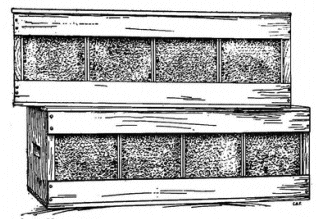
Fig. 20.—Shipping cases for comb honey. (From Phillips.)
Marketing.
Many beekeepers are able to dispose of their entire output of honey in their local markets, sometimes, creating quite a demand for their product by advertising and demonstrating. Comb honey that is to be sent to a distant market should be shipped before cold weather, since the combs become extremely fragile when cold. Small lots should be crated in "carriers" holding several cases to prevent breakage by rough handling of individual cases, while in larger shipments the cases are simply packed in the car in such a manner that the individual cases can not be thrown about by the movement of the car.
◯
Transcriber Notes
All illustrations were moved so as to not split paragraphs. Irregularity in hyphenation (i.e., comb-honey vs. comb honey) has been retained.