APPARATUS FOR COMB-HONEY PRODUCTION.
Reading edition
Shop and Honey House.
A building containing storage space for apparatus, a well-lighted and ventilated workshop as well as a honey room, is a necessity in comb-honey production. The arrangement and location of the shop and honey house will depend upon local conditions and circumstances. Tho usual mistake is in constructing those too small. In the North the shop and honey house is usually built over the wintering repository or collar. Since rats or mice would do great damage to the contents of such a storehouse, the construction should be such as to exclude them. If a concrete foundation is used and the sills are embedded in a layer of "green" mortar, no trouble of this kind should be experienced. If a series of out-apiaries are operated for comb honey, the supers, extra hives, etc, are usually kept in one building located near the home of the beekeeper. This serves as a central station and storehouse, the supplies being hauled to and from the apiaries as needed. This building may be supplemented by a very small building at each apiary, though in comb-honey production this is not really necessary.
The honey room should be so located that it will receive the heat from the sun, preferably an upstairs room immediately under the roof. When so located a small hand elevator should be installed for taking the honey up and down. The room should be papered or ceiled inside to keep out insects and to permit fumigation if necessary and should contain facilities for artificially heating in case continued damp or freezing weather should occur before the honey is marketed. The honey room should be provided with ample floor support for the great weight that may be placed upon it.
Hives.
A beehive must serve the dual purpose of being a home for a colony of bees and at the same time a tool for the beekeeper. Its main requirements are along the line of its adaptation to the various manipulations of the apiary in so far as these do not materially interfere with the protection and comfort it affords the colony of bees. Since rapid manipulation is greatly facilitated by simple and uniform apparatus, one of the fundamental requirements of the equipment in hives is that they be of the same style and size, with all parts exactly alike and interchangeable throughout the apiary. While the hives and equipment should be as simple and inexpensive as possible, consistent with their various functions, a cheap and poorly constructed beehive is, all things considered, an expensive piece of apparatus.
In this country the Langstroth (or L) frame (91/8 by 175/8 inches) (fig. 1) is the standard frame and throughout this paper frames of brood will be discussed in terms of this size of frame. The advantages of standard frames and hives are so great that the beekeeper can not afford to ignore them for the sake of some slight advantage of another size.
There is, however, a wide difference of opinion as to the number of frames that should be used in a single hive body. The wide variation in the building up of colonies previous to the honey flow in different localities and seasons, the race of bees, and the skill of the beekeeper are all factors entering into this problem, which make it improbable that beekeepers will ever fully agree on this point. The races that build up more rapidly in the spring are, of course, other things being equal, able to use to advantage a larger brood chamber than the races that are more conservative in brood rearing. It is also noticeable that within certain limits as the beekeeper's skill in building up his colonies for the flow increases, so the size of the brood chamber best adapted to his purpose increases. In other words, while the careful and skillful beekeeper may succeed in having large brood chambers well filled with brood at the beginning of the honey flow, the less skillful beekeeper under similar conditions may be doing well to approximate this condition with a much smaller brood chamber.
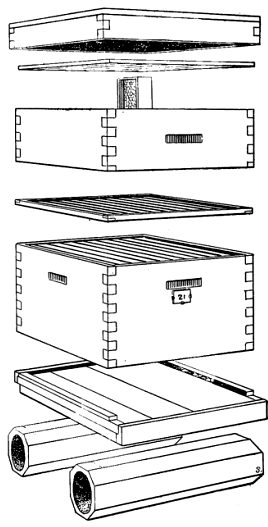
Fig. 1.—A 10-frame hive with comb-honey super and perforated zinc queen excluder. (From Phillips.)
For comb-honey production the brood chamber should be of such a size that by proper management it may be well filled with brood at the beginning of the honey flow, so that the brood and surplus apartments maybe definitely separated. A brood chamber may be considered too large if by proper management it is not on an average fairly well filled with brood at the beginning of the honey flow, and too small if it provides an average of less room than the colony is able to occupy with brood previous to the honey flow. Unless the beekeeper practices feeding, a brood chamber that does not contain sufficient room for both winter stores and brood rearing during late summer and autumn may also be considered too small. It may be well to note that by this standard if the brood chamber seems to be too large the fault may lie in the management during the previous autumn, winter, or spring. Of course the brood chamber that is barely large enough for one colony will be too large for another in the same apiary or the character of the season may be such that all brood chambers may be too large for best results one season and too small the next, so an average must be sought. While by manipulation good results may be secured by the use of any of the sizes in common use, any great departure in either direction from the size best suited to conditions of a given locality necessitates an excessive increase in labor to give best results. There is at the present time a strong tendency toward the use of the 10-frame hive body as a medium-sized brood chamber which may be used as a unit of a larger elastic brood chamber when necessary.
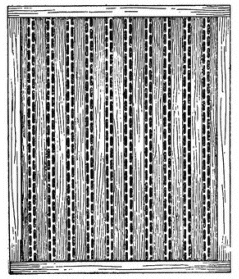
Fig. 2.—Perforated zinc queen excluder. (From Phillips.)
The comb-honey producer is more exacting as to certain details of construction of hives than is the producer of extracted honey since it is more necessary for him to handle individual brood frames during the honey flow. The spaces[1] above and between the top bars of the brood frames must be accurate or they will be bridged with burr and brace combs and these filled with honey. Burr and brace combs make the removal and readjustment of the super and the manipulation of frames a slow and disagreeable task, to say nothing of the waste of material, which should have been placed in the sections in the beginning. The use of the slatted honey board (fig. 2), while preventing brace combs between itself and the super, does not prevent the building of burr and brace combs between and above the top bars of the frames. This trouble is largely eliminated by proper spacing. Most hive manufacturers are at present making the top bars of the brood frames of such a width that the spaces between them is from one-fourth to five-sixteenths inch with the same spacing above them. The difficulty, however, is in maintaining this spacing with any great degree of accuracy. Self-spacing frames[2] are a partial solution of this difficulty. In some localities, however, the ordinary self-spacing frames are so badly propolized as to render their removal from the brood chamber difficult as well as materially to interfere with the proper spacing. The advantages of such frames are then nullified, while their disadvantages are retained or even intensified. In such localities metal spacers having but small surfaces of contact are sometimes used. Some beekeepers prefer omitting the spacers entirely. However, some of the difficulties arising from the use of self-spacing frames are the result of carelessness on the part of the operator in not crowding the frames together properly when closing the hive after having handled the frames.
SECTIONAL HIVES.
The sectional hive in which the brood chamber is composed of two or more shallow hive bodies, making it horizontally divisible, offers some advantages, especially to the comb-honey specialist. Most of the ordinary manipulations can be performed readily with such hives without removing the frames. One of their greatest advantages in comb-honey production is the rapidity with which the apiarist can examine the colonies for queen cells if natural swarming is to be controlled by manipulation. They are also very elastic, the units or sections usually being of 5-L frame capacity, permitting a brood chamber capacity of 5 or any multiple of 5-L frames. Among the disadvantages of these hives are the extra cost owing to the greater number of parts necessary in their construction and the difficulty in maintaining proper spacing without the use of top bars on the frames heavier than would seem advisable in the middle of the brood nest.
Sections and Supers.
There is a wide variation in the style of sections and the supers designed to contain them. This, whole to some extent brought about by different local conditions, is largely due merely to the notions of individual beekeepers. Comb-honey apparatus could probably be standardized without sacrificing any really vital features.
BEEWAY v. PLAIN SECTIONS.
There are two general styles of sections in common use differing in the method of spacing—the beeway section in which the spacer is a part of the section itself (fig. 5), and the plain in which the spacer is a permanent part of the separator (fig. 4). Each style has its advocates and each offers some advantages.
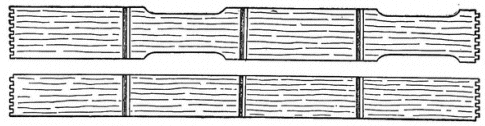
Fig. 3.—Beeway and plain sections, unfolded. (Original.)
Some of the advantages of the plain (fig. 3) over the beeway sections are: (1) They are simpler in construction, therefore costing less. (2) The edges being plain with no insets, the plain sections are more easily cleaned of propolis when being prepared for market and are especially adapted to cleaning by machinery. (3) By leaving the spacers in the super, sections of the same honey content occupy less space in the shipping case, thus reducing the cost of packages. (4) The plain section is adapted to an arrangement permitting freer communication lengthwise of the row of sections, especially at the corners (p. 15).
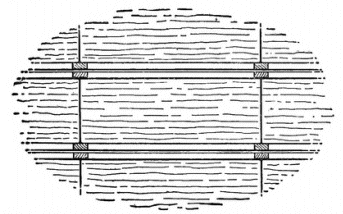
Fig. 4.—Plain section In super, showing method of spacing. (Original.)
Some of the advantages of the beeway sections (fig. 3) are: (1) The honey is somewhat less liable to injury by handling. (2) Being wider at the corners where folded, they are stronger. (3) Some markets, being accustomed to the larger cases necessary to contain a given number of beeway sections, object to the smaller package containing the same number of plain sections, simply because it is smaller.
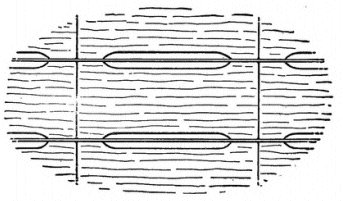
Fig. 5.—Beeway section In super, showing method of spacing. (Original.)
DIMENSIONS OF SECTIONS.
Sections of various dimensions are in use by beekeepers, but the sizes in general use are the 41/4 inches square and the 4 by 5 inches. Some producers prefer the 4 by 5 sections because of the more pleasing appearance of the oblong package (fig. 6). The standard widths of the 41/4 by 41/4 inches section are 17/8 inches in the beeway style and 11/2 inches in the plain section. The extra width in the beeway style is for the purpose of spacing and does not add to the thickness of the comb. The 4 by 5 is 13/8 or 11/2 inches wide in the plain style and not much used in the beeway style. The 13/8 width of the 4 by 5 section contains practically the same amount of honey when filled as the 41/4 by 41/4 by 11/2 plain or the 41/4 by 41/4 by 17/8 beeway, assuming of course that all are used with separators and filled under like conditions. Since there are well-defined limits as to the thickness of the combs most profitable to produce, the area of one comb surface in a section weighing about a pound is usually from 16 to 20 square inches, the exact size and shape being an adaptation to given space in the super. The thinner combs, showing more comb surface, have the appearance of being larger and a greater number can be accommodated on a given hive. Honey in such combs may also be ripened sooner and possibly better than in thicker combs. They, however, require more foundation for each pound of honey produced and a slightly greater amount of wax, in proportion to the honey, to complete them. Also the thinner the comb, the greater the difficulty with the sheets of foundation swinging to one side on account of uneven work on the two sides or because the hives do not stand level.
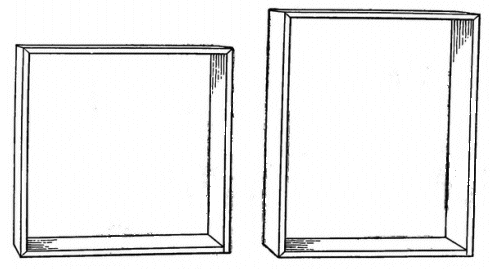
Fig. 6.—Square and oblong sections. (Original.)
SUPERS.
The main points of difference between the various types of comb-honey supers are in (1) the method of supporting the sections, (2) the amount of protection afforded to the outside of the section and (3) the degree of free communication from section to section within the super.
The Method of Support.
Sections are supported either by means of cross supports under the ends of the sections or by a slat of proper width supporting each row of sections. The T super (fig. 7), so called from the shape of a cross section of the strip of tin used to support the sections is illustrative of the first, while the supporting slats, section holders (figs. 8, 9 and 10), and wide frames (fig. 11) are illustrative of the second type of support.
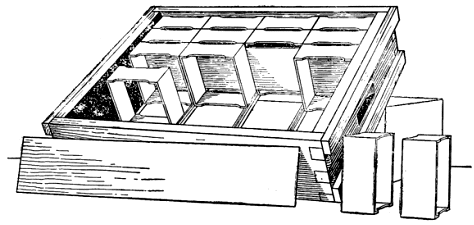
Fig. 7.—The T super. (Original.)
Protection.
The T super and others of this type offer no protection against propolizing to either the top or bottom of the sections, the section holder or slat (figs. 8, 9 and 10) protects the bottom, while in the wide frame (fig. 11) the entire outer surface of the sections is protected except at the edges. The greater the protection afforded the section, the more complicated and expensive the super, and the more complicated supers require more labor in cleaning of propolis and filling with sections. On the other hand, sections of honey produced in properly constructed wide-frame supers are much more easily cleaned of propolis, and ordinarily present a neater appearance when packed for market.
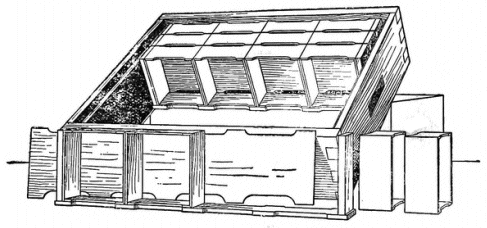
Fig. 8.—Super with section holder for beeway sections. (Original.)
Free Communication Within the Super.
The use of closed-top sections (1-beeway) and solid separators, making each section a separate compartment with openings for the bees at the bottom only, illustrates one extreme; while the sections with openings on all four sides (4-beeway) used without separators illustrate the other extreme as to free communication; and between these extremes are various intermediate types.
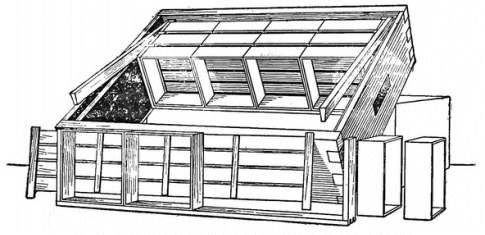
Fig. 9.—Super with section holder for square plain sections. (Original.)
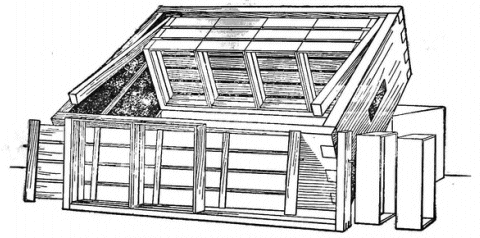
Fig. 10.—Super with section holder for oblong plain sections. (Original.)
It would be desirable so to adjust the sections that when filled with honey a row of them would, so far as the bees are concerned, be equivalent to a single comb, that the bees might have the same free access to the outside row of cells from all sides as they do the other cells and might pass up or down from any section and the full length of the row, as well as around the ends. While, under the same conditions, such free access to the outside row of cells from all sides would result in the sections being slightly better filled than with the ordinary adjustments, such an arrangement presents some mechanical difficulties and would add considerable to the first cost of the supers. If separators were not necessary, such an adjustment of sections could be readily accomplished. In Europe a type of separator having transverse openings corresponding to the upright edges of the sections is used to give free communication lengthwise of the row of sections. In this country some such separators are used as well as a separator made of wire cloth so spaced between the rows of sections as to give free communication along the rows, as well as from one row to another. These, however, are not widely used in the United States.
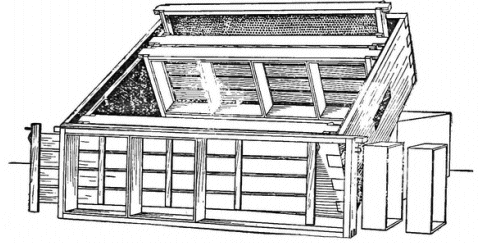
Fig. 11.—Combination super with wide frames for oblong plain sections. (Original.)
The plain section, when used in connection with the "fence" separator (fig. 4), having the upright posts considerably shorter than the height of the section, offers a fair compromise as to free communication within the super. Most of the comb honey produced in this country, however, is produced in sections which offer no communication from section to section lengthwise of the super, being produced in the regular 2-beeway section, having openings at the top and bottom only (figs. 7 and 8).
THE USE OF SEPARATORS.
Separators are made of strips of tin or wood and are used between the rows of sections to compel the tees to build the combs straight and all within the section. The thicker the combs the greater becomes the necessity for separators. While an expert can produce very uniform comb honey without separators during a heavy honey flow by using very narrow sections, it is usually not advisable to do so on account of the resulting large percentage of imperfect combs, especially during poor and indifferent seasons and at the close of any season. The use of separators results in a much more uniform product.
SHALLOW EXTRACTING SUPERS.
Some comb-honey producers add to their equipment one shallow extracting super for each colony. These are a great convenience in a comb-honey apiary and may be used for the following purposes: (1) To keep the brood chamber free of honey before the beginning of the main honey flow; (2) to use at the beginning of the honey flow to induce the bees to begin work promptly in the supers; (3) to use at the close of the honey flow instead of the last comb-honey super; (4) to use during any flow of inferior honey or honeydew; (5) to use during very poor seasons when first-class comb honey can not be produced.
COMBINATION SUPERS.
Other comb-honey producers provide each comb-honey super with two shallow extracting combs. These are placed one on each side of the super with the sections between them (fig. 11). The purpose of this arrangement is to induce the bees to begin work in the super promptly without the use of "bait sections" (sections containing comb previously drawn) or an extracting super and also to do away with the usual poorly finished sections in the corners and outside rows. One great advantage of this system over the use of an extracting super to start early super work is that the combs are not removed. When shallow extracting supers are used for this purpose, they are removed as soon as the bees have started well in them and a comb-honey super substituted. This brings back much the same conditions existing before giving the extracting super, and while some colonies will begin work in the sections promptly when the change is made, many colonies hesitate about beginning the new work almost as though the extracting super had not been used. Such colonies are thus thrown out of "condition", (p. 19) and may begin preparations to swarm. The use of these combs in supers that are added subsequently allows the apiarist to place the empty super over the one already on the hive until the bees begin work therein without seriously crowding the super room, because each super thus added contains room in the form of empty comb into which the new nectar may be stored at once (see p. 42).
Other Apparatus.
Among the other apparatus needed in commercial comb-honey production are a honey extractor, wax press, bee-escapes, and escape boards (fig. 12), queen-excluding honey boards (fig. 2), feeders, tools, etc. It is not necessary to provide queen-excluding honey boards for each colony unless some special system is followed, yet a few excluders are very desirable for various special manipulations. Good feeders may be had by using tin pans in connection with an empty super. A handful of grass should be placed on the sirup to prevent the bees from drowning. In addition to these appliances in the northern States, if the hives are single walled, some means of protection is necessary if the colonies are wintered out of doors.
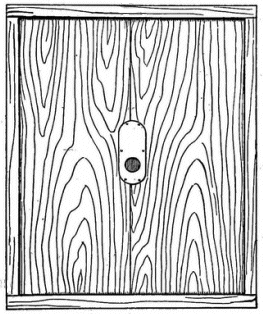
Fig. 12.—Bee-escape board for removing bees from supers. (From Phillips.)
Preparing Supers.
FOLDING SECTIONS.
Section presses and foundation fasteners are sometimes combined in one machine by which the section is pressed together square and the foundation is fastened by a single operation. Usually, however, they are separate machines requiring that each section be handled twice before it is ready to be placed into the super. Ordinarily the one-piece sections must be dampened before folding, as otherwise the breakage is considerable and the sections are greatly weakened by folding. A crate of sections as it comes from the factory may be dampened by removing one side so as to expose the V-shaped grooves, then directing a small stream of hot water into these grooves. Care should be taken that only the thin portion where the section is folded be dampened. Another very satisfactory method of dampening sections is to wrap the crates containing them in a wet blanket the day before they are to be folded.
FASTENING FOUNDATION IN SECTIONS.
The use of comb foundation in full sheets filling each section as nearly as possible is considered a necessity in the production of fancy comb honey. This foundation should be as thin as can be used without being gnawed or torn down by the bees. The sheet of foundation is usually fastened centrally at the top of the section, leaving only enough space at the sides to allow it to swing freely without binding and about three-sixteenths to one-fourth inch at the bottom to allow for stretching while being drawn out. To secure better attachment of the comb to the bottom of the section, a bottom starter about five-eighths inch wide may be used. In this case the top starter should reach to within three-sixteenths to one-fourth inch of the bottom starter. In some localities the character of the flow is such that but little is gained by the use of the bottom starter, while in other localities it is difficult to produce honey that will stand shipment well without it.
The various types of apparatus usually used for fastening foundation in the sections make use of a heated metal plate which, after melting the edge of the sheet of foundation, is withdrawn, allowing the melted edge to be brought quickly in contact with the section. This fastens one edge of the sheet of foundation firmly to the wood. Foundation fasteners employing this principle may be simply a hand apparatus consisting of a metal plate of proper size provided with a handle, the operator transferring the tool from the source of heat to the edge of the foundation. Or the principle may be incorporated in a more or less complex machine which provides for the maintenance of the proper temperature of the heated plate, its movement to melt the edge of the foundation and a proper support for the section and foundation during the process. For the purpose of securing better filled sections of honey various methods of attaching the sheet of foundation to the sides as well as the top of the section have been devised, but are not extensively used by producers. Among these methods are fitting the sheet of foundation in place, then directing a fine stream of melted wax along its edges, or the use of split sections in which a sheet of foundation is continuous through a row of sections, extending through their sides and top.
Some super construction is such that the sections may be placed directly into the super by the operator who puts in the foundation. This work is usually done during the winter months when the bees require no special attention. Enough supers should be provided to take care of the largest possible crop, even though it is not often that all are used the same season. The beekeeper who is operating several apiaries can not afford to take time to prepare supers for the bees during a good honey flow. Supers of sections thus prepared in advance should be kept clean by storing them in piles and keeping the piles covered from dust.