Front matter
Reading edition
Transcriber’s Note:
The cover image was created by the transcriber and is placed in the public domain.
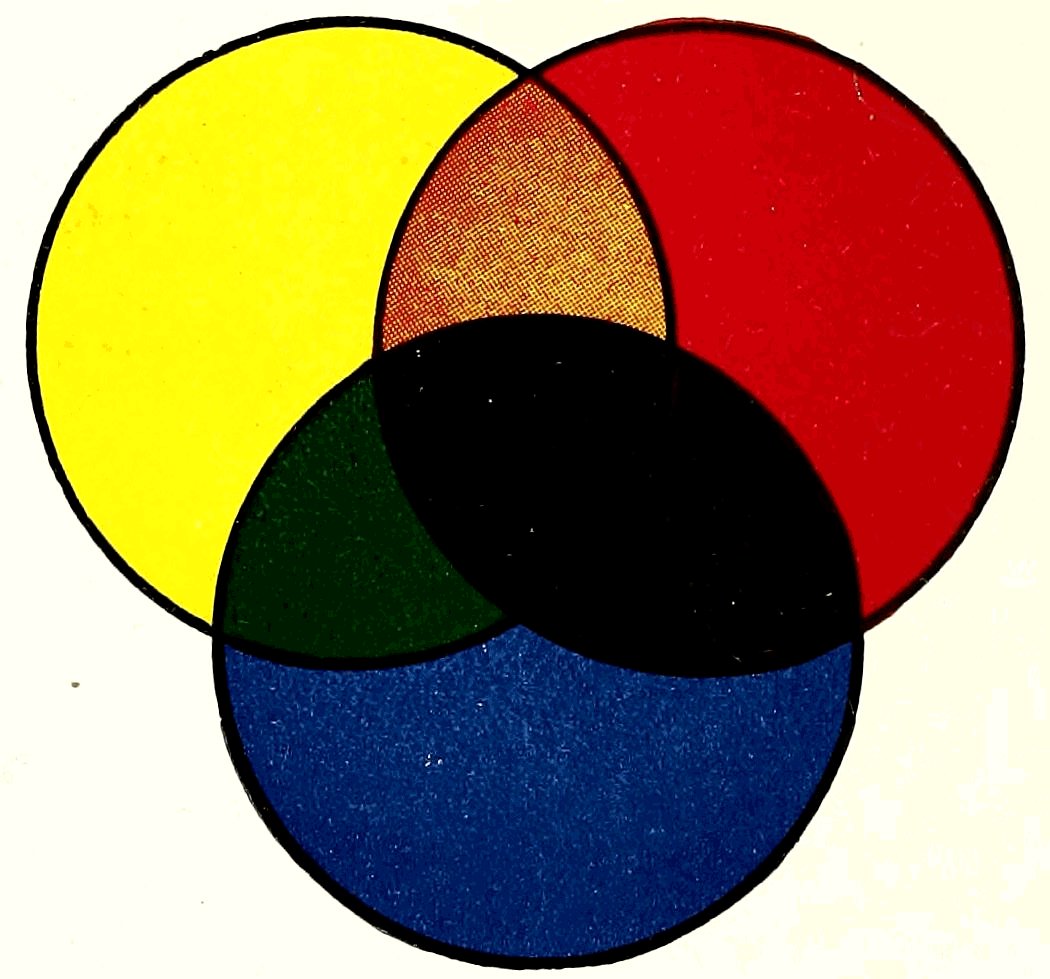
PRIMARY AND SECONDARY COLORS
All colors in this “color chart” are made from the primary colors, yellow, red and blue.
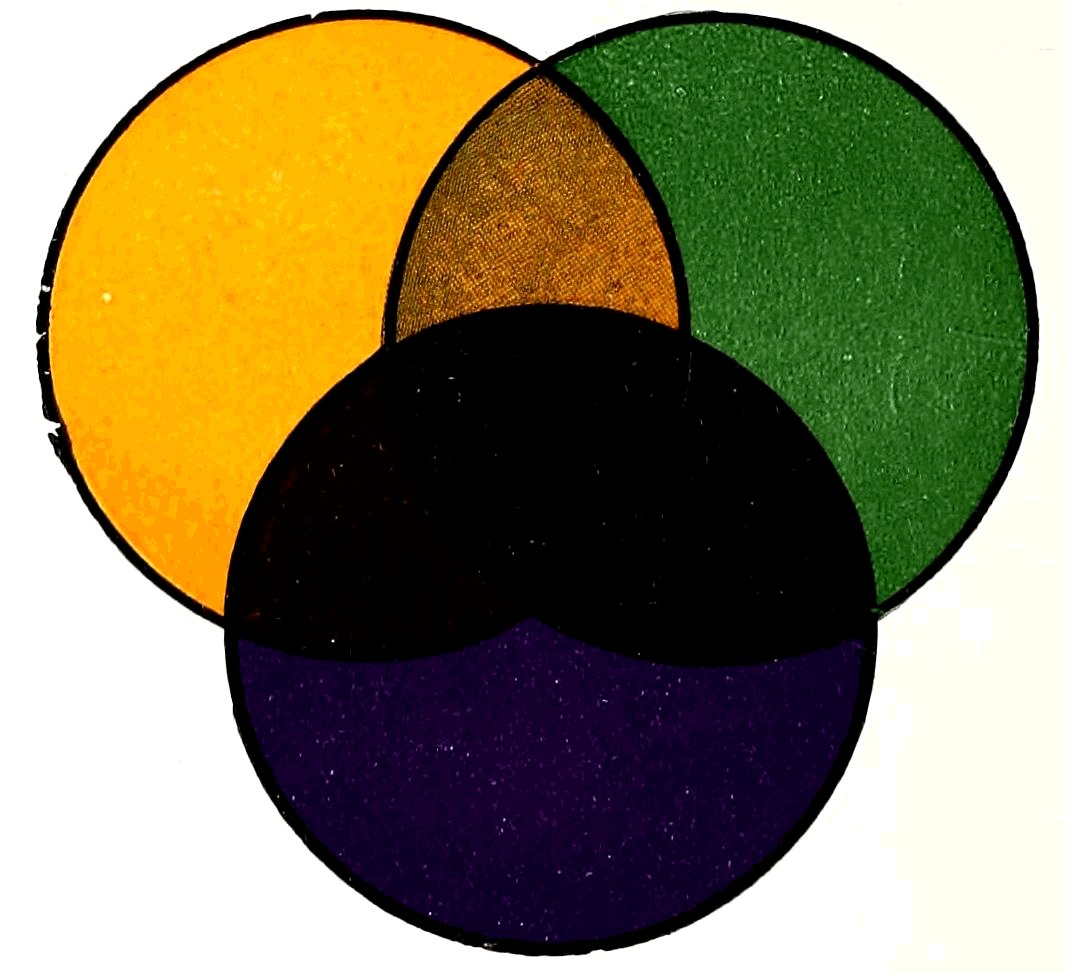
SECONDARY AND TERTIARY COLORS
Overlapping plates on this sheet are printed in full color. Tints are avoided in order to show secondary and tertiary colors in full strength.
To lighten secondary or tertiary colors add more of the lightest color of the combination. For example, if a lighter shade of primary green is more desirable, use more yellow; to deepen, add blue; to use as a tint, add white.
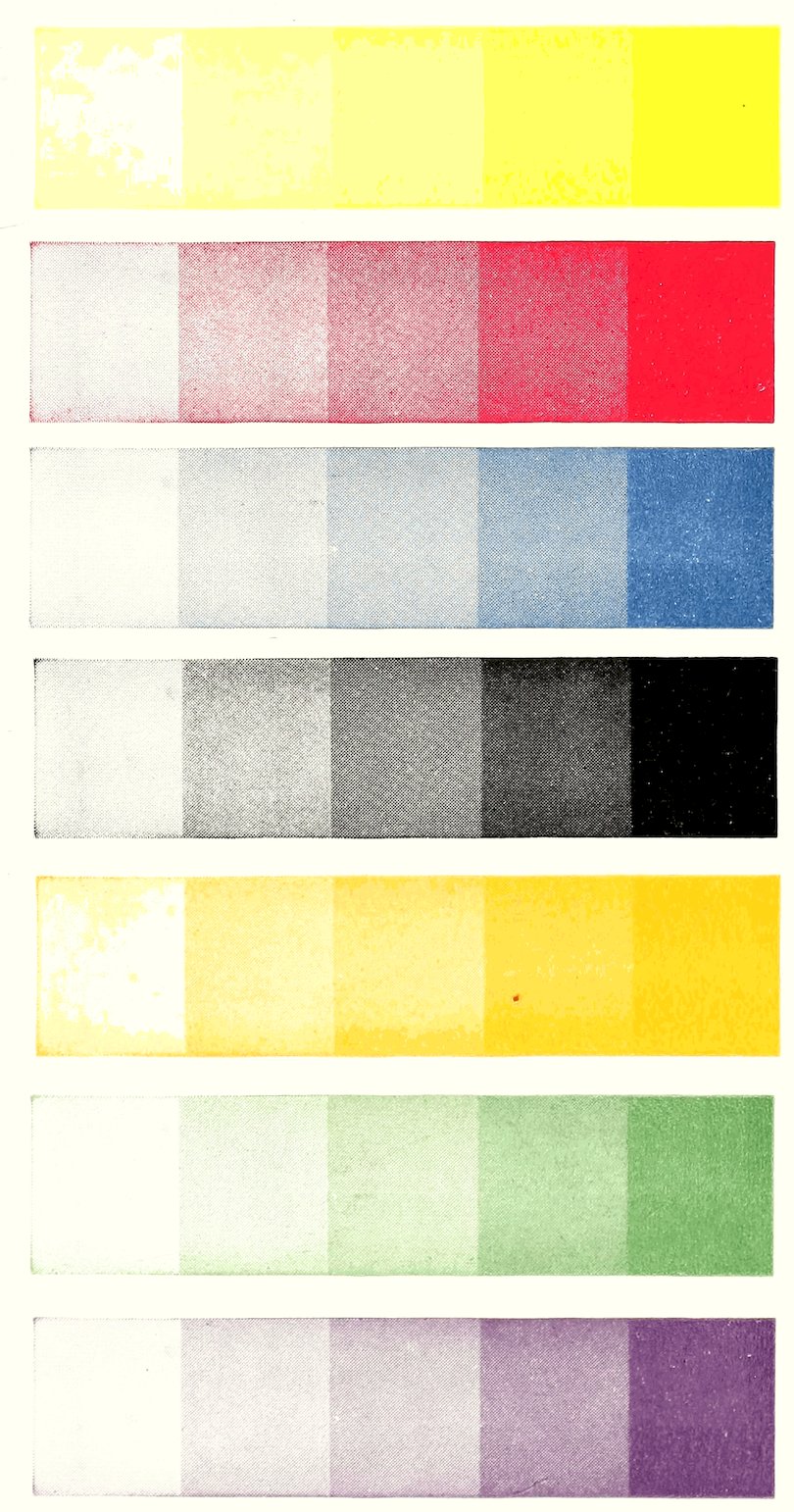
The above plates illustrate the primary and secondary colors broken up with light.
Color Mixing Guide FOR ARTISTS, PAINTERS, DECORATORS, PRINTING PRESSMEN, SHOW CARD WRITERS, SIGN PAINTERS, COLOR MIXERS GIVES COLOR MIXTURES BY PARTS
About three thousand colors and shades can be made from yellow, red, blue, black and white. This little Color Mixing Guide is worth many dollars, as it shows you exactly how, without waste of time and material.
Compiled by John L. King
NEW YORK;
J. S. OGILVIE PUBLISHING COMPANY
57 ROSE STREET
No possession can surpass or even equal a good library to the lover of books. Here are treasured up for his daily use and delectation riches which increase by being consumed, and pleasures which never cloy.
JOHN ALFRED LANGFORD.
Copyright, 1923,
J. S. Ogilvie Publishing Co.
3