Front matter (continued 3)
Reading edition
Then came a reprint for the booksellers (Wm. Bonham, R. Kele, T. Petit, Robert Toye), about 1550, which put the Plowman's Tale before the Parson's. This was followed by an edition in 1561 for the booksellers (Ihon Kyngston, Henry Bradsha, citizen and grocer of London, &c.), to which, when more than half printed, Stowe contributed some fresh pieces, the spurious Court of Love, Lydgate's Sege of Thebes, and other poems. Next came Speght's edition of 1598—on which William Thynne comments in his Animadversions—which added the spurious 'Dreme,' and 'Flower and Leaf.' This was followed by Speght's second edition, in 1602, in which Francis Thynne helped him, and to which were added Chaucer's 'A. B. C.', and the spurious 'Jack Upland[209].' Jack Upland had been before printed, with Chaucer's name on the title-page, about 1536-40 (London, J. Gough, no date, 8vo.).
In an Appendix to the Preface to Tyrwhitt's edition of the Canterbury Tales, there is a similar account of the early editions of Chaucer, to which the reader may refer. He quotes the whole of Caxton's preface to his second edition of the Canterbury Tales, shewing how Caxton reprinted the book because he had meanwhile come upon a more correct MS. than that which he had first followed.
If we now briefly consider all the earlier editions, we find that they may be thus tabulated.
Separate Works. Various editions before 1532; see the list above, on p. 28.
Collected Works. Pynson's edition of 1526, containing only a portion, as above; La Belle Dame being spurious. Also the following:—
1. Ed. by Wm. Thynne; London, 1532. Folio. Pr. by Godfray.
2. Reprinted, with additional matter; London, 1542. Folio.
The chief addition is the spurious Plowman's Tale.
3. Reprinted, with the matter rearranged; London, no date, about 1550. Folio. (Of this edition I possess a copy.)
Here the Plowman's Tale is put before the Parson's. Moreover, the three pieces numbered 66-68 below (p. 45), are inserted at the end of the Table of Contents.
4. Reprinted, with large additions by John Stowe. London, 1561. Folio. (See further below, p. 31). I possess a copy.
5. Reprinted, with additions and alterations by Thomas Speght; London, 1598. Folio.
Here, for the first time, appear 'Chaucer's Dream' and 'The Flower and the Leaf'; both are spurious.
6. Reprinted, with further additions and alterations by Thomas Speght; London, 1602. Folio.
Here, for the first time, appear the spurious Jack Upland[210] and the genuine A. B. C.
7. Reprinted, with slight additions; London, 1687. Folio.
8. Reprinted, with additions and great alterations in spelling, by John Urry; London, 1721. Folio.
This edition is the worst that has appeared. It is not necessary for our purpose to enumerate the numerous later editions. An entirely new edition of the Canterbury Tales was produced by Thomas Tyrwhitt in 1775-8, in 5 vols., 8vo.; to which all later editions have been much indebted[211].
The manner in which these editions were copied one from the other renders it no very difficult task to describe the whole contents of them accurately. The only important addition in the editions of 1542 and 1550 is the spurious Plowman's Tale, which in no way concerns us. Again, the only important additional poems after 1561 are the spurious Chaucer's Dream, The Flower and the Leaf, and the genuine A. B. C. The two representative editions are really those of 1532 and 1561. Now the edition of 1561 consists of two parts; the former consists of a reprint from former editions, and so differs but little from the edition of 1532; whilst the latter part consists of additional matter furnished by John Stowe. Hence a careful examination of the edition of 1561 is, practically, nearly sufficient to give us all the information which we need. I shall therefore give a complete table of the contents of this edition.
§ 8. Table of Contents of Stowe's Edition (1561)[212].
Part I. Reprinted Matter.
1. Caunterburie Tales. (The Prologue begins on a page with the signature A 2, the first quire of six leaves not being numbered; the Knightes Tale begins on a page with the signature B ii., and marked Fol. i. The spurious Plowman's Tale precedes the Parson's Tale.)
2. The Romaunt of the Rose[213]. Fol. cxvi.
3. Troilus and Creseide. Fol. cli., back.
4. The testament of Creseide. [By Robert Henryson.] Fol. cxciiii. Followed by its continuation, called The Complaint of Creseide; by the same.
5. The Legende of Good Women. Fol. cxcvij.
6. A goodlie balade of Chaucer; beginning—'Mother of norture, best beloued of all.' Fol. ccx.
7. Boecius de Consolatione Philosophie. Fol. ccx., back.
8. The dreame of Chaucer. [The Book of the Duchesse.] Fol. ccxliiij.
9. Begins—'My master. &c. When of Christ our kyng.' [Lenvoy to Buckton.] Fol. ccxliiii[214].
10. The assemble of Foules. [Parlement of Foules.] Fol. ccxliiii., back.
11. The Floure of Curtesie, made by Ihon lidgate. Fol. ccxlviij. Followed by a Balade, which forms part of it.
12. How pyte is deed, etc. [Complaint unto Pite.] Fol. ccxlix., back.
13. La belle Dame sans Mercy. [By Sir R. Ros.] Fol. ccl.
14. Of Quene Annelida and false Arcite. Fol. cclv.
15. The assemble of ladies. Fol. ccxlvij.
16. The conclucions of the Astrolabie. Fol. cclxi.
17. The complaint of the blacke Knight. [By Lydgate; see p. 35, note 3.] Fol. cclxx.
18. A praise of Women. Begins—'Al tho the lyste of women euill to speke.' Fol. cclxxiii.[215], back.
19. The House of Fame. Fol. cclxxiiij., back.
20. The Testament of Loue (in prose). Fol. cclxxxiiij., back.
21. The lamentacion of Marie Magdaleine. Fol. cccxviij.
22. The remedie of Loue. Fol. cccxxj., back.
23, 24. The complaint of Mars and Venus. Fol. cccxxiiij., back. (Printed as one poem; but there is a new title—The complaint of Venus—at the beginning of the latter.)
25. The letter of Cupide. [By Hoccleve; dated 1402.] Fol. cccxxvj., back.
26. A Ballade in commendacion of our Ladie. Fol. cccxxix. [By Lydgate; see p. 38.]
27. Ihon Gower vnto the noble King Henry the .iiij. Fol. cccxxx., back. [By Gower.]
28. A saiyng of dan Ihon. [By Lydgate.] Fol. cccxxxii., back[216].
29. Yet of the same. [By Lydgate.] On the same page.
30. Balade de bon consail. Begins—If it be fall that God the list visite. (Only 7 lines.) On the same page.
31. Of the Cuckowe and the Nightingale. Fol. cccxxxiij. [By Hoccleve?]
32. Balade with Envoy (no title). Begins—'O leude booke with thy foule rudenesse.' Fol. cccxxxiiij., back.
33. Scogan, vnto the Lordes and Gentilmen of the Kinges house. (This poem, by H. Scogan, quotes Chaucer's 'Gentilesse' in full.) Fol. cccxxxiiij., back.
34. Begins—'Somtyme the worlde so stedfast was and stable.' [Lak of Stedfastnesse.] Fol. cccxxxv., back.
35. Good counsail of Chaucer. [Truth.] Same page.
36. Balade of the village (sic) without paintyng. [Fortune.] Fol. cccxxxvj.
37. Begins—'Tobroken been the statutes hie in heauen'; headed Lenuoye. [Lenvoy to Scogan.] Fol. cccxxxvj., back.
38. Poem in two stanzas of seven lines each. Begins—'Go foorthe kyng, rule thee by Sapience.' Same page.
39. Chaucer to his emptie purse. Same page.
40. A balade of good counseile translated out of Latin verses in-to Englishe, by Dan Ihon lidgat cleped the monke of Buri. Begins—'COnsyder well euery circumstaunce.' Fol. cccxxxvij.
41. A balade in the Praise and commendacion of master Geffray Chauser for his golden eloquence. (Only 7 lines.) Same leaf, back. [See p. 56.]
§ 9. Part II. Additions by John Stowe.
At the top of fol. cccxl. is the following remark:—
¶ Here foloweth certaine woorkes of Geffray Chauser, whiche hath not heretofore been printed, and are gathered and added to this booke by Ihon Stowe.
42. A balade made by Chaucer, teching what is gentilnes[217]. [Gentilesse.] Fol. cccxl.
43. A Prouerbe [read Prouerbs] agaynst couitise and negligence. [Proverbs.] Same page.
44. A balade which Chaucer made agaynst women vnconstaunt. Same page. [Certainly genuine, in my opinion; but here relegated to an Appendix, to appease such as cannot readily apprehend my reasons. Cf. p. 26.]
45. A balade which Chaucer made in the praise or rather dispraise, of women for their doublenes. [By Lydgate.] Begins—'This world is full of variaunce.' Same page.
46. This werke folowinge was compiled by Chaucer, and is caled the craft of louers. Fol. cccxli. [Written in 1448.]
47. A Balade. Begins—'Of their nature they greatly them delite.' Fol. cccxli., back. [Quotes from no. 56.]
48. The .x. Commaundementes of Loue. Fol. cccxlij.
49. The .ix. Ladies worthie. Fol. cccxlij., back.
50. [Virelai; no title.] Begins—'Alone walkyng.' Fol. cccxliij.
51. A Ballade. Begins—'In the season of Feuerere when it was full colde.' Same page.
52. A Ballade. Begins—'O Mercifull and o merciable.' Fol. cccxliij., back. [Made up of scraps from late poems; see p. 57.]
53. Here foloweth how Mercurie with Pallas, Venus and Minarua, appered to Paris of Troie, he slepyng by a fountain. Fol. cccxliiij.
54. A balade pleasaunte. Begins—'I haue a Ladie where so she bee.' Same page. At the end—'Explicit the discriuyng of a faire Ladie.'
55. An other Balade. Begins—'O Mossie Quince, hangyng by your stalke.' Fol. cccxliiij., back.
56. A balade, warnyng men to beware of deceitptfnll women (sic). Begins—'LOke well aboute ye that louers bee.' Same page. [By Lydgate.]
57. These verses next folowing were compiled by Geffray Chauser, and in the writen copies foloweth at the ende of the complainte of petee. Begins—'THe long nyghtes when euery [c]reature.' [This is the 'Compleint to his Lady,' as I venture to call it.] Fol. cccxlv[218].
58. A balade declaring that wemens chastite Doeth moche excel all treasure worldly. Begins—'IN womanhede as auctours al write.' Back of same leaf.
59. The Court of Loue. Begins—'WIth temerous herte, and trembling hand of drede.' Fol. cccxlviij.
60. Chaucers woordes vnto his owne Scriuener[219]. Fol. ccclv., back. At the end—Thus endeth the workes of Geffray Chaucer. (This is followed by 34 Latin verses, entitled Epitaphium Galfridi Chaucer, &c.)
61. The Storie of Thebes. [By Lydgate.] Fol. ccclvj.
§ 10. Discussion of the Poems in Part I. of Ed. 1561.
Of the 41 pieces in Part I. of the above, we must of course accept as Chaucer's the four poems entitled Canterbury Tales, Troilus, Legend of Good Women, and House of Fame; also the prose translation of Boethius, and the prose treatise on the Astrolabie. The remaining number of Minor Poems (excluding the Romaunt of the Rose) is 34; out of which number I accept the 13 numbered above with the numbers 8, 9, 10, 12, 14, 23, 24, 33 (so far as it quotes Chaucer), 34, 35, 36, 37, and 39. Every one of these has already been shewn to be genuine on sufficient external evidence, and it is not likely that their genuineness will be doubted. In the present volume they appear, respectively, as nos. III, XVII, V, II, VII, IV, XVIII, XIV, XV, XIII, X, XVI, XIX. Of the remaining 21, several may be dismissed in a few words. No. 4 is well known to have been written by Robert Henryson. Nos. 11, 28, 29, and 40 are distinctly claimed for Lydgate in all the editions; and no. 27 is similarly claimed for Gower. No. 25 was written by Hoccleve[220]; and the last line gives the date—'A thousande, foure hundred and seconde,' i. e. 1402, or two years after Chaucer's death. No. 13 is translated from Alain Chartier, who was only four years old when Chaucer died; see p. 28, note 2. Tyrwhitt remarks that, in MS. Harl. 372, this poem is expressly attributed to a Sir Richard Ros[221]. No one can suppose that no. 41 is by Chaucer, seeing that the first line is—'Maister Geffray Chauser, that now lithe in graue.' Mr. Bradshaw once assured me that no. 17 is ascribed, on MS. authority, to Lydgate; and no one who reads it with care can doubt that this is correct[222]. It is, in a measure, an imitation of the Book of the Duchesse; and it contains some interesting references to Chaucer, as in the lines—'Of Arcite, or of him Palemoun,' and 'Of Thebes eke the false Arcite.' No. 20, i. e. the Testament of Love, is in prose, and does not here concern us; still it is worth pointing out that it contains a passage (near the end) such as we cannot suppose that Chaucer would have written concerning himself[223].
After thus removing from consideration nos. 4, 11, 13, 17, 20, 25, 27, 28, 29, 40, and 41, half of the remaining 21 pieces have been considered. The only ones left over for consideration are nos. 6, 15, 18, 21, 22, 26, 30, 31, 32, 38. As to no. 6, there is some external evidence in its favour, which will be duly considered; but as to the rest, there is absolutely nothing to connect them with Chaucer beyond their almost accidental appearance in an edition by Wm. Thynne, published in 1532, i. e. one hundred and thirty-two years after Chaucer's death; and it has just been demonstrated that Thynne is obviously wrong in at least eleven instances, and that he wittingly and purposely chose to throw into his edition poems which he knew to have been written by Lydgate or by Gower! It is ridiculous to attach much importance to such testimony as this. And now let me discuss, as briefly as I can, the above-named poems separately.
6. A goodlie balade of Chaucer; begins—'Mother of norture, best beloued of all'; printed in Morris's edition, vi. 275; and in Bell's edition, iii. 413. I have little to say against this poem; yet the rime of supposeth with riseth (st. 8) is somewhat startling. It is clearly addressed to a lady named Margaret[224], as appears from her being likened to the daisy, and called the sun's daughter. I suspect it was merely attributed to Chaucer by association with the opening lines of the Legend of Good Women. The suggestion, in Bell's Chaucer, that it possibly refers to the Countess of Pembroke, is one of those bad guesses which are discreditable. Tyrwhitt shews, in note n to his 'Appendix to the Preface,' that she must have died not later than 1370, whereas this Balade must be much later than that date; and I agree with him in supposing that le Dit de la fleur de lis et de la Marguerite, by Guillaume de Machault (printed in Tarbé's edition, 1849, p. 123), and the Dittié de la flour de la Margherite, by Froissart, may furnish us with the true key to those mystical compliments which Chaucer and others were accustomed to pay to the daisy.
I wish to add that I am convinced that one stanza, probably the sixth is missing. It ought to form a triple Balade, i. e. three Balades of 21 lines each, each with its own refrain; but the second is imperfect. There seems to be some affectation about the letters beginning the stanzas which I cannot solve; these are M, M, M (probably for Margaret) in the first Balade; D, D in the second; and J, C, Q in the third. The poet goes out of his way to bring in these letters. The result looks like Margaret de Jacques; but this guess does not help us.
The poem is rather artificial, especially in such inversions as It receyve, Cauteles whoso useth, and Quaketh my penne; these things are not in Chaucer's manner. In the second stanza there is a faulty rime; for we there find shal, smal, answering to the dissyllabic rimes alle, calle, appalle, befalle, in stanzas 1 and 3. Lydgate has: 'My pen quake,' &c.; Troy Book, ch. x., fol. F2, back.
15. The assemble of Ladies. This poem Tyrwhitt decisively rejects. There is absolutely nothing to connect it with Chaucer. It purports to have been written by 'a gentlewoman'; and perhaps it was. It ends with the rime of done, pp., with sone (soon); which in Chaucer are spelt doon and son-e respectively, and never rime. Most of the later editions omit this poem. It is conveniently printed in Chalmers' English Poets, vol. i. p. 526; and consists of 108 7-line stanzas. For further remarks, see notes on The Flower and the Leaf (p. 44).
At p. 203 of the Ryme-Index to Chaucer's Minor Poems (Chaucer Society), I have printed a Ryme-Index to this poem, shewing that the number of non-Chaucerian rimes in it is about 60.
18. A praise of Women. In no way connected with Chaucer. Rejected by Tyrwhitt. Printed in Bell's edition, iv. 416, and in Chalmers' English Poets, vol. i. p. 344; also in Morris's Aldine edition, vol. vi. p. 278. In twenty-five 7-line stanzas. The rime of lie (to tell a lie) with sie (I saw), in st. 20, is suspicious; Chaucer has ly-e, sy. The rime of queen-e (usually dissyllabic in Chaucer) with beene (miswritten for been, they be, st. 23) is also suspicious. It contains the adjective sere, i. e. various (st. 11), which Chaucer never uses.
21. The lamentacion of Marie Magdaleine. Printed in Bell's Chaucer, iv. 395; and in Chalmers, i. 532. Tyrwhitt's remarks are admirable. He says, in his Glossary, s. v. Origenes:—'In the list of Chaucer's Works, in Legend of Good Women, l. 427, he says of himself:—
"He made also, gon is a grete while, Origenes upon the Maudeleine"—
meaning, I suppose, a translation, into prose or verse, of the Homily de Maria Magdalena, which has been commonly, though falsely, attributed to Origen; v. Opp. Origenis, T. ii. p. 291, ed. Paris, 1604. I cannot believe that the poem entitled The Lamentation of Marie Magdaleine, which is in all the [older] editions of Chaucer, is really that work of his. It can hardly be considered as a translation, or even as an imitation, of the Homily; and the composition, in every respect, is infinitely meaner than the worst of his genuine pieces.' To those who are interested in Chaucer's rimes I will merely point out the following: die, why (Ch. dy-e, why); kene, iyen (Ch. ken-e, y-ën); disguised, to-rived, a mere assonance; crie, incessauntly (Ch. cry-ë, incessauntly); slaine, paine (Ch. slein, pein-e); y-fet, let (Ch. y-fet, let-te); accept, bewept (Ch. accept-e, bewept); die, mihi (Ch. dy-e, mihi). To those interested in Chaucer's language, let me point out 'dogges rabiate'—'embesile his presence'—'my woful herte is inflamed so huge'—'my soveraine and very gentilman.' See st. 34, 39, 54, 99.
22. The remedie of Loue. Printed in Chalmers' British Poets, i. 539. In sixty-two 7-line stanzas. Rejected by Tyrwhitt. The language is extremely late; it seems to have been written in the 16th century. It contains such words as incongruitie, deduction, allective, can't (for cannot), scribable (fit for writing on), olibane, pant, babé (baby), cokold (which Chaucer spells cokewold), ortographie, ethimologie, ethimologise (verb). The provincial word lait, to search for, is well known to belong to the Northern dialect. Dr. Murray, s. v. allective, dates this piece about A.D. 1560; but it must be somewhat earlier than this, as it was printed in 1532. I should date it about 1530.
26. A Ballade in commendacion of our Ladie. Tyrwhitt remarks that 'a poem with the same beginning is ascribed to Lydgate, under the title of Invocation to our Lady; see Tanner, s. v. Lydgate.' The poem consists of thirty-five 7-line stanzas. It has all the marks of Lydgate's style, and imitates Chaucer's language. Thus the line—'I have none English conuenient and digne' is an echo of the Man of Law's Tale, l. 778—'O Donegild, I ne haue noon English digne.' Some of the lines imitate Chaucer's A. B. C. But the most remarkable thing is his quotation of the first line of Chaucer's Merciless Beauty, which he applies to the Virgin Mary! See note to that poem, l. 1.
A poem called an 'Invocation to our Lady' is ascribed to Lydgate in MS. Ashmole 59, fol. 39, back. It agrees with the present Ballade; which settles the question.
30. Balade de bon consail. Not in previous editions. Printed in Chalmers, i. 552. Only 7 lines, and here they are, duly edited:—
'If it befall that God thee list visite With any tourment or adversitee, Thank first the Lord, and [fond] thy-self to quite; Upon suffraunce and humilitee Found thou thy quarel, what ever that it be; Mak thy defence, and thou shalt have no losse, The remembraunce of Christ and of his crosse.'
In l. 1, ed. 1561 has the; 2. aduersite; 3. Thanke; lorde; I supply fond, i. e. endeavour; thy-selfe; 4. (scans ill); 5. Founde; 6. Make.
31. Of the Cuckowe and the Nightingale. Printed in Bell's Chaucer, iv. 334; and in Morris's Chaucer, iv. 75. Not uncommon in MSS.; there is a copy in MS. Ff. 1. 6 in the Cambridge University Library; another in MS. Fairfax 16; another in MS. Bodley 638; another in MS. Tanner 346; and a fifth (imperfect) in MS. Arch. Selden B. 24, in the Bodleian Library. A sixth is in MS. Harl. 7333, in the British Museum. From some of these, Morris's better text was constructed; see his edition, pref. p. ix.
It is worth a note, by the way, that it is not the same poem as one entitled The Nightingale, extant in MS. no. 203 in Corpus Christi College, Oxford, and in MS. Cotton, Calig. A. ii., fol. 59, and attributed to Lydgate.
That the first two lines are by Chaucer, we cannot doubt, for they are quoted from the Knightes Tale, ll. 927, 928. Chaucer often quotes his own lines, but it is not likely that he would take them as the subject of a new poem. On the other hand, this is just what we should expect one of his imitators to do. The present poem is a very fair imitation of Chaucer's style, and follows his peculiarities of metre far more closely than is usually the case with Lydgate. The notion, near the end, of holding a parliament of birds, with the Eagle for lord, is evidently borrowed from Chaucer's Parliament of Foules. Whilst admitting that the present poem is more worthy of Chaucer than most of the others with which it has been proposed to burden his reputation, I can see no sufficient reason for connecting him with it; and the external evidence connects it, in fact, with Hoccleve. For the copy in MS. Bodley 638 calls it 'The boke of Cupide god of loue,' at fol. 11, back; whilst Hoccleve's Letter of Cupid is called 'The lettre of Cupide god of loue' in the same, fol. 38, back. The copy in the Fairfax MS. ends with the colophon—Explicit liber Cupidinis. The rimes are mostly Chaucerian; but the rime of day with the gerund to assay-e in st. 11 is suspicious; so also is that of now with the gerund to rescow-e in st. 46. In st. 13, grene rimes with been, whereas gren-e, in Chaucer, is always dissyllabic. Chaucer's biographers have been anxious to father this poem upon him, merely because it mentions Woodstock in l. 285.
One point about this poem is its very peculiar metre; the 5-line stanza, riming a a b b a, is certainly rare. If the question arises, whence is it copied, the answer is clear, viz. from Chaucer's Envoy to his Compleint to his Purse. This is a further reason for dating it later than 1399.
32. Balade with envoy; 'O leude book,' &c. Printed in Bell's Chaucer, iv. 347, and in Morris's Chaucer, iv. 85, as if it were part of The Cuckoo and the Nightingale; but obviously unconnected with it. A Balade in the usual form, viz. three 7-line stanzas, with a refrain; the refrain is—'For of all good she is the best living.' The envoy consists of only six lines, instead of seven, rimed a b a b c c, and that for a sufficient reason, which has not been hitherto observed. The initial letters of the lines form, in fact, an anagram on the name Alison; which is therefore the name of the lady to whom the Balade is addressed. There is a copy of this poem in MS. Fairfax 16, and another in MS. Tanner 346. It is therefore as old as the 15th century. But to attribute to Chaucer the fourth line of the Envoy seems hazardous. It runs thus—'Suspiries whiche I effunde in silence.' Perhaps it is Hoccleve's.
38. Poem in two 7-line stanzas. There is nothing to connect this with Chaucer; and it is utterly unworthy of him. I now quote the whole poem, just as it stands in the edition of 1561:—
'Go foorthe king, rule thee by Sapience, Bishoppe, be able to minister doctrine, Lorde, to true counsale yeue audience, Womanhode, to chastitie euer encline; Knight, let thy deedes worship determine; Be righteous, Iudge, in sauyng thy name; Rich, do almose, lest thou lese blisse with shame. 'People, obeie your kyng and the lawe; Age, be ruled by good religion; True seruaunt, be dredfull & kepe the vnder awe; And, thou poore, fie on presumpcion; Inobedience to youth is vtter destruccion; Remembre you, how God hath set you, lo! And doe your parte, as ye be ordained to.'
In l. 7, ed. 1532 has almesse instead of almose. Surely it must be Lydgate's. Many of his poems exhibit similar catalogues, if I may so term them.
I have now gone through all the poems published in 1532 and copied into the later editions (with the exception of nos. 66-68, for which see p. 45); and I see no way of augmenting the list of Chaucer's Minor Poems any further from this source.
§ 11. Discussion of the Poems in Part II. of Ed. 1561.
It is hardly worth while to discuss at length all the poems which it pleased John Stowe to fling together into the edition of 1561. But a few remarks may be useful.
Nos. 42, 43, and 60 are admittedly genuine; and are printed below, nos. XIV., XX., and VIII. I believe nos. 44 and 57 to be so also[225]; they are discussed below, and are printed as nos. XXI. and VI. No. 61 is, of course, Lydgate's. Besides this, no. 45 is correctly ascribed to Lydgate in the MSS.; there are copies of it in MS. Fairfax 16 and in MS. Ashmole 59. No. 56 is also Lydgate's, and is so marked in MS. Harl. 2251. As to no. 46, called the Craft of Lovers, it is dated by help of two lines in the last stanza, which are thus printed by Stowe:—
'In the yere of our lorde a .M. by rekeninge CCCXL. .&. UIII. yere folowing.'
This seems to give the date as 1348; whereas the language is palpably that of the fifteenth century. Whether Stowe or his printer thought fit to alter the date intentionally, I cannot say. Still, the fact is, that in the MS. marked R. 3. 19 in Trinity College Library, at fol. 156, the reading is 'CCCCXL & VIII yere,' so that the true date is rather 1448, or nearly half a century after Chaucer's death[226]. The same MS., which I suppose belonged to Stowe, contains several other of these pieces, viz. nos. 48, 49, 50, 51, 53, 54, 55, 56, and perhaps others. The language and, in some cases, the ruggedness of the metre, forbid us to suppose that Chaucer can have had anything to do with them, and some are palpably of a much later date; one or more of these considerations at once exclude all the rest of Stowe's additions. It may, however, be noted that no. 47 quotes the line 'Beware alwaye, the blind eats many a fly,' which occurs as a refrain in no. 56, and it is therefore later than the time of Lydgate. The author of no. 48 says he is 'a man vnknowne.' Many lines in no. 49 are of abnormal length; it begins with—'Profulgent in preciousnes, O Sinope the queen.' The same is true of no. 51, which is addressed to a Margaret, and begins with—'In the season of Feuerere when it was full colde.' Of no. 52, Tyrwhitt says that the four first stanzas are found in different parts of an imperfect poem upon the Fall of Man, in MS. Harl. 2251; whilst the 11th stanza makes part of an Envoy, which in the same MS. is annexed to the poem entitled the Craft of Lovers. No. 53 is a poor affair. No. 54, called a Balade Pleasaunte, is very unpleasant and scurrilous, and alludes to the wedding of 'queene Iane[227]' as a circumstance that happened many years ago. No. 55 is scurrilous, odious, and stupid. I doubt if no. 58 is good enough for Lydgate. No. 59 belongs to the sixteenth century.
All the poems here rejected were rejected by Tyrwhitt, with two strange exceptions, viz. nos. 50 and 59, the Virelai and the Court of Love. Of both of these, the language is quite late. The Virelai is interesting from a metrical point of view, because such poems are scarce; the only similar poem that I can call to mind is the Balet (or rather Virelai) composed by Lord Rivers during his imprisonment in 1483, and printed by Percy in his Reliques of Ancient English Poetry. Percy says that Lord Rivers copies the Virelai mentioned above, which he assumes to be Chaucer's; but it is quite as likely that the copying was in the other direction, and that Lord Rivers copied some genuine Virelai (either Chaucer's or in French) that is now lost[228]. The final rime of end with find, is bad enough; but the supposition that the language is of the 14th century is ridiculous. Still the Virelai is good in its way, though it can hardly be older than 1500, and may be still later.
Of all poems that have been falsely ascribed to Chaucer, I know of none more amazing than The Court of Love. The language is palpably that of the 16th century, and there are absolutely no examples of the occurrence in it of a final -e that is fully pronounced, and forms a syllable! Yet there are critics who lose their heads over it, and will not give it up. Tyrwhitt says—'I am induced by the internal evidence (!) to consider it as one of Chaucer's genuine productions.' As if the 'internal evidence' of a poem containing no sonant final -e is not enough to condemn it at once. The original MS. copy exists in MS. R. 3. 19 in Trinity College, and the writing is later than 1500. The poem itself has all the smoothness of the Tudor period[229]; it excels the style of Hawes, and would do credit to Sackville. One reference is too interesting to be passed over. In the second stanza, the poet regrets that he has neither the eloquence of Tully, the power of Virgil, nor the 'craft of Galfride.' Tyrwhitt explains Galfride as 'Geoffrey of Monmouth,' though it is difficult to understand on what ground he could have been here thought of. Bell's 'Chaucer' explains Galfride as 'Geoffrey of Vinsauf,' which is still more curious; for Geoffrey of Vinsauf is the very Gaufride whom Chaucer holds up to eternal ridicule in the Nonne Prestes Tale (l. 526).
I have no doubt at all that the Galfrid here referred to is no other than Geoffrey Chaucer, who was called, indifferently, Galfrid or Geoffrey. This appears from the testimony of Lydgate, who speaks, in his 'Troy-book,' of 'Noble Galfryde, chefe Poete of Brytayne,' and again, of 'My mayster Galfride'; see Lydgate's Siege of Troye, bk. ii. ch. 15, and bk. iii. ch. 25; ed. 1557, fol. K 2, col. 1, and fol. R 2, back, col. 2. Hence we are not surprised to find that the author makes frequent reference to Chaucer's Works, viz. to Anelida (l. 235), the Death of Pity (701), Troilus (872), the Legend of Good Women (104, 873), and the Parl. of Foules (near the end). The two allusions to the Legend of Good Women at once make the poem later than 1385; and in fact, it must be quite a century later than that date. There are more than 70 rimes that differ from those employed by Chaucer. The Poet introduces to our notice personages named Philogenet, Philobone, and Rosial. Of these, at least the two former savour of the time of the Renaissance; for, although Chaucer uses the name Philostrate in the Knightes Tale (A 1428, 1558, 1728), he merely copies this name from Boccaccio; and it is amusing to find that Boccaccio himself did not understand it.[230]
§ 12. Poems added in Speght's Editions of 1598 and 1602.
We have now to consider the additions made by Speght in 1598. These were only two, viz. Chaucer's Dream and The Flower and the Leaf.
62. Chaucer's Dream. A long poem of 2206 short lines, in metre similar to that of The House of Fame; accepted by Tyrwhitt, and in all the editions. But there is no early trace of it; and we are not bound to accept as Chaucer's a poem first ascribed to him in 1598, and of which the MS. (at Longleat) was written about 1550. The language is of late date, and the sonant final -e is decidedly scarce. The poem is badly named, and may have been so named by Speght; the proper title is 'The Isle of Ladies.' We find such rimes as be, companie (Ch. be, company-e); know, low, i. e. law (Ch. know-e, law-e); grene, yene, i. e. eyes (Ch. gren-e, y-ën); plesaunce, fesaunce (Ch. plesaunc-e, fesaunts); ywis, kisse (Ch. ywis, kis-se); and when we come to destroied riming with conclude, it is time to stop. The tediousness of this poem is appalling[231].
63. The Flower and the Leaf. This is rather a pretty poem, in 7-line stanzas. The language is that of the fifteenth century. It professes to be written by a gentlewoman, like the Assemble of Ladies; and perhaps it was[232]. Very likely, the same 'gentlewoman' wrote both these poems. If so, the Flower and the Leaf is the better finished, and probably the later of the two. It contains the word henchman, for which the earliest dated quotation which I have yet found is 1415 (Royal Wills, ed. Nichols, p. 220). An interesting reference is given in the lines—
'Eke there be knightes old of the garter That in hir time did right worthily.'
The order of the Garter was established in 1349; and we should expect that more than half a century would elapse before it would be natural to refer to the Knights as old knights, who did worthily in their time. Of course the poem cannot be Chaucer's, and it is hardly necessary to look for rimes such as he never uses; yet such may easily be found, such as grew, pt. t. sing., riming with the dissyllabic hew-e, new-e; sid-e with espide, pp. (Ch. espy-ed); eie, eye (Ch. y-ë) with sie, saw (Ch. sy); and plesure[233] with desire; after which we may stop.
In 1602, Speght issued another edition, in which, according to Bonn's edition of Lowndes' Bibliographer's Manual, two more pieces were added, viz. the prose treatise against Friars called Jack Upland, and the genuine poem entitled 'A. B. C.' But this is not all; for I find, in a still later edition, that of 1687, which is said to be a 'reimpression of Speght's edition of 1602,' that, at the very end of all the prefatory matter, on what was probably a spare blank leaf, three more poems appear, which might as well have been consigned to oblivion. But the editors of Chaucer evidently thought that a thing once added must be added for ever, and so these three productions are retained in Bell's Chaucer, and must therefore be noticed with the rest. I find, however, that they had been printed previously, viz. at the end of the Table of Contents in ed. 1542 and ed. 1550, where they are introduced quite casually, without a word of explanation. Moreover, they are copied from MS. Trin. Coll. Cam. R. 3. 15, a MS. which also contains the Canterbury Tales; and no doubt, this fact suggested their insertion. See Todd's Illustrations of Chaucer, p. 120.
64. Jack Upland. An invective against friars, in prose, worth printing, but obviously not Chaucer's.
65. Chaucer's A. B. C. Genuine; here printed as poem no. I.
66. Eight goodly questions with their answers; printed in Bell's Chaucer, vol. iv. p. 421; nine 7-line stanzas. In st. 3, tree rimes with profer; but tree is an obvious misprint for cofer! In st. 5, the gerund to lie (Ch. ly-e) rimes with honestie (Ch. honestee). This is quite enough to condemn it. But it may be Lydgate's.
67. To the Kings most noble Grace, and to the Lords and Knights of the Garter; pr. as above, p. 424; eight 8-line stanzas. In MS. Phillipps 8151, and written by Hoccleve; it much resembles his poem printed in Anglia, v. 23. The date may be 1416. The 'King' is Henry V.
68. Sayings. Really three separate pieces. They are all found on the fly-leaf of the small quarto edition of Caxton, described above, p. 27. When Caxton printed Chaucer's Anelida and Purse on a quire of ten leaves, it so happened that he only filled up nine of them. But, after adding explicit at the bottom of the ninth leaf, to shew that he had come to the end of his Chaucer, he thought it a pity to waste space, and so added three popular sayings on the front of leaf 10, leaving the back of it still blank. Here is what he printed:—
'Whan feyth failleth in prestes sawes And lordes hestes ar holden for lawes And robbery is holden purchas And lechery is holden solas Than shal the lond of albyon Be brought to grete confusioun. Hit falleth for euery gentilman To saye the best that he can In mannes absence And the soth in his presence. 'Hit cometh by kynde of gentil blode To cast away al heuynes And gadre to-gidre wordes good The werk of wisedom berith witnes Et sic est finis ****.'
The first of these sayings was probably a bit of popular rime, of the character quoted in Shakespeare's King Lear, iii. 2. 81. Shakespeare calls his lines Merlin's prophecy; and it has pleased the editors of Chaucer to call the first six lines Chaucer's Prophecy[234]. They appear in Bell's Chaucer, vol. iii. p. 427, in an 'improved' form, not worth discussing; and the last eight lines are also printed in the same, vol. iv. p. 426. Why they are separated, is mysterious. Those who think them genuine may thank me for giving them Caxton's spelling instead of Speght's.
§ 13. Pieces added in Morris's Edition, 1866.
In Morris's edition are some pieces which either do not appear in previous editions, or were first printed later than 1700.
69. Roundel; pr. in vol. vi. p. 304. The same as Merciless Beaute; here printed as no. XI. It first appeared, however, in Percy's Reliques of English Poetry. See p. 80 below.
70. The Former Age; pr. in vol. vi. p. 300, for the first time. Here printed as no. IX. See p. 78.
71. Prosperity; pr. in vol. vi. p. 296, for the first time. This is taken from MS. Arch. Selden B. 24, fol. 119, where it follows Chaucer's Poem on 'Truth.' It has but one stanza of eight lines, and I here give it precisely as it stands in this Scottish MS.:—
'Richt as pouert causith sobirnes, And febilnes enforcith contenence, Rycht so prosperitee and grete riches The moder is of vice and negligence; And powere also causith Insolence; And honour oftsiss changith gude thewis; Thare is no more perilouss pestilence Than hie estate geven vnto schrewis. Quod Chaucere.'
I have no belief in the genuineness of this piece, though it is not ill written. In general, the ascription of a piece to Chaucer in a MS. is valuable. But the scribe of this particular MS. was reckless. It is he who made the mistake of marking Hoccleve's 'Mother of God' with the misleading remark—'Explicit oracio Galfridi Chaucere.' At fol. 119, back, he gives us a poem beginning 'Deuise prowes and eke humylitee' in seven 7-line stanzas, and here again at the end is the absurd remark—'Quod Chaucer quhen he was rycht auisit.' But he was himself quite 'wrongly advised'; for it is plainly not Chaucer's at all. His next feat is to mark Lydgate's Complaynt of the Black Knight by saying—'Here endith the Maying and disporte of Chaucere'; which shews how the editors were misled as to this poem. Nor is this all; for he gives us, at fol. 137, back, another poem in six 8-line stanzas, beginning 'O hie Emperice and quene celestial'; and here again at the end is his stupid—'Quod Chaucere.' The date of this MS. appears to be 1472; so it is of no high authority; and, unless we make some verbal alteration, we shall have to explain how Chaucer came to write oftsiss in two syllables instead of ofte sythe in four; see his Can. Yem. Tale, Group G, l. 1031.
72. Leaulte vault Richesse; pr. in vol. vi. p. 302, for the first time. This is from the same MS., fol. 138, and is as follows:—
'This warldly Ioy is onely fantasy, Of quhich non erdly wicht can be content; Quho most has wit, leste suld In It affy, Quho taistis It most, most sall him repent; Quhat valis all this richess and this rent, Sen no man wate quho sall his tresour haue? Presume nocht gevin that god has done but lent, Within schort tyme the quhiche he thinkis to craue. Leaulte vault richess.'
On this poem, I have three remarks to make. The first is that not even the reckless Scottish scribe attributes it to Chaucer. The second is that Chaucer's forms are content and lent without a final e, and repent-e and rent-e with a final -e, so that the poem cannot be his; although content, repent, rent, and lent rime well enough in the Northern dialect. The third is that if I could be sure that the above lines were by a well-known author, I should at once ascribe them to King James I., who might very well have written these and the lines called Prosperity above. It is somewhat of a coincidence that the very MS. here discussed is that in which the unique copy of the Kingis Quair is preserved.
73. Proverbs of Chaucer; printed in vol. vi. p. 303. The first eight lines are genuine; here printed as no. XX. But two 7-line stanzas are added, which are spurious. In MS. Addit. 16165, Shirley tells us that they were 'made by Halsham Esquyer'; but they seem to be Lydgate's, unless he added to them. See Lydgate's Minor Poems (Percy Soc. 1840), pp. 193 and 74. And see pp. 52, 57.
It thus appears that, of the 73 pieces formerly attributed to Chaucer, not more than 26, and a part of a 27th, can be genuine. These are: Canterbury Tales, Troilus, Legend of Good Women, House of Fame, about a quarter of The Romaunt of the Rose, the Minor Poems printed in the present volume and numbered I-XI, XIII-XXI, and two pieces in prose.
§ 14. Description of the MSS.
After the preceding somewhat tedious, but necessary discussion of the contents of the black-letter and other editions (in many of which poems were as recklessly attributed to Chaucer as medieval proverbs used to be to King Solomon), it is some relief to turn to the manuscripts, which usually afford much better texts, and are altogether more trustworthy.
The following is a list of the MSS. which have been followed. I must here acknowledge my great debt to Dr. Furnivall, whose excellent, careful, and exact reproduction in print of the various MSS. leaves nothing to be desired, and is a great boon to all Chaucer scholars. They are nearly all[235] printed among the Chaucer Society's publications. At the same time, I desire to say that I have myself consulted most of the MSS., and have thus gleaned a few hints which could hardly have been otherwise acquired; it was by this process that I became acquainted with the poems numbered XXII. and XXIII., which are probably genuine, and with the poem numbered XII., which is certainly so. An editor should always look at the MSS. for himself, if he can possibly contrive to do so.
List of the MSS.; with abbreviations.
N.B. The roman numbers following the name of each MS. denote the numbers of the poems in the present edition.
A.—Ashmole 59, Bodleian Library (Shirley's).—X. XIV. XVIII.
Ad.—Addit. 16165, British Museum.—VII. XX. XXIII.
Add.—Addit. 22139, British Museum.—XIII. XIV. XV. XIX.
Ar.—Arch. Selden B. 24, Bodleian Library.—IV. V. XIII. XVIII.
Arch.—Arch. Selden B. 10, Bodleian Library.—X. XIII.
At.—Addit. 10340, British Museum.—XIII.
B.—Bodley 638 (Oxford).—I. II. III. V. VII. X. XXII.
Bannatyne MS. 1568, Hunterian Museum, Glasgow.—XV.
Bedford MS. (Bedford Library).—I.
C.—Cambridge Univ. Library, Ff. 5. 30.—I.
Corpus.—Corpus Chr. Coll., Oxford, 203.—XIII.
Ct.—Cotton, Cleopatra D. 7; Brit. Mus.—XIII. XIV. XV. XXI.
Cx.—Caxton's editions; see above (p. 27).—V. VII. X. XIII. XIV. XVI. (part); XIX.
D.—Digby 181, Bodleian Library.—V. VII.
E.—Ellesmere MS. (also has the Cant. Tales).—XIII.
ed. 1561.—Stowe's edition, 1561.—VI. VIII. XX. XXI., &c.
F.—Fairfax 16, Bodleian Library.—I. II. III. IV. V. VII. X. XIII. (two copies); XV. XVI. XVII. XVIII. XIX. XX. XXI. XXII.
Ff.—Cambridge Univ. Library, Ff. 1. 6.—II. V. VII. (part); XVIII. XIX.
Gg.[236]—Cambridge Univ. Library, Gg. 4. 27.—I. V. XIII. XVI.
Gl.—Glasgow, Hunterian Museum, Q. 2. 25.—I.
H.—Harleian 2251, Brit. Mus.—I. X. XIV. XIX.
Ha.—Harleian 7578, Brit. Mus.—I. II. XIV. XV. XX. XXI.
Harl.—Harleian 7333, Brit. Mus.—IV. V. VII. XIII. XIV. XV. XIX. XXII.
Harleian 78, Brit. Mus. (Shirley's). See Sh. below.
Harleian 372, Brit. Mus.—VII.
Hat.—Hatton 73, Bodleian Library.—XIII. XV.
Hh.—Cambridge Univ. Library, Hh. 4. 12.—V (part); IX.
I.—Cambridge Univ. Library, Ii. 3. 21.—IX. X.
Jo.—St. John's College, Cambridge, G. 21.—I.
Ju.—Julian Notary's edition (see p. 28).—IV. XVII. XVIII.
Kk.—Cambridge Univ. Library, Kk. 1. 5.—XIII.
L.—Laud 740, Bodleian Library.—I.
Lansdowne 699, Brit. Mus.—X. XIII.
Laud.—Laud 416, Bodleian Library.—V (part).
Lt.—Longleat MS. 258 (Marquis of Bath).—II. IV. V. VII.
O.—St. John's College, Oxford (no. lvii.); fol. 22, bk.—V.
P.—Pepys 2006, Magd. Coll., Cambridge.—I. (two copies); IV. V. VII (part); X. XI. XIII. XVI. XVIII. (two copies); XIX.
Ph.—Phillipps 9053 (Cheltenham).—II. VI. VII. (part); XIX.
Phil.—Phillipps 8299 (Cheltenham).—XIII.
R.—Rawlinson Poet. 163, Bodleian Library.—XII.
Sh.—Shirley's MS. Harl. 78, Brit. Mus.—II. VI.
Sion College MS. (Shirley's).—I.
T.—Trinity College, Cambridge, R. 3. 20.—IV. VII (part); VIII. X. XIII. (two copies); XIV. XV. XVIII.
Th.—W. Thynne's edition, 1532.—III. XV. XVII., &c.
Tn.—Tanner 346, Bodleian Library.—II. III. IV. V. VII. XVIII.
Trin.—Trinity College, Cambridge, R. 3. 19.—II. V.
Trinity College, Cambridge, R. 14. 51.—XIV. XV.
Conversely, I here give a list of the Poems in the present volume, shewing from which MSS. each one is derived. I mention first the MSS. of most importance. I also note the number of lines in each piece.
I. A. B. C. (184 lines).—C. Jo. Gl. L. Gg. F.; other copies in H. P.[237] Bedford. Ha. Sion. B.[238]
II. Pite (119).—Tn. F. B. Sh. Ff. Trin.; also Ha. Lt. Ph.
III. Duchess (1334).—F. Tn. B. Th.
IV. Mars (298).—F. Tn. Ju. Harl. T. Ar.; also P.[237] Lt.
V. Parl. Foules (699).—F. Gg. Trin. Cx. Harl. O. Ff. Tn. D.; also Ar. B. Lt. P.; Hh. (365 lines); Laud (142 lines).
VI. Compleint to his Lady (133).—Ph. Sh.; ed. 1561.
VII. Anelida (357).—Harl. F. Tn. D. Cx.; also B. Lt. Ad.; Harl. 372; partly in T. Ff. P. Ph.
VIII. Lines to Adam (7).—T.; ed. 1561.
IX. Former Age (64).—I. Hh.
X. Fortune (79).—I. A. T. F. B. H.; also P. Cx.; Arch.; Lansd. 699.
XI. Merciless Beaute (39).—P.
XII. To Rosemounde (24).—R.
XIII. Truth (28).—At. Gg. E. Ct. T.[239]; also Arch. Harl. Hat. P. F.[240] Add. Cx.; Ar. Kk. Corpus; Lansd. 699; Phil.
XIV. Gentilesse (21).—A. T. Harl. Ct. Ha. Add. Cx; also H. and Trinity.
XV. Lak of Stedfastnesse (28).—Harl. T. Ct. F. Add.; also Th. Ha.; Hat., Trinity, and Bannatyne.
XVI. To Scogan (49).—Gg. F. P.; also Cx. (21 lines).
XVII. To Bukton (32).—F. Th.; also Ju.
XVIII. Venus (82).—T. A. Tn. F. Ff.; also Ar. Ju. P.[241]
XIX. Purse (26).—F. Harl. Ff. P. Add.; also H. Cx. Ph.
XX. Proverbs (8).—F. Ha. Ad.; ed. 1561.
XXI. Against Women Unconstaunt (21).—Ct. F. Ha.; ed. 1561.
XXII. An Amorous Complaint (91).—Harl. F. B.
XXIII. Balade of Complaint (21).—Ad.
§ 15. Remarks on some of the MSS.
Some of these MSS. deserve a few special remarks.
Shirley's MSS. are—A. Ad. H. Harl. Sh. Sion, and T.
MSS. in Scottish spelling are—Ar. Bannatyne. Kk.; L. shews Northern tendencies.
MSS. at Oxford.
F. (Fairfax 16) is a valuable MS.; not only does it contain as many as sixteen of these Minor Poems, but it is a fairly written MS. of the fifteenth century. The spelling does not very materially differ from that of such an excellent MS. as the Ellesmere MS. of the Canterbury Tales, excepting in the fact that a great number of final e's are added in wrong places, and are dropped where they are required. This is a matter that can be to a large extent rectified, and I have endeavoured to do so, taking it in many instances as the standard text. Next to this misuse of final e's, which is merely due to the fact that it was written out at a time when the true use of them was already lost, its most remarkable characteristic is the scribe's excessive love of the letter y in place of i; he writes hyt ys instead of hit is, and the like. In a great number of instances I have restored i, where the vowel is short. When the text of the Fairfax MS. is thus restored, it is by no means a bad one. It also contains fair copies of many poems by Hoccleve and Lydgate, such as the former's Letter of Cupide[242], and the latter's Complaint of the Black Knight, Temple of Glass, and Balade against Women's Doubleness, being the very piece which is introduced into Stowe's edition, and is numbered 45 above (see p. 33). We are also enabled, by comparing this MS. with MS. Harl. 7578, to solve another riddle, viz. why it is that Chaucer's Proverbs, as printed in Morris's and Bell's editions, are followed by two 7-line stanzas which have nothing whatever to do with them. In MS. Harl. 7578 these two stanzas immediately follow, and MS. F. immediately precede Chaucer's Proverbs, and therefore were near enough to them to give an excuse for throwing them in together. However, both these stanzas are by Lydgate, and are mere fragments[243]. The former of them, beginning 'The worlde so wide, thaire so remuable,' really belongs to a poem of 18 stanzas, printed in Halliwell's edition of Lydgate's Minor Poems (Percy Soc.), p. 193. The latter of them, beginning 'The more I goo, the ferther I am behinde,' belongs to a poem of 11 stanzas, printed in the same, p. 74. Perhaps this will serve as a hint to future editors of Chaucer, from whose works it is high time to exclude poems known to be by some other hand.
In this MS. there is also a curious and rather long poem upon the game of chess; the board is called the cheker, and the pieces are the kyng, the quene or the fers (described on fol. 294), the rokys (duo Roci), the knyghtys, the Awfyns (duo alfini), and the povnys (pedini). This is interesting in connection with the Book of the Duchess; see note to l. 654 of that poem. The author tells us how 'he plaid at the chesse,' and 'was mated of a Ferse.'
B. (Bodley 638) is very closely related to MS. F.; in the case of some of the poems, both must have been drawn from a common source. MS. B. is not a mere copy of F., for it sometimes has the correct reading where F. is wrong; as, e.g. in the case of the reading Bret in the House of Fame, l. 1208. It contains seven of these Minor Poems, as well as The boke of Cupide god of loue (Cuckoo and Nightingale), Hoccleve's Lettre of Cupide god of loue, Lydgate's Temple of Glass (oddly called Temple of Bras (!), a mistake which occurs in MS. F. also), his Ordre of Folys, printed in Halliwell's Minor Poems of Lydgate, p. 164, and his Complaint of the Black Knight, imperfect at the beginning.
A. (Shirley's MS. Ashmole 59) is remarkable for containing a large number of pieces by Lydgate, most of which are marked as his. It corroborates the statement in MS. F. that he wrote the Balade against Women's Doubleness. It contains the whole of Scogan's poem in which Chaucer's Gentilesse is quoted: see the complete print of it, from this MS., in the Chaucer Society's publications.
Another poem in this MS. requires a few words. At the back of leaf 38 is a poem entitled 'The Cronycle made by Chaucier,' with a second title to this effect:—'Here nowe folowe the names of the nyene worshipfullest Ladyes that in alle cronycles and storyal bokes haue beo founden of trouthe of constaunce and vertuous or reproched (sic) womanhode by Chaucier.' The poem consists of nine stanzas of eight lines (in the ordinary heroic metre), and is printed in Furnivall's Odd Text of Chaucer's Minor Poems, Part I. It would be a gross libel to ascribe this poem to Chaucer, as it is very poor, and contains execrable rimes (such as prysoun, bycome; apply-e, pyte; thee, dy-e). But we may easily see that the title is likely to give rise to a misconception. It does not really mean that the poem itself is by Chaucer, but that it gives a brief epitome of the 'Cronicle made by Chaucier' of 'the nyene worshipfullest Ladyes.' And, in fact, it does this. Each stanza briefly describes one of the nine women celebrated in Chaucer's Legend of Good Women. It is sufficient to add that the author makes a ludicrous mistake, which is quite enough to acquit Chaucer of having had any hand in this wholly valueless production; for he actually addresses 'quene Alceste' as sorrowing for 'Seyse her husbande.' Seyse is Chaucer's Ceyx, and Alceste is the author's comic substitution for Alcyone; see Book of the Duchess, l. 220. This is not a fault of the scribe; for Alceste rimes with byheste, whereas Alcione does not. I much suspect that Shirley wrote this poem himself. His verses, in MS. Addit. 16165, are very poor.
Tn. (Tanner 346) is a fair MS. of the 15th century, and contains, besides six of the Minor Poems, the Legend of Good Women, Hoccleve's Letter of Cupid (called litera Cupidinis dei Amoris directa subditis suis Amatoribus), the Cuckoo and Nightingale (called the god of loue), Lydgate's Temple of Glas and Black Knight, &c. One of them is the Ballad no. 32 discussed above (p. 40). At fol. 73 is a poem in thirteen 8-line stanzas, beginning 'As ofte as syghes ben in herte trewe.' One stanza begins with these lines:—
'As ofte tymes as Penelapye Renewed her werk in the raduore,' &c.
I quote this for the sake of the extremely rare Chaucerian word spelt radevore in the Legend of Good Women. The same line occurs in another copy of the same poem in MS. Ff., fol. 12, back.
Ar. (Arch. Seld. B. 24) is a Scottish MS., apparently written in 1472, and contains, amongst other things, the unique copy of the Kingis Quair, by James I. of Scotland. This is the MS. wherein the scribe attributes pieces to Chaucer quite recklessly: see p. 47. It is also the authority for the pieces called Prosperity and Leaulte vault Richesse. Here, once more, we find the Letter of Cupid and the Cuckoo and Nightingale; it is remarkable how often these poems occur in the same MS. It also contains Troilus and the Legend of Good Women.
D. (Digby 181) contains, besides two of the Minor Poems, an imperfect copy of Troilus; also the Letter of Cupid and Complaint of the Black Knight. At fol. 52 is a piece entitled 'Here Bochas repreuyth hem that yeue hasti credence to euery reporte or tale'; and it begins—'All-though so be in euery maner age'; in nineteen 7-line stanzas. This is doubtless a part of chapter 13 of Book I. of Lydgate's Fall of Princes.
R. (Rawlinson, Poet. 163) contains a copy of Chaucer's Troilus, followed by the Balade to Rosemounde. Both pieces are marked 'Tregentyll' or 'Tregentil' to the left hand, and 'Chaucer' to the right.
§ 16. Cambridge MSS.
Ff. (Ff. 1. 6) contains, besides five of the Minor Poems, many other pieces. One is a copy of Pyramus and Thisbe, being part of the Legend of Good Women. There are four extracts from various parts of Gower's Confessio Amantis; the Cuckoo and Nightingale and Letter of Cupid; the Romance of Sir Degrevaunt; La Belle Dame sans Merci. Some pieces from this MS. are printed in Reliquiae Antiquae, i. 23, 169, 202; and two more, called The Parliament of Love and The Seven Deadly Sins, are printed in Political, Religious, and Love Poems, ed. Furnivall (E. E. T. S.), pp. 48, 215. We also find here a copy of Lydgate's Ballad of Good Counsail, printed in the old editions of Chaucer (piece no. 40; see above, p. 33).
Gg. (Gg. 4. 27) is the MS. which contains so excellent a copy of the Canterbury Tales, printed as the 'Cambridge MS.' in the Chaucer Society's publications. Four leaves are lost at the beginning. On leaf 5 is Chaucer's A. B. C.; on leaf 7, back, the Envoy to Scogan; and on leaf 8, back, Chaucer's Truth, entitled Balade de bone conseyl. This is followed by a rather pretty poem, in 15 8-line stanzas, which is interesting as quoting from Chaucer's Parliament of Foules. Examples are: 'Qui bien ayme tard oublye' (l. 32; cf. P. F. 679): 'The fesaunt, scornere of the cok Be nihter-tyme in frostis colde' (ll. 49, 50; cf. P. F. 357); 'Than spak the frosty feldefare' (l. 89; cf. P. F. 364). Line 41 runs—'Robert redbrest and the wrenne'; which throws some light on the etymology of robin. This valuable MS. also contains Troilus and the Legend of Good Women, with the unique earlier form of the Prologue; The Parlement of Foules; and Lydgate's Temple of Glas. At fol. 467 is a Supplicacio amantis, a long piece of no great value, but the first four lines give pretty clear evidence that the author was well acquainted with Chaucer's Anelida, and aspired to imitate it.
'Redresse of sorweful, O Cytherea, That with the stremys of thy plesaunt hete Gladist the cuntreis of al Cirrea, Wher thou hast chosyn thy paleys and thy sete.'
It seems to be a continuation of the Temple of Glas, and is probably Lydgate's own.
Hh. (Camb. Univ. Lib. Hh. 4. 12) contains much of Lydgate, and is fully described in the Catalogue.
P. (Pepys 2006) consists of 391 pages, and contains Lydgate's Complaint of the Black Knight, and Temple of Glass, part of the Legend of Good Women, the A. B. C., House of Fame, Mars and Venus (two copies), Fortune, Parlement of Foules, The Legend of the Three Kings of Cologne, The War between Caesar and Pompey, a Translation of parts of Cato, the Tale of Melibeus and Parson's Tale, Anelida, Envoy to Scogan, A. B. C. (again), Purse, Truth, and Merciless Beauty.
Trin. (Trin. Coll. Camb. R. 3. 19) not only contains two of the Minor Poems, but a large number of other pieces, including the Legend of Good Women and many of Lydgate's Poems. In particular, it is the source of most of Stowe's additions to Chaucer: I may mention The Craft of Lovers, dated 1448 in the MS. (fol. 156), but 1348 in Stowe; the Ten Commandments of Love, Nine Ladies worthy, Virelai (fol. 160), Balade beginning In the seson of Feuerer (fol. 160), Goddesses and Paris (fol. 161, back), A balade plesaunte (fol. 205), O Mossie Quince (fol. 205), Balade beginning Loke well aboute (fol. 207); and The Court of Love; see the pieces numbered 46, 48, 49, 50, 51, 53, 54, 55, 56, 59, (p. 33). The piece numbered 41 also occurs here, at the end of the Parliament of Foules, and is headed 'Verba translatoris.' One poem, by G. Ashby, is dated 1463, and I suppose most of the pieces are in a handwriting of a later date, not far from 1500. It is clear that Stowe had no better reason for inserting pieces in his edition of Chaucer than their occurrence in this MS. to which he had access. If he had had access to any other MS. of the same character, the additions in his book would have been different, and The Court of Love would never have been 'Chaucer's.' Yet this is the sort of evidence which some accept as being quite sufficient to prove that Chaucer learnt the language of a century after his own date, in order to qualify himself for writing that poem.
§ 17. London MSS.
Ad. (MS. Addit. 16165). One of Shirley's MSS., marked with his name in large letters. It contains a copy of Chaucer's Boethius; Trevisa's translation of the gospel of Nichodemus; the Maistre of the game (on hunting); the Compleint of the Black Knight and the Dreme of a Lover, both by Lydgate. The latter is the same poem, I suppose, as The Temple of Glas. It is here we learn from Shirley that the Complaint of the Black Knight is Lydgate's. Not only is it headed, on some pages, as 'The complaynte of a knight made by Lidegate,' but on fol. 3 he refers to the same poem, speaking of it as being a complaint—
'al in balade[244], That daun Iohan of Bury made, Lydgate the Munk clothed in blakke.'
Here also we find two separate fragments of Anelida[245]; the two stanzas mentioned above (p. 52, l. 20), called by Shirley 'two verses made in wyse of balade by Halsham, Esquyer'; Chaucer's Proverbs; the poem no. 45 above (p. 33), attributed in this MS. to Lydgate; &c. At fol. 256, back, is the Balade of compleynte printed in this volume as poem no. XXIII.
Add. (MS. Addit. 22139). This is a fine folio MS., containing Gower's Confessio Amantis. At fol. 138 are Chaucer's Purse, Gentilesse, Lak of Stedfastnesse, and Truth.
At. (MS. Addit. 10340). Contains Chaucer's Boethius (foll. 1-40); also Truth, with the unique envoy, and the description of the 'Persone,' from the Canterbury Tales, on fol. 41, recto[246].
Ct. (MS. Cotton, Cleopatra, D. 7). The Chaucer poems are all on leaves 188, 189. They are all ballads, viz. Gentilesse, Lak of Stedfastness, Truth, and Against Women Unconstaunt. All four are in the same hand; and we may remark that the last of the four is thus, in a manner, linked with the rest; see p. 58, l. 5, p. 26, l. 29.
H. (MS. Harl. 2251). Shirley's MS. contains a large number of pieces, chiefly by Lydgate. Also Chaucer's Prioresses Tale, Fortune (fol. 46), Gentilesse (fol. 48, back), A. B. C. (fol. 49), and Purse (fol. 271). The Craft of Lovers also occurs, and is dated 1459 in this copy. Poem no. 56 (p. 34) also occurs here, and is marked as Lydgate's. We also see from this MS. that the first four stanzas of no. 52 (p. 33) form part of a poem on the Fall of Man, in which Truth, Mercy, Righteousness, and Peace are introduced as allegorical personages. The four stanzas form part of Mercy's plea, and this is why the word mercy occurs ten times. At fol. 153, back (formerly 158, back), we actually find a copy of Henry Scogan's poem in which Chaucer's Gentilesse is not quoted, the requisite stanzas being entirely omitted. At fol. 249, back, Lydgate quotes the line 'this world is a thurghfare ful of woo,' and says it is from Chaucer's 'tragedyes.' It is from the Knightes Tale, l. 1989 (A 2847).
Ha. (Harl. 7578). Contains Lydgate's Proverbs; Chaucer's Pite (fol. 13, back), Gentilesse and Lak of Stedfastnesse (fol. 17), immediately followed by the Balade against Women unconstaunt, precisely in the place where we should expect to find it; also Chaucer's Proverbs, immediately followed by the wholly unconnected stanzas discussed above; p. 52, l. 20. At fol. 20, back, are six stanzas of Chaucer's A. B. C.
Harl. (MS. Harl. 7333). This is a fine folio MS., and contains numerous pieces. At fol. 37, recto, begins a copy of the Canterbury Tales, with a short prose Proem by Shirley; this page has been reproduced in facsimile for the Chaucer Society. At fol. 129, back, begins the Parliament of Foules, at the end of which is the stanza which appears as poem no. 41 in Stowe's edition (see p. 33). Then follow the Broche of Thebes, i. e. the Complaint of Mars, and Anelida. It also contains some of the Gesta Romanorum and of Hoccleve's De Regimine Principum. But the most remarkable thing in this MS. is the occurrence, at fol. 136, of a poem hitherto (as I believe) unprinted, yet obviously (in my opinion) written by Chaucer; see no. XXII. in the present volume. Other copies occur in F. and B.
Sh. (MS. Harl. 78; one of Shirley's MSS.). At fol. 80 begins the Complaint to Pity; on fol. 82 the last stanza of this poem is immediately followed by the poem here printed as no. VI; the only mark of separation is a star-like mark placed upon the line which is drawn to separate one stanza from another. At the end of fol. 83, back, l. 123 of the poem occurs at the bottom of the page, and fol. 84 is gone; so that the last stanza of 10 lines and the ascription to Chaucer in the colophon do not appear in this MS.
MS. Harl. 372. This MS. contains many poems by Lydgate. Also a copy of Anelida; followed by La Belle Dame sans mercy, 'translatid out of Frenche by Sir Richard Ros,' &c.
MS. Lansdowne 699. This MS. contains numerous poems by Lydgate, such as Guy of Warwick, the Dance of Macabre, the Horse, Sheep, and Goose, &c.; and copies of Chaucer's Fortune and Truth.
§ 18. I. A. B. C.
This piece was first printed in Speght's edition of 1602, with this title: 'Chaucer's A. B. C. called La Priere de Nostre Dame: made, as some say, at the Request of Blanch, Duchesse of Lancaster, as a praier for her priuat vse, being a woman in her religion very deuout.' This is probably a mere guess, founded on the fact that Chaucer wrote the Book of the Duchess. It cannot be literally true, because it is not strictly 'made,' or composed, but only translated. Still, it is just possible that it was translated for her pleasure (rather than use); and if so, must have been written between 1359 and 1369. A probable date is about 1366. In any case, it may well stand first in chronological order, being a translation just of that unambitious character which requires no great experience. Indeed, the translation shews one mark of want of skill; each stanza begins by following the original for a line or two, after which the stanza is completed rather according to the requirements of rime than with an endeavour to render the original at all closely. There are no less than thirteen MS. copies of it; and its genuineness is attested both by Lydgate and Shirley.[247] The latter marks it with Chaucer's name in the Sion College MS. Lydgate's testimony is curious, and requires a few words of explanation.
Guillaume De Deguilleville, a Cistercian monk in the royal abbey of Chalis[248], in the year 1330 or 1331[249], wrote a poem entitled Pèlerinage de la Vie humaine. Of this there are two extant English translations, one in prose and one in verse, the latter being attributed to Lydgate. Of the prose translation[250] four copies exist, viz. in the MSS. which I call C., Gl., Jo., and L. In all of these, Chaucer's A. B. C. is inserted, in order to give a verse rendering of a similar prayer in verse in the original. Of Lydgate's verse translation there is a copy in MS. Cotton, Vitell. C. xiii. (see foll. 255, 256); and when he comes to the place where the verse prayer occurs in his original, he says that, instead of translating the prayer himself, he will quote Chaucer's translation, observing:—
'My mayster Chaucer, in hys tyme, Affter the Frenchs he dyde yt ryme.'
Curiously enough, he does not do so; a blank space was left in the MS. for the scribe to copy it out, but it was never filled in[251]. However, it places the genuineness of the poem beyond doubt; and the internal evidence confirms it; though it was probably, as was said, quite an early work.
In order to illustrate the poem fully, I print beneath it the French original, which I copy from the print of it in Furnivall's One-text Print of Chaucer's Minor Poems, Part I. p. 84.
It is taken from Guillaume De Deguilleville's Pèlerinage de l'Ame, Part I, Le Pèlerinage de la Vie humaine. Edited from the MS. 1645, Fonds Français, in the National Library, Paris (A), and collated with the MSS. 1649 (B), 376 (C), and 377 (D), in the same collection, by Paul Meyer. I omit, however, the collations; the reader only wants a good text.
Chaucer did not translate the last two stanzas. I therefore give them here.
'Ethiques[252] s'avoie leü, Tout recordé et tout sceü, Et après riens n'en ouvrasse 280 Du tout seroie deceü. Aussi con cil qui est cheü, En sa rois et en sa nasse. Vierge, m'ame je claim lasse, Quar en toy priant se lasse Et si ne fait point son deü. Pou vault chose que je amasse; Ma priere n'est que quasse S'a bien je ne sui esmeü. 'Contre[253] moy doubt que ne prie 290 Ou que en vain merci ne crie. Je te promet amandement; Et pour ce que je ne nie Ma promesse, je t'en lie L'ame de moy en gaigement; Puis si te pri finablement Que quant sera mon finement Tu ne me defailles mie: Pour moy soies au jugement Afin que hereditablement 300 J'aie pardurable vie. Amen.'
MS. C. affords, on the whole, the best text, and is therefore followed, all variations from it being duly noted in the footnotes, except (occasionally) when i is put for y, or y for i. The scribes are very capricious in the use of these letters, using them indifferently; but it is best to use i when the vowel is short (as a general rule), and y when it is long. Thus, it is is better than yt ys, and wyse than wise, in order to shew that the vowel is long in the latter case. I also use y at the end of a word, as usual; as in lady, my. When the spelling of the MS. is thus slightly amended, it gives a fair text, which can easily be read with the old and true pronunciation.
We may roughly divide the better MSS. into two sets, thus: (a) C. Gl. L. Jo.; (b) F. B. Gg. The rest I have not collated. See Koch, in Anglia, iv. b. 100.
The metre of this poem is worthy of notice. Chaucer uses it again, in the Former Age (IX), Lenvoy to Bukton (XVII), and in the Monkes Tale. More complex examples of it, with repeated rimes, are seen in the Balade to Rosemounde (XII), Fortune (X), and Venus (XVIII). See also the two stanzas on p. 47.
§ 19. II. The Compleynt Unto Pite.
The word compleynt answers to the O. F. complaint, sb. masc., as distinguished from O. F. complainte, sb. fem., and was the technical name, as it were, for a love-poem of a mournful tone, usually addressed to the unpitying loved one. See Godefroy's Old French Dictionary[254]. Dr. Furnivall's account of this poem begins as follows: 'In seventeen 7-line stanzas: 1 of Proem, 7 of Story, and 9 of Complaint, arranged in three Terns [sets of three] of stanzas; first printed by Thynne in 1532.... The poem looks not easy to construe; but it is clearly a Complaint to Pity, as 5 MSS. read, and not of Pity, as Shirley reads in MS. Harl. 78. This Pity once lived in the heart of the loved-one of the poet.... But in his mistress's heart dwells also Pity's rival, Cruelty; and when the poet, after waiting many years[255], seeks to declare his love, even before he can do so, he finds that Pity for him is dead in his mistress's heart, Cruelty has prevailed, and deprived him of her.' His theory is, that this poem is Chaucer's earliest original work, and relates to his own feelings of hopeless love; also, that Chaucer was not married till 1374, when he married his namesake Philippa Chaucer[256]. If this be so, a probable conjectural date for this poem is about 1367. I have remarked, in the note to l. 14, that the allegory of the poem is somewhat confused; and this implies a certain want of skill and clearness, which makes the supposition of its being an early work the more probable[257]. It is extremely difficult to determine to what extent the sentiments are artificial. If a French poem of a similar character should one day be found, it would not be very surprising. Meanwhile, it is worth observing that the notion of personifying Pity is taken from Chaucer's favourite author Statius; see the Thebaid, bk. xi. 458-496, and compare the context, ll. 1-457. It is this which enables us to explain the word Herenus in l. 92, which is an error for Herines, the form used by Chaucer to denote the Erinnyes or Furies[258]. The Erinnyes are mentioned in Statius, Theb. xi. 345 (cf. ll. 58, 60, 383); and Statius leads up to the point of the story where it is an even chance whether there will be peace or war. The Furies urge on the combatants to war; and at this crisis, the only power who can overrule them is Pietas, personified by Statius for this express purpose (ll. 458, 465, 466). The struggle between Pity and Cruelty in Chaucer's poem is parallel to the struggle between Pietas and the fury Tisiphone as told in Statius. Pity is called Herines quene, or queen of the Furies, because she alone is supposed to be able to control them. See my notes to ll. 57, 64, and 92.
The poem is extant in nine MSS. It is attributed to Chaucer by Shirley in MS. 'Sh.,' and the internal evidence confirms this. There is a fairly good copy in MS. F., on which my edition of it is based. There is, further, an excellent critical edition of this poem by Prof. Ten Brink, in Essays on Chaucer, Part II, p. 170 (Chaucer Soc.); this I carefully consulted after making my own copy, and I found that the differences were very slight. The least valuable MSS. seem to be Ff., Ph., and Lt. Omitting these, the MSS. may be divided into three sets, viz. A, Ba, and Bb, the two last going back to a common source B. These are: (A.)—Sh. Ha.; (Ba.)—F. B.; (Bb.)—Tn. Trin. See Koch, in Anglia, iv. b. 96.
In this poem we have the earliest example, in English, of the famous 7-line stanza.
§ 20. III. The Book of the Duchesse.
Here we are on firm ground. The genuineness of this poem has never been doubted. It is agreed that the word Whyte in l. 948, which is given as the name of the lady lately dead, is a translation of Blanche, and that the reference is to the wife of the Duke of Lancaster (John of Gaunt), who died Sept. 12, 1369, at the age of twenty-nine, her husband being then of the same age. As the poem would naturally be written soon after this event, the date must be near the end of 1369. In fact, John of Gaunt married again in 1372, whereas he is represented in the poem as being inconsolable. Chaucer's own testimony, in the Legend of Good Women, l. 418, is that he made 'the deeth of Blaunche the Duchesse'; and again, in the Introduction to the Man of Law's Prologue, l. 57, that 'In youthe he made of Ceys and Alcion.' In 1369, Chaucer was already twenty-nine years of age (taking the year of his birth to be 1340, not 1328), which is rather past the period of youth; and the fact that he thus mentions 'Ceys and Alcion' as if it were the name of an independent poem, renders it almost certain that such was once the case. He clearly thought it too good to be lost, and so took the opportunity of inserting it in a more ambitious effort. The original 'Ceys and Alcion' evidently ended at l. 220; where it began, we cannot say, for the poem was doubtless revised and somewhat altered. Ll. 215, 216 hint that a part of it was suppressed. The two subjects were easily connected, the sorrow of Alcyone for the sudden and unexpected loss of her husband being the counterpart of the sorrow of the duke for the loss of his wife. The poem of 'Ceys and Alcion' shews Chaucer under the influence of Ovid, just as part of his Complaint to Pity was suggested by Statius; but in the later part of the poem of the Book of the Duchesse we see him strongly influenced by French authors, chiefly Guillaume de Machault and the authors of Le Roman de la Rose. His familiarity with the latter poem (as pointed out in the notes) is such as to prove that he had already been previously employed in making his translation of that extremely lengthy work, and possibly quotes lines from his own translation[259].
The relationship between the MSS. and Thynne's edition has been investigated by Koch, in Anglia, vol. iv. Anzeiger, p. 95, and by Max Lange, in his excellent dissertation entitled Untersuchungen über Chaucer's Boke of the Duchesse, Halle, 1883. They both agree in representing the scheme of relationship so as to give the following result:
α —— β —— Thynne.
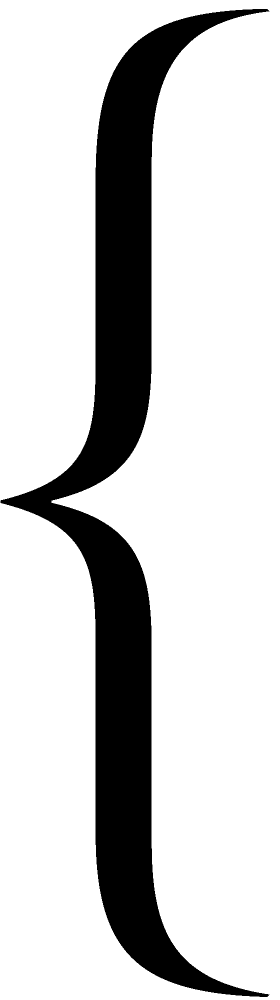
γ —— Tanner MS.
δ —— Fairfax MS. Bodley MS.
Here α represents a lost original MS., and β and γ are lost MSS. derived from it. Thynne follows β; whilst γ is followed by the Tanner MS. and a lost MS. δ. The Fairfax and Bodley MSS., which are much alike, are copies of δ. The MS. γ had lost a leaf, containing ll. 31-96; hence the same omission occurs in the three MSS. derived from it. However, a much later hand has filled in the gap in MS. F, though it remains blank in the other two MSS. On the whole, the authorities for this poem are almost unusually poor; I have, in general, followed MS. F, but have carefully amended it where the other copies seemed to give a better result. Lange gives a useful set of 'Konjecturen,' many of which I have adopted. I have also adopted, thankfully, some suggestions made by Koch and Ten Brink; others I decline, with thanks.
This poem is written in the common metre of four accents, which was already in use before Chaucer's time, as in the poem of Havelok the Dane, Robert of Brunne's Handling Synne, Hampole's Pricke of Conscience, &c. Chaucer only used it once afterwards, viz. in his House of Fame. It is the metre employed also in his translation (as far as we have it) of the French Roman de la Rose.
§ 21. IV. The Compleynt of Mars.
Lydgate tells us that this poem is Chaucer's, referring to it as containing the story of 'the broche which that Vulcanus At Thebes wrought,' &c. Internal evidence clearly shews that it was written by the author of the Treatise on the Astrolabie. In MS. Harl. 7333, Shirley gives it the title 'The broche of Thebes, as of the love of Mars and Venus.' Bale oddly refers to this poem as De Vulcani veru, but broche is here an ornament, not a spit. With the exception of two lines and a half (ll. 13-15), the whole poem is supposed to be sung by a bird, and upon St. Valentine's day. Such a contrivance shews a certain lack of skill, and is an indication of a comparatively early date. The poem begins in the ordinary 7-line stanza, rimed a b a b b c c; but the Complaint itself is in 9-line stanzas, rimed a a b a a b b c c, and exhibits a considerable advance in rhythmical skill. This stanza, unique in Chaucer, was copied by Douglas (Palace of Honour, part 3), and by Sir D. Lyndesay (Prol. to Testament of Papyngo).
At the end of the copy of this poem in MS. T., Shirley appends the following note:—'Thus eondethe here this complaint, whiche some men sayne was made by [i. e. with respect to] my lady of York, doughter to the kyng of Spaygne, and my lord huntingdon, some tyme Duc of Excestre.' This tradition may be correct, but the intrigue between them was discreditable enough, and would have been better passed over in silence than celebrated in a poem, in which Mars and Venus fitly represent them. In the heading to the poem in the same MS., Shirley tells us further, that it was written to please John of Gaunt. The heading is:—'Loo, yee louers, gladethe and comfortethe you of thallyance etrayted[260] bytwene the hardy and furyous Mars the god of armes and Venus the double [i. e. fickle] goddesse of loue; made by Geffrey Chaucier, at the comandement of the renommed and excellent Prynce my lord the Duc Iohn of Lancastre.' The lady was John of Gaunt's sister-in-law. John of Gaunt married, as his second wife, in 1372, Constance, elder daughter of Pedro, king of Castile; whilst his brother Edmund, afterwards duke of York, married Isabel, her sister. In Dugdale's Baronage, ii. 154, we read that this Isabel, 'having been somewhat wanton in her younger years, at length became a hearty penitent; and departing this life in 1394, was buried in the Friers Preachers at Langele,' i. e. King's Langley in Hertfordshire; cf. Chauncy's Hertfordshire, p. 455; Camden's Anglica, p. 350. It is possible that Chaucer addressed his Envoy to the Complaint of Venus to the same lady, as he calls her 'Princess.'
Mars is, accordingly, intended to represent John Holande, half-brother to Richard II, Earl of Huntingdon, and afterwards Duke of Exeter. He actually married John of Gaunt's daughter, Elizabeth, whose mother was the Blaunche celebrated in the Book of the Duchess.
If this tradition be true, the date of the poem must be not very many years after 1372, when the Princess Isabel came to England. We may date it, conjecturally, about 1374. See further in Furnivall's Trial Forewords, pp. 78-90. I may add that an attempt has been made to solve the problem of the date of this poem by astronomy (see Anglia, ix. 582). It is said that Mars and Venus were in conjunction on April 14, 1379. This is not wholly satisfactory; for Chaucer seems to refer to the 12th of April as the time of conjunction. If we accept this result, then the year was 1379. The date 1373-9 is near enough.
The poem is remarkable for its astronomical allusions, which are fully explained in the notes. The story of Mars and Venus was doubtless taken from Ovid, Metam. iv. 170-189. The story of the brooch of Thebes is from Statius, ii. 265, &c.; see note to l. 245.
I shall here add a guess of mine which possibly throws some light on Chaucer's reason for referring to the brooch of Thebes. It is somewhat curious that the Princess Isabel, in a will made twelve years before her death, and dated Dec. 6, 1382, left, amongst other legacies, 'to the Duke of Lancaster, a Tablet of Jasper which the King of Armonie gave her'; see Furnivall's Trial Forewords, p. 82. Here Armonie means, of course, Armenia; but it is also suggestive of Harmonia, the name of the first owner of the brooch of Thebes. It seems just possible that the brooch of Thebes was intended to refer to this tablet of jasper, which was doubtless of considerable value and may have been talked about as being a curiosity.
MSS. F. Tn. and Lt. are much alike; the rest vary. I follow F. mainly, in constructing the text.
§ 22. V. The Parlement of Foules.
This poem is undoubtedly genuine; both Chaucer and Lydgate mention it. It is remarkable as being the first of the Minor Poems which exhibits the influence upon Chaucer of Italian literature, and was therefore probably written somewhat later than the Complaint of Mars. It is also the first of the Minor Poems in which touches of true humour occur; see ll. 498-500, 508, 514-6, 563-575, 589-616. Dr. Furnivall (Trial Forewords, p. 53) notes that the MSS. fall into two principal groups; in the first he places Gg., Trin., Cx., Harl., O., the former part of Ff., (part of) Ar., and the fragments in Hh. and Laud 416; in the second he places F., Tn., D., and the latter part of Ff. Lt. also belongs to the second group. See further in Anglia, vol. iv. Anzeiger, p. 97. The whole poem, except the Roundel in ll. 680-692, is in Chaucer's favourite 7-line stanza, often called the ballad-stanza, or simply balade in the MSS.
The poem itself may be roughly divided into four parts. The first part, ll. 1-84, is mainly occupied with an epitome of the general contents of Cicero's Somnium Scipionis. The second part, ll. 85-175, shews several instances of the influence of Dante, though the stanza containing ll. 99-105 is translated from Claudian. The third part, ll. 176-294, is almost wholly translated or imitated from Boccaccio's Teseide. And the fourth part, ll. 295 to the end, is occupied with the real subject of the poem, the main idea being taken, as Chaucer himself tells us, from Alanus de Insulis. The passages relating to the Somnium Scipionis are duly pointed out in the notes; and so are the references to Dante and Claudian. The history of the third and fourth parts requires further explanation.
We have already seen that Chaucer himself tells us, in the Prol. to the Legend, 420, that he made—'al the love of Palamon and Arcyte Of Thebes, thogh the story is knowen lyte.' (N.B. This does not mean that Chaucer's version of the story was 'little known,' but that Boccaccio speaks of the story as being little known—'che Latino autor non par ne dica'; see note to Anelida, l. 8.) Now, in the first note on Anelida and Arcite, it is explained how this story of Palamon and Arcite was necessarily translated, more or less closely, from Boccaccio's Teseide, and was doubtless written in the 7-line stanza; also that fragments of it are preserved to us (1) in sixteen stanzas of the Parliament of Foules, (2) in the first ten stanzas of Anelida, and (3) in three stanzas of Troilus. At a later period, the whole poem was re-written in a different metre, and now forms the Knightes Tale. The sixteen stanzas here referred to begin at l. 183 (the previous stanza being also imitated from a different part of the Teseide, bk. xi. st. 24), and end at l. 294. Chaucer has somewhat altered the order; see note to l. 183. I here quote, from Furnivall's Trial Forewords, pp. 60-66, a translation by Mr. W. M. Rossetti, of Boccaccio's Teseide, bk. vii. stanzas 51-66; and I give, beneath it, the Italian text, from an edition published at Milan in 1819. This passage can be compared with Chaucer's imitation of it at the reader's leisure.
I note, beforehand, that, in the first line of this translation, the word whom refers to Vaghezza, i. e. Grace, Allurement; whilst she is the prayer of Palemo, personified.
Tes. vii. stanzas 51-60; cf. Parl. Foules, ll. 183-259.
'With whom going forward, she saw that [i. e. Mount Cithaeron] In every view suave and charming; In guise of a garden bosky and beautiful, And greenest, full of plants, Of fresh grass, and every new flower; And therein rose fountains living and clear; And, among the other plants it abounded in, Myrtle seemed to her more than other. Colla quale oltre andando vide quello Per ogni vista soave ed ameno, A guisa d'un giardin fronzuto e bello E di piante verdissimo ripieno, D'erbetta fresca e d'ogni fior novello; E fonti vive e chiare vi surgieno, E in fra l'altre piante, onde abbondava, Mortine più che altro le sembrava.
P. F. 190.'Here she heard amid the branches sweetly Birds singing of almost all kinds: Upon which [branches] also in like wise She saw them with delight making their nests. Next among the fresh shadows quickly She saw rabbits go hither and thither, And timid deer and fawns, And many other dearest little beasts. Quivi sentì pe' rami dolcemente Quasi d'ogni maniera ucce' cantare, Sopra de' quali ancor similemente Gli vide con diletto i nidi a fare: Poscia fra l'ombre fresche prestamente Vidi conigli in qua e in là andare, E timidenti cervi e cavrioli, E molti altri carissimi bestiuoli.
P. F. 197.'In like wise here every instrument She seemed to hear, and delightful chaunt: Wherefore passing with pace not slow, And looking about, somewhat within herself suspended At the lofty place and beautiful adornment She saw it replete in almost every corner With spiritlings which, flying here and there, Went to their bourne. Which she looking at, Similemente quivi ogni stromento Le parve udire e dilettoso canto; Onde passando con passo non lento, E rimirando, in sè sospesa alquanto Dell' alto loco e del bell' ornamento; Ripieno il vide quasi in ogni canto Di spirite', che qua e là volando Gieno a lor posta; a' quali essa guardando,
P. F. 211.'Among the bushes beside a fountain Saw Cupid forging arrows— He having the bow set down by his feet; Which [arrows when] selected his daughter Voluptas Tempered in the waves. And settled down With them was Ease [Ozio, Otium]; whom she saw That he, with Memory, steeled his darts With the steel that she [Voluptas] first tempered. Tra gli albuscelli ad una fonta allato Vide Cupido a fabbricar saette, Avendo egli a' suoi piè l'arco posato, Le qua' sua figlia Voluttade elette Nell' onde temperava, ed assettato Con lor s'era Ozio, il quale ella vedette, Che con Memoria l'aste sue ferrava De' ferri ch' ella prima temperava.
P. F. 218.'And then she saw in that pass Grace [Leggiadria], With Adorning [Adornezza] and Affability, And the wholly estrayed Courtesy; And she saw the Arts that have power To make others perforce do folly, In their aspect much disfigured. The Vain Delight of our form She saw standing alone with Gentilesse. E poi vide in quel passo Leggiadria Con Adornezza ed Affabilitate, E la ismarrita in tutto Cortesia, E vide l'Arti ch' hanno potestate Di fare altrui a forza far follia, Nel loro aspetto molto isfigurate: Delia immagine nostra il van Diletto Con Gentilezza vide star soletto.
P. F. 225.'Then she saw Beauty pass her by, Without any ornament, gazing on herself; And with her she saw Attraction [Piacevolezza] go,— She [the prayer] commending to herself both one and other. With them she saw standing Youth, Lively and adorned, making great feast: And on the other side she saw madcap Audacity Going along with Glozings and Pimps. Poi vide appresso a sè passar Bellezza Sanz' ornamento alcun sè riguardando, E vide gir con lei Piacevolezza, E l'una e l'altra seco commendando, Vide con loro starsi Giovinezza Destra ed adorna, molto festeggiando: E d'altra parte vide il folle Ardire Con Lusinghe e Ruffiani insieme gire.
P. F. 232.'In mid the place, on lofty columns, She saw a temple of copper; round which She saw youths dancing and women— This one of them beautiful, and that one in fine raiment, Ungirdled, barefoot, only in their hair and gowns, Who spent the day in this alone. Then over the temple she saw doves hover And settle and coo. In mezzo il loco sur alte colonne Di rame vide un tempio, al qual d'intorno Danzanti giovinetti vide e donne, Qual d'esse bella, e qual d'abito adorno, Iscinte, iscalze, in capei soli e'n gonne, Che in questo solo disponeano il giorno: Poi sopra il tempio vide volitare E posarsi colombe e mormorare.
P. F. 239.'And near to the entry of the temple She saw that there sat quietly My lady Peace, who a curtain Moved lightly before the door. Next her, very subdued in aspect, Sat Patience discreetly, Pallid in look; and on all sides Around her she saw artful Promises. E all'entrata del tempio vicina Vide che si sedava pianamente Monna Pace, la quale una cortina Movea innanzi alla porta lievemente; Appresso a lei in vista assai tapina Pacienza sedea discretamente; Pallida nell' aspetto, e d'ogni parte Intorno a lei vide Promesse ad arte.
P. F. 246.'Then entering the temple, of Sighs She felt there an earthquake, which whirled All fiery with hot desires. This lit up all the altars With new flames born of pangs; Each of which dripped with tears Produced by a woman cruel and fell Whom she there saw, called Jealousy Poi dentro al tempio entrata, di sospiri Vi senti un terremoto, che girava Focoso tutto di caldi disiri: Questi gli altari tutti alluminava Di nuove fiamme nate di martiri, De' qua' ciascun di lagrime grondava, Mosse da una donna cruda e ria, Che vide lì, chiamata Gelosia:
P. F. 253.'And in that [temple] she saw Priapus hold The highest place—in habit just such as Whoever would at night see him Could [do] when, braying, the animal Dullest of all awoke Vesta, who to his mind Was not a little—towards whom he in like guise Went: and likewise throughout the great temple She saw many garlands of diverse flowers.' Ed in quel vide Priapo tenere Più sommo loco, in abito tal quale Chiunque il volle la notte vedere Potè, quando ragghiando l'animale Più pigro destò Vesta, che in calere Non poco gli era, in vêr di cui cotale Andava; e simil per lo tempio grande Di fior diversi assai vide grillande.
Tes. vii. 61, 62; cf. P. F. 281-294.
P. F. 281.'Here many bows of the Chorus of Diana She saw hung up and broken; among which was That of Callisto, become the Arctic Bear. The apples were there of haughty Atalanta, who was sovereign in racing; And also the arms of that other proud one Who brought forth Parthenopaeus, Grandson to the Calydonian King Oeneus. Quivi molti archi a' Cori di Diana Vide appiccati e rotti, in tra quali era Quel di Callisto fatta tramontana Orsa; le pome v'eran della fiera Atalanta che 'n correr fu sovrana; Ed ancor l'armi di quell' altra altiera Che partorì il bel Partenopeo Nipote al calidonio Re Eneo.
P. F. 288.'She saw there histories painted all about; Among which with finer work Of the spouse of Ninus she there Saw all the doings distinguished; and at foot of the mulberry-tree Pyramus and Thisbe, and the mulberries already distained; And she saw among these the great Hercules In the lap of Iole, and woeful Biblis Going piteous, soliciting Caunus.' Videvi storie per tutto dipinte, In tra le qua' con più alto lavoro Della sposa di Nino ivi distinte L'opere tutte vide; e a piè del moro Piramo e Tisbe, e già le gelse tinte: E'l grand' Ercole vide tra costoro In grembo a Jole, e Bibli dolorosa Andar pregando Cauno pietosa.