Part V BROWNING’S “BEN KARSHOOK” (continued 2)
Reading edition
Wise, it must be confessed, seemed unaware of the constructive side of criticism. To him criticism seemed entirely negative. Again, he was unable to see that the value of the Bible may continue, even though the older conception of authenticity be modified. But the interest of his Pronaos just lies in the vigor with which he maintains that older conception. His defence is spirited, and in many ways convincing. Criticism was undoubtedly wrong when it treated Judaism as the creation of the prophets, and the Pentateuch as lower in worth than Micah and Isaiah. I do not remember that any predecessor of Wise so thoroughly employed the argument of continuity. There is, he said, an “uninterrupted tradition,” the whole is “a logical organism,” every part in its right place, fulfilling its due function. Now this is the real justification of the Bible. There are variations in the points of view of various inspired writers, but the whole tendency is one, there is consistency of purpose. Wise deserves lasting gratitude for urging this truth so powerfully. Well might he term his book a Pronaos, a “door leading into the interior of the sanctuary.” For a detail, it is significant to find that Wise anticipated the newer, though I think erratic, direction of criticism in our day. He absolutely refused to admit that the different names applied to God (Adonai and Elohim) point to different authors or ages.
Differ though we may with Wise—some of us on account of his rejection of criticism, others because of his elevation of “Mosaism” into a cult, others again because of both of these things—it is not possible to withhold from him the crown of scholarship. In particular, his Pronaos abounds in acute and fresh contributions to the biblical problem. It is, moreover, a striking instance of the ironies of controversy that the most orthodox book on the Pentateuch was written by the leader of American reform! Cincinnati, under the influence of Wise, was certainly much more conservative in biblical exegesis than Breslau was under the influence of Graetz. If in the seventies and eighties a student had desired to work in an environment which acknowledged the older views of biblical inspiration, he would have found himself more at home in the Hebrew Union College than in the Frankel Seminary. In the course of this series of papers, several anomalies have been discussed. But none of them is more remarkable than the contrast between Wise and Graetz. There is another side to it, of course. Graetz took a wider view of tradition than did Wise, who never truly grasped the meaning of tradition. Yet the fact remains that in so far as the question of a tradition concerns the Bible, Wise stood far more firmly in the old paths than did many who pass for champions of tradition.
A BAEDEKER LITANY
In the Baedeker Handbook for Palestine and Syria there is a well-known description of the scene at the western wall of the temple. In A. and C. Black’s Guide to Jerusalem, the Wailing Place is included among “Minor Sights,” but Baedeker stars it, thus giving it a testimonial of importance. Not being an inn, the wall could spare this mark. I remember reading a clever story called “The Lost Star.” A visitor to a hotel was dissatisfied with his treatment, and his complaints to the manager were impatiently received. When the guest departed, he simply said: “I am Baedeker. You have lost your star.” The Wailing Place could do without Baedeker’s patronage.
Now, it is not my purpose to discuss the history of praying at the temple wall. Jerome, in the fourth century, speaks pathetically of the Jews “buying their tears,” paying for the privilege of weeping by the wall on the anniversary of the temple’s destruction. But what will concern us now is Baedeker’s account of the liturgy used at the prayers. The Rev. W.T. Gidney (as quoted in Black) asserts that there is used “a kind of liturgy,” the concluding part of which is:
Lord, build; Lord build— Build Thy house speedily. In haste! in haste! even in our days. Build Thy house speedily. In haste! in haste! even in our days, Build Thy house speedily.
I do not know whether any Jews actually sing this Passover hymn (Addir hu) on other occasions during the year. Murray’s Palestine Handbook asserts that “the lamentations are taken from the 79th Psalm,” a statement which points to the same source as that relied on by Baedeker. The latter gives two forms, of which the first runs thus:
Leader: For the palace that lies desolate: Response: We sit in solitude and mourn. Leader: For the palace that is destroyed: Response: We sit, etc. Leader: For the walls that are overthrown: Response: We sit, etc. Leader: For our majesty that is departed: Response: We sit, etc. Leader: For our great men who lie dead: Response: We sit, etc. Leader: For the precious stones that are burned: Response: We sit, etc. Leader: For the priests who have stumbled: Response: We sit, etc. Leader: For our kings who have despised Him: Response: We sit, etc.
Whence did the compiler of Baedeker derive this? From the Karaites. If one turns to the fourth volume of the Karaite liturgy, published in Vienna in 1854, page 208, this litany is to be found. It is part of a very long series of prayers (which include, on page 212, the passage which, in Baedeker, follows the one cited above). Psalm 79, referred to in Murray, appears in the same Karaite book on page 206. The selections are a tiny fraction of the whole. The Karaite prayers are always extremely long. Thus, their marriage service fills eleven large, closely printed sides. The Jerusalem prayers are even more elaborate. As the pilgrim starts from home for the Holy City, the congregation turns out to give him a send off, reciting sixteen Psalms as a supplication for his protection, and other fourteen Psalms in praise of Jerusalem. He then proceeds on his way. When he arrives at the city, as far off as the distance at which a man can recognize his fellow, he rends his garments and mourns as for a lost first-born. He then recites parts of the Lamentations, and enough Psalms and Selihot to occupy another ten pages. Some of us complain of the length of our prayers; when we look at the weary mass of the Karaite liturgy, we stand amazed at our own moderation.
Having tracked Baedeker to his source, and restricting ourselves to the pages from which he quotes, it is worth comparing his version with the original. The omissions made are so serious as to spoil the beauty of the whole, for beautiful it assuredly is of its kind. The fault arises from Baedeker only reading down one of the two columns. Now the lines are alphabetical, and must be read across, not down the page. There are other faults; for instance palace in the second line is a mistake for house, but the compiler may have used a slightly different version. In the one before me there is nothing to correspond to For our great men who lie dead. The rest of the lines are the same as in the book I am using. But note how the effect suffers by the loss of the half-lines to which I have referred. Thus Baedeker gives For the priests who have stumbled, but omits the complementary phrase For our studies which were interrupted. Again, Baedeker quotes For the precious stones which are burned, but fails to follow it up with For loving ones that were separated, a fine line which ought to have been retained in any abbreviation, however short.
The only other passage quoted in Baedeker, “another antiphon” or responsive chant, is the following:
Leader: We pray Thee, have mercy on Zion! Response: Gather the children of Jerusalem. Leader: Haste, haste, Redeemer of Zion! Response: Speak to the heart of Jerusalem. Leader: May beauty and majesty surround Zion! Response: Ah! turn Thyself mercifully to Jerusalem. Leader: May the kingdom soon return to Zion! Response: Comfort those who mourn over Jerusalem. Leader: May peace and joy abide with Zion! Response: And the branch (of Jesse) spring up in Jerusalem.
Comparing this with the Hebrew original, there is no such mistake as in the previous case. The summarizer has correctly read the lines across the page. There are certain slips, and more than a half of the whole (which again runs in alphabetical sequence) is left out; but the shortening is here no loss, as the best lines have been selected.
Besides these prayers, the Karaite book includes a large number of hymns. Among them, inappropriately enough, is the piyyut on the offering of Isaac. In the Sephardic service this properly belongs to the New Year; it goes to a swinging melody at Bevis Marks. True, the scene was Moriah, the temple hill. But the Karaite book gives no direction that the shofar is to be sounded. None the less, it finishes this piyyut with the prayer that God will hearken to the shofar sounds and say unto Zion: “The time of salvation has come.” Obviously, this is a fitting prelude to the blowing of the shofar on Rosh ha-Shanah. But it has no right where this Karaite book has transplanted it, although the bulk of the hymn suits well enough the liturgy of the Wailing Place.
IMBER’S SONG
Throughout its whole range modern Hebrew literature can offer no poem to rival in popularity Imber’s song. Naphtali Herz Imber was born in 1856, and wrote Ha-Tikwah in his youth in one of his many moods. His disposition was wayward; he had a full share of the artistic self-consciousness. Some of his characteristics are accurately hit off in Melchitsedek Pinchas of Mr. Zangwill’s Children of the Ghetto.
Ha-Tikwah owes its fame to the directness of its sentiment. What makes for weakness in it as a poem makes for strength in it as a song. The most effective national hymns are not usually the most poetical. “God save the King” is doggerel; “Rule Britannia” is bombast. But both put patriotic thoughts in straightforward terms, both are happily wedded to simple tunes within the range of average voices. Ha-Tikwah satisfies both these tests. The melody is beautiful and easily sung by large masses of people. The opening line of Imber’s refrain: “Our hope has not perished yet” is certainly derived from the National Song, “Poland has not perished yet,” to which the Polish legions marched. So the melody of Ha-Tikwah is said to be a Polish folk-tune, but it closely resembles a favorite melody of the Sephardim. Various settings of the tune differ in detail, and the same is true of the current versions of Imber’s words. It is strange that the versions—all known to me—retain unanimously the ungrammatical second stanza. It would, I admit, be difficult to correct it without destroying the rhythm, and poetical license has worse things to answer for. Indeed the grammatical lapse, to which I refer, is regarded by some authorities as perfectly normal and admissible in the new Hebrew.
The power of Ha-Tikwah, as has just been said, arises from its directness. There is no subtlety in its thought, no changes through its nine verses. Just as few ever sing through “God Save the King,” so few sing all the verses of Ha-Tikwah. The stanzas tend to become monotonous. They all say the same thing; and it is not surprising that the number of verses is curtailed in some printed editions (thus in Idelsohn five of the nine verses complete the song). The burden of all the verses is identical. The hope of a return to the land of Israel will never die, so long as this or that endures. Each verse adds a this or a that to the count. While myriads of Jews go as pilgrims to the sepulchres of the fathers, while a single eye is left to drop its tear over the ruins of the temple, while the waters of the Jordan swell between its banks and fall with a rush through the sea of Kinnereth, while a drop of blood courses through a Jewish vein, while Israel retains his national aspirations, still may he hope for their fulfilment. Some of these appeals are genuinely pathetic, and the final appeal is magnificent in its strength. Only with the end of the Jews will come the end of the hope. This is the only way to write a popular song. There must be no nuances, but just a confident assertion. Imber supplies exactly that; nothing less, and nothing more.
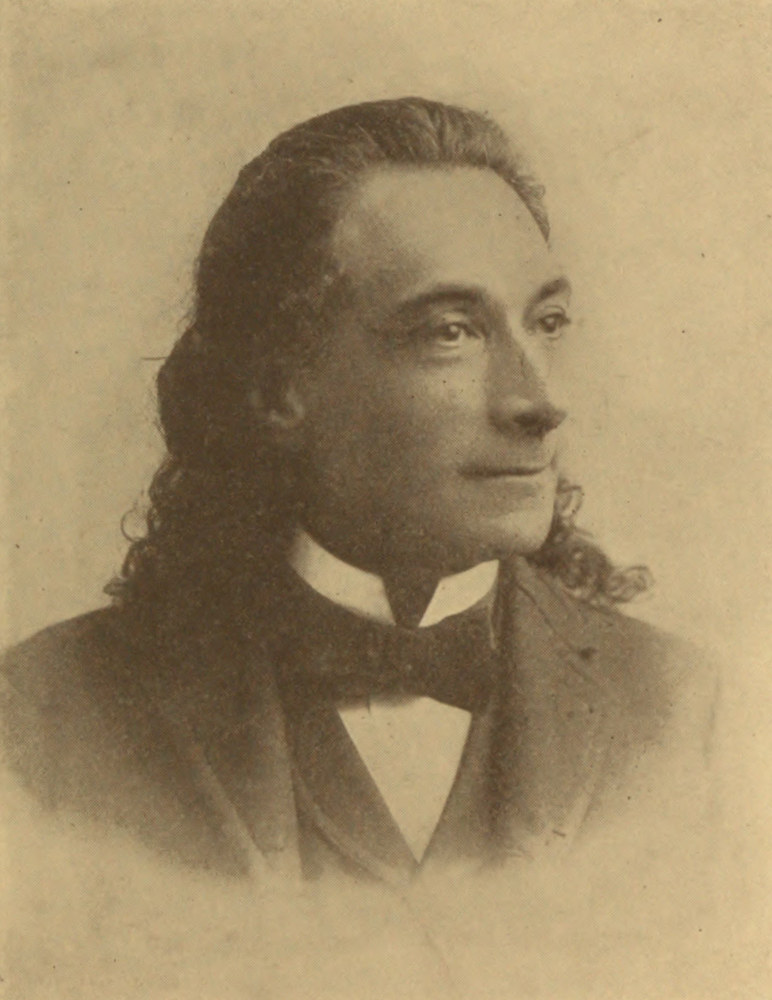
NAPHTALI HERZ IMBER
Nothing more, for the song is not in any sense a declaration of the end. It deals only with the means, making them into an end. Unquenchable, he cries, is the hope of a return; no one has expressed this hope more vigorously and takingly. But what is to be the result of the return? With what ideals are the patriots filled? Ha-Tikwah is silent on these questions. Imber was not qualified to reply to them. He had no depth of spiritual feeling, and though he was capable of inspiriting, he was incapable of inspiring. Hence the absence of all Messianic thought in Ha-Tikwah. Compare it, for instance, with Leka Dodi; the Friday night hymn is like Ha-Tikwah, a song of the return, but, unlike Ha-Tikwah, it is Messianic, and is also a song of the rebuilding. When the history of the neo-Zionist movement comes to be written, this fact will undoubtedly come into due prominence: namely, that we have been passing through a phase in which the hope of the return has been divorced from the hope of the rebuilding.
It is remarkable that some versions of the refrain remove the only words which possibly can bear a Messianic construction. I have not before me the original words of Imber himself, and I have a notion that Mr. David Yellin is responsible in part for the chorus. Be that as it may, in the last line Jerusalem is described as “the city where David encamped.” The phrase comes from the opening line of the twenty-ninth chapter of Isaiah. “Woe to Ariel, Ariel, city where David encamped”—Ariel is either “Lion of God” or, as the Targum takes it, “Altar-hearth.” The Rabbis combined both senses. Ariel was the altar, yet they saw something lion-shaped in the sanctuary. In Isaiah the passage is one of doom, Ariel is to be humiliated by the Assyrians. Curiously enough, the ancient Greek translation gives also a hostile turn to the words “city where David encamped,” rendering “against which David encamped.” But this is erroneous. The meaning is: the city in which David dwelt, selecting it as the royal capital. David, it is true, did not build the temple, but he brought the ark thither, and offered sacrifices on the occasion, and later on built an altar. Not only, then, is Ariel justly to be termed the city where David encamped, but the use of the phrase in Ha-Tikwah supplies the missing Messianic hope, for David is the type of this hope. In the version of Ha-Tikwah printed by Idelsohn four verses are omitted, and some of those which are retained are set in an inverted order. More culpably, the refrain is weakened into “the city of Zion and Jerusalem,” thus removing the Davidic touch. The change does not merely offend against reason; it also sins against rhyme; thus adding another instance to many others of the destructive tamperings with masterpieces which some editors seem unable to avoid.
One other striking merit of Ha-Tikwah must be observed. Unlike many other poets of Zion, Imber does not denounce. He makes no attack on those who do not share his feelings. He points to the continued existence of the hope for the return, but he refrains from condemning, except by the merest implication, those who have no consciousness of the hope. There is true art here, which I am able to appreciate, far removed as I am from Imber’s nationalism. For, on the one hand, art is best when it pleases some without paining others. Imber pleases those who agree with him without paining the rest. On the other hand, art is strongest when it does not recognize that there are others to be displeased. The confident note is the artistic note. The poet assumes that what he feels is the only thing to feel. To talk of doubters is to throw doubt on himself. A popular song cannot stoop to argument. It is categorical. Thus Imber’s Ha-Tikwah can be enjoyed by those who do not accept its message. And its melody is sung at table, to Psalm 126, by some who never sing the tune to Imber’s words. “When the Lord turned again the captivity of Zion, we were like unto them that dream. Then was our mouth filled with laughter, and our tongue with exultation; then said they among the nations: The Lord hath done great things for them.” Psalm 126, when all is said and done, is the most exquisite Song of the Return ever written. “They that sow in tears shall reap in joy.” We can all realize the pathos and the hope, even though we are not at one as to the nature of the harvest that is to be reaped.