Part 4 — APPENDICES
Reading edition
APPENDIX I
I have previously called the reader's attention to our classified list of butterflies and moths, and have hinted at one or two of the objects for which it is inserted. It contains the scientific and popular names of all the British Butterflies, Sphinges, Bombyces, Noctuæ, and Geometræ, arranged in their various families and genera; and in cases where two specific names are commonly applied to the same insect, both are given.
Its chief uses to the young entomologist are to show the relation which the insects bear one to another, and to supply a guide for the proper arrangement of the specimens in his cabinet.
The order adopted is that of South's 'Synonymic List of British Lepidoptera,' and it has already been mentioned that similar lists, printed on one side of the paper only, may be obtained from dealers in naturalists' appliances. These, cut up as required, supply very neat labels for cabinets or store boxes.
COMPLETE CLASSIFIED LIST OF BRITISH MACRO-LEPIDOPTERA
RHOPALOCERA (BUTTERFLIES).
PAPILIONIDÆ.
Papilio.
Machaon—Swallow Tail
PIERIDÆ.
Aporia.
Cratægi—Black-veined White
Pieris.
Brassicæ—Large White
Rapæ—Small White
Napi—Green-veined White
Daplidice—Bath White
Euchloë.
Cardamines—Orange Tip
Leucophasia.
Sinapis—Wood White
Colias.
Hyale—Pale Clouded Yellow
Edusa—Clouded Yellow
Gonopteryx.
Rhamni—Brimstone
NYMPHALIDÆ.
Argynnis.
Selene—Small Pearl-bordered Fritillary
Euphrosyne—Pearl-bordered Fritillary
Latona—Queen of Spain
Aglaia—Dark Green Fritillary
Adippe—High Brown Fritillary
Paphia—Silver-washed Fritillary
Melitæa.
Aurinia (Artemis)—Greasy Fritillary
Cinxia—Glanville Fritillary
Athalia—Heath Fritillary
Vanessa.
C-Album—Comma
Polychloros—Large Tortoiseshell
Urticæ—Small Tortoiseshell
Io—Peacock
Antiopa—Camberwell Beauty
Atalanta—Red Admiral
Cardui—Painted Lady
Limenitis.
Sibylla—White Admiral
APATURIDÆ.
Apatura.
Iris—Purple Emperor
SATYRIDÆ.
Melanargia.
Galatea—Marbled White
Erebia.
Epiphron (Cassiope)—Small Ringlet
Æthiops (Blandina)—Northern Brown (Scotch Argus)
Pararge.
Egeria—Speckled Wood
Megæra—Wall
Satyrus.
Semele—Grayling
Epinephele.
Ianira—Meadow Brown
Tithonus—Large Heath (Small Meadow Brown)
Hyperanthes—Ringlet
Cænonympha.
Typhon (Davus)—Marsh Ringlet
Pamphilus—Small Heath
LYCÆNIDÆ.
Thecla.
Betulæ—Brown Hairstreak
W-Album—White-letter Hairstreak
Pruni—Dark Hairstreak
Quercus—Purple Hairstreak
Rubi—Green Hairstreak
Polyommatus.
Dispar—Large Copper
Phlœas—Small Copper
Lycæna.
Bætica—Tailed Blue
Ægon—Silver-studded Blue
Astrarche (Agestis)—Brown Argus
Icarus (Alexis)—Common Blue
Bellargus (Adonis)—Clifden Blue
Corydon—Chalk-hill Blue
Argiolus—Azure or Holly Blue
Semiargus (Acis)—Mazarine Blue
Minima (Alsus)—Small Blue
Arion—Large Blue
ERYCINIDÆ.
Nemeobius.
Lucina—Duke of Burgundy
HESPERIIDÆ.
Syrichthus.
Malvæ (Alveolus)—Grizzled Skipper
Nisoniades.
Tages—Dingy Skipper
Hesperia.
Thaumas (Linea)—Small Skipper
Lineola—New Small Skipper
Actæon—Lulworth Skipper
Sylvanus—Large Skipper
Comma—Silver-spotted Skipper
Carterocephalus.
Palæmon (Paniscus)—Chequered Skipper
HETEROCERA (MOTHS). SPHINGES.
SPHINGIDÆ.
Acherontia.
Atropos—Death's Head Hawk Moth
Sphinx.
Convolvuli—Convolvulus Hawk
Ligustri—Privet Hawk
Pinastri—Pine Hawk
Deilephila.
Euphorbiæ—Spurge Hawk
Galii—Bedstraw Hawk
Livornica—Striped Hawk
Chærocampa.
Celerio—Silver-striped Hawk
Porcellus—Small Elephant
Elpenor—Large Elephant
Smerinthus.
Ocellatus—Eyed Hawk
Populi—Poplar Hawk
Tiliæ—Lime Hawk
Macroglossa.
Stellatarum—Humming-bird Hawk
Fuciformis—Broad-bordered Bee Hawk
Bombyliformis—Narrow-bordered Bee Hawk
SESIIDÆ.
Trochilium.
Apiformis—Hornet Clearwing of the Poplar
Crabroniformis (Bembeciformis)—Hornet Clearwing of Osier
Sciopteron.
Tabaniformis (Vespiforme)—Dusky Clearwing
Sesia.
Scoliiformis—Welsh Clearwing
Sphegiformis—White-barred Clearwing
Andreniformis—Orange-tailed Clearwing
Tipuliformis—Currant Clearwing
Asiliformis (Cynipiformis)—Yellow-legged Clearwing
Myopiformis—Red-belted Clearwing
Culiciformis—Large Red-belted Clearwing
Formiciformis—Red-tipped Clearwing
Ichneumoniformis—Six-belted Clearwing
Musciformis (Philanthiformis)—Thrift Clearwing
Chrysidiformis—Fiery Clearwing
ZYGÆNIDÆ.
Ino.
Globulariæ—Scarce Forester
Statices—Forester
Geryon—Cistus Forester
Zygæna.
Pilosellæ (Minos)—Transparent Burnet
Exulans—Scotch Burnet
Meliloti—New Forest Burnet
Trifolii—Broad-bordered Five-spotted Burnet
Loniceræ—Narrow-bordered Five-spotted Burnet
Filipendulæ—Six-spotted Burnet
BOMBYCES.
NYCTEOLIDÆ.
Sarothripus.
Undulanus—Tortrix Moth
Earias.
Chlorana—Cream-bordered Green
Hylophila.
Prasinana—Green Silver-lined
Bicolorana (Quercana)—Large Green Silver-lined
NOLIDÆ.
Nola.
Cucullatella—Short-cloaked
Strigula—Small Black Arches
Confusalis (Cristulalis)—Least Black Arches
Albulalis—Kent Arches
Centonalis—Scarce Black Arches
LITHOSIIDÆ.
Nudaria.
Senex—Round-winged Muslin
Mundana—Muslin Moth
Setina.
Irrorella—Dew Moth
Calligenia.
Miniata—Rosy Footman (Red Arches)
Lithosia.
Mesomella—Four-dotted Footman
Muscerda—Dotted Footman
Sororcula (Aureola)—Orange Footman
Lutarella (Pygmæola)—Pigmy Footman
Griseola (Stramineola)—Pale Footman
Deplana (Helveola)—Buff Footman
Lurideola (Complanula)—Common Footman
Complana—Scarce Footman
Sericea (Molybdeola)—Leaden Footman
Caniola—Hoary Footman
Gnophria.
Quadra—Four-spotted Footman
Rubricollis—Red-necked Footman
Emydia.
Cribrum—Speckled Footman
EUCHELIIDÆ.
Deiopeia.
Pulchella—Crimson Speckled
Euchelia.
Jacobææ—Cinnabar
Callimorpha.
Dominula—Scarlet Tiger
Hera—Jersey Tiger
CHELONIIDÆ.
Nemeophila.
Russula—Clouded Buff
Plantaginis—Wood Tiger
Arctia.
Caia—Tiger
Villica—Cream-spot Tiger
Spilosoma.
Fuliginosa—Ruby Tiger
Mendica—Muslin
Lubricipeda—Buff Ermine
Menthastri—White Ermine
Urticæ—Water Ermine
HEPIALIDÆ.
Hepialus.
Humuli—Ghost Swift
Sylvanus—Wood Swift
Velleda—Northern Swift
Lupulinus—Common Swift
Hectus—Gold Swift
COSSIDÆ.
Cossus.
Ligniperda—Goat
Zeuzera.
Pyrina (Æsculi)—Leopard
Macrogaster.
Castaneæ (Arundinis)—Reed Moth
COCHLIOPODIDÆ.
Heterogenea.
Limacodes (Testudo)—Festoon Moth
Asella (Asellus)—Triangle Moth
LIPARIDÆ.
Porthesia (Liparis).
Chrysorrhœa—Brown Tail
Similis (Auriflua)—Yellow Tail (Gold Tail)
Leucoma.
Salicis—Satin Moth
Lælia.
Cœnosa—Reed Tussock
Ocneria.
Dispar—Gipsy
Psilura.
Monacha—Black Arches
Dasychira.
Fascelina—Dark Tussock
Pudibunda—Pale Tussock
Orgyia.
Gonostigma—Scarce Vapourer
Antiqua—Vapourer
BOMBYCIDÆ.
Trichiura.
Cratægi—Pale Oak Eggar
Pœcilocampa.
Populi—December Moth
Eriogaster.
Lanestris—Small Eggar
Bombyx.
Neustria—Lackey
Castrensis—Ground Lackey
Rubi—Fox
Quercus—Oak Eggar
Trifolii—Grass Eggar
Odonestis.
Potatoria—Drinker
Lasiocampa.
Quercifolia—Lappet
Ilicifolia—Small Lappet
ENDROMIDÆ.
Endromis.
Versicolor—Kentish Glory
SATURNIIDÆ.
Saturnia.
Pavonia (Carpini)—Emperor
DREPANULIDÆ.
Drepana.
Lacertinaria (Lacertula)—Scalloped Hook Tip
Harpagula (Sicula)—Scarce Hook Tip
Falcataria (Falcula)—Pebble Hook Tip
Binaria (Hamula)—Oak Hook Tip
Cultraria (Unguicula)—Barred Hook Tip
Cilix.
Glaucata (Spinula)—Chinese Character
DICRANURIDÆ.
Dicranura.
Bicuspis—Alder Kitten
Furcula—Sallow Kitten
Bifida—Poplar Kitten
Vinula—Puss
Stauropus.
Fagi—Lobster
NOTODONTIDÆ.
Glyphisia.
Crenata—Dusky Marbled Brown
Ptilophora.
Plumigera—Plumed Prominent
Pterostoma.
Palpina—Pale Prominent
Lophopteryx.
Camelina—Coxcomb Prominent
Cuculla (Cucullina)—Maple Prominent
Carmelita—Scarce Prominent
Notodonta.
Bicolor—White Prominent
Dictæa—Swallow Prominent
Dictæoides—Lesser Swallow Prominent
Dromedarius—Iron Prominent
Trilophus—Three-humped Prominent
Ziczac—Pebble Prominent
Trepida—Great Prominent
Trimacula (Dodonea)—Marbled Brown
Chaonia—Lunar Marbled Brown
PYGÆRIDÆ.
Phalera.
Bucephala—Buff Tip
Pygæra (Clostera).
Curtula—Chocolate Tip
Anachoreta—Scarce Chocolate Tip
Pigra (Reclusa)—Small Chocolate Tip
CYMATOPHORIDÆ.
Thyatira.
Derasa—Buff Arches
Batis—Peach Blossom
Cymatophora.
Octogesima (Ocularis)—Figure of Eighty
Or—Poplar Lutestring
Duplaris—Lesser Satin
Fluctuosa—Satin Carpet
Asphalia.
Diluta—Lesser Lutestring
Flavicornis—Yellow-horned
Ridens—Frosted Green
NOCTUÆ.
BRYOPHILIDÆ.
Bryophila.
Algæ—Tree Lichen Beauty
Muralis (Glandifera)—Marbled (Mottled) Green
Par—Scarce Marbled Green
Perla—Marbled Beauty
BOMBYCOIDÆ.
Moma (Diphthera).
Orion—Scarce Marvel-du-jour
Demas.
Coryli—Nut-tree Tussock
Acronycta.
Tridens—Dark Dagger
Psi—Grey Dagger
Leporina—Miller
Aceris—Sycamore
Megacephala—Poplar Grey
Strigosa—Grisette
Alni—Alder
Ligustri—Coronet
Rumicis—Knot-grass
Auricoma—Scarce Dagger
Menyanthidis—Light Knot-grass
Euphorbiæ (Myricæ)—Sweet Gale
Diloba.
Cæruleocephala—Figure of Eight
Arsilonche.
Albovenosa (Venosa)—Powdered Wainscot
LEUCANIIDÆ.
Synia.
Musculosa—Brighton Wainscot
Leucania.
Conigera—Brown-line Bright-eye
Vitellina—Delicate
Turca—Double Line
Lithargyria—Clay
Albipuncta—White-point
Extranea—American Wainscot
Obsoleta—Obscure Wainscot
Putrescens—Devonshire Wainscot
Littoralis—Shore Wainscot
Impudens (Pudorina)—Striped Wainscot
Comma—Shoulder-striped Wainscot
Straminea—Southern Wainscot
Impura—Smoky Wainscot
Pallens—Common Wainscot
Calamia.
Phragmitidis—Fen Wainscot
Meliana.
Flammea—Flame Wainscot
Senta.
Maritima—Silky Wainscot
Cœnobia.
Rufa—Small Rufous
Tapinostola.
Fulva—Small Wainscot
Hellmanni—Mere Wainscot
Extrema (Concolor)—Concolorous Wainscot
Bondii—Bond's Wainscot
Elymi—Lyme Wainscot
Nonagria.
Cannæ—Reed Wainscot
Sparganii—Iris Wainscot
Arundinis (Typhæ)—Bullrush
Geminipuncta—Twin-spotted Wainscot
Neurica—Nerved Wainscot
Brevilinea—Fenn's Nonagria
Lutosa—Large Wainscot
APAMEIDÆ.
Gortyna.
Ochracea (Flavago)—Frosted Orange
Hydrœcia.
Nictitans—Golden Ear
Petasitis—Butter-bur
Micacea—Rosy Rustic
Axylia.
Putris—Flame
Xylophasia.
Rurea—Clouded-border Brindle
Lithoxylea—Light Arches
Sublustris—Reddish Light Arches
Monoglypha (Polyodon)—Dark Arches
Hepatica—Clouded Brindle
Scolopacina—Slender Clouded Brindle
Dipterygia.
Scabriuscula (Pinastri)—Bird's Wing
Cloantha.
Polyodon (Perspicillaris)—Purple Cloud
Aporophyla.
Australis—Feathered Brindle
Laphygma.
Exigua—Small Mottled Willow
Neuria.
Reticulata (Saponariæ)—Bordered Gothic
Neuronia.
Popularis—Feathered Gothic
Heliophobus.
Hispidus—Beautiful Gothic
Charæas.
Graminis—Antler
Pachetra.
Leucophæa—Feathered Ear
Cerigo.
Matura (Cytherea)—Straw Underwing
Luperina.
Testacea—Flounced Rustic
Dumerili—Dumeril's Luperina
Cespitis—Hedge Rustic
Mamestra.
Abjecta—Crescent Striped
Sordida (Anceps)—Large Nutmeg
Albicolon—White Colon
Furva—Confused
Brassicæ—Cabbage
Persicariæ—Dot
Apamea.
Basilinea—Rustic Shoulder Knot
Connexa—Union Rustic
Gemina—Dusky Brocade
Unanimis—Small Clouded Brindle
Ophiogramma—Double Lobed
Leucostigma (Fibrosa)—Crescent
Didyma (Oculea)—Common Rustic
Miana.
Strigilis—Marbled Minor
Fasciuncula—Middle-barred Minor
Literosa—Rosy Minor
Bicoloria (Furuncula)—Cloaked Minor
Arcuosa—Dotted Buff
Phothedes.
Captiuncula—Least Minor
Celæna.
Haworthii—Haworth's Minor
CARADRINIDÆ
Grammesia.
Trigrammica (Trilinea)—Treble Lines
Stilbia.
Anomala—Anomalous
Caradrina.
Morpheus—Mottled Rustic
Alsines—Uncertain
Taraxaci (Blanda)—Rustic
Ambigua—Ambiguous
Quadripunctata (Cubicularis)—Pale Mottled Willow
Acosmetia.
Caliginosa—Reddish Buff
Hydrilla.
Palustris—Marsh Moth
Rusina.
Tenebrosa—Brown Rustic
NOCTUIDÆ.
Agrotis.
Vestigialis (Valligera)—Archer's Dart
Puta—Shuttle-shaped Dart
Suffusa—Dark Sword Grass
Saucia—Pearly Underwing
Segetum—Common Dart (Turnip Moth)
Lunigera—Crescent Dart
Exclamationis—Heart and Dart
Corticea—Heart and Club
Cinerea—Light Feathered Rustic
Ripæ—Sand Dart
Cursoria—Coast Dart
Nigricans—Garden Dart
Tritici—White-line Dart
Aquilina—Streaked Dart
Obelisca—Square-spot Dart
Agathina—Heath Rustic
Strigula (Porphyrea)—True Lover's Knot
Præcox—Portland
Obscura (Ravida)—Stout Dart
Simulans (Pyrophila)—Dotted Rustic
Lucernea—Northern Rustic
Ashworthii—Ashworth's Rustic
Noctua.
Glareosa—Autumn Rustic
Depuncta—Plain Clay
Augur—Double Dot
Plecta—Flame Shoulder
Flammatra—Black Collar
C-Nigrum—Setaceous Hebrew Character
Ditrapezium—Triple-spotted Clay
Triangulum—Double-spotted Square-spot
Stigmatica (Rhomboidea)—Square-spotted Clay
Brunnea—Purple Clay
Festiva (Conflua)—Ingrailed Clay
Dahlii—Barred Chestnut
Subrosea—Rosy Marsh
Rubi—Small Square-spot
Umbrosa—Six-striped Rustic
Baia—Dotted Clay
Sobrina—Cousin German
Castanea (Neglecta)—Grey Rustic
Xanthographa—Square-spot Rustic
Triphæna.
Ianthina—Lesser Broad Border
Fimbria—Broad-bordered Yellow Underwing
Interjecta—Least Yellow Underwing
Orbona (Subsequa)—Lunar Yellow Underwing
Comes (Orbona)—Lesser Yellow Underwing
Pronuba—Large Yellow Underwing
AMPHIPYRIDÆ.
Amphipyra.
Pyramidea—Copper Underwing
Tragopogonis—Mouse
Mania.
Typica—Gothic
Maura—Old Lady
ORTHOSIIDÆ.
Panolis.
Piniperda—Pine Beauty
Pachnobia.
Leucographa—White-marked
Rubricosa—Red Chestnut
Hyperborea (Carnica)—Mountain Rustic
Tæniocampa.
Gothica—Hebrew Character
Incerta (Instabilis)—Clouded Drab
Opima—Northern Drab
Populeti—Lead-coloured Drab
Stabilis—Common Quaker
Gracilis—Powdered Quaker
Miniosa—Blossom Underwing
Munda—Twin-spotted Quaker
Pulverulenta (Cruda)—Small Quaker
Orthosia.
Suspecta—Suspected
Upsilon—Dismal
Lota—Red-lined Quaker
Macilenta—Yellow-lined Quaker
Anchocelis.
Rufina—Flounced Chestnut
Pistacina—Beaded Chestnut
Lunosa—Lunar Underwing
Litura—Brown-spot Pinion
Cerastis (Glæa).
Vaccinii—Chestnut
Spadicea—Dark Chestnut
Erythrocephala—Red-headed
Scopelosoma.
Satellitia—Satellite
Dasycampa.
Rubiginea—Dotted Chestnut
Oporina.
Croceago—Orange Upperwing
Xanthia.
Citrago—Orange Sallow
Fulvago (Cerago)—Sallow
Flavago (Silago)—Pink-barred Sallow
Aurago—Barred Sallow
Gilvago—Dusky Lemon Sallow
Circellaris (Ferruginea)—Brick
Cirrhœdia.
Xerampelina—Centre-barred Sallow
COSMIIDÆ.
Tethea.
Subtusa—Olive
Retusa—Double Kidney
Cosmia (Euperia).
Paleacea (Fulvago)—Angle-striped Sallow
Dicycla.
Oo—Heart Moth
Calymnia.
Trapezina—Dun-bar
Pyralina—Lunar-spotted Pinion
Diffinis—White-spotted Pinion
Affinis—Lesser-spotted Pinion
HADENIDÆ.
Eremobia.
Ochroleuca—Dusky Sallow
Dianthœcia.
Luteago (Barretti)—Barrett's Marbled Coronet
Cæsia—Grey Marbled Coronet
Nana (Conspersa)—Marbled Coronet
Albimacula—White Spot
Compta—The Shears
Capsincola—Lychnis
Cucubali—Campion
Carpophaga—Tawny Shears
Capsophila—Pod-lover
Irregularis (Echii)—Viper's Bugloss
Hecatera.
Chrysozona (Dysodea)—Small Ranunculus
Serena—Broad-barred White
Polia.
Chi—Grey Chi
Flavicincta—Large Ranunculus
Xanthomista (Nigrocincta)—Black-banded
Dasypolia.
Templi—Brindled Ochre
Epunda.
Lichenea—Feathered Ranunculus
Lutulenta—Deep-brown Dart
Nigra—Black Rustic
Cleoceris.
Viminalis—Minor Shoulder-knot
Valeria.
Oleagina—Green-brindled Dot
Miselia.
Oxyacanthæ—Green-brindled Crescent
Bimaculosa—Crescent
Agriopis.
Aprilina—Marvel-du-jour
Euplexia.
Lucipara—Small Angle-shades
Phlogophora.
Meticulosa—Angle-shades
Trigonophora.
Flammea (Empyrea)—Flame Brocade
Aplecta.
Prasina (Herbida)—Green Arches
Occulta—Great Brocade
Nebulosa—Grey Arches
Tincta—Silvery Arches
Advena—Pale Shining Brown
Crymodes.
Exulis (Assimilis)—Northern Arches
Hadena.
Porphyrea (Satura)—Beautiful Brocade
Adusta—Dark Brocade
Protea—Brindled Green
Glauca—Glaucous Shears
Dentina—Grey Shears
Trifolii (Chenopodii)—Nutmeg
Atriplicis—Orache
Dissimilis (Suasa)—Dog's Tooth
Oleracea—Bright-line Brown-eye
Pisi—Broom
Thalassina—Pale-shouldered Brocade
Contigua—Beautiful Brocade
Genistæ—Light Brocade
Rectilinea—Saxon
XYLINIDÆ.
Xylocampa.
Areola (Lithoriza)—Early Grey
Xylomiges.
Conspicillaris—Silver Cloud
Calocampa.
Vetusta—Red Sword Grass
Exoleta—Sword Grass
Solidaginis—Golden-rod Brindled
Xylina.
Ornithopus (Rhizolitha)—Grey Shoulder Knot
Semibrunnea—Tawny Pinion
Socia (Petrificata)—Pale Pinion
Furcifera (Conformis)—Conformist
Lambda—Nonconformist
Asteroscopus.
Nubeculosa—Rannoch Sprawler
Sphinx (Cassinea)—Sprawler
Cucullia.
Verbasci—Mullein Shark
Scrophulariæ—Betony Shark
Lychnitis—Lychnis Shark
Asteris—Starwort Shark
Gnaphalii—Cudweed Shark
Absinthii—Wormwood Shark
Chamomillæ—Chamomile Shark
Umbratica—Shark
GONOPTERIDÆ.
Gonoptera.
Libatrix—Herald
PLUSIIDÆ.
Habrostola.
Tripartita (Urticæ)—Light Spectacle
Triplasia—Dark Spectacle
Plusia.
Chryson (Orichalcea)—Scarce Burnished Brass
Chrysitis—Burnished Brass
Bractea—Gold Spangled
Festucæ—Gold Spot
Iota—Plain Golden Y
Pulchrina—Beautiful Golden Y
Gamma—Silver Y
Interrogationis—Scarce Silver Y
HELIOTHIDÆ.
Anarta.
Melanopa—Broad-bordered White Underwing
Cordigera—Small Dark Yellow Underwing
Myrtilli—Beautiful Yellow Underwing
Heliaca (Heliodes).
Tenebrata (Arbuti)—Small Yellow Underwing
Heliothis.
Dipsacea—Marbled Clover
Scutosa—Rare Marbled Clover
Peltigera—Bordered Straw
Armigera—Scarce Bordered Straw
Chariclea.
Umbra (Marginata)—Bordered Sallow
ACONTIIDÆ.
Agrophila.
Trabealis (Sulphuralis)—Spotted Sulphur
Acontia.
Luctuosa—Four-spotted
ERASTRIIDÆ.
Erastria.
Fasciana (Fuscula)—Marbled White Spot
Venustula—Rosy Marbled
Bankia.
Argentula—Silver-barred
Hydrelia.
Uncula (Unca)—Silver Hook
ANTHOPHILIDÆ.
Thalpochares (Micra).
Ostrina—Purple Marbled
Parva—Small Marbled
Paula—Scarce Marbled
POAPHILIDÆ.
Phytometra.
Viridaria (Ænea)—Small Purple-barred
EUCLIDIIDÆ.
Euclidia.
Mi—Mother Shipton
Glyphica—Burnet Noctua
OPHIUSIDÆ.
Ophiodes.
Lunaris—Lunar Double Stripe
CATEPHIIDÆ.
Catephia.
Alchymista—Alchymist
CATOCALIDÆ.
Catocala.
Fraxini—Clifden Nonpareil
Nupta—Red Underwing
Promissa—Light Crimson Underwing
Sponsa—Dark Crimson Underwing
AVENTIIDÆ.
Aventia.
Flexula—Scallop Barred
TOXOCAMPIDÆ.
Toxocampa.
Pastinum—Black Neck
Craccæ—New Black Neck
BOLETOBIIDÆ.
Boletobia.
Fuliginaria—Waved Black
HERMINIIDÆ.
Rivula.
Sericealis—Straw Dot
Zanclognatha.
Grisealis—Lesser Fan-foot
Tarsipennalis—Fan-foot
Emortualis—Olive Crescent
Herminia.
Cribralis—Dotted Fan-foot
Derivalis—Clay Fan-foot
Pechypogon.
Barbalis—Common Fan-foot
HYPENIDÆ.
Madopa.
Salicalis—Lesser Belle
Bomolocha.
Fontis (Crassalis)—Beautiful Snout
Hypena.
Rostralis—Lesser Snout
Proboscidalis—Snout
Hypenodes.
Albistrigalis—White-streak
Costæstrigalis—Ribbed-streak
Tholomiges (Schrankia).
Turfosalis—Tiny Snout
BREPHIDES.
Brephos.
Parthenias—Orange Underwing
Notha—Light Orange Underwing
GEOMETRÆ.
UROPTERYGIDÆ.
Uropteryx.
Sambucaria (Sambucata)—Swallow Tail
ENNOMIDÆ.
Epione.
Parallelaria (Vespertaria)—Dark-bordered Beauty
Apiciaria—Bordered Beauty
Advenaria—Little Thorn
Rumia.
Luteolata (Cratægata)—Brimstone
Venilia.
Macularia—Speckled Yellow
Angerona.
Prunaria—Orange Moth
Metrocampa.
Margaritaria—Light Emerald
Ellopia.
Prosapiaria (Fasciaria)—Barred Red
Eurymene.
Dolobraria—Scorched Wing
Pericallia.
Syringaria—Lilac Beauty
Selenia.
Bilunaria (Illunaria)—Early Thorn
Lunaria—Lunar Thorn
Tetralunaria (Illustraria)—Purple Thorn
Odontopera.
Bidentata—Scalloped Hazel
Crocallis.
Elinguaria—Scalloped Oak
Eugonia.
Autumnaria (Alniaria)—Large Thorn
Alniaria (Tiliaria)—Canary-shouldered Thorn
Fuscantaria—Dusky Thorn
Erosaria—September Thorn
Quercinaria (Angularia)—August Thorn
Himera.
Pennaria—Feathered Thorn
AMPHIDASYDÆ.
Phigalia.
Pedaria (Pilosaria)—Pale Brindled Beauty
Nyssia.
Zonaria—Belted Beauty
Hispidaria—Small Brindled Beauty
Lapponaria—Rare Brindled Beauty
Biston.
Hirtaria—Brindled Beauty
Amphidasys.
Strataria (Prodromaria)—Oak Beauty
Betularia—Peppered Moth
BOARMIIDÆ.
Hemerophila.
Abruptaria—Waved Umber
Cleora.
Angularia (Viduaria)—Speckled Beauty
Glabraria—Dotted Carpet
Lichenaria—Brussels Lace
Boarmia.
Repandata—Mottled Beauty
Gemmaria (Rhomboidaria)—Willow Beauty
Abietaria—Satin Carpet
Cinctaria—Ringed Carpet
Roboraria—Great Oak Beauty
Consortaria—Pale Oak Beauty
Tephrosia.
Consonaria—Square Spot
Crepuscularia—Small Engrailed
Biundularia—Engrailed
Luridata (Extersaria)—Brindled White-spot
Punctularia—Grey Birch
Gnophos.
Obscuraria—Annulet
Dasydia.
Obfuscaria—Scotch Annulet
Psodos.
Coracina (Trepidaria)—Black Mountain Moth
GEOMETRIDÆ.
Pseudoterpna.
Pruinata (Cytisaria)—Grass Emerald
Geometra.
Papilionaria—Large Emerald
Vernaria—Small Emerald
Phorodesma.
Pustulata (Bajularia)—Blotched Emerald
Smaragdaria—Essex Emerald
Nemoria.
Viridata—Small Grass Emerald
Iodis.
Lactearia—Little Emerald
Hemithea.
Strigata (Thymiaria)—Common Emerald
EPHYRIDÆ.
Zonosoma.
Porata—False Mocha
Punctaria—Maiden's Blush
Linearia (Trilinearia)—Clay Triple-lines
Annulata (Omicronaria)—Mocha
Orbicularia—Dingy Mocha
Pendularia—Birch Mocha
ACIDALIIDÆ.
Hyria.
Muricata (Auroraria)—Golden-bordered Purple
Asthena.
Luteata—Small Yellow Wave
Candidata—Small White Wave
Sylvata—Waved Carpet
Blomeri (Pulchraria)—Blomer's Rivulet
Eupisteria.
Obliterata (Heparata)—Dingy Shell
Venusia.
Cambrica (Cambricaria)—Welsh Wave
Acidalia.
Perochraria—Ochraceous Wave
Ochrata—Bright Wave
Rubiginata (Rubricata)—Tawny Wave
Dimidiata (Scutulata)—Single-dotted Wave
Bisetata—Small Fan-footed Wave
Trigeminata—Treble Brown-spot
Contiguaria—Greening's Wave
Rusticata—Least Carpet
Holosericata—Silky Wave
Dilutaria (Interjectaria)—Dark Cream Wave
Virgularia (Incanaria)—Small Dusty Wave
Circellata—Circellate
Ornata—Lace Border
Marginepunctata (Promutata)—Mullein Wave
Straminata—Dotted-bordered Cream Wave
Subsericeata—Satin Wave
Immutata—Lesser Cream Wave
Strigaria—Streaked Wave
Remutaria—Cream Wave
Fumata—Smoky Wave
Strigilaria (Prataria)—Sub-angled Wave
Imitaria—Small Blood-vein
Emutaria—Rosy Wave
Aversata—Riband Wave
Inornata—Plain Wave
Degeneraria—Portland Riband Wave
Emarginata—Small Scallop
Timandra.
Amataria—Blood-vein
CABERIDÆ.
Cabera.
Pusaria—Common White Wave
Rotundaria—Round-winged Wave
Exanthemata—Common Wave
Bapta.
Temerata—Clouded Silver
Bimaculata (Taminata)—White-pinion Spotted
Aleucis.
Pictaria—Sloe Carpet
MACARIIDÆ.
Macaria.
Alternata—Sharp-angled Peacock
Notata—Peacock
Liturata—Tawny-barred Angle
Halia.
Vauaria (Wavaria)—V Moth
Brunneata (Pinetaria)—Rannoch Geometer
FIDONIIDÆ.
Strenia.
Clathrata—Latticed Heath
Panagra.
Petraria—Brown Silver-line
Numeria.
Pulveraria—Barred Umber
Scodiona.
Belgiaria—Grey Scalloped Bar
Selidosema.
Ericetaria (Plumaria)—Bordered Grey
Fidonia.
Carbonaria—Netted Mountain
Limbaria (Conspicuata)—Frosted Yellow
Ematurga.
Atomaria—Common Heath
Bupalus.
Piniaria—Bordered White
Minoa.
Murinata (Euphorbiata)—Drab Geometer
Scoria.
Lineata (Dealbata)—Black-veined
Aplasta.
Ononaria—Rest-harrow
Sterrha.
Sacraria—Vestal
Lythria.
Purpuraria—Purple-barred Yellow
Aspilates.
Strigillaria—Grass Wave
Ochrearia (Citraria)—Yellow Belle
Gilvaria—Straw Belle
ZERENIDÆ.
Abraxas.
Grossulariata—Currant Moth (Magpie)
Sylvata (Ulmata)—Clouded Magpie
Ligdia.
Adustata—Scorched Carpet
Lomaspilis.
Marginata—Clouded Border
LIGIIDÆ.
Pachycnemia.
Hippocastanaria—Horse Chestnut
HYBERNIIDÆ.
Hybernia.
Rupicapraria—Early Moth
Leucophæaria—Spring Usher
Aurantiaria—Scarce Umber
Marginaria (Progemmaria)—Dotted Border
Defoliaria—Mottled Umber
Anisopteryx.
Æscularia—March Moth
LARENTIIDÆ.
Cheimatobia.
Brumata—Winter Moth
Boreata—Northern WinterMoth
Oporabia.
Dilutata—November Moth
Filigrammaria—Autumnal Moth
Autumnaria
Larentia.
Didymata—Twin-spot Carpet
Multistrigaria—Mottled Grey
Cæsiata—Grey Mountain Carpet
Flavicinctata (Ruficinctata)—Yellow-ringed Carpet
Salicata—Striped Twin-spot Carpet
Olivata—Beech-green Carpet
Viridaria (Pectinitaria)—Green Carpet
Emmelesia.
Affinitata—Rivulet
Alchemillata—Small Rivulet
Albulata—Grass Rivulet
Decolorata—Sandy Carpet
Tæniata—Barred Carpet
Unifasciata—Haworth's Carpet
Minorata (Ericetata)—Heath Rivulet
Adæquata (Blandiata)—Pretty Pinion
Eupithecia.
Venosata—Netted Pug
Consignata—Pinion-spotted Pug
Linariata—Toadflax Pug
Pulchellata—Foxglove Pug
Oblongata (Centaureata)—Lime-speck
Succenturiata—Bordered Lime-speck
Subfulvata—Tawny-speckled Pug
Scabiosata (Subumbrata)—Shaded Pug
Pernotata—Guenée's Pug
Plumbeolata—Lead-coloured Pug
Isogrammaria—Haworth's Pug
Pygmæata—Marsh Pug
Helveticaria—Edinburgh Pug
Egenaria—Pauper Pug
Satyrata—Satyr Pug
Castigata—Grey Pug
Jasioneata—Jasione Pug
Trisignaria—Triple-spotted Pug
Virgaureata—Golden-rod Pug
Fraxinata—Ash-tree Pug
Extensaria—Scarce Pug
Pimpinellata—Pimpinel Pug
Valerianata—Valerian Pug
Pusillata—Dwarf Pug
Irriguata—Marbled Pug
Campanulata—Campanula Pug
Innotata—Long-winged Pug
Indigata—Ochreous Pug
Constrictata—Wild Thyme Pug
Nanata—Narrow-winged Pug
Subnotata—Plain Pug
Vulgata—Common Pug
Albipunctata—White-spotted Pug
Expallidata—Bleached Pug
Absinthiata—Wormwood Pug
Minutata—Ling Pug
Assimilata—Currant Pug
Tenuiata—Slender Pug
Subciliata—Maple Pug
Lariciata—Larch Pug
Abbreviata—Brindled Pug
Dodoneata—Oak-tree Pug
Exiguata—Mottled Pug
Ultimaria—Tamarisk Pug
Sobrinata—Juniper Pug
Togata—Cloaked Pug
Pumilata—Double-striped Pug
Coronata—V Pug
Rectangulata—Green Pug
Debiliata—Bilberry Pug
Collix.
Sparsata—Dentated Pug
Lobophora.
Sexalisata (Sexalata)—Small Seraphim
Halterata (Hexapterata)—Seraphim
Viretata—Yellow-barred Brindle
Carpinata (Lobulata)—Early Tooth-striped
Polycommata—Barred Tooth-striped
Thera.
Juniperata—Juniper Carpet
Simulata—Chestnut-coloured Carpet
Variata (Obeliscata)—Shaded Broad-bar
Firmata—Pine Carpet
Hypsipetes.
Ruberata—Ruddy High-flier
Trifasciata (Impluviata)—May High-flier
Sordidata (Elutata)—July High-flier
Melanthia.
Bicolorata (Rubiginata)—Blue-bordered Carpet
Ocellata—Purple Bar
Albicillata—Beautiful Carpet
Melanippe.
Hastata—Argent and Sable
Tristata—Small Argent and Sable
Procellata—Chalk Carpet
Unangulata—Sharp-angled Carpet
Rivata—Wood Carpet
Sociata (Subtristata)—Common Carpet
Montanata—Silver-ground Carpet
Galiata—Galium Carpet
Fluctuata—Garden Carpet
Anticlea.
Cucullata (Sinuata)—Royal Mantle
Rubidata—Flame
Badiata—Shoulder Stripe
Nigrofasciaria (Derivata)—Streamer
Berberata—Barberry Carpet
Coremia.
Munitata—Red Carpet
Designata (Propugnata)—Flame Carpet
Ferrugata—Red Twin-spot Carpet
Unidentaria—Dark-barred Twin-spot Carpet
Quadrifasciaria—Large Twin-spot Carpet
Camptogramma.
Bilineata—Yellow Shell
Fluviata—Gem
Phibalapteryx.
Tersata—Fern
Lapidata—Slender-striped Rufous
Vittata (Lignata)—Oblique Carpet
Polygrammata (Conjunctaria)—Many-lined
Vitalbata—Small Waved Umber
Triphosa.
Dubitata—Tissue
Eucosmia.
Certata—Scarce Tissue
Undulata—Scalloped Shell
Scotosia.
Vetulata—Brown Scallop
Rhamnata—Dark Umber
Cidaria.
Siterata (Psittacata)—Red-green Carpet
Miata—Autumn Green Carpet
Picata—Short-cloak Carpet
Corylata—Broken-barred Carpet
Sagittata—Marsh Carpet
Truncata (Russata)—Common Marbled Carpet
Immanata—Dark Marbled Carpet
Suffumata—Water Carpet
Reticulata—Netted Carpet
Silaceata—Small Phœnix
Prunata (Ribesiaria)—Phœnix
Testata—Chevron
Populata—Northern Spinach
Fulvata—Barred Yellow
Dotata (Pyraliata)—Barred Straw
Associata (Dotata)—Spinach
Pelurga.
Comitata—Dark Spinach
EUBOLIIDÆ.
Eubolia.
Cervinata (Cervinaria)—Mallow
Limitata (Mensuraria)—Small Mallow
Plumbaria (Palumbaria)—Belle
Bipunctaria—Chalk Carpet
Mesotype.
Virgata (Lineolata)—Oblique-striped
Carsia.
Paludata (Imbutata)—Manchester Treble Bar
Anaitis.
Plagiata—Treble Bar
Lithostege.
Griseata—Pale Grey Carpet
Chesias.
Spartiata—Streak
Rufata (Obliquaria)—Broom Tip
SIONIDÆ.
Tanagra.
Atrata (Chærophyllata)—Chimney Sweep
APPENDIX II THE LEPIDOPTERIST'S CALENDAR
The success of the country rambles of an expert lepidopterist depends greatly on his knowledge of the times at which the various butterflies and moths generally appear, and of the localities which they are known to frequent. The experiences he has gained in the past enable him to calculate on the probabilities of the future, and he chooses both time and locality according to his requirements.
As he makes his way to the hunting ground he counts over the chances of meeting with a certain insect that is wanted to fill a long-standing blank in his cabinet; and we hear him discussing the probabilities as to whether this species is yet 'out,' or whether the larvæ of that species are feeding.
How different it is with the young and unguided entomologist! He rambles promiscuously here and there, having only the faintest idea as to what he is likely to see, and perhaps meeting with only four or five species when an experienced collector, without covering a larger area of ground, would take scores in the same time.
In order to afford some little help to the beginner, I have thought it advisable to introduce a calendar of operations to guide him in his work. The space at our command would not allow this to be carried out in detail, but the general instructions will undoubtedly assist most of my readers until the practical experience gained by a few years' work has enabled them to run on their own legs.
Of course, in making reference to the monthly lists of insects on the wing, allowance must be made for the forwardness or backwardness of the seasons. Thus, an insect entered in the April list may appear in March in an exceptionally warm season, but may not emerge till the early part of May if the spring has been unusually severe.
It will be observed that in cases where all the species of a certain genus or family appear on the wing in the same month, the name of that genus or family is entered on the list instead of the names of the individual species; but the latter can easily be obtained by reference to Appendix I.
JANUARY
There is not much field work to be done during this month. If the weather is very severe, hardly an insect will be found on the wing; but a mild January will sometimes entice the Brimstone Butterfly (Rhamni) and some of the hybernating Vanessas from their winter quarters.
Hybernating moths may also be met with, on the wing if the weather is mild, or sleeping in their sheltered nooks during the frosts. These include several Noctuæ—Auricoma, Lithargyria, Suffusa, Vaccinii, Spadicea, Erythrocephala, Satellitia, Rubiginea, Croceago, Vetusta, Exoleta, Ornithopus, Furcifera, Semibrunnea, Socia, and Libatrix; and also a few Geometræ—Zonaria, Fluviata, Dubitata, Siterata, and Miata.
In addition to these hybernating insects, the collector may examine tree trunks and fences for the Early Moth (Rupicapraria), and late specimens of the Winter Moth (Brumata); and towards the end of the month he may expect to meet with fresh specimens of the Pale Brindled Beauty (Pedaria) and the Spring Usher (Leucophæaria). A few of the Tineæ may also be seen.
The net need not be used at all during the colder months of the year, as the moths are easily taken in pill boxes from the trunks and fences on which they rest.
Pupa digging may be carried on throughout the month if the weather is sufficiently mild, but it is of no use attempting this during a frost. Hybernating larvæ may also be searched out of their winter quarters if the collector does not mind giving them the attention they require; but, as a rule, it is better to wait till they themselves start out to feed in the spring, at which time all their food plants are showing leaf.
FEBRUARY
Our remarks under 'January' concerning pupa digging and other work apply equally well to this month. The same hybernating butterflies and moths may be looked for; and, in addition to Pedaria, Leucophæaria, and Rupicapraria, which now appear more plentifully, the following species will probably be seen:
Small Eggar (Lanestris)
Small Brindled Beauty (Hispidaria)
Oak Beauty (Strataria)
Dotted Border (Marginaria)
March Moth (Æscularia)
About half a dozen species of the Tineæ will also have made their appearance before the end of the month.
MARCH
Many of the hybernating larvæ will come out during March if the weather is mild, and commence to feed; and the young caterpillars will begin to appear from the eggs of the early moths already named. This is consequently a good time to commence the search for larvæ if you intend to go in for rearing. During the daytime some may be beaten from the boughs of trees and shrubs; and those which feed on low plants, being generally nocturnal in their habits, should be searched for in the evening, after dark, with the aid of a lantern.
The hybernating butterflies are now flying more freely than before, and, if the weather is bright and warm for the time of year, a few freshly emerged species may be seen. These may possibly include:
Large White (Brassicæ)
Small White (Rapæ)
Green-veined White (Napi)
Holly Blue (Argiolus)
As regards moths, several fresh species may be expected to appear, while those named as appearing in February are still to be found. The new-comers may include:
Bombyces.
Kentish Glory (Versicolor)
Yellow-horned (Flavicornis)
Noctuæ.
Pine Beauty (Piniperda)
White-marked Rustic (Leucographa)
Red Chestnut (Rubricosa)
All species of the genus Tæniocampa
Early Grey (Areola)
Green-brindled Dot (Oleagina)
Orange Underwing (Parthenias)
Light Orange Underwing (Notha)
Geometræ.
Early Thorn (Bilunaria)
Engrailed (Biundularia)
Mottled Grey (Multistrigaria)
Sugaring may be commenced towards the end of March, and sallow blossom may be searched in the evening, but it is probable that only a few species will be taken by these means.
A few more species of the Tineæ appear in March, and four or five of the Tortrices are out before the end of the month.
APRIL
This is really a busy month with the entomologist, and it will be necessary to put all apparatus and appliances into perfect order early. The cyanide bottle should be freshly charged, nets examined and repaired if necessary, and all setting boards, breeding cages &c. put in perfect trim for the new season's work.
Larvæ are now feeding freely, and a few hours spent in beating, sweeping, and searching will enable you to stock your cages liberally.
Sugaring may be continued throughout the month, and the sallow blossom may be searched as long as it proves attractive. Moths may also be attracted by light at night.
The following butterflies are generally out during April, in addition to the hybernated species already named:
Large White (Brassicæ)
Small White (Rapæ)
Green-veined White (Napi)
Orange Tip (Cardamines)
Wood White (Sinapis)
Pearl-bordered Fritillary (Euphrosyne)
Speckled Wood (Egeria)
Green Hairstreak (Rubi)
Small Copper (Phlœas)
Holly Blue (Argiolus)
Grizzled Skipper (Malvæ)
Dingy Skipper (Tages)
The following is a list of the principal moths for April:
Bombyces.
Small Lappet (Ilicifolia)
Kentish Glory (Versicolor)
Yellow Horned (Flavicornis)
Frosted Green (Ridens)
Noctuæ.
Pine Beauty (Piniperda)
White-marked Rustic (Leucographa)
Red Chestnut (Rubricosa)
All species of the genus Tæniocampa
Early Grey (Areola)
Mullein Shark (Verbasci)
Orange Underwing (Parthenias)
Light Orange Underwing (Notha)
Geometræ.
Brimstone (Luteolata)
Early Thorn (Bilunaria)
Belted Beauty (Zonaria)
Brindled Beauty (Hirtaria)
Waved Umber (Abruptaria)
Small Engrailed (Crepuscularia)
Engrailed (Biundularia)
Sloe Carpet (Pictaria)
Netted Mountain (Carbonaria)
Mottled Grey (Multistrigaria)
Satyr Pug (Satyrata)
Marbled Pug (Irriguata)
Campanula Pug (Campanulata)
Brindled Pug (Abbreviata)
Oak-tree Pug (Dodoneata)
Double-striped Pug (Pumilata)
Early Tooth-striped (Carpinata)
Shoulder Stripe (Badiata)
Many-lined (Polygrammata)
Tissue (Dubitata)
In addition to the above, a few species of the Tortrices, several of the Tineæ, and one or two of the Plume Moths (Pterophori) are out during April.
MAY
Little or nothing will be obtained by digging during May, yet a number of pupæ may be found among grass and leaves under trees, and also attached to the leaves and stems of low plants. These pupæ include those of several of the butterflies, among which may be mentioned Machaon, Selene, Euphrosyne, Aurinia, Megæra, Ianira, Rubi, Astrarche, Icarus, Bellargus, Corydon, Lucina, and Sylvanus.
Larvæ may now be taken in abundance by beating the boughs of oaks and other trees, and also by examining low plants.
The hybernating butterflies are still on the wing, and the following are also out:
Swallow Tail (Machaon)
Large White (Brassicæ)
Small White (Rapæ)
Green-veined White (Napi)
Bath White (Daplidice)
Orange Tip (Cardamines)
Wood White (Sinapis)
Small Pearl-bordered (Selene)
Pearl-bordered (Euphrosyne)
Greasy Fritillary (Aurinia)
Glanville Fritillary (Cinxia)
Speckled Wood (Egeria)
Wall (Megæra)
Marsh Ringlet (Typhon)
Small Heath (Pamphilus)
Green Hairstreak (Rubi)
Small Copper (Phlœas)
Brown Argus (Astrarche)
Common Blue (Icarus)
Clifden Blue (Bellargus)
Holly Blue (Argiolus)
Mazarine Blue (Semiargus)
Grizzled Skipper (Malvæ)
Chequered Skipper (Palæmon)
There is a great increase in the number of moths this month, and much good work may be done by means of light traps and by the examination of fences. Many moths are driven from their resting places early in the morning by the direct rays of the rising sun, and then seek out a spot where they are better sheltered, and where they are consequently less easily found. Hence the advantage of searching fences early in the morning.
The May list includes:
Sphinges.
Small Elephant (Porcellus)
All species of the genera Smerinthus and Macroglossa
Some of the Clearwings (Apiformis, Sphegiformis, and Culiciformis)
Cream-bordered Green (Chlorana)
Green Silver-lined (Prasinana)
Bombyces.
Wood Tiger (Plantaginis)
Muslin Moth (Mendica)
Common Swift (Lupulinus)
Pale Tussock (Pudibunda)
Small Lappet (Ilicifolia)
Emperor (Pavonia)
All species of family Drepanulidæ
Alder Kitten (Bicuspis)
Puss (Vinula)
Several of the 'Prominents' (Cuculla, Carmelita, Dictæa, Dictæoides, Trilophus, Ziczac, Trepida, Chaonia, Trimacula)
Chocolate Tip (Curtula)
Small Chocolate Tip (Pigra)
Noctuæ.
Knot Grass (Rumicis)
Sweet Gale (Myricæ)
White Colon (Albicolon)
Cabbage (Brassicæ)
Treble Lines (Trigrammica)
Marsh Moth (Palustris)
Light Brocade (Genistæ)
Mullein Shark (Verbasci)
Betony Shark (Scrophulariæ)
Starwort Shark (Asteris)
Camomile Shark (Chamomillæ)
Small Dark Yellow Underwing (Cordigera)
Small Yellow Underwing (Tenebrata)
Bordered Sallow (Umbra)
Lunar Double Stripe (Lunaris)
Geometræ.
Brimstone (Luteolata)
Speckled Yellow (Macularia)
Purple Thorn (Tetralunaria)
Scalloped Hazel (Bidentata)
Brindled Beauty (Hirtaria)
Peppered (Betularia)
Waved Umber (Abruptaria)
Ringed Carpet (Cinctaria)
Square Spot (Consonaria)
Small Engrailed (Crepuscularia)
Engrailed (Biundularia)
Grey Birch (Punctularia)
Small Grass Emerald (Viridata)
All species of family Ephyridæ
Cream Wave (Remutaria)
White Wave (Pusaria)
Round-winged Wave (Rotundaria)
Common Wave (Exanthemata)
Clouded Silver (Temerata)
White-pinion Spotted (Bimaculata)
Latticed Heath (Clathrata)
Brown Silver-line (Petraria)
Barred Umber (Pulveraria)
Netted Mountain (Carbonaria)
Common Heath (Atomaria)
Bordered White (Piniaria)
Rest Harrow (Ononaria)
Yellow Belle (Ochrearia)
Clouded Border (Marginata)
Horse Chestnut (Hippocastanaria)
Pretty Pinion (Adæquata)
Pugs (Venosata, Consignata, Pulchellata, Plumbeolata, Satyrata, Castigata, Pusillata, Irriguata, Indigata, Nanata, Vulgata, Assimilata, Exiguata, Coronata)
Yellow-barred Brindle (Viretata)
Ruddy High-flier (Ruberata)
May High-flier (Trifasciata)
Common Carpet (Sociata)
Silver-ground Carpet (Montanata)
Streamer (Nigrofasciaria)
Barberry Carpet (Berberata)
Flame Carpet (Designata)
Twin-spot Carpets (Ferrugata and Unidentaria)
Scarce Tissue (Certata)
Water Carpet (Suffumata)
Small Phœnix (Silaceata)
Oblique-striped (Virgata)
Broom Tip (Rufata)
A number of the Micros are also out this month. About twenty species of the Pyralides, one or two of the Pterophori, a few Crambi, about fifty of the Tortrices, and no less than two hundred of the Tineæ. The collector will do well to search fences and tree trunks for these moths, whenever he has the opportunity; and also to use the net freely in wooded country, waste places, and along hedgerows, before and at dusk.
JUNE
There is a marked increase in winged insect life during this month. The early butterflies are disappearing, or perhaps have quite left us; but new species are taking their place. The Sphinges now reach their maximum, as do also the Bombyces; and the other groups are almost if not quite up to their highest total. The Noctuæ and Geometræ each amount to over a hundred species. No less than a hundred and fifty British Tortrices are on the wing; the Tineæ make a near approach to three hundred, and the Pyralides of the month are not far short of numbering a hundred species. It will thus be seen that the net and pill boxes, as well as the setting boards, are in constant demand.
Dull days may be well occupied in beating for moths, and in the examination of fences and the bark of trees; and on bright days, as soon as the butterflies have settled down to rest, the same work may be carried on till dusk.
Micros and Geometræ are out early in the evening, when they should be taken with the net. Later on the Noctuæ may be seen playing round their favourite flowers.
Sugar and light traps are likely to do good service during June, and decoy females of the Bombyces group may be called to your aid.
Larvæ are also abundant during June, and those of most of the butterflies may be taken by carefully searching their food plants.
The following is the list of imagines for the month:
Butterflies.
Swallow Tail (Machaon)
Black-veined White (Cratægi)
Large White (Brassicæ)
Small White (Rapæ)
Green-veined White (Napi)
Small Pearl-bordered (Selene)
Pearl-bordered (Euphrosyne)
Silver-washed Fritillary (Paphia)
Greasy Fritillary (Aurinia)
Glanville Fritillary (Cinxia)
Heath Fritillary (Athalia)
Small Tortoiseshell (Urticæ)
White Admiral (Sibylla)
Small Ringlet (Epiphron)
Meadow Brown (Ianira)
Ringlet (Hyperanthus)
Marsh Ringlet (Typhon)
Small Heath (Pamphilus)
Green Hairstreak (Rubi)
Small Copper (Phlœas)
Common Blue (Icarus)
Small Blue (Minima)
Duke of Burgundy (Lucina)
Grizzled Skipper (Malvæ)
Dingy Skipper (Tages)
Large Skipper (Sylvanus)
Chequered Skipper (Palæmon)
Sphinges.
Privet Hawk (Ligustri)
Spurge Hawk (Euphorbiæ)
Small Elephant (Porcellus)
Large Elephant (Elpenor)
Eyed Hawk (Ocellatus)
Poplar Hawk (Populi)
Lime Hawk (Tiliæ)
Humming Bird Hawk (Stellatarum)
All the Clearwings (Sesiidæ)
The Burnets (Fam. Zygænidæ)
Bombyces.
Family Nolidæ
Dew Moth (Irrorella)
Cinnabar (Jacobææ)
Scarlet Tiger (Dominula)
Family Cheloniidæ
Family Hepialidæ
Family Cossidæ
Family Cochliopodidæ
Dark Tussock (Fascelina)
Pale Tussock (Pudibunda)
Scarce Vapourer (Gonostigma)
Fox (Rubi)
Lappet (Quercifolia)
Family Drepanulidæ
Family Dicranuridæ
Pale Prominent (Palpina)
Coxcomb Prominent (Camelina)
Swallow Prominent (Dictæa)
Lesser Swallow Prominent (Dictæoides)
Iron Prominent (Dromedarius)
Pebble Prominent (Ziczac)
Great Prominent (Trepida)
Marbled Brown (Trimacula)
Buff Tip (Bucephala)
Peach Blossom (Batis)
Genus Cymatophora
Noctuæ.
Scarce Marvel-du-jour (Orion)
Genus Acronycta
Powdered Wainscot (Albovenosa)
Most of the species of genus Leucania
Flame Wainscot (Flammea)
Silky Wainscot (Maritima)
Small Rufous (Rufa)
Mere Wainscot (Hellmanni)
Concolorous (Extrema)
Flame (Putris)
Genus Xylophasia
Bird's Wing (Scabriuscula)
Small Mottled Willow (Exigua)
Bordered Gothic (Reticulata)
Feathered Ear (Leucophæa)
Large Nutmeg (Sordida)
White Colon (Albicolon)
Cabbage (Brassicæ)
Dot (Persicariæ)
Rustic Shoulder Knot (Basilinea)
Union Rustic (Connexa)
Dusky Brocade (Gemina)
Double Lobed (Ophiogramma)
Genus Miana
Treble Lines (Trigrammica)
Mottled Rustic (Morpheus)
Rustic (Taraxaci)
Pale Mottled Willow (Quadripunctata)
Reddish Buff (Caliginosa)
Marsh Moth (Palustris)
Brown Rustic (Tenebrosa)
Turnip (Segetum)
Heart and Dart (Exclamationis)
Light-feathered Rustic (Cinerea)
Sand Dart (Ripæ)
Garden Dart (Nigricans)
Lover's Knot (Strigula)
Double Dot (Augur)
Flame Shoulder (Plecta)
Double-spotted Square-spot (Triangulum)
Ingrailed Clay (Festiva)
Broad-bordered Yellow Underwing (Fimbria)
Large Yellow Underwing (Pronuba)
Gothic (Typica)
Heart Moth (Oo)
Genus Dianthœcia
Broad-barred White (Serena)
Small Angle Shades (Lucipara)
Angle Shades (Meticulosa)
Green Arches (Prasina)
Grey Arches (Nebulosa)
Silvery Arches (Tincta)
Pale Shining Brown (Advena)
Northern Arches (Exulis)
Genus Hadena (nearly all)
Lychnis Shark (Lychnitis)
Starwort Shark (Asteris)
Cudweed Shark (Gnaphalii)
Camomile Shark (Chamomillæ)
Shark (Umbratica)
Genus Habrostola
Burnished Brass (Chrysitis)
Plain Golden Y (Iota)
Beautiful Golden Y (Pulchrina)
Silver Y (Gamma)
Scarce Silver Y (Interrogationis)
Genus Anarta
Small Yellow Underwing (Tenebrata)
Bordered Straw (Peltigera)
Bordered Sallow (Umbra)
Spotted Sulphur (Trabealis)
Four-spotted (Luctuosa)
Family Erastriidæ
Purple Marbled (Ostrina)
Small Marbled (Parva)
Small Purple-barred (Viridaria)
Mother Shipton (Mi)
Burnet Noctua (Glyphica)
Black Neck (Pastinum)
Family Herminiidæ
Family Hypenidæ
Geometræ.
Little Thorn (Advenaria)
Brimstone (Luteolata)
Speckled Yellow (Macularia)
Orange (Prunaria)
Barred Red (Prosapiaria)
Scorched Wing (Dolobraria)
Lunar Thorn (Lunaria)
Peppered (Betularia)
Speckled Beauty (Angularia)
Genus Boarmia
Square Spot (Consonaria)
Brindled White-spot (Luridata)
Grey Birch (Punctularia)
Blotched Emerald (Pustulata)
Small Grass Emerald (Viridata)
Common Emerald (Strigata)
Nearly all the family Acidaliidæ
Genus Bapta
Peacock (Notata)
Rannoch Geometer (Brunneata)
Brown Silver-line (Petraria)
Barred Umber (Pulveraria)
Grey Scalloped Bar (Belgiaria)
Frosted Yellow (Limbaria)
Bordered White (Piniaria)
Drab Geometer (Murinata)
Black-veined (Lineata)
Grass Wave (Strigillaria)
Clouded Magpie (Sylvata)
Scorched Carpet (Adustata)
Clouded Border (Marginata)
Twin-spot Carpet (Didymata)
Grey Mountain Carpet (Cæsiata)
Striped Twin-spot Carpet (Salicata)
Green Carpet (Viridaria)
Genus Emmelesia
Most of the Pugs (Eupithecia)
Small Seraphim (Sexalisata)
Seraphim (Halterata)
Yellow-barred Brindle (Viretata)
Shaded Broad-bar (Variata)
Ruddy High-flier (Ruberata)
Purple Bar (Ocellata)
Beautiful Carpet (Albicillata)
Genus Melanippe
Royal Mantle (Cucullata)
Flame (Rubidata)
Genus Coremia
Yellow Shell (Bilineata)
Fern (Tersata)
Oblique Carpet (Vittata)
Small Waved Umber (Vitalbata)
Scalloped Shell (Undulata)
Brown Scallop (Vetulata)
Short-cloak Carpet (Picata)
Broken-barred Carpet (Corylata)
Common Marbled Carpet (Truncata)
Small Phœnix (Silaceata)
Small Mallow (Limitata)
Belle (Plumbaria)
Oblique-striped (Virgata)
Treble Bar (Plagiata)
Pale Grey Carpet (Griseata)
Chimney Sweep (Atrata)
JULY
The number of species on the wing in July is even greater than in June. Butterflies are very numerous, some being second broods of double-brooded species, and others late single-brooded insects.
Sphinges are beginning to fall off, and so are the Bombyces, but the Noctuæ and Geometræ are slightly on the increase.
As regards the Micros, a good number of fresh species may be expected, all the groups exhibiting a marked increase in the total number on the wing with the exception of the Tineæ.
Sugaring is likely to pay well this month, and many moths may be attracted by light. Tree trunks and fences should be well examined.
Pupæ may certainly be taken, but unless the collector is particularly desirous of obtaining the pupæ of insects known to be now passing through that stage, he will probably do better by looking after imagines.
Larvæ, however, may well receive a little attention, providing the setting of butterflies and moths leave a little leisure for other employments. Beating by day, and searching by both day and night, even if carried on only occasionally, will probably supply you with as many species as you can accommodate in your glasses and cages.
The butterflies of the month are:
Swallow Tail (Machaon)
Black-veined White (Cratægi)
Large White (Brassicæ)
Small White (Rapæ)
Green-veined White (Napi)
Wood White (Sinapis)
Brimstone (Rhamni)
Dark Green Fritillary (Aglaia)
High Brown Fritillary (Adippe)
Silver-washed Fritillary (Paphia)
Heath Fritillary (Athalia)
Comma (C-Album)
Large Tortoiseshell (Polychloros)
Small Tortoiseshell (Urticæ)
Peacock (Io)
Painted Lady (Cardui)
White Admiral (Sibylla)
Purple Emperor (Iris)
Marbled White (Galatea)
Northern Brown (Æthiops)
Speckled Wood (Egeria)
Grayling (Semele)
Meadow Brown (Ianira)
Large Heath (Tithonus)
Ringlet (Hyperanthes)
Marsh Ringlet (Typhon)
Small Heath (Pamphilus)
Brown Hairstreak (Betulæ)
White-letter Hairstreak (W-Album)
Dark Hairstreak (Pruni)
Purple Hairstreak (Quercus)
Green Hairstreak (Rubi)
Small Copper (Phlœas)
Silver-studded Blue (Ægon)
Common Blue (Icarus)
Chalk-hill Blue (Corydon)
Holly Blue (Argiolus)
Mazarine Blue (Semiargus)
Small Blue (Minima)
Large Blue (Arion)
Small Skipper (Thaumas)
New Small Skipper (Lineola)
The moths of July include the following species:
Sphinges.
Privet Hawk (Ligustri)
Bedstraw Hawk (Galii)
Eyed Hawk (Ocellatus)
Poplar Hawk (Populi)
Humming Bird Hawk (Stellatarum)
Hornet Clearwing of Poplar (Apiformis)
Hornet Clearwing of Osier (Crabroniformis)
Welsh Clearwing (Scoliiformis)
Red-belted Clearwing (Myopiformis)
Red-tipped Clearwing (Formiciformis)
Six-belted Clearwing (Ichneumoniformis)
Genus Ino
Burnets (Trifolii, Loniceræ and Filipendulæ)
Bombyces.
Tortrix (Undulanus)
Large Green Silver-lined (Bicolorana)
Short-cloaked (Cucullatella)
Most of the family Lithosiidæ
Tiger (Caia)
Ruby Tiger (Fuliginosa)
Buff Ermine (Lubricipeda)
White Ermine (Menthastri)
Wood Swift (Sylvanus)
Northern Swift (Velleda)
Goat Moth (Ligniperda)
Leopard (Pyrina)
Brown Tail (Chrysorrhœa)
Yellow Tail (Similis)
Satin (Salicis)
Reed Tussock (Cœnosa)
Black Arches (Monacha)
Vapourer (Antiqua)
Lackey (Neustria)
Ground Lackey (Castrensis)
Oak Eggar (Quercus)
Drinker (Potatoria)
Sallow Kitten (Furcula)
Poplar Kitten (Bifida)
Lobster (Fagi)
Pale Prominent (Palpina)
Coxcomb Prominent (Camelina)
Buff Tip (Bucephala)
Buff Arches (Derasa)
Peach Blossom (Batis)
Figure of Eighty (Octogesima)
Poplar Lutestring (Or)
Lesser Satin (Duplaris)
Noctuæ.
Marbled Green (Muralis)
Marbled Beauty (Perla)
Grey Dagger (Psi)
Miller (Leporina)
Poplar Grey (Megacephala)
Grisette (Strigosa)
Coronet (Ligustri)
Knot Grass (Rumicis)
Scarce Dagger (Auricoma)
Light Knot Grass (Menyanthidis)
Brown Line Bright Eye (Conigera)
Double Line (Turca)
Clay (Lithargyria)
Wainscots (Littoralis, Impudens, Comma, Impura, Pallens, Phragmitidis, Maritima, Rufa, Bondii, Neurica)
Ear Moth (Nictitans)
Flame (Putris)
Genus Xylophasia
Antler (Graminis)
Straw Underwing (Matura)
Most of Genus Mamestra
Genus Miana
Haworth's Minor (Haworthii)
Treble Lines (Trigrammica)
Genus Caradrina
Brown Rustic (Tenebrosa)
Archer's Dart (Vestigialis)
Pearly Underwing (Saucia)
Heart and Dart (Exclamationis)
Heart and Club (Corticea)
Sand Dart (Ripæ)
Coast Dart (Cursoria)
Garden Dart (Nigricans)
Streaked Dart (Aquilina)
True Lover's Knot (Strigula)
Stout Dart (Obscura)
Dotted Rustic (Simulans)
Northern Rustic (Lucernea)
Ashworth's Rustic (Ashworthii)
Most of Genus Noctua
Genus Triphæna
Copper Underwing (Pyramidea)
Mouse (Tragopogonis)
Old Lady (Maura)
Suspected (Suspecta)
Dismal (Upsilon)
Olive (Subtusa)
Genus Calymnia
Dusky Sallow (Ochroleuca)
Marbled Coronet (Nana)
Genus Hecatera
Minor Shoulder Knot (Viminalis)
Small Angle Shades (Lucipara)
Genus Aplecta
Dark Brocade (Adusta)
Shears (Dentina)
Nutmeg (Trifolii)
Pale-shouldered Brocade (Thalassina)
Silver Cloud (Conspicillaris)
Lychnis Shark (Lychnitis)
Wormwood Shark (Absinthii)
Family Plusiidæ
Beautiful Yellow Underwing (Myrtilli)
Marbled Clover (Dipsacea)
Four-spotted (Luctuosa)
Rosy Marbled (Venustula)
Marbled White-spot (Fasciana)
Small Purple-barred (Viridaria)
Red Underwing (Nupta)
Light Crimson Underwing (Promissa)
Dark Crimson Underwing(Sponsa)
New Black-neck (Craccæ)
Family Herminiidæ
Family Hypenidæ
Geometræ.
Swallow-tail (Sambucaria)
Dark-bordered Beauty (Parallelaria)
Bordered Beauty (Apiciaria)
Orange (Prunaria)
Light Emerald (Margaritaria)
Barred Red (Prosapiaria)
Lilac Beauty (Syringaria)
Early Thorn (Bilunaria)
Scalloped Oak (Elinguaria)
Genus Cleora
Genus Boarmia
Annulet (Obscuraria)
Scotch Annulet (Obfuscaria)
Black Mountain Moth (Coracina)
Family Geometridæ
Golden-bordered Purple (Muricata)
Waved Carpet (Sylvata)
Dingy Shell (Obliterata)
Welsh Wave (Cambrica)
Most of the Acidaliæ
Blood Vein (Amataria)
Family Macariidæ
Latticed Heath (Clathrata)
Bordered Grey (Ericetaria)
Common Heath (Atomaria)
Rest Harrow (Ononaria)
Vestal (Sacraria)
Grass Wave (Strigillaria)
Family Zerenidæ
Twin-spot Carpet (Didymata)
Grey Mountain Carpet (Cæsiata)
Yellow-ringed Carpet (Flavicinctata)
Beech-green Carpet (Olivata)
Green Carpet (Viridaria)
Genus Emmelesia
Pugs (Linariata, Oblongata, Succenturiata, Pernotata, Isogrammaria, Virgaureata, Innotata, Subnotata, Absinthiata, Tenuiata, Subciliata, Rectangulata)
Chestnut-coloured Carpet (Simulata)
Shaded Broad Bar (Variata)
Pine Carpet (Firmata)
July High-flier (Sordidata)
Genus Melanthia
Genus Melanippe
Flame (Rubidata)
Red Carpet (Munitata)
Large Twin-spot Carpet (Quadrifasciaria)
Yellow Shell (Bilineata)
Fern (Tersata)
Oblique Carpet (Vittata)
Many-lined (Polygrammata)
Dark Umber (Rhamnata)
Short-cloak Carpet (Picata)
Marsh Carpet (Sagittata)
Common Marbled Carpet (Truncata)
Dark Marbled Carpet (Immanata)
Netted Carpet (Reticulata)
Phœnix (Prunata)
Chevron (Testata)
Northern Spinach (Populata)
Barred Yellow (Fulvata)
Barred Straw (Dotata)
Spinach (Associata)
Dark Spinach (Comitata)
Small Mallow (Limitata)
Belle (Plumbaria)
Chalk Carpet (Bipunctaria)
Oblique-striped (Virgata)
Manchester Treble Bar (Paludata)
Treble Bar (Plagiata)
Pale Grey Carpet (Griseata)
Chimney Sweep (Atrata)
AUGUST
Although there is a very appreciable falling off in the number of species on the wing during August, yet there remains plenty of work for the lepidopterist.
Many of the butterflies of July continue to fly during the whole or part of this month, and several fresh species commence their flight. August, too, may be looked upon as the month for second broods, and an opportunity now arises for searching for some of the species that were missed at the time of their early appearance in May. Clover and lucerne fields should be well worked.
A few Sphinges and a number of the Bombyces are still on the wing. The Noctuæ are on the decrease, but there are yet nearly a hundred species (including the rarer ones) at large.
These last may be taken at sugar in considerable numbers, and it is interesting to note that two of the Vanessas (Atalanta and Cardui) may be caught sipping on your baited trees during the daytime.
Geometræ and Micros fall off very considerably this month, but these, as well as moths of the other groups, may be taken from tree trunks and palings. Light traps may also be used with much success during August.
Fallen fruits should be examined for the larvæ that feed within them; and late in the month ripe fruit will supply food to the lovers of sweets.
Ivy blossom should be well worked at night; and clover and lucerne fields form admirable hunting grounds for moths at night, especially just after rain.
Larvæ are to be obtained in abundance by beating and searching, the latter process being conducted by night as well as by day.
The following is the list of imagines for August:
Butterflies.
Swallow Tail (Machaon)
Large White (Brassicæ)
Small White (Rapæ)
Green-veined White (Napi)
Bath White (Daplidice)
Wood White (Sinapis)
Pale Clouded Yellow (Hyale)
Clouded Yellow (Edusa)
Brimstone (Rhamni)
Queen of Spain (Latona)
Dark Green Fritillary (Aglaia)
High Brown Fritillary (Adippe)
Silver-washed Fritillary (Paphia)
Genus Vanessa
White Admiral (Sibylla)
Purple Emperor (Iris)
Marbled White (Galatea)
Northern Brown (Æthiops)
Speckled Wood (Egeria)
Wall (Megæra)
Grayling (Semele)
Meadow Brown (Ianira)
Large Heath (Tithonus)
Small Heath (Pamphilus)
Brown Hairstreak (Betulæ)
Purple Hairstreak (Quercus)
Small Copper (Phlœas)
Tailed Blue (Bætica)
Silver-studded Blue (Ægon)
Brown Argus (Astrarche)
Common Blue (Icarus)
Clifden Blue (Bellargus)
Chalk-hill Blue (Corydon)
Holly Blue (Argiolus)
Mazarine Blue (Semiargus)
Dingy Skipper (Tages)
New Small Skipper (Lineola)
Lulworth Skipper (Actæon)
Large Skipper (Sylvanus)
Silver-spotted Skipper (Comma)
Sphinges.
Death's-head Hawk (Atropos)
Convolvulus Hawk (Convolvuli)
Bedstraw Hawk (Galii)
Striped Hawk (Livornica)
Humming Bird Hawk (Stellatarum)
Red-tipped Clearwing (Formiciformis)
Six-belted Clearwing (Ichneumoniformis)
Bombyces.
Round-winged Muslin (Senex)
Muslin (Mundana)
Footmen (Muscerda, Lutarella, Griseola)
Wood Swift (Sylvanus)
Brown Tail (Chrysorrhœa)
Yellow Tail (Similis)
Satin (Salicis)
Gipsy (Dispar)
Black Arches (Monacha)
Vapourer (Antiqua)
Lackey (Neustria)
Ground Lackey (Castrensis)
Oak Eggar (Quercus)
Grass Eggar (Trifolii)
Drinker (Potatoria)
Hook Tips (Lacertinaria, Falcataria, Binaria, Cultraria)
Chinese Character (Glaucata)
Sallow Kitten (Furcula)
Poplar Kitten (Bifida)
Prominents (Camelina, Trilophus, Ziczac)
Lesser Lutestring (Diluta)
Noctuæ.
Marbled Green (Muralis)
Marbled Beauty (Perla)
Grey Dagger (Psi)
Scarce Dagger (Auricoma)
Wainscots (Musculosa, Albipuncta, Impura, Pallens, Fulva, Cannæ, Arundinis, Geminipuncta, Neurica, Lutosa)
Frosted Orange (Ochracea)
Genus Hydrœcia
Slender Clouded Brindle (Scolopacina)
Feathered Brindle (Australis)
Feathered Gothic (Popularis)
Antler (Graminis)
Straw Underwing (Matura)
Genus Luperina
Confused (Furva)
Small Clouded Brindle (Unanimis)
Crescent (Leucostigma)
Common Rustic (Didyma)
Anomalous (Anomala)
Mottled Rustic (Morpheus)
Pale Mottled Willow (Quadripunctata)
Archer's Dart (Vestigialis)
Shuttle-shaped Dart (Puta)
Pearly Underwing (Saucia)
Crescent Dart (Lunigera)
Heart and Dart (Exclamationis)
Coast Dart (Cursoria)
Garden Dart (Nigricans)
White-line Dart (Tritici)
Streaked Dart (Aquilina)
Square-spot Dart (Obelisca)
Heath Rustic (Agathina)
Portland (Præcox)
Stout Dart (Obscura)
Dotted Rustic (Simulans)
Plain Clay (Depuncta)
Setaceous Hebrew Character (C-Nigrum)
Barred Chestnut (Dahlii)
Small Square-spot (Rubi)
Six-striped Rustic (Umbrosa)
Grey Rustic (Castanea)
Square-spot Rustic (Xanthographa)
Genus Triphæna
Mouse (Tragopogonis)
Old Lady (Maura)
Mountain Rustic (Hyperborea)
Suspected (Suspecta)
Olive (Subtusa)
Double Kidney (Retusa)
Angle-striped Sallow (Paleacea)
Genus Calymnia
Dusky Sallow (Ochroleuca)
Grey Chi (Chi)
Large Ranunculus (Flavicincta)
Feathered Ranunculus (Lichenea)
Crescent (Bimaculosa)
Great Brocade (Occulta)
Beautiful Brocade (Porphyrea)
Golden-rod Brindled (Solidaginis)
Herald (Libatrix)
Scarce Burnished Brass (Chryson)
Burnished Brass (Chrysitis)
Gold Spot (Festucæ)
Scarce Bordered Straw (Armigera)
Four-spotted (Luctuosa)
Clifden Nonpareil (Fraxini)
Red Underwing (Nupta)
Dark Crimson Underwing (Sponsa)
Geometræ.
Dark-bordered Beauty (Parallelaria)
Bordered Beauty (Apiciaria)
Purple Thorn (Tetralunaria)
Scalloped Oak (Elinguaria)
Canary-shouldered Thorn (Alniaria)
Dusky Thorn (Fuscantaria)
September Thorn (Erosaria)
August Thorn (Quercinaria)
Dotted Carpet (Glabraria)
Annulet (Obscuraria)
Scotch Annulet (Obfuscaria)
Family Ephyridæ
Small Dusty Wave (Virgularia)
Mullein Wave (Marginepunctata)
Small Blood Vein (Imitaria)
Common White Wave (Pusaria)
Vestal (Sacraria)
Yellow Belle (Ochrearia)
Straw Belle (Gilvaria)
Currant (Grossulariata)
Autumnaria
Haworth's Carpet (Unifasciata)
Bordered Lime Speck (Succenturiata)
Pugs (Virgaureata, Campanulata, Indigata, Constrictata, Expallidata, Sobrinata, Variata)
July High Flier (Sordidata)
Carpets (Bicolorata, Montanata, Fluctuata, Berberata)
Yellow Shell (Bilineata)
Gem (Fluviata)
Oblique Carpet (Vittata)
Many-lined (Polygrammata)
Tissue (Dubitata)
Common Marbled Carpet (Truncata)
Phœnix (Prunata)
Chevron (Testata)
Northern Spinach (Populata)
Barred Yellow (Fulvata)
Barred Straw (Dotata)
Small Mallow (Limitata)
Chalk Carpet (Bipunctaria)
Treble Bar (Plagiata)
Broom Tip (Rufata)
SEPTEMBER
The number of species on the wing is now considerably lower, yet there is a good deal to be done both with butterflies and moths.
Many of the former are worn and ragged, but good fresh specimens of some species may be taken. Clover and lucerne fields and the flowery borders of corn fields remain very attractive.
Tree trunks and palings should be searched as before. Sugar still attracts numbers of the Noctuæ; and ivy blossom should be examined at night whenever an opportunity offers itself.
September is a good month for larva hunting. Most of the species that pupate in the autumn are now full fed, and will undergo the change to the chrysalis state shortly after they have been housed, thus giving but little trouble to the entomologist. The day feeders may be beaten or swept from their food plants, but, of course, the nocturnal species are best discovered by searching at night.
Some have already 'gone down' for the winter, and, consequently, pupa hunting may be started. However, as there is yet much to be done with imagines and larvæ, it may, perhaps, be better to leave the pupæ alone till about the end of the month, especially as many of the larvæ have not yet had time to complete their transformation.
The list of imagines for September includes:
Butterflies.
Clouded Yellow (Edusa)
Brimstone (Rhamni)
Queen of Spain (Latona)
Comma (C-Album)
Large Tortoiseshell (Polychloros)
Small Tortoiseshell (Urticæ)
Peacock (Io)
Camberwell Beauty (Antiopa)
Red Admiral (Atalanta)
Painted Lady (Cardui)
Speckled Wood (Egeria)
Wall (Megæra)
Grayling (Semele)
Large Heath (Tithonus)
Small Heath (Pamphilus)
Small Copper (Phlœas)
Common Blue (Icarus)
Clifden Blue (Bellargus)
Chalk-hill Blue (Corydon)
Holly Blue (Argiolus)
Sphinges.
Death's-head Hawk (Atropos)
Convolvulus Hawk (Convolvuli)
Humming Bird Hawk (Stellatarum)
Bombyces.
Tortrix (Undulanus)
Crimson Speckled (Pulchella)
Vapourer (Antiqua)
Pale Oak Eggar (Cratægi)
Lesser Lutestring (Diluta)
Noctuæ.
Figure of Eight (Cæruleocephala)
Small Wainscot (Fulva)
Bullrush (Arundinis)
Large Wainscot (Lutosa)
Frosted Orange (Ochracea)
Rosy Rustic (Micacea)
Feathered Brindle (Australis)
Beautiful Gothic (Hispidus)
Antler (Graminis)
Flounced Rustic (Testacea)
Hedge Rustic (Cespitis)
Haworth's Minor (Haworthii)
Anomalous (Anomala)
Shuttle-shaped Dart (Puta)
Dark Sword Grass (Suffusa)
Pearly Underwing (Saucia)
Turnip (Segetum)
Heart and Dart (Exclamationis)
Autumn Rustic (Glareosa)
Mouse (Tragopogonis)
Red-lined Quaker (Lota)
Yellow-lined Quaker (Macilenta)
Genus Anchocelis
Genus Xanthia
Centre-barred Sallow (Xerampelina)
Double Kidney (Retusa)
Genus Polia
Black Rustic (Nigra)
Green-brindled Crescent (Oxyacanthæ)
Marvel-du-jour (Aprilina)
Angle Shades (Meticulosa)
Flame Brocade (Flammea)
Brindled Green (Protea)
Genus Calocampa
Genus Xylina
Herald (Libatrix)
Gold Spot (Festucæ)
Silver Y (Gamma)
Scarce Bordered Straw (Armigera)
Clifden Nonpareil (Fraxini)
Buttoned Snout (Rostralis)
Geometræ.
Bordered Beauty (Apiciaria)
Brimstone (Luteolata)
Genus Eugonia
November (Dilutata)
Autumnal (Filigrammaria)
Juniper Pug (Sobrinata)
Shaded Broad Bar (Variata)
Slender-striped Rufous (Lapidata)
Tissue (Dubitata)
Carpets (Siderata, Miata, Immanata)
Chevron (Testata)
Mallow (Cervinata)
Streak (Spartiata)
OCTOBER
As there is very little winged life this month, and the larvæ have nearly all sought out their winter quarters, special attention may be given to pupæ. The earlier this work is started after the insects have completed their change the better. If left late, many pupæ will have been destroyed by floods, moles, &c., and a prolonged series of frosty days may render digging unproductive if not impossible. Again, it must be remembered that some larvæ are not yet down, and by digging at the roots of the trees on which they are feeding, you are preparing an acceptable bed for the late species, for the pupæ of which you may call again in about a month.
Larvæ may be obtained by beating and searching as before, but this work should be done as early in the month as possible, since but few are feeding after the first week or so.
Butterfly catching is now practically over, only a few of the late species and the hybernators being on the wing, and these only on mild days.
Noctuæ are still attracted by sugar and ivy blossom, and a few may be found at rest. Geometræ and Micros may be taken from palings and tree trunks by day, or caught flying at dusk.
The imagines of October may include the following butterflies:
Brimstone (Rhamni)
Pale Clouded Yellow (Hyale)
Clouded Yellow (Edusa)
Comma (C-Album)
Large Tortoiseshell (Polychloros)
Small Tortoiseshell (Urticæ)
Peacock (Io)
Camberwell Beauty (Antiopa)
Red Admiral (Atalanta)
Painted Lady (Cardui)
Small Copper (Phlœas)
And a few late 'Blues.'
The principal moths of the month are:
Sphinges.
Death's-head Hawk (Atropos)
Bombyces.
Plumed Prominent (Plumigera)
Noctuæ.
Large Wainscot (Lutosa)
Red-lined Quaker (Lota)
Yellow-lined Quaker (Macilenta)
Beaded Chestnut (Pistacina)
Brown-spot Pinion (Litura)
Chestnut (Vaccinii)
Dark Chestnut (Spadicea)
Red-headed Chestnut (Erythrocephala)
Satellite (Satellitia)
Dotted Chestnut (Rubiginea)
Orange Upperwing (Croceago)
Brick (Circellaris)
Brindled Ochre (Templi)
Green Brindled Crescent (Oxyacanthæ)
Marvel-du-jour (Aprilina)
Angle Shades (Meticulosa)
Flame Brocade (Flammea)
Red Sword-grass (Vetusta)
Sword-grass (Exolita)
Genus Xylina
Sprawler (Sphinx)
Silver Y (Gamma)
Geometræ.
Feathered Thorn (Pennaria)
Vestal (Sacraria)
Scarce Umber (Aurantiaria)
Mottled Umber (Defoliaria)
Winter (Brumata)
Northern Winter (Boreata)
November (Dilutata)
Juniper Carpet (Juniperata)
Gem (Fluviata)
Carpets (Siderata, Miata)
Mallow (Cervinata)
Streak (Spartiata)
NOVEMBER
No butterflies are to be seen this month with the exception of the hybernating species, and even these will not venture on the wing unless the weather is mild and bright for the season.
Most of the moths met with are also hybernators, but a few species are to be found only at this season, and these should be looked for on fences and tree trunks. A few Noctuæ may be taken at sugar, and the Geometræ attracted by lights.
The only larvæ now existing are hybernators, and many of these may be met with during your pupa-digging operations; but they are best left alone till the spring, as a rule.
The chief work of the entomologist in November is certainly pupa hunting, and this may be carried on in real earnest whenever the weather is favourable, following the instructions given in Chapter VII.
It will be remembered, also, that many of the Lepidoptera pass the winter in the egg state, and search may be made for ova when time permits.
The November list, besides some of the hybernating species previously mentioned, include:
Bombyces.
December (Populi)
Noctuæ.
Genus Cerastis
Satellite (Satellitia)
Dotted Chestnut (Rubiginea)
Orange Upperwing (Croceago)
Brindled Ochre (Exempli)
Geometræ.
Feathered Thorn (Pennaria)
Scarce Umber (Aurantiaria)
Mottled Umber (Defoliaria)
Winter (Brumata)
Northern Winter (Boreata)
DECEMBER
Outdoor work is now at a minimum. The weather is too severe, as a rule, to allow pupa digging to be carried on with either success or comfort, but favourable opportunities should be seized for this employment as well as for ova collecting.
Now and again we may meet with P. Populi at rest by day, or fluttering round a light at night. Brumata and Defoliaria may also be seen, and the Early Moth (Rupicapraria) may appear on the wing before the new year; but nothing is likely to be met with beyond these save the hybernators, already named in other lists, and some of the Tineæ.
It is a good plan to utilise your spare time during the dreary months of winter by attending to your cabinet. Rearrange your specimens where necessary, and see that all are properly labelled; remove all greasy specimens, and deal with them as recommended on page 127; also renew the supply of camphor or naphthaline in your drawers and store boxes. Time may also be found for the construction of apparatus that is likely to be required next season, and for repairing any that has been damaged during the work of the last.
COLOURED PLATES
Plate I (Frontispiece)
Swallow-tail (Papilio Machaon).
Black-veined White (Aporia Cratægi).
Large White (Pieris Brassicæ). Female.
Small White (Pieris Rapæ). Male.
Green-veined White (Pieris Napi). Under side.
Bath White (Pieris Daplidice). Female.
Orange Tip (Euchloë Cardamines). Male.
Orange Tip (Euchloë Cardamines). Male. Under side.
Plate II
Wood White (Leucophasia Sinapis).
Pale Clouded Yellow (Colias Hyale).
Clouded Yellow (Colias Edusa). Male.
Brimstone (Gonopteryx Rhamni). Male.
Small Pearl-bordered Fritillary (Argynnis Selene).
Pearl-bordered Fritillary (Argynnis Euphrosyne).
Queen of Spain Fritillary (Argynnis Latona).
Dark-green Fritillary (Argynnis Aglaia).
Plate III
High Brown Fritillary (Argynnis Adippe). Under side.
Silver-washed Fritillary (Argynnis Paphia).
Greasy Fritillary (Melitæa Aurinia).
Glanville Fritillary (Melitæa Cinxia).
Heath Fritillary (Melitæa Athalia).
Heath Fritillary (Melitæa Athalia). Under side.
Comma (Vanessa C-Album).
Large Tortoiseshell (Vanessa Polychloros).
Small Tortoiseshell (Vanessa Urticæ).
Plate IV
Peacock (Vanessa Io).
Camberwell Beauty (Vanessa Antiopa).
Red Admiral (Vanessa Atalanta).
Painted Lady (Vanessa Cardui).
White Admiral (Limenitis Sibylla).
Plate V
Purple Emperor (Apatura Iris). Male.
Marbled White (Melanargia Galatea).
Small Ringlet (Erebia Epiphron).
Northern Brown (Erebia Æthiops).
Wood Argus (Pararge Egeria).
Wall Butterfly (Pararge Megæra).
Grayling (Satyrus Semele). Female.
Meadow Brown (Epinephele Ianira). Female.
Large Heath (Epinephele Tithonus). Male.
Ringlet (Epinephele Hyperanthus).
Plate VI
Marsh Ringlet (Cænonympha Typhon).
Small Heath (Cænonympha Pamphilus).
Brown Hairstreak (Thecla Betulæ). Under side.
White-letter Hairstreak (Thecla W-album). Under side.
Dark Hairstreak (Thecla Pruni). Under side.
Purple Hairstreak (Thecla Quercus). Under side.
Green Hairstreak(Thecla Rubi). Under side.
Large Copper (Polyommatus Dispar). Male.
Small Copper (Polyommatus Phlæas).
Tailed Blue (Lycæna Bætica).
Silver-studded Blue (Lycæna Ægon). Male.
Silver-studded Blue (Lycæna Ægon). Female.
Brown Argus (Lycæna Astrarche).
Brown Argus (Lycæna Astrarche). Under side.
Common Blue (Lycæna Icarus). Male.
Common Blue (Lycæna Icarus). Female.
Clifden Blue (Lycæna Bellargus). Male.
Clifden Blue (Lycæna Bellargus). Female.
Plate VII
Chalk-hill Blue (Lycæna Corydon). Male.
Chalk-hill Blue (Lycæna Corydon). Female.
Holly Blue (Lycæna Argiolus). Male.
Holly Blue (Lycæna Argiolus). Female.
Mazarine Blue (Lycæna Semiargus). Male.
Mazarine Blue (Lycæna Semiargus). Female.
Small Blue (Lycæna Minima).
Large Blue (Lycæna Arion).
Duke of Burgundy Fritillary (Nemeobius Lucina).
Duke of Burgundy Fritillary (Nemeobius Lucina). Under side.
Grizzled Skipper (Syrichthus Malvæ).
Dingy Skipper (Nisoniades Tages).
Small Skipper (Hesperia Thaumas).
Lulworth Skipper (Hesperia Actæon). Male.
Large Skipper (Hesperia Sylvanus). Male.
Silver-spotted Skipper (Hesperia Comma).
Chequered Skipper (Carterocephalus Palæmon).
New Small Skipper (Hesperia Lineola).
Plate VIII
Larva of Swallow-tail Butterfly (Papilio Machaon).
Larva of Orange Tip (Euchloë Cardamines).
Larva of Silver-washed Fritillary (Argynnis Paphia).
Larva of Peacock Butterfly (Vanessa Io).
Larva of Purple Emperor (Apatura Iris).
Larva of Duke of Burgundy Fritillary (Nemeobius Lucina).
Pupa of Swallow-tail Butterfly (Papilio Machaon).
Pupa of Orange Tip (Euchloë Cardamines).
Pupa of Silver-washed Fritillary (Argynnis Paphia).
Pupa of Purple Emperor (Apatura Iris).
Pupa of Duke of Burgundy Fritillary (Nemeobius Lucina).
Pupa of Dingy Skipper (Nisoniades Tages).
Plate IX
Privet Hawk Moth (Sphinx Ligustri).
Spurge Hawk (Deilephila Euphorbiæ).
Large Elephant Hawk (Chœrocampa Elpenor).
Eyed Hawk (Smerinthus Ocellatus).
Lime Hawk (Smerinthus Tiliæ).
Humming-bird Hawk (Macroglossa Stellatarum).
Broad-bordered Five-spotted Burnet (Zygæna Trifolii).
Plate X
Cinnabar Moth (Euchelia Jacobææ).
Wood Tiger (Nemeophila Plantaginis).
Tiger (Arctia Caia).
Cream-spot Tiger (Arctia Villica).
Oak Eggar (Bombyx Quercus). Male.
Lappet (Lasiocampa Quercifolia).
Kentish Glory (Endromis Versicolor). Male.
Emperor Moth (Saturnia Pavonia). Male.
Buff Tip (Phalera Bucephala).
Plate XI
Large Yellow Underwing (Triphæna Pronuba).
Marvel-du-jour (Agriopis Aprilina).
Small Angle Shades (Euplexia Lucipara).
Mother Shipton (Euclidia Mi).
Clifden Nonpareil (Catocala Fraxini).
Dark Crimson Underwing (Catocala Sponsa).
Plate XII
Herald (Gonoptera Libatrix).
Swallow-tail Moth (Uropteryx Sambucaria).
Brimstone Moth (Rumia Luteolata).
Scalloped Oak (Crocallis Elinguaria).
Brindled Beauty (Biston Hirtaria).
Waved Umber (Hemerophila Abruptaria).
Maiden's Blush (Zonosoma Punctaria).
Mottled Umber (Hybernia Defoliaria).
Treble Bar (Anaitis Plagiata).
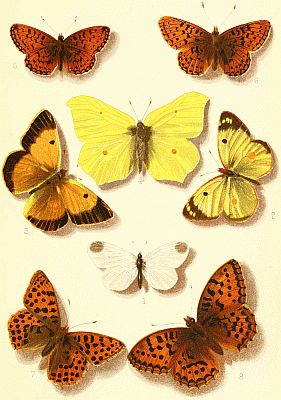
Plate II.
Danielsson & Co., del. ad. Nat. et Chromolith.
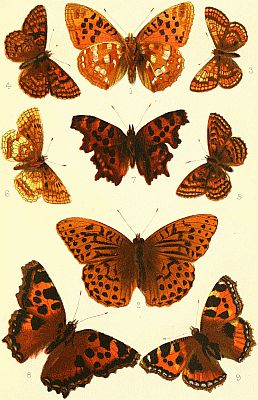
Plate III.
Danielsson & Co., del. ad. Nat. et Chromolith.
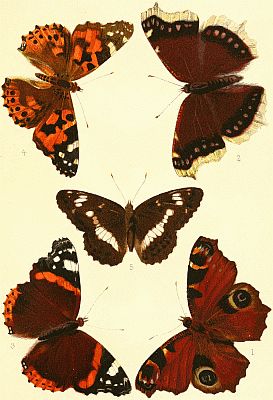
Plate IV.
Danielsson & Co., del. ad. Nat. et Chromolith.
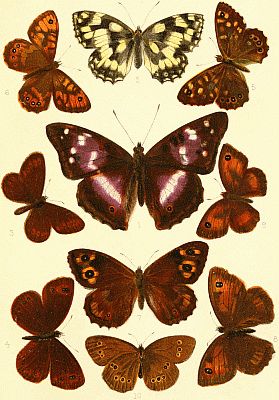
Plate V.
Danielsson & Co., del. ad. Nat. et Chromolith.
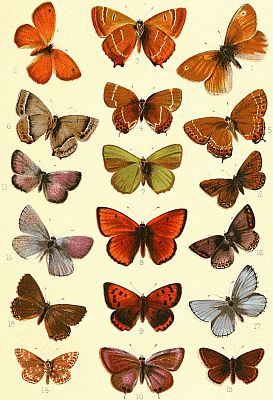
Plate VI.
Danielsson & Co., del. ad. Nat. et Chromolith.
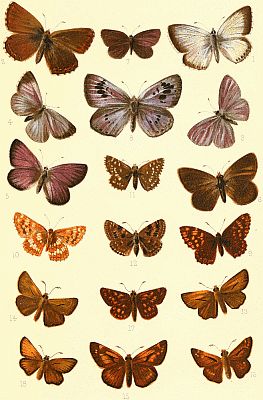
Plate VII.
Danielsson & Co., del. ad. Nat. et Chromolith.
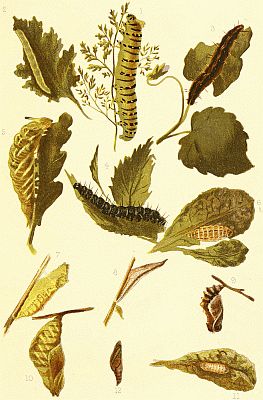
Plate VIII.
Danielsson & Co., del. ad. Nat. et Chromolith.
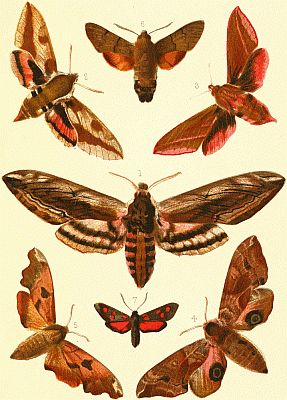
Plate IX.
Danielsson & Co., del. ad. Nat. et Chromolith.
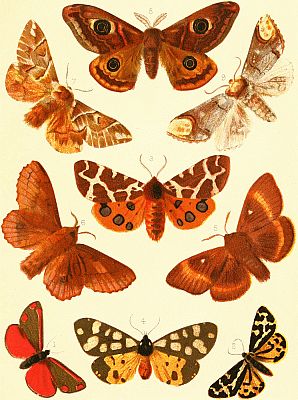
Plate X.
Danielsson & Co., del. ad. Nat. et Chromolith.
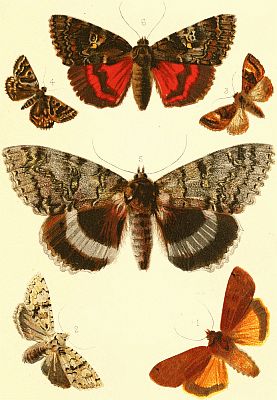
Plate XI.
Danielsson & Co., del. ad. Nat. et Chromolith.
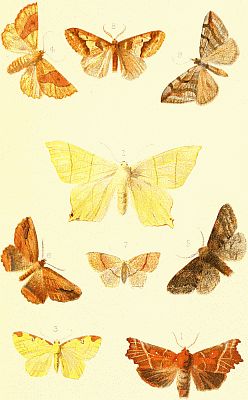
Plate XII.
Danielsson & Co., del. ad. Nat. et Chromolith.