Southern Platform
Reading edition
The Humorous, the Pathetic and the Dramatic.
These are the ruling elements of the platform. Around them are built all the successes of the Lyceum, and the lack of them is responsible for all the failures that stand like tombstones, along the route, as we journey with the truly great.

We are all agreed on the efficacy of humor, and we join without dissent in lauding the man who has the power to make the world laugh. He is as much our benefactor as the man whose scholarly and laborious research solves for us some great scientific problem which sets civilization forward; for, does he not unlock for us the gates of mirth, and climax a day of toil with an hour of restful merriment? His side-splitting joke pays the Doctor’s bill in advance by keeping us well and hearty; it settles pro tem. the grocer’s bill by making us forget it. His clever story charms and fascinates us, and we follow him down sunny lanes of laughter, and through sighing groves of pathos until the cares and vexations of our busy lives recede from us like a troubled shore. With the God-like power of genius, he leads us out of the thorn-hedged paths of everyday life, into the happy garden of the ideal where the flowers of sentiment bloom perennial, and the song of every bird is a lilted fragment of the universal chorus of love. This magic garden on the margin of the dusty field of reality from which we dig our daily bread, is an oasis to which we may not long repair, but to linger for an hour rests us from toil and refreshes us for labor. From behind its roses no venomous serpent is privileged to strike, and from its peaceful skies no hurricane may swoop down to lay waste. ’Tis there that the eye of despair is kindled with hope, the brow of care is smoothed with forgetfulness, and the lips of melancholy are curled with a smile.
All hail to the man of humor and pathos! (He cannot possess one without possessing the other.) Pathos is but the gentle sister of humor. Her emotions229 have no kinship with sorrow; her tears are the trembling jewels of tender memories, and she has only to dry her eyes to disclose a smile.
Next to humor and pathos, the most important requisite to a successful career on the platform, is the dramatic element which enables a man to “suit the action to the word,” and by the subtle power of the actor’s art, bring us to worship or despise, at his will, the character he portrays, or the principle he advocates. We hang at highest tension on the words of such a man, when the same words spoken in a commonplace way, would send us to sleep in our seats. How often have we seen the beauty of the Lord’s Prayer marred by some guttural-voiced exhorter who delivered it as coldly as he would have read a report of the mule market, or the price of pumpkins! and yet it is said that the great Booth with his incomparable rendition of this sacred prayer could lead an audience into the very presence and smile of God. Since time began, the dramatic in art and literature has received the homage of all people and all nations. This love of the dramatic sits enthroned alike in the heart of the savage and the man of letters, the highwayman and the clergyman, the ignoramus and the intellectual Titan. This strange attribute in the make-up of humanity is at once a dangerous and a glorious element. Too often it has nerved the murderer’s hand and steeled the heart of cruelty, but civilization is the master which is taming it.
In the long gone ages of heartless kings and fawning subjects, when fierce gladiators met in the death struggle, and the cruel ruler and his multitudes cheered the ending of a human life, they were but satiating their unholy love of the dramatic. Before such a picture, the great common heart of to-day turns sick with horror, but there is another picture dimmed also with many centuries, which makes the blood leap with different emotions, and which the future will guard with jealous pride. It is the dramatic picture of a little band of Christians in the center of a vast arena, awaiting the approach of the wild beasts which are to tear their limbs apart, and quietly kneeling in their last prayer. The dramatic effect of that prayer sent a thrill through all the ages, and nerved the hearts of the millions who were to follow the martyrs, as no common incident could have done.
We worship tragedy, and find satisfaction only in thrilling climaxes, and out of the multitudes of the passing years, history hands us the names of only a few who have paid the price of deathless fame. The tragic death of Julius Cæsar magnified his mighty deeds a hundred fold, and the dramatic but inglorious climax of St. Helena sent the great Napoleon thundering into history.
230
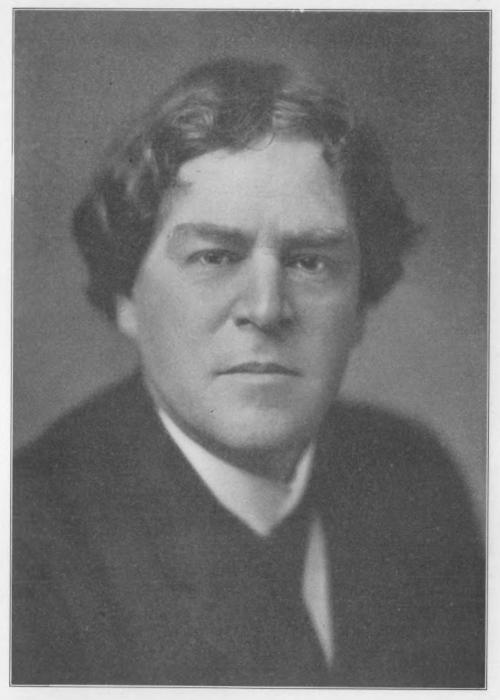
GUY CARLTON LEE, Ph.D., LL.D.
Dr. Guy Carlton Lee, Literary Editor of the Baltimore Sun, and formerly of the faculties of Johns Hopkins and Columbia Universities, is the latest acquisition of the platform among the strong literary men of to-day. He is the most distinguished of our younger school of historians, and as an orator he belongs to the vigorous, dramatic type so ably represented by Wendling and Gunsaulus, who have long been familiar figures on the American platform. Dr. Lee’s first lecture tour will include the South the coming season, under the direction of The Rice Bureau of Nashville.
231
The Mysteries
By James Hunt Cook
The early sunlight filtered through the filmy draperies to where a wondering baby stretched his dimpled hands to catch the rays that lit his face and flesh like dawn lights up a rose. His startled gaze caught and held the dawn of day in rapturous looks that spoke the dawn of Self, for with the morning gleam out came the greater wonder. It was the mystery of Life.
Across a cradle where, sunk in satin pillows, lay a still, pale form as droops a rose from some fierce heat, the evening shadows aslant, and spoke of peace. The twilight calm enclosed the world in silence deep as Truth, and on the little face the wondering look had given place to one of sweet repose. It was the mystery Death.
At head and foot the tapers burned, a golden light that clove the night as Hope the encircling gloom. Across the cot where lay the fair, frail form, his hand reached out to hers and met and clasped in tender burning touch. Into the eyes of each there came the look that is the light of life; that spoke of self to each, yet told they two were one. It was the mystery to which the mysteries, Life and Death, bow down—the mystery of Love.
232
Thomas Jefferson and the Average Man.
[Extract from lecture of Dana C. Johnson on “Thomas Jefferson.”]
The epitaph on the monument of Thomas Jefferson, written by himself, reads thus:
HERE WAS BURIED
THOMAS JEFFERSON
AUTHOR OF
The Declaration of American Independence,
of the Statute of Virginia for Religious
Freedom and Father of
the University of
Virginia.
These three deeds he doubtless regarded as the greatest of his life. But the real greatness of Thomas Jefferson, and his value to his country, cannot be comprehended in any recital of specific deeds. His influence is of a broader scope and flows in a deeper current. He stood for a principle which to-day constitutes the very bulwark of this nation, and is not only her strength but her pride. That principle is the right of every citizen to have a part in the government of the nation—to direct its policy—to be responsible for its errors—to share in its triumphs.
Thomas Jefferson recognized the value and stood for the rights of the average man, in a time when those rights were in great jeopardy. In this he displayed his characteristic political foresight, for the average man is the backbone of the nation. He has achieved the triumphs of her past and holds the key to her future destiny.
In my mind’s eye I scan the history of our nation as one might view a panorama.
I see a company of stern-faced men land on the bleak New England shore and kneel in prayer upon a rocky beach. They have crossed a stormy ocean to engage in the hard task of establishing a colony in the New World, where they may worship God as they desire—the earnest, stalwart, heroic Pilgrim Fathers. But who are they? Average men.
Yonder is a company of men standing at Concord Bridge awaiting the advance of British regulars. They fight and some fall in the battle and by that sacrifice become immortal—the first martyrs to American liberty. Who are they? Volunteer soldiers—farmers and tradesmen—average men of the community.
I see a caravan of crude and picturesque conveyances wending their way across the Western plains—each wagon containing a family of pioneers—the advance-guard of civilization—enduring hardships and performing mighty labors of which we reap the benefits. Who are they? Average men and women.
Here are two armies drawn up in battle order—hundreds of thousands of young and valiant men; fighting for what they regard their rights and duties; suffering unspeakable privations and performing deeds of matchless valor—the army of the North and the army of the South—whose conflict demonstrated to the world the extraordinary resources of this nation, the exceptional qualities of the American soldier and the absolutely unconquerable strength of a united country. Who are these soldiers? Fathers and sons from farm and store and factory. Average men.
I see a half-dozen regiments charging a Cuban hillside to dislodge a fortified enemy—strong, alert, confident soldiers—their courage born of the consciousness that they are fighting for right and justice against wrong and oppression. Who are they? A strange conglomeration of militia men, regular army soldiers, nabobs from New York, rough riders from the plains—but all of them average men.
So through all the years of our nation’s history, in the hours of her peril and of her achievements, she has been saved from shame and has been crowned with glory by the deeds of her average men.
Great men have arisen from time to time to lead her armies into battle or233 to defend her principles of liberty and justice, but, after all, these leaders had been powerless and, indeed, impossible except for the rank and file—the host of average men, who followed them and put into effect their teaching; not as slaves, but as free men doing their duty as intellect and conscience had directed.
Who is it that will determine the future policy of this nation and write success or failure above her gates? Not her millionaires, nor her statesmen, nor her scholars, nor her soldiers, but the average men whose votes count millions in the aggregate and whose will is law.
Thomas Jefferson understood this and read the future with unerring mind. Therefore he made it his chief concern and his great political work to protect the rights and enlarge the privileges of the average man—the bone and sinew of the state.
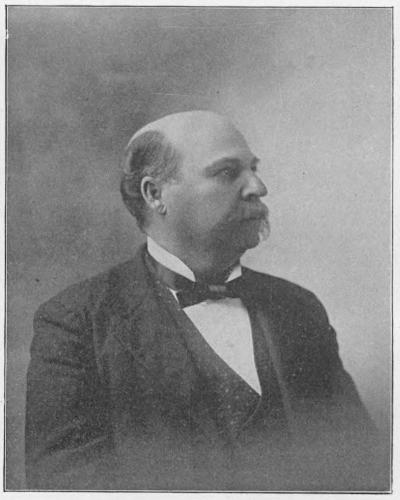
HON. ALF TAYLOR, One of the most eloquent and scholarly contributions to the intellectual menu of the coming season will be the new lecture of Hon. Alf Taylor, “If Columbus Should Wake.”
234
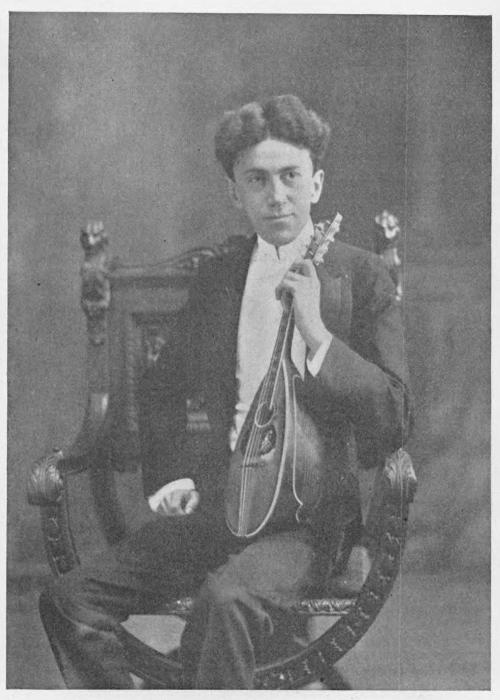
SAMUEL SIEGEL. Samuel Siegel, the great mandolinist, who is known to more people than any other player of this instrument, is very popular throughout the South. He is the originator of the system used by the Siegel-Myers Correspondence School of Music, and is also exclusive mandolinist for the Edison, Victor and Columbia Phonograph Companies. Mr. Siegel will tour the South next season at the head of the Siegel-Meyer-Reed Concert Company.
235
The Lyceum Platform.
By Dr. James Hedley.
The Lyceum Platform is one of the world’s evangels. It has its teachers, heroes, apostles and prophets. It has had a wonderful history, and is still making history. It is a marvellous power for intellectual, social and moral good, and never more so than to-day. Its lecturers are strong not only in their ability to entertain, but in all those attributes which make for the best in human character. It goes without saying that such men come to the people with a message. Whether it be Watterson or Graves, or De Motte, or Conwell or Wendling, or Willitts; whether Dolliver, Gunsaulus, Hillis, Miller, Bain, McIntyre, McClary, or delightful Bob Taylor, the minds, hearts and consciences of men are turned in the direction of right things, and there is an impetus and an uplift which blesses all who hear.
How wide the influence, and how great the responsibility of the lyceum lecturer! In a general way, at least, all men concede the power of oratory. The close student of the sources of human influence fully recognizes that power, in all its good and evil possibilities. Eloquently spoken words produce more immediate and fully as permanent results as eloquently written ones. When Demosthenes delivered a patriotic oration, the people who heard him said at once, “Let us go and fight Philip!” A little child after listening to George Whitefield’s beautiful and impassioned pictures of Heaven and the Deity, sobbed, “Let me go to Mr. Whitefield’s God!” There are hundreds in our country to-day who are what they are, not only in the success and happiness of their own lives, but as factors toward the wise solution of the profoundest problems of being because of the spoken words, the messages of the present-day lyceum.
The Lyceum Platform thirty and forty years ago could boast of a score of thinkers, some of whom were orators; they served well their day and generation; products of the “form and pressure of the time,” they met its requirements, and left behind them evidences of work nobly done, and no man can say the memory of them shall perish. In far greater measure, because of the infinitely greater number of superior lecturers, the common people to-day are being educated in every phase of thought and purpose worthy earnest consideration. When one considers all this, the faint cry occasionally heard from those who do not take wide views of existing conditions, as to the “decay of the lyceum” is not warranted. Wherever and whenever the true lyceum idea is conserved in the work of the platform, the evidences of strength, wisdom and beauty are at once evident and undeniable.
Since the earlier days, the Lyceum has taken on an entertainment phase, which, while not wholly related to the lyceum idea, serves admirably in meeting and filling the desire there is and ever will be in the human heart for the joyous pleasures of life. The entertainment side of the Lyceum belongs to the realm of the heart paramountly, if not wholly, while the work of the lecturer appeals to the intellect and the conscience, and so the “three thirds” which make men up—the Mind, the Heart and the Conscience—are accorded that which strengthens and enriches. Herein have we all of life’s philosophy, brought to us with mental conviction, with emotional delighting, and spiritual moving. We get glimpses of what may be called the Trinity of Man. There is no side of us which does not respond. Let all this triune service of the Lyceum be clean and high; let not the desire for financial gain hush one worthy voice, or turn aside from the straight path a single lofty purpose, and the Lyceum shall be maintained so long as time endures, because it shall be of the blessed things which are not born to die. Lecturers and entertainers may come and go as individual factors of236 lyceum work, but the Lyceum as an idea, a force, an inspiration, shall go on forever.
The traveler looking upon Niagara sees the onward rush and surge of countless drops of water. They sweep by and pass on, and return not again. Still other countless millions of drops follow them, and forever follow, and so in spite of separateness, there is perpetuity and permanence. Niagara is immortal. The teachers, heroes, apostles, prophets, singers and entertainers, come and go, and pass out to the great sea beyond, but others come with word and song and smile, and forever shall they come, and so as with Niagara, there is perpetuity and permanence. The Lyceum Platform is immortal.
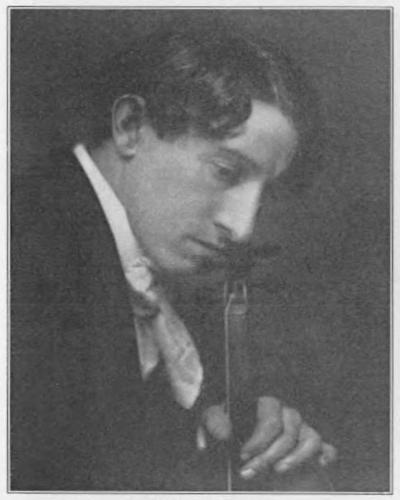
WARD BAKER. “Music is God’s voice heard in a language without words.” Among the strong popular companies which will visit the South next season, is the Boynton Concert Company, and one of the leading performers of this Company is Ward Baker. Mr. Baker is one of the few musicians who play to the soul and the heart, as well as to the technical ear.
Echoes from the Field.
Frederick Warde opens his Southern tour May first.
Alton Pachard, the popular chalk talker, is entertaining Southern audiences with his unique and excellent program.
“Standard attractions,” is the decree the committees are pronouncing, and “the survival of the fittest” will be the result.
Ida Benfey is adding to her laurels in the South. She recently gave George Eliot’s beautiful story of “The Mill on the Floss” before an audience of nearly four thousand people, in Nashville, as one of the numbers of the Lyceum Course.
W. G. Escott, the popular secretary of the Hillsboro, Texas, Y. M. C. A., writes the following report of the recent state convention held at Hillsboro:
The Twenty-second Annual State Convention of the Texas Young Men’s Christian Association was held in Hillsboro, Texas, March 18-21. The Hillsboro Association made preparation for three hundred delegates but only about two hundred were in attendance. It was said by all to be one of the best conventions in every respect that has been held in years in Texas. The prominent speakers of the convention were Dr. Ira Landrith, of Nashville; Rev. Dr. Carroll, of Dallas, Texas; Dr. T. S. Clyce, president Austin College, Sherman, Texas; Judge John C. Townes, of Texas State University, and Dr. S. P. Brooks, president Baylor University, Waco, Texas. The program was very strong in every particular. The delegates all expressed themselves as being royally entertained by the citizens of Hillsboro. The only thing that could have added to the pleasure of the gathering would have been better weather.
The Texas Lyceum Association met during the convention and met the different Bureaus represented and considered their talent. The following237 were represented: New Dixie Bureau, Midland Bureau, Slayton Bureau, and The Rice Bureau. After considering all the talent offered, the decision was in favor of the Rice Bureau. The Associations of the state have dealt with the Rice Bureau for several years and their attractions have been first-class and according to representation and the service so satisfactory that the members felt that there could be nothing gained by making a change, so the Association business will be with The Rice Bureau again the coming season. The new officers of the T. L. A. are Samuel Warr, Cleburne, President; J. L. Hunter, Waco, Secretary and Treasurer.
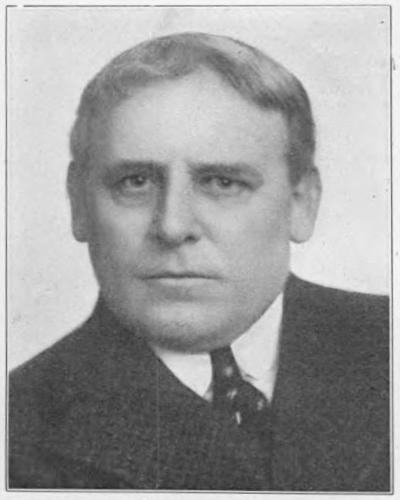
GEO. C. MILN, Of International Fame. It is a matter of much interest both North and South that Geo. C. Miln, the great orator-actor, after many years of absence from America, will make a tour of the United States next season, presenting his great lecture, “The Story of a Strolling Player.” Mr. Miln has played the plays of Shakespeare in almost every civilized country under the sun. He will be remembered by Americans as the brilliant orator who succeeded Robert Collyer in the pulpit of Unity Church, Chicago. His oration on the death of Garfield is considered one of the modern classics.
A Great Lecturer.
By Opie Read.
I wonder whether many of the people of Nashville remember a newspaper printed in that city in 1876? To the few it was known as the Evening Mail. To the many it was not known at all. We had not advocated municipal ownership, we who conducted the enterprise, but the sheriff somehow took it into his head that we did; and as he could not turn the property over to the city, he kept it for the county. I don’t know what was finally done with it. I suppose it became but an echo of dust.
The paper was “established” by a number of printers and newspaper men who had nothing else to do. As we were to share alike in the profits we went alike to the free lunch counter. It was a pure democracy and the man who owned fifteen shares of stock received no more than the man who owned one. The paper was edited with longing and printed with hope. We were all of us optimists. If a cloud arose in our sky we looked upon it as a balloon ascension. I remember but one day of reproof and censure. The foreman came into the “sanctum” and said to the editor-in-chief: “There is trouble in the composing room, sir.”
The editor, an old gentleman who loved to write and who vaguely believed that eventually one of his editorials might be read from beginning to end, looked up and sighed.
“Trouble?”
“Ah, and serious trouble, sir.”
“What is it?”
“Why, Ewing says that he’s got to eat.”
“Eat!” echoed the editor. “What can he mean by such impudence? Did you reason with him?”
“I did, sir; I told him he ought to be ashamed of himself.”
“And was he?”
“No, sir; he forthwith gave me an example of insubordination. He accused me of hiding a sandwich in my desk.”
The editor thought a long time. He had written on the situation in Europe and had given advice to England,238 France and Germany—he had told the Powers what to do with Turkey, but this sandwich required deeper meditation. “How many shares of stock does Ewing hold?” he inquired.
“Ten, I believe, sir.”
“Well, it seems to me that a man holding so many shares ought to be possessed of more dignity. Let him transfer his stock to some one who stands not high in his regard, and resign. You may go. But, wait a moment, foreman. If you should happen to have a sandwich hidden in your desk, don’t forget me. We have always been good friends, you know.”
It was about this time that Major DeMaine made his appearance in Nashville. He came with a heavily-worded recommendation from the Boston School of Oratory. It was declared that he was the greatest orator of the day or night. He had talked in Faneuil Hall. It appeared in the paper Flanel Hall, but that made no difference. He would have been the greatest of all actors but that he was religiously inclined and deplored the thought of giving up his earnest life to the trivial mimickry of the stage. He was not well dressed but we ascribed this lack of duds to his individuality. But some of us questioned his greatness until he came around to the office and put into the Mail a full page advertisement. Then we knew that he was great. This full page was an announcement together with the press notices of his great lecture on Humanity. Beecher said that it was profound and in an autograph letter Mark Twain swore that it was funnier than Artemus Ward among the Mormons. We were possessed of a small job press, and on this machine the tickets were printed. We were to receive so much a hundred and we looked forward to a time when we might eat, sitting down. One man, a pampered youth named Billings, said that he must have a pair of shoes. At first we took this for badinage, for one of this fellow’s whimsical jokes, but soon we discovered that he meant it. We called a meeting of the faculty. The editor sighed. For a man who possessed all wisdom he was the most sighing man I ever knew. With him a sigh answered for declaration and for epigram. He was never at a loss for sigh. So he sighed and asked Billings if he had well considered the situation. Billings answered that he thought he had.
“And you must have shoes, you Beau Brummel! Just at this time of dawning prosperity you must come forward to swamp our hope with needless extravagance. Transfer your stock, Billings, and resign.”
The lecture was to be given in a building which stood somewhere in Summer Street. We were to sell the tickets to our friends and were to share in the profits. And with what will we went forth! A stranger might have thought that the city had been invaded by a gang of hold-up men. Well, the night came. We were present, eighteen of us. The editor and the business manager were absent, having been invited to attend a luncheon given by a politician. But eighteen of us were there to hear that great out-rush of the human mind. It may have been that the learning was too deep for us, that the humor was too skilfully hidden. There was a large audience and at first there was much applause, but it dropped off along about the second round. At the close, however, there came something to arouse our interest. Upon the table the lecturer emptied about a bushel of cubes wrapped in paper. “Each one of these cubes contains a piece of soap,” said he. “It is the finest that has ever been made. And this is the offer that I shall make to you: I shall sell these cubes at twenty-five cents each, and in at least half of the papers is contained a yearly subscription to the Evening Mail, a paper which Mr. Watterson declares is the freest and best-written journal in America. He himself is thinking of taking the editorship of it on the first day of next July. Let us open a few of these papers. Ah, we here have a subscription, here is another—another—why, there are no end of them. I will now pass out among you.”
They bought his soap. He was239 giving our paper a boost and none save a great man could do that. Surely, the day of our prosperity was about to dawn. “I will be around early in the morning to settle for the advertisement, the tickets and the many subscriptions,” he said to one of us. “And now don’t think me presumptuous in what I said. Watterson has his eye on this paper.”
He did not come around the next day. We called on the business manager and he said that no arrangements for subscriptions had been made with him. We spoke to the editor and he sighed. Then, and for days afterward, there came broken streams of people with orders for yearly subscriptions. It was difficult to explain. The most of our stockholders had been present and had heard the promises made by Major DeMaine. So we dozed off into the bed prepared by the sheriff.
The last time I saw the editor he took my hand with a sigh and said: “It was a great pity that I went to that political luncheon. Ah, politics, ruination of mighty empires!”
Years afterward, in company with Col. Zeb. Ward, I was going through the Arkansas penitentiary. Near the wall I observed an oldish man washing a buggy. He had a familiar look, in spite of his stripes, and I spoke to Colonel Ward concerning him. “He is known as Commodore Sassafrac,” said the Colonel. “He got up a great land scheme down in the bottoms—told the negroes that he had the management of the great Mexican war land claim. Seventy million acres were set aside for the colored citizens, and all they had to do was to show an order from the Commodore, which he gave for five dollars apiece.”
I went up to him and spoke. He looked at me. I reminded him of the Nashville Evening Mail. “Ah,” said he, “I am pleased to meet anyone from the glowing past. Back upon that time I look with fondness. Your great journal made life worth living.”
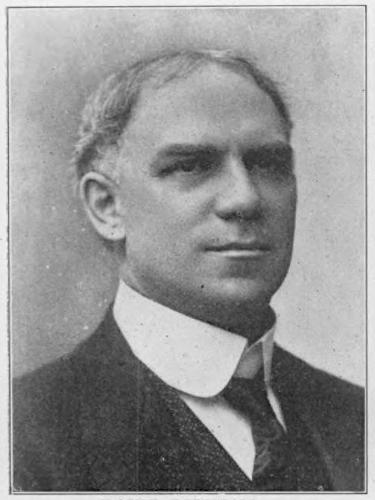
DAVID BISPHAM, One of the great stars of Grand Opera, who devotes a few weeks of his time each season to lyceum work. The fact that an artist of Bispham’s standing can be brought to the platform, is one of the strong evidences of its phenomenal development.
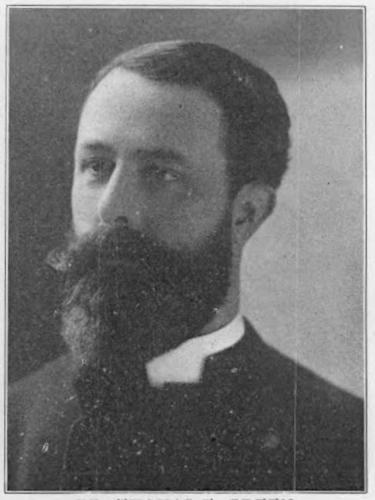
DR. THOMAS E. GREEN. Dr. Thomas E. Green, whose lecture, “The Key to the Twentieth Century,” has been so widely and favorably commented upon by the Press of the Country within the last year, will add a few Southern cities to his platform itinerary, the coming season.
240
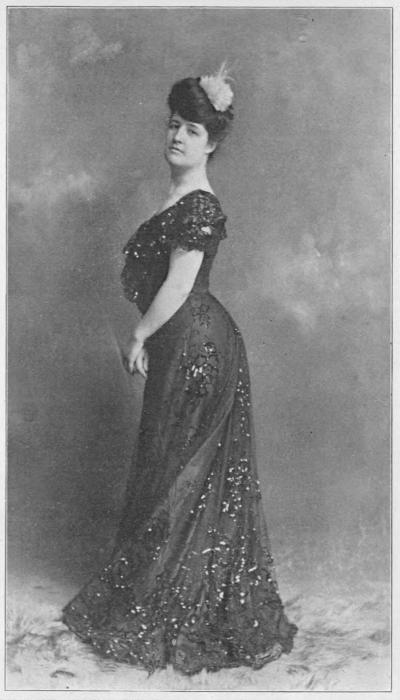
MISS CLYDA B. REEVES, of Whitewright, Texas, one of the brightest and most promising aspirants for platform honors, among Southern young women.
TRANSCRIBER’S NOTES
Silently corrected typographical errors and variations in spelling.
Archaic, non-standard, and uncertain spellings retained as printed.