TURTLE-HEAD OR SNAKE-HEAD. (Chelone glabra.)
Reading edition
The Turtle-head or Snake-head is one of three species that are natives of eastern North America. This plant is well supplied with common names, as it is also called Shell-flower, Cod-head, Bitter-herb and Balmony. The generic name of this flower of the swamps and moist banks of streams is from the Greek word which means tortoise, the name having been given to the plant because of the fancied resemblance between the flowers and the head of a turtle or snake. One may be able, by stretching his imagination, to see this resemblance in the flowers of our illustration.
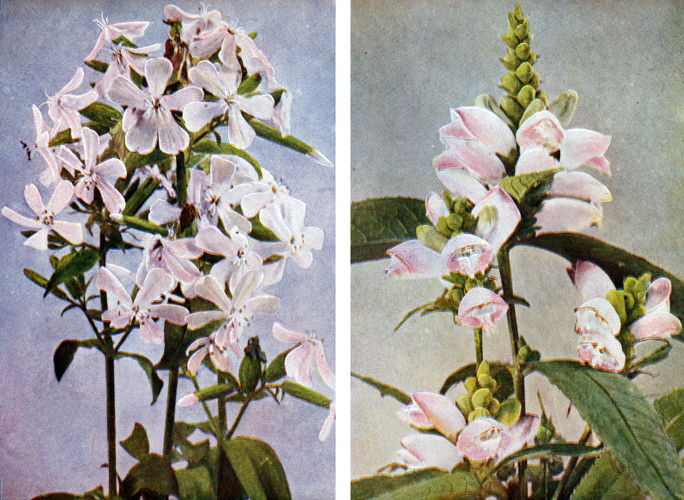
SOAPWORT OR BOUNCING BET. (Saponaria officinalis.) SNAKE-HEAD OR TURTLE-HEAD (Chelone glabra.) FROM “NATURE’S GARDEN” COPYRIGHT 1900, BY DOUBLEDAY PAGE & COMPANY
89
The custom of giving names to plants that are suggestive of their real or fancied resemblance to various objects of nature, or are indicative of their beneficial or injurious qualities, is as old as history itself. In this way a large number of plants have become associated with good or evil spirits, Christian or pagan saints or martyrs, animate nature or some of the phenomena of nature. To the Indian the likeness of the flower of the Turtle-head to the head of a reptile not only gave it its name, but at the same time invested the plant with certain sacred associations by reason of the fact that not only among the Indians of North America, but among the uncivilized peoples in all parts of the world the tortoise has been considered sacred and highly symbolical.
Though commonly found in low altitudes, it is found in moist places in the Adirondacks, even at a height of three thousand feet.
This plant is not rare, and with its upright stem and its rather large and clustered white or slightly rose-colored flowers it is a dignified and beautiful feature of any floral community.