Part II. FABLES, with Reflections.
Reading edition

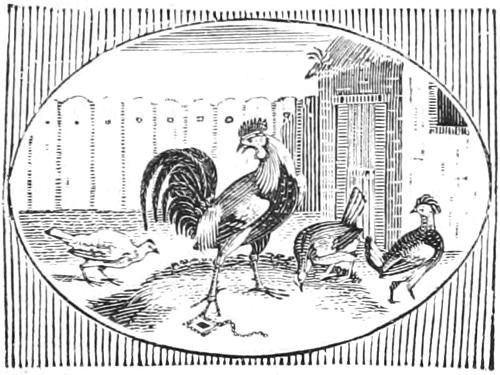
Fable I. The Cock and the Jewel.
A brisk young Cock, in company with two or three pullets, his mistresses, raking upon a Dunghill for something to entertain them with, happened to scratch up a jewel. He knew what it was well enough, for it sparkled with an exceeding bright lustre; but, not knowing what to do with it, endeavoured to cover his ignorance under a gay contempt. So, shrugging up his wings, shaking his head, and putting on a grimace, he expressed himself to this purpose: Indeed you are a very fine thing; but I know not any business you have here. I make no scruple of declaring that my taste lies quite another way; and I had rather have one grain of dear, delicious barley, than all the jewels under the sun.
Morals.
Several very pretty fellows, who are as great strangers to the true uses of virtue and knowledge as the Cock upon the Dunghill is to the real value of the Jewel, endeavour to palliate their ignorance by pretending that their taste lies another way.

To fools, the treasures dug from wisdom’s mine Are Jewels thrown to Cocks, and Pearls to Swine.
Reflection.
There are several people in the world that pass, with some, for well-accomplished gentlemen, and very pretty fellows, though they are as great strangers to the true uses of virtue and knowledge as the Cock upon the Dunghill is to the real value of the Jewel. He palliates his ignorance by pretending that his taste lies another way: But whatever gallant airs people may give themselves upon these occasions, without dispute, the solid advantages of virtue, and the durable pleasures of learning, are as much to be preferred before other objects of the senses as the finest brilliant diamond is above a barley-corn. The greatest blockheads would appear to understand what at the same time they affect to despise; and nobody yet was ever so vicious as to have the impudence to declare in public that virtue was not a fine thing.
But still, among the idle, sauntering, young fellows of the age, who have leisure as well to cultivate and improve the faculties of the mind as to dress and embellish the body, how many are there who spend their days in raking after new scenes of debauchery, in comparison of those few who know how to relish more reasonable entertainments! Honest, undesigning good sense is so unfashionable, that he must be a bold man who at this time of day attempts to bring it into esteem.
How disappointed is the youth who, in the midst of his amorous pursuits, endeavouring to plunder an outside of bloom and beauty, finds a treasure of impenetrable virtue concealed within! And why may it not be said, how delighted are the fair sex, when, from among a crowd of empty, frolic, conceited admirers, they find out and distinguish, with their good opinion, a man of sense, with a plain, unaffected person, which at first sight they did not like!
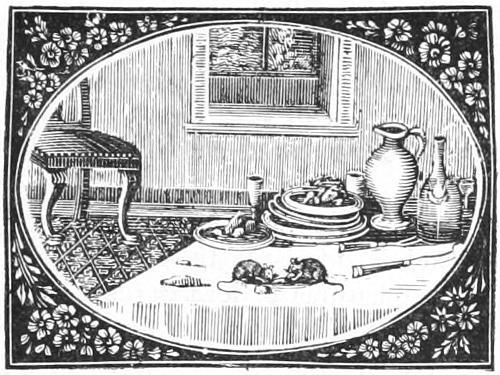
Fable II. The City Mouse and Country Mouse.
A Country Mouse invited a City Sister of hers to a collation, where she spared for nothing that the place afforded—as mouldy crusts, cheese-parings, musty oatmeal, rusty bacon, and the like. The City Dame was too well bred to find fault with her entertainment; but yet represented that such a life was unworthy of a merit like hers; and letting her know how splendidly she lived, invited her to accompany her to town. The Country Mouse consented, and away they trudged together, and about midnight got to their journey’s end. The City Mouse shewed her friend the larder, the pantry, the kitchen, and other offices where she laid her stores; and after this, carried her into the parlour, where they found, yet upon the table, the relics of a mighty entertainment of that very night. The City Mouse carved her companion of what she liked best, and so to it they fell upon a velvet couch. The Country Mouse, who had never seen or heard of such doings before, blessed herself at the change of her condition—when, as ill luck would have it, all on a sudden the doors flew open, and in comes a crew of noisy servants of both sexes, to feast upon the dainties that were left. This put the poor mice to their wits’ end how to save their skins—the stranger especially, who had never been in such danger before. But she made a shift, however, for the present to slink into a corner, where she lay trembling and panting till the company went away. As soon as ever the house was quiet again: Well, my Court Sister, says she, if this be the sauce to your rich meats, I’ll e’en back to my cottage and my mouldy cheese again; for I had much rather lie nibbling of crusts, without fear or hazard, in my own hole, than be mistress of all the delicacies in the world, and subject to such terrifying alarms and dangers.
Morals.
This fable shews the difference between a Court and a Country Life: The delights, innocence, and security of the one, compared with the anxiety, voluptuousness, and hazards of the other.

Heav’n in one mould the kindred fate has cast Of men of dignity and mice of taste; Traps, dangers, terrors are alike their lot: Scar’d if they ’scape, and worry’d if they’re caught.
Reflection.
How infinitely superior are the delights of a private life to the noise and bustle of a public one! Innocence, security, meditation, good air, health, and unbroken rest, are the blessings of the one; while the rages of lust and wine, noise, hurry, circumvention, falsehood, treachery, confusion, and ill health, are the constant attendants of the other.
The splendour and luxury of a court are but a poor recompense for the slavish attendances, the invidious competitions, and the mortal disappointments that accompany it. The uncertain favour of Princes, and the envy of those who judge by hearsay or appearance, without either reason or truth, make even the best sort of court lives miserable, to say nothing of the innumerable temptations, vices, and excesses of a life of pomp and pleasure. Let a man but set the pleasing of his palate against the surfeits of gluttony and excess; the starving of his mind against a pampered carcase; the restless importunities of tale-bearers and back-friends against fair words and professions, only from the teeth outwards; let him, I say, but set the one in balance against the other, and he shall find himself miserable, even in the very height of his delights. To say all in a word: Let him but set the comforts of a life spent in noise, formality, and tumult, against the blessings of a retreat with competency and freedom, and then cast up his account.
What man, then, that is not stark mad, will voluntarily expose himself to the imperious brow-beatings and scorns of great men! To have a dagger struck to his heart in an embrace! To be torn to pieces by calumny; nay, to be a knave in his own defence! For the honester, the more dangerous in a vicious age, and where it is a crime not to be like the company. Men of that character are not to be read and understood by their words, but by their interests; their promises and protestations are no longer binding than while they are profitable to them.
After all, to keep the fable more closely in view, let a man, with the Country Mouse, reflect on the peace and safety of rural retirement, and prefer, if he can, the insecurity, noise, and hurry of a more exalted fortune.
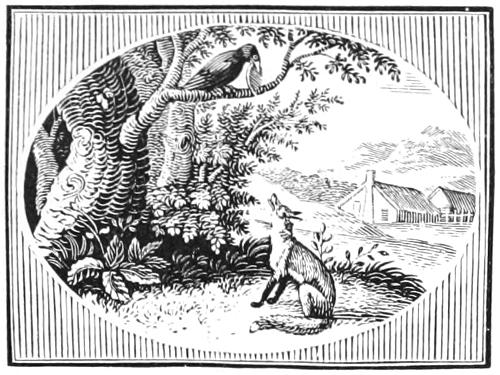
Fable III. The Fox and the Crow.
A Crow having taken a piece of cheese out of a cottage window, flew up into a high tree with it, in order to eat it. Which a Fox observing, came and sat underneath, and began to compliment the Crow upon the subject of her beauty. I protest, says he, I never observed it before, but your feathers are of a more delicate white than any that ever I saw in my life! Ah! what a fine shape and graceful turn of body is there! And I make no question but you have a tolerable voice. If it is but as fine as your complexion, I do not know a bird that can pretend to stand in competition with you. The Crow, tickled with this very civil language, nestled and wriggled about, and hardly knew where she was; but thinking the Fox a little dubious as to the particular of her voice, and having a mind to set him right in that matter, began to sing, and, in the same instant, let the cheese drop out of her mouth;—which the Fox presently chopt up, and then bade her remember that whatever he had said of her beauty, he had spoken nothing yet of her brains.
Morals.
There is hardly any man living that may not be wrought upon more or less by flattery; for we do all of us naturally overween in our own favour. But when it comes to be applied once to a vain fool, there is no end then can be proposed to be attained by it, but may be effected.

“It is a maxim in the schools, That Flattery’s the food of fools:” And whoso likes such airy meat Will soon have nothing else to eat.
Reflection.
Flattery in itself is an unmanly, slavish vice; but it is much worse yet for the alliance it has to hypocrisy; for while we make other people think better of themselves than they deserve, we make them think better of us too than we deserve: For self-love and vanity on the one hand, assists the falseness and confidence on the other, while it serves to confirm weak minds in the opinion they had of themselves before, and makes them parties effectually in a conspiracy to their own ruin. The only benefit or good of Flattery is this; that by hearing what we are not, we may be instructed what we ought to be. Yet how few are there among the whole race of mankind, who may be said to be full proof against its attacks! The gross way by which it is managed by some silly practitioners, is enough to alarm the dullest apprehension, and make it to value itself upon the quickness of its insight into the little plots of this nature. But, let the ambuscade be disposed with due judgment, and it will scarce fail of seizing the most guarded heart. How many are tickled to the last degree with the pleasure of Flattery, even while they are applauded for their honest detestation of it! There is no way to baffle the force of this engine, but by every one’s examining impartially for himself the true estimate of his own qualities: If he deals sincerely in the matter, nobody can tell so well as himself what degree of esteem ought to attend any of his actions; and therefore he should be entirely easy as to the opinion men are like to have of them in the world. If they attribute more to him than is his due, they are either designing or mistaken; if they allow him less, they are envious, or, possibly, still mistaken; and, in either case, are to be despised, or disregarded. For he that flatters without designing to make advantage of it, is a fool: And whoever encourages that Flattery, which he has sense enough to see through, is a vain coxcomb.
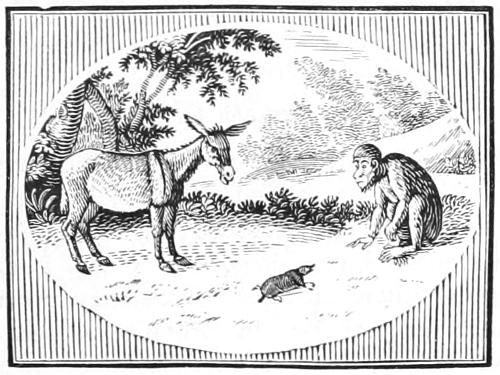
Fable IV. An Ass, an Ape, and a Mole.
An Ass and an Ape were conferring on grievances. The Ass complained mightily for want of horns, and the Ape was as much troubled for want of a tail. Hold your tongues, both of ye, says the Mole, and be thankful for what you have; for the poor blind Moles are in a worse condition than either of ye.
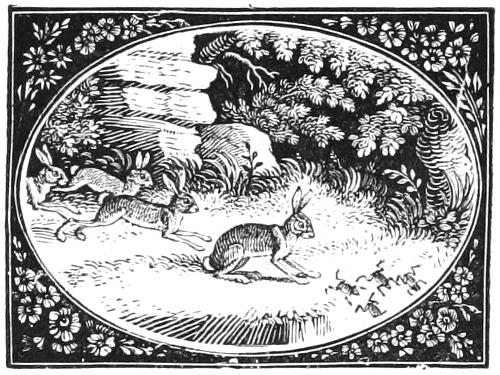
Fable V. The Hares and the Frogs.
Once upon a time the Hares found themselves mightily unsatisfied with the miserable condition they lived in. Here we live, says one of them, at the mercy of men, dogs, eagles, and I know not how many other creatures, which prey upon us at pleasure; perpetually in frights, perpetually in danger; and therefore I am absolutely of opinion, that we had better die once for all, than live at this rate in a continual dread that’s worse than death itself. The motion was seconded and debated, and a resolution immediately taken, by one and all, to drown themselves. The vote was no sooner passed, but away they scudded with that determination to the next lake. Upon this hurry there leapt a whole shoal of Frogs from the bank into the water, for fear of the Hares. Nay then, my masters, says one of the gravest of the company, pray let’s have a little patience. Our condition, I find, is not altogether so bad as we fancied it; for there are those, you see, that are as much afraid of us as we are of others.
Morals of the two Fables.
There is no contending with the Orders and Decrees of Providence. He that makes us, knows what is fittest for us; and every man’s own lot (well understood and managed) is undoubtedly the best.
The miseries of half mankind unknown, Fools vainly think no sorrows like their own: But view the world, and you will learn to bear Misfortunes well, since all men have their share.
Reflection.
Since nature provides for the necessities of all creatures, and for the well-being of every one in its kind; and since it is not in the power of any creature to make itself other than what by Providence it was designed to be; what a madness is it to wish ourselves other than what we are, and what we must continue to be! Every atom of the creation has its place assigned: every creature has its proper figure, and there is no disputing with Him that made it so. Why have I not this? and, Why have I not that? are questions for a Philosopher of Bedlam to ask; and we may as well cavil at the motions of the heavens, the vicissitude of day and night, and the succession of the seasons, as expostulate with Providence upon any of the rest of God’s works. The Ass would have horns, the Ape would have a tail, and the Hares would be free from those terrors which, timid as they are, they give to others: but the Mole on the one hand, and the Frogs on the other, shew that there are others as miserable as themselves.
It may seem to be a kind of a malicious satisfaction that one man derives from the misfortune of another. But the philosophy of this reflection stands upon another ground; for our comfort does not arise from other people being miserable, but from this inference upon the balance, that we suffer only the lot of human nature: and as we are happy or miserable, compared with others; so other people are miserable or happy, compared with us; by which justice of Providence we come to be convinced of the sin, and the mistake, of our ingratitude. What would not a man give to be eased of the gout, or the stone? or, supposing an incurable poverty on the one hand, and an incurable malady on the other, why should not the poor man think himself happier in his rags, than the other in his purple? but the rich man envies the poor man’s health, without considering his want; and the poor man envies the other’s treasure, without considering his diseases. What is an ill name in the world to a good conscience within one’s self; and how much less miserable, upon the wheel, is one man that is innocent, than another under the same torture that is guilty? The only way for Hares and Asses, is to be thankful what they are, and what they have, and not to grumble at the lot that they must bear in spite of their teeth.
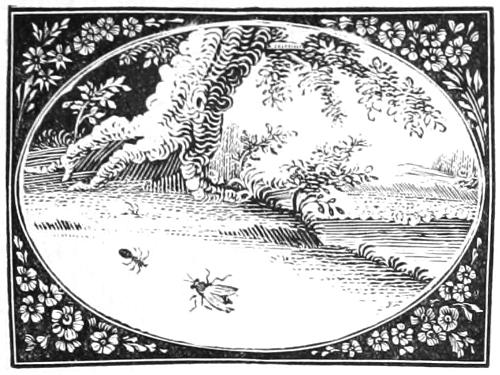
Fable VI. An Ant and Fly.
Where’s the honour or the pleasure in the world, says the Fly, in a dispute for preeminence with the Ant, that I have not my part in? Are not all temples and places open to me? Am not I the taster to gods and princes in all their sacrifices and entertainments? And all this without either money or pains? I trample upon crowns, and kiss what ladies’ lips I please. And what have you now to pretend to all this while? Vain boaster! says the Ant, dost thou not know the difference between the access of a guest, and that of an intruder? for people are so far from liking your company, that they kill you as soon as they catch you. You are a plague to them wherever you come. Your very breath has maggots in it; and for the kiss you brag of, what is it but the perfume of the last dunghill you touched upon, once removed? For my part, I live upon what’s my own, and work honestly in the summer to maintain myself in the winter; whereas the whole course of your scandalous life is only cheating or sharping one half of the year, and starving the other.
Morals.
The happiness of life does not lie so much in enjoying small advantages, as in living free from great inconveniences. An honest mediocrity is the happiest state a man can wish for.
Pert coxcombs, pleas’d with buzzing round the fair, Laugh at the low mechanic’s thrifty care; While he with juster scorn may well deride Their folly, meanness, indolence, and pride.
Reflection.
This fable marks out to us the difference betwixt the empty vanity or ostentation, and the substantial ornaments of virtue. A man can hardly fancy to himself a truer image of a plain, honest, country simplicity, than the Ant’s part of the dialogue in this fable. She takes pains for what she eats; wrongs nobody; and so creates no enemies; she wants nothing; and she boasts of nothing; lives contented with her own, and enjoys all with a good conscience. This emblem recommends to us the blessings of a virtuous privacy, according to the just measures of right nature, and, in few words, comprises the sum of a happy state.
The Fly, on the contrary, leads a lazy, voluptuous, scandalous, sharking life; is hated wherever she comes, and in perpetual fears and dangers. She justly may be compared with the worthless part of mankind, who pass through the world without being of any service in it; and without acquiring the least reputation, seldom fail of adding pride to all their other failings, and behave with haughtiness and arrogance towards those who contribute to the comfort and happiness of society. They treat industrious persons as wretched drudges, appointed to labour for a poor subsistence; while Heaven has provided everything for their own use, though they of all others least deserve it. But the worthy and industrious may always comfort themselves with this reflection, that the pride and extravagance of these idle creatures will at last bring them to shame and want, while their own honest labours will secure to them a life of plenty and affluence.
It is true she flutters from place to place, from feast to feast, brags of her interest at court, and of ladies’ favours: and what is this miserable insect at last, but the very picture of one of our ordinary trencher Esquires, that spends his time in hopping from the table of one great man to that of another, only to pick up scraps of intelligence, and to spoil good company; at other times officiously skipping up and down from levee to levee, and endeavouring to make himself necessary, wherever he thinks fit to be troublesome.
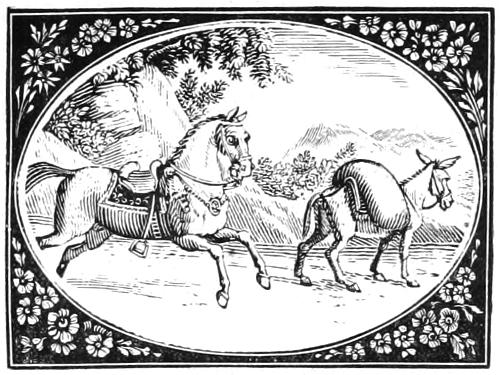
Fable VII. A Horse and an Ass.
A proud pampered Horse, bedecked with gaudy trappings, met in his course a poor creeping Ass, under a heavy burden, that had chopt into the same track with him. Why, how now, sirrah, says he, do you not see by these arms and trappings to what master I belong? and do you not understand, that when I have that master of mine upon my back, the whole weight of the state rests upon my shoulders? Out of the way, thou slavish insolent animal, or I’ll tread thee to dirt. The wretched Ass immediately slunk aside, with this envious reflection between his teeth, What would I give to change conditions with that happy creature there! This fancy would not out of the head of him, till it was his hap, a little while after, to see this very Horse doing drudgery in a common dung-cart. Why, how now, friend, says the Ass, how comes this about? Only the chance of war, says the other: I was a General’s horse, you must know; and my master carried me into a battle, where I was hacked and maimed; and you have here before your eyes the catastrophe of my fortune.
Morals.
This Fable shews the folly and the fate of pride and arrogance; and the mistake of placing happiness in anything that may be taken away; as also the blessing of freedom in a mean estate.
Proud of the clothes with which you are equipt, You of your pride may easily be stript.
Reflection.
People would never envy the pomp and splendour of greatness, if they did but consider either the cares and dangers that go along with it, or the blessings of peace and security in a middle condition. No man can be truly happy, who is not every hour of his life prepared for the worst that can befall him. Now this is a state of tranquillity never to be attained but by keeping perpetually in our thoughts the certainty of death, and the lubricity of fortune; and by delivering ourselves from the anxiety of hopes and fears.
It falls naturally within the prospect of this fiction to treat of the wickedness of a presumptuous arrogance; the fate that attends it; the rise of it; and the means of either preventing or suppressing it; the folly of it; the wretched and ridiculous estate of a proud man, and the weakness of that envy that is grounded upon the mistaken happiness of human life.
The folly both of the Horse and Ass may be considered here; the one in placing his happiness upon anything that could be taken away; and the other, in envying that mistaken happiness, under the abuse of the same splendid illusion and imposture. What signify gay furniture, and a pampered carcase, or any other outward appearance, without an intrinsic value of worth and virtue? what signify beauty, strength, youth, fortune, embroidered furniture, gaudy bosses, or any of those temporary and uncertain satisfactions that may be taken from us with the very next breath we draw? what assurance can any man have of a possession that every turn of state, every puff of air, every change of humour, and the least of a million of common casualties, may deprive him of?
Moreover, the envy of the Ass was a double folly; for he mistakes both the Horse’s condition and his own. ’Tis madness to envy any creature that may in a moment become miserable, or for any advantage that may in a moment be taken from him. The Ass envies the Horse to-day; and, in some few days more, the Horse comes to envy him: wherefore let no man despair, so long as it is in the power either of death, or of chance, to remove the burden. Nothing but moderation and greatness of mind can make either a prosperous or an adverse fortune easy to us. The only way to be happy is to submit to our lot; for no man can be properly said to be miserable that is not wanting to himself. It is certainly true, that many a poor cobbler has a merrier heart in his stall, than a prince in his palace.
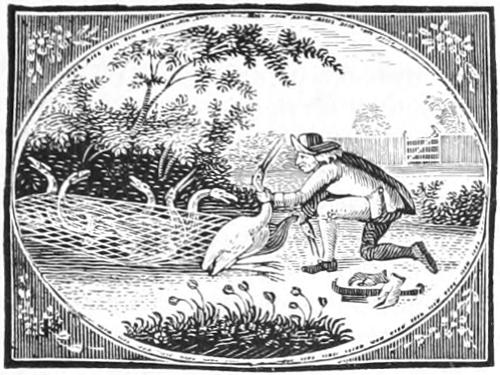
Fable VIII. An Husbandman and Stork.
A poor innocent Stork had the ill hap to be taken in a net that was laid for geese and cranes. The Stork’s plea for herself was simplicity and piety, the love she bore to mankind, her duty to her parents, and the service she did in picking up venomous creatures. This may be all true, says the Husbandman, for what I know; but as you have been taken with ill company, you must expect to suffer with it.
Morals.
Our fortune and reputation require us to keep good company; for as we may be easily perverted by the force of bad examples, wise men will judge of us by the company we keep. What says the proverb? Birds of a feather will flock together.
The youth to temperance in vain pretends, Who goes to taverns, and makes rakes his friends: As maidens, who would live without a stain, Should never choose to lodge in Drury-Lane.
Reflection.
The world will always form an idea of the character of every man from his associates. Nor is this rule founded on wrong principles; for, generally speaking, those who are constant companions are either drawn together from a similitude of manners, or from such a similitude to each other by daily commerce and continual conversation.
If bad company had nothing else to make us shun and avoid it, this, methinks, might be sufficient, that it infects and taints a man’s reputation to as great a degree as if he were thoroughly versed in the wickedness of the whole gang. What is it to me if the thief who robs me of my money gives part of it to build a church? Is he ever the less a thief? Shall a woman’s going to prayers twice a day, save her reputation, if she is known to be a malicious lying gossip? No; such mixtures of religion and sin make the offence but the more flagrant, as they convince us that it was not committed out of ignorance. Indeed, there is no living without being guilty of some faults, more or less; which the world ought to be good-natured enough to overlook, in consideration of the general frailty of mankind, when they are not too gross and too abundant. But, when we are so abandoned to stupidity, and a neglect of our reputation, as to keep bad company, however little we may be criminal in reality, we must expect the same censure and punishment as is due to the most notorious of our companions.
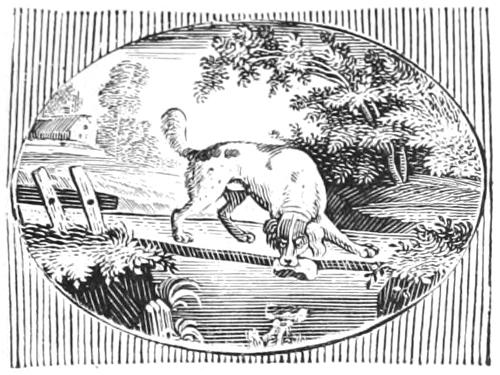
Fable IX. The Dog and the Shadow.
A Dog, crossing a little rivulet with a piece of flesh in his mouth, saw his own shadow represented in the clear mirror of the limpid stream; and believing it to be another Dog who was carrying another piece of flesh, he could not forbear catching at it; but was so far from getting anything by his greedy design, that he dropt the piece he had in his mouth, which immediately sunk to the bottom, and was irrecoverably lost.
Morals.
Excessive greediness mostly in the end misses what it aims at; disorderly appetites seldom obtain what they would have; passions mislead men, and often bring them into great straits and inconveniences, through heedlessness and negligence.
Base is the man who pines amidst his store, And fat with plenty, griping, covets more: But doubly vile, by av’rice when betray’d, He quits the substance for an empty shade.
Reflection.
It is wisely decreed that vice should carry its own punishment along with it. Therefore he that catches at more than belongs to him, justly deserves to lose what he has; yet nothing is more common, and, at the same time, more pernicious, than this selfish principle. It prevails from the king to the peasant; and all orders and degrees of men are, more or less, infected with it. Great monarchs have been drawn in, by this greedy humour, to grasp at the dominions of their neighbours; not that they wanted anything more to feed their luxury, but to gratify their insatiable appetite for vainglory. If the Kings of Persia could have been contented with their own vast territories, they had not lost all Asia, for the sake of a little petty state of Greece. And France, with all its glory, has, ere now, been reduced to the last extremity by the same unjust incroachments.
He that thinks he sees another’s estate in a pack of cards, or a box and dice, and ventures his own in the pursuit of it, should not repine if he finds himself a beggar in the end.
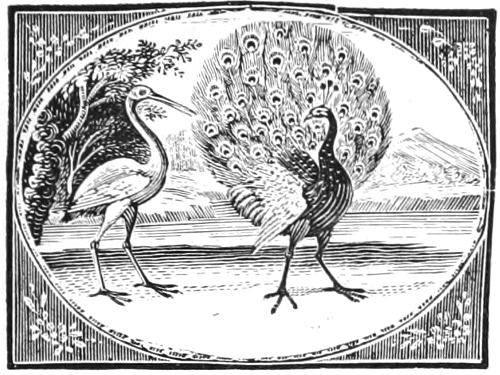
Fable X. A Peacock and a Crane.
As a Peacock and a Crane were in company together, the Peacock spread his tail, and challenged the other to shew him such a fan of feathers. You brag of your plumes, says the Crane, that are fair indeed to the eye, but fit for nothing but to attract the eyes of children and fools. Do as I do, if you can; and then, with a suitable contempt, he springs up into the air, leaving the gaping Peacock staring after him till his eyes ached.
Morals.
There cannot be a greater sign of a weak mind than a person’s valuing himself on a gaudy outside; whether it be on the beauties of person, or the still vainer pride of fine clothes.

Worth makes the man, and want of it the fellow, The rest is all but leather or prunella.
Reflection.
It is very absurd to slight or insult another upon his wanting a property which we possess; for he may, for anything we know, have as just reason to triumph over us, by being master of some good quality of which we are incapable. But, in regard to the fable before us, that which the Peacock values himself upon, the glitter and finery of dress, is one of the most trifling considerations in nature; and what a man of sense would be ashamed to reckon even as the least part of merit. Indeed, children, and those people who think much about the same pitch with them, are apt to be taken with varnish and tinsel; but they who examine by the scale of common sense, must find something of weight and substance before they can be persuaded to set a value. The mind which is stored with virtuous and rational sentiments, and the behaviour which speaks complacence and humility, stamp an estimate upon the possessor which all judicious spectators are ready to admire and acknowledge. But if there be any merit in an embroidered coat, a brocade waistcoat, a shoe, a stocking, or a sword-knot, the person who wears them has the least claim to it; let it be ascribed where it justly belongs—to the several artisans who wrought and disposed the materials of which they consist. This moral is not intended to derogate anything from the magnificence of fine clothes and rich equipages, which, as times and circumstances require, may be used with decency and propriety enough. But one cannot help being concerned lest any worth should be affixed to them more than their own intrinsic value.
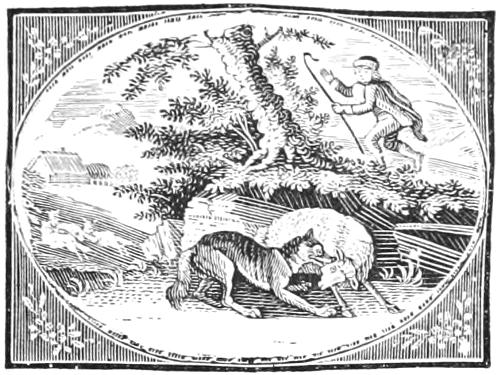
Fable XI. A Boy and False Alarms.
A Shepherd’s Boy kept his sheep upon a common, and in sport and wantonness had gotten a roguish trick of crying, A wolf! a wolf! when there was no such matter, and fooling the country people with false alarms. He had been at this sport so many times in jest, that they would not believe him at last when he was in earnest; and so the wolves broke in upon the flock, and worried the sheep without resistance.
Morals.
This fable shews us the dangerous consequences of an improper and unseasonable fooling. The old moral observes, that a common liar shall not be believed, even when he speaks true.
Rank lies repeated oft, and oft detected, Makes truth itself for a rank lie suspected.
Reflection.
It is not every man’s talent to know when and how to cast out a pleasant word, with such a regard to modesty and respect as not to transgress the true and fair allowances of wit, good-nature, and good breeding. The skill and faculty of governing this freedom within the terms of sobriety and discretion, goes a great way in the character of an agreeable companion: for that which we call raillery, in this sense, is the very sauce of civil entertainment; and without some such tincture of urbanity, even in matters the most serious, the good-humour falters for want of refreshment and relief; but there is a medium yet betwixt all-fool and all-philosopher; I mean a proper and discreet mixture, that in some sort partakes of both, and renders wisdom itself so much the more grateful and effectual. The gravity, in short, of the one is enlivened with the spirit and quickness of the other; and the gaiety of a diverting word serves as a vehicle to convey the force of the intent and meaning of it.
The Shepherd’s Boy, in short, to come closer to the fable, went too far upon a topic he did not understand. And he that is detected for being a notorious liar, besides the ignominy and reproach of the thing, incurs this mischief, that he will scarce be able to get any one to believe him again as long as he lives. However true our complaint may be, or how much soever it may be for our interest to have it believed, yet, if we have been frequently caught tripping before, we shall hardly be able to gain credit to what we relate afterwards. Though mankind are generally stupid enough to be often imposed upon, yet few are so senseless as to believe a notorious liar, or to trust a cheat upon record. These little shams, when found out, are sufficiently prejudicial to the interest of every private person who practises them. But, when we are alarmed with imaginary dangers in respect of the public, till the cry grows quite stale and threadbare, how can it be expected we should know when to guard ourselves against real ones.
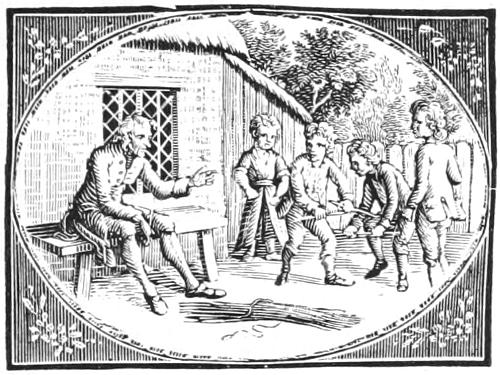
Fable XII. A Father and his Sons.
A very honest man happened to have a contentious brood of children. He called for a rod, and bade them try one after another, with all their force, if they could break it. They tried, and could not. Well, says he, unbind it now, and take every twig of it apart, and see what you can do that way. They did so, and with great ease, by one and one, they snapped it all to pieces. This, says he, is the true emblem of your condition: keep together, and you are safe; divide, and you are undone.
Morals.
The breach of unity puts the world into a state of war, and turns every man’s hand against his brother; but so long as that band holds, it is the strength of all the several parts of it gathered into one, and is not easily subdued.

Distress and ruin on divisions wait, But union is the bond of ev’ry state; Disloyalty’s a plague, dissension’s worse, And parties, where they rage, a kingdom’s curse.
Reflection.
This fable imitates the force of union, and the danger of division. Intestine commotions have destroyed many a powerful state; and it is as ruinous in private affairs as it is in public. A divided family can no more stand than a divided commonwealth; for every individual suffers in the neglect of a common safety. It is a strange thing that men should not do that under the government of rational spirit, and a natural prudence, which wolves and bears do by the impulse of an animal instinct. For they, we see, will make head, one and all, against a common enemy; whereas the generality of mankind lie pecking at one another, till one by one they are all torn to pieces, never considering (as this fable teaches) the necessity and benefits of union.
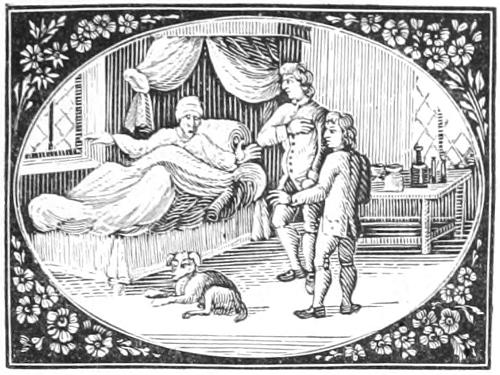
Fable XIII. The Sick Father and his Children.
A Countryman who had lived handsomely in the world upon his honest labour and industry, was desirous his Sons should do so after him; and being now upon his death-bed, My dear children, says he, I reckon myself bound to tell you before I depart, that there is a considerable treasure hid in my vineyard; wherefore pray be sure to dig, and search narrowly for it, when I am gone. The Father dies, and the Sons fall immediately to work upon the vineyard. They turned it up over and over, and not one penny of money to be found there; but the profit of the next vintage expounded the riddle.
Morals.
Good counsel is the best legacy a Father can leave to a Child; and it is still the better, when it is so wrapt up, as to beget a curiosity as well as an inclination to follow it.

Assiduous pains the swelling coffers fill, And all may make their fortune, if they will.
Reflection.
There is no wealth like that which comes by the blessing of God upon honest labour and warrantable industry. Here is an incitement to an industrious course of life, by a consideration of the profit, the innocence, and the virtue of such an application. There is one great comfort in hand, besides the hope and assurance of more to come. It was a touch of art in the Father to cover his meaning in such a manner as to create a curiosity and an earnest desire in his Sons to find it out. And it was a treble advantage to them besides; for there was health in the exercise, profit in the discovery, and the comfort of a good conscience in discharging the duty of a filial obedience.
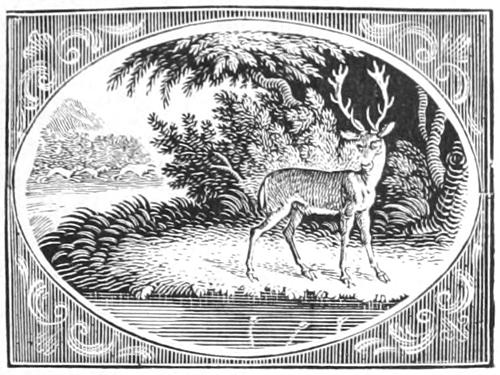
Fable XIV. The Stag looking into the Water.
A Stag that had been drinking at a clear spring, saw himself in the water; and, pleased with the prospect, stood afterwards for some time contemplating and surveying his shape and features, from head to foot. Ah! says he, what a glorious pair of branching horns are there! how gracefully do those antlers hang over my forehead, and give an agreeable turn to my whole face! If some other parts of my body were but proportionable to them, I would turn my back to nobody; but I have a set of such legs as really makes me ashamed to see them. People may talk what they please of their conveniences, and what great need we stand in of them upon several occasions; but for my part, I find them so very slender and unsightly, that I had as lief have none at all. While he was giving himself these airs, he was alarmed with the noise of some Huntsmen and a pack of hounds that had been just laid on upon the scent, and were making towards him. Away he flies in some consternation, and, bounding nimbly over the plain, threw dogs and men at a vast distance behind him. After which, taking a very thick copse, he had the ill-fortune to be entangled by his horns in a thicket; where he was held fast, till the hounds came in and pulled him down. Finding now how it was like to go with him, in the pangs of death, he is said to have uttered these words: Unhappy creature that I am! I am too late convinced, that what I prided myself in has been the cause of my undoing; and what I so much disliked, was the only thing that could have saved me.
Morals.
We should examine things deliberately, and candidly consider their real usefulness before we place our esteem on them; otherwise, like the foolish Stag, we may happen to admire those accomplishments which are of no real use, and often prove prejudicial to us, while we despise those things on which our safety may depend.
Virtue despised, the beauty views her face, And pleased beholds an angel in her glass; But lost at length, to shame and want resigned, Mourns she ne’er sought the beauty of the mind.
Reflection.
Perhaps we cannot apply this better, than by supposing the fable to be a parable; which may be thus explained. The Deer, viewing itself in the water, is a beautiful young lady at her looking-glass. She can’t help being sensible of the charms which lie blooming in every feature of her face. She moistens her lips, languishes with her eyes, adjusts every lock of her hair with the nicest exactness, gives an agreeable attitude to her whole body, and then, with a soft sigh, says to herself, Ah! how happy might I be, in a daily crowd of admirers, if it were not for the censoriousness of the age! When I view that face, where Nature, to give her her due, has been liberal enough of charms, how easy should I be, if it were not for that slender particular, my honour. The odious idea of that comes across all my happy moments, and brings a mortification with it that damps my most flattering tender hopes. Oh that there were no such thing in the world! In the midst of these soliloquies, she is interrupted by the voice of her lover, who enters her chamber singing a rigadoon air; and, introducing his discourse in a familiar easy manner, takes occasion to launch out in praise of her beauty, sees she is pleased with it, snatches her hand, kisses it in a transport; and in short, pursues his point so close, that she is not able to disengage herself from him. But, when the consequence of all this approaches, in an agony of grief and shame, she fetches a deep sigh, and says, “Ah! how mistaken have I been! the virtue I slighted might have saved me; but the beauty I prized so much has been my undoing.”
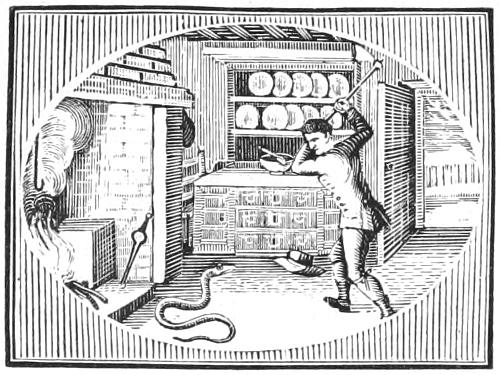
Fable XV. The Countryman and the Snake.
A Villager, in a frosty, snowy winter, found a Snake under a hedge, almost dead with cold. He could not help having compassion for the poor creature, so brought it home, and laid it upon the hearth near the fire; but it had not lain there long before (being revived with the heat) it began to erect itself, and fly at his wife and children, filling the whole cottage with dreadful hissings. The countryman hearing an outcry, and perceiving what the matter was, catched up a mattock, and soon dispatched him, upbraiding him at the same time in these words: “Is this, vile wretch, the reward you make to him that saved your life? Die, as you deserve; but a single death is too good for you.”
Morals.
It is no strange thing to see a reprobate fool throw his poisonous language about against those who are so inadvertent as to concern themselves with him.
Evil for good, relentless to bestow, Is all the gratitude th’ unworthy know; Mercy to such should be with caution shown; Saving a villain’s life, you risk your own.
Reflection.
’Tis the nature of ingrates to return evil for good; and the moralists in all ages have incessantly declaimed against the enormity of this crime, concluding that they who are capable of hurting their benefactors, are not fit to live in a community; being such, as the natural ties of parent, friend, or country, are too weak to restrain within the bounds of society. Indeed, the sin of ingratitude is so detestable, that, as none but the most inhuman temper can be guilty of it, so, in writing to men, there is no occasion to use many words, either in exposing the vice itself, or dissuading people from the commission of it. Therefore it is not likely that a person of Æsop’s sagacity would have compiled this fable, without having something else in view, besides this trite and obvious subject. He certainly intended to put us in mind, That, as none but a poor silly clown would go to take up a Snake and cherish it, so we shall be very negligent and ill-advised, if, in doing good offices, we do not take care to bestow our benevolence upon proper objects. It was not at all unnatural in the Snake to hiss, and brandish his tongue, and fly at the first that came near him; as soon at the person that saved his life as any other; indeed more likely, because nobody else had so much to do with him. Nor is it strange at any time to see a reprobate fool throwing his poisonous language about, and committing his extravagances against those, more especially, who are so inadvertent as to concern themselves with him. The snake and the reprobate will not appear extraordinary in their malevolence. But the sensible part of mankind cannot help thinking those guilty of great indiscretion who receive either of them into their protection.
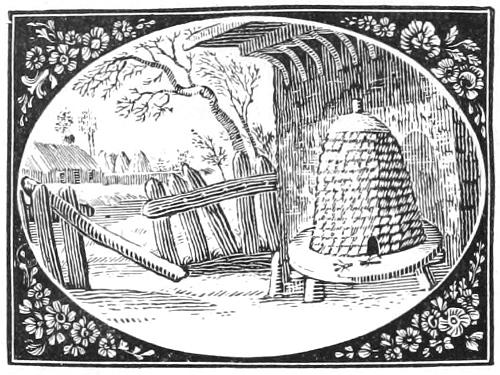
Fable XVI. A Gnat and a Bee.
A Gnat, half starved with cold and hunger, went one frosty morning to a Bee-hive, to beg a charity; and offered to teach music in the Bee’s family, for her diet and lodging. The Bee very civilly desired to be excused: For, says she, I bring up all my children to my own trade, that they may be able to get their living by their industry; and I am sure I am right; for see what that music, which you would I teach my children, has brought you yourself to.
Morals.
Industry ought to be diligently inculcated in the minds of children of all ranks and degrees; for who stands so sure as to say he is exempt from the vicissitudes of this uncertain life?
The wretch who works not for his daily bread, Sighs and complains, but ought not to be fed. Think, when you see stout beggars on their stand, The lazy are the locusts of the land.
Reflection.
The many unhappy persons whom we daily see singing up and down in order to divert other people, though with very heavy hearts of their own, should warn all those who have the education of children, how necessary it is to bring them up to industry and business, be their present prospects ever so hopeful; that so, upon any unexpected disaster, they might be able to turn their hands to a course which might procure them an honest livelihood.
The Gnat in the fable, we may further observe, is very like many inconsiderate persons in life. They gaily buz about in the summer of prosperity, and think of nothing but their present enjoyments: but when the winter of adversity comes, they poorly creep about, and supplicate the industrious inhabitants of every Bee-hive, charitably to relieve those wants which they have brought upon themselves; and often deservedly meet the repulse, and the sting, which the Bee gives to the Gnat in the fable. We have seen many a doted-on child, who has been brought up to singing, dancing, and all the gay delights of this world, and yet has been forced to shut up the last scene of a miserable life in want and beggary; which had been prevented, if they had been early taught the value of industry and independency, and the means, by the former, of attaining the latter.
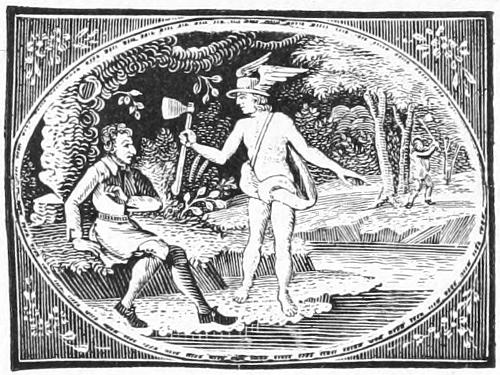
Fable XVII. Mercury and the Woodman.
A Man was felling a tree on the bank of a river; and by chance let his hatchet slip out of his hand, which dropt into the water, and immediately sunk to the bottom. Being therefore in great distress for the loss of his tool, he sat down and bemoaned himself most lamentably. Upon this, Mercury appeared to him, and, being informed of the cause of his complaint, dived to the bottom of the river, and coming up again, showed the man a golden hatchet, demanding if that were his. He denied that it was. Upon which Mercury dived a second time, and brought up a silver one. The man refused it, alleging likewise that this was not his. He dived a third time, and fetched up the individual hatchet the man had lost; upon sight of which the poor wretch was overjoyed, and took it with all humility and thankfulness. Mercury was so pleased with the fellow’s honesty, that he gave him the other two into the bargain, as a reward for his just dealing. The man goes to his companions, and giving them an account of what had happened, one of them went presently to the river’s side, and let his hatchet fall designedly into the stream. Then sitting down upon the bank, he fell a weeping and lamenting, as if he had been really and sorely afflicted. Mercury appeared as before, and diving, brought him up a golden hatchet, asking if that was the hatchet he lost. Transported at the precious metal, he answered, Yes; and went to snatch it greedily. But the god detesting his abominable impudence, not only refused to give him that, but would not so much as let him have his own hatchet again.
Morals.
Honesty is the best policy; religion absolutely requires it of its votaries: and the honest man, provided his other talents are not deficient, always carries the preference in our esteem, before any other, in whatever business he employs himself.
Truth, sacred truth, shall flourish and prevail, While all the arts of fraud and falsehood fail; The flimsy cheat wise judges soon descry; Sure those will rob, who scruple not to lie.
Reflection.
Notwithstanding the proneness of mankind to do evil, and the account which some find in playing the knave, yet there cannot be invented a more true and reasonable maxim, than that by which we are assured that honesty is the best policy. If we consider it in respect to the other world, there never was a religion but strictly required it of its votaries. If we examine it upon account of this, we shall find that the honest man, provided his other talents are not deficient, always carries the preference in our esteem, before any other, in whatever business he thinks fit to employ himself.
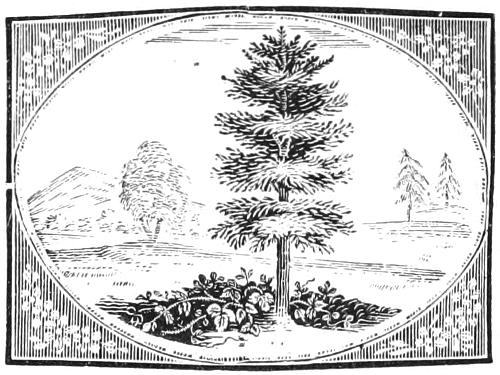
Fable XVIII. The Fir and a Bramble.
My head, says the boasting Fir-tree to the humble Bramble, is advanced among the stars; I furnish beams for palaces, and masts for shipping; the very sweat of my body is a sovereign remedy for the sick and wounded: whereas thou, O rascally Bramble, runnest creeping in the dirt, and art good for nothing in the world but mischief. I pretend not to vie with thee, said the Bramble, in the points thou gloriest in. But, not to insist upon it, that He who made thee a lofty Fir, could have made thee an humble Bramble, I pray thee tell me, when the Carpenter comes next with the axe into the wood, to fell timber, whether thou hadst not rather be a Bramble than a Fir-tree?
Morals.
Poverty secures a man from many dangers; whereas the rich and the mighty are the mark of malice and cross fortune; and still the higher they are, the nearer the thunder.
Minions of fortune, pillars of the state, Round your exalted heads what tempests low’r! While peace secure, and soft contentment wait On the calm mansions of the humble poor.
Reflection.
The answer of the humble Bramble to the proud Fir-tree is so pathetic, that it may of itself serve for a very good moral to this fable. Nothing of God’s works is so mean as to be despised, and nothing so lofty but it may be humbled; nay, and the greater the height the greater the danger. For a proud great man to despise an humble little one, when Providence can so easily exalt the one, and abase the other, and has not for the merit of the one, or the demerit of the other, conferred the respective conditions, is a most inexcusable arrogance: and history has given numberless instances, where the overgrown Fir, though a Prime Minister, or great Prince, in the very height of its pride, has been forced to submit to the executioner’s axe, while the humble Bramble, or contented poor man, has continued safe and unhurt in his lowly obscurity. We may further observe on this fable, that there is no state of life but has its mixture of good and evil. The Fir may boast of the uses to which it is put, and of its strength and stature; but then it has not to boast of the creeping Bramble’s safety; for the value of the one tempts the Carpenter’s axe, while the poverty of the other makes it little worth any one’s while to molest it. Upon the whole matter, we may add, That as pride or arrogance is a vice that seldom escapes without a punishment; so humility is a virtue that hardly ever goes without a blessing.
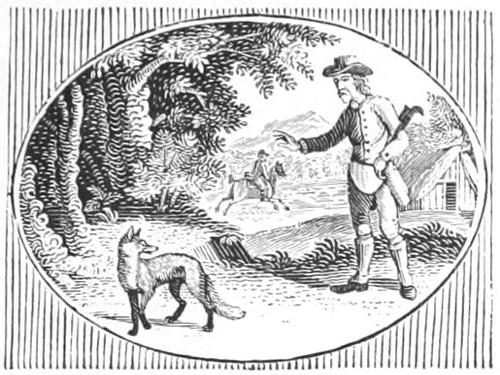
Fable XIX. The Fox and the Countryman.
A Fox being hard hunted, and having run a long chase, was quite tired. At last he spied a country fellow in a wood, to whom he applied for refuge, entreating that he would give him leave to hide himself in his cottage, till the hounds were gone by. The man consented, and the Fox went and covered himself up close in a corner of the hovel. Presently the hunters came up, and inquired of the man, if he had seen the Fox. No, says he, I have not seen him indeed: but all the while he pointed with his finger to the place where the Fox was hid. However, the hunters did not understand him, but called off their hounds, and went another way. Soon after, the Fox, creeping out of his hole, was going to sneak off; when the man, calling after him, asked him, if that was his manners, to go away without thanking his benefactor, to whose fidelity he owed his life. Reynard, who had peeped all the while, and seen what passed, answered, I know what obligations I have to you well enough; and I assure you, if your actions had but been agreeable to your words, I should have endeavoured, however incapable of it, to have returned you suitable thanks.
Morals.
To appear in another’s interest, while underhand we are giving intelligence to their enemies, is treacherous, knavish, and base.
Thus by the knave, in worldly guile adept, Vows are perform’d and promises are kept: True to the form, and fearful of offence, Good soul! he swerves from nothing but the sense.
Reflection.
Sincerity is a most beautiful virtue: but there are some, whose natures are so poor-spirited and cowardly, that they are not capable of exerting it. Indeed, unless a man be steady and constant in all his actions, he will hardly deserve the name of sincere. An open enemy, though more violent and terrible, is not, however, so odious and detestable as a false friend. To pretend to keep another’s counsel, and appear in their interest, while underhand we are giving intelligence to their enemies, is treacherous, knavish, and base. There are some people in the world very dexterous at this kind of defamation; and can, while they seem most vehement in the commendation or defence of a friend, throw out a hint which shall stab their reputation deeper than the most malicious weapon, brandished at them in a public manner, could have been capable of doing.
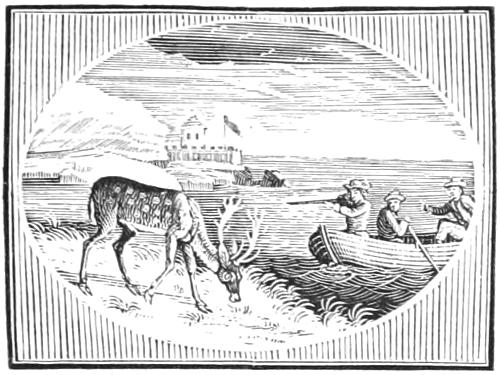
Fable XX. A One-Eyed Stag.
A One-Eyed Stag that was afraid of the Huntsmen at land, kept a watch that way, and fed with his blind side towards an arm of the sea, where he thought there was no danger. In this hope of security, he was shot, by a ball from a boat, and so ended his days with this lamentation: Here I am destroyed, says he, where I reckoned myself to be safe on the one hand; and no evil has befallen me, where I most dreaded it, on the other. But it is my comfort that I intended the best.
Morals.
We are liable to many accidents that no care or foresight can prevent: but we are to provide, however, the best we can against them, and leave the rest to Providence.
The man whom we fear and suspect for a cheat, Can hardly delude us with art and deceit; But he, in whose faith we securely confide, May come round with impunity on our blind side.
Reflection.
We are many times preserved or destroyed by those accidents or counsels that in all probability should have had quite contrary effects. But yet it is our part to act according to reason, and commit ourselves to Heaven for the rest. The wisest of men have their follies or blind sides, and have their enemies too, who watch to take advantage of their weakness. It behoves us therefore to look to ourselves on the blind side, as the part that lies most exposed to an attack. And yet, when we have done our best to prevent mischief, the very precaution itself serves many times to contribute to our ruin. In short, the ways and workings of Providence are unsearchable, and it is not in the power of human prudence to obviate all the accidents of life.
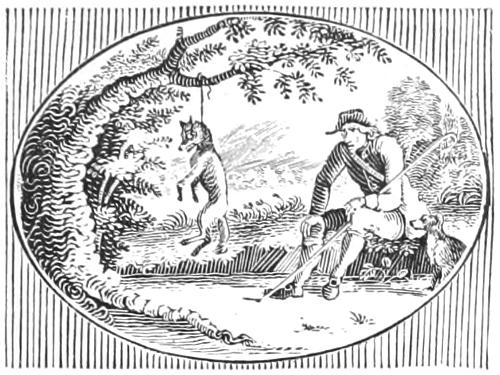
Fable XXI. A Shepherd and a Young Wolf.
A Shepherd took a Wolf’s sucking Whelp, and trained it up with his Dogs. The Whelp fed with them, grew up with them, and whensoever they went out upon the chase of a Wolf, the Whelp would be sure to make one. It fell out sometimes that the Wolf escaped; but this domestic Wolf would be still hunting on, after the dogs had given over the chase, till he came up to his true brethren, where he took part of the prey with them, and then went back again to his master. And when he could come in for no snacks with the Wolves, he would now and then make free, by the by, with a straggling Sheep out of the flock. He carried on this trade for a while; but at last he was caught in the fact, and hanged by his injured master.
Morals.
Men naturally false and treacherous are no more to be reclaimed than Wolves. Benefits but augment their power to do mischief, and they never fail to make use of it to the prejudice of their benefactors.

The knave profest may seem a gen’rous foe, Deserves a rope, yet claims our pity too; But dragg’d to light, and stript of his disguise, The sneaking hypocrite unpitied dies.
Reflection.
Ill dispositions may be dissembled for a while, but nature is very hardly to be altered, either by counsel or education. It may do well enough for curiosity and experiment, to try how far ill-natured men, and other creatures, may be wrought upon by fair usage and good breeding; but the inclination and cruelty of the dam will be hardly ever out of the Whelp. Thrust back nature with a pitch-fork, says the poet, and it will return. This Fable is a true portrait of an ungrateful and treacherous mind, which, according to the proverb, holds with the Hare, and runs with the Hound; which pretends greater zeal than others, like the Wolf’s Whelp in the chase, in the detection and pursuit of a common enemy; but at the same time divides spoils with him, and, rather than want an opportunity of doing mischief, will prey privately upon the property he pretends to defend. Many such instances we might give in public life; and there have been too many such also in private life. The punishment so richly merited in the Fable is heartily to be wished whenever they happen, and it is a pity it should be wanted.
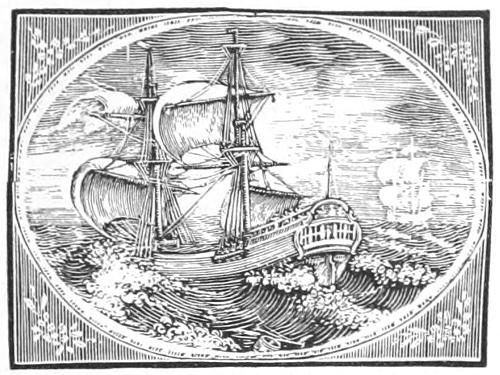
Fable XXII. Seamen Praying to Saints.
In a terrible tempest at Sea, one Seaman took notice that the rest of his fellows were praying severally to so many Saints. Have a care, my masters, says he, what you do; for what if we should all be drowned now before the messenger can deliver his errand? would it not be better, without going so far about, to pray to Him that can save us without help.
Morals.
A wise man will take the nearest and surest way to obtain his end, and to commit no business of importance to a proxy, where he may do it himself.
Inactive wishes are but waste of time, And, without efforts, pray’rs themselves a crime: Vain are their hopes, who miracles expect, And ask from heaven what themselves neglect.
Reflection.
Mankind, indolent and discontented, are very apt to murmur at the dispensations of Providence, and to call for divine assistance to extricate them from their difficulties, when it is in their own power to accomplish what they desire. They, who will not stir a finger to promote their own interest, have little title to expect any foreign assistance: but when they have exerted their utmost skill and assiduity, their prayers, if there is need for them, will be enforced by every argument drawn from their own merit, and the compassion of those to whom they make their application. Industry includes in itself this double blessing: It commonly enables us to gain the point we aim at; and in that case heightens the relish of our enjoyments, when we consider that we have attained them by our own art and perseverance: but if we should happen to fail in our endeavours, it excites the pity of those who are able to serve us; and gives a grace to our petitions for assistance and relief.
What needs any man make his court to the servants, says Sir Roger L’Estrange, when his access is open to the Master? and especially when that Master is as ready to give as the petitioner to ask.
With regard to secular matters, we are told a pleasant story of one of our princes, King Charles II. He had often observed a country gentleman attending to speak with one of his first ministers; and once passing through the apartment where the gentleman happened to be alone, he asked him his business. He told him, that he was attending upon his minister, as he had often done, for such a post in his Majesty’s gift. The King asked him, what he was to give for it to the minister? He said £1000. The King humorously told him he should have it, and bid him give him £500, and keep t’other £500 himself; and if he or his friends wanted any more such bargains, he might apply to himself directly, and be served at half price.
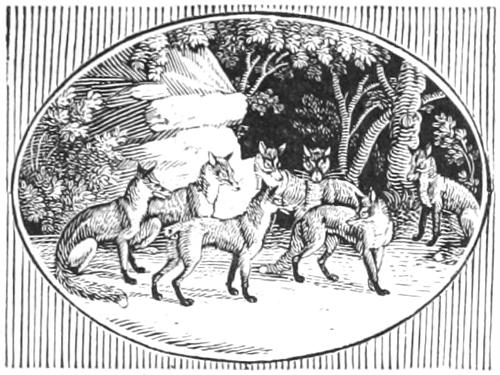
Fable XXIII. A Fox that had lost his Tail.
A Fox taken in a trap was glad to compound for his neck, by leaving his tail behind him. It was so uncouth a sight for a Fox to appear without a tail, that the very thought of it made him weary of his life: but, however, for the better countenance of the scandal, he got the Master and Wardens of the Foxes’ company to call a Court of Assistants, where he himself appeared, and made a learned discourse upon the trouble, the uselessness, and the indecency of Foxes wearing tails. He had no sooner said out his say, but up rises a cunning Snap, then at the board, who desired to be informed, whether the worthy member that moved against the wearing of tails, gave his advice for the advantage of those that had tails, or to palliate the deformity and disgrace of those that had none.
Morals.
It is the way of the world to give other people counsel for by-ends. But yet it is a hard matter to over-rule a multitude to their own pain and loss.
Gladly Sir Clumsy would the world persuade, Not he, but all mankind are vilely made; And might the purblind and the deaf advise, ’Twere better for to want both ear and eyes.
Reflection.
We may improve a doctrine from this, that every man has his weak side, either by mischance or by nature; and that he makes it his business to cover it, too, the best he can. In case of the worst, it is some sort of ease to have company in misfortune. It puts a man out of countenance to be in fashion by himself, and therefore the Fox acted cunningly to try if he could bring his fellow Foxes to put themselves into his mode. When we have carried a point as far as it will go, and can make no more of it, it is a stroke of art and philosophy to look as if we did not so much as wish for a thing that is not to be had. Every man’s present condition has somewhat to be said for it: if it be uneasy, the skill will be, either how to mend it, or how to bear it; but then there must be no clashing with the methods, the decrees, and the laws of nature. A man that has forfeited his honour and his conscience, seems to be much in the condition of the Fox here that had lost his tail; and oftentimes takes as much pains, too, to persuade all his companions to follow his fashion, and be as corrupt as himself, that he may bring the rest of the world down to his own standard.
In respect to temporal affairs, they, who pretend to advise what measures are most conducive to the public welfare, are often guided entirely by their own private interest: but whenever they counsel any extraordinary innovations, or endeavour to change any established proceedings long used and approved, we may be almost certain that they have some other design, rather than the promotion of the general good. When new regulations are proposed, we should turn our eyes on those who propose them, and consider with attention, whether they have not some personal motives for their conduct, and we should be particularly cautious not to suffer ourselves to be imposed on by fine speeches and pretended patriotism: for he who is very solicitous to bring about a scheme, not attended with any visible advantage to the community, must only mean his own benefit; or, like the Fox, when he has been caught himself in one trap, endeavour to catch us in another.
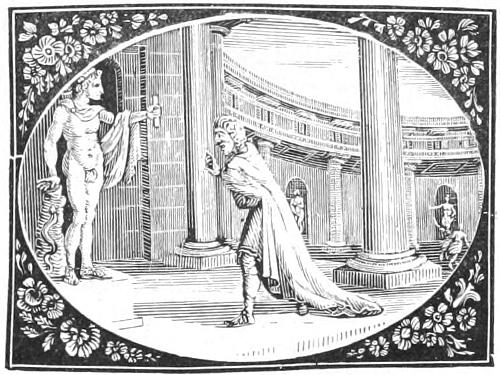
Fable XXIV. A Scoffer Punished.
A Presumptuous Scoffer at things sacred took a journey to Delphi, on purpose to try if he could put a trick upon Apollo. He carried a sparrow in his hand under his coat, and told the god, I have something in my hand, says he: Is it dead or living? If the oracle should say it was dead, he could show it alive; if living, it was but squeezing it, and then it was dead. He that saw the iniquity of his heart, gave him this answer: It shall e’en be which of the two thou pleasest: for it is in thy choice to have it either the one or the other, as to the bird, but it is not in thy power as to thyself; and immediately struck the bold scoffer dead, for a warning to others.
Morals.
Presumption naturally leads people to infidelity, and that by insensible degrees to atheism: for when men have once cast off a reverence for religion, they are come within one step of laughing at it.
That there’s a God all nature loud proclaims, Tho’ the vile Atheist the great truth disclaims; Or warp’d by prejudice, or sunk in sin, His fright’ned conscience feels the lash within.
Reflection.
There is no playing fast and loose with God Almighty, who sees the very thoughts of our hearts. This way of fooling in holy things, is the very boldest sort of impiety that can be practised. He that pretends to doubt of an All-knowing power, has as much right to doubt of an Almighty power too; and the bringing of one attribute in question, opens the way to a diffidence of all the rest. It would prevent a great deal of wickedness in the world, if men would but live and act in religious matters, so as to own and to recognise the force and awe of a Deity in their practices, as well as in their words: but when they come to querying and riddling upon it, with an If it be so and so, the scandal of the supposition is not to be borne; for such a way of seeming to affirm a thing, is but one remove from a flat denial of it. Such was the Scoffer’s question here to the oracle, which implies both the doubt of a divine Omniscience, and a curiosity to discover the truth of the matter, with a banter at the end of it; and so makes a consummated wickedness.
Fable XXV. A Swan and a Stork.
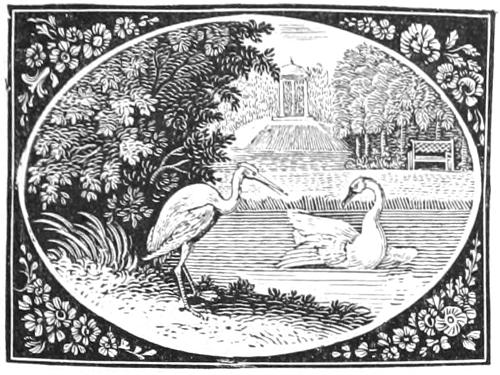
A Stork that was present at the song of a dying Swan, told her, it was contrary to nature to sing so much out of season; and asked her the reason of it. Why, says the Swan, I am now entering into a state where I shall be no longer in danger of either snares, guns, or hunger; and who would not joy at such a deliverance?
Morals.
Death is a certain relief from all the difficulties, pains, and hazards of life.
This life’s a scene of bustle, care, and noise, Of certain trouble, and uncertain joys, Death ends the contest, we can only have A peaceful refuge in the silent grave.
Reflection.
It is a great folly to fear that which it is impossible to avoid; and it is yet a greater folly to fear the remedy of all evils: for death cures all diseases, and frees us from all cares. It is as great a folly again not to prepare ourselves, and provide for an inevitable fate. We are as sure to go out of the world, as we are that ever we came into it; and nothing but the conscience of a good life can support us in that last extremity. The fiction of a Swan’s singing at her death does, in the moral, but advise and recommend it to us to make ready for the cheerful entertainment of our last hour, and to consider with ourselves, that if death be so welcome a relief even to animals, barely as a deliverance from the cares, miseries, and dangers of a troublesome life, how much a greater blessing ought all good men to account it then, that are not only freed by it from the snares, difficulties, and distractions of a wicked world, but put into possession (over and above) of an everlasting peace, and the fruition of joys that shall never have an end!
To attain this desirable state of mind, it is necessary that we reflect fully and frequently on the uncertainty of all worldly affairs, how flitting and transitory, and how barren of real happiness, they are; and to endeavour at a proper discharge of our duty to society, by acting well the part assigned us in it, and managing the talents committed to our care, to beneficial ends and purposes; to our Creator, by a constant and humble acquiescence in the dispensations of His providence, and sincere and grateful acknowledgments for His numberless mercies to ourselves, by restraining inordinate and unlawful desires, and bridling our dissolute and licentious affections, duly considering, that as we bear the stamp and image of the Deity, every debasement and pollution offered to our persons is an affront and indignity to Him, and contrary to His express commands: By a constant attention to these things, we may be enabled to meet death without fear. The consciousness of a well-spent life strips the tyrant of all his terrors; then, like the Swan in the Fable, we shall consider him as a welcome visitant that will ease us of this load of mortality, and usher us into a state of inexpressible felicity.
Fable XXVI. A Swallow and a Spider.
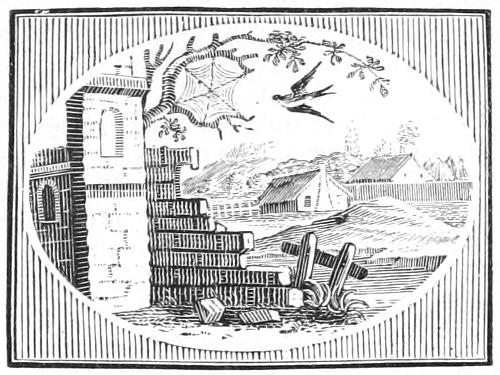
A Spider that observed a Swallow catching of flies, fell immediately to work upon a net to catch Swallows; for she looked upon it as an encroachment upon her right: but the birds, without any difficulty, brake through the work, and flew away with the very net itself. Well, says the Spider, bird-catching is none of my talent, I perceive; and so she returned to her old trade of catching flies again.
Morals.
A wise man will not undertake anything without means answerable to the end.
They who by imitations covet fame, Oft incur dangers, and solicit shame; For though the bright original we prize, His abject imitator all despise.
Reflection.
Every man should examine the strength of his own mind with attention and impartiality, and not fondly flatter himself by measuring his own talents by the false standard of the abilities of another. We can no more adopt the genius of another man than assume his shape and person; and an imitation of his manner would no more become us than his clothes. Man is indeed an imitative animal; but whatever we take from general observation, without servilely copying the practice of any individual, becomes so mixed and incorporated with our notions that it may fairly be called our own. Almost every man has something original in himself, which, if duly cultivated, might perhaps procure him esteem and applause; but if he neglects his natural talents, or perverts them by an absurd imitation of others, he becomes an object of ridicule; especially, if he attempts to perform things beyond the compass of his strength or understanding.
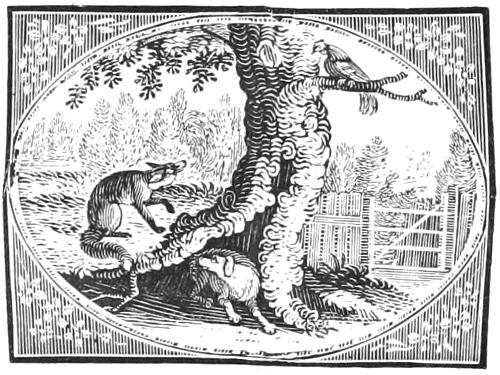
Fable XXVII. A Dog, a Cock, and a Fox.
A Dog and a Cock took a journey together. The Dog kennelled in the body of a hollow tree, and the Cock roosted at night upon the boughs. The Cock crowed about midnight (at his usual hour), which brought a Fox that was abroad upon the hunt immediately to the tree; and there he stood licking of his lips at the Cock, and, wheedling him to get him down, he protested he never heard so angelical a voice since he was born; and what would not he do now, to hug the creature that had given him so admirable a serenade? Pray, says the Cock, speak to the porter below to open the door, and I’ll come down to you. The Fox, little dreaming of the Dog so near, did as he was directed, and the Dog presently seized and worried him.
Morals.
When a man has to do with an adversary who is too crafty or too strong for him, it is right to turn him off to his match.
Happy the ready wit of men of parts, Who on himself can turn the villain’s arts!
Reflection.
Experience makes many a wise man of a fool, and security makes many a fool of a wise man. We have an instance of the former in the Cock’s over-reaching the Fox; and of the other in the Fox’s supine confidence, that made him so intent upon his prey, as to neglect his safety; and to fall himself into the pit that he had digged for another. It is much the same case in the world, when Providence is pleased to confound the presumptuous, the false, the mighty, and the bloodthirsty by judgments of lice and frogs—that is to say, by the most despicable of instruments; and that frequently at a crisis of time, when they think themselves sure of the success of their mischievous projects.
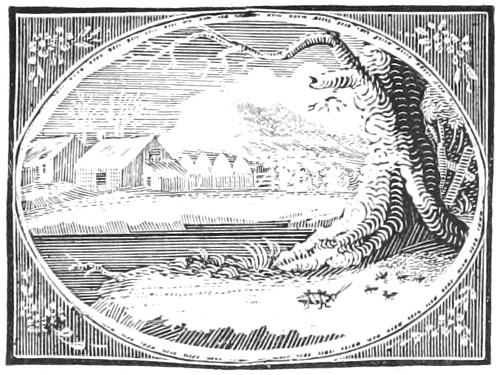
Fable XXVIII. The Ants and a Grasshopper.
As the Ants were airing their provisions one winter, a hungry Grasshopper begged a charity of them. They told him, that he should have wrought in summer, if he would not have wanted in winter. Well, says the Grasshopper, but I was not idle neither; for I sung out the whole season. Nay then, said they, you’ll e’en do well to make a merry year of it, and dance in winter to the tune that you sung in summer.
Morals.
Action and industry is the business of a wise and a good man, and nothing is so much to be despised as slothfulness. Go to the Ant, thou sluggard, says the Royal Preacher, consider her ways, and be wise; which in a few words sums up the moral of this fable.
O now, while health and vigour still remain. Toil, toil, my lads, to purchase honest gain! Shun idleness! shun pleasure’s tempting snare! A youth of revels breeds an age of care.
Reflection.
It is hard to say of laziness or luxury, whether it be the more scandalous, or the more dangerous evil. The very soul of the slothful does but lie drowsing in his body, and the whole man is totally given up to his senses; whereas the profit and the comfort of industry are substantial, firm, and lasting; the blessings of security and plenty go along with it, and it is never out of season. What is the Grasshopper’s entertainment now, but a summer’s song? A vain and empty pleasure? Let it be understood, however, that we are not to pass avarice upon the world under title of good-husbandry and thrift, and thereby utterly to extinguish charity. We are indeed, in the first place, to consult our own necessities; but we are then to consider, in the second, that the necessities of our neighbours have a Christian right to a part of what we have to spare.
The stress of this moral lies upon the preference of honest labour to idleness; and the refusal of relief, on the one hand, is intended only for a reproof to the inconsiderate loss of opportunity on the other. This does not hinder yet, but that the Ants, out of their abundance, ought to have relieved the Grasshopper in her distress, though it was her own fault that brought her to it; for if one man’s faults could discharge another man of his duty, there would be no longer any place left for the common offices of society. To conclude, we have our failings, every one of us; and the improvidence of my neighbour must not make me inhuman. The Ant did well to reprove the Grasshopper for her slothfulness; but she did ill, after that, to refuse her charity in her distress.
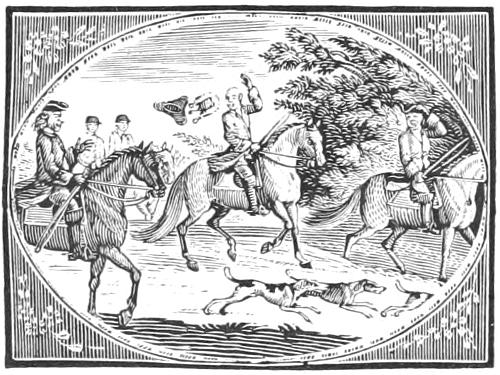
Fable XXIX. The Bald Cavalier.
When periwigs were first used, and then chiefly to cover the defect of baldness, a certain Cavalier had one for that purpose, which passed for his own hair. But as he was one day riding out with some others a hunting, a sudden puff of wind blew off both his wig and his hat, and set the company in a loud laugh at his bald pate. He, for his part, fell a laughing with the rest, and said, Why, really, Gentlemen, this is merry enough; for how could I expect to keep other people’s hair, who could not preserve my own.
Morals.
The edge of a jest is quite blunted and turned off when a man has presence of mind to join in it against himself, or begin it.
When the loud laugh prevails at your expense, All want of temper is but want of sense; Would you disarm the sneerer of his jest, Frown not, but laugh in concert with the rest.
Reflection.
A frank, easy way of openness and candour agrees best with all humours; and he that is over solicitous to conceal a defect, often does as good as make proclamation of it. And it is a turn of art in many cases, where a man lies open to ridicule, to anticipate the jest, and make sport with himself first.
The epigram of Martial upon a lady, who, in a case in point, was for hiding a defect like that of the bald Knight, and made use of false hair, carries with it the severer sting, as she was willing and studious to conceal it. The Poet, made English, says:—
The golden hair that Galla wears Is hers: who would have thought it? She swears ’tis hers—and true she swears, For I know where she bought it.
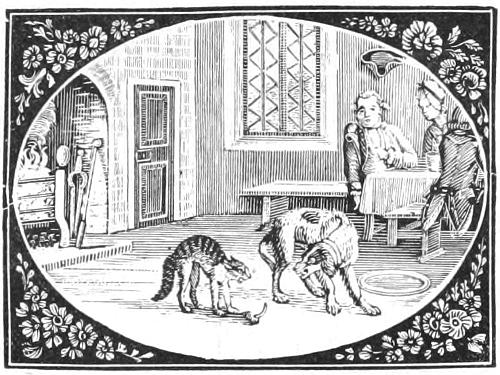
Fable XXX. A Dog and a Cat.
Never were two creatures better together than a Dog and a Cat brought up in the same house from a Whelp and a Kitten; so kind, so gamesome and diverting, that it was half the entertainment of the family to see the gambols and love-tricks that passed betwixt them. Only it was observed, that still at meal-times, when scraps fell from the table, or a bone was thrown to them, they would be snarling and spitting at one another under the table like the worst of foes.
Morals.
But as the sun, refulgent globe of light, By mists obscur’d, may shine more dimly bright; Or by some sable cloud its lustre veil’d, Lie hid in darkness from the world conceal’d; So every joy which mortals here can know Is damp’d by sorrow, or is mix’d with woe. Pleasure entire, from all assaults secure, To no one’s granted, no one can ensure. Ungovern’d passions to such heights will rise, That friendship’s self oft falls a sacrifice; A fire is kindled in the human breast, By words misconstru’d, or a simple jest, As some one relish often spoils a feast. Thus sportful, frisking on the sunny green, Two lambkins loving are not seldom seen: Off from the flock they to a distance stray, And all a battle represent in play; Till some unlucky thrusts rouse up their rage, Pretence is gone, in earnest they engage. Those whom she sung, the muse reluctant sees Differ for causes trivial as these; And full of anguish, sighing and alone, Pours out her deep-felt melancholy moan:— “Where dwelt their mutual fondness in that hour When love took leave, and kindness now no more? Alas! no more, in social converse join’d, Shall they partake the rapture of the mind? Placid content, shall fell disgust succeed, And vexing discord make enjoyment bleed? Forbid it, Heav’n! and to them gracious deign Their strict agreeing harmony again! All jarring thoughts at utmost distance keep, And bid the former in oblivion sleep!”
Reflection.
Here is a perfect emblem of the practices and friendships of the world. We contract little likings, enter into agreeable conversations, and pass away the time so merrily and kindly together, that one would think it impossible for anything under the sun to break the interest; and yet upon the throwing in any cross interest among us, which is all one with the bone under the table; nay, upon a jealous thought, or a mistaken word or look, all former bonds are cancelled, the league broken, and the farce concludes in biting and scratching one another’s eyes out. The same figure will serve for princes and states, public persons and private, married and single; people, in fine, of all professions and pretences.
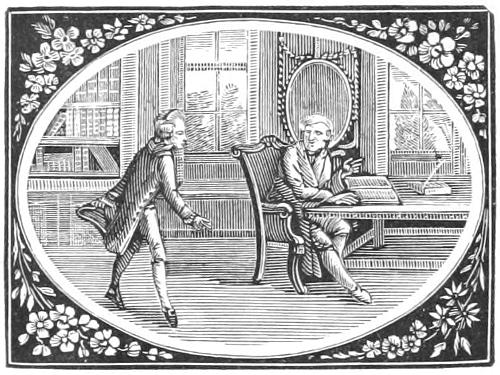
Fable XXXI. An Impertinent and Philosopher.
A certain pragmatical, gay, fluttering Coxcomb would needs make a visit to a Philosopher. He found him alone in his study, and fell a wondering how he could endure to lead so solitary a life. Sir, says the Philosopher, you are exceedingly mistaken, for I was in very good company till you came in.
Morals.
What the noisy and most numerous part of the world calls good company, is generally the most irksome and insipid thing in the world to a wise man; a mere round of folly and impertinence, and void of any kind of instruction or benefit to a reflecting mind. How preferable to such a man must it be to converse with the learned dead, rather than the unedifying and noisy living?
“Swift is obscure, and Addison wants taste, Shakespeare is low, and Milton all bombast”— Thus wit itself half-seeing fools condemn, And sense and genius are all dark to them.
Reflection.
It is one of the most vexatious mortifications, perhaps, of a sober and studious man’s life, to have his thoughts disordered, and the chain of his reason discomposed, by the importunity of a tedious and impertinent visit; especially if it be from a fool of quality, where the station of the man entitles him to all returns of good manners and respect. The drift of this fable is to tell us, that good books and good thoughts are the best company, and that they are mistaken, who think a wise man can ever be alone. It prepares us also to expect interruptions and disappointments, and to provide for them; but withal to take the best care we can to prevent the plague of ill company, by avoiding the occasions of it. The linking of a man of brains and honesty, with a lewd, insipid companion, is effectually the emblem of that tyrant who bound the living and the dead together; and yet this is it which the impertinent takes for the relief of solitude, and that he calls company.
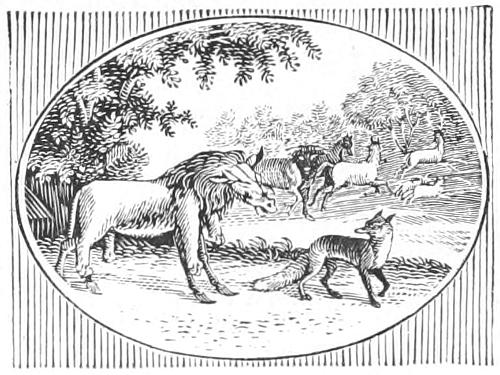
Fable XXXII. The Fox and the Ass.
An Ass, finding a Lion’s skin, disguised himself with it, and ranged about the forest, putting all the beasts that saw him into a bodily fear. After he had diverted himself thus for some time, he met a Fox; and being desirous to fright him too, as well as the rest, he leapt at him with some fierceness, and endeavoured to imitate the roaring of the Lion. Your humble servant, says the Fox; if you had held your tongue, I might have taken you for a Lion, as others did; but now you bray, I know who you are.
Morals.
The more distant any person is from the thing he affects to appear, the stronger will the ridicule be which he excites, and the greater the inconveniencies into which he runs himself.
The fop, with empty jests and silly smile, Women, or men like women, may beguile; Howe’er with fools his senseless prate may pass, The man of sense soon knows him for an Ass.
Reflection.
This is so trite and common a subject, that there is scarce any one who is ignorant of it. A man is known by his words, as a tree is by the fruit; and, if we would be apprised of the nature and qualities of any one, let him but discourse, and he himself will speak them to us, better than another can describe them. We may therefore perceive from this fable, how proper it is for those to hold their tongues who would not discover the shallowness of their understandings.
Asses and Owls, unseen, themselves betray, When these attempt to hoot, or those to bray.
The deepest rivers are most silent: the greatest noise is ever found where there is the least depth of water. And it is a true observation, that those who are the weakest in understanding, and most slow of apprehension, are generally the strongest in opinion, and most precipitate in uttering their crude conceptions. When, with a secret awe, we regard the grave address and important mien of some senatorian person, whom we have chanced to meet in a coffee-house, what a speaker do we often think he must be, before we hear him speak! his air breathes the seriousness of a privy councillor, and his erect aspect the dignity of an eminent patriot: But he utters himself, and undeceives us; he brays, and tells the whole company what he is.
Fable XXXIII. A Boar and a Fox.
As a Boar was whetting his teeth against a tree, up comes a Fox to him. Pray, what do you mean by that? says he. I do it, says the Boar, to be in readiness in case of an attack by an enemy. But, replies the Fox, I see no occasion for it, for there is no enemy near you. Well, says the Boar, but I see occasion for it; for when I come once to be set upon, it will be too late for me to be whetting when I should be fighting.
Morals.
A discreet man should have a reserve of everything that is necessary beforehand, that when the time comes for him to make use of them, he may not be in a hurry and confusion.
Wise are the people, who in peace prepare Their fleets and armies for the distant war; Who ne’er in treaties and conventions trust, Nor leave the sword, though it be sheath’d, to rust.
Reflection.
He that is not idle when he is at leisure, may play with his business. A discreet man should have a reserve of everything that is necessary beforehand; that when the time comes for him to make use of them, he may not be in a hurry and a confusion. A wise General has not his men to discipline, or his ammunition to provide, when the trumpet sounds To Arms; but sets apart his times of exercise for one, and his magazines for the other, in the calm season of peace. We hope to live to a good old age: Should we not, then, lay up a store of conveniences against that time, when we shall be most in want of them, and least able to procure them? We must die; nay, never start; we must. Are there not some necessary things for us to transact before we depart; at least, some trifle or other for us to bequeath, which a sudden stroke may prevent us from doing? Sure there is. And if so, how inexcusable shall we be, if we defer the execution of it till the alarm comes upon us. I did not think of it, is an expression unworthy a wise man’s mouth; and was only intended for the use of fools.
Fable XXXIV. The Discontented Ass.
An Ass, in a hard winter, wished for a little warm weather, and a mouthful of fresh grass to nap upon, in exchange for a heartless truss of straw, and a cold lodging. In good time the warm weather and the fresh grass came on; but so much toil and business along with it, that the Ass grows quickly as sick of the spring as he was of the winter. He next longs for summer; and when that comes, finds his toils and drudgery greater than in the spring; and then he fancies he shall never be well till autumn comes: but there again, what with carrying apples, grapes, fuel, winter provisions, and such like, he finds himself in a greater hurry than ever. In fine, when he has trod the circle of the year in a course of restless labour, his last prayer is for winter again, and that he may but take up his rest where he began his complaint.
Morals.
The life of an unsteady man runs away in a course of vain wishes, and unprofitable discontent; an unsettled mind can never be at rest. There is no season without its business.
Who lacks the pleasures of a tranquil mind, Will something wrong in every station find; His mind unsteady, and on changes bent, Is always shifting, yet is ne’er content.
Reflection.
There is no measure to be taken of an unsteady mind: but still it is either too much or too little, too soon or too late. The love of novelty begets and increases the love of novelty; and the oftener we change, the more dangerous and troublesome do we find this itch of variety to be. The Ass was sick of the winter, sicker yet of the spring, more sick still of the summer; and sickest of all of the autumn; till he is brought, in the end, to compound for his first condition again, and so take up with that for his satisfaction, which he reckoned upon before for his misfortune.
Thus it is, when fickle and foolish people will be prescribing to, and refining upon, the wise and gracious appointments of the Maker of the world. They know not what they are, and they know not what they would be, any farther, than that they would not be what they are. Let their present state in the world be what it will, there is still something or other in it that makes their lives wearisome: and they are as peevish company to themselves too, as they are to their friends and neighbours; for there is not one circumstance in nature, but they shall find matter to pick a quarrel at: the present is only the course of so many moments into time to come: were it not better then for people at first to sit down contentedly in the post where Providence has placed them, and to do their duty in that state of life, as they are early and excellently taught, to which it has pleased God to call them, than be forced to do it at last, by the dear bought experience of their follies?
This, however, we say, not to bar honest industry, or a sober application to those studies or means that may probably contribute to the mending of a man’s fortune; provided that he set up his resolution beforehand, not to let himself down below the dignity of a wise man, be the issue of his endeavours what it will. For he that is not content at present, carries the same weakness along with him to the next remove; and whoever either passionately covets any thing that he has not, or feels himself glutted with a satiety of what he possesses, has already lost his hold: so that if we would be happy, we must fix upon some foundation that can never deceive us, and govern ourselves by the measures of sobriety and justice.
If we look round us in the world, and likewise examine our own hearts, we shall find that one of the principal sources of our discontent, is the making of a false estimate of our own and our neighbours’ abilities, and thence drawing conclusions that lead us into difficulties. Does any citizen hold a considerable office? Or is he eminent for his fortune? That envy, inherent in our nature, prompts us to examine, by what title he enjoys those benefits and distinctions, that lift him above the level of the community; the same principle leads us to overlook, in some measure, his good qualities, and greatly to exaggerate his bad ones. We are tempted next to make a comparison between him and ourselves, and by looking through the other end of the perspective, imagine that the balance is greatly in our favour, and without further process or examination conclude, that the world ought to abide by our decision; hence the numberless disappointments we meet with; hence all the uneasiness we feel in every stage and station of life. Were we to pay a proper attention to that celebrated sentence of the Delphic oracle,
“Know Thyself,”
we should experience fewer disappointments, become better members of society, and enjoy a greater portion of that tranquillity of soul, that internal serenity of mind, without which every station in life, however garnished with honours, however loaded with riches, may be pronounced miserable.
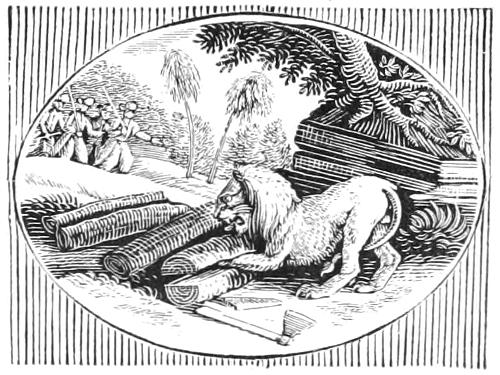
Fable XXXV. The Undutiful Young Lion.
Among other good counsels that an old experienced Lion gave to his whelp, this was one, that he should never contend with a man: for, says he, if ever you do, you’ll be worsted. The little Lion gave his father the hearing, and kept the advice in his thought, but it never went near his heart. When he came to be grown up, afterwards, and in the flower of his strength and vigour, about he ranges to look for a man to grapple with. In his ramble he met with a yoke of oxen, and then with a horse, saddled and bridled, and severally asked them if they were men; but they saying they were not, he goes after this to one that was cleaving of blocks: D’ye hear? says the Lion, you seem to be a man: And a man I am, says the fellow. That’s well, quoth the Lion, and dare you fight with me? Yes, says the man, I dare: why, I can tear all these blocks to pieces, you see. Put your feet now into this gap, where you see an iron thing there, and try what you can do. The Lion presently put his paws into the gaping of the wood, and with one lusty pluck made it give way, and out drops the wedge; the wood immediately closing upon it, there was the Lion caught by the toes. The Wood-man presently upon this raises the country, and the Lion finding what a strait he was in, gave one hearty twitch and got his feet out of the trap, but left his claws behind him. So away he goes back to his father, all lame and bloody, with this confession in his mouth: Alas! my dear father, says he, this had never been, if I had followed your advice.