Chapter V · VARIABLE AND TEMPORARY STARS.
Reading edition
To ordinary observers, the light of the stars seems to be constant. Even to those who are familiar with the constellations, the stars appear to maintain their relative brilliancy unchanged. To a great extent this is, of course, true; the great majority of the stars remaining of the same brightness from day to day, and from year to year. There are, however, numerous exceptions to this rule. Many of the stars, when carefully watched, are found to fluctuate in their light, being sometimes brighter, and sometimes fainter. These are known as “variable stars”—one of the most interesting class of objects in the heavens. Some of these have been known for a great number of years, and their variations having been carefully watched, the laws governing their light changes have been well determined.
We will first consider the variable stars with long periods of variation, as these generally show the largest fluctuations of light. Among these, the first star in which variation of light seems to have been noticed is the extraordinary object, Omicron Ceti, popularly known as Mira, or the “wonderful” star. It appears to have been first noticed by David Fabricius in the year 1596. He observed that the star now called Omicron, in the constellation Cetus, was of the third magnitude on April 13 of that year, and that in the following year it had disappeared. Bayer saw it again in 1603, when forming his maps of the constellations, and assigned to it the Greek letter Omicron, but does not seem to have noticed the fact that it was the same star which had been observed by Fabricius seven years previously. No further attention seems to have been paid to it until 1638 and 1639, when it was observed at Francker by Professor Phocylides Holwarda to be of the third magnitude in December, 1638, invisible in the following 457summer, and again visible in October, 1639. From 1648 to 1662 it was carefully observed by Hevelius, and in subsequent years by several observers. Its variations are now regularly followed from year to year, and it forms one of the most interesting objects of its kind in the heavens. Its light varies from about the second magnitude to the ninth, but its brightness at maximum is variable to a considerable extent. Heis found its average brightness at maximum in the years 1840–58 to be about the third magnitude, but on November 6, 1799, Sir William Herschel found it but little inferior to Aldebaran. On the other hand, at the maximum of 1868, November 7, Heis found it only of the fifth magnitude, and fainter than he had seen it for twenty-seven years. Sawyer also observed a maximum of about the fifth magnitude (4·9) on November 10, 1887. M. Dumenel finds (1896) that in the last twelve periods the magnitude at maximum varied from 2·5 to 4·7.[115]
It is stated in several books on astronomy, on the authority of Hevelius, that in the years 1672–76 Mira was invisible at the epoch of maximum. This is, however, quite a mistake, for it was long since (1837) pointed out by Bianchi that the supposed non-appearance of Mira in those years can be simply accounted for by the fact that the star was near the sun at the time of maxima, and could not be observed. If the star happens to be at a maximum in April or May, it will be too near the sun to be seen, and as the mean period is about 331 days, this occurs every ten years. For this reason the maxima seems to have passed unobserved in the years 1852, 1853, and 1854, and again in 1883. The star will be very favourably placed for observation in the year 1897, and some following years. It has also been stated that Mira wholly disappears at the maximum, but this is another error, for the star never becomes fainter than 9½ magnitude at any time, and always remains visible in a 3-inch telescope. The colour of the star is decidedly reddish, but this hue seems to be more marked at minimum than at maximum. The spectrum is a remarkable one of the third type, in which 458bright lines have been seen by Espin, Maunder, and Secchi. At the minimum of February, 1896, the spectrum was photographed by Professor Wilsing, and he found it very similar to a photograph taken by Professor Pickering some years previously. The recent photograph shows the lines of hydrogen broad and bright. There seems to be no other bright lines except those of hydrogen. The blue end of the spectrum is very similar to that of our sun, but towards the red end there are “dark flutings, fading towards the red.” The bright hydrogen lines have only been seen at maximum, but the instruments used by Professor Wilsing were not sufficiently powerful to show whether they are also visible at minimum.[116] Professor Pickering thinks that “probably most of the stars of long period give a spectrum resembling that of ο Ceti, and having the hydrogen lines G, h, α, β, γ, and δ, bright about the time of maximum. When the photographic spectrum is faint, only the brighter lines, G and h, are visible.” Within the last few years, Mrs. Fleming, while examining the photographs of stellar spectra taken for the Henry Draper Memorial, has detected a number of variable stars of long period by the presence of bright lines in their spectra. These are mostly telescopic stars.
Although the average period of Mira is about 331 days, it is subject to marked irregularities, which Argelander has attempted to represent by an elaborate formula. In recent years, however, the epochs of maxima have deviated considerably from the dates computed from this formula, and at the maximum of February, 1896, the star did not reach its maximum light until nearly two months after the predicted time.
Perhaps the long period variable star next in order of interest—at least to observers in the Northern Hemisphere—is that known as Chi Cygni. It was discovered by Kirch in 1686. A mistake is often made about the identity of this remarkable object It is sometimes confused with the neighbouring star, 17 Cygni of Flamsteed’s catalogue. At the 459time of Flamsteed’s observation, the variable star—which is the true Chi Cygni of Bayer’s map (made in 1603)—happened to be faint, and Flamsteed, not being able to find Bayer’s star, affixed the Greek letter χ to his No. 17. It was proposed by Struve to call Flamsteed’s star χ1, and the variable χ2; but there seems to be no necessity to perpetuate Flamsteed’s error, which has been frequently pointed out. All authorities on the variable stars now give this variable its proper designation—χ Cygni. The star varies at maximum from 4 to 6½ magnitude, and at the minimum it sinks to below the thirteenth magnitude. At some maxima, therefore, it is easily visible to the naked eye, and at others it is just below the limit of ordinary vision. At the maximum of 1847, it was visible to the naked eye for a period of 97 days. The average period is about 406 days; but, according to Schönfeld—a well-known authority on the variables—observations indicate a small lengthening of the period. Observations in recent years show that the minimum occurs about 185 days before the maximum. This gives 221 days for the fall from maximum to minimum, and illustrates a feature common to many of the variable stars, namely, that the increase of light is more rapid than the decrease. This peculiarity is especially marked in the short period variables, which will be considered further on. Chi Cygni is said to be “strikingly variable in colour.” Espin’s observations in different years show it “sometimes quite red, at others only pale orange-red.” In the spectroscope, its light shows a splendid spectrum of the third type (or banded spectrum, very characteristic of these long period variables), in which bright lines were observed by Espin in May, 1889. One of these bright lines seems to be identical with the coronal line D3, the characteristic line of helium.
R Leonis is another remarkable variable star, which is sometimes visible to the naked eye at maximum. It lies closely south of the star known as 19 Leonis. It was discovered by Koch in 1782. At the maximum, its brightness varies from 5·2 to 7 magnitude, and at minimum it fades to about the tenth magnitude. The mean period is about 313 460days; but this is subject to some irregularities, and Chandler finds “good evidence of cyclical variation of period, with a long term.” The star is red in all phases of its light, and forms a fine telescopic object. Close to it are two small stars, which form, with the variable, an isosceles triangle. The spectrum is a fine one of the third type, a type very characteristic of these long period variables. Espin finds that the bright bands of the spectrum are brighter when the star is increasing in light, and fainter when decreasing. At the maximum of 1889, he found bright lines in its spectrum.
Another long period variable star which is visible to the naked eye at maximum is R Hydræ—the Upsilon Hydræ of Bayer—but it is rather too far south to be well observed in this country. Its variability was discerned by Maraldi in 1704; but the star was also observed by Hevelius in 1672. Its light at maximum varies from 3½ to 5½ magnitude, and at minimum it fades to nearly the tenth magnitude. The period has diminished considerably since the year 1708, when it was about 500 days. This had decreased to about 487 days in 1785, to 461 days in 1825, and to 437 days in 1870, and it seems to be still diminishing. Formulæ have been computed by Gould and Chandler, but do not agree. Schmidt found that the minimum occurs about 200 days before the maximum. The star is very reddish, and the spectrum is a fine one of the third type, which Dunér describes as of “extraordinary beauty,” the typical bands of this type of spectrum being very large, and perfectly black. At the maximum of 1889, Espin observed a bright line in its spectrum, and finds—as in R Leonis—that the bright bands are brighter when the star is increasing in light, and fainter as it decreases.
There is a very remarkable variable star in the Southern Hemisphere known as Eta Argûs. It lies in the midst of the great nebula in Argo, and the history of its fluctuations in light is very interesting. Observed by Halley in 1677 as a star of the fourth magnitude, it was seen of the second magnitude by Lacaille in 1751. After this, it must have again faded, for Burchell found it of only the fourth magnitude from 4611811 to 1815. From 1822 to 1826, it was again of the second magnitude, as observed by Fallows and Brisbane; but on Feb. 1, 1827, it was estimated of the first magnitude by Burchell. It then faded again, for on Feb. 29, 1828, Burchell found it of the second magnitude. From 1829 to 1833, Johnson and Taylor rated it of the second magnitude; and it was still of this magnitude, or a little brighter, when Sir John Herschel commenced his observations at the Cape of Good Hope in 1834. It does not seem to have varied much in brightness from that time until December, 1837, when Herschel was astonished to find its light “nearly tripled.” He says:[117] “It very decidedly surpassed Procyon, which was about the same altitude, and was far superior to Aldebaran. It exceeded α Orionis, and the only star (Sirius and Canopus excepted) which could at all be compared with it was Rigel, which, as I have already stated, it somewhat surpassed.”
From this time its light continued to increase. On the 28th December it was far superior to Rigel, and could only be compared with α Centauri, which it equalled, having the advantage of altitude, but fell somewhat short of it as the altitudes approached equality. The maximum of brightness seems to have been obtained about the 2nd January, 1838, on which night, both stars being high and the sky clear and pure, it was judged to be very nearly matched, indeed, with α Centauri, sometimes the one, sometimes the other, being judged brighter; but, on the whole, a was considered to have some little superiority. After this, the light began to fade. Already on the 7th and 15th January, α Centauri was unhesitatingly placed above, and Rigel as unhesitatingly below, it. On the 20th, it was “visibly diminished—now much less than α Centauri, and not much greater than Rigel. The change is palpable.” And on the 22nd, Arcturus (the nearest star in light and colour to α Centauri which the heavens afford), when only 10° high, surpassed η, the latter being on the meridian; η was still, however, superior to β Centauri, α Crucis, and Spica, and continued so (and even superior to 462Rigel) during the whole of February, nor was it until the 14th April, 1838, that it had so far faded as to bear comparison with Aldebaran, though still somewhat brighter than that star. In 1843, it again increased in brightness, and in April of that year it was observed by Maclear to be brighter than Canopus, and nearly equal to Sirius! It then faded slightly, but seems to have remained nearly as bright as Canopus until February, 1850, since which time its brilliancy gradually decreased. It was still of the first magnitude in 1856, according to Abbott, but was rated a little below the second magnitude by Powell in 1858. Tebbutt found it of the third magnitude in 1860; Abbott a little below the fourth in 1861. Ellery rated it fifth magnitude in 1863, and Tebbutt sixth magnitude in 1867. In 1874 it was estimated 6·8 magnitude at Cordoba, and only 7·4 in November, 1878. Tebbutt’s observations from 1877–86 show that it did not rise above the seventh magnitude in those years, and in March, 1886, it was rated 7·6 magnitude by Finlay at the Cape of Good Hope. This seems to have been the minimum of light, for in May, 1888, Tebbutt found that it “had increased fully half a magnitude” since April, 1887, and might “be rated as a star of 7·0 magnitude.” From photometric measures made with the meridian photometer in Peru in the years 1889–91, Professor Bailey found its mean magnitude to be 6·32, so that probably the star is now slowly rising to another maximum. Bailey found the hydrogen lines Hβ, Hγ, and Hδ, bright in the spectrum of its light. Wolf suggested a period of 46 years, and Loomis, 67; but Schönfeld thought that a regular period is very improbable. The star is very reddish in colour.
There are many other variables of long period, but they are too numerous to be described in detail in a work of this character. Particulars respecting some of them will be found in “The Scenery of the Heavens,” by the present writer.
We will now consider the variables of short period, which are particularly interesting objects, owing to the comparative rapidity of their light changes. The periods vary in length from about 17¼ days down to a few hours. Perhaps the most 463interesting of these short period variables, at least to the amateur observer, is the star Beta Lyræ, which is easily visible to the naked eye in all phases of its light. It can be readily identified, as it is the nearest bright star to the south of the brilliant Vega, and one of two stars of nearly the same magnitude, the second being Gamma Lyræ. The variability of Beta Lyræ was discovered by Goodricke in the year 1784. The period is about 12 days, 21 hours, 46 minutes, 58 seconds. At maximum the star is about 3·4 magnitude, and there are two minima, one of magnitude 3·9, and the other—the chief minima—of 4·5 magnitude. That is, the star has at maximum 2¾ times the light of the chief minimum, and 1·6 times the light of the secondary minimum. In other words, if we represent the light of the star at maximum by 27 candles, placed at a suitable distance from the eye, the secondary minimum will be represented by 17 candles, and the chief minimum by 10 candles. These fluctuations, although not very great, can be easily recognised with the naked eye by comparison with the neighbouring star Gamma Lyræ. Professor Pickering thought that this variation in the light of Beta might be explained by supposing that the star rotated on its axis in the period indicated by the variation, that the ratio of the axis of the rotating spheroid is as 5 to 3, and that there is a darker portion at one of the ends, which is “symmetrically situated as regards the longer axis.” Recent observations with the spectroscope, however, render this explanation doubtful, and indicate rather that the star is a very close double or “spectroscopic binary,” although it does not seem certain that an actual eclipse of one component by the other takes place, as in the case of Algol. Bright lines were detected in the star’s spectrum by Secchi so far back as 1866. In 1883, M. Von Gothard noticed that the appearance of these bright lines varied in appearance, and from an examination of photographs taken at Harvard Observatory in 1891, Mrs. Fleming found displacements of bright and dark lines in a double spectrum, the period of which agreed fairly well with that of the star’s light changes. Professor Pickering thence concluded that the 464star consists of two components, one stellar and the other gaseous, but this conclusion has been somewhat modified by subsequent investigations. M. Bélopolsky, from photographs taken with the great 30-inch telescope at the Pulkowa Observatory, confirms the periodical displacement in the bright spectral lines “in a period identical with that of the star’s usual double fluctuation,” but Keeler and Vogel agree that the observed displacements are incompatible with the supposed occurrence of eclipses. Vogel, however, is “convinced that Beta Lyræ represents a binary or multiple system, the fundamental revolutions of which, in 12 days 22 hours, in some way control the light change, while the spectral variations, although intimately associated with the star’s phases, are subject, besides, to complicated disturbances running through a cycle perhaps measured by years.”[118] The helium line, D3, is visible in the spectrum.
Another interesting star of short period is Delta Cephei, which is one of three stars forming an isosceles triangle a little to the west of Cassiopeia’s Chair, the variable being at the vertex of the triangle, and the nearest of the three to Cassiopeia. Its variability was also discovered by Goodricke in 1784. It varies from 3·7 to 4·9 magnitude, with a period of 5 days, 8 hours, 47 minutes, 40 seconds. The amount of the variation is, therefore, the same as in the case of Algol, the star’s light at maximum being about three times its light at minimum. The period and light curve, however, show, according to Schönfeld, some irregularities, the computed times of maxima and minima being sometimes in error to the extent of over an hour. These are, however, small, and, on the whole, the star seems to be very uniform in its fluctuations. From seven years’ observations, Argelander found no deviation from perfect uniformity. The curve representing the light variations is not, however, very smooth, particularly during the decrease of light, when a nearly stationary period seems to occur from 16 to 24 hours after the maximum. The rise from minimum to maximum occupies about one-third of the period, another example of the feature so characteristic of 465variable stars, namely, that the increase of light is quicker than the decrease. As already stated (Chapter IV.), observations of the spectrum recently made by M. Bélopolsky, with the great Pulkowa telescope, show that, like Beta Lyræ, the star is probably a close binary, the period of the observed fluctuations in the positions of the spectral lines agreeing with that of the star’s light changes. In this case, however, the lines are not doubled, as in Beta Lyræ, but merely displaced from their normal position, indicating that, as in the case of Algol, one of the components is a dark body. There are, however, no indications that any eclipse of the bright star by its dark companion takes place. Indeed, the nature of the light changes, which are continuous and not confined to a few hours, as in Algol, are inconsistent with the occurrence of an eclipse. We must, therefore, conclude that the fluctuations of light are caused in some way by physical disturbances produced by the approach and recession of the two component bodies in an elliptic orbit round their centre of gravity. The observations indicate that the component stars, when furthest apart in their orbital revolution, are separated by a distance three times as great as when at their point of nearest approach. The observations also show that Delta Cephei is approaching the earth at the rate of about 8¾ miles a second. Its spectrum is of the second or solar type, differing in this respect from the other spectroscopic binaries, which show a spectrum of the first or Sirian type. The colour of the star is yellow, and it has a distant bluish companion of about the fifth magnitude, which may possibly have some physical connexion with the brighter star, as both stars have a common proper motion through space.
Another remarkable star of short period is Eta Aquilæ, the variability of which was discovered by Pigott in 1784. It varies from magnitude 3·5 to 4·7, with a period of 7 days, 4 hours, 14 minutes, but Schönfeld found marked deviations from a uniform period. It will be seen that the amount of the light change, 1·2 magnitude, is the same as that of Delta Cephei. Its colour is yellow, and its spectrum, like that of 466Delta Cephei, of the second or solar type. The minimum takes place about three days before the maximum.
Zeta Geminorum is another variable star with a comparatively short period. It varies from about 3·7 to 4·5 magnitude, with a period of 10 days, 3 hours, 41½ minutes. Here the variation of light is only 0·8 of a magnitude, or, in other words, the light at maximum is about double the light of minimum, as in the case of the Algol type variable, Lambda Tauri. Its light curve, unlike that of Delta Cephei and Eta Aquilæ, is nearly symmetrical; that is, the period occupied in the increase of light is about the same as that of the decrease. Prof. Pickering thinks that Zeta Geminorum is possibly a “surface of revolution,” one side of the rotating star being about four-fifths of the brightness of the other; but Prof. Lockyer finds it to be a “spectroscopic binary,” like Beta Lyræ and Delta Cephei.
Among variables with very short periods may be mentioned the southern star R Muscæ, which is close to Alpha Muscæ. It varies from 6·6 to 7·4, and goes through all its changes in the short period of 21 hours 20 minutes. The minimum takes place about nine hours before the maximum. It was discovered at the Cordoba Observatory, and Dr. Gould remarks that “its average brightness is so near the limit of ordinary visibility in a clear sky at Cordoba, that the small regular fluctuations of light place it every few hours alternately within or beyond this limit.”
A remarkable variable star of short period was discovered in 1888 by Mr. Paul in the southern constellation Antlia. It varies from magnitude 6·7 to 7·3, with the wonderfully short period of 7 hours, 46 minutes, 48 seconds, all the light changes being gone through no less than three times in twenty-four hours! It was for some years believed that the variation was of the Algol type, but recent measures made at the Harvard College Observatory show that it belongs to the same class as Delta Cephei and Eta Aquilæ.
A telescopic variable with a wonderfully short period was discovered by Chandler in 1894. It lies a little to the west of 467the star Gamma Pegasi, and has been designated U Pegasi. It varies from magnitude 8·9 to 9·7, and was first supposed to be of the Algol type with a period of about two days, but further observations showed that the period was much shorter, and only 5 hours, 31 minutes, 9 seconds. The light curve is quite different from the Algol type, and also from that of Delta Cephei and other short period variables, the times of increase and decrease of light being about equal, as in the case of Zeta Geminorum. This fact, combined with the remarkable rapidity of its light changes, which are gone through four times in less than twenty-four hours, makes this remarkable star a most interesting object. Possibly there may be other stars in the heavens with a similar rapidity of variation which have hitherto escaped detection.
Several southern variables of short period have been discovered in recent years by Mr. A. W. Roberts at Lovedale in South Africa.
Unlike the variable stars of long period which seem scattered indifferently over the surface of the heavens, the great majority of the short period variables are found in a zone which nearly coincides with the course of the Milky Way. The most notable exceptions to this rule are W Virginis with the comparatively long period of 17¼ days, and U Pegasi, above described, which has the shortest known period of all the variable stars. Another peculiarity is that most of them are situated in what may be called the following hemisphere, that is between 12 hours and 24 hours of right ascension. The most remarkable exception to this rule is Zeta Geminorum. The above rules do not apply to variables of the Algol type, which we will now proceed to consider.
Algol, or Beta Persei, is a famous variable star, and the typical star of the class to which it belongs. Its name, Algol, is derived from a Persian word, meaning the “demon,” which suggests that the ancient astronomers may have detected some peculiarity in its behaviour. The real discovery of its variation was, however, made by Montanari in 1667, and 468his observations were confirmed by Maraldi in 1692. Its fluctuations of light were also noticed by Kirch and Palitzsch, but the true character of its variations was first determined by the English astronomer, Goodricke, in 1782. Its fluctuations of light are very curious and interesting. Shining with a constant, or nearly constant, brightness for a period of about 59 hours as a star of a little less than the second magnitude, it suddenly begins to diminish in brightness, and in about 4½ hours it is reduced to a star of about magnitude 3½. In other words, its light is reduced to about one-third of its normal brightness. If we suppose three candles placed side by side at such a distance that their combined light is merged into one, and equal to the usual brightness of Algol, then if two of these candles are extinguished, the remaining candle will represent the light of Algol at its minimum brilliancy. It is stated in several books on astronomy that Algol varies to the extent of two magnitudes, but this is quite incorrect, as a change of two magnitudes would imply that the light at maximum is over six times the light at minimum, which is more than double the star’s real variation. The star remains at its minimum, or faintest, for only about 15 minutes. It then begins to increase, and in about 5 hours recovers its normal brightness, all the light changes being gone through in a period of about 10 hours out of nearly 69 hours, which elapse between successive minima. These curious changes take place with great regularity, and the exact hour at which a minimum of light may be expected can be predicted with as much certainty as an eclipse of the sun.
Goodricke, comparing his own observations with one made by Flamsteed in the year 1696, found the period from minimum to minimum to be 2 days, 20 hours, 48 minutes, 59½ seconds, and he came to the conclusion that the diminution in the light of the star is probably due to a partial eclipse by “a large body revolving round Algol.” This hypothesis was fully confirmed in the years 1888–89 by Professor Vogel with the spectroscope. As no close companion to Algol is visible in the largest telescopes, we must conclude that either the 469satellite is a dark body, or else so close to the primary that no telescope could show it. As has been stated in Chapter III., the motion of a star in the line of sight can be ascertained by measuring displacements in the positions of the spectral lines. Now, if the diminution in Algol’s light is due to a dark body revolving round it, and periodically coming between us and the bright star, it follows that both components will be in motion, and both will revolve round the common centre of gravity of the pair. A little before a minimum of light takes place, the dark companion should therefore be approaching the eye, and, consequently, the bright companion will be receding. During the minimum there will be no apparent motion in the line of sight, as the motion of both bodies will be at right angles to the visual ray. After the minimum is over, the motion of the two bodies will be reversed, the bright one approaching the eye, and the dark one receding. Now, this is exactly what Vogel found. Before the diminution in the light of Algol begins, the spectroscope showed that the star is receding from the earth, and after the minimum, that it is approaching the eye. That the companion is dark and not bright, like the primary, is evident from the fact that the spectral lines are merely shifted from their normal position and not doubled, as would be the case were both components bright, as in the case of some of the “spectroscopic binaries”—for example, Beta Aurigæ—which has been considered in the chapter on binary stars (Chapter IV.). Vogel found that before the minimum of light, Algol is receding from the earth with the velocity of 24½ miles a second, and after the minimum it is approaching at the rate of 28½ miles a second. The difference between the observed velocities indicates that the system is approaching the earth with a velocity of about 2 miles a second. Knowing, then, the orbital velocity, which is evidently about 26½ miles a second, and assuming the orbit to be circular, it is easy, with the observed period of revolution, or the period of light variation, to calculate the diameter of the orbit in miles, although the star’s distance from the earth remains unknown. Further, comparing its period of revolution 470and the dimensions of the orbit with that of the earth round the sun, it is easy to calculate, by Kepler’s third law of motion, the mass of the system in terms of the sun’s mass, and the probable size of the component bodies. Calculating in this way, Vogel computes that the diameter of Algol is about 1,061,000 miles, and that of the dark companion 830,300 miles, with a distance between their centres of 3,230,000 miles, and a combined mass equal to two-thirds of the sun’s mass, the mass of Algol being four-ninths, and that of the companion two-ninths, of the mass of the sun. Taking the diameter of the sun as 866,000 miles, and its density as 1·44 (water being unity), I find that the above dimensions give a mean density for the components of Algol of about one-third that of water, so that the components are probably gaseous bodies, as Hall has already concluded.
From the recorded observations of minima in past years, it has been found that the period of variation of Algol’s light has been slowly diminishing since Goodricke’s time, and Dr. Chandler finds the present period is about 2 days, 20 hours, 48 minutes, 51 seconds, or about 8½ seconds less than Goodricke made it. Chandler thinks that this variation in the length of the period is cyclical, and that it has now about reached its smallest value, and will soon begin to increase again. He believes that this variation is probably due to the orbital revolution of the pair round a third body in a period of about 130 years. M. Tisserand, however, explains the irregularities by supposing an elliptical orbit, and a slight flattening or polar compression in the primary star. Professor Boss is inclined to favour Chandler’s hypothesis.
It is a curious fact that Al-Sûfi, the Persian astronomer, in his “Description of the Heavens,” written in the tenth century, speaks distinctly of Algol as a red star (étoile, brillant; d’un éclat, rouge), while at present it is white, or at the most, of a yellow colour. A similar change of colour is supposed to have taken place in the case of Sirius, but the change in Algol seems more certain, as Al-Sûfi’s descriptions are generally most accurate and reliable.
471Stars of the Algol type of variable are very rare objects, only a dozen or so having been hitherto discovered in the whole heavens. Those visible to the naked eye, when at their normal brightness, are: Algol, Lambda Tauri, Delta Libræ, R Canis Majoris, and U Ophiuchi. The variation of Lambda Tauri was discovered by Baxendell in 1848. It varies from magnitude 3·4 to 4·2, and its period from minimum to minimum of light is about 3 days, 22 hours, 52 minutes, 12 seconds. Its fluctuations have not been so well studied as those of Algol, but it is known that the “period is subject to marked inequalities,” sometimes amounting to 3 hours. The variation of light is less than that of Algol, the light at maximum being only twice the light at minimum. Two candles at a suitable distance would therefore represent the maximum light, and one candle the minimum brightness. All the light changes take place in a period of about 10 hours. The star is white like Algol.
The variability of Delta Libræ was discovered by Schmidt in 1859. It varies from magnitude 4·9 to 6·1, with a period of 2 days, 7 hours, 51 minutes, 22·8 seconds. The period is, however, according to Schönfeld, subject to some irregularities. The variation of light is about the same as that of Algol, the light at maximum being about three times the light at minimum. The variation takes about 12 hours, of which the decrease occupies 5½ hours. The star is white like Algol.
The variability of R Canis Majoris was detected by Sawyer in 1887. The variation is from 5·9 to 6·7 magnitude, or about equal in amount to that of Lambda Tauri, and the period 1 day, 3 hours, 15 minutes, 55 seconds.
U Ophiuchi was also discovered by Sawyer in 1881. Its variation is from magnitude 6·0 to 6·7, or slightly less than that of Lambda Tauri, and the period 20 hours, 7 minutes, 41·6 seconds, but subject to an apparent diminution. The maximum brightness lasts for about 16 hours, and all the fluctuations of light take place in the short period of 4 hours. Its colour is white, like most stars of the Algol type.
472U Cephei is a very interesting variable of the Algol type, discovered by Ceraski in 1880. It varies from 7·1 to 9·5, with a period of 2 days, 11 hours, 49 minutes, 45 seconds. Here the variation of light is greater than that of Algol, the light at maximum being nearly seven times the light at minimum. Its rapidity of variation is very great, sometimes exceeding a magnitude in an hour. The light variations occupy about 6 hours, and the minimum lasts for about an hour and a half, Professor Pickering thinks that the variation of light is, as in the case of Algol, caused by an eclipsing satellite, but that in this case the eclipse may possibly be total, the light at minimum being that due to the satellite, which may have some inherent light of its own. Lord Crawford examined the star with the spectroscope, and found that at the minimum the blue end of the spectroscope faded, and the red was intensified, which seems to suggest that the light of the star in that phase shines through a gaseous medium, and that the eclipsing body may be surrounded with an atmosphere.
Another interesting Algol variable is that known as Y Cygni, which was discovered by Chandler in 1886, while using it as a comparison star for the short period variable X Cygni. It varies from 7·1 to 7·9 magnitude, or about the same amount as Lambda Tauri, with a period of 1 day, 11 hours, 56 minutes, 48 seconds. It has alternate bright and faint minima, which suggest, according to Dunér, that the star consists of two bright components, one of them being brighter than the other, and both revolving round their common centre of gravity in an elliptic orbit, with a period double that of the light variation. Yendell, who has carefully observed the star’s fluctuations, fully concurs in Dunér’s views, and says “the substantial corrections of his fundamental assumption appears to be proved beyond the possibility of a cavil.”
The variability of the star known as S Cancri was discovered by Hind in 1848. It varies from 8·2 to 9·8, or it is said, at some minima, to 11·7, with the comparatively long period of 9 days, 11 hours, 37 minutes, 45 seconds. The variations of light occupy about 21½ hours. If the minimum 473of 11·7 is correct, we have a variation of no less than 3½ magnitudes, which implies that the normal light of the star is 25 times its light at a faint minimum. If this be so, the eclipse must be nearly total. Argelander found that after the minimum the light increases very rapidly, and he thinks that the descent from the maximum is even more rapid.
Some interesting examples of the Algol type of variable have been discovered in recent years. One detected by Chandler, in 1894, and now known as Z Herculis, varies from about the seventh to the eighth magnitude, and has a period of 3 days, 23 hours, 48½ minutes. Faint and very bright minima alternate in periods of 47 and 49 hours, the ratios of the light at maximum and minima being 3, 2, and 1. These Professor Dunér considers, indicate that the star consists of two revolving components of equal size, one of which is twice as bright as the other, and he computes that the components revolve round their common centre of gravity in an elliptic orbit, the plane of which is in the line of sight, and the semi-axis major about six times the diameter of the stars. If we assume that the diameter of each component is equal to the diameter of our sun, I find, from the above data, that the combined mass of the system is about 1½ times the mass of the sun.
Another remarkable example of the Algol type was discovered by Miss Wells in 1895. The star lies a little north of the “Dolphin’s rhomb,” and at its normal brightness is about magnitude 9½. The period of variation is about four days. The variation somewhat resembles that of U Cephei. Professor Pickering says: “For nearly two hours before and after the minimum it is fainter than the twelfth magnitude. It is impossible at present to say how much fainter it becomes, or whether it disappears entirely. It increases at first very rapidly, and then more slowly, attaining its full brightness, magnitude 9·5, about five hours after the minimum. One hundred and thirty photographs indicate that, during the four days between the successive minima, it does not vary more than a few hundredths of a magnitude. The variation may 474be explained by assuming that the star revolves round a comparatively dark body, and is totally eclipsed by it for two or three hours, the light at minimum, if any, being entirely that of the dark body.”[119] This seems to be an unique object, and it should be carefully followed through its minimum with a large telescope.[120]
With reference to the Algol type of variable stars, Chandler finds that “the shorter the period of the star, the higher the ratio which the time of oscillation bears to the entire period.” Thus, in U Ophiuchi, with a period of about 20 hours, the light changes occupy five hours, or one-fourth of the period, while in S Cancri, which has a period of 227½ hours, the fluctuations of light take up 21½ hours, or only about one-tenth of the period. In all cases in which the Algol type variables have been examined with the spectroscope, the spectrum has been found to be of the first or Sirian type, and they seem to be the only stars with spectra of the Sirian type whose light is variable. It should be noted, however, that, on the eclipse theory, the variation of light in these stars is due merely to an occultation of one star by another, and not to any physical change in the star itself. The bright star Spica, although shown by the spectroscope to be a close binary star, like Algol, is not variable, because, in this case, the plane of its orbit is inclined to the line of sight, and hence the comparison star does not transit the disc of its primary. Seen from some other point in space, it would probably be an Algol variable.
A remarkable peculiarity about the variable stars in general is that none of them have any considerable proper motion. As a large proper motion is generally considered to indicate proximity to the earth, we may conclude, with great probability, that the variable stars, as a rule, lie at a great distance from our system. In other words, it appears that the sun does not lie in a region of variable stars, and, with the exception 475of Alpha Cassiopeiæ and Alpha Herculis, a measurable parallax has not yet been found, so far as I know, for any known variable star.
Plotting the known variables on star charts, I find a marked tendency to cluster into groups. Thus, in and near the constellation, Corona Borealis, there are five; near Cassiopeia’s Chair, five. In Cancer there are four in a limited area. Near Eta Argûs there are several, and in a comparatively small region in the northern portion of Scorpio there are no less than fifteen variable stars.
We now come to the interesting and mysterious class of objects known as “new” or “temporary” stars. These phenomena are of very rare occurrence, and but few undoubted examples of the class are recorded in the annals of astronomy. Possibly in some cases they have been merely variable stars, of irregular period and fitful variability; but others may have been due to a real catastrophe, such as the collision of two dark bodies in space, or, possibly, the passage of a bright or dark body through a gaseous nebula.
The earliest temporary star of which we have any reliable information seems to be one which is recorded in the Chinese annals of Ma-tuan-lin, as having appeared in the year 134 B.C. in the constellation Scorpio. Its position seems to have been somewhere between the stars Beta and Rho of Scorpio. Pliny informs us that it was the sudden appearance of a new star which induced the famous astronomer Hipparchus to form his catalogue of stars, the first ever constructed. As the date of Hipparchus’ catalogue is 125 B.C., it seems highly probable that the new star referred to by Pliny was the same as that recorded by the Chinese astronomer as having appeared nine years previously.
A new star is said to have appeared in the year 76 B.C. between the stars Alpha and Delta in the Plough, but the accounts are vague.
In 101 A.D., a small “yellowish-blue” star is said to have appeared in the “sickle” in Leo, but its exact position is not known. In 107 A.D., a new star is mentioned near Delta, 476Epsilon and Eta in Canis Major, three bright stars south-east of Sirius. In 123 A.D., another new star is recorded by Ma-tuan-lin to have appeared between Alpha Herculis and Alpha Ophiuchi.
The Chinese annals record that on Dec. 10, 173 A.D., a brilliant star appeared between Alpha and Beta Centauri in the Southern Hemisphere. It remained visible for eight months, and is described as resembling “a large bamboo mat!”—a curious description. There is at present close to the spot indicated, a known variable star—R Centauri—of which the period seems to be long and the variation of light irregular. Possibly an unusually bright maximum of this variable star formed the star of the Chinese annals, or perhaps the variable star is the remnant of the outburst which took place in the first century. The variable is a very reddish star, and at present varies from about the sixth to the tenth magnitude
A new star is recorded in the year 386 A.D. as having appeared between Lambda and Phi Sagittarii. Near the position indicated, Flamsteed observed a star, No. 65 of his catalogue, which is now missing; and it has been conjectured that the star seen by Flamsteed may possibly have been a return of the star mentioned in the Chinese annals.
Cuspianus relates that a star as bright as Venus appeared near Altair in 389 A.D., during the reign of the Emperor Honorius, and that he had himself seen it. There is some doubt, however, about the exact date, as other accounts give the year 388 or 398. The star seems to have disappeared in about three weeks.
In the year 393 A.D., another strange star is recorded in the tail of Scorpio. An extraordinary star is said to have been seen near Alpha Crateris in 561 A.D. Here again a known variable and red star—R Crateris—is close to the position indicated by the ancient records.
The Chinese annals record a new star in 829 A.D., somewhere in the vicinity of the bright star Procyon, and in this locality there are several known variable stars.
477The Bohemian astronomer, Cyprianus Leoviticus, mentions the appearance of new stars in Cassiopeia in the years 945 A.D. and 1264, and it has been conjectured that perhaps these were apparitions of Tycho Brahé’s famous star of 1572 (to be presently described), forming a variable star with a period of over 300 years. Lynn and Sadler, however, have shown that the supposed stars of 945 and 1264 were, in all probability, comets.
Extraordinary stars are recorded near Zeta Sagittarii in 1011 A.D., near Mu Scorpii in 1203, and near Pi Scorpii on July 1, 1584. It is remarkable how many of these objects seem to have appeared in this portion of the heavens.
A very brilliant star is mentioned by Hepidannus as having appeared in Aries in May, 1012. He describes it as “dazzling the eye.” Other temporary stars are mentioned in 1054 A.D., near Zeta Tauri, and in 1139, near Kappa Virginis; but the accounts of these are very vague, and it seems by no means certain that they were really new stars.
No possible doubt, however, can be entertained with reference to the appearance of the object which suddenly blazed out in Cassiopeia’s Chair in November, 1572. It was called the “Pilgrim Star,” and was observed by the famous astronomer, Tycho Brahé, who has left us a very elaborate account of its appearance, position, etc. Although usually spoken of as Tycho Brahé’s star, it seems to have been really discovered by Cornelius Gemma on the evening of November 9. That its appearance was very sudden may be inferred from Cornelius Gemma’s statement, that it was not visible on the preceding night in a clear sky. Tycho Brahé’s attention was first attracted to it on November 11. His description of the new star is as follows—as quoted by Humboldt:[121]—“On my return to the Danish islands from my travels in Germany, I resided for some time with my uncle, Steno Bille, in the old and pleasantly situated monastery of Herritzwadt, and here I made it a practice not to leave my chemical laboratory until the evening. Raising my eyes, as usual, 478during one of my walks, to the well-known vault of heaven, I observed with indescribable astonishment, near the zenith in Cassiopeia, a radiant fixed star of a magnitude never before seen. In my amazement, I doubted the evidence of my senses. However, to convince myself that it was no illusion, and to have the testimony of others, I summoned my assistants from the laboratory, and inquired of them, and of all the country people that passed by, if they also observed the star that had thus suddenly burst forth. I subsequently heard that in Germany, waggoners and other common people first called the attention of astronomers to this great phenomenon in the heavens—a circumstance which, as in the case of non-predicted comets, furnished fresh occasion for the usual raillery at the expense of the learned. This new star I found to be without a tail, not surrounded by any nebula, and perfectly like all other fixed stars, with the exception that it scintillated more strongly than stars of the first magnitude. Its brightness was greater than that of Sirius, α Lyræ, or Jupiter. For splendour, it was only comparable to Venus when nearest to the earth (that is, when only a quarter of her disc is illuminated). Those gifted with keen sight could, when the air was clear, discern the new star in the day-time, and even at noon. At night, when the sky was overcast, so that all other stars were hidden, it was often visible through the clouds, if they were not very dense (nubes non admodum densas). Its distances from the nearest stars of Cassiopeia, which throughout the whole of the following year I measured with great care, convinced me of its perfect immobility. Already, in December, 1572, its brilliancy began to diminish, and the star gradually resembled Jupiter, but by January, 1573, it had become less bright than that planet. Successive photometric estimates gave the following results: for February and March, equality with stars of the first magnitude (stellarum affixarum primi honoris—for Tycho Brahé seems to have disliked Manilius’ expression of stellæ fixæ); for April and May, with stars of the second magnitude; for July and August, with those of the third; for October 479and November, those of the fourth magnitude. Towards the month of November, the new star was not brighter than the eleventh in the lower part of Cassiopeia’s Chair. The transition to the fifth and sixth magnitude took place between December, 1573, and February, 1574. In the following month the new star disappeared, and, after having shone seventeen months, was no longer discernible to the naked eye.” (The telescope was not invented until thirty-seven years afterwards.) Humboldt adds:—“At its first appearance, as long as it had the brilliancy of Venus and Jupiter, it was for two months white, and then passed through yellow into red. In the spring of 1573, Tycho Brahé compared it to Mars; afterwards he thought it nearly resembled Betelgeuse, the star in the right shoulder of Orion. The colour for the most part was like the red tint of Aldebaran. In the spring of 1573, and especially in May, its white colour returned (albedinam quandam sublividam induebat, qualis Saturni stellæ subesse videtur). So it remained in January, 1574; being, up to the time of its entire disappearance in the month of March, 1574, of the fifth magnitude, and white, but of a duller whiteness, and exhibiting a remarkably strong scintillation in proportion to its faintness.”
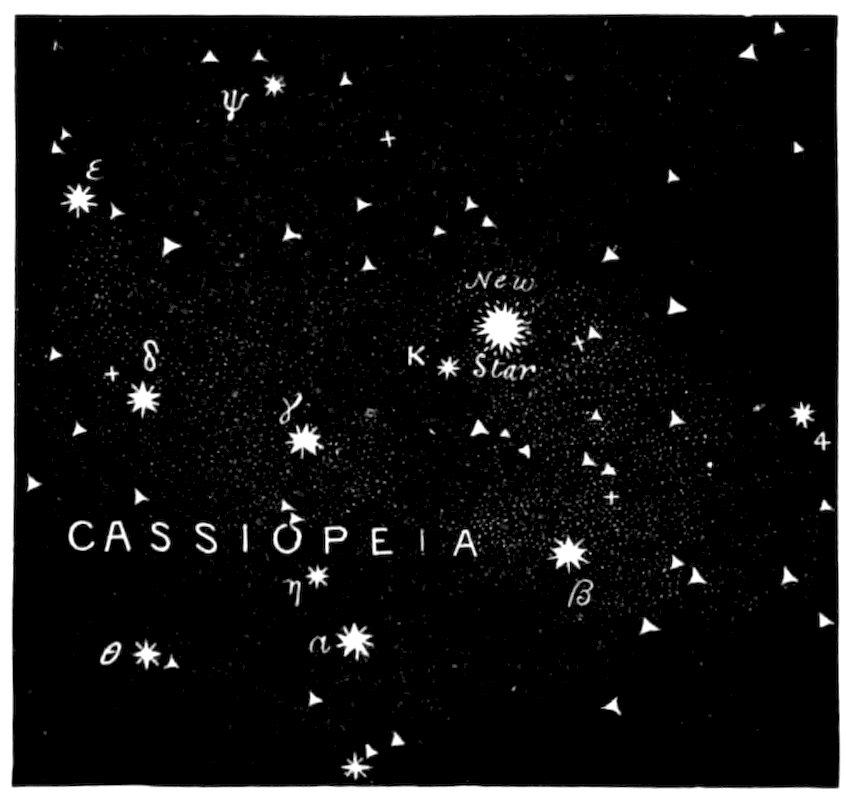
Fig. 8.—The Temporary Star of 1572. (From “Planetary and Stellar Studies.”)
480According to a sketch of the position given in Tycho Brahé’s work, referred to above, the star was situated a little to the north of Kappa Cassiopeiæ, the faintest star in the Chair. This position is confirmed by Argelander’s examination of Tycho Brahé’s observations: The spot is a rather blank one to the naked eye, and even with an opera-glass, only a few faint stars are visible. Quite close to the place fixed by Argelander, d’Arrest observed in 1865 a star of the eleventh magnitude, which seems to have escaped Argelander’s notice. Hind and Plummer observed this small star in 1873, and thought they could detect fluctuations in its light to the extent of about one magnitude. Espin has also observed it, and the region has been photographed by Dr. Roberts. Some have thought that Tycho Brahé’s star might possibly be identical with the Star of Bethlehem, and this idea has been supported by Cardanus, Chladni, and Klinkerfues, but Lynn and Sadler have shown that the theory is quite untenable, and it has now been rejected by all astronomers.
Ma-tuan-lin speaks of a star in 1578 “as large as the sun”(!) but does not state its position.
The star known as P (34) Cygni is sometimes spoken of as a “Nova,” or new star; but it is still visible to the naked eye as a star of the fifth magnitude. It was observed of the third magnitude by Jansen in 1600 and by Kepler in 1602. After the year 1619, it appears to have diminished in brightness, and is said to have vanished in 1621; but it may merely have become too faint to be seen with the naked eye. It was again observed of the third magnitude by Dominique Cassini in 1655, and it afterwards disappeared. It was again seen by Hevelius in November, 1665. In 1667, 1682, and 1715, it is recorded as of the sixth magnitude, and there is no further 481record of any marked increase in its light. A period of about 18 years was assumed by Pigott; but this is now disproved, and it seems probable that the star is a variable of irregular period and fitful variability, and not, properly speaking, a temporary star. Its present colour is yellow, and bright lines have been seen in its spectrum.
Another remarkable object of the temporary class was observed by Kepler in 1604 in Ophiuchus, and is described by him in his work, “De Stella Nova in pede Serpentarii.” He and his assistants were observing the planets Mars, Jupiter, and Saturn, which were then near each other in this region of the heavens, a few degrees to the south-east of the star Eta Ophiuchi, and on the evening of October 10, Brunowski, a pupil of Kepler’s, noticed that a new and very brilliant star was added to the group[122]. When first seen, it was white, and exceeded in brightness Mars and Jupiter, but seems not to have quite equalled Venus in brilliancy. It slowly diminished, and in January, 1605, it was brighter than Antares but less than Arcturus. At the end of March, 1605, it had faded to the third magnitude. Its proximity to the sun then prevented further observations for several months. In March, 1605, it had disappeared to the naked eye. It was also observed by Galileo and by David Fabricius, whose observations place it about midway between the fifth magnitude star Xi and 58 Ophiuchi. Its exact position, however, does not seem to be known with such accuracy as that of Tycho Brahé’s star, nor is there any known star very close to the spot indicated by Schönfeld from an examination of Fabricius’ observations. It seems possible that Kepler’s star may have been seen previously by Ptolemy, for in his catalogue he gives a star of the fourth magnitude close to the position of Kepler’s star; but there is some doubt about the exact position indicated by Ptolemy. The Chinese annals mention a “ball-like” star as having appeared near Pi Scorpii on September 30, 1604, and remaining visible until March, 1606, which may possibly be identical with Kepler’s star.
482A new star of the third magnitude was observed near Beta Cygni by the Carthusian monk Anthelmus in 1670. It remained visible for about two years, and is said to have increased and diminished several times before its final disappearance. Schönfeld computed its exact position from observations made by Hevelius and Picard. Quite close to the spot indicated, a star of the eleventh magnitude has been observed at the Greenwich Observatory, and fluctuations of light were suspected in this small star by Hind and others. Hind says that, to his eye, “there is a hazy, ill-defined appearance about it which is not perceptible in other stars in the same field of view. Mr. Talmage received the same impression; and I may add that Mr. Baxendell, who has examined it with Mr. Worthington’s reflector, observed that no adjustment of focus would bring the star up to a sharp focus.” This hazy appearance is very suggestive, as it indicates that the “Nova” may possibly have faded into a small planetary nebula, as in the case of the new star in Cygnus, observed by Schmidt in 1876, and the new star in Auriga, found by Dr. Anderson in 1892. Near the position of Anthelm’s new star is a known variable star, S Vulpeculæ, discovered by Hind in 1861, which might be suspected to be identical with Anthelm’s star; but Hind has shown that the variable has no proper motion which would account for the difference of position since 1670, and he concludes that, “from the fixity of its position during eight years, it may be inferred that the variable is distinct from Anthelm’s.” It has been supposed that the star 11 Vulpeculæ in Flamsteed’s catalogue is identical with Anthelm’s star; but Baily could not find any evidence to show that Flamsteed’s star ever really existed, and he says: “Under the presumption, however, that it may be a variable and not a lost star, I have preserved its recorded position with a view of inducing astronomers to look out for it from time to time.”
On the evening of April 28, 1848, Hind, observing at Mr. Bishop’s private observatory, in Regent’s Park, London, noticed a new star of about the fifth magnitude, between 483Zeta and Eta Ophiuchi. Its colour was reddish-yellow, and it seems to have subsequently increased in brightness to nearly the fourth magnitude, but it soon faded to the tenth or eleventh magnitude. This curious object has become very faint in recent years. In 1866, it was of the twelfth magnitude, and in 1874 and 1875, not above the thirteenth.
On May 28, 1860, Pogson discovered a new star in the globular cluster, 80 Messier, which lies between Antares and Beta Scorpii. When first noticed, it was about the seventh magnitude, and its brightness was sufficient to obscure the cluster. In other words, the cluster was apparently replaced by a star. On June 10, the star had nearly disappeared, and the cluster again shone with great brilliancy, and with a condensed centre. The observations of Auwers and Luther confirm those of Pogson. Pogson states that he examined the cluster on May 9, but noticed nothing peculiar; and, according to Schönfeld, the cluster presented its usual appearance on May 18, when examined at the Königsberg Observatory. The apparition of the temporary star was, therefore, probably sudden, as in the case of other “new” stars. The phenomenon was possibly caused by a collision between two of the stars composing the cluster, which is, at least, apparently very condensed.
A very remarkable star, sometimes called the “Blaze Star,” suddenly appeared in Corona Borealis, in May, 1866. It was first seen by the late Mr. Birmingham, at Tuam, Ireland, about midnight, on the evening of May 12, when it was of the second magnitude, and equal to Alphecca, “the gem of the coronet.” Its appearance must have been very sudden, for Schmidt, the Director of the Athens Observatory, stated that he was observing the constellation on the same evening, about 2½ hours previous to Birmingham’s discovery, and observed nothing unusual. He was certain that no star, of even the fifth magnitude, could possibly have escaped his notice. On the following night it was seen by several observers in different parts of the world. M. Faye, the French astronomer, in his work—“L’Origine du Monde”—attributes the discovery 484to M. Courbebaisse, a French engineer, and does not mention Mr. Birmingham! He says M. Courbebaisse first saw it on the evening of May 13. This may be true; he was not the only observer who saw it on that evening; but it was, undoubtedly, first seen by Mr. Birmingham on the preceding night, and to Mr. Birmingham alone is certainly due the credit of the discovery. The star rapidly diminished in brightness, and on May 24 of the same year, had faded to 8½ magnitude. It afterwards increased to about 7·8 magnitude, but soon diminished again. Soon after its discovery it was found that the star was not really a new one, as it had been previously observed at Bonn by Schönfeld, in May, 1855, and March, 1856, while making the observations for Argelander’s Durchmusterung, in which it appears as No. 2765, in degree 26. On both occasions it was rated as 9½ magnitude, and no suspicion of variable light seems to have arisen. When viewed with the naked eye at the time of its greatest brilliancy, it was remarked by some observers that it twinkled decidedly more than other stars in the vicinity, and that this peculiarity made it very difficult to form a correct estimation of its relative brilliancy During the years 1866 to 1876, fluctuations in its light were observed by Schmidt, and he deduced a probable period of about 94 days, with a variation from the seventh to the ninth magnitude. This conclusion was confirmed by Schönfeld, and the star would therefore seem to be an irregular variable, and not a true temporary star.
A very remarkable and interesting variable star was discovered by Schmidt at Athens, near Rho Cygni, on the evening of November 24, 1876, when it was about the third magnitude, and somewhat brighter than Eta Pegasi. Schmidt stated that he had observed the vicinity on several occasions between November 1 and 20, and was certain that no star of even the fifth magnitude could possibly have escaped his notice, so that the star probably blazed out very suddenly, as most of these extraordinary objects have done. Between November 20 and 24, the sky was overcast, so the exact time of its appearance is unknown. The star would seem to 485be quite new, as there is no star in any of the catalogues in the position of the “Nova,” the nearest being one of the ninth magnitude, which occurs in the Bonn observations. The new star rapidly faded, and on November 30 had descended to the fifth magnitude. On the night of its discovery it was remarked that its brightness was such as to render its near neighbour, 75 Cygni (a sixth magnitude star), invisible; while on December 14 and 15, 75 Cygni, in its turn, nearly obliterated the light of the stranger. In the 48 hours following the night of November 27, the star diminished in light to the extent of nearly 1½ magnitude! It afterwards faded very regularly to August, 1877, and showed no oscillations of brightness as have been observed in other temporary stars. On the evening of its discovery, Schmidt considered the star to be of a strong golden-yellow, and that it afterwards remained of a deep golden-yellow, but at no time was it as ruddy as 75 Cygni. I could see no trace of colour in the star with a 3-inch telescope in the Punjab on January 12, 1877, but it had then faded to the eighth magnitude. On February 7, 1877, I estimated it ninth magnitude. A few days after its discovery, it was examined with the spectroscope, and its spectrum showed bright lines similar to the “Blaze Star” in Corona, which appeared in May, 1866. One of the bright lines was thought to be identical with the line numbered 1474 by Kirchoff, visible in the spectrum of the solar Corona during total eclipses of the sun. The other bright lines were identified by M. Cornu of the Paris Observatory with some of the lines of hydrogen, sodium, and magnesium. In September, 1877, the star was examined with a 15-inch refractor by Lord Lindsay (now Lord Crawford), who found “the light coming from it almost entirely monochromatic, that is, of only one colour, the star appearing exactly the same as when looked at without the spectroscope, the direct prism having no effect on it,” and he considers that “there is little doubt that the star has changed into a planetary nebula of small angular diameter!” On September 3, the star’s magnitude was 10½; “faint blue, near another star of same size rather red.” Lord Crawford remarks 486that no observer, discovering the object in its present state, would, after viewing it through a prism, hesitate to pronounce as to its nebulous character,[123] but no disc was detected with powers ranging up to 1000 diameters. Ward found the star only sixteenth magnitude in October, 1881, and it was estimated fifteenth magnitude at Mr. Wigglesworth’s Observatory in September, 1885. At Lord Crawford’s Observatory the exact position of the star, with reference to above fifty closely adjacent stars, was carefully determined with the micrometer. The vicinity was photographed by Dr. Roberts on September 27, 1891, with an exposure of two hours, and “the Nova appears as a star of about the thirteenth magnitude.” Observations in 1894 and 1895, made its magnitude about 14·8, with an apparently continuous spectrum.[124]
In August, 1885, a star of about the seventh magnitude made its appearance close to the nucleus of the Great Nebula in Andromeda (Messier 31), a remarkable nebula, which will be described in the next chapter. The new star was independently discovered by several observers towards the end of August. It was not visible to Tempel at the Florence Observatory on August 15 and 16, but is said to have been seen by M. Ludovic Gully on August 17. It was, however, certainly seen by Mr. I. W. Ward at Belfast on August 19, at 11 P.M., when he estimated it 9½ magnitude, and it was independently detected by the Baroness Podmaniczky on August 22, by M. Lajoye on August 30, by Dr. Hartwig, at Dorpat, on August 31, and by Mr. G. T. Davis, at Theale, near Reading, on September 1. On September 3, the star was estimated 7½ magnitude by Lord Crawford and Dr. Copeland, and its spectrum was found to be “fairly continuous.” On September 4, Mr. Maunder, at the Greenwich Observatory, found the spectrum “of precisely the same character as that of the nebula, i.e., it was perfectly continuous, no lines, either bright or dark, being visible, and the red end was wanting.” Dr. Huggins, however, on September 9, thought he could see 487a few bright lines in its spectrum, a continuous spectrum being visible from the line D to F. The star gradually faded away. On December 10, 1885, it was estimated of the fourteenth magnitude at the Radcliffe Observatory, Oxford, and on February 7, 1886, it was rated only sixteenth magnitude with the 26-inch refractor of the Washington Observatory. A series of measures by Professor Hall, from September 29, 1885, to February 9, 1886, showed “no certain indications of any parallax,” so that the star and the nebula, in which it probably lies, are evidently situated at a vast distance from the earth. Seeliger has investigated the decrease in the light of the star on the hypothesis that it was a cooling body, which had been suddenly raised to an intense heat by the shock of a collision, and finds a fair agreement between theory and observation. Auwers points out the similarity between this outburst and the new star of 1860, in the cluster 80 Messier (already described), and thinks it probable that both phenomena were caused by physical changes in the nebulæ in which they occurred. Proctor considered that the evidence of the spectroscope shows that the new star was situated in the nebula, and in this opinion I fully concur.
Several temporary stars have been detected in recent years by Mrs. Fleming, from an examination of photographs of stellar spectra, taken at the Harvard Observatory, for the Draper Memorial. Plates of the constellation Perseus show the existence of a star in 1887, the spectrum of which shows the bright lines of hydrogen, and it was on this account assumed to be a long period variable. During the following eight years, however, 81 photographs of the same region show no trace of the star, and it has been frequently looked for with a telescope, but without success. It would, therefore, seem probable that the star was a temporary one. Its magnitude was about the ninth.
A remarkable and very interesting temporary star was discovered in 1892 in the constellation Auriga. On February 1, of that year, an anonymous post-card was received by Dr. 488Copeland at the Royal Observatory, Edinburgh, with the following announcement:
“Nova in Auriga. In Milky Way, about two degrees south of χ Aurigæ, preceding 26 Aurigæ. Fifth magnitude, slightly brighter than χ.”
Such an announcement evidently required immediate attention, and on that evening, Dr. Copeland and his assistants looked for the new star, and easily found it with an opera-glass at 6 hours 8 minutes. They estimated it of the sixth magnitude, and equal to 26 Aurigæ. It was of a yellow colour. When examined with a prism placed before the eye-piece of a 24-inch reflector, its spectrum was seen to resemble the “Blaze Star” of 1866 in Corona. “The C line was intensely bright, a yellow line about D fairly visible; four bright lines, or bands, were conspicuous in the green; and, lastly, a bright line in the violet (probably Hγ) was easily seen.” Notice of the discovery was at once telegraphed to Greenwich and Keil Observatories, and the star was photographed at Greenwich on the same night. It is not in the Bonn star charts, which show stars to nearly the tenth magnitude. In Nature of February 18, 1892, a letter appeared, signed Thomas D. Anderson, in which the writer stated that the post-card was sent by him, and he gives the following details respecting the discovery:
“Prof. Copeland has suggested to me that as I am the writer of the anonymous post-card mentioned by you a fortnight ago (p. 325), I should tell your readers what I know about the Nova.
“It was visible as a star of the fifth magnitude certainly for two or three days, very probably even for a week, before Prof. Copeland received my post-card. I am almost certain that at two o’clock on the morning of Sunday, the 24th ult., I saw a fifth magnitude star making a very large obtuse angle with β Tauri and χ Aurigæ, and I am positive that I saw it, at least, twice subsequently during that week. Unfortunately, I mistook it on each occasion for 26 Aurigæ, merely remarking to myself that 26 was a much brighter star than I used to think it. It was only on the morning of Sunday, the 31st 489ult., that I satisfied myself that it was a strange body. On each occasion of my seeing it, it was slightly brighter than χ. How long before the 24th ult. it was visible to the naked eye I cannot tell, as it was many months since I had looked minutely at that region of the heavens.
“You might also allow me to state, for the benefit of your readers, that my case is one that can afford encouragement to even the humblest of amateurs. My knowledge of the technicalities of astronomy is, unfortunately, of the most meagre description; and all the means at my disposal on the morning of the 31st ult., when I made sure that a strange body was present in the sky, were Klein’s ‘Star Atlas’ and a small pocket-telescope, which magnifies ten times.”
Soon after the discovery of the new star, an examination was made by Professor Pickering of photographs taken of the region at Harvard Observatory, previous to Dr. Anderson’s discovery. It was found that on eighteen photographs taken between the dates November 3, 1885, and November 2, 1891, there is no trace of the new star; but in those taken from December 16, 1891, to January 31, 1892, a star of the fifth magnitude is shown in the position of the new star. “In another series of plates taken with the transit photometer, no record of the new star up to December 1, 1891, was obtained, although χ Aurigæ (magnitude 5·0) was always visible, but the plates taken on the nights of December 10, 1891, and ending January 20, 1892, indicated clearly the position of the new star.” Professor Pickering says: “It appears that the star was fainter than the eleventh magnitude on November 2, 1891, than the sixth magnitude on December 1, and that it was increasing rapidly on December 10. A graphical construction indicates that it had probably attained the seventh magnitude within a day or two of December 2, and the sixth magnitude on December 7. The brightness increased rapidly until December 18, attaining its maximum about December 20, when its magnitude was 4·4. It then began to decrease slowly, with slight fluctuations, until January 20, when it was slightly below the fifth magnitude. All these changes took 490place before its discovery, so that it escaped observation nearly two months. During half of this time it was probably brighter than the fifth magnitude.”
It would seem from the above remarks that the star did not—like some other temporary stars—attain its full brilliancy at once, but increased gradually in brightness. After the decrease of light in January, 1892, it seems to have again risen to another maximum, for photographs taken at the Greenwich Observatory after its discovery show that the star rose to a magnitude of 3·5 (photographic) on February 3, and then began to fade again slowly during February, but rapidly during the month of March. Owing to cloudy weather in the west of Ireland, I could not observe the new star until February 14. The following are my observations, made with a binocular field-glass, the comparison stars being Chi Aurigæ, 26 Aurigæ, and D M + 30°, 898:—February 14, 4·55 magnitude; February 15, 5·56; February 16, 5·84; February 18, 5·51; February 21, 5·56; February 24, 5·66; February 28, 5·44; March 1, 5·68; March 5, 5·66; March 10, 7·3; March 11, 7¾; March 16, 8½, or fainter; March 18, 9 magnitude, or less, “only very faint stars seem near the place of the Nova; clear sky, no moon.” The general accuracy of the above observations were confirmed by the photographic estimates of the star’s light made at Greenwich,[125] and also by Schaeberle’s observations of its brightness.
After March 18, the light of the star steadily and rapidly decreased, and on April 1, it had faded to nearly the fifteenth magnitude, and afterwards to about the sixteenth. In August, 1892, it brightened again, as it was found by Corder of about the ninth magnitude on August 21. Dr. J. Holetschek of the Vienna Observatory observed it from August 24 to September 2, 1892, and estimated it about 9½ magnitude. In October, 1892, most observers rated it between 10 and 10½ magnitude. Observations by Mr. C. E. Peck, “from October 3, 1893, to May 4, 1894, only vary from 10·1 to 11·0 magnitude, and observations up to the end of 1894 give the 491same results.”[126] In 1895 Professor Barnard found that it “is still visible as a small star, and has not changed in physical appearance since the autumn of 1892. It remains perfectly fixed with reference to the comparison stars.”[127]
Examined with the spectroscope soon after its discovery, many bright lines were seen in its spectrum, and it was found that “the bright lines in the spectrum of the new star were accompanied by dark ones on their more refrangible sides,” that is, the dark lines were on the blue side of the bright ones. This suggested the idea that the outburst was probably due to a collision between two bodies, one of which, having a spectrum of dark lines, was rushing towards the earth, and the other, with a bright-line spectrum, was receding. Lockyer supposed the outburst to be due to a collision between two swarms of meteorites. Dr. Huggins advanced the view that the phenomenon was due to the near approach of two gaseous bodies. “But,” he says, “a casual near approach of two bodies of great size would be a greatly less improbable event than an actual collision. The phenomena of the new star scarcely permits us to suppose even a partial collision, though, if the bodies were diffused enough, or the approach close enough, there may have been, possibly, some interpenetration and mingling, of the rare gases near the boundaries.” But Maunder and Seeliger consider this hypothesis to be untenable. Mr. Monck suggested that a star or swarm of meteorites rushing through a gaseous nebula might explain the phenomena. Seeliger advocates a similar theory. Maunder also favours a collision theory.
A photograph of the spectrum taken by Maunder on February 22, 1892 (when the photographic magnitude was 4·78, and visual magnitude about 5·7), showed a displacement of the dark lines, which implied a relative motion of the two supposed colliding bodies of about 820 miles a second! Vogel found that the bright lines showed a double maxima, and he thought that these were due to “two different bodies moving 492with different velocities, so that the spectrum of the Nova consists of, at least, three spectra superposed. The measurement of the photograph gives the body showing the dark line spectrum as approaching the earth with a speed of nearly 420 miles per second, one of the two bright line bodies as approaching with a speed of 22 miles, whilst the other is receding with a speed of 300 miles a second.”[128]
At the time of its increase of brightness, in August, 1892, Professor Barnard, observing it with the great 36-inch Lick telescope, says, the “Nova appeared as a small, bright nebula, with a star-like nucleus of the tenth magnitude. The nebulosity was pretty bright and dense, and was 3″ in diameter. Surrounding this was a fainter glow, perhaps half a minute in diameter.” At this time, Professor Campbell of the Lick Observatory found that its spectrum showed the characteristic nebular lines. This observation was confirmed by Dr. Copeland on August 25 and 26, and by Herr Gothard, who photographed the spectra of a number of nebulæ, and compared them with his photograph of the spectrum of the new star. He says, “Each new photograph increased the probability, which may be considered as a proved fact, that the spectrum not only resembles, but that the aspect and position of the lines show it to be identical with the spectra of the planetary nebula. In other words, the new star has changed into a planetary nebula.”
A nebulous spectrum was also found by Espin. From observations of the spectrum in November, 1894, Professor Campbell finds that “the spectrum is not only nebular, but it is approaching the average type of nebular spectrum,” and he adds, “We may say that only five ‘new stars’ have been discovered since the application of the spectroscope to astronomical investigations, and that three of these had substantially identical spectroscopic histories.” Espin found the star distinctly nebulous on December 9, 1895, and its magnitude about 10½.
Another new star was discovered by Mrs. Fleming by the 493photographic method in the southern constellation, Norma, in the year 1893. When at its brightest, it seems to have been about the seventh magnitude. It was situated in the Milky Way, a little to the east of the pair of stars known as Gamma one and Gamma two Normæ. Its spectrum was similar to that of the new star in Auriga, when it first appeared, and, like that object, the spectrum has now, according to Professor Campbell, “become distinctly nebular.”
Another temporary star of about the eighth magnitude was also discovered by Mrs. Fleming in 1895, in that portion of the southern constellation Argo, known as Carina. It was in or close to the Milky Way—like so many of these new stars—between the variable star Eta Argûs and the star Lambda Centauri, near the Southern Cross, and close to a star of magnitude 5½. The photographic plates on which the discovery was made were taken at the Arequipa Station, in Peru. An examination of 62 photographs of the region showed no trace of the star on May 17, 1889, and March 5, 1895, although stars so faint as the fourteenth magnitude are visible on some of the plates. On nine plates, however, taken between April 8, 1895, and July 1, 1895, the star is visible, and during this interval the brightness diminished from the eighth to the eleventh magnitude. The spectrum showed the bright lines of hydrogen “accompanied by dark lines of slightly shorter wave-length,” and in all its “essential features” was “apparently identical” with the spectra of the temporary stars in Auriga and Norma.
With reference to this outburst, and the similarity of the star’s spectrum to that of the new star in Auriga, Professor William H. Pickering points out “the improbability of two successive collisions between stars, occurring nearly in the line of sight, in both cases a bright and a dark line star being involved, and in each case the bright-line star being the one to recede from us. The same remark applies to the theory of a collision of a star and a nebula. As a substitute I offered an explosion hypothesis, in which a dark sun suddenly gave out in all directions large quantities of hydrogen in an incandescent 494state. This would, of course, merely produce a spectrum with bright lines. But if the expulsion of hydrogen continued, the outer layers of gas would cool, producing absorption lines in the spectrum of the approaching hydrogen, but still leaving the spectrum lines of the receding hydrogen bright. Finally, when the expulsion ceased, we should find a heated spherical mass of gas, similar to a planetary nebula. It was shown that the velocities which were observed in the cases of these two novæ were less than fifty per cent. greater than had been observed in our own sun. The discovery of this third nova, with a spectrum identical with that of the two others, increases many times the improbability of the collision theories, and thereby strengthens the explosion hypothesis. If this latter is correct, we must look upon the phenomena presented by a nova not as indicating the birth of a new star, but rather as a cataclysm testifying to the death and final disrupture of an old one.”[129]
Another apparently new star was detected by Mrs. Fleming in 1895, in the constellation Centaurus. It was situated about three degrees north-west of the double star 3 Centauri, and when at its brightest, seems to have been about the seventh magnitude. Mrs. Fleming’s attention was first directed to it by its peculiar spectrum, as shown on a photographic plate taken at Arequipa in July, 1895. No trace of the star is visible on 55 plates taken from May 21, 1889, to June 14, 1895, but on plates taken on July 8 and 10, 1895, it appears of about the seventh magnitude. A photograph taken on December 16, 1895, shows it as a star of about the eleventh magnitude. On that date, and on December 19, it was seen about the same magnitude by Mr. O. C. Wendell, with a 15-inch telescope. The spectrum at first resembled that of the nebula 30 Doradus, and was unlike the spectra of the temporary stars in Auriga, Norma, and Carina. When it had faded to the eleventh magnitude, its spectrum seemed to be monochromatic, and very similar to that of a neighbouring nebula, N G C 5253, so that, like the new stars in Cygnus, 495Auriga, and Norma, “it appears to have changed into a gaseous nebula.”
It is a remarkable fact that the great majority of the temporary stars appeared in or near the Milky Way. The chief exceptions to this rule are:—the star of 76 B. C., in the Plough, the star recorded by Hepidannus in Aries, 1012, A.D., and the “Blaze Star” of 1866 in Corona Borealis.