Front matter
Reading edition
ASTRONOMY FOR YOUNG FOLKS
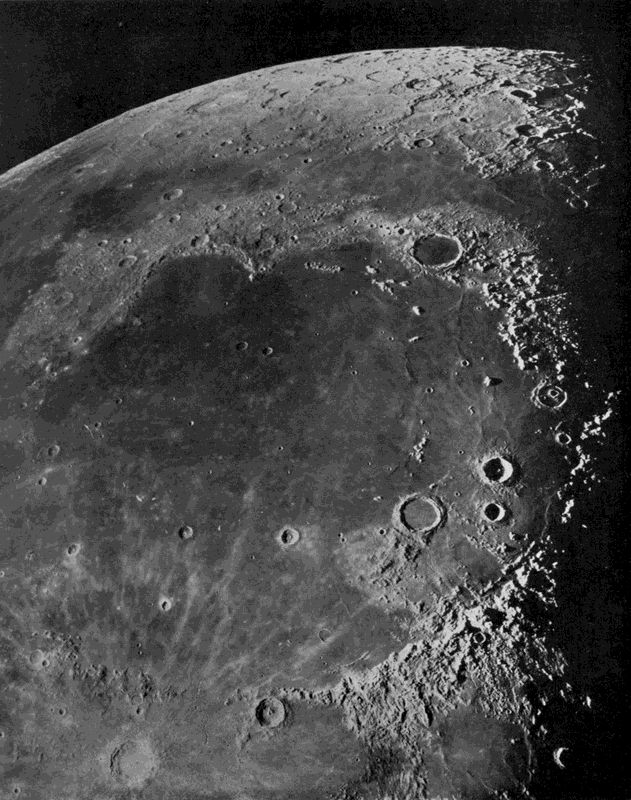
Northern Portion of the Moon at Last Quarter
Taken with 100-inch Hooker Telescope of the Mt. Wilson Observatory (See Chapter XXI)
ASTRONOMY for YOUNG FOLKS
BY
ISABEL MARTIN LEWIS, A. M. (Connected with the Nautical Almanac Office of the U. S. Naval Observatory)
NEW YORK DUFFIELD AND COMPANY 1922
Copyright, 1921, by The Century Company Copyright, 1922, by Duffield and Company
Printed in U. S. A.
CONTENTS
CHAPTER PAGE
Preface xiii
I. The Constellations 3
II. January 15
III. February 21
IV. March 28
V. April 35
VI. May 41
VII. June 49
VIII. July 56
IX. August 64
X. September 71
XI. October 78
XII. November 84
XIII. December 90
XIV. Stars of the Southern Hemisphere 96
XV. The Milky Way or Galaxy 107
XVI. The Surface of the Sun 113
XVII. The Solar System 119
XVIII. The Origin of the Earth 127
XIX. Jupiter and His Nine Moons 139
XX. The Rings and Moons of Saturn 148
XXI. Is the Moon a Dead World 156
XXII. Comets 165
XXIII. Meteorites 173
XXIV. The Earth As a Magnet 183
XXV. Some Effects of the Earth's Atmosphere Upon Sunlight 193
XXVI. Keeping Track of the Moon 207
XXVII. The Motions of the Heavenly Bodies 216
XXVIII. The Evolution of the Stars—From Red Giants to Red Dwarfs 225
XXIX. Double and Multiple Stars 230
XXX. Astronomical Distances 241
XXXI. Some Astronomical Facts Worth Remembering 250
ILLUSTRATIONS
PAGE
Northern Portion of the Moon at Last Quarter Frontispiece
The Great Hercules Cluster—A Universe of Suns facing page 56
A Dark Nebula: The Dark Bay or Dark Horse Nebula in Orion facing page 110
A. Venus. B. Mars. C. Jupiter. D. Saturn facing page 122
Spiral Nebula in Canes Venatici facing page 216
Spiral Nebula in Andromeda Viewed Edgewise facing page 222
LIST OF TABLES
PAGE
I. The Principal Elements of the Solar System 261
II. The Satellites of the Solar System 262
III. The Twenty Brightest Stars in the Heavens 263
IV. A List of the Principal Constellations 264-265
V. Pronunciations and Meanings of Names of Stars and Constellations 266-267