PLATE LXXII. SCREEN IN THE CHURCH OF ST. LAWRENCE, AT EU.
Reading edition
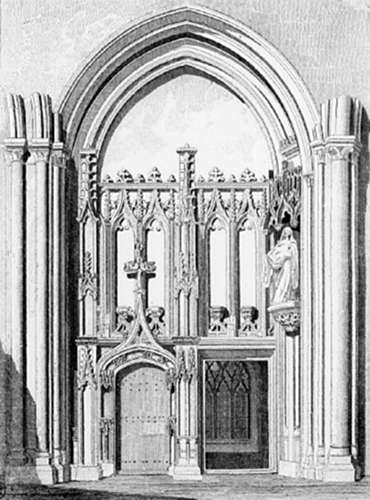
Plate 72. Screen in the Church of St. Lawrence, at Eu.
The town of Eu has, by some writers, been supposed to have been the capital of the Gallic tribe mentioned in Cæsar's Commentaries, under the name of the Essui; but a conjecture of this description, founded altogether upon the similarity of the name, and unsupported by any collateral testimony, must be allowed to be at best only problematical; and ancient geography presents so wide a field for the display of ingenuity and learning, that it is in no department of science more necessary to be upon the guard against plausible theories.—There are others who contend for the Teutonic origin of the town, and refer to etymology with equal zeal, and with greater plausibility. The word Eu, otherwise spelt Ou or Au signifies a meadow, in Saxon; and the same name was likewise originally applied to the river Bresle,[163] which washes the walls of Eu, within a distance of two miles from its confluence with the ocean at Tréport.[164]
The first mention that occurs of Eu in history, is in the pages of Flodoard, according to whom, the town was in existence in the year 925; but, whether the Roman or the Saxon derivation of its name be preferred, in either case etymology would fairly allow the inference, that its foundation was considerably more ancient. During the reign of Louis XI. Eu obtained a melancholy celebrity: a report was circulated in the summer of 1475, that it was the intention of the English to make a descent upon the coast of France, and to establish themselves there for the winter. At the same time, this town was confidently mentioned as the place where they proposed to fix their quarters. To deprive them of such an advantage, the French monarch had recourse to a measure which could only be justified by the most urgent necessity: he ordered the Maréchal de Gamaches to enter the place with four hundred soldiers, on the eighteenth of July, and to set fire to the houses of the citizens, together with the castle. His commands were executed; and the whole was reduced to a heap of ashes, with the exception of the churches. The neighboring towns of Dieppe, St. Valeri, and Abbeville, profited from the misfortunes of Eu, which has never recovered its prosperity, notwithstanding the various privileges subsequently granted to it.—The present population consists of about three thousand four hundred inhabitants, whose only trade is a trifling manufactory of lace.
From as early a period as the year 1102, the title of Count was bestowed by Richard I. Duke of Normandy, upon the lords of Eu, who, in 1458, received the additional dignity of Comtes et Pairs; probably as some recompense for the misery inflicted upon the place three years before. In the number of these counts, was the celebrated Duc de Guise, commonly known by the name of Le Balafré. His monument of black and white marble, in the church of the Jesuits at Eu, was executed by Genoese artists; as was that of his wife, the Duchess of Cleves. Both of them have long been subjects of admiration.[165] The last of the line of counts of Eu, was the Duc de Penthièvre, a nobleman of the most estimable character: the title was his at the breaking out of the revolution; and it is not a little to his honor, that a writer of the most decidedly republican principles could be found, in the midst of that stormy period, to bear the following testimony in his favor:—“Né au milieu d'une cour, oú la corruption et les vices avoient pris le nom de la sagesse et des vertus, il dédaigna leurs délices funestes; il repoussa l'air empesté de Versailles; supérieur à leurs prestiges, il oublia sa naissance; il prouva enfin, par de longues années consacrées à faire le bien, qu'il étoit digne d'être né simple citoyen.[166]”—The castle, the residence of the counts, is now converted into a military hospital.
The abbey of Eu is said to have been founded in 1002,[167] by William, first count of the place, natural son of Richard Sans-peur, Duke of Normandy. It was at its origin dedicated to the Virgin; but, after a lapse of somewhat more than two hundred years, was placed under the invocation of St. Lawrence, archbishop of Dublin. That prelate had, in the year 1181, crossed into Normandy, with the view of restoring a friendly understanding between the King of Ireland, his brother, and the King of England; and, at the moment of his approaching Eu, and beholding the lofty towers of the abbey, he is said to have exclaimed in strains of pious fervor, “Hæc requies mea in seculum seculi: hic habitabo, quoniam elegi eam.” Having accomplished the object of his mission, he died shortly after at the convent, and was there interred; and the fame of his sanctity attracting crowds of devotees to his tomb, he was canonized by a papal bull, dated the 11th of December, 1218, since which time the monastery has borne his name.
The church of St. Lawrence, though no longer abbatial, has been suffered to exist; even before the revolution, it served at once as the church to the convent and to the first parish of Eu. The screen here figured, a beautiful specimen of the decorated English architecture, is placed at the entrance of one of the chapels. Another chapel contains a Holy Sepulchre, said to be superior, in point of the execution of the figures, to any other in France. In the south transept is a spirally-banded column of extraordinary elegance. The church stands upon the foundations of an earlier building, erected at the close of the twelfth century, and destroyed by lightning in 1426. According to the records of the monastery, it was either wholly, or in great measure, rebuilt by John de Vallier, the twenty-fourth abbot, in 1464.[168]—The following description of the building is borrowed from the journal of a very able friend of the writer of this article, who visited Eu in September, 1819:—“The abbey church of Eu is plain and massy on the outside of the nave and transepts. The east end of the choir is highly enriched with flying buttresses, &c. The windows of the nave are lancet-headed, and very tall: on the outside is a circular arch, which may be a restoration. The west window has been in three lancet divisions, which have been filled up with more modern tracery. The nave is singularly elegant: the triforium, or rather the upper tier of arches, is new in design, and most extraordinary. In the choir, the triforium is composed of tracery. The north transept is something like Winchester, only the arches are pointed: there are two arches. This arrangement is probably general; as I saw it at Troyes and other places. In a side-chapel is an entombment: the figures as large as life, or nearly so, and richly painted; quite perfect. Inscriptions on the hems of the garments. The culs de lampe are of the most elegant reticulated work. In the north transept is a circular window filled with late tracery. No towers at the west end. East end, a polygon, as usual.—This church, which is well worthy of an attentive study, is quite distinct in character from the churches in the east of France: it has no marigold window; no row of niches over the portal; no massed door-way; so that the general outline of the front agrees wholly with the earliest pointed style. But the exterior is more chaste than any thing we have in England; and its architectural unity is better preserved. On the other hand, its parts are less elaborate.”