PLATE LXX. CASTLE OF BRIQUEBEC.[156]
Reading edition
PLATE LXX. CASTLE OF BRIQUEBEC.[156]
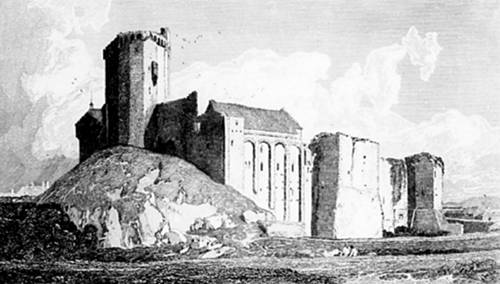
Plate 70. Castle of Briquebec, near Valognes.
Briquebec is an extensive parish, situated about seven miles to the south of Valognes, with a population of four thousand five hundred inhabitants, a weekly market on Mondays, and several considerable fairs. Its castle claims an antiquity, nearly, if not altogether, coeval with the days of Rollo. When that Duke, on gaining peaceable possession of Normandy, parcelled out the land among his companions in arms, the portion that included Briquebec was one of the most considerable. The lord of Briquebec held in the Norman exchequer the third place among the barons of the Cotentin, the present department of La Manche.[157] His services and his rank, to which may probably also be added, his relationship to Rollo, entitled him to this proud distinction.
After the assassination of William Longue Epée, second Duke of Normandy, in 942, Amlech, or, as he is sometimes called, Lancelot, of Briquebec, was appointed one of the council of regency, during the minority of the young prince, Richard, the son to the deceased, and heir to the throne. In this capacity he was also one of those deputed to receive Louis d'Outremer, King of France, at Rouen.—Amlech had a son, named Turstin of Bastenburg, and he left two sons, one of whom, William, was lord of Briquebec.—The other, Hugh, commonly called the bearded, was the head of the family of Montfort, which produced the famous Count, Pierre, slain at the battle of Evesham, while commanding the barons in revolt against Henry III.—The line of the lords of Briquebec was continued in the posterity of William, whose son, of the same name, attended the Conqueror into England. Seven of his descendants successively bore the name of Robert Bertrand, and successively possessed the barony of Briquebec. The last died in the middle of the fourteenth century, leaving his extensive domains, including this castle, to his eldest daughter, Jane, with whom it passed in marriage to William Paisnel, baron of Hambye.[158]
The name of Paisnel will be found, as well as that of Bertrand, in the roll of chieftains engaged in the conquest of England. Duke William recompensed the services of Ralph Paisnel, his companion in arms, with various domains in different counties of his newly-acquired kingdom, and particularly in Yorkshire, Buckinghamshire, and Somersetshire. His descendants, who were numerous in Great Britain, possessed, among other distinguished lordships, those of Huntley and of Dudley.—In the Cotentin, their family was equally extensive and powerful. William, son of Jane Bertrand and of William Paisnel, succeeded his parents as lord of Briquebec and of Hambye.—He, in his turn, was followed by another William, who, by a marriage with his cousin, daughter of Oliver Paisnel, lord of Moyon, united that great barony to a property, which was previously immense. Upon the death of William, without children, Fulk Paisnel, his brother, became his heir; and, as he likewise died childless, the fortune devolved upon a younger brother, Nicholas. This Nicholas, who was previously lord of Chanteleu, married Jane de la Champagne, baroness of Gaie, and left an only daughter, by whose marriage with Louis d'Estouteville, in 1413, the baronies of Gaie, Moyon, Hambye, and Briquebec, passed at once from the family of Paisnel.
Briquebec, at the same time that it thus again changed masters, was still possessed by a descendant of one of those powerful barons, who had shared in the glory of the conquest of England.—Robert de Huteville, one of the Conqueror's companions in arms, had received from that sovereign a princely recompense, particularly in the county of York. But after the death of William Rufus, he espoused the party of the eldest brother, against Henry I. and was taken prisoner at the battle of Tinchbray, when his property was confiscated, and given to Néel d'Aubigny.—The name of his son, Robert, is to be found among the Yorkshire barons, who defeated the Scotch army at North Allerton; and it again occurs in the twentieth year of the reign of Henry II. at the battle of Alnwick, where he made the King of Scotland prisoner.
To return to the possessor of Briquebec, who was destined to afford a striking example of the mutability of fortune—scarcely had he become by his marriage the most powerful lord in the Cotentin, or possibly in Normandy, when Henry V. of England, invaded the duchy, gained the battle of Agincourt, and shortly afterwards made himself master of the whole province, except Mount St. Michael. In this trying emergency, Louis d'Estouteville remained faithful to his sovereign, and was, consequently, deprived of his possessions.
Henry immediately bestowed Hambye and Briquebec upon one of his favorite generals, William de la Pole, Earl of Suffolk,[159] who, in 1427, still continued lord of Briquebec, in which capacity he confirmed to the abbey of Cherbourg, a rent of fifty sols, that had been given by his predecessor, Robert Bertrand, in 1329. The act of confirmation yet exists: it is dated in the year just mentioned; two years after which, the Earl of Suffolk, who had always previously been victorious, experienced a reverse of fortune, and was made prisoner at Gageau, together with his brothers, Alexander and John de la Pole. The consequence was, that he was compelled to sell his lands in the Cotentin to pay his ransom.
They were purchased by Sir Bertyn Entwyssle, a knight of the county of Lancaster, who, in the archives of the castle of Briquebec, dated about the year 1440, is styled Admiral of England; as his brother, Henry Entwyssle, in the same documents, bears the title of the King of England's Lieutenant-General in Normandy. In the hands of this nobleman, Briquebec continued, till the battle of Formigny compelled the British to evacuate Normandy. Sir Bertyn afterwards took part with Henry VI. against the Duke of York, and was slain at the battle of St. Albans, in 1455.
Upon the restoration of the province to the crown of France, the family of D'Estouteville were replaced in the lordship of Briquebec. They had deserved eminently well of the French King, for whom Louis D'Estouteville had continued to hold possession of Mount St. Michael, the only fortress that offered an availing resistance to the English.
In succeeding times, Briquebec and Hambye passed, by different marriages, into the families of Bourbon St. Pol, and of Orleans Longueville; but at the close of the sixteenth century, Mary of Orleans, Duchess of Nemours, sold this property to Jaques Gougon de Matignon, Marshal of France.—The descendants of the marshal continued lords of Briquebec till the revolution. It had shortly before that event fallen into the hands of a female, the only survivor of that family, and she had married the eldest son of the Duke de Montmorency. But the revolution swept away the whole of their fortune. A few detached fragments of the property, which had not been alienated, have recently been restored to them: the rest has long since been sold, including the castle, the only habitable part of which now serves for an ale-house. All the remainder is hastening fast to decay.
The walls of the castle inclose a considerable space of ground; and, at the time when they were perfect, they comprised eight towers, of different sizes and forms, including the multangular keep, the principal feature of the plate. This tower, which is a hundred French feet in height, is still nearly perfect. The sides towards the west and south-west, from which Mr. Cotman has made his drawing, are entirely so.—In an architectural point of view, Briquebec offers specimens of the workmanship of many different epochs.—The case is widely different between fortresses and churches: the latter, whatever the date of their construction, commonly exhibit a certain degree of unity in their plan: in castles, on the other hand, the means provided for defence have usually had reference to those employed in attack. Both the one and the other are found to vary ad infinitum, according to time and localities. Briquebec shews some traces of the architecture of the eleventh century, but many more of the fourteenth, fifteenth, and sixteenth. The chapel, the magazines, the stables, and the present dwelling-house, were the parts last built. Of these, the two first have been for some years destroyed: the others are in a state of extreme neglect; and, neither in the dwelling-house, nor in the apartments over the great gate, does there now remain any thing curious.