Part 1 — CHAPTER IV
Reading edition
THE PHYSICALLY FRAIL
Some years ago there came into our offices in Boston a young man twenty-six years of age. He was about medium height, with keen, intelligent face, fine skin, fine hair, delicately modeled features, refined looking hands, and small, well-shaped feet.
He was inexpensively, but neatly, dressed, and, while somewhat diffident, was courteous, affable, and respectful in demeanor. After a little conversation with him, we asked him if he would be willing to appear before one of our classes and permit the students to try to analyze him, decide what his aptitudes were, and for what profession he was best fitted. An evening or two later he appeared and we placed him before the class. After some little examination of his appearance, this is the judgment passed upon him by those present:
"Fairly observant; capable of learning well through his powers of observation; good intellect, of the thoughtful, meditative type; a fair degree of constructive ability; in disposition, optimistic, cheerful; inclined to take chances; sympathetic, generous, sensitive, kindly, well disposed, and agreeable; rather lacking in self-confidence and, therefore, somewhat diffident, but courteous and friendly in contact with others; responsive and, therefore, easily influenced by his associates, and affected by his environment. Lacking in sense of justice and property sense. A man of natural refinement and refined tastes; fond of beauty, elegance and luxury. Energetic and alert mentally, but rather disinclined to physical effort. Somewhat deficient in aggressiveness, but endowed with an excellent constructive imagination, and so great mental energy that he would be able to take the initiative in an intellectual way, especially in the formation of plans and in the devising of means and ways. Fond of change, variety; loves excitement; likes social life, and somewhat deficient in
After this analysis had been carefully made, we excused the young man and explained that thirteen of his twenty-six years had been spent in jail. He had been left an orphan early in life and secured so little education that he was almost entirely illiterate.
THE EASY DESCENT TO CRIME
As soon as he was old enough, he was set to work at the only thing he could do, namely, manual labor. He was small and slight for his age, and the services he was able to render were not worth much. He, therefore, received very small pay. Because of his physical disabilities, he was behind the other boys in his gang and suffered frequently from the tongue-lashings of an unsympathetic foreman. His pay was not commensurate with his tastes. He constantly felt the desire for finer, better, cleaner things than he was able to earn. The work was hard for him; he suffered much from the punishment inflicted upon his tender hands, from muscular soreness and from weariness. As the days rolled on, he grew weaker, rather than stronger, and became weary earlier in the day. Finally, the time came when he felt that he could endure the taunts of his foreman no longer, and he was about to give up when the foreman, exasperated with his inefficiency, his clumsiness, and his weakness, discharged him.
Having been discharged, it was difficult for him to find another place to work. At this critical stage, being out of money, and having fallen in with idlers—and worse—he was influenced to use his keen intellect and ability in plans and schemes, to commit a small crime, which yielded him $10 or $15. Being a novice in crime, not naturally a criminal, he did not
STRUGGLING AGAINST ODDS
He worked hard and did his best, but the best he could do was not good enough. He possessed no manual skill, he had no strength, and little by little he again became physically tired out, mentally discouraged and sore, and, having once committed a crime, found it easy to seek his former associates and drop again into the old ways. An opportunity presented itself to rob a companion's pocket of a few dollars, and he did so. Again he was sent to the reformatory, this time for a longer term. Then, until he came to our office, his career was a repetition of what has already been related. A few months or a year or two in a reformatory, a jail, or a penitentiary, a month or two trying to rehabilitate himself in some form of manual labor, and, then, inefficiency, incompetency, lack of skill, lack of strength, and discharge, to be followed by another attempt to add to his resources by some petty crime.
For several years following this first interview with Mr. L. we followed him, and did our best to assist him to enter upon some vocation for which he was better fitted. Again and again we and other friends of his helped him to secure work, but always it was the old story. His mind was so active, so intelligent, so eager for expression, that the drudgery, the monotony, the routine, the small pay, and the consequent lack of the many elegances and luxuries he so strongly desired were too much for him. His crimes were never
THE OLD, OLD STORY
L. promised faithfully, and said, "I want to write a letter to my mother, and tell her where I am going. I wish you would let me have an envelope and a stamp." Our friend obliged him with the necessaries, and L. left the office beaming with gratitude and profuse in his promises to return the loan as soon as he came back from his trip on the whaling vessel. A few days later my friend received a postal card, dated at New Bedford, Massachusetts. In one corner of the postal card was the notation, "Received at the post office at New Bedford in an envelope, with a letter, requesting that it be mailed here. (Signed) Postmaster."
This case is typical of many others. They have natural aptitudes which fit them to become useful, but their talents have never been trained, their aptitudes have never been given an opportunity to develop. They have no inherent tendencies toward crime. In fact, there is no "criminal" type. Most—but not all—criminals fall into their evil ways simply because they have never been taught how to direct their mental and physical energies in a way which will give them pleasure, as well as profit.
DESCRIPTION OF THIS TYPE
The physically frail individual of this type is frail because the brain and nervous system are so highly developed that they require a great deal of his vitality and endurance to nourish them and to sustain their activities. The result is that mental powers grow and thrive at the expense of physical.
Such people have large heads in proportion to their bodies. Their heads also are inclined to be very much larger above the ears and in the neighborhood of the forehead and temples than at the jaw and at the nape of the neck. This gives their heads a rather top-heavy effect—like a pear with the small end down—and their faces a triangular shape. Their jaws are usually fine and slender, and their chins not particularly broad and strong.
Such people have very fine hair and fine skin. Their nerves are sensitive and close to the surface. Their entire build of body is delicate and slender. Their hands and feet also are usually delicately and slenderly fashioned; their shoulders are narrow and oftentimes sloping. It is folly to talk of building up rugged, muscular and bony systems by means of strenuous exercise in people thus endowed. Much, of course, can
VOCATIONS FOR THE PHYSICALLY FRAIL
People with this type of organization are not inclined to be skillful with their fingers. They do not care for physical work of any kind; they do not take an interest in it and, therefore, cannot do it well. Properly trained, men and women of this type take their place in the professions. They are teachers, preachers, lawyers, educators, reformers, inventors, authors, and artists. Among those of mediocre abilities we find clerks, secretaries, accountants, salesmen, window trimmers, decorators, advertisers, and others working along similar mental lines. When such people are not trained and educated, they are misfits always, because they do not have opportunities to use to their fullest extent the natural intellectual talents with which they have been endowed.
THE MENTALLY MECHANICAL
There is a type of boy who is oftentimes thrown into the wrong vocation in life, owing to a lack of appreciation of his true abilities on the part of parents or teachers. This boy has a large head and small body, and is intensely interested in machinery. He probably learns to handle tools, after a fashion, at a very early age; spends his spare time in machine shops; is intensely interested in locomotives and steamships, and otherwise manifests a passion for machinery and mechanics. Oftentimes, on account of this, he is very early apprenticed to a mechanic or is given a job in some place where he will have an opportunity to build, operate or repair machinery.
Some years ago we visited in a family in which there was a boy of this type. At that time his chief interest was in locomotives. He had a toy locomotive and took the greatest delight in operating it. Whenever he went near a railroad station he improved every opportunity to examine carefully the parts of a locomotive and, if possible, to induce the
As he cultivated his mental powers, he became more and more interested in the use of his constructive aptitudes in the formation of ideas. He liked to put ideas together; to work out the mechanics of expression in writing. Instead of building machinery, he loved to build plots. Instead of operating machinery, his abilities turned in the direction of working out the technique of literary expression. Instead of repairing machinery he loved rather to revise and rewrite his stories and plays. In other words, the constructive talent, which he had shown as a child in material mechanics, turned in the direction of mental and intellectual construction as he grew older.
COMMERCIAL CONSTRUCTIVENESS
There are many boys who exhibit in their early years a great love of machinery, and it is usually considered a kindness to them to prepare them for either mechanics or engineering. In mechanical lines, they are misfits, because they are frail and insufficient physically. In engineering lines they are more at home, because the engineer works principally
In a similar way boys often manifest great interest in machinery in their youth, and afterward, if given the right opportunities, show their constructive ability in the organization of business enterprises and the successful devising of plans and schemes for pushing these enterprises to success.
Sometimes those of this type of organization devote themselves rather to invention and improvement than to the direct physical handling of machinery. The following brief story of the struggles of Elias Howe [7] should be an inspiration to every individual who fights physical frailty; also, a lesson to him as to the way in which he should express his mechanical ability:
INTELLECTUAL TRIUMPH OF A FRAIL MAN
"Elias Howe was born in the town of Spencer, Massachusetts, in 1819. He was one of eight children, and it was no small undertaking on the part of his father to provide a maintenance for such a household. Mr. Howe, Sr., was a farmer and miller, and, as was the custom at that time in the country towns of New England, carried on in his family some of those minor branches of industry suited to the capacity of children, with which New England abounds. When Elias was six years old, he was set, with his brothers and sisters, to sticking wire teeth through the leather straps used for making cotton cards. When he became old enough, he assisted his father in his saw-mill and grist-mill, and during the winter months picked up a meager education at the district school. He has said that it was the rude and imperfect mills of his father that first turned his attention to machinery. He was not fitted for hard work, however, as he was frail in constitution and incapable of bearing much fatigue. Moreover, he inherited a species of lameness which proved a great obstacle to any undertaking on his part, and gave him no little trouble all through life. At the age of eleven he went to live out on the farm of a neighbor, but the labor proving
"At the age of twenty-one he married. This was a rash step for him, as his health was very delicate, and his earnings were but nine dollars per week. Three children were born to him in quick succession, and he found it no easy task to provide food, shelter and clothing for his little family. The light heartedness for which he had formerly been noted entirely deserted him, and he became sad and melancholy. His health did not improve, and it was with difficulty that he could perform his daily task. His strength was so slight that he would frequently return from his day's work too exhausted to eat. He could only go to bed, and in his agony he wished 'to lie in bed forever and ever,' Still he worked faithfully and conscientiously, for his wife and children were very dear to him; but he did so with a hopelessness which only those who have tasted the depths of poverty can understand.
"About this time he heard it said that the great necessity of the age was a machine for doing sewing. The immense amount of fatigue incurred and the delay in hand sewing were obvious, and it was conceded by all who thought of the matter at all that the man who could invent a machine which would remove these difficulties would make a fortune. Howe's poverty inclined him to listen to these remarks with great interest. No man needed money more than he, and he was confident that his mechanical skill was of an order which made him as competent as any one else to achieve the task proposed. He set to work to accomplish it, and, as he knew well the dangers which surround an inventor, kept his own counsel. At his daily labor, in all his waking hours, and even in his dreams, he brooded over this invention. He spent many a wakeful night in these meditations, and his health was far from being benefitted by this severe mental application. Success is not easily won in any great undertaking, and Elias Howe found that he had entered upon a task which required the greatest patience, perseverance, energy and hopefulness.
"It has been stated by Professor Renwick and other scientists that Elias Howe 'carried the invention of the sewing machine further on toward its complete and final utility than any other inventor has ever brought a first-rate invention at the first trial.' ...
"Having patented his machine, Howe endeavored to bring it into use. He was full of hope, and had no doubt that it would be adopted at once by those who were so much interested in the saving of labor. He first offered it to the tailors of Boston; but they, while admitting its usefulness, told him it would never be adopted by their trade, as it would ruin them. Considering the number of machines now used by the tailoring interests throughout the world, this assertion seems ridiculous. Other efforts were equally unsuccessful. Every one admitted and praised the ingenuity of the machine, but no one would invest a dollar in it. Fisher (Howe's partner) became disgusted and withdrew from his partnership, and Howe and his family moved back to his father's house. Thoroughly disheartened, he abandoned his machine. He then
"In 1850 Howe removed to New York, and began in a small way to manufacture machines to order. He was in partnership with a Mr. Bliss, but for several years the business was so unimportant that upon the death of his partner, in 1855, he was enabled to buy out that gentleman's interest, and thus became the sole proprietor of his patent. Soon after this his business began to increase, and continued until his own proper profits, and the royalty which the courts compelled other manufacturers to pay him for the use of his invention, grew from $300 to $200,000 per annum. In 1867, when the extension of his patent expired, it is stated that he had earned a total of two millions of dollars by it."
STARVED BY HIS HANDS, ENRICHED BY HIS HEAD
Robert Burns was a failure as plowman and farmer. Rousseau was a failure at every kind of physical work. Henry George nearly starved himself and his family to death trying to make a living as a journeyman printer. The following extract from the autobiography of Jacob Riis[8]—another excellent example of this type of organization—shows how useless it was for him to attempt to make his living at physical labor:
A missionary in Castle Garden was getting up a gang of men for the Brady's Bend Iron Works on the Allegheny River, and I went along. We started a full score, with tickets paid, but only two of us reached the Bend. The rest calmly deserted in Pittsburgh and went their own way....
The iron works company mined its own coal. Such as it was, it cropped out of the hills right and left in narrow veins, sometimes too shallow to work, seldom affording more space to the digger than barely enough to permit him to stand upright. You did not go down through a shaft, but straight in through the side of a hill to the bowels of the mountain,
We were to be paid by the ton, I forget how much, but it was very little, and we lost no time in getting to work. We had to dig away the coal at the floor with our picks, lying on our knees to do it, and afterward drive wedges under the roof to loosen the mass. It was hard work, and, entirely inexperienced as we were, we made but little headway.
When toward evening we quit work, after narrowly escaping being killed by a large stone that fell from the roof in consequence of our neglect to brace it up properly, our united efforts had resulted in barely filling two of the little carts, and we had earned, if I recollect aright, something like sixty cents each. The fall of the roof robbed us of all desire to try mining again....
Up the railroad track I went, and at night hired out to a truck farmer, with the freedom of his hay-mow for my sleeping quarters. But when I had hoed cucumbers three days in a scorching sun, till my back ached as if it were going to break, and the farmer guessed he would call it square for three shillings, I went farther. A man is not necessarily a philanthropist, it seems, because he tills the soil. I did not hire out again. I did odd jobs to earn my meals, and slept in the fields at night....
The city was full of idle men. My last hope, a promise
There was until last winter a doorway in Chatham Square, that of the old Barnum clothing store, which I could never pass without recalling those nights of hopeless misery with the policeman's periodic 'Get up there! move on!' reinforced by a prod of his club or the toe of his boot. I slept there, or tried to when crowded out of the tenements in the Bend by their utter nastiness. Cold and wet weather had set in, and a linen duster was all that covered my back. There was a woolen blanket in my trunk which I had from home—the one, my mother had told me, in which I was wrapped when I was born; but the trunk was in the 'hotel' as security for money I owed for board, and I asked for it in vain. I was now too shabby to get work, even if there had been any to get. I had letters still to friends of my family in New York who might have helped me, but hunger and want had not conquered my pride. I would come to them, if at all, as their equal, and, lest I fall into temptation, I destroyed the letters. So, having burned my bridges behind me, I was finally and utterly alone in the city, with the winter approaching and every shivering night in the streets reminding me that a time was rapidly coming when such a life as I led could no longer be endured.
Not in a thousand years would I be likely to forget the night when it came. It had rained all day, a cold October storm, and night found me, with the chill downpour unabated, down by the North River, soaked through and through, with no chance for a supper, forlorn and discouraged. I sat on the bulwark, listening to the falling rain and the swish of the dark tide, and thinking of home. How far it seemed, and
It was not only breakfast we lacked. The day before we had had only a crust together. Two days without food is not good preparation for a day's canvassing. We did the best we could. Bob stood by and wagged his tail persuasively while I did the talking; but luck was dead against us, and 'Hard Times' stuck to us for all we tried. Evening came and found us down by the Cooper Institute, with never a cent. Faint with hunger, I sat down on the steps under the illuminated clock, while Bob stretched himself at my feet. He had beguiled the cook in one of the last houses we called at, and his stomach was filled. From the corner I had looked on enviously. For me there was no supper, as there had been no dinner and no breakfast. To-morrow there was another day of starvation. How long was this to last? Was it any use to keep up a struggle so hopeless? From this very spot I had gone, hungry and wrathful, three years before when the dining Frenchmen for whom I wanted to fight thrust me forth from their company. Three wasted years! Then I had one cent in my pocket, I remembered. To-day I had not even so much. I was bankrupt in hope and purpose. Nothing had gone right; and worse, I did not care. I drummed moodily upon my book. Wasted! Yes, that was right. My life was wasted, utterly wasted.
A voice hailed me by name, and Bob sat up, looking attentively at me for his cue as to the treatment of the owner of it. I recognized in him the principal of the telegraph school
Photo by Marceau, N.Y. Fig. 9. Richard Mansfield, Actor-Manager. A fine, balanced combination of artistic talent, creative power, and capacity for great emotion, with good judgment, financial sense, great energy, great determination, uncompromising devotion to ideals, fine powers of expression, and executive ability of the driving, compelling, rigid type. Note high head, domed above temples and wide across center of forehead; large nose; long, straight upper lip; firm mouth; prominent chin; long line from point of chin to crown of head; intense expression.
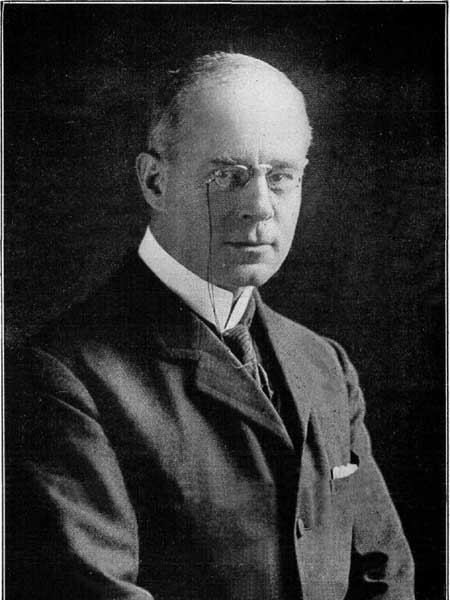
Fig. 10. Hon. A.I. Cutting (same as Fig. 11). Intellectual, idealistic, yet practical; mild, but very shrewd and persistent; good-natured, friendly, social, sympathetic, kindly, yet with good commercial and financial judgment. Observe height of head, with dome above temples; moderate width of head; pleasant, but firm-set, mouth; fine texture and fine chiseling of features; strong, prominent chin, and genial, kindly, friendly expression.
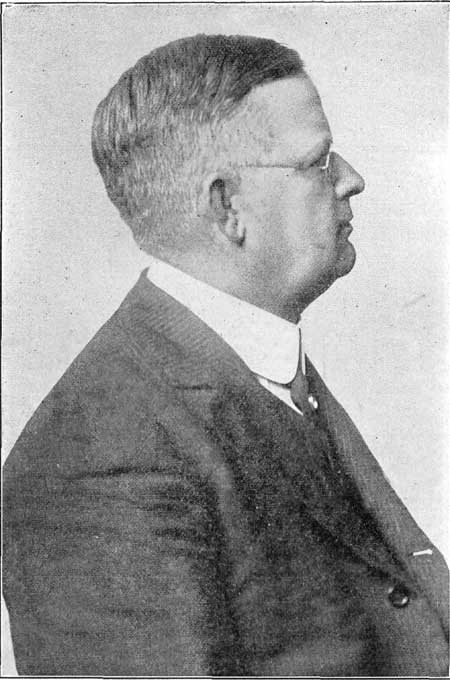
Fig. 11. Hon. A.L. Cutting. Ambitious, aspiring, hopeful, cheerful, friendly, social. A good public speaker. Excellent planner, prudent, far-sighted, and deliberate in speech and action. Note high head, both at crown and above temples, long behind ears; high forehead; well-formed eyes and nose, and prominent chin.
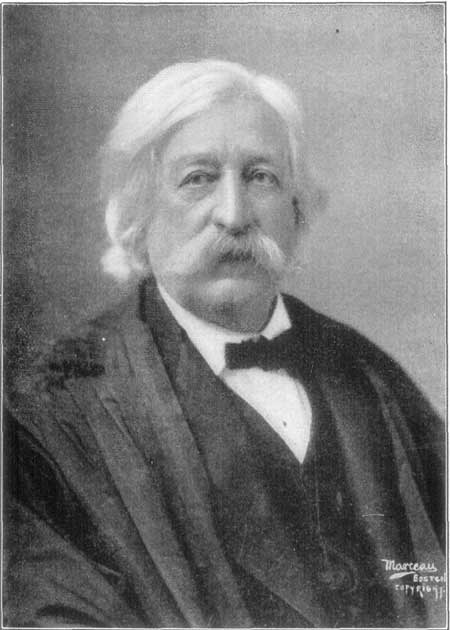
Fig. 12. The late Melville Fuller, Chief Justice of the Supreme Court of the United States. Unusually keen analytical powers, unaffected by sentiment or irrelevant considerations. Great ability to get down to essentials. Note fullness of brows and of upper corners of forehead; keen, penetrating eyes, and long nose with depressed tip.
Fig. 13. Frank A. Vanderlip, President of National City Bank, of New York. A man of both financial and political acumen—also humanitarian. Note high, domed head; width across center and lower part of forehead; inclination to stoutness; large, well-formed features; long lines of face.
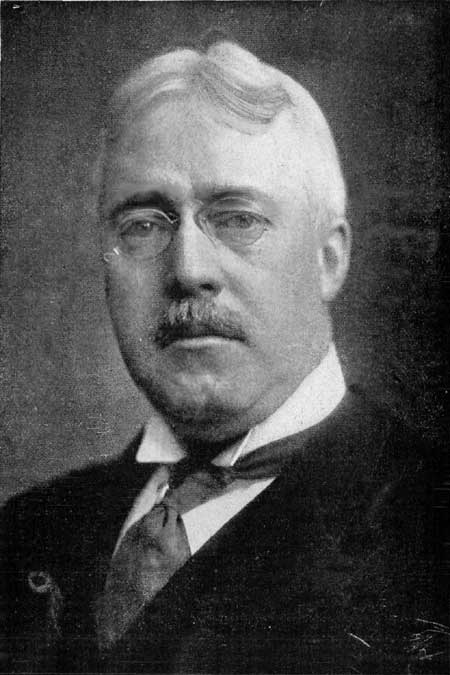
Copyright American Press Association. Fig. 14. Hon. Joseph W. Folk, of Missouri. A keen politician, shrewd lawyer, and hard fighter. Note height and width of head; large, prominent nose; square, firm jaw; long upper lip; dogged set of mouth; unflinching eyes, and inclination to stoutness.
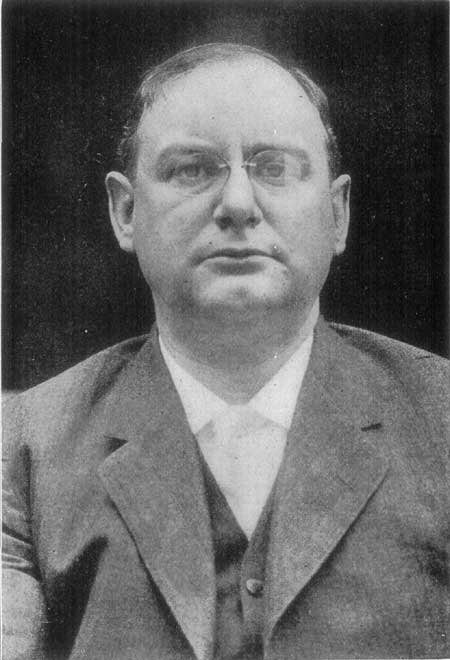
Fig. 15. The late Senator Nelson W. Aldrich, of Rhode Island. Keen, practical observation, financial judgment, diplomacy, shrewdness, energy, intellect, industry, courage, determination, and command. Note well-developed brows; height and width of forehead, especially across center; long, well-developed nose; straight, firm mouth; broad, square, prominent chin; long ears; long line from point of chin to crown of head, and keen, shrewd, alert, penetrating expression of eye.
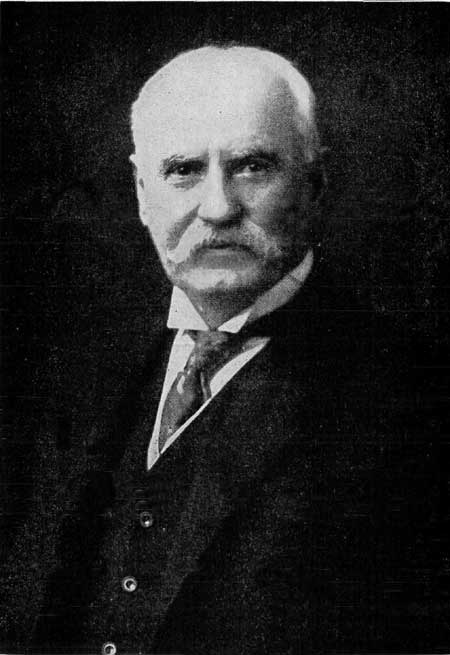
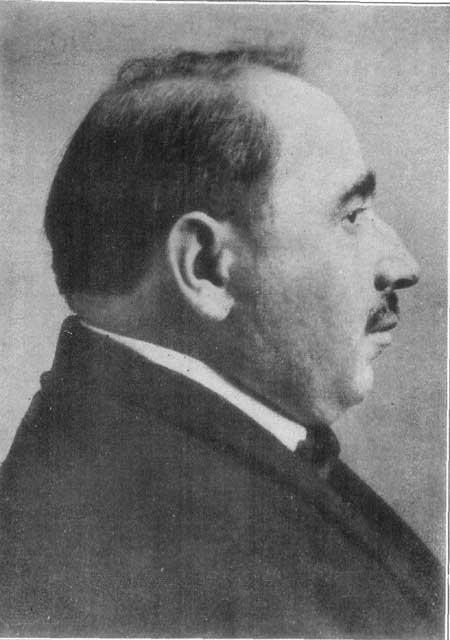
Fig. 16. Showing large, well-developed base of brain, usually an indication of a tendency to stoutness. Note fullness of back of head at nape of neck.
"'Why, what are you doing here?' he asked. I told him Bob and I were just resting after a day of canvassing.
"'Books!' he snorted. 'I guess that won't make you rich. Now, how would like to be a reporter, if you have got nothing better to do? The manager of a news agency downtown asked me to-day to find him a bright young fellow whom he could break in. It isn't much—$10 a week to start with. But it is better than peddling books, I know,'
"He poked over the book in my hand and read the title. 'Hard Times,' he said, with a little laugh. 'I guess so. What do you say? I think you will do. Better come along and let me give you a note to him now.'
"As in a dream. I walked across the street with him to his office and got the letter which was to make me, half starved and homeless, rich as Croesus, it seemed to me.
"When the sun rose I washed my face and hands in a dog's drinking trough, pulled my clothes into such shape as I could, and went with Bob to his new home. The parting over, I walked down to 23 Park Row and delivered my letter to the desk editor in the New York News Association up on the top floor.
"He looked me over a little doubtfully, but evidently impressed with the early hours I kept told me that I might try. He waved me to a desk, bidding me wait until he had made out his morning book of assignments; and with such scant ceremony was I finally introduced to Newspaper Row, that had been to me like an enchanted land. After twenty-seven years of hard work in it, during which I have been behind the scenes of most of the plays that go to make up the sum of the life of the metropolis, it exercises the old spell over me yet. If my sympathies need quickening, my point of view adjusting, I have only to go down to Park Row at eventide, when the crowds are hurrying homeward and the City Hall clock is lighted, particularly when the snow lies on the grass in the park, and stand watching them awhile, to find all things
TALENT IN THE BUD AND BLOSSOM
The big important lesson underlying all of these concrete examples is that the individual of this type never ought to attempt to do any kind of work in which success depends upon physical effort. Whatever talents he may have will express themselves always best in an intellectual way. It may be art, it may be music, it may be machinery, it may be business, it may be mining or agriculture, it may be any one of many other active pursuits which have also a purely intellectual side. In his early youth his mind naturally turns to the more material manifestation of his talent. But, with proper training and given the proper opportunities, he will always gravitate surely to the mental and intellectual phases of his bent. The boy who is interested in machinery may become an inventor or he may become a playwright or an author. The boy who is interested in plants and flowers may become a botanist or a naturalist, or, perhaps, even a poet. The boy who is deeply interested in battles and fighting may be far better adapted to the profession of historian than to the trade of soldier. The boy who likes to build houses and factories in his play, and seems to be deeply interested in the construction of edifices, may not be fitted to become a contractor or a draughtsman. If he is of this intellectual type, he is far more likely to become an architect, or, perhaps, to idealize his talents even further and devote himself to literature on the subject of architecture, home planning, and home decoration. The boy of this type, who in his youth seems to take a particular interest in horses, cattle, dogs, and other animals, may not necessarily be best qualified for a stock breeder or a dairyman. Possibly he should become a veterinarian or even a physician and surgeon. Or his bent may be in the direction of science, so that he makes a name as a naturalist.
The first and most important thing for people of this type,