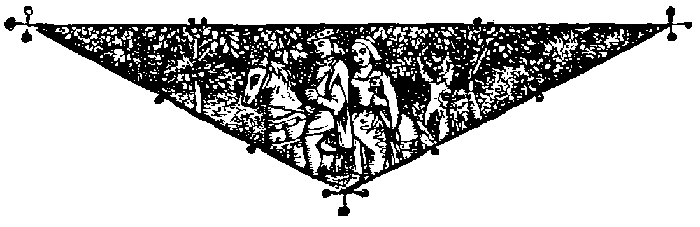
[? Thomas Occleve, Clerk in the Office of the Privy Seal.] The Letter of Cupid.
Reading edition
[Old forms like servin, serve; wollin, will; tellin, tell; doin, done; and the Imperatives bethe, be; telleth, tell; occur in this Poem.]
[Urry's edition of Chaucer's Works. ii. 534. Ed. 1721.]
Cupido, (unto whose commandèment The gentle kindred of goddis on high And people infernal be obedient; And all mortal folk servin busily), Of the goddess son, Cytherea only; Unto all those that, to our deity Be subjects, heartily greeting, send we! In general, we wollin that ye know That Ladies of honour and reverence, And other Gentlewomen havin sow[n] Such seed of complaint in our audience, Of men that do them outrage and offence; That it our earis grieveth for to hear, So piteous is the effect of this matere. Passing all landis, on the little isle That clepèd is Albion, they most complain, They say that there, is crop and root of guile: So can those men dissimulin and feign, With standing dropis in their eyin twain; When that their heartis feeleth no distress, To blindin women with their doubleness. Their wordis, spoken be so sighingly, With so piteous a cheer and countenance That every wight that meaneth truly Deemeth they in heart havin such grievance. They say, "So importable is their penance, That but their lady lust to shew them grace They, right anon, must starvin in the place." "Ah, Lady mine!" they say, "I you ensure As doth me grace! and I shall ever be, While that my life may lasting and endure To you as humble and low in each degree As possible is, and keep all things in secre[t] Right as your selfin listeth that I do! And ellis mine heartè must burst in two." Full hard it is, to know a manis heart For outward may no man the truthè deem. When word out of the mouth, may none astert But it, by reason seemed a wight to queme, So it is said of heart, as it would seem. O faithful woman! full of innocence! Thou art deceivèd by false appearance! By process moveth oft woman's pity. Weening all things were as these men ysay, They grant them grace, of their benignity, For that men shouldin not, for their sake die, And with good heart, settin them in the way Of blissful love: keepin it, if they con! And thus, otherwhile, women bethe ywon. And when this man, the pan hath by the steel And fully is in his possession; With that woman keepeth he no more to deal After, if he may findin in the town Any woman, his blind affection Unto bestow. But evil mote he preve! A man, for all his oaths, is hard to believe! And for that every false Man hath a Make, (As unto every wight is light to know) When this traitor, this woman hath forsake, He fast speedeth him unto his fellow. Till he be there, his heart is on a low; His false deceit ne may him not suffice, But of his treason telleth all the wise. Is this a fair avaunt? Is this honour? A man himself accuse thus and defame! Is it good to confess himself a traitor? And bring a woman into slanderous name And tell how he her body hath do shame? No worship may he thus, to him conquer, But great dislander unto him and her! To her! Nay! Yet ywas it no reprefe; For all for virtue was, that she ywrought! But he that brewèd hath all this mischief, That spake so fair, and falsely inward thought; His, be the slander! as it by reason ought And unto Her be thank perpetual That, in such a need, helpin can so well. Although through manis sleight and subtilty, A silly simple and innocent woman Betrayed is: no wonder! since the city Of Troyè, as the story tellin can, Betrayèd was, through the deceit of man, And set on fire, and all down overthrown; And finally destroyèd, as men knowèn. Betrayin not men, cities great and kings? What wight is it that can shape remedy Against these falsely proposèd things? When can the craft, such crafts to espy But man? whose wit is e'er ready to apply To thing that sowning is into falshede? Woman! bethe 'ware of false men! I thee rede! And, furthermore, have these men in usage That where they not likely been to sped Such as they been, with a double visage, They procurin, for to pursue their need He prayeth him, in his cause to proceed. And largely guerdoneth she his travail. Little wot women, how men them assail! Another wretch, unto his fellow saith, "Thou fishest fair! She which that thee hath fired Is false, inconstant, and she hath no faith. She for the road, of folk is so desired; And, as an horse, from day to day she is hired! That when thou twinnest from her company, Cometh another; and bleared is thine eye! Now prick on fast! and ridin thy journey While thou art there! For she, behind thy back, So liberal is, she will nothing withsay, But smartly of another take a smack. And thus farin these women all the pack Whoso them trusteth, hanged mote he be! Ever they desire change and novelty." Wherefore proceedeth this, but of envy? For that he himself, her ne winnin may, He speaketh her reprefe and villainy; As manis blabbing tongue is wont alway. Thus divers men full often make assay, For to disturbin folk in sundry wise, For they may not eschuin their emprise. Many one eke would speakin for no good, That hath in love his timè spent and used. Men wist, his Lady his asking withstood; Ere that he were of her, plainly refused. Or waste and vain all that he had ymused: Wherefore he can none other remedy, But on his Lady, shapeth him to lie. "Every woman," he saith, "is light to get, Can none say, 'Nay!' if she be well ysought; Whoso may leisure have with her to treat Of his purpose, ne shall be failin ought But he on madness be so deep ybrought That he shende all with open homeliness That loven women. They doting! as I guess." To slaunder women thus, what may profit To gentleness? namely, that them arm should In defence of women, and them delight As that the Order of Gentleness would? If that a man list gentle to be held He must all eschew that thereto is contrary. A slanderous tongue is his great enemy! A foul vice it is, of tongue to be light. For whoso mochil clappeth, gabbeth oft. The Tongue of Man so swift is, and so wight That when it is yraisèd up on loft, Reason is shewed so slowly and soft, That it him never overtakin may. Lord! so these men been trusty in assay! Albeit that men find one woman nice, Inconstant, recheless, and variable, Deignous and proud, full fillèd of malice, Without faith or love, and deceivable, Sly, quaint, false, in all untrust culpable, Wicked or fierce, or full of cruelty: Yet followeth not that such, all women be! When the high GOD, angellis formèd had: Amongis them all formed, were there none That foundin were malicious and bad? Yet all men wotin, there were many one That for their pride fell from heaven anon. Should we, forthy, give all angels proud name? Nay, he that that sustaineth, is to blame! Of twelve Apostles, one a traitor was; The remenant yet good werin and true. So if it happen men findin, percase, A woman false; such, good is to eschew: And deem not all that they therefore be untrue. I see well, that menis own falseness Them causeth, woman for to trust the less. O, every man ought have a heart tender To a woman, and deem her honourable; Whether her shape be thick, or else slender, Or she be good or bad! It is no fable. Every wight wot, that wit hath reasonable, That of a woman, he descendèd is: Then is it shame of her to speak amiss! A wicked tree, good fruit may none forth bring; For such the fruit, is aye as is the tree. Take heed of whom thou take thy beginning! Let thy mother be mirror unto thee! Honour her, if thou wilt honoured be! Despiseth her then not, in no manere! Lest that thereby thy wickedness appear. An old proverb there said is, in English, That bird or fowl, soothly, is dishonest What that he be, and holdin full churlish That useth to defoulin his own nest. Men to say well of women, it is the best: And naught to despisin them, ne deprave; If that they will their honour keep or save. The Ladies ever complain them on Clerks That they have made bookis of their defame; In which they despise women and their works, And speakin of them great reproof and shame: And causèless give them a wicked name. Thus they despisèd be, on every side, Dislanderèd and blown upon full wide. Those sorry books make mention How women betrayed in especial Adam, David, Sampson, and Solomon, And many one more; who may rehearse them all, The treasons that they havin done, and shall? The world their malice may not comprehend (As Clerkis feign), for it ne hath none end. Ovid, in his book callèd Remedy Of Love, great reproof of woman ywriteth, Wherein, I know that he did great folly; And every wight who, in such case, him delighteth. A Clerkis custom is, when he enditeth Of women (be it prose, or rhyme, or verse) Say, "They be wicked!" all know he the reverse. And the book Scholars learned in their childhead For they of women beware should in age, And to lovin them, ever be in dread. Sith to deceive, is all their courage, They say, of peril, men should cast the advantage, Namely, of such as men havin bewrapped: For many a man, by woman hath mishapped. No charge is what so these Clerkis ysain Of all their writing, I ne do ne cure All their labour and travail is in vain For between me and my Lady Nature Shall not be suffred, while the world may 'dure. Thus these Clerkis, by their cruel tyranny, On silly women, kithin their mastery. Whilom, for many of them were in my chain Ytied; and now, for unwieldy age And unlust, they may not to love attain: And sain, now, that "Love is but very dotage!" Thus, for they themselfin lackin courage, They folk excitin by their wicked saws For to rebell against Me, and my laws! But, maugre them that blamin women most, Such is the force of mine impression That, suddenly, I can fell all their boast, And all their wrong imagination. It shall not be in their election, The foulest slut in all the town to refuse; If that me lust, for all that they can muse: But her in heart, as brenningly desire As though she were a Duchess, or a Queen; So can I folkis heartis set on fire And, as me list, sendin them joy or teen. They that to women ben ywhet so keen, My sharpè piercing strokis! how they smite! Shall feel and knowin, how they kerve and bite! Pardie! this Clerk, this subtle sly Ovid, And many another deceivèd have be Of women, as it is knowin full wide. What! no men more! and that is great dainty So excellent a Clerk as was he! And other more, that couldin full well preach Betrapped were, for aught that they could teach! And trusteth well, that it is no marvail! For women knowin plainly their intent. They wist how softily they could assail Them; and what falsehood they, in heartè meant: And thus they Clerkis, in their danger hent, With one venom, another is destroyed! And thus these Clerkis often were annoyed. These Ladies, ne these gentles ne'ertheless, Where none of those that wroughtin in this wise; But such women as werin vertueless They quiltin thus, these old Clerkis wise. To Clerkis muchil less ought to suffice Than to dispravin women generally; For worship shallin they none get thereby. If that these men, that lovers them pretend, To women werin faithful, good, and true, And dread them to deceive, or to offend; Women, to love them wouldin not eschew. But, every day, hath man an heart new! It, upon one abidin can, no while. What force is it, such a wight to beguile? Men bearing, eke, the women upon hand That lightly, and withoutin any pain They women be; they can no wight withstand That his disease list to them to complain! They be so frail, they may them not refrain! But whoso liketh them, may lightly have; So be their heartis easy in to grave. To Master Jean de Meun, as I suppose, Then, it was a lewd occupation, In making of the Romance of the Rose, So many a sly imagination, And perils for to rollin up and down, The long process, so many a slight cautel For to deceive a silly damosel! Nought can I say, ne my wit comprehend, That art, and pain, and subtilty should fail For to conquer, and soon to make an end; When men, a feeble place shullin assail: And soon, also, to vanquish a battle Of which no wight may makin resistance; Ne heart hath none, to make any defence. Then mote it follow, of necessity, Sith art asketh so great engine and pain A woman to deceive, what so she be? Of constancy be they not so barren As that some of these silly Clerkis feign; But they be, as women oughtin to be, Sad, constant, and full fillèd of pity. How friendly was Medea to Jason In his Conquering of the Fleece of Gold! How falsely quit he, her true affection, By whom victory he gate as he would! How may this man, for shame, be so bold To falsin her, that, from his death and shame Him kept, and gate him so great a prize and name? Of Troy also, the traitor Æneas, The faithless wretch! how he himself forswore To Dido, which that Queen of Carthage was That him relievèd of his smartis sore! What gentleness might she have doin more Than she, with heart unfeigned, to him kidde? And what mischief to her thereof betid! In my Legend of Natures may men find (Whoso yliketh therein for to read) That oathis ne behest may man not bind Of reprovable shame have they no dread In manis heart truth ne hath no stead. The soil is naught; there may no troth ygrow. To women, namely, it is not unknow[n]. Clerkis feign also there is no malice Like unto woman's wicked crabbedness. O Woman! how shalt thou thyself chevice; Sith men of thee, so mochil harm witness? Beth ware! O Woman! of their fickleness. Kepeth thine ownè! what men clap or crake! And some of them shall smart, I undertake! Malice of women! What is it to dread? They slay no man, destroyin no cities, Ne oppress people, ne them overlaid, Betray Empires, Realms, or Duchies, Nor bereaven men their landis, ne their mees, Empoison folk, ne houses set on fire, Ne false contractis makin for no hire. Trust, Perfect Love, and Entire Charity, Fervent Will, and Entalented Courage, All thewis good, as sitteth well to be, Have women, ere, of custom and usage. And well they canin manis ire asuage, With soft wordis, discreet and benign. What they be inward, they show outward by sign! Womanis heart unto no cruelty Inclined is; but they be Charitable, Piteous, Devout, Full of Humility, Shamefast, Debonaire, and Amiable, Dread full, and of wordis measurable: What women, these have not, peradventure; Followeth not the way of their nature. Men sayin that our First Mother na'theless Made all mankind lesin his liberty, And nakid it of joyè, doubtless, For GOD is hest disobeyèd she, When she presumed to taste of the tree, That GOD forbade, that she eat thereof should. And ne had the Devil be, no more she would! The envious swelling, that the Fiend our foe Had unto man in heart, for his wealth, Sent a serpent, and made her for to go To deceive Eve; and thus was manis wealth Bereft him by the Fiend, in a stealth, The woman not knowing of the deceipt, God wot! Full far was it from her conceipt! Wherefore I say, that this good woman Eve Our father Adam, ne deceived nought. There may no man for a deceipt it prove Properly, but that she, in heart and thought, Had it compassed[1] first, ere she it wrought. And for such was not her Impression, Men may it call no Deceipt, by reason. Ne no wight disceiveth, but he purpose! The Fiend this deceipt cast, and nothing She. Then it is wrong to deemin or suppose That of his harm She should the causè be. Wytith the Fiend, and his be the maugre! And all excusèd have her innocence, Save only, that she brake obedience! And touching this, full fewè men there be, Unnethis any, dare I safely say! From day to day, as men may all day see, But that the hest of GOD they disobey. Have this in mindè, siris! I you pray. If that ye be discreet and reasonable; Ye will her hold the more excusable! And where men say, "In man is stedfastness; And woman is of her courage unstable." Who may of Adam bear such a witness? Tellith me this! Was he not changeable? They both werin in one case semblable. Save that willing, the Fiend deceived Eve; And so did she not Adam, by your leave! Yet was this sinnè happy to mankind, The Fiend disceived was, for all his sleight; For aught he could him in his sleightis wind. For his trespass, came from heaven on height GOD, to discharge man of his heavy weight He, flesh and blood ytook of a Virgine, And suffered death, him to deliver of pine. And GOD, to whom there may nothing hid be, If he, in woman knowen had such malice, As men record of them in generalty; Of our Lady, of Life Reparatrice He n'old have be born: but that she of vice Was void, and full of virtue, well He wist, Endowid! of her, to be born Him list. Her heapèd virtue hath such excellence That all too lean is manis faculty To declare it; and therefore in suspense Her due praising put, needis must ybe. But this I sayin, Verily, that she Next GOD, best friend is, that to Man 'longeth. The Key of Mercy by her girdle hangeth! And of mercy, hath every man such need, That razing that, farewel the joy of man! And of her power, now takith right good heed! She, mercy may well, and purchasin can. Depleasith her not! Honoureth that woman! And other women, honour for her sake! And but ye do, your sorrow shall awake! In any book also, where can ye find That of the workis of death or of life, Of Jesu spelleth or maketh any mind That women, Him forsoke, for woe or strife? Where was there any wight so ententife Aboutin Him as woman? Provid none! The Apostles him forsokin everichone. Woman forsoke Him not! For all the faith Of holy church in woman left only! These are no lies, for thus Holy Writ saith, Look! and ye shall so find it hardily! And therefore I may well provin thereby That in woman reigneth stable constancy; And in men is change of variancy. Thou Precious Gem! Of martyrs, Magarite! That of thy blood, dreadest none effusion! Thou Lover true! Thou Maiden mansuete! Thou, constant Woman! in thy passion Overcame the Fiendis temptation! And many a wight, convertid thy doctrine, Unto the faith of holy GOD, thou Virgin! But, understandeth this! I commend her nought, By encheson of her virginity. Trusteth, it came never into thought! For ever were I against Chastity. And ever shall. But, lo, this moveth me! Her loving heart; and, constant to her lay, Drive out of my remembrance I ne may.
Now holdith this for firm, and for no lie! That this true and just commendation Of women, tell I for no flattery; Nor because of pride or elation: But only, too, for this intention To give them courage of perseverance In virtue; and their honour to advance. The more the virtue, the less is the pride. Virtue so digne is, and so noble in kind, That Vice and he will not in fere abide. He putteth vices clean out of his mind, He flyeth from them, he leaveth them behind. O, Woman! that of Virtue, art hostess; Great is thy honour, and thy worthiness!

Then will I thus concludin and define. We, you command! our ministers each one That ready ye be, our hests to incline! That of these falsè men, our rebell foen Ye doin punishment! and that, anon! Void them our Court! and banish them for ever! So that therein more comin, may they never! Fulfilled be it! Ceasing all delay, Look that there be none excusation! Written in the lusty month of May, In our Palace, where many a million Of lovers true, have habitation; In the year of grace, joyful and jocond, A thousand, four hundred and second.
Thus endeth
The letter of Cupid.