GALVANISM,
Reading edition
WITH A SERIES OF CURIOUS AND INTERESTING
EXPERIMENTS
PERFORMED
BEFORE THE COMMISSIONERS OF THE FRENCH NATIONAL INSTITUTE,
AND REPEATED LATELY IN THE
ANATOMICAL THEATRES OF LONDON.
By JOHN ALDINI,
PROFESSOR OF EXPERIMENTAL PHILOSOPHY IN THE UNIVERSITY OF BOLOGNA, MEMBER OF THE MEDICAL AND GALVANIC SOCIETIES OF PARIS, OF THE MEDICAL SOCIETY OF LONDON, ETC.
TO WHICH IS ADDED,
AN APPENDIX,
CONTAINING THE AUTHOR’S EXPERIMENTS ON THE BODY OF A MALEFACTOR EXECUTED AT NEWGATE. &c. &c. ILLUSTRATED WITH ENGRAVINGS.
LONDON:
PRINTED FOR CUTHELL AND MARTIN, MIDDLE-ROW, HOLBORN, AND J. MURRAY, NO. 32, FLEET-STREET,
BY WILKS AND TAYLOR, CHANCERY-LANE.
1803.
EDITOR’S PREFACE.
Few discoveries in modern times have excited so much curiosity as that of Galvanism. Ever since it was first made known by its celebrated Author, it has engaged the attention of the most eminent philosophers in Europe; and various researches have been undertaken to ascertain the principles on which it depends; and the laws to which it is subject.
Though some of its singular properties are fully established, it must be allowed that the discovery is still in its infancy; but enough of it is known to prove its importance, and to induce philosophers to continue their researches, which there is every reason to suppose may lead to some very curious results.
The experiments, indeed, which have already been made, seem to indicate that it may open a new field in the healing art; and it appears by a late report presented to the Class of the Exact Sciences of the Academy
While Galvanism, independently of other advantages, holds out such hopes of utility in regard to objects so interesting to mankind; a work containing a full account of the late improvements which have been made in it, illustrated by a complete course of experiments, cannot fail of being acceptable to the public in general, and in particular to medical men, to whose department, in one point of view, it more essentially belongs.
When Professor Aldini left this country, the manuscript, written in French, together with two printed Latin Dissertations, was put into the Editor’s hands, in order that they might be prepared for the press. A translation of these forms the principal part of the work: and an Appendix has been added, containing the author’s experiments on the body of a malefactor executed at Newgate; experiments of a similar kind on the bodies of three criminals decapitated at Bologna; and an experiment lately made at Calais, which
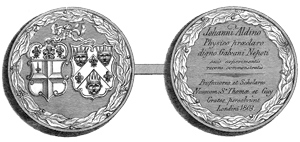
The Editor thinks it necessary to observe, that the principal experiments, of which an account is given in this work, are illustrated by proper engravings, and that the title page is embellished with a representation of the gold medal presented to the Author, as a mark of their respect, by the medical professors and pupils of Guy’s and St. Thomas’s Hospitals.
London, May 12th, 1803.
CONTENTS.
PART I.
PAGE
OF THE NATURE AND GENERAL PROPERTIES OF GALVANISM.
Proposition I. Muscular contractions are excited by the development of a fluid in the animal machine, which is conducted from the nerves to the muscles without the concurrence or action of metals 3
Prop. II. The Galvanism excited, in the preceding experiments, is not owing to the communication nor to the transfusion of the general electricity, but to an electricity peculiar to animals, which acts a very distinguished part in the animal economy 6
Prop. III. Galvanism develops itself in a powerful manner, independently of metals, by means of the human animal machine 8
Prop. IV. Muscular contractions can be excited, under certain conditions, without establishing a continued arc from the nerves to the muscles 11
Prop. V. The effects of Galvanism, in the preceding experiments, do not depend on the action of any stimulant, which occurs in performing the experiments, and ought not to be confounded with the effects of that action 12
Prop. VI. Galvanism is excited in the animal machine without any intermediate body, and merely by the application of the nerves to the muscles 14
Prop. VII. The heterogeneity of metals contributes, in a great degree, to excite muscular contractions with more facility, but is not absolutely necessary to their production 19
Prop. VIII. The Leyden flask, the Voltaic pile, and animal substances, have the faculty of absorbing principles from the atmospheric air in an insulated plenum 21
Prop. IX. Flame prevents the action of the Leyden flask, as well as that of the pile, and also muscular contractions 27
Prop. X. Certain fluids, applied to the whole surface of the pile, or of animal parts, do not prevent the action of Galvanism 29
Prop. XI. Mere electrization, by means of the common kinds of apparatus, does not increase the action of Galvanism 32
Prop. XII. The Galvanic action is increased by employing as part of the arc the apparatus of Volta, or the electrified Leyden flask 34
Prop. XIII. Galvanism, in animals and in the pile, traverses large spaces with the same rapidity as the electric fluid 36
Prop. XIV. The muscular contractions, which, according to the observations of Galvani, are produced by an electric atmosphere whether natural or artificial, correspond entirely with those produced by the pile, or by similar kinds of apparatus 37
Prop. XV. Opium, cinchona, and other stimulants of a similar kind, which exercise a powerful action on the animal machine, contribute also to excite the action of the pile 41
Prop. XVI. If the general relation between Galvanism and electricity be examined, such a correspondence will be found between them, as tends to confirm the analogy already stated 44
Prop. XVII. The hypothesis of an animal pile, analogous to that formed artificially, seems well calculated to explain the sensations and contractions in the animal machine 47
PART THE SECOND.
ON THE INFLUENCE WHICH GALVANISM HAS ON THE VITAL POWERS 53
Section I. Galvanism applied to various quadrupeds, birds, and other warm-blooded animals 54
Section II. Experiments made on human bodies after death 67
PART THE THIRD.
ON THE POWER OF GALVANISM AS APPLIED TO MEDICINE 97
Sect. I. Advantages which the medical administration of Galvanism has over that of common electricity 99
Sect. II. Application of Galvanism to the organs of hearing and of sight 101
Sect. III. Application of Galvanism in cases of asphyxia and drowning 110
Sect. IV. Galvanism applied to the cure of melancholy madness 113
Sect. V. General reflections on the action and influence which Galvanism, considered in a medical point of view, exercises on the animal œconomy 123
Dissertation on animal electricity, read in the Institute of Bologna in the year 1793 133
Second Dissertation on animal electricity, read in the Institute of Bologna in the year 1794 155
Conclusion 186
APPENDIX 189
No. I. An account of the experiments performed, by J. Aldini, on the body of a malefactor executed at Newgate Jan. 17, 1803 ib.
No. II. Report presented to the Class of the Exact Sciences of the Academy of Turin, 15th August 1802, in regard to the Galvanic experiments made by C. Vassali-Eandi, Giulio, and Rossi, on the 10th and 14th of the same month, on the bodies of three men a short time after their decapitation. By C. Giulio 204
No. III. Account of an experiment made at Calais, on the transmission of Galvanism through an arm of the sea 217
Pg 1
AN ACCOUNT
OF THE LATE
IMPROVEMENTS IN GALVANISM.
A just tribute of applause has been bestowed on the celebrated Professor Volta for his late discovery; and I have no desire to deprive him of any part of that honour to which he is so justly entitled; but I am far from entertaining an idea that we ought, on this account, to neglect the first labours of Galvani. Though these two philosophers pursued different routes, they concurred to throw considerable light on the same points of science; and the question now is, to determine which of them deduced the most just consequences from the facts he observed; and then to ascertain whether the facts established by Galvani lead to the theory of Volta, or whether those discovered by Volta are connected with the theory of Galvani. For my part, I am of opinion that these two theories may serve in an eminent degree to illustrate each other.
Last year Professor Volta announced to the public the action of the metallic pile. I here propose to exhibit, according Pg 2 to the principles of Professor Galvani, the action of the animal pile.
Such is the plan I have conceived in order to reconcile the systems of these two illustrious philosophers: it forms the object of the present work, which is divided into three parts. In the first I shall exhibit the action of Galvanism independently of metals, and explain some of its general properties. The second will contain experiments on the power of Galvanism to excite the vital forces. In the third I shall propose some useful applications of it to medicine, and explain the principles on which the new medical administration of Galvanism is founded. To render the work as methodical as possible, I have endeavoured to arrange the experiments in such a manner that they may serve as proofs to a series of general propositions, which, it is hoped, will be of use to physiology and to the doctrine of the animal economy.
Pg 3
PART THE FIRST.
OF THE NATURE AND GENERAL PROPERTIES OF GALVANISM.
PROPOSITION I.
Muscular contractions are excited by the development of a fluid in the animal machine, which is conducted from the nerves to the muscles without the concurrence or action of metals.
EXPERIMENT I.
Having provided the head of an ox, recently killed, I thrust a finger of one of my hands, moistened with salt water, into one of the ears (Plate I. fig. 1.), at the same time that I held a prepared frog in the other hand, in such a manner that its spinal marrow touched the upper part of the tongue. When this arrangement was made, strong convulsions were observed in the frog; but on separating the arc all the contractions ceased.
This experiment will succeed still better if the arc be conveyed from the tongue of the ox to the spinal marrow of the frog. This method was found to be exceedingly convenient for trying the effect of Galvanism on several calves.
Pg 4
EXPERIMENT II.
Having provided the trunk of a calf, I conveyed the arc from the muscles of the abdomen to the spinal marrow of a frog, prepared and arranged in the usual manner. The frog seemed much affected, and the contractions were exceedingly violent when the arc was composed of a chain of different persons, united together by the hands moistened with salt water.
EXPERIMENT III.
I connected, by means of one chain of moisture, the heads of two or three calves, and observed that by this combination the force of the Galvanism was exerted with more energy: a frog, which was not affected by touching one head, experienced violent contractions when applied to a series of several heads connected together.
EXPERIMENT IV.
I think it proper here to mention a very curious observation which I made lately at Paris, in company with professor Huzzard, and in the presence of the Commissioners of the National Institute. On applying the spinal marrow of a prepared frog to the cervical muscles of a horse’s head, separated from the body, no muscular convulsions took place; but if, at the same time, another person touched with his hand, Pg 5 moistened by a solution of muriate of soda, the spinal marrow of the horse, convulsions were always produced in the frog, though there was no communication between the persons, except that formed by a floor on which they stood.
Pg 6
PROPOSITION II.
The Galvanism excited, in the preceding experiments, is not owing to the communication nor to the transfusion of the general electricity, but to an electricity peculiar to animals, which acts a very distinguished part in the animal economy.
EXPERIMENT I.
Having placed the trunk of a calf (Plate I. fig. 2.) on an insulated table, I made a longitudinal incision in the breast, in order to obtain a long series of muscles uncovered. I then arranged two insulated persons in such a manner that the one with a finger, moistened by salt water, touched the spinal marrow of the calf, while the other applied the spinal marrow of a frog to the muscles of the trunk. Every time this arc was formed, muscular contractions were produced in the frog. When the two persons let go each other’s hands, the contractions ceased. I repeated this experiment, with the same success, on the insulated head of an ox, conveying the arc from the spinal marrow of the frog to the tongue. Frogs were as violently affected when the experiment was made with the insulated trunks of different kinds of birds.
This experiment, in my opinion, affords a decisive proof that the Galvanic fluid is peculiar to the animal machine, independently of the influence of metals, or of any other Pg 7 foreign cause. In these experiments, indeed, we have some animal machines, so combined that the result is strong contractions in the frog. All the bodies were insulated; and, therefore, it cannot be supposed that the contractions were occasioned by the direct influence of that general principle, which pervades every body in nature. Hence it is evident, whether it be ascribed to the action of the animal chain, formed by the arms of the persons, or to the animal pile, formed by the trunk of the calf, that we shall still be obliged to acknowledge the action of a principle which belongs to the organization of the animal machine, without having any dependence on metals.
To prove in the animal body the existence of a principle which philosophers can by certain means excite and direct at pleasure in their experiments, is a matter of the greatest importance; though the manner in which it is put in action by nature, however wonderful, is unknown to us. Here then we have developed a very energetic fluid, capable of transmission, and deriving its origin from the action of the animal forces; since the parts of bodies separated from the common reservoir of general electricity have still of themselves the faculty of reproducing it, and of causing it to circulate in a manner proper for exciting muscular contractions.
Pg 8
PROPOSITION III.
Galvanism develops itself in a powerful manner, independently of metals, by means of the human animal machine.
EXPERIMENT I.
If you hold in your hand, moistened with salt water, the muscles of a prepared frog, and apply the crural nerves to the tip of your tongue, you will immediately see violent contractions produced in the frog. All suspicion of any stimulant exerting an action in this case, may be removed by repeating the experiment with the frog held in the dry hand: the muscular contractions will then cease, unless the action of Galvanism in the frog, or in the animal machine, be uncommonly powerful; in which case contractions may be produced without establishing an arc from the nerves to the muscles.
EXPERIMENT II.
I held the muscles of a prepared frog in one of my hands, moistened by salt water, and brought a finger of the other hand, well moistened, near to the crural nerves. When the frog possessed a great deal of vitality the crural nerves gradually approached my hand, and strong contractions took Pg 9 place at the point of contact. This experiment proves the existence of a very remarkable kind of attraction, observed not only by myself, but also by those whom I requested to repeat the experiment.
EXPERIMENT III.
The above experiment requires great precision in the preparation, and a considerable degree of vital power in the frog. I have been informed by Professor Fontana, in a letter lately received from him, that this phænomenon depends on very delicate circumstances, which he proposes to explain. He assures me, at the same time, that he has twice seen the nerve attracted, in this manner, by the muscle. Being desirous to render this phænomenon more evident, I formed the arc, by applying one of my hands to the spinal marrow of a warm-blooded animal, while I held a frog in the other, in such a manner that the crural nerves were brought very near to the abdominal muscles. By this arrangement the attraction of the nerves of the frog became very sensible. I performed this experiment for the first time, at Oxford, before Sir Christopher Pegge and Dr. Bancroft, and repeated it in the anatomical theatres of St. Thomas’s and Guy’s hospitals.
Pg 10
EXPERIMENT IV.
I made the same observations on the body of a man as I had before made on the head and trunk of an ox. Having obtained the body of an executed criminal, I formed an arc from the spinal marrow to the muscles, a prepared frog being placed between, and always obtained strong contractions without the aid of the pile, and without the least influence from metals. I obtained the same result, in a certain degree, from the bodies of men who had died a natural death.
EXPERIMENT V.
Let four or more persons hold each other by the hands, moistened by a solution of muriate of soda, so as to form a long animal chain. If the first hold in his hand the muscles of a prepared frog; and if the last, at the other end of the chain, touch the spinal marrow or the crural nerves, contractions will be produced: if the animal chain be broken, the contractions will immediately cease. I performed this experiment, making the animal chain to consist of two persons, before the Galvanic Society at Paris, and in Mr. Wilson’s anatomical theatre, Windmill-street.
Pg 11
PROPOSITION IV.
Muscular contractions can be excited, under certain conditions, without establishing a continued arc from the nerves to the muscles.
EXPERIMENT.
Having obtained the body of an executed criminal, I caused the biceps muscle to be laid bare, and brought near to it the spinal marrow of a prepared frog. By these means contractions were produced in it much stronger than I had ever obtained in warm-blooded animals. I repeated the experiment, being myself insulated, and observed no signs of contraction. The same phænomena were exhibited with the head of an ox, which possessed an extraordinary degree of vitality.
Pg 12
PROPOSITION V.
The effects of Galvanism, in the preceding experiments, do not depend on the action of any stimulant, which occurs in performing the experiments, and ought not to be confounded with the effects of that action.
EXPERIMENT I.
In the experiment of the frog applied to the uncovered biceps muscle of the body of the malefactor, if any other body be made to touch the frog it will remain motionless. This proves that the contractions produced in the frog do not arise from the impulse of the mere contact of the spinal marrow with the muscle of the human animal machine.
EXPERIMENT II.
To remove still further all suspicion of the action of stimulants, in the preceding experiments, I prepared two frogs, and connected the extremities of one with the spinal marrow of the other. I then held in my hand the extremities Pg 13 of one of the frogs, and applied the spinal marrow of the other to the uncovered muscles of the head of an ox, which possessed a great degree of vitality. By these means contractions were produced in both the frogs. It is evident, in this experiment, that the force of the stimulant, if there were any, might act on the second frog, but not on the first.
Pg 14
PROPOSITION VI.
Galvanism is excited in the animal machine without any intermediate body, and merely by the application of the nerves to the muscles.
Several philosophers have endeavoured to obtain this interesting result. Professor Volta, in a letter which he addressed to me, in Brugnatelli’s Journal, observed, “that various parts of animals can excite Galvanism, independently of metals.” Galvani, a short time before his death, proposed two ingenious methods of obtaining this result, and gave me a description of them. This, however, has not been able to destroy the incredulity of some philosophers, who hitherto have confounded Galvanism with metallic electricity, under an idea that all contractions proceed from irritation, produced by the action of metals. For this reason I have, with confidence, announced my method, which enables any one to observe this important result.
EXPERIMENT I.
Having prepared a frog in the usual manner, I hold the spinal marrow in one hand (Plate I. fig. 3.), and with the other form an angle with the leg and foot, in such a manner that the muscles of the leg touch the crural nerves. On this Pg 15 contact strong contractions, forming a real electrico-animal alarum (carillon), which continue longer or shorter according to the degree of vitality, are produced in the extremity left to itself. In this experiment, as well as in the following, it is necessary that the frogs should be strong and full of vitality, and that the muscles should not be overcharged with blood.
EXPERIMENT II.
By observing the directions already given, very strong convulsions will be obtained; but they must not be ascribed to the impulse produced by bringing the nerve into contact with the muscle. If the experiment be repeated, covering the muscle, at the place of contact, with a non-conducting substance, the contractions will entirely cease; but they will be re-produced as soon as the nerve is made to touch the muscular substance. In performing this experiment, in public, I obtained several times more than two hundred successive contractions; but this was never the case when I formed the same contact with the muscle by means of a conducting substance, and even with a plate of metal.
To ensure the success of this interesting experiment, the nerves must be prepared as speedily as possible, by disengaging them from every foreign substance. It will be proper also to apply the nerves not to one but to several points of the muscle, throughout its whole length. It is observed, that the contact of the nerves with the tendinous parts which communicate with the muscles, often serves to Pg 16 increase the muscular contractions. I performed the above experiment before several able professors, among whom were the celebrated Brugnatelli and Carcano, who, with that modesty peculiar to them, made several ingenious observations on the precision which might be given to it. Professor Brugnatelli was apprehensive that, as I had accidentally touched some metals before I performed the experiment, metallic particles might have adhered to my fingers, and thus have served, in some measure, as invisible arming, sufficient of itself to excite muscular contractions. This suspicion, however, I removed, by immersing my hands in water, to detach every foreign substance. He then observed that animal moisture, independently of the circulation of the Galvanic fluid from the nerves to the muscles, might also excite muscular contractions; and he requested that the crural nerves might be washed in common water. This was accordingly done; and the humidity of the nerves being thus externally removed, very strong contractions were still produced, as the professor found, to his full conviction, on repeating the experiment himself several times[1].
Pg 17
EXPERIMENT III.
The Commissioners of the French National Institute remarked, that, in order to give the greatest precision possible to these experiments, it would be necessary to insulate entirely the nervous and muscular systems. For this purpose, I applied these parts to each other by means of glass rods, and each time they were brought into contact I obtained muscular contractions. The case was the same when an animal arc was applied to two insulated frogs: contractions were produced in them both. The apparatus employed for this purpose may be seen in Plate I. fig. 5 and 6.
Pg 18
EXPERIMENT IV.
Having prepared a frog according to the usual method, I cut one of its crural nerves in such a manner that the trunk was united to the spinal marrow by means of the other nerve, which remained uncut, and also by a blood-vessel contiguous and parallel to the cut nerve. I then repeated the above experiment; and, though only one nerve was in contact with the muscles, I obtained the same results.
EXPERIMENT V.
A ligature was placed loosely around the middle of the crural nerves, and one of these nerves at the ligature applied to the corresponding muscles: strong contractions ensued; which, however, did not take place, when the ligature was drawn tight, at the insertion of the nerves into the muscles of the thigh.
Pg 19
PROPOSITION VII.
The heterogeneity of metals contributes, in a great degree, to excite muscular contractions with more facility, but is not absolutely necessary to their production.
This proposition I could demonstrate in a direct manner, by means of experiments, which I published formerly, on the contractions excited by very pure mercury, and which were repeated, in different ways, by the celebrated Humboldt. I am, however, happy to have an opportunity of examining the influence of arming with heterogeneous substances; and I shall endeavour to prove that it cannot, of itself, produce the effect of muscular contractions.
EXPERIMENT I.
If several prepared frogs, ten or more for example, be placed on a table (Plate I. fig. 7.), and arranged parallel to each other, in such a manner that the whole system of the nerves shall be at one end, and that of the muscles at the other,—on applying two armatures and a metallic arc to the first of these frogs, muscular convulsions will be immediately excited, not only in the first frog, but in all the rest.
Pg 20
EXPERIMENT II.
If the experiment be repeated with the frogs arranged in such a manner that the spinal marrow and muscles are not each at one end (Plate I. fig. 8.), but disposed alternately so that the spinal marrow of one touches sometimes the muscles of another, or vice versa, convulsions will then be produced only in some of the frogs, and not in the whole series. This experiment proves that the effect does not, in any manner, depend on the action of metals; because metallic electricity in the first experiment ought to exercise an action only on the first frog, and not on the rest; and, in the second, ought to cause them all to move together, or to leave them motionless.
I shall now proceed to those experiments which appear to be best calculated to support the opinion of the great analogy between electricity and Galvanism.
Pg 21
PROPOSITION VIII.
The Leyden flask, the Voltaic pile, and animal substances, have the faculty of absorbing principles from the atmospheric air in an insulated plenum.
EXPERIMENT I.
By means of a metallic point, I electrified the interior side of a glass jar, which I inverted and placed on a plate of metal, so as to form an insulated plenum. In a little time, I saw the water rise in the glass several lines; and I then flattered myself with the hopes of obtaining some remarkable effects by another method.
EXPERIMENT II.
I provided for this experiment a Leyden flask, seven inches in height and about three in diameter, coated in the usual manner with tin foil: the exterior end of the wire terminated in a sharp point, so that the electric fluid which escaped from it could easily combine with the principles of the atmospheric air, with which it had a greater affinity. I then electrified the jar, and covered it with a glass receiver of such a size that its electricity could not be Pg 22 weakened by the sides of the latter. I thus formed an insulated plenum, and at the end of half an hour I saw the water ascend in the receiver in a very sensible manner.
EXPERIMENT III.
Having made the wire to terminate, not in a point, but in a metallic knob, as usual, I again charged the jar, and having placed it under a common receiver, at the end of about half an hour I found that the elevation of the water was much greater. To remove every suspicion that this might arise from the water employed in the preceding experiment, to insulate the plenum, I substituted mercury in its stead; and though the elevations were less, they were, however, analogous to those which had been observed a little before with water. By repeating this experiment with a similar jar, not electrified, one may be easily convinced, that the elevation of the water in the bell ought not to be ascribed to a difference in the temperature of the air within it.
EXPERIMENT IV.
I placed under a bell-glass, forming an insulated plenum, a pile consisting of fifty plates of silver and zinc. Next morning I observed that the water had risen some inches, indicating that a great absorption of air had taken place. Having then introduced a taper into the receiver, it was Pg 23 immediately extinguished. The pile, without being arranged anew, was placed under the same receiver; and on forming an insulated plenum, I observed, after twenty-four hours had elapsed, a sensible absorption of air. A taper was then introduced, and I obtained the same result. I replaced the pile under the receiver, and found, on the third and following days, that the pile retained its moisture, so that till the tenth day it gave analogous results. I repeated the same experiment with oxygen gas, and found, six days after, that the water in the bell had risen a foot.
EXPERIMENT V.
The same results may be obtained without employing large piles and large receivers. In general, it will be sufficient to arrange, in alternate strata, some plates of heterogeneous metals. If two plates of copper and zinc be placed under a bell an inch and a half in diameter, and three inches in height, and if an insulated plenum be then formed, two days after the water will have risen about half an inch. Having repeated the experiment with different metals, I found that a greater or less absorption of air had taken place, according to the difference of their nature and combination. This inspired me with the idea of making a series of experiments with different metals; and I hope to be able, at some future period, to form a table of the different heights of the fluid, which may serve to determine how far they are Pg 24 respectively susceptible of oxidation. However, to ascertain the oxidation of metals with precision, pieces of coin mixed with alloy ought not to be employed. Pure metals, formed into small piles, must be subjected to observation, and ought to be placed under equal bells, at the same temperature as that of the atmosphere. Until it be proved that the absorption of oxygen in the above experiments is merely a chemical effect, altogether unconnected with the action of Galvanism, I think I may be allowed to avail myself of it to prove the proposed analogy.
EXPERIMENT VI.
The ingenious theory of Girtanner, who ascribes the cause of muscular contractions to oxygen, the curious experiments by which Professor Humboldt revives the muscular force, by means of oxygenated muriatic acid, and those made by the celebrated Fourcroy on the same subject, induced me to examine the effect resulting from a combination of oxygen with muscular fibres, in a state of the greatest vitality. For this purpose, I adapted to a bell-glass a bent metallic wire, from which were suspended fourteen frogs, prepared with the utmost dispatch, and almost at the same instant, by myself and several of my pupils; and having formed an insulated plenum, I found, at the end of twenty-four hours, that the water had risen in the bell to the height of about half an inch.
Pg 25
EXPERIMENT VII.
I repeated this experiment, with the same success, on warm-blooded animals. I provided, for that purpose, the extremities of different pullets from which the crural nerves had been previously separated, and found that the elevations of the water, in the insulated plenum, were much less when I employed the fibres of these animals after their vitality had been weakened.
EXPERIMENT VIII.
Having obtained the bodies of some executed criminals, I exposed to the action of an insulated plenum the nervous and muscular fibres, and the substance of the brain. The elevations of the water were remarkable, in consequence of the different substances subjected to experiment, which, according to their different characters, exercised a different action on the oxygen. This fact ought to induce physiologists to undertake experiments of a similar kind with other gases, to enable them to determine the strength of the affinity exerted by animal substances to combine with oxygen.
EXPERIMENT IX.
As fishes, and in particular the torpedo, furnish a large quantity of animal or Galvanic electricity, I was inclined to Pg 26 think they would exhibit the before-mentioned effects in a very striking manner in an insulated plenum. I mentioned to Professor Mojon of Genoa the experiment I proposed to make; and, in a letter which I lately received from him, he informed me of the result, as follows:
“I took a strong torpedo, and, as soon as it was dead, armed its nerves with the usual armature. Having then placed it on an insulating stool, a little elevated above water, I covered it with a bell-glass the content of which was equal to 432 cubic inches. At the end of some hours I observed, with great surprise, that the water under the insulated plenum began to rise progressively during about ten hours; and at the end of forty-eight I found that it had risen an inch; so that it occupied a ninth part of the capacity of the bell, that is to say, forty-eight cubic inches. I analysed the remaining air, and found that the bell contained no more than 80 cubic inches of oxygen gas, and 324 of azotic gas; and that, during the above period, more than two-fifths of the oxygen gas contained in the bell had been absorbed.”
I propose going to the sea-coast, in order that I may repeat the experiment on the torpedo without any armature; and I shall embrace that opportunity of making various researches in regard to the new theory of Galvanism. I think it necessary, in general, to submit to new experiments the different animal parts immersed in the different aëriform fluids, fixing their various combinations according to the degrees of Galvanic force which they may possess.
Pg 27
PROPOSITION IX.
Flame prevents the action of the Leyden flask, as well as that of the pile, and also muscular contractions.
EXPERIMENT I.
I placed a lighted taper on an insulating stool; and having made the wire, proceeding from the interior coating of a charged Leyden flask, to pass through the flame, I found that, without forming an arc, it lost a portion of its electricity. If the experiment be repeated in such a manner that the flame makes a part of the arc between the two coatings, the flask is entirely discharged, without the arms of the person who forms part of the arc experiencing the least shock.
EXPERIMENT II.
I adapted to the summit of the pile a circular brass vessel, containing spirit of wine. By these means the pile was made to terminate in a strong flame, to which I applied a metallic conductor, while with the other hand I touched the bottom of the pile. The Galvanic fluid still withstood my efforts; and the case was the same when I substituted for the spirit of wine the flame of a common candle. It is Pg 28 proper here to remark, that the flame did not lessen the action of the Galvanism when the conductor, instead of being applied to the flame, was applied to the plate at the summit of the pile.
EXPERIMENT III.
I have already proved by a series of experiments, addressed to C. Lacepede, that flame made to form part of the arc applied to the nerves and muscles of a frog, prevents muscular contractions. I repeated the experiment, with the same result, on several warm-blooded animals. I observed that the flame interposed in the arc, which touched the back and belly of the torpedo, prevented the electric shocks.
Pg 29
PROPOSITION X.
Certain fluids, applied to the whole surface of the pile, or of animal parts, do not prevent the action of Galvanism.
EXPERIMENT I.
Two years ago, I made various experiments on this subject at Florence, with the celebrated Fontana; and we found that a pile, composed of a hundred plates of zinc and silver, after being immersed some time in common water, still exercised a very strong action. Professor Fontana informs me, in a letter, that he has performed the same experiment several ways, and always with the same success.
EXPERIMENT II.
Being desirous to examine the nature of the element inhabited by the numerous family of fishes, which are also subject to the influence of the Galvanic processes, I filled with sea-water thirty earthen vessels; and having formed a communication between them, by means of heterogeneous arcs, composed of brass and zinc, I obtained a shock, which appeared to me stronger than that obtained with artificial salt water. By establishing an arc with only five of these vessels, Pg 30 the action was very sensible. A pile composed of pieces of pasteboard, moistened with sea-water, and entirely immersed in the same water, gave, when tried, very strong shocks.
EXPERIMENT III.
I was able to prove the action of the Galvanic pile and of metals under water, by the following simple experiment: I placed a plate of zinc at the bottom of a vessel filled with salt water, (Plate II. fig. 6.). A person then brought the spinal marrow of a frog into contact with the surface of the salt water; and another person, absolutely insulated, touched with a silvered copper wire the plate of zinc. Every time that the wire was brought into contact with the zinc, muscular contractions took place. I am well aware, that the advocates for metallic electricity will deduce from the plain statement of this fact, an induction contrary to Galvanism; but my candour, on this occasion, will show how much I am attached to the cause of truth.
EXPERIMENT IV.
Among animal bodies, the torpedo is one of those which produce the most powerful Galvanic action. In the autumn of 1801, I made some experiments on this animal at Genoa, in conjunction with Professor Mojon and his brother, who gave me every assistance in their power. When I touched Pg 31 the torpedo, under water, at the moment when it gave the shock, it contracted itself, and two jets of water proceeded from the two holes in its head. To obtain the shock, it was not necessary to touch two distinct parts of its body: in many cases, the application of the hand to the electric organ was sufficient.
Pg 32
PROPOSITION XI.
Mere electrization, by means of the common kinds of apparatus, does not increase the action of Galvanism.
EXPERIMENT I.
Artificial electricity was communicated to an apparatus, composed of a hundred cups, care being first taken to insulate the table and the persons who were afterwards to receive the action of it. If we suppose that the heterogeneous arcs were charged with different kinds of electricity, it would seem that, by communicating to them any electricity, the electricity of the whole apparatus ought to have been reduced to the same kind; consequently that no shock ought to have been produced. The contrary, however, was the case. We experienced very strong shocks, very little different from those which would have been obtained without artificial electricity. I observed the same result with the pile.
EXPERIMENT II.
An insulated torpedo being electrified, the shocks it gave were not increased. The torpedo was killed, and then armed, according to the method of Galvani, for the purpose of trying Pg 33 whether metallic electricity, in this case, would have any influence over it. After this arrangement was made, every time that the conducting arc was applied to it strong contractions were produced; but very little different from those remarked in other animals. This observation is agreeable to those made at Naples by the celebrated Abilgaard, who, having subjected the torpedo to the Galvanic processes, found no extraordinary contractions.
Pg 34
PROPOSITION XII.
The Galvanic action is increased by employing as part of the arc the apparatus of Volta, or the electrified Leyden flask.
EXPERIMENT I.
In the hall of the Institute, I placed on a large table a hundred glass cups, and arranged them in such a manner as to form two rectangles, each composed of fifty. I established a communication between the first of these cups and the apparatus of Volta, by means of a metallic wire, which proceeded from one of the interior chambers of the Cabinet de Physique, and terminated at the place where the experiment was performed. I then tried this arrangement several times; and, however different opinions might be in regard to the precise increase of the action of the Galvanism, all constantly agreed in considering the shock as stronger. Some even went so far as to assert that it was increased a third.
It gave me great satisfaction to be able, on this occasion, to confirm the last discovery of Professor Volta, as well as one of those which he had made before. One observation, well attested, which tends to establish the truth of this proposition, is, that if a person touch the summit and base of the pile with two large metallic conductors, the shocks he receives will be much stronger.
Pg 35
EXPERIMENT II.
Electricity, concentrated in the Leyden flask, contributes also to increase the action of Galvanism. Having prepared a pile, composed of fifty plates of copper and zinc, I formed an arc by interposing a charged jar, and obtained an explosion much stronger than that obtained by the Leyden flask charged with an equal quantity of the electric fluid, and discharged independently of the pile.
EXPERIMENT III.
I took the same flask, after it was discharged, and having formed a portion of an arc, applied to the two extremities of the pile, I observed that the Galvanism refused to pass the obstacle presented to it by the stratum of glass interposed between the two coatings; consequently I received no shock.
EXPERIMENT IV.
I repeated the second experiment, insulating the pile, and at the same time the person who touched the pile with the charged flask. By these means I obtained a much stronger explosion than could have been produced separately by the Leyden flask or the pile. In this experiment I observed that the repeated passage of the electricity of the flask throughout the whole extent of the pile, did not deprive it of the property of exciting Galvanism.
Pg 36
PROPOSITION XIII.
Galvanism, in animals and in the pile, traverses large spaces with the same rapidity as the electric fluid.
EXPERIMENT.
I extended an iron wire, two hundred and fifty feet in length, around my chamber, taking great care that it should not any where touch itself, and made its extremities to terminate at a table which I had prepared for the experiment. One of these extremities being brought into communication with a pile composed of fifty plates of copper and zinc, I held the other in my left hand, and with my right touched the summit of the pile. The Galvanism then proceeded from the bottom of the pile to the summit, traversing a portion of the arc formed by the animal machine. By the effect of this passage, we may therefore form some opinion of the celerity of the Galvanic current. Its rapidity was such, that neither I nor any of those who repeated the experiment publicly, were able to determine the degree. The truth of this proposition is confirmed by experiments lately made by the celebrated Van Marum, who charged large batteries by means of Galvanism.
Pg 37
PROPOSITION XIV.
The muscular contractions, which, according to the observations of Galvani, are produced by an electric atmosphere whether natural or artificial, correspond entirely with those produced by the pile, or by similar kinds of apparatus.
When a change of equilibrium takes place in those systems of bodies which communicate with the nerves and the muscles of the animal machine, it is always sensible of this change, and muscular contractions are produced.
EXPERIMENT I.
It is curious to see an animal, placed at the extremity of an apartment, experience a shock, when the electric spark is extracted at a considerable distance. I performed this experiment several times in the Cabinet de Physique of the Institute of Bologna, by means of a metal wire, not insulated, which was at the distance of four feet from the conductor of a common electrical machine. I repeated the experiment with crural nerves, having a ligature in the middle; and on extracting the spark, I observed violent contractions, which ceased when the ligature was formed at Pg 38 the place of their insertion into the muscles. I then performed with the new apparatus of Volta the experiments which Galvani had made with artificial electricity alone. At first I employed several glass cups and piles of from one to two hundred plates of metal; which proved to me that similar results might be obtained with the following simple apparatus.
EXPERIMENT II.
Having placed upon a table two glass vessels filled with salt water, (Plate II. fig. 5.) which I connected by means of an arc composed of brass and zinc, I applied to the surface of the water, in one of the vessels, the spinal marrow of a prepared frog, the corresponding muscles of which I held in one of my hands. Another person with his hand, or a plate of metal, then touched the water contained in the other vessel, and, at each contact, the muscles experienced violent contractions. To remove all idea of the contractions being produced by the action of the salt water, I connected with the spinal marrow a part of the muscles of another animal, which, instead of the spinal marrow, was made to touch the salt water, and obtained the same result.
Pg 39
EXPERIMENT III.
The same apparatus being retained, if either the person who touches the surface of the water in the first glass vessel, or the part of the frog immersed in the second, be insulated, no muscular contractions are produced; but they again take place when the insulation is removed. The violence of the contractions is increased by increasing the number of the glass vessels. If these vessels are made to communicate by means of arcs, formed of one homogeneous metal, the results are not different from those observed when heterogeneous metals are employed.
EXPERIMENT IV.
Being desirous to confirm the theory of the Galvanic atmosphere, I placed in it the body of an executed criminal. I removed the pile to the distance of a foot from the trunk, without the usual communication of metallic arcs; and having made an incision in each ancle, two persons held two frogs prepared in the usual manner, in such a position that the spinal marrow rested on the incisions. When matters were thus arranged, every time that a third person touched the summit of the pile, both the frogs experienced violent contractions, and to such a degree, that, leaving free one of the extremities, a real electrico-animal alarum was obtained, perfectly similar in its effect and identity to that described by Galvani in his Commentary. When the metallic Pg 40 apparatus is employed, if one of the persons who holds a frog be insulated, the frog will remain motionless, while the other will experience the usual effect. I had an opportunity of confirming the truth of this observation, on the trunk of a dog, during a course of experiments made in the Hôpital de la Charité, at Paris, and at St. Thomas’s Hospital, London.
Pg 41
PROPOSITION XV.
Opium, cinchona, and other stimulants of a similar kind, which exercise a powerful action on the animal machine, contribute also to excite the action of the pile.
EXPERIMENT I.
In the last sitting of the Institute of Bologna, at which I was present, I constructed two piles, each composed of fifteen pieces of silver and zinc, employing for the one an extract of opium, and for the other an infusion of cinchona in alcohol. I covered the piles with two equal receivers; formed an insulated plenum, by pouring mercury around the bottoms of them; and placed weights on the receivers sufficient to prevent the mercury from raising them. At the end of some hours, I found a remarkable elevation of the surface of the mercury, so that the receivers remained fixed without requiring any weight to keep them down. In the bell which covered the pile where extract of opium had been employed, the mercury rose more than an inch; but in that covering the other, where cinchona had been used, the elevation of the mercury was scarcely three lines.
Pg 42
EXPERIMENT II.
Having successively introduced a taper into each of the two receivers before mentioned, it was immediately extinguished in that containing the pile with the extract of opium; but in the other containing the pile with the infusion of cinchona, it continued burning for some time. I found also that four of the plates, at the bottom of the pile where I employed opium, had suffered from the action of the mercury; and that some others, to the height of about three inches and a half, exhibited a few globules of that metal. The pile in which I employed infusion of cinchona showed scarcely any signs of the action of the mercury.
EXPERIMENT III.
As I concluded that the pile in which I had employed the alcoholic extract of opium possessed more activity than the other, I examined it for four or five days successively. I tried the flame of a taper with the same result as before, and assured myself that this pile retained the Galvanic power, though a little weakened, even till the eighth day. On the other hand, twenty-four hours had scarcely elapsed, when the pile in which alcohol and cinchona had been employed exhibited no signs of activity.
Pg 43
EXPERIMENT IV.
I constructed two piles, in the same manner, with pieces of pasteboard interposed, which had been previously moistened with strong solutions of camphor and of castor oil, in pure alcohol. In these two piles the Galvanic effects were much weaker in every respect than those observed in the preceding experiment; for, besides the explosion being less, the elevation of water in the insulated plenum was very small, and the alteration of the flame was scarcely sensible.
EXPERIMENT V.
I was able to convince myself that the effects of the two piles, before mentioned, were the immediate result of the substances dissolved, and not of the alcohol; for, having constructed a pile of thirty plates of silver and zinc, with pieces of pasteboard interposed, moistened with pure alcohol, I observed no signs of Galvanism; and the case was the same when I employed a pile of zinc combined with copper and other metals.
Pg 44
PROPOSITION XVI.
If the general relation between Galvanism and electricity be examined, such a correspondence will be found between them, as tends to confirm the analogy already stated.
To illustrate this proposition, I shall here take a view of the particular properties of electricity and Galvanism, which, if considered separately, would not be sufficient for my object. I am, however, of opinion, that when combined together they will serve to prove it in a satisfactory manner.
1st, Galvanism, like artificial electricity, emits sparks, fuses metals, and can even be employed to charge armed non-conducting bodies. I have proved the last-mentioned property, discovered by the celebrated Van Marum, with a new apparatus, composed of a pile with a hole in the middle, in which I place the flask I intend to charge.
2dly, The influence of artificial electricity tends to accelerate the putrefaction of animal parts; and the same phænomenon Pg 45 may be produced by communication with the Voltaic pile, or by the first processes of Galvani.
3dly, The electricity of the Leyden jar is renewed in part immediately after its discharge. A similar phænomenon is exhibited by the pile; and it is observed, if the common Galvanic armatures be employed, that the vital force in animals is almost revived, when the arcs are applied different times.
4thly, As the action of common electricity and of the pile is suspended, when the combination of the metallic pieces is changed; in like manner, in a system of several animal machines, if their combination be changed, muscular contractions entirely cease.
5thly, Water may be decomposed by common electricity, as well as by the Galvanic pile, according to the ingenious method proposed by Dr. Wollaston. I lately saw, with the greatest pleasure, experiments on this subject performed by himself with the utmost neatness and precision. It is much to be wished, that the same result could be obtained by animal Galvanism alone; as it might tend to throw great light on some important points in physiology. For my part, I entertain no doubt that, after repeated trials, it may one day be effected, by means of large animals possessing a great abundance of animal electricity.
Pg 46
To conclude: I think I may venture to assert, that the correspondence between the properties of Galvanism and common electricity might be carried to a much greater extent, in confirmation of the analogy which I proposed to prove in this proposition.
Pg 47
PROPOSITION XVII.
The hypothesis of an animal pile, analogous to that formed artificially, seems well calculated to explain the sensations and contractions in the animal machine.
It seems to be proved by the observations of Mr. Davy, Professor in the Royal Institution of Great Britain, and those of M. Gautherot at Paris, that a pile may be composed without any metallic substances whatever. We are therefore naturally led to suppose, that one may be composed also of animal substances alone. Though this has never yet been obtained by art, we behold it with admiration constructed by nature in various animals. If we examine, indeed, the structure of the regular bodies which succeed each other in the torpedo, the electrical eel of Surinam, and in the silurus, we shall find them to be real animal piles, differently arranged: and if an animal pile, exceedingly strong, be capable of communicating a shock, why should not one of a more moderate nature excite that activity which is necessary to produce muscular convulsions? I have already proved, that the system of the nerves and that of the muscles possess different Galvanic powers, or, as it were, different kinds of electricity, to which the animal moisture serves as a conductor. In this point of view, the discovery of the pile of the celebrated Volta, instead of Pg 48 destroying the principle of Galvanism, tends rather in a powerful manner to support it. The object of Galvani’s system is to prove the existence of an animal electricity, and then to explain how its action operates in producing muscular sensations and contractions. The first part of his system rests upon facts, the truth of which neither time, nor the different experiments made by philosophers, have been able to weaken. The second presents an hypothesis which, perhaps, may be further illustrated when the physiology of the human body is better known. Galvani, to explain the activity of animal electricity, supposes the nerves and muscles to be like the Leyden jar; and this idea I confidently adopted. But by the expression ‘Leyden flask’ he meant nothing else than that in the animal machine there are two opposite kinds of electricity, resulting from the nervous and the muscular systems, to which animal moisture continually serves as a vehicle. It was in this sense that he announced his theory of the Leyden flask, in his public lectures, and in his last works. No better comparison was then known, in the language of philosophy, to express this action. It however affords me great pleasure, that I can now substitute for it the pile discovered by Volta, which is perfectly consistent with the system of Galvani; and since I am ready to allow that the invention of the metallic pile gives Volta a title to the discovery of metallic electricity, I hope the discovery of animal electricity, properly so called, will be allowed to Galvani, as similar phænomena are exhibited by the nervous and muscular systems, independently of common electricity.
Pg 49
But some important questions in regard to Galvanism still remain to be answered, such as the following: whether the action of chemical combinations be the cause of Galvanism, or whether Galvanism be the cause of chemical combinations. In my opinion, we have not yet a sufficient number of data to determine this point. It may also be asked, whether Galvanism be of the same nature as electricity, but differently modified by the animal organization. For my part, until their identity be proved by further researches, I shall be contented with admitting that there is a great analogy between them.
But leaving these questions, the discussion of which might be premature, it will be better to deduce general corollaries from the series of experiments already detailed.
COROLLARY I.
It is found that there is a real attraction between certain parts of animals; and this tends to confirm the idea of a sort of atmosphere peculiar to parts of animals, as has been suggested by Humboldt. By these means it will perhaps be one day possible to explain, with less difficulty, the correspondence of some sensations in the animal machine.
COROLLARY II.
The action of Galvanism on the aëriform fluids may serve to explain its influence over the animal fluids by the oxidation Pg 50 of the humours, and other phænomena which hitherto have been explained only in a hypothetical manner.
COROLLARY III.
Fishes, and several amphibious animals which live under water, sometimes approach the surface on certain changes of the atmosphere. When the before-mentioned experiments on the Galvanic atmosphere are considered, we may easily explain, why those changes which take place in distant parts of the atmosphere are communicated to the element in which these animals reside.
COROLLARY IV.
It has been ascertained, that water saturated with salts, and in particular with muriate of soda, contributes a great deal to increase the effects of Galvanism. It is well known also, that fishes, as compared with other animals, possess a very high degree of vitality; and hence we have reason to admire the wisdom of nature in making the sea, which is destined for the abode of fishes, to be abundantly saturated with muriate of soda.
COROLLARY V.
As Galvanism possesses great activity in chemical decompositions, it cannot remain in a state of inaction; but must Pg 51 necessarily produce great changes in the animal fluids and functions.
COROLLARY VI.
This principle, to which some of the grand operations of nature have been entrusted, is not hypothetical; since it has been proved, that as there is a metallic arc and a metallic pile in the mineral kingdom, there is also an animal arc and an animal circle in the animal kingdom; which may one day throw great light on the progress of medicine, and be productive of considerable benefit to the human race.
Pg 53
PART THE SECOND.
ON THE INFLUENCE WHICH GALVANISM HAS ON THE VITAL POWERS.
To conduct an energetic fluid to the general seat of all impressions; to distribute its influence to the different parts of the nervous and muscular systems; to continue, revive, and, if I may be allowed the expression, to command the vital powers; such are the objects of my researches, and such the advantages which I purpose to derive from the action of Galvanism.
The discovery of the Galvanic pile by the celebrated Volta has served as a guide to enable me to obtain the most interesting results; and to these I have been conducted by numerous researches and a long series of experiments. I have examined the whole range of nature, and the grand family of animals has afforded me the means of making observations, highly interesting to physiology, on the whole œconomy of the vital powers. My experiments on this subject I shall divide into two Sections.
Pg 54
SECTION I.
Galvanism applied to various quadrupeds, birds, and other warm-blooded animals.
EXPERIMENT I.
The head of an ox, recently killed, was subjected to the action of a pile (Plate II. fig. 1.) composed of fifty plates of copper and zinc, separated, as usual, by small pieces of pasteboard moistened with a solution of muriate of soda. Having moistened one of the ears with the same solution, by means of a syringe, I introduced into it one extremity of a metallic wire. I then formed an arc with this wire to the summit of the pile, and by means of another wire made a communication between the bottom of the pile and the nostrils. When this apparatus was applied, the eyes were seen to open, the ears to shake, the tongue to be agitated, and the nostrils to swell, in the same manner as those of the living animal, when irritated and desirous of combating another of the same species.
I then moistened both the ears with salt water, by the same method as before, and inserted into each an extremity of one of the arcs. When the Galvanism was communicated, Pg 55 the movements already described were reproduced; but they appeared to be much more violent.
EXPERIMENT II.
A pile composed of a hundred pieces of silver and zinc (Plate II. fig. 2.) being employed, the tongue issued from the mouth four inches, and re-entered it an inch, on each application of the arc; notwithstanding the resistance opposed by the teeth which pressed against it: so that after four or five applications of the arc it was entirely restored to its usual situation.
I repeated this curious experiment several times at Bologna and Turin, and lately at London before their Royal Highnesses the Prince of Wales, the Duke of York, the Duke of Clarence, and the Duke of Cumberland, who seemed to be much interested in my researches. I showed them that the tongue returned without being touched, merely by forming an arc between distant parts, such as the spinal marrow and the cervical or nasal muscles. A person who held the extremity of the tongue with a pair of pincers felt the effort it made to return every time that the Galvanism was applied.
EXPERIMENT III.
With the same apparatus I suspended from the extremity of the conducting arc the posterior half of a frog, Pg 56 by bending the iron wire at right angles into a small elbow; and then, instead of making the tongue touch the extremity of the arc, I brought it into contact with one of the paws of the frog, while the other extremity of the wire rested on the summit of the pile.
When this arrangement was made, I not only obtained the same contractions in the head of the ox, but I observed also that when the paw of the frog ceased to be in contact with the tongue, it was attracted by the latter, which produced in it oscillations, so that it formed a kind of Galvanometer; for the thighs of the small animal diverged more or less according to the intensity of the fluid which passed through them, and were restored to their former position when the paw of the frog and the tongue of the ox were again brought into contact. These oscillations continued about six minutes.
Suspecting, however, that the crural nerves might have some share in these phænomena, independently of the pile, I cut these nerves, and under similar conditions I obtained the same results.
EXPERIMENT IV.
Being desirous to repeat the above experiments on the heads of other oxen, and on those of sheep and lambs, varying the pile, both in regard to its nature and the number of pieces, I constructed three piles of twenty-five, fifty, and Pg 57 a hundred and twenty pieces of silver and zinc. The results, however, differed from the preceding only in the greater or less intensity of the contractions, according as one or the other apparatus was applied to the same animals. I remarked in particular, that the combination most favourable to muscular contractions is obtained, when the arc is established from the ears to the spinal marrow. In this case the eye is so much affected, that the eye-lids open entirely while the eye-ball turns round, and projects somewhat from its socket, as sometimes happens in the most violent madness.
EXPERIMENT V.
Having provided an ox recently killed, the head of which was not cut off, I formed an arc from one ear to the other, interposing the pile. The immediate result was a commotion so violent in all the extremities of the animal, that several of the spectators were much alarmed, and thought it prudent to retire to some distance. I then cut off the head, and formed an arc from the spinal marrow, first to the diaphragm, and then to the sphincter ani. In the first case, the diaphragm experienced violent contractions; in the other I obtained a very strong action on the rectum, which even produced an expulsion of the fæces.
EXPERIMENT VI.
To give more extent to my experiments, I thought proper Pg 58 to repeat them on lambs, chickens, and other warm-blooded animals; and without enumerating such phænomena as are common, I shall only observe, that the tongue, which was projected beyond the lips, again returned into the cavity of the mouth, after several applications of the arc, as was the case in the second experiment. The movements of the ears and eye-lids were stronger than in the other parts. Comparative anatomy must explain why this phænomenon, so striking in animals of this kind, is not observed in man.
EXPERIMENT VII.
The observations which I had made on the Galvanism of the pile excited my curiosity so much, that I was induced to try some comparative experiments by means of common electricity. With this view I placed an iron wire in each ear of a lamb, and discharged through it twice in succession a Leyden flask, the two coatings of which were in communication with the wires applied to the ears. By these means I obtained contractions, but weaker than those produced by the pile; and I always observed the same result in other warm-blooded animals.
EXPERIMENT VIII.
Having repeated the same experiments on live chickens, I found, to my great surprise, notwithstanding the weakness of their organization, that they sustained with firmness the Pg 59 strongest shocks, communicated several times, with a pile composed of fifty plates of silver and zinc. Though apparently dejected, and almost on the point of expiring,—as soon as I interrupted the action of the pile, they fluttered their wings, and seemed to congratulate themselves on their escape from danger.
The curiosity natural to a philosopher induced me to subject these birds to anatomical dissection, that I might examine what effects had been produced on the animal machine by these convulsions. The principal phænomena which I observed were extravasated blood in the muscles; a derangement of the humours in different parts; the intestines removed from their usual seat, and thrown towards the pelvis. At some future period, I purpose to examine how long these animals are capable of living under the continued action of Galvanism, applied to them in different ways.
EXPERIMENT IX.
I applied the Galvanic action to a pullet just killed, forming an arc from one of the ears to the other. When this arrangement was made, I observed contractions not only in the feet, but also in the wings and the whole animal machine. The same phænomena were produced by the same means in two other pullets. I then combined the different parts of these three pullets in such a manner, that the head of the second was joined to the foot of the first, and Pg 60 the head of the third to the head of the second. An arc being then formed to the two extremities of this chain of animal parts, I was much pleased to see the three pullets move their wings and their feet at the same time.
EXPERIMENT X.
The results of the preceding experiments led me to examine the power of an arc formed by animal moisture. For this purpose, having connected the heads of two oxen, (Plate II. fig. 3.) by bringing near each other the sections of the neck, I established an arc from the summit of the pile to one of the ears of one head, and another from the base of the pile to one of the ears of the other. When this arrangement was made, I observed that both the heads exhibited evident signs of muscular contractions.
EXPERIMENT XI.
The trunks of two calves being united by the sections of the neck, and an arc being established by the interposition of the pile from the anus of the one to that of the other, both the trunks received, at the same time, a commotion, but not very violent. I repeated this experiment on the trunks of two lambs, but with a more striking result, as all the extremities and muscles experienced violent convulsions. A glass vessel, employed for the experiments, which stood on the Pg 61 table, was overturned by one of the extremities, and thrown to the distance of about two feet. I tried other combinations, but the contractions were weaker.
EXPERIMENT XII.
Having sawn open the skull, I directed the action of the pile to different parts of the brain, in the same order as they occurred in the course of anatomical dissection. All these parts appeared to be affected by the Galvanic force; but its action was stronger on the corpus callosum and the cerebellum. The same result nearly was obtained, when I repeated the experiment on the heads of different calves and lambs.
EXPERIMENT XIII.
The heart of an ox, removed from the body, being exposed to the action of Galvanism, though the pile was very powerful, exhibited no signs of muscular contraction. I repeated the same experiment on the heart of an ox, without removing it from the body, and on the hearts of several dogs, one arc being applied to the spinal marrow, while the other touched sometimes the surface of the heart, and sometimes penetrated into its substance; but with the same result: no muscular convulsions were produced.
Pg 62
EXPERIMENT XIV.
I prepared some frogs; and having waited till the motion of the ventricles of the heart had become very slow, and almost imperceptible, I communicated to them the Galvanic influence, and it appeared to me that some movements were produced in the ventricles. I repeated this experiment lately on the heart of a rabbit, and with the same success. Having tried the hearts of several calves and dogs, I could not observe any decided motion in the ventricles; but I remarked that the Galvanic power exercised a strong action on the auricles.
EXPERIMENT XV.
Without taking into consideration the differences in the action of Galvanism on the heart, according to the different applications and the different kinds of animals subjected to experiment, I observed, that after this muscle has lost its susceptibility to the action of Galvanism, the other muscles still retain it in a very high degree. This effect is very striking in regard to the heart and the muscles of oxen and dogs; and this corresponds with what has been stated by the Commissioners of the French National Institute in their Report. Speaking of the anomalies found in this respect in the heart, they conclude that it is at any rate certain that this organ loses, in a very short time, and much sooner than the other muscles, the faculty of being agitated by Galvanism.
Pg 63
EXPERIMENT XVI.
All the observations I was able to make on the involuntary muscles will be found in the same Report, from which the following is an extract: “Dr. Grapengiesser says, that he saw the vermicular motion of the intestines increased by the action of Galvanism in a living subject, whose large intestines protruded beyond the abdomen, in consequence of a scrotal hernia. Professor Aldini made us observe the same effect on the intestinal canal of a dog. We perceived also very evident contractions in a portion of the stomach, separated from the animal. We saw the auricles of the heart contract; but never found this to be the case with the ventricles.”
EXPERIMENT XVII.
As I found it difficult, in the course of my travels, to obtain large animals for my experiments, a desire of prosecuting my researches induced me to be satisfied with such small animals as were easiest to be procured. I therefore declared war against the dogs, which exhibited the same phænomena as oxen, and with the greatest energy, as may be seen by the following extract from the before-mentioned Report of the Commissioners of the French National Institute: “The head of a dog being cut off, Aldini subjected it to the action of a strong pile, by which means the most frightful convulsions were produced. The mouth opened, the teeth gnashed, the Pg 64 eyes rolled in their orbits; and, if the imagination had not been restrained by reason and reflection, one might have almost believed that the animal was restored to life, and in a state of agony.”
EXPERIMENT XVIII.
The head and trunk of a dog, separated from each other, and placed in such a manner as to leave an interval of about a foot between them (Plate II. fig. 4.), were made to move simultaneously by applying the Galvanic action to one of the ears, and to a small incision made in one of the extremities of the trunk. I saw the same effect produced in a public sitting held at the Hôpital de la Charité at Paris. In this case, the distance between the head and trunk was a foot and a half.
EXPERIMENT XIX.
In the preceding experiments, it is always necessary that the part of the table which forms the interval between the head and trunk should be moistened with salt water, or some other conducting fluid. Considered in this point of view, the head and trunk mutually form an arc which conducts the Galvanic action; so that the contractions excited at the same time do not depend on the particular organization of the animals subjected to experiment. This I confirmed by producing simultaneous contractions in the trunk of a dog combined with the head of a rabbit, and vice versa.
Pg 65
EXPERIMENT XX.
At the School of Medicine at Paris, in presence of the Commissioners of the French National Institute, and of Professor Huzzard, I tried the action of Galvanism on a horse which had been killed by the insufflation of air into the jugular veins. The trunk exhibited no extraordinary motion; but the head was violently agitated. A very sensible gnashing of the teeth was produced, and all the muscles performed, in a surprising manner, the same motion as is exerted during the time of mastication. There was even a visible excretion of the saliva. Of all the heads hitherto tried, that of the horse exhibited the most violent motion by the action of Galvanism.
EXPERIMENT XXI.
Having performed this series of experiments, it was necessary that a comparison should be made, cæteris paribus, between the action of those stimulants proposed by the celebrated Haller, and the means here used to excite the action of Galvanism. For this purpose I employed a head weakened to such a degree that it was no longer sensible to the action of the Hallerian stimulants applied to the muscles and nerves, and then to different parts of the Pg 66 brain laid bare, and separated one from the other. I tried the action of the sulphuric and nitric acids, and the effect of the bistouri, but without ever producing the smallest contraction in warm-blooded animals: on the other hand, the action of Galvanism, on these parts, in the above state, occasioned very powerful muscular contractions.
Pg 67
SECTION II.
Experiments made on human bodies after death.
From the experiments already described, one might by analogy conjecture what effect the action of Galvanism would produce on that noble being man, the sole object of my researches. But to enable philosophers to judge with more certainty respecting the effects of this wonderful agent, it was necessary to adhere to certain conditions, and to apply it immediately after death. The bodies of persons who had died of disease were not proper for my purpose; because it is to be presumed, that the development of the principle which occasions death destroys the elasticity of the fibres, and that the humours are changed from their natural to a corrupted state. It was therefore necessary to obtain the human body while it still retained, after death, the vital powers in the highest degree of preservation; and hence I was obliged, if I may be allowed the expression, to place myself under the scaffold, near the axe of justice, to receive the yet bleeding bodies of unfortunate criminals, the only subjects proper for my experiments. In consequence of an application made for that purpose, I obtained from Government the bodies of two brigands, who were decapitated at Bologna in the month of January 1802. As both these individuals Pg 68 had been very young, and of a robust constitution, and as the parts exhibited the utmost soundness, I entertained strong hopes of obtaining the happiest results from my proposed researches. Though accustomed to a more tranquil kind of operations in my closet, and little acquainted with anatomical dissections, the love of truth, and a desire to throw some light on the system of Galvanism, overcame all my repugnance, and I proceeded to the following experiments.
EXPERIMENT XXII.
The first of these decapitated criminals being conveyed to the apartment provided for my experiments, in the neighbourhood of the place of execution, the head was first subjected to the Galvanic action. For this purpose I had constructed a pile consisting of a hundred pieces of silver and zinc. Having moistened the inside of the ears with salt water, I formed an arc with two metallic wires, which, proceeding from the two ears, were applied, one to the summit and the other to the bottom of the pile. When this communication was established, I observed strong contractions in all the muscles of the face, which were contorted in so irregular a manner that they exhibited the appearance of the most horrid grimaces. The action of the eye-lids was exceedingly striking, though less sensible in the human head than in that of the ox.
Pg 69
EXPERIMENT XXIII.
Having established an arc from the top of the left ear, and then from the bottom of that ear to the tongue, drawn about an inch without the mouth, contractions were observed in the face, and the tongue sensibly returned into the mouth. I then touched the upper or lower lips, and obtained contractions, which were remarkable chiefly in all the muscles of the left part of the face; so that the mouth appeared as if distorted by a partial kind of palsy. On the first application of the arc, a small quantity of saliva was discharged from the mouth.
EXPERIMENT XXIV.
I caused the head to be shaved exactly above the parietal protuberance on the right side; and having moistened the integuments, armed with silver and zinc, I established a communication by means of the pile between the parietal bone and one of the ears. I obtained contractions, but weaker than those observed when the arcs were formed according to the different methods already described.
EXPERIMENT XXV.
Having formed an arc from the ears to different parts of Pg 70 the face, moistened with a solution of muriate of soda, such for example as the nose and forehead, I always observed violent contractions. But the contractions were stronger when, instead of the first-mentioned pile, I employed another consisting of fifty plates of copper and zinc. I even still decreased the number of plates, in order that I might try, in the course of these experiments, the different degrees of activity which the pile would exhibit.
EXPERIMENT XXVI.
The head of the other criminal being brought to me after I had employed about half an hour in these experiments, I repeated them on this second head, and found the results to be analogous to those before obtained. But the contractions produced in the second head were stronger in consequence of its greater vitality: the vitality of the first seemed to have been nearly exhausted.
EXPERIMENT XXVII.
Being desirous to examine, according to the principles of Galvani, the power of an arc of animal moisture in warm-blooded animals, I recollected that I had several times observed simultaneous convulsions produced by these means in two frogs, and recently in the heads of two oxen, the arc being conveyed from the one to the other in different ways.
Pg 71
I placed the two heads in a straight line on a table, in such a manner that the sections of the neck were brought into communication merely by the animal fluids. When thus arranged, I formed an arc from the pile to the right ear of one head, and to the left ear of the other, and saw with astonishment the two heads make horrid grimaces; so that the spectators, who had no suspicion of such a result, were actually frightened. It was however observed, that the convulsions excited in the heads disposed in this manner, were not so strong as those produced when I performed the experiment on each head separately. It is certain that, in this experiment, the arc of animal moisture supplies the place of a continuation of the nervous and muscular fibres.
EXPERIMENT XXVIII.
Having tried the effect of Galvanism on the exterior part of the head, I proceeded to examine the phænomena exhibited by the interior organs when treated in the same manner. I therefore removed the upper part of the cranium by a section parallel to its base, uncovered the pia mater, and established an arc from one of the ears to the medullary substance. On the application of the arc strong convulsions were observed in the face. While preparing the brain for my experiments, I remarked that, in dividing the muscles of the forehead, at each stroke of the dissecting knife, very strong contractions, which continued after the dissection Pg 72 was finished, were excited in the muscles of the face. I was informed that this is an uncommon phænomenon in anatomical dissections; and therefore I shall leave it to anatomists to determine whether it was occasioned, either in whole or in part, by the preceding action of the pile.
EXPERIMENT XXIX.
Having then separated the lobes of the brain, I applied the arc to the corpus callosum, to the ears or to the lips, and found that the whole osseous box and the muscles of the face were violently agitated. Some of the spectators even imagined that the corpus callosum itself was affected by a peculiar convulsion; but it is possible that this emotion was owing to a mechanical impulse which shook the whole head. New experiments will, therefore, be necessary before any thing further can be said in regard to this observation.
EXPERIMENT XXX.
Having carried the dissection to the olfactory nerves, and even to the crossing of the optic nerves, I formed an arc from these parts to the lips and the eyes, and obtained contractions, but very weak in comparison of the preceding. I observed that on touching the optic nerves with one of the arcs no sensible convulsions were produced in the eye-lids.
Pg 73
EXPERIMENT XXXI.
This mutilated head, which had been so long the subject of observation, was united by the plane of the section to that of the other criminal, which had not been subjected to anatomical dissection. I then applied two arcs, making one of them to communicate with the summit of the pile and the right ear of one head, and the other with the bottom of the pile and the left ear of the second head. Both heads experienced contractions similar to those described in the 27th experiment; but in the head which had already been employed they appeared to be weaker.
EXPERIMENT XXXII.
After these experiments on the head, I proceeded to the trunk of the second criminal, which I conceived to be most proper for my purpose.
I think it necessary here to observe, that the body had been exposed for about an hour, in an open court, where the temperature was two degrees below zero. The muscles of the fore-arm and the tendinous parts of the metacarpus being laid bare, an arc was established from those muscles to the spinal marrow. In consequence of this arrangement, the fore-arm was raised, to the great astonishment of those who were present.
Pg 74
EXPERIMENT XXXIII.
Having established an arc between the biceps muscle of each arm, which I had laid perfectly bare, I obtained similar contractions, but somewhat weaker than in the preceding case.
EXPERIMENT XXXIV.
Having laid bare the tendons of the fingers, on the back of the hand, I established an arc between that region and the spinal marrow, and obtained strong contractions in the fingers and in the whole hand.
EXPERIMENT XXXV.
Proceeding to the lower extremities, I formed an arc from the spinal marrow to the vastus internus, vastus externus, sartorius, and other muscles, and obtained strong contractions in all these muscles. Having removed the arcs and the pile, the muscles retained a small oscillatory motion, which continued for ten minutes. I observed the same phænomenon in the muscles of the neck, when I established an arc between the spinal marrow and various other parts of the trunk.
Pg 75
EXPERIMENT XXXVI.
Having applied the arc to the spinal marrow and the uncovered muscles of the under part of the tarsus of the right foot, the extensor muscles of all the toes, and particularly of the great toe, experienced very sensible contractions. I repeated the experiment with the arc applied, not to the spinal marrow, but to the uncovered muscles of the thigh, employed in the preceding experiment, and found the contractions excited to be much stronger. In like manner, the muscles of the soles of the feet, when I established an arc between them and the muscles of the thigh, manifested much stronger contractions than when the arc extended to any other distant part.
EXPERIMENT XXXVII.
Having examined the force of the contractions, when the arcs were applied to the surface of the muscles of the extremities, I tried what effect would be produced by introducing them into their substance. In this case, the energy of the contractions was much increased.
EXPERIMENT XXXVIII.
After trying the action of Galvanism on the extremities, Pg 76 I resolved to examine the trunk. With this view, having established an arc from the spinal marrow to the muscles of the diaphragm, I obtained very sensible contractions every time the arc was applied.
EXPERIMENT XXXIX.
I then caused the thorax to be opened, that I might try the effects of Galvanism on the most important of all the muscles, the heart. The pericardium having been detached, I applied the conductor to the principal organ of life, and I even caused it to be opened, to examine whether there existed in any of its folds some fibre susceptible of oscillation; but my researches were fruitless. This insensibility ought, perhaps, to be ascribed to the want of a certain degree of heat and of animal moisture, not to be found in a body two hours after death. It will, therefore, be proper to repeat this experiment, taking care to observe all those conditions which may be necessary to ensure its success.
EXPERIMENT XL.
In the preceding experiment I observed that the diaphragm contracted, and that the blood, which after this phænomenon I supposed to be coagulated, flowed on the contrary from the vena cava inferior, and the jugular veins, the moment the arc was applied, and appeared of a bright red Pg 77 colour. Is there reason to conjecture that, though great contractions cannot be produced, it is possible to excite in the interior parts of the heart some oscillations analogous to those which I observed in the muscles of the thigh and neck? This question can be determined only by new experiments.
EXPERIMENT XLI.
I observed in these experiments, that the more the points of contact of the arc with the biceps muscle were multiplied, the more the motion of the arm was extended; especially when care was taken to insulate the muscle by removing the integuments, and surrounding it with the wire bent in the form of a ring. Having applied arcs to the biceps muscle of each arm, I was much surprised to see the fore-arm and hand of the extremity, where the before-mentioned ring was placed, rise quickly to the height of about six inches.
EXPERIMENT XLII.
I repeated the experiment, forming the arc from the biceps muscle of the fore-arm to the spinal marrow. By these means contractions so violent were excited, that the anterior part of the arm, the whole of which lay extended in a horizontal position, rose seven inches above the plane of the table. Having placed on the palm of the hand a metallic body, such as a piece of money, the hand at first supported Pg 78 it for a little time; but at a certain degree of elevation it projected it to some distance. I then substituted for the piece of money a pair of iron pincers, about half a pound in weight; the hand rose up and seemed to seize them; but at the highest degree of elevation the contraction ceased, and the pincers fell. I observed that the weight with which the hand was loaded, diminished the elevating power of the arm very little. It may be proper to remark, that the last two experiments were performed an hour and a quarter after the execution, and those on the lower extremities almost two hours.
If this experiment were speedily repeated, in order to take advantage of the highest degree of vitality, loading the hand with different weights in succession, till the motion of the hand should be totally impeded, I am of opinion that an estimate might be formed of the elevating force, according to the different degrees of vitality.
In the preceding experiments I have omitted certain observations, which did not agree with those made on other warm-blooded animals. But my silence deranges no theory; and, besides, facts not sufficiently confirmed would have led me into physiological discussions of little utility, as these points can be determined only by new experiments.
It is painful to a philosopher to reflect, that his doubts cannot be cleared up until new victims shall fall under the sword of justice; but the hope that his researches may lead Pg 79 to some new discovery beneficial to mankind, in a physiological point of view, lessens in a certain measure the disagreeable sensations excited by these melancholy scenes.
An assassin decapitated at Bologna, in the month of January 1802, afforded me an opportunity of verifying the truth of my former observations. In my first experiments on the human body, the dura and pia mater had been so little affected, that several of those present concluded that these parts were absolutely insensible to the action of the Galvanic pile; and this opinion was still further strengthened by the authority of several able anatomists. On the other hand, many warm-blooded animals, as will be seen hereafter, afforded contrary results. It is certain that nature, which is always consistent with itself in the action of that general principle which excites the muscular forces, ought to exhibit in the human body the same phænomena as those which constantly occur in other warm-blooded animals. I mentioned this anomaly to several of my colleagues, and particularly to that able anatomist Mondini, who, having made researches on this subject, communicated to me the result of them, and directed all the preparations necessary for the following experiments, modified according to the general views collected in the preceding observations.
EXPERIMENT XLIII.
The body of the criminal having been removed from the Pg 80 place of execution to a neighbouring apartment, the trunk was placed on one table, and the head on another. On the latter stood a pile, composed of a hundred plates of zinc and copper, and on the former, a pile of a hundred plates of silver and zinc. This apparatus tended greatly to facilitate the rapid performance of the experiments, which were made at the same time on all the parts of the body, and enabled us to take advantage of its great vitality. I had with me a select company of young physicians and surgeons, who, being much interested in the progress of Galvanism, assisted me with great ardour. They were divided into two parties, each of which was stationed around one of the tables, in order that the operations performed at the one might not interrupt those at the other. To gratify Professor Mondini, who was desirous of seeing the muscular action in the whole head, an arc was established from the spinal marrow to one of the ears, the pile being interposed between them, and strong contractions were produced in the whole face, as had been the case in all the other animals.
EXPERIMENT XLIV.
Having sawn through the scull with every possible precaution, and an arc being established from the dura mater to one of the ears, the usual contractions ensued. The pia mater was then uncovered, and, by employing the same means, the same results and the same effects were produced as had been obtained in other animals.
Pg 81
EXPERIMENT XLV.
The cortical substance in the left hemisphere was uncovered, and an arc being extended from it to the right ear, the movements of the face were exceedingly sensible in the part opposite to the uncovered hemisphere. I repeated the experiment different ways with the same results, and found, as I suspected, that this process put an end to the anomaly observed in regard to the membranes and cortical substance, which at first seemed to withstand the general action of the Galvanic fluid, though it produced an effect on the other parts of the brain. Dr. Mondini took care to remove the superfluous moisture, both from the membranes and cortical substance, in order to prevent all suspicion that it might facilitate a communication, in any manner, with the medullary substance.
EXPERIMENT XLVI.
Dr. Mondini, with his usual ability, having exposed in the brain the medullary substance, the corpora striata, the corpus callosum, the thalami nervorum opticorum, and the cerebellum, and an arc being formed of all these parts, we fully confirmed the results of the experiments which had been before made on the bodies of other criminals.
Pg 82
EXPERIMENT XLVII.
Having observed these phænomena in the head, we proceeded to the trunk, which gave us results no less interesting. The body was sound and robust, and indicated a constitution replete with vital energy. By forming an arc from the spinal marrow to the biceps muscle, very strong movements were produced throughout the whole body, and particularly in the arm, which could not be bent without very great exertion.