Insignia of the Regular Army
Reading edition
In regard to enlisted men's insignia, only the descriptions of the 1800 dragoon helmet plate and the 1814 and 1817 riflemen's cap plates give us anything approaching a clear picture. "Oblong silver plates ... bearing the name of the corps and the number of the regiment" for the infantry in 1812, "plates in front" for the 1812 dragoons, and "gilt plate in front" for the 1812 light artillery are typical examples. As a result, the establishment of a proper chronology for these devices has depended on the careful consideration of specimens excavated at posts where specific units are known to have served at specific times, combined with research in pertinent records of the period in the National Archives.
Cap and Helmet Devices
DRAGOON HELMET PLATE, 1800
USNM 66330-M (S-K 86). Figure 1.
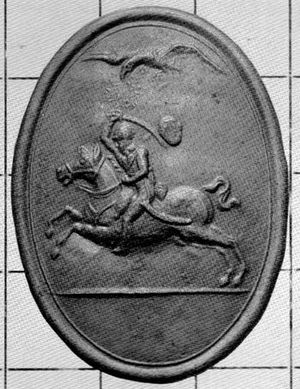
Figure 1
DRAGOON HELMET PLATE, 1800, DIE SAMPLE
USNM 60283-M (S-K 41). Figure 2.
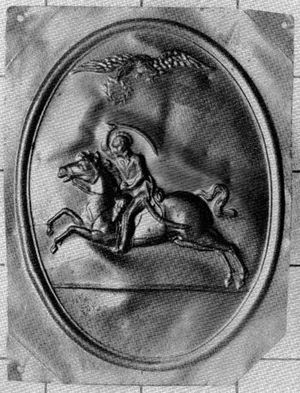
Figure 2
Although from a different die, this plate, struck in thin brass, appears to be a die sample of the plate described above. It is also possible that it is a sample of the dragoon plate authorized in 1812.
LEATHER COCKADE, ARTILLERY, C. 1808-1812
USNM 60256-M (S-K 14). Figure 3.
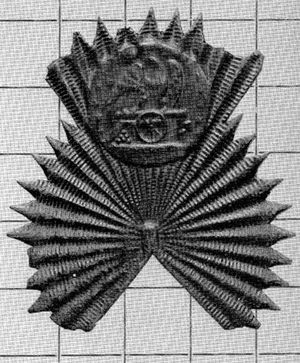
Figure 3
This cockade is of black leather of the size prescribed by the 1813 regulations. Tooled into the upper fan is an eagle-on-cannon device with a stack of 6 cannon balls under the trail; an arc of 15 stars partially surrounds the eagle device. It is believed to have been worn on artillery chapeaux de bras as early as 1808.
¶ The question has been raised as to whether the Regulars ever wore a cockade with such a device. The 1813 and 1814 uniform regulations merely specified black leather cockades of 4 inches and 4-1/2 inches in diameter respectively. However, since the Militia generally did not start adopting Regular Army devices until the 1820's it seems probable that this cockade was an item of Regular Army issue, despite the lack of evidence of specific authorization.
It is extremely difficult to determine whether cockade eagles are of Regular Army or Militia origin, and to date them if the latter. They have been found in a wide variety of design and size, ranging from the rather plain example (fig. 6) to the highly refined one on the general officer's chapeau de bras (fig. 4). Examination of hats worn by both Regulars and Militia prior to 1821 reveals that there is little to choose between the eagles worn by the two components. After 1821, however, when Militia insignia tended to become more ornate and Regular devices more uniform, some of the Militia specimens emerge as distinct types because they have no Regular counterparts. Origin of the specimen, including excavations of military cantonment sites where the make-up of the garrison can be determined, has been the primary criterion used in assignment to either Regular Army or Militia, and to a lesser extent in dating. Over-all design and method of manufacture have also been considered in dating.
COCKADE EAGLE, GENERAL OFFICER, 1800-1812
USNM 12813. Figure 4.
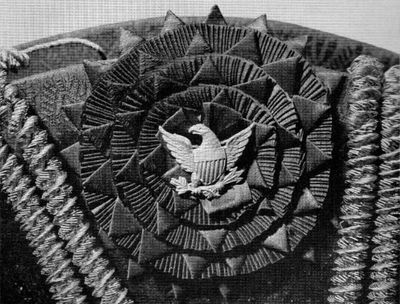
Figure 4
Unusually refined in design, the eagle is of gold, with head to right, federal shield on breast, and olive branch in right talon. Three arrows, with points outward, are held in left talon.
This cockade eagle is on a chapeau de bras formerly belonging to Peter Gansevoort, brigadier general of the New York State Militia and brigadier general, U.S. Army, 1809-1812. Although Gansevoort wore this chapeau while serving as a Militia officer, as evidenced by a New York State button attached to it, this eagle is included with Regular Army devices because it is typical of those probably worn by high-ranking officers of both components.
COCKADE EAGLE, C. 1800-1821
USNM 60362-M (S-K 118). Figure 5.
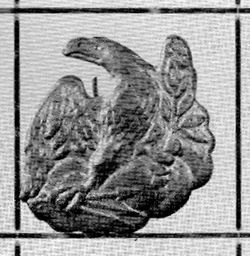
Figure 5
Cast in pewter and gold-finished, this eagle looks to the right, stands on clouds, and holds three arrows (facing inward) in the right talon and an upright olive branch in the left.
COCKADE EAGLE, OFFICERS, 1800-1821
USNM 66352-M. Figure 6.
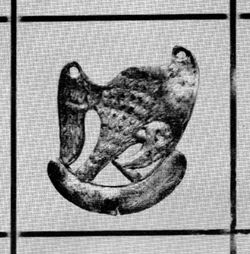
Figure 6
This cockade eagle, which is struck in thin brass and silvered, was excavated on the site of a War of 1812 cantonment. Comparison with similar specimens in other collections indicates that the missing head was turned to the right. This eagle is classed as an officer's device because of its silvered brass composition. The elements comprising the arc on which the eagle stands cannot be identified because of the lightness of the strike.
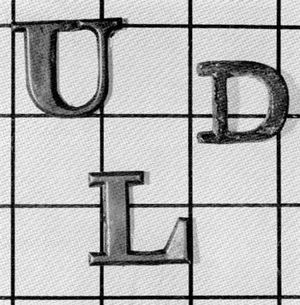
Figure 7.—Specimens in Campbell collection.
The first pattern carries the "name of the corps and the number of the regiment," the 15th Infantry, commanded by Col. Zebulon Pike who was one of the officers who complained to Irvine about the poor quality of cap plates. The specimen is of tinned iron and the letters and numerals have been struck with individual hand dies.
CAP PLATE, INFANTRY, 1812
USNM 66456-M. Figure 8, right.
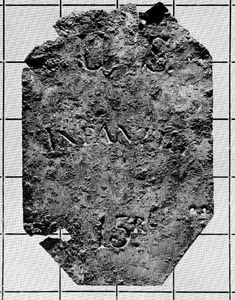
Figure 8, left.
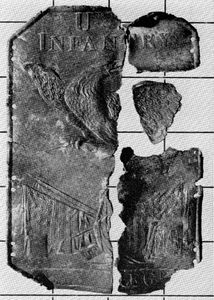
Figure 8, right.
This is the second pattern of the infantry cap plate described in the 1812 regulations as an "oblong silver plate ... bearing the name of the corps and the number of the regiment." The specimen was excavated on the site of Smith's Cantonment at Sackets Harbor, New York, known to have been occupied by Regular infantry during the 1812-1815 period. The piece is struck in "white metal" and tinned [the term "silver" in the regulation referred only to color]. It is rectangular, with clipped corners, and is dominated by an eagle, with wings outspread, grasping lightning bolts in the right talon and an olive branch in the left talon. Below is a panoply of stacked arms, flags with 6-pointed stars, two drums, and a cartridge box marked "U.S." The corps designation "U.S. INFANTRY" is above; the unit designation is blank with the letters "REGT." on the left. The plate is pierced with four pairs of holes on each side for attachment.
Another example of this second pattern is known; it is attached to an original cap and bears the unit designation "12 REGT."
CAP PLATE, INFANTRY, 1812 (REPRODUCTION)
USNM 60249 (S-K 7). Figure 9.
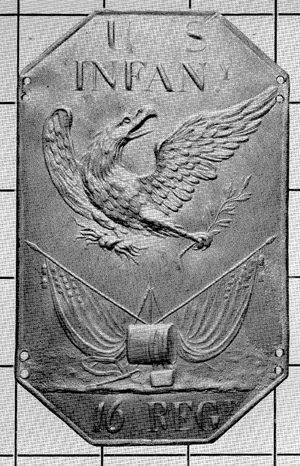
Figure 9
This is the third pattern of the infantry cap plate prescribed in the 1812 regulations. Like the preceding plate, of the second pattern, the original plate from which this reproduction was made was excavated on the site of Smith's Cantonment at Sackets Harbor, New York. Made of tin-alloy, as is the original, and rectangular with clipped corners, the piece is dominated by an unusually fierce looking eagle that first appeared on one of the 1807 half-dollars struck at the Philadelphia Mint. The eagle has an out-sized, curved upper beak and is grasping lightning bolts in the right talon and an olive branch in the left. Below is a panoply of flags and muskets with drum, saber, and cartridge box. The corps designation "US INFANY." is above, and the unit designation "16 REGT" is below. The "16" appears to have been added with separate die strikes. The specimen is pierced with two pairs of holes on each side for attachment.
This third pattern was also struck in brass and silvered for wear by officers. Several fragments of such a plate were excavated at Sackets Harbor; these, although of the third pattern, are the product of a die different from that used in striking the piece described above.
DRAGOON CAP PLATE, 1812
USNM 62054-M (S-K 1807). Figure 10.
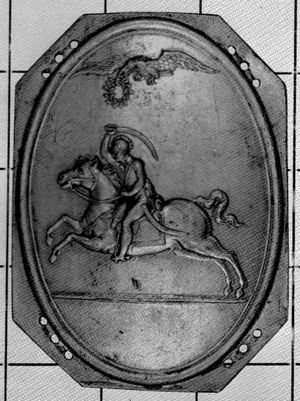
Figure 10
This is an almost exact duplicate of the 1800 dragoon plate except that it is struck in pewter, "white metal," the color used by the infantry and dragoons. It is rectangular with clipped corners that are pierced for attachment. No detailed description of the 1812 plate has ever been found, but several identical specimens are known attached to dragoon helmets made by a contractor named Henry Cressman. The name "Cressman" is stamped on the lower side of the visor alongside the initials of an inspector named George Flomerfelt, who is known to have been employed by the Army as an inspector in Philadelphia during the period. Henry Cressman is listed in the Philadelphia directories from 1807 through 1817 as a shoemaker. From 1825 to 1839 he is listed as a military cap maker.
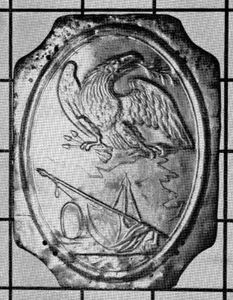
Figure 11.—Specimen in Campbell collection.
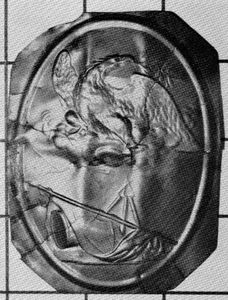
Figure 12.—Specimen in Campbell collection.
Another example of the 1814 pattern is known; it is attached to a bell-crowned cap of Militia origin, which indicates that the plate was adopted by the Militia after being discarded by the Regular Establishment. A plate of the same design, but struck in pewter and cut in the diamond shape popular in the 1820's and 1830's, is also known; it is obviously a Militia item.
INFANTRY CAP PLATE, 1814-1821, DIE SAMPLE
USNM 60284-M (S-K 42). Figure 13.
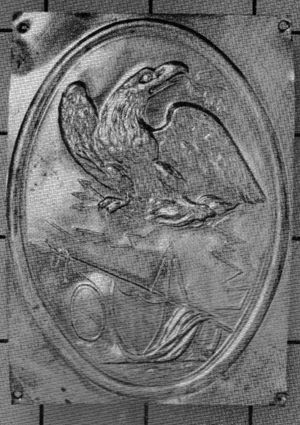
Figure 13
CAP PLATE, INFANTRY OFFICER, 1814-1821
USNM 604747 (S-K 892). Figure 14.
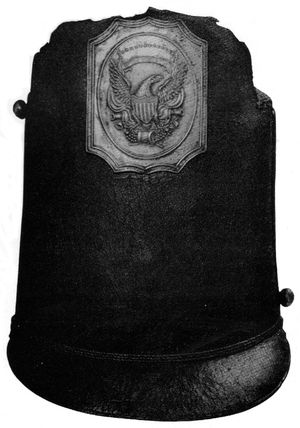
Figure 14
The plate, of silver on copper, is rectangular with four scallops top and bottom. A floral border, 3/16 of an inch wide, that surrounds the whole, strongly suggests that it was an officer's plate. Within a central oval an eagle, with wings outspread, is superimposed upon a trophy of arms and flags; above, on a ribbon, are "E PLURIBUS UNUM" and 15 5-pointed stars. It is possible that this plate is a Militia item, but the fact that it appears to be original on a leather cap of the type worn by Regulars makes it more likely that it is another example of officers' license in the matter of insignia during this period. Its attachment to the cap is a variant method: two hasp-like metal loops, affixed to the plate, have been run through holes in the hat and a leather thong threaded through them. Most cap plates of this period were pierced at the corners for attachment by threads.
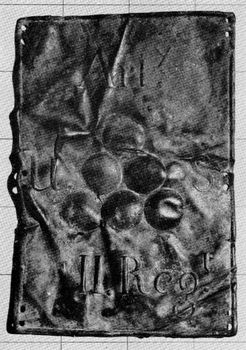
Figure 15.—Specimen in Fort Erie Museum, Ontario, Canada.
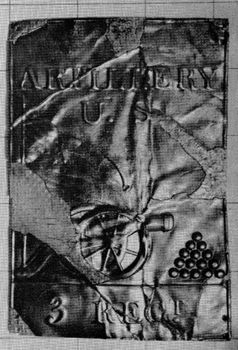
Figure 16.—Specimen in Campbell collection.
CAP PLATE, 1ST REGIMENT ARTILLERY, 1812
USNM 67240-M. Figure 17.
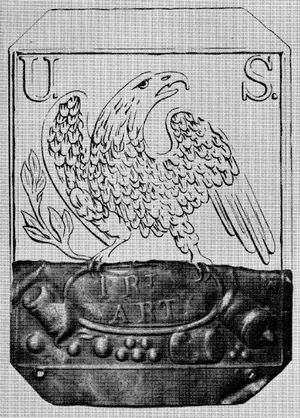
Figure 17
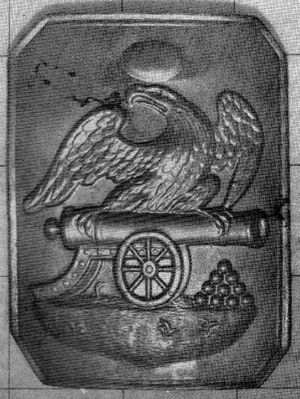
Figure 18.—Specimen in Campbell collection.
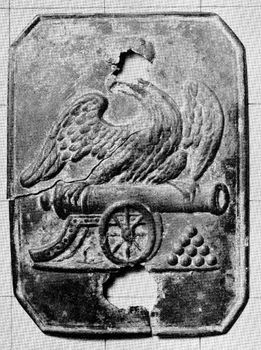
Figure 19.—Specimen in U.S. Army Artillery and Missile Center Museum, Fort Sill, Oklahoma.
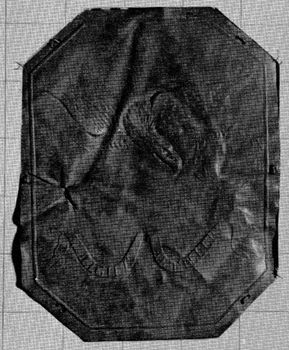
Figure 20.—Specimen in Niagara Historical Society Museum, Niagara-on-the-Lake, Ontario, Canada.
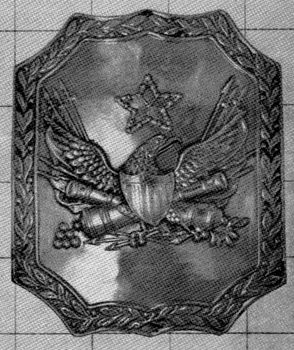
Figure 21.—Specimen in Campbell collection.
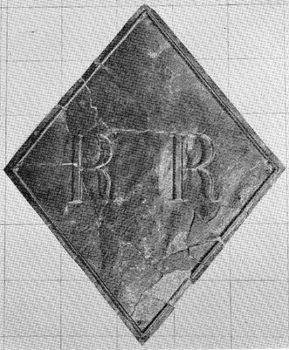
Figure 22.—Specimen in Campbell collection.
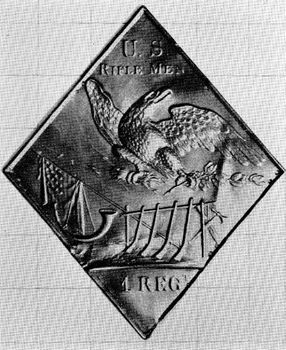
Figure 23.—Specimen in Campbell collection.
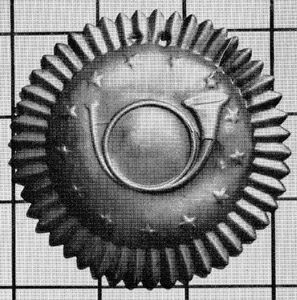
Figure 24.—Specimen in Campbell collection.
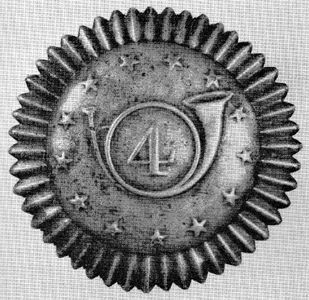
Figure 25
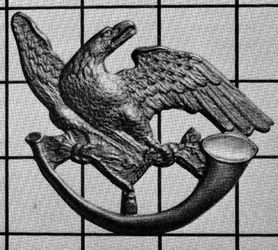
Figure 26.—Specimen in Campbell collection.
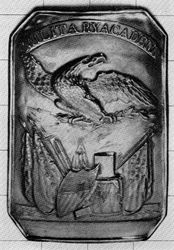
Figure 27.—Specimen in collection of Waverly P. Lewis, Devon, Connecticut.
The cap plate for the U.S. Military Academy, c. 1815, is illustrated (fig. 27) because it completes the cycle for insignia of the Regular Establishment for the period. Apparently it is the work of the same designer as most of the insignia of the period 1812-1815. Scratched on its reverse side is the name George W. Frost, a Virginian who entered the Military Academy as a cadet in 1814 and resigned on March 8, 1816.
The two plates of the U.S. Marine Corps, despite the fact that they are naval rather than military, are included because they fit very precisely into the device design pattern of the strictly army items of the period and because they are unique in their rarity.
CAP PLATE, U.S. MARINE CORPS, C. 1807, DIE SAMPLE
USNM 58671-N-(1). Figure 28.
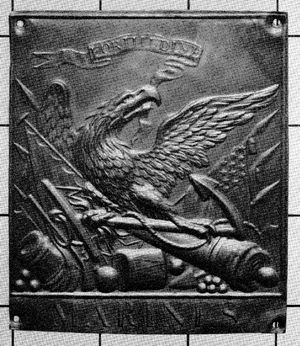
Figure 28
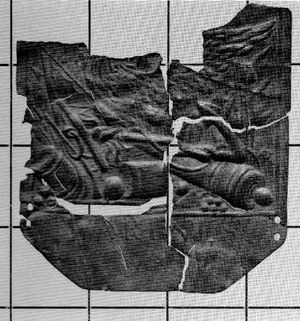
Figure 29
The specimen is struck in rectangular brass with a raised edge. The whole is dominated by an eagle that is very similar to the eagles on the infantry and artillery corps plates described above. The talons grasp the shank of a large fouled anchor; a ribbon, held in the beak and streaming overhead, is embossed with the motto "FORTITUDINE." The whole is on a trophy of arms and flags, and below the lower raised edge is embossed the word "MARINES." The excavated specimens vary slightly in size, but average 3-3/8 by 4-3/4 inches. Reproductions of this die strike were made prior to its acquisition by the National Museum, and specimens outside the national collections should be considered with caution.
CAP OR SHOULDER-BELT PLATE, U.S. MARINE CORPS, 1815-1825(?)
USNM 58671-N-(2). Figure 30.
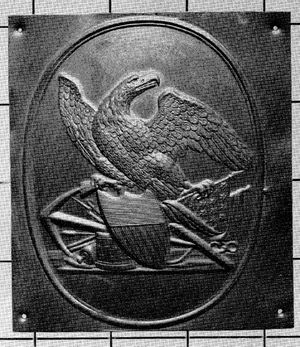
Figure 30
This specimen is known only in die samples. Because of its similarity in design to the 1814 infantry plates, it cannot be dated later than 1825. Since no naval uniformed Militia units are known for the period 1815-1825, and since the plate is obviously not a device of the regular Navy, it must be assigned to the Marine Corps. In studying this plate, however, we must recognize the possibility that the maker may have been designing and sinking dies in the hope of having a sample accepted and approved for issue rather than actually executing a contract. The plate is struck in rectangular brass, and the corners are marked for clipping. The design, within a wide oval with raised edge, consists of an eagle above a trophy of arms, flags, and a shield. The right talon grasps a fluke of a fouled anchor, and the left talon holds the pike of a stand of colors. Reproductions of this die strike were made prior to its acquisition by the National Museum, and specimens outside the national collections should be considered with caution.
CAP AND PLATE, THIRD ARTILLERY, 1821
USNM 66603-M. Figure 31.
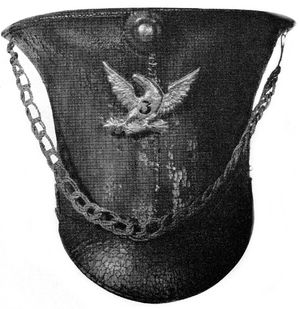
Figure 31
Although several "yellow" eagles that can be attributed to the 1821-1832 period are known, this brass specimen on the bell-crowned cap is the only one known to the authors that has the prescribed regimental number cut out of the shield. The button on the pompon rosette—which appears to be definitely original to the cap, as does the eagle—carries the artillery "A," thus the assignment to that branch of the service. The eagle bears a close similarity to the eagles on the 1812 and 1814 infantry cap plates and the 1807 Marine Corps cap plate, and is possibly the work of the same designer.
CAP INSIGNIA, INFANTRY, 1822
USNM 60364-M (SK-120). Figure 32.
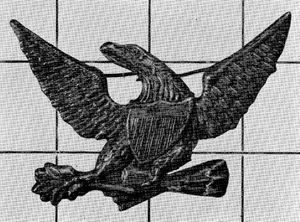
Figure 32
¶ The 1821 regulations stated that cockade eagles should measure 1-1/2 inches between wing tips. In 1832 this wingspread was increased to 2-1/2 inches. Thus, specimens of a relatively uniform pattern and measuring approximately 1-1/2 inches in wingspread will be considered as of the Regular Army, 1821-1832. Similarly, those of a relatively uniform pattern and measuring approximately 2-1/2 inches in wingspread are dated 1832-1851.
COCKADE EAGLE, C. 1821
USNM 60371-M (S-K 127). Figure 33.
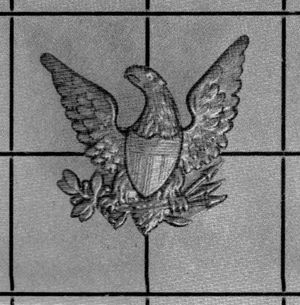
Figure 33
This eagle, struck in brass, has wings extended, head to the right, federal shield on breast with no stars, olive branch in right talon, and three arrows in left talon.
COCKADE EAGLE, INFANTRY, C. 1821
USNM 60372-M (S-K 128). Not illustrated.
This eagle is struck from the same die as the preceding specimen, but it is in white metal rather than brass.
COCKADE EAGLE, C. 1821
USNM 60367-M (S-K 123). Figure 34.
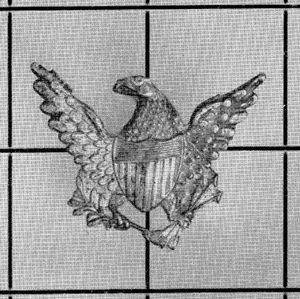
Figure 34
Of silver on copper, this eagle is similar to the two preceding specimens, but is struck from a variant die. It possibly was worn by the Militia.
COCKADE EAGLE, INFANTRY, C. 1821
USNM 60373-M (S-K 130). Figure 35.
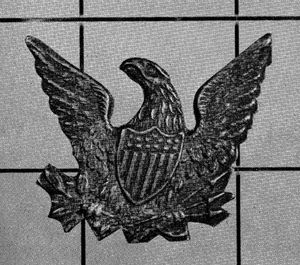
Figure 35
This specimen is very similar to those above, but it has 13 stars in the shield on the eagle's breast.
¶ Despite the fact that it was found attached to a shako of distinct Militia origin, the cap plate shown in figure 36 is believed to be that prescribed for the cadets of the Military Academy in the 1821 uniform regulations and described as "yellow plate, diamond shape." The letters "U S M A" in the angles of the diamond, the word "CADET" at the top of the oval, what appears to be the designation "W POINT" at the left top of the map, and the tools of instruction (so similar to those embellishing the cadet diploma, although totally different in rendering), make it difficult to assign this plate to any source other than the Academy. It is possible, of course, that this was a manufacturer's sample which was never actually adopted for wear at West Point. The apparent maker's name, "CASAD," at the bottom of the oval, does not appear in the city directories of any of the larger manufacturing centers of the period.
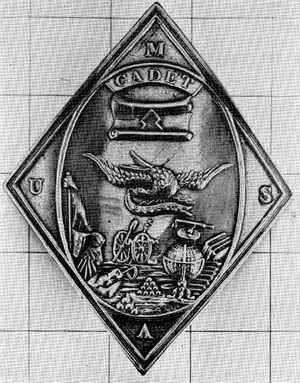
Figure 36.—Specimen in West Point Museum, West Point, New York.
CAP INSIGNIA, 1832(?)
USNM 60365-M (S-K 121). Figure 37.
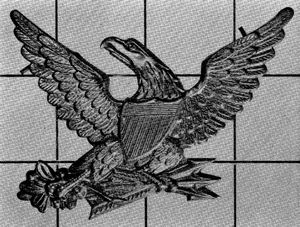
Figure 37
Despite the facts that there was no change in cap insignia authorized in the 1832 uniform regulations and that this specimen is similar in most respects to the 1821 eagle, its refinement of design and manufacture indicates that it possibly belongs to the period of the 1830's and 1840's. It is struck in thin brass and has three plain wire fasteners soldered to the reverse.
CAP INSIGNIA, 1832(?)
USNM 60366-M (S-K 122). Not illustrated.
Although similar to the preceding plate, this specimen measures 3-1/4 by 2-1/4 inches, is struck from a different die, and has a much wider breast shield. Of somewhat heavier brass than most such similar eagles and exhibiting a well-developed patina, it may have been an officer's device.
CAP PLATE, DRAGOONS, 1833
USNM 60276-M (S-K 34). Figure 38.
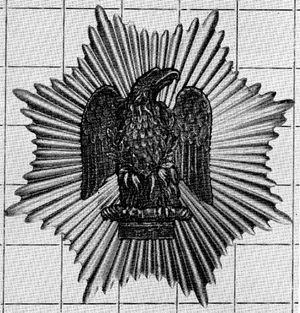
Figure 38
¶ In 1834, possibly as a result of the newly organized dragoons receiving distinctive branch insignia, the infantry and artillery once again were authorized devices on the dress cap designating their particular arm. The gilt eagle was retained. Below the eagle was an open horn with cords and tassels in silver for infantry, and cross cannons in "gilt" for artillery. The number of the regiment was added over the cannon or within the curve of the horn. These devices remained in use until the change in headgear in 1851.
CAP INSIGNIA, INFANTRY, 1834-1851
USNM 62055-M, 62056-M (SK-1808, 1809). Figure 39.
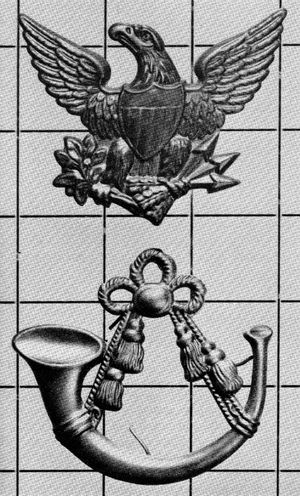
Figure 39
This eagle is similar to the 1821 pattern, although somewhat more compact in design. It is struck in brass, has wings upraised, head to the right, shield on breast, olive branch in right talon, and three arrows in left talon. The open horn, struck in brass and silvered, is suspended, with bell to the right, by four twisted cords tied in a 3-leaf-clover knot; the tassels on the four cord-ends hang below.
CAP INSIGNIA, ARTILLERY, 1834-1851
USNM 60426-M (S-K 182). Figure 40.
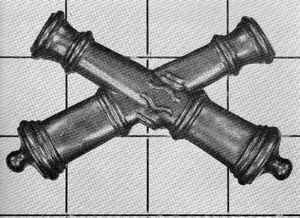
Figure 40
This is the "gilt ... cross cannons" device prescribed for artillery in the 1834 regulations. Struck in sheet brass of medium thickness, the superimposed cannon has trunnions and dolphins.
FORAGE CAP STAR, DRAGOON OFFICER, C. 1840
USNM 604967-M (S-K 1111). Figure 41.
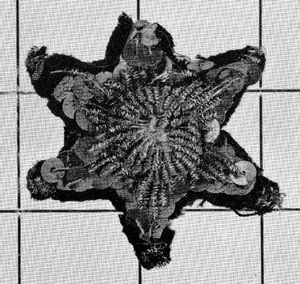
Figure 41
CAP INSIGNIA. CADET'S, U.S. MILITARY ACADEMY, 1842, AND ENGINEER SOLDIERS, 1846
USNM 604529 (S-K 676) Figure 42.
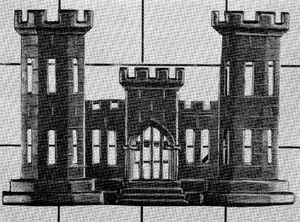
Figure 42
In 1839 the cadets at the Military Academy discarded the bell-crowned caps they had worn since 1821 and wore a cylindrical black shako similar to that worn by the Regular artillery and infantry. The artillery gilt eagle and crossed cannon replaced the diamond-shaped plate on the front. In 1842-1843 the crossed cannon were replaced by the engineer castle as more in keeping with the original mission of the Academy and the general orientation of its curriculum.
Struck in thin to medium brass, this plate is the familiar turreted castle of the Corps of Engineers so well known today. It was worn below the eagle.
¶ To complete the branches of the Regular Establishment during the Mexican War period, the Regiment of Voltigeurs and Foot Riflemen must be mentioned, although they were apparently without any distinctive branch insignia.
POMPON EAGLE, 1851
USNM 604853 (S-K 998). Figure 43.
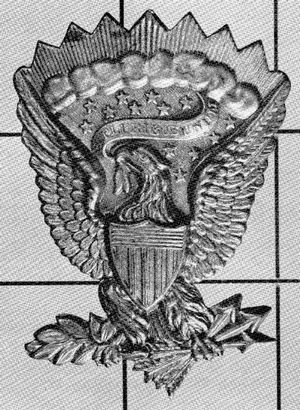
Figure 43
Worn attached to the base of the pompon by all enlisted personnel, this brass eagle, similar in general design to that worn on the shako in the 1830's, stands with wings upraised, olive branch in right talon, three arrows in left talon, and a scroll, with national motto, in beak. Above are stars, clouds, and bursts of sun rays. Officers wore an eagle of similar design of gold embroidery on cloth.
CAP INSIGNIA, GENERAL AND STAFF OFFICERS, 1851
USNM 604862 (S-K 1007). Figure 44.
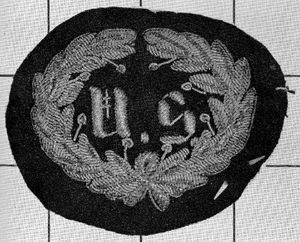
Figure 44
CAP INSIGNIA, OFFICER, ENGINEERS, 1851
USNM 300720. Figure 45.
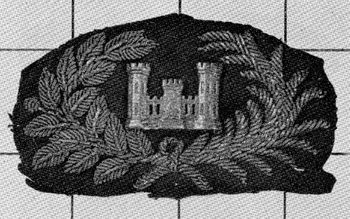
Figure 45
On dark blue cloth, this device comprises a gold-embroidered wreath of laurel and palm encircling a turreted castle in silver metal as prescribed in regulations. Other examples are known with the castle embroidered.
HAT INSIGNIA, OFFICER, ARTILLERY, 1851
USNM 604872 (S-K 1017). Figure 46.
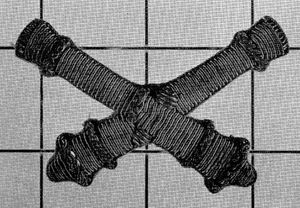
Figure 46
This specimen adheres almost exactly to the 1851 regulations, but it lacks the number of the regiment as called for. The number was a separate insignia embroidered above the cannon. The cannon are of gold embroidery. The device was also made in gold metal imitation-embroidery in several variant designs.
CAP INSIGNIA, OFFICER, INFANTRY, 1851
USNM 604888 (S-K 1033). Figure 47.
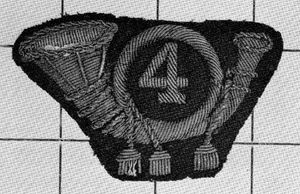
Figure 47
On dark blue cloth, this device is the well-known looped horn in gold embroidery with three cords and tassels. The regimental number "4," in silver bullion, lies within the loop of the horn. This insignia is also common in metal imitation-embroidery.
CAP AND COLLAR INSIGNIA, ENLISTED ORDNANCE, 1851
USNM 604520 (S-K 667). Figure 48.
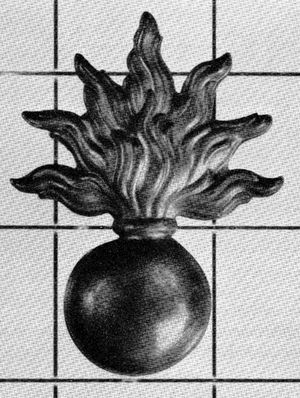
Figure 48
Struck in brass, this device was worn on the caps and coat collars of ordnance enlisted personnel. Although the shell and flame insignia appears in a number of variations of design, this specimen conforms exactly to the regulations of 1851 as published by Horstmann.
CAP AND COLLAR INSIGNIA, ENGINEER SOLDIERS, 1851
USNM 61618. Figure 49.
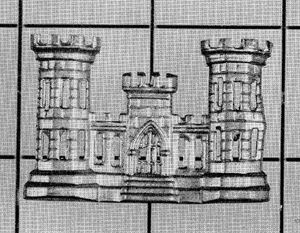
Figure 49
The 1851 uniform regulations called for a "castle of yellow metal one and five-eighths inches by one and one-fourth inches high" on both the coat collar and the hat of "Engineer Soldiers." This specimen, struck in brass, conforms exactly to the descriptions and drawing in the Horstmann publication of the regulations.
CAP INSIGNIA, DRAGOON OFFICERS, 1851
USNM 604879 (S-K 1024). Figure 50.
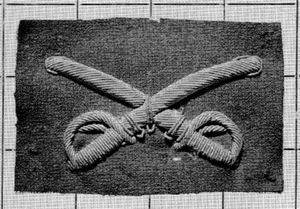
Figure 50
Comprising crossed sabers of gold, with edges upward, this insignia is similar to the well-known device worn by the Regular cavalry as late as 1953.
CAP INSIGNIA, OFFICER, REGIMENT OF MOUNTED RIFLEMEN, 1850
USNM 604854 (SK 999). Figure 51.
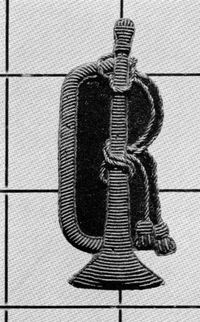
Figure 51
CAP INSIGNIA, ENLISTED, REGIMENT OF MOUNTED RIFLEMEN, 1850
USNM 62053-M (SK-1806). Figure 52.
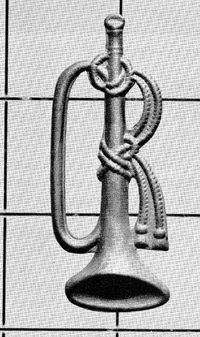
Figure 52
The same general order that gave rifle officers a gold-embroidered trumpet prescribed for enlisted men a similar device to be of "yellow metal." This insignia lasted but one year for the men in the ranks, being unmentioned in the 1851 regulations.
Shoulder-Belt and Waist-Belt Plates
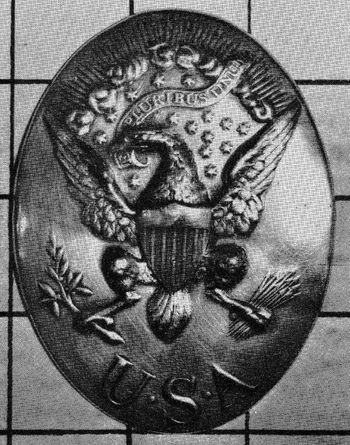
Figure 53.—Specimen in Campbell collection.
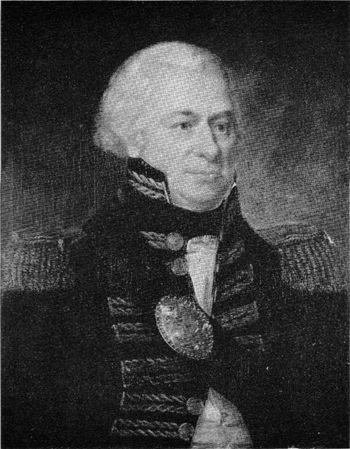
Figure 54.—Portrait in collection of The Filson Club, Louisville, Kentucky.
The 1812 regulations prescribed for the light dragoons a "buff leather waist belt, white plate in front with eagle in relief," and there is the possibility that the light artillery had such. In actuality, there was no call for a waist belt where a shoulder belt was authorized. Neither civilian trousers nor the few surviving military "pantaloons" of the period are fitted with belt loops, trousers being held up either by suspenders or by being buttoned directly to the shirt or waistcoat. No example of the dragoon plate has been found. However, a rather tantalizing possibility exists—a fragment of a pewter belt plate (fig. 55) was excavated at Sackets Harbor, New York, where the light dragoons are known to have served. The 1816 regulations specified for artillerymen "waist belts of white leather two inches wide, yellow oval plate of the same width." It is not made clear, however, whether this belt and plate was for officers only or for all ranks. The unusually striking oval specimen (fig. 56) may be this plate, but its ornateness indicates that this particular design was for officers only.
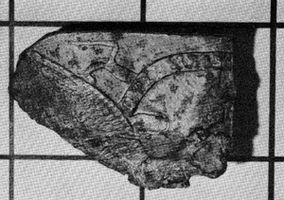
Figure 55.—Specimen in Campbell collection.
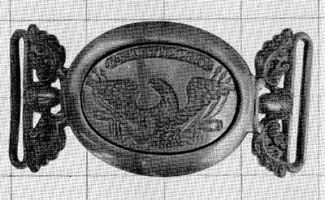
Figure 56.—Specimen in Campbell collection.
SHOULDER-BELT PLATE, 1790(?)-1812
USNM 12804. Figure 57.
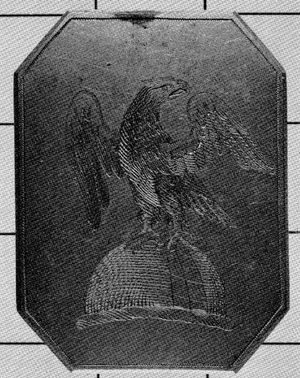
Figure 57
This plate was worn by Peter Gansevoort sometime during his military career, probably after 1790. Gansevoort, between 1775 and his death in 1812, was successively major, lieutenant colonel, colonel, and brigadier general of New York State Militia and brigadier general U.S. Army (1809-1812). Although distinctly Militia in design, the specimen is included here as an example of the wide variety of such devices worn by officers of the 1800-1821 period.
This plate is octagonal, slightly convex, and has beveled edges. The design is hand engraved on copper, and the whole is gold plated. Within an engraved border is the eagle-on-half-globe device of New York State. Two studs and a hook soldered to the reverse are not believed to be original.
SHOULDER-BELT PLATE, INFANTRY OFFICER, C. 1812
USNM 604313 (S-K 469). Figure 58.
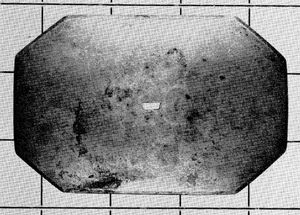
Figure 58
This rectangular, slightly convex plate of silver on copper has beveled edges and a small slot in the center for the attachment of an ornament. The ornament is missing, although it can be surmised that it was an eagle. The reverse is fitted with two studs and a hook and bears the hallmark of "W. Pinchin, Philada." William Pinchin is listed in the Philadelphia directory for 1809 as a silversmith at 326 Sassafras Street. The 1810 directory lists only "Widow of," but another William Pinchin (probably the son) appears in the 1820's.
WAIST-BELT PLATE, LIGHT ARTILLERY(?), 1814-1821
USNM 60452-M (S-K 208). Figure 59.
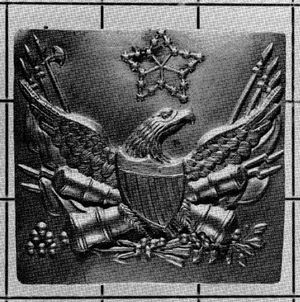
Figure 59
The design of this rectangular plate, struck in rather heavy brass, is the same as that offered as the 1814-pattern cap plate for the light artillery, although it is the product of a different and somewhat more crudely sunk die. The piece is dominated by an eagle with wings upraised, a shield on its breast, three arrows in its right talon, and an olive branch in its left talon. Crossed cannon are in the foreground, and there is a pile of six cannon balls in the lower right corner. The whole is superimposed on a trophy of colors and bayoneted muskets. Above is a 5-pointed "star of stars" made up of 20 5-pointed stars.
WAIST-BELT PLATE, OFFICER, ARTILLERY CORPS, 1814-1821
USNM 60448-M (S-K 204). Figure 60.
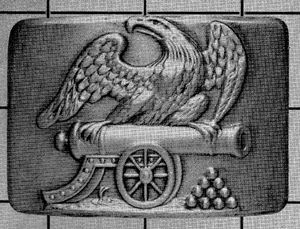
Figure 60
The rectangular plate is struck in brass on a die of the same design as that used in making the 1814 Artillery Corps cap plate, type I (p. 18). Before the strike was made, a piece of thin sheet iron, slightly narrower than the finished product, was applied to the reverse of the brass. After the strike, which shows through clearly on the iron, the ends of this applied metal were bent inward into tongues for attachments to the belt, and the remainder of the back was filled with pewter. The edges of the obverse were then beveled to finish the product. It seems very probable that plates such as this were produced for sale to officers.
SHOULDER-BELT PLATE, OFFICER, ARTILLERY CORPS, 1814-1821
USNM 60247 (S-K 5). Figure 61.
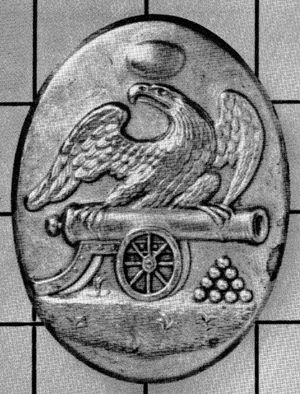
Figure 61
This is a companion piece to the Artillery Corps waist-belt plate described above. It was struck in brass from the die of the 1814 Artillery Corps cap plate, type I, again with a thin sheet of iron applied to the reverse before the strike. There is no pewter filling; the beveled edges of the piece together with the adhesive effect of the strike—which shows through very clearly—holds on the back. The plate is fitted with two simple bent-wire fasteners for attachment, indicating that it was intended for ornamental use only. Like its waist-belt plate counterpart, this specimen must be considered an officer's device.
SHOULDER-BELT PLATE, INFANTRY, 1814-1821
USNM 60248-M (S-K 6). Figure 62.
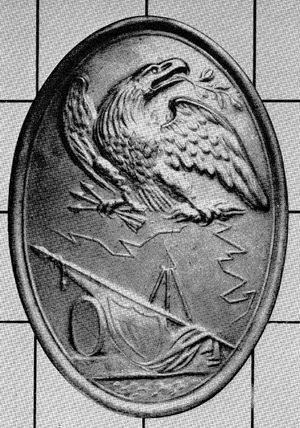
Figure 62
This specimen is of the same design as the 1814 Infantry cap plate, type I (p. 15). It is oval, with raised edge. Within the oval is an eagle with an olive branch in its beak, three arrows in its right talon, and thunder bolts and lightning in its left talon. Below is a trophy of stacked muskets, drum, flag, and shield. The plate is silver on copper, with sheet-iron backing and bent-wire fasteners. As in the case of the Artillery Corps plate, just preceding, this must be considered an officer's plate. A similar oval plate bearing the design of the 1812 dragoon cap plate, and of similar construction, is known.
SHOULDER-BELT PLATE, 1814
USNM 66478-M. Figures 63, 64.
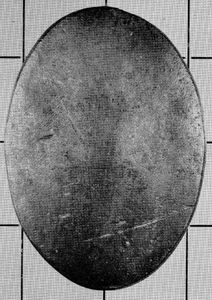
Figure 63
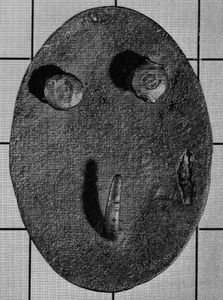
Figure 64
SHOULDER-BELT PLATE, C. 1812
USNM 604311 (S-K 467). Figure 65.
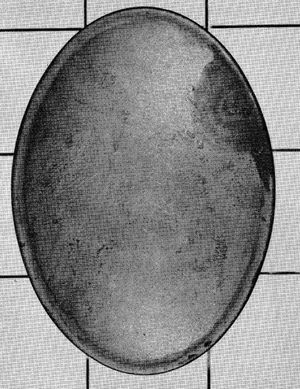
Figure 65
The plain, oval, slightly convex plate of brass has a raised edge. The face is lapped over a piece of sheet-iron backing. On the reverse is soldered an early form of bent-wire fasteners. British shoulder-belt plates of the Revolutionary period normally had fasteners cast as integral parts of the plate proper.
SHOULDER-BELT PLATE, C. 1812
USNM 604312 (S-K 468). Not illustrated.
This plate is identical to the one described immediately above except that it is struck in copper and the surface is silvered.
SHOULDER-BELT PLATE, C. 1812
USNM 604314 (S-K 470). Not illustrated.
This plate, struck from solid brass, has a slightly beveled edge and bent-wire fasteners. It is slightly convex. Since it is smaller than the two preceding plates, it could have been designed for the Militia.
SHOULDER-BELT PLATE, 1815(?)-1821
USNM 60399-M (S-K 155). Figure 66.
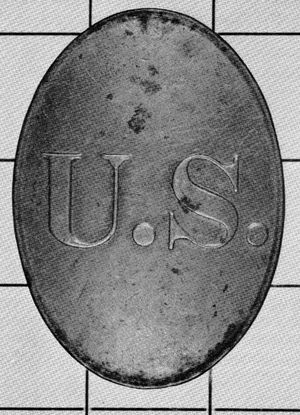
Figure 66
The two specimens of this plate in the national collections are undocumented. Similar in size and construction to the plain oval brass and silvered plates, it has the raised letters "U.S.," three-fourths inch high in the center. Definitely not later than 1832, it may well have been issued soon after the end of the War of 1812. It is considered a Regular Army item since the Militia did not use the designation "U.S." at this early period. In this latter connection it is interesting to note that an example of the 1812 Infantry cap plate, type II, with the letters "US" crudely stamped out, is known attached to a cap of distinct Militia origin.
WAIST-BELT PLATE, GENERAL OFFICER, C. 1816
USNM 38212. Figure 67.
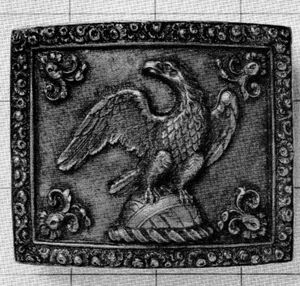
Figure 67
The maker of this buckle is unknown, but since it is reasonably certain that the hilt of the sword was designed by Moritz Furst (see p. 12), it is possible that the design of the buckle is his also, especially in view of the Viennese touch in the acanthus leaves, his training at the mint in Vienna, and the probability that he designed the 1812 infantry cap plate.
WAIST-BELT PLATE, INFANTRY OFFICER, C. 1822
USNM 604118-M (S-K 274). Figure 68.
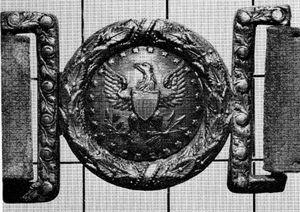
Figure 68
This plate, struck in copper and silvered, is round with an outer ring. It is attached to a white buff belt. The plate proper contains an eagle with wings outspread, shield on breast, olive branch in right talon, and three arrows in left talon. The whole is within a ring of 24 5-pointed stars. The outer ring is decorated as a wreath, and the narrow rectangular belt attachments are embossed with a floral pattern. The 24 stars place this specimen between 1822 and 1836. Similar buckles are known in yellow metal for either staff or artillery and containing 24, 26, and 28 stars, indicating that they probably were worn until the rectangular eagle-wreath plate was prescribed in 1851.
WAIST-BELT PLATE, INFANTRY OFFICER, 1821-1835
USNM 60454 (S-K 210). Figure 69.
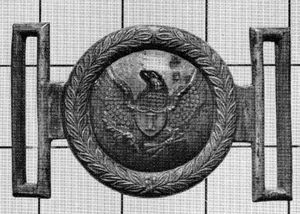
Figure 69
WAIST-BELT PLATE, ARTILLERY OFFICER, 1821-1835
USNM 60455-M (S-K 211). Not illustrated.
Nearly identical to the infantry officer's plate above, this buckle, in brass, has the artillery "A" on the eagle's breast shield.
¶ Although the regulations for this period do not mention shoulder-belt plates for enlisted men (officers had none as they wore their swords on their waist belts), it can be assumed that they were worn. The two specimens described below must be dated later than 1812-1821 because of the belt attachments. The earlier specimens had rudimentary bent-wire fasteners, but these, more refined, have two round studs and a hook soldered to the plate proper.
SHOULDER-BELT PLATE, INFANTRY, C. 1821
USNM 604316 (S-K 472). Figures 70, 71.
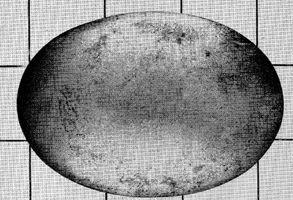
Figure 70
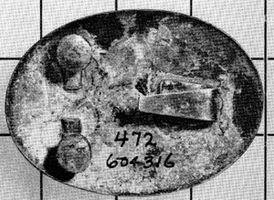
Figure 71
This plate, of silver on copper, is plain oval and slightly convex.
SHOULDER-BELT PLATE, ARTILLERY, C. 1821
USNM 604315 (S-K 471). Not illustrated.
This specimen is identical to the preceding one except that it is in plain brass.
¶ The 1832 uniform regulations brought some well-defined changes. General and staff officers were to wear gilt waist-belt plates "having the letters U S and a sprig of laurel on each side in silver," and the bottom of the skirts of officers' coats were to bear distinctive devices—a gold-embroidered star for general officers and officers of the general staff, a shell and flame in gold embroidery for artillery officers, and silver-embroidered bugles for infantry officers.
WAIST-BELT PLATE, GENERAL AND STAFF OFFICERS, 1832
USNM 664. Figure 72.
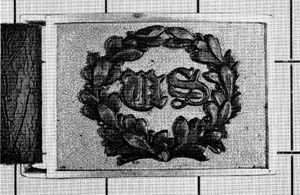
Figure 72
The plate and the belt to which it is attached formerly belonged to Capt. Charles O. Collins, an 1824 graduate of the Military Academy. The belt is of patent leather, as specified for undress wear, and is 1-1/2 inches wide. The plate is cast in brass and has raised edges. Rather than having "a sprig of laurel on each side," it has a wreath of laurel enclosing the letters "U S," in Old English, in silvered metal affixed to the front. It is attached on the right side by a rectangular belt attachment with a flat hook on the left rear.
¶ The 1832 regulations specified for engineer officers a waist-belt plate to be "gilt, elliptical, two inches in the shortest diameter, bearing the device of the button." Such a plate (fig. 73) is in the collections of the Valley Forge Chapel Museum. It is entirely possible that this plate is even earlier than 1832, for the 1821 and 1825 regulations state that the engineer buttons were to contain "the device and motto heretofore established."
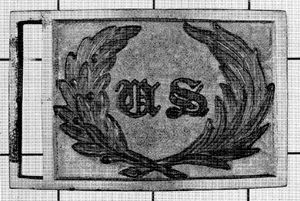
Figure 73
In the collections of the West Point Museum is a button, carrying the "Essayons" device, that was excavated in the area behind the "Long Barracks," which burned in 1825. Another such button excavated at Sackets Harbor on the site of an 1812-1815 barracks bears a maker's name (Wishart) of the 1812-1816 period.
WAIST-BELT PLATE, GENERAL AND STAFF OFFICERS, 1832(?)-1850
USNM 604145-M (S-K 301). Figure 74.
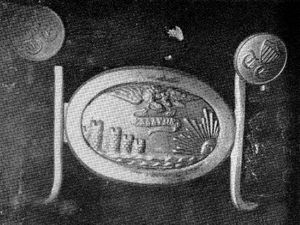
Figure 74.—Specimen in Valley Forge Chapel Museum, Valley Forge, Pennsylvania.
This buckle is similar to the one (shown in fig. 73) that belonged to Capt. Charles O. Collins, but it is different in that the letters "U.S." are enclosed not by a laurel wreath but by a sprig of laurel on the right side and a sprig of palm on the left. The 1841 uniform regulations specified such a belt plate for officers of the Corps of Engineers, but with a "turreted castle, raised in silver" rather than the letters "U.S." This places the probable date of manufacture of this specimen in the 1840's.
COAT-SKIRT ORNAMENT, GENERAL STAFF, 1832
USNM 8040. Figure 75.
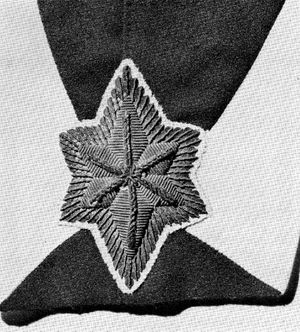
Figure 75
This skirt ornament, on buff cloth, is from a coat worn by Capt. Thomas Swords when he was assistant quartermaster general in 1838. The design consists of three 6-pointed stars of gold bullion cord: a line star of twisted cord superimposed upon a larger star of closely stitched cord that in turn is superimposed upon a still larger star of sunburst type.
COAT-SKIRT ORNAMENT, GENERAL STAFF, 1832
USNM 62057-M (S-K 181). Figure 76.
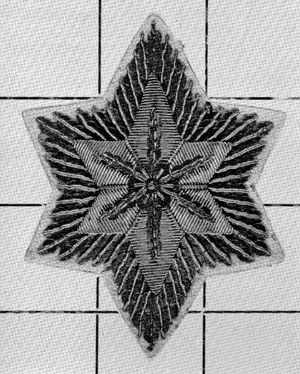
Figure 76
Like the preceding specimen, this ornament, on buff cloth, is comprised of three stars. A star made of lines of sequins secured by two strands of twisted bullion is superimposed upon a 6-pointed star of gold embroidery that in turn is superimposed upon a 6-pointed star made up of gold sequins secured by gold bullion cord.
COAT-SKIRT ORNAMENT, ARTILLERY OFFICER, 1832
USNM 15929. Figure 77.
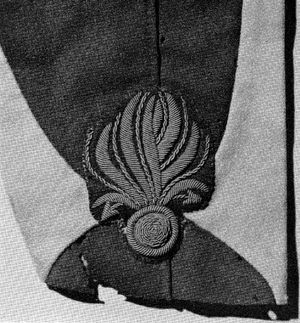
Figure 77
This specimen, on red cloth, is on a coat worn by William Tecumseh Sherman when he was a lieutenant in the 3d Artillery. The bomb is made of whorls of gold bullion cord, while the flames are composed of curving lines of twisted bullion. The lowest flame on either side terminates in arrow heads.
There are a number of gold-embroidered shell and flame devices in the national collections, all varying considerably in size and composition. Some are skirt ornaments for artillery officers, both Regular Army and Militia, while some are cap ornaments for ordnance officers. Indeed, two coats formerly belonging to Maj. Levi Twiggs, U.S. Marine Corps, carry the same device.
COAT-SKIRT ORNAMENT, INFANTRY OFFICER, 1832
USNM 59861-M. Figure 78.
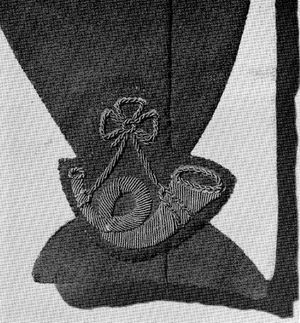
Figure 78
The silver coat-skirt horn ornaments of infantry officers varied almost as much as the shell and flame devices, generally in relation to the affluence of the individual concerned. Unlike such ornaments of the other services, the horns were paired in rights and lefts on the coat.
This specimen, of silver bullion cord, is on a coat that once belonged to Lt. William Williams Mather, an 1828 graduate of the Military Academy who left the service in 1836. The horn is looped, and it is suspended by twisted bullion from a simple 3-leaf-clover knot. The whole is backed on blue cloth.
COAT-SKIRT ORNAMENT, INFANTRY OFFICER, 1832
USNM 1056. Figure 79.
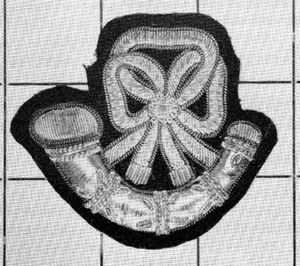
Figure 79
This rather elaborate specimen is on a coat worn by John Porter Hatch when he was a lieutenant of infantry in 1845. The body of the horn—which is merely curved rather than looped—is made of silver lamé encircled by three ornamented bands of bullion. The mouthpiece and bell are of bullion. The whole is suspended by a rather ornate 3-leaf-clover knot of bands of edged bullion and is backed on blue cloth.
COAT-SKIRT ORNAMENT, CORPS OF TOPOGRAPHICAL ENGINEERS, 1839(?)
USNM 22702. Figure 80.
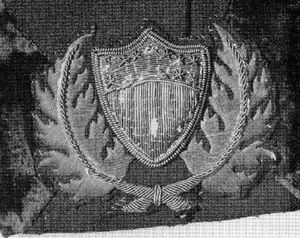
Figure 80
The uniform regulations for the period 1832-1846 carry no mention of coat-skirt ornaments for the Corps of Topographical Engineers, rather only prescribing the "slashed skirt flaps to be embroidered in gold, with oak leaves and acorns" like the collar and cuffs. There is in the national collections, however, a uniform for the Corps that corresponds with 1839 regulations in every way except that the coat skirts carry this ornament—a shield within a wreath of oak leaves—of gold embroidery. The device appears to be of the same vintage as the other embroidery on the coat.
WAIST-BELT PLATE, ARTILLERY NONCOMMISSIONED OFFICER, 1833
USNM 654384 (S-K 531). Figure 81.
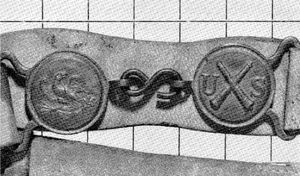
Figure 81
This is the belt-plate assembly designed for carrying the short "Roman pattern" NCO sword. The plate is of two round pieces joined by an S-hook that is open on one end for unbuckling. Each round piece has a flat loop for attachment to the white buff belt. The right-hand round piece has an eagle with head to the left, wings drooping, three arrows in the right talon, and an olive branch in the left talon. The left-hand piece has crossed cannons and the letters "U.S." The whole is cast in rough bronze.
WAIST-BELT PLATE, INFANTRY NONCOMMISSIONED OFFICER, 1834
USNM 604111 (S-K 267). Figure 82.
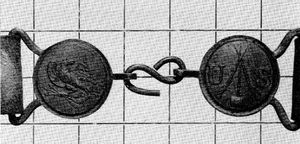
Figure 82
This plate and belt are identical to the artillery specimen above except that the left-hand round portion exhibits three stacked muskets and a drum instead of crossed cannon.
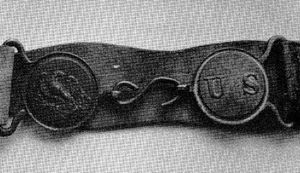
Figure 83.—Specimen in collection of William E. Codd, Towson, Maryland.
¶ NCO belt plates similar to the two above also appeared in what might be called a staff or branch immaterial pattern, with the crossed cannon and/or stacked muskets and drum replaced by the letters "US" alone (fig. 83). This pattern apparently was intended for wear by NCO's other than those assigned to the infantry, artillery, or dragoons.
WAIST-BELT PLATE, DRAGOON OFFICER, 1833
USNM 5664. Figure 84.
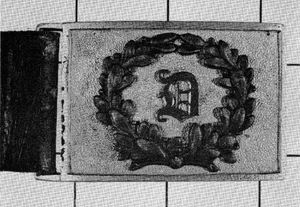
Figure 84
WAIST-BELT PLATE, NONCOMMISSIONED OFFICER, 1836
USNM 604114-M (S-K 268). Figure 85.
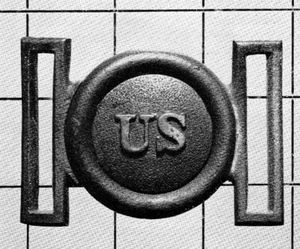
Figure 85
The 1835 uniform regulations replaced the rather impractical S-hook NCO belt plate with a "round clasp" on which the branch designation was replaced with the raised letters "U S." Similar in over-all design to the 1821 officers' plate, round with outer ring, these plates were rough cast in brass and had a stippled surface.
WAIST-BELT PLATE, NONCOMMISSIONED OFFICER, 1836
USNM 604114 (S-K 270). Not illustrated.
This specimen is very similar to the preceding plate, but it is of a definitely different casting and is generally heavier in over-all appearance, the inner ring is much more convex, and the letters "U S" are raised only slightly and spread farther apart.
SHOULDER-BELT PLATE, OFFICERS, 1839
USNM 40886. Figure 86.
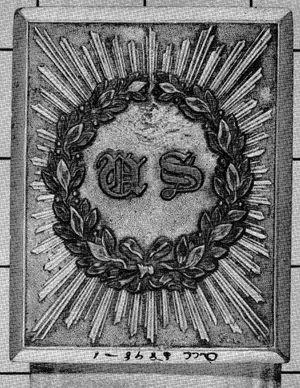
Figure 86
SHOULDER-BELT PLATE, OFFICERS, 1839
USNM 604330 (S-K 486). Not illustrated.
This plate is almost identical to the Capron specimen above except that the letters "U S," instead of being in Old English, are formed of oak leaves.
WAIST-BELT PLATE, CORPS OF TOPOGRAPHICAL ENGINEERS, 1839
USNM 22702. Figure 87.
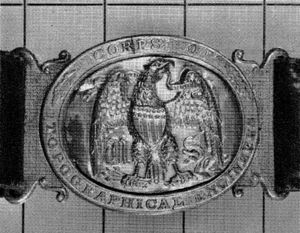
Figure 87
The 1839 uniform regulations prescribed this plate for the Corps of Topographical Engineers. The oval inner plate, which contains the prescribed eagle, shield, and the letters "U S" in Old English, is struck in medium weight copper and gilded. This inner plate is soldered to a cast-bronze and gilded tongue which in turn is brazed to a cast-bronze belt attachment. The oval outer ring, bearing the prescribed "CORPS OF TOPOGRAPHICAL ENGINEERS" in Roman capitals, is cast in brass and gilded. To the inner edge of this outer ring are brazed two curved seats for the inner oval. The whole is brazed to the belt attachment, also cast in brass and gilded.
WAIST-BELT PLATE, CAVALRY, 1839
USNM 604408 (S-K 555). Figures 88, 89.
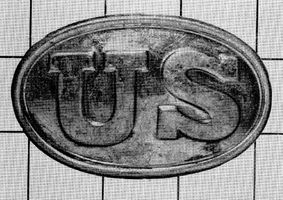
Figure 88
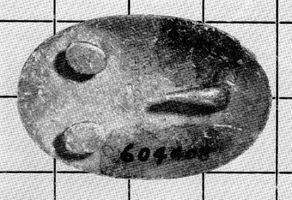
Figure 89
The specimen is oval, slightly convex, and struck in thin brass. The face has a raised edge and the letters "U S." The reverse is leaded, carries two studs and a hook (indicating its use), and is stamped with the maker's name, "W. H. Smith, Brooklyn." Smith is listed in New York City directories of the Civil War period as a contractor for metal and leather supplies.
CARTRIDGE-BOX PLATE, INFANTRY, 1839
USNM 604403 (S-K 550). Figure 90.
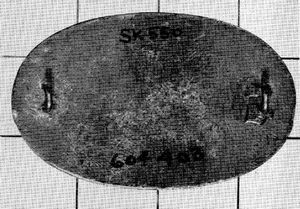
Figure 90
This plate is identical to the preceding one except that it is leaded and fitted with two looped-wire fasteners. The reverse is stamped with the name of the maker, "J. L. Pittman," who, like Smith, was a contractor in the New York City area in the Civil War period.
CARTRIDGE-BOX PLATE, CAVALRY, 1839
USNM 604395 (S-K 542). Not illustrated.
This is the oval "US" plate of the smaller size (2-3/4 by 1-1/8 in.), otherwise identical to the larger plate. It is fitted with two looped-wire fasteners.
WAIST-BELT PLATE, INFANTRY, 1839
USNM 604398 (S-K 545). Figure 91.
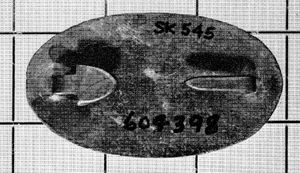
Figure 91
This specimen is identical to the preceding plate except that it is fitted with two brass hooks for attachment to the belt and the reverse is stamped with the maker's name, "Boyd & Sons." No trace of a manufacturer of such products by the name of Boyd has been found. It is probable that he worked during the Civil War period when there were many such contractors.
WAIST-BELT PLATE, INFANTRY, 1839
USNM 604399 (S-K 546). Not illustrated.
This plate is identical to those above except that the reverse is stamped with the maker's name. "H. A. Dingee."
WAIST-BELT PLATE, INFANTRY, 1839
USNM 604397 (S-K 544). Figure 92.
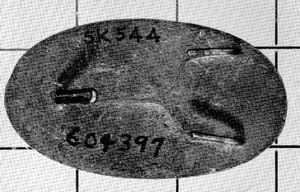
Figure 92
The reverse side of this plate is fitted with the rather rudimentary wire fasteners similar to those on shoulder-belt plates of the 1812-1821 period. In other respects the specimen is identical to the preceding ones of 1839.
¶ The 1839 regulations specified a bayonet-belt plate "round, brass, with eagle." The 1841 ordnance manual was more exact, specifying the plate to be "brass, circular, 2.5 in. diameter, with an Eagle," and then stating: "The bayonet belt is about to be discontinued ..." Although not so authorized at the time, this plate, so familiar during the Civil War period, was switched over to the shoulder belt supporting the cartridge box. Such plates were manufactured in great quantities and in many variations of the original design by a dozen or more contractors during the period 1861-1865.
CARTRIDGE-BOX-BELT PLATE, 1839
USNM 60338-M (S-K 94). Figure 93.
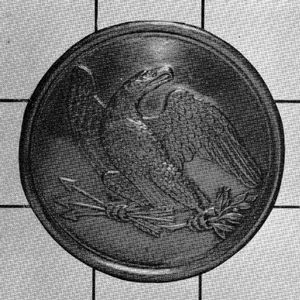
Figure 93
This circular plate, with raised rim, is dominated by an eagle of refined design that is very similar to the eagles appearing on the War of 1812 plates. The eagle has its wings drooped, head to the left, three arrows in the right talon, and an olive branch in the left talon. This specimen can be dated with the earliest cartridge-box plates because of its backing and the type of fasteners. Whereas the backs of the later models were lead-filled, this plate was struck in thin brass over tin and the edges of the obverse crimped to retain the backing. The fasteners are of the bent-wire type typical of the 1812-1832 period and are not the "2 eyes of iron wire" called for in the ordnance manual of 1850. None of the later examples of this design evidence any of the refinement of the original. At least eight variations are represented in the national collections.
CARTRIDGE-BOX-BELT PLATE, 1839, DIE SAMPLE
USNM 60339-M (S-K 95). Not illustrated.
This is a die sample, struck in copper, of the plate described above.
SWORD-BELT PLATE, 1851
USNM 38017. Figures 94, 95.
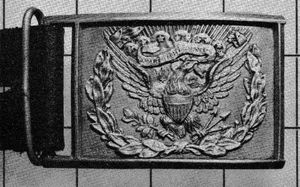
Figure 94
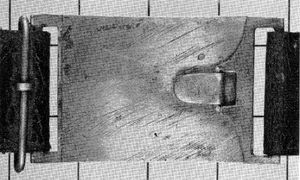
Figure 95
This plate has had a longer history than any other similar Army device. It was authorized for all personnel until 1881 when it was dropped as an item of enlisted equipment. It was retained for officers, first for general wear, then for dress only. It was worn with officers' dress blue uniforms until 1941, but was not revived when blues reappeared after World War II. A plate of the same general size and pattern, although gilt in its entirety, was prescribed for senior NCO's of the Marine Corps until about 1950 or 1951.
The buckle appears in many variations of design, at least 12 being represented in the national collections. Many of these variations are the result of the plate being produced in great numbers by many different contractors during the Civil War. The original design itself is interesting. The 1851 description called for an "edge of cloud and rays" and the official, full size drawing in Regulations for the Uniform and Dress of the Army includes the "edge of cloud" and pictures the eagle with its head to the heraldic left. At least 50 of these plates were examined by the authors, but only this specimen had the "edge of cloud," silver letters and stars, and the eagle with its head to the left. In most specimens the plate proper is bronze, in one piece, and with the wreath silvered or left plain; in a few specimens the wreath is in white metal and has been applied after casting. This particular specimen is of an early issue. It is cast in heavy brass, with the wreath applied, and has the narrow brass tongue for attachment on the reverse (fig. 95), typical of the early types.
SWORD-BELT PLATE, 1851, DIE SAMPLE
USNM. 60342-M (S-K 98). Figure 96.
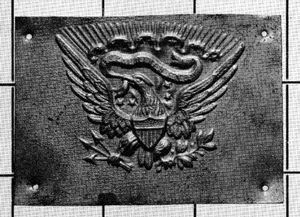
Figure 96
This is a sample struck from a die which apparently was not approved for the 1851 pattern plate. The eagle has wings upraised (2 inches tip to tip), head to right, shield on breast, scroll with "E Pluribus Unum" in beak, three arrows in right talon, and an olive branch in left talon. Stars are intermixed with "edge of cloud" and rays.
The specimen leads to the interesting speculation as to the weight given to correct heraldic usage at this period. The significance of the clouds, or lack of them, is unknown, but it should be noted that in all but the earliest specimens the eagle's head is turned to the right, or the side of honor, and the olive branch is placed in the right talon, indicating peaceful national motives as opposed to the three arrows, signs of belligerency, in the left talon. In this respect, it is interesting to note that until 1945 the eagle on the President's seal and flag carried its head turned to the heraldic left.