ADDITIONAL MOUNDS OF DUVAL AND OF CLAY COUNTIES, FLORIDA
Reading edition
Mound at Arlington. Mounds at South Jacksonville (2). Mound at Point La Vista. Mounds South of Point La Vista (3). Mound at Mulberry Grove. Mound at Peoria.
Low Mound at Arlington, Duval County
About three miles below Jacksonville, on the opposite side of the St. Johns, at Arlington, on the property of William G. Matthews, Esq., of Philadelphia, was a low mound in pine woods. We are indebted to W. H. Wilson, Esq., in whose charge the estate is, for permission to investigate.
This mound was not considered of aboriginal origin by the inhabitants of the neighborhood and had sustained no previous investigation though it gave evidence of cultivation in former times; its height of two feet, at the time of our investigation, was probably considerably less than its original altitude. Its shape was irregular, its major and minor axes being respectively 57 feet and 36 feet.
It was totally demolished.
It was composed of yellow sand with the usual admixture of charcoal.
HUMAN REMAINS
Human remains were encountered at twenty-five points, some as deep as 3 feet from the surface, beginning at the very margin of one portion of the mound. Bones were in the last stage of decay, but minimum portions of the skeleton being represented—at times parts of the cranium alone and again small pieces of bone almost too fragmentary for identification.
EARTHENWARE
Sherds were present in great quantities, the majority undecorated, though some bore the complicated stamps found in Georgia and in Carolina. Two had the stamp familiar in Florida, consisting of small diamonds.
The material of all the ware present in the mound, with the exception of certain fragments, was very inferior.
There were present numerous sherds showing separation from the vessel, not by a clean break but by the aid of a pointed implement, and a number of vessels had pieces removed from the margin by the agency of pointed tools. We have before referred to this peculiar custom as occurring in Duval County mounds and occasionally in other parts of Florida.
At several points in the mound were nests of fragments of earthenware.
In the northwestern margin of the mound, together, just below the surface, with a deposit of charcoal but apparently with no human remains, were two tobacco pipes of earthenware, of the usual type found in the mounds of Duval County, where the orifice for the stem often equals in size the aperture of the bowl.
This type, probably in vogue before White contact, is present in the stone graves of Tennessee. We have elsewhere found tobacco pipes of much more modern appearance in mounds containing objects essentially European.
In loose sand was another tobacco pipe in appearance similar to the foregoing.
In the northeastern margin, 15 feet down, with fragmentary human remains 1 foot below, was a small undecorated bowl with a perforation in the base, made previous to baking. This was the only occurrence in the mound of ready-made mortuary ware. For the benefit of those not familiar with our previous Reports on the Florida mounds, we may say that it was the custom in that State, often to knock out the bottom, or to make a hole through the bottom, of earthenware vessels, previous to inhumation with the dead and that this custom is believed to have been practised with the idea that the mutilation “killed” the vessel, freeing its soul to accompany that of its owner into the next world. Apparently, however, it entered the minds of the more thrifty among the aborigines that vessels of value might serve a better purpose, and hence there arose a class of ceremonial ware, usually small in size, often of fantastic design and always of flimsy material, with bases perforated during the process of manufacture. This cheap ware was probably kept on hand and did duty for vessels more valuable and less readily spared.
One and one-half feet below the surface, about 4 feet in from the northwestern margin, was a small globular vessel of ordinary type, undecorated, intact as to the base, with perforations for suspension below the margin on either side. No human remains were found in the neighborhood.
About 5 feet in from the western margin, and 2 feet below the surface, with no human remains in proximity, were two undecorated bowls, each with a maximum diameter of about 6 inches. Both showed perforation of the base made after manufacture.
A globular vessel of somewhat over one quart capacity lay about 9 feet in from the northeastern margin and 1.5 feet below the surface. It was undecorated save for a raised band around the inverted rim. With it were the greater part of a small undecorated vessel of ordinary type and various artifacts. Human remains were in association. Within the vessel were two pebbles; fragments of marine univalves; decaying portions of mussel shells; a worked object of shell resembling an imperforate cylindrical bead; and a bit of coquina.
At a number of other points were vessels, some of about one gallon capacity, all undecorated and of most inferior ware. In nearly every case was perforation of the base made after the completion of the vessel. Nearly all were to a certain extent imperfect, some being crushed to numerous fragments.
STONE
Five hatchets of the usual type, some showing considerable breakage, came from various points in the mound, none deeper than three feet.
In sand dyed red with Hematite, near human remains, were several mussel shells; one small bit of sandstone; a pentangular slab of red sandstone with a maximum length of 7.5 inches, a maximum width of 7 inches, a thickness of 3 inches; a “celt” 8 inches in length.
Four arrowheads came from different depths. With one was a pebble hammer of quartz.
About 2.5 feet from the surface, together, were fragments of lower animal bones; pebbles; a bit of quartz; fragments of marine shell; and several bits of chert rudely worked to resemble the arrowhead but too imperfect to be of service for any but sepulchral purposes.
Variously associated throughout the mound were a number of sheets of mica; pebble hammers; pebbles; several bits of chert and hones of sandstone.
SHELL
Upon several occasions fragments of mussel shells, probably whole at the time of interment, lay with human remains and with artifacts.
In one instance, with human remains and other objects, was the columella of a marine univalve neatly worked to a blunt point at either end.
REMARKS
This mound closely resembles many other low mounds of Duval County in the presence of abundant earthenware, of tobacco pipes of prehistoric pattern, of mica and of pebbles.
Nothing in the mound indicated acquaintance with the products of Europe.
Two Low Mounds at South Jacksonville, Duval County
These two mounds, almost contiguous, were on property belonging to the Hendricks estate. The ground, destined for building purposes, has been cleared and has evidently been under cultivation.
The smaller mound, circular in shape, had a height of 1 foot 8 inches, a base diameter of 52 feet. The mound had evidently been greatly spread out and a good portion of its contents doubtless scattered. The central portion was dug through, resulting in the discovery of a few sherds and here and there fragments of human remains.
The larger mound was irregular in shape; its major and minor axes being respectively 72 feet and 50 feet. Its height was 3 feet 3 inches. Its general appearance called to mind the low mound at Floral Bluff, Duval County, and the largest of the low mounds south of the great Grant mound, where our investigation was so richly rewarded. Our hopes in respect to this mound, however, were doomed to disappointment, for mound work is a lottery where blanks largely predominate.
The central portion of the mound was entirely dug through, yielding one interment badly decayed and apparently previously disturbed. A few sherds with complicated stamped decoration were met with.
Low Mound at Point La Vista, Duval County
Point La Vista, on the eastern bank of the St. Johns, is about four miles above Jacksonville.
In a cultivated field about one-half mile in a northerly direction from the landing was a mound much reduced in height by the plow. Its diameter of base, at the time of its total demolition by us, was 55 feet; its height, 2 feet 4 inches. The mound at the central portion had a thickness of 5 feet between the surface and where the sand ceased to show an admixture of charcoal, that is to say about 2.5 feet above the level of the surrounding territory and an equal distance below it. Yellow sand with no traces of charcoal or sherds, marked the bottom of the mound and into this again certain small pits had been dug, as was shown by the darker color of the sand employed to fill them.
Somewhat below the level of the surrounding territory was a stratum over one foot in thickness of sand blackened by fire, containing abundant particles of charcoal. Above this layer were brown sand and white sand intermingled at places, surmounted by a stratum of cherry-colored sand owing its tint to the use of Hematite, of irregular thickness—averaging, perhaps, 1 foot. This bright colored stratum lay beneath a superficial layer of brownish sand about 1 foot in thickness.
Interments were in considerable numbers—between thirty and forty—and in the last stage of decay, some in fact so far gone that the method of burial was not determined, but in all cases where sufficient evidence remained the burial in anatomical order was indicated.
Quantities of sherds were in every portion of the mound; some plain, others with punctate decoration, and others again bearing the square or the diamond-shaped stamp common to Florida ware. Intricate stamped decoration, prevalent in Georgia and present in many mounds of Duval County, was not met with.
About 3 feet from the surface was a bowl of approximately one gallon capacity, of ordinary type, bearing the square stamped decoration. The bottom had been intentionally knocked out. No human remains were discovered in the immediate neighborhood.
In a pocket of brownish sand, extending into the untouched sand below the mound, seemingly a small grave, over 5 feet from the surface, in the central portion of the base, with human remains, was an undecorated earthenware pipe (Fig. 1) of the usual type of the mounds of Duval County.
A curious earthenware knob, evidently broken from some vessel, lay in the sand.
Two polished hatchets were met with, one with human remains, 6 inches from the surface, the other in caved sand.
On a fireplace 5 feet from the surface were certain bones of the deer.
Several chips of chert, a rude implement of chert, a hone of sandstone and two chert arrowheads, were found separately in the sand.
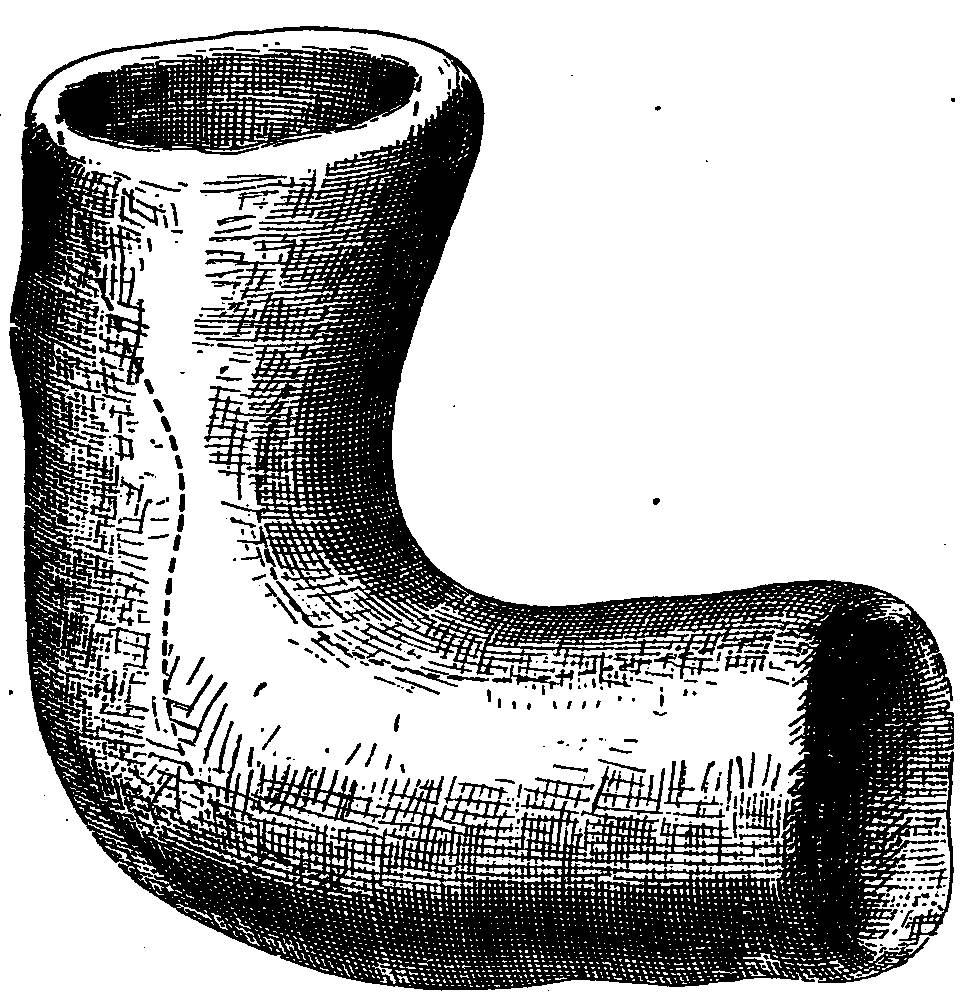
Fig. 1.—Tobacco pipe of earthenware. Low Mound at Point La Vista. (Length over curve, 5⅞ in.)
Loose in the sand were several conchs, a number of oyster-shells and the columella of a large marine univalve worked to a point.
As this portion of Florida has been long under cultivation, it is impossible to say what artifacts may have been removed by the plow in previous years.
Low Mounds near Point La Vista, Duval County
Partly on the property of Mr. Shad, resident near by, and of Mrs. J. R. Hunter, of Albany, N. Y., about one mile in a southerly direction from Point La Vista, were three low intersecting mounds (Fig. 2) all showing signs of former cultivation. By arrangement with Mr. Shad, and with kind consent of George M. Wyeth, M. D., of Jacksonville, in charge of the Hunter property, these mounds were totally dug through at a depth of three to four feet below the level of the surrounding territory.
They contained the usual charcoal and many fireplaces and were composed of yellowish-brown sand unstratified.
Mound A.
Diameter of base, 29 feet; height, 2 feet 5 inches.
No skeletal remains were encountered until the central portion of the mound was reached when small fragments of mouldering human bones were met with at four different points, from one foot to three feet nine inches from the surface. No artifacts were in association save in one instance when a small stone “celt” lay near bones.
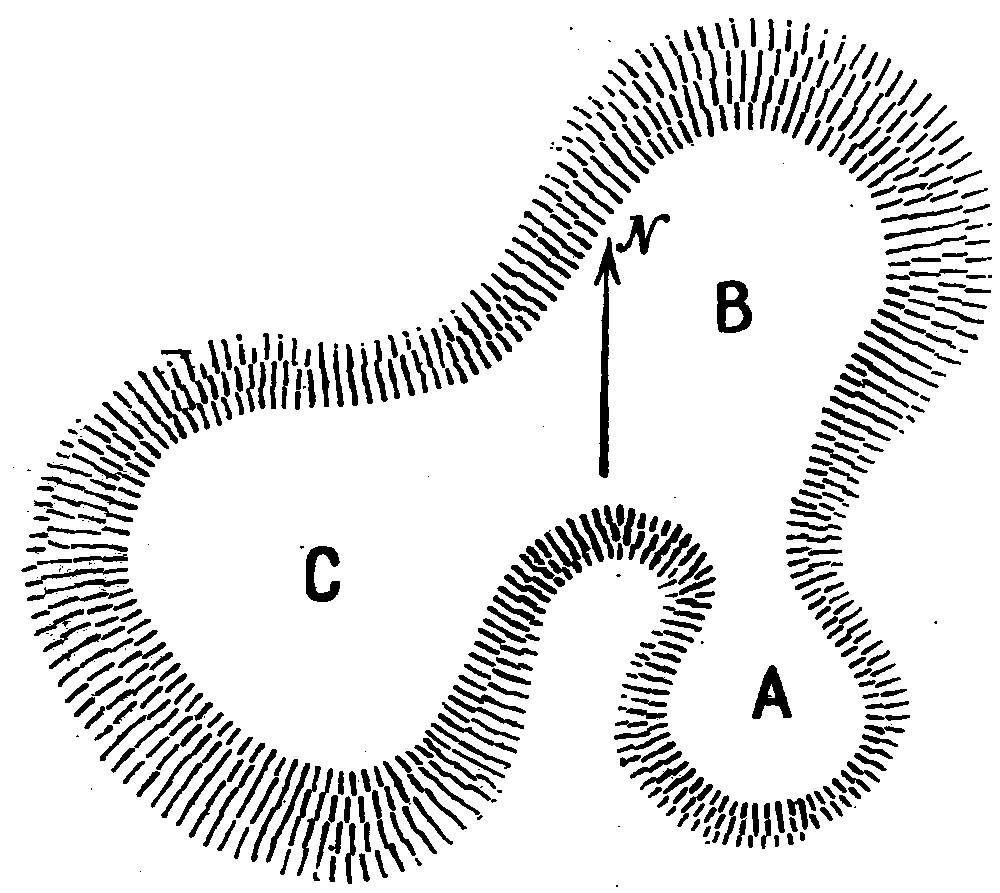
Fig. 2.—Plan of mounds south of Point La Vista.
With the exception of a nest of many fragments of earthenware, in the southern margin, sherds were infrequent. Certain fragments of earthenware were undecorated, while others bore a complicated stamped decoration, several of these being additionally decorated with crimson pigment—the first occurrence in our experience of the combined ornamentation.
Four small arrowheads, too rude for aught save mortuary deposits, were found separately. A bit of chert came from a depth of 5 feet.
Singly were: one pebble-hammer; one rude piercing implement of chipped chert and one pebble about 2 by 2.5 inches by one inch in thickness, worked into an oblong shape with rounded corners.
Mound B.
Diameter of base, 52 feet; height, 2 feet 1 inch. In this mound interments, consisting, as in the other, of mouldering fragments, were met with at six different points.
Three and one-half feet from the surface, with human remains, were: one bit of chipped chert; a few marine mussel shells; a piece of sandstone; part of a columella of a marine univalve; and a small Fulgur carica with a hole knocked through one side. These all lay in a pocket of sand dyed scarlet with red oxide of iron.
Also in the scarlet sand, 4.5 feet from the surface, with a few bits of human bone, were: a small sheet of mica; a smoothing stone of chert; a perforated Fulgur and several molars and incisors and one canine of some carnivore.
A streak of red sand beneath a seam of charcoal led to a large cockle shell (Cardium) badly decayed, and a small vessel of earthenware with two compartments and a handle on either end, very similar in type to one taken by us from the Hopson mound, Lake County, and figured by us (pl. LXXXV, fig. 2) in our Report on the mounds of the Ocklawaha river. Apparently no human remains were with these objects.
A small imperforate undecorated bowl of ordinary type lay one foot from the surface with fragments of parts of a large undecorated clay vessel, near human remains.
Three feet from the surface, apparently unassociated with skeletal remains, were portions of a vessel of about six quarts capacity, with complicated stamped decoration. The base showed perforation after manufacture.
Several pebble-hammers lay singly loose in the sand.
Mound C.
Diameter of base, 58 feet; height, 2 feet 2 inches. Human remains, mere fractional parts of the skeleton, present at ten different points, were confined to the southern portion and the eastern margin of the mound.
Three feet, eight inches from the surface, in the southern margin, with several large shell beads and one small shell (Marginella) longitudinally pierced, were portions of a cranium of a child about nine years of age; also several molars and one vertebra. In the vicinity lay a hatchet of polished stone.
Together were: three pebble-hammers, one pitted on one side and neatly rounded; one small pebble; a cutting implement of chipped chert, 6 inches in length, possibly incomplete; several conchs (Fulgur carica) badly decayed, perforated in the body whorl opposite the aperture; bits of columella of large marine univalves; several mussel shells, fragmentary through decay; and what decay had spared of one piercing implement of bone. All these lay with human remains in the eastern margin of the mound, about 3 feet from the surface.
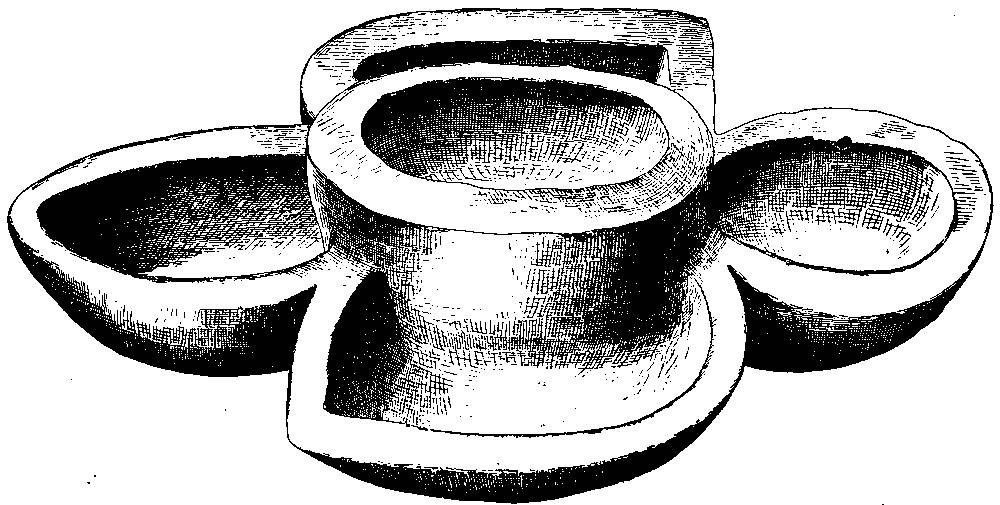
PLATE I
EARTHENWARE VESSEL WITH FIVE COMPARTMENTS. MOUND SOUTH OF POINT LA VISTA
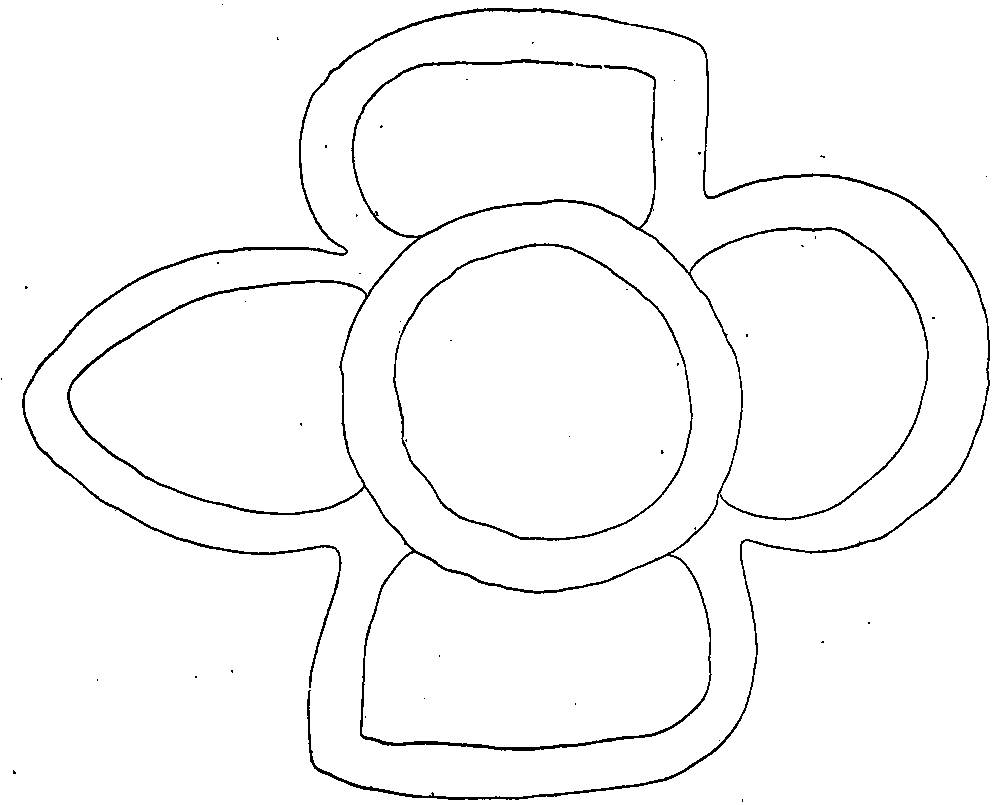
PLATE II
OUTLINE VIEW FROM ABOVE OF VESSEL SHOWN IN PLATE I
In close proximity to the deposit just described were human remains at about the same depth. With them were one lance head, two arrowheads and eleven chips, all of chert.
In various parts of the mound were nests of many fragments of various vessels, buried in close contact, as we have described elsewhere as present in numbers of low mounds of Duval County.
Three and one-half feet from the surface, beginning almost at the southern margin and extending in for about 6 feet, was a large log or several smaller ones pressed together with lines of separation no longer distinguishable, in the last stage of decay. The upper surface was considerably charred.
About 5 feet in from the southern margin and 1 foot, 8 inches from the surface, unassociated with human remains, was a vessel of heavy earthenware, unique so far as our experience extends. This interesting vessel, entirely intact, consists of four irregular compartments joined together on the same plane. From their point of union a fifth compartment rises as shown in Plates I and II.
We are indebted to Professor Holmes for a sketch of a five-chambered vessel about 5.25 inches square, from a mound in Franklin County, Florida. The central compartment is not raised above the other four, as is the case in our specimen, but is on the same plane and surrounded by them. Various high authorities consulted by us express ignorance of the discovery within the limits of the United States of five-chambered vessels other than the two here recorded.
Nothing in these mounds gave any evidence of intercourse with the Whites.
Low Mound at Mulberry Grove, Duval County
About ten miles south of Jacksonville, on the west bank of the St. Johns, is the estate of A. M. Reed, Esq., known as Mulberry Grove. We are particularly indebted to Mr. Reed for permission to investigate his mound inasmuch as it was under cultivation at the time of our visit. The mound is reported to have been ploughed down for thirty years and materially reduced in height. Its diameter of base was 46 feet; its height, 2 feet.
A central excavation, 32 feet in diameter (and this, we think, included the original mound) was carried through at a depth of about 5 feet. The mound was of brown sand, unstratified, and contained great numbers of fireplaces with charcoal. The form of burial, with one exception, was in anatomical order, about two dozen skeletons being met with, all much decayed. The crania were also badly crushed. About 2.5 feet from the surface was a heap of calcined human bones with charcoal.
Some of the crumbling skeletons lay at a depth of 5 feet from the surface.
Sherds were infrequent and probably of accidental introduction.
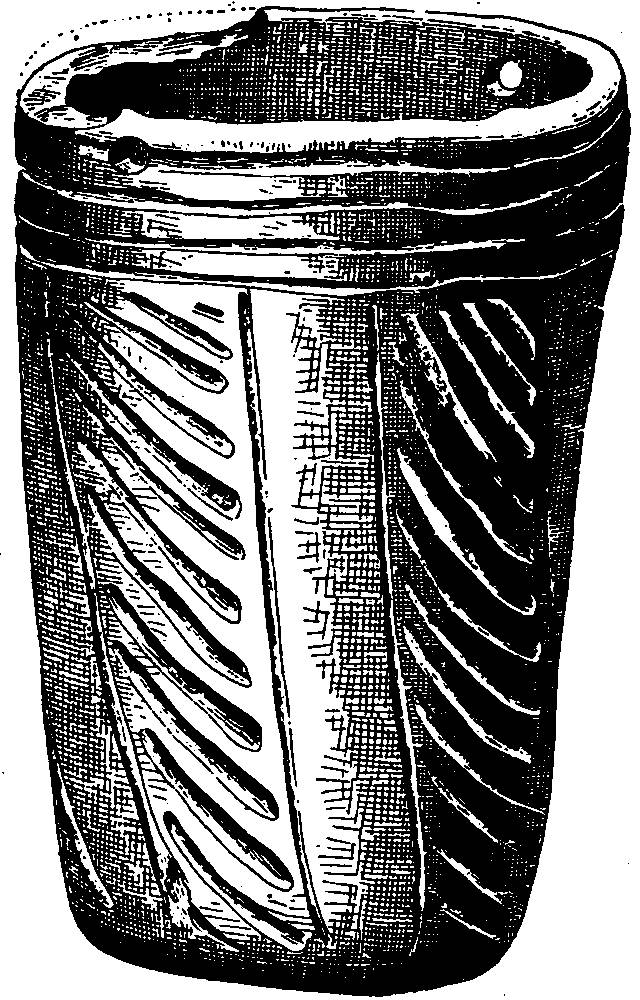
Fig. 3.—Earthenware vessel with incised decoration. Mound at Mulberry Grove. (½ size.)
With a skeleton, 3.5 feet from the surface, were two vessels of earthenware and a pipe of the same material. The larger vessel lay on its side across the right forearm; the smaller vessel, on its base, with the tobacco pipe, was on the right hand side of the cranium. Beneath the skull, were two piercing implements of bone. Both vessels are virtually intact and imperforate as to their bases. Each has a small hole on either side beneath the margin, for suspension. The larger has two incised parallel lines beneath the margin of the opening. Its dimensions are approximately: height, 4.5 inches; maximum diameter, 3.25 inches; across mouth, 2.5 inches. The smaller vessel, almost cylindrical (Fig. 3), has an interesting incised decoration. Approximate measurements: height, 4.25 inches; maximum diameter, at mouth, 2.75 inches; at base, or minimum diameter, 2.25 inches.
Five feet down, near a fragmentary skull, were one arrowhead and twenty-six small fragments of chert. We have before made reference in our paper on certain mounds in Duval County to the placing of numbers of such fragments together in the mounds.
In another portion of the mound, at about the same depth as the previously mentioned deposit, with human remains, were eleven small bits of chert and one shell gouge.
Near the surface as it was at the period of excavation, lay a small “celt” with human remains.
Loose in the sand were several bits of chert and a portion of a polished stone hatchet, found separately.
What this mound may have contained at the period of its abandonment, it is, of course, impossible to say. Nothing discovered by us pointed to intercourse with the Whites.
Mound at Peoria, Clay County
Doctor’s Lake has its union with the St. Johns at Orange Park about sixteen miles south of Jacksonville, on the west side of the river. About six miles in from the mouth of the lake, almost at its extremity, is the settlement of Peoria. In the outskirts of Peoria, on the property of Mr. J. A. Silcox, was a mound 4 feet 2 inches high, and 75 feet across the base. It had sustained very little previous examination, but its height had been greatly diminished by washing down of sand and trampling of cattle, which, at the same time, had increased its diameter.
At the time of our previous mound work on the St. Johns we were unable to come to terms with the owner of this mound, the location of which, however, is noticed in our Report.
The mound was totally demolished. It was composed of brownish sand, with the usual intermingling of charcoal.
About 5 feet down from the level of the summit a thin, irregular layer of dark sand and charcoal ran through the mound.
Less than one dozen interments were encountered, and these were represented by mouldering fragments.
Sherds were very infrequent, all coming under our notice being undecorated save one having the ordinary square stamp.
Throughout the mound were several whole and fragmentary arrow points, three pebbles, a bit of chert and a piece of mica.
Four and one-half feet from the surface, with very fragmentary human remains, lay fourteen arrow points.
Almost in the immediate center of the mound, 2.5 feet from the surface, was a concavo-convex ornament of sheet copper, 1.4 inches by 1.2 inches, having a narrow margin beaded in the fashion so common in the mound ornaments of copper.
Nothing further of interest was encountered.