Where can we see the effects of acid precipitation?
Reading edition
Washington’s buildings and monuments use many different stone types. Marble and limestone buildings are the most likely to show damage, because they are more affected by acidic precipitation and urban pollution. As you follow the tour described in this book, see how granite and sandstone buildings compare with the marble and limestone in the same environment.
This guide will help you recognize some geologic features of buildings, in addition to their historical and architectural aspects, wherever you travel. However, remember one important point when examining buildings and monuments for deterioration: stone deterioration has many causes. Although acid precipitation and urban pollution can accelerate stone deterioration, people, pigeons, and other organisms may also harm our stone structures. In addition, the process of weathering has been going on since the Earth first had an atmosphere. Although we can observe deterioration of the stone, it is hard to determine how much of the deterioration is from acid precipitation and how much is from other causes.
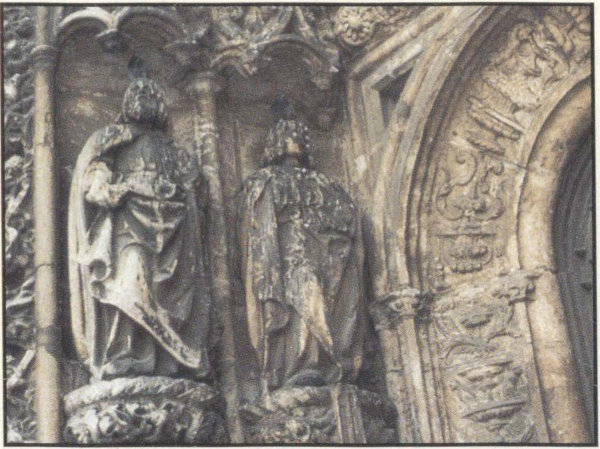
Pigeons sitting on the statue heads have created distinctive deterioration on this building.
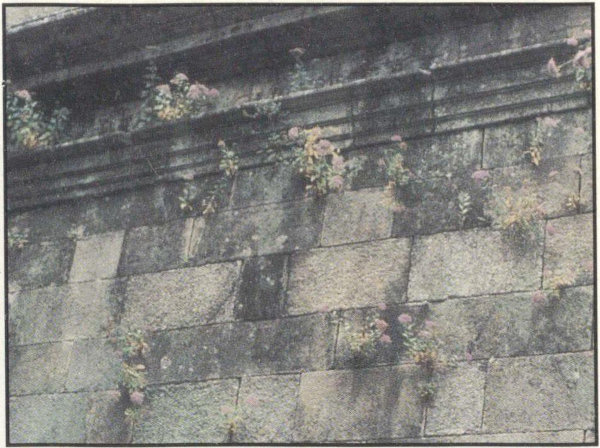
Flowers and grasses have grown in the cracks between stones on this church.
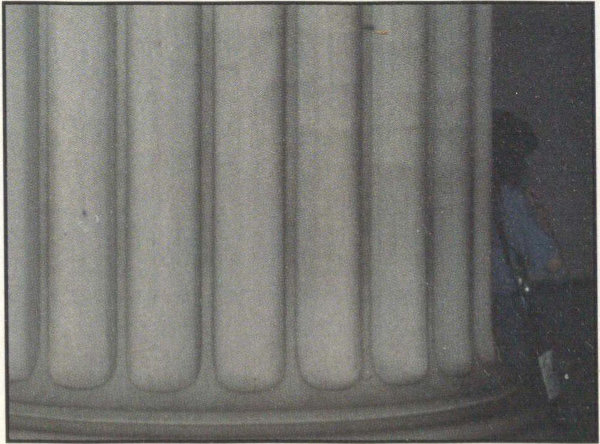
This limestone column in the Lincoln Memorial is darkened and dirty from people’s hands touching the stone.
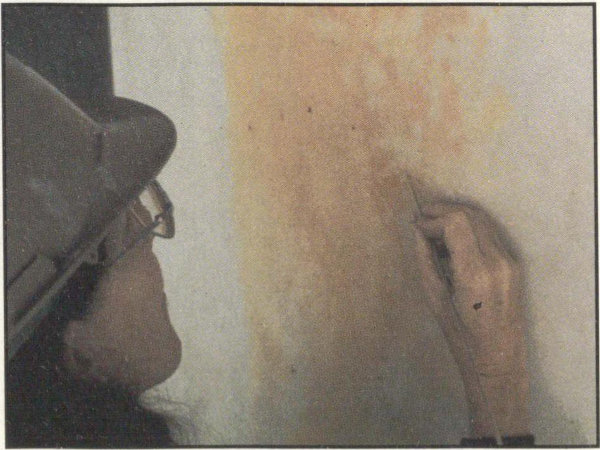
Microorganisms have caused this stain to appear on a marble column at the Jefferson Memorial.
11