What Type of Rock is It?
Reading edition
Look at the overall appearance of the stone in the building. Observe the color, texture, and structure of the stone.
Does the stone look evenly colored, with an even texture?
YES ⇒ Look at the grains up close. Do you see fossil fragments (bits of shells or skeletons)?
YES ⇒ LIMESTONE
NO ⇒ Are the grains rounded, like sand on the beach?
YES ⇒ SANDSTONE
NO ⇒ {same as next line}
NO ⇒ Do you see streaks or clouds of color in a mostly white stone?
YES ⇒ MARBLE
NO ⇒ Look at the grains up close. Do you see a mixture of colors (black, white, gray, maybe pink or red)?
YES ⇒ GRANITE
NO ⇒ MARBLE
Some of these stones may have layers that were the original beds that formed the stones.
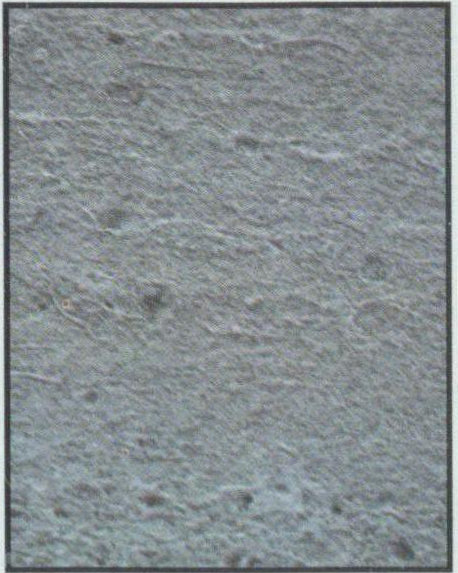
LIMESTONE
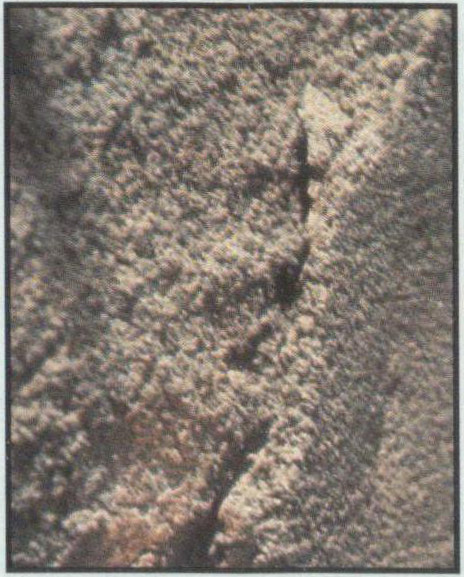
SANDSTONE
The grains in these rocks may look like crystals that fit together like jigsaw puzzle pieces.

MARBLE
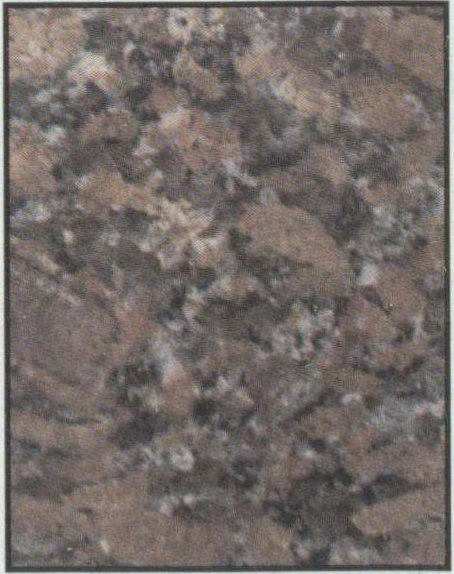
GRANITE
38
As the Nation’s principal conservation agency, the Department of the Interior has responsibility for most of our nationally owned public lands and natural and cultural resources. This includes fostering sound use of our land and water resources; protecting our fish, wildlife, and biological diversity; preserving the environmental and cultural values of our national parks and historical places; and providing for the enjoyment of life through outdoor recreation. The Department assesses our energy and mineral resources and works to ensure that their development is in the best interests of all our people by encouraging stewardship and citizen participation in their care. The Department also has a major responsibility for American Indian reservation communities and for people who live in island territories under U.S. administration.
This publication is one of a series of general interest publications prepared by the U.S. Geological Survey to provide information about the earth sciences, natural resources, and the environment. To obtain a catalog of additional titles in the series “General Interest Publications of the U.S. Geological Survey,” write:
U.S. Geological Survey Information Services P.O. Box 25286 Denver, CO 80225