A Naval Expositor.
Reading edition
A-Baft
Are those Parts which are towards the Stern of a Ship.
Amain
A Sea Term, to strike a Main, is to lower at once.
Anchors
The Parts of an Anchor are, First, The Ring unto which the Cable is bent or fastened.
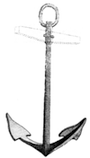
Secondly, The Shank, which is the longest Part of the Anchor; and at the End where the Ring goes through, is called the Eye, and wrought Square with two Nutts on it, which are let into the Stock.
Thirdly, The Arm is from the Crown to the Flook.
Fourthly, The Flook, by some called the Palm, being that broad Part brought on upon the Arm, like an Arrow Head, the sharpest Part of which is called the Bill, and fastens into the Ground.
The Anchors on board a Man of War are the Sheat, Spare, Best and Small Bower, which by the Establishment, are all of one Weight, the Stream one Fourth, the Kedge one Eighth, of the large ones; and the First and Second Rates are allowed a small warping one, one Half the Weight of the Kedge.
When the Cable is Perpendicular between the Hawse and the Anchor, it is then said to be a Peek; when hangs right up and down by the Ship's Side, it is said to be a Cock Bill, upon the Ship's coming to an Anchor; when a Ship drives by the Violence of Wind or Tide, and the Anchor cannot hold her, then it's said to come Home. Those which have lost one of their Flooks, are made use of for Moarings.
Anchor Stock
A Piece of Wood fastened together with Iron Hoops and Treenails upon the Square near the Ring, serving to guide the Flook, so as it may fall right and fix in the Ground.

Ditto Tackle
Are for Loosing too the Stock, so as to be clear of the Bends.
Anchoring
Is Ground fitting to hold a Ship's Anchor, so as she may safely ride it out in a Storm; stiff Clay, and hard Sand, is esteemed the best to be chose for that Purpose.
Anvils
Are used by the Smiths for working all Sorts of Iron-work on.

Aprons
Is a Plat-form raised a little above the Bottom of a Dock at its Entrance, against which the Gates shut.
Arm'd
A Ship is said to be arm'd when fitted in all Respects for War.
Avast
Signifies to stop, hold, or stay.
Auger Bitts
Made of several Sizes, and when shut to a Shank, are for boreing Holes through the Plank and Timbers, that the Treenails may go through them, for fastening both together.

Aunings
Is old Canvas spread by Ropes over the Upper Deck, Quarter Deck, or Poop; and some Ships have them fitted with thin slit Deal, over the Steering Wheel on the Quarter Deck; and all are to keep off the Sun, Rain or Wind.
Axes
Are used for cutting up Junk, or cleaving Wood.

Backstays
Are sort of Shrouds, which go up to the Topmasthead, hath Lanyards reev'd through dead Eyes, and Backstay Plates at the Ship's Side, are called standing or shifting, and are for succouring the Topmasts.
Bail or Bale
Casting or throwing the Water out of a Boat, which when done she is freed.
Ballast
Is in great Ships generally Beach Stones, and in small Iron, laid in the Hold next the Keelson, in order to keep the Ship stiff, so that she may bear the more Sail.
Barrels Press
Are emptied Tar Barrels filled with Clay, to be put on the Drags and Sledges when closeing Cables in the Rope Yard.

Barrecoes
Small Casks of Twenty one Inches long, bound with four Iron Hoops, were formerly allowed to Ships bound on Foreign Voyages for fetching Water.

Bars
Capston
Goes into the Drum-head, at which the Men heave when weighing an Anchor, or purchasing a great Weight.

Port
Each End goes through a Ring Bolt, and with Wedges, barrs in the Ports.

Baskets
Are made use of for carrying Officers Stores in, and several other Uses.

Bason
Is for Ships to lye in to be repaired, before or after taken out of the Dock.
Baulks
Small rough Firr Timber, used for Shoreing Ships when in the Dock, and other such like uses.
Beak Head
The foremost End of the Forecastle, fronting the Head, and limitting the Length of it, and is a becoming Part or Grace of a Ship.
Beak Irons
Are for turning square, round, and all Sorts of Hoops; and also used by Plumbers, as Anvils are by the Smiths.
Beams
Large Pieces of Timber cross the Ship, the Ends of which are lodged on the Clamps to support the Decks, and also keeps her out to her Breadth, and likewise to bear the Weight of her Ordnance.
Beeswax
Is used by the Sail-makers for waxing the Twine before they sew the Seams of Canvas for making Sails.
Beetles Reeming
Used by the Caulkers for driving in their Irons into a Ship's Bottom, in order for Caulking.

Bear
A Ship bears her Ordnance when she carries her Guns well, when having her Sails abroad in a Gale of Wind she don't heel. When sails towards the Shore, she is said to bear in with the Land. When a Ship that was to Windward comes under another's Stern, and gives her the Wind, she is said to bear under her Lee. If sails into an Harbour with the Wind large or before the Wind, she is then said to bear in with the Harbour. When a Ship keeps off from any Land, she is said to bear off from it. When they would express how any Cape or Place lieth from another, they say it bears off so, or so,—In Conding also, they say, bear up to the Helm, (i. e.) let her go more large before the Wind, and bear up round, that is, let her go between her two Sheets, directly before the Wind.
Bells
Cabbin
Allowed all Ships, for the Use of Admirals, and Commanders, to call their Servants.

Watch
For striking the Hour at each Box in the Yard at Night, and also are allowed all Ships for that Service both in the Day and Night.

Belay
Signifies the same as fasten.
Bench Stakes
Are used by the Smiths for cold Work on a Vice Bench.
Bend
In a Ship, there are several, as the Midship-bend, and others called frame Bends, which shews the Shape of her at the respective Places where they are placed. They say Bend the Cable, when it is seized and made fast to the Ring of the Anchor. To Unbend the Cable is to loosen it from the Ring of the Anchor, in order to be returned into Store, or cut up for inferior Uses.
Bilbows
Is a long Bolt on which are put generally six or seven Shackles, which goes round a Man's Leg when he has committed any Fault, and for securing him in Case his Offence is so great as to deserve further Punishment.

Bildge
The flatest Part of a Ship's Bottom, and when she strikes on a Rock, they say she is Bildged.
Birth
Is a due and proper Distance observed between Ships lying at an Anchor or under Sail; so also the raising or bringing up the Sides of a Ship is called Birthing up; also the proper Place aboard for a Mess to put their Chests, &c. is called the Birth of that Mess; also a convenient Place to Moar a Ship is called the Birth.
Bittacle
Is a Sort of Locker framed with Deal to hold the Compass, a Glass and Candle, and stands on the Quarter Deck just before the Steering Wheel, by which, he that Steers the Ship is enabled to keep her in her right Course.

Bite
Is any Turn or Part of a Rope that lies compassing; and therefore when they cannot take the End of a Rope in Hand, they say, Give me the Bite, or hold by the Bite.
Bitter
Any turn of a Cable about the Bitts, is called a Bitter, so as that the Cable may be let out by little and little. And when a Ship is stopped by a Cable, they say, She is brought up by a Bitter. Also that End of the Cable which is wound or belayed about the Bitts, is called the Bitter-end of the Cable.
Bitts
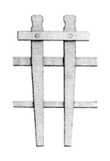
Are two perpendicular Pieces of Timber in the Fore-part of the Ship, bolted to the Gun-Deck and Orlop Beams, their lower Ends stepping in the Footwaaling, the Heads of which are braced with a Cross-piece, and when several turns of the Cable are taken over them, is for securing the Ship at an Anchor; there are generally two Pair of them; besides there are others upon the Upper Deck, which are fixed by the Main and Foremast, and called the Topsail Sheat and Jeer Bitts.
Blacking
Is in small Barrels, and used by the Boatswains for making the Yards Black.

Blocks
Are fitted with Shivers and Pins for Running Rigging to go through, and of the different Natures following.
Blocks Double
Has two Shives, and are used for Jeers, Topsail-Runners, Main Bowlines, Mizon Sheats, and Winding Tackle Falls.

Double Ironbound
The Toptackle Falls for all Ships are reeved through them, the upper ones hook into a Thimble at the End of the Toprope Pendant; and the lower ones has a Swivel in the Iron binding, and hooks either to an Eye or Ring-bolt upon Deck; and so are those for the Catt Falls for Ships from 70 Guns downwards, but with a large Hook, which takes the Shank of the Anchor.
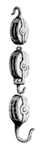
Longtackle
Has one large and one small Shive, one above another, and are used for all single Tackles.

Single
Has only one Shive.

Clewgarnet & Clewline
Are made with a Shoulder, and Holes bored through the same, for the Strap to go through, in order for Lashing the former about the Yards.

Racks
Are lashed to each Side of the Gammoning in the Head, and has several Shives one above another, through which the Spritsail-lifts, Buntlines, Clewlines, and Sprit Topsail Sheats go.

Sheat
Spritsail
Are turn'd, and has Holes for the Pendants (which serve as a Strap) to go through.

Topsail
Are made with Shoulders, and lashed to the Low Yard Arms, in order to hall Home the Topsail Sheats.

Snatch
Has a Hole bored at the Tapering-end, and a Notch cut in the upper Part, for a Bite of a Rope to be put in.

Top
Are bound with Iron, and a Hook turned from the same to hang in the Eye-bolt of the Cap; has a Brass Shive and an Iron Pin, through which Block, the Pendant of the Toprope goes for getting up the Topmasts.

Voyal
The Shive has a Brass Coak let into it, which works on an Iron Pin, by reason of the great Strain-hove by the Voyal (brought round the Capston) when purchasing the Anchor.

Warping
Made in the same manner as the Snatch are, but lighter, with a long Iron Pin, which serves the Man that warps off the Yarn from the Winches, for a Handle to hold by.

Treble
Has three Shives, are used for Fore and Main Jeers for Ships from 100 to 80 Guns; for the Foretop Bowlines of all Rates; Mizon Jeers from 100 to 60 Guns, and Winding Tackle Falls from 100 to 40 Guns.

Do. Ironbound
With a large Hook for the Catropes, and allowed to Ships from 100 to 80 Guns.

Bluffheaded
A Ship is said to be so, when she is built with small, or too upright Rake forward on.
Board
Elm
Is used for several Services about the Yard, on board Ships, and repairing Boats, &c.
Firr
For sheathing Ships Bottoms, flooring their Cabbins, and making Moulds, &c.
Board Wainscot
For building Barges, Pinnaces and Wherries; and other Uses relating to the Joyners.
Boats
Barge
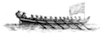
Rows with twelve Oars; are allowed to the Flag Officers, as Pinnaces are to Captains.
Launces
Made use of by the Master's Attendant for transporting Ships, are built of a great Breadth, and low to the Water for the more conveniently coyling transporting Hawsers in.

Longboat
Is the largest Boat belonging to a Ship, and the strongest built, being used for carrying Water, or Officers Stores to and from the Ship.

Pinnace
All Ships are allowed one, for the Use of the Commanders.

Wherry
Are allowed to some of the Yard Officers.

Yawl
Are the inferior and smallest Boats allowed Ships.

BoatTackle Pendants
Are fastened with an Eye pretty near the Ends of the Fore and Main-Yards, with Longtackle Blocks, and through them pass the Falls which are used for hoisting in the Boat upon the Booms, or out of the Ship.
Boatswain
Is the Officer, who receives into his Charge all the standing and running Rigging, Cables, Cordage, Anchors, Sails, Boats, and other Stores by Indenture.
Bollards
Are large Posts set into the Ground, on each Side of a Dock, and to them (on docking or undocking Ships) are lashed large double or treble Blocks, through which are reeved the Transporting Hawsers to be brought to the Capstons.
Bolsters
The Smiths lay them on their Anvils, when they stretch or open Holes with Pins.
Bolts
Chain
Goes through an Eye of the Chain-plate to be drove into the Ship's Side.

Clench
When drove, are to be clench'd at each End, to keep them from starting or flying out.

Drawn
Are of a superior Length, to be cut, upon occasion, of different Lengths, as wanted.
Drive
Are used to drive out other Bolts.

Eye
Are drove into Ships Decks or Sides, for Tackle Hooks to hook in, when a great Purchase is depending.

Fender
Made with thick Heads, to be drove into Waals, to save the Ship's Sides from Bruises.

Forelock
Has a small Eye at one End, in which the Forelock is driven, to prevent starting out.

Hatch-barr
Are small ones, for fastening the Bars down on the Hatches in Time of Fight.
Ragg
Are full of Jaggs or Barbs on each Side, to keep them from flying out of the Timber into which they are drove.

Ring
Serve for bringing to the Ports, when the Bars are put through their Rings, &c.

Sett
Are for bringing Planks or other Works close to one another.

Wrain
Has a Ring at one End for a Staff to go through, and small Holes made toward the other End for Forelocks, and are used on Frames of Ships for bringing Planks, &c. to the Sides.

Bolt Staves
Square Bars of Iron, cut into different Lengths, just put into the Fire, and their Edges rounded off, preparative to their being forged into Bolts of any Diameter or Size, as may be wanted in Haste.
Bonnets
Are small Sails to be laced on upon the Main or Foresails, and Jibbs of Sloops, Yachts or Hoys, when fair, or to be taken off in foul Weather.
Boom
When a Ship makes all the Sail she can, they say she comes Booming; also those Poles with Bushes or Baskets on the Top, which are placed near Lakes, to direct how to steer into a Channel, are called Booms.
Booms
Fire
Are made out of long Sparrs, and fitted with a Spud of Iron at the End, and ferril'd; their Use is to prevent Fire-ships boarding, or fending off any others that may fall on board them.
Flying Jib
Runs up the Bowsprit, from which the flying Jib sail is hoisted.
Studdingsail
Goes along the Yards, through Irons fixed on them, that when they sail before the Wind, the studding Sail being set, causes the Ship to go through the Sea with greater Swiftness.
Boom Irons
Are made with two Rings, the large one clips the Yard, and the Booms go through the small one.

Boothose Tops
Are laid on about three Strakes of Plank below the Waters Edge with Tallow, and are generally given Ships when ordered on a Cruize.
Bowles
Are allowed the Boatswain, for the Use of the Men to put their Provision in.

Bowsprits
Of the Growth of New-England or Riga, are always wrought into sixteen Squares, before brought from thence, and are received into Store by their Diameter in Inches.
When on board, they lie steeving on the Head of the Stern, having the lower End fastened to the Partners of the Fore-mast, and a Gammoning reeved several Times through the Knee of the Head, and farther supported by the Fore-stay. It carries the Sprit-sail-yard, (Sprit-top-mast in three Deck Ships) Jack Staff and flying Jib Boom.
Bowline
Is a Rope fastened in three or four Parts of the Leech of the Sail, which is called the Bowline Bridle, but the Mizon Bowline is fastened at the lower End of the Yard.—All Sails have it except the Spritsail and Sprit-top-sail, and therefore those Sails cannot be used close by a Wind; for the Use of the Bowline is to make the Sails stand sharp, close, or by a Wind.
Bowline Knot
Is a Knot that will not slip, by which the Bowline Bridle is fastened to the Cringles.
Bowse
Signifies as much as hawl or pull, thus, hawling upon the Tack is called bowsing upon the Tack, and when they would have the Men pull altogether, they say, Bouse away.
Braces
All the Yards in a Ship, except the Mizon, has two; there is a Pendant made with an Eye, which goes round the Yard Arms, at whose other End there is a Block, through which the Brace is reeved, and their use is to square, traverse, or right the Yard, that is, to bring it so, that it shall stand at Right Angles with the Length of the Ship. The Main Brace comes to the Poop, the Main-top-sail Brace to the Mizon Top, and thence to the Main Shrouds; the Fore and Fore-top-sail Braces come down by the Main and Main-top-mast Stays, and so all the rest: But the Mizon Bowline serves for a Brace to that Yard, and the Cross Jack Braces are brought forward to the Main Shrouds, and the Mizon-top-sail Braces go through Blocks at the Mizon Peek.
Brackets
Are Pieces fayd on the Outside of the Timbers in the Head, and between the Stern and Gallery Lights, and were formerly carved.
Brails
Small Ropes reeved through Blocks, which are seized on either Side of the Mizon Course, a little Distance off upon the Yards, so that they come down those Sails, and are fastened at the Skirt of them to the Cringles. Their use is for furling the Mizon, to hawl up its Bunt, that it may the more readily be taken up or let fall. These Brails belong to Yachts, and Hoys Main-sails.
Brasses for Wheels
Are let into the Heads of Laying or Spinning Wheels at the Rope Yard, for the Whirls to work on.

Breast Hooks
Are crooked Pieces of Timber lying transverse to the Stem, which being bolted on both Sides, and also through the Stem, they thereby brace both Bows together.
Breeming
Is burning off the Weeds, Filth, &c. (which a Ship contracts under Water,) with Furze, Faggots or Reed, before her Bottom is caulked and graved, and this is done when in the Dock, on the Carreen, or on the Ground ashore.
Brimstone
Being mixed with Oyl, is used by the Master Caulker for paying Ships Bottoms.
Brooms
For cleaning the Ships, Store-houses, or Yards, &c.
Brushes
Blacking
Used by the Boatswain for blacking the Ship's Yards, &c.

Large
For cleaning Admirals, Captains and Lieutenants Cabbins on board a Ship.

Brushes Tarr
For paying Rigging, Masts, or Blocks, &c.

Buckets
Used for drawing Water to clean the Decks, &c.

Bucklers
Are to prevent the Water washing in at the Hawse-holes.

Buildgeways
A Frame of Timber fayd to the Outside of a Ship under her Buildge, for the more securely and commodiously launching her.
Bulk of a Ship
Is her whole Content in the Hold for Stowage.
Bulkhead
Is a Partition that goes athwart the Ship, as at the great Cabbin, Steerage and Forecastle, &c.
Bunt
Is the middle Part of the Sail, when formed into a Kind of Bag or Cavity, that the Sail may receive the more Wind, and is chiefly used in Top-sails.
Buntlines
Are small Ropes, made fast to the Bottom of the Sails, in the middle Part of the Boltrope to a Cringle, and so are reeved through a small Block, seized to the Yard; their Use is to trice up the Bunt of the Sail, for the better furling of it up.
Buoys
Cann
Are hooped with Iron, and made very strong, in Shape of a Cann; their Use is to lie on Shoals or Sands for Marks.

Nunn
Are made tapering at each End, and filled with Rhine Hoops and some Iron, which being strapped with Ropes, are fastened to the Buoy-rope, so as to float directly over the Anchor.

Wood
Are made out of old Masts, &c. and hath a large Hole made at one End, through which the Buoy-rope is reeved, and serves for the aforesaid Uses: From hence the Word Buoyant, signifies any Thing that is floatable.

Burden or Burthen
Of a Ship, is her Content, or the Number of Tuns she will carry, to compute which, (according to the Rule of Shipwrights Hall) is to multiply the Length of the Keel, by her Breadth and half Breadth, and divide by 94, gives the Number of Tuns.
Burton
Is a small Tackle, to be fastened any where at Pleasure, fitted with two single Blocks, and its Use is to hoist small Things.
Ditto Pendants
Short Ropes, which at one End is fastened either to the Head of the Mast, End of the Yards, on the Main Stay, or Back of the Rudder; and at the other End hath a Thimble spliced in, or a Block to reeve a Fall through.
Butt
Is the End of any Plank which joins to another on the Outside of a Ship under Water; and therefore when a Plank is loose at one End, they call it springing a Butt, to prevent which, they are usually bolted at the Ends.
Buttock
That Part of the Ship's Stern under the Wing Transom, whether round or square.
Bow
Is the Round of a Ship's Side forward, reckoned from the After-bitts (on the Gundeck) to the Stem; if she hath a broad Bow, they call it a Bold-bow; if a narrow thin Bow, its called a Lean-bow.
Cables
Allowed a Ship for Channel Service, are distributed in this Manner, two being spliced together are called the Sheat-shot; three, the Best-bower; one the Small-bower, and one Spare; but if they go a Foreign Voyage, then they are allowed another, which is either bent to the Spare or Small-bower, and are all of one Size; and all Ships are likewise allowed a Stream, which being bent to their respective Anchors, holds the Ship fast when she rides. To serve round, or Plat the Cable, is bind about it old Rope, Canvas, &c. to keep it from gawling in the Hawse, &c. Splice the Cable, is to make two fast together, by working the several Strands one into the other. Coyl the Cable, is to roll it up round in a Ring, of which the several Rolls one upon another are called the Cable Tire. Pay or Veer more Cable, is let more out from the Ship. When two or three Cables are spliced together, it is called a Shot.
Callipers
Are for taking the Diameter of Timber, Masts, Yards, and Bowsprits, before received into Store.

Caulking
Is driving in Ocham, spun Hair, or Hemp, into the Seams of the Planks, to prevent the Ship's Leaking.
Cambring
A Deck lies Cambring, when it lies not level, but higher in the Middle than at either End: Also if the Keel is bent in the Middle upwards, they say, She is Camberkeeled.
Candles
Are used in the several Offices, by the Artificers to work at Night, in Ships Holds, for taking out their Ballast, and are allowed Quarterly to the Officers of the Ships in Ordinary.
Canvas
Used for making Sails, Awnings, Tarpawlings, &c.
Canvas Hoses
Are for starting Water into or out of Casks.
Cap
Is a square Piece of Timber put over the Head, or upper End of the Mast, having a round Hole to receive the Mast; by them the Top-masts and Top-gallant-masts are kept steady and firm in the Tressle-trees, where their Feet stand, as those of the lower Masts do in their Steps.

Capstons
Are of two Kinds in a Ship, the Jeer and the Main. The Jeer Capston is placed between the Main and Fore-mast, and its Use is chiefly to heave upon the Jeer, or to heave upon the Voyal, when the Anchor is weighing. The Main is placed Abaft the Main-mast, its Foot, or lower End standing in a Step on the lower Deck, and its Head is between the two upper Decks. Its several Parts are thus called, the main Substance or Post is the Barrel or Spindle; the Brackets set upon the Body are called Whelps; the thick Piece of Elm at the End of the Barrel, in which the Barrs go, is called the Drum-head. The Pawl is a Piece of Iron bolted at one End to the Beams, or upon Deck, close to the Body of the Capston, to stop it from turning back, and this they call Pawl the Capston; the Use of them are to weigh the Anchors, hoist up or strike down Top-masts, heave any weighty Thing, or to strain any Rope that requireth a main Force. The Terms are, Come up Capston, (i. e.) slack the Voyal which you heave by, in which Sense also they say, Launch or Pawl, that is, stop it from going back.
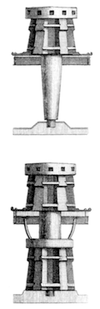
Capston Pins & Chains
Goes into the Drum-head of the Capston, and through the Barrs to prevent them flying out of the Holes.

Carreen
A Ship is said to be brought on a Carreen, when the most Part of her Lading, &c. being taken out, she is laid along-side of the Hulk, which being lower than her, is hawled down as low as Occasion requires, in order to trim her Bottom, to caulk her Seams, or to mend any Thing that is at fault under Water.
Carlings
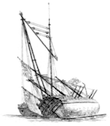
Are square Pieces of Timber ranging from Beam to Beam Fore and Aft the Ship, which being supported by Scores in their respective Beams, they thereby contribute to strengthen the Deck.
Carpenter
Is the Officer charged with the Masts, Yards and Stores proper to his Province.
Carvel Work
In Boats, the Boards are fayd to lye fair to one another, so as that the Seams of Longboats and Pinnaces may be caulked without Difficulty.
Catharpings
Are small Ropes running in little Blocks from one Side of the Shrouds to the other, near the Deck; their Use is to force the Shrouds taught, for the Ease and Safety of the Masts when the Ship rowls; they are also used at the upper Part of the Shrouds, but there, worn Rope, from three and an half, to two and an half Inches is used, and do not run through Blocks, but has several turns taken in them, and are made fast.
Cathead
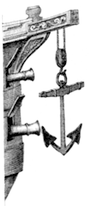
Pieces of Timber projecting over the Ship's Bow from the Fore-Castle at the After-end of the upper Rail of the Head, so far as to clear the Flook of the Anchor from the Ship's Side, in order to lodge it on the fore Channel, that it may the more freely be let go again to Anchor the Ship in any Road or Harbour. At one End of which Shivers are let in, in which is reeved a Fall which passes through a large Iron bound treble or double Block; and at the End of a Pendant a large Hook is fixed, and called the Fish Hook, and is to trice up the Anchor from the Hawse to the Top of the Fore-Castle.
Chafe
A Rope Chafes when it galls or frets by rubbing against any Thing that is rough or hard.
Chains
Buoy
Are used for rideing the Cann Buoys on the Shoals or Sandheads.

Pendant
Are large, one End of them being made fast to a Claw ashore, and the other to the Moaring Cable; the Ships in Harbour Ride by them.

Shankpainter
Goes round the Shank of the Anchor to support it, when hove up at the Bow.

Top
Are for slinging the Yards in Time of Fight.

Channels
Are Fore, Main and Mizon, which is Plank placed an Edge, against the upper Edge of the Waal, and of a convenient Length for such a Number of dead Eyes the Ship requires, and so broad as to keep the Shrouds from touching the upper Rails.

Channel Waals
Are wrought thicker than the Plank, and goes Fore and Aft; are placed in the Midship against the upper Deck, and shews the Sheer of the Ship; besides, is a great Strengthening to her Sides, as well as Benefit of shoreing her in a Dock.
Chambers for Pumps
Are Cast in Brass, which were used formerly, and put into the lower Part of the Pump, to prevent the Chain, when working, from galling the Pump.
Carts
Dung
Runs on two Wheels, is made close for carrying Earth, Ballast, &c.

Rave
Runs on two Wheels, and is made open, not unlike a Waggon.

Scandaroon
Runs on two solid Truck Wheels, and is for carrying Timber.

Timber
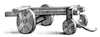
Runs on four solid Truck Wheels, fitted with Iron Axle Trees and Brass Coaks; and on them the Timber is put out of the Hoys, to be carried to its respective Births about the Yard.
Charcoal
Used by the Plumber for melting Sodder, and by the Sail-maker for stoving Boltropes.
Chase
Signifies Pursuit.
Cheeks of the Head
Are small Knees fayd on each Side of the Knee of the Head, bracing it securely to both Bows.
Ditto for Masts
Are two pieces of Oak fayd to the Head of the Mast on each Side, to make good the Want of Firr, and also makes them stronger than if they were made out of the same Tree.
Chestrees
Are Pieces of Timber fayd perpendicularly up and down the Ship's Sides, not quite so far forward as the Fore-castle; their Use is for the Main Tack to be hawl'd through.
Chests
To hold
Arms
Small Arms.
Colour
The Boatswain's Colours, &c.
Compass
The Compasses.
Nail
The Carpenter's Nails.
Powder
The Gunner's Powder.
Chimneys
Are made of Copper, and placed on the Fore-castle for carrying Smoak clear out of the Cook-Room.

Chyrurgeon
Is to take Care of the sick, maimed or wounded Seamen on board.
Clamps
Strakes of Plank in great Ships, on the Gundeck, eight or nine Inches thick, fayd to the Sides, to support the Ends of the Beams.
Ditto Hanging
May be fixed to any Place about the Ship's Sides for fastening Ropes to, to hold Stages for the Men to work on, &c.

Claws
For Moarings are framed of Wood, piled and Land tyed with a Piece of thick Timber a-cross next the Water's Edge, in which is an Iron Shackle let in, for the Pendant Chain to be fixed to.
Clay
Made use of by the Scavel Men and Labourers, for filling up Dams to keep out Water, from running into the Docks, &c.
Cleats
Are to belay small Rigging to; likewise all Yards have a Pair in the Slings to stop; the Parrell and Jeer Blocks, and a Pair at each Yard-Arm to stop the Straps of the Topsail Sheat Blocks from sliding any further on.

Clencher Work
The Boards are laid landing one upon the Edge of the other, not unlike Weather boarding, and worked so, on Deal Yawls.
Clew
Of the Sail, is the lower Corner which reaches down to the Earing, where the Tacks and Sheats are fastened, so that when a Sail is cut, goreing, or slopeing by Degrees, it is said to spread a great Clew.
Clew garnet
Is a Rope fastened to the Clew of the Sail, and from thence runs in a Block, seized to the Middle of the Fore or Main Yard; its Use is to hawl up the Clew of the Sail, close to the Middle of the Yard, in order to its being furl'd.
Clewline
Is the same to the Top-sails, Top-gallant-sails and Sprit-sails, as the Clew-garnet is to the Fore and Main Courses, and is of the very same Use in a Gust of Wind; when a Topsail is to be taken in, they first hawl home the Lee Clewline, and then the Sail is taken in the easier.
Clinch
Is that Part of a Cable which is bent to the Ring of the Anchor, seized or made fast.
Coach
Is before the Bulk-head of the Round-house or Captain's Cabbin on the Quarter Deck, when a Flag Ship, and made use of for dining in, as the Steerage is.
Coaks
Are made of Brass, and let into the Shives of Voyal Blocks through which the Iron Pin goes; and also into the Wheels of Timber Carts wherein the Iron Axle-trees work.
Coats
Are Pieces of tarr'd Canvas which are put about the Masts at the Partners, and are also used at the Rotherhead, and there called a Helm-coat.
Cocks
Furnace
Are soddered on to the Furnaces to let their liquor out, &c.

Stop
Are used at the Cistern the Men Pump the Water into, with which they can stop any Branch or Pipe that goes to the Officers Lodgings, or the Jetty Heads for watering Ships.

Water
Are used at the Officers Lodgings, &c.

Bosses
Are square Pieces of Brass into which the Cocks are sodder'd.

Cockpit
Is a Plat-form on the Orlop Abaft, where the Steward Room, Purser and Chirurgeon's Cabbins are built.
Cold Chissels
Are for cutting off any Bolt.

Collar
Of the Forestay is seized round the Bowsprit, the Main fastened about the Beak-head, and the Mizon about the Main-mast, having dead Eyes fixed in them, through which the Lanyards go, as well as those at the End of the Stays.
Collers
Are used by the Smiths to work Anchors in.
Colours, Ensigns
Is the Flag hoisted at the Stern of a Ship, in the Canton of which the Union is placed.

Colours
Flags
Are Colours which the Admirals of the Fleet are allowed. The Admiral carries his at the Main-top-mast-head; the Vice-Admiral at the Fore, and the Rear-Admiral his at the Mizon-top-mast-head; beside there is allowed to each Flag a Proportion of Signal Colours.
Lord High Admiral
Is a red Flag, which has the Anchor and Cable in yellow Bewper, placed in the Center of it.

Pendants
Are of different Lengths, cut pointing towards the End, and there divided into two Parts, and are hoisted on a Spindle at the Top-mast-head; and those for Yard Arms are called Distinction Pendants, and used for Signals.
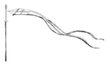
Jacks
Are hoisted on a Staff at the Bowsprit End, and made in the same Manner (those for Men of War) as the Union Flags are; and those for Naval Vessels have the Arms of the Office the Vessel belongs to, placed in them.

Standard
Hoisted at the Main-top-mast-head when His Majesty is on board; when the Admiral of the Fleet hoisteth it at the Mizon-top-mast-head it is for all Flag Officers. When in the Mizon Shrouds the English Flags only; and when put abroad at the Mizon-top-mast-head and a Pendant at the Mizon Peek, then the Flags and Land General Officers; when on the Ensign Staff, the Vice or Rear Admirals of the Fleet, or those that Command in the second or third Posts, are to come aboard.
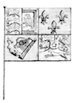
Vanes
Are allowed Boatswains to put at the other Mastheads, where the Pendant don't fly.

Comeings
Are Comeing Carlings, that go Fore and Aft on the middle and upper Deck, as far as where the Grateings are; the Midship Edge has a Rabbit for the Grateings to lodge in, and the Edge is as much above the Deck, as the Deck is thick, to stop the Water. The Hatchways on the Gun Deck has Comeings round them, but Comeing Carlings is only Plank sayd flat on the Deck, so thick as to turn the Water.
Commanders
Are used by the Riggers or Seamen, with which they drive in the Fidds for Spliceing Cables, &c.

Compasses
Azimuth
Is an Instrument made in a large Brass Box, with Imbers and a broad Limb, having Ninety Degrees diagonally divided, with an Index and Thread to take the Sun's Amplitude or Azimuth, in order to find the Difference between the Magnetical Meridian and the Sun's Meridian, which shews the Variation of the Compass.
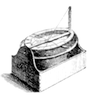
Brass Box
They stand in the Bittacle, that the Men at the Steering Wheel may see to keep the Ship in her right Course.

Hanging
Flag Officers are generally furnished with them to hang up in their great Cabbins.

Cond
Is to Guide or Conduct a Ship in her right Course; he that Conds gives the Word of Direction to the Men at the Steering Wheel how to Steer.
Cook
Is a Warrant Officer that dresses the Ship's Companys Victuals.
Cookroom
Is variously seated, generally in the Fore-Castle, but in some great Ships it is on the Middle Deck, and in lesser on a Plat-form under the Deck.
Cordage
Is in general all the Ropes belonging to the Standing or Running Rigging of a Ship, and is also distinguished by,
Cablelaid
Is made with nine Strands, (i. e.) the first three Strands are laid slack, and then three of them being closed together makes a Cable or Cablet; the same for Tacks, but they are laid tapering.

Hawserlaid
Is made only with three Strands.

Stays
Are Cablelaid, but made with four Strands as Cables are with three, with an Addition of an Heart which goes through the Center of them.
Counter
Is the arching Part of the Stern above the Wing Transom, and the lower is from the Wing Transom to the Upper Deck, and the other is from the Upper Deck to the lower Edge of the Ward-room or Great Cabbin, the Projecture of which, is lower almost the Quadrant of a Circle.
Course
The Point of the Compass on which a Ship Steers.
Courses
In a Ship are her low Sails, and when she Sails under them only, they say she goes under her Courses.
Coxswain
Is the Person who sits in the Box at the Boat's Stern, Steers her, hath the Direction and Command of the Boat's Crew.
Coyle
When Cables or Ropes are placed in a round or oval Ring, one fake (or turn) upon one another, so that they may the more easily be stowed out of the Way, and also run out free and smooth without Kinks as they call them, i. e. without twisting or doubling, then they are said to be coyled up.

Crabb
An Engine of Wood with three Claws placed on the Ground like a Capston, and is used at launching or heaving Ships into the Dock.

Cradle
A Frame of Timber fayd to the Outside of a Ship under her Buildge, for the more securely and commodiously Launching her.
Craft
Are small Vessels, such as Ketches, Hoys, Smacks, &c. they call all such small Craft.
Cramps
Short Pieces of Iron, whose Ends being turned down, are let into Stones, and melted Lead being run into the Holes, binds two Stones fast together.

Cranes
Are placed on the Wharfs for hoisting up Anchors, Timber, and other bulky Weights.

Cranes Chimney
For hanging a Kettle or Pot on in the Cook Room.

Cranes Gangway
Are hung in the Wast of the Ship, and when Deals are laid on them, make a Gangway from the Quarter Deck to the Fore-Castle.
Crank
A Term for a Ship that cannot bear her Sails for fear of overseting, or cannot be brought on Ground without Danger of injureing her Body.
Cranks
Bell
Made fast to the Stock, for ringing it.

Lantern
Supports the Lanterns, either at the Ship's Stern, or at the Round Top.

Creeper
Made like a Grapnel, but without Flooks, the Use of which is to recover sunken Stores that may be lost over-board.

Cringles
Are small Pieces of Rope spliced into the Body Rope of Courses and Topsails, and are,
First, The Bowline Cringle, to which the Bowline Bridle is fastened.
Second, Leech Cringle, where the Leechlines and Clewgarnets are made fast.
Third, Reef Cringle, to which is fastened the Reef-tackle Tye.
There are also Cringles made of Iron, which are Rings to go round the Stays of Hoys or Yachts, and are seized to their Fore-sails and Jibbs for the more easy hoisting them.
Crossjack
Is a Yard flung at the upper End of the Mizon Mast under the Top; it hath no Halyards belonging to it; its Use is to spread and hawl Home the Mizon-top-sail Sheats.
Crosspiece.
Is a great Piece of Timber which goes a-cross the Bitts of a Ship, and about which several Turns of the Cable are taken when she Rides at Anchor.
Crosstrees.
Are Pieces that go a-cross the Tressle-trees at each of the standing Mast-heads; there are two and three to a Top-mast.
Crotches
Are very crooked Pieces of Timber in the Hold or Bread-room, from the Mizon Step Aft, fayd cross the Keelson to strengthen the Ship in the Wake of the half Timbers.
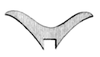
Crotches Iron
Are used on board Sloops or Long Boats, which go with Shoulder of Mutton Sails, for their Boom to lodge upon.

Crows
Are made with a Claw at one End, and a sharp Point at the other, and used for heaving or purchasing great Weights.

Crowfoot
Are small Ropes put through the Holes of dead Eyes, and divided into several Parts, and spreads from the Rim of the Tops, pointways to a Tackle on the Stays, for preventing the Topsails getting foul of them.

Cuddy
Is a Place upon the Quarter Deck Afore the Captain's Cabbin. When an Admiral is on board, it is divided into Partitions for the Secretary's Office.
Culm
Is used for burning Plymouth Marble Stone, or Chalk, to make Lime.
Davit
A Piece of Timber in a Ship having a Notch at one End, in which, by a Strap, hangs a Block called the Fish Pendant Block, the Use of which is, to hawl up the Flook of the Anchor, in order to fasten it to the Ship's Bow; this Davit is shiftable from one Side to the other as occasion serves.
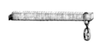
Dead Eyes
Are a Kind of Blocks having three Holes in them, and through them the Lanyards go, which make fast the Shrouds below to the Chains; the Fore, Main and Mizon Stays of a Ship are set taught by dead Eyes, but they have only one Hole through which the Lanyards have several Turns passed through them.
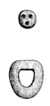
Crowfoot
Has a great many Holes bored through them, wherein is reeved the Crowfoot for the Top.

Ironbound
Serves (in Case a Chain Plate gives way) with being hooked to a Shroud Ess as a Chain Plate.

Dead
Reckoning
Is that Estimation, Judgment or Conjecture which is made where a Ship is, by keeping an Account of her Way by the Logg, in knowing the Course they have steered by the Compass, and by rectifying all the Allowance for Drift, Leeway, &c. according to the Ship's Trim, so that this reckoning is without any Observation of the Sun, Moon and Stars, and is to be rectified as often as any good Observation can be had.
Riseing
Are Pieces of Timber put on the Keel one upon another Afore and Abaft; there is more or less according as the Ship is either full or lean; if the latter, the dead Wood is so put that the Floor Timbers would be within a Square.
Water
Is the Water just behind the Stern of a Ship, and if a great Eddy follows her, they say, she makes much Dead-water; this is called so, because it doth not pass away so swiftly as the Water running by her Side.
Deals Ordinary
Are used by the House Carpenters and Joyners for Flooring, making Bulk-heads, &c.
Deals Prusia
For Ships upper Works, or laying their Decks.
Deck
Is a planked Floor, on which the Guns lye, and Men walk. In great Ships there are three Decks, Upper, Middle and Gun, besides a Quarter Deck, which reaches from the Bulk-head of the Round-house, to very near the Main-mast.
Diall
A Square Piece of Wood, framed and made not unlike the Dial Plate of a Clock, whereon the Hours are painted, fixed to the Mizon-Mast, and after the Ship's Bell being struck, they put the Hand of it to the Hour.
Dipping Needle
A Magnetical Needle, so hung, that instead of playing horizontally, and pointing out N° and S°, one End dips and inclines to the Horizon, the other Points to a certain Degree of Elevation.
Division
Or Squadron, being Part of a Fleet, commanded by a Flag Officer or Commodore.
Dock
Is made by the Side of the Harbour for taking in Ships, and Men to work in, in order to build or repair them.
A Dry-Dock, the Water is kept out by Gates, 'till a Ship is built or repaired, but after that, can easily be let in to Float and Launch her.
A Wet-Dock is a Place where a Ship lies a Float at all Times of Tide to be repaired in.
Dogger
A small Vessel built after the Dutch fashion, with a narrow Stern, and commonly but one Mast.
Doggs
Fire
To burn Wood on.

Timber
Are drove into Timber for Horses to draw it about the Yard, or to the Saw-pits.

Drabler
Made of Canvas, to be added to a Bonnet when there is need of more Sail.
Drags
Are for clearing the Aprons of the Docks of the Filth, that the Gates may the better, and without Difficulty, open and shut.

Drift Sail
Used under Water, veered Right out a-head, upon the Sea in a Storm, being to keep the Ship's Head Right upon the Sea.
Drive
A Ship is said to drive, when her Anchors will not hold her fast; to prevent which, they Veer out more Cable, (for the more she has out, the surer and safer she Rides) or else they let go more Anchors.
Earing
Is that Part of the Boltrope which at the four Corners of the Sail is left open in the Form of a Ring; the two uppermost of which are put over the Yard-Arms to fasten the Sail to the Yard: And into those at the Foot, the Tacks and Sheats are seized or bent to the Clews.
Ease the Ship
Done by slackening the Shrouds when they are too stiff set up.
Eddy
When the Water turns back contrary to the Tide.
End for End
When a Rope is all run out of the Block, &c.
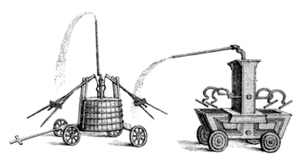
Engines Water
Are for extinguishing any Fire that may happen on board a Ship, when Breaming, Cleaning, or Graving, on which occasion a Number stand ready filled with Water on each Side of the Dock, and Mann'd, to prevent any fatal Accident of Fire.
Esses
Kettle
For a Kettle or Pot to hang on in the Cook-Room.

Shroud
To hook into an Iron-bound dead Eye, to serve as a Chain-plate in Case of Need.

Eye
The Compass or Ring left in the Strap of any Block, which is called the Eye of the Strap.

Fagg
The End of those Strands which do not go through the Tops, when a Cable or Rope is closed, are called Faggs.
Fake
Is one Round or Circle of a Cable or Hawser coyled up out of the Way.
Fall
That Part of the Rope of a Tackle which is hauled upon, is called a Fall. Also when a Ship is under Sail, and keeps not so near the Wind as she should do, they say, She Falls off: Or when a Ship is not flush, but hath riseings of some Parts of her Decks more than others, it is called Falls.
Fashion Pieces
Are two Compassing Pieces of Timber, into them are fixed on each Side, the Transom.
Fathom
A Line of small Rope cut six Feet long, and used for measuring the Length of Cables and Cordage.
Fend
For defending or saving a Boat from being staved against the Rocks, Shore, or Ships Sides.
Fenders
Signifies any Pieces of Junk or old Cable, hung over the Ship's Sides, to keep others from rubbing against her. Boats have also the same.—Those made of Iron are for the Hearth in the Cook-Room.
Fidds
Spliceing
Are used to splice or fasten Ropes together, and are made tapering at one End; and so are those made of Wood, which are used for spliceing Cables. So there is also one goes through the Heel of the Top-mast, which bears upon the Chess-trees, and are called

Topmast
Top-mast Fidds.

Files
Are for wheting Saws, and used by the Smiths in their Works.
Fire
Fork For the Use of the Cook-Room.
Shovell
Tongs
Fishes
Are Pieces of Timber put upon the Masts and Yards if sprung, or for strengthening them, least they should fail in Stress of Weather.
Fishing Geer
A Sett which consists of Nets, Lines, Hooks, &c. is allowed to each Ship which goes to the East and West Indies, Virginia, Guinea, New England, New York, St. Helena, and the Cape, and South Carolina.
Fish Pendant
Hangs at the End of the Davit, by the Strap of the Block, to which the Fish Hook is spliced, by which means the Flook of the Anchor is hawled up to the Ship's Bow or Chanwaal.
Flareing
When a Ship is a little housing in, near the Water, and the upper Work hangs over, or is broader aloft.
Flatts
Is a Midship, and as many Timbers Afore and Abaft, that has no more riseing than the Midship Flatt, are all called Flatts.
Flitting
Altering or removing a dead Eye in the Low or Top-mast Shrouds and Backstays, either to lengthen or shorten them, is called Flitting.
Float
Is an Instrument used by the Smiths to make their Work smooth, instead of a File.
Floor
Are those Timbers lying transverse to the Keel, being bolted through it; they are the first laid in the Order of building, and where the Floor sweep begins, there the Streight one Ends; and when there is a great many Flatts, that has little or no rising, than we say, She carries her Floor a great Way Fore and Aft. And strictly taken, is so much only of her Bottom as she rests upon, when lying a-ground.
Flown Sheats
A ship sails with Flown Sheats when they are not hauled Home, or close to the Blocks; they say when in a Gust of Wind, Let fly the Sheats, for fear the Ship should overset or spring her Top-masts.
Flush
When the Deck of a Ship has no Bulk-heads from Stem to Stern, they say, Her Decks are Flush Fore and Aft.
Foot waaling
Is all the Inboard Planking, from the Keelson upwards to the Orlop Clamps.
Fore Castle
Is that Part where the Fore-mast stands, and it is divided from the Rest of the Floor by the Bulk-head, in which generally the Cook-Room is built; as are the Boatswain, Carpenter and Cook's Cabbins.
Fore Foot
Is the foremost Part of the Keel, that first takes the Ground.
Forelocks
Are little flat Wedges made of Iron, used at the Ends of Bolts to keep them from flying out of the Holes.

Fore reach
A Ship fore reaches upon another, when both sailing together, one Sails better, or out goeth the other.
Forks
Breeming
Used by the Caulkers, to hold the Furz Faggots, when on fire, for cleaning Ships bottoms, when to be graved.

Flesh
For taking Pieces of Beef or Pork, when dressed by the Cook, out of the Furnaces.

Foul
When a Ship has been long untrimmed, so that Grass, Weeds, or Barnacles stick, or grow to her Sides under Water, she is then said to be Foul; also a Rope is Foul when it is either tangled in its self, or hindered by another, so that it cannot run or be over hawled.
Foul Water
A Ship is said to make Foul-water, when being under Sail, she comes into such Shoal Water, that though her Keel do not touch the Ground, yet she comes so near it, that the Motion of the Water under her, raiseth the Mud from the Bottom.
Founder
A Ship is said to Founder, when by any extraordinary Leak, or by a great Sea, breaking in upon her, she is filled with Water, that she cannot be freed of it, nor able to swim under it, but sinks with the Weight thereof.
Free
The Pump Frees a Ship when it throws out more Water than Leaks into her; but on the contrary, when it cannot throw out the Water so fast as it Leaks in, they say, The Pump cannot Free her; also bailing or lading Water out of a Boat, is called freeing the Boat.
Freeze
When Ships Quarters and upper Works are painted with Trophies, &c. then it is said they are freezed.
Fresh Shot
Signifies the falling down of any great River into the Sea.
Funnels
Copper
Are used as a Chimney, where Commanders have a Stove in the Great Cabbin.
Lead
Are fixt in the Galleries of Ships.
Furl
For wrapping up and binding any Sail close to the Yard, which is done by hauling upon the Clew-lines, Bunt-lines, &c. which wraps the Sail close together, and being bound fast to the Yard, with the Gaskets, the Sail is furled.
Furnaces
Copper
For dressing the Ship's Companies Victuals in, or heating Tar at the Rope Yard.

Iron
For heating Pitch, Tar or Turpentine for the Caulkers paying Ships Bottoms or Sides.

Furring
Is the regular fashioning out any Part when the main Piece of the Material is scanty, either by Defects, Wains, or want of Thickness, then a Piece of the same is put behind it, to make good its Thickness, which is called a Furr.
Furz Faggots
For Breeming Ships when in the Dock to be cleaned, or under Repair.
Futtocks
There are lower, second, third and fourth, and these Timbers being put together, make a Frame-bend.
Gage
When one Ship is to windward of another, she is said to have the Weather Gage of her.
Gages
Are used by the Smiths, for gageing Bolts, so as to make them of a true and right Size.
Gale
When the Wind blows not so hard but that a Ship can carry her Topsails a Trip, (that is, hoisted up to the Highest) then they say it is a Loom Gale. When it blows very strong, they say, it is a stiff, strong, or fresh Gale. When two Ships are near one another at Sea, and there being but little Wind blowing, one of them finds more of it than the other, they say, that the Ship Gales away from the other.
Gallery
Is that beautiful Frame, which is made at the Stern of a Ship without-board, into which there is a Passage out of the Admiral's or Captain's Cabbin, and are for stately Shew and Ornament to the Ship.
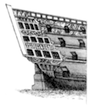
Gally
Is a Place in the Cook-Room, where the Grates are set up, and in which they make Fires, for boyling or roasting the Victuals.
Gammoning
Are several turns of Rope taken round the Bowsprit, and reeved through Holes in the Knee of the Head, for the greater Security of the Bowsprit.
Gang
To man the Boat, is to put a Gang of Men (which is a Company) into her, who are called the Boat's Crew.
Gangway
A Deal Plat-form, about three Feet wide in great Ships, ranging in the Wast from the Quarter Deck to the Fore Castle, over the upper Deck Guns, for a free Passage for the Officers and Men, in working the Ship either at Sea or in an Engagement; and so is the Walk made from the Ladder to the Quarter Deck, called the Gangway, and lies even with the Gunwale.
Garboard Strake
Is the Plank next the Keel, one Edge of which is run into the Rabit made in the upper Edge of the Keel on each Side.
Garnet
Is a Tackle in a Ship having a Pendant coming from the Main-mast, with a Block well seized to the Main-stay, just over the Hatchway, to which a Guy is fixed to keep it steady; and at the other End is a Long Tackle Block, in which the Fall is reeved, that so by it any Goods or Casks may be hauled and hoisted into, or out of the Ship; when this Garnet is not used, it is fastened along by the Stay.
Gaskets
Made out of Junk or Rope Yarns, are for fastening the Sails to the Yards when furled up.
Gin
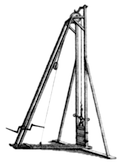
Is a Machine made for driving Piles fitted with a Windlass and Winches at each End, where eight or nine Men heave, and round which a Rope is reeved, (that goes over a Wheel at the Top) whose End is seized to an Iron Monkey, that hooks to a Beetle of different Weights, according to the Pile they are to drive, being from Eight to Thirteen Hundred Weight, and when hove up to a cross Piece near the Wheel, it unhooks the Monkey, whereby the Beetle falls on the upper End of the Pile, and forces the same into the Ground, and the Monkey's own Weight over-halls the Windlass, in order for its being hooked again to the Beetle.
Girding-girt
A Ship is Girt, or hath a Girding Girt, when her Cable being so tight or strained upon the Turning of the Tide, she cannot go over it, but lies a-cross the Tide.
Glasses
Watch
Being four Hours, governs them at Sea, for changing the Watch.

Half Watch
Runs two Hours.

Half Hour
For keeping the Time of Day and Night.

Half Minute Quarter Minute
[Transcriber's note: Illustration, Even smaller timers.] By them they count the Knots, when they heave the log, in order for finding what Way the ship makes through the Sea.
Glew
Used by the Joyners and House Carpenters in their Works.
Goreing
A Sail is cut Goreing, when it is cut sloping by Degrees, and is broader at the Clew than at the Earing, as all Topsails and Topgallant Sails are.
Gooseneck
A Piece of Iron fixed on the End of the Tiller to which the Lanyard of the Whipstaff, or the Wheel Rope comes, for steering the Ship.

Goosewing
When a Ship Sails before, or with a Quarter Wind in a fresh Gale, to make the more Haste, they Launch out a Boom and Sail on the Leeside, to give the Ship more Way, and a Sail so fitted is called a Goosewing.
Grapnells
Boat
Are a Kind of Anchors being made with four Flooks for Boats to ride by.

Fire & Chain Hand & Chain
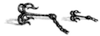
Are made with barbed Claws instead of Flooks; are used to be thrown into an Enemy's Ship, to catch hold of Rigging or any other Part of the Hull, in order for boarding her.
Grates
Are put up in the Cook-Room to make Fires in for dressing Victuals.

Grateings
Are a Kind of Lettice-work formed of Ledges and Battins, the square Holes of which being three or four Inches wide, are for the current footing of Men over the Hatchways, to give Air alow, and Vent for the Smoke in an Engagement.
Grate Irons
Are to loosen the Mud and Sullage of the Docks, which lodge in the Grates of the Drains.
Graving
Is bringing a Ship a-ground, and then burning off with Furz, Reed, or Broom, all the Filth and Foulness that Sticks to her Bottom without board, in order to pay her anew.
Gripe
Is a Piece of Timber fay'd against the lower Piece of the Stem, from the Fore-mast End of the Keel, reconciling with the Knee of the Head; its Use is to defend the lower Part of the Stem from any Injury, but is often made the larger to make the Ship keep a good Wind.
Gromets
Are small Rings formerly fastened with Staples to the Yards, to make fast the Gaskets, but now never used.
Ground-tackle
Is a Ship's Anchors, Cables, &c. and in general whatever is necessary to make her ride safe at an Anchor.
Grounding
Is bringing a Ship on Ground to be clean'd, trim'd, or have a Leak stop'd.
Ground toes
Are what come from the Hemp when dressed at the Hatchel for the Spinners, and out of which Deepsea, Hamburgh, or Cabbin Lines, Marlin, and white Ocham are made.
Gudgeons
Are the Eyes drove into the Stern-post, into which the Pintles of the Rother go to hang it.

Gunner
Has the Charge of all the Ordnance, Ammunition, Small Arms, and other Stores allowed the Ship in his Province.
Gunwale
Is the Top of the Side in the Wast of all Ships, &c. on the Fore-castle, where there are no Ports, is a Plansheer, over which the Guns are fired, but in Boats all Fore and Aft.
Guy
Is any Rope, used for keeping off Things from bearing or falling against the Ship's Side, when they are to be hoisted in; that Rope also which is made fast to the Fore-mast at one End, and seized to a single Block at the Pendant of the Garnet, is also called the Guy of the Garnet.
Haile
Is either to call to a Ship, to know from whence she is, where bound, salute her, or to wish her Health.
Hair Loose
Used by the Bricklayers in their Mortar, and by the Caulkers to lay on Sheathing Board.
Hair Spunn
Used by the Caulkers for Caulking the Seams of Ships.
Halberts
For the Use of the Warders, that do Duty at the Yard Gate, and Jetty Heads.

Hallyards
Are those Ropes by which they hoist up all the Topsail Yards; the Cross Jack and Spritsail Yard have none, because they are always slung.
Hammacoes
Are made of Canvas for the Seamen to lie in.
Hammers
Clench
Are made with hardened Edges, to clench Bolts, &c.

Fidd
Their Handle is made tapering in the Form of a Fidd.

Hack
Are for notching the Edges of Hacksaws to saw Bolts.

Picking
Are used by the House Carpenters for dressing Grindstones, and Bricklayers on slateing and tyleing.

Sett
Are used by the Mast-makers for setting up Iron Hoops on Ships Masts, Yards, &c.

Hances
Falls or Descents of the Fife Rails which are placed from the Stern down to the Gangways.
Hand Cuffs
Are for securing Pirates when taken Prisoners.

Hand Hooks
Are used by the Smiths to turn or twist square Iron.
Hand Screws; Double and Single
Used for canting Timber, or other weighty Stores.

Handsplices
Used by the Smiths to drive in any Work that is hooped up, to cant or turn it.
Handspikes
Are used, at Sea to traverse the Ordnance, or heave withal at a Windlass in small Ships or Vessels to weigh the Anchor; and in the Yard, are used by the Labourers, in stowing or canting Timber, &c.

Harbour
Where Ships may ride safe at an Anchor.
Harpings
Are the foremost Waal Pieces, rounding from the Stem Aft, either in Boat or Ship.
Hasps
For making fast Doors.
Hatchbarrs
Are for barring down the Hatches in Time of Fight.
Hatchells
Are made use of in the Rope Yard, being set with Teeth for dressing and preparing the Hemp to make it fit for spinning white Yarn.

Hatchets
Are allowed for cutting Rigging, or other Ropes and Services which they are proper for.

Hatchways
There are three, all on the Gun Deck, the Fore, Main, and After.
Hawl
Is the same Thing as what we call pulling a-shore.
Hawse
Bags
Are made of Canvas, tapering, stuffed full of Ocham, and are generally allowed small Ships, to prevent the Seas washing in at the Hawse Holes.
Pieces
Are large Pieces of Timber in the Bow of the Ship, in which are made two large Holes on each Side for the Cables to pass through.
Plugs
Are to put into the Holes for preventing the Water washing into the Manger.
Hawser
Is a Rope consisting only of three Strands, and used for Shrouds, &c. and there is a Kind of small Cablet, which consists of nine Strands, which is vulgarly called a Hawser, being generally used for transporting or warping Ships, &c.
Head Sails
Are those Sails which belong to the Foremast and Bowsprit, because they govern the Head of the Ship, and make her fall off, or keep out of the Wind, and are in quarter Winds the chief drawing Sails.
Head Sea
Is when a great Wave or Billow of the Sea comes right a-head of a Ship when in her Course.
Hearth Staves
Are to clear the Smith's Fires, or raise the large Cinders.
Heave
Signifies to throw or fling any Thing over-board; also turning about the Capston, is called heaving at the Capston; likewise when a ship being at Anchor, riseth and falleth by the Force of the Waves, she is said to heave and set.
Heel
That Part of the Foot of any Mast, which is cut away in order for steping, is called the Heel of the Mast; but the Heels of Topmasts are square, through which they put the Fidd; also if a Ship lie on one Side, whether she be a-ground or a-float, they say she heels.
Helm
Is a Piece of Timber, fastened into the Rother Head, and comes as forward as the Bulk Head of the Gun Room, and he that steers the Ship, holds the Whipstaff in his Hand, which is fastened into the Helm, but lately they are left off, and Steering Wheels are made use of.
The Terms of Art belonging to the Helm are,
1 Port the Helm,—
That is, put the Helm over to the left Side of the Ship.
2 Starboard the Helm,—
That is, put it to the Right Side of the Ship.
3 Right the Helm, or Helm a Midship,—
That is, keep it even with the Middle of the Ship.
4 Bear up the Helm,—
That is, let the Ship go more large before the Wind.
5 Bear up round,—
That is, let the Ship go directly before the Wind, in the Middle between her two Sheats.
Helve
A Handle for Axes, Hammers or Mauls.
Hemp
Is brought from Riga, Queenbro', Russia, Petersburgh brock, or Konninsburgh, is received into the Rope Yard, and wrought up into Cordage, Lines or Twine.
Hencoops
Are for keeping Fowls in.
Hinges
Butt
Are used by the Joyners for hanging Table Leaves, &c.

Casement
Used for hanging them.

Dovetail
For light Doors or Lockers.

Ess
For light Doors or Lockers.

Garnet Cross
For hanging large Doors or heavy Scuttles.

Ditto Dozen
For hanging small Scuttles.

Locker joynts
Are used for small Lockers.

Port
For hanging Ships Ports.

Riseing
For Cabbin Doors, &c.

Scuttle
For Scuttles.

Side
For Cabbin Doors, &c.

Hitch
Is a Word to catch hold of any Thing with a Hook or Rope, and to hold it fast; thus when a Boat is to be hoisted in, Hitch the Tackles into the Ring Bolts of the Boat; so Hitch the Fish Hook to the Flook of the Anchor when they are about to weigh.
Hoist
Is for hawling up any Thing into the Ship, or getting up a Topmast, Yard, &c.
Hold
Is all that Part of a Ship which lies between the Keelson and lower Deck, wherein are Bulk-heads, and they divided, are the Steward Room, Powder Room, Bread Room, and Boatswain and Carpenter's Store Rooms.
Hold Fasts
Are made of Iron, used by Joyners, House Carpenters, or Carvers; goes through their Benches to hold fast such Work as cannot be finished by its being held in the Hand.

Hold Off
Is a Term used in weighing the Anchor, when the Voyal is about the Capston; for if the Cables are stiff, or have lain long in Oazy Ground, unless that Part of the Cable heaving in, be hawled away hard by the Capston, the Voyal will surge or slip back, therefore must be hawled away as fast as it comes in, so as that it may keep close about the Whelps; and this Work is called holding off, and may be done by Hand with a small Cable; but in all great Ships, they hold off with Nippers, and in small Craft they bring the Cable to the Jeer Capston, or about a Windlass.
Hood
Is made of Copper, to go on the Top of the Chimney, (which is placed on the Fore-castle for carrying the Smoke out of the Cook Room) and to shift as the Wind does, that it may always fly out to leeward.

Hooks
When the Edges of Planks are fayd into one another thus, it is said to be Hook and Butt.

Hooks
Boat
Are for fending or setting off Boats.

Cann
Are for hoisting Casks out or into the Ship.

Cant
Are for turning or canting large Masts, having at one End a Ring for a Hand-spike to go through, and at the other a Claw, which penetrates into the Masts when they are made Use of to turn them for Survey, &c.

Fish
Is to take hold of the Shank of the Anchor when to be hove up to the Bow.

Flesh
With which the Cook takes the Beef and Pork out of the Furnaces.

Gamming
Used when Gammoning the Bowsprit.

Kettle
To hang the Kettles or Pots on over the Fire.

Laying
Are used by the Rope-makers when laying of Cordage.

Port
Are drove into the Ship's Sides, on which the Ports hang.

Puttock
For the Plates to hook upon.

Rave
Used by the Caulkers for picking the old Ocham out of the Seams of Ships, &c.

Sheer
Are great Hooks let into, or put on the Main and Fore Yard Arms of Fireships, in order to fasten into an Enemy's Shrouds, Sails or Rigging.

Spinning
Are drove into the Rails for the Rope-makers to hang their Threads on, as they spin them.

Tackle
Spliced into the Straps of Blocks or Ends of Rope.

Hook Pinns
Are Bolts made with a shoulder at one End, and used by the House Carpenters in frameing, which they drive through the Mortice's and Tennants of the Work prepared for Building or Wharfing.

Hoops Iron
Anchor Stock Are drove round them in order to their greater Strength and Security.

Capston

Masts
Hoops Wood
Mast
Nailed round them on each Side of the Wooldings.
Top
Fastened and nailed round the Rims of the Top.
Horse
Is a Rope in a Ship made fast at each Yard Arm, and on which the Men stand to furl the Sails; and is also a Frame of Wood the Riggers make use of to woold Ships Masts, which hath a Rowl fixed in it, whereon several Turns are taken for heaving the Rope taught round the Mast before the Nails are drove through the Rope.
Horse Irons
Used by the Caulkers, when they cannot come at a Seam with their common Irons.

Hounds
Are that shouldered Part of all Masts over which the Shrouds are put; and all above that is called the Mast-head.
Housed in
When the Breadth of a Ship's Bearing is brought in too narrow to her upper Works, or pinched in too much, she is Housed-in.
Hull
Is the main Body of a Ship without either Masts, Yards, Sails, or Rigging.
Hullock
Is some small Part of a Sail, let loose in a great Storm; it is chiefly used in the Mizon to keep the Ship's Head to the Sea when all the rest of the Sail is made up, except a little at the Mizon Yard Arm.
Hummers
Used by the Scavengers for rakeing up the Filth that comes off from the Ships Bottoms upon their being scrub'd, which settles at the Bottom of the Dock, or upon the Apron near the Gates; are made of Wood, not unlike a Rake.

Jeer
Is a large Rope reeved through treble or double Blocks, lashed at the Mast-head and on the Yard, which are to hoist or lower the Low-Yards.
Jewel
Made not unlike the Ring of an Anchor, and of Substance, that its Weight may carry it down, to purchase any Thing that is heavy under Water, when two Parts of a Cable or Rope are put through it, and as they heave, the Jewel slides down, jams the Bite, so as that it may not slip off the Purchase the Rope is about.
Jews Harp
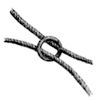
Are made of Iron, and of such Substance and suitable Strength, as to be sufficient to hold the Pendant Chain where the Moaring Cable is bent to the Ring, and secured by a Forelock; the other End, which is round, takes the two short Pendant Chains the Rings of the Anchors are fastened to; as is the Wood Buoy and Chain.
Iron
Orground, Stockholm and Spanish, used by the Smiths for making Anchors, Bolts, Hoops, and for all other Services where it is proper to be used in building Ships, or about the Docks, Wharfs, and Yard, &c.
Iron Sick
A Ship or Boat is said to be Iron-sick, when her Bolts or Nails are so eaten with Rust, and so worn away, that they make hollows in the Planks, so as to make the Ship Leaky.
Junk
Is old Cables cut into short Lengths, and issued to Boatswains for making Swabs, Platts and Nippers; to Carpenters of Ships, and to poor People to be picked into Ocham, for Caulking Ships Sides, Decks, &c.
Jury Mast
Whatever is set up in the Room of a Mast lost in a Fight, or by a Storm, and fastened into the Partners, and fitted with a lesser Yard, Sails and Ropes, is called a Jury Mast, &c.
Jutty heads
Platforms standing on Piles which are made near the Docks, and project without the Wharfs for the more convenient docking and undocking Ships.
Keckle
When the Cables of a Ship gaul in the Hawse, they wind old Rope about them, which is called Keckling.

Kedging
When a Ship is brought up or down in a narrow River, and the Wind contrary to the Tide, and yet is to go with the Tide, they use to set their Fore Course, or Fore-top-sail and Mizon, that so they may flat her about; and if she happens to come over too near the Shore, they have a small Anchor in a Boat with a Warp fastened to it from the Ship, which Anchor they let fall, in order to wind and turn her Head about; and this Work is called Kedging.
Keel
The principal Piece of Timber first laid when a Ship is to be built, her whole Length from the lower Part of her Stem to the lower Part of the Stern Post; into this are all the lower Futtocks fastened and bolted Fore and Aft; to the under Part of which, a false Keel is brought on.
Keelers
Are small Tubs, which hold Stuff for the Caulkers to grave Ships Bottoms, on their being hawled on the Ways, or into the Dock.

Keelson
A principal Piece of Timber fayd within Side of the Ship, cross all the Floor Timbers, and it being adjusted exactly over the Keel with suitable Scarphs, it thereby strengthens the Bottom of the Ship.
Kerfe
The Furrows made by a Saw in Timber, Plank, Deals, &c.
Kersey
Is allowed to make Waste Cloths, Top Armours, or other Accommodations on board a Ship, Lining entering Ropes, &c.
Kettles
Double
With two Covers, for dressing Provisions in, when a Ship's Company is small.

Fish
Are single, and used for several Services on board, and for the Mens Provisions.

Small

Kevels
Are Pieces of Plank fayd against the Quickwork on the Quarter Deck, in the Shape of a Semi-circle, for belaying the running Rigging to.

Kinks
When Cables or Cordage is new, or too hard laid, it is stubborn, and very apt when handed to be coyled to take in Turns, which is called Kinking.
Knee of the Head
Is commonly called the Cut-water, it supports the Lyon, and all the Rail-work, &c. of the Head.

Knees
Iron
Serve as Standards in some Parts of the Ship; and are also used in Boats, to keep the Thauts fast to the Side of the Boats.

Wood
Crooked Timbers which brace and bear the End of the Beams, &c. to the Ship's Side, and are called either Hanging, Lodging, Raking, or Square, and fixed to every Beam where they carry Guns.

Knettles
Two Pieces of spun Yarn put together untwisted.
Knight Heads
Are two Pieces of Timber to which the Halyards and the Top Ropes are belayed.
Knots
There are two Sorts of Knots used at Sea; one they call a Bowline Knot; by this the Bowline Bridles are fastened to the Cringles, and will not slip. The other is a Whale Knot, which is a round Knob or Knot made with three Strands of a Rope, and serves for the Topsail Sheats and Stoppers. The Divisions also of the Logline are called Knots, and are usually seven Fathom asunder; and then as many Knots as the Logline runs out in Half a Minute, so many Miles the Ship sails in an Hour.
Labour
When a Ship tumbles or rowls at Anchor, or under Sail at Sea, she is said to Labour.
Ladders
Those made of Wood are for going from one Deck to another; and those of Ropes, hung over the Stern of the Ships, are to enter out of the Boat, when the Weather is foul and the Sea high; as are those at the Side called Accommodation.
Ladles Pitch
Are used at Sea by the Carpenters of the Ships, to hold Stuff, to pay the Seams when caulked.

Land Fall
Signifies to fall in with the Land; thus, when a Ship out at Sea, expects to see Land in a little Time, and it so happens that she doth, they say, they have made a good Landfall.
Land Laid
When a Ship is just got out of Sight of the Land.
Land Lock'd
A Ship rides Land Lock'd when at an Anchor in such a Place, where there is no Point open to the Sea, so that she is safe from the Violence of Wind or Tide.
Land shut in
Is when another Point of Land hinders the Sight of that which a Ship came from.
Land to
Is when a Ship lies so far off from Shore that they can but just see Land.
Lanterns
Poop
Are glazed with Stone-ground Glass, and placed at the Ship's Stern.

Top
Are glazed with Stone-ground Glass; stands on a Crank at the Main-top when an Admiral or Commodore is on board.

Braces
Are to steady the Lanterns.
Girdles
Go round them.
Hand
Are allowed the Boatswain and Carpenter.

Powderroom
Are glazed with Stone-ground Glass, placed at the Bulk-head of the Magazine, and stands over a Wood Cistern lined with Lead, which is kept full of Water.

Storeroom
A triangular Light placed at the Bulk-head of the Boatswain and Carpenter's Store-Rooms.

Lanyards
Are Ropes reeved through dead Eyes of all Shrouds and Chains which are to slacken or set up the Shrouds. The Stays are also set taught by Lanyards; and those which fasten the Stoppers to the Cables, are called Lanyards.
Larboard
The Left Hand Side of the Ship when you stand with your Face to the Head.
Large
A Ship goes or sails Large, when she goes neither before the Wind or upon a Wind, but as it were, quartering between both; wherefore Large, Quartering, Veering or Lasking, are all of the same Signification.
Lashed
Signifies made fast.
Lashing
Is twice laid Cordage made out of old Rigging, and used for Lashing Booms, and other uses on board; and by the Boatswain of the Yard for rafting Timber, Masts, &c.
Lasking
When a Ship sails neither by, nor directly before the Wind, she is said to go Lasking, which is much the same as Veering, or going with a quarterly Wind.
Latchetts
Small Line (made like Loops) is sewn to a Bonnet or Drabler for lacing them together.
Laths
Are used by the Bricklayers on the Roofs and Ceiling of Houses.
Launch
Is to put out; thus they say, Launch the Ship off the Stocks, or out of a Dock, Launch the Boat, Launch the Davit in or out, Launch out the Capston Bars; also when they have hoisted up a Yard high enough, they say in another Sense, Launch ho; that is, hoist no more; also in stowing any Thing in the Hold of a Ship, they cry, Launch Aft, or Launch forward on.
Leads
Deepsea Hand
Are bent to Lines for finding the Depth of Water.

Lead
Pipes
Large
Are used for the Pisdales on board a Ship, and for conveying the Water from the Cistern to the Officers Houses, and Jutty Heads.
Small
Are joined to the large Pipes as Branches to the Officers Houses, and Jutty Heads.
Mill'd
Is used for covering Houses, Gutters, lining the Ship's Furnaces, and several other Uses both a-float and a-shore.
Scuppers
Are let through the Ship's Sides for carrying the Water from off the Decks.

Leather
Buckets
Are fixed with Lanyards on board a Ship, to be ready in Case of Fire; and also are placed in the Officers Houses for that Purpose.

Hoses
Are for starting Water at the watering Places into Casks; and for the like Use on board Ships.
Licquor'd
Is for leathering Pump Chains.
Scuppers
Are nailed over the Holes of the Lead Scuppers, not only for carrying the Water down the Ship's Sides, but also prevents its washing in on the Gun-deck.

Ledges
Are square Pieces of Timber, reaching from Carling to Carling thwart Ships, and the Decks are fastened to these, as well as to the Carlings and Beams.
Lee
A Word diversly used at Sea; they mean generally by it, the Part opposite to the Wind.
Lee Fangs
Are Ropes reeved into the Cringles of Yachts and Hoys Sails.
Lee Latch
A Word of Command to the Men at the Helm or Steering Wheel, spoken by him that Conds, to take Care that the Ship don't go to leeward of her Course.
Lee Shore
Is that on which the Wind blows; and therefore to be under the Lee of the Shore, is to be close under the Weather Shore, or under the Wind.
Leeward Ship
One that doth not keep her Wind, or doth not sail so near the Wind, nor make her Way so good as she should.
ALee the Helm
They mean put the Helm to the Leeward Side of the Ship.
To lay a Ship by the Lee, or to come by the Lee, is to bring her so that all her Sails may lie flat against her Masts and Shrouds, so that the Wind may come right upon her Broadside.
Leech of a Sail
Signifies the outward Skirt of the Sail from the Earing to the Clew, or Middle of the Sail between the two.
Leech Lines
Are Ropes fastened to the Leech of the Topsails (only) and then reeved into a Block at the Yard, just by the Topsail Runners; their Use is to hawl in the Leech of the Sail, when the Topsails are to be taken in, which is always first done, and then the Sail can be taken in with the greater Ease.
Lett Fall
The Word at Sea for putting out a Sail when the Yard is Aloft, and the Sail is to come down from the Yard; but when the Yards are lowered, then the Sail is loosed below, before they hoist the Yard: Neither is it said properly of Topsails, because the Yards lie on the Cap, and therefore the Word for them is, Heave out your Topsails; nor can it be applied to the Mizon; for to it, the Word is, Strike the Mizon and set it, so that in Strictness it belongs only to the Main and Fore Courses, when their Yards are hoisted up.
Level
An Instrument used by Carpenters, Bricklayers and Masons, and made of a long Piece of Wood at Bottom, and with an upwright Piece in the Middle, to hold a Thread and Plummet, which plays about a perpendicular line there drawn, and when it falls exactly on it, then is the Bottom Piece in a true Level or horizontal Position.
Lewis's
Are made of Iron, and put into the Holes the Masons cut beveling in large Stones for purchasing them, which spread themselves (by having a Wedge put into the Middle) like a Dovetail, so that there is no Danger of the Stones falling when hoisted up, in order to be laid in its bed of Mortar.

Lie
A Ship lies under the Sea, when her Helm being made fast a Lee, she lies so a-hull that the Sea breaks upon her Bow, or her Broadside.
Lieutenant
Is a Commission Officer next to the Captain, who, upon the Death or Absence of the Commander, has the entire Charge and Conduct of the Ship, and stands accountable for the whole Duty as Commander of her; and the youngest is to exercise the Seamen, and to see that the Small Arms are kept in good order.
Lifts
Are Ropes made fast to the Yard Arms, and their Use is either to hoist or top the Yard, that is, to make the Ends of the Yards hang higher or lower, as occasion serves. The Topsail Lifts serve as Sheats to the Top-gallant Yards, as well as Lifts for the Topsail Yards. And they at the Spritsail Yard are standing and running Lifts.
Limber Boards
Are Pieces of Plank fayd from the Foot Waaling to the upper Edge of the Keelson, to prevent the Ballast stopping the free Course of the Buildge-water to the Pumps, which runs through Holes made in the Timbers for that Purpose, and are called Limber Holes.
Limber Irons
Are to clear the Holes so as that the Water may pass without Interruption to the Well.

Linch Pins
Are made of Iron, and go through the Axle-trees of Carts, Timber Carriages, &c. to keep on their Wheels or Trucks.
Lines
Cabbin
Are for lacing the Officers Bed Places.
Deepsea
Bent to a Lead, in order to sound the Depth of Water.
Logg
Are wound about a Reel, to keep an Account of the Ship's Way through the Sea; this Line for about ten Fathom from the Logg, hath, or ought to have, no Knots or Divisions, because so much should be allowed for the Logg's being clear out of the Eddy of the Ship's Wake, before they turn up the Glass; but then the Knots or Divisions begin, and ought to be at least fifty Feet from one another, though the common Practice at Sea is to have them but seven Fathom.
Sail
Are used by the Sail-makers in their Work.
Sash
Are used for hoisting or lowering Sashes.
Tarr'd
Are used for seizing Ropes and Blocks.
White
Are bent to Hand Leads for sounding the Depth of Water.
Links
Are made use of by the Men when they work at Night, either on docking the Ships, or repairing Wharfs, Jutty Heads, &c.
List
If a Ship heels either to Starboard or Port, they say, she hath a List that Way; and they say so, if it be occasioned only by the shooting of her Ballast, or by the unequal stowing of Things in her Hold; though it is more properly said of a Ship, when she is inclined to heel any way upon the Account of her Mold or Make.
Lockers
Are a Kind of Box or Chest made in the Officers Cabbins to put or stow any Thing in.
Locks
Brass
Are allowed Flag Ships.
Casement Are used by the Master, House Carpenter, Master Joiner, and Carpenters of Ships, for such uses as they are proper for.
Chest
Cupboard
Hanging
Plate
Spring Double
Spring Single
Stock
Logg
Is a Piece of Wood or Board about seven or eight Inches long, of a triangular Figure, and with as much Lead cast into it at one End, as will serve to make it swim upright in the Water; at the other End of which the Logline is fastened.

Loggerheat
Is made with a large round Ball of Iron at one End of a Handle, and is to heat Pitch on board a Ship.

Loof of a Ship
Is that Part of her Aloft which lies just before the Chess-tree.
Loom
If a Ship appears big at Sea when seen at a Distance, they say she Looms, or appears a great Ship.
Loom Gale
Is a gentle easy Gale of Wind, in which a Ship can carry her Topsails a Trip.
Loop hole
Are Holes made in the Comings of the Hatches of Ships, and in their Bulk-heads to fire Muskets through, in a close Fight.
Luff
Is a Term used in conding a Ship; thus Luff up, is to bid the Man at the steering Wheel, keep nearer the Wind. To Luff into an Harbour, is to sail into it, close by the Wind. To spring the Luff, is when a Ship, that before was going large before the Wind, is brought close, or claps close by the Wind. When a Ship sails upon a Wind as they say, that is, on a Quarter Wind, the Word of him that Conds is, Luff; keep your Luff; Veer no more; keep her too; touch the Wind; have a Care of a Lee Latch. All which Words signify much the same Thing, and bids the Man at the Wheel to keep the Ship near the Wind. But on the contrary, if the Ship is to go more large or right before the Wind, the Word is, Ease the Helm; no near! bear up.
Luff Hook
Is to succour the Tackles in a large Sail, that all the Stress may not bear upon the Tack; sometimes also it is used when the Tack is to be seized the surer.
Luff Tackle
Is a Tackle in a Ship, which serves to lift or hoist all small Weights in or out of her.
Lying under the Sea
When in a Storm the Ship is a-hull, and the Helm so fastened a-lee, that the Sea breaks upon her Bow or Broadside, &c.
Lyme
Is to make Mortar for the Use of the Bricklayers and Stone Masons.
Lyon
Is a carved Figure fixed on the Knee of the Head.
Mails
Are made of Iron, and interwoven, not unlike a Chain; they are for rubbing off the loose Hemp which remain on Lines or white Cordage after it is made.

Mallets
Buildge
Are used by the Caulkers for driving in the reeming irons, to open the Seams before caulked.

Driving
Are used by the Riggers to splice Cordage.

Serving
Are used by the Riggers and Sail-makers after they have put on Parsling of old Canvas, for serving the Ship's Shrouds, or Clews of Sails.

Mandrels
The Smiths set Hoops round, on them.
Manger
Is a Place partitioned off in the Bow of the Ship, to keep the Water that may come in at the Hawse Holes from running Fore and Aft on the Deck, and has two large Scuppers fixed on each Side to vent the Water that comes in.
Marline
Is small Line made with two Strands laid slack, that it may be the more pliable, out of Hemp flyings; its use is to seize the End of Ropes, Straps of Blocks, &c. And marling a Sail is fastening it to the Boltrope by a Logline put through the Eye-let Holes at the two lower Clews, when served and marled before finished for Service.
Marline Spikes
Are made tapering of Iron, for spliceing together small Ropes, &c.

Marking Yarn
Is white Yarn spun the wrong Way, and put into all Cordage of three Inches and upwards, as the King's Mark.
Master
Appointed by Warrant from the Navy Board, and is to obey his Commander's Orders for the dispatching the Ship in fitting her out; to inspect the Provisions and Stores sent on board; to take Care of the Ballast that the Hold be carefully stowed, the Rigging and Stores duely preserved, and to navigate the Ship, &c.
Master at Arms
Appointed by Warrant from the Lords Commissioners of the Admiralty, and are to be Men well skilled in Martial Discipline, who are daily to exercise at Small Arms the Petty Officers and Ship's Company; to place and relieve Centinels; to mount the Guard; to see the Firelocks and other Arms be clean; observing the Orders of the Lieutenant at Arms; to see that the Fire and Candles be put out in proper Season; to visit all Vessels and Boats for preventing the Seamen going from the Ship; to acquaint the Officer of the Watch with all Misdemeanors: And the Corporals are to act and perform the same Duty under him.
Master Sailmaker
Is appointed by Warrant from the Navy Board, who, with his Mate and Crew, are to examine all Sails brought on board; attend all Surveys and Conversions; inspect into their Condition, and timely to repair and keep them fit for Service; to see they are perfectly dry when put into the Store-room, and there secured from Drips, Damps and Vermin; and to attend the Delivery of them into Store.
Masts
Of the Growth of New England and Riga, are generally wrought into sixteen Squares, and are received into Store by their Diameter in Inches; the former are worked up for Fore or Main-masts, and the latter generally for Mizon-masts. Norway and Gottenbro' are brought from thence rough as they grow; are measured by girting them, and received by Hands, that is, four Inches make a Hand; are used for Top-masts or Yards.
Masts made
For a Ship are the Sprit-top-mast, Fore, Fore-top, Fore-top-gallant, Main, Main-top, Main-top-gallant, Mizon and Mizon-top; and amongst which may be reckoned her Bowsprit; and the low ones are generally made out of New England Growth, and the Topmasts and Top-gallant Masts, out of those brought from Riga, Gottenbro' or Norway.
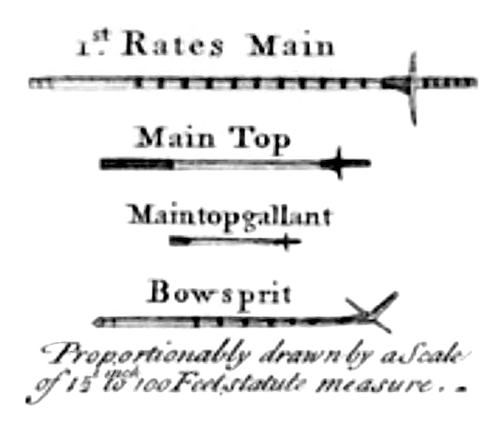
Matts
Are made out of Junk, old Rope Yarns, &c. for preserving the Yards from galling or rubbing in hoisting or lowering them.
Mauls
Doubleheaded
Are allowed the Carpenters for such Uses as are requisite.

Top
Are for driving the Iron Fids in or out of the Heel of the Top-masts.

Messengers
Are allowed to great Ships, and a Cable-laid Rope which are made use of in the same Manner as the Voyals are, though not so big, brought round the main Capston, and are a Sort of Succour to the Voyal, but are never made use of, after the Anchor is a Peek.
Midshipman
His Station on Duty is on the Quarter Deck, Poop, &c. to mind the Braces, look out and give the Word of Command from the Captain and other superior Officers, and to assist on all occasions both in sailing the Ship, and in stowing her Hold, &c.