LETTERS (continued 2)
Reading edition
Day before yesterday a lieutenant of the Engineer Corps was brought on a stretcher back by our camp, one arm torn off and otherwise mutilated. He was sitting on the ground, making a sketch, when a rebel shell burst almost in his lap.
We are having, really, a pretty hard time of it. We are turned out almost every night and held in line to repel anticipated attacks. [This was one of Gen. Naglee’s fool stunts, that Hooker soon put a veto on.]
Our camp is on a big plain, gullied here and there by creeks. Near to us are the spots pointed out as the headquarters of Washington and Lafayette during the Revolutionary siege. I saw a little earthwork yesterday which was thrown up at that time, and a rusty iron cannon ball was dug up by the working party.
Our new four-piece [“shelter” or “dog”] tents have one great advantage—perfect ventilation. The tent’s crew of four button their sections together, and have a roof to crawl under; but the house is wide open at both ends.
It was just one year ago tomorrow that our company was first sworn into the service. We hardly thought then that one year from that date would still find us ’way down South. So far as I am concerned, I am enjoying myself immensely. Was never in better spirits or in better health.
Wednesday, April 23.—At last I have another chance to write on my letter. I have been on duty every day for six days. Today I am on camp guard. Our siege guns are now almost all in position, and they will doubtless get to work pretty soon. Thousands of men are working day and night on the siege works and the roads. On this wing of the army we are building a road along the side of a creek leading up to the rear of our batteries. The roadbed is twenty-four feet wide, made by tumbling in one bank of the creek. As this is mostly on the side toward the rebel works, leaving the road under embankments from ten to twenty feet high, troops and supplies going up to the front will have almost perfect cover and protection.
There is a continual skirmish all along the line, and men are killed or wounded every day. The other night a large force of rebels made a sally upon six companies of the Third Vermont, but the Sixth regiment, with a section of artillery, came to their support, and the rebels were sent back home in a hurry. We lost about 45 men, including two captains; the rebels about the same number, including a colonel.
Day before yesterday I managed to work about as much discomfort into twenty-four hours as ever fell to my lot. We were working on the road. It rained all day, and I was, of course, thoroughly soaked. And when we got back to camp there was no warm, dry nest to crawl into. Instead, the rain poured through the tent in streams, and there was no way to get away from it. It has taken me till now to get back to anything like normal conditions.
I saw two deserters from the rebels, who came in this morning. One of them was from Pennsylvania. He was pressed into the rebel service and took the first opportunity to desert.
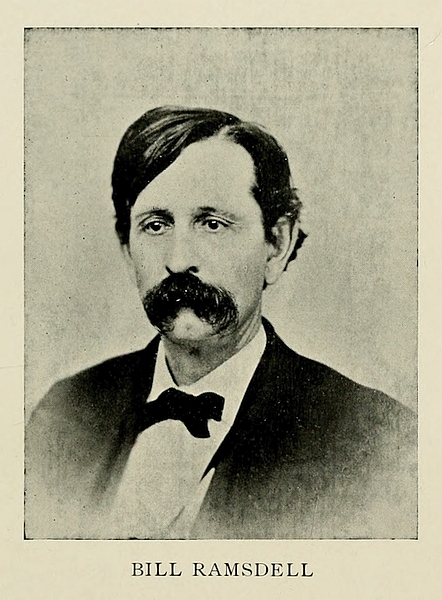
My old tent-crew of Camp Beaufort is broken. It is no longer a matter of choice and selection. We are counted off in fours and tent in the same order we stand in the ranks. My present mates are Bill Ramsdell, Lyn Woods and Joe Gleason—all royal good fellows.
LI
Camp Winfield Scott,
Before Yorktown, Va., May 1, 1862.
PHYSICALLY I am pretty near used up. Night and day we are on duty in the trenches or on fatigue work, supporting batteries, throwing up earthworks, building roads, regardless of weather conditions. Last night we were digging on a parallel, or trench for infantry, the end of which was at the edge of the bluff overlooking the York river. It was all open ground between us and the rebel works, and, though very dark, the rebels kept the scene fairly well lighted up. Every two or three minutes there would be a flash way up there to the front, then a roar, another flash in the air down our way, and pieces of iron flying. The big guns, though, did not worry us much. It was practically impossible to land a shell in the trench from one of these guns. But they had one big mortar working that was quite another matter. Every time this was fired the burning fuse marked its course. Up, up, up it would climb, then hang for an instant and come sweeping down, down, down. It did not land one shell in our trench, although it put some uncomfortably close.
I managed to steal one little nap, but it didn’t last long. I got quite a comfortable seat at the end of the trench, overlooking the river. I have a recollection of watching the lights on vessels far down the river and in distant camps, and of listening to the lap of the waves on the beach below me. And I went to sleep. And I woke up—quick. I was trying to decide whether the rebels had sprung a mine or landed a shell in the trench, when it happened again, and I saw what the trouble was. Only a short distance below was the black mass of one of our gunboats, which had crawled up unusually close, and was firing her big shells right over our heads into the rebel works.
The rebels made an effort to drive in our pickets on a part of the line, this morning, but got rather more than they were looking for. A burial party has just gone by, to give a soldier’s burial to a New Jersey boy killed in the affair. The cemetery, near our camp, is rapidly filling with the bodies of men who have been killed or have died of disease. Each grave is marked by a neatly-lettered headboard.
Company H of the Massachusetts First charged a lunette, or small outer earthwork, which had become a nuisance, the other morning, and drove the rebels out at the point of the bayonet. They had three men killed and a dozen or fifteen wounded. One of their men had a remarkable escape. A ball struck the eagle plate on his breast strap—a round brass plate backed with lead—doubling it up and going through just far enough to show the point at the back. The blow knocked him several feet, and he naturally thought, for a little time, that he was a goner.
That night we were in the trenches in support of the Hungarian battery. The rebels appeared to have a pretty accurate idea of its location, notwithstanding it was screened by trees, and sent shot and shell thick and fast. One shell struck on the parapet and rolled down under a platform on which six men were sleeping, but fortunately did not explode.
It rains or drizzles most of the time, so we are kept tolerably uncomfortable.
May 2d, afternoon, 2 o’clock.—The regiment went into the trenches to work today, but as I was not feeling well I remained in camp. The rebels have been doing more shooting today than any other day before, and many of their shot have struck near our camp. I went to sleep about noon, but was awakened by the infernal screech of a shell, and took it as a hint that I had better finish your letter. I do hope that May will prove a pleasanter month than April. I hope our batteries will open before long, for I want to see this affair closed up. If we thrash them soundly here and at Corinth, I think the war will be about as good as over.
LII
Williamsburg Battlefield, Va., May 7.
I AM all well—not hurt a bit. Not time to write any. Mail going right out by a private citizen. Go right up and tell my folks I am well. An awful battle. Harder than Bull Run. Mart.
[Written on an irregular scrap of brown paper.]
LIII
Near Williamsburg, Va., May 8, 1862.
HAVE just come in from a trip over the battlefield, and was fortunate enough to pick up the big sheet of paper on which I am writing this letter. I will commence at the beginning and tell you all about it.
On Sunday morning, as soon as it was discovered that the rebels had evacuated Yorktown, we were ordered to pack knapsacks and be ready to march immediately. We had no time to cook rations, and went for two days with only the fragments we happened to have in our haversacks. We marched up over the rebel intrenchments and through Yorktown. The rebel works were very strong and would have been a hard nut to crack. The rebels had planted torpedoes along the road, but none of our regiment were hurt by them. The road was in a horrible condition and badly crowded, and we did not get along very fast. It was nine or ten o’clock at night when we filed out into the woods by the side of the road and, with all our harness on, laid down for such rest as one could get under such conditions and in a drizzling rain. We were up at half-past four the next morning and soon on the road again, up through the woods. We had gone about a mile and a half when we came to a big slashing, where the trees over an area about twice as large as Merrimack Common had been felled, criss-cross, in every direction. Beyond this, a large open plain, with a line of small forts, one of which was directly facing the road up which we were advancing. Our regiment filed out and formed line to the right of the road, and the Massachusetts First upon the left. We threw out skirmishers and advanced up through the slashing. It was rough navigating in that network of prostrate trees and interlaced limbs and branches, as we had all our housekeeping outfits on our backs. My haversack got caught and was torn to pieces, but I made that good on the field the next day. We wormed our way ahead, up to the edge of the open field, and there halted for our artillery and the rest of the division to come up. We had a pretty lively time there, but nothing very fierce. The rebels had four or five field pieces in the fort and skirmishers scattered along the front in little pits. We distributed ourselves behind stumps and logs, and quite a number had a genuine earthwork, made by punching holes through a thick mass of dirt that clung to the roots of an overturned tree. The cannon in the fort sent a solid shot, every little while, smashing and crashing down through the timber; but a number of our crack shots paid particular attention to those guns, while others devoted their talents to educating the rebels in those little picket holes. Perhaps half a dozen, selecting some particular hole, would lay with their sights covering the little mound of fresh dirt outside. The instant a head showed, there was trouble in that pit. They soon got enough of it, and for a long time the pits in front of the Second, for all we could see, might have been so many graves. All this time the rain was pouring, and we were fairly waterlogged. As business dragged, some of the men unfolded the little sections of tent and spread them over branches for a shelter. Others nursed up little fires and cooked a cup of coffee. Up to this time we had not had many men hit. Lieut. Burnham, of Manchester, was shot in the leg, and will, I am told, have to lose it. A man named Cole [Uriah W., of Co. H] was killed by a cannon ball.
At length our artillery came up and went into position in front of us. We lay supporting them an hour or two—and they were not having a very hot time of it. Then in the woods to our left, beyond the slashing, a tremendous fire of musketry broke loose. Volley followed volley, and after a while it was evident the firing was coming nearer, which meant that our troops in that part of the field were being driven back, and the rebels were gaining ground towards us. They came upon us through the slashing and along the edge of the field. I got in three or four shots across the road—which was better than most of our fellows could do—when the order was passed to fall back to the edge of the woods and re-form. This was no boys’ play. Balancing on a log and looking for the best path, my cap went flying and the bark from a limb I was holding onto. I had no further doubts as to the proper course—a tunnel was safer than an overhead bridge, just then, and the rest of the way I kept as close to the ground as I could.
Once again out of the slashing and in line, we were ordered across the road, where the entire regiment was deployed as skirmishers through the woods some distance back from the slashing. Then we were ordered to sail in, and moving forward we were soon in as lively a mix-up as you could well imagine. The first squad of rebels I ran onto I mistook for Eleventh Massachusetts men, there being a similarity of uniforms, and I was going right up to them, when Al. Simmons shouted, “Look out, Mart—those are rebels!” and fired. Quicker than you could say it, I was behind a big tree, and the ball had opened. It was a regular Indian fight, dodging through bushes and from tree to tree, sometimes forward and sometimes back. There were no end of personal encounters, and fights between squads and detachments, and all sorts of mixups, some ludicrous and some tragic. “Heenan” had his usual luck, coming out damaged but alive. He had a sudden and close collision with a rebel who came up out of somewhere like a jumping-jack. Nich. grabbed the reb’s bayonet and pushed it one side just as the fellow fired. He says he intended to polish that fellow off with his fists, but two others jumped in, and things were going hard with Nich., when some of us saw his predicament and started for the rescue with a big whoop and empty guns. They faded into the background, however, and we didn’t get one of them. Nich. is now nourishing a somewhat lacerated powder-stained hand.
One of the funny incidents was when Dave Steele, a lieutenant in Company G, made a dash into a squad of rebels, shouting, “Surrender, you d— cusses, or I’ll blow you to Hell!” What he was going to do his “blowing” with—as he had no arms but his sword—is still a question; but the rebels took his word for it and dropped their guns.
Gardner [Orrin S.] of my company—said to be part Indian and who looks it—was peekabooed and pestered by a couple of rebs in the cover of an old rifle pit, until he got out of all patience, gave a wild Indian war-whoop, and closed in like an express train and put a stop to any further foolishness.
Toward the last of the fight, though, we had all we could do to keep from being run over. From the way they swarmed in on our front it was very evident the rebels were being heavily reinforced. We were in a pretty solid line now, with stragglers from other regiments mixed in. But we were getting short of cartridges. Hooker, plastered with mud from head to foot, rode along the line and told us to hold that line fifteen minutes longer. Back in the woods we heard a band strike up and play “Yankee Doodle.” We were losing men rapidly. Captain Drown was killed and others killed or wounded. Then our reserves came up, paddling through the mud as fast as they possibly could, and we all went in together and won out.
It was pretty near night when the fight was over and the regiment got together, counted noses, and bivouacked a little ways back, in the woods. We began to realize then that we were mighty hungry. But luck came my way. Lym. Dickey brought in a prisoner that he got the drop on. Lym. and I hitched up together that night, made the best shelter we could with our pieces of tent, and took our rebel friend into the mess. Lym. and I had oceans of sugar and coffee, and that was about all. Our guest had a corn pone and a quantity of excellent bacon, but no coffee. So we pooled our issues, had a most enjoyable supper, and snuggled in together for a fairly comfortable night. In the morning we shook hands with him, said good bye, and Dickey turned him over as a prisoner.
The day after the fight I went out over the whole battlefield, and a dreadful sight it was. In an old Revolutionary rifle pit close to the edge of the timber, where our last rush struck the main line, it was a ghastly sight. In one spot seven bodies lay, literally, in a heap. They were apparently cut off from rapid retreat by the barracade of felled trees. Up half-way through the slashing I came into a path, hardly wide enough to be called a roadway, which had been opened up for some purpose. In this regiments of the Excelsior brigade had made their fight and had suffered heavy losses. In some spots I could have walked a considerable distance upon dead bodies. I followed this path out into the woods at the left, where the Jerseys fought; and beyond them, dead rebels scattered about. One of these had piled up a little cob-house screen of rails, which was about as much protection as a pasteboard box would have been. He was still there, prone on his breast, his gun thrust through between two rails, a finger on the trigger, and a little round hole in the top of his head.
The dead were lying in almost every conceivable position, sometimes absolutely grotesque if it were not so pitiful. Some apparently never changed the position of a muscle after they were struck—arms in position as if loading; some still clutching their piece in one hand and in the other the ramrod with the charge driven part way home. The rebels had some Indians in this fight—I saw at least two lying among the dead. The dead are not all buried yet, but are being covered up as fast as the details can get to them. I have quite a number of bullets I picked up, and buttons from the uniforms of dead rebels.
We will move on from here as soon as supplies come up, and will probably have more fighting before we reach Richmond. It was awfully rainy the day of the battle, but is sunny and beautiful now. I have tried to give you some idea of what a time we had. I had just time to write you the briefest sort of a note Wednesday morning. Did you get it? I begin to feel now as though we should get through before many months, for I know we are going to thrash them out before long.
LIV
Williamsburg, Va., May 11, 1862.
WE are now encamped on a large field just outside the city and close to William and Mary College. I have had a chance to look the city over a little, and find it a very homelike, cozy little burg. It is one of the oldest towns in the United States, with many nice buildings and ancient residences of the old Virginia gentry. The college is the oldest in America. Washington, Scott and many other famous men were educated here. On the college grounds is a rather badly-kept marble statue of Lord Berkley, one of the old colonial Governors of Virginia.
The women here are the most rabid of all secessionists—fairly venomous. Yesterday one of them, entirely unprovoked, hissed out to Gunnison, “You vile wretch!” “Gunny” kept thinking it over, and getting madder and madder, until today he stormed up to the house and demanded satisfaction of the head of the household. The old man regretted the unfortunate incident, and politely invited Gunnison to make the house his home while in town; and Gunnison came back to camp not quite determined whether he had won or lost.
Most of the public buildings here are being used as hospitals—full of wounded rebels. I suppose they enjoyed the parade of Yankees when our army passed through here—an almost uninterrupted stream of men for three days. The gayest sight was when a regiment of 1600 lancers went by. The rebs left a few cannon here, and in some places quantities of shells which they evidently could not take along with them. They also planted torpedoes in places, and a number of men were blown up. Some were discovered before they were stepped on, and it is said General McClellan has ordered that rebel prisoners be set to work digging them up.
We are having glorious weather, clear and sunny, with the birds singing merrily. And it seems rather nice to be in a city again, with signs of civilization, albeit slightly ancient and mildewed. We are very comfortably quartered now. The rebels left great numbers of big tents [the old conical “Sibleys”] which we appropriated; and with only three or four in a tent we are very far from being crowded. Yesterday afternoon George Slade and I took a walk down to a little place about two miles from here, called Cottage Creek. It is a delightful bit of a place, where peace reigns in the midst of war. Three or four little cottages, a picturesque old mill, with an ancient bridge over the creek, make up as pretty a stage setting as one would see in many a day.
Beginning tomorrow, we will have to drill two hours a day as long as we stay here. The general impression is that we will not be here many days—not longer than until the prisoners are sent to some safer place. The rebs left most of their wounded in our hands, and they have the same care as our own. I had a talk with one of them who was at Bull Run, and it was very interesting to hear him tell of the battle as he saw it. He belongs to a Virginia regiment, and when the war broke out was living near Alexandria. He says he has been at his home since the war. It was lucky for him he was not caught, as his life might have been the forfeit as a spy.
One of our “missing” men, of Co. G, was found in the brush yesterday, where he had crawled out of the fight and died.
I hear that a lot of our men who were taken at Bull Run have been exchanged and are at Fortress Monroe. Won’t we have a jubilee when they get back! [As a matter of fact, one at least of these prisoners—George C. Emerson of Company B—joined in season to take part in the fight, and was killed.]
Gen. Grover, who has displaced Naglee as commander of this brigade, has been appointed Military Governor of this district. I would like to look this region over at my leisure, for a distance of a dozen miles or so, it is so full of historic associations—Jamestown, Captain John Smith, Pocahontas, Powhattan, and various other distinguished residents of the long, long ago.
If it were not for home I think, on the whole, I should be quite well contented with army life. But I guess this affair will be settled up before long, and when sleighing-time comes in New Hampshire I will be there to help you enjoy it.
LV
Camp near Cumberland, Va.,
May 19, 1862.
JUST where we are camped now I cannot tell, except that it is in the woods, within four miles of the enemy and nineteen from Richmond. We left our camp at Williamsburg last Thursday morning and got in here this afternoon. This is a heathenish country, swarming with unpleasant neighbors other than rebels. Day before yesterday when I aroused from a wayside nap, one of the little snakes—common here, but harmless—slid out from under me. I gave a yelp and killed him as if he had been a rattlesnake.
I thought I wrote you at the time about Solon Porter. He died at Camp Beaufort, some time before we left there, of apoplexy. He was sitting on his bunk, cracking a nut between his teeth, when he fell back, unconscious, and lived but a short time. I was not tenting with him at the time. He was the third of my Camp Sullivan tentmates to die.
This ink is simply awful, and Gunnison, who is writing out of the same bottle, is expressing his opinion very freely. That sprig of geranium you sent me was a fragrant reminder of home. I will inclose a sprig of cedar from a tree just in front of my tent. When I can I gather a quantity of these cedar branches for a bed.
A dear little baby rabbit just came running into this tent and we caught him. The little rascal’s confidence—if that was what led him here—was well placed. When I get through petting him I’ll take him out into the woods and turn him loose in the safest place I can find.
LVI
White Oak Swamp, Va., May 26, 1862.
WE are camped now some ways beyond Bottom Bridge, across the Chickahominy. We have had a pretty strenuous time of it for the past week or two, a good part of the time wallowing through swamps, and our grub supplies very irregular and uncertain. I have had very little to eat besides hard crackers. My first move when I get “out of the wilderness” will be to get a good square meal with all the fixings. In getting to this point, we have, a good part of the time, been literally ploughing through swamp mud. Sometimes, where the road ran through a particularly bad morass, the road was built up and retained by logs along the side, upon which we picked our way after a fashion. But when one slipped or lost his balance it was a serious matter. And when we marched in the night-time it was a double terror. The night we arrived at Bottom Bridge, about midnight and dark as Egypt, I was absolutely cased in mud, and my gun as well, and I had to lie down as I was and wait for daylight to get down to the river for a cleanup.
We are now camped on a hill in the swamp [Poplar Hill,] in a nice clean field of clover. It is going to rain right away, but we have pitched our tent with extra care, have dug a good trench around it to carry the water off unless we have a flood. It rains very often, and the other day we had the fiercest hail storm I ever saw. The stones were very large and came down like cannon balls. I was out of camp and got behind a house, but was well pelted for all that.
When I read the new call for more troops I gave up all idea of a speedy return home. We expect a battle here before Richmond any day, but whether we will get into it or not depends on circumstances. Our camp strategists have got it figured out that we will be used to cut off the retreat of the rebel forces at Fort Darling.
LVII
Fair Oaks, near Richmond, Va.,
Sunday, June 15, 1562.
IT has been some time since I last wrote, and you are doubtless getting anxious. We are now camped on the battlefield of Fair Oaks. We were not in the battle, but were in line, with skirmishers thrown out and batteries posted, waiting for the attack that never came and listening to the rattle of musketry off to our right. We did not come here until the second day after the fight. Before we started all our baggage was sent to the rear, and with my knapsack went my writing materials. We are having rough duty now. Every third day the entire regiment goes on picket duty for twenty-four hours, which means, as a rule, not even a cat-nap in that time. I was just settling myself for a good sleep today, when the cry went up that our knapsacks had come; so I sorted mine out from the heap and set to work to write some letters.
We arrived here about three o’clock in the afternoon and immediately went on duty for twenty-four hours. It rained all night—a steady downpour—and the whole country was flooded. Coming up, we waded for considerable distances through ponds from ankle to knee deep. Here it was just mud and water. The trenches we would have jumped into in case of an attack were half filled with water. Even if it had been permitted, there was no chance to lie down—no chance for much of anything but to stand up and take it through the long hours of the night. I did manage to get a few slicks of cordwood together and cobbled up a roost that gave two or three of us a sort of perch out of the mud. Directly in front of me lay a dead horse and a dead rebel. Within a short distance were perhaps a hundred dead horses—all killed when the rebels made their rush on our batteries on the first day. These have about all been cleaned up now, by burning, wood being piled upon them and great bonfires made.
The battlefield presented one of the most horrible sights imaginable. Many bodies of men killed in the later stages of the battle were still unburied. Some were in shallow graves, but as a rule burial consisted merely in covering the bodies as they lay. The heavy rains, washing away the covering, had left many gruesome sights. I was an advanced picket the other night, my position being in the midst of several dirt piles, with enough in sight to show that each covered a dead rebel. That day Eugene Hazewell accidentally shot himself through the foot and had to have a toe taken off. We were posted so near the rebels that we could hear them talk. We had orders not to shoot wantonly at their pickets, and we understood they had similar instructions; but if so they disregarded them and took a shot at a Yankee whenever they could draw a bead on one.
LVIII
Fair Oaks, near Richmond, Va.,
June 22, 1862.
HAVE been out with a work party all the forenoon, and go on picket at three in the afternoon, to remain twenty-four hours, and feel as if I was earning my salary. There can be no question but what we are putting in full time. We are virtually on duty every minute, for, even in camp, we are on the alert ready to turn out for a fight at any moment. Yesterday the rebels attempted to drive in our pickets, and the result was a very lively little skirmish, as our boys had not got quite ready to come in. A few days ago the Sixteenth Massachusetts made a reconnoissance, attacking the rebel pickets for the purpose of ascertaining their position and strength. It cost the Sixteenth four or five men killed and eighteen or twenty wounded. The Sixteenth has recently been attached to our brigade.
I am as well contented in the army as I could expect to be, but still look forward with pleasant anticipations to the time when I will be home again. I was talking with Frank Robinson today about the good times we would have in Manchester. [He was killed, two months later, at Bull Run.] I had a letter from a friend in Great Falls—one of my old school chums—and he had so much to say of the happy times in the old Manchester High School that I had to pinch myself to keep from getting homesick.
We are camped in a swamp, and yet water is one of the scarce articles. We have had no rain for several days, and the sun has dried up most of the surface water, so it is no easy matter to even fill our canteens.
LIX
Fair Oaks, near Richmond, Va.,
June 26, 1862.
SINCE I last wrote you I have been in two lively fights—one last Monday and the other yesterday. Monday afternoon our pickets were ordered to advance and drive the rebel pickets as far as they could. Company I happened to be one of the companies on the advanced line, so in we went. It was a sneak-up, crawling through the thick swamp brush till we struck the rebel pickets. Jesse Dewey and I, crawling along together, had the luck to open the ball, and in one minute there was lively popping along a half mile front. The rebels had no call to make a very stiff fight—and they didn’t. Gen. Grover, mounted, with his upper works all that was visible above the bushes, directed the movements, and we rushed them back a long distance. Then their reserves came swarming in—and we got back. Our loss was very light. In Company I only one man wounded.
Yesterday the entire Division advanced over the same ground, and we had a mighty stiff fight [battle of Oak Grove.] We found the rebels in heavy force this time, and it was only after a hard and bloody fight that we drove them back over practically the same ground we had covered on Monday. Only one man was killed in my company—John Brown, a fat, hearty, round-faced, good-natured boy as ever lived. Company B had over twenty men killed or wounded out of forty-six that went into the fight. Gen. McClellan arrived on the field in the afternoon and complimented us very highly for our work during the day.
On James River,
Wednesday, July 2, 1861.
At last I have got a chance to finish my letter. Lots of things have happened since I commenced it. I have had no good rest for three days and two nights, so you can imagine the condition I am in. Sunday morning we marched away from Fair Oaks with three days’ rations in our haversacks. The way property and supplies were destroyed didn’t look good to us. The rebels followed closely, and a few miles back we went into line of battle, posted batteries, and were ready for them. There was a short and sharp fight a little ways to our right [Savage Station,] but we didn’t get into it. The rebels were repulsed, and we moved on again. Along in the night we got into bivouac in the dark, a great mass of troops, where we could see but little of our surroundings until daybreak. Then we soon studied it out that we were at a cross-roads, with an immense wagon train parked near by, and a heavy force to protect it. During the forenoon the troops were moved into position to meet any advance from the direction of Richmond. We were not attacked until the middle of the afternoon, and then a great battle was fought [Glendale or Charles City Cross Roads.] We whipped the rebels at every point. The Second Regiment was all over the field, generally in support of some battery or other regiment. We lost very few men. I was hit in the groin by a spent ball and crippled about as I would have been if a mule had kicked me. We were advancing up a slope, in line, to support a regiment that was breaking. I heard that bullet, and when it struck me it set me back out of the ranks and I thought I was shot through and through. I saw some of the boys look back sort of pityingly as the line went on. It did not take me long to find out that I was very far from being a dead man. There was a dent in my thick leather belt, but the bullet had not gone through. It had doubtless struck the ground and lost much of its force before it hit me. I was back in my place by the time the regiment reached the crest. But in a little while I was very lame, and it was only by great effort that I kept along with the regiment that day and the next.
That night and the next morning we moved on a few miles farther and took position on high ground not far from the James river. Here another great battle was fought [Malvern Hill.] The artillery firing was simply terrific, we having some of our gunboats in action. The rebels charged again and again, and were driven back every time with frightful losses. It was a terrible punishment we gave them. We were not actively engaged, and so lost no men.
I got in here this afternoon pretty well used up. It commenced to rain last night, the roads were in bad condition, and there were thousands upon thousands of stragglers. But aides were stationed to direct these as they poured out onto the flats, and the disorganization was quickly rectified. Don’t know when I’ll get a chance to send this. Go up and tell my folks.
LX
Camp near the James River,
Monday, July 8, 1862.
CAN write only a short letter now, and my old excuse will have to do duty again—“used up.” We are fortifying our position, and as there is a good chance of Johnny paying us a visit most any time, we are putting the house in order to entertain him. We work night and day on our intrenchments. We are camped in an open field, on a gentle slope along the crest of which run our rifle pits and earthworks. The weather is frightfully hot, and as a consequence the men feel very shiftless and lazy. I do, anyway, and judge the rest by their actions. Quite a number of our boys were taken prisoners in the retreat. Perk. Lane is probably among the number, as he was one of the sick sent back to Savage Station, and they were nearly all taken.
Eddie Dakin, the Captain’s waiter, is going home tomorrow, and I will intrust this letter to him, to be dropped in the Manchester or some other post office.
LXI
Camp near Harrison’s Landing,
James River, Va., July 11, 1862.
RECEIVED a letter from you last night. I am writing under very unfavorable conditions, as it is a rainy day and mud and water reign supreme. Whenever it rains hard the water beats through the canvas like a fine sieve. If the wind happens to blow it is pretty sure, in addition, to beat into one end or the other of the shelter. The prospect now is that we shall lay in our present position for some time and have considerable leisure. If we do you can expect a letter from me pretty often.
We are hard at work fortifying our lines. The camp of our regiment is immediately to the rear of a redoubt where twenty or thirty cannon will be mounted. Two eight-inch howitzers are now in position. We are building rifle pits from the right of this redoubt down to a pond [Rowland’s mill pond.] When you know that our intrenchments form a line several miles in length, you will get some idea of the magnitude of our works. This is a very interesting locality, plastered all over with historic associations. President Wm. Henry Harrison was born near here, and down by the river there is a stately mansion built long before the Revolution of bricks brought from England. In the family burying ground I saw stones dating back over two hundred years.
LXII
Camp near Harrison’s Landing, Va.,
July 19, 1862.
ROD. MANNING, my present tentmate, and I got tired of lying in the mud, so we sallied over to where they were tearing down a house, about three-quarters of a mile from here, and managed to gather in a quantity of the old clapboards. With these spread on a framework of poles, we have a bunk or platform high enough to keep us out of the water when it rains, and making a very fair seat when, for instance, I want to write a letter to you. This is not the only public improvement. We have built a bough arbor over the front of our tent to give some shade from the scorching sun, and are thinking of a bough screen at the back end of the tent to keep out the wind and rain.
Our rifle pits are finished, so we will have no duty except guard duty and a short drill each day. I hope the North will send reinforcements on quickly, for I want to see our army advance again on Richmond and end the war. This is a good place to rest in for a few weeks, where we can have our supplies landed at our very door from transports.
In the retreat from Fair Oaks our company lost ten men taken prisoners. We have a pitifully short line now, compared with what it was when we left Manchester.
LXIII
Camp near Harrison’s Landing, Va.,
July 23, 1862.
BY the papers I see that a hospital is to be established in New Hampshire for the care of sick and wounded soldiers from our state. That is all very nice, but, as much as I would like to see home, I hope I will never have any use for that establishment. I have been out today to a review by Gen. McClellan and am pretty well fagged out. Now I will try to answer some of your questions. There are not many houses about here—it’s right out in the country. Such houses as there are are mostly occupied as hospitals. Those outside our lines that would interfere with the range of our guns have been torn down. Notwithstanding the ravages of war, it is a most beautiful region. The busy place now is down at the landing, where the negroes are kept busy unloading supplies from the transports. Our food, for a few days, has not been quite up to the New Hampshire standard. Our meat has been “smoked sides”—a very poor quality of bacon. I have almost forgotten how a real first-class meal does taste.
“Those curls?” Well, I came to the conclusion, yesterday, that inasmuch as I had lost my comb and didn’t know where I could get another, heroic measures were necessary. So I hunted up a camp barber and had my hair cut and my head shaved, sandpapered and varnished. I was looking at the little round picture yesterday, and a little end of black hair that straggled out between the case and the picture reminded me that you placed it there the night I told you I had enlisted. It was braided and tied just as you tied it that evening. We had but little idea then that I was to be so long away.
Thursday, July 24.
It is about three o’clock in the afternoon, and I have just finished my dinner. I looked over the miserable piece of miserable bacon that the company cook handed out to me, and then started off into the wilderness, and when I came back I had gathered in a pint of blackberries, which helped out very materially.
General McClellan was around today looking over the intrenchments. One of his staff had quite a little misadventure down by the pond, where a lot of us were having a swim. A small canal, or sluice, runs out of this pond, which is crossed by a frail plank bridge. The General and staff were crossing this bridge, when a plank gave way and down into the ditch went one horse and rider. The officer managed to crawl out—and a very draggled specimen he was—but it took the united efforts of the whole party to get that horse onto terra firma.
I received a letter from Roger [Woodbury] yesterday. He was of opinion that the Third Regiment would come up to the Peninsula, as troops were being sent from that Department to reinforce McClellan. I saw Hen. [W. H. D.] Cochrane yesterday, and he told me the Third and Fourth were actually embarked for here.
Saturday, July 26.
Yesterday morning the Second Regiment went out on picket and got in at noon today. I had the most enjoyable picket tour in all my experience. We were out about two miles from camp, and as there were cavalry vedettes and patrols still farther out, we had no fears of a surprise attack. There were so many of us that no man had to stand a post more than one one-hour turn. The rest of the time we were at liberty to roam, pick blackberries and gather green apples and have a good time generally. No camp ever had a more perfect picket protection than was given by that swarm of foragers and sight-seeing scouts. Close to headquarters was a house—a well-shaded, cozy southern home. The owner and his two sons are in the rebel army, but his wife and daughter remain and have a safeguard of our soldiers. And you never saw such a swarm of little negroes as there was about that place.
Today has been feast day—the greatest dinner within the memory of man—a genuine “biled dish”—potatoes, beets, onions, cabbage and boiled salt pork. And just now Rod. Manning is frying some apples that are going to make a pretty good dish, if I can judge by the smell.
Sunday, July 27.
Hen. Everett has just been over here, and we had a good long chat about times in the old printing office in Manchester. The sun is coming up in a way that promises a hot day—and a hot day down here is hot.
LXIV
Camp near Harrison’s Landing, Va.,
August 3, 1862.
OUR Division went out, last night, on a reconnoissance most up to Malvern Hill, where the last great battle was fought on the retreat. We went on through woods, over stumps, wading brooks and bog holes, until we were pretty near the enemy’s lines, when Gen. Hooker learned that Kearney had accomplished what we had set out to do, and we about-faced and blundered back to camp through the darkness. It was almost three o’clock when we got back, and I was tired through and through. [The expedition was really misled by a guide.]
There has been some little stir here for a few days in relation to transfers to the gunboats, as twenty-five or thirty seamen are wanted from each regiment. Those who have been to sea and want to go again have passed in their names, but we do not know as yet who, if any, have been accepted. Gunnison sent in his with the rest.
The company cooks are preparing a great dinner—soup, with potatoes, onions and cabbages in it. It certainly is a feast to men who have learned not to be surprised if they get nothing but hard bread, or even nothing at all. I have just heard that we are to go out tonight on another reconnoissance. I hope not. I had much rather lie comfortably in my tent than go on any such tramp as we had last night.
LXV
Camp near Harrison’s Landing, Va.,
August 8, 1862.
SINCE I last wrote we have been on quite a little expedition to Malvern Hill and back. We left our camp Monday afternoon, just before sunset. It was a beautiful evening, and as we followed a fairly good road we trudged along very comfortably until about midnight, when we halted and slept on our arms until daybreak. Bright and early we resumed our march. The enemy’s cavalry pickets were struck within a few hundred yards and our cavalry sent them flying, after the exchange of a few shots. When we came out into a large field I saw that we were on the ground where we fought on the second day of the retreat from Fair Oaks—[at Charles City Cross Roads.] Then we swung to the left and pushed down the road to Malvern Hill—the same we had followed once before. When we came out into the great open area around Malvern Hill, one of our light batteries was already engaged with a rebel battery of four pieces. These guns naturally paid some attention to us, but with the exception of one shell which burst in our ranks before we filed out of the road and did some damage, not a man was hit in the Second Regiment. We had, really, remarkable luck, as they did some very good shooting and burst a number of shells and case-shots in our very faces. The Eleventh Massachusetts had two men killed and eight wounded by one shot. After half or three-quarters of an hour of this, the rebel battery limbered up and struck up the river road for Richmond, and our cavalry went after them. We gathered in quite a bunch of prisoners, singly and in little squads—men scattered around on outpost and picket duty, who came up out of the woods to see what the trouble was—and found out. One of these was particularly low-down mean and “sassy,” and he and “Heenan” had it out. After looking us over he said there was one thing he cussed himself for, and that was that he looked so much like a Yankee. Then Nich., leaning on his gun took Johnny in hand. He looked him up and down, with such a contemptuous sneer on his face. He commented on his general disreputable appearance, and to wind up with, set the fellow fairly wild with rage, by leaning forward and confidentially asking him how much nigger blood there was in him.
The rebel battery was posted under big trees in the grounds of the old mansion house on the hill. When we advanced to the position we found three or four wounded and one dead batteryman that the rebels had left behind. The dead man had been hit on the head by a piece of shell, and lay all curled up, but still tightly clasping in his hands the shell he was carrying to his gun.
We occupied the hill until Thursday morning, when we leisurely returned to camp. It was really a delightful outing. When we returned, my haversack was bulging with the fruits of my foraging—apples and plums, fresh pork, hog’s liver, and one good fat chicken.
Perk. Lane and four others of our boys who were taken prisoners have returned. They have had a pretty hard time of it, but have many amusing stories to tell of prison life in Richmond. Provisions there are very high indeed—molasses six dollars a gallon, flour twenty-five dollars a barrel, bread twenty-five cents a loaf, and everything else in proportion. We are beginning to get a little soft bread now ourselves. Yesterday we had a whole loaf to a man, and we have had one meal before that.
Sunday, August 10.
I hear from home that a great many of the white-livered gentry swear they will not submit to being drafted. Then shoot them—that’s my advice—and the Second Regiment would like the job. I can hardly write at all, the flies bother me so. They are here in millions, and nobody can take any comfort, for the torments.
LXVI
Camp near Alexandria, Va.,
September 6, 1862.
AFTER being here two days I have managed to get the materials together for writing a letter. We have had a mighty strenuous time since we marched away from Harrison’s Landing [August 15]—in two hard battles, to say nothing of hard marches and transportation by sea and land, on crowded steamers and rattletrap freight cars. Marching to Yorktown, we were there loaded onto transports. No sooner were we fairly landed in Alexandria than we were toted out to Warrenton Junction and dumped, late at night, in the fields by the side of the road. Here, we were told, we would have a chance to rest, and we did, just one day and one night. That night Stonewall Jackson showed up at Manassas, directly in our rear, and we were sent after him. We came upon him at Kettle Run and had a rattling smart fight, with several hundred men killed and wounded on both sides. Two days later we were engaged in the second great battle of Bull Run. Our brigade here showed its mettle as it never had before, and especially the Second Regiment. We were ordered to advance through woods, without any supports, and attack the rebels behind a railroad grade five or six feet high. We went in. They gave us a volley, and we charged them, the Second going over the work with a yell and giving those fellows the surprise of their life. It was savage work for a short time, but we were determined to drive them, and we did. Then we went for the second line, a few rods further on, and set them agoing. And pretty soon it became apparent that what there was left of us were being surrounded. Then we got out—we had to or be taken prisoners. We lost 147 men out of a little over 300 that went in, and most of these within a very few minutes. Gen. Grover said it was the greatest bayonet charge of the war.
I got my first man as I went over the bank. I dashed round a big bush in the very edge of the grade right onto a rebel, who threw his gun up aiming at somebody to my right. He never fired, for I gave it to him from the hip and doubtless saved the life of some Second Regiment man—I’ll never know who. And just as I was starting on my return trip something tickled my upper lip and the roots of my nose, and for a while I was doing the ensanguined act on the smallest capital of any man in the regiment. It was a pretty close shave, all the same. One inch further, in the wrong direction, would have spoiled my beauty, and three inches would have spoiled me.
The actual fate of a lot of the boys is still in doubt. Charlie Smiley is missing, and nobody can tell anything about him. [He never came back.] Frank Robinson was shot through the bowels, near the railroad bank. Captain Carr told me, a few minutes later, that he had to leave him there, dying.
Father is over in Washington, but so far has been unable to get a pass to come over here, while I could not get a pass to go over there. It will be pretty tough if, after all I have gone through, and he so near, they do not give me a chance to see him.
I do not know how soon we may be on the move, but hope not for some time, for really the regiment is in pretty bad shape. The latest camp rumor is that we are going down to Budd’s Ferry, which would be very nice, but is entirely improbable. But we certainly should have a chance to get our breath, at least. We have been in ten fights, and in some of them have borne the brunt. There are regiments here that have never been in any fight at all, but have laid back here in comfort, while others were getting the rough of it.
It is a beautiful day, and I am sitting in front of my tent, upon a pile of corn husks, the Potomac at my feet and the cities of Alexandria and Washington up there to the north.
LXVII
Camp near Alexandria, Va.,
September 14, 1862.
IT bids fair to be a very hot day, so I am starting my letter just as early as I can get down to business. Father got over the river three or four days ago. Dan. Clark [U. S. Senator] took it up with the War Department and Gerry got his pass. He is going to stay several days longer, and you can imagine how much I am enjoying his visit. He is spending a good part of his time visiting the hospitals and hunting out and cheering up the New Hampshire men he finds there. He doesn’t say anything, but I have my doubts whether the lodgings here are fully up to his standard of comfort. Rod. Manning and I, in our capacity as chambermaids, make up the best bed we can with the materials at our command, and give E. G. the middle berth, with us under the eaves. But the ground is hard, and a knapsack or pair of shoes is not a real good pillow until you get fitted to them. Our guest grunts a good deal and turns over pretty often, and this morning I woke up before daylight and found him outside, sitting on a cracker box, over a little campfire he had nursed into action.
Since my last letter we have moved our camp about two miles, over to Fairfax Seminary, a brick building now occupied as a hospital, on the heights overlooking the city of Alexandria. Our camp is right to the rear of Fort Ward.
Did you ever know Joe Locke?—[Joseph L., a Manchester boy.] I saw him yesterday. He is in the Thirty-third Massachusetts, which is temporarily assigned to this brigade.
Father brought up from the city, yesterday, a big bag of flour, butter, and about all the other “fixings” he could lug, and there will be high living, for a time, in our tent. The laugh was on him, good and hard, the day we moved camp. He started out in the morning from our old camp, to visit the hospitals. When we arrived here he was at the Seminary, only a few rods away. He watched us come and pitch our tents, without any idea that it was the Second Regiment, and when he got ready to go he tramped back to the old camp, only to find himself among strangers. Fortunately, some one was able to direct him, and in due time he was back here with four extra miles of travel to his credit.
Those boxes that the boys sent for from Harrison’s Landing came along yesterday, but a great deal of the stuff had been so long on the way that it had spoiled. When I see these new regiments coming out now I remind myself that when my term of service is ended they will be only half way through. But I hope that with the new calls for troops there will be enough to finish this up in so short a time that we can all be home before long.
Two or three of the boys supposed to have been killed at Bull Run have turned up in the hospitals, but poor Frank Robinson is undoubtedly dead.
What company is your brother in? I will hunt him up if I can get to his regiment after it arrives. [James K. Lane, Company G, Eleventh N. H.]
LXVIII
Camp near Alexandria, Va.,
Sunday Evening, September 21, 1862.
I HAVE been down to the Eleventh Regiment to see James [K. Lane, “the girl’s” brother] and other boys there. I went into the camp, stopped a while at one of the Manchester companies, where I found lots of fellows that I knew, and then started for Co. G to find James, when he bore down on me with all sail spread. I knew him, and he knew me, at sight, and we were just as well acquainted after we had shaken hands as though we had known each other for years.
We are doing a little digging now—just enough to keep our hand in—on rifle pits between Forts Worth and Ward. Our knapsacks, which were loaded onto barges when we left Harrison’s Landing, got here only two days ago. I had begun to think they were gone for good, and was ready to bewail the loss of all my valuables, when they turned up safe and sound.
LXIX
Camp near Alexandria, Va.,
September 29, 1862.
IT is now almost nine o’clock in the evening, and I have had a pretty busy day. And tomorrow I go on picket, which will spoil two days more. So I guess I had better write tonight. This morning, as soon as I had eaten my breakfast, I started off for the Tenth Regiment. Met lots of old Manchester acquaintances, and Billy Cochrane, Ichabod, Sargent Bartlett and I got together and had a real Excelsior Literary Society reunion. On my way back I called in at the Eleventh Regiment camp, and James walked a part of the way home with me.
Tonight “Bobby” [Albert B.] Robinson, who was taken prisoner at the first Bull Run, got back to the company and the reception he got from those of us who are still left baffles all description. A camp story is going the rounds that Gov. Berry is trying to have this regiment sent to New Hampshire to recruit.
LXX
Camp near Alexandria, Va.,
Sunday, October 12, 1862.
HAVE just got back from the Thirteenth Regiment, where I found not a single man I knew, so I got a good long tramp for nothing. Got a mosaic letter from sister Addie Friday, made up of contributions from half a dozen of her friends. Have just had a pocket tourniquet given me, a little instrument to stop the flow of blood from a wounded arm or leg. I don’t see how it could be of much use in stopping a bloody nose. Charlie Smiley has never been heard from and doubtless never will.
So far as quarters are concerned, we are mighty comfortably situated just now. We have folded up our pieces of shelter tent and in their place pitched a camp of old-fashioned army “Sibleys.” My tent-crew comprises seven good fellows. Each man has built himself a bunk, and still there is room to spare. The heavy tent-cloth keeps out the rain, so we have a perfectly dry nest. But there are persistent rumors that we will not remain here much longer.
LXXI
Camp near Alexandria, Va.,
October 19, 1862.
THE Eleventh Regiment is now in the vicinity of Harper’s Ferry. Simons, who used to keep the bookstore, was down here yesterday, hunting up stragglers from the division. He thought that by this time the regiment might be over in Virginia.
The nights are getting to be uncomfortably cool. My two heavy blankets are not enough to keep me from feeling right chilly some nights. And I will have to draw an overcoat before long—something I have not felt the need of for some time. We went up to the fort today to report to the engineer for fatigue duty, but he was not at home and we didn’t feel we had any call to hang around waiting for him.
LXXII
Camp near Alexandria, Va.,
October 28, 1862.
MY company went on picket last Saturday. It was a most disagreeable outing. A miserable rain storm came on in the night, and when the boys, after a very tardy relief, dragged themselves back to camp, they were cold, wet, bedraggled and discouraged. The rain held up yesterday forenoon, but the wind kept up in a wild gale. I hardly ever saw such a blow. Some of our tents were blown over. The tent-pins of my tent pulled out and I thought at one time the whole outfit was going sure enough. But we managed to anchor it, and today is one of the most delightful imaginable.
An order was recently issued by the War Department designed to fill up the regular cavalry regiments at the expense of the volunteers. It permits the transfer of ten men from each volunteer company, by re-enlistment for three or five years, or to serve out the unexpired part of their present enlistment. Lots of our boys have been getting sour over some of the conditions here and were more than anxious to try a change. So yesterday ten from this company marched down to the recruiting station at Alexandria and joined the cavalry. When Col. Marston heard of this he was mad as a hornet, and when they shouldered their knapsacks this morning and marched away to their new command, he sent a guard down to arrest and bring them back. But Col. Starr ordered the guard away, telling them they had no business there, and that the men now belonged to the Second U. S. Cavalry. It is really a pretty hard blow to the old company, and makes me feel a little blue and lonesome. The lost men are among the cream of the old company—such men as “Heenan” and Perk. Lane and ’Gene Hazewell and my bunkie Rod. Manning.
We have not a quarter of a regiment to do duty now, and yet we are doing the work of a full regiment. And the people in New Hampshire think we are resting up! Why, I am now, and for some time have been, doing heavy guard duty every other day. There are lots of mighty cross men here, just now, who blame some of the officers for everything that goes wrong, and the dearest wish of many is to get out of the regiment as soon as possible.
I am sure the report that Charlie Smiley is in a hospital near Washington is incorrect. We have heard nothing of it here, and I fear we will never hear him sing those songs of his any more.
I began this letter this morning, and now it is evening. I have written little snatches as I had opportunity through the day. ’Gene Hazewell and one or two more of the “cavalry boys” have just come up visiting. They go over to Washington tomorrow. Col. Marston managed to get some sort of a veto put on any more cavalry enlistment down where our boys went, but some thirty or forty from other companies went off today and found another place where they could enlist, so they beat the old Colonel after all. Everything I can hear the boys talk about now is “Cavalry.” Rod. Manning has just come in to bid me good bye. Good old Rod!—I almost wish I was going with him.
There is any quantity of noise about camp, and the new band of the Eleventh Massachusetts is contributing to the general hilarity by putting in some of its loudest work. It is getting awfully cold now—frost last night—and I can hardly hold my pen in my fingers.
LXXIII
Camp near Alexandria, Va.,
October 30, 1862.
FIVE minutes ago I received a letter addressed in your familiar hand. Four minutes and fifty-nine seconds ago I tore open the envelope. I extracted, first, a note, which I supposed you had inclosed from Mary. I opened it. “Dear Brother” stared me full in the face. The note surely was not for me, but for brother James—just your carelessness, sending it with the wrong letter. I unfolded your letter, and—what!—“Dear Brother!”—there it was again. The whole huge joke was clear. I hope James was not as grievously disappointed when he got my letter as I was when I got his. I return it, unread if not unopened.
LXXIV
Manassas, Va., November 4, 1862.
WE are once more out here at famous old Manassas. We left Alexandria Saturday afternoon, marching eight or nine miles in the direction of Fairfax Court House. Sunday we got in seventeen miles and camped by the side of Bull Run creek. Yesterday forenoon we marched up here—about three miles—and by night had our canvas city of little shelter tents set up and in good running order. Bill Ramsdell and I hitched up together, and we have got as cozy and comfortable a mansion as one could desire. There is any quantity of stuff lying around loose, and we had no difficulty in finding canvas to close up one end of the tent and boards enough to floor it. Then we got a quantity of hay for bedding, and what more could we wish for? We expect our big Sibley tents along soon, but Bill and I are well enough off as we are.
You know the rebel army occupied this place last winter and strongly fortified it. Their fortifications are on every side, very rough, but very strong, and now covered with weeds. But a little ways from our camp, littering the railroad tracks and the ground on either side, is the wreckage of the railroad trains destroyed by Jackson in the raid that culminated in the last Bull Run battle. In some places are great piles of shovel blades, in others carbines—in fact, almost everything in the shape of army supplies and equipments—nothing left but the irons. Near by are the rebel log barracks, which we are tearing down for firewood. We have the entire division, now commanded by Sickles, here at Manassas, with about thirty pieces of artillery. I presume we will stay here some time, although it will depend in a great measure upon the movements of the main army. I see the mail bag has just gone out, so there is no chance for this to go today. I hear, also, that there are lots of apples outside our picket line, and I am going out to see about it.
LXXV
Camp on Centreville Heights, Va.,
Sunday, November 9, 1862.
YOU will see we have moved again. We remained at Manassas only two nights, when the Second Regiment was sent over here. Centreville Heights are four or five miles from Manassas, and, like that place, strongly fortified. There are redoubts and rifle pits almost without end, and the rebel barracks form a veritable log city. We relieved the 120th New York, which we found here, and now have the whole thing to ourselves. It has been a busy camp since we arrived, as the approaching winter warns us to prepare for storms. The abandoned rebel camps are a rich quarry of building materials—boards, nails, bricks, &c.—with which we have built a veritable shanty city on the ridge. Bill Ramsdell and I have put together one of the cutest little mansions that ever was. The ground dimensions are about seven feet by six, six feet high at the eaves. The fireplace and door take up the entire front, and the house is tight, snug and warm. The fireplace works to a charm, and there is a delicious sensation of coziness in sitting by your own cheerful fireside. We have an unlimited supply of wood, and tonight will sit and bask and chat and dream. We have a long shelf across the rear end, a mantle-shelf over the fireplace, and tomorrow will put in a bunk, a little table and some stools. Our fireplace is built up of flat rocks, the chimney of bricks, and topped out with a big iron kettle minus a bottom. And our cabin has a good board floor. Now if they will only let us stay here a while and enjoy the fruits of our labors we will be a thousand times repaid. The winter season has fairly set in. Friday we had the first snow of the season and it was bitter cold. I happened to be on guard that day, and I had a pretty bleak time of it. My post was in a redoubt, from which I had the whole country clear to the Blue Ridge spread out before me like a map. The wind whistled and the snow blew, and, crouching under the protecting walls of the work, I tried to extract some comfort from the situation. When I went on at night I decided to have a fire, and I gathered up wood and built a good one in one of the angles of the fort. It was a little irregular for a sentry on post, and still was the right thing under the circumstances, and I got lots of comfort out of it. From my post I could trace the routes I followed on my two pilgrimages to Bull Run.
A long wagon train has come up, going out to McClellan, and six companies are going along with it as a guard. I am glad our company is not in the detail. They are to take four days’ rations. The village of Centreville is close by our camp—a typical southern, village of twenty-five or thirty houses, mostly deserted and all very dilapidated.
It is now evening, and I have been writing in the glow of a good fire. Just a few minutes ago Bill got up and went out of doors. In a few minutes the smoke was pouring into the room like a coalpit. I stood it till I was in danger of choking, then plunged outside just in season to see Bill dodge out of sight up the street, and to find a big pan covering the top of the chimney. When Bill came in I laid it to him and he owned up. He said he tried to peek into the tent, but the smoke was so thick he couldn’t see anything, and he waited until he thought I never would be driven out. Bill is a good deal of a character. He is smart, fine-looking, well-educated, and an adventurer, having spent many years in California. His home is in Milford, and he went to Portsmouth as a lieutenant in the Milford company—and he was the best posted one in the line. When his company was broken up, he was too patriotic to back out, and after looking the ground over, he enlisted as a private in this company.
This very day terminates one-half of my enlistment—have turned the corner and am now headed for home.
Bill wants to go to bed, so good night.
LXXVI
Centreville Heights, Va.,
November 16, 1862.
HAVE had delightful weather the past week, but today it has come off colder and looks as if it was going to snow. I do not care if it does, having a snug, warm house and plenty of firewood. During the week a great many of the boys have visited the Bull Run battlefield. Some Company C boys who went over the first of the week found Frank Robinson’s skeleton. It was fully identified by a peculiar filling of the teeth.
“Curley” [Granville S.] Converse and I took a day off and went over together. That field, where the battle-lines locked horns, was a field of horrors. The hasty and incomplete burials—in many instances no burial at all—with the work of the elements for months, had made a ghastly mess of things. Human skulls rolling about, with fragments of disjointed skeletons here and there. We found the body of one man lying all alone far out in the open field, which had lain undiscovered and undisturbed right where the poor fellow fell and died. There was one of the “missing,” whose friends only know that he was lost in that fight. I could have gathered wagon loads of bullets, shell fragments and other debris. I send one bullet, with fragment of blue cloth attached, that tells its own story. It struck some poor fellow, going right through him, flattening on a bone as it passed and making a hook which tore off a fragment of blouse as it came out. But enough of horrors for one letter.
On our way back to camp “Curley” and I struck it rich. As we crossed Bull Run creek at the stone bridge we noticed, on the flats below, an old sow with a litter of pigs. And as we were studying the situation reinforcements came up—a fellow from some New York regiment. He had his old Belgian rifle with him, I had my six-shooter, and “Curley” had his jackknife. We held a council of war, decided on a plan of operations, and when we got through we had three of those pigs. They were neatly and expeditiously dressed and “Curley” and I headed for camp with a fine supply of pig pork swinging from a pole between us. Bill and I have been living on fresh pork ever since—pork steak, pork chops, pork cutlets, pork chitterlings. And Bill rigged up a wire contraption and roasted one choice cut by hanging before the fire.
Friday night we had quite a flutter in camp in anticipation of an attack. As near as I can find out, some place fifteen or twenty miles from here was threatened by some rebel cavalry sometime or other, and our super-alert officers determined not to be caught napping. So along in the night the men were routed up and ordered to pack up ready to march at a moment’s notice, and to sleep with all their equipments on. Bill and I packed our blankets, but were not foolish enough to get into our harness—time enough for that after there was an alarm. And after a while, having discussed the situation and the probabilities, and feeling the need of our blankets, we pulled them out, made ourselves comfortable, and are still alive to tell the tale.
We have a battery of artillery here with us, two pieces in each of three redoubts. They are now surrounding the redoubts with an abattis of felled trees, the limbs and branches sharpened and pointed outward. It makes a very troublesome thing to climb over, particularly of a dark night.
Bill and I are seriously considering the advisability of enlarging our house. I think it probable we will tackle the job within a few days. We are also planning to take a little trip for a winter supply of walnuts and pork, both of which grow wild and are quite abundant out in the country. If we had a shot gun we could get any quantity of gray squirrels. If we get into any place this winter where we are reasonably sure of stopping, about the first thing I will do will be to send home for a box of good things to eat.
There is a little girl here in Centreville that I have taken quite a fancy to, she looks so much like you. She is about eight years old, and I saw her while on guard duty. She has features like you, hair like yours, and when she smiles her cheeks dimple up just as yours do. Yet she is a little slave girl, just for that drop of negro blood that I would never suspect.
* * * It is evening now, and I have seated myself on the edge of our bunk to finish my letter. Bill is sprawled out beside me, reciting poetry by the yard. We had a dress parade at sunset, Major Bailey in command. He has got a monstrous big overcoat, to match his gloves, hat, and shoulder-straps, and when I first saw him coming I thought it was a woman. I expect to be on guard tomorrow. Our detail for guard duty now is two men a day from each company. As Company I now has only fifteen for duty, this brings us on guard about once a week. I heard somebody in the street say, just now, that Hooker has ordered us to report to him at the front. I am not over-anxious to get out of my comfortable little nest here, but if we are to go we will be delighted to serve again under glorious old Joe Hooker.
LXXVII
Camp at Wolf Run Shoals, on Occoquan Creek, Va.,
November 23, 1862.
I HAVE just finished reading letters from you and Addie that came in this morning. My fingers are so cold I can hardly clutch the pen, and the wind fairly howls as it comes tearing up the gorge. We left our Centreville camp Tuesday and arrived here the next day. Up to yesterday noon it rained without cessation, and as we trudged along through the mud and rain, or shivered in our wet beds with no protection but our little pieces of shelter-tent, you may be sure we thought of the happy homes we had left at Centreville. This is one of the wildest places I have seen in Virginia, the Occoquan rushing down through gloomy gorges clothed in a dense vegetation. The river here is about as wide as Elm street, and only to be crossed at fords, and at this season of the year wading rivers has its disagreeable features. On the crest commanding this ford the rebels had two forts, and along the hillside, between the forts and river, a line of rifle pits. Our regiment is camped on the hillside, between the forts and pits, and the declivity above us is so steep as to be almost a precipice.
Our entire division is now assembled in this immediate vicinity. The wind blows bitter cold today, and there is a good fire going in front of every tent. Bill is sitting on a half-barrel, outside the tent, writing letters, and I am on my blankets at the portal. Every few minutes we have to stop and thaw out at the fire.
Bill and I have really been living pretty high on this expedition. We lugged soft bread enough in our haversacks and knapsacks so that we still have a good supply left. The day we got here I waded back across the creek and went on an exploring expedition. Away back in the woods I came upon a little clearing. In it was an abandoned cabin, and it was a picture of desolation. I imagine there was a tragedy here. There were the ruins of a garden patch which evidently had been raided and plundered by vagabonds like myself. But they had not made a clean harvesting, and ploughing around with a sharp stick I managed to turn up quite a quantity of excellent potatoes. I also found some turnips and onions, and some fairly good apples, and came back to camp loaded with truck. We had fried chicken yesterday morning. Bill borrowed my revolver, went off on a scout, and came back with the bird. I asked him if he shot it or bought it; I suspect the latter. There are quantities of walnuts, butternuts and persimmons about here. These last are a wild plum, growing on a tree looking much like an apple tree. They are awfully puckery when green, and sickish sweet when dead ripe.
Two days before we left Centreville Johnny Ogden’s wife came out to see him. It is no place for a woman, and my opinion is she had better have stayed at home. She has had a chance to see some of the rough side of campaigning. All that could be done has been done for her convenience and comfort. She has a fully inclosed tent here, thickly bedded with hay—the best quarters in camp.
I have some hopes now that this awful war will be over before many months. We all have confidence in Burnside and are hoping he will lead us to victory. “Officers’ Call” has just sounded, and I am afraid it means orders to march.
P. S.—It was an inspection, and we are now ordered to carry an extra pair of shoes in our knapsacks. That looks like some traveling. One pair of my size will be about all I will care to tote.
LXXVIII
Camp opposite Fredericksburg, Va.,
Sunday, November 30, 1862.
THIS is the last day of Fall. Tomorrow commences the Winter campaign, which, if carried on, will necessarily be one of privations and hardships. We arrived in our present position day before yesterday, and are encamped, with the rest of the Army of the Potomac, opposite the ancient city of Fredericksburg, which, with the rest of the territory on that side of the Rappahannock, is held by the rebel army. I can distinctly see their camps and camp fires from where I am sitting. All the New Hampshire troops now in Virginia are camped right here within a distance of a mile or two and I have met hundreds of old friends and acquaintances. I have seen James several times, and we had a hearty laugh over that mix up you made in our letters.
I am going over to the cavalry, right away, to get something to eat. The lean years follow the fat years and the famine follows the feast—and I am almost starved. Have been on short allowance for three days. Sutlers are simply giving their goods away—butter, 50 cents; cheese, 45 cents; tobacco, $2.00 a pound—and everything else in proportion. We have not had a mail for several days, but Bill Pendleton, our mail agent, tells me there will be one tonight.
Just this moment I have heard something that encourages me to have hopes that I may see you before long. Johnny Ogden told Bill Ramsdell that Colonel Marston told his (Johnny’s) wife that the time was approaching when the question of this regiment going home would be presented in such a manner that it could not be refused. He thought, though, we would stay and see the Fredericksburg affair through.
We have just got an order for inspection this afternoon, and the men are sitting around on the ground taking their guns to pieces to clean them. I might as well get busy with the rest.
LXXIX
Camp in the Mud,
Opposite Fredericksburg, Va.,
December 5, 1862.
I INTEND only to begin this letter today, as I cannot hold on long in my present position—the ground for a seat, my knees for a writing desk, and my fingers blue with cold. A cold, drizzling rain set in today, which drove me under my shelter tent. Every little while a drop will splash down over my paper, and I cannot straighten up without hitting my head and shoulders on the canvas. Sally Shepherd’s brother—“Doctor”—was over here yesterday from the Ninth Regiment.
Saturday, December 6.
You see I didn’t get a great ways on your letter yesterday. The rain changed to snow and beat in at the open end of the tent, so I had to leave off writing and get boughs to close it up. This done, Bill and I rolled ourselves up in our blankets and did not rout out until supper time. As soon as supper was swallowed we denned in again and did not dig out until morning. It snowed considerable during the night and our light tent sagged with the weight of the snow, but, curled up like two bears in winter quarters, we were very snug and warm.
We have just drawn new clothing, and I was getting in need of it. Bill and I have also come into possession of two extra pieces of shelter tent, so we can now close our house in on all sides; and when we get the rubber blankets we are expecting we will be pretty well heeled for winter.
Sunday, December 7.
We are expecting to march soon with eight or ten days’ rations in our haversacks and on the wagons. We are expecting orders to cook extra rations right away. A good many troops are embarking at Belle Plain, eight or ten miles below here, but for what destination I do not know. All the line officers are confident we are going home before long. I understand the Adjutant told some of the boys who were transferred to the Regulars that the regiment was going home soon; but that may have been simply to make them regret their desertion of the Second.
It looks like winter now—as it is. The ground is covered with snow and the wind blows cold. Woe be to him who has no overcoat. We are beginning to realize the beauties of a winter campaign. But the poorly-clad rebels must suffer much more than we do. Deserters tell us a great many are barefoot, and that General Lee has issued instructions for them to make moccasins of the raw hides of their cattle.
I am on police duty today, so between lugging water for the cooks, wood for my fire, and writing letters, I will manage to make a fairly busy day. Johnny Ogden’s wife has gone home. There is a story that two men were found dead in their tents last night in the camp of the Seventeenth Maine—probably frozen to death, as it was bitter cold. As for myself, I am equipped now so I sleep as well as if I was on a feather bed. There are more than twenty stories afloat about our going home.
LXXX
In Camp opposite Fredericksburg, Va.,
Tuesday Evening, Dec. 16, 1862.
THERE has been a terrible battle, in which New Hampshire has borne her full share and lost many a loyal son. Thursday we began to lay pontoon bridges at points about two miles apart, on which to cross over and attack the rebels on the heights around Fredericksburg. The rebels vigorously opposed this work, especially at the upper bridge, crossing into the city, and there was heavy skirmishing and a tremendous artillery fire before the bridges were laid and the army commenced crossing. Our regiment crossed Friday night, at the lower pontoons, which we were at once stationed to guard. The great fight took place on Saturday, when thousands of men were killed or wounded. Our regiment was not engaged that day, and by climbing a little elevation near the bridges I could see the fringe of the fight, at long range, over the trees and houses of Fredericksburg. Our men advanced with the utmost bravery, but the rebels had an enormous advantage in position, upon the hills and behind breastworks, and our men charged across the open plain only to be slaughtered by thousands.
Saturday night two regiments relieved us at the bridges and we rejoined our brigade at the front. Early Sunday morning an audacious rebel battery took position in a field on our front and opened on us. The Pennsylvania boys on the picket line couldn’t do a thing with them; but we sent out our Company B, and when their Sharp’s rifles began to bark the rebels couldn’t get away from those guns fast enough. And they made no further attempt to work them that day. We kept out one company at a time, relieving as fast as ammunition was used up. I fired fifty rounds. A dozen of us lay in a ditch by the side of the road, and kept up a brisk fire on a couple of houses used by the rebels as a cover. We fired over each other’s heads sometimes and had a merry time. Some of our boys got cover behind a big pile of loose lumber, and we kept two men behind an old chimney.
After this work had been going on nearly all day, there was a truce for some purpose or other, on that part of the line, the firing ceased, and the two skirmish lines mingled together like the best of friends, comparing notes and joking and chaffing each other. One rebel colonel, for some reason or other, was especially interested in the man behind the chimney and wanted to meet him. After a time the men leisurely meandered back to their hiding places, but there was very little shooting after that exchange of courtesies.
We recrossed the river last night, and got back into our old camp late this afternoon. I saw James this afternoon. He was unhurt and was writing letters. His regiment suffered severely, losing over two hundred. Jason Barker was killed. In the Manchester Battery two of my old acquaintances—John Fish and Tom Morrill—were killed, and Bill Fish was wounded in the foot. Charlie Vickery, of my company, was wounded in the neck. The regiment lost only twelve men wounded [two mortally.]
I will write home tomorrow, and meantime you must slip up and let the folks know I am unhurt. I am glad I am to name my little sister. Shall send some short, pretty name. For the past week my rations have consisted solely of salt pork and crackers, and I am so hungry I think I shall send for a box.
LXXXI
Camp opposite Fredericksburg, Va.,
December 23, 1862.
RECEIVED a letter from Addie last night and she said they had thought of naming the little sister Flora. I had written a day or two before and suggested the name Cora. Now, isn’t it a queer coincidence that we should think of names so near alike? Either is pretty enough, and I do not care a snap which they adopt. Addie wrote she imagined I would send Nealie for a name—and I did think some of doing so.
LXXXII
Camp opposite Fredericksburg, Va.,
January 1, 1863.
HAPPY NEW YEAR! and a great many of them! The new year presents itself to us in very pleasant fashion—clear and bright, but cold enough to suit a Laplander. James was over here and stayed with me Monday night, and we had a gay time. We sat before the fire and chatted and laughed and planned good times for the future. Then we rolled up in our blankets and slept. Jim was the first awake and kicked me out of bed, whereupon I arose in my wrath and drove him out of camp.
I went over to the Ninth Regiment to inquire concerning Sally Shepherd’s brother [Enoch O., familiarly known as “Doctor.”] I could learn nothing further than that he was missing and had not been heard from since the battle. No one knew when he fell. I pity Sally and her mother, as there can now be no doubt that he is another victim of this accursed rebellion. The note written to Sally was doubtless from some one of the burial party who went over, under a flag of truce, to bury our dead, and who, finding the envelope on a body, was thoughtful enough to write to the address. It must remove from her mind all doubts as to his fate.
For days the boys have been kept in a constant stew with stories of marching, but I am not losing any sleep over any of them. My main effort now is to get all the bodily comfort I can out of the situation. Well well, of all the sights! A load of soft bread has just come in. The most popular camp story just now is that Marston is to be appointed Military Governor of Washington and the Second Regiment is going there as provost guard and is to be armed with Allen & Wheelock breechloading rifles.
Bill Ramsdell, who disappeared some little time ago, has been heard from. As near as I can make out he thought that while furloughs were being passed out to the favored few he was entitled to one himself, and applied for it. He got turned down, and now he turns up at his home in Milford and writes that he is recruiting his strength and is coming back “when his furlough expires.”