Volume 1 — CHAPTER XXX THE TRUE SHARKS
Reading edition
Order Notidani.—We may recognize as a distinct order, a primitive group of recent sharks, a group of forms finding its natural place somewhere between the Cladoselachidæ and Heterodontidæ, both of which groups long preceded it in geological time.
The name Notidani (Notidanus, νωτιδάνος, dry back, an old name of one of the genera) may be retained for this group, which corresponds to the Diplospondyli of Hasse, the Opistharthri of Gill, and the Protoselachii of Parker and Haswell. The Notidani are characterized by the primitive structure of the spinal column, which is without calcareous matter, the centra being imperfectly developed. There are six or seven branchial arches, and in the typical forms (not in Chlamydoselachus) the palato-quadrate or upper jaw articulates with the postorbital region of the skull. The teeth are of primitive character, of different forms in the same jaw, each with many cusps. The fins are without spines, the pectoral fin having the three basal cartilages (mesopterygium with propterygium and metapterygium) as usual among sharks.
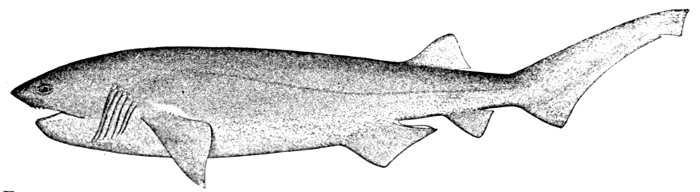
Fig. 312.—Griset or Cow-shark, Hexanchus griseus (Gmelin). Currituck Inlet, N. C.
The few living forms are of high interest. The extinct species are numerous, but not very different from the living species.
Family Hexanchidæ.—The majority of the living Notidanoid sharks belong to the family of Hexanchidæ. These sharks have six or seven gill-openings, one dorsal fin, and a relatively simple organization. The bodies are moderately elongate, not eel-shaped, and the palato-quadrate articulates with the postorbital part of the skull. The six or eight species are found sparsely in the warm seas. The two genera, Hexanchus, with six, and Heptranchias, with seven vertebræ, are found in the Mediterranean. The European species are Hexanchus griseus, the cow-shark, and Heptranchias cinereus. The former crosses to the West Indies. In California, Heptranchias maculatus and Hexanchus corinus are occasionally taken, while Heptranchias deani is the well known Aburazame or oil shark of Japan. Heptranchias indicus, a similar species, is found in India.
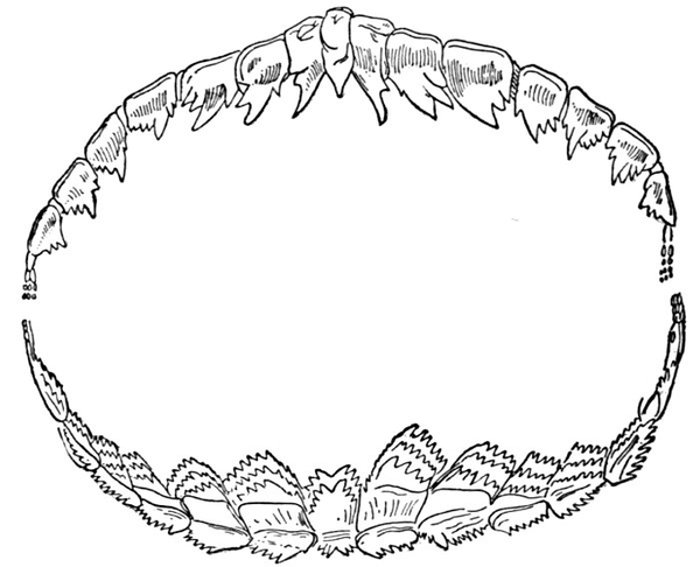
Fig. 313.—Teeth of Heptranchias indicus Gmelin.
Fossil Hexanchidæ exist in large numbers, all of them referred by Woodward to the genus Notidanus (which is a later name than Hexanchus and Heptranchias and intended to include both these genera), differing chiefly in the number of gill-openings, a character not ascertainable in the fossils. None of these, however, appear before Cretaceous time, a fact which may indicate that the simplicity of structure in Hexanchus and Heptranchias is a result of degeneration and not altogether a mark of primitive simplicity. The group is apparently much younger than the Cestraciontes and little older than the Lamnoids, or the Squaloid groups. Heptranchias microdon is common in English Cretaceous rocks, and Heptranchias primigenius and other species are found in the Eocene.
Family Chlamydoselachidæ.—Very great interest is attached to the recent discovery by Samuel Garman of the frilled shark, Chlamydoselachus anguineus, the sole living representative of the Chlamydoselachidæ.
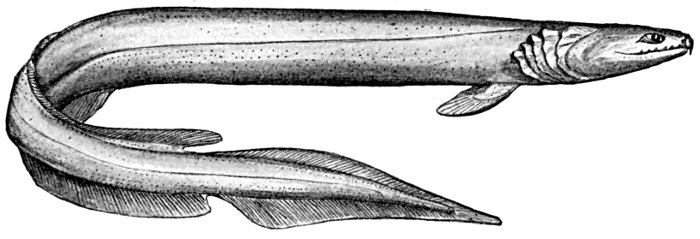
Fig. 314.—Frill-shark, Chlamydoselachus anguineus Garman. From Misaki, Japan. (After Günther.)
This shark was first found on the coast of Japan, where it is rather common in deep water. It has since been taken off Madeira and off the coast of Norway. It is a long, slender, eel-shaped shark with six gill-openings and the palato-quadrate not articulated to the cranium. The notochord is mainly persistent, in part replaced by feeble cyclospondylic vertebral centra. Each gill-opening is bordered by a broad frill of skin. There is but one dorsal fin. The teeth closely resemble those of Dittodus or Didymodus and other extinct Ichthyotomi. The teeth have broad, backwardly extended bases overlapping, the crown consisting of three slender curved cusps, separated by rudimentary denticles. Teeth of a fossil species, Chlamydoselachus lawleyi, are recorded by J. W. Davis from the Pliocene of Tuscany.
Order Asterospondyli.—The order of Asterospondyli comprises the typical sharks, those in which the individual vertebræ are well developed, the calcareous lamellæ arranged so as to radiate, star-fashion, from the central axis. All these sharks possess two dorsal fins and one anal fin, the pectoral fin is normally developed, with the three basal cartilages; there are five gill-openings, and the tail is heterocercal.
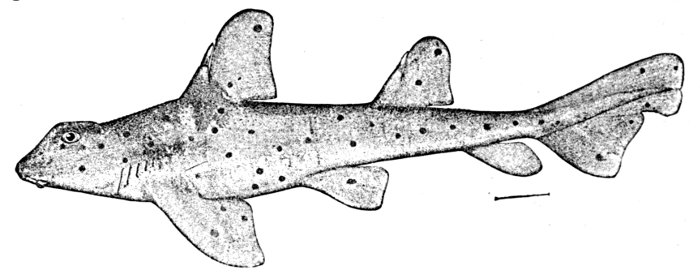
Fig. 315.—Bullhead-shark, Heterodontus francisci (Girard). San Pedro, Cal.
Suborder Cestraciontes.—The most ancient types may be set off as a distinct suborder under the name of Cestraciontes or Prosarthri.
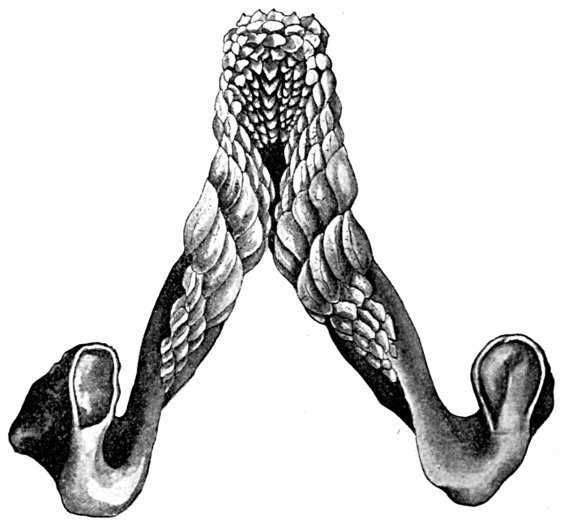
Fig. 316.—Lower jaw of Heterodontus philippi. From Australia. Family Heterodontidæ. (After Zittel.)
These forms find their nearest allies in the Notidani, which they resemble to some extent in dentition and in having the palato-quadrate articulated to the skull although fastened farther forward than in the Notidani. Each of the two dorsal fins has a strong spine.
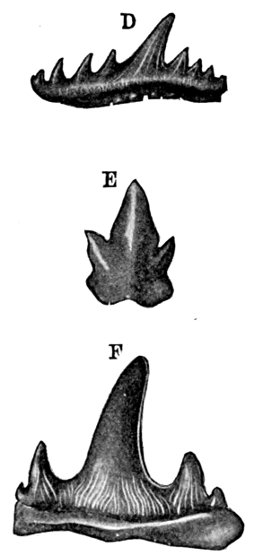
Fig. 317.—Teeth of Cestraciont Sharks. (After Woodward.) d, Synechodus dubrisianus Mackie; e, Heterodontus canaliculatus Egerton; f, Hybodus striatulus Agassiz. (After Woodward.)
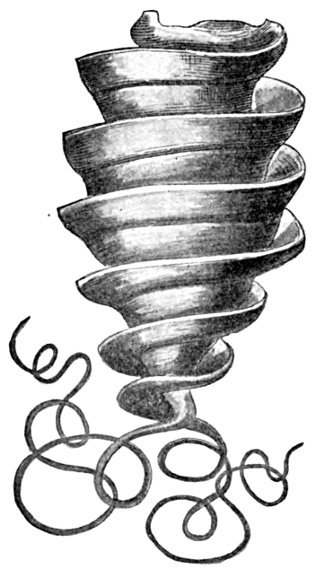
Fig. 318.—Egg of Port Jackson Shark, Heterodontus philippi (Lacépède). (After Parker & Haswell.)
Family Heterodontidæ.—Among recent species this group contains only the family of Heterodontidæ, the bullhead sharks, or Port Jackson sharks. In this family the head is high, with usually projecting eyebrows, the lateral teeth are pad-like, ridged or rounded, arranged in many rows, different from the pointed anterior teeth, the fins are large, the coloration is strongly marked, and the large egg-cases are spirally twisted. All have five gill-openings. The living species of Heterodontidæ are found only in the Pacific, the Port Jackson shark of Australia, Heterodontus philippi, being longest known. Other species are Heterodontus francisci, common in California, Heterodontus japonicus, in Japan, and Heterodontus zebra, in China. These small and harmless sharks at once attract attention by their peculiar forms. In the American species the jaws are less contracted than in the Asiatic species, called Heterodontus. For this reason Dr. Gill has separated the former under the name of Gyropleurodus. The differences are, however, of slight value. The genus Heterodontus first appears in the Jurassic, where a number of species are known, one of the earliest being Heterodontus falcifer.
Three families of Cestraciontes are recognized by Hay. The most primitive of these is the group of Orodontidæ. Orodus, from the Lower Carboniferous, has the teeth with a central crown, its surface wrinkled. Of the Heterodontidæ, Hybodus, of the Carboniferous and Triassic, is one of the earliest and largest genera, characterized by elongate teeth of many cusps, different in different parts of the jaw, somewhat as in the Hexanchidæ, the median points being, however, always longest. The dorsal fins are provided with long spines serrated behind. The vertebræ with persistent notochord show qualities intermediate between those of Hexanchidæ and Heterodontidæ, and the same relation is shown by the teeth. In this genus two large hooked half-barbed dermal spines occur behind each orbit.
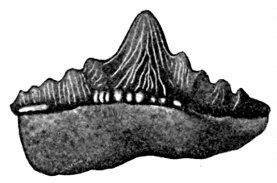
Fig. 319.—Tooth of Hybodus delabechei Charlesworth. (After Woodward.)

Fig. 320.—Fin-spine of Hybodus basanus Egerton. Cretaceous. Family Heterodontidæ. (After Nicholson.)

Fig. 321.—Fin-spine of Hybodus reticulatus Agassiz. (After Zittel.)
Palæospinax, with short stout spines and very large pectoral fins, formerly regarded as a dogfish, is placed near Heterodontus by Woodward. Acrodus, from the Triassic, shows considerable resemblance to Heterodontus. Its teeth are rounded and without cusps.
Most of these species belong to the Carboniferous, Triassic, and Jurassic, although some fragments ascribed to Cestraciont sharks occur in the Upper Silurian. Asteracanthus, known only from fin-spines in the Jura, probably belongs here.
It is a singular fact first noted by Dr. Hay, that with all the great variety of sharks, ten families in the Carboniferous age, representatives of but one family, Heterodontidæ, are found in the Triassic. This family may be the parent of all subsequent sharks and rays, six families of these appearing in the Jurassic and many more in the Cretaceous.
Edestus and its Allies.—Certain monstrous structures, hitherto thought to be fin-spines, are now shown by Dr. Eastman and others to be coalescent teeth of Cestraciont sharks.

Fig. 322.—Fin-spine of Hybodus canaliculatus Agassiz.
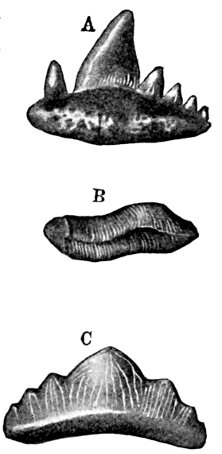
Fig. 323.—Teeth of Cestraciont Sharks. (After Woodward.) a, Hybodus lævis Woodward (after Woodward); b, Heterodontus rugosus Agassiz; c, Hybodus delabechei Charlesworth.
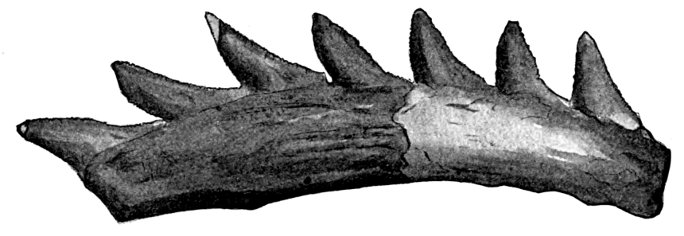
Fig. 324.—Edestus vorax Leidig, supposed to be a whorl of teeth. (After Newberry.)
These remarkable Ichthyodorulites are characteristic structures of sharks of unknown nature, but probably related to the Heterodontidæ. Of these the principal genera are Edestus, Helicoprion, and Campyloprion. Karpinsky regards these ornate serrated spiral structures as whorls of unshed teeth cemented together and extending outside the mouth, "sharp, piercing teeth which were never shed but became fused in whorls as the animals grew."
Dr. Eastman has, however, shown that these supposed teeth of Edestus are much like those of the Cochliodontidæ, and the animals which bore them should doubtless find their place among the Cestraciont sharks, perhaps within the family of Heterodontidæ.
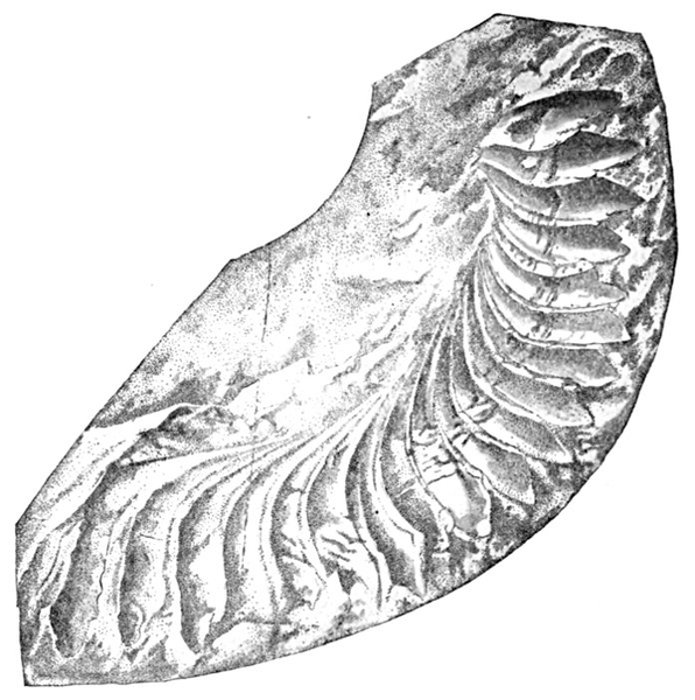
Fig. 325.—Helicoprion bessonowi Karpinsky. Teeth from the Permian of Krasnoufimsk, Russia. (After Karpinsky.)
Onchus.—The name Onchus was applied by Agassiz to small laterally compressed spines, their sides ornamented with smooth or faintly crenulated longitudinal ridges, and with no denticles behind. Very likely these belonged to extinct Cestraciont sharks. Onchus murchisoni and Onchus tenuistriatus occur in the Upper Silurian rocks of England, in the lowest strata in which sharks have been found.
To a hypothetical group of primitive sharks Dr. Hasse has given the name of Polyospondyli. In these supposed ancestral sharks the vertebræ were without any ossification, a simple notochord, possibly swollen at intervals. The dorsal fin was single and long, a fold of skin with perhaps a single spine as an anterior support. The teeth must have been modified dermal papillæ, each probably with many cusps. Probably seven gill-openings were developed, and the tail was diphycercal, ending in a straight point. The finely striated fin-spines not curved upward at tip, called Onchus from the Upper Silurian of the Ludlow shales of England and elsewhere, are placed by Hasse near his Polyspondylous sharks. Such spines have been retained by the group of Chimæras, supposed to be derived from the ancestors of Onchus, as well as by the Heterodontidæ and Squalidæ.
Family Cochliodontidæ.—Another ancient family known from teeth alone is that of Cochliodontidæ. These teeth resemble those of the Heterodontidæ, but are more highly specialized. The form of the body is unknown, and the animals may have been rays rather than sharks. Eastman leaves them near the Petalodontidæ, which group of supposed rays shows a similar dentition. The teeth are convex in form, strongly arched, hollowed at base, and often marked by ridges or folds, being without sharp cusps. In each jaw is a strong posterior tooth with smaller teeth about. The elaborate specialization of these ancient teeth for crushing or grinding shells is very remarkable. The species are chiefly confined to rocks of the Carboniferous age. Among the principal genera are Helodus, Psephodus, Sandalodus, Venustodus, Xystrodus, Deltodus, Pœcilodus, and Cochliodus.
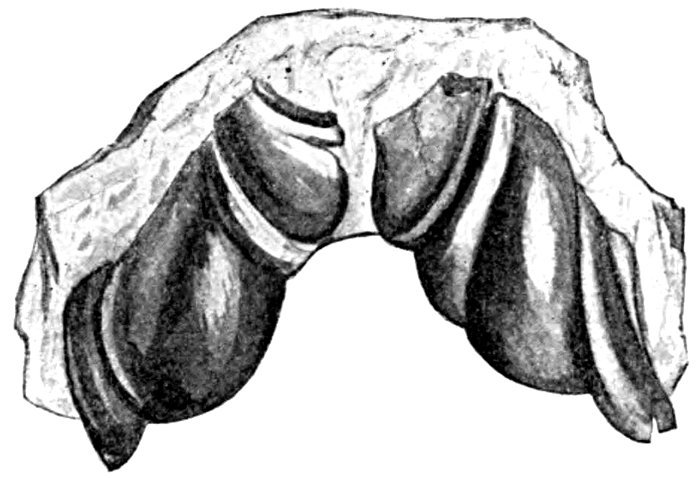
Fig. 326.—Lower jaw of Cochliodus contortus Agassiz. Carboniferous. (After Zittel.)
Concerning the teeth of various fossil sharks, Dr. Dean observes: "Their general character appears to have been primitive, but in structural details they were certainly specialized. Thus their dentition had become adapted to a shellfish diet, and they had evolved defensive spines at the fin margins, sometimes at the sides of the head. In some cases the teeth remain as primitive shagreen cusps on the rim of the mouth, but become heavy and bluntish behind; in other forms the fusion of tooth clusters may present the widest range in their adaptations for crushing; and the curves and twistings of the tritoral surfaces may have resulted in the most specialized forms of dentition which are known to occur, not merely in sharks but among all vertebrates."
In this neighborhood belongs, perhaps, the family of Tamiobatidæ, known from the skull of a single specimen, called Tamiobatis vetustus, from the Devonian in eastern Kentucky. The head has the depressed form of a ray, but it is probably a shark and one of the very earliest known.
Suborder Galei.—The great body of recent sharks belong to the suborder Galei, or Euselachii, characterized by the asterospondylous vertebræ, each having a star-shaped nucleus, and by the fact that the palato-quadrate apparatus or upper jaw is not articulated with the skull. The sharks of this suborder are the most highly specialized of the group, the strongest and largest and, in general, the most active and voracious. They are of three types and naturally group themselves about the three central families Scyliorhinidæ, Lamnidæ, and Carchariidæ (Galeorhinidæ).
The Asterospondyli are less ancient than the preceding groups, but the modern families were well differentiated in Mesozoic times.
Among the Galei the dentition is less complex than with the ancient forms, although the individual teeth are more highly specialized. The teeth are usually adapted for biting, often with knife-like or serrated edges; only the outer teeth are in function; as they are gradually lost, the inner teeth are moved outward, gradually taking the place of these.
We may place first, as most primitive, the forms without nictitating membrane.
Family Scyliorhinidæ.—The most primitive of the modern families is doubtless that of the Scyliorhinidæ, or cat-sharks. This group includes sharks with the dorsal fins both behind the ventrals, the tail not keeled and not bent upward, the spiracles present, and the teeth small and close-set. The species are small and mostly spotted, found in the warm seas. All of them lay their eggs in large cases, oblong, and with long filaments or strings at the corners. The cat-sharks, or roussettes, Scyliorhinus canicula and Catulus stellaris, abound in the Mediterranean. Their skin is used as shagreen or sandpaper in polishing furniture. The species of swell-sharks (Cephaloscylium) (C. uter, in California; C. ventriosus, in Chile; C. laticeps, in Australia; C. umbratile, in Japan) are short, wide-bodied sharks, which have the habit of filling the capacious stomach with air, then floating belly upward like a globefish. Other species are found in the depths of the sea. Scyliorhinus, Catulus, and numerous other genera are found fossil. The earliest is Palæoscyllium, in the Jurassic, not very different from Scyliorhinus, but the fins are described as more nearly like those of Ginglymostoma.
Close to the Scyliorhinidæ is the Asiatic family, Hemiscylliidæ, which differs in being ovoviviparous, the young, according to Mr. Edgar R. Waite, hatched within the body. The general appearance is that of the Scyliorhinidæ, the body being elongate. Chiloscyllium is a well-known genus with several species in the East Indies. Chiloscyllium modestum is the dogfish of the Australian fishermen. The Orectolobidæ are thick-set sharks, with large heads provided with fleshy fringes. Orectolobus barbatus (Crossorhinus of authors) abounds from Japan to Australia.
Another family, Ginglymostomidæ, differs mainly in the form of the tail, which is long and bent abruptly upward at its base. These large sharks, known as nurse-sharks, are found in the warm seas. Ginglymostoma cirrhatum is the common species with Orectolobus. Stegostoma tigrinum, of the Indian seas and north to Japan, one of several genera called tiger-sharks, is remarkable for its handsome spotted coloration. The extinct genus Pseudogaleus (voltai) is said to connect the Scyliorhinoid with the Carcharioid sharks.
The Lamnoid or Mackerel Sharks.—The most active and most ferocious of the sharks, as well as the largest and some of the most sluggish, belong to a group of families known collectively as Lamnoid, because of a general resemblance to the mackerel-shark, or Lamna, as distinguished from the blue sharks and white sharks allied to Carcharias (Carcharhinus).
The Lamnoid sharks agree with the cat-sharks in the absence of nictitating membrane or third eyelid, but differ in the anterior insertion of the first dorsal fin, which is before the ventrals. Some of these sharks have the most highly specialized teeth to be found among fishes, most effective as knives or as scissors. Still others have the most highly specialized tails, either long and flail-like, or short, broad, and muscular, fitting the animal for swifter progression than is possible for any other sharks. The Lamnoid families are especially numerous as fossils, their teeth abounding in all suitable rock deposits from Mesozoic times till now. Among the Lamnoid sharks numerous families must be recognized.
The most primitive is perhaps that of the Odontaspididæ (called Carchariidæ by some recent authors), now chiefly extinct, with the tail unequal and not keeled, and the teeth slender and sharp, often with smaller cusps at their base. Odontaspis and its relatives of the same genus are numerous, from the Cretaceous onward, and three species are still extant, small sharks of a voracious habit, living on sandy shores. Odontaspis littoralis (also known as Carcharias littoralis) is the common sand-shark of our Atlantic coast. Odontaspis taurus is a similar form in the Mediterranean.
Family Mitsukurinidæ, the Goblin-sharks.—Closely allied to Odontaspis is the small family of Mitsukurinidæ, of which a single living species is known. The teeth are like those of Odontaspis, but the appearance is very different.
The goblin-shark, or Tenguzame, Mitsukurina owstoni, is a very large shark rarely taken in the Kuro Shiwo, or warm "Black Current" of Japan. It is characterized by the development of the snout into a long flat blade, extending far beyond the mouth, much as in Polyodon and in certain Chimæras. Several specimens are now known, all taken by Capt. Alan Owston of Yokohama in Sagami Bay, Japan. The original specimen, a young shark just born, was presented by him to Professor Kakichi Mitsukuri of the University of Tokyo. From this our figure was taken. The largest specimen now known is in the United States National Museum and is fourteen feet in length. In the Upper Cretaceous is a very similar genus, Scapanorhynchus (lewisi, etc.), which Professor Woodward thinks may be even generically identical with Mitsukurina, though there is considerable difference in the form of the still longer rostral plate, and the species of Scapanorhynchus differ among themselves in this regard.
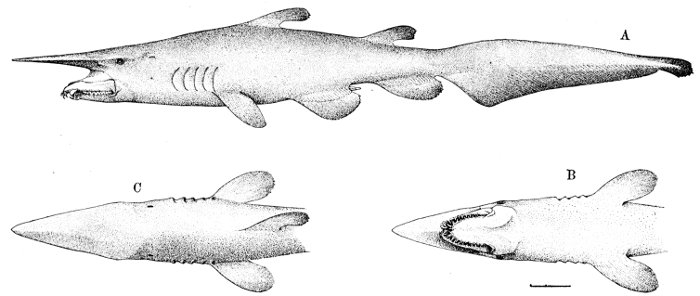
Fig. 327.—Goblin-shark (Tenguzame), Mitsukurina owstoni Jordan. From a young specimen in the Imperial University of Tokyo.
Mitsukurina, with Heterodontus, Heptranchias, and Chlamydoselache, is a very remarkable survival of a very ancient form. It is an interesting fact that the center of abundance of all these relics of ancient life is in the Black Current, or Gulf Stream, of Japan.
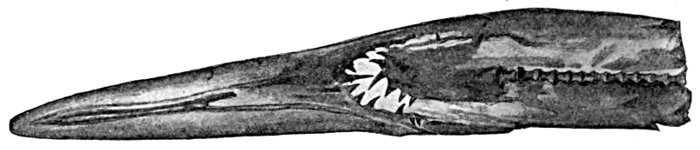
Fig. 328.—Scapanorhynchus lewisi Davis. Family Mitsukurinidæ. Under side of snout. (After Woodward.)
Family Alopiidæ, or Thresher Sharks.—The related family of Alopiidæ contains probably but one recent species, the great fox-shark, or thresher, found in all warm seas. In this species, Alopias vulpes, the tail is as long as the rest of the body and bent upward from the base. The snout is very short, and the teeth are small and close-set. The species reaches a length of about twenty-five feet. It is not especially ferocious, and the current stories of its attacks on whales probably arise from a mistake of the observers, who have taken the great killer, Orca, for a shark. The killer is a mammal, allied to the porpoise. It attacks the whale with great ferocity, clinging to its flesh by its strong teeth. The whale rolls over and over, throwing the killer into the air, and sailors report it as a thresher. As a matter of fact the thresher very rarely if ever attacks any animal except small fish. It is said to use its tail in rounding up and destroying schools of herring and sardines. Fossil teeth of thresher-sharks of some species are found from the Miocene.
Family Pseudotriakidæ.—The Pseudotriakidæ consist of two species. One of these is Pseudotriakis microdon, a large shark with a long low tail, long and low dorsal fin, and small teeth. It has been only twice taken, off Portugal and off Long Island. The other, the mute shark, Pseudotriakis acrales, a large shark with the body as soft as a rag, is in the museum of Stanford University, having been taken by Mr. Owston off Misaki.
Family Lamnidæ.—To the family of Lamnidæ proper belong the swiftest, strongest, and most voracious of all sharks. The chief distinction lies in the lunate tail, which has a keel on either side at base, as in the mackerels. This form is especially favorable for swift swimming, and it has been independently developed in the mackerel-sharks, as in the mackerels, in the interest of speed in movement.
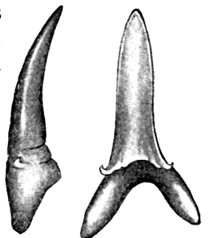
Fig. 329.—Tooth of Lamna cuspidata Agassiz. Oligocene. Family Lamnidæ. (After Nicholson.)
The porbeagle, Lamna cornubica, known as salmon-shark in Alaska, has long been noted for its murderous voracity. About Kadiak Island it destroys schools of salmon, and along the coasts of Japan, and especially of Europe and across to New England, it makes its evil presence felt among the fishermen. Numerous fossil species of Lamna occur, known by the long knife-like flexuous teeth, each having one or two small cusps at its base.
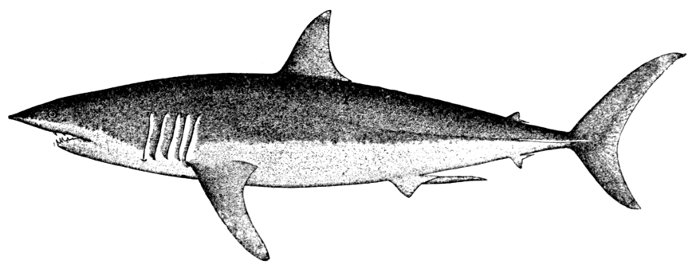
Fig. 330.—Mackerel-shark, Isuropsis dekayi Gill. Pensacola, Fla.
In the closely related genus, Isurus, the mackerel-sharks, this cusp is wanting, while in Isuropsis the dorsal fin is set farther back. In each of these genera the species reach a length of 20 to 25 feet. Each is strong, swift, and voracious. Isurus oxyrhynchus occurs in the Mediterranean, Isuropsis dekayi, in the Gulf of Mexico, and Isuropsis glauca, from Hawaii and Japan westward to the Red Sea.
Man-eating Sharks.—Equally swift and vastly stronger than these mackerel-sharks is the man-eater, or great white shark, Carcharodon carcharias. This shark, found occasionally in all warm seas, reaches a length of over thirty feet and has been known to devour men. According to Linnæus, it is the animal which swallowed the prophet Jonah. "Jonam Prophetum," he observes, "ut veteris Herculem trinoctem, in hujus ventriculo tridui spateo bæsisse, verosimile est."
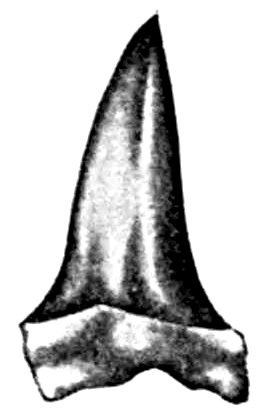
Fig. 331.—Tooth of Isurus hastalis (Agassiz). Miocene. Family Lamnidæ. (After Nicholson.)
It is beyond comparison the most voracious of fish-like animals. Near Soquel, California, the writer obtained a specimen in 1880, with a young sea-lion (Zalophus) in its stomach. It has been taken on the coasts of Europe, New England, Carolina, California, Hawaii, and Japan, its distribution evidently girdling the globe. The genus Carcharodon is known at once by its broad, evenly triangular, knife-like teeth, with finely serrated edges, and without notch or cusp of any kind. But one species is now living. Fossil teeth are found from the Eocene. One of these, Carcharodon megalodon (Fig. 332), from fish-guano deposits in South Carolina and elsewhere, has teeth nearly six inches long. The animal could not have been less than ninety feet in length. These huge sharks can be but recently extinct, as their teeth have been dredged from the sea-bottom by the Challenger in the mid-Pacific.
Fossil teeth of Lamna and Isurus as well as of Carcharodon are found in great abundance in Cretaceous and Tertiary rocks. Among the earlier species are forms which connect these genera very closely.
The fossil genus Otodus must belong to the Lamnidæ. Its massive teeth with entire edges and blunt cusps at base are common in Cretaceous and Tertiary deposits. The teeth are formed much as in Lamna, but are blunter, heavier, and much less effective as instruments of destruction. The extinct genus Corax is also placed here by Woodward.
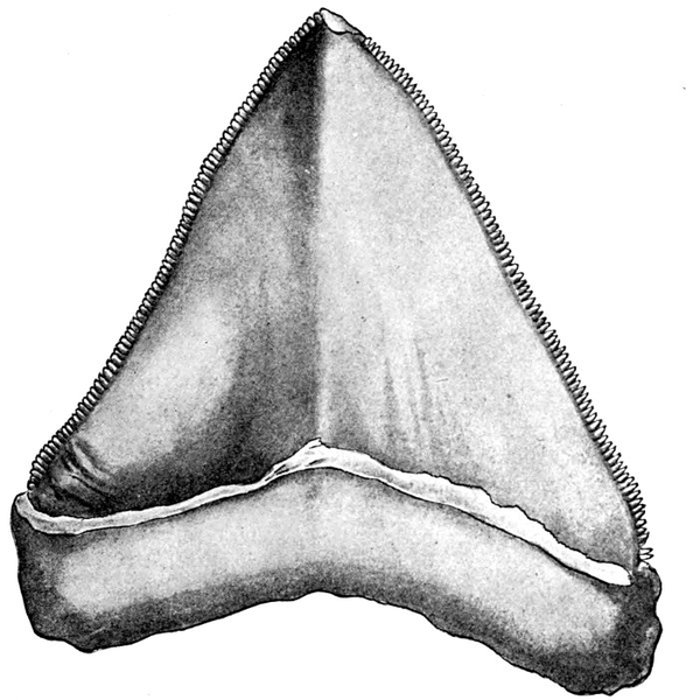
Fig. 332.—Carcharodon megalodon Charlesworth. Miocene. Family Lamnidæ. (After Zittel.)
Family Cetorhinidæ, or Basking Sharks.—The largest of all living sharks is the great basking shark (Cetorhinus maximus), constituting the family of Cetorhinidæ. This is the largest of all fishes, reaching a length of thirty-six feet and an enormous weight. It is a dull and sluggish animal of the northern seas, almost as inert as a sawlog, often floating slowly southward in pairs in the spring and caught occasionally by whalers for its liver. When caught, its huge flabby head spreads out wide on the ground, its weight in connection with the great size of the mouth-cavity rendering it shapeless. Although so clumsy and without spirit, it is said that a blow with its tail will crush an ordinary whaleboat. The basking shark is known on all northern coasts, but has most frequently been taken in the North Sea, and about Monterey Bay in California. From this locality specimens have been sent to the chief museums of Europe. In its external characters the basking shark has much in common with the man-eater. Its body is, however, relatively clumsy forward; its fins are lower, and its gill-openings are much broader, almost meeting under the throat. The great difference lies in the teeth, which in Cetorhinus are very small and weak, about 200 in each row. The basking shark, also called elephant-shark and bone-shark, does not pursue its prey, but feeds on small creatures to be taken without effort. Fossil teeth of Cetorhinus have been found from the Cretaceous, as also fossil gill-rakers, structures which in this shark are so long as to suggest whalebone.
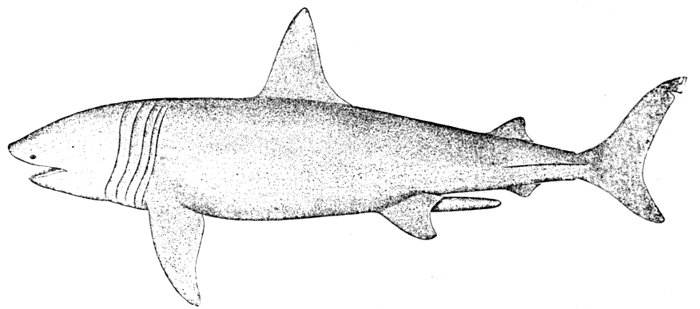
Fig. 333.—Basking Shark, Cetorhinus maximus (Gunner). France.
Family Rhineodontidæ.—The whale-sharks, Rhineodontidæ, are likewise sluggish monsters with feeble teeth and keeled tails. From Cetorhinus they differ mainly in having the last gill-opening above the pectorals. There is probably but one species, Rhineodon typicus, of the tropical Pacific, straying northward to Florida, Lower California, and Japan.
The Carcharioid Sharks, or Requins.—The largest family of recent sharks is that of Carchariidæ (often called Galeorhinidæ, or Galeidæ), a modern offshoot from the Lamnoid type, and especially characterized by the presence of a third eyelid, the nictitating membrane, which can be drawn across the eye from below. The heterocercal tail has no keel; the end is bent upward; both dorsal fins are present, and the first is well in front of the ventral fins; the last gill-opening over the base of the pectoral, the head normally formed; these sharks are ovoviviparous, the young being hatched in a sort of uterus, with or without placental attachment.
Some of these sharks are small, blunt-toothed, and innocuous. Others reach a very large size and are surpassed in voracity only by the various Lamnidæ.
The genera Cynias and Mustelus, comprising the soft-mouthed or hound-sharks, have the teeth flat and paved, while well-developed spiracles are present. These small, harmless sharks abound on almost all coasts in warm regions, and are largely used as food by those who do not object to the harsh odor of shark's flesh. The best-known species is Cynias canis of the Atlantic. By a regular gradation of intermediate forms, through such genera as Rhinotriacis and Triakis with tricuspid teeth, we reach the large sharp-toothed members of this family. Galeus (or Galeorhinus) includes large sharks having spiracles, no pit at the root of the tail, and with large, coarsely serrated teeth. One species, the soup-fin shark (Galeus zyopterus), is found on the coast of California, where its fins are highly valued by the Chinese, selling at from one to two dollars for each set. The delicate fin-rays are the part used, these dissolving into a finely flavored gelatine. The liver of this and other species is used in making a coarse oil, like that taken from the dogfish. Other species of Galeus are found in other regions, Galeus galeus being known in England as tope, Galeus japonicus abounding in Japan.
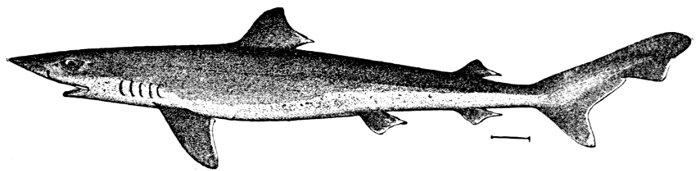
Fig. 334.—Soup-fin Shark, Galeus zyopterus (Jordan & Gilbert). Monterey.
Galeocerdo differs mainly in having a pit at the root of the tail. Its species, large, voracious, and tiger-spotted, are found in warm seas and known as tiger-sharks (Galeocerdo maculatus in the Atlantic, Galeocerdo tigrinus in the Pacific).
The species of Carcharias (Carcharhinus of Blainville) lack the spiracles. These species are very numerous, voracious, armed with sharp teeth, broad or narrow, and finely serrated on both edges. Some of these sharks reach a length of thirty feet. They are very destructive to other fishes, and often to fishery apparatus as well. They are sometimes sought as food, more often for the oil in their livers, but, as a rule, they are rarely caught except as a measure for getting rid of them. Of the many species the best known is the broad-headed Carcharias lamia, or cub-shark, of the Atlantic. This the writer has taken with a great hook and chain from the wharves at Key West. These great sharks swim about harbors in the tropics, acting as scavengers and occasionally seizing arm or leg of those who venture within their reach. One species (Carcharias nicaraguensis) is found in Lake Nicaragua, the only fresh-water shark known, although some run up the brackish mouth of the Ganges and into Lake Pontchartrain. Carcharias japonicus abounds in Japan.
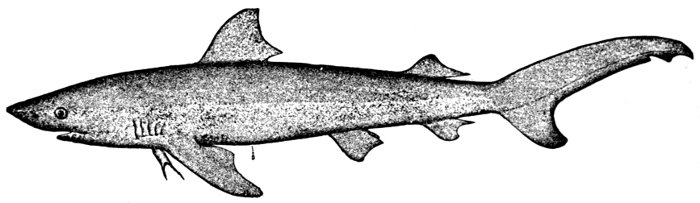
Fig. 335.—Cub-shark, Carcharias lamia Rafinesque. Florida.
A closely related genus is Prionace, its species Prionace glauca, the great blue shark, being slender and swift, with the dorsal farther back than in Carcharias. Of the remaining genera the most important is Scoliodon, small sharks with oblique teeth which have no serrature. One of these, Scoliodon terræ-novæ, is the common sharp-nosed shark of our Carolina coast. Fossil teeth representing nearly all of these genera are common in Tertiary rocks.
Probably allied to the Carchariidæ is the genus Corax, containing large extinct sharks of the Cretaceous with broadtriangular serrate teeth, very massive in substance, and without denticles. As only the teeth are known, the actual relations of the several species of Corax are not certainly known, and they may belong to the Lamnidæ.
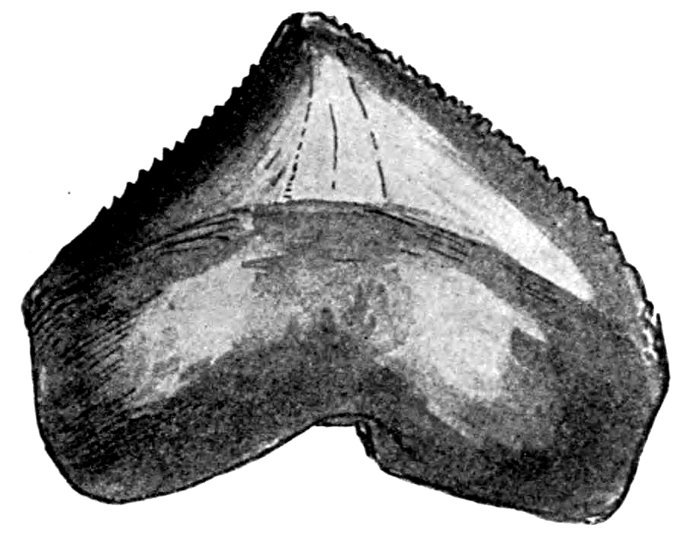
Fig. 336.—Teeth of Corax pristodontus.
Family Sphyrnidæ, or Hammer-head Sharks.—The Sphyrnidæ, or hammer-headed sharks, are exactly like the Carchariidæ except that the sides of the head are produced, so as to give it the shape of a hammer or of a kidney, the eye being on the produced outer edge. The species are few, but mostly widely distributed; rather large, voracious sharks with small sharp teeth.
The true hammer-head, Sphyrna zygæna, Fig. 337, is common from the Mediterranean to Cape Cod, California, Hawaii, and Japan. The singular form of its head is one of the most extraordinary modifications shown among fishes. The bonnet-head (Sphyrna tiburo) has the head kidney-shaped or crescent-shaped. It is a smaller fish, but much the same in distribution and habits. Intermediate forms occur, so that with all the actual differences we must place the Sphyrnidæ all in one genus. Fossil hammer-heads occur in the Miocene, but their teeth are scarcely different from those of Carcharias. Sphyrna prisca, described by Agassiz, is the primeval species.
The Order of Tectospondyli.—The sharks and rays having no anal fin and with the calcareous lamellæ arranged in one or more rings around a central axis constitute a natural group to which, following Woodward, we may apply the name of Tectospondyli. The Cyclospondyli (Squalidæ, etc.) with one ring only of calcareous lamellæ may be included in this order, as also the rays, which have tectospondylous vertebræ and differ from the sharks as a group only in having the gill-openings relegated to the lower side by the expansion of the pectoral fins. The group of rays and Hasse's order of Cyclospondyli we may consider each as a suborder of Tectospondyli. The origin of this group is probably to be found in or near the Cestraciontes, as the strong dorsal spines of the Squalidæ resemble those of the Heterodontidæ.
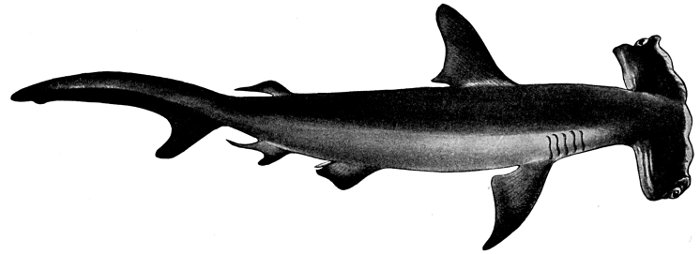
Fig. 337.—Hammer-head Shark, Sphyrna zygæna L. Hindustan. (After Day.)
Suborder Cyclospondyli.—In this group the vertebræ have the calcareous lamellæ arranged in a single ring about the central axis. The anal fin, as in all the tectospondylous sharks and rays, is wanting. In all the asterospondylous sharks, as in the Ichthyotomi, Acanthodei, and Chimæras, this fin is present. It is present in almost all of the bony fishes. All the species have spiracles, and in all are two dorsal fins. None have the nictitating membrane, and in all the eggs are hatched internally. Within the group there is considerable variety of form and structure. As above stated, we have a perfect gradation among Tectospondyli from true sharks, with the gill-openings lateral, to rays, which have the gill-opening on the ventral side, the great expansion of the pectoral fins, a character of relatively recent acquisition, having crowded the gill-openings from their usual position.
Family Squalidæ.—The largest and most primitive family of Cyclospondyli is that of the Squalidæ, collectively known as dogfishes or skittle-dogs. In the Squalidæ each dorsal fin has a stout spine in front, the caudal is bent upward and not keeled, and the teeth are small and varied in form, usually not all alike in the same jaw.
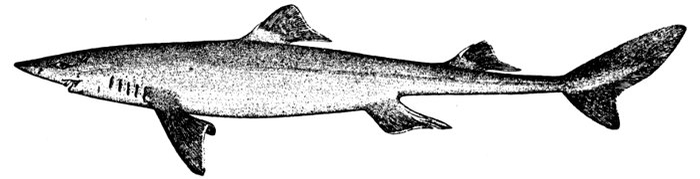
Fig. 338.—Dogfish, Squalus acanthias L. Gloucester, Mass.
The genus Squalus includes the dogfishes, small, greedy sharks abundant in almost all cool seas and in some tropical waters. They are known by the stout spines in the dorsal fins and by their sharp, squarish cutting teeth. They are largely sought by fishermen for the oil in their livers, which is used to adulterate better oils. Sometimes 20,000 have been taken in one haul of the net. They are very destructive to herrings and other food-fishes. Usually the fishermen cut out the liver, throwing the shark overboard to die or to be cast on the beach. In northern Europe and New England Squalus acanthias is abundant. Squalus sucklii replaces it in the waters about Puget Sound, and Squalus mitsukurii in Japan and Hawaii. Still others are found in Chile and Australia. The species of Squalus live near shore and have the gray color usual among sharks. Allied forms perhaps hardly different from Squalus are found in the Cretaceous rocks and have been described as Centrophoroides. Other genera related to Squalus live in greater depths, from 100 to 600 fathoms, and these are violet-black. Some of the deep-water forms are the smallest of all sharks, scarcely exceeding a foot in length. Etmopterus spinax lives in the Mediterranean, and teeth of a similar species occur in the Italian Pliocene rocks. Etmopterus lucifer,[150] a deep-water species of Japan, has a brilliant luminous glandular area along the sides of the belly. Other small species of deeper waters belong to the genera Centrophorus, Centroscymnus, and Deania. In some of these species the scales are highly specialized, pedunculate, or having the form of serrated leaves. Some species are Arctic, the others are most abundant about Misaki in Japan and the Madeira Islands, two regions especially rich in semi-bathybial types. Allied to the Squalidæ is the small family of Oxynotidæ with short bodies and strong dorsal spine. Oxynotus centrina is found in the Mediterranean, and its teeth occur in the Miocene.
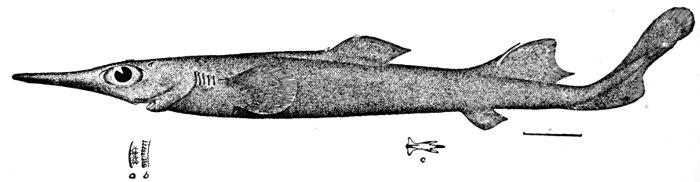
Fig. 339.—Etmopterus lucifer Jordan & Snyder. Misaki, Japan.
Family Dalatiidæ.—The Dalatiidæ, or scymnoid sharks, differ from the Squalidæ almost solely in the absence of dorsal spines. The smaller species belonging to Dalatias (Scymnorhinus, or Scymnus), Dalatias licha, etc., are very much like the dogfishes.
They are, however, nowhere very common. The teeth of Dalatias major exist in Miocene rocks. In the genus Somniosus the species are of very much greater size, Somniosus microcephalus attaining the length of about twenty-five feet. This species, known as the sleeper-shark or Greenland shark, lives in all cold seas and is an especial enemy of the whale, from which it bites large masses of flesh with a ferocity hardly to be expected from its clumsy appearance. From its habit of feeding on fish-offal, it is known in New England as "gurry-shark." Its small quadrate teeth are very much like those of the dogfish, their tips so turned aside as to form a cutting edge. The species is stout in form and sluggish in movement. It is taken for its liver in the north Atlantic on both coasts in Puget Sound and Bering Sea, and I have seen it in the markets of Tokyo. In Alaska it abounds about the salmon canneries feeding on the refuse.
Family Echinorhinidæ.—The bramble-sharks, Echinorhinidæ, differ in the posterior insertion of the very small dorsal fins, and in the presence of scattered round tubercles, like the thorns of a bramble instead of shagreen. The single species, Echinorhinus spinosus reaches a large size. It is rather scarce on the coasts of Europe, and was once taken on Cape Cod. The teeth of an extinct species, Echinorhinus richardi, are found in the Pliocene.
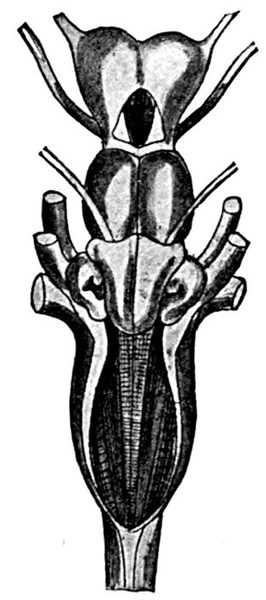
Fig. 340.—Brain of Monkfish, Squatina squatina L. (After Duméril.)
Suborder Rhinæ.—The suborder Rhinæ includes those sharks having the vertebræ tectospondylous, that is, with two or more series of calcified lamellæ, as on the rays. They are transitional forms, as near the rays as the sharks, although having the gill-openings rather lateral than inferior, the great pectoral fins being separated by a notch from the head.
The principal family is that of the angel-fishes, or monkfishes (Squatinidæ). In this group the body is depressed and flat like that of a ray. The greatly enlarged pectorals form a sort of shoulder in front alongside of the gill-openings, which has suggested the bend of the angel's wing. The dorsals are small and far back, the tail is slender with small fins, all these being characters shared by the rays. But one genus is now extant, widely diffused in warm seas. The species if really distinct are all very close to the European Squatina squatina. This is a moderate-sized shark of sluggish habit feeding on crabs and shells, which it crushes with its small, pointed, nail-shaped teeth. Numerous fossil species of Squatina are found from the Triassic and Cretaceous, Squatina alifera being the best known.
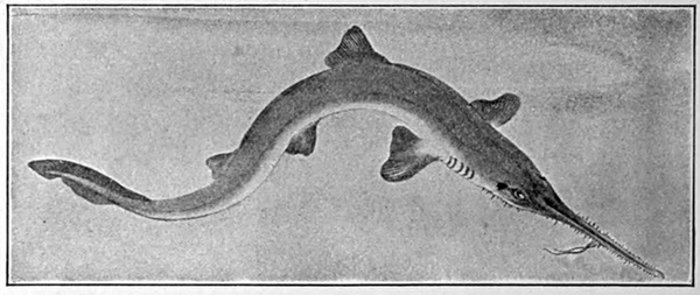
Fig. 341.—Saw-shark, Pristiophorus japonicus Günther. Specimen from Nagasaki.
Family Pristiophoridæ, or Saw-sharks.—Another highly aberrant family is that of the sawsharks, Pristiophoridæ. These are small sharks, much like the Dalatiidæ in appearance, but with the snout produced into a long flat blade, on either side of which is a row of rather small sharp enameled teeth. These teeth are smaller and sharper than in the sawfish (Pristis), and the whole animal is much smaller than its analogue among the rays. This saw must be an effective weapon among the schools of herring and anchovies on which the sawsharks feed. The true teeth are small, sharp, and close-set. The few species of sawsharks are marine, inhabiting the shores of eastern Asia and Australia. Pristiophorus japonicus is found rather sparsely along the shores of Japan. The vertebræ in this group are also tectospondylous. Both the Squatina and Pristiophorus represent a perfect transition from the sharks and rays. We regard them as sharks only because the gill-openings are on the side, not crowded downward to the under side of the body-disk. As fossil, Pristiophorus is known only from a few detached vertebræ found in Germany.
Suborder Batoidei, or Rays.—The suborder of Batoidei, Rajæ, or Hypotrema, including the skates and rays, is a direct modern offshoot from the ancestors of tectospondylous sharks, its characters all specialized in the direction of life on the bottom with a food of shells, crabs, and other creatures less active than fishes.
The single tangible distinctive character of the rays as a whole lies in the position of the gill-openings, which are directly below the disk and not on the side of the neck in all the sharks. This difference in position is produced by the anterior encroachment of the large pectoral fins, which are more or less attached to the side of the head. By this arrangement, which aids in giving the body the form of a flat disk, the gill-openings are limited and forced downward. In the Squatinidæ (angel-fishes) and the Pristiophoridæ (sawsharks) the gill-openings have an intermediate position, and these families might well be referred to the Batoidei, with which group they agree in the tectospondylous vertebræ.
Other characters of the rays, appearing progressively, are the widening of the disk, through the greater and greater development of the fins, the reduction of the tail, which in the more specialized forms becomes a long whip, the reduction, more and more posterior insertion, and the final loss of the dorsal fins, which are always without spine, the reduction of the teeth to a tessellated pavement, then finally to flat plates and the retention of the large spiracle. Through this spiracle the rays breathe while lying on the bottom, thus avoiding the danger of introducing sand into their gills, as would be done if they breathed through the mouth. In common with the cyclospondylous sharks, all the rays lack the anal fin. The rays rarely descend to great depths in the sea. The different members have varying relations, but the group most naturally divides into thick-tailed rays or skates (Sarcura) and whip-tailed rays or sting-rays (Masticura). The former are much nearer to the sharks and also appear earliest in geological times.
Pristididæ, or Sawfishes.—The sawfishes, Pristididæ, are long, shark-like rays of large size, having, like the sawsharks, the snout prolonged into a very long and strong flat blade, with a series of strong enameled teeth implanted in sockets along either side of it. These teeth are much larger and much less sharp than in the sawsharks, but they are certainly homologous with these, and the two groups must have a common descent, distinct from that of the other rays. Doubtless when taxonomy is a more refined art they will constitute a small suborder together. This character of enameled teeth on the snout would seem of more importance than the position of the gill-openings or even the flattening and expansion of the body. The true teeth in the sawfishes are blunt and close-set, pavement-like as befitting a ray. (See Fig. 152.)

Fig. 342.—Sawfish, Pristis pectinatus Latham. Pensacola, Fla.
The sawfishes are found chiefly in river-mouths of tropical America and West Africa: Pristis pectinatus in the West Indies; Pristis zephyreus in western Mexico; and Pristis pectinatus in the Senegal. They reach a length of ten to twenty feet, and with their saws they make great havoc among the schools of mullets and sardines on which they feed. The stories of their attacks on the whale are without foundation. The writer has never found any of the species in the open sea. They live chiefly in the brackish water of estuaries and river-mouths.
Fossil teeth of sawfishes occur in abundance in the Eocene. Still older are vertebræ from the Upper Cretaceous at Maestricht. In Propristis schweinfurthi the tooth-sockets are not yet calcified. In Sclerorhynchus atavus, from the Upper Cretaceous, the teeth are complex in form, with a "crimped" or stellate base and a sharp, backward-directed enameled crown.
Rhinobatidæ, or Guitar-fishes.—The Rhinobatidæ (guitar-fishes) are long-bodied, shovel-nosed rays, with strong tails; they are ovoviviparous, hatching the eggs within the body. The body, like that of the shark or sawfish, is covered with nearly uniform shagreen. The numerous species abound in all warm seas; they are olive-gray in color and feed on small animals of the seabottoms. The length of the snout differs considerably in different species, but in all the body is relatively long and strong. Most of the species belong to Rhinobatus. The best-known American species are Rhinobatus lentiginosus of Florida and Rhinobatus productus of California. The names guitar-fish, fiddler-fish, etc., refer to the form of the body. Numerous fossil species, allied to the recent forms, occur from the Jurassic. Species much like Rhinobatus occur in the Cretaceous and Eocene. Tamiobatis vetustus, lately described by Dr. Eastman from a skull found in the Devonian of eastern Kentucky, the oldest ray-like fish yet known, is doubtless the type of a distinct family, Tamiobatidæ. It is more likely a shark however than a ray, although the skull has a flattened ray-like form.
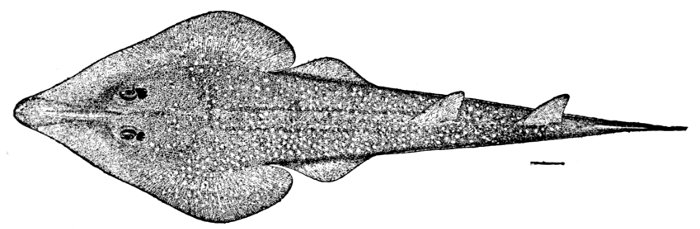
Fig. 343.—Guitar-fish, Rhinobatus lentiginosus Garman. Charleston, S. C.
Closely related to the Rhinobatidæ are the Rhinidæ (Rhamphobatidæ), a small family of large rays shaped like the guitar-fishes and found on the coast of Asia. Rhina ancylostoma extends northward to Japan.
In the extinct family of Astrodermidæ, allied to the Rhinobatidæ, the tail has two smooth spines and the skin is covered with tubercles. In Belemnobatis sismondæ the tubercles are conical; in Astrodermus platypterus they are stellate.
Rajidæ, or Skates.—The Rajidæ, skates, or rays, inhabit the colder waters of the globe and are represented by a large number of living species. In this family the tail is stout, with two-rayed dorsal fins and sometimes a caudal fin. The skin is variously armed with spines, there being always in the male two series of specialized spinous hooks on the outer edge of the pectoral fin. There is no serrated spine or "sting," and in all the species the eggs are laid in leathery cases, which are "wheelbarrow-shaped," with a projecting tube at each of the four angles. The size of this egg-case depends on the size of the species, ranging from three to about eight inches in length. In some species more than one egg is included in the same case.
Most of the species belong to the typical genus Raja, and these are especially numerous on the coasts of all northern regions, where they are largely used as food. The flesh, although rather coarse and not well flavored, can be improved by hot butter, and as "raie au beurre noir" is appreciated by the epicure. The rays of all have small rounded teeth, set in a close pavement.
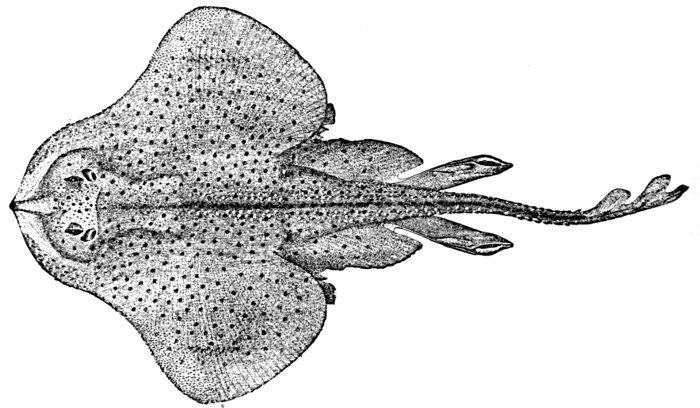
Fig. 344.—Common Skate, Raja erinacea Mitchill. Woods Hole, Mass.
Some of the species, known on our coasts as "barn-door skates," reach a length of four or five feet. Among these are Raja lævis and Raja ocellata on our Atlantic coast, Raja binoculata in California, and Raja tengu in Japan. The small tobacco-box skate, brown with black spots, abundant on the New England coast, is Raja erinacea. The corresponding species in California is Raja inornata, and in Japan Raja kenojei. Numerous other species, Raja batis, clavata, circularis, fullonica, etc., occur on the coasts of Europe. Some species are variegated in color, with eye-like spots or jet-black marblings. Still others, living in deep waters, are jet-black with the body very soft and limp. For these Garman has proposed the generic name Malacorhinus, a name which may come into general use when the species are better known. In the deep seas rays are found even under the equator. In the south-temperate zone the species are mostly generically distinct, Psammobatis being a typical form, differing from Raja. Discobatus sinensis, common in China and Japan, is a shagreen-covered form, looking like a Rhinobatus. It is, however, a true ray, laying its eggs in egg-cases, and with the pectorals extending on the snout. Fossil Rajidæ, known by the teeth and bony tubercles, are found from the Cretaceous onward. They belong to Raja and to the extinct genera Dynatobatis, Oncobatis, and Acanthobatis. The genus Arthropterus (rileyi) from the Lias, known from a large pectoral fin, with distinct cylindrical-jointed rays, may have been one of the Rajidæ, or perhaps the type of a distinct family, Arthropteridæ.
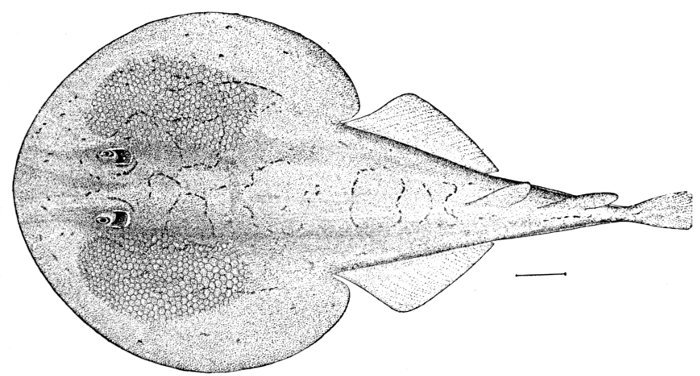
Fig. 345.—Numbfish, Narcine brasiliensis Henle, showing electric cells. Pensacola, Fla.
Narcobatidæ, or Torpedoes.—The torpedoes, or electric rays (Narcobatidæ), are characterized by the soft, perfectly smooth skin, by the stout tail with rayed fins, and by the ovoviviparous habit, the eggs being hatched internally. In all the species is developed an elaborate electric organ, muscular in its origin and composed of many hexagonal cells, each filled with soft fluid. These cells are arranged under the skin about the back of the head and at the base of the pectoral fin, and are capable of benumbing an enemy by means of a severe electric shock. The exercise of this power soon exhausts the animal, and a certain amount of rest is essential to recovery.
The torpedoes, also known as crampfishes or numbfishes, are peculiarly soft to the touch and rather limp, the substance consisting largely of watery or fatty tissues. They are found in all warm seas. They are not often abundant, and as food they have not much value.
Perhaps the largest species is Tetronarce occidentalis, the crampfish of our Atlantic coast, black in color, and said sometimes to weigh 200 pounds. In California Tetronarce californica reaches a length of three feet and is very rarely taken, in warm sandy bays. Tetronarce nobiliana in Europe is much like these two American species. In the European species, Narcobatus torpedo, the spiracles are fringed and the animal is of smaller size. To Narcine belong the smaller numbfish, or "entemedor," of tropical America. These have the spiracles close behind the eyes, not at a distance as in Narcobatus and Tetronarce. Narcine brasiliensis is found throughout the West Indies, and Narcine entemedor in the Gulf of California. Astrape, a genus with but one dorsal fin, is common in southern Japan. Fossil Narcobatus and Astrape occur in the Eocene, one specimen of the former nearly five feet long. Vertebræ of Astrape occur in Prussia in the amber-beds.
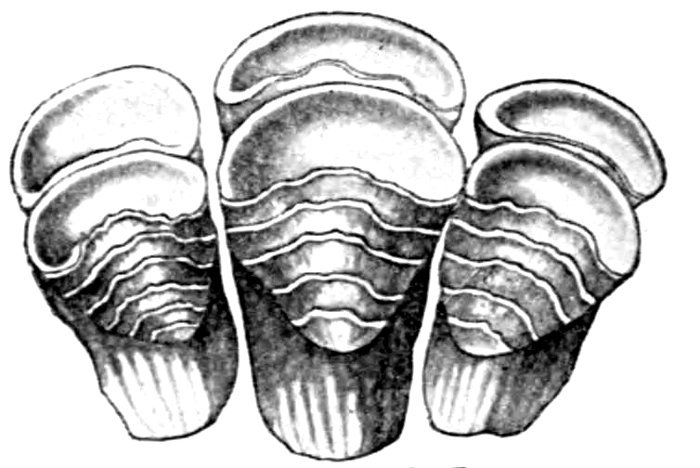
Fig. 346.—Teeth of Janassa linguæformis Atthey. Carboniferous. Family Petalodontidæ. (After Nicholson.)
Petalodontidæ.—Near the Squatinidæ, between the sharks and the rays, Woodward places the large extinct family of Petalodontidæ, with coarsely paved teeth each of which is elongate with a central ridge and one or more strong roots at base. The best-known genera are Janassa and Petalodus, widely distributed in Carboniferous time. Janassa is a broad flat shark, or, perhaps, a skate, covered with smooth shagreen. The large pectoral fins are grown to the head; the rather large ventral fins are separated from them. The tail is small, and the fins, as in the rays, are without spines. The teeth bear some resemblance to those of Myliobatis. Janassa is found in the coal-measures of Europe and America, and other genera extend upward from the Subcarboniferous limestones, disappearing near the end of Carboniferous time. Petalodus is equally common, but known only from the teeth. Other widely distributed genera are Ctenoptychius and Polyrhizodus.
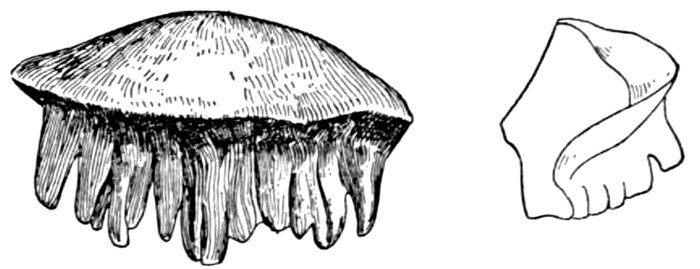
Fig. 347.—Polyrhizodus radicans Agassiz. Family Petalodontidæ. Carboniferous of Ireland. (After McCoy.)
These forms may be intermediate between the skates and the sting-rays. In dentition they resemble most the latter.
Similar to these is the extinct family of Pristodontidæ with one large tooth in each jaw, the one hollowed out to meet the other. It is supposed that but two teeth existed in life, but that is not certain. Nothing is known of the rest of the body in Pristodus, the only genus of the group.
Dasyatidæ, or Sting-rays.—In the section Masticura the tail is slender, mostly whip-like, without rayed dorsal or caudal fins, and it is usually armed with a very long spine with saw-teeth projecting backward. In the typical forms this is a very effective weapon, being wielded with great force and making a jagged wound which in man rarely heals without danger of blood-poisoning. There is no specific poison, but the slime and the loose cuticle of the spine serve to aggravate the irregular cut. I have seen one sting-ray thrust this spine through the body of another lying near it in a boat. Occasionally two or three of these spines are present. In the more specialized forms of sting-rays this spine loses its importance. It becomes very small and not functional, and is then occasionally or even generally absent in individuals.
The common sting-rays, those in which the caudal spine is most developed, belong to the family of Dasyatidæ. This group is characterized by the small skate-like teeth and by the non-extension of the pectoral rays on the head. The skin is smooth or more or less rough. These animals lie flat on the sandy bottoms in nearly all seas, feeding on crabs and shellfish. All hatch the eggs within the body. The genus Urolophus has a rounded disk, and a stout, short tail with a caudal fin. It has a strong spine, and for its size is the most dangerous of the sting-rays. Urolophus halleri, the California species, was named for a young man who was stung by the species at the time of its first discovery at San Diego in 1863. Urolophus jamaicensis abounds in the West Indies, Urolophus mundus at Panama, and Urolophus fuscus in Japan. None of the species reach Europe. The true sting-ray (stingaree, or clam-cracker), Dasyatis, is more widely diffused and the species are very closely related. In these species the body is angular and the tail whip-like. Some of the species reach a length of ten or twelve feet. None have any economic value, and all are disliked by fishermen. Dasyatis pastinaca is common in Europe, Dasyatis centrura along our Atlantic coast, Dasyatis sabina ascends the rivers of Florida, and Dasyatis dipterura abounds in the bay of San Diego. Other species are found in tropical America, while still others (Dasyatis akajei, kuhlii, zugei, etc.) swarm in Japan and across India to Zanzibar.
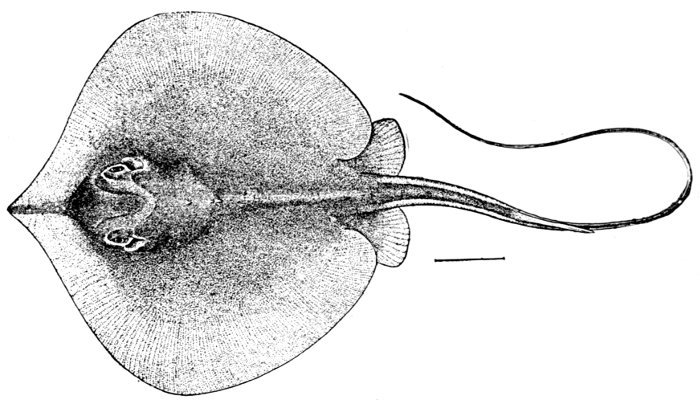
Fig. 348.—Sting-ray, Dasyatis sabina Le Sueur. Galveston.
Pteroplatea, the butterfly-ray, has the disk very much broader than long, and the trivial tail is very short, its little spine more often lost than present. Different species of this genus circle the globe: Pteroplatea maclura, on our Atlantic coast; Pteroplatea marmorata, in California; Pteroplatea japonica, in Japan; and Pteroplatea altavela, in Europe. They are all very much alike, olive, with the brown upper surface pleasingly mottled and spotted.
Sting-rays of various types, Tæniura, Urolophus, etc., occur as fossils from the Eocene onward. A complete skeleton called Xiphotrygon acutidens, distinguished from Dasyatis by its sharp teeth, is described by Cope from the Eocene of Twin Creek in Wyoming. Vertebræ of Urolophus are found in German Eocene. Cyclobatis (oligodactylus), allied to Urolophus, with a few long pectoral rays greatly produced, extending over the tail and forming a rayed wreath-like projection over the snout, is known from the Lower Cretaceous.
Myliobatidæ.—The eagle-rays, Myliobatidæ, have the pectoral fins extended to the snout, where they form a sort of rayed pad. The teeth are very large, flat, and laid in mosaic. The whip-like tail is much like that in the Dasyatidæ, but the spine is usually smaller. The eagle-like appearance is suggested by the form of the skull. The eyes are on the side of the head with heavy eyebrows above them. The species are destructive to clams and oysters, crushing them with their strong flat teeth.
In Aëtobatus the teeth are very large, forming but one row. The species Aëtobatus narinari is showily colored, brown with yellow spots, the body very angular, with long whip-like tail. It is found from Brazil to Hawaii and is rather common.
In Myliobatis the teeth are in several series. The species are many, and found in all warm seas. Myliobatis aquila is the eagle-ray of Europe, Myliobatis californicus is the batfish of California, and Myliobatis tobijei takes its place in Japan.
In Rhinoptera the snout is notched and cross-notched in front so that it appears as if ending in four lobes at the tip. These "cow-nosed rays," or "whipparees," root up the soft bottoms of shallow bays in their search for clams, much as a drove of hogs would do it. The common American species is Rhinopterus bonasus. Rhinoptera steindachneri lives in the Gulf of California.
Teeth and spines of all these genera are common as fossils from the Eocene onwards, as well as many of the extinct genus, Ptychodus, with cyclospondylous vertebræ. Ptychodus mammilaris, rugosus, and decurrens are characteristic of the Cretaceous of England. Myliobatis dixoni is common in the European Eocene, as is also Myliobatis toliapicus and Aëtobatis irregularis. Apocopodon seriacus is known from the Cretaceous of Brazil.
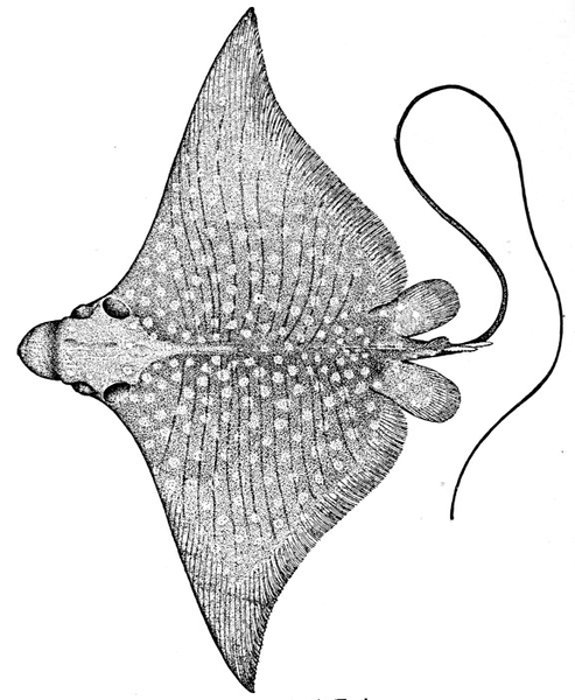
Fig. 349.—Eagle-ray, Aëtobatis narinari (Euphrasen). Cedar Keys, Fla.
Family Psammodontidæ.—The Psammodontidæ are known only from the teeth, large, flat, or rounded and finely dotted or roughened on the upper surface, as the name Psammodus (ψάμμος, sand; ὀδούς, tooth) would indicate. The way in which the jaws lie indicates that these teeth belonged to rays rather than sharks. Numerous species have been described, mostly from the Subcarboniferous limestones. Archæobatis gigas, perhaps, as its name would indicate, the primeval skate, is from the Subcarboniferous limestone of Greencastle, Indiana. Teeth of numerous species of Psammodus and Copodus are found in many rocks of Carboniferous age. Psammodus rugosus common in Carboniferous rocks of Europe.
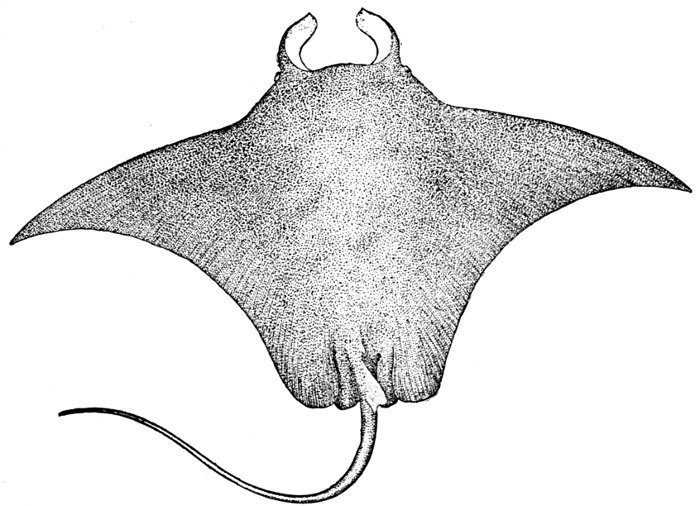
Fig. 350.—Devil-ray or Sea-devil, Manta birostris (Walbaum). Florida.
Family Mobulidæ.—The sea-devils, Mobulidæ, are the mightiest of all the rays, characterized by the development of the anterior lobe of the pectorals as a pair of cephalic fins. These stand up like horns or cars on the upper part of the head. The teeth are small and flat, tubercular, and the whip-like tail is with or without spine. The species are few, little known, and inordinately large, reaching a width of more than twenty feet and a weight, according to Risso, of 1250 pounds. When harpooned it is said that they will drag a large boat with great swiftness. The manta, or sea-devil, of tropical America is Manta birostris. It is said to be much dreaded by the pearl-fishers, who fear that it will devour them "after enveloping them in its vast wings." It is not likely, however, that the manta devours anything larger than the pearl-oyster itself. Manta hamiltoni is a name given to a sea-devil of the Gulf of California. The European species Mobula edentula reaches a similarly enormous size, and Mobula hypostoma has been scantily described from Jamaica and Brazil. Mobula japonica occurs in Japan. A fœtus in my possession from a huge specimen taken at Misaki is nearly a foot across. In Mobula (Cephaloptera) there are teeth in both jaws, in Manta (Ceratoptera) in the lower jaw only. In Ceratobatis from Jamaica (C. robertsi) there are teeth in the upper jaw only. Otherwise the species of the three genera are much alike, and from their huge size are little known and rarely seen in collections. Of Mobulidæ no extinct species are known.