XII White Sox Learns His Last Lesson
Reading edition
White Sox and his mother had been silent for a long time. But White Sox was not asleep; he had a great deal to think about, and he had just made up his mind that he must not be a baby any longer. He had been to school and had learned many lessons. He must be a leader now. And now was the time for him to make a start.
“Mother,” he said, after he had looked about him this way and that, this way and that, “the moon is going to bed. I see a little streak of daylight creeping over the edge of the world. Let us take a run through that little valley below and finish our lesson on the top of that ridge to the north of here, after we have eaten some breakfast.”
“All right,” said Mother Reindeer. She rose and stretched herself, but she did not offer any advice. She wanted to see what kind of leader White Sox would make.
First he tried to find which way the breeze was blowing. Then he turned his nose in that direction and sniffed several times. But not a thing could he scent. He looked very carefully everywhere. But not a thing could he see.
“Come on!” he cried; and down the knoll he started at a swift trot. He was thinking how much he wished to be like White Feet, but all the same he kept a sharp lookout to the east and to the west while he kept his nose turned to the north.
There was plenty of fine moss being trampled under his feet, but he did not stop to taste it. Up, up he went, to the very top of the next low ridge. When he saw that all was safe, he began to feed on the splendid moss under the blanket of snow.
Presently he looked up and said, “White Feet died a natural death, didn’t he, mother?”
“Yes, so we are told,” Mother Reindeer answered. “But he reached a ripe old age before he died.”
White Sox ate awhile in silence; then he spoke again. “I think I understand it all now, mother. White Feet was allowed to live because his services to man were of more value than his flesh and skin. He was a great leader and a wise teacher. He taught his herd and their offspring obedience to man and thankfulness for protection. He changed the order of things entirely.
“In olden times the poor mothers were sacrificed to feed the wolves. Now the sons are sacrificed to feed man, their protector. The sons pay the debt which enables the mothers to live in peace and safety.”
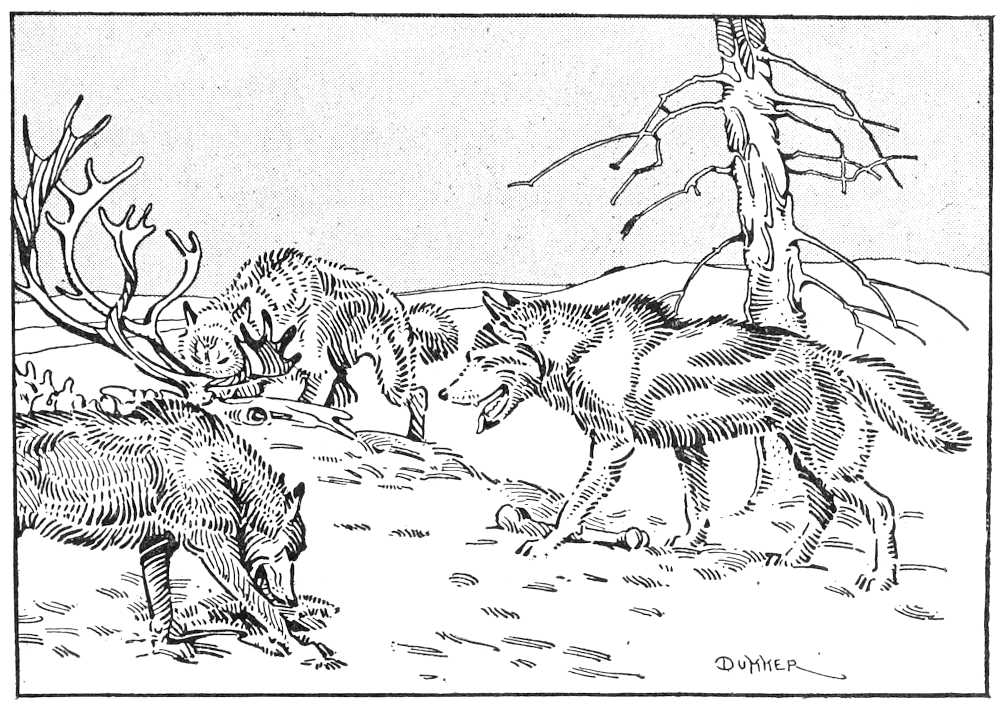
“‘In olden times the poor mothers were sacrificed to feed the wolves.’”
“Yes, my son,” said the proud mother, “and you must know that the wild caribou have decreased in numbers year by year; but the reindeer, under the protection of man, have multiplied until now they form many mighty herds.”
“That proves that the new way is better, mother,” said White Sox. “Service and sacrifice for the males! That is now our law. That is why you didn’t complain when my two big brothers were butchered.”
Mother Reindeer nodded her head.
“Our worst enemies did us a kind turn when they stampeded White Feet and his little band into the hunter’s tent,” continued White Sox. “And man, our next worst enemy, did us a better turn when he taught us to serve him. Mother, if I am to live to a ripe old age and die a natural death, I must make myself so useful to man that my services will be of greater value than my flesh and skin. Isn’t that right, mother?”
“That’s the whole lesson, my son,” Mother Reindeer said. “And now I will tell you that I have always wanted to be the mother of a second White Feet. I was pleased because you were marked like the great leader, but I am more pleased that you are able to think like him. A leader has to face many trials of courage and many temptations, and has great cares and responsibilities. It is only by overcoming all temptations and weaknesses and by boldly doing your duty that you become of great service to man and to your kind.”
White Sox nodded his head. “Yes, mother,” he said thoughtfully. “I’ve been worrying about my spoiled stockings and what the herd would think of these black ones, but now I’m glad my legs are black. By the time the hair comes next summer, and my new white stockings appear, I shall have learned many more lessons. I’ve one more question to ask. Do you ever wish to return to the land where White Feet lived?”
“No,” said the kind old mother, “this is a better land for reindeer. The moss here is better. We have more timber, better sleds and harness, good herding dogs to help keep off our enemies, and good herders. I’m getting old, my son, but I hope to live to see you leader of the big herd—as wise and useful as your great ancestor.”
“Thank you, mother dear,” he said gently. “Thank you for telling me the big story. My! what a foolish fawn I was—wanting to stay with our wild cousins! How glad I am the wolves chased us away!”
He looked to the north, then to the west. He sniffed the air and turned this way and that, this way and that. At last he turned to the north and looked very steadily.
What do you think he saw?
A cloud of fog was rising from the ground. It was only a few miles ahead of them. The morning sky was bright and clear. The air was very cold.
“It looks like fog, but it can’t be fog,” he said doubtfully. Then he became excited.
“Mother, our big herd is right yonder where that fog bank is,” he shouted.
“Yes, my son,” said Mother Reindeer. “That fog cloud is their frozen breath.”
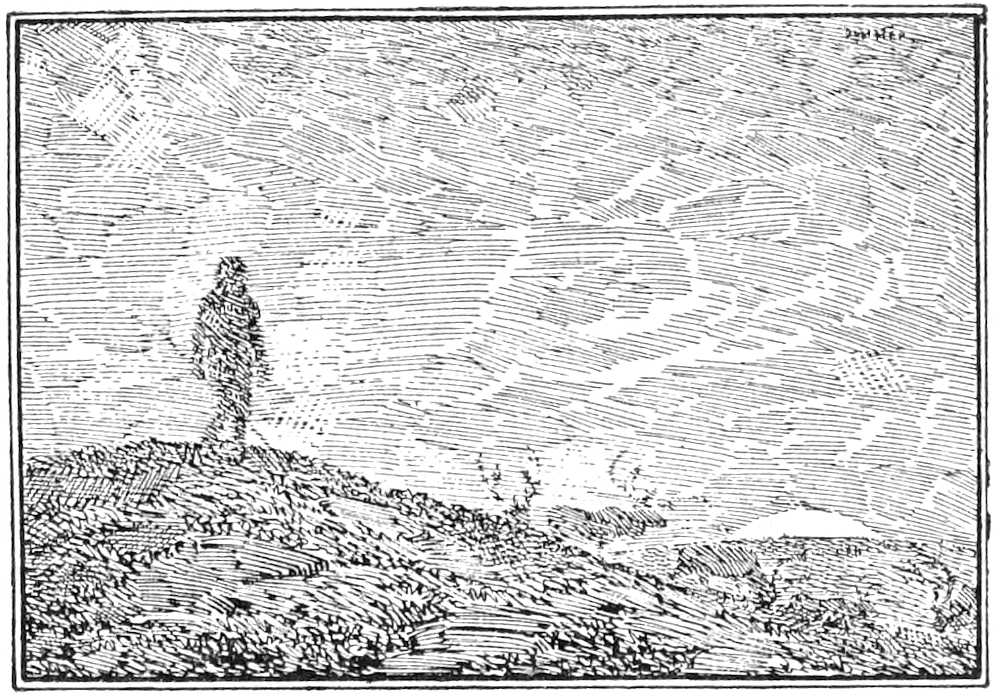
“Come on!” cried White Sox.
Away he dashed, with Mother Reindeer at his heels.
ANIMAL LIFE SERIES
THE STORY of MATKA
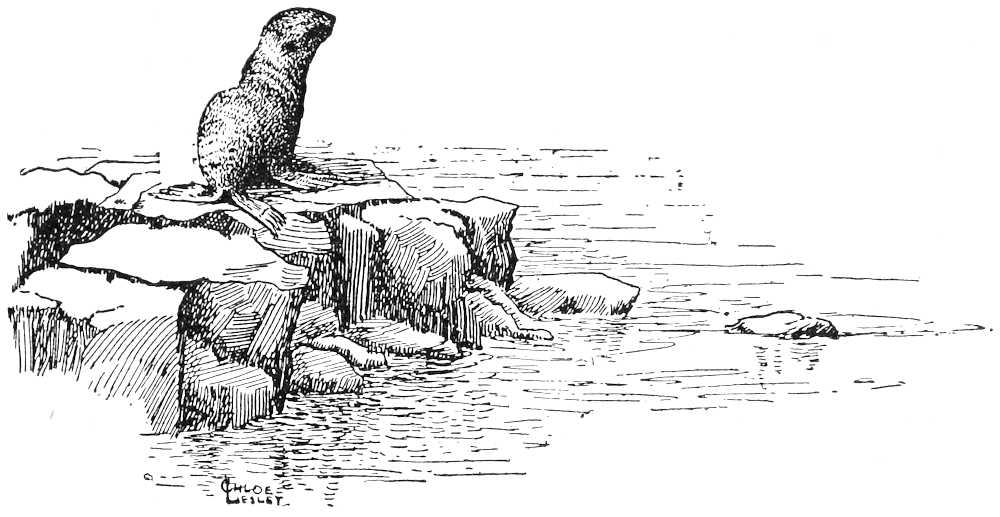
A Tale of the Mist Islands
By DAVID STARR JORDAN
No more charmingly devised nature story can be cited than this. It makes a stirring appeal to the imaginations of boys and girls, and holds the interest of all from the fifth grade to high school.
In the hands of the master stylist the tale of seal life is unfolded in a series of intimate and accurate pictures that will ever endear “the silken haired ones” to youthful readers. The little wars and wooings, the young adventures, and the dark tragedies that may take place in the life of these seals are vividly pictured.
The story is a mine of delightful information about these valuable and unfamiliar denizens of the North seas. Did you know that seals shed tears and groan when emotionally aroused? That they always return to their home in the spring after spending the winter in the South? These and other fascinating tidbits make it of interest to older persons too. The book is illustrated from photographs and drawings by Chloe Leslie Starks.
The appendix contains an article on the fur seals of the Pribilof Islands by George Archibald Clark. Price 80 cts.
WORLD BOOK COMPANY Yonkers-on-Hudson, New York 2126 Prairie Avenue, Chicago
ELIZABETH V. BROWN’S
NATURE AND INDUSTRY READERS
These books draw upon the world’s best literature, and present well-selected nature material and stories of industry. They are adapted for use either as readers, or to supplement nature, geography, and history lessons.
STORIES OF WOODS AND FIELDS
Alluring stories of animals, with chapters on our national holidays. For fourth and fifth grades.
Cloth. 192 pages. Illustrated in colors. Price $1.00.
WHEN THE WORLD WAS YOUNG
A fascinating story of the development of modern means of communication, transportation, agriculture, etc. Affords material for supplementary history lessons. For fifth or higher grades.
Cloth. 160 pages. Illustrated. Price 80 cents.
STORIES OF CHILDHOOD AND NATURE
Stories of unusual interest, by some of the greatest and most gifted authors. Much of the material is of pronounced geographic value. For fifth and sixth grades.
Cloth. 222 pages. Illustrated. Price $1.00.
WORLD BOOK COMPANY Yonkers-on-Hudson, New York 2126 Prairie Avenue, Chicago
INSECT ADVENTURES
By J. HENRI FABRE
Selected and Arranged for Young People by Louis Seymour Hasbrouck
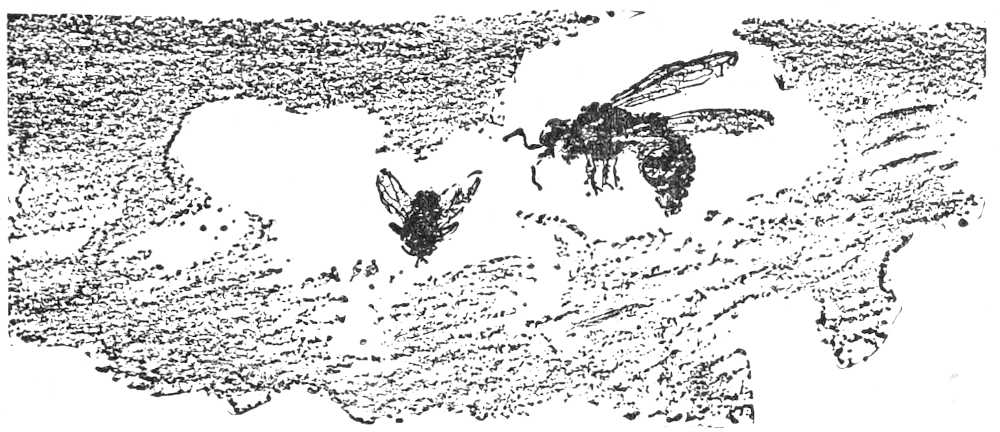
A new supplementary reader in nature study for the intermediate grades. A book containing a vast amount of information relating to insect life—the life story of the spider, the fly, the bee, the wasp, and other insects—told by one who was at once a lover of nature, a great scientist, and a most entertaining writer. Maeterlinck calls Fabre the “insects’ Homer,” and declares that his work is as much a classic as the famous Greek epic, and deserves to be known and studied as a classic.
This is the first time that Fabre’s writings have been made available for school use, and the book will prove a delight to school children wherever they are given the chance to read it. No live boy or girl could fail to be interested in nature subjects presented by so gifted a naturalist as Fabre in the form of such absorbing adventures.
The many quaint sketches with which the book has been illustrated by Elias Goldberg complete its charm.
A useful index is included.
Cloth. 300 pages. Price $1.40
WORLD BOOK COMPANY Yonkers-on-Hudson, New York 2126 Prairie Avenue, Chicago
CONSERVATION SERIES
Conservation Reader
By HAROLD W. FAIRBANKS, Ph.D.
Lecturer, University of California; Geography Supervisor, Berkeley Public Schools
A small book bringing out in a simple and interesting manner the principles of conservation of natural resources has long been wanted, for there has been little on the subject that could be placed in the hands of pupils. It is to answer this need that Fairbanks’ Conservation Reader has been prepared.
The book touches upon every phase of conservation, but it deals at greatest length with saving the soil, the forests, and wild life. It is one of the author’s main purposes to arouse a stronger sentiment for preserving what remains of the forests as well as for extending their areas. This is because proper forestation will lessen the danger of floods and of erosion of the soil, and it will encourage the return of the wild creatures that are of so much economic importance and add so much to the joy of life.
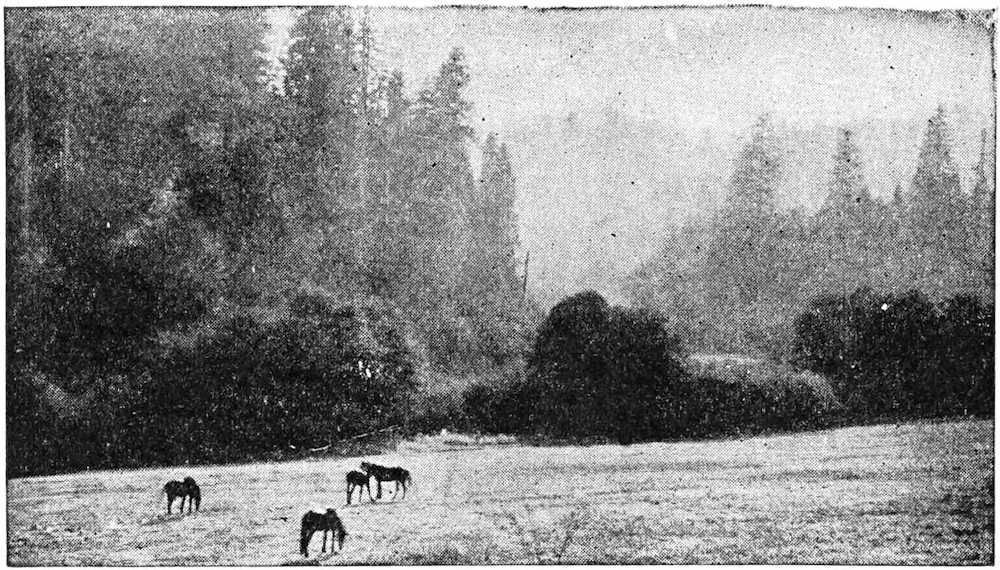
The matter is presented in an easy narrative style that is calculated to arouse the intelligent interest of children. The text is illustrated with photographs of wild animals, trees, landscapes, and rarely beautiful birds, printed in colors. The subject is timely and the treatment is happy throughout.
Conservation Reader should be used as a reader or as a book for regular study in every elementary school in the country.
Cloth. vi + 216 pages. Price $1.20.
WORLD BOOK COMPANY Yonkers-on-Hudson, New York 2126 Prairie Avenue, Chicago