TUDOR SCHOOL-BOY LIFE (continued 3)
Foster Watson translation
Tric. A curse on him, for I could not rest the whole night! I was sick, with all due respect to you let me say it (sit habitus honos vestris auribus), and then tossed myself about all over the bed, now on the inner, then on the outer, frame of the bed. It seemed to me as if I should vomit forth throat and stomach. Even now I cannot use my eyes or ears for headache. It is as if I had heavy bars of lead lying on my forehead and eyes.
Asot. Fasten a band round your forehead and temples, and you will seem to be a king.
Tric. Much rather like Bacchus himself, from whom the institution of diadems on kings was derived.
Asot. Go home, then, and sleep off the soaking.
Tric. Home, indeed! There is no place I should shun so much as my home. I should feel too much aversion to meet my shrieking wife. For if she were to see me now she would entertain me with longer homilies than Chrysostom.
Abstem. And this is what you call being treated splendidly!
Glauc. Clearly so; for your throat and stomach have been well washed!
Abstem. And the hands too?
Glauc. Not even once.
Asot. Nay, on the contrary, often with wine and milk, whilst we dipped our hands in one another’s bowls (pateras).
Glauc. What could be said more splendidly? Fancy the fingers sticking with the fat of meat and with sauces.
Abstem. By the gods, keep quiet! Who could listen without nausea to the unclean business, much less look upon it, or taste of such wine or milk.
Asot. By your faith, ye gods! are you so delicate a man, Abstemius, that you cannot swallow this even with your ears? What would you do with your palate, if you were like us? But listen to me, Tricongius, sweetest fellow-wine-bibber, let us send some boy to fetch us some of the same wine in that clay vessel. There is no surer antidote against this poison.
Tric. Has this been tried?
Asot. Why should it not be so? Don’t you remember the verses which Colax sings:—
Ad sanandum morsum canis nocturni, Sume ex pilis eiusdem canis.78 Plautus
Glauc. Tell us, I beg you, all about the banquet.
Abstem. Nay, don’t! unless you wish me to part with all I have in my stomach, and even the vitals themselves.
Glauc. Then go away for a short time.
Asot. I will tell you as frankly as possible, but so as nowhere to go beyond the limits of decency.
Glauc. Begin, I beseech you. Give your attention, Abstemius.
Asot. My dear Glaucia, before everything, I am of opinion that there is no class of men which can be likened to festive and liberal hosts at banquets. Some show knowledge of all kinds of things, i.e., of mere trifles; others show with pride, experience, and wisdom gathered from practice. And what of this? There are people who indeed have wealth, but, wretched that they are, they don’t dare to spend it. What they have, they take pleasure in storing up. A kindly host is everywhere of use, everywhere is welcome. The very sight of him is sufficient to heal the sadness of the mind and scatter it; and if a man has any wretchedness, the memory of the feast takes it away. So, too, does the hope and expectation of a coming feast. All the other so-called mental blessings I don’t care to look on; they are, to me, slight and unfruitful.
Abstem. I ask you, Asotus, who is the author of such a fine sentiment?
Asot. I and all like me, i.e., a host of people from Belgic France, from the Seine to the Rhine. There are only a few poor and very sparing men who think differently, who envy Abstemius his name, and wish to be called frugal, or else certain distinguished people who are puffed up with a great opinion of their own wisdom, i.e., an empty word, whom we (i.e., the greatest and chief part of mankind) simply laugh at.
Abstem. What do I hear?
Digression
Glauc. He is quite right, though he is drunk. For nowhere has scholarship less estimation than in Belgium. A distinguished man in scholarship is not otherwise esteemed than one who is occupied in shoe-making or in weaving.
Abstem. And yet there are many students here who make not altogether unsatisfactory progress.
Glauc. Yes. Little boys are led by their parents to the schools as to an operative shop, by which afterwards they can derive a living. The very teachers themselves, incredible to say, as little as the pupils, cherish the occupation they follow with such slight honour and with such meagre reward, so that illustrious teachers of the first rank can scarcely maintain themselves.
Asot. This has nothing to do with the subject of our conversation. Let us return to the banquet.
Glauc. Yes, I would rather hear about that, but dismiss this talk about studies, which are certainly unfruitful. I know not how you Italians think about scholarship. In my eyes, it seems to me not only useless but even pernicious (damnosa).
Abstem. So it seems to an ox and a pig, as it does to you. We, too, should think the same if we had not more intelligence than you.
II. The Exposition (Narratio)
Asot. If we let you go on, there would be no end. Therefore, listen. First, we all of us reclined, severe and serious. Grace was said, and everywhere was silence and quiet. Every one began to get his knife ready. We put on the appearance not of eagerness but of restraint (non invitatorum sed invitorum), so that you would have said that we were compelled to eat, and in the act of eating, did it as if reluctantly, for our mind had not as yet warmed with the ardour of spontaneity. Each one placed his napkin over his shoulders; some indeed in front of their chests. Others spread the tablecloth over their knees. One takes bread, looks at it, cleans it, if there is any coal or cinders lining it. All these things are done gently and lingeringly (cunctabunde).
Cause
Some began the meal by drinking; others, before they drank, took a little salad and salted beef to arouse their sleeping appetite and to stimulate their languor. The first cup was of beer, so that there might be a cold, firm foundation underlaid for the warmth of wine. Then that holy liquor was brought first in narrow and small cups, which should rather irritate than assuage thirst. The host was a very festive man, than whom there was none better in the whole neighbourhood, nor even his equal, i.e., in my opinion (which may be said without injury to any one). He then orders the largest of cups to be brought and a beginning was made of drinking liberally, after the Greek fashion, as a certain Philo-Greek said, who once had studied at Lyons. Then we began to talk, and then to get warm. Everywhere joviality and laughing became general. Oh, feasts and nights of the gods! We drank to one another’s health, and returned like for like, with great equity. It would have been unjust to gain a point over one’s companion, especially at such a time.
Abstem. Rightly, if it were merely a question of a chalice of wine, but it is one’s senses and intellect which are in question, the chief possessions of man. But if we are to talk over so copious and festive a subject, first I must ask of you whether you are drunk?
Asot. No, certainly not. This you can easily and truly see from the connectedness of my talk. Do you think, if I were drunk, that I could relate all this in such an orderly fashion?
Abstem. Then it is well, for otherwise I should be contending with an absent opponent, according to the verse of Mimus. But tell me now, first, why don’t you erect a temple in these parts to Bacchus, the discoverer of this celestial liquor?
Asot. This is your business; you, who have a temple at Rome of Sergius and Bacchus. It is sufficient for us daily to follow his rites, wherever we are. And perchance we should erect a temple for him if it were settled he was the discoverer, for I have heard certain students debate the question. There are some who think that Noah was the first who drank wine and was intoxicated by it.
Abstem. Let us leave that point! Tell us what wine you had.
Asot. What concerns us is what sort of wine it is and whence it came. Let it only have the name and colour of wine, that is sufficient for us. For these delicacies in wines let the Frenchman and the Italian seek.
Abstem. What enjoyment can there then be if you don’t at all taste what you are pouring into your body?
Tric. Perchance some taste something at the beginning with the palate whole. But when it becomes palled from so great a superfluity, things lose all their taste.
Abstem. If thirst has been quenched, no pleasure remains. For this consists only in the satisfaction of natural needs. So it is a kind of torment to go on drinking when there is no thirst, or to eat when there is no hunger.
Tric. Don’t you think, then, Abstemius, that we drink for pleasure or because it is pleasant?
Abstem. Then you are so much worse than beasts, who are controlled by natural desires, whilst reason does not govern you, nor nature exercise a control over you.
Tric. Good fellowship leads us to that point; and in spite of reason we get drunk little by little.
Abstem. How often have you been drunk? how often do you see others drunk?
Tric. Every day, very many.
Abstem. Don’t then so many experiments satisfy you so as to put you on your guard against so disgraceful an event? Even one such experience would suffice for an animal!
Glauc. But do you know also how dear our companions are, for whose sake men become beasts? Whilst drinking they would give their very hearts for them. When they meet afterwards, they hardly know them! Their very life and soul they would not redeem for the sum of a sesterce.
Abstem. Out of what sort of cups and how did you quaff the wine?
Asot. In the first place there were brought glass cups; a little time afterwards, on account of the danger, these were taken away and silver ones presented. In the wine at first we put herbs, which the season of the year provided, a little time afterwards, flesh-broth, milk, butter, and pap.
Abstem. Oh, filth, which would not be borne by animals!
Tric. How much more tragically (τραγικὼτερον) you would call out if you knew that they plunged their dirty hands into one another’s wine and cast in the shells of eggs, fruit and nuts, and the stones of olives and prunes.
Abstem. Cease from this description, if you don’t wish me to take myself off hence to some woods.
Tric. Listen to me, Glaucia. I will speak in your ear. Some people carry a hunting-bugle when taking a journey, which is full of dust, straws, fluff, and other dirty things. Out of this we drank.
Glauc. What?
Tric. What, indeed? wine?
Glauc. Nay, rather say your understanding.
Tric. Clearly it is so. And after we had drunk the understanding we took pots (matuli), not altogether clean, from off a stool and used them for cups.
Effects
Abstem. How ended the banquet—the story of which sounds like a fable?
Asot. The floors swam with wine. We were all drunk, especially the host, a strong man. Two or three were lying down under the table, overcome by a great victory.
Abstem. O glorious victory, and in a very beautiful and glorious conflict! But did wine overcome every one?
Asot. Even so.
Abstem. Wretched man, what do you think drunkenness is?
Asot. A fine thing! It is to give oneself up to one’s genius.
Abstem. Yes, but which genius, your good one or your bad one?
Glauc. If you will rightly look into all these matters, you will never find which genius they give themselves up to. For it is neither to the heart, nor to pleasure, nor any other cause for which others indulge, who follow vices and the depraved desires of the mind. To be drunk is different. It is to lose the power of the senses, to go away from the power of reasoning, of judgment; clearly, from being a man to become either cattle or, indeed, a stone. What follows afterwards I can easily imagine, had I never seen a drunkard; to speak, and not to know what you are saying; if any secret, of especial importance not to be divulged, is committed to you, to blab it out, and to say things which may lead into grave danger yourself, your people, and often your whole province and fatherland, to have no discrimination of friend and foe, of wife and mother—and it leads to quarrels, contentions, enmities, snares, wounds, maiming, killing!
Tric. Even without sword and blood, for not a few pass on from drunkenness to death.
Glauc. Who would not prefer to be shut up at home with a dog or a cat than with a drunkard? For those animals have more intellect in them than the drunkard.
Abstem. After the drunkenness follows indigestion, weakening of the nerves, paralysis, the tortures of gout, heaviness in the head and the whole body, dulness of all the senses; memory is extinguished; the sharpness of the intellect is stunned; thence there is a stupor in the whole mind which precludes intelligence, wisdom, and eloquence.
Asot. Now I begin to understand what a serious evil drunkenness is; henceforward, I will take the keenest pains to drink up to the point of cheerfulness, not to that of drunkenness.
Glauc. Joviality is the gate of drunkenness. No one comes to be drunk with the idea in his mind that he will get drunk; but he is exhilarated by drinking; then going on and on, drunkenness follows afterwards, for it is difficult to place the bounds of joviality and to remain in it. Slippery is the step from joviality to drunkenness!
Abstem. So long as thou hast the wine in the beaker, it is in thy power; when thou hast it in thy body, thou art in the power of the wine. Then you are held and do not hold. When you drink, you treat wine as you like. When you have drunk, it will treat you as it likes.
Asot. What then? Are we never to drink?
Abstem. When fools avoid their vices, they run into the opposite extremes. We must, indeed, quench thirst, but not be “drinkers.” Nature on this point teaches beasts alone. The same nature will not teach man, because he possesses reason. You eat when you are hungry; you drink when you are thirsty. Hunger and thirst will warn you how much, when, to what extent, we must eat and drink.
Asot. What if I am always thirsty, and if I cannot assuage my thirst except by getting drunk?
Abstem. Then drink what cannot possibly make you drunk.
Asot. The constitution of my body won’t permit that.
Abstem. If then you had such hunger that by no amount of food you could satisfy it unless you were to burst yourself, what then?
Asot. That indeed would not be hunger, but disease.
Abstem. There would surely be need of medicine, not meals, to take away that hunger, wouldn’t there?
Asot. Certainly.
Abstem. So needest thou for such a thirst a physician, not an inn-keeper, and a drug from the chemist, not one fetched from the providers of banquets. What you describe is not thirst but disease, and a perilous one, too!
XIX REGIA—The King’s Palace
Agrius, Sophronius, Holocolax
In this dialogue, the Royal Dwelling or Palace and its parts, persons, and functions are described, as to which see Vincentius Lupanas, in his book de Magistratibus Francorum. For our Vives here chiefly describes the palace of a French king. The persons represented in the dialogue are fitly named from the Greek. For Agrius is with them a country rustic, unskilled in court-life. Sophronius is a prudent, modest, and cautious man. Holocolax is altogether a flatterer, and one who (as Terence says) has commanded himself to agree to everything, of which sort of men there is always so large an assembly in courts. There are two parts of the dialogue, the Exordium and Narratio.
I. Introduction (Exordium)
Agri. Why is it so many accompany the king in such varied styles of dress?
Soph. Nay, rather look on their countenances than on their finery. For their faces are more varied and diverse than their decorations and clothes.
Agri. What reason is there for this difference also of bearing?
Apparel—The Countenance
Soph. They are clothed differently according to their means; differently according to their rank or family, often even according to their ambitions or vanity. Many also use elegancy of dress as an angle and net for catching the favour of the king or of his chief officers, and, not rarely, for winning the maids of his court. But the expression of outward countenance follows the stirrings of the mind, and such outward expression is nearly always such as is prompted by the inner disposition of the mind.
Agri. But why do so many men meet here together?
Holo. Is it not fitting that very many people should come where the capital and government of the whole province are seated?
Soph. Quite so. But most people regard not so much the commonwealth as their private good. They follow the government, not because it has the country in its hand, but because it has fortunes to bestow.
Holo. Why not? Since all things are sold for money.
Soph. So they think who don’t possess any soul and mind, but whose health and gifts of body are only common.
Agri. What need is there in this tumult of the court to hold so great a philosophical speculation? I indeed should prefer to understand from you what sort of people these are in such great numbers, in such varied appearances and fashions.
Holo. I will tell you of them all, in their rank. For Sophronius, as far as I know, is not so well versed in royal matters. But I have been in royal company of all kinds; I have penetrated, inspected, and seen thoroughly their courts, and I have always been acceptable and pleasing to them all.
Soph. Thence I suppose it is that you have gained that name of yours, Holocolax.
II. Exposition (Narratio)—The King
Holo. You suppose rightly. But do you, Agrius, listen to me. He yonder, on whom every ear, eye, mind, is intent, is the king, the head of the kingdom.
Soph. Truly the head, and so the health when he is wise and honest, but the ruin when he is bad or rash (demens).
The Dauphin—Dignitaries—Prefects
Holo. The little boy who follows him is his son, his heir, whom in the Greek court they called despot, that is, lord (dominus). In Spain they call him prince, in France the dauphin. There with a neck-chain, like that of Torquatus, in clothes all of silk, or all of gold, are the leaders of the kingdom, with the decorations of names of military dignitaries, princes, dukes, lords of the marches, who are called marchiones, counts, men who are named barbarously, barons, knights. This one is the master of the horse, whom they call by the vulgar term of comes stabilis, a name taken from the Greek court, when the great Comestabulus (Constable) was, as it were, the prefect of the sea, the admiral. Further, he was supreme over the palace, and also was at the head of the guards. In the time of Romulus they named such an one praefectus celerum, and the guards themselves celeres.
Agri. Who are those in robes reaching to the ankles, and with faces of great severity?
Counsellors
Holo. They are the counsellors of the king.
Soph. Those whom the prince calls to his council. It behoves them to be the most prudent of men, of great experience, of the greatest weight and moderation in their discernment.
Agri. Why so?
Soph. Because they are the eyes and ears of the prince, and so of the whole kingdom, and so much the more if the king should be blind or deaf, enslaved by his senses, or by ignorance, or by enjoyment of pleasure.
Agri. Are that one-eyed man and that other deaf man eyes and ears of the king?
Soph. Worse still is blindness and deafness of the heart!
Secretaries
Holo. The secretaries follow the counsellors, nor are they few in number or of one rank; then those who deal in money matters for the king, or those who get it in, farmers of the taxes, treasury-tribunes, prefects, procurators, and advocates of the treasury.
Agri. Who are those luxuriously decked and festive young men who always follow the king and stand at his side, some laughing at him and others with open mouth, full of wonder at what he says?
Courtiers
Holo. These are a band of intimate friends, the delight and joy of the king.
Agri. Why are the two who are entering there followed by so many men full of grimaces?
Chancellor—Secretary—Litigants—Prefect of the Bed-chamber
Holo. Because the king has in them especial confidence. The one is the prefect of the sacred writings, or chief secretary; the other the keeper of the secret archives, amongst which are the official statistics (regni breviarium). He has to remind the king of everything. Therefore daily so many come to him, so that they may rub up and renew his memory, since that is the keeping of the memory of the prince. Those who draw in their countenances are litigants, who are prosecuting their suits. Their business never finds an end, through the long series of procrastinations which are kept up. Those two who keep walking up and down the hall are prefects, the one of the sleeping-chamber, the other of the royal stables. These have under them very many other chamber and stable attendants. But let us enter the royal dining-hall.
Agri. Ah, how great a crowd solicitous and stately in their pomp!
Soph. You would observe these with still greater amazement if you knew how small a matter they are attending to. It is, forsooth, this: it is how a sick man may suck up a single egg and drink a little wine.
Master of the Feast
Holo. That man is the master of the feast for this week. There he is with an Indian who has a plait of rushes on him. That young man is the cup-bearer. The carver has not yet entered.
Agri. Who are about to have their breakfast (pransuri) with the king?
Holo. You mean who is so lucky as to take part in this feast of the gods?
Soph. Formerly guests were invited to the royal table, sometimes experienced military commanders, sometimes men of high lineage, or sometimes those distinguished either by experience in affairs, or by their learning, by whose discourse the king would become better and wiser. But the pride of Goths and other barbarians has invaded this our custom.
Holo. The chief followers have their grown-up armour-bearers and their boy-followers, boys on foot and spurred boys. Amongst these are quite magnificent, rich people, who most of them take their meals in correct fashion, or if this seems to them wearisome, they send basketfuls to their friends. This latter custom is more useful to their poorer friends. But the correct fashion of feasting has more distinction in it.
Agri. I seem to see quite another sort of people in that eating-chamber.
Ladies’ Quarters
Holo. Those are the ladies’ quarters, where the queen lives with her matrons and girls. Look how they enter and go out from the hall (ex parthenone) like as bees from a hive—young lovers and slaves of Cupid!
Soph. Often old people have a second childhood.
Holo. There is no greater pleasure than to hear the keenly thought-out sayings, or poems, songs, early morning (antelucanus) melodies, and chat of these girls, to see their briskness, their walking in and out, varieties of colour in their dress, their clothing and shapes of garments. They have boys as amanuenses, through whom they send and return messages. With what zeal and what industry, what breeding, they announce and bring back messages, hither and thither. By the faith of the gods! with uncovered heads, with bent hams and bowed knees. Every day there is something new to be heard, seen, and pondered over; something which has been acutely or subtly thought out or said, or done with spirit, or dexterously, or without restraint.
Soph. Nay, rather in a négligé way.
Holo. What greater happiness? Who could tear himself away from such delight?
Soph. Colax, Colax, without being in love you are raving, and without wine, you are drunk. What foolishness could be greater than what has been described by you?
Holo. I don’t know how it happens that you see heaps of people depart from the schools quite young, but let them once enter the court, they become old in it.
Soph. So also those who drank from the cup of Circe would be unwilling to yield and return to their human nature and condition, having once lost their reason, and having degenerated into the nature of beasts!
Agri. But what do all these do when they go home, and with what actions do they occupy themselves to pass the time, at least?
Leisure Time—Flattery
Soph. The most of them do nothing more serious than what you now observe them doing, and then their leisure is for them the parent and nurse of many vices. Some play at dice, cards, the gaming-board, at disputations; others pass the afternoon hours in secret slander and artful calumny, that is to what they degenerate at home. Many also are wonderfully taken up with buffoons and jugglers, towards whom those who are at other times niggardly and sordid, to them they are most lavish. But the chief corruption of the court is the flattery of each to all the others, and, what is still worse, towards himself. This brings it about that no one ever hears salutary truths either from himself nor from his companions unless when at strife. And though he receives then all too little of truth, he takes it as insult.
Holo. This employment is now by far the most profitable. You may hunger and thirst after the love of speaking and truth. I have become rich by my smiling, blandishments, and by approving and praising everything.
Agri. Could not the kings alter these unsatisfactory matters?
Soph. Very easily, if they only wished to do so! But these fashions are pleasing; they are similar to their own. Others are precluded by their preoccupations, on account of which they never have leisure for doing anything which is right or thinking anything which is sane. There are also not lacking those who, with indulgent minds and careless themselves, don’t think the morality of their own homes, and that of their dependants, any concern of theirs. And those things trouble them less than the private home of each of us troubles any of us.
XX PRINCEPS PUER—The Young Prince
Morobulus, Philippus, Sophobulus
This dialogue is entirely “political,” for Vives lays down the precepts to the boy prince, and teaches the art of good government. The names are aptly bestowed. Morobulus is a foolish counsellor, à μωρὸς, foolish, βουλὴ, counsel; Sophobulus, a prudent counsellor. There are two parts of the dialogue.
INSTITUTIO
Morobuli de { Inutilitate studiorum Praeceptoribus
Sophobuli de arte gubernandi { Quod principi sit necessaria: idque ostendit tribus similitudinibus
Quomodo comparanda sit { Doctrina: ubi ostendit, quinam Consulendi Ocii fuga { Sint Non sint
I. The Teaching of Morobulus—The Study of Literature
Morob. What has your highness in hand, Philip?
Phil. I read and learn with zeal, as you can see for yourself.
Morob. I see only too well, and am pained that you weary yourself, and that you are making that little body of yours quite lean!
Phil. What then should I do?
Morob. That which other nobles, princes, and rich men do—ride about, chat with the daughters of your august mother, dance, learn the art of bearing arms, play cards or ball, leap and run. Such, you see, are the studies in which young nobles most delight. If now people, who scarcely are worthy to be received in your family, enjoy these pleasant occupations, why is it suitable for you to do as you are doing, when you are the son and heir of so great a prince?
Phil. What! is the study of letters no good?
Morob. It is indeed of good, but rather for those who are initiated in holy affairs, i.e., priests, or for those who, by useful knowledge of their art, are about to earn their living, such as the shoemaker’s art, the weaving art, and the other arts necessary for money-making. Rise, I beg of you, put away your books from your hands. Let us go out for a walk, so that for some short time you may get fresh air!
Phil. I may not do so just now, because of Stunica and Siliceus.
Morob. Who are these Stunica and Siliceus? Are they not your subjects, over whom you have the command, not they over you?
Teachers
Phil. Stunica is my educator, while Siliceus is my literary tutor. Subjects of mine indeed they are, or to speak more exactly, of my father; but my father, to whom I am subject, placed them over me, and subjected me to them.
Morob. What then! Did your father give your highness into servitude to these men?
Phil. I don’t know.
Morob. Oh! most unworthy deed!
II. The Teaching of Sophobulus
Soph. By no means, my son! Certainly he made them thy servants; he wished them to stick close to thee, as eyes, ears, soul, and mind, to be always engaged on thy behalf, each of them to put aside his own affairs, and to make thy affairs his sole business, not so as to vex thee by imperiousness; but that those good and wise men should transform thy uncultivated manners into the virtue, glory, and excellence of a man; not so as to make thee a slave, but truly a free man and truly a prince. If thou dost not obey them, then wilt thou be a slave of the lowest order, worse than those here amongst us who are employed, bought and sold from Ethiopia or Africa.
Morob. Whose slave, then, would he be, if he did not mould his morals after his educators?
Soph. Not of men certainly, but of vices, which are more importunate masters, and more intolerable than a dishonest and wicked man!
Phil. I don’t quite understand what you say.
Soph. But did you understand Morobulus?
Phil. Most clearly, everything.
Soph. Oh, how happy men would be, if they had the sense and intelligence for good and satisfactory things which they have for frivolous and bad things! Now indeed, on the contrary, at your time of life, it happens that you understand with ease what is trifling, what is inept, nay, even what is insane, such things as those to which Morobulus has exhorted you, and then you regard what I would say on virtue, dignity, and every kind of praiseworthy thing, as if I were speaking Arabic or Gothic.
Phil. What, then, are you of opinion I ought to do?
Soph. You should at least suspend your judgment. Neither acquiesce in the opinions of Morobulus, nor in mine, until you are able to judge as to both.
The Act of Governing
Phil. Who will give me this power of judgment?
Soph. Ah! that will come with age, teaching, and experience.
Morob. Alas! that would require long weariness of waiting!
First Similitude
Soph. Morobulus advises well. Throw away your books. Let us go and play! Let us play a game in which one is elected king. He will prescribe to the others what should be done. The rest obey, according to the laws of the game. You shall be king.
Phil. How shall the game be? For if I don’t know the game, how shall I be able to take the part of king in it?
Second Similitude
Soph. What are you saying, sweetest little Philip, the darling of Spain? You would not dare to undertake to rule in a game, not knowing it, in a game and frivolous matters, in which a mistake brings no particular danger; and you are willing seriously to undertake to rule so many and so great kingdoms, ignorant of the condition of the people and of the laws of administration, although uninstructed in all prudence, and only knowing the ridiculous trivialities, which Morobulus here instils in your mind? Ah! my boy, tell the Master of the Horse to lead forth hither that Neapolitan horse, the most ferocious kicker, and the one given to throw his rider to the ground, and let Philip ride him!
Phil. By no means that one, but another and safer one. For I have not as yet learned the art of managing a refractory horse, and I have not the strength for it!
Third Similitude
Soph. Well, Philip, let me ask you whether you think that a lion is equally fierce as a horse; or that a horse will kick and be refractory, and less obedient to the bridle than people, and the host of men in a country who come together and congregate from every kind of vice, passion, crime, and evil deed; from agitations which have been fanned so as to be incensed, inflamed, burning into flame? You would not dare to mount a horse, while you demand that you should rule over a people, more difficult still to govern and manage than any horse! But let us dismiss this illustration. Do you see that boat on the river? The navigation is most pleasant and delightful between the meadows and the willow-plantings. Come, let us go down to it. You shall sit at the rudder and guide the boat.
Phil. Yes, indeed! and overturn you and plunge you into the water, as Pimentellulus lately did!
Soph. What! you are not willing to guide a boat, on a stream so even and so calm, because untrained, and yet you will commit yourself to that sea, to those waves and tides, to that tempest of the people, without knowledge and without experience? Evidently it has befallen you as it did Phaethon, who was ignorant of the art of charioteering, and yet, with youthful ardour, he requested that he might take the management of his father’s chariot! I think that story is known to you. Isocrates used to say excellently, that the two greatest offices in the life of men were those of the prince and the priest. No one, he said, should seek after them, unless he were worthy. No one should believe himself able rightly to rule, unless he were the most prudent man in the kingdom.
Phil. I see that nothing is so necessary for my person and station as the knowledge of the art and skill of ruling a kingdom.
Soph. Evidently you grasp the matter.
Phil. How can I pursue my duty?
How the Art of Governing is to be Acquired
Soph. Hast thou received the knowledge of governing at thy birth?
Phil. Indeed, no!
Soph. By what means, then, canst thou get to know except by learning?
Phil. There is no other way.
Soph. With what countenance, then, can Morobulus advise you, that you should throw away your studies, by which you may obtain experience in your art, as well as knowledge of other subjects of the greatest and most attractive kind?
Phil. From whom, then, can knowledge of these subjects be obtained?
Soph. From those who have reflected on them, and observed them as they have been manifested in the greatest minds, of whom some are dead, others living.
Phil. But how can we learn from the dead? Can the dead speak?
Soph. Have you never in conversation heard the names of Plato, Aristotle, Cicero, Seneca, Livy, Plutarch?
1. Teachers no longer Living
Phil. These are great names! I have heard them spoken of often, and with great admiration and praise.
Soph. These very names and many others like them, already departed from this life, will talk with you as often and as much as you like.
Phil. How?
Soph. In books, which they have left behind for the benefit of posterity.
Phil. How is it that these are not already in my hand?
Soph. They shall be given to you soon, after you have learned that language, in which you will be able to understand what they say. Only wait a little, and go through with the short burden which must be endured in receiving the elementary basis of instruction; after that follow incredible delights. It is no wonder that without such a preparation the idea of literary studies is abhorrent. But those who have enjoyed them would sooner be plucked from life itself than be torn away from books and intellectual interests.
2. Living Teachers
Phil. But pray tell me, who are those living people from whom this wisdom and soundness of mind can be learned?
Soph. If you were about to undertake any journey, from whom would you earnestly inquire the road? Would it be from those who had never seen the road, or from those who had at some time accomplished the journey?
Phil. From those, forsooth, who had travelled on that journey!
Soph. Is not this life even as a journey, and is it not a perpetual starting out?
Phil. So it seems.
Soph. Who, therefore, have performed this journey the most thoroughly? Old men or youths?
Phil. Old men.
Soph. Old men, then, should be consulted.
Phil. All indifferently?
Soph. That is an acute question; not all promiscuously. But in the same manner as it is with the journey, so it is with life. Do those know the way of life, who have gone along it without reflecting on it, busying themselves with something else, their minds wandering no less than their body; or those who have noted things diligently and attended to them, one by one, and committed what they have observed to their memory?
Phil. To be sure it is the latter.
Soph. Therefore, in taking counsel concerning the method of leading our life, it is not young men to whom we should listen, for they have not been over the journey, much less youths, and, what is most foolish and inappropriate, boys. Nor is counsel to be sought from foolish, lascivious, demented old men, worse than boys, whom the divine oracles execrate, because they are boys of a hundred years of age. Ears should be open to old men of great judgment, experienced in things, and prudent in mind.
Phil. By what sign shall I know them?
Soph. To be sure, at thy age, my son, thou canst not as yet distinguish them by any sign; but when a greater and stronger judgment has developed in thee, thou wilt easily recognise them by their words and deeds, as affording the clearest of signs. In the meantime, whilst thou hast not strength in this power of judgment, trust thyself entirely, and commit the direction, to thy father, and to those whom thy father has appointed as instructors and teachers and governors of thy early years—those who, as it were, lead thee by the hand, along that road on which thou hast not yet journeyed. For there is a greater care over thee exercised by thy father (to whom thou art dearer than he is to thee) than thou couldst have for thyself, and, in this matter, not only has he his own experience to guide him, but he makes use of the counsel of wise men.
Morob. For too long I have been silent.
Soph. Quite so, though contrary to your custom. For some time I have felt keen astonishment at the fact.
The Sort of Leisure to be Shunned—The Assertion of the Similitude (Protasis)
Morob. Philip, do not your father and the King of France and other great kings and princes rule their kingdoms and territories, and hold them in their duty, without the study of letters, and without that burdensome labour, which here is imposed mercilessly on your tender shoulders?
Soph. Nothing is so easy that it cannot become difficult, if it is done unwillingly. Industrious labour, devoted to learning, is not wearisome to him who gives his attention to it gladly. But to him who is unwilling, if indeed it is a game that is in question, or if it were a case of taking a walk in the most pleasant spots, it is troublesome and intolerable. To thee, Morobulus, most eager for trifling and always accustomed to frivolity, either to do anything serious or even to hear of it, is as unpleasant as death. Certainly many others would regard their life as bitter, if the manner of their living were fixed according to the fashion of Morobulus. How many there are, especially in courts, to whom nothing is sweeter than a sluggish and inert leisure! To move their hands to do work is to put them on the torture-rack! How many there are, on the other hand, amongst the people, who would die rather than pass through all their days with such vacuity, and would get weary more quickly by doing nothing than by giving their closest attention to some business! But to answer you concerning the Emperor and King of France, you shall hear from me about old men in general, whom I take to be those who have run over the track of life. If all, whosoever have made the journey, with unanimity say that they have fallen on some spot full of difficulty and danger, from which place they have only got away wounded and broken down to the last degree; but if they had that journey to go over again they would take care for nothing more diligently than against that danger. What do you think, would it not be the part of a most foolish man, when he had to take that way again, not to recall the danger and not to know it was coming?
Phil. Not as yet do I grasp what you mean!
Soph. I will make it more clear by an example. Imagine that, over the river yonder, there was a narrow plank as bridge, and that every one told you that as many as rode on horseback and attempted thus to cross it, had fallen into the water, and were in danger of their lives, and, moreover, that with difficulty they had been dragged out half-dead. Do you understand this?
Phil. Most clearly.
Soph. Would not, in such a case, a man seem to you to be demented who, taking that journey, did not get off from his horse, and escape from the danger in which the others had fallen?
Phil. To be sure he would.
Its Explanation (Apodosis)
Soph. And rightly! Seek now from old men, as to what chiefly they have felt unfortunate in this life, what it grieves them most and what they bitterly regret to have neglected. All will answer with one voice, so far as they have learned anything, it is, not to have learned more. So far as they have not learned, they will regret that they did not take pains to acquire the knowledge. Having entered on this complaint against themselves, they will tell you over and over again, that their parents or educators sent them to schools and to teachers of literature, yet that they, drawn on by vain delights, either of play, or hunting, or love, or frivolity of some kind, let drop from their hands the opportunities of learning; and so they complain of their fate and bewail their lot, and accuse themselves, condemn themselves, and, at times, also curse themselves. You see now the state of slackness and ignorance on the road of life is especially unsafe and dangerous, and is the one chiefly to be avoided, since you hear the miserable cries of those who have fallen there. It is therefore to be avoided with all care and diligence. It is incumbent on youth, to reject and despise sluggishness, ease, little delicacies, and frivolity, whilst the whole mind should be intent on the study of letters and the cultivation of goodness of soul. You, then, ask your father on this matter, although he is yet a young man, and do you, Morobulus, ask yours, although an old man, and you will understand from them that my opinion is the true one.
XXI LUDUS CHARTARUM SEU FOLIORUM—Card-playing or Paper-games
Valdaura, Tamayus, Lupianus, Castellus, Manricus
This Dialogue has two parts: Exordium and the game. The Exordium is an introduction as to time (à tempore).
I. Introduction on the Weather
Val. What rough weather! How cold and cruel the heavens! how unfavourable the sun!
Tam. To what does this state of the heavens and the sun point?
Val. That we should not go out of the house.
Tam. But what are we to do in the house?
Val. Study by the lighted hearth, meditate, think on things—a course which might bring profit and sound morals to the mind.
Cast. This is indeed the chief thing to be done, nor ought anything to take precedence of it in a man’s mind. But when a man’s mind is wearied by intentness of application, how then shall he divert himself, especially in such weather as this?
Val. Some recreations of the mind suit some people; others, others. I indeed receive delight and recreation by card games.
Tam. And this kind of weather invites in that direction, so that we hide ourselves in a closely shut room, and guarded on every side from the wind and cold, with a shining hearth, and a table set with charts (i.e. maps).
Val. Alas! we have no charts.
Tam. I mean playing-cards.
Val. I should like that.
Tam. Then we want some money and stones (calculi) for reckoning.
Val. We don’t need stones, if we have some very small coins.
Tam. I have none, except gold and larger silver coins.
Val. Change some for small money. Here, boy, take these coins of one, two, two-and-a-half, and three, stivers and get us tiny coins from the money-changer—single, two, three, farthing-pieces, not bigger money.
Tam. How these coins shine!
Val. Certainly, they are as yet new and unused.
Tam. Let us go to the games-emporium, where we shall find everything ready to hand.
Cast. It is not expedient, for we should have such a number of umpires. We might just as well play in the public street. It would be better to betake ourselves into your room, and invite a few of our friends, especially those likely to put us in good spirits.
Tam. Your chamber is more convenient for this, for in mine, we should be interrupted continually by the mother’s maidservants, who are always seeking some dirty clothes in the women’s chests.
Val. Let us go then into the dining-room.
Tam. So let it be. Let us go! Boy, fetch us here Franciscus Lupianus and Roderick Manricus and Zoilaster.
Val. Stay! By no means let us have Zoilaster, an angry man, given to quarrelling, a noisy calumniator, one who often raises fierce tragedies out of the smallest matters.
Cast. You certainly advise wisely, for if a young man of such views of recreation should mix himself in our company, then there would not be sport but grave strife. Bring, therefore, Rimosulus instead of him.
Val. No, not him, unless you wish whatever we do here, by way of sport, should be made known before sunset throughout the city.
Cast. Is he so good a herald?
Val. Yes, in making things known where no good is done by the knowledge. As to matters of good report, he is more religiously silent than the Eleusinian mysteries.
Tam. Then Lupianus and Manricus alone are to come.
Cast. They are first-rate companions.
Tam. And warn them to bring little coins with them, but whatsoever is of severity and earnestness let them leave at home with the crabbed Philoponus. Let them come, accompanied by jests, wit, and agreeableness.
Lup. Hail! most festive companions!
Tam. What is the meaning of that contraction of your brow? Smooth those wrinkles. Haven’t you been advised to lay down all thoughts of literature in the abode of the Muses?
Lup. Our thoughts on literature are so illiterate that the Muses who are in their abode wouldn’t own them.
Manr. All prosperity!
Val. Prosperity is doubtful, when you are called to the line of battle and to warfare, in which, indeed, kings will be present!
Tam. Be of good cheer! Money-purses, not necks, will be attacked.
Lup. The money-purse often is in place of a neck, and money in place of blood and spirit; as with those Carians, whose contempt of life is the pretext for kings to practise their madness on them.
Manr. I don’t wish to be an actor in, but the spectator of, this play.
Tam. How so?
Manr. Because I am so very unfortunate; I always go away from playing, beaten and despoiled.
Tam. Do you know what dice-players say, in a proverb of theirs? “You should seek your toga where you lost it.”
Manr. True, but there is the danger that, while I seek the lost toga, I shall lose both my tunic and shirt.
Tam. This indeed often happens, but he who risks nothing does not become rich.
Manr. This is the opinion of metal-diggers.
Tam. Also of the Janus in the middle of Antwerp.
II. The Playing—Drawing Lots
Val. It is quite right. We can only play four at a time. We are five. Let us cast lots as to who shall be the spectator of the others.
Manr. I will be the one, without any casting of lots.
Val. No such thing! Wrong should be done to none. No one’s will, but chance, shall decide this. He to whom the first king falls in dealing, he shall sit as lazy spectator, and if any dispute shall arise, he shall be judge.
Lup. Here are two whole packs of cards; one is Spanish, the other French.
Val. The Spanish does not seem to be quite right.
Lup. How so?
Val. Since the tens are lacking.
Lup. They don’t usually have them, as the French do. Cards, both Spanish and French, are divided into four suits, or families. The Spanish have gold coins, cups, sceptres, and swords. The French, hearts, diamonds, clubs, (little) ploughshares, otherwise called spades or arrow-points. There are in each suit—king, queen, knight; ones, twos, threes, fours, fives, sixes, sevens, eights, nines. The French also have tens. In the Spanish game, golden pieces and cups are used, but less preferably swords and sceptres. With the French, the higher numbers are always considered better.
Cast. What game shall we play?
Val. The game of Spanish Triumph, in which the dealer will retain for himself the last card as indication (of trumps) if it is a one or a picture.
Manr. Let us know now who shall be left out of the game!
Tam. You advise well. Pray deal the cards. This is yours, this is his, this for Lupianus. You are umpire.
Val. I would rather have you as umpire than as a fellow-player.
Lup. Nice words, I must say. Pray, why do you say so?
Val. Because in playing you are so cunning, and such a caviller. Then they say that you have a knack of arranging the cards as suits yourself.
Lup. My play has no deceit in it. But my activity seems to your lack of experience like imposture, as often is the case with the ignorant. However, how does Castellus please you, who, as soon as he has won a little money, leaves off playing?
Tam. This is rather shirking play than playing itself (eludere est hoc, quam ludere).
Val. That is a light evil enough. For if he should be beaten, he will fasten himself to the game like a nail in a beam.
Partners
Tam. We will play by twos, two against two. How shall we be partnered?
Val. I, indeed, knowing nothing of this game, will stick to you, Castellus, whom I understand to be most expert in the game.
Tam. Add also, most crafty in it.
Cast. There is no need of choosing. Lots must divide everything. Those who get the highest cards play against those with the lowest.
Val. So be it. Deal the cards!
Manr. As I wished, Castellus and I are on the same side. Valdaura and Tamayus are our opponents.
Val. Let us sit, as we are accustomed, crosswise.
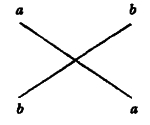
Give me that reclining chair, so that I may lose more peacefully.
Tam. Place the footstool. Let us sit down in our places. Draw for the lead.
Val. It is my lead. You deal, Castellus.
Modes of Distribution of Cards
Cast. How? from the left to the right, according to the Belgian custom? or, on the contrary, according to Spanish custom, from the right to the left?
Val. By the latter custom, since we are playing the Spanish game and have thrown out the tens.
Cast. Yes. How many cards do I give to each?
The Stake
Val. Nine. But what shall the stake be?
Manr. Three denarii each deal and a doubling of the stakes.
Cast. Wait, my Manricus, you are getting on too fast! That would not be play, but madness, where so much money would be risked. How could you have pleasure in the anxiety lest you should lose so much money? One denarius would be sufficient, and the increase shall be one-half up to five asses.
Val. You counsel rightly. For so we shall not play without stakes, which would be insipid, nor for what would grieve us, if we lost, for that is bitter.
Cast. Have you all nine cards? Hearts are trumps, and this queen is mine.
Val. What a happy omen that is! Certainly it is most true that the hearts of women ordinarily rule.
Cast. Leave off your reflections. Answer to this: I increase the stake!
The Contest
Val. I have a losing hand and haven’t good sequences. I pass.
Tam. And I also. You deal, Manricus.
Val. What are you doing? You haven’t shown the trump.
Manr. I will first count my cards, so as not to have more or less than nine.
Val. You have one too many.
Manr. I will place one aside.
Val. That is not the rule of the game. You ought to lose your turn of dealing, and pass it on to the next. Give me the cards!
Manr. I won’t, since I haven’t yet turned up the trump.
Val. Yes, you will. By God (per Deum)!
Cast. Get away! What has come into your mind, my Valdaura? You swear oaths on the slightest provocation, which would scarcely be fitting on the most important affairs.
Manr. What do you say, umpire?
Lup. I don’t know really what should be done in this case.
Manr. See what a judge we have appointed over us—one who has no judgment—a leader without eyes.
Val. What, then, is to be done?
Manr. What, indeed, unless we send to Paris for some one to bring this matter of ours forward for a decree of the Senate.
Cast. Mix the cards, and deal again.
Tam. Oh! what a good hand I lose! I shall not have another like it to-day!
Cast. Shuffle well those cards and deal them more carefully, one by one.
Val. Again, I increase the stakes.
Tam. Didn’t I predict that I shouldn’t have such a chance in my hands again to-day? I am always most unfortunate. Why do I so much as even look at a game?
Cast. This, indeed, is not playing. It is afflicting ourselves. Is it recreating ourselves and refreshing our minds, to get worried like this? Play ought to be play, not torment.
Manr. Be a little patient; don’t throw your cards away. You are getting into a panic!
Val. Then answer if you accept (the amount of the stake).
Manr. I accept, and increase it again.
Val. What! do you expect to put me to flight with your fierce words? I don’t pass.
Manr. Declare, once for all, and be quick about it. Do you agree?
Val. Yes, and with the greatest pleasure. My mind prompts me to contest in such play for a still greater stake, but this will do amongst friends.
Tam. What! don’t you count me amongst the living, so that you leave me out of consideration?
Cast. What, then, do you stake, you man of straw (faenee).
Tam. I, for my part, wish to increase the stake.
Manr. What do you say, Castellus?
Cast. At last you consult me, after you have increased the stake by your own arrangements. I should not dare, on my hand, to stake up to such an increase.
Val. Give a definite answer.
Cast. I haven’t the grounds for doing so. Everything seems ambiguous and doubtful. Hence I answer hesitatingly, timidly, diffidently. Isn’t this expressed sufficiently clearly?
Manr. Immortal God, what an abundance of words! The hail we lately had, did not fall so thickly! But, I beg, let us risk a little.
Cast. Let us make the attempt when you please, but don’t expect a great stake from me.
Manr. But you will bring what assistance you can?
Cast. There is no need for you to advise me on that score.
Manr. We have been completely beaten!
Tam. We have won four denarii. Shuffle!
Val. I go five asses.
Cast. I don’t know whether I shall pass, for I am sure to be beaten.
Tam. Five more!
Cast. What do you reply to this call?
Manr. What am I to say? I let it pass.
Cast. You lost the last game. Let me lose this in accordance with my own ideas. I know that I am of less skill, but I must hold out as long as I seem to have any strength.
Val. What, then, do you say? Do you refuse?
Cast. No, certainly. I agree.
Tam. Don’t you know this Castellus, Valdaura? He plays a better game than you, but he is thus accustomed to lure on rash challengers into his net. Take care not to go on rashly, where you will be entangled in a net.
Val. God’s faith! how could you guess that I had one last card left of this suit (natio)?
Cast. I knew all the cards.
Val. That is quite conceivable.
Cast. And that, too, without looking at them!
Val. Perhaps even from the backs?
Cast. You are too suspicious.
Val. You make me so, if you will excuse me saying so.
Tam. Let us examine if the backs of the cards have marks whereby they can be recognised.
End of the Game
Val. Let us, please, make an end of playing. This game worries me by all going so wrongly.
Cast. As you will. But perchance the fault is not in the game, but in your lack of skill, for you don’t know how to direct your steps to victory, but you throw away your cards without any reason, as chance happens, thinking that it doesn’t matter what you have played before, or might play later, what and in what place any card should be played.
Tam. Of all things there is satiety, and even of pleasures. I am now weary of sitting. Let us get up for a little time.
Lup. Take this lute and sing something to us.
Tam. What will you have?
Lup. A song on games.
Tam. A song of Vergil’s?
Lup. Yes; or if you prefer one of Vives, the song he lately sang as he wandered along the wall-promenade of Bruges.
Val. With the voice of a goose.
Lup. But you sing it with a swan’s voice!
Tam. This a god would do better, for the swan only sings as death urges him on.
Ludunt et pueri, ludunt juvenesque senesque Ingenium, gravitas, cani, prudentia, ludus, Denique mortalis sola virtute remota, Quid nisi nugatrix, et vana est fabula, vita.79
Val. I can assure you the song is well expressed, though it comes as it were from a dry old stick (ex spongia arida).
Lup. Does he compose a song with such great difficulty?
Val. Indeed he does. Whether it is because he writes poetry so rarely, or because he does not do it willingly, or because the inclination of his genius drives him into other regions.
XXII LEGES LUDI—Laws of Playing A VARIED DIALOGUE ON THE CITY OF VALENCIA
Borgia, Scintilla, Cabanillius
Valencia is a town of Spain, the native town of Vives. To it Ptolemaeus gives 14° longitude, 39° latitude. See the same in the fourth map, Europe. There is another Valencia in France, as to which see the fifth map of Europe. This dialogue contains, to a large extent, the description of the native town of Ludovicus Vives. There are two parts of the dialogue. In the former part he describes two cities: Paris with its games, and Valencia; in the latter part he prescribes the laws of play. Ammianus Marcellinus calls Paris (Lutetia) Parisiorum castellum. The Emperor Julianus in an oration with the title Αντιοχιὸς ἢ μισοπώγων80 calls it των παρισίων την πολιχνὴν;81 where also he shows for what reason he once was driven at Lutetia to vomit his food, viz., when impatient of the French custom, by which they were accustomed to heat their rooms by means of stoves (fornaces). Coal having been taken to the sleeping-chamber of Vives, he was almost killed by the fumes. See Beatus Rhenanus, book 3, rerum Germanicarum, at the end; Aegydius Corrozetus, de antiquitat. Parisiens.; and Zuingerus, book 3, methodi Apodemicae.