Chapter XXI · HOMEWARD
Reading edition
Winter comes on—Departure from Lake Argentino—Changed aspect of country—Snow-clouds—Indian encampment—Race with the snow—River Coyly—River Gallegos—Ford—Signs of civilisation—Gallegos—Taking passage in steamer—Lighted street—Good-bye to Bernardo—Meeting with Mr. Waag and Mr. Von Plaaten Hallermund on the Elena—What Patagonia taught me.
A fortnight before we started there was a couple of feet of snow on the high pampa. Beside the lake it had been blowing heavily, and storms of sleet followed each other in dreary succession. Every morning we saw the white cloak of winter throwing its snowy folds lower and lower upon the mountains. The severe season of the Cordillera and Southern Patagonia was fast shutting us in; already the Pass to Punta Arenas was closed feet deep in snow, and our only outlet for the south lay towards Gallegos. It had been my wish to remain as long as possible in the neighbourhood of the Andes, but I had overstayed the utmost limit I originally set myself, and now there was nothing for it but to make a rush for the coast while the journey could still be made.
On May 15 we started in heavy rain. The horses were in excellent condition; indeed, they were too fat, for of late they had not had enough exercise to prepare them for a very trying journey. We took three cargueros besides the horses for riding, and the party consisted of Mr. Cattle's shepherd, George Gregory, Bernardo and myself. At the second camp Gregory was obliged to turn back, as his horses—a troop of colts—had wandered during the night. This was at the River del Bote; from there Bernardo and I went on alone. We found the aspect of the country much changed since we had crossed it three and a half months previously. The green grass had grown yellow, the streams and the lagoons were drying up, numbers of guanaco had descended to the lower grounds. An Indian trader, accompanied by a few tents of Indians, had taken up quarters near the River Califate, a spot formerly inhabited by wildfowl only. For three days we followed the shore of the lake, but then our way led us up on to the high pampa, where we made our camp in a bushless cañadon beside a rocky pool. By this time the horses were beginning to lose their tricks, but at the outset they would hardly allow themselves to be caught, and they wandered every night. The cañadon was clear of snow, but the sky was heavy with the promise of it. We hoped most heartily that it would give us two more days' grace before it fell.
The next day we followed the cañadon, which was a shallow depression running south-west. There was no fuel to be found but the thin roots of the dark bush known as maté negra. The early frosts made travelling difficult, as it was necessary to off-saddle early, that the horses might not be turned out sweating into the cold. We covered sixty miles, changing horses three times, for it was quite clear that we must push on if we hoped to escape the snow. That was one of the most fatiguing marches we had during the whole expedition. About three o'clock I espied some herds of tame cattle in the distance by the side of a lagoon. These proved to belong to some tents of Indians. The men were absent hunting and the camp was given over to the women and decrepit dogs. An enormous china sat in the opening of the largest toldo; she must have weighed twenty odd stone! We learned from her that the season had been a good one for guanaco chicos.
In reply to our question as to how far we might be from the nearest white man's habitation on the next stage of our journey, the fat lady waved her hand picturesquely and vaguely towards the eastern sky but did not commit herself to figures.
The Indian encampment made a singular picture against a somewhat striking background. The western sky was piling up and bulged with snow-clouds, while the sinking sun glowed like a red-hot cannon ball on the rim of the pampa. Against this curtain of colour were set the brown tents of guanaco-skin. In one of these a small fire was burning with little flames about an old meat tin in which water was being boiled for maté. Around the women sat in silence—saving only the fat spokeswoman—inert and apparently content; occasionally one would grunt or shift the child at her breast, but otherwise one heard scarce a sound but the whimpering of the wind from the Cordillera or the plashing of the wildfowl in the swampy margin of the lagoon.
I need not describe at length the days which followed. In due time we came upon a wheeltrack and sighted the first fence. This was in the valley of the River Coyly, a good place for pasturing sheep, but inexpressibly desolate and monotonous in aspect. For two days we held along in this valley or on the pampa immediately above it, but, remembering our experiences near Santa Cruz, I resolved to sleep in no boliche until we reached Gallegos.
The cañadon of the Coyly was fenced at intervals, the grass eaten close to the ground by many sheep. Thousands of wild geese clamoured on the banks of the river. In this river valley we made our last camp in Patagonia. There was no wood for fire, and the horses found but little to eat, the sun set among sickly green lights, and presently rain came on. Altogether it made a dismal good-bye to the life we had led for so many months.
The following day, striking across the pampa for the River Gallegos, we knew ourselves to be entering on the last stage of our wanderings. And here we very nearly had a disastrous accident. Meeting two Gauchos, we asked them about the condition of the ford over the Gallegos, which they told us had been but hock-high when they passed through with their horses. Consequently, when we arrived at the ford half an hour later, we took our troop down into the water, but seeing it looked uncommonly deep for the description given us by the Gauchos, we returned to the shore, and, as there happened to be a house at no great distance, I sent Bernardo to make inquiries. He brought back the news that the tide was running strong and the ford quite impracticable, but it was possible that we might be able to cross higher up at another spot. We followed this advice and crossed in safety, I with my precious photographs tied round my neck; but had we tried the lower ford I am very sure I should have lost them all, which would have been a disappointment indeed, considering the circumstances under which they had been taken and the impossibility of replacing them.
Once across the Gallegos we emerged upon flat ground, and here we found a road with a line of telephone-posts running along one side of it. Gallegos was by that time only eighteen miles ahead, but with our tired horses that appeared a long distance. The country was absolutely featureless, the black posts sticking up against a dull sky, the brown earth absorbing such light as there was. A very cold wind blew across our faces, but there was one thing that cheered us, that told us our wanderings were over—the humming of the wind in the wires overhead.
The road dipped and rose over the long undulations, and at last, as we topped one of the many inclines, Gallegos straggled into sight, obviously a frontier town, all wire fences, wooden and corrugated-iron houses with painted roofs. The emotions with which one returns and feels the long wanderings over are not easy to describe. I rode slowly up the main street and passed the bank—for there is a bank at Gallegos, and the fact gave one a sensation of being very civilised indeed. I dismounted and went into the building to inquire about the steamer for Punta Arenas, where I hoped to pick up a homeward-bound boat. A steamboat was to have started for Punta Arenas that same morning, I was told, but as the captain was in gaol, her departure had been postponed for a day or so. The delay seemed a special dispensation for my benefit, for, had she adhered to her original date, I must have been too late to go by her. I understood that the captain's crime lay in having drawn up his anchor without waiting to receive a written permit.
Luckily I had not been preceded at Gallegos by any "lord," hence I drew the cash necessary for my passage and payments at the bank without any trouble. Then I went on to the hotel and put up my horse, the good little big-hearted Moro, who had carried me a hundred and fifty miles in three days and looked fat on it. Afterwards I bought a cigar, a very bad one, but a cigar for all that, and so proceeded down to the beach to secure my passage. Up on the shingle were several ships high and dry, and out in the fairway about the very smallest steamer I have ever seen, yet a good sea-boat, as I afterwards proved. She rejoiced in a brilliant green deck-house two storeys high, and the funnel was almost on top of the propeller!
When it grew dark it was strange to walk through the lighted streets and to see the faces pass and repass beneath the lamps. There was a delightful sense of newness about it all. But perhaps the most strange sensation was produced by a visit to the hairdresser's shop, where one could watch in the glass the swift transformation. Afterwards it was quite good to smoke a second execrable cigar, and to listen to the hotel-keeper in another room telling some of his friends how he had mistaken me for a camp-loafer owing to my patched clothes and the ragged remnants of my boots, and had, in consequence, led me to an outhouse, proposing to allow me to sleep there!
Best of all, perhaps, was the civilised dinner, despite the attentions of an intoxicated itinerant dentist, who kept on reiterating the same question, "Have you ever been to Nahuelhuapi?" the huapi ending in a wail—"w-a-a-a-pi." Bernardo had not turned up from the farm where we had left the horses, and a gentleman connected with the Government who was present, understanding that I wished to see him before sailing, offered to send a file of soldiers to look for him. Presently Bernardo arrived, and then we went away and lit our pipes for a last talk over it all.
Next morning on the wet shingle I said good-bye to him, and there he stood for a while as the boat shoved off and we rowed away. A wild figure was Master Bernardo, for he had not yet had time to clothe himself in the garments of civilisation. With his ragged blue jersey and his big boots of potro hide, surmounted by his pleasant bearded face, he watched us through the wind and the rain, and then he turned and walked away, passing out of sight among the sheds. He was going to Santa Cruz by the horse-track. Good luck to him, and may we meet again!
I went aboard, little guessing the pleasure that awaited me, for at the gangway-head I met Mr. Waag and Mr. Von Plaaten Hallermund, of the Boundary Commission, who were on their way down from Santa Cruz to Punta Arenas. Mr. Waag and I had just missed each other by a couple of hours on the pampa up country some months earlier. We were soon deep in talk about the Cordillera, and all that had happened to the three of us since we last met at the Hotel Phœnix in Buenos Aires. Mr. Waag had had a successful time about Lake Puerrydon, and Mr. Von Plaaten Hallermund at Lake San Martin. Meantime the Elena got in her anchor, and we were in the Magellan Straits by nightfall.
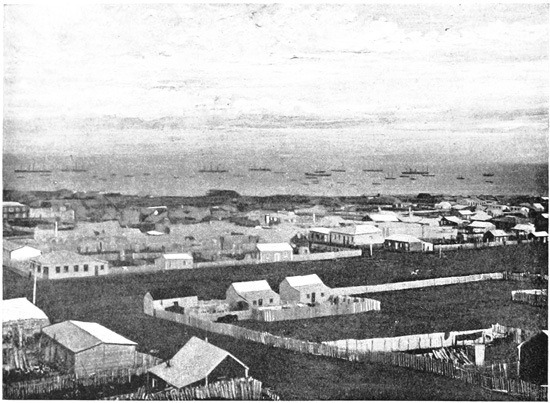
PUNTA ARENAS
And so we reached Punta Arenas, where I was shown much hospitality by Mr. Perkins, and where I had the pleasure of meeting Mr. Fred Waldron, in whose company, as well as that of Mr. Waag and Mr. Von Plaaten Hallermund, I made the passage to Buenos Aires by the Pacific Company's steamship the Orellana, and so home.
To turn for a moment to the personal point of view. I had landed in Patagonia with enthusiasm, and I left it not in the least damped or disheartened in that enthusiasm, but very much the opposite. I had learned many lessons of life, passed through many experiences, explored a small part of the earth's surface, and made some original observations with regard to the zoology of the country and other matters, but I am inclined to think that the most useful lesson to myself was one that sank deeper and deeper into my mind, I might say heart, with every day lived in these great solitudes—and that was the knowledge of my own ignorance. The long solitary days in the forests, on the pampas, and about the stormy fjords of the Cordillera brought me face to face with Nature. There are many voices in the silence of Nature. The stars above, the waters beneath, and the earth all spoke in a hundred tongues, and little enough of it all could I, with my lack of knowledge, interpret. "There are many kinds of voices in the world, and none of them is without signification," but so long as they spoke to me in unknown tongues how much was I the better? And there it was I learned the useful truth that, to be a traveller of any value, a man must also be an adequate interpreter.
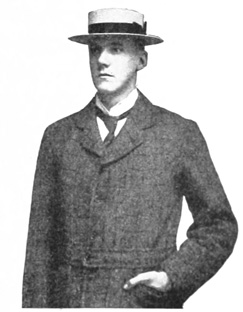
THE AUTHOR