Volume 8 / Part 1 — PART I. NOTES ON VIRGINIA. (continued 6)
Reading edition
HARRY INNES.
The Declaration of William Robinson.
William Robinson, of Clarksburg, in the county of Harrison, and State of Virginia, subscriber to these presents, declares that he was, in the year 1774, a resident on the west fork of Monongahela river, in the county then called West Augusta, and being in his field on the 12th of July, with two other men, they were surprised by a party of eight Indians, who shot down one of the others and made himself and the remaining one prisoners; this subscriber's wife and four children having been previously conveyed by him for safety to a fort about twenty-four miles off; that the principal Indian of the party which took them was Captain Logan; that Logan spoke English well, and very soon manifested a friendly disposition to this subscriber, and told him to be of good heart, that he would not be killed, but must go with him to his town, where he would probably be adopted in some of their families; but above all things, that he must not attempt to run away; that in the course of the journey to the Indian town he generally endeavored to keep close to Logan, who had a great deal of conversation with him, always encouraging him to be cheerful and without fear; for that he would not be killed, but should become one of them; and constantly impressing on him not to attempt to run away; that in these conversations he always charged Capt. Michael Cresap with the murder of his family; that on his arrival in the town, which was on the 18th of July, he was tied to a stake and a great debate arose whether he should not be burnt; Logan insisted on having him adopted, while others contended to burn him; that at length Logan prevailed, tied a belt of wampum round him as the mark of adoption, loosed him from the post and carried him to the cabin of an old squaw, where Logan pointed out a person who he said was this subscriber's cousin; and he afterwards understood that the old woman was his aunt, and two others his brothers, and that he now stood in the place of a warrior of the family who had been killed at Yellow Creek; that about three days after this Logan brought him a piece of paper, and told him he must write a letter for him, which he meant to carry and leave in some house where he should kill somebody; that he made ink with gun powder, and the subscriber proceeded to write the letter by his direction, addressing Captain Michael Cresap in it, and that the purport of it was, to ask "why he had killed his people? That some time before they had killed his people at some place, (the name of which the subscriber forgets,) which he had forgiven; but since that he had killed his people again at Yellow Creek, and taken his cousin, a little girl, prisoner; that therefore he must war against the whites; but that he would exchange the subscriber for his cousin." And signed it with Logan's name, which letter Logan took and set out again to war; and the contents of this letter, as recited by the subscriber, calling to mind that stated by Judge Innes to have been left, tied to a war club, in a house where a family was murdered, and that being read to the subscriber, he recognizes it, and declares he verily believes it to have been the identical letter which he wrote, and supposes he was mistaken in stating as he has done before from memory, that the offer of exchange was proposed in the letter; that it is probable that it was only promised him by Logan, but not put in the letter; while he was with the old woman, she repeatedly endeavored to make him sensible that she had been of the party at Yellow Creek, and, by signs, showed him how they decoyed her friends over the river to drink, and when they were reeling and tumbling about, tomahawked them all, and that whenever she entered on this subject she was thrown into the most violent agitations, and that he afterwards understood that, amongst the Indians killed at Yellow Creek, was a sister of Logan, very big with child, whom they ripped open, and stuck on a pole; that he continued with the Indians till the month of November, when he was released in consequence of the peace made by them with Lord Dunmore; that, while he remained with them, the Indians in general were very kind to him; and especially those who were his adopted relations; but above all, the old woman and family in which he lived, who served him with everything in their power, and never asked, or even suffered him to do any labor, seeming in truth to consider and respect him as the friend they had lost. All which several matters and things, so far as they are stated to be of his own knowledge, this subscriber solemnly declares to be true, and so far as they are stated on information from others, he believes them to be true. Given and declared under his hand at Philadelphia, this 28th day of February, 1800.
WILLIAM ROBINSON.
The deposition of Colonel William M'Kee, of Lincoln County, Kentucky, communicated by the Hon. John Brown, one of the Senators in Congress from Kentucky.
Colonel William M'Kee of Lincoln county, declareth, that in autumn, 1774, he commanded as a captain in the Bottetourt Regiment under Colonel Andrew Lewis, afterwards General Lewis; and fought in the battle at the mouth of Kanhaway, on the 10th of October in that year. That after the battle, Colonel Lewis marched the militia across the Ohio, and proceeded towards the Shawnee towns on Sciota; but before they reached the towns, Lord Dunmore, who was Commander-in-Chief of the army, and had, with a large part thereof, been up the Ohio about Hockhockin, when the battle was fought, overtook the militia, and informed them of his having since the battle concluded a treaty with the Indians; upon which the whole army returned.
And the said William declareth that, on the evening of that day on which the junction of the troops took place, he was in company with Lord Dunmore and several of his officers, and also conversed with several who had been with Lord Dunmore at the treaty; said William, on that evening, heard repeated conversations concerning an extraordinary speech at the treaty, or sent there by a chieftain of the Indians named Logan, and heard several attempts at a rehearsal of it. The speech as rehearsed excited the particular attention of said William, and the most striking members of it were impressed on his memory.
And he declares that when Thomas Jefferson's "Notes on Virginia" were published, and he came to peruse the same, he was struck with the speech of Logan as there set forth, as being substantially the same, and accordant with the speech he heard rehearsed in the camp as aforesaid.
Signed, WILLIAM M'KEE. Danville, December 18th, 1799.
We certify that Colonel William M'Kee this day signed the original certificate, of which the foregoing is a true copy, in our presence.
JAMES SPEED, Junior.
J. H. DEWEES.
The Certificate of the Honorable Stevens Thompson Mason, one of the Senators in Congress from the State of Virginia.
"Logan's Speech, delivered at the Treaty, after the battle in which Colonel Lewis was killed in 1774."
[Here follows a copy of the speech agreeing verbatim with that printed in Dixon and Hunter's Virginia Gazette of February 4, 1775, under the Williamsburg head. At the foot is this certificate.]
"The foregoing is a copy taken by me, when a boy, at school, in the year 1775, or at farthest in 1776, and lately found in an old pocket-book, containing papers and manuscripts of that period.
STEVENS THOMPSON MASON.
"January 20th, 1798."
A copy of Logan's speech, given by the late General Mercer, who fell in the battle of Trenton, January 1776, to Lewis Willis, Esquire, of Fredericksburg, in Virginia, upwards of twenty years ago, (from the date of February 1798,) communicated through Mann Page, Esquire.
"The speech of Logan, a Shawanese chief, to Lord Dunmore."
[Here follows a copy of the speech, agreeing verbatim with that in the Notes on Virginia.]
A copy of Logan's speech from the Notes on Virginia having been sent to Captain Andrew Rodgers, of Kentucky, he subjoined the following certificate.
In the year 1774 I was out with the Virginia Volunteers, and was in the battle at the mouth of Canhawee, and afterwards proceeded over the Ohio to the Indian towns. I did not hear Logan make the above speech; but from the unanimous accounts of those in camp, I have reason to think that said speech was delivered to Dunmore. I remember to have heard the very things contained in the above speech, related by some of our people in camp at that time.
ANDREW RODGERS.
The declaration of Mr. John Heckewelder, for several years a missionary from the society of Moravians, among the western Indians.
In the spring of the year 1774, at a time when the interior part of the Indian country all seemed peace and tranquil, the villagers on the Muskingum were suddenly alarmed by two runners (Indians), who reported "that the Big Knife (Virginians) had attacked the Mingo settlement, on the Ohio, and butchered even the women with their children in their arms, and that Logan's family were among the slain." A day or two after this several Mingoes made their appearance; among whom were one or two wounded, who had in this manner effected their escape. Exasperated to a high degree, after relating the particulars of this transaction, (which for humanity's sake I forbear to mention,) after resting some time on the treachery of the Big Knives, of their barbarity to those who are their friends, they gave a figurative description of the perpetrators; named Cresap as having been at the head of this murderous act. They made mention of nine being killed, and two wounded; and were prone to take revenge on any person of a white color; for which reason the missionaries had to shut themselves up during their stay. From this time terror daily increased. The exasperated friends and relations of these murdered women and children, with the nations to whom they belonged, passed and repassed through the villages of the quiet Delaware towns, in search of white people, making use of the most abusive language to these (the Delawares), since they would not join in taking revenge. Traders had either to hide themselves, or try to get out of the country the best way they could. And even at this time, they yet found such true friends among the Indians, who, at the risk of their own lives, conducted them, with the best part of their property, to Pittsburg; although, (shameful to relate!) these benefactors were, on their return from this mission, waylaid, and fired upon by whites, while crossing Big Beaver in a canoe, and had one man, a Shawanese, named Silverheels, (a man of note in his nation,) wounded in the body. This exasperated the Shawanese so much, that they, or at least a great part of them, immediately took an active part in the cause; and the Mingoes, (nearest connected with the former,) became unbounded in their rage. A Mr. Jones, son to a respectable family of this neighborhood (Bethlehem), who was then on his passage up Muskinghum, with two other men, was fortunately espied by a friendly Indian woman, at the falls of Muskinghum; who through motives of humanity alone, informed Jones of the nature of the times, and that he was running right in the hands of the enraged; and put him on the way, where he might perhaps escape the vengeance of the strolling parties. One of Jones's men, fatigued by travelling in the woods, declared he would rather die than remain longer in this situation; and hitting accidentally on a path, he determined to follow the same. A few hundred yards decided his fate. He was met by a party of about fifteen Mingoes, (and as it happened, almost within sight of White Eyes town,) murdered, and cut to pieces; and his limbs and flesh stuck up on the bushes. White Eyes, on hearing the scalp halloo, ran immediately out with his men, to see what the matter was; and finding the mangled body in this condition, gathered the whole and buried it. But next day when some of the above party found on their return the body interred, they instantly tore up the ground, and endeavored to destroy or scatter about, the parts at a greater distance. White Eyes, with the Delawares, watching their motions, gathered and interred the same a second time. The war party finding this out, ran furiously into the Delaware village, exclaiming against the conduct of these people, setting forth the cruelty of Cresap towards women and children, and declaring at the same time, that they would, in consequence of this cruelty, serve every white man they should meet with in the same manner. Times grew worse and worse, war parties went out and took scalps and prisoners, and the latter, in hopes it might be of service in saving their lives, exclaimed against the barbarous act which gave rise to these troubles and against the perpetrators. The name of Great-house was mentioned as having been accomplice to Cresap. So detestable became the latter name among the Indians, that I have frequently heard them apply it to the worst of things; also in quieting or stilling their children, I have heard them say, hush! Cresap will fetch you; whereas otherwise, they name the Owl. The warriors having afterwards bent their course more toward the Ohio, and down the same, peace seemed with us already on the return; and this became the case soon after the decided battle fought on the Kanhaway. Traders, returning now into the Indian country again, related the story of the above-mentioned massacre, after the same manner, and with the same words, we have heard it related hitherto. So the report remained, and was believed by all who resided in the Indian country. So it was represented numbers of times, in the peaceable Delaware towns, by the enemy. So the christian Indians were continually told they would one day be served. With this impression, a petty chief hurried all the way from Wabash in 1779, to take his relations (who were living with the peaceable Delawares near Coshachking) out of the reach of the Big Knives, in whose friendship he never more would place any confidence. And when this man found that his numerous relations would not break friendship with the Americans, nor be removed, he took two of his relations (women) off by force, saying, "The whole crop should not be destroyed; I will have seed out of it for a new crop;" alluding to, and repeatedly reminding those of the family of Logan, who he said had been real friends to the whites, and yet were cruelly murdered by them.
In Detroit, where I arrived the same Spring, the report respecting the murder of the Indians on the Ohio (amongst whom was Logan's family) was the same as related above; and on my return to the United States in the fall of 1786, and from that time, whenever and wherever in my presence, this subject was the topic of conversation, I found the report still the same; viz. that a person, bearing the name of Cresap, was the author, or perpetrator of this deed.
Logan was the second son of Shikellemus, a celebrated chief of the Cayuga nation. This chief, on account of his attachment to the English government, was of great service to the country, having the confidence of all the Six Nations, as well as that of the English, he was very useful in settling disputes, &c., &c. He was highly esteemed by Conrad Weisser, Esq., (an officer for government in the Indian department), with whom he acted conjunctly, and was faithful unto his death. His residence was at Shamokin, where he took great delight in acts of hospitality to such of the white people whose business led them that way.[73] His name and fame were so high on record, that Count Zinzendorf, when in this country in 1742, became desirous of seeing him, and actually visited him at his house in Shamokin.[74] About the year 1772, Logan was introduced to me by an Indian friend, as son to the late reputable chief Shikellemus, and as a friend to the white people. In the course of conversation I thought him a man of superior talents than Indians generally were. The subject turning on vice and immorality, he confessed his too great share of this, especially his fondness for liquor. He exclaimed against the white people for imposing liquors upon the Indians; he otherwise admired their ingenuity; spoke of gentlemen, but observed the Indians unfortunately had but few of these as their neighbors, &c. He spoke of his friendship to the white people, wished always to be a neighbor to them, intended to settle on the Ohio, below Big Beaver; was (to the best of my recollection) then encamped at the mouth of this river, (Beaver,) urged me to pay him a visit, &c. Note. I was then living at the Moravian town on this river, in the neighborhood of Cuskuskee. In April 1773, while on my passage down the Ohio for Muskinghum, I called at Logan's settlement; where I received every civility I could expect from such of the family as were at home.
Indian reports concerning Logan, after the death of his family, ran to this; that he exerted himself during the Shawanese war, (then so called,) to take all the revenge he could, declaring he had lost all confidence in the white people. At the time of negotiation, he declared his reluctance in laying down the hatchet, not having (in his opinion) yet taken ample satisfaction; yet, for the sake of the nation, he would do it. His expressions, from time to time, denoted a deep melancholy. Life (said he) had become a torment to him: he knew no more what pleasure was: he thought it had been better if he had never existed, &c., &c. Report further states, that he became in some measure delirious, declared he would kill himself, went to Detroit, drank very freely, and did not seem to care what he did, and what became of himself. In this condition he left Detroit, and on his way between that place and Miami was murdered. In October, 1781, (while as prisoner on my way to Detroit,) I was shown the spot where this should have happened. Having had an opportunity since last June of seeing the Rev. David Zeisberger, senior, missionary to the Delaware nation of Indians, who had resided among the same on Muskinghum, at the time when the murder was committed on the family of Logan, I put the following questions to him; first, who he had understood it was that had committed the murder on Logan's family? and secondly, whether he had any knowledge of a speech sent to Lord Dunmore by Logan, in consequence of this affair, &c. To which Mr. Zeisberger's answer was: That he had, from that time when this murder was committed to the present day, firmly believed the common report (which he had never heard contradicted) viz., that one Cresap was the author of the massacre; or that it was committed by his orders; and that he had known Logan as a boy, had frequently seen him from that time, and doubted not in the least, that Logan had sent such a speech to Lord Dunmore on this occasion, as he understood from me had been published; that expressions of that kind from Indians were familiar to him; that Logan in particular was a man of quick comprehension, good judgment and talents. Mr. Zeisberger has been a missionary upwards of fifty years; his age is about eighty; speaks both the language of the Onondagoes and the Delawares; resides at present on the Muskinghum, with his Indian congregation; and is beloved and respected by all who are acquainted with him.
JOHN HECKEWELDER.
From this testimony the following historical statement results:
In April or May, 1774, a number of people being engaged in looking out for settlements on the Ohio, information was spread among them, that the Indians had robbed some of the land-jobbers, as those adventurers were called. Alarmed for their safety, they collected together at Wheeling Creek. [75]Hearing there that there were two Indians and some traders a little above Wheeling, Captain Michael Cresap, one of the party, proposed to waylay and kill them. The proposition, though opposed, was adopted. A party went up the river, with Cresap at their head, and killed the two Indians.
[76]The same afternoon it was reported that there was a party of Indians on the Ohio, a little below Wheeling. Cresap and his party immediately proceeded down the river, and encamped on the bank. The Indians passed him peaceably, and encamped at the mouth of Grave Creek, a little below. Cresap and his party attacked them, and killed several. The Indians returned the fire, and wounded one of Cresap's party. Among the slain of the Indians were some of Logan's family. Colonel Zane indeed expresses a doubt of it; but it is affirmed by Huston and Chambers. Smith, one of the murderers, said they were known and acknowledged to be Logan's friends, and the party themselves generally said so; boasted of it in presence of Cresap; pretended no provocation; and expressed their expectations that Logan would probably avenge their deaths.
Pursuing these examples, [77]Daniel Great-house, and one Tomlinson, who lived on the opposite side of the river from the Indians, and were in habits of friendship with them, collected, at the house of Polke, on Cross Creek, about 16 miles from Baker's Bottom, a party of 32 men. Their object was to attack a hunting encampment of Indians, consisting of men, women, and children, at the mouth of Yellow Creek, some distance above Wheeling. They proceeded, and when arrived near Baker's Bottom, they concealed themselves, and Great-house crossed the river to the Indian camp. Being among them as a friend, he counted them, and found them too strong for an open attack with his force. While here, he was cautioned by one of the women not to stay, for that the Indian men were drinking, and having heard of Cresap's murder of their relations at Grave Creek, were angry, and she pressed him in a friendly manner, to go home; whereupon, after inviting them to come over and drink, he returned to Baker's, which was a tavern, and desired that when any of them should come to his house he would give them as much rum as they would drink. When his plot was ripe, and a sufficient number of them were collected at Baker's, and intoxicated, he and his party fell on them and massacred the whole, except a little girl, whom they preserved as a prisoner. Among these was the very woman who had saved his life, by pressing him to retire from the drunken wrath of her friends, when he was spying their camp at Yellow Creek. Either she herself, or some other of the murdered women, was the sister of Logan, very big with child, and inhumanly and indecently butchered; and there were others of his relations who fell here.
The party on the other side of the river,[78] alarmed for their friends at Baker's, on hearing the report of the guns, manned two canoes and sent them over. They were received, as they approached the shore, by a well-directed fire from Great-house's party, which killed some, wounded others, and obliged the rest to put back. Baker tells us there were twelve killed, and six or eight wounded.
This commenced the war, of which Logan's war-club and note left in the house of a murdered family, was the notification. In the course of it, during the ensuing summer, a great number of innocent men, women, and children, fell victims to the tomahawk and scalping knife of the Indians, till it was arrested in the autumn following by the battle at Point Pleasant, and the pacification with Lord Dunmore, at which the speech of Logan was delivered.
Of the genuineness of that speech nothing need be said. It was known to the camp where it was delivered; it was given out by Lord Dunmore and his officers; it ran through the public papers of these States; was rehearsed as an exercise at schools; published in the papers and periodical works of Europe; and all this, a dozen years before it was copied into the Notes on Virginia. In fine, General Gibson concludes the question for ever, by declaring that he received it from Logan's hand, delivered it to Lord Dunmore, translated it for him, and that the copy in the Notes on Virginia is a faithful copy.
The popular account of these transactions, as stated in the Notes on Virginia, appears, on collecting exact information, imperfect and erroneous in its details. It was the belief of the day; but how far its errors were to the prejudice of Cresap, the reader will now judge. That he, and those under him, murdered two Indians above Wheeling; that they murdered a large number at Grave Creek, among whom were a part of the family and relations of Logan, cannot be questioned; and as little that this led to the massacre of the rest of the family at Yellow Creek. Logan imputed the whole to Cresap, in his war-note and peace-speech: the Indians generally imputed it to Cresap: Lord Dunmore and his officers imputed it to Cresap: the country, with one accord, imputed it to him: and whether he were innocent, let the universal verdict now declare.
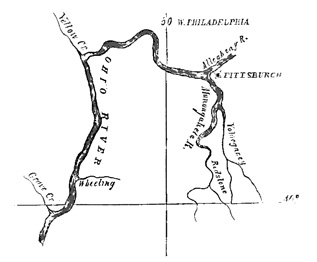
The declaration of John Sappington, received after the publication of the preceding Appendix.
I, JOHN SAPPINGTON, declare myself to be intimately acquainted with all the circumstances respecting the destruction of Logan's family, and do give in the following narrative, a true statement of that affair:
"Logan's family (if it was his family) was not killed by Cresap, nor with his knowledge, nor by his consent, but by the Great-houses and their associates. They were killed 30 miles above Wheeling, near the mouth of Yellow Creek. Logan's camp was on one side of the river Ohio, and the house, where the murder was committed, opposite to it on the other side. They had encamped there only four or five days, and during that time had lived peaceably and neighbourly with the whites on the opposite side, until the very day the affair happened. A little before the period alluded to, letters had been received by the inhabitants from a man of great influence in that country, and who was then, I believe, at Capteener, informing them that war was at hand, and desiring them to be on their guard. In consequence of those letters and other rumors of the same import, almost all the inhabitants fled for safety into the settlements. It was at the house of one Baker the murder was committed. Baker was a man who sold rum, and the Indians had made frequent visits at his house, induced, probably, by their fondness for that liquor. He had been particularly desired by Cresap to remove and take away his rum, and he was actually preparing to move at the time of the murder. The evening before, a squaw came over to Baker's house, and by her crying seemed to be in great distress. The cause of her uneasiness being asked, she refused to tell; but getting Baker's wife alone, she told her that the Indians were going to kill her and all her family the next day, that she loved her, did not wish her to be killed, and therefore told her what was intended, that she might save herself. In consequence of this information, Baker got a number of men, to the amount of twenty-one, to come to his house, and they were all there before morning. A council was held, and it was determined that the men should lie concealed in the back apartment; that if the Indians did come, and behaved themselves peaceably, they should not be molested; but if not, the men were to show themselves, and act accordingly. Early in the morning, seven Indians, four men and three squaws, came over. Logan's brother was one of them. They immediately got rum, and all, except Logan's brother, became very much intoxicated. At this time all the men were concealed, except the man of the house, Baker, and two others who staid out with him. Those Indians came unarmed. After some time Logan's brother took down a coat and hat, belonging to Baker's brother-in-law, who lived with him, and put them on, and setting his arms a-kimbo, began to strut about, till at length coming up to one of the men, he attempted to strike him, saying, "White man, son of a bitch." The white man, whom he treated thus, kept out of his way for some time; but growing irritated, he jumped to his gun, and shot the Indian as he was making to the door with the coat and hat on him. The men who lay concealed then rushed out, and killed the whole of them, excepting one child, which I believe is alive yet. But before this happened, one with two, the other with five Indians, all naked, painted, and armed completely for war, were discovered to start from the shore on which Logan's camp was. Had it not been for this circumstance, the white men would not have acted as they did; but this confirmed what the squaw had told before. The white men, having killed, as aforesaid, the Indians in the house, ranged themselves along the bank of the river, to receive the canoes. The canoe with the two Indians came near, being the foremost. Our men fired upon them and killed them both. The other canoe then went back. After this, two other canoes started, the one containing eleven, the other seven, Indians, painted and armed as the first. They attempted to land below our men, but were fired upon; had one killed, and retreated, at the same time firing back. To the best of my recollection there were three of the Great-houses engaged in this business. This is a true representation of the affair from beginning to end. I was intimately acquainted with Cresap, and know he had no hand in that transaction. He told me himself afterwards, at Redstone Old Fort, that the day before Logan's people were killed, he, with a small party, had an engagement with a party of Indians on Capteener, about forty-four miles lower down. Logan's people were killed at the mouth of Yellow Creek, on the 24th of May, 1774; and the 23d, the day before, Cresap was engaged as already stated. I know, likewise, that he was generally blamed for it, and believed by all who were not acquainted with the circumstances to have been the perpetrator of it. I know that he despised and hated the Great-houses ever afterwards on account of it. I was intimately acquainted with General Gibson, and served under him during the late war, and I have a discharge from him now lying in the land-office at Richmond, to which I refer any person for my character, who might be disposed to scruple my veracity. I was likewise at the treaty held by Lord Dunmore with the Indians, at Chelicothe. As for the speech said to have been delivered by Logan on that occasion, it might have been, or might not, for anything I know, as I never heard of it till long afterwards. I do not believe that Logan had any relations killed, except his brother. Neither of the squaws who were killed was his wife. Two of them were old women, and the third, with her child, which was saved, I have the best reason in the world to believe was the wife and child of General Gibson. I know he educated the child, and took care of it, as if it had been his own. Whether Logan had a wife or not, I can't say; but it is probable that as he was a chief, he considered them all as his people. All this I am ready to be qualified to at any time.
JOHN SAPPINGTON.
Attest, Samuel M'Kee, Junr.
Madison County, Feb. 13th, 1800.
I do certify further, that the above-named John Sappington told me, at the same time and place at which he gave me the above narrative, that he himself was the man who shot the brother of Logan in the house, as above-related, and that he likewise killed one of the Indians in one of the canoes, which came over from the opposite shore.
He likewise told me, that Cresap never said an angry word to him about the matter, although he was frequently in company with Cresap, and indeed had been, and continued to be, in habits of intimacy with that gentleman, and was always befriended by him on every occasion. He further told me, that after they had perpetrated the murder, and were flying into the settlement, he met with Cresap (if I recollect right, at Redstone Old Fort); and gave him a scalp, a very large fine one, as he expressed it, and adorned with silver. This scalp, I think he told me, was the scalp of Logan's brother; though as to this I am not absolutely certain.
Certified by SAMUEL M'KEE, Junr.