Volume 3 — V. DEATH AND BEREAVEMENT. (continued 2)
Reading edition
HOME THEY BROUGHT HER WARRIOR DEAD. FROM "THE PRINCESS." Home they brought her warrior dead: She nor swooned, nor uttered cry; All her maidens, watching, said, "She must weep or she will die." Then they praised him, soft and low, Called him worthy to be loved, Truest friend and noblest foe; Yet she neither spoke nor moved. Stole a maiden from her place, Lightly to the warrior stept, Took the face-cloth from the face; Yet she neither moved nor wept. Rose a nurse of ninety years, Set his child upon her knee,— Like summer tempest came her tears, "Sweet my child, I live for thee." ALFRED, LORD TENNYSON.
THE KING OF DENMARK'S RIDE. Word was brought to the Danish king (Hurry!) That the love of his heart lay suffering, And pined for the comfort his voice would bring; (O, ride as though you were flying!) Better he loves each golden curl On the brow of that Scandinavian girl Than his rich crown jewels of ruby and pearl: And his rose of the isles is dying! Thirty nobles saddled with speed; (Hurry!) Each one mounting a gallant steed Which he kept for battle and days of need; (O, ride as though you were flying!) Spurs were struck in the foaming flank; Worn out chargers staggered and sank; Bridles were slackened, and girths were burst; But ride as they would, the king rode first, For his rose of the isles lay dying! His nobles are beaten, one by one; (Hurry!) They have fainted, and faltered, and homeward gone; His little fair page now follows alone, For strength and for courage trying! The king looked back at that faithful child; Wan was the face that answering smiled; They passed the drawbridge with clattering din, Then he dropped; and only the king rode in Where his rose of the isles lay dying! The king blew a blast on his bugle horn; (Silence!) No answer came; but faint and forlorn An echo returned on the cold gray morn, Like the breath of a spirit sighing. The castle portal stood grimly wide; None welcomed the king from that weary ride; For dead, in the light of the dawning day, The pale sweet form of the welcomer lay, Who had yearned for his voice while dying! The panting steed, with a drooping crest, Stood weary. The king returned from her chamber of rest, The thick sobs choking in his breast; And, that dumb companion eyeing, The tears gushed forth which he strove to check; He bowed his head on his charger's neck: "O steed, that every nerve didst strain, Dear steed, our ride hath been in vain To the halls where my love lay dying!" CAROLINE E.S. NORTON.
GRIEF. FROM "HAMLET," ACT I. SC. 2. QUEEN.—Good Hamlet, cast thy nighted color off, And let thine eye look like a friend on Denmark. Do not, forever, with thy veiled lids Seek for thy noble father in the dust: Thou know'st 'tis common,—all that live must die, Passing through nature to eternity. HAMLET.—Ay, madam, it is common. QUEEN.—If it be, Why seems it so particular with thee? HAMLET.—Seems, madam! nay, it is; I know not seems. 'Tis not alone my inky cloak, good mother, Nor customary suits of solemn black, Nor windy suspiration of forced breath, No, nor the fruitful river in the eye, Nor the dejected havior of the visage, Together with all forms, modes, shows of grief, That can denote me truly: these, indeed, seem, For they are actions that a man might play: But I have that within, which passeth show; These, but the trappings and the suits of woe. SHAKESPEARE.
SELECTIONS FROM "IN MEMORIAM." [ARTHUR HENRY HALLAM, OB. 1833.] GRIEF UNSPEAKABLE. V. I sometimes hold it half a sin To put in words the grief I feel: For words, like Nature, half reveal And half conceal the Soul within. But, for the unquiet heart and brain, A use in measured language lies; The sad mechanic exercise, Like dull narcotics, numbing pain. In words, like weeds, I'll wrap me o'er, Like coarsest clothes against the cold; But that large grief which these enfold Is given in outline and no more. DEAD, IN A FOREIGN LAND. IX. Fair ship, that from the Italian shore Sailest the placid ocean-plains With my lost Arthur's loved remains, Spread thy full wings, and waft him o'er. So draw him home to those that mourn In vain; a favorable speed Ruffle thy mirrored mast, and lead Through prosperous floods his holy urn. All night no ruder air perplex Thy sliding keel, till Phosphor, bright As our pure love, through early light Shall glimmer on the dewy decks. Sphere all your lights around, above; Sleep, gentle heavens, before the prow; Sleep, gentle winds, as he sleeps now, My friend, the brother of my love; My Arthur, whom I shall not see Till all my widowed race be run; Dear as the mother to the son, More than my brothers are to me. THE PEACE OF SORROW XI. Calm is the morn without a sound, Calm as to suit a calmer grief, And only through the faded leaf The chestnut pattering to the ground: Calm and deep peace on this high wold And on these dews that drench the furze, And all the silvery gossamers That twinkle into green and gold: Calm and still light on yon great plain That sweeps with all its autumn bowers, And crowded farms, and lessening towers, To mingle with the bounding main: Calm and deep peace in this wide air, These leaves that redden to the fall; And in my heart, if calm at all, If any calm, a calm despair: Calm on the seas, and silver sleep, And waves that sway themselves in rest, And dead calm in that noble breast Which heaves but with the heaving deep. TIME AND ETERNITY. XLII. If Sleep and Death be truly one, And every spirit's folded bloom Through all its intervital gloom In some long trance should slumber on; Unconscious of the sliding hour, Bare of the body, might it last, And silent traces of the past Be all the color of the flower: So then were nothing lost to man; So that still garden of the souls In many a figured leaf enrolls The total world since life began; And love will last as pure and whole As when he loved me here in Time, And at the spiritual prime Rewaken with the dawning soul. PERSONAL RESURRECTION. XLVI. That each, who seems a separate whole, Should move his rounds, and fusing all The skirts of self again, should fall Remerging in the general Soul, Is faith as vague as all unsweet: Eternal form shall still divide The eternal soul from all beside; And I shall know him when we meet: And we shall sit at endless feast, Enjoying each the other's good: What vaster dream can hit the mood Of Love on earth? He seeks at least Upon the last and sharpest height, Before the spirits fade away, Some landing-place to clasp and say, "Farewell! We lose ourselves in light." SPIRITUAL COMPANIONSHIP. XCIII. How pure at heart and sound in head, With what divine affections bold, Should be the man whose thought would hold An hour's communion with the dead. In vain shalt thou, or any, call The spirits from their golden day, Except, like them, thou too canst say, My spirit is at peace with all. They haunt the silence of the breast, Imaginations calm and fair, The memory like a cloudless air, The conscience as a sea at rest: But when the heart is full of din, And doubt beside the portal waits, They can but listen at the gates, And hear the household jar within. L. Do we indeed desire the dead Should still be near us at our side? Is there no baseness we would hide? No inner vileness that we dread? Shall he for whose applause I strove, I had such reverence for his blame, See with clear eye some hidden shame, And I be lessened in his love? I wrong the grave with fears untrue: Shall love be blamed for want of faith? There must be wisdom with great Death: The dead shall look me through and through. Be near us when we climb or fall: Ye watch, like God, the rolling hours With larger other eyes than ours, To make allowance for us all. DEATH IN LIFE'S PRIME. LXXII. So many worlds, so much to do, So little done, such things to be, How know I what had need of thee? For thou wert strong as thou wert true. The fame is quenched that I foresaw, The head hath missed an earthly wreath: I curse not nature, no, nor death; For nothing is that errs from law. We pass; the path that each man trod Is dim, or will be dim, with weeds: What fame is left for human deeds In endless age? It rests with God. O hollow wraith of dying fame, Fade wholly, while the soul exults, And self-enfolds the large results Of force that would have forged a name. THE POET'S TRIBUTE. LXXVI. What hope is here for modern rhyme To him who turns a musing eye On songs, and deeds, and lives, that lie Foreshortened in the tract of time? These mortal lullabies of pain May bind a book, may line a box, May serve to curl a maiden's locks: Or when a thousand moons shall wane A man upon a stall may find, And, passing, turn the page that tells. A grief, then changed to something else, Sung by a long-forgotten mind. But what of that? My darkened ways Shall ring with music all the same; To breathe my loss is more than fame, To utter love more sweet than praise. ALFRED, LORD TENNYSON.
APRÈS. Down, down, Ellen, my little one, Climbing so tenderly up to my knee; Why should you add to the thoughts that are taunting me, Dreams of your mother's arms clinging to me? Cease, cease, Ellen, my little one, Warbling so fairily close to my ear; Why should you choose, of all songs that are haunting me, This that I made for your mother to hear? Hush, hush, Ellen, my little one, Wailing so wearily under the stars; Why should I think of her tears, that might light to me Love that had made life, and sorrow that mars? Sleep, sleep, Ellen, my little one! Is she not like her whenever she stirs? Has she not eyes that will soon be as bright to me, Lips that will some day be honeyed like hers? Yes, yes, Ellen, my little one. Though her white bosom is stilled in the grave, Something more white than her bosom is spared to me,— Something to cling to and something to crave. Love, love, Ellen, my little one! Love indestructible, love undefiled, Love through all deeps of her spirit lies bared to me, Oft as I look on the face of her child. ARTHUR JOSEPH MUNBY.
THE FAIREST THING IN MORTAL EYES. Addressed to his deceased wife, who died in childbed at the age of twenty-two. To make my lady's obsequies My love a minster wrought, And, in the chantry, service there Was sung by doleful thought; The tapers were of burning sighs, That light and odor gave: And sorrows, painted o'er with tears, Enluminèd her grave; And round about, in quaintest guise, Was carved: "Within this tomb there lies The fairest thing in mortal eyes." Above her lieth spread a tomb Of gold and sapphires blue: The gold doth show her blessedness, The sapphires mark her true; For blessedness and truth in her Were livelily portrayed, When gracious God with both his hands Her goodly substance made. He framed her in such wondrous wise, She was, to speak without disguise, The fairest thing in mortal eyes. No more, no more! my heart doth faint When I the life recall Of her who lived so free from taint, So virtuous deemed by all,— That in herself was so complete I think that she was ta'en By God to deck his paradise, And with his saints to reign, Whom while on earth each one did prize The fairest thing in mortal eyes. But naught our tears avail, or cries; All soon or late in death shall sleep; Nor living wight long time may keep The fairest thing in mortal eyes. From the French of CHARLES, DUKE OF ORLEANS. Translation of HENRY FRANCIS CARY.
BREAK, BREAK, BREAK. Break, break, break, On thy cold gray stones, O sea! And I would that my tongue could utter The thoughts that arise in me. O well for the fisherman's boy That he shouts with his sister at play! O well for the sailor lad That he sings in his boat on the bay! And the stately ships go on, To the haven under the hill; But O for the touch of a vanished hand, And the sound of a voice that is still! Break, break, break, At the foot of thy crags, O sea! But the tender grace of a day that is dead Will never come back to me. ALFRED, LORD TENNYSON.
LAVENDER. How prone we are to hide and hoard Each little treasure time has stored, To tell of happy hours! We lay aside with tender care A tattered book, a lock of hair, A bunch of faded flowers. When death has led with silent hand Our darlings to the "Silent Land," Awhile we sit bereft; But time goes on; anon we rise, Our dead are buried from our eyes, We gather what is left. The books they loved, the songs they sang, The little flute whose music rang So cheerily of old; The pictures we had watched them paint, The last plucked flower, with odor faint, That fell from fingers cold. We smooth and fold with reverent care The robes they living used to wear; And painful pulses stir As o'er the relics of our dead, With bitter rain of tears, we spread Pale purple lavender. And when we come in after years, With only tender April tears On cheeks once white with care, To look on treasures put away Despairing on that far-off day, A subtile scent is there. Dew-wet and fresh we gather them, These fragrant flowers; now every stem Is bare of all its bloom: Tear-wet and sweet we strewed them here To lend our relics, sacred, dear, Their beautiful perfume. The scent abides on book and lute, On curl and flower, and with its mute But eloquent appeal It wins from us a deeper sob For our lost dead, a sharper throb Than we are wont to feel. It whispers of the "long ago;" Its love, its loss, its aching woe, And buried sorrows stir; And tears like those we shed of old Roll down our cheeks as we behold Our faded lavender. ANONYMOUS.
WHAT OF THE DARKNESS? TO THE HAPPY DEAD PEOPLE. What of the darkness? Is it very fair? Are there great calms? and find we silence there? Like soft-shut lilies, all your faces glow With some strange peace our faces never know, With some strange faith our faces never dare,— Dwells it in Darkness? Do you find it there? Is it a Bosom where tired heads may lie? Is it a Mouth to kiss our weeping dry? Is it a Hand to still the pulse's leap? Is it a Voice that holds the runes of sleep? Day shows us not such comfort anywhere— Dwells it in Darkness? Do ye find it there? Out of the Day's deceiving light we call— Day that shows man so great, and God so small, That hides the stars, and magnifies the grass— O is the Darkness too a lying glass! Or undistracted, do you find truth there? What of the Darkness? Is it very fair? RICHARD LE GALLIENNE.
VAN ELSEN. God spake three times and saved Van Elsen's soul; He spake by sickness first and made him whole; Van Elsen heard him not, Or soon forgot. God spake to him by wealth, the world outpoured Its treasures at his feet, and called him Lord; Van Elsen's heart grew fat And proud thereat. God spake the third time when the great world smiled, And in the sunshine slew his little child; Van Elsen like a tree Fell hopelessly. Then in the darkness came a voice which said, "As thy heart bleedeth, so my heart hath bled, As I have need of thee, Thou needest me." That night Van Elsen kissed the baby feet, And, kneeling by the narrow winding sheet, Praised Him with fervent breath Who conquered death. FREDERICK GEORGE SCOTT.
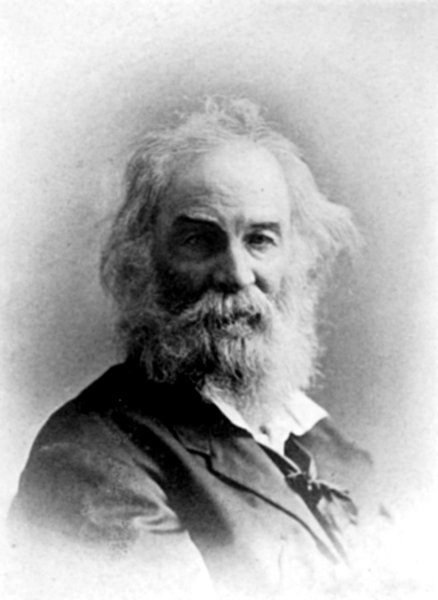
WALT WHITMAN After a life-photograph by Rockwood, New York.
WHEN LILACS LAST IN THE DOOR-YARD BLOOMED. [THE DEATH OF LINCOLN.] 1. When lilacs last in the door-yard bloomed, And the great star early drooped in the western sky in the night, I mourned and yet shall mourn with ever-returning spring. Ever-returning spring, trinity sure to me you bring, Lilacs blooming perennial, and drooping star in the west, And thought of him I love. 2. O powerful western fallen star! O shades of night—O moody, tearful night! O great star disappeared—O the black murk that hides the star! O cruel hands that hold me powerless—O helpless soul of me! O harsh surrounding cloud that will not free my soul! 3. In the door-yard fronting an old farm-house, near the whitewashed palings, Stands the lilac-bush tall-growing with heart-shaped leaves of rich green, With many a pointed blossom rising delicate, with the perfume strong I love, With every leaf a miracle;—and from this bush in the door-yard, With delicate-colored blossoms and heart-shaped leaves of rich green, A sprig with its flower I break. 4. In the swamp in secluded recesses, A shy and hidden bird is warbling a song. Solitary the thrush, The hermit withdrawn to himself, avoiding the settlements, Sings by himself a song.— Song of the bleeding throat, Death's outlet song of life (for well, dear brother, I know, If thou wast not granted to sing thou wouldst surely die). 5. Over the breast of the spring, the land, amid cities, Amid lanes and through old woods, where lately the violets peeped from the ground, spotting the gray débris, Amid the grass in the fields each side of the lanes, passing the endless grass, Passing the yellow-speared wheat, every grain from its shroud in the dark-brown fields up-risen, Passing the apple-tree blows of white and pink in the orchards, Carrying a corpse to where it shall rest in the grave, Night and day journeys a coffin. 6. Coffin that passes through lanes and streets, Through day and night with the great cloud darkening the land, With the pomp of the inlooped flags, with the cities draped in black, With the show of the States themselves as of crape-veiled women standing, With processions long and winding and the flambeaus of the night, With the countless torches lit, with the silent sea of faces and the unbared heads, With the waiting depot, the arriving coffin, and the sombre faces, With dirges through the night, with the thousand voices rising strong and solemn, With all the mournful voices of the dirges poured around the coffin, The dim-lit churches and the shuddering organs—where amid these you journey, With the tolling, tolling bells' perpetual clang, Here, coffin that slowly passes, I give you my sprig of lilac. 7. (Nor for you, for one alone,— Blossoms and branches green to coffins all I bring; For, fresh as the morning, thus would I chant a song for you, O sane and sacred death. All over bouquets of roses, O death, I cover you over with roses and early lilies, But mostly and now the lilac that blooms the first, Copious I break, I break the sprigs from the bushes, With loaded arms I come, pouring for you, For you and the coffins all of you, O death.) 8. O western orb sailing the heaven, Now I know what you must have meant as a month since I walked, As I walked in silence the transparent shadowy night, As I saw you had something to tell as you bent to me night after night, As you drooped from the sky low down as if to my side (while the other stars all looked on), As we wandered together the solemn night (for something, I know not what, kept me from sleep), As the night advanced, and I saw on the rim of the west how full you were of woe, As I stood on the rising ground in the breeze in the cool transparent night, As I watched where you passed and was lost in the netherward black of the night, As my soul in its trouble dissatisfied sank, as where you, sad orb. Concluded, dropt in the night, and was gone. 9. Sing on there in the swamp, O singer bashful and tender! I hear your notes, I hear your call, I hear, I come presently, I understand you; But a moment I linger, for the lustrous star has detained me, The star my departing comrade holds and detains me. 10. O how shall I warble myself for the dead one there I loved? And how shall I deck my song for the large sweet soul that has gone? And what shall my perfume be for the grave of him I love? Sea-winds blown from east and west, Blown from the Eastern sea and blown from the Western sea, till there on the prairies meeting, These and with these and the breath of my chant, I'll perfume the grave of him I love. 11. O what shall I hang on the chamber walls? And what shall the pictures be that I hang on the walls, To adorn the burial-house of him I love? Pictures of growing spring and farms and homes, With the Fourth-month eve at sundown, and the gray smoke lucid and bright, With floods of the yellow gold of the gorgeous, indolent, sinking sun, burning, expanding the air, With the fresh sweet herbage under foot, and the pale green leaves of the trees prolific, In the distance the flowing glaze, the breast of the river, with a wind-dapple here and there, With ranging hills on the banks, with many a line against the sky, and shadows, And the city at hand with dwellings so dense, and stacks of chimneys, And all the scenes of life and the workshops, and the workmen homeward returning. 12. Lo, body and soul—this land, My own Manhattan with spires, and the sparkling and hurrying tides, and the ships, The varied and ample land, the South and the North in the light, Ohio's shores and flashing Missouri, And ever the far-spreading prairies covered with grass and corn. Lo, the most excellent sun so calm and haughty, The violet and purple morn with just-felt breezes, The gentle soft-born measureless light, The miracle spreading, bathing all, the fulfilled noon, The coming eve delicious, the welcome night and the stars, Over my cities shining all, enveloping man and land. 13. Sing on, sing on, you gray-brown bird! Sing from the swamps, the recesses; pour your chant from the bushes, Limitless out of the dusk, out of the cedars and pines. Sing on, dearest brother, warble your reedy song, Loud human song, with voice of uttermost woe. O liquid and free and tender! O wild and loose to my soul—O wondrous singer! You only I hear—yet the star holds me (but will soon depart), Yet the lilac with mastering odor holds me. 14. Now while I sat in the day and looked forth, In the close of the day with its light and the fields of spring, and the farmers preparing their crops, In the large unconscious scenery of my land with its lakes and forests. In the heavenly aerial beauty (after the perturbed winds and the storms), Under the arching heavens of the afternoon swift passing, and the voices of children and women, The many-moving sea-tides, and I saw the ships how they sailed, And the summer approaching with richness, and the fields all busy with labor, And the infinite separate houses, how they all went on, each with its meals and minutia of daily usages, And the streets how their throbbings throbbed, and the cities pent—lo, then and there, Falling upon them all and among them all, enveloping me with the rest, Appeared the cloud, appeared the long black trail, And I knew death, its thought, and the sacred knowledge of death. Then with the knowledge of death as walking one side of me, And the thought of death close-walking the other side of me, And I in the middle as with companions, and as holding the hands of companions, I fled forth to the hiding receiving night that talks not, Down to the shores of the water, the path by the swamp in the dimness, To the solemn shadowy cedars and ghostly pines so still. And the singer so shy to the rest received me, The gray-brown bird I know received us comrades three, And he sang the carol of death, and a verse for him I love. From deep secluded recesses, From the fragrant cedars and the ghostly pines so still, Came the carol of the bird. And the charm of the carol rapt me, As I held as if by their hands my comrades in the night, And the voice of my spirit tallied the song of the bird. Come, lovely and soothing death. Undulate round the world, serenely arriving, arriving, In the, day, in the night, to all, to each, Sooner or later, delicate death. Praised be the fathomless universe, For life and joy, and for objects and knowledge curious, And for love, sweet love—but praise! praise! praise! For the sure-enwinding arms of cool-enfolding death. Dark mother, always gliding near with soft feet, Have none chanted for thee a chant of fullest welcome? Then I chant it for thee, I glorify thee above all, I bring thee a song that when thou must indeed come, come unfalteringly. Approach, strong deliveress! When it is so, when thou, hast taken them, I joyously sing the dead, Lost in the loving floating ocean of thee, Laved in the flood of thy bliss, O death. From me to thee glad serenades, Dances for thee, I propose, saluting thee, adornments and feastings for thee; And the sights of the open landscape and the high-spread sky are fitting, And life and the fields, and the huge and thoughtful night— The night in silence under many a star, The ocean shore and the husky whispering wave whose voice I know, And the soul turning to thee, O vast and well-veiled death, And the body gratefully nestling close to thee. Over the tree-tops I float thee a song, Over the rising and sinking waves, over the myriad fields and the prairies wide, Over the dense-packed cities all and the teeming wharves and ways, I float this carol with joy, with joy to thee, O death. 15. To the tally of my soul, Loud and strong kept up the gray-brown bird, With pure deliberate notes spreading, filling the night, Loud in the pines and cedars dim. Clear in the freshness moist and the swamp-perfume, And I with my comrades there in the night. While my sight that was bound in my eyes unclosed, As to long panoramas of visions. And I saw askant the armies, I saw as in noiseless dreams hundreds of battle-flags, Borne through the smoke of the battles and pierced with missiles I saw them, And carried hither and yon through the smoke, and torn and bloody. And at last but a few shreds left on the staffs (and all in silence), And the staffs all splintered and broken. I saw battle-corpses, myriads of them, And the white skeletons of young men, I saw them; I saw the debris and debris of all the slain soldiers of the war, But I saw they were not as was thought, They themselves were fully at rest, they suffered not: The living remained and suffered, the mother suffered, And the wife and the child and the musing comrade suffered, And the armies that remained suffered. 16. Passing the visions, passing the night, Passing, unloosing the hold of my comrades' hands, Passing the song of the hermit bird and the tallying song of my soul, Victorious song, death's outlet song, yet varying ever-altering song, As low and wailing, yet clear the notes, rising and falling, flooding the night, Sadly sinking and fainting, as warning and warning, and yet again bursting with joy, Covering the earth and filling the spread of the heaven, As that powerful psalm in the night I heard from recesses, Passing, I leave thee lilac with heart-shaped leaves, I leave thee there in the door-yard, blooming, returning with spring. I cease from my song for thee, From my gaze on thee in the west, fronting the west, communing with thee, O comrade lustrous, with silver face in the night. Yet each to keep and all, retrievements out of the night, The song, the wondrous chant of the gray brown bird, And the tallying chant, the echo aroused in my soul, With the lustrous and drooping star with the countenance full of woe. With the holders holding my hand nearing the call of the bird, Comrades mine and I in the midst, and their memory ever to keep, for the dead I loved so well. For the sweetest, wisest soul of all my days and lands—and this for his dear sake, Lilac and star and bird twined with the chant of my soul, There in the fragrant pines and the cedars dusk and dim. WALT WHITMAN.
IF I SHOULD DIE TO-NIGHT. If I should die to-night, My friends would look upon my quiet face Before they laid it in its resting-place, And deem that death had left it almost fair; And, laying snow-white flowers against my hair. Would smooth it down with tearful tenderness, And fold my hands with lingering caress— Poor hands, so empty and so cold to-night! If I should die to-night, My friends would call to mind, with loving thought, Some kindly deed the icy hands had wrought; Some gentle word the frozen lips had said; Errands on which the willing feet had sped; The memory of my selfishness and pride, My hasty words, would all be put aside, And so I should be loved and mourned to-night. If I should die to-night, Even hearts estranged would turn once more to me, Recalling other days remorsefully; The eyes that chill me with averted glance Would look upon me as of yore, perchance, And soften, in the old familiar way; For who could war with dumb, unconscious clay? So I might rest, forgiven of all, to-night. Oh, friends, I pray to-night, Keep not your kisses for my dead, cold brow— The way is lonely; let me feel them now. Think gently of me; I am travel-worn; My faltering feet are pierced with many a thorn. Forgive, oh, hearts estranged, forgive, I plead! When dreamless rest is mine I shall not need The tenderness for which I long to-night. BELLE E. SMITH.
AWAKENING. Down to the borders of the silent land He goes with halting feet; He dares not trust; he cannot understand The blessedness complete That waits for God's beloved at his right hand. He dreads to see God's face, for though the pure Beholding him are blest, Yet in his sight no evil can endure; And still with fear oppressed He looks within and cries, "Who can be sure?" The world beyond is strange; the golden streets, The palaces so fair, The seraphs singing in the shining seats, The glory everywhere,— And to his soul he solemnly repeats The visions of the Book. "Alas!" he cries, "That world is all too grand; Among those splendors and those majesties I would not dare to stand; For me a lowlier heaven would well suffice!" Yet, faithful in his lot this saint has stood Through service and through pain; The Lord Christ he has followed, doing good; Sure, dying must be gain To one who living hath done what he could. The light is fading in the tired eyes, The weary race is run; Not as the victor that doth seize the prize. But as the fainting one, He nears the verge of the eternities. And now the end has come, and now he sees The happy, happy shore; O fearful, and faint, distrustful soul, are these The things thou fearedst before— The awful majesties that spoiled thy peace? This land is home; no stranger art thou here; Sweet and familiar words From voices silent long salute thine ear; And winds and songs of birds, And bees and blooms and sweet perfumes are near. The seraphs—they are men of kindly mien; The gems and robes—but signs Of minds all radiant and of hearts washed clean; The glory—such as shines Wherever faith or hope or love is seen. And he, O doubting child! the Lord of grace Whom thou didst fear to see— He knows thy sin—but look upon his face! Doth it not shine on thee With a great light of love that fills the place? O happy soul, be thankful now and rest! Heaven is a goodly land; And God is love; and those he loves are blest;— Now thou dost understand; The least thou hast is better than the best That thou didst hope for; now upon thine eyes The new life opens fair; Before thy feet the Blessed journey lies Through homelands everywhere; And heaven to thee is all a sweet surprise. WASHINGTON GLADDEN.
BEYOND THE SMILING AND THE WEEPING. Beyond the smiling and the weeping I shall be soon; Beyond the waking and the sleeping, Beyond the sowing and the reaping, I shall be soon. Love, rest, and home! Sweet hope! Lord, tarry not, but come. Beyond the blooming and the fading I shall be soon; Beyond the shining and the shading, Beyond the hoping and the dreading, I shall be soon. Love, rest, and home! etc. Beyond the rising and the setting I shall be soon; Beyond the calming and the fretting, Beyond remembering and forgetting, I shall be soon. Love, rest, and home! etc. Beyond the gathering and the strowing I shall be soon; Beyond the ebbing and the flowing. Beyond the coming and the going, I shall be soon. Love, rest, and home! etc. Beyond the parting and the meeting I shall be soon; Beyond the farewell and the greeting, Beyond this pulse's fever beating, I shall be soon. Love, rest, and home! etc. Beyond the frost chain and the fever I shall be soon; Beyond the rock waste and the river, Beyond the ever and the never, I shall be soon. Love, rest, and home! Sweet hope! Lord, tarry not, but come. HORATIUS BONAR.
THE LAND O' THE LEAL. I'm wearing awa', Jean, Like snaw when it's thaw, Jean; I'm wearing awa', To the land o' the leal. There's nae sorrow there, Jean, There's neither cauld nor care, Jean, The day is aye fair In the land o' the leal. Ye were aye leal and true, Jean; Your task 's ended noo, Jean, And I'll welcome you To the land o' the leal. Our bonnie bairn 's there, Jean, She was baith guid and fair, Jean: O, we grudged her right sair To the land o' the leal! Then dry that tearfu' ee, Jean, My soul langs to be free, Jean, And angels wait on me To the land o' the leal! Now fare ye weel, my ain Jean, This warld's care is vain, Jean; We'll meet and aye be fain In the land o' the leal. CAROLINA, BARONESS NAIRNE.
ANTONY AND CLEOPATRA. "I am dying, Egypt, dying." —SHAKESPEARE'S Antony and Cleopatra, Act iv. Sc. 13. I am dying, Egypt, dying. Ebbs the crimson life-tide fast, And the dark Plutonian shadows Gather on the evening blast; Let thine arms, O Queen, enfold me, Hush thy sobs and bow thine ear; Listen to the great heart-secrets, Thou, and thou alone, must hear. Though my scarred and veteran legions Bear their eagles high no more. And my wrecked and scattered galleys Strew dark Actium's fatal shore, Though no glittering guards surround me, Prompt to do their master's will, I must perish like a Roman, Die the great Triumvir still. Let not Cæsar's servile minions Mock the lion thus laid low; 'T was no foeman's arm that felled him, 'T was his own that struck the blow: His who, pillowed on thy bosom, Turned aside from glory's ray, His who, drunk with thy caresses, Madly threw a world away. Should the base plebeian rabble Dare assail my name at Rome, Where my noble spouse, Octavia, Weeps within her widowed home, Seek her; say the gods bear witness— Altars, augurs, circling wings— That her blood, with mine commingled, Yet shall mount the throne of kings. As for thee, star-eyed Egyptian! Glorious sorceress of the Nile! Light the path to Stygian horrors With the splendors of thy smile. Give the Cæsar crowns and arches, Let his brow the laurel twine; I can scorn the Senate's triumphs, Triumphing in love like thine. I am dying, Egypt, dying; Hark! the insulting foeman's cry. They are coming—quick, my falchion! Let me front them ere I die. Ah! no more amid the battle Shall my heart exulting swell; Isis and Osiris guard thee! Cleopatra—Rome—farewell! WILLIAM HAINES LYTLE.
HABEAS CORPUS.* My body, eh? Friend Death, how now? Why all this tedious pomp of writ? Thou hast reclaimed it sure and slow For half a century, bit by bit. In faith thou knowest more to-day Than I do, where it can be found! This shrivelled lump of suffering clay, To which I now am chained and bound, Has not of kith or kin a trace To the good body once I bore; Look at this shrunken, ghastly face: Didst ever see that face before? Ah, well, friend Death, good friend thou art; Thy only fault thy lagging gait, Mistaken pity in thy heart For timorous ones that bid thee wait. Do quickly all thou hast to do, Nor I nor mine will hindrance make; I shall be free when thou art through; I grudge thee naught that thou must take! Stay! I have lied: I grudge thee one, Yes, two I grudge thee at this last,— Two members which have faithful done My will and bidding in the past. I grudge thee this right hand of mine; I grudge thee this quick-beating heart; They never gave me coward sign, Nor played me once a traitor's part. I see now why in olden days Men in barbaric love or hate Nailed enemies' hands at wild crossways, Shrined leaders' hearts in costly state: The symbol, sign, and instrument Of each soul's purpose, passion, strife, Of fires in which are poured and spent Their all of love, their all of life. O feeble, mighty human hand! O fragile, dauntless human heart! The universe holds nothing planned With such sublime, transcendent art! Yes, Death, I own I grudge thee mine Poor little hand, so feeble now; Its wrinkled palm, its altered line, Its veins so pallid and so slow— (Unfinished here) Ah, well, friend Death, good friend thou art: I shall be free when thou art through. Take all there is—take hand and heart: There must be somewhere work to do. HELEN HUNT JACKSON. * Her last poem: 7 August, 1885.
FAREWELL, LIFE. WRITTEN DURING SICKNESS, APRIL, 1845. Farewell, life! my senses swim. And the world is growing dim; Thronging shadows cloud the light, Like the advent of the night,— Colder, colder, colder still, Upward steals a vapor chill; Strong the earthly odor grows,— I smell the mold above the rose! Welcome, life! the spirit strives! Strength returns and hope revives; Cloudy fears and shapes forlorn Fly like shadows at the morn,— O'er the earth there comes a bloom; Sunny light for sullen gloom, Warm perfume for vapor cold,— I smell the rose above the mold! THOMAS HOOD.
FOR ANNIE. Thank Heaven! the crisis,— The danger is past, And the lingering illness Is over at last,— And the fever called "Living" Is conquered at last. Sadly, I know, I am shorn of my strength, And no muscle I move As I lie at full length,— But no matter!—I feel I am better at length. And I rest so composedly Now, in my bed, That any beholder Might fancy me dead,— Might start at beholding me, Thinking me dead. The moaning and groaning, The sighing and sobbing, Are quieted now, With that horrible throbbing At heart,—ah, that horrible, Horrible throbbing! The sickness, the nausea, The pitiless pain, Have ceased, with the fever That maddened my brain,— With the fever called "Living" That burned in my brain. And O, of all tortures That torture the worst Has abated,—the terrible Torture of thirst For the naphthaline river Of Passion accurst! I have drunk of a water That quenches all thirst, Of a water that flows, With a lullaby sound. From a spring but a very few Feet under ground, From a cavern not very far Down under ground. And ah! let it never Be foolishly said That my room it is gloomy And narrow my bed; For man never slept In a different bed,— And, to sleep you must slumber In just such a bed. My tantalized spirit Here blandly reposes, Forgetting, or never Regretting, its roses,— Its old agitations Of myrtles and roses: For now, while so quietly Lying, it fancies A holier odor About it, of pansies,— A rosemary odor, Commingled with pansies, With rue and the beautiful Puritan pansies. And so it lies happily, Bathing in many A dream of the truth And the beauty of Annie,— Drowned in a bath Of the tresses of Annie. She tenderly kissed me, She fondly caressed, And then I fell gently To sleep on her breast,— Deeply to sleep From the heaven of her breast. When the light was extinguished, She covered me warm, And she prayed to the angels To keep me from harm,— To the queen of the angels To shield me from harm. And I lie so composedly Now in my bed, (Knowing her love,) That you fancy me dead;— And I rest so contentedly Now in my bed, (With her love at my breast,) That you fancy me dead,— That you shudder to look at me, Thinking me dead: But my heart it is brighter Than all of the many Stars in the sky; For it sparkles with Annie,— It glows with the light Of the love of my Annie, With the thought of the light Of the eyes of my Annie. EDGAR ALLAN POE
THALATTA! THALATTA! CRY OF THE TEN THOUSAND. I stand upon the summit of my life, Behind, the camp, the court, the field, the grove, The battle, and the burden: vast, afar Beyond these weary ways. Behold! the Sea! The sea o'erswept by clouds and winds and wings; By thoughts and wishes manifold, whose breath Is freshness and whose mighty pulse is peace. Palter no question of the horizon dim— Cut loose the bark! Such voyage itself is rest, Majestic motion, unimpeded scope, A widening heaven, a current without care, Eternity!—deliverance, promise, course! Time-tired souls salute thee from the shore. JOSEPH BROWNLEE BROWN.
THE SLEEP. "He giveth his belovèd sleep."—PSALM cxxvii. 2. Of all the thoughts of God that are Borne inward unto souls afar, Among the Psalmist's music deep, Now tell me if that any is, For gift or grace, surpassing this,— "He giveth his belovèd sleep "? What would we give to our beloved? The hero's heart, to be unmoved,— The poet's star-tuned harp, to sweep,— The patriot's voice, to teach and rouse,— The monarch's crown, to light the brows? "He giveth his belovèd sleep." What do we give to our beloved? A little faith, all undisproved,— A little dust to overweep, And bitter memories, to make The whole earth blasted for our sake, "He giveth his belovèd sleep." "Sleep soft, beloved!" we sometimes say, But have no tune to charm away Sad dreams that through the eyelids creep; But never doleful dream again Shall break the happy slumber when "He giveth his beloved sleep." O earth, so full of dreary noise! O men, with wailing in your voice! O delved gold the wailers heap! O strife, O curse, that o'er it fall! God strikes a silence through you all, "He giveth his beloved sleep." His dews drop mutely on the hill, His cloud above it saileth still. Though on its slope men sow and reap; More softly than the dew is shed, Or cloud is floated overhead, "He giveth his beloved sleep." For me, my heart, that erst did go Most like a tired child at a show. That sees through tears the mummers leap, Would now its wearied vision close, Would childlike on his love repose Who "giveth his beloved sleep." ELIZABETH BARRETT BROWNING.
PROSPICE Fear death? to feel the fog in my throat, The mist in my face, When the snows begin, and the blasts denote I am nearing the place, The power of the night, the press of the storm, The post of the foe; Where he stands, the Arch Fear in a visible form, Yet the strong man must go: For the journey is done and the summit attained, And the barriers fall, Though a battle's to fight ere the guerdon be gained, The reward of it all. I was ever a fighter, so—one fight more, The best and the last! I would hate that death bandaged my eyes, and forbore, And bade me creep past. No! let me taste the whole of it, fare like my peers The heroes of old, Bear the brunt, in a minute pay glad life's arrears Of pain, darkness and cold. For sudden the worst turns the best to the brave, The black minute's at end, And the elements' rage, the fiend-voices that rave, Shall dwindle, shall blend, Shall change, shall become first a peace out of pain. Then a light, then thy breast, O thou soul of my soul! I shall clasp thee again, And with God be the rest! ROBERT BROWNING.
I WOULD NOT LIVE ALWAY. I would not live alway—live alway below! Oh no, I'll not linger when bidden to go: The days of our pilgrimage granted us here Are enough for life's woes, full enough for its cheer: Would I shrink from the path which the prophets of God, Apostles, and martyrs, so joyfully trod? Like a spirit unblest, o'er the earth would I roam, While brethren and friends are all hastening home? I would not live alway: I ask not to stay Where storm after storm rises dark o'er the way; Where seeking for rest we but hover around, Like the patriarch's bird, and no resting is found; Where Hope, when she paints her gay bow in the air. Leaves its brilliance to fade in the night of despair, And joy's fleeting angel ne'er sheds a glad ray, Save the gleam of the plumage that bears him away. I would not live alway—thus fettered by sin, Temptation without and corruption within; In a moment of strength if I sever the chain, Scarce the victory's mine, ere I 'm captive again; E'en the rapture of pardon is mingled with fears, And the cup of thanksgiving with penitent tears: The festival trump calls for jubilant songs, But my spirit her own miserere prolongs. I would not live alway—no, welcome the tomb, Since Jesus hath lain there I dread not its gloom; Where he deigned to sleep, I'll too bow my head, All peaceful to slumber on that hallowed bed. Then the glorious daybreak, to follow that night, The orient gleam of the angels of light, With their clarion call for the sleepers to rise. And chant forth their matins, away to the skies. Who, who would live alway? away from his God, Away from yon heaven, that blissful abode, Where the rivers of pleasure flow o'er the bright plains, And the noontide of glory eternally reigns; Where the saints of all ages in harmony meet, Their Saviour and brethren transported to greet, While the songs of salvation exultingly roll And the smile of the Lord is the feast of the soul. That heavenly music! what is it I hear? The notes of the harpers ring sweet in mine ear! And see, soft unfolding those portals of gold, The King all arrayed in his beauty behold! Oh give me, oh give me, the wings of a dove, To adore him—be near him—enwrapt with his love; I but wait for the summons, I list for the word— Alleluia—Amen—evermore with the Lord! WILLIAM AUGUSTUS MÜHLENBERG.
FAREWELL. I strove with none, for none was worth my strife; Nature I loved, and next to Nature, Art; I warmed both hands before the fire of life,— It sinks, and I am ready to depart. WALTER SAVAGE LANDOR.
LOVE AND DEATH. Alas! that men must see Love, before Death! Else they content might be With their short breath; Aye, glad, when the pale sun Showed restless day was done, And endless Rest begun. Glad, when with strong, cool hand Death clasped their own, And with a strange command Hushed every moan; Glad to have finished pain, And labor wrought in vain, Blurred by Sin's deepening stain. But Love's insistent voice Bids self to flee— "Live that I may rejoice, Live on, for me!" So, for Love's cruel mind, Men fear this Rest to find, Nor know great Death is kind! MARGARETTA WADE DELAND.
TO DEATH. Methinks it were no pain to die On such an eve, when such a sky O'er-canopies the west; To gaze my fill on yon calm deep, And, like an infant, fall asleep On Earth, my mother's breast. There's peace and welcome in yon sea Of endless blue tranquillity: These clouds are living things; I trace their veins of liquid gold, I see them solemnly unfold Their soft and fleecy wings. These be the angels that convey Us weary children of a day— Life's tedious nothing o'er— Where neither passions come, nor woes, To vex the genius of repose On Death's majestic shore. No darkness there divides the sway With startling dawn and dazzling day; But gloriously serene Are the interminable plains: One fixed, eternal sunset reigns O'er the wide silent scene. I cannot doff all human fear; I know thy greeting is severe To this poor shell of clay: Yet come, O Death! thy freezing kiss Emancipates! thy rest is bliss! I would I were away! From the German of GLUCK.
ASLEEP, ASLEEP. "And so saying, he fell asleep." MARTYRDOM OF SAINT STEPHEN. Asleep! asleep! men talk of "sleep," When all adown the silent deep The shades of night are stealing; When like a curtain, soft and vast, The darkness over all is cast, And sombre stillness comes at last, To the mute heart appealing. Asleep! asleep! when soft and low The patient watchers come and go, Their loving vigil keeping; When from the dear eyes fades the light, When pales the flush so strangely bright, And the glad spirit takes its flight, We speak of death as "sleeping." Or when, as dies the orb of day, The aged Christian sinks away, And the lone mourner weepeth; When thus the pilgrim goes to rest, With meek hands folded on his breast, And his last sigh a prayer confessed— We say of such, "He sleepeth." But when amidst a shower of stones, And mingled curses, shrieks, and groans, The death-chill slowly creepeth; When falls at length the dying head, And streams the life-blood dark and red, A thousand voices cry, "He's dead"; But who shall say, "He sleepeth"? "He fell asleep." A pen divine Hath writ that epitaph of thine; And though the days are hoary, Yet beautiful thy rest appears— Unsullied by the lapse of years— And still we read, with thankful tears, The tale of grace and glory. Asleep! asleep! though not for thee The touch of loving lips might be, In sadly sweet leave-taking: Though not for thee the last caress, The look of untold tenderness, The love that dying hours can press From hearts with silence breaking. LUCY A. BENNETT.
REST. I lay me down to sleep, With little care Whether my waking find Me here, or there. A bowing, burdened head That only asks to rest, Unquestioning, upon A loving breast. My good right-hand forgets Its cunning now; To march the weary march I know not how. I am not eager, bold, Nor strong,—all that is past; I am ready not to do, At last, at last. My half-day's work is done, And this is all my part,— I give a patient God My patient heart; And grasp his banner still, Though all the blue be dim; These stripes as well as stars Lead after him. MARY WOOLSEY HOWLAND.
IN HARBOR. I think it is over, over, I think it is over at last: Voices of foemen and lover, The sweet and the bitter, have passed: Life, like a tempest of ocean Hath outblown its ultimate blast: There's but a faint sobbing seaward While the calm of the tide deepens leeward, And behold! like the welcoming quiver Of heart-pulses throbbed through the river, Those lights in the harbor at last, The heavenly harbor at last! I feel it is over! over! For the winds and the waters surcease; Ah, few were the days of the rover That smiled in the beauty of peace, And distant and dim was the omen That hinted redress or release! From the ravage of life, and its riot, What marvel I yearn for the quiet Which bides in the harbor at last,— For the lights, with their welcoming quiver That throb through the sanctified river, Which girdle the harbor at last, This heavenly harbor at last? I know it is over, over, I know it is over at last! Down sail! the sheathed anchor uncover, For the stress of the voyage has passed: Life, like a tempest of ocean, Hath outbreathed its ultimate blast: There's but a faint sobbing seaward, While the calm of the tide deepens leeward; And behold! like the welcoming quiver Of heart-pulses throbbed through the river, Those lights in the harbor at last, The heavenly harbor at last! PAUL HAMILTON HAYNE.
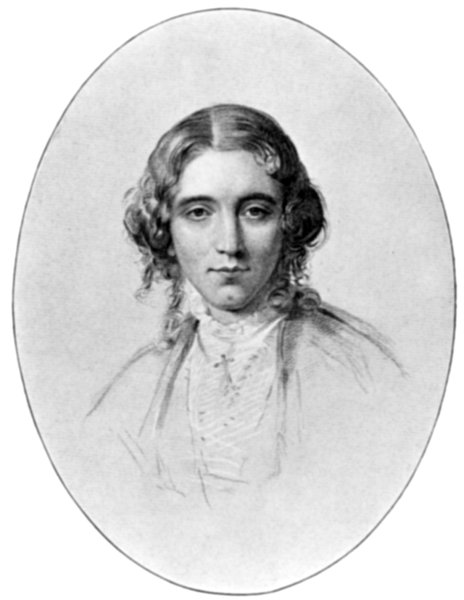
HARRIET BEECHER STOWE From an engraving after the drawing by George Richmond.
HUSH! Oh, hush thee, Earth! Fold thou thy weary palms! The sunset glory fadeth in the west; The purple splendor leaves the mountain's crest; Gray twilight comes as one who beareth alms, Darkness and silence and delicious calms. Take thou the gift, O Earth! On Night's soft breast Lay thy tired head and sink to dreamless rest, Lulled by the music of her evening psalms. Cool darkness, silence, and the holy stars, Long shadows when the pale moon soars on high, One far lone night-bird singing from the hill, And utter rest from Day's discordant jars; O soul of mine! when the long night draws nigh Will such deep peace thine inmost being fill? JULIA C.R. DORR.
LIFE. "Animula, vagula, blandula." Life! I know not what thou art, But know that thou and I must part; And when, or how, or where we met I own to me's a secret yet. But this I know, when thou art fled, Where'er they lay these limbs, this head, No clod so valueless shall be, As all that then remains of me. O, whither, whither dost thou fly, Where bend unseen thy trackless course, And in this strange divorce, Ah, tell where I must seek this compound I? To the vast ocean of empyreal flame, From whence thy essence came, Dost thou thy flight pursue, when freed From matter's base uncumbering weed? Or dost thou, hid from sight, Wait, like some spell-bound knight, Through blank, oblivious years the appointed hour To break thy trance and reassume thy power? Yet canst thou, without thought or feeling be? O, say what art thou, when no more thou'rt thee? Life! we've been long together, Through pleasant and through cloudy weather; 'Tis hard to part when friends are dear,— Perhaps 'twill cost a sigh, a tear: Then steal away, give little warning, Choose thine own time; Say not Good Night,—but in some brighter clime Bid me Good Morning. ANNA LETITIA BARBAULD.