Volume 25 — OF ROBERT LOUIS STEVENSON (continued 9)
Reading edition
To H. B. Baildon
Vailima, January 30th, 1894.
MY DEAR BAILDON,—“Call not blessed.”—Yes, if I could die just now, or say in half a year, I should have had a splendid time of it on the whole. But it gets a little stale, and my work will begin to senesce; and parties to shy bricks at me; and now it begins to look as if I should survive to see myself impotent and forgotten. It’s a pity suicide is not thought the ticket in the best circles.
But your letter goes on to congratulate me on having done the one thing I am a little sorry for; a little—not much—for my father himself lived to think that I had been wiser than he. But the cream of the jest is that I have lived to change my mind; and think that he was wiser than I. Had I been an engineer, and literature my amusement, it would have been better perhaps. I pulled it off, of course, I won the wager, and it is pleasant while it lasts; but how long will it last? I don’t know, say the Bells of Old Bow.
All of which goes to show that nobody is quite sane in judging himself. Truly, had I given way and gone in for engineering, I should be dead by now. Well, the gods know best.
... I hope you got my letter about the Rescue.—Adieu.
R. L. S.
True for you about the benefit: except by kisses, jests, song, et hoc genus omne, man cannot convey benefit to another. The universal benefactor has been there before him.
To Sidney Colvin
Feb. 1894.
DEAR COLVIN,—By a reaction, when your letter is a little decent, mine is to be naked and unashamed. We have been much exercised. No one can prophesy here, of course, and the balance still hangs trembling, but I think it will go for peace.
The mail was very late this time: hence the paltriness of this note. When it came and I had read it, I retired with The Ebb Tide and read it all before I slept. I did not dream it was near as good; I am afraid I think it excellent. A little indecision about Attwater, not much. It gives me great hope, as I see I can work in that constipated, mosaic manner, which is what I have to do just now with Weir of Hermiston.
We have given a ball; I send you a paper describing the event. We have two guests in the house, Captain-Count Wurmbrand and Monsieur Albert de Lautreppe. Lautreppe is awfully nice—a quiet, gentlemanly fellow, gonflé de rêves, as he describes himself—once a sculptor in the atelier of Henry Crosse, he knows something of art, and is really a resource to me.
Letter from Meredith very kind. Have you seen no more of Graham?
What about my Grandfather? The family history will grow to be quite a chapter.
I suppose I am growing sensitive; perhaps, by living among barbarians, I expect more civility. Look at this from the author of a very interesting and laudatory critique. He gives quite a false description of something of mine, and talks about my “insolence.” Frankly, I supposed “insolence” to be a tapu word. I do not use it to a gentleman, I would not write it of a gentleman: I may be wrong, but I believe we did not write it of a gentleman in old days, and in my view he (clever fellow as he is) wants to be kicked for applying it to me. By writing a novel—even a bad one—I do not make myself a criminal for anybody to insult. This may amuse you. But either there is a change in journalism, too gradual for you to remark it on the spot, or there is a change in me. I cannot bear these phrases; I long to resent them. My forbears, the tenant farmers of the Mures, would not have suffered such expressions unless it had been from Cauldwell, or Rowallan, or maybe Auchendrane. My Family Pride bristles. I am like the negro, “I just heard last night” who my great, great, great, great grandfather was.—Ever yours,
R. L. S.
To J. H. Bates
The next is to a correspondent in Cincinnati, who had been the founder of an R. L. S. Society in that city, “originally,” he writes me, under date April 7, 1895, “the outcome of a boyish fancy, but it has now grown into something more substantial.”
Vailima, Samoa, March 25th, 1894.
MY DEAR MR. JOE H. BATES,—I shall have the greatest pleasure in acceding to your complimentary request. I shall think it an honour to be associated with your chapter, and I need not remind you (for you have said it yourself) how much depends upon your own exertions whether to make it to me a real honour or only a derision. This is to let you know that I accept the position that you have seriously offered to me in a quite serious spirit. I need scarce tell you that I shall always be pleased to receive reports of your proceedings; and if I do not always acknowledge them, you are to remember that I am a man very much occupied otherwise, and not at all to suppose that I have lost interest in my chapter.
In this world, which (as you justly say) is so full of sorrow and suffering, it will always please me to remember that my name is connected with some efforts after alleviation, nor less so with purposes of innocent recreation which, after all, are the only certain means at our disposal for bettering human life.
With kind regards, to yourself, to Mr. L. C. Congdon, to E. M. G. Bates, and to Mr. Edward Hugh Higlee Bates, and the heartiest wishes for the future success of the chapter, believe me, yours cordially.
Robert Louis Stevenson.
To William Archer
Vailima, Samoa, March 27th, 1894.
MY DEAR ARCHER,—Many thanks for your Theatrical World. Do you know, it strikes me as being really very good? I have not yet read much of it, but so far as I have looked, there is not a dull and not an empty page in it. Hazlitt, whom you must often have thought of, would have been pleased. Come to think of it, I shall put this book upon the Hazlitt shelf. You have acquired a manner that I can only call august; otherwise, I should have to call it such amazing impudence. The Bauble Shop and Becket are examples of what I mean. But it “sets you weel.”
Marjorie Fleming I have known, as you surmise, for long. She was possibly—no, I take back possibly—she was one of the greatest works of God. Your note about the resemblance of her verses to mine gave me great joy, though it only proved me a plagiarist. By the by, was it not over The Child’s Garden of Verses that we first scraped acquaintance? I am sorry indeed to hear that my esteemed correspondent Tomarcher has such poor taste in literature.75 I fear he cannot have inherited this trait from his dear papa. Indeed, I may say I know it, for I remember the energy of papa’s disapproval when the work passed through his hands on its way to a second birth, which none regrets more than myself. It is an odd fact, or perhaps a very natural one; I find few greater pleasures than reading my own works, but I never, O I never read The Black Arrow. In that country Tomarcher reigns supreme. Well, and after all, if Tomarcher likes it, it has not been written in vain.
We have just now a curious breath from Europe. A young fellow just beginning letters, and no fool, turned up here with a letter of introduction in the well-known blue ink and decorative hieroglyphs of George Meredith. His name may be known to you. It is Sidney Lysaght. He is staying with us but a day or two, and it is strange to me and not unpleasant to hear all the names, old and new, come up again. But oddly the new are so much more in number. If I revisited the glimpses of the moon on your side of the ocean, I should know comparatively few of them.
My amanuensis deserts me—I should have said you, for yours is the loss, my script having lost all bond with humanity. One touch of nature makes the whole world kin: that nobody can read my hand. It is a humiliating circumstance that thus evens us with printers!
You must sometimes think it strange—or perhaps it is only I that should so think it—to be following the old round, in the gas lamps and the crowded theatres, when I am away here in the tropical forest and the vast silences!
My dear Archer, my wife joins me in the best wishes to yourself and Mrs. Archer, not forgetting Tom; and I am yours very cordially,
Robert Louis Stevenson.
To Sidney Colvin
Partly concerning a fresh rising, this time of the partisans of Tamasese from the district of Atua, which had occurred and was after some time suppressed; partly in reference to the visit of Mr. Sidney Lysaght; partly in reply to a petition that his letters might be less entirely taken up with native affairs, of relatively little meaning to his correspondent.
[Vailima, April 1894.]
MY DEAR COLVIN,—This is the very day the mail goes, and I have as yet written you nothing. But it was just as well—as it was all about my “blacks and chocolates,” and what of it had relation to whites you will read some of in the Times. It means, as you will see, that I have at one blow quarrelled with all the officials of Samoa, the Foreign Office, and I suppose her Majesty the Queen with milk and honey blest. But you’ll see in the Times. I am very well indeed, but just about dead and mighty glad the mail is near here, and I can just give up all hope of contending with my letters, and lie down for the rest of the day. These Times letters are not easy to write. And I dare say the consuls say, “Why, then, does he write them?”
I had miserable luck with St. Ives; being already half-way through it, a book I had ordered six months ago arrives at last, and I have to change the first half of it from top to bottom! How could I have dreamed the French prisoners were watched over like a female charity school, kept in a grotesque livery, and shaved twice a week? And I had made all my points on the idea that they were unshaved and clothed anyhow. However, this last is better business; if only the book had come when I ordered it! À propos, many of the books you announce don’t come as a matter of fact. When they are of any value, it is best to register them. Your letter, alas! is not here; I sent it down to the cottage, with all my mail, for Fanny; on Sunday night a boy comes up with a lantern and a note from Fanny, to say the woods are full of Atuas and I must bring a horse down that instant, as the posts are established beyond her on the road, and she does not want to have the fight going on between us. Impossible to get a horse; so I started in the dark on foot, with a revolver, and my spurs on my bare feet, leaving directions that the boy should mount after me with the horse. Try such an experience on Our Road once, and do it, if you please, after you have been down town from nine o’clock till six, on board the ship-of-war lunching, teaching Sunday School (I actually do) and making necessary visits; and the Saturday before, having sat all day from ½-past six to ½-past four, scriving at my Times letter. About half-way up, just in fact at “point” of the outposts, I met Fanny coming up. Then all night long I was being wakened with scares that really should be looked into, though I knew there was nothing in them and no bottom to the whole story; and the drums and shouts and cries from Tanugamanono and the town keeping up an all-night corybantic chorus in the moonlight—the moon rose late—and the search-light of the war-ship in the harbour making a jewel of brightness as it lit up the bay of Apia in the distance. And then next morning, about eight o’clock, a drum coming out of the woods and a party of patrols who had been in the woods on our left front (which is our true rear) coming up to the house, and meeting there another party who had been in the woods on our right {front rear} which is Vaea Mountain, and 43 of them being entertained to ava and biscuits on the verandah, and marching off at last in single file for Apia. Briefly, it is not much wonder if your letter and my whole mail was left at the cottage, and I have no means of seeing or answering particulars.
The whole thing was nothing but a bottomless scare; it was obviously so; you couldn’t make a child believe it was anything else, but it has made the consuls sit up. My own private scares were really abominably annoying; as for instance after I had got to sleep for the ninth time perhaps—and that was no easy matter either, for I had a crick in my neck so agonising that I had to sleep sitting up—I heard noises as of a man being murdered in the boys’ house. To be sure, said I, this is nothing again, but if a man’s head was being taken, the noises would be the same! So I had to get up, stifle my cries of agony from the crick, get my revolver, and creep out stealthily to the boys’ house. And there were two of them sitting up, keeping watch of their own accord like good boys, and whiling the time over a game of Sweepi (Cascino—the whist of our islanders)—and one of them was our champion idiot, Misifolo, and I suppose he was holding bad cards, and losing all the time—and these noises were his humorous protests against Fortune!
Well, excuse this excursion into my “blacks and chocolates.” It is the last. You will have heard from Lysaght how I failed to write last mail. The said Lysaght seems to me a very nice fellow. We were only sorry he could not stay with us longer. Austin came back from school last week, which made a great time for the Amanuensis, you may be sure. Then on Saturday, the Curaçoa came in—same commission, with all our old friends; and on Sunday, as already mentioned, Austin and I went down to service and had lunch afterwards in the wardroom. The officers were awfully nice to Austin; they are the most amiable ship in the world; and after lunch we had a paper handed round on which we were to guess, and sign our guess, of the number of leaves on the pine-apple; I never saw this game before, but it seems it is much practised in the Queen’s Navee. When all have betted, one of the party begins to strip the pine-apple head, and the person whose guess is furthest out has to pay for the sherry. My equanimity was disturbed by shouts of The American Commodore, and I found that Austin had entered and lost about a bottle of sherry! He turned with great composure and addressed me. “I am afraid I must look to you, Uncle Louis.” The Sunday School racket is only an experiment which I took up at the request of the late American Land Commissioner; I am trying it for a month, and if I do as ill as I believe, and the boys find it only half as tedious as I do, I think it will end in a month. I have carte blanche, and say what I like; but does any single soul understand me?
Fanny is on the whole very much better. Lloyd has been under the weather, and goes for a month to the South Island of New Zealand for some skating, save the mark! I get all the skating I want among officials.
Dear Colvin, please remember that my life passes among my “blacks or chocolates.” If I were to do as you propose, in a bit of a tiff, it would cut you off entirely from my life. You must try to exercise a trifle of imagination, and put yourself, perhaps with an effort, into some sort of sympathy with these people, or how am I to write to you? I think you are truly a little too Cockney with me.—Ever yours,
Robert Louis Stevenson.
To W. B. Yeats
Vailima, Samoa, April 14, 1894.
DEAR SIR,—Long since when I was a boy I remember the emotions with which I repeated Swinburne’s poems and ballads. Some ten years ago, a similar spell was cast upon me by Meredith’s Love in the Valley; the stanzas beginning “When her mother tends her” haunted me and made me drunk like wine; and I remember waking with them all the echoes of the hills about Hyères. It may interest you to hear that I have a third time fallen in slavery: this is to your poem called the Lake Isle of Innisfree. It is so quaint and airy, simple, artful, and eloquent to the heart—but I seek words in vain. Enough that “always night and day I hear lake water lapping with low sounds on the shore,” and am, yours gratefully,
Robert Louis Stevenson.
To George Meredith
The young lady referred to in the following is Mr. Meredith’s daughter, now Mrs. H. Sturgis; the bearer of the introduction, Mr. Sidney Lysaght, author of The Marplot and One of the Grenvilles. It is only in the first few chapters of Mr. Meredith’s Amazing Marriage that the character of Gower Woodseer has been allowed to retain any likeness to that of R. L. S.
Vailima, Samoa, April 17th, 1894.
MY DEAR MEREDITH,—Many good things have the gods sent to me of late. First of all there was a letter from you by the kind hand of Mariette, if she is not too great a lady to be remembered in such a style; and then there came one Lysaght with a charming note of introduction in the well-known hand itself. We had but a few days of him, and liked him well. There was a sort of geniality and inward fire about him at which I warmed my hands. It is long since I have seen a young man who has left in me such a favourable impression; and I find myself telling myself, “O, I must tell this to Lysaght,” or, “This will interest him,” in a manner very unusual after so brief an acquaintance. The whole of my family shared in this favourable impression, and my halls have re-echoed ever since, I am sure he will be amused to know, with Widdicombe Fair.
He will have told you doubtless more of my news than I could tell you myself; he has your European perspective, a thing long lost to me. I heard with a great deal of interest the news of Box Hill. And so I understand it is to be enclosed! Allow me to remark, that seems a far more barbaric trait of manners than the most barbarous of ours. We content ourselves with cutting off an occasional head.
I hear we may soon expect The Amazing Marriage. You know how long, and with how much curiosity, I have looked forward to the book. Now, in so far as you have adhered to your intention, Gower Woodseer will be a family portrait, age twenty-five, of the highly respectable and slightly influential and fairly aged Tusitala. You have not known that gentleman; console yourself, he is not worth knowing. At the same time, my dear Meredith, he is very sincerely yours—for what he is worth, for the memories of old times, and in the expectation of many pleasures still to come. I suppose we shall never see each other again; flitting youths of the Lysaght species may occasionally cover these unconscionable leagues and bear greetings to and fro. But we ourselves must be content to converse on an occasional sheet of notepaper, and I shall never see whether you have grown older, and you shall never deplore that Gower Woodseer should have declined into the pantaloon Tusitala. It is perhaps better so. Let us continue to see each other as we were, and accept, my dear Meredith, my love and respect.
Robert Louis Stevenson.
P.S.—My wife joins me in the kindest messages to yourself and Mariette.
To Charles Baxter
[Vailima], April 17, ’94.
MY DEAR CHARLES,—St. Ives is now well on its way into the second volume. There remains no mortal doubt that it will reach the three-volume standard.
I am very anxious that you should send me—
1st. Tom and Jerry, a cheap edition.
2nd. The book by Ashton—the Dawn of the Century, I think it was called—which Colvin sent me, and which has miscarried, and
3rd. If it is possible, a file of the Edinburgh Courant for the years 1811, 1812, 1813, or 1814. I should not care for a whole year. If it were possible to find me three months, winter months by preference, it would do my business not only for St. Ives, but for the Justice-Clerk as well. Suppose this to be impossible, perhaps I could get the loan of it from somebody; or perhaps it would be possible to have some one read a file for me and make notes. This would be extremely bad, as unhappily one man’s food is another man’s poison, and the reader would probably leave out everything I should choose. But if you are reduced to that, you might mention to the man who is to read for me that balloon ascensions are in the order of the day.
4th. It might be as well to get a book on balloon ascension, particularly in the early part of the century.
........
III. At last this book has come from Scribner, and, alas! I have the first six or seven chapters of St. Ives to recast entirely. Who could foresee that they clothed the French prisoners in yellow? But that one fatal fact—and also that they shaved them twice a week—damns the whole beginning. If it had been sent in time, it would have saved me a deal of trouble....
I have had a long letter from Dr. Scott Dalgleish, 25 Mayfield Terrace, asking me to put my name down to the Ballantyne Memorial Committee. I have sent him a pretty sharp answer in favour of cutting down the memorial and giving more to the widow and children. If there is to be any foolery in the way of statues or other trash, please send them a guinea; but if they are going to take my advice and put up a simple tablet with a few heartfelt words, and really devote the bulk of the subscriptions to the wife and family, I will go to the length of twenty pounds, if you will allow me (and if the case of the family be at all urgent), and at least I direct you to send ten pounds. I suppose you had better see Scott Dalgleish himself on the matter. I take the opportunity here to warn you that my head is simply spinning with a multitude of affairs, and I shall probably forget a half of my business at last.
R. L. S.
To Mrs. Sitwell
[Vailima, April 1894.]
MY DEAR FRIEND,—I have at last got some photographs, and hasten to send you, as you asked, a portrait of Tusitala. He is a strange person; not so lean, say experts, but infinitely battered; mighty active again on the whole; going up and down our break-neck road at all hours of the day and night on horseback; holding meetings with all manner of chiefs; quite a political personage—God save the mark!—in a small way, but at heart very conscious of the inevitable flat failure that awaits every one. I shall never do a better book than Catriona, that is my high-water mark, and the trouble of production increases on me at a great rate—and mighty anxious about how I am to leave my family: an elderly man, with elderly preoccupations, whom I should be ashamed to show you for your old friend; but not a hope of my dying soon and cleanly, and “winning off the stage.” Rather I am daily better in physical health. I shall have to see this business out, after all; and I think, in that case, they should have—they might have—spared me all my ill-health this decade past, if it were not to unbar the doors. I have no taste for old age, and my nose is to be rubbed in it in spite of my face. I was meant to die young, and the gods do not love me.
This is very like an epitaph, bar the handwriting, which is anything but monumental, and I dare say I had better stop. Fanny is down at her own cottage planting or deplanting or replanting, I know not which, and she will not be home till dinner, by which time the mail will be all closed, else she would join me in all good messages and remembrances of love. I hope you will congratulate Burne Jones from me on his baronetcy. I cannot make out to be anything but raspingly, harrowingly sad; so I will close, and not affect levity which I cannot feel. Do not altogether forget me; keep a corner of your memory for the exile
Louis.
To Charles Baxter
[Vailima, May 1894.]
MY DEAR CHARLES,—My dear fellow, I wish to assure you of the greatness of the pleasure that this Edinburgh Edition gives me. I suppose it was your idea to give it that name. No other would have affected me in the same manner. Do you remember, how many years ago—I would be afraid to hazard a guess—one night when I communicated to you certain intimations of early death and aspiration after fame? I was particularly maudlin; and my remorse the next morning on a review of my folly has written the matter very deeply in my mind; from yours it may easily have fled. If any one at that moment could have shown me the Edinburgh Edition, I suppose I should have died. It is with gratitude and wonder that I consider “the way in which I have been led.” Could a more preposterous idea have occurred to us in those days when we used to search our pockets for coppers, too often in vain, and combine forces to produce the threepence necessary for two glasses of beer, or wander down the Lothian Road without any, than that I should be strong and well at the age of forty-three in the island of Upolu, and that you should be at home bringing out the Edinburgh Edition? If it had been possible, I should almost have preferred the Lothian Road Edition, say, with a picture of the old Dutch smuggler on the covers. I have now something heavy on my mind. I had always a great sense of kinship with poor Robert Fergusson—so clever a boy, so wild, of such a mixed strain, so unfortunate, born in the same town with me, and, as I always felt, rather by express intimation than from evidence, so like myself. Now the injustice with which the one Robert is rewarded and the other left out in the cold sits heavy on me, and I wish you could think of some way in which I could do honour to my unfortunate namesake. Do you think it would look like affectation to dedicate the whole edition to his memory? I think it would. The sentiment which would dictate it to me is too abstruse; and besides, I think my wife is the proper person to receive the dedication of my life’s work. At the same time, it is very odd—it really looks like the transmigration of souls—I feel that I must do something for Fergusson; Burns has been before me with the gravestone. It occurs to me you might take a walk down the Canongate and see in what condition the stone is. If it be at all uncared for, we might repair it, and perhaps add a few words of inscription.
I must tell you, what I just remembered in a flash as I was walking about dictating this letter—there was in the original plan of the Master of Ballantrae a sort of introduction describing my arrival in Edinburgh on a visit to yourself and your placing in my hands the papers of the story. I actually wrote it, and then condemned the idea—as being a little too like Scott, I suppose. Now I must really find the MS. and try to finish it for the E.E. It will give you, what I should so much like you to have, another corner of your own in that lofty monument.
Suppose we do what I have proposed about Fergusson’s monument, I wonder if an inscription like this would look arrogant—
This stone originally erected by Robert Burns has been repaired at the charges of Robert Louis Stevenson, and is by him re-dedicated to the memory of Robert Fergusson, as the gift of one Edinburgh lad to another.
In spacing this inscription I would detach the names of Fergusson and Burns, but leave mine in the text.
Or would that look like sham modesty, and is it better to bring out the three Roberts?
To Sidney Colvin
Vailima, May 18th, 1894.
MY DEAR COLVIN,—Your proposals for the Edinburgh Edition are entirely to my mind. About the Amateur Emigrant, it shall go to you by this mail well slashed. If you like to slash some more on your own account, I give you permission. ’Tis not a great work; but since it goes to make up the two first volumes as proposed, I presume it has not been written in vain.76—Miscellanies. I see with some alarm the proposal to print Juvenilia; does it not seem to you taking myself a little too much as Grandfather William? I am certainly not so young as I once was—a lady took occasion to remind me of the fact no later agone than last night. “Why don’t you leave that to the young men, Mr. Stevenson?” said she—but when I remember that I felt indignant at even John Ruskin when he did something of the kind I really feel myself blush from head to heel. If you want to make up the first volume, there are a good many works which I took the trouble to prepare for publication and which have never been republished. In addition to Roads and Dancing Children, referred to by you, there is An Autumn Effect in the Portfolio, and a paper on Fontainebleau—Forest Notes is the name of it—in Cornhill. I have no objection to any of these being edited, say with a scythe, and reproduced. But I heartily abominate and reject the idea of reprinting The Pentland Rising. For God’s sake let me get buried first.
Tales and Fantasies. Vols. I. and II. have my hearty approval. But I think III. and IV. had better be crammed into one as you suggest. I will reprint none of the stories mentioned. They are below the mark. Well, I dare say the beastly Body-Snatcher has merit, and I am unjust to it from my recollections of the Pall Mall. But the other two won’t do. For vols. V. and VI., now changed into IV. and V., I propose the common title of South Sea Yarns. There! These are all my differences of opinion. I agree with every detail of your arrangement, and, as you see, my objections have turned principally on the question of hawking unripe fruit. I dare say it is all pretty green, but that is no reason for us to fill the barrow with trash. Think of having a new set of type cast, paper especially made, etc., in order to set up rubbish that is not fit for the Saturday Scotsman. It would be the climax of shame.
I am sending you a lot of verses, which had best, I think, be called Underwoods Book III., but in what order are they to go? Also, I am going on every day a little, till I get sick of it, with the attempt to get The Emigrant compressed into life; I know I can—or you can after me—do it. It is only a question of time and prayer and ink, and should leave something, no, not good, but not all bad—a very genuine appreciation of these folks. You are to remember besides there is that paper of mine on Bunyan in the Magazine of Art. O, and then there’s another thing in Seeley called some spewsome name, I cannot recall it.
Well—come, here goes for Juvenilia. Dancing Infants, Roads, An Autumn Effect, Forest Notes (but this should come at the end of them, as it’s really rather riper), the t’other thing from Seeley, and I’ll tell you, you may put in my letter to the Church of Scotland—it’s not written amiss, and I dare say The Philosophy of Umbrellas might go in, but there I stick—and remember that was a collaboration with James Walter Ferrier. O, and there was a little skit called The Charity Bazaar, which you might see; I don’t think it would do. Now, I do not think there are two other words that should be printed.—By the way, there is an article of mine called The Day after To-morrow in the Contemporary which you might find room for somewhere; it’s no’ bad.
Very busy with all these affairs and some native ones also.
To R. A. M. Stevenson
[Vailima, June 17th, 1894.]
MY DEAR BOB,—I must make out a letter this mail or perish in the attempt. All the same, I am deeply stupid, in bed with a cold, deprived of my amanuensis, and conscious of the wish but not the furnished will. You may be interested to hear how the family inquiries go. It is now quite certain that we are a second-rate lot, and came out of Cunningham or Clydesdale, therefore British folk; so that you are Cymry on both sides, and I Cymry and Pict. We may have fought with King Arthur and known Merlin. The first of the family, Stevenson of Stevenson, was quite a great party, and dates back to the wars of Edward First. The last male heir of Stevenson of Stevenson died 1670, £220, 10s. to the bad, from drink. About the same time the Stevensons, who were mostly in Cunningham before, crop up suddenly in the parish of Neilston, over the border in Renfrewshire. Of course, they may have been there before, but there is no word of them in that parish till 1675 in any extracts I have. Our first traceable ancestor was a tenant farmer of Mure of Cauldwell’s—James in Nether Carsewell. Presently two families of maltmen are found in Glasgow, both, by re-duplicated proofs, related to James (the son of James) in Nether Carsewell. We descend by his second marriage from Robert; one of these died 1733. It is not very romantic up to now, but has interested me surprisingly to fish out, always hoping for more—and occasionally getting at least a little clearness and confirmation. But the earliest date, 1655, apparently the marriage of James in Nether Carsewell, cannot as yet be pushed back. From which of any number of dozen little families in Cunningham we should derive, God knows! Of course, it doesn’t matter a hundred years hence, an argument fatal to all human enterprise, industry, or pleasure. And to me it will be a deadly disappointment if I cannot roll this stone away! One generation further might be nothing, but it is my present object of desire, and we are so near it! There is a man in the same parish called Constantine; if I could only trace to him, I could take you far afield by that one talisman of the strange Christian name of Constantine. But no such luck! And I kind of fear we shall stick at James.
I. James, a tenant of the Mures, in Nether-Carsewell, Neilston, married (1665?) Jean Keir.

II. Robert (Maltman in Glasgow), died 1733, married 1st; married second, Elizabeth Cumming.

William (Maltman in Glasgow). Robert, Marion, Elizabeth. Note.—Between 1730-1766 flourished in Glasgow Alan the Coppersmith, who acts as a kind of a pin to the whole Stevenson system there. He was caution to Robert the Second’s will, and to William’s will, and to the will of a John, another maltman. III. Robert (Maltman in Glasgow), married Margaret Fulton (had a large family). || IV. Alan, West India merchant, married Jean Lillie. || V. Robert, married Jean Smith. VI. Alan.—Margaret Jones. | VII. R. A. M. S.
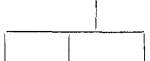

So much, though all inchoate, I trouble you with, knowing that you, at least, must take an interest in it. So much is certain of that strange Celtic descent, that the past has an interest for it apparently gratuitous, but fiercely strong. I wish to trace my ancestors a thousand years, if I trace them by gallowses. It is not love, not pride, not admiration; it is an expansion of the identity, intimately pleasing, and wholly uncritical; I can expend myself in the person of an inglorious ancestor with perfect comfort; or a disgraced, if I could find one. I suppose, perhaps, it is more to me who am childless, and refrain with a certain shock from looking forwards. But, I am sure, in the solid grounds of race, that you have it also in some degree.
Enough genealogy. I do not know if you will be able to read my hand. Unhappily, Belle, who is my amanuensis, is out of the way on other affairs, and I have to make the unwelcome effort. (O this is beautiful, I am quite pleased with myself.) Graham has just arrived last night (my mother is coming by the other steamer in three days), and has told me of your meeting, and he said you looked a little older than I did; so that I suppose we keep step fairly on the downward side of the hill. He thought you looked harassed, and I could imagine that too. I sometimes feel harassed. I have a great family here about me, a great anxiety. The loss (to use my grandfather’s expression), the “loss” of our family is that we are disbelievers in the morrow—perhaps I should say, rather, in next year. The future is always black to us; it was to Robert Stevenson; to Thomas; I suspect to Alan; to R. A. M. S. it was so almost to his ruin in youth; to R. L. S., who had a hard hopeful strain in him from his mother, it was not so much so once, but becomes daily more so. Daily so much more so, that I have a painful difficulty in believing I can ever finish another book, or that the public will ever read it.
I have so huge a desire to know exactly what you are doing, that I suppose I should tell you what I am doing by way of an example. I have a room now, a part of the twelve-foot verandah sparred in, at the most inaccessible end of the house. Daily I see the sunrise out of my bed, which I still value as a tonic, a perpetual tuning fork, a look of God’s face once in the day. At six my breakfast comes up to me here, and I work till eleven. If I am quite well, I sometimes go out and bathe in the river before lunch, twelve. In the afternoon I generally work again, now alone drafting, now with Belle dictating. Dinner is at six, and I am often in bed by eight. This is supposing me to stay at home. But I must often be away, sometimes all day long, sometimes till twelve, one, or two at night, when you might see me coming home to the sleeping house, sometimes in a trackless darkness, sometimes with a glorious tropic moon, everything drenched with dew—unsaddling and creeping to bed; and you would no longer be surprised that I live out in this country, and not in Bournemouth—in bed.
My great recent interruptions have (as you know) come from politics; not much in my line, you will say. But it is impossible to live here and not feel very sorely the consequences of the horrid white mismanagement. I tried standing by and looking on, and it became too much for me. They are such illogical fools; a logical fool in an office, with a lot of red tape, is conceivable. Furthermore, he is as much as we have any reason to expect of officials—a thoroughly common-place, unintellectual lot. But these people are wholly on wires; laying their ears down, skimming away, pausing as though shot, and presto! full spread on the other tack. I observe in the official class mostly an insane jealousy of the smallest kind, as compared to which the artist’s is of a grave, modest character—the actor’s, even; a desire to extend his little authority, and to relish it like a glass of wine, that is impayable. Sometimes, when I see one of these little kings strutting over one of his victories—wholly illegal, perhaps, and certain to be reversed to his shame if his superiors ever heard of it—I could weep. The strange thing is that they have nothing else. I auscultate them in vain; no real sense of duty, no real comprehension, no real attempt to comprehend, no wish for information—you cannot offend one of them more bitterly than by offering information, though it is certain that you have more, and obvious that you have other, information than they have; and talking of policy, they could not play a better stroke than by listening to you, and it need by no means influence their action. Tenez, you know what a French post office or railway official is? That is the diplomatic card to the life. Dickens is not in it; caricature fails.
All this keeps me from my work, and gives me the unpleasant side of the world. When your letters are disbelieved it makes you angry, and that is rot; and I wish I could keep out of it with all my soul. But I have just got into it again, and farewell peace!
My work goes along but slowly. I have got to a crossing place, I suppose; the present book, St. Ives, is nothing; it is in no style in particular, a tissue of adventures, the central character not very well done, no philosophic pith under the yarn; and, in short, if people will read it, that’s all I ask; and if they won’t, damn them! I like doing it though; and if you ask me why! After that I am on Weir of Hermiston and Heathercat, two Scotch stories, which will either be something different, or I shall have failed. The first is generally designed, and is a private story of two or three characters in a very grim vein. The second—alas! the thought—is an attempt at a real historical novel, to present a whole field of time; the race—our own race—the west land and Clydesdale blue bonnets, under the influence of their last trial, when they got to a pitch of organisation in madness that no other peasantry has ever made an offer at. I was going to call it The Killing Time, but this man Crockett has forestalled me in that. Well, it’ll be a big smash if I fail in it; but a gallant attempt. All my weary reading as a boy, which you remember well enough, will come to bear on it; and if my mind will keep up to the point it was in a while back, perhaps I can pull it through.
For two months past, Fanny, Belle, Austin (her child), and I have been alone; but yesterday, as I mentioned, Graham Balfour arrived, and on Wednesday my mother and Lloyd will make up the party to its full strength. I wish you could drop in for a month or a week, or two hours. That is my chief want. On the whole, it is an unexpectedly pleasant corner I have dropped into for an end of it, which I could scarcely have foreseen from Wilson’s shop, or the Princes Street Gardens, or the Portobello Road. Still, I would like to hear what my alter ego thought of it; and I would sometimes like to have my old maître-ès-arts express an opinion on what I do. I put this very tamely, being on the whole a quiet elderly man; but it is a strong passion with me, though intermittent. Now, try to follow my example and tell me something about yourself, Louisa, the Bab, and your work; and kindly send me some specimens of what you’re about. I have only seen one thing by you, about Notre Dame in the Westminster or St. James’s, since I left England, now I suppose six years ago.
I have looked this trash over, and it is not at all the letter I wanted to write—not truck about officials, ancestors, and the like rancidness—but you have to let your pen go in its own broken-down gait, like an old butcher’s pony, stop when it pleases, and go on again as it will.—Ever, my dear Bob, your affectionate cousin,
R. L. Stevenson.
To Sidney Colvin
Vailima, June 18th, ’94.
MY DEAR COLVIN,—You are to please understand that my last letter is withdrawn unconditionally. You and Baxter are having all the trouble of this Edition, and I simply put myself in your hands for you to do what you like with me, and I am sure that will be the best, at any rate. Hence you are to conceive me withdrawing all objections to your printing anything you please. After all, it is a sort of family affair. About the Miscellany Section, both plans seem to me quite good. Toss up. I think the Old Gardener has to stay where I put him last. It would not do to separate John and Robert.
In short, I am only sorry I ever uttered a word about the edition, and leave you to be the judge. I have had a vile cold which has prostrated me for more than a fortnight, and even now tears me nightly with spasmodic coughs; but it has been a great victory. I have never borne a cold with so little hurt; wait till the clouds blow by, before you begin to boast! I have had no fever; and though I’ve been very unhappy, it is nigh over, I think. Of course, St. Ives has paid the penalty. I must not let you be disappointed in St. I. It is a mere tissue of adventures; the central figure not very well or very sharply drawn; no philosophy, no destiny, to it; some of the happenings very good in themselves, I believe, but none of them bildende, none of them constructive, except in so far perhaps as they make up a kind of sham picture of the time, all in italics and all out of drawing. Here and there, I think, it is well written; and here and there it’s not. Some of the episodic characters are amusing, I do believe; others not, I suppose. However, they are the best of the thing such as it is. If it has a merit to it, I should say it was a sort of deliberation and swing to the style, which seems to me to suit the mail-coaches and post-chaises with which it sounds all through. ’Tis my most prosaic book.
I called on the two German ships now in port, and we are quite friendly with them, and intensely friendly of course with our own Curaçoas. But it is other guess work on the beach. Some one has employed, or subsidised, one of the local editors to attack me once a week. He is pretty scurrilous and pretty false. The first effect of the perusal of the weekly Beast is to make me angry; the second is a kind of deep, golden content and glory, when I seem to say to people: “See! this is my position—I am a plain man dwelling in the bush in a house, and behold they have to get up this kind of truck against me—and I have so much influence that they are obliged to write a weekly article to say I have none.”
By this time you must have seen Lysaght and forgiven me the letter that came not at all. He was really so nice a fellow—he had so much to tell me of Meredith—and the time was so short—that I gave up the intervening days between mails entirely to entertain him.
We go on pretty nicely. Fanny, Belle, and I have had two months alone, and it has been very pleasant. But by to-morrow or next day noon, we shall see the whole clan assembled again about Vailima table, which will be pleasant too; seven persons in all, and the Babel of voices will be heard again in the big hall so long empty and silent. Good-bye. Love to all. Time to close.—Yours ever,
R. L. S.
To Henry James
Vailima, July 7th, 1894.
DEAR HENRY JAMES,—I am going to try and dictate to you a letter or a note, and begin the same without any spark of hope, my mind being entirely in abeyance. This malady is very bitter on the literary man. I have had it now coming on for a month, and it seems to get worse instead of better. If it should prove to be softening of the brain, a melancholy interest will attach to the present document. I heard a great deal about you from my mother and Graham Balfour; the latter declares that you could take a First in any Samoan subject. If that be so, I should like to hear you on the theory of the constitution. Also to consult you on the force of the particles o lo’o and ua, which are the subject of a dispute among local pundits. You might, if you ever answer this, give me your opinion on the origin of the Samoan race, just to complete the favour.
They both say that you are looking well, and I suppose I may conclude from that that you are feeling passably. I wish I was. Do not suppose from this that I am ill in body; it is the numskull that I complain of. And when that is wrong, as you must be very keenly aware, you begin every day with a smarting disappointment, which is not good for the temper. I am in one of the humours when a man wonders how any one can be such an ass as to embrace the profession of letters, and not get apprenticed to a barber or keep a baked-potato stall. But I have no doubt in the course of a week, or perhaps to-morrow, things will look better.
We have at present in port the model warship of Great Britain. She is called the Curaçoa, and has the nicest set of officers and men conceivable. They, the officers, are all very intimate with us, and the front verandah is known as the Curaçoa Club, and the road up to Vailima is known as the Curaçoa Track. It was rather a surprise to me; many naval officers have I known, and somehow had not learned to think entirely well of them, and perhaps sometimes ask myself a little uneasily how that kind of men could do great actions? and behold! the answer comes to me, and I see a ship that I would guarantee to go anywhere it was possible for men to go, and accomplish anything it was permitted man to attempt. I had a cruise on board of her not long ago to Manu’a, and was delighted. The goodwill of all on board; the grim playfulness of77 quarters, with the wounded falling down at the word; the ambulances hastening up and carrying them away; the Captain suddenly crying, “Fire in the ward-room!” and the squad hastening forward with the hose; and, last and most curious spectacle of all, all the men in their dust-coloured fatigue clothes, at a note of the bugle, falling simultaneously flat on deck, and the ship proceeding with its prostrate crew—quasi to ram an enemy; our dinner at night in a wild open anchorage, the ship rolling almost to her gunwales, and showing us alternately her bulwarks up in the sky, and then the wild broken cliffy palm-crested shores of the island with the surf thundering and leaping close aboard. We had the ward-room mess on deck, lit by pink wax tapers, everybody, of course, in uniform but myself, and the first lieutenant (who is a rheumaticky body) wrapped in a boat cloak. Gradually the sunset faded out, the island disappeared from the eye, though it remained menacingly present to the ear with the voice of the surf; and then the captain turned on the searchlight and gave us the coast, the beach, the trees, the native houses, and the cliffs by glimpses of daylight, a kind of deliberate lightning. About which time, I suppose, we must have come as far as the dessert, and were probably drinking our first glass of port to Her Majesty. We stayed two days at the island, and had, in addition, a very picturesque snapshot at the native life. The three islands of Manu’a are independent, and are ruled over by a little slip of a half-caste girl about twenty, who sits all day in a pink gown, in a little white European house with about a quarter of an acre of roses in front of it, looking at the palm-trees on the village street, and listening to the surf. This, so far as I could discover, was all she had to do. “This is a very dull place,” she said. It appears she could go to no other village for fear of raising the jealousy of her own people in the capital. And as for going about “tafatafaoing,” as we say here, its cost was too enormous. A strong able-bodied native must walk in front of her and blow the conch shell continuously from the moment she leaves one house until the moment she enters another. Did you ever blow the conch shell? I presume not; but the sweat literally hailed off that man, and I expected every moment to see him burst a blood-vessel. We were entertained to kava in the guest-house with some very original features. The young men who run for the kava have a right to misconduct themselves ad libitum on the way back; and though they were told to restrain themselves on the occasion of our visit, there was a strange hurly-burly at their return, when they came beating the trees and the posts of the houses, leaping, shouting, and yelling like Bacchants.
I tasted on that occasion what it is to be great. My name was called next after the captain’s, and several chiefs (a thing quite new to me, and not at all Samoan practice) drank to me by name.
And now, if you are not sick of the Curaçoa and Manu’a, I am, at least on paper. And I decline any longer to give you examples of how not to write.
By the by, you sent me long ago a work by Anatole France, which I confess I did not taste. Since then I have made the acquaintance of the Abbé Coignard, and have become a faithful adorer. I don’t think a better book was ever written.
And I have no idea what I have said, and I have no idea what I ought to have said, and I am a total ass, but my heart is in the right place, and I am, my dear Henry James, yours,
R. L. S.
To Marcel Schwob
Vailima, Upolu, Samoa, July 7, 1894.
DEAR MR. MARCEL SCHWOB,—Thank you for having remembered me in my exile. I have read Mimes twice as a whole; and now, as I write, I am reading it again as it were by accident, and a piece at a time, my eye catching a word and travelling obediently on through the whole number. It is a graceful book, essentially graceful, with its haunting agreeable melancholy, its pleasing savoury of antiquity. At the same time, by its merits, it shows itself rather as the promise of something else to come than a thing final in itself. You have yet to give us—and I am expecting it with impatience—something of a larger gait; something daylit, not twilit; something with the colours of life, not the flat tints of a temple illumination; something that shall be said with all the clearnesses and the trivialities of speech, not sung like a semi-articulate lullaby. It will not please yourself as well, when you come to give it us, but it will please others better. It will be more of a whole, more worldly, more nourished, more commonplace—and not so pretty, perhaps not even so beautiful. No man knows better than I that, as we go on in life, we must part from prettiness and the graces. We but attain qualities to lose them; life is a series of farewells, even in art; even our proficiencies are deciduous and evanescent. So here with these exquisite pieces the XVIIth, XVIIIth, and IVth of the present collection. You will perhaps never excel them; I should think the “Hermes,” never. Well, you will do something else, and of that I am in expectation.—Yours cordially,
Robert Louis Stevenson.
To A. St. Gaudens
Vailima, Samoa, July 8, 1894.
MY DEAR ST. GAUDENS,—This is to tell you that the medallion has been at last triumphantly transported up the hill and placed over my smoking-room mantelpiece. It is considered by everybody a first-rate but flattering portrait. We have it in a very good light, which brings out the artistic merits of the god-like sculptor to great advantage. As for my own opinion, I believe it to be a speaking likeness, and not flattered at all; possibly a little the reverse. The verses (curse the rhyme) look remarkably well.
Please do not longer delay, but send me an account for the expense of the gilt letters. I was sorry indeed that they proved beyond the means of a small farmer.—Yours very sincerely,
Robert Louis Stevenson.
To Miss Adelaide Boodle
Vailima, July 14, 1894.
MY DEAR ADELAIDE,—... So, at last, you are going into mission work? where I think your heart always was. You will like it in a way, but remember it is dreary long. Do you know the story of the American tramp who was offered meals and a day’s wage to chop with the back of an axe on a fallen trunk. “Damned if I can go on chopping when I can’t see the chips fly!” You will never see the chips fly in mission work, never; and be sure you know it beforehand. The work is one long dull disappointment, varied by acute revulsions; and those who are by nature courageous and cheerful, and have grown old in experience, learn to rub their hands over infinitesimal successes. However, as I really believe there is some good done in the long run—gutta cavat lapidem non vi in this business—it is a useful and honourable career in which no one should be ashamed to embark. Always remember the fable of the sun, the storm, and the traveller’s cloak. Forget wholly and for ever all small pruderies, and remember that you cannot change ancestral feelings of right and wrong without what is practically soul-murder. Barbarous as the customs may seem, always hear them with patience, always judge them with gentleness, always find in them some seed of good; see that you always develop them; remember that all you can do is to civilise the man in the line of his own civilisation, such as it is. And never expect, never believe in, thaumaturgic conversions. They may do very well for St. Paul; in the case of an Andaman islander they mean less than nothing. In fact, what you have to do is to teach the parents in the interests of their great-grandchildren.
Now, my dear Adelaide, dismiss from your mind the least idea of fault upon your side; nothing is further from the fact. I cannot forgive you, for I do not know your fault. My own is plain enough, and the name of it is cold-hearted neglect; and you may busy yourself more usefully in trying to forgive me. But ugly as my fault is, you must not suppose it to mean more than it does; it does not mean that we have at all forgotten you, that we have become at all indifferent to the thought of you. See, in my life of Jenkin, a remark of his, very well expressed, on the friendships of men who do not write to each other. I can honestly say that I have not changed to you in any way; though I have behaved thus ill, thus cruelly. Evil is done by want of—well, principally by want of industry. You can imagine what I would say (in a novel) of any one who had behaved as I have done. Deteriora sequor. And you must somehow manage to forgive your old friend; and if you will be so very good, continue to give us news of you, and let us share the knowledge of your adventures, sure that it will be always followed with interest—even if it is answered with the silence of ingratitude. For I am not a fool; I know my faults, I know they are ineluctable, I know they are growing on me. I know I may offend again, and I warn you of it. But the next time I offend, tell me so plainly and frankly like a lady, and don’t lacerate my heart and bludgeon my vanity with imaginary faults of your own and purely gratuitous penance. I might suspect you of irony!
We are all fairly well, though I have been off work and off—as you know very well—letter-writing. Yet I have sometimes more than twenty letters, and sometimes more than thirty, going out each mail. And Fanny has had a most distressing bronchitis for some time, which she is only now beginning to get over. I have just been to see her; she is lying—though she had breakfast an hour ago, about seven—in her big cool, mosquito-proof room, ingloriously asleep. As for me, you see that a doom has come upon me: I cannot make marks with a pen—witness “ingloriously” above; and my amanuensis not appearing so early in the day, for she is then immersed in household affairs, and I can hear her “steering the boys” up and down the verandahs—you must decipher this unhappy letter for yourself and, I fully admit, with everything against you. A letter should be always well written; how much more a letter of apology! Legibility is the politeness of men of letters, as punctuality of kings and beggars. By the punctuality of my replies, and the beauty of my hand-writing, judge what a fine conscience I must have!
Now, my dear gamekeeper, I must really draw to a close. For I have much else to write before the mail goes out three days hence. Fanny being asleep, it would not be conscientious to invent a message from her, so you must just imagine her sentiments. I find I have not the heart to speak of your recent loss. You remember perhaps, when my father died, you told me those ugly images of sickness, decline, and impaired reason, which then haunted me day and night, would pass away and be succeeded by things more happily characteristic. I have found it so. He now haunts me, strangely enough, in two guises; as a man of fifty, lying on a hillside and carving mottoes on a stick, strong and well; and as a younger man, running down the sands into the sea near North Berwick, myself—ætat. 11—somewhat horrified at finding him so beautiful when stripped! I hand on your own advice to you in case you have forgotten it, as I know one is apt to do in seasons of bereavement.—Ever yours, with much love and sympathy,
Robert Louis Stevenson.
To Mrs. A. Baker
This refers again to the printing of some of his books in Braille type for the blind.
Vailima, Samoa, July 16, 1894.
DEAR MRS. BAKER,—I am very much obliged to you for your letter and the enclosure from Mr. Skinner. Mr. Skinner says he “thinks Mr. Stevenson must be a very kind man”; he little knows me. But I am very sure of one thing, that you are a very kind woman. I envy you—my amanuensis being called away, I continue in my own hand, or what is left of it—unusually legible, I am thankful to see—I envy you your beautiful choice of an employment. There must be no regrets at least for a day so spent; and when the night falls you need ask no blessing on your work. “Inasmuch as ye have done it unto one of these.”—Yours truly,
Robert Louis Stevenson.
To Sidney Colvin
July, 1894.
MY DEAR COLVIN,—I have to thank you this time for a very good letter, and will announce for the future, though I cannot now begin to put in practice, good intentions for our correspondence. I will try to return to the old system and write from time to time during the month; but truly you did not much encourage me to continue! However, that is all by-past. I do not know that there is much in your letter that calls for answer. Your questions about St. Ives were practically answered in my last; so were your wails about the edition, Amateur Emigrant, etc. By the end of the year St. I. will be practically finished, whatever it be worth, and that I know not. When shall I receive proofs of the Magnum Opus? or shall I receive them at all?
The return of the Amanuensis feebly lightens my heart. You can see the heavy weather I was making of it with my unaided pen. The last month has been particularly cheery largely owing to the presence of our good friends the Curaçoas. She is really a model ship, charming officers and charming seamen. They gave a ball last month, which was very rackety and joyous and naval....
On the following day, about one o’clock, three horsemen might have been observed approaching Vailima, who gradually resolved themselves into two petty officers and a native guide. Drawing himself up and saluting, the spokesman (a corporal of Marines) addressed me thus. “Me and my shipmates inwites Mr. and Mrs. Stevens, Mrs. Strong, Mr. Austin, and Mr. Balfour to a ball to be given to-night in the self-same ’all.” It was of course impossible to refuse, though I contented myself with putting in a very brief appearance. One glance was sufficient; the ball went off like a rocket from the start. I had only time to watch Belle careering around with a gallant bluejacket of exactly her own height—the standard of the British navy—an excellent dancer and conspicuously full of small-talk—and to hear a remark from a beach-comber, “It’s a nice sight this some way, to see the officers dancing like this with the men, but I tell you, sir, these are the men that’ll fight together!”
I tell you, Colvin, the acquaintance of the men—and boys—makes me feel patriotic. Eeles in particular is a man whom I respect. I am half in a mind to give him a letter of introduction to you when he goes home. In case you feel inclined to make a little of him, give him a dinner, ask Henry James to come to meet him, etc.—you might let me know. I don’t know that he would show his best, but he is a remarkably fine fellow, in every department of life.
We have other visitors in port. A Count Festetics de Tolna, an Austrian officer, a very pleasant, simple, boyish creature, with his young wife, daughter of an American millionaire; he is a friend of our own Captain Wurmbrand, and it is a great pity Wurmbrand is away.
Glad you saw and liked Lysaght. He has left in our house a most cheerful and pleasing memory, as a good, pleasant, brisk fellow with good health and brains, and who enjoys himself and makes other people happy. I am glad he gave you a good report of our surroundings and way of life; but I knew he would, for I believe he had a glorious time—and gave one.78
I am on fair terms with the two Treaty officials, though all such intimacies are precarious; with the consuls, I need not say, my position is deplorable. The President (Herr Emil Schmidt) is a rather dreamy man, whom I like. Lloyd, Graham and I go to breakfast with him to-morrow; the next day the whole party of us lunch on the Curaçoa and go in the evening to a Bierabend at Dr. Funk’s. We are getting up a paper-chase for the following week with some of the young German clerks, and have in view a sort of child’s party for grown-up persons with kissing games, etc., here at Vailima. Such is the gay scene in which we move. Now I have done something, though not as much as I wanted, to give you an idea of how we are getting on, and I am keenly conscious that there are other letters to do before the mail goes.—Yours ever,
R. L. Stevenson.
To J. M. Barrie
Vailima, July 13, 1894.
MY DEAR BARRIE,—This is the last effort of an ulcerated conscience. I have been so long owing you a letter, I have heard so much of you, fresh from the press, from my mother and Graham Balfour, that I have to write a letter no later than to-day, or perish in my shame. But the deuce of it is, my dear fellow, that you write such a very good letter that I am ashamed to exhibit myself before my junior (which you are, after all) in the light of the dreary idiot I feel. Understand that there will be nothing funny in the following pages. If I can manage to be rationally coherent, I shall be more than satisfied.
In the first place, I have had the extreme satisfaction to be shown that photograph of your mother. It bears evident traces of the hand of an amateur. How is it that amateurs invariably take better photographs than professionals? I must qualify invariably. My own negatives have always represented a province of chaos and old night in which you might dimly perceive fleecy spots of twilight, representing nothing; so that, if I am right in supposing the portrait of your mother to be yours, I must salute you as my superior. Is that your mother’s breakfast? Or is it only afternoon tea? If the first, do let me recommend to Mrs. Barrie to add an egg to her ordinary. Which, if you please, I will ask her to eat to the honour of her son, and I am sure she will live much longer for it, to enjoy his fresh successes. I never in my life saw anything more deliciously characteristic. I declare I can hear her speak. I wonder my mother could resist the temptation of your proposed visit to Kirriemuir, which it was like your kindness to propose. By the way, I was twice in Kirriemuir, I believe in the year ’71, when I was going on a visit to Glenogil. It was Kirriemuir, was it not? I have a distinct recollection of an inn at the end—I think the upper end—of an irregular open place or square, in which I always see your characters evolve. But, indeed, I did not pay much attention; being all bent upon my visit to a shooting-box, where I should fish a real trout-stream, and I believe preserved. I did, too, and it was a charming stream, clear as crystal, without a trace of peat—a strange thing in Scotland—and alive with trout; the name of it I cannot remember, it was something like the Queen’s River, and in some hazy way connected with memories of Mary Queen of Scots. It formed an epoch in my life, being the end of all my trout-fishing. I had always been accustomed to pause and very laboriously to kill every fish as I took it. But in the Queen’s River I took so good a basket that I forgot these niceties; and when I sat down, in a hard rain shower, under a bank, to take my sandwiches and sherry, lo! and behold, there was the basketful of trouts still kicking in their agony.
I had a very unpleasant conversation with my conscience. All that afternoon I persevered in fishing, brought home my basket in triumph, and sometime that night, “in the wee sma’ hours ayont the twal,” I finally forswore the gentle craft of fishing. I dare say your local knowledge may identify this historic river; I wish it could go farther and identify also that particular Free kirk in which I sat and groaned on Sunday. While my hand is in I must tell you a story. At that antique epoch you must not fall into the vulgar error that I was myself ancient. I was, on the contrary, very young, very green, and (what you will appreciate, Mr. Barrie) very shy. There came one day to lunch at the house two very formidable old ladies—or one very formidable, and the other what you please—answering to the honoured and historic name of the Miss C—— A——’s of Balnamoon. At table I was exceedingly funny, and entertained the company with tales of geese and bubbly-jocks. I was great in the expression of my terror for these bipeds, and suddenly this horrid, severe, and eminently matronly old lady put up a pair of gold eye-glasses, looked at me awhile in silence, and pronounced in a clangorous voice her verdict. “You give me very much the effect of a coward, Mr. Stevenson!” I had very nearly left two vices behind me at Glenogil—fishing and jesting at table. And of one thing you may be very sure, my lips were no more opened at that meal.
July 29th.—No, Barrie, ’tis in vain they try to alarm me with their bulletins. No doubt, you’re ill, and unco ill, I believe; but I have been so often in the same case that I know pleurisy and pneumonia are in vain against Scotsmen who can write. (I once could.) You cannot imagine probably how near me this common calamity brings you. Ce que j’ai toussé dans ma vie! How often and how long have I been on the rack at night and learned to appreciate that noble passage in the Psalms when somebody or other is said to be more set on something than they “who dig for hid treasures—yea, than those who long for the morning”—for all the world, as you have been racked and you have longed. Keep your heart up, and you’ll do. Tell that to your mother, if you are still in any danger or suffering. And by the way, if you are at all like me—and I tell myself you are very like me—be sure there is only one thing good for you, and that is the sea in hot climates. Mount, sir, into “a little frigot” of 5000 tons or so, and steer peremptorily for the tropics; and what if the ancient mariner, who guides your frigot, should startle the silence of the ocean with the cry of land ho!—say, when the day is dawning—and you should see the turquoise mountain tops of Upolu coming hand over fist above the horizon? Mr. Barrie, sir, ’tis then there would be larks! And though I cannot be certain that our climate would suit you (for it does not suit some), I am sure as death the voyage would do you good—would do you Best—and if Samoa didn’t do, you needn’t stay beyond the month, and I should have had another pleasure in my life, which is a serious consideration for me. I take this as the hand of the Lord preparing your way to Vailima—in the desert, certainly—in the desert of Cough and by the ghoul-haunted woodland of Fever—but whither that way points there can be no question—and there will be a meeting of the twa Hoasting Scots Makers in spite of fate, fortune and the Devil. Absit omen!
My dear Barrie, I am a little in the dark about this new work of yours:79 what is to become of me afterwards? You say carefully—methought anxiously—that I was no longer me when I grew up? I cannot bear this suspense: what is it? It’s no forgery? And AM I HANGIT? These are the elements of a very pretty lawsuit which you had better come to Samoa to compromise. I am enjoying a great pleasure that I had long looked forward to, reading Orme’s History of Indostan; I had been looking out for it everywhere; but at last, in four volumes, large quarto, beautiful type and page, and with a delectable set of maps and plans, and all the names of the places wrongly spelled—it came to Samoa, little Barrie. I tell you frankly, you had better come soon. I am sair failed a’ready; and what I may be if you continue to dally, I dread to conceive. I may be speechless; already, or at least for a month or so, I’m little better than a teetoller—I beg pardon, a teetotaller. It is not exactly physical, for I am in good health, working four or five hours a day in my plantation, and intending to ride a paper-chase next Sunday—ay, man, that’s a fact, and I havena had the hert to breathe it to my mother yet—the obligation’s poleetical, for I am trying every means to live well with my German neighbours—and, O Barrie, but it’s no easy!... To be sure, there are many exceptions. And the whole of the above must be regarded as private—strictly private. Breathe it not in Kirriemuir: tell it not to the daughters of Dundee! What a nice extract this would make for the daily papers! and how it would facilitate my position here!
August 5th.—This is Sunday, the Lord’s Day. “The hour of attack approaches.” And it is a singular consideration what I risk; I may yet be the subject of a tract, and a good tract too—such as one which I remember reading with recreant awe and rising hair in my youth, of a boy who was a very good boy, and went to Sunday Schule, and one day kipped from it, and went and actually bathed, and was dashed over a waterfall, and he was the only son of his mother, and she was a widow. A dangerous trade, that, and one that I have to practise. I’ll put in a word when I get home again, to tell you whether I’m killed or not. “Accident in the (Paper) Hunting Field: death of a notorious author. We deeply regret to announce the death of the most unpopular man in Samoa, who broke his neck, at the descent of Magiagi, from the misconduct of his little raving lunatic of an old beast of a pony. It is proposed to commemorate the incident by the erection of a suitable pile. The design (by our local architect, Mr. Walker) is highly artificial, with a rich and voluminous Crockett at each corner, a small but impervious Barrièer at the entrance, an arch at the top, an Archer of a pleasing but solid character at the bottom; the colour will be genuine William-Black; and Lang, lang may the ladies sit wi’ their fans in their hands.” Well, well, they may sit as they sat for me, and little they’ll reck, the ungrateful jauds! Muckle they cared about Tusitala when they had him! But now ye can see the difference; now leddies, ye can repent, when ower late, o’ your former cauldness and what ye’ll perhaps allow me to ca’ your tepeedity! He was beautiful as the day, but his day is done! And perhaps, as he was maybe gettin’ a wee thing fly-blown, it’s nane too shüne.
Monday, August 6th.—Well, sir, I have escaped the dangerous conjunction of the widow’s only son and the Sabbath Day. We had a most enjoyable time, and Lloyd and I were 3 and 4 to arrive; I will not tell here what interval had elapsed between our arrival and the arrival of 1 and 2; the question, sir, is otiose and malign; it deserves, it shall have no answer. And now without further delay to the main purpose of this hasty note. We received and we have already in fact distributed the gorgeous fahbrics of Kirriemuir. Whether from the splendour of the robes themselves, or from the direct nature of the compliments with which you had directed us to accompany the presentations, one young lady blushed as she received the proofs of your munificence.... Bad ink, and the dregs of it at that, but the heart in the right place. Still very cordially interested in my Barrie and wishing him well through his sickness, which is of the body, and long defended from mine, which is of the head, and by the impolite might be described as idiocy. The whole head is useless, and the whole sitting part painful: reason, the recent Paper Chase.
There was racing and chasing in Vailele plantation, And vastly we enjoyed it, But, alas! for the state of my foundation, For it wholly has destroyed it.
Come, my mind is looking up. The above is wholly impromptu.—On oath,
Tusitala.
To Sidney Colvin
The missionary view of the Sunday paper-chase, with an account of Stevenson’s apologies to the ladies and gentlemen of the mission, have been printed by Mr. W. E. Clarke in the Chronicle of the London Missionary Society for April and May 1908.
[Vailima] Aug. 7th, 1894.
MY DEAR COLVIN,—This is to inform you, sir, that on Sunday last (and this is Tuesday) I attained my ideal here, and we had a paper-chase in Vailele Plantation, about 15 miles, I take it, from us; and it was all that could be wished. It is really better fun than following the hounds, since you have to be your own hound, and a precious bad hound I was, following every false scent on the whole course to the bitter end; but I came in 3rd at the last on my little Jack, who stuck to it gallantly, and awoke the praises of some discriminating persons. (5 + 7 + 2½ = 14½ miles; yes, that is the count.) We had quite the old sensations of exhilaration, discovery, an appeal to a savage instinct; and I felt myself about 17 again, a pleasant experience. However, it was on the Sabbath Day, and I am now a pariah among the English, as if I needed any increment of unpopularity. I must not go again; it gives so much unnecessary tribulation to poor people, and, sure, we don’t want to make tribulation. I have been forbidden to work, and have been instead doing my two or three hours in the plantation every morning. I only wish somebody would pay me £10 a day for taking care of cacao, and I could leave literature to others. Certainly, if I have plenty of exercise, and no work, I feel much better; but there is Biles the butcher! him we have always with us.
I do not much like novels, I begin to think, but I am enjoying exceedingly Orme’s History of Hindostan, a lovely book in its way, in large quarto, with a quantity of maps, and written in a very lively and solid eighteenth century way, never picturesque except by accident and from a kind of conviction, and a fine sense of order. No historian I have ever read is so minute; yet he never gives you a word about the people; his interest is entirely limited in the concatenation of events, into which he goes with a lucid, almost superhuman, and wholly ghostly gusto. “By the ghost of a mathematician” the book might be announced. A very brave, honest book.
Your letter to hand.
Fact is, I don’t like the picter.80 O, it’s a good picture, but if you ask me, you know, I believe, stoutly believe, that mankind, including you, are going mad. I am not in the midst with the other frenzy dancers, so I don’t catch it wholly; and when you show me a thing—and ask me, don’t you know—Well, well! Glad to get so good an account of the Amateur Emigrant. Talking of which, I am strong for making a volume out of selections from the South Sea letters; I read over again the King of Apemama, and it is good in spite of your teeth, and a real curiosity, a thing that can never be seen again, and the group is annexed and Tembinoka dead. I wonder, couldn’t you send out to me the first five Butaritari letters and the Low Archipelago ones (both of which I have lost or mislaid) and I can chop out a perfectly fair volume of what I wish to be preserved. It can keep for the last of the series.
Travels and Excursions, vol. II. Should it not include a paper on S. F. from the Mag. of Art? The A. E., the New Pacific capital, the Old ditto. Silver. Squat. This would give all my works on the States; and though it ain’t very good, it’s not so very bad. Travels and Excursions, vol. III., to be these resuscitated letters—Miscellanies, vol. II.—comme vous voudrez, cher monsieur!
Monday, Aug. 13th.—I have a sudden call to go up the coast and must hurry up with my information. There has suddenly come to our naval commanders the need of action, they’re away up the coast bombarding the Atua rebels. All morning on Saturday the sound of the bombardment of Luatuanu’u kept us uneasy. To-day again the big guns have been sounding further along the coast. One delicious circumstance must not be forgotten. Our blessed President of the Council—a kind of hoary-headed urchin, with the dim, timid eyes of extreme childhood and a kind of beautiful simplicity that endears him to me beyond words—has taken the head of the army—honour to him for it, for his place is really there—and gone up the coast in the congenial company of his housekeeper, a woman coming on for sixty with whom he takes his walks abroad in the morning in his shirt-sleeves, whom he reads to at night (in a kind of Popular History of Germany) in the silence of the Presidential mansion, and with whom (and a couple of camp stools) he walked out last Sunday to behold the paper-chase. I cannot tell you how taken I am with this exploit of the President’s and the housekeeper’s. It is like Don Quixote, but infinitely superior. If I could only do it without offence, what a subject it would make!
To-morrow morning early I am off up the coast myself. Therefore you must allow me to break off here without further ceremony.—Yours ever,
Robert Louis Stevenson.
To Dr. Bakewell
The following is to a physician in Australia.
Vailima, August 7, 1894.
DEAR DR. BAKEWELL,—I am not more than human. I am more human than is wholly convenient, and your anecdote was welcome. What you say about unwilling work, my dear sir, is a consideration always present with me, and yet not easy to give its due weight to. You grow gradually into a certain income; without spending a penny more, with the same sense of restriction as before when you painfully scraped two hundred a year together, you find you have spent, and you cannot well stop spending, a far larger sum; and this expense can only be supported by a certain production. However, I am off work this month, and occupy myself instead in weeding my cacao, paper-chases, and the like. I may tell you, my average of work in favourable circumstances is far greater than you suppose: from six o’clock till eleven at latest,81 and often till twelve, and again in the afternoon from two to four. My hand is quite destroyed, as you may perceive, to-day to a really unusual extent. I can sometimes write a decent fist still; but I have just returned with my arms all stung from three hours’ work in the cacao.—Yours, etc.,
R. L. S.
To James Payn
Vailima, Upolu, Samoa [August 11, 1894].
MY DEAR JAMES PAYN,—I hear from Lang that you are unwell, and it reminds me of two circumstances: First, that it is a very long time since you had the exquisite pleasure of hearing from me; and second, that I have been very often unwell myself and sometimes had to thank you for a grateful anodyne.
They are not good, the circumstances, to write an anodyne letter. The hills and my house at less than (boom) a minute’s interval quake with thunder; and though I cannot hear that part of it, shells are falling thick into the fort of Luatuanu’u (boom). It is my friends of the Curaçoa, the Falke, and the Bussard bombarding (after all these—boom—months) the rebels of Atua. (Boom-boom.) It is most distracting in itself; and the thought of the poor devils in their fort (boom) with their bits of rifles far from pleasant. (Boom-boom.) You can see how quick it goes, and I’ll say no more about Mr. Bow-wow, only you must understand the perpetual accompaniment of this discomfortable sound, and make allowances for the value of my copy. It is odd, though, I can well remember, when the Franco-Prussian war began, and I was in Eilean Earraid, far enough from the sound of the loudest cannonade, I could hear the shots fired, and I felt the pang in my breast of a man struck. It was sometimes so distressing, so instant, that I lay in the heather on the top of the island, with my face hid, kicking my heels for agony. And now, when I can hear the actual concussion of the air and hills, when I know personally the people who stand exposed to it, I am able to go on taut bien que mal with a letter to James Payn! The blessings of age, though mighty small, are tangible. I have heard a great deal of them since I came into the world, and now that I begin to taste of them—Well! But this is one, that people do get cured of the excess of sensibility; and I had as lief these people were shot at as myself—or almost, for then I should have some of the fun, such as it is.
You are to conceive me, then, sitting in my little gallery room, shaken by these continual spasms of cannon, and with my eye more or less singly fixed on the imaginary figure of my dear James Payn. I try to see him in bed; no go. I see him instead jumping up in his room in Waterloo Place (where ex hypothesi he is not), sitting on the table, drawing out a very black briar-root pipe, and beginning to talk to a slim and ill-dressed visitor in a voice that is good to hear and with a smile that is pleasant to see. (After a little more than half an hour, the voice that was ill to hear has ceased, the cannonade is over.) And I am thinking how I can get an answering smile wafted over so many leagues of land and water, and can find no way.
I have always been a great visitor of the sick; and one of the sick I visited was W. E. Henley, which did not make very tedious visits, so I’ll not get off much purgatory for them. That was in the Edinburgh Infirmary, the old one, the true one, with Georgius Secundus standing and pointing his toe in a niche of the façade; and a mighty fine building it was! And I remember one winter’s afternoon, in that place of misery, that Henley and I chanced to fall in talk about James Payn himself. I am wishing you could have heard that talk! I think that would make you smile. We had mixed you up with John Payne, for one thing, and stood amazed at your extraordinary, even painful, versatility; and for another, we found ourselves each students so well prepared for examinations on the novels of the real Mackay. Perhaps, after all, this is worth something in life—to have given so much pleasure to a pair so different in every way as were Henley and I, and to be talked of with so much interest by two such (beg pardon) clever lads!
The cheerful Lang has neglected to tell me what is the matter with you; so, I’m sorry to say, I am cut off from all the customary consolations. I can’t say, “Think how much worse it would be if you had a broken leg!” when you may have the crushing repartee up your sleeve, “But it is my leg that is broken.” This is a pity. But there are consolations. You are an Englishman (I believe); you are a man of letters; you have never been made C.B.; you hair was not red; you have played cribbage and whist; you did not play either the fiddle or the banjo; you were never an æsthete; you never contributed to ——’s Journal; your name is not Jabez Balfour; you are totally unconnected with the Army and Navy departments; I understand you to have lived within your income—why, cheer up! here are many legitimate causes of congratulation. I seem to be writing an obituary notice. Absit omen! But I feel very sure that these considerations will have done you more good than medicine.
By the by, did you ever play piquet? I have fallen a victim to this debilitating game. It is supposed to be scientific; God save the mark, what self-deceivers men are! It is distinctly less so than cribbage. But how fascinating! There is such material opulence about it, such vast ambitions may be realised—and are not; it may be called the Monte Cristo of games. And the thrill with which you take five cards partakes of the nature of lust—and you draw four sevens and a nine, and the seven and nine of a suit that you discarded, and O! but the world is a desert! You may see traces of discouragement in my letter: all due to piquet! There has been a disastrous turn of the luck against me; a month or two ago I was two thousand ahead; now, and for a week back, I have been anything from four thousand eight hundred to five thousand two hundred astern. I have a sixième, my beast of a partner has a septième; and if I have three aces, three kings, three queens, and three knaves (excuse the slight exaggeration), the devil holds quatorze of tens!—I remain, my dear James Payn, your sincere and obliged friend—old friend let me say,