CAP. CIX.
Reading edition
What time John Maundevil departed out of England.
Amen
Imprinted at London in Breadstreat at the nether ende by Thomas East. An 1568 The 6 day of October


Here beginneth the journall of Frier Odoricus, one of the order of the Minorites, concerning strange things which hee sawe among the Tartars of the East.

Of the maners of the Chaldeans, and of India.
How peper is had: and where it groweth.
Of a strange and uncouth idole: & of certaine customes and ceremonies.
IN the kingdome of Mobar there is a wonderfull strange idole, being made after the shape and resemblance of a man, as big as the image of our Christopher, & consisting all of most pure and glittering gold. And about the necke thereof hangeth a silke riband, ful of most rich & precious stones, some one of which is of more value than a whole kingdome. The house of this idol is all of beaten gold, namely the roofe, the pavement, and the sieling of the wall within and without. Unto this idol the Indians go on pilgrimage, as we do unto St. Peter. Some go with halters about their necks, some with their hands bound behind them, some with knives sticking on their armes or legs: and if after their peregrination, the flesh of their wounded arme festereth or corrupteth, they esteeme that limme to be holy, & thinke that their God is wel pleased with them. Neare unto the temple of that idol is a lake made by men in an open and common place, whereinto the pilgrimes cast gold, silver and precious stones, for the honour of the idol and the repairing of his temple. And therefore when anything is to be adorned or mended, they go unto this lake taking up the treasure which was cast in. Moreouer at euery yerely feast of the making or repairing of the said idol, the king and queene, with the whole multitude of the people, & all the pilgrimes assemble themselues, & placing the said idol in a most stately & rich chariot, they cary him out of their temple with songs, & with all kinds of musical harmonie, and a great companie of virgins go procession-wise two and two in a rank singing before him. Many pilgrims also put themselves under the chariot wheeles, to the end that their false god may go ouer them, and al they ouer whom the chariot runneth, are crushed in pieces, & divided asunder in the midst, and slaine right out. Yea, & in doing this, they think themselves to die most holily & securely, in the service of their god. And by this meanes every yere, there die under the said filthy idol, mo then 500 persons, whose carcases are burned, and their ashes are kept for reliques, because they died in that sort for their god. Moreover they haue another detestable ceremony. For when any man offers to die in the service of his false god, his parents & all his friends assemble themselues together with a consort of musicians, making him a great & solemne feast: which feast being ended, they hang 5 sharpe knifes about his neck carrying him before the idol & so soone as he is come thither, he taketh one of his knives crying with a loud voice, For the worship of my god do I cut this my flesh, and then he casteth the morsel which is cut, at ye face of his idol: but at the very last wound wherewith he murthereth himselfe, he uttereth these words: "Now do I yeeld myself to death in the behalfe of my god" and being dead his body is burned, & is esteemed by al men to be holy. The king of the said region is most rich in silver, gold, and precious stones, & there be the fairest unions in al the world.
Of certaine trees yeelding meale, honey, and poyson.
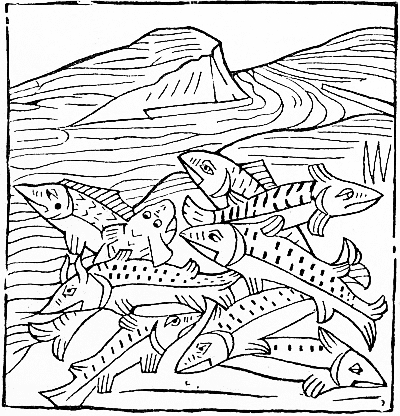
Of the abundance of fishes, which cast themselues upon the shore.
Of the Island of Sylan: and of the mountaine where Adam mourned for his sonne Abel.
FIRST of al therefore, having traveled many dayes journey upon the Ocean-sea towards the East, at length I arrived at a certaine great province called Mancy, being in Latine named India. Concerning this India I inquired of Christians, of Saracens, & of Idolaters, and of al such as bare an office under the great Can; who all of them with one consent answered, that this province of Mancy hath mo then 2000 great cities within the precincts thereof & that it aboundeth with all plenty of victuals, as namely with bread, wine, rise, flesh, and fish. All the men of this province be artificers & marchants, who, though they be in never so extreme penurie, so long as they can help themselues by the labor of their handes, will neuer beg almes of any man. The men of this province are of a faire and comely personage, but somewhat pale, having their heads shaven but a little, but the women are the most beautiful under the sunne. The first city of the said India which I came unto, is called Ceuskalon, which being a daies journey distant from the sea, stands upon a river, the water whereof, nere unto the mouth, where it exonerateth it selfe into the sea, doth overflow the land for the space of 12 daies journey. All the inhabitants of this India are worshippers of idols. The foresaid city of Ceuskalon hath such an huge navy belonging thereunto, that no man would beleeve it unlesse he should see it. In this city I saw 300 li of good and new ginger sold for lesse than a groat. There are the greatest, and the fairest geese, & most plenty of them to be sold in al the world, as I suppose: they are as white as milke, & haue a bone upon the crowne of their heads, as bigge as an egge, being of the colour of blood: under the throat they haue a skin or bag hanging down halfe a foot. They are exceeding fat and wel sold. Also they haue ducks and hens in that countrey, one as big as two of ours. There be monstrous great serpents likewise, which are taken by the inhabitants & eaten; whereupon a solemne feast among them without serpents is not set by.
I myselfe was in one of those monasteries, & it was told me, that there were in it III M religious men, having XI M idols; and one of ye said idols which seemed unto me but litle in regard of the rest, was as big as our Christopher. These religious men euery day do feed their idol-gods: wherupon at a certaine time I went to behold the banquet: and indeed those things which they brought unto them were good to eate, & fuming hote insomuch that the steam of the smoke thereof ascended up unto their idols, and they said that their gods were refreshed with the smoke: howbeit all the meat they conveyed away, eating it up their owne selves, and so they fed their dumb gods with the smoke only.
Of the citie of Fuco.
Of a Monastery where many strange beastes of divers kindes doe live upon an hill.
IN the foresaide citie foure of our friers had converted a mighty and rich man unto the faith of Christ, at whose house I continually abode, for so long time as I remained in the citie, Who upon a certain time said unto me: Ara, that is to say, Father, will you go and behoulde the citie? And I said, yea. Then embarked we ourselves, and directed our course unto a certaine great Monastery: where being arrived, he called a religious person with whom he was acquainted, saying unto him concerning me: this Raban Francus, that is to say, this religious Frenchman commeth from the Westerne parts of the world and therefore you must show him some rare things, that when he returnes into his owne countrey, he may say, this strange sight or novelty haue I seene in the citie of Canasia. Then the said religious man tooke two greate baskets full of broken reliques which remained of the table, & led me unto a little walled parke, the doore whereof he unlocked with his key, and there appeared unto us a pleasant faire green plot, into the which we entred. In the said greene stands a litle mount in forme of a steeple, replenished with fragrant herbes, and fine shady trees. And while we stood there, he tooke a cymbal or bell, and rang therewith, as they used to ring to dinner or bevoir in cloisters, at the sound whereof many creatures of divers kindes came downe from the mount, some like apes, some like cats, some like monkeys, and some having faces like men. And while I stood beholding of them, they gathered themselves together about him, to the number of 4200 of those creatures, putting themselues in good order, before whom he set a platter, and gaue them the saide fragments to eate. And when they had eaten he rang upon his cymbal the second time, and they all returned unto their former places. Then, wondring greatly at the matter, I demanded what kind of creatures those might be? They are (quoth he) the Soules of noble men which we do here feed, for the love of God who governeth the world: and as a man was honorable or noble in this life, so his soule after death, entreth into the body of some excellent beast or other, but the soules of simple and rusticall people do possesse the bodies of more vile and brutish creatures. Then I began to refute that foule error: howbeit my speech did nothing at all to prevaile with him, for hee could not be perswaded that any soule might remaine without a body. From thence I departed unto a certaine citie named Chilenso, the walls whereof contained 40 miles in circuit. In this citie there are 360 bridges of stone, the fairest that euer I saw, and it is wel inhabited, having a great navie belonging thereunto, & abounding with all kinds of victuals and other commodities. And thence I went unto a certaine river called Thalay which where it is most narrow, is 7 miles broad: and it runneth through the midst of the land of the Pygmœi whose chiefe city is called Cakam, and is one of the goodliest cities in the world. These Pygmœans are three of my spans high, and they make larger and better cloth of cotton and silke, then any other nation under the sunne. And coasting along by the said river, I came unto a certaine city named Janzu, in which citie there is one receptacle for the Friers of our order, and there be also three Churches of the Nestorians. This Janzu is a noble and great citie, containing 48 Thumans of tributarie fires, and in it are all kindes of victuals, and great plenty of such beastes, foules, and fishes, as Christians doe usually liue upon. The lord of the same citie hath in yeerely revenues for salt onely, fiftie Thuman of Balis, & one balis is worth a floren and a halfe of our coyne: insomuch that one Thuman of balis amounteth unto the value of 15000 florens. Howbeit the sayd lord, favoureth his people in one respect, for sometimes he forgiveth them frely 200 Thuman, lest there should be any scarcity or dearth among them. There is a custome in this citie, that when any man is determined to banquet his friends, going about unto certaine tavernes or cookes houses appointed for the same purpose, he sayth unto euery particular hoste, you shall haue such and such of my friends, whom you must entertain in my name, and so much I will bestowe upon the banquet. And by that means his friendes are better feasted at diverse places, then they should haue beene at one. Tenne miles from the sayde citie, about the head of the foresayd river of Thalay, there is a certaine other citie called Montu, which hath the greatest navy that I saw in the whole world. All their ships are as white as snow, & they haue banquetting houses in them, and many other rare things also, which no man would beleeve unlesse he had seene them with his owne eyes.
Of the citie of Cambaleth.
Of the glory and magnificence of the great Can.
MOREOVER, when the great emperour Can sitteth on his imperiall throne of estate, on his lefte hand sitteth his queene or empresse and upon another inferior seate there sit two other women, which are to accompany the emperour, when his spouse is absent, but in the lowest place of all, there sit all the ladies of his kinred. All the married women weare upon their heads a kind of ornament in shape like unto a man's foote of a cubite and a halfe in length, and the lower part of the said foote is adorned with cranes feathers, and is all ouer thicke set with great and orient pearles. Upon the right hande of the great Can sitteth his first begotten sonne and heire apparent unto his empire, and under him sit all the nobles of the blood royall. There bee also foure Secretaries, which put all things in writing that the emperour speaketh. In whose presence likewise stand his Barons and divers others of his nobilitie, with great traines of folowers after them, of whom none dare speake so much as one worde, unlesse they haue obtained licence of the emperour so to doe, except his jesters and stage players, who are appointed of purpose to solace their lord. Neither yet dare they attempt to doe ought, but onely according to the pleasure of their emperor, and as hee enjoineth by lawe. About the palace gate stand certaine Barons to keepe all men from treading upon the threshold of the sayd gate. When it pleaseth the great Can to solemnize a feast, he hath about him 14000 Barons, carying wreathes & litle crownes upon their heads, and giving attendance upon their lord, and eueryone of them weareth a garment of golde and precious stones, which is worth ten thousand florens. His court is kept in very good order, by governours of tens, governours of hundreds, and governours of thousands, insomuch that euery one in his place performeth his dutie committed to him, neither is there any defect to bee found. I Frier Odoricus was there present in person for the space of three yeares and was often at the sayd banquets: for wee friers Minorites have a place of aboad appointed out for us in the emperours court, and are enjoined to goe and to bestow our blessing upon him. And I enquired of certain courtiers concerning the number of persons pertaining to the emperors court. Moreouer, when he will make his progresse from one countrey to another, hee hath foure troupes of horsemen, one being appointed to goe a dayes journey before, and another to come a dayes journey after him, the third to march on his right hand and the fourth on his left, in the maner of a crosse, he himselfe being in the midst, and so euery particular troupe haue their daily journeys limited unto them, to the ende they may provide sufficient victuals without defect. Nowe the great Can himselfe is caried in maner following: hee rideth in a chariot with two wheeles, upon which a majesticall throne is built of the wood of Aloe, being adorned with gold and great pearles and precious stones, and foure elephants bravely furnished doe drawe the sayd chariot, before which elephants foure greate horses richly trapped and covered doe lead the way. Hard by the chariot on both sides thereof, are foure Barons laying hold and attending thereupon, to keepe all persons from approching neere unto their emperour. Upon the chariot two milke-white jer-falcons doe sit, and seeing any game which hee would take, hee letteth them fly, and so they take it, and after this maner doeth hee solace himselfe as hee rideth. Moreover, no man dare come within a stone's cast of the chariot, but such as are appointed. The number of his owne followers, of his wives attendants, and of the traine of his first begotten sonne and heire apparent, would seem incredible to any man; unless he had first seene it with his owne eyes. The foresayd great Can hath divided his Empire into twelue parts or provinces, and one of the said provinces hath two thousand great cities within the precincts thereof. Whereupon his empire is of that length and breadth, that unto whatsoever part thereof he intendeth his journey, he hath space enough for six moneths continual progress, except his islands which are at the least 5000.
Of certaine Innes or hospitals appointed for traveilers throughout the whole empire.
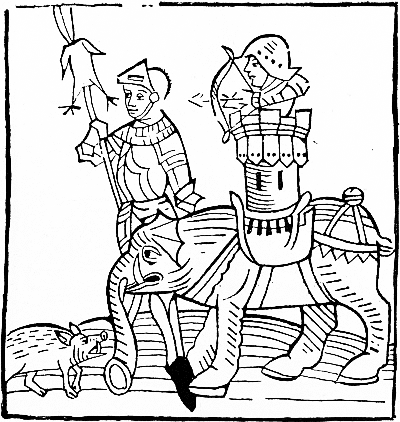
THE foresayd Emperor (to the end that travailers may haue all things necessary throughout his whole empire) hath caused certaine Innes to be provided in sundry places upon the highwayes, where all things pertaining unto victuals are in a continuall readinesse. And when any alteration or newes happen in any part of his Empire, if he chance to be farre absent from that part, his ambassadors upon horses or dromedaries ride post unto him, and when themselves and their beaste are weary, they blowe their horne, at the noise whereof, the next Inne likewise provideth a horse and a man, who takes the letter from him that is weary, and runneth unto another Inne: and so by divers Innes, and divers postes, the report, which ordinarily could skarce come in 30 dayes, is in one naturall day brought unto the Emperour: and therefore no matter of any moment can be done in his empire, but straightway he hath intelligence of it. Moreouer when the great Can himselfe will go on hunting, he useth this custome. Some 20 days journey from the citie of Kambaleth there is a forrest containing six dayes journey in circuit, in which forrest there are so many kinds of beasts and birds as it is incredible to report. Unto this forrest, at the ende of euery thirde or fourthe yeere, himself with his whole traine resorteth, and they all of them together environ the said forrest, sending dogs into the same, which by hunting doe bring foorth the beasts: namely lions and stags, and other creatures, unto a most beautifull plaine in the midst of the forrest, because all the beasts of the forrest doe tremble, especially at the cry of hounds. Then cometh the great Can himselfe, being caried upon three elephants, and shooteth fiue arrowes into the whole herd of beasts, and after him all his Barons, and after them the rest of his courtiers and family doe all in like maner discharge their arrowes also, and euery mans arrow hath a sundry marke. Then they all goe unto the beasts which are slaine (suffering the living beasts to returne into the wood that they may haue more sport with them another time) and euery man enjoyeth that beast as his owne, wherein he findeth his arrow sticking.
Of the foure feasts which the great Can solemnizeth euery yeere in his court.
Of divers provinces & cities,
Of a certaine riche man, who is fed and nourished by 50 virgins.
WHILE I was in the province of Mancy, I passed by the palace of a certaine famous man, which hath fifty virgin damosels continually attending upon him, feeding him euery meale as a bird feeds her yoong ones. Also he hath sundry kinds of meat served in at his table and three dishes of ech kinde: and when the said virgins feed him, they singe most sweetly. This man hath in yeerely revenues thirty thuman of tagars of rise, euery of which thuman yeeldeth tenne thousand tagars, and one tagar is the burthen of an asse. His palace is two miles in circuit, the pavement thereof is one plate of golde and another of silver. Neere unto the wall of the sayd palace there is a mount artificially wrought with golde and silver, whereupon stand turrets and steeples, and other delectable things for the solace and recreation of the foresayd great man. And it was tolde me that there were foure such men in the sayd kingdome. It is accounted a great grace for the men of that countrey to haue long nailes upon their fingers, and especially upon their thumbes which nailes they may folde about their handes: but the grace and beauty of their women is to haue small and slender feet: and therefore the mothers when their daughters are yoong, do binde up their feete that they may not grow great. Travelling on further towards the South, I arrived at a certain countrey called Melistorte, which is a pleasant and fertile place. In this countrey was a certain aged man called Senex de monte, who round about two mountaines had built a wall to inclose the said mountaines. Within this wall there were the fairest and most chrystall fountaines in the whole world: and about the sayd fountaines there were the most beautifull virgins in great number, and goodly horses also, and in a word, euery thing that could be devised for bodily solace and delight, and therefore the inhabitants of the countrey call the same place by the name of Paradise. The olde Senex, when he saw any proper and valiant yoong man, he would admit him into his paradise. Moreover by certain conducts he makes wine and milke to flow abundantly. This Senex when he hath a minde to revenge himselfe or to slay any king or baron, commandeth him who is governor of the sayd paradise, to bring thereunto some of the acquaintance of the sayd king or baron, permitting him a while to take his pleasure therein, and then to give him a certaine potion being of force, to cast him into such a slumber as should make him quite voide of all sense, and so being in a profound sleepe to convey him out of his paradise: who being awakened and seeing himselfe thrust out of the paradise, would become so sorrowfull, that he could not in the world devise what to do, or whither to turne him. Then would he goe unto the foresaid old man, beseeching him that he might be admitted again into his paradise, who saith unto him, You cannot be admitted thither, unlesse you will slay such or such a man for my sake, & if you will giue the attempt onely, whether you kill him or no, I will place you againe in paradise, that there you may remain always: then would the party without faile put the same in execution, indevouring to murther all those against whom the old man had conceived any hatred. And therefore all the kings of the east stood in awe of the sayd olde man, and gaue unto him great tribute.
Of the death of Senex de monte.
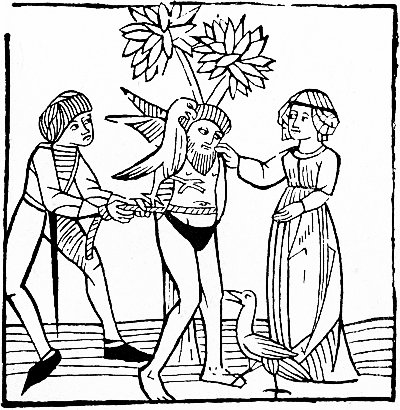
AND when the Tartars had subdued a great part of the world, they came unto the sayd olde man, and tooke from him the custody of his paradise: who being incensed thereat, sent abroad divers desperate and resolute persons out of his forenamed paradise, and caused many of the Tartarian nobles to be slaine. The Tartars seeing this, went and beseiged the citie wherein the sayd olde man was, tooke him, and put him to a most cruell and ignominious death. The friers in that place haue this special gift and prerogative, namely, that by the vertue of the name of Christ Jesu, & in the vertue of his precious blood, which he shedde upon the crosse for the salvation of mankinde, they doe cast foorth devils out of them that are possessed. And because there are many possessed men in those parts, they are bound and brought ten dayes journey unto the sayd friers, who being dispossessed of the uncleane spirits, do presently beleeve in Christ, who delivered them, accounting him for their God, and being baptised in his name, and also delivering immediately unto the friers all their idols and the idols of their cattell, which are commonly made of felt or of womens haire: then the sayd friers kindle a fire in a publicke place (whereunto the people resort, that they may see the false gods of their neighbors burnt), and cast the sayd idols thereinto: howbeit at first those idols came out of the fire againe. Then the friers sprinkled the sayd fire with holy water, casting in the idols the second time, and with that the devils fled in the likenesse of black smoake, and the idols still remained till they were consumed unto ashes. Afterward, this noise and outcry was heard in the ayre: Beholde and see how I am expelled out of my habitation. And by these means the friers doe baptise great multitudes, who presently revolt againe unto their idols; insomuch that the sayd friers must eftsoones, as it were, underprop them, and informe them anew. There was another terrible thing which I saw there: for passing by a certaine valley, which is situate beside a pleasant river, I saw many dead bodies, and in the said valley also I heard divers sweet sounds and harmonies of musike, especially the noise of citherns, whereat I was greatly amazed. This valley conteineth in length seven or eight miles at the least, into the which whosoeuer entreth, dieth presently, and can by no means passe aliue thorow the middest thereof; for which cause all the inhabitants thereabout decline unto the one side. Moreover, I was tempted to go in & to see what it was. At length, making my prayers and recommending my selfe to God in the name of Jesu, I entred, and saw such swarmes of dead bodies there, as no man would beleeve unless he were an eyewitnesse thereof. At the one side of the foresayde valley upon a certaine stone, I saw the visage of a man, which behelde me with such a terrible aspect that I thought verily I should haue died in the same place. But alwayes this sentence, the word became flesh, and dwelt amomgst us, I ceased not to pronounce, signing my selfe with the signe of the crosse, and neerer than seven to eight pases I durst not approach unto the sayd head: but I departed & fled unto another place in the sayd valley, ascending up into a little sande mountaine, where looking about, I saw nothing but the sayd citherns, which methought I heard miraculously sounding and playing by themselves without the helpe of musicians. And being upon the toppe of the mountaine, I found silver there like the scales of fishes in great abundance, and I gathered some part thereof into my bosome to shew for a wonder, but my conscience rebuking me, I cast it upon the earth, reserving no whit at all unto my selfe, and so, by God's grace I departed without danger. And when the men of the countrey knew that I was returned out of the valley alive, they reverenced me much, saying that I was baptised and holy, and that the foresayd bodies were men subject unto the devils infernall who used to play upon citherns, to the end they might allure people to enter, and so murther them. Thus much concerning these things which I beheld most certainly with mine eyes, I frier Odoricus haue heere written: many strange things also I haue of purpose omitted, because men will not beleeue them unlesse they should see them.
Of the honour and reverence done unto the great Can.
I WILL report one thing more, which I saw, concerning the great Can. It is an usuall custome in those parts, that when the foresayd Can traveileth thorow any countrey, his subjects kindle fires before their doores, casting spices thereinto to make a perfume, that their lord passing by may smell the sweet and delectable odours thereof, and much people come forth to meet him. And upon a certaine time when he was comming towardes Cambaleth, the fame of his approch being published, a bishop of ours with certaine of our minorite friers and myselfe went two dayes journey to meet him: and being come nigh unto him, we put a crosse upon wood. I my selfe having a censer in my hand, and began to sing with a loud voice: Veni creator spiritus. And as we were singing on this wise he caused us to be called, commanding us to come unto him: notwithstanding (as it is above mentioned) that no man dare approche within a stones cast of his chariot, unlesse he be called, but such onely as keep his chariot. And when we came neare unto him, he vailed his hat or bonet being of an inestimable price, doing reverence unto the crosse. And immediately I put incense into the censour, and our bishop taking the censer perfumed him, and gaue him his benediction. Moreouer, they that come before the said Can, do alwayes bring some oblation to present unto him, observing the ancient law: Thou shalt not appear in my presence with an empty hand. And for that cause we carried apples with us, and offered them in a platter with reverence unto him: and taking out two of them he did eate some part of one. And then he signified unto us, that we should go apart, lest the horses comming on might in ought offend us. With that we departed from him, and turned aside, going unto certaine of his barons, which had been converted to the faith by certaine friers of our order, being at the same time in his army: and we offered unto them of the foresayd apples, who received them at our hands with great joy, seeming unto us to be as glad, as if we had giuen them some great gift. All the premisses above written frier William de Solanga hath put downe in writing euen as the foresayd frier Odoricus uttered them by word of mouth, in the yeere of our Lord 1330 in the moneth of May, and in the place of S. Anthony of Padua. Neither did he regard to write them in difficult Latine, or in an eloquent style, but even as Odoricus himselfe rehearsed them, to the end that men might the more easily understand the things reported. I Odoricus frier, of Friuli, of a certaine territory called Portus Vahonis, and of the order of the minorites, do testifie and beare witnesse unto the reverend father Guidotus minister of the province of S. Anthony, in the marquisate of Treviso (being by him required upon mine obedience so to doe) that all the premisses above written, either I saw with mine owne eyes, or heard the same reported by credible and substantiall persons. The common report also of the countreys where I was, testifieth those things, which I saw, to be true. Many other things I haue omitted because I behelde them not with my owne eyes. Howbeit from day to day I purpose with my selfe to travell countreys or lands, in which action I dispose myselfe to die or to live, as it shall please my God.
Of the death of frier Odoricus.
In the yeere of our Lord 1331, the 14 day of Januarie, Beatus Odoricus a Frier minorite deceased in Christ, at whose prayers God shewed many and sundry miracles, which I Guetelus publique notarie of Utina, sonne of M. Damianus de Porto Gruaro at the commandment and direction of the honorable Conradus of the Borough of Gastaldion, and one of the Councell of Utina, haue written as faithfully as I could, and haue delivered a copie thereof unto the friers minorites, howbeit not of all, because they are innumerable, and too difficult for me to write.

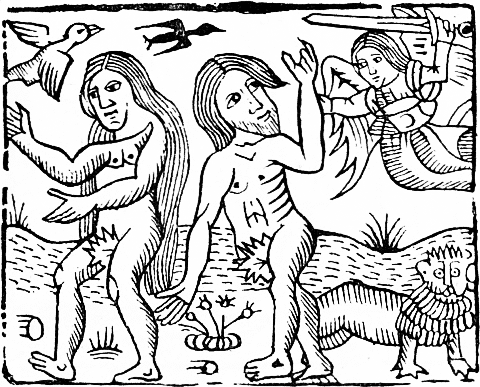
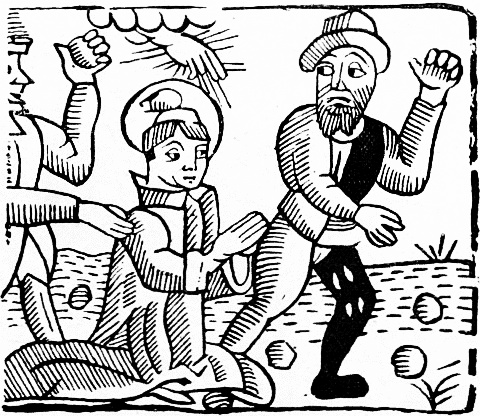
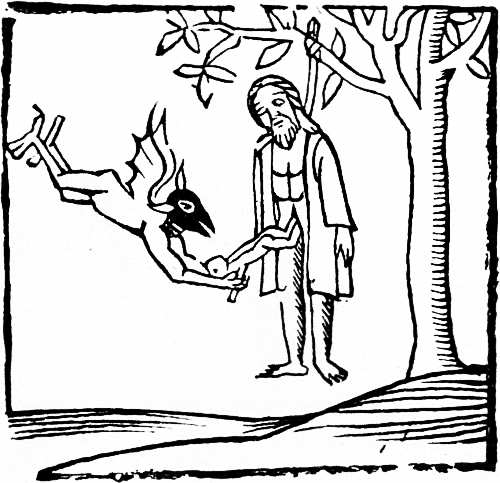
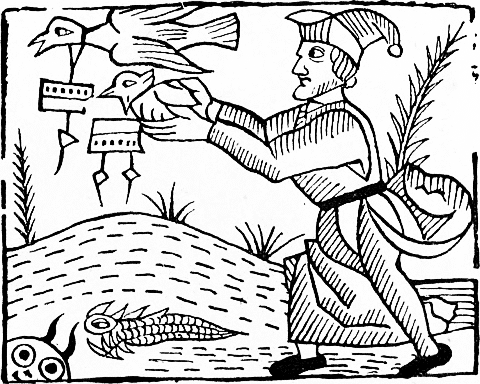
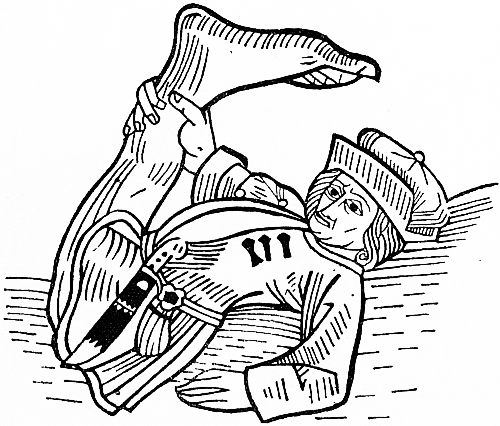
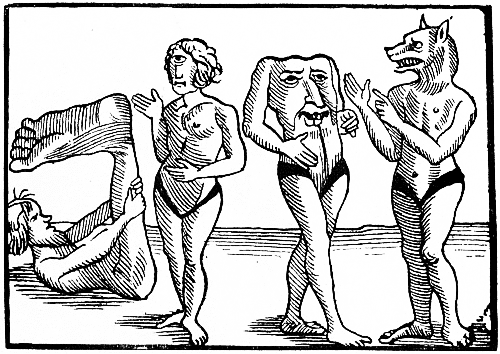
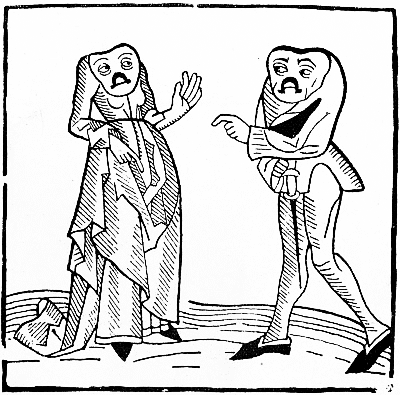
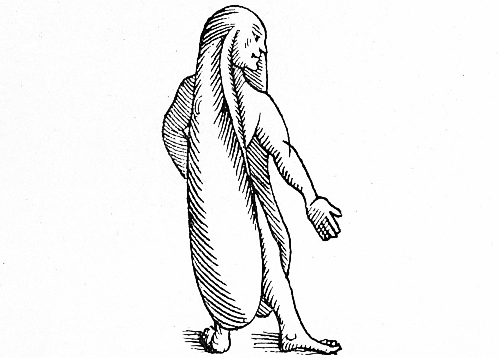
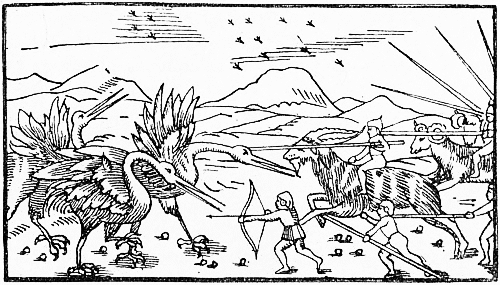
WOODCUTS SELECTED FROM OTHER EDITIONS SHOWING THE DIFFERENT TREATMENT OF THE SAME SUBJECTS.