Volume 2 — CHAPTER XIX. THE BRACTEATES.
Reading edition
Gold bracteates—Peculiarity of their designs—Mystic and symbolical signs—Earlier runes—The Vadstena bracteate—The svastica, triskele, and triad.
Among the most curious and beautiful ornaments that have been discovered in the north are the gold bracteates, which occur in great numbers, but are seldom found in graves, and which were used, as we can see from the loop attached to them, as an ornament to be worn hanging from the neck; that they were held to be protective amulets, and were used by the temple priests in religious ceremonies, is probable.
They are formed by embossing or stamping upon a disc, and the gold is extremely thin. The peculiarity of their designs, and the mystic and symbolic signs which are used upon them, such as the svastica, the triskele, the cross, the triad in dots, birds, snakes, &c., peculiar shapes of animals, and the head-dress of men, are very remarkable; and the sign in the shape of an S, found also on objects of the bronze age, makes them specially interesting.
We must receive with a great deal of caution the interpretation put upon these signs by some of the archæologists who have tried to unravel their meaning, and have taken the svastica for the sign of Thor, for this sign has been found in Greece by Schliemann and other antiquarians; the triskele, or the triad with dots, to mean Odin, Vili, Ve, or Odin, Hœnir and Löd; the birds to be the ravens of Odin; the human heads to be representations either of Thor, Odin, or Frey; the animals to be the goat of Thor, and Odin’s horse, Sleipnir. That the representations with the sacred signs and the figure upon them had some peculiar meaning there is, I think, no doubt; 333but what they really meant is a mystery which has not yet been unravelled.
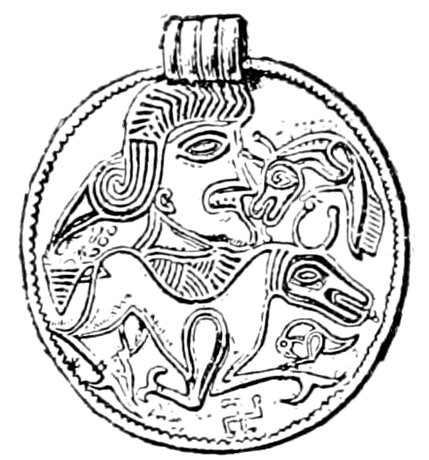
Fig. 1273.—Bracteate—with man’s head and horned animal below—found at Helsingborg, Sweden.
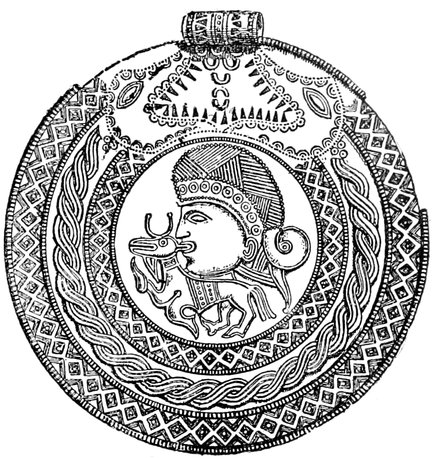
Fig. 1274.—Bracteate—with man’s head with helmet, and horned animal—found at Raflunda, Scania, Sweden.
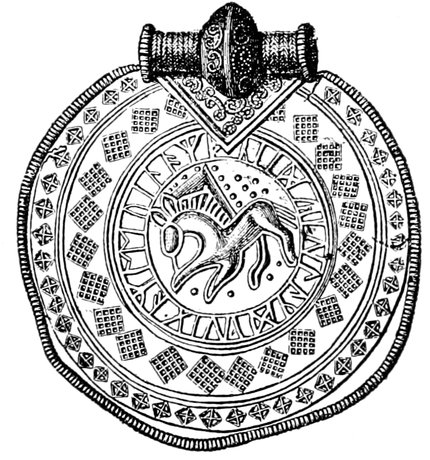
Fig. 1275.—Bracteate—horse (?) apparently loaded with treasure, probably the horse Grani mentioned in Volsunga Saga—found at Eskatorp, Halland, Sweden.
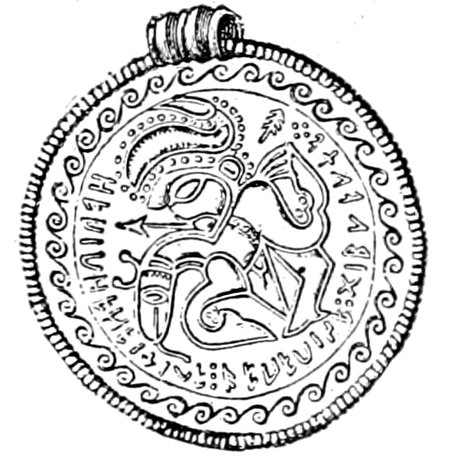
Fig. 1276.—Bracteate—warrior with spear, a two-horned animal, and runes, found in Zeeland, Denmark.
The runic characters stamped upon these ornaments show 334them to be peculiarly northern, and to belong to a rune-writing people.
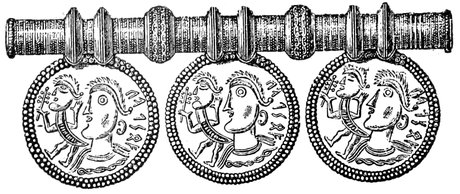
Fig. 1277.—Bracteates forming part of a necklace found at Faxö, Sjælland, Denmark. Real size.
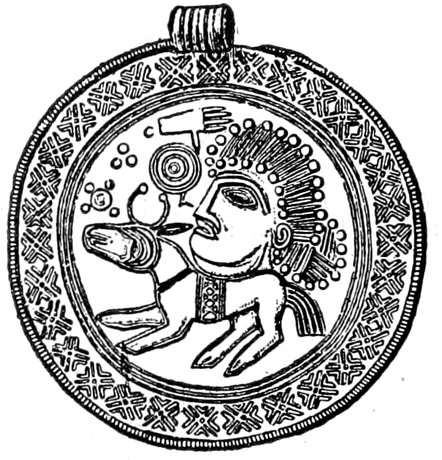
Fig. 1278.—Bracteate—man’s head with symbolic signs, a hand, &c.—Lolland, Denmark. Real size.
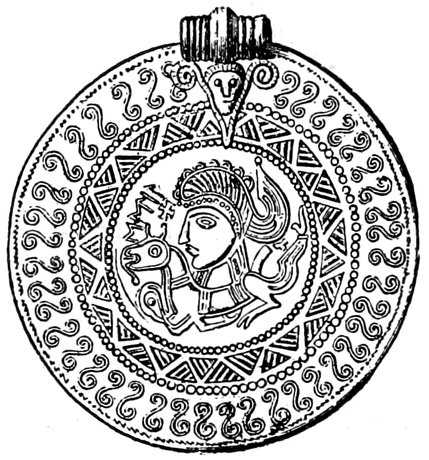
Fig. 1279.—Bracteate—man, and two-horned animal, and runes—in Stockholm Museum. Real size.
Bracteates.
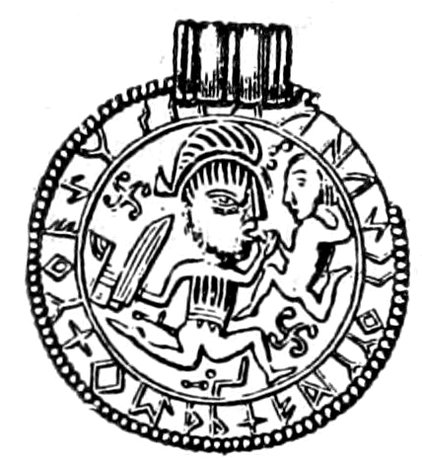
Fig. 1280.—Real size.—Scania.
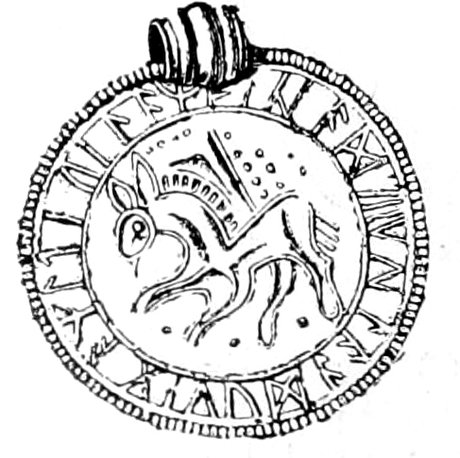
Fig. 1281.—Real size.—Scania.
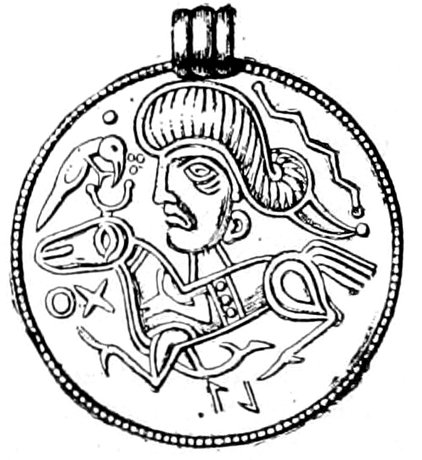
Fig. 1282.—Real size.—Zeeland.
335
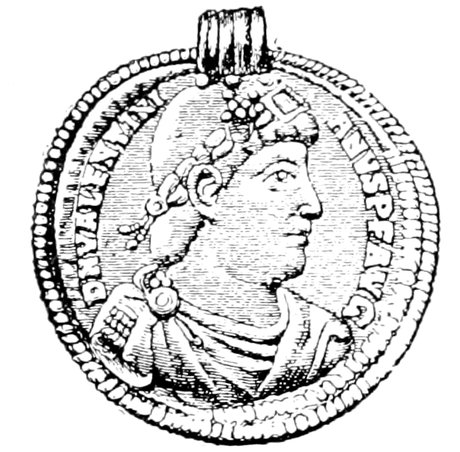
Fig. 1283.
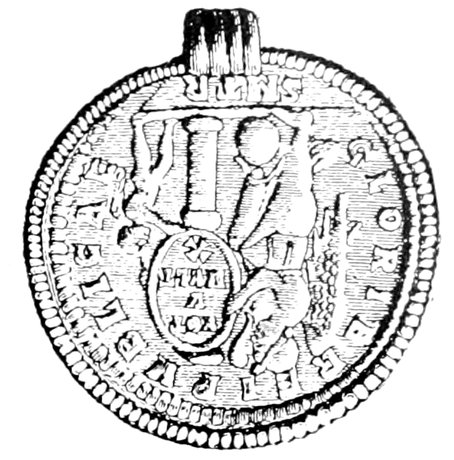
Fig. 1284.—Reverse.
Roman gold coin (Valentinian), real size, found with fragments of a bronze vessel,
glass beads, &c.—Norway.
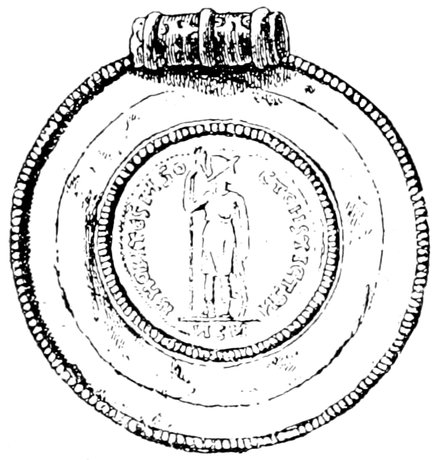
Fig. 1285.
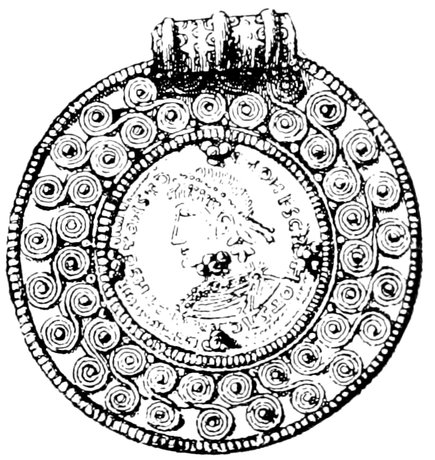
Fig. 1286.—Reverse.
Imitation of Roman gold coin, real size, found in a tumulus with charcoal, gold ornaments, glass and amber beads, &c.—Norway.
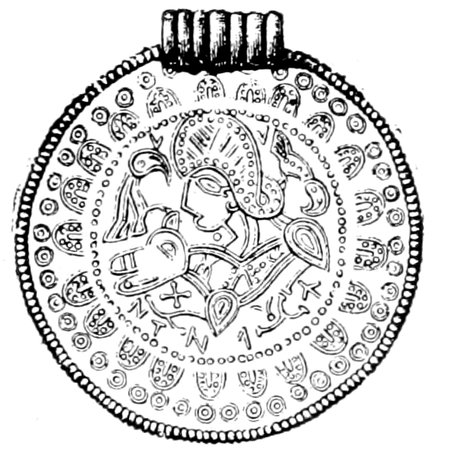
Fig. 1287.—Bracteate from Lögstör, Jutland. Real size. On it are the cross signs and triskele and two birds which recall the Saga about Sigurd Fafnisbani, or Odin and his ravens. A similar one with two birds has been found in Vestergötland.
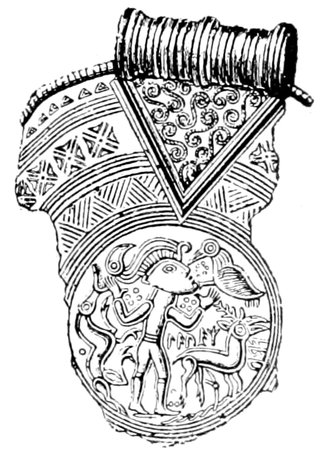
Fig. 1288.—Bracteate. Southern Jutland. A warrior, bird, stag, or horse, and dots. Real size.
336Of the hundreds of bracteates[226] which have been discovered, a large number were found together; and those of similar design, which have evidently been struck from the same die, are sometimes found in regions far apart. The bracteates with the peculiar mystic signs above enumerated disappear entirely towards the year 600, and though bracteates are still found they are of quite different designs; for those with representations of dragons, serpents, &c., are of a much later period.
Many of these designs may perhaps represent the deeds of great heroes told in ancient songs, such for example as the scene upon the gold bracteate found under the altar in the ancient wooden church of Gudsdal Troen parish in Gudbrandsdal, Norway, on which an armour-clad warrior on horseback fights a dragon. The purity of their gold is as remarkable as the skill of their workmanship.
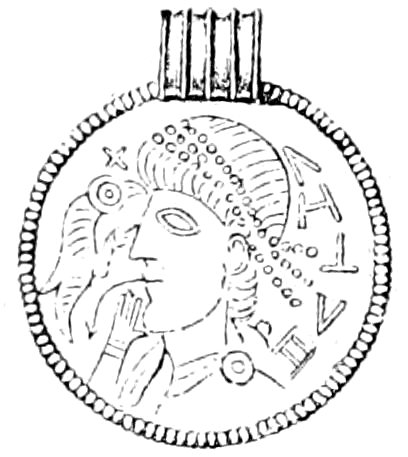
Fig. 1289.—Bracteate. Real size.—Blekinge, Sweden.
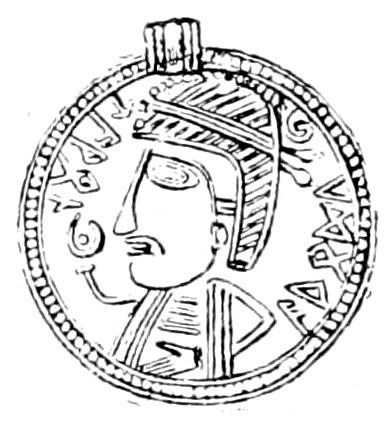
Fig. 1290.—Bracteate. Real size.—Vestergötland, Sweden.
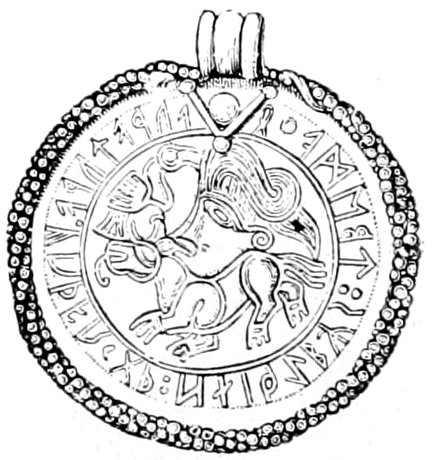
Fig. 1291.—Bracteate with runic alphabet.—Vadstena, Sweden. Real size.
The most important bracteate found is one of the two discovered near the little town of Vadstena on the Wettern, in Sweden. It has around its border an inscription in earlier runes, which evidently must be read from right to left. It has been ascertained by the scholars who have made a study of runes that, with the exception of the first division of eight, they represent the runic alphabet in its earliest form, the letter D being, for want of space, the only one missing.
337
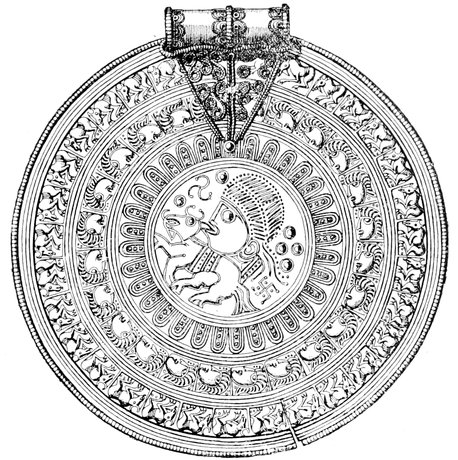
Fig. 1292.—Bracteate, Lyngby, Jutland, representing a man with a two-horned animal, surrounded by the svastika, the triskele, and four dots forming a cross, a circle of men’s heads, and a circle of animals. Real size.
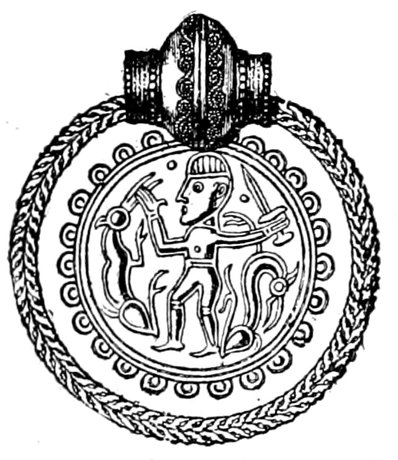
Fig. 1293.—Bracteate in Copenhagen Museum. Warrior, with a sword, fighting animals. Real size.
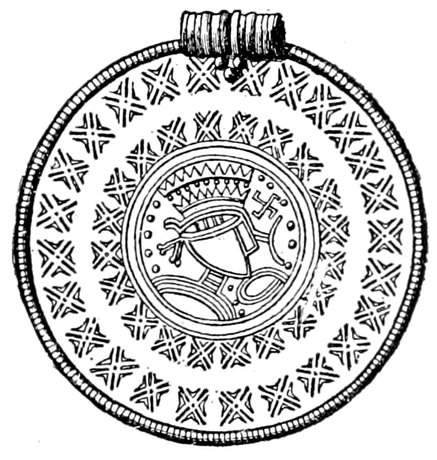
Fig. 1294.—Bracteate found at Hitterdal, Norway, with svastica, and dots on it. Warrior’s head with helmet over the face, and crown above the helmet. Real size.
338
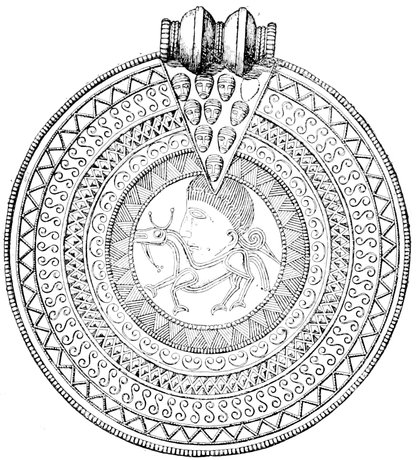
Fig. 1295.—Bracteate found at Raflunda, Scania. Triangle of heads. Real size.
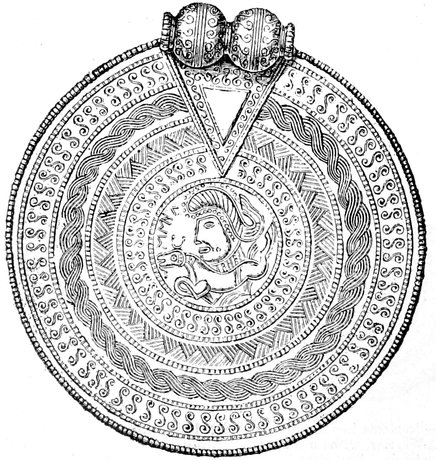
Fig. 1296.—Bracteate; place of find unknown. Real size.—Stockholm Museum.
339
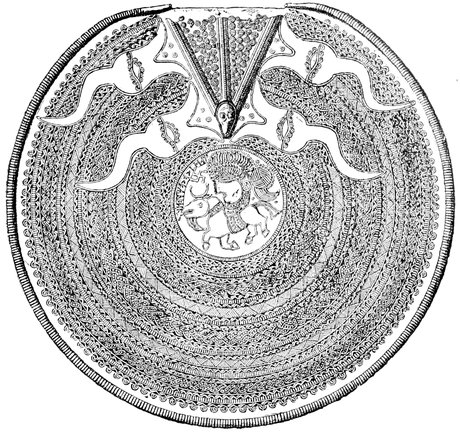
Fig. 1297.—The largest existing bracteate, found at Åsum, Scania, Sweden, with svastica, in 1882. ⅘ real size.
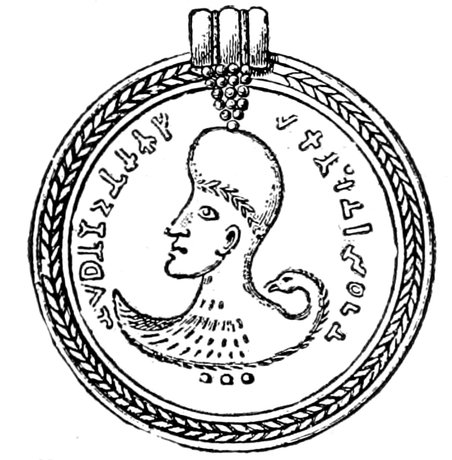
Fig. 1298.—Bracteate found at Upland, Sweden. Real size.
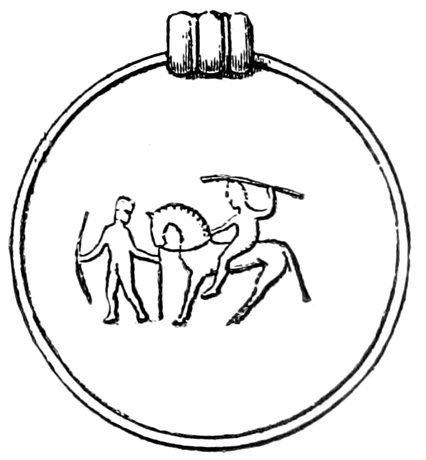
Fig. 1299.—Reverse, with horseman apparently riding on the bare back of the horse.
340
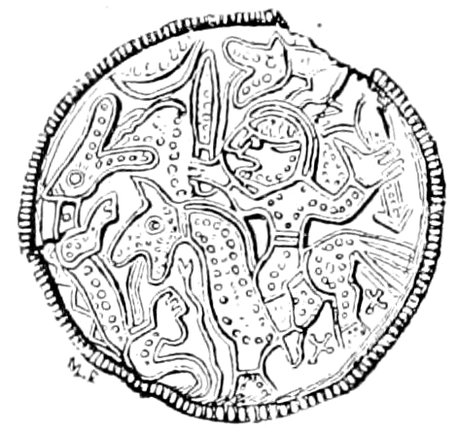
Fig. 1300.—Bracteate found at Gudbrandsdal, Norway. Warrior fighting a dragon. Real size.
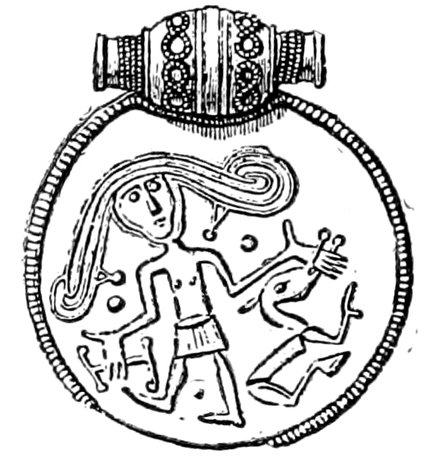
Fig. 1301.
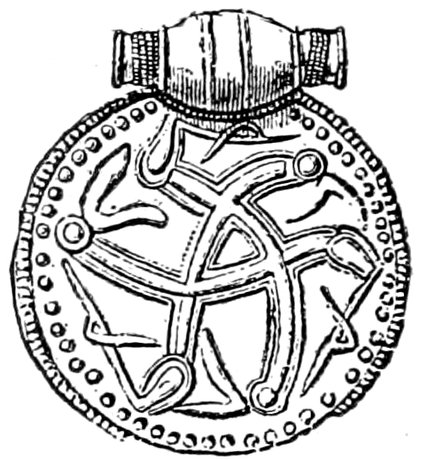
Fig. 1302.—Reverse.
Bracteate found at Trollhättan, Sweden. Real size.
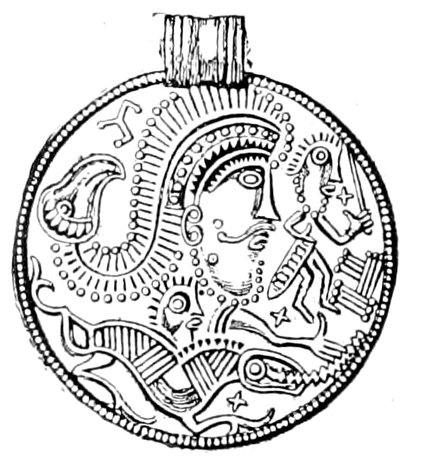
Fig. 1303.
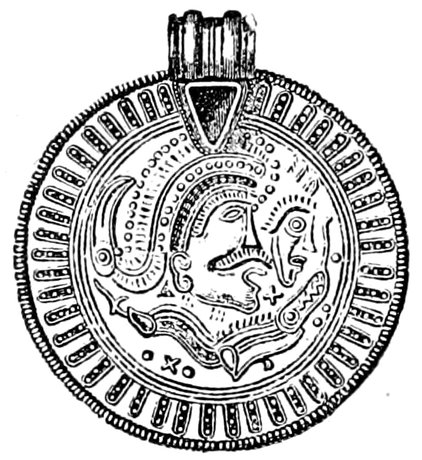
Fig. 1304.
Bracteates found at Slangerup, Zeeland. Real size.
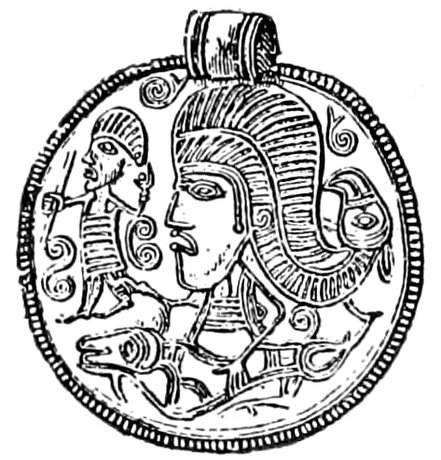
Fig. 1305.—Bracteate, Zeeland, Denmark. Real size.
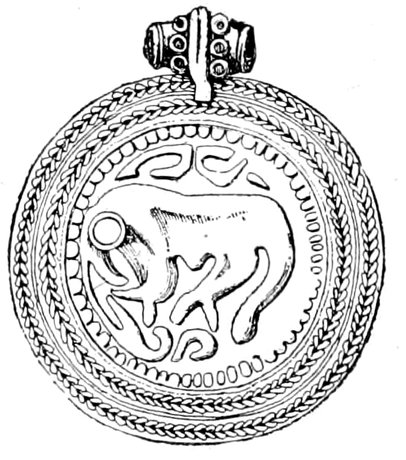
Fig. 1306.—Bracteate found in Scania. Real size.
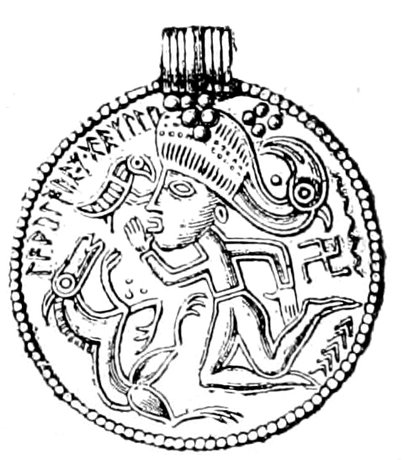
Fig. 1307.—Bracteate found in Scania. Real size.
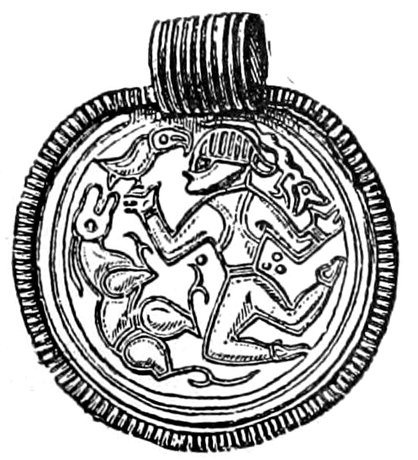
Fig. 1308.—Bracteate found at Raflunda, Scania. Real size.
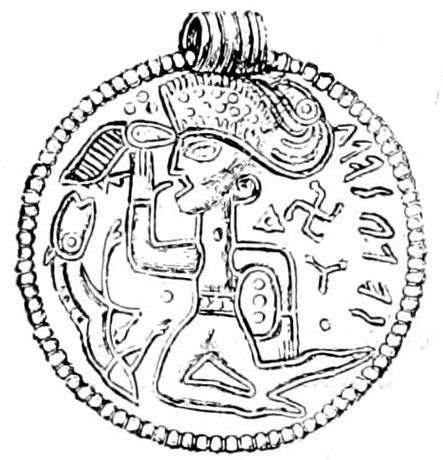
Fig. 1309.—Bracteate found at Lelling, Zeeland. Real size.
341One of the facts which attracts great attention is the different mystic signs[227] found upon bracteates and other numerous objects represented in these pages. These no doubt had some symbolical meaning, just as the Christian cross when used as an ornament, or placed upon a grave as a symbol.
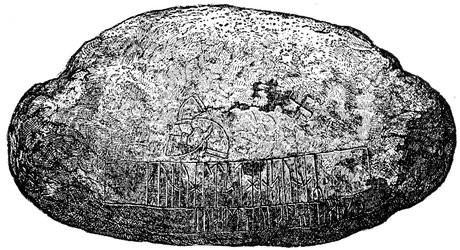
Fig. 1310.—Runic stone with three horns in the shape of triskele.—Snoldeley, Zeeland.
Some of the signs appear to have been common to various nations, who probably adopted the same religion from which 342they spring, just as to-day the Christian cross is the emblem of numerous nations or tribes scattered over the globe.
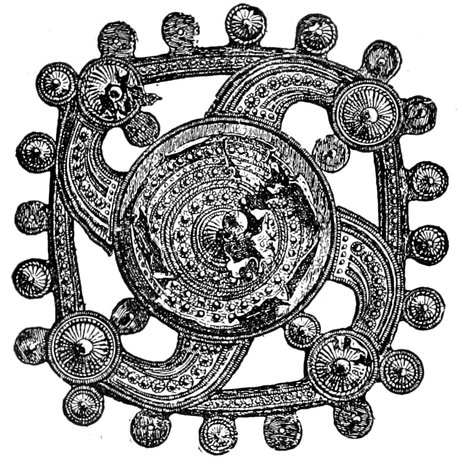
Fig. 1311.—Fibula of silver, plated with gold, in shape of svastica. ⅖ real size.—Woman’s skeleton grave, Fyen.
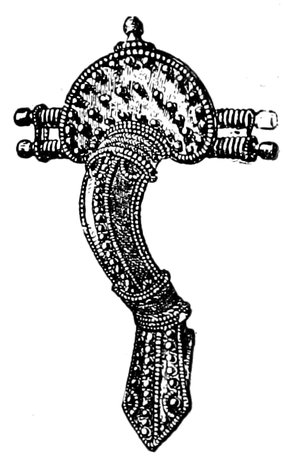
Fig. 1312.—Fibula of gold ⅗ real size.—Skeleton grave, Fyen.
The cross with four arms of equal length seems to be one of if not the most ancient of symbolic signs; it is seen on the rock-tracings of Bohuslan (of which several illustrations are given in this work), sometimes surrounded by a ring, at others a double cross is represented by itself. Such tracings cannot be taken for wheels or shields.
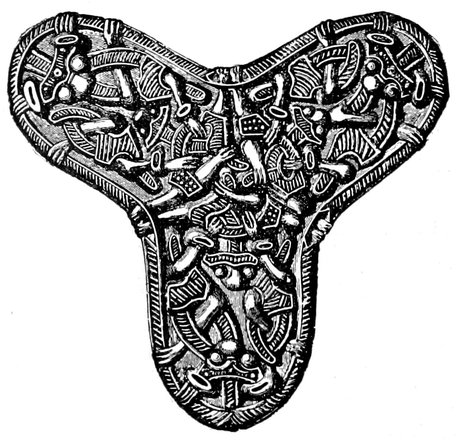
Fig. 1313.—Fibula, ⅔ real size; appears to have been gilt.—Norway.
343Bronze knives, with a cross surmounted by a ring, are also to be seen.
The svastika, or hooked cross, in its various modifications, seen on so many objects in the North, is of very ancient origin, and occurs in the Vedaic religion.
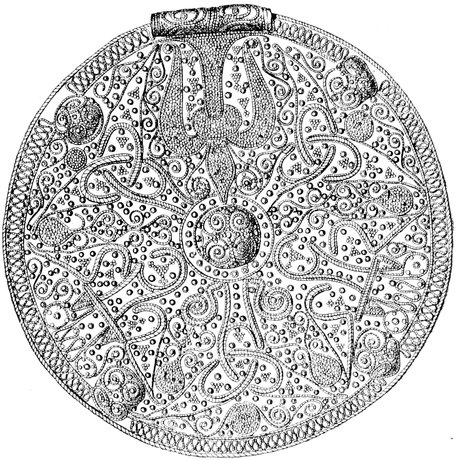
Fig. 1314.—Bracteate of gold, real size, found with the door.—Tuft Church, Sandver.
Other remarkable signs are the triad, in the shape of dots placed in a triangle, and the triskele, which are seen on many objects. There was evidently importance attached to the numbers “Three” and “Nine;” but it is impossible to tell what was the true meaning in the mythology of these people of the triad, which is very common on the jewels and other objects illustrated in this work,[228] and it is remarkable that some of the graves are made to represent the above signs.[229]
344