Chapter X · (continued 2)
Reading edition
While the system of the Underground Railroad was thus expanding and pressing everywhere against legislative restraints, there arose a man who sought to solve the whole slavery problem in his own rash way. When John Brown led a company of slaves from Missouri to Canada despite the attempts to prevent him; and when soon thereafter he attempted to execute his plan for the general liberation of slaves, he showed the extreme to which the aid to fugitives might lead. The influence of Brown's training in Underground Railroad work is plain in the methods and plans he followed, which have given him a place in American history. Early convinced that action was the thing needed to help the bondman, he set himself to find a way of effecting the destruction of slavery. In devising his scheme he seems to have considered an underground channel of escape as a necessary feature of it for those lacking the courage to join a movement sure to involve them in armed conflict with their masters. This feature was designated the "Subterranean Pass Way." The varying character of the testimony in regard to this feature, as well as the natural change of view that took place in Brown's mind with the passage of the years, does not permit one to say definitely what importance was attached by the liberator to the Pass Way as a part of his plan, but its utility in reducing the value of slaves must have been apparent to him. That the whole movement he contemplated would have the effect of making slave property unstable he showed when speaking of the initiative of the movement in Virginia. Brown said: "If the slaves could in this way be driven out of the county, the whole system would be weakened in that State."[963] In this matter the judgment of the liberator was not at fault, for it has been estimated that his attack on Harper's Ferry caused the value of slave property in Virginia to decline to the extent of $10,000,000.[964] That Brown had the sympathy of a large number of persons in the North, including some public men, was a circumstance calculated to make a deeper impression on the minds of the Southern men generally than this decline in the price of Virginia slaves.
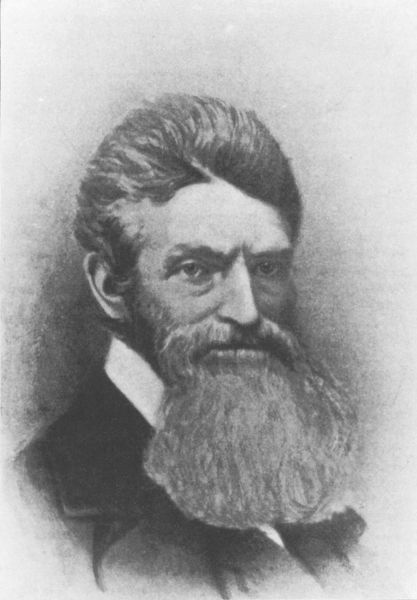
CAPTAIN JOHN BROWN. (From a photograph in the possession of the Kansas State Historical Society.)