From Behind the Speaker's Chair.
Reading edition
II.
(VIEWED BY HENRY W. LUCY.)
Looking round the House of Commons now gathered for its second Session, one is struck by the havoc death and other circumstances have made with the assembly that filled the same chamber twenty years ago, when I first looked on from behind the Speaker's Chair. Parliament, like the heathen goddess, devours its own children. But the rapidity with which the process is completed turns out on minute inquiry to be a little startling. Of the six hundred and seventy members who form the present House of Commons, how many does the Speaker suppose sat with him in the Session of 1873?
THE SPEAKER.
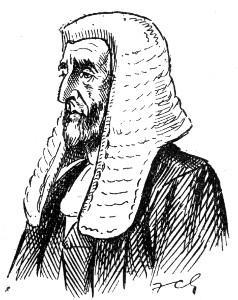
Mr. Peel himself was then in the very prime of life, had already been eight years member for Warwick, and by favour of his father's old friend and once young disciple, held the office of Parliamentary Secretary to the Board of Trade. Members, if they paid any attention to the unobtrusive personality seated at the remote end of the Treasury Bench, never thought the day would come when the member for Warwick would step into the Chair and rapidly establish a reputation as the best Speaker of modern times.
SIR ROBERT PEEL.
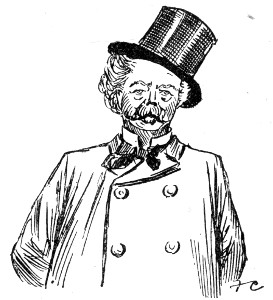
I have a recollection of seeing Mr. Peel stand at the table answering a question connected with his department; but I noticed him only because he was the youngest son of the great Sir Robert Peel, and was a striking contrast to his brother Robert, a flamboyant personage who at that time filled considerable space below the gangway.
SIR W. BARTTELOT.
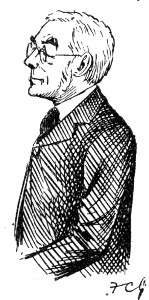
In addition to Mr. Peel there are in the present House of Commons exactly fifty-one members who sat in Parliament in the Session of 1873—fifty-two out of six hundred and fifty-eight as the House of that day was numbered. Ticking them off in alphabetical order, the first of the Old Guard, still hale and enjoying the respect and esteem of members on both sides of the House, is Sir Walter Barttelot. As Colonel Barttelot he was known to the Parliament of 1873. But since then, to quote a phrase he has emphatically reiterated in the ears of many Parliaments, he has "gone one step farther," and become a baronet.
This tendency to forward movement seems to have been hereditary; Sir Walter's father, long honourably known as Smyth, going "one step farther" and assuming the name of Barttelot. Colonel Barttelot did not loom large in the Parliament of 1868-74, though he was always ready to do sentry duty on nights when the House was in Committee on the Army Estimates. It was the Parliament of 1874-80, when the air was full of rumours of war, when Russia and Turkey clutched each other by the throat at Plevna, and when the House of Commons, meeting for ordinary business, was one night startled by news that the Russian Army was at the gates of Constantinople—it was then Colonel Barttelot's military experience (chiefly gained in discharge of his duties as Lieutenant-Colonel of the Second Battalion Sussex Rifle Volunteers) was lavishly placed at the disposal of the House and the country.
When Disraeli was going out of office he made the Colonel a baronet, a distinction the more honourable to both since Colonel Barttelot, though a loyal Conservative, was never a party hack.
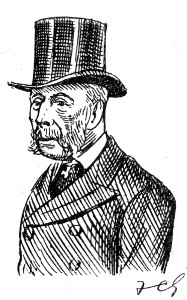
Sir Michael Beach sat for East Gloucestershire in 1873, and had not climbed higher up the Ministerial ladder than the Under Secretaryship of the Home Department. Another Beach, then as now in the House, was the member for North Hants. William Wither Bramston Beach is his full style. Mr. Beach has been in Parliament thirty-six years, having through that period uninterruptedly represented his native county, Hampshire. That is a distinction he shares with few members to-day, and to it is added the privilege of being personally the obscurest man in the Commons. I do not suppose there are a hundred men in the House to-day who at a full muster could point out the member for Andover. A close attendance upon Parliament through twenty years necessarily gives me a pretty intimate knowledge of members. But I not only do not know Mr. Beach by sight, but never heard of his existence till, attracted by the study of relics of the Parliament elected in 1868, I went through the list.
MR. W. W. B. BEACH.
Another old member still with us is Mr. Michael Biddulph, a partner in that highly-respectable firm, Cocks, Biddulph, and Co. Twenty years ago Mr. Biddulph sat as member for his native county of Hereford, ranked as a Liberal and a reformer, and voted for the Disestablishment of the Irish Church and other measures forming part of Mr. Gladstone's policy. But political events with him, as with some others, have moved too rapidly, and now he, sitting as member for the Ross Division of the county, votes with the Conservatives.
MR. A. H. BROWN.
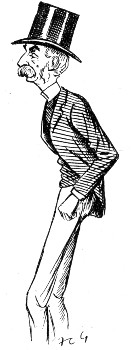
MR. CAMPBELL-BANNERMAN.
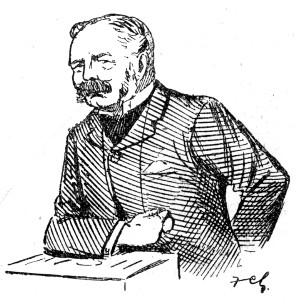
Mr. Jacob Bright is still left to us, representing a division of the city for which he was first elected in November, 1867. Mr. A. H. Brown represents to-day a Shropshire borough, as he did twenty years ago. I do not think he looks a day older than when he sat for Wenlock in 1873. But though then only twenty-nine, as the almanack reckons, he was a middle-aged young man with whom it was always difficult to connect associations of a cornetcy in the 5th Dragoon Guards, a post of danger which family tradition persistently assigns to him. Twenty years ago the House was still struggling with the necessity of recognising a Mr. Campbell-Bannerman. In 1868, one Mr. Henry Campbell had been elected member for the Stirling Districts. Four years later, for reasons, it is understood, not unconnected with a legacy, he added the name of Bannerman to his patronymic. At that time, and till the dissolution, he sat on the Treasury Bench as Financial Secretary to the War Office.
MR. HENRY CHAPLIN.
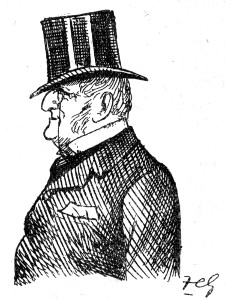
Mr. Henry Chaplin is another member, happily still left to us, who has, over a long space of years, represented his native county. It was as member for Mid-Lincolnshire he entered the House of Commons at the memorable general election of 1868, the fate of the large majority of his colleagues impressing upon him at the epoch a deeply rooted dislike of Mr. Gladstone and all his works.
Mr. Jeremiah James Colman, still member for Norwich, has sat for that borough since February, 1871, and has preserved, unto this last, the sturdy Liberalism imbued with which he embarked on political life. When he entered the House he made the solemn record that J. J. C. "does not consider the recent Reform Bill as the end at which we should rest." The Liberal Party has marched far since then, and the great Norwich manufacturer has always mustered in the van.
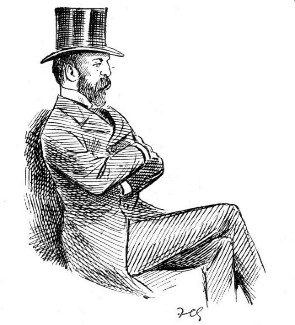
In the Session of 1873, Sir Charles Dilke had but lately crossed the threshold of manhood, bearing his days before him, and possibly viewing the brilliant career through which for a time he strongly strode. Just thirty, married a year, home from his trip round the world, with Greater Britain still running through successive editions, the young member for Chelsea had the ball at his feet. He had lately kicked it with audacious eccentricity. Two years earlier he had made his speech in Committee of Supply on the Civil List. If such an address were delivered in the coming Session it would barely attract notice any more than does a journey to America in one of the White Star Liners. It was different in the case of Columbus, and in degree Sir Charles Dilke was the Columbus of attack on the extravagance in connection with the Court.
SIR CHARLES DILKE.
What he said then is said now every Session, with sharper point, and even more uncompromising directness, by Mr. Labouchere, Mr. Storey, and others. It was new to the House of Commons twenty-two years ago, and when Mr. Auberon Herbert (to-day a sedate gentleman, who writes good Tory letters to the Times) seconded the motion in a speech of almost hysterical vehemence, there followed a scene that stands memorable even in the long series that succeeded it in the following Parliament. Mr. James Lowther was profoundly moved; whilst as for Mr. Cavendish Bentinck, his feelings of loyalty to the Throne were so overwrought that, as was recorded at the time, he went out behind the Speaker's chair, and crowed thrice. Amid the uproar, someone, anticipating the action of Mr. Joseph Gillis Biggar on another historic occasion, "spied strangers." The galleries were cleared, and for an hour there raged throughout the House a wild scene. When the doors were opened and the public readmitted, the Committee was found placidly agreeing to the vote Sir Charles Dilke had challenged.
Mr. George Dixon is one of the members for Birmingham, as he was twenty years ago, but he wears his party rue with a difference. In 1873 he caused himself to be entered in "Dod" as "an advanced Liberal, opposed to the ratepaying clause of the Reform Act, and in favour of an amendment of those laws which tend to accumulate landed property." Now Mr. Dixon has joined "the gentlemen of England," whose tendency to accumulate landed property shocks him no more.
MR. GEORGE DIXON.
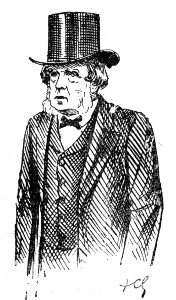
Sir William Dyke was plain Hart Dyke in '73; then, as now, one of the members for Kent, and not yet whip of the Liberal Party, much less Minister of Education. Mr. G. H. Finch also then, as now, was member for Rutland, running Mr. Beach close for the prize of modest obscurity.
MR. W. HART DYKE.
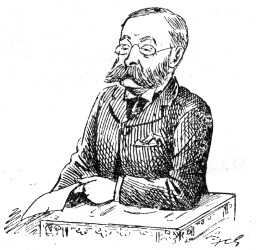
In the Session of 1873 Mr. Gladstone was Prime Minister, sixty-four years of age, and wearied to death. I well remember him seated on the Treasury Bench in those days, with eager face and restless body. Sometimes, as morning broke on the long, turbulent sitting, he let his head fall back on the bench, closing his eyes and seeming to sleep; the worn face the while taking on ten years of added age. In the last two Sessions of the Salisbury Parliament he often looked younger than he had done eighteen or nineteen years earlier. Then, as has happened to him since, his enemies were those of his own household. This Session—of 1873—saw the birth of the Irish University Bill, which broke the power of the strongest Ministry that had ruled in England since the Reform Bill.
Mr. Gladstone introduced the Bill himself, and though it was singularly intricate, he within the space of three hours not only made it clear from preamble to schedule, but had talked over a predeterminedly hostile House into believing it would do well to accept it. Mr. Horsman, not an emotional person, went home after listening to the speech, and wrote a glowing letter to the Times, in which he hailed Mr. Gladstone and the Irish University Bill as the most notable of the recent dispensations of a beneficent Providence. Later, when the Tea-room teemed with cabal, and revolt rapidly spread through the Liberal host, presaging the defeat of the Government, Mr. Horsman, in his most solemn manner, explained away this letter to a crowded and hilarious House. The only difference between him and seven-eighths of Mr. Gladstone's audience was that he had committed the indiscretion of putting pen to paper whilst he was yet under the spell of the orator, the others going home to bed to think it over.
MR. GLADSTONE.
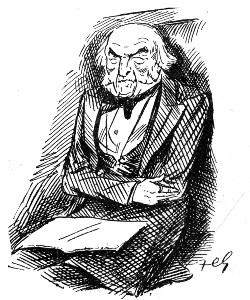
On the eve of a new departure, once more Premier, idol of the populace, and captain of a majority in the House of Commons, Mr. Gladstone's thoughts may peradventure turn to those weary days twenty years dead. He would not forget one Wednesday afternoon when the University Education Bill was in Committee, and Mr. Charles Miall was speaking from the middle of the third bench below the gangway. The Nonconformist conscience then, as now, was a ticklish thing. It had been pricked by too generous provision made for an alien Church, and Mr. Miall was solemnly, and with indubitable honest regret, explaining how it would be impossible for him to support the Government. Mr. Gladstone listened with lowering brow and face growing ashy pale with anger. When plain, commonplace Mr. Miall resumed his seat, Mr. Gladstone leaped to his feet with torpedoic action and energy. With voice stinging with angry scorn, and with magnificent gesture of the hand, designed for the cluster of malcontents below the gangway, he besought the honourable gentleman "in Heaven's name" to take his support elsewhere. The injunction was obeyed. The Bill was thrown out by a majority of three, and though, Mr. Disraeli wisely declining to take office, Mr. Gladstone remained on the Treasury Bench, his power was shattered, and he and the Liberal party went out into the wilderness to tarry there for six long years.
To this catastrophe gentlemen at that time respectively known as Mr. Vernon Harcourt and Mr. Henry James appreciably contributed. They worried Mr. Gladstone into dividing between them the law offices of the Crown. But this turn of affairs came too late to be of advantage to the nation. The only reminders of that episode in their political career are the title of knighthood and a six months' salary earned in the recess preceding the general election of 1874.
Mr. Disraeli's keen sight recognised the game being played on the Front Bench below the gangway, where the two then inseparable friends sat shoulder to shoulder. "I do not know," he slyly said, one night when the Ministerial crisis was impending, "whether the House is yet to regard the observations of the hon. member for Oxford (Vernon Harcourt) as carrying the authority of a Solicitor-General!"
"MEMBER FOR DUNGARVAN."
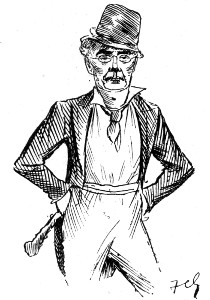
Of members holding official or ex-official positions who will gather in the House of Commons this month, and who were in Parliament in 1873, are Mr. Goschen, then First Lord of the Admiralty, and Liberal member for the City of London; Lord George Hamilton, member for Middlesex, and not yet a Minister; Mr. Shaw-Lefevre, member for Reading, and Secretary to the Admiralty; Mr. J. Lowther, not yet advanced beyond the Secretaryship of the Poor Law Board, and that held only for a few months pending the Tory rout in 1868; Mr. Henry Matthews, then sitting as Liberal member for Dungarvan, proud of having voted for the Disestablishment of the Irish Church in 1869; Mr. Osborne Morgan, not yet on the Treasury Bench; Mr. Mundella, inseparable from Sheffield, then sitting below the gangway, serving a useful apprenticeship for the high office to which he has since been called; George Otto Trevelyan, now Sir George, then his highest title to fame being the Competition Wallah; Mr. David Plunket, member for Dublin University, a private member seated on a back bench; Sir Ughtred Kay-Shuttleworth, just married, interested in the "First Principles of Modern Chemistry"; and Mr. Stansfeld, President of the Local Government Board, the still rising hope of the Radical party.
SIR GEORGE TREVELYAN.
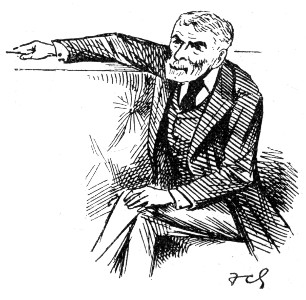
SIR W. LAWSON.
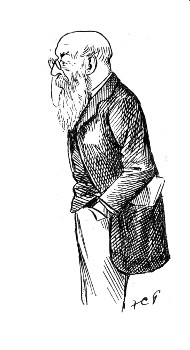
Members of the Parliament of 1868 in the House to-day, seated on back benches above or below the gangway, are Colonel Gourley, inconsolable at the expenditure on Royal yachts; Mr. Hanbury, as youthful-looking as his contemporary, ex-Cornet Brown, is aged; Mr. Staveley Hill, who is reported to possess an appreciable area of the American Continent; Mr. Illingworth, who approaches the term of a quarter of a century's unobtrusive but useful Parliamentary service; Mr. Johnston, still of Ballykilbeg, but no longer a Liberal as he ranked twenty years ago; Sir John Kennaway, still towering over his leaders from a back bench above the gangway; Sir Wilfrid Lawson, increasingly wise, and not less gay than of yore; Mr. Lea, who has gone over to the enemy he faced in 1873; Sir John Lubbock, who, though no sluggard, still from time to time goes to the ants; Mr. Peter M'Lagan, who has succeeded Sir Charles Forster as Chairman of the Committee on Petitions; Sir John Mowbray, still, as in 1873, "in favour of sober, rational, safe, and temperate progress," and meanwhile voting against all Liberal measures; Sir Richard Paget, model of the old-fashioned Parliament man; Sir John Pender, who, after long exile, has returned to the Wick Burghs; Mr. T. B. Potter, still member for Rochdale, as he has been these twenty-seven years; Mr. F. S. Powell, now Sir Francis; Mr. William Rathbone, still, as in times of yore, "a decided Liberal"; Sir Matthew White Ridley, not yet Speaker; Sir Bernard Samuelson, back again to Banbury Cross; Mr. J. C. Stevenson, all these years member for South Shields; Mr. C. P. Villiers, grown out of Liberalism into the Fatherhood of the House; Mr. Hussey Vivian, now Sir Hussey; Mr. Whitbread, supremely sententious, courageously commonplace; and Colonel Saunderson.
SIR J. MOWBRAY.
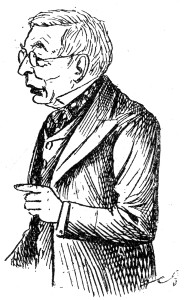
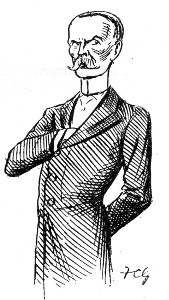
But here there seems a mistake. There was an Edward James Saunderson in the Session of 1873 as there is one in the Session of 1893: But Edward James of twenty years ago sat for Cavan, ranked as a Liberal, and voted with Mr. Gladstone, which the Colonel Saunderson of to-day certainly does not. Yet, oddly enough, both date their election addresses from Castle Saunderson, Belturbet, Co. Cavan.
COLONEL SAUNDERSON.
BY LEÏLA-HANOUM.
TRANSLATED FROM A TURKISH STORY.
I.
I was sold in Circassia when I was only six years old. My uncle, Hamdi-bey, who had inherited nothing from his dying brother but two children, soon got rid of us both. My brother Ali was handed over to some dervishes at the Mosque of Yéni-Chéïr, and I was sent to Constantinople.
The slave-dealer to whom I was taken was a woman who knew nothing of our language, so that I was obliged to learn Turkish in order to understand my new mistress. Numbers of customers came to her, and every day one or other of my companion slaves went away with their new owners.
Alas! my lot seemed terrible to me. I was nothing but a slave, and as such I had to humble myself to the dust in the presence of my mistress, who brought us up to be able to listen with the most immovable expression on our faces, and with smiles on our lips, to all the good qualities or faults that her customers found in us.
The first time that I was taken to the sélamlik (reception-room) I was ten years old. I was considered very pretty, and my mistress had bought me a costume of pink cotton, covered with a floral design; she had had my nails tinted and my hair plaited, and expected to get a very good price for me. I had been taught to dance, to curtesy humbly to the men and to kiss the ladies' féradje (cloaks), to hand the coffee (whilst kneeling) to the visitors, or stand by the door with my arms folded ready to answer the first summons. These were certainly not very great accomplishments, but for a child of my age they were considered enough, especially as, added to all that, I had a very white skin, a slender, graceful figure, black eyes and beautiful teeth.
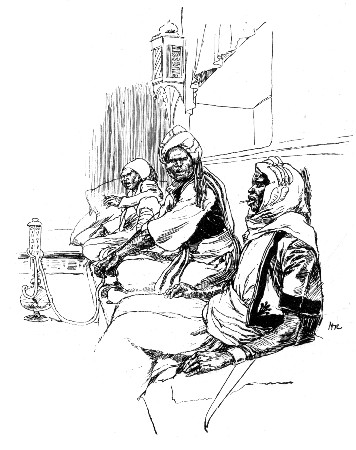
I felt very much agitated on finding myself amongst all the other slaves who were waiting for purchasers. Most of them were poor girls who had been brought there to be exchanged. They had been sent away from one harem, and would probably have to go to some other. My heart was filled with a vague kind of dread of I knew not what, when suddenly my eyes rested on three hideous negroes, who had come there to buy some slaves for the harem of their Pasha. They were all three leaning back on the sofa discussing the merits and defects of the various girls standing around them.
"Her eyes are too near together," said one of them.
"That one looks ill."
"This tall one is so round-backed."
I shivered on hearing these remarks, whilst the poor girls themselves blushed with shame or turned livid with anger.
"Come here, Féliknaz," called out my mistress, for I was hiding behind my companions. I went forward with lowered eyes, but my heart was beating wildly with indignation and fear. As soon as the negroes caught sight of me they said something in Arabic and laughed, and this was not lost on my mistress.
"THREE HIDEOUS NEGROES."
"Where does this one come from?" asked one of them, after examining me attentively.
"She is a Circassian. She has cost me a lot of money, for I bought her four years ago and have been bringing her up carefully. She is very intelligent and will be very pretty. Bir elmay (quite a diamond)," she added, in a whisper. "Féliknaz, dance for us, and show us how graceful you can be."
I drew back, blushing, and murmured, "There is no music for me to dance to."
"That doesn't matter at all. I'll sing something for you. Come, commence at once!"
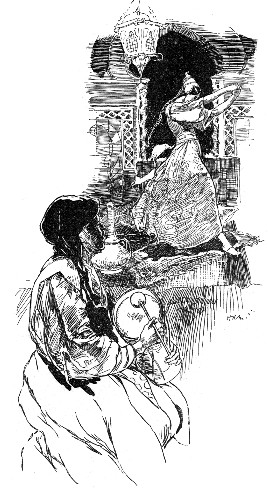
I bowed silently and went back to the end of the room, and then came forward again dancing, bowing to the right and left on my way, whilst my mistress beat time on an old drum and sang the air of the yassédi dance in a hoarse voice. In spite of my pride and my terror, my dancing appeared to please these men.
"We will certainly buy Féliknaz," said one of them; "how much will you take for her?"
"Twelve Késatchiés[A]! not a fraction less."
The negro drew a large purse out of his pocket and counted the money over to my mistress. As soon as she had received it she turned to me and said:—
"You ought to be thankful, Féliknaz, for you are a lucky girl. Here you are, the first time you have been shown, bought for the wealthy Saïd Pasha, and you are to wait upon a charming Hanoum of your own age. Mind and be obedient, Féliknaz; it is the only thing for a slave."
I bent to kiss my mistress's hand, but she raised my face and kissed my forehead. This caress was too much for me at such a moment, and my eyes filled with tears. An intense craving for affection is always felt by all who are desolate. Orphans and slaves especially know this to their cost.
The negroes laughed at my sensitiveness, and pushed me towards the door, one of them saying, "You've got a soft heart and a face of marble, but you will change as you get older."
I did not attempt to reply, but just walked along in silence. It would be impossible to give an idea of the anguish I felt when walking through the Stamboul streets, my hand held by one of these men. I wondered what kind of a harem I was going to be put into. "Oh, Allah!" I cried, and I lifted my eyes towards Him, and He surely heard my unuttered prayer, for is not Allah the protector of all who are wretched and forlorn?
II.
The old slave-woman had told me the truth. My new mistress, Adilé-Hanoum, was good and kind, and to this day my heart is filled with gratitude when I think of her.
Allah had certainly cared for me. So many of my companion-slaves had, at ten years old, been obliged to go and live in some poor Mussulman's house to do the rough work and look after the children. They had to live in unhealthy parts of the town, and for them the hardships of poverty were added to the miseries of slavery, whilst I had a most luxurious life, and was petted and cared for by Adilé-Hanoum.
"MY MISTRESS BEAT TIME."
I had only one trouble in my new home, and that was the cruelty and the fear I felt of my little mistress's brother, Mourad-bey. It seemed as though, for some inexplicable reason, he hated me; and he took every opportunity of teasing me, and was only satisfied when I took refuge at his sister's feet and burst into tears.
In spite of all this I liked Mourad-bey. He was six years older than I, and was so strong and handsome that I could not help forgiving him; and, indeed, I just worshipped him.
When Adilé-Hanoum was fourteen her parents engaged her to a young Bey who lived at Salonica, and whom she would not see until the eve of her marriage. This Turkish custom of marrying a perfect stranger seemed to me terrible, and I spoke of it to my young mistress.
She replied in a resigned tone: "Why should we trouble ourselves about a future which Allah has arranged? Each star is safe in the firmament, no matter in what place it is."
One evening I was walking up and down on the closed balcony outside the haremlik. I was feeling very sad and lonely, when suddenly I heard steps behind me, and by the beating of my heart I knew that it was Mourad-bey.
"Féliknaz," he said, seizing me by the arm, "what are you doing here, all alone?"
"I was thinking of my country, Bey-Effendi. In our Circassia all men are equal, just like the ears of corn in a field."
"Look up at me again like that, Féliknaz; your eyes are gloomy and troubled, like the Bosphorus on a stormy day."
"It is because my heart is like that," I said, sadly.
"Do you know that I am going to be married?" he asked, after a moment's silence.
I did not reply, but kept my eyes fixed on the ground.
"You are thinking how unhappy I shall make my wife," he continued: "how she will suffer from my bad treatment."
"Oh! no," I exclaimed. "I do not think she will be unhappy. You will, of course, love her, and that is different. You are unkind to me, but then that is not the same."
"You think I do not love you," said the Bey, taking my hands and pressing them so that it seemed as though he would crush them in his grasp. "You are mistaken, Féliknaz. I love you madly, passionately; I love you so much that I would rather see you dead here at my feet than that you should ever belong to any other than to me!"
"Why have you been so unkind to me always, then?" I murmured, half-closing my eyes, for he was gazing at me with such an intense expression on his dark, handsome face that I felt I dare not look up at him again.
"Because when I have seen you suffering through me it has hurt me too; and yet it has been a joy to me to know you were thinking of me and to suffer with you, for whenever I have made you unhappy, little one, I have been still more so myself. Your smiles and your gentleness have tamed me though, at last; and now you shall be mine, not as Féliknaz the slave, but as Féliknaz-Hanoum, for I respect you, my darling, as much as I love you!"
Mourad-bey then took me in his arms and kissed my face and neck, and then he went back to his rooms, leaving me there leaning on the balcony and trembling all over.
Allah had surely cared for me, for I had never even dared to dream of such happiness as this.
III.
And so I became a Hanoum. My dear Adilé was my sister, and though after years of habit I was always throwing myself down at her feet, she would make me get up and sit at her side, either on the divan or in the carriage. Mourad's love for me had put aside the barrier which had separated us. There was, however, now a terrible one between my slaves and myself. Most of them were poor girls from my own country and of my own rank. Until now we had been companions and friends, but I felt that they detested me at present as much as they used to love me, and I was afraid of their hatred. They had all of them undoubtedly hoped to find favour in the eyes of their young master, and now that I was raised to so high a position their hatred was terrible. I did my utmost: I obtained all kinds of favours for them; but all to no purpose, for they were unjust and unreasonable.
My great refuge and consolation was Mourad's love for me—he was now just as gentle and considerate as he had been tyrannical and overbearing. My sister-in-law was married on the same day that I was, and went away to Salonica, and so I lost my dearest friend.
IV.
Mourad loved me, I think, more and more, and when a little son was born to us it seemed as though my cup of happiness was full. I had only one trouble: the knowledge of the hatred of my slaves; and after the birth of my little boy, that increased, for in the East, the only bond which makes a marriage indissoluble is the birth of a child.
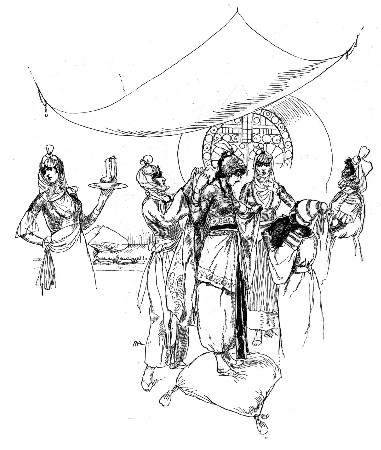
"SLAVES."
When our little son was a few months old Mourad went to spend a week with his father, who was then living at Béïcos. I did not mind staying alone for a few days, as all my time was taken up with my baby-boy. I took entire charge of him, and would not trust anyone else to watch over him at all.
One night, when eleven o'clock struck, everything was silent in the harem; evidently everyone was asleep.
Suddenly the door of my room was pushed open, and I saw the face of one of my slaves. She was very pale, and said in a defiant tone, "Fire, fire! The conak (house) is on fire!" Then she laughed, a terrible, wild laugh it was too, and she locked my door and rushed away. Fire! Why, that meant ruin and death!
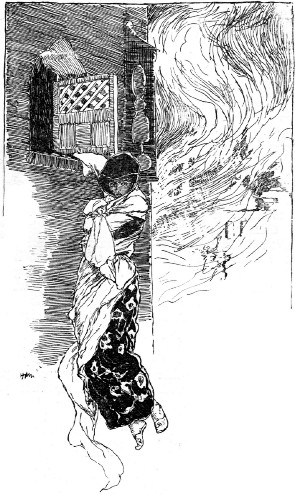
I had jumped up immediately, and now rushed to the window. There was a red glow in the sky over our house and I heard the crackling of wood and saw terrible smoke. Nearly wild with fright I took my child in my arms, snatched up my case of jewels, and wrapping myself up in a long white simare, I hurried to the door. Alas! it was too true; the girl had indeed locked it! The window, with lattice-work outside, looked on to a paved court-yard, and my room was on the second floor of the house. I heard the cry of "Yanghen var!" (fire, fire) being repeated like an echo to my misery.
"Oh, Allah!" I cried, "my child, my child!" A shiver ran through me at the horrible idea of being burned alive and not being able to save him.
I called out from the window, but all in vain. The noisy crowd on the other side of the house, and the crackling of the wood, drowned the sound of my voice.
I did my utmost to keep calm, and I walked again to the door and shook it with all my strength; then I went and looked out of the window, but that only offered us a speedy and certain death. I could now hear the sound of the beams giving way overhead. Had I been alone I should undoubtedly have fainted, but I had my child, and so I was obliged to be brave.
Suddenly an idea came to me. There was a little closet leading out of my room, in which we kept extra covers and mattresses for the beds. There was a small window in this closet looking on to the roof of the stables. This was my only hope or chance. I fastened my child firmly to me with a wide silk scarf, and then I got out of the window and dropped on to the roof of the stable, which was about two yards below. Everything around me was covered with smoke, but fortunately there were gusts of wind, which drove it away, enabling me to see what I was doing. From the roof to the ground I had to let myself down, and then jump. I sprained my wrist and hurt my head terribly in falling, but my child was safe. I rushed across the court-yard and out to the opposite side of the road, and had only just time to sit down behind a low wall away from the crowd, when I fainted away.
"I GOT OUT OF THE WINDOW."
V.
When I came to myself again, nothing remained of our home but a smoking ruin, upon which the touloumbad jis were still throwing water. The neighbours and a crowd of other people were watching the fire finish its work. Not very far away from me, among the spectators, I recognised Mourad-bey, standing in the midst of a little group of friends.
His face was perfectly livid, and his eyes were wild with grief. I saw him pick up a burning splinter from the wreck of his home, where he believed all that he loved had perished. He offered it to his friend, who was lighting his cigarette, and said, bitterly, "This is the only hospitality I have now to offer!"
The tone of his voice startled me—it was full of utter despair, and I saw that his lips quivered as he spoke.
I could not bear to see him suffer like that another second.
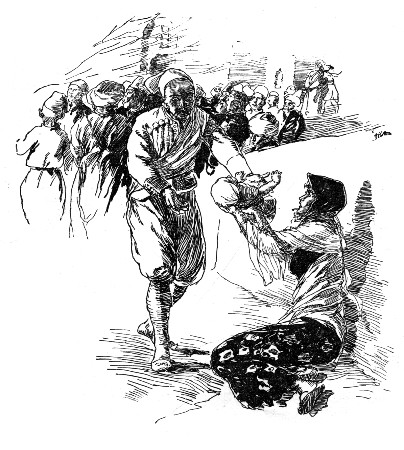
"Bey Effendi!" I cried, "your son is saved!"
He turned round, but I was covered with my torn simare, which was all stained with mud; the light did not fall on me, and he did not recognise me at all. My voice, too, must have sounded strange, for after all the emotion and torture I had gone through, and then my long fainting-fit, I could scarcely articulate a sound. He saw the baby which I was holding up, and stepped forward.
"HE SAW THE BABY."
"What is he to me," he said, "without my Féliknaz?"
"Mourad!" I exclaimed, "I am here, too! He darted to me, and took me in his arms; then, with his eyes full of tears, he looked at tenderly and kissed me over and again.
"Effendis," he cried, turning at last to his friends, and with a joyous ring in his voice, "I thought I was ruined, but Allah has given me back my dearest treasure. Do not pity me any more, I am perfectly happy!"
We lost a great deal of our wealth by that fire. Our slaves had escaped, taking with them all our most valuable things.
Mourad is quite certain that the women had set fire to the house from jealousy, but instead of regretting our former wealth, he does all in his power to make up for it by increased attention and care for me, and his only trouble is to see me waiting upon him.
But whenever he says anything about that I throw my arms around his neck and whisper, "Have you forgotten, Mourad, my husband, that your Féliknaz is your slave?"