Chapter XIX · “THE SUN” AND YELLOW JOURNALISM
Reading edition
The Coming and Going of a Newspaper Disease.—Dana’s Attitude Toward President Cleveland.—Dana’s Death.—Ownerships of Paul Dana, Laffan, Reich, and Munsey.
Of such things as we have mentioned here, putting into the necessary news, attractively written, a proper seasoning of regional colour and atmosphere, humour and pathos, the Sun has been made since Dana came to it. He created a new journalism, but it was a decent and distinct kind, appealing to the intellect rather than to the passions. It gave room for the honest expression of everybody’s opinion, from Herbert Spencer to Chimmie Fadden. Because of this, because he had lifted American newspaper work out of the dust of tradition, Dana had a holy anger when a newer journalism tried to throw it into the mud.
When Henry Watterson was called as an expert witness in proceedings to appraise the estate of Joseph Pulitzer, in 1914, the veteran editor of the Louisville Courier-Journal made an interesting statement on this subject:
There is much confusion in the public mind about what is known as “yellow journalism.” There have been several periods of it in New York. James Gordon Bennett was the first yellow journalist, and Charles A. Dana was the second. Mr. Pulitzer was the third. Finally, when Mr. Hearst came along, he was the fourth, and I think he quite filled the field of yellow journalism.
As Mr. Bennett became more respectable and Mr. Dana more fixed in his efforts, they were raised in the public estimation. So was Mr. Pulitzer. I think the field of yellow journalism is so filled by the Hearst newspapers that they no more compete with the World than with the Herald or the Sun.
Mr. Watterson did not define yellow journalism. Perhaps he considered it broadly as sensational journalism. The elder Bennett was sensational to the extent that he printed things which the sixpenny papers of his time did not print. He made the interview popular, and he was the first editor to see the value of paying attention to financial news.
So far as printing human news is concerned, Benjamin H. Day worked that field before Bennett started the Herald. If Mr. Watterson considered Dana a yellow journalist, what else was Day, with his stories about the sodden things of the police-courts, or his description of Miss Susan Allen smoking a cigar and dancing in Broadway?
Printing a diagram of the scene of a murder, with a big black X to mark the spot where the victim was found, did not make the World a yellow newspaper, for Amos Cummings began to print murder charts as soon as he became managing editor of the Sun. Putting black-faced type over a story on the front page did not make the World or the Journal yellow, for Cummings, when he was on the Tribune, was the first to use big type in head-lines, and the Tribune was never accused of yellowness.
If pictures made a paper yellow, Dana was not yellow, for he used few illustrations in the news pages of the paper. Again, if head-lines indicate yellowness, Dana must be acquitted of being a yellow journalist; for the head-lines of the Sun, from the first year of Dana’s control until after his death, remained practically unchanged, and were conservative to the last degree.
Head-lines and pictures, so far as their sensational attraction was concerned, meant nothing to Dana. He was not yellow, but white and alive. The distinction was clearly explained by Mr. Mitchell:
Remember the difference between white and yellow. The essential difference is not of method or quality of product, but of purpose and of moral responsibility or moral debasement. Yellow will tell you that it means force, originality, and independence in the presentation of ideas. This is consolatory to yellow, but not accurate. Yellow will print an interesting exaggeration or misstatement, knowing it to be such. If in doubt about the truth of alleged news, but in no doubt whatever as to its immediate value as a sensation, yellow will give the benefit of the doubt to the sensation every time, and print it with head-lines tall enough to reach to Saturn. White won’t; that is the only real color test. I hope you are all going to be white, and not only white, but red, white, and blue.
No yellow journalist he, Dana! To paraphrase Webster, he smote the rock of humanity, and abundant streams of literature rushed forth. If he startled, he startled the intellect, not the eye. His appeals were to the intelligence, the soul, the risibilities of man, and not to his primitive passions. He believed that all the information, the philosophy, and the humour of the world could be conveyed through the type of a daily newspaper as surely as and much more broadly than they had been conveyed through the various mediums of the old newspapers, the encyclopedias, the novels, the pulpit, and the lecture platform.
When Dana attacked yellow journalism—the expressive phrase was fastened in the language by Ervin Wardman, in the Press—it was in the firm belief that this new journalism, the “journalism that did things,” was doing the wrong thing; that it was breaking down the magnificent structure that had been reared by himself and Greeley and Raymond and Bennett and Hurlbut. This group had been possessed of all the newspaper faculties and facilities. If yellow journalism had been right, they would have raised it to its highest peak. Dana, who knew better than any editor of his time what the public wanted, could have produced a perfect yellow Sun; but he chose to print a golden one. He wrought more genuine journalistic advance than any other man in history. As Mr. Mitchell wrote of him in McClure’s Magazine in October, 1894, three years before Mr. Dana’s death:
The revolution which his genius and invention have wrought in the methods of practical journalism in America during the past twenty-five years can be estimated only by newspaper-makers. His mind, always original, and unblunted and unwearied at seventy-five, has been a prolific source of new ideas in the art of gathering, presenting, and discussing attractively the news of the world.
He is a radical and unterrified innovator, caring not a copper for tradition or precedent when a change of method promises a real improvement. Restlessness like his, without his genius, discrimination, and honesty of purpose, scatters and loses itself in mere whimsicalities or pettinesses; or else it deliberately degrades the newspaper upon which it is exercised.
To Mr. Dana’s personal invention are due many, if not most, of the broad changes which within a quarter of a century have transformed journalism in this country. From his individual perception of the true philosophy of human interest, more than from any other single source, have come the now general repudiation of the old conventional standards of news importance; the modern newspaper’s appreciation of the news value of the sentiment and humor of the daily life around us; the recognition of the principle that a small incident, interesting in itself and well told, may be worth a column’s space, when a large, dull fact is hardly worth a stickful’s; the surprising extension of the daily newspaper’s province so as to cover every department of general literature, and to take in the world’s fancies and imaginings as well as its actual events.
The word “news” has an entirely different significance from what it possessed twenty-five or thirty years ago under the ancient common law of journalism as derived from England; and in the production of this immense change, greatly in the interest of mankind and of the cheerfulness of daily life, it would be difficult to exaggerate the direct and indirect influence of Mr. Dana’s alert, scholarly, and widely sympathetic perceptions.
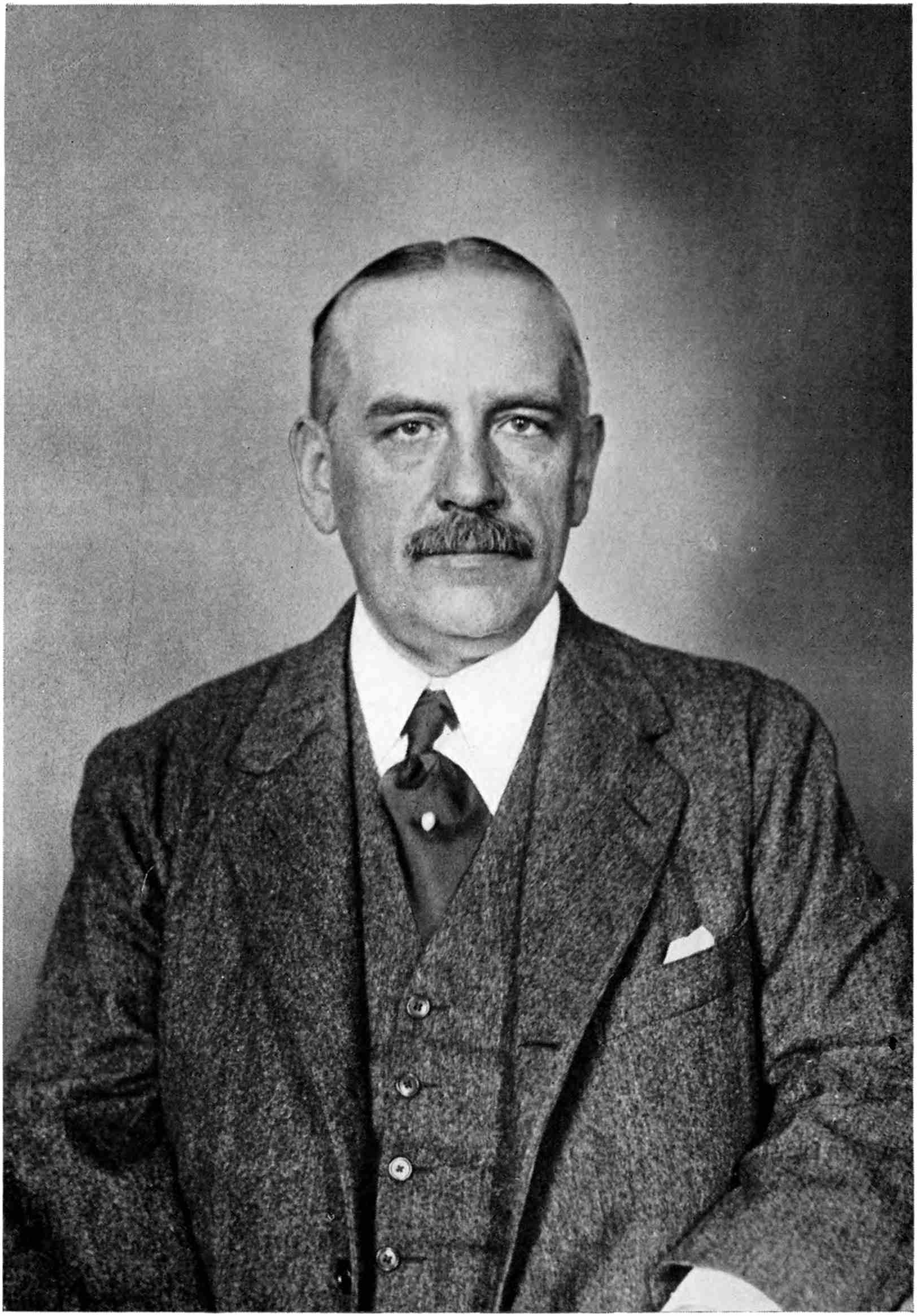
WILLIAM C. REICK
The assaults which Dana made upon yellow journalism were not actuated by the jealous envy of one who has himself overlooked an opportunity. Everything that the Sun attacked in yellow newspapers was something to which the Sun itself never would have stooped—the faked or distorted interview, the product of the thief or the eavesdropper, the collection of back-stairs gossip, the pilfered photograph, the revelation of personal affairs beyond the public’s business, the arrogation of official authority, the maudlin plea for sympathy in a factitious cause, the gross exaggeration for sensation’s sake of a trifling occurrence, the appeal to sensualism, and the demagogic attack upon the rich.
Right endures, and where is yellow journalism? Gone where the woodbine twineth. Its prototype, the wild ass, stamps o’er its head and cannot break its sleep. The “journalism that does things” doesn’t do anything any more except to try and teach its men to write articles the way the Sun has been printing them since 1868. In a chart of new journalism the largest, blackest X-mark would show where the body of new journalism, slain by public taste, lies buried forever.
The New York World, once the most ingenious exponent of yellow journalism, has become as conservative as the Sun was in the days when Joseph Pulitzer worked for Dana. Mr. Hearst’s papers, once the deepest of all yellows, now hold up their hands in horror when they see, beside them on the news-stands, the bold, black head-lines of the Evening Post!
Yellow journalism said to its readers:
“This way to the big show! We have a mutilated corpse, a scandal in high life, divorce details that weren’t brought out in court, a personal attack on the mayor, lifelike pictures of dead rats, the memoirs of a demented dressmaker, some neatly invented prison horrors, and a general denunciation of everybody who owns more than five hundred dollars. Don’t miss it!”
Dana said to his readers:
“Come, let me show you the clean stream of life; the newsboy with the trained dog, the new painting at the Metropolitan Museum, an Arabian restaurant on the East Side, the new Governor at Albany, the latest theory of planetary control, one book by Old Sleuth and another by Henry James, a ghost in a Berkshire tavern and an authentic recipe for strawberry shortcake, a clown who reads Molière and a king who plays pinochle, a digest of ten volumes of history and the shortest complete poem (“This bliz knocks biz”) ever written, a dark tragedy in the Jersey pines and a plan for a new subway, a talk with the Grand Lama and a home-run by Roger Connor, a panic in Wall Street and a poor little girl who finds a quarter.”
In the long run—and it did not have to be very long—the more attractive offering was permanently chosen by newspaper-readers.
The curious effect on American journalism of the conflict between Sun methods and the so-called new journalism was referred to, in an address delivered at Yale University on January 12, 1903, by Frank A. Munsey, then owner of the New York Daily News and now proprietor of the Sun:
The newspaperman of to-day is a composite type, the product of the Sun and the New York World of fifteen or eighteen years ago. These two newspapers represented two distinct and widely different styles of journalism. The World was alert, daring, aggressive, and sensational. It was about the liveliest thing that ever swung into New York from the West.... No man has ever stamped himself more thoroughly upon his generation than has Joseph Pulitzer on the journalism of America. He was the originator and the founder of our present type of overgrown newspaper, with its illustrations and its merits and its defects.
The part the Sun played in this recreating and rejuvenating of the American press was purely literary. It was the first newspaper to make fiction out of facts—that is, to handle facts with the skill and manner of the novelist, so that they read like fiction and possessed all its charm and fascination. The Sun at that time consisted of but four pages, and I am convinced that it was the best example of newspaper-making ever produced anywhere. With the exception of one or two of these fiction-fact stories so charmingly told, it was the perfection of condensation, accuracy, brilliancy.
Mr. Munsey did not say, because it was not germane to his subject, that for fourteen years before the advent of Pulitzer, Dana had been demonstrating the news value of the human-interest story, and that it was almost entirely upon the human-interest story, twisted and exaggerated, that yellow journalism was founded. Mr. Munsey did not say, for he could not know, that fifteen years after his address at Yale the new journalism would be extinct and the Sun would be still the Sun. The editors of to-day do not ask a reporter whether he can climb a porch or photograph an unwilling person, but whether he can see news and write it.
An adequate history of the Sun’s political activities during Dana’s time would fill volumes. Rather than the editor of an organ of the opposition, Dana was usually an opposition party in himself; not merely for the sake of opposition, but because the parties in power from 1869 to 1897 usually happened to have practices or principles with which he, as the editor of the Sun, was in disagreement. His attacks on the Grant administration for the thievery that spotted it, and on the Hayes administration because of the circumstances under which Mr. Hayes came to the Presidential chair, were bitter and without relent. His opposition to Grover Cleveland, an intellectual rather than a personal war, began before Mr. Cleveland was a national figure. In September, 1882, when the hitherto obscure Buffalonian was nominated for Governor of New York, the Sun said:
It is usually not a wise thing in politics, any more than in war, to take a private from the ranks and at one bound to promote him to be commander-in-chief; yet that is what has been done in the case of Grover Cleveland.
In the Presidential campaign of 1884 the Sun would not support Cleveland and could not support Blaine, whose conduct in Congress the Sun had frequently condemned; so it advocated the hopeless cause of General Benjamin F. Butler, who had been elected Governor of Massachusetts in 1882, the year when Cleveland was chosen Governor of New York. Dana was not an admirer of Butler’s spectacular army career, or of his general political leanings, but he admired him for his attitude in the Hayes-Tilden scandal, and he believed that Butler, if elected President, would shake things up in Washington. The Sun supported him “as a man to be immensely preferred to either of the others and as a protest against such nominations.” Dana personally announced that sooner than support Blaine he would quit work and burn his pen.
In 1885, opposing Cleveland’s free-trade policy, the Sun vigorously supported Samuel J. Randall, of Pennsylvania, a protectionist Democrat, for speaker of the House, as against John G. Carlisle, of Kentucky, a free-trader; but Randall was beaten.
The Sun ridiculed Cleveland’s theories of civil-service reform, although it believed that real reforms were needed. On this point Dana wrote, in a letter:
I do not believe in the establishment in this country of the German bureaucratic system, with its permanent staff of office-holders who are not responsible to the people, and whose tenure of place knows no variation and no end except the end of life. In my judgment a genuine reform of the evils complained of is reached by the vigorous simplification of the machinery of government, by the repeal of all superfluous laws, the abolition of every needless office, and the dismissal of every needless officer. The true American doctrine on this subject consists in the diminution of government, not in its increase.
For all of its opposition to Cleveland, whom it dubbed the “stuffed prophet,” the Sun preferred him to General Harrison in the campaign of 1888. It feared a return to power of the influences which it had combated during the administrations of Grant and Hayes. Four years afterward, however, the Sun was strongly against the third nomination of Cleveland.
In Mr. Cleveland’s second term the Sun supported his course when Dana believed it to be American. While at first it considered the President too mild and conciliatory in matters of foreign policy, it praised him and his Secretary of State, Richard Olney, for their stand against Great Britain in the Venezuela boundary dispute; praised them just as heartily as it had condemned Mr. Cleveland’s earlier action in the Hawaiian matter, when the President withdrew the treaty of annexation which his predecessor had sent to the Senate.
The Sun’s most deadly weapon, ridicule, was constantly in play in the years of the Hawaiian complications. It found vulnerable spots in Mr. Cleveland’s re-establishment of the deposed Queen Liliuokalani and in the President’s sending of a commissioner—“Paramount” Blount, as the Sun called him—without the advice and consent of the Senate. As jealous then as it is to-day of any raid by the Executive upon the Constitution or the powers of Congress, the Sun had the satisfaction of a complete victory in the Hawaiian matter.
On the other hand, the Sun applauded Mr. Cleveland’s attitude on the money question and his brave stand against the mob in the Chicago railway strikes of 1894, when the President used troops to prevent the obstruction of the mails by Eugene V. Debs and his followers.
Dana was seventy-seven years old when William J. Bryan—whom the Sun had already immortalized as the Boy Orator of the Platte—was nominated for the Presidency in 1896, but the veteran editor went at the task of exposing the free-silver fallacy with the same blithe vigour that he had shown twenty years before. His opinion, printed in the Sun of August 6, 1896, is a good example of Dana’s clear style:
The Chicago platform invites us to establish a currency which will enable a man to pay his debts with half as much property as he would have to use in order to pay them now. This proposition is dishonest. I do not say that all the advocates of the free coinage of silver are dishonest. Thousands of them—millions, if there be so many—are doubtless honest in intention. But I am unable to reconcile with any ideal of integrity a change in the law which will permit a man who has borrowed a hundred dollars to pay his debt with a hundred dollars each one of which is worth only half as much as each dollar he received from the lender.
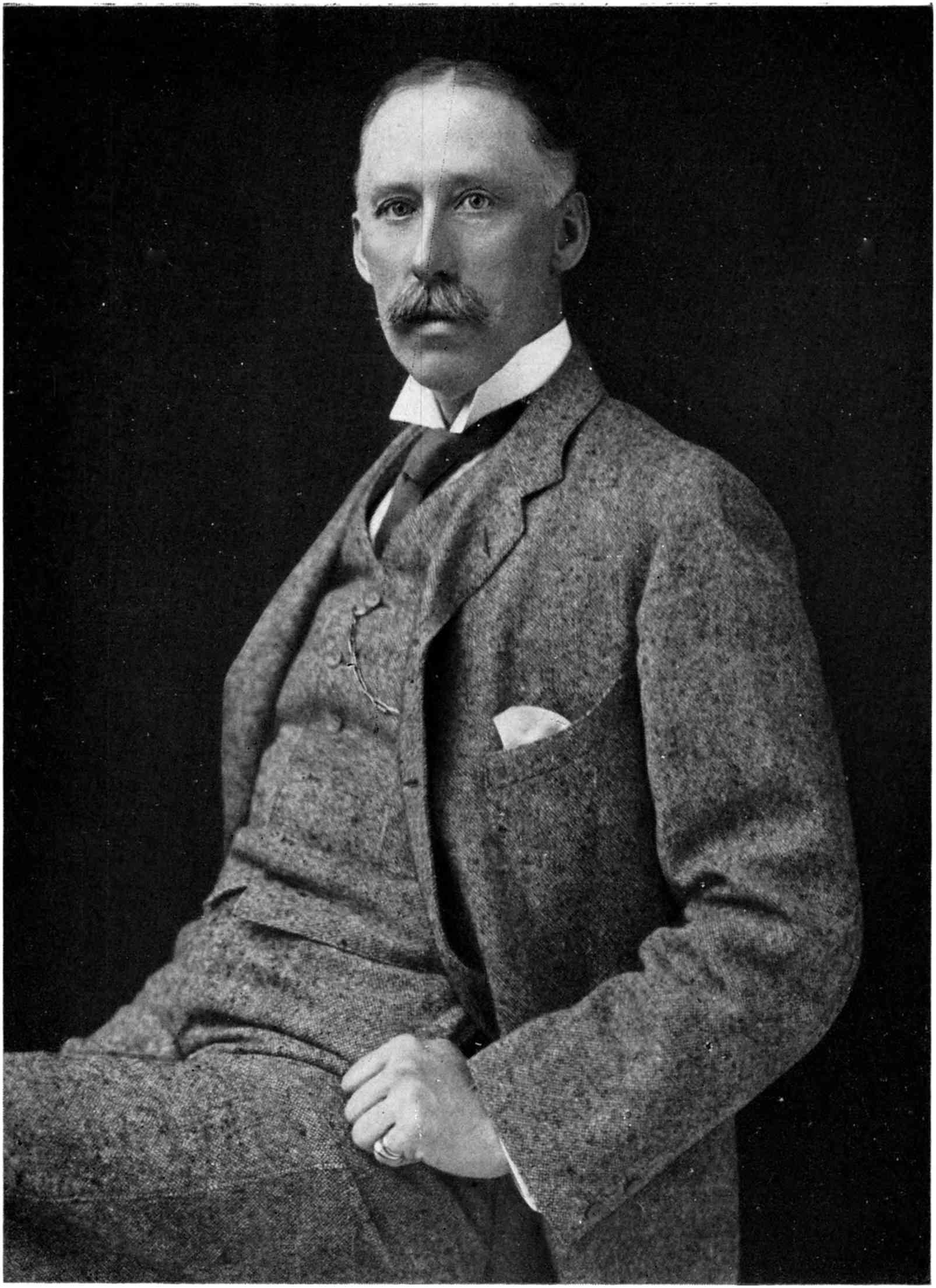
FRANK A. MUNSEY
Dana’s opinions on political questions were more eagerly sought than those of any other editor after Greeley’s death, and the Sun’s political news was complete; yet with Dana, and with the Sun, politics was, after all, only one small part of life. The whole world, with its facts and fancies, not the political problems of one continent, was the real field to be covered.
Dana’s curiosity was all-embracing. After the Sun’s financial success was assured he went abroad frequently, and saw not only western Europe, but Russia and the Levant. Of these he wrote in his “Eastern Journeys.” He knew a dozen languages. He conversed with the Pope about Dante and with Russian peasants about Tolstoy. His knowledge of Spanish, acquired early in life, made easy his travels in Mexico and Cuba. Everywhere he went he talked of freedom with its friends, and encouraged them. He knew Kossuth, Mazzini, Garibaldi, Clémenceau, Marti, and Parnell.
At home, Dana’s amusements were chiefly literary and artistic—the study of languages, history, and belles-lettres, the collection of pottery and pictures. His Chinese porcelains were perhaps the best, in point of quality, in the Occident.
“I am persuaded,” one critic said of them, “that Mr. Dana must have had a most profound instinct in relation to the whole subject.”
After Mr. Dana’s death these porcelains, about four hundred in number, were sold at auction for nearly two hundred thousand dollars.
In winter Dana lived in a large house which he built in 1880 at the corner of Madison Avenue and Sixtieth Street, and which held the art treasures that he began to gather in the first days of his prosperity. Here he kept his pictures, notably some fine specimens of the Barbizon school, and his books, which included some rare volumes, but which in the main were chosen for their usefulness.
Dana’s happiest days were spent at his country place, Dosoris, an island near Glen Cove, on the north shore of Long Island. There, around a large, old-fashioned, square frame house, he made roads and flower-beds and planted trees from many parts of the world. He grew an oak from an acorn that was brought from the tomb of Confucius. He knew Gray’s “Botany” almost by heart, and could give an intimate description of every flower in the Dosoris gardens. His interest in plants was so deep that once, while travelling in Cuba with an eminent painter, he led his companion for hours through the hot hills of Vuelta Abajo in order to satisfy himself that a certain variety of pine did not grow in that region.
Dana’s was a normal, healthy life. He was a good horseman and swimmer and a great walker. When he was seventy-five years old he climbed to the top of Croyden Mountain, in New Hampshire, with a party of younger men puffing behind him. He found pleasure in all of life, whether it was at the office, where he worked steadily but not feverishly, or with his family among the rural delights of Dosoris, or surrounded by congenial literary spirits at the dinner-table.
He knew no illness until his last summer. Up to June, 1897, the sturdy figure and the kindly face framed in a white beard were as familiar to the Sun office as they were in the seventies. With Dana there was no slow decay of body or mind. He died at Dosoris on October 17, 1897, in the thirtieth year of his reign over the Sun.
A few years before, on observing an obituary paragraph which Mr. Dana had written about some noted man, John Swinton asked his chief how much space he (Swinton) would get when his time came.
“For you, John, two sticks,” said Mr. Dana. Turning to Mr. Mitchell, then his chief editorial writer, he added: “For me, two lines.”
On the morning after Mr. Dana’s death every newspaper but one in New York printed columns about the career of the dean of American journalism. The Sun printed only ten words, and these were carried at the head of the first editorial column, without a heading:
Charles Anderson Dana, editor of the Sun, died yesterday afternoon.
Mr. Swinton perhaps believed that Mr. Dana was joking when he said “two lines,” but Mr. Mitchell knew that his chief was in earnest. The order was characteristic of Dana. It was not false modesty. Perhaps it was a certain fine vanity that told him what was true—that he and his work were known throughout the land; that the Sun, in its perfection the product of his genius and vigour, would continue to rise as regularly as its celestial namesake; that all he had done would live on. He had made the paper so great that the withdrawal from it of one man’s hand was negligible.
Dana was gone, but his son remained as principal owner, and his chief writer and most intimate intellectual associate for twenty years was left to form the Sun’s policies as he had moulded them in Dana’s absences and as he shapes them to-day. His publisher, the astute Laffan, was still in charge of the Sun’s financial affairs. Other men whom he had found and trained, like Frank P. Church, Mayo W. Hazeltine, and Edward M. Kingsbury in the editorial department, and Chester S. Lord and Daniel F. Kellogg in the news department, continued their work as if Dana still lived.
With their grief doubt was not mingled. The Sun’s success resulted from no secret formula that died with the discoverer. Half of Dana’s victory came by his attraction to himself of men who saw life and literature as he saw them; and so, in a magnificent way, he had made his work dispensable.
And Dana’s was always the magnificent way. To him journalism was not a means of making money, but of interesting, elevating, and making happy every one who read the Sun or wrote for it. He raised his profession to new heights. As Hazeltine wrote in the North American Review:
One of Mr. Dana’s special titles to the remembrance of his fellow workers in the newspaper calling is the fact that, more than any other man on either side of the Atlantic, he raised their vocation to a level with the legal and medical professions as regards the scale of remuneration. He honored his fellow craftsmen of the pen, and he compelled the world to honor them.
Shortly after the death of his father, Paul Dana, who was then forty-five years old, and who had been on the Sun editorial staff for seventeen years, was made editor by vote of the trustees of the Sun Printing and Publishing Association. In the following year (1898) the younger Dana bought from Thomas Hitchcock, who was one of Charles A. Dana’s associates both in a financial and in a literary way, enough shares to give him the control of the paper.
Paul Dana continued in control of the property for several years and held with credit his father’s title of editor until 1903. William Mackay Laffan, who had been associated with the elder Dana since 1877, next obtained the business control. His proprietorship was announced on February 22, 1902, and it continued until his death in 1909.A
Among the makers of the Sun who best knew the paper and the intellectual demands of its readers, Laffan must be included with Dana and Mitchell. At the time when he came to be master of the paper, his career had covered the entire journalistic field, and he was, moreover, a thorough Sun man, sympathetic with all the ideals of his old friend Dana.
Laffan, who was born in Dublin, Ireland, and had a light and delightful brogue, was educated at Trinity College and at St. Cecilia’s School of Medicine. When he was twenty he went to San Francisco, where, beginning as a reporter, he became city editor of the Chronicle and managing editor of the Bulletin. In 1870 he went to Baltimore, to be a reporter on the Daily Bulletin, and of this newspaper he became editor and part owner. Eventually he became the full owner of both the Daily Bulletin and the Sunday Bulletin, and in this capacity he endeared himself to the citizens of Baltimore by his fight against political rings.
He left newspaper work for a short time to become general passenger-agent of the Long Island Railroad; but in 1877, on Mr. Dana’s invitation, he went on the Sun as a general writer. Himself an artist who modelled in clay, painted in oils and water-colours, and etched, his judgment made him valuable to the paper as an art critic.
Like Mr. Dana, he was interested in Chinese porcelains, and he made a deeper study of them than did his employer. When a catalogue was needed for the Chinese porcelains in the Morgan collection in the Metropolitan Museum of Art, Mr. Laffan, who was an active trustee of the museum, was called upon to edit the work. He also edited a book on “Oriental Porcelain.” He was the author of “American Wood Engravers,” published in 1883. For these things he is remembered in the world of art. The men of the stage remember him as one of the most distinguished dramatic critics that New York has seen. Even to-day, in the comparison of the styles of critics old and new, Laffan’s incisive reviews are recalled as standards.
In the business world of journalism Laffan is thought of chiefly as the publisher of the Sun from 1884 on, and as the live spirit of the Evening Sun for many of its years. As the actual director of the Sun—although his editorial powers were almost entirely delegated to Mr. Mitchell—Mr. Laffan was a picturesque and powerful figure. Beneath an inscrutable exterior he was distinctly a likable person.
One day Laffan wrote a ten-line item, a bit about an exhibition of a friend’s painting, and asked the city editor to print it. He never commanded, even when he controlled the paper; he asked. The item was lost in the shuffle that night. The next day he rewrote it and again asked a place for it. It was printed in the first edition and left out of the city edition. For the third time he carried the article to the city editor, and without a sign of anger.
“It seems to me,” he said, “that anybody can get anything printed in this paper—except the owner.”
A millionaire advertiser asked Laffan to print an article about his pet charity.
“Take it to Clarke,” said Laffan. “If he’ll print it for you, he’ll do more for you than he’ll do for me.”
A New York newspaper once remarked of Laffan that “he never drove any man to drink, but he drove many a man to the dictionary.” That was a commentary on the unusual words which Laffan, whose vocabulary was wide, would occasionally use in an editorial article. His articles were never involved, however. They were not frequent, they were generally short, never without important purpose, and they drove home.
Patient as Laffan was with lost items of his own, he was a man of fine human temper. One morning, on arriving at the office, he found that a Wall Street group of rich scoundrels had sued the Sun for several hundred thousand dollars for its exposure of their methods. He called the city editor.
“Mr. Mallon,” he said, “tell your young man who wrote the articles to go ahead and give these men better cause for libel suits!”
The Sun was making a vigorous war on a great railroad magnate. One day an attaché of the office informed Laffan that a man was waiting to see him who bore a contract which would bring to the Sun four hundred thousand dollars’ worth of advertising from the magnate’s railroads.
“Tell him to see the advertising manager,” said Laffan.
“He insists on seeing you,” said the clerk.
“Tell him to go to hell,” said Laffan.
There was a keen humour in the big Irish head. Laffan was opposed to the amendment to the New York State constitution which provided for an expenditure of more than a hundred millions in improving the Erie Canal. Under his direction a Sun reporter, John H. O’Brien, wrote a series of articles intended to shatter public faith in the huge investment. The amendment, however, was approved by a great majority.
“Mr. O’Brien,” said Mr. Laffan to the reporter, a few days after the election, “I think it would be a very graceful thing on your part to give a little dinner to all those gentlemen who voted against the canal project.”
Upon Mr. Laffan’s death, in November, 1909, the trustees of the Sun Printing and Publishing Association asked Mr. Mitchell, who had been made editor of the Sun on July 20, 1903, to take up the administrative burden as well as the editorial. This Mr. Mitchell did for a little more than two years, although his personal inclinations were toward the literary construction and supervision of the paper rather than toward the business detail incident to the presidency of so large a corporation. The double load was lightened in December, 1911, when control of the Sun was gained through stock purchase by William C. Reick, who became the president of the company, Mr. Mitchell being permitted to return to the editorial functions which have now engrossed him, either as Mr. Dana’s aid or as editor-in-chief, for more than forty years.
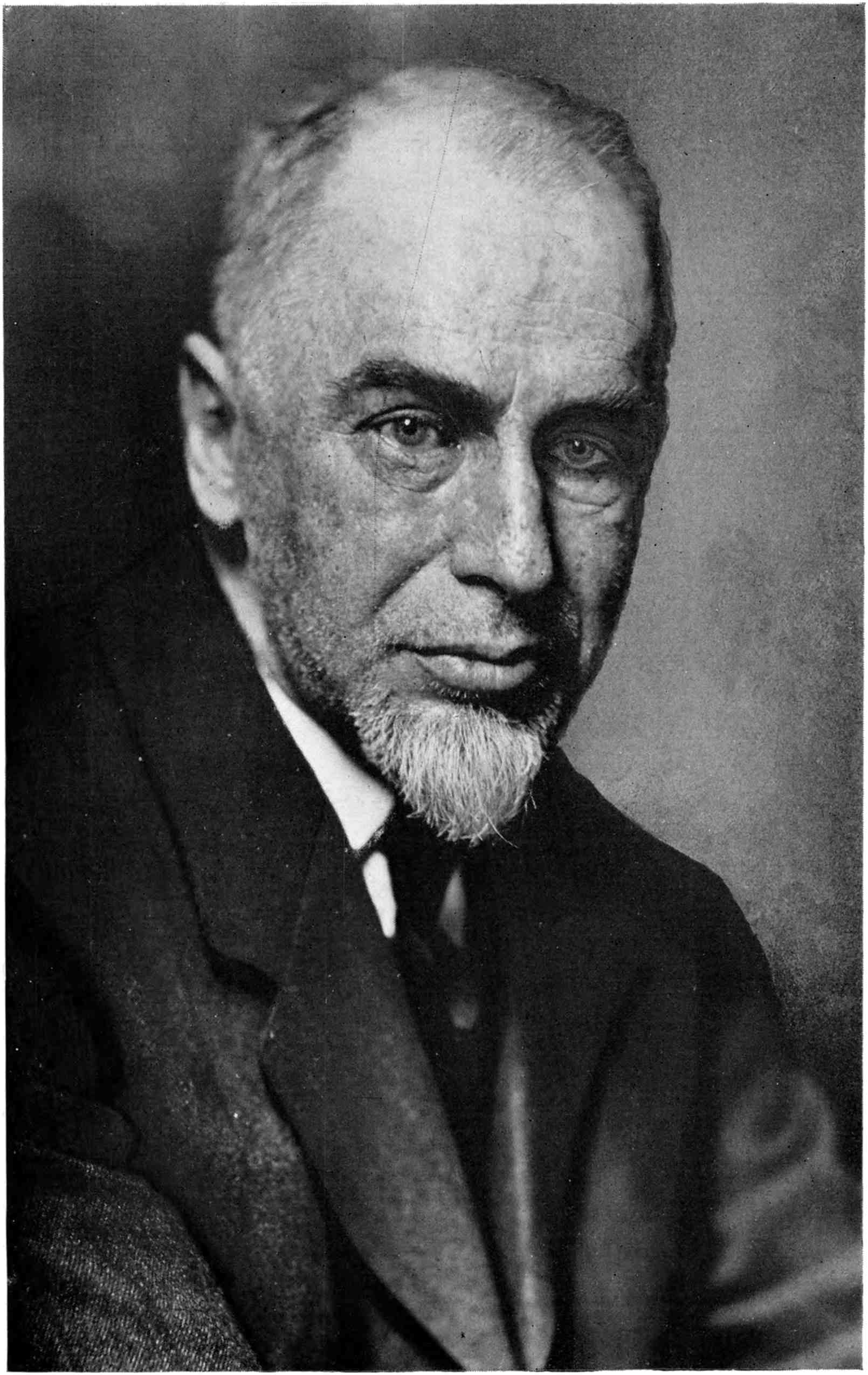
EDWARD PAGE MITCHELL
Editor of “The Sun”
Mr. Reick, who was born in Philadelphia in 1864, entered newspaper work in that city when he was nineteen years old. A few years later he removed to Newark, New Jersey, where he became the correspondent of the New York Herald. He attracted the attention of Mr. Bennett, the owner of the Herald, and in 1888 he was made editor of the Herald’s London and Paris editions. A year later he returned to America to become city editor of the Herald, the highest title then given on a newspaper which refuses to have a titular managing editor. In 1903 he was elected president of the New York Herald Company, and he remained in that position until 1906, when he left the Herald to become associated with Adolph Ochs in the publication of the New York Times and with George W. Ochs in the publication of the Philadelphia Public Ledger.
When Mr. Reick assumed the control of the Sun properties, he devoted much care to the improvement of the Evening Sun, putting it under the managing editorship of George M. Smith, who had served for many years as news editor of the Sun under Chester S. Lord. As Mr. Munsey said when he acquired the Sun and the Evening Sun from Mr. Reick:
Very great credit is due Mr. Reick for the fine development of the Evening Sun since it came under his control. I know of no man who has done a better and sounder piece of newspaper work at any time, in New York or elsewhere, than Mr. Reick has done on the Evening Sun.
Among the events of the Reick régime were the retirement of Chester S. Lord from the managing editorship and of George B. Mallon from the city editorship, and the removal of the newspaper from its old home at Nassau and Frankfort Streets to the American Tract Society Building, one block farther south, at Nassau and Spruce Streets.
It was during Mr. Reick’s control of the Sun that Mr. Munsey, in the autumn of 1912, bought the New York Press, a one-cent Republican morning daily holding an Associated Press membership. The Sun had lacked the Associated Press service since the fateful night when Mr. Dana bolted from that organization and started the Laffan News Bureau.
Mr. Munsey bought the Sun from Mr. Reick on June 30, 1916, and four days later, on July 3, the Press, with its Associated Press service, its best men, and some of its popular features, was absorbed by the Sun. As the Press had been a penny paper, the price of the Sun was reduced to one cent, after having stood at two cents since the Civil War. It remained a penny paper until January 26, 1918, when the pressure of production-costs forced the price of all the big New York dailies to two cents.
The amalgamation of the Sun and the Press wrought no change in the editorial department of the Sun, Mr. Mitchell remaining as its chief. Ervin Wardman, long the editor of the Press, became the publisher of the Sun and vice-president of the Sun Printing and Publishing Association. Mr. Reick remained with the organization in an advisory capacity. Keats Speed, the managing editor of the Press, became managing editor of the Sun, Kenneth Lord remaining as city editor.
The Sun has had five homes—at 222 William Street, where Benjamin H. Day struck off the first tiny number; at 156 Nassau Street, rented by Day in August, 1835, when the paper began to pay well; at the southwest corner of Nassau and Fulton Streets, to which Moses Y. Beach moved the Sun in 1842; at Nassau and Frankfort Streets, the old Tammany Hall, which Dana and his associates bought; and at 150 Nassau Street, whither the Sun moved in July, 1915. It is expected that the Sun will presently move to another and a fine home, for in September, 1917, Mr. Munsey bought the Stewart Building, at the northeast corner of Broadway and Chambers Street, just north of City Hall Park. The site is generally admitted to be the most desirable building site downtown, so large is the ground space, so fine is the outlook over the spacious park, and so close is it to three subways, three or four elevated-railroad lines, and the Brooklyn Bridge.
Should the criticism be made that this book is not all-inclusive, let it be remembered that there can be no really complete history of the Sun except itself—the tons of files in which for eighty-five years Sun men have drawn their pictures of life’s procession. In a narrative like this only the outlines of the Sun’s course, margined with incidents of the men who made it great by making it as human as themselves, can find room.
It is easy to begin a story of the Sun, because Ben Day and that uncertain morning in 1833, the very dawn of popular journalism, make a very real picture. Try to end it, and the roar of the presses in the basement is remindful of the fact that there is no end, except the arbitrary closing. This Sun, like Richmond’s—
By the bright track of his fiery car Gives token of a goodly day to-morrow.