LIST OF SOVEREIGNS AND DIPLOMATS
Reading edition
GREAT BRITAIN
George V, King of Great Britain and Ireland, Emperor of India, and Sovereign of the entire British Empire.
Haldane, Richard Burdon (Viscount), Lord High Chancellor. Born 1856, studied German at Göttingen, member Parliament for Haddingtonshire 1885-1911; Secretary of State for War 1905-12; Lord High Chancellor 1912. As Secretary of State for War, Haldane, introduced into his department several innovations, the knowledge of which he had acquired during his residence at Göttingen and in his frequent visits to the Continent. He has been in public life since entering Parliament in 1885, and, despite his later removal from the office which he held at the outbreak of the war, is still recognized as one of Great Britain's most brilliant men. Previous to the war, he was looked on as an especially warm friend of Germany, and frequently went to Berlin in the interests of British amity with that country.
Grey, Sir Edward: Secretary of State for Foreign Affairs. Born April 25, 1862, Under-Secretary for Foreign Affairs, 1892-95; Secretary State for Foreign Affairs December, 1905.
Of the conduct of the British Foreign Office since 1906 Gilbert Murray in his "Foreign Policy of Sir Edward Grey" ("Clarendon Press," Oxford, 1915) says:
"In general, Grey is often supposed to represent the principle of continuity in foreign policy, but this is not quite exact. In certain very large issues the Liberal Government of 1906 and onward agreed entirely with the conservative policy of Lord Salisbury (Prime Minister), and Lord Lansdowne (Foreign Secretary), and therefore followed their action. On other issues it differed. For instance, it stopped indentured Chinese labor in the Transvaal, and it granted immediate self-government to South Africa. But in Europe the policy has been mostly continuous. The principles are conveniently stated in the House of Commons debate of foreign policy on November 27, 1911:
"'1. In my opinion the wise policy for this country is to expand as little as possible.' 'I say without any hesitation that we do not desire accessions of territory, and in saying that I am not speaking for one small section of the House. I believe I am speaking for the nation at large.' The first sentence comes from Sir Edward Grey, the second from Mr. Bonar Law (leader of the opposition).
"This is made a little clearer in a latter sentence of Sir Edward Grey's speech. 'If there are to be changes of territory brought about by good will and negotiation between other powers, then we are not an ambitious competing party.... And if it is wise policy not to go in for great schemes of expansion ourselves, then I think it would be morally and diplomatically wrong to indulge in a dog-in-the-manger policy in regard to others.' In particular, he explains, if Germany wishes, 'by friendly arrangement with other powers,' to extend her territories, we do not wish to stand in her way, or to claim 'compensations.'"
Nicholson, Sir Arthur: Permanent Under-Secretary of State for Foreign Affairs.
Bertie, Sir Francis: Ambassador to France. Born August 17, 1844; private secretary to Hon. R. Bourke (Under-Secretary State), 1874-80; attached to Embassy, Berlin, 1878; Assistant Under-Secretary of State for Foreign Affairs, 1894; Ambassador to Rome, 1903; Paris, 1905.
Buchanan, Sir George: Ambassador to Russia. Born Copenhagen November 25, 1854; entered Diplomatic Service 1875; Third Secretary, Rome, 1878; Second Secretary, Tokyo, 1879; Second Secretary, Vienna, 1882; Berne, 1889; British Agent to Venezuela Arbitration Tribunal, 1898; Secretary Embassy, Rome, 1900; Berlin, 1901-3; Minister Plenipotentiary, Sofia, 1903-8; Hague, 1908-10; St. Petersburg, 1910.
Goschen, Sir Edward: Ambassador to Germany. Born July 18, 1847; entered Diplomatic Service, 1869; Attaché, Madrid, 1870; Buenos Aires, 1873; Second Secretary, Rio de Janeiro, 1877; Constantinople, 1881; Secretary Legation, Peking, 1885; Copenhagen, 1888; Lisbon, 1890; Secretary Embassy, Washington, 1893; St. Petersburg, 1894; Envoy Extraordinary and Minister Plenipotentiary, Belgrade, 1898-1900; Copenhagen, 1900-5; Ambassador, Vienna, 1905-8; Berlin, 1908.
Rumbold, Sir Horace: Counsellor German Embassy and Chargé d'Affaires. Born February 5, 1869; Attaché, Hague, 1888; Chargé d'Affaires, Munich, 1908; served at Cairo, Teheran, and Athens; Counsellor Embassy, Tokyo, 1909; learned in Arabic, Persian, and Japanese.
De Bunsen, Sir Maurice: Ambassador in Austria. Born January 8, 1852; entered Diplomatic Service, 1877; Secretary Legation, Tokyo, 1891; Secretary Embassy, Constantinople, 1897-1902; Paris, 1902-5; Envoy Extraordinary and Minister Plenipotentiary, Lisbon, 1905; Ambassador, Madrid, 1906-13; Vienna, 1913.
Beaumont, Henry Dawson: Chargé d'Affaires, Turkey. Born February 4, 1867; entered Diplomatic Service, 1892; served in Copenhagen, Madrid, Rio de Janeiro, St. Petersburg, and Montenegro; Chargé d'Affaires, Turkey, 1914.
Villiers, Sir Francis: Minister to Belgium. Born August 13, 1852; entered Foreign Office, 1870; Assistant Under-Secretary State Foreign Affairs, 1896-1905; Envoy Extraordinary and Minister Plenipotentiary, Portugal, 1905-11; Belgium, 1911.
Des Graz, Charles Louis: Minister to Serbia. Born March 2, 1860; entered Diplomatic Service, 1884; Constantinople, Teheran, Athens; Counsellor Embassy, Rome, 1905; Chargé d'Affaires, Cettinje, 1906; Envoy Extraordinary and Minister Plenipotentiary, Peru and Ecuador, 1908-13; Minister, Serbia, 1913.
Crackanthorpe, Dayrell Eardley Montague: First Secretary of Legation to Serbia. Born September 9, 1871; entered Diplomatic Service, 1896; Madrid, Washington, Brussels, Bucharest, Vienna, Belgrade, 1913.
Rodd, Sir Rennell: Ambassador to Italy. Born November 9, 1858; entered Diplomatic Service, 1883; Berlin, Athens, Rome, Paris; Secretary Embassy, Rome, 1901-4; Envoy Extraordinary and Minister Plenipotentiary, Sweden, 1904-8; Ambassador, Italy, 1908.
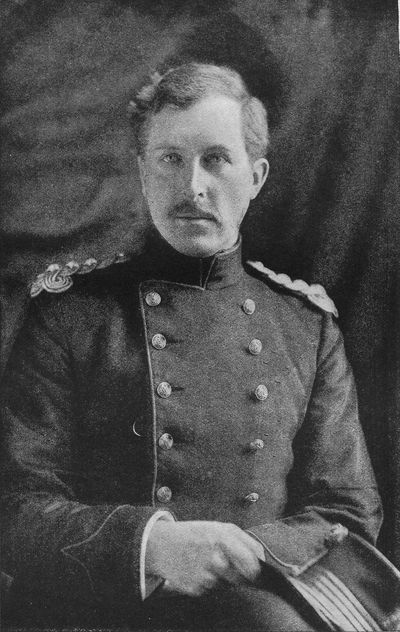
Albert I, King of Belgium.
FRANCE
Poincaré, Raymond: President of the Republic.
Viviani, René: President of the Council, a Minister of Foreign Affairs, and Premier of the Cabinet. Had been Minister of Instruction in the Cabinet of Gaston Doumergue, which resigned June 2, 1914; Poincaré asked him at that time to form a cabinet, but Ambassador Paléologue intimated from St. Petersburg that the Czar feared a Viviani ministry would modify the three years' military service law, and therefore another was sought for this position. After the failure of the Ribot Cabinet on June 12, 1914, he was again called upon, and, no objections being made, he formed the ministry acting at the outbreak of the war. After the beginning of the hostilities he retained the position of President of the Council without portfolio.
Jonnart, Charles Celestin: Minister for Foreign Affairs. Born December 27, 1857; Governor General Algiers and Minister of the Interior.
Pichon, Stephen: Minister for Foreign Affairs. Born August 10, 1857 Diplomatic Service in Hayti, San Domingo, Rio de Janeiro, and at Peking during the Boxer Rebellion.
Bienvenu-Martin, Jean Baptiste: Acting Minister for Foreign Affairs. Born July 22, 1847; Minister Instruction, 1905; in public life since 1878.
Doumergue, Gaston: Minister for Foreign Affairs. Born 1863; Minister Colonies, 1902-5; Commerce, 1906-7; Premier, resigning, June 2, 1914.
Delcassé, Théophile: Minister for Foreign Affairs. Born March 1, 1852; started life as journalist; Counsellor General; Under-Secretary Colonies, 1893; Colonial Minister, 1894-5; Foreign Minister, 1898-1905; Minister Marine, 1905-13; Mediator between Spain and the United States, 1899; Ambassador, St. Petersburg, 1913; Minister Foreign Affairs, 1913. Is one of the strong men of France; in 1904 was the French negotiator of the Anglo-French Convention (the "Entene") concerning Egypt and Morocco; was sacrificed to assuage German feeling at the time of the Algeciras conference; called the "Deadly Enemy of Germany."
Berthelot: Political Director.
Cambon, Paul; Ambassador to Great Britain. Born January 20, 1843; Ambassador Madrid, Constantinople, and at London, 1898.
Fleuriau, M. De: Chargé d'Affaires, London.
De Manneville: Chargé d'Affaires, Germany. Born February 27, 1865; entered Diplomatic Service at Berlin, 1893; later at London; a Minister of the First Class in 1904.
Paléologue, Maurice: Ambassador to Russia. Born January 13, 1859; served in Foreign Office and Diplomatic Service at Rome, Berlin, Peking, Korea, and in Bulgaria.
Cambon, Jules: Ambassador to Germany. Born April 5, 1845; entered Diplomatic Service, 1874; Ambassador, Washington, 1897; Madrid, 1902; Berlin, 1907.
Allizé: Minister at Munich, Germany.
Ronssin, P.: Consul General at Frankfort, Germany.
Dumaine, Chilhaud: Ambassador to Austria-Hungary.
d'Apchier-le-Maugin: Consul General at Budapest.
Bompard, Maurice: Ambassador to Turkey. Born May 17, 1854; Minister, First Class, 1898; Ambassador to Russia, 1902.
Klokowski, Antony: Minister to Belgium. Born September 23, 1855; served at Yokohoma, Calcutta, and Bangkok.
Boppé, Jules: Minister to Serbia. Born June 26, 1862; entered Diplomatic Service, 1890; served at Constantinople and St. Petersburg.
Barrère, Camille: Ambassador to Italy.
Bapst, Constant: Minister to Holland.
Mollard, Armard: Minister to Luxemburg.
Chevalley: Minister to Norway.
Thiébaut, Eugene: Minister to Sweden.
Farges: Consul General at Basle, Switzerland.
RUSSIA
Nicholas II: Emperor (Czar).
Sazonof: Minister for Foreign Affairs.
Suchomlinof, Vladimir Alexandrovitch: Minister for war. In 1890 at the age of forty-eight Suchomlinof was made a major general, and in 1904 became commander of Russia's most important military zone—Kiev. In 1909 he was appointed to the post which he has since relinquished, and the amazing rapidity with which Russia mobilized her army in August, 1914, can be accredited to the methods which he instituted. As a writer he is known as "Shpioa" (Spur), and is the biographer of Peter the Great, Frederick the Great, and Murat.
Benckendorff, Count A.: Ambassador to Great Britain. Born in Berlin, August 1, 1849; entered Diplomatic Service, 1869; served at Rome, Vienna; Minister Copenhagen, 1897-1903; Ambassador London, 1903.
Isvolsky, Alexander P.: Ambassador to France; was Russian negotiator of the Anglo-Russian Convention of 1907 regarding Persia, Afghanistan, and Tibet.
Swastopoulo: Chargé d'Affaires, France.
Swereiev, S. N.: Ambassador to Germany.
Broniersky, A.: Chargé d'Affaires, Germany.
Schebeko, N.: Ambassador to Austria-Hungary.
Koudacheff, Prince Nicholas: Chargé d'Affaires, Austria-Hungary.
Salviatti, A.: Consul General at Fiume.
Kazansky: Acting Consul General at Prague.
Strandtman: Chargé d'Affaires in Serbia.
BELGIUM
Albert: King of the Belgians.
Davignon, M. J.: Minister for Foreign Affairs.
Elst, van der, Baron: Secretary General.
Renkin, J.: Colonial Minister.
Lalaing H. de, Count: Minister to Great Britain. Entered Foreign Office, 1879; served Vienna, Bucharest, Berlin, Hague, London; Minister, Brazil, 1893; Envoy Extraordinary and Minister Plenipotentiary, Bucharest, 1898; Berne, 1899; London, 1903.
Guillaume, Baron: Minister to France.
Beyens, Baron: Minister to Germany.
De Dudzeele, Errembault, Count: Minister to Austria-Hungary.
De Welle, Michotte, Baron: Minister to Serbia.
Grenier, A., Baron: Minister to Spain.
Fallon, Baron: Minister to Holland.
SERBIA
Peter Karageorgevitch: King.
Pashitch, Nikola P.: Prime Minister. In 1878, at the age of thirty-two, M. Pashitch entered the Serbian Parliament, and in three years he became leader of the "Old Radicals." Always a champion of liberty, he joined the Zayenchar Mutiny of 1883, and, of twenty-two, he alone escaped execution by flight. Upon his return he was appointed Mayor of Belgrade and in 1893 Minister to Russia, where he made a lasting impression. In 1899 he was again accused of hatching a conspiracy, but Russia served him well and intervention saved him. To him, in no slight degree, does Serbia owe Russia's friendship, and to his efforts has been attributed the Balkan Alliance.
Patchou, Dr. Laza: Acting Prime Minister and Minister for Foreign Affairs.
Boschkovitch: Minister to Great Britain.
Vesnitch, M. R.: Minister to France.
Spalaikovitch, Dr. M.: Minister to Russia.
Yovanovitch, Dr. M.: Chargé d'Affaires in Germany.
Yovanovitch, Yov. M.: Minister to Austria-Hungary.
Georgevitch, M.: Chargé d'Affaires in Turkey.
Michailovitch, Ljub: Minister to Italy.
ITALY
Victor Emmanuel (Vittorio Emanuele) III.: King.
San Giuliano, Antonio di, Marquis: Minister Foreign Affairs. Born Catania, December 10, 1852; Mayor Catania, 1879; member Chamber Deputies, 1882-1904; Senate, 1904; Under-Secretary for Industry and Commerce, 1892-3; Minister Posts and Telegraph, 1899-1900; Minister Foreign Affairs, 1905-6; Ambassador, London, 1906-10; Minister Foreign Affairs, 1910. His opposition to war with Austria precipitated his downfall. Said to be the repository of more European secrets than any European statesman since Bismarck.
D'Avarna, Duke: Ambassador to Austria-Hungary.
Salandra: Premier. Appointed November 5, 1914.
Sonnino, Baron Sidney: Minister Foreign Affairs. Born March 11, 1847; entered Diplomatic Service, 1867; Parliament, 1880; Minister Finance, 1893-4; Treasury, 1894-96; Interior, 1906 and 1909-10; Foreign Affairs, November 5, 1914.
JAPAN
Yoshihito: Emperor.
Shigenobu Okuma, Count: Prime Minister.
Takaaki Kato, Baron: Minister Foreign Affairs.
GERMANY
William (Wilhelm) II.: Kaiser of Germany, King of Prussia.
Bethmann-Hollweg, Dr. Theobald von: Imperial Chancellor. Born November 29, 1856, at Hohenfinow, Brandenburg; entered Civil Service, 1879; Prussian Minister Interior, 1905; Imperial Secretary of State and Vice President of Prussian Council, 1907; Imperial Chancellor, 1909; member of Reichstag since 1890. His actions before the present war seemed to indicate an earnest desire for the peace of Europe; he appeared to oppose the military party and align himself with the moderates. His manner is frank to the point of bluffness.
Jagow, Gottlieb von: Secretary of State. Born June 26, 1863; entered Diplomatic Service, 1895, at Rome; Minister to Rome, 1907; Ambassador, 1908; Minister Foreign Affairs, 1913; credited with postponing the inevitable conflict between Italy and Austria while at Rome.
Zimmerman, von: Under-Secretary of State. Appointed 1911; previously Vice Consul Shanghai; Consul at Tientsin and in Diplomatic Corps.
Lichnowsky, Prince Karl Maximilian: Ambassador to Great Britain. Born 1860; Attaché, London, 1885; Counsellor Embassy, Vienna; Foreign Office, Berlin; Ambassador to London, 1912. Member Roman Catholic party. Did all he could to prevent rupture between Great Britain and Germany. Was very popular in England.
Schoen, Baron Wilhelm von: Ambassador to France. Born June 3, 1851; entered Diplomatic Service, 1877; Madrid, Hague, Athens, Berne, Paris, Copenhagen, St. Petersburg; Ambassador, Paris, 1910.
Pourtalès, Count Frederic: Ambassador to Russia. Born October 24, 1853; appointed St. Petersburg, 1908.
Tschirschky, Heinrich von: Ambassador to Austria-Hungary. Born August 15, 1858; entered Diplomatic Service, 1873; Constantinople, Vienna, St. Petersburg; Ambassador to Vienna, 1907.
Below Saleske, Konrad von: Minister to Belgium. Born April 18, 1866; Secretary Legation, Athens; Ambassador, Constantinople, 1907.
Storck, von: Secretary Legation in Serbia.
Flotow, Hans von: Ambassador to Italy. Born September 10, 1862; entered Diplomatic Service, 1893; Second Secretary Legation, Washington, Hague, Paris.
Buch, von: Minister to Luxemburg.
AUSTRIA-HUNGARY
Francis Joseph (Franz Josef): Emperor.
Berchtold, Count Leopold: Secretary of State for Foreign Affairs. Born April 18, 1863; saw Diplomatic Service in Paris. London; Ambassador to St. Petersburg, 1906; appointed Secretary of State, 1914; emulated his predecessor, Count d'Herenthal, the annexor of Bosnia and Herzegovina, in strong foreign policy.
Macchio, Dr. K., Baron: Under-Secretary of State for Foreign Affairs.
Forgach, Count: Under-Secretary of State for Foreign Affairs. Diplomatic Service in Belgrade and Dresden.
Tisza, Count Stephen: President of the Ministry of Hungary. Born April 22, 1861; served as President Ministry, 1903-06.
Mensdorff, A.: Ambassador to Great Britain. Born September 5, 1861; Diplomatic Service in Paris, London, St. Petersburg; Secretary Ambassador, London, 1896-1904; Minister Plenipotentiary, 1903-04; Ambassador, 1904.
Szécsen, Count Nicolaus: Ambassador to France.
Szápáry, Count Josef: Ambassador to Russia.
Czernin, Count Jaromir: Chargé d'Affaires, Russia.
Szögyény, Count Ladislaus: Ambassador to Germany.
Zehlitschka: Consul General in Turkey.
Clary, S., Count: Minister to Belgium.
Giesl von Gieslingen, Baron: Minister to Serbia.
Hoflehner: Consular Agent at Nish, Serbia.
TURKEY
Mohammed V: Sultan.
Said Halim Pasha, Prince: Grand Vizier.
Tewfik Pasha: Ambassador to Great Britain.
NEUTRAL NATIONS
Loudon: Dutch Minister for Foreign Affairs.
Eyschen, Dr.: Minister of State and President of the Government of Luxemburg.
Gerard, James Watson: American Ambassador to Germany.
Penfield, Frederic Courtland: American Ambassador to Austria-Hungary.
Whitlock, Brand: American Minister to Belgium.
It will be convenient for the reader, before entering into the diplomatic history of the war, to have before him the dates of the war marking diplomatic crises.
IMPORTANT DATES PRECEDING THE WAR
June 28, 1914. Assassination of Austrian hereditary Archduke Franz Ferdinand at Sarajevo, Bosnia.
July 23, 1914. Austria-Hungary hands note to Serbia.
July 24, 1914. Russia proposes extension of time limit in note; decides on mobilization in South Bosnia; and seeks unconditional support of Great Britain in conflict with Austria-Hungary. Great Britain proposes four-power intervention.
July 25, 1914. Austria-Hungary sends memorandum to powers containing dossier of evidence discovered at Sarajevo trial, and declares dispute lies wholly between her and Serbia. Serbia replies to note, having previously ordered mobilization. Austro-Hungarian Legation leaves Belgrade. Germany refuses to enter mediation between Austria-Hungary and Serbia, wishing to "localize" the conflict, and proposes mediation of powers between Russia and Austria-Hungary. Russia mobilizes fourteen army corps on Austro-Hungarian frontier. Great Britain asks Austria-Hungary to extend time limit and suspend hostilities pending four-power conference.
July 26, 1914. Russia proposes direct conversations to Austria-Hungary. France and Italy accept four-power conference in London.
July 27, 1914. William II returns from Norway cruise to Potsdam. Austria-Hungary informs Russia she will respect Serbian integrity and independence. Russia agrees to four-power conference if direct negotiations with Austria-Hungary fail.
July 28, 1914. Austria-Hungary breaks off direct negotiations with Russia; refuses four-power mediation; declares war on Serbia, and mobilizes eight army corps. Russia begins partial mobilization. Great Britain asks Germany her plan of mediation between Russia and Austria-Hungary.
July 29, 1914. Germany attempts to secure neutrality of Great Britain in case of Austro-Hungarian and Russian war. Great Britain warns Germany that if France is involved in war she will support her.
July 30, 1914. Austria-Hungary, advised by Germany, agrees to resume negotiations with Russia, but not on basis of Serbian reply. Germany asks Russia's explanation of her mobilization. Russia agrees to stop mobilization if Austria-Hungary respects Serbian sovereignty. After negotiations with Austria-Hungary, Russia orders general mobilization of army and navy. France reminds Great Britain of her naval agreement. Great Britain refuses Germany's proposal that she remain neutral if French territory in Europe is respected, and proposes that Germany occupy Belgrade and force mediation by the powers.
July 31, 1914. Austria-Hungary accepts Anglo-German proposal for four-power mediation on basis of temporary prosecution of military measures against Serbia. Russia agrees to take no military action pending negotiations. Germany refuses to press Austria-Hungary so long as Russia mobilizes; sends ultimatum to Russia and France, and refuses to answer about respecting neutrality of Belgium. France agrees to respect this neutrality.
August 1, 1914. Austria orders general mobilization, but continues discussion with Russia, and gives way on only point remaining at issue. Germany orders general mobilization and declares war on Russia. France orders general mobilization. Great Britain refuses Germany's request to secure French neutrality in Russo-German war, and to remain neutral herself if Germany respect Belgian neutrality. Belgium declares she will uphold neutrality. Italy decides to remain neutral.
August 2, 1914. Great Britain agrees to give naval aid to France in event of German attack. Germany sends ultimatum to Belgium about passage of troops. German troops enter Luxemburg.
August 3, 1914. Germany declares war on France and bids for British neutrality by offering not to attack northern French coast nor use Belgium and Dutch ports as bases. Great Britain refuses offer. Belgium refuses Germany's ultimatum.
August 4, 1914. Germany sends second ultimatum to Belgium, threatening force, and offers Great Britain not to annex Belgian territory. Great Britain demands that Germany respect Belgian neutrality, and in default of reply declares war on Germany.
August 5, 1914. Austria-Hungary declares war on Russia.
August 6, 1914. Montenegro declares war on Austria-Hungary.
August 9, 1914. Serbia declares war on Germany.
August 10, 1914. France declares war on Austria-Hungary.
August 12, 1914. Great Britain declares war on Austria-Hungary.
August 12, 1914. Montenegro declares war on Germany.
August 23, 1914. Japan declares war on Germany.
August 27, 1914. Austria-Hungary declares war on Japan.
August 28, 1914. Austria-Hungary declares war on Belgium.
November 3, 1914. Russia declares war on Turkey.
November 5, 1914. France and Great Britain declare war on Turkey.
May 23, 1915. Italy declares war on Austria-Hungary.
June 3, 1915. San Marino declares war on Austria-Hungary.
August 20, 1915. Italy declares war on Turkey.
October 14, 1915. Bulgaria declares war on Serbia.
October 15, 1915. Great Britain declares war on Bulgaria.
October 19, 1915. Russia and Italy declare war on Bulgaria.
WARNINGS OF HOSTILE INTENTIONS
The first evidence presented before the court of nations was that of France, in regard to the hostile intentions of Germany. To this Germany has made no official answer in the form of documentary evidence, and any inference as to the hostile intentions of France against Germany, if there were any, must be inferred by the reader without any help from cross-examination by the official advocates of Germany. The value of the French evidence must be judged by later events. Have they, or have they not, corroborated the anticipations of France, held for a year before the war, as to an attack upon her by Germany?
On March 17, 1913, M. Jules Cambon, French Ambassador at Berlin, wrote to M. Jonnart, Minister for Foreign Affairs in Paris, transmitting reports by French military and naval attachés in Berlin to their respective French departments on German military affairs, and called his attention to the importance of the documents. Delay, he said, in the publication of the reports was due to lack of funds wherewith to provide for these military measures. The rich classes objected to a forced levy in times of peace, and the Federal states to the Imperial Government adopting direct taxation which had heretofore been reserved to them.
"However this may be, in increasing the strength of the German army the empire desires to leave nothing to chance in the event of a possible crisis.
"The German changes have produced a result unexpected by that country, viz., the proposal of the Government of the [French] Republic to reestablish the three years' service, and the manly determination with which this proposal has been welcomed in France. The surprise occasioned by these proposals of insisting on the absolute necessity of an increase of German military strength; the German proposals are represented as a reply to our own. The reverse is the case, since the immense military effort which France is undertaking is but the consequence of German initiative.
"The Imperial Government is constantly rousing patriotic sentiment. Every day the emperor delights to revive memories of 1813. Yesterday evening a military tattoo went through the streets of Berlin, speeches were delivered in which the present situation was compared to that of a hundred years ago.... It was of course to be expected that national patriotism would be worked up just when fresh sacrifices are being required, but to compare the present time to 1813 is to misuse an historical analogy. If, to-day, there is anything corresponding to the movement which a hundred years ago roused Germans to fight the man of genius who aspired to universal dominion, it is in France that such a counterpart would have to be sought, since the French nation seeks but to protect itself against the domination of force.
"Nevertheless, it is true that the state of public opinion in both countries makes the situation grave."
The first inclosure in M. Cambon's letter was the report of Lieutenant Colonel Serret. He speaks of a "virulent" article in the "Kölnische Zeitung" ("Cologne Gazette") on the menace of France, which, though immediately disavowed by the Government, cannot be disregarded, since its sentiments have been approved by other prominent newspapers, and it appears to express a "real feeling" among the people, a "latent anger." It throws light on the present German armaments.
"For some time now it has been quite a common thing to meet people who declare that the military plans of France are extraordinary and unjustified. In a drawing room a member of the Reichstag who is not a fanatic, speaking of the three years' service in France, went so far as to say: 'It is a provocation; we will not allow it.' More moderate persons, military and civil, glibly voice the opinion that France with her 40,000,000 inhabitants has no right to compete in this way with Germany.
"To sum up, people are angry, and this anger is not caused by the shrieking of certain French papers, to which sober-minded people pay little attention. It is a case of vexation. People are angry at realizing that in spite of the enormous effort made last year, continued and even increased this year, it will probably not be possible this time to outrun France completely.
"To outdistance us, since we neither will nor can be allied with her, is Germany's real aim....
"At the moment when German military strength is on the point of acquiring that final superiority which, should the occasion arise, would force us to submit to humiliation or destruction, France suddenly refuses to abdicate, and shows, as Renan said: 'her eternal power of renaissance and resurrection.' The disgust of Germany can well be understood.
"Of course the Government points to the general situation in Europe and speaks of the 'Slav Peril.' As far as I can see, however, public opinion really seems indifferent to this 'Peril,' and yet it has accepted with a good grace, if not with welcome, the enormous burdens of these two successive laws....
"To sum up, if public opinion does not actually point at France, as does the 'Kölnische Zeitung,' we are in fact, and shall long remain the nation aimed at. Germany considers that for our 40,000,000 of inhabitants our place in the sun is really too large.
"Germans wish for peace—so they keep on proclaiming, and the emperor more than anyone—but they do not understand peace as involving either mutual concessions or a balance of armaments. They want to be feared and they are at present engaged in making the necessary sacrifices. If on some occasion their national vanity is wounded, the confidence which the country will feel in the enormous superiority of its army will be favorable to an explosion of national anger, in the face of which the moderation of the Imperial Government will perhaps be powerless.
"It must be emphasized again that the Government is doing everything to increase patriotic sentiment by celebrating with éclat all the various anniversaries of 1813.
"The trend of public opinion would result in giving a war a more or less national character. By whatever pretext Germany should justify the European conflagration, nothing can prevent the first decisive blows being struck at France."
The second inclosure in M. Cambon's letter is the report of M. de Faramond, Naval Attaché. He says that there will be no increase in the German fleet this year, and that the whole military effort will be directed against France.
By October 1, 1914, the imperial army will be increased from 720,000 to 860,000 men, and proposed legislation will place the army corps near the French frontier most nearly on a war footing, in order on the very day of the outbreak of hostilities to attack us suddenly with forces very much stronger than our own. It is absolutely imperative for the Imperial Government to obtain success at the very outset of the operations....
"William II cannot allow a retreat to enter into his calculations, although the German soldier is no longer to-day what he was forty years ago, a plain religious man, ready to die at the order of his king. When it is remembered that at the last elections 4,000,000 votes were cast by the Socialists and that the franchise is only obtained in Germany at the age of twenty-five, it may be presumed that the active army, composed of young men from twenty to twenty-five, must contain in its ranks a considerable proportion of Socialists.
"It would indeed be foolish to think that the German Socialists will throw down their rifles on the day when France and Germany come to blows; but it will be very important that the Imperial Government should persuade them that on the one hand we are the aggressors, and on the other that they can have entire confidence in the direction of the campaign and its final result....
"And it is because a German defeat at the outset would have such an incalculable effect on the empire that we find in all the plans worked out by the general staff proposals for a crushing offensive movement against France.
"In reality the Imperial Government wishes to be in a position to meet all possible eventualities. It is from the direction of France that the danger seems to them greatest....
"In this connection I think it is interesting to quote a conversation which a member of our embassy had the other evening with the old Prince Henckel von Donnersmarck, as it may serve to reflect the opinions which dominate court circles.
"Referring to the new German military proposals Prince Donnersmarck spoke as follows:
"'French people are quite wrong in thinking that we harbor evil designs and want war. But we cannot forget that in 1870 popular opinion forced the French Government to make a foolish attack on us before they were ready. Who can assure us that public opinion, which in France is so easily inflamed, will not force the Government to declare war? It is against this danger that we wish to protect ourselves.'"
The prince, a veteran of the French war, expressed the opinion that Germany would again conquer France in event of another war.
"Frenchmen, who have a great facility for work, are not as punctual as Germans in the fulfillment of their duty. In the coming war that nation will be victorious whose servants from the top of the ladder to the bottom will do their duty with absolute exactitude, however important or small it may be. And Prince Donnersmarck added: 'An exactitude which played so great a rôle forty years ago in moving an army of 500,000 men will have a far greater importance in the next war, when it will be a question of moving masses far more numerous.'
"In this way the old prince gave expression to the confidence shared by all Germans in the superiority of their military organization."
The attaché then discusses German finances.
He mentions particularly the large loans raised by the empire and Prussia: 500,000,000 marks on January 29, 1912, and 350,000,000 marks on March 7, 1913. Quite an important part of these loans must have been applied to military expenses.
"The military law of 1913 will require quite exceptional financial measures.
"According to the indications given by the semiofficial press, the 'nonrecurring' expenditure will amount to a milliard marks, while the 'permanent' annual expenditure resulting from the increase of effectives will exceed 200,000,000 marks.
"It seems certain that the 'nonrecurring' expenditure will be covered by a war contribution levied on capital. Small fortunes would be exempted and those above 20,000 marks would be subject to a progressive tax. Presented in this guise the war tax would not be objected to by the Socialists, who will be able, in accordance with their usual tactics, to reject the principle of the military law and at the same time to pass the votes which assure its being carried into effect."
The attaché then discusses a subject already mentioned—the persuasion of the rich and bourgeois classes by the Government to submit to the increased taxation by "noisy celebrations of the centenary of the War of Independence" in order to convince them of the necessity of sacrifice, and to remind them that France is to-day, as 100 years ago, their hereditary enemy.
"If it is established that the German Government are doing their utmost to secure that the payment of this enormous tax should be made in full, and not by way of installment, and if, as some of the newspapers say, the whole payment is to be complete before July 1, 1914, these facts have a formidable significance for us, for nothing can explain such haste on the part of the military authorities to obtain war treasure in cash to the amount of a milliard."
On April 2, 1913, M. Etienne, French Minister of War, wrote to M. Jonnart, French Minister of Foreign Affairs, enclosing a German official secret report concerning strengthening of the army. This report is interesting in that it mentions knowledge that, as a result of her entente with France and Russia, Great Britain was prepared to send an expeditionary force of 100,000 to the Continent, and confesses that Germany refrained from declaring war on France at the time of the Agadir incident because of "the progress made by the French army, the moral recovery of the nation, and the technical advance in the realm of aviation and of machine guns."
"Public opinion is being prepared for a new increase in the active army, which would ensure Germany an honorable peace and the possibility of properly ensuring her influence in the affairs of the world. The new army law and the supplementary law which should follow will enable her almost completely to attain this end....
"Neither ridiculous shriekings for revenge by French chauvinists, nor the Englishmen's gnashing of teeth, nor the wild gestures of the Slavs will turn us from our aim of protecting and extending Deutschtum (German influence) all the world over.
"The French may arm as much as they wish, they cannot in one day increase their population. The employment of an army of black men in the theatre of European operations will remain for a long time a dream, and in any case be devoid of beauty.
"Our new army law is only an extension of the military education of the German nation. Our ancestors of 1813 made greater sacrifices. It is our sacred duty to sharpen the sword that has been put into our hands and to hold it ready for defense as well as for offense. We must allow the idea to sink into the minds of our people that our armaments are an answer to the armaments and policy of the French. We must accustom them to think that an offensive war on our part is a necessity, in order to combat the provocations of our adversaries. We must act with prudence so as not to arouse suspicion, and to avoid the crises which might injure our economic existence. We must so manage matters that under the heavy weight of powerful armaments, considerable sacrifices, and strained political relations, an outbreak (Losschlagen) should be considered as a relief, because after it would come decades of peace and prosperity, as after 1870. We must prepare for war from the financial point of view; there is much to be done in this direction. We must not arouse the distrust of our financiers, but there are many things which cannot be concealed.
"We must not be anxious about the fate of our colonies. The final result in Europe will settle their position. On the other hand we must stir up trouble in the north of Africa and in Russia. It is a means of keeping the forces of the enemy engaged. It is, therefore, absolutely necessary that we should open up relations, by means of well-chosen agents, with influential people in Egypt, Tunis, Algeria, and Morocco, in order to prepare the measures which would be necessary in the case of a European war. Of course in case of war we should openly recognize these secret allies; and on the conclusion of peace we should secure to them the advantages which they had gained. These aims are capable of realization. The first attempt which was made some years ago opened up for us the desired relations. Unfortunately these relations were not sufficiently consolidated. Whether we like it or not it will be necessary to resort to preparations of this kind, in order to bring a campaign rapidly to a conclusion.
"Risings provoked in time of war by political agents need to be carefully prepared and by material means. They must break out simultaneously with the destruction of the means of communication; they must have a controlling head to be found among the influential leaders, religious or political. The Egyptian School is particularly suited to this purpose; more and more it serves as a bond between the intellectuals of the Mohammedan world.
"However this may be, we must be strong in order to annihilate at one powerful swoop our enemies in the east and west. But in the next European war it will also be necessary that the small states should be forced to follow us or be subdued. In certain conditions their armies and their fortified places can be rapidly conquered or neutralized; this would probably be the case with Belgium and Holland, so as to prevent our enemy in the west from gaining territory which they could use as a base of operations against our flank. In the north we have nothing to fear from Denmark or Scandinavia, especially as in any event we shall provide for the concentration of a strong northern army, capable of replying to any menace from this direction. In the most unfavorable case, Denmark might be forced by Great Britain to abandon her neutrality; but by this time the decision would already have been reached both on land and on sea. Our northern army, the strength of which could be largely increased by Dutch formations, would oppose a very active defense to any offensive measures from this quarter.
"In the south, Switzerland forms an extremely solid bulwark, and we can rely on her energetically defending her neutrality against France, and thus protecting our flank.
"As was stated above, the situation with regard to the small states on our northwestern frontier cannot be viewed in quite the same light. This will be a vital question for us, and our aim must be to take the offensive with a large superiority from the first days. For this purpose it will be necessary to concentrate a large army, followed up by strong Landwehr formations, which will induce the small states to follow us or at least to remain inactive in the theatre of operations, and which would crush them in the event of armed resistance. If we could induce these states to organize their system of fortification in such a manner as to constitute an effective protection for our flank we could abandon the proposed invasion. But for this, army reorganization, particularly in Belgium, would be necessary in order that it might really guarantee an effective resistance. If, on the contrary, their defensive organization was established against us, thus giving definite advantages to our adversary in the West, we could in no circumstances offer Belgium a guaranty for the security of her neutrality. Accordingly, a vast field is open to our diplomacy to work in this country on the lines of our interests.
"The arrangements made with this end in view allow us to hope that it will be possible to take the offensive immediately after the complete concentration of the army of the Lower Rhine. An ultimatum with a short-time limit, to be followed immediately by invasion, would allow a sufficient justification for our action in international law.
"Such are the duties which devolve on our army and which demand a striking force of considerable numbers. If the enemy attacks us, or if we wish to overcome him, we will act as our brothers did a hundred years ago; the eagle thus provoked will soar in his flight, will seize the enemy in his steel claws and render him harmless. We will then remember that the provinces of the ancient German Empire, the County of Burgundy and a large part of Lorraine, are still in the hands of the French; that thousands of brother Germans in the Baltic provinces are groaning under the Slav yoke. It is a national question that Germany's former possessions should be restored to her."[Back to Contents]