Dedication of the Fourth Volume of The Spectator (continued 5)
Reading edition
Spectator
.
return
Footnote 7:
To this number of the
Spectator
, and to several numbers since that for January 8, in which it first appeared, is added an advertisement that, The First and Second Volumes of the
Spectator
in 8vo are now ready to be delivered to the subscribers by J. Tonson, at Shakespeare's Head, over-against Catherine Street in the Strand.
return
Contents Contents, p.4
No. 292 Monday, February 4, 1712 Addison
Illam, quicquid agit, quoquo Vestigia flectit, Componit furlim, subsequiturque decor. Tibull. L. 4.
As no one can be said to enjoy Health, who is only not sick, without he feel within himself a lightsome and invigorating Principle, which will not suffer him to remain idle, but still spurs him on to Action: so in the Practice of every Virtue, there is some additional Grace required, to give a Claim of excelling in this or that particular Action. A Diamond may want polishing, though the Value be still intrinsically the same; and the same Good may be done with different Degrees of Lustre. No man should be contented with himself that he barely does well, but he should perform every thing in the best and most becoming Manner that he is able.
Tully tells us he wrote his Book of Offices, because there was no Time of Life in which some correspondent Duty might not be practised; nor is there a Duty without a certain Decency accompanying it, by which every Virtue 'tis join'd to will seem to be doubled. Another may do the same thing, and yet the Action want that Air and Beauty which distinguish it from others; like that inimitable Sun-shine Titian is said to have diffused over his Landschapes; which denotes them his, and has been always unequalled by any other Person.
There is no one Action in which this Quality I am speaking of will be more sensibly perceived, than in granting a Request or doing an Office of Kindness. Mummius, by his Way of consenting to a Benefaction, shall make it lose its Name; while Carus doubles the Kindness and the Obligation: From the first the desired Request drops indeed at last, but from so doubtful a Brow, that the Obliged has almost as much Reason to resent the Manner of bestowing it, as to be thankful for the Favour it self. Carus invites with a pleasing Air, to give him an Opportunity of doing an Act of Humanity, meets the Petition half Way, and consents to a Request with a Countenance which proclaims the Satisfaction of his Mind in assisting the Distressed.
The Decency then that is to be observed in Liberality, seems to consist in its being performed with such Cheerfulness, as may express the God-like Pleasure is to be met with in obliging one's Fellow-Creatures; that may shew Good-nature and Benevolence overflowed, and do not, as in some Men, run upon the Tilt, and taste of the Sediments of a grutching uncommunicative Disposition.
Since I have intimated that the greatest Decorum is to be preserved in the bestowing our good Offices, I will illustrate it a little by an Example drawn from private Life, which carries with it such a Profusion of Liberality, that it can be exceeded by nothing but the Humanity and Good-nature which accompanies it.
It
is a Letter of Pliny's
1
which I shall here translate, because the Action will best appear in its first Dress of Thought, without any foreign or ambitious Ornaments.
Pliny to Quintilian. Tho I am fully acquainted with the Contentment and just Moderation of your Mind, and the Conformity the Education you have given your Daughter bears to your own Character; yet since she is suddenly to be married to a Person of Distinction, whose Figure in the World makes it necessary for her to be at a more than ordinary Expence in Cloaths and Equipage suitable to her Husbands Quality; by which, tho her intrinsick Worth be not augmented, yet will it receive both Ornament and Lustre: And knowing your Estate to be as moderate as the Riches of your Mind are abundant, I must challenge to my self some part of the Burthen; and as a Parent of your Child. I present her with Twelve hundred and fifty Crowns towards these Expences; which Sum had been much larger, had I not feared the Smallness of it would be the greatest Inducement with you to accept of it. Farewell.
Thus should a Benefaction be done with a good Grace, and shine in the strongest Point of Light; it should not only answer all the Hopes and Exigencies of the Receiver, but even out-run his Wishes: 'Tis this happy manner of Behaviour which adds new Charms to it, and softens those Gifts of Art and Nature, which otherwise would be rather distasteful than agreeable. Without it, Valour would degenerate into Brutality, Learning into Pedantry, and the genteelest Demeanour into Affectation. Even Religion its self, unless Decency be the Handmaid which waits upon her, is apt to make People appear guilty of Sourness and ill Humour: But this shews Virtue in her first original Form, adds a Comeliness to Religion, and gives its Professors the justest Title to the Beauty of Holiness. A Man fully instructed in this Art, may assume a thousand Shapes, and please in all: He may do a thousand Actions shall become none other but himself; not that the Things themselves are different, but the Manner of doing them.
If you examine each Feature by its self, Aglaura and Callidea are equally handsome; but take them in the Whole, and you cannot suffer the Comparison: Tho one is full of numberless nameless Graces, the other of as many nameless Faults.
The Comeliness of Person, and Decency of Behaviour, add infinite Weight to what is pronounced by any one. 'Tis the want of this that often makes the Rebukes and Advice of old rigid Persons of no Effect, and leave a Displeasure in the Minds of those they are directed to: But Youth and Beauty, if accompanied with a graceful and becoming Severity, is of mighty Force to raise, even in the most Profligate, a Sense of Shame.
In
Milton, the Devil is never described ashamed but once, and that at the Rebuke of a beauteous Angel.
So spake the Cherub, and his grave Rebuke, Severe in youthful Beauty, added Grace Invincible: Abash'd the Devil stood, And felt how awful Goodness is, and saw Virtue in her own Shape ho'w lovely I saw, and pin'd His Loss2.
The Care of doing nothing unbecoming has accompanied the greatest Minds to their last Moments. They avoided even an indecent Posture in the very Article of Death. Thus Cæsar gathered his Robe about him, that he might not fall in a manner unbecoming of himself:
and
the greatest Concern that appeared in the Behaviour of Lucretia, when she stabbed her self, was, that her Body should lie in an Attitude worthy the Mind which had inhabited it.
Ne non procumbat honeste Extrema hæc etiam cura, cadentis erat3. 'Twas her last Thought, How decently to fall. Mr. Spectator, I am a young Woman without a Fortune; but of a very high Mind: That is, Good Sir, I am to the last degree Proud and Vain. I am ever railing at the Rich, for doing Things, which, upon Search into my Heart, I find I am only angry because I cannot do the same my self. I wear the hooped Petticoat, and am all in Callicoes when the finest are in Silks. It is a dreadful thing to be poor and proud; therefore if you please, a Lecture on that Subject for the Satisfaction of Your Uneasy Humble Servant, JEZEBEL.
Z.
Footnote 1:
Bk. vi. ep. 32.
return to footnote mark
Footnote 2:
Par. L.
, Bk. iv. 11. 844-9.
return
Footnote 3:
Ovid.
Fast
., iii. 833.
return
Contents Contents, p.4
No. 293 Tuesday, February 5, 1712 Addison

The
famous Gratian
1
in his little Book wherein he lays down Maxims for a Man's advancing himself at Court, advises his Reader to associate himself with the Fortunate, and to shun the Company of the Unfortunate; which, notwithstanding the Baseness of the Precept to an honest Mind, may have something useful in it for those who push their Interest in the World. It is certain a great Part of what we call good or ill Fortune, rises out of right or wrong Measures, and Schemes of Life. When I hear a Man complain of his being unfortunate in all his Undertakings, I shrewdly suspect him for a very weak Man in his Affairs. In Conformity with this way of thinking, Cardinal Richelieu used to say, that Unfortunate and Imprudent were but two Words for the same Thing. As the Cardinal himself had a great Share both of Prudence and Good-Fortune, his famous Antagonist, the Count d'Olivarez, was disgraced at the Court of Madrid, because it was alledged against him that he had never any Success in his Undertakings. This, says an Eminent Author, was indirectly accusing him of Imprudence.
Cicero recommended Pompey to the Romans for their General upon three Accounts, as he was a Man of Courage, Conduct, and Good-Fortune. It was perhaps, for the Reason above-mentioned, namely, that a Series of Good-Fortune supposes a prudent Management in the Person whom it befalls, that not only Sylla the Dictator, but several of the Roman Emperors, as is still to be seen upon their Medals, among their other Titles, gave themselves that of Felix or Fortunate. The Heathens, indeed, seem to have valued a Man more for his Good-Fortune than for any other Quality, which I think is very natural for those who have not a strong Belief of another World. For how can I conceive a Man crowned with many distinguishing Blessings, that has not some extraordinary Fund of Merit and Perfection in him, which lies open to the Supreme Eye, tho' perhaps it is not discovered by my Observation? What is the Reason Homer's and Virgil's Heroes do not form a Resolution, or strike a Blow, without the Conduct and Direction of some Deity? Doubtless, because the Poets esteemed it the greatest Honour to be favoured by the Gods, and thought the best Way of praising a Man was to recount those Favours which naturally implied an extraordinary Merit in the Person on whom they descended.
Those who believe a future State of Rewards and Punishments act very absurdly, if they form their Opinions of a Man's Merit from his Successes. But certainly, if I thought the whole Circle of our Being was concluded between our Births and Deaths, I should think a Man's Good-Fortune the Measure and Standard of his real Merit, since Providence would have no Opportunity of rewarding his Virtue and Perfections, but in the present Life. A Virtuous Unbeliever, who lies under the Pressure of Misfortunes, has reason to cry out, as they say Brutus did a little before his Death, O Virtue, I have worshipped thee as a Substantial Good, but I find thou art an empty Name.
But to return to our first Point. Tho' Prudence does undoubtedly in a great measure produce our good or ill Fortune in the World, it is certain there are many unforeseen Accidents and Occurrences, which very often pervert the finest Schemes that can be laid by Human Wisdom. The Race is not always to the Swift, nor the Battle to the Strong. Nothing less than infinite Wisdom can have an absolute Command over Fortune; the highest Degree of it which Man can possess, is by no means equal to fortuitous Events, and to such Contingencies as may rise in the Prosecution of our Affairs. Nay, it very often happens, that Prudence, which has always in it a great Mixture of Caution, hinders a Man from being so fortunate as he might possibly have been without it. A Person who only aims at what is likely to succeed, and follows closely the Dictates of Human Prudence, never meets with those great and unforeseen Successes, which are often the effect of a Sanguine Temper, or a more happy Rashness; and this perhaps may be the Reason, that according to the common Observation, Fortune, like other Females, delights rather in favouring the young than the old.
Upon the whole, since Man is so short-sighted a Creature, and the Accidents which may happen to him so various, I cannot but be of Dr. Tillotson's Opinion in another Case, that were there any Doubt of a Providence, yet it certainly would be very desirable there should be such a Being of infinite Wisdom and Goodness, on whose Direction we might rely in the Conduct of Human Life.
It is a great Presumption to ascribe our Successes to our own Management, and not to esteem our selves upon any Blessing, rather as it is the Bounty of Heaven, than the Acquisition of our own Prudence. I am very well pleased with a Medal which was struck by Queen Elizabeth, a little after the Defeat of the Invincible Armada, to perpetuate the Memory of that extraordinary Event. It is well known how the King of Spain, and others, who were the Enemies of that great Princess, to derogate from her Glory, ascribed the Ruin of their Fleet rather to the Violence of Storms and Tempests, than to the Bravery of the English.
Queen
Elizabeth, instead of looking upon this as a Diminution of her Honour, valued herself upon such a signal Favour of Providence, and accordingly in
2
the Reverse of the Medal above mentioned,
has represented
a Fleet beaten by a Tempest, and falling foul upon one another, with that Religious Inscription,
Afflavit Deus et dissipantur.
He blew with his Wind, and they were scattered.
It
is
remarked of a famous Grecian General, whose Name I cannot at present recollect
3
, and who had been a particular Favourite of Fortune, that upon recounting his Victories among his Friends, he added at the End of several great Actions, And in this Fortune had no Share. After which it is observed in History, that he never prospered in any thing he undertook.
As Arrogance, and a Conceitedness of our own Abilities, are very shocking and offensive to Men of Sense and Virtue, we may be sure they are highly displeasing to that Being who delights in an humble Mind, and by several of his Dispensations seems purposely to shew us, that our own Schemes or Prudence have no Share in our Advancement
s
.
Since on this Subject I have already admitted several Quotations which have occurred to my Memory upon writing this Paper, I will conclude it with a little Persian Fable. A
Drop
of Water fell out of a Cloud into the Sea, and finding it self lost in such an Immensity of fluid Matter, broke out into the following Reflection: 'Alas! What an
insignificant
4
Creature am I in this prodigious Ocean of Waters; my Existence is of no
Concern
5
to the Universe, I am reduced to a Kind of Nothing, and am less then the least of the Works of God.'
It
so happened, that an Oyster, which lay in the Neighbourhood of this Drop, chanced to gape and swallow it up in the midst of this
its
6
humble Soliloquy. The Drop, says the Fable, lay a great while hardning in the Shell, 'till by Degrees it was ripen'd into a Pearl, which falling into the Hands of a Diver, after a long Series of Adventures, is at present that famous Pearl which is fixed on the Top of the Persian Diadem.
L.
Footnote 1:
Balthasar Gracian, a Spanish Jesuit, who died in 1658, rector of the Jesuits' College of Tarragona, wrote many books in Spanish on Politics and Society, among others the one here referred to on the Courtier; which was known to Addison, doubtless, through the French translation by Amelot de la Houssaye.
return to footnote mark
cross-reference: return to Footnote 3 of No. 379
Footnote 2:
Corrected by an
erratum
to
you see in
, but in reprint altered by the addition of
has represented
.
return
Footnote 3:
Timotheus the Athenian.
return
Footnote 4:
Altered by an
erratum
to
inconsiderable
to avoid the repetition 'insignificant,' and insignificancy;' but in the reprint the second word was changed.
return
Footnote 5:
significancy
return
Footnote 6:
his
return
Contents Contents, p.4
No. 294 Wednesday, February 6, 1712 Steele
Difficile est plurimum virtutem revereri qui semper secunda fortuna sit usus. Tull. ad Herennium.
Insolence is the Crime of all others which every Man is most apt to rail at; and yet is there one Respect in which almost all Men living are guilty of it, and that is in the Case of laying a greater Value upon the Gifts of Fortune than we ought. It is here in England come into our very Language, as a Propriety of Distinction, to say, when we would speak of Persons to their Advantage, they are People of Condition. There is no doubt but the proper Use of Riches implies that a Man should exert all the good Qualities imaginable; and if we mean by a Man of Condition or Quality, one who, according to the Wealth he is Master of, shews himself just, beneficent, and charitable, that Term ought very deservedly to be had in the highest Veneration; but when Wealth is used only as it is the Support of Pomp and Luxury, to be rich is very far from being a Recommendation to Honour and Respect. It is indeed the greatest Insolence imaginable, in a Creature who would feel the Extreams of Thirst and Hunger, if he did not prevent his Appetites before they call upon him, to be so forgetful of the common Necessity of Human Nature, as never to cast an Eye upon the Poor and Needy. The Fellow who escaped from a Ship which struck upon a Rock in the West, and join'd with the Country People to destroy his Brother Sailors and make her a Wreck, was thought a most execrable Creature; but does not every Man who enjoys the Possession of what he naturally wants, and is unmindful of the unsupplied Distress of other Men, betray the same Temper of Mind? When a Man looks about him, and with regard to Riches and Poverty beholds some drawn in Pomp and Equipage, and they and their very Servants with an Air of Scorn and Triumph overlooking the Multitude that pass by them; and, in the same Street, a Creature of the same Make crying out in the Name of all that is Good and Sacred to behold his Misery, and give him some Supply against Hunger and Nakedness, who would believe these two Beings were of the same Species? But so it is, that the Consideration of Fortune has taken up all our Minds, and, as I have often complained, Poverty and Riches stand in our Imaginations in the Places of Guilt and Innocence. But in all Seasons there will be some Instances of Persons who have Souls too large to be taken with popular Prejudices, and while the rest of Mankind are contending for Superiority in Power and Wealth, have their Thoughts bent upon the Necessities of those below them. The Charity-Schools which have been erected of late Years, are the greatest Instances of publick Spirit the Age has produced: But indeed when we consider how long this Sort of Beneficence has been on Foot, it is rather from the good Management of those Institutions, than from the Number or Value of the Benefactions to them, that they make so great a Figure. One would think it impossible, that in the Space of fourteen Years there should not have been five thousand Pounds bestowed in Gifts this Way, nor sixteen hundred Children, including Males and Females, put out to Methods of Industry. It is not allowed me to speak of Luxury and Folly with the severe Spirit they deserve; I shall only therefore say, I shall very readily compound with any Lady in a Hoop-Petticoat, if she gives the Price of one half Yard of the Silk towards Cloathing, Feeding and Instructing an Innocent helpless Creature of her own Sex in one of these Schools.
The
Consciousness of such an Action will give her Features a nobler Life on this illustrious Day
1
, than all the Jewels that can hang in her Hair, or can be clustered at her Bosom. It would be uncourtly to speak in harsher Words to the Fair, but to Men one may take a little more Freedom. It is monstrous how a Man can live with so little Reflection, as to fancy he is not in a Condition very unjust and disproportioned to the rest of Mankind, while he enjoys Wealth, and exerts no Benevolence or Bounty to others. As for this particular Occasion of these Schools, there cannot any offer more worthy a generous Mind. Would you do an handsome thing without Return? do it for an Infant that is not sensible of the Obligation: Would you do it for publick Good? do it for one who will be an honest Artificer: Would you do it for the Sake of Heaven? give it to one who shall be instructed in the Worship of him for whose Sake you gave it. It is methinks a most laudable Institution this, if it were of no other Expectation than that of producing a Race of good and useful Servants, who will have more than a liberal, a religious Education. What would not a Man do, in common Prudence, to lay out in Purchase of one about him, who would add to all his Orders he gave the Weight of the Commandments to inforce an Obedience to them? for one who would consider his Master as his Father, his Friend, and Benefactor, upon the easy Terms, and in Expectation of no other Return but moderate Wages and gentle Usage? It is the common Vice of Children to run too much among the Servants; from such as are educated in these Places they would see nothing but Lowliness in the Servant, which would not be disingenuous in the Child. All the ill Offices and defamatory Whispers which take their Birth from Domesticks, would be prevented, if this Charity could be made universal; and a good Man might have a Knowledge of the whole Life of the Persons he designs to take into his House for his own Service, or that of his Family or Children, long before they were admitted. This would create endearing Dependencies: and the Obligation would have a paternal Air in the Master, who would be relieved from much Care and Anxiety from the Gratitude and Diligence of an humble Friend attending him as his Servant. I fall into this Discourse from a Letter sent to me, to give me Notice that Fifty Boys would be Cloathed, and take their Seats (at the Charge of some generous Benefactors) in St.
Bride's
Church on
Sunday
next. I wish I could promise to my self any thing which my Correspondent seems to expect from a Publication of it in this Paper; for there can be nothing added to what so many excellent and learned Men have said on this Occasion: But that there may be something here which would move a generous Mind, like that of him who writ to me, I shall transcribe an handsome Paragraph of Dr.
Snape's
Sermon on these Charities, which my Correspondent enclosed with this Letter.
The wise Providence has amply compensated the Disadvantages of the Poor and Indigent, in wanting many of the Conveniencies of this Life, by a more abundant Provision for their Happiness in the next. Had they been higher born, or more richly endowed, they would have wanted this Manner of Education, of which those only enjoy the Benefit, who are low enough to submit to it; where they have such Advantages without Money, and without Price, as the Rich cannot purchase with it. The Learning which is given, is generally more edifying to them, than that which is sold to others: Thus do they become more exalted in Goodness, by being depressed in Fortune, and their Poverty is, in Reality, their Preferment2.
T.
Footnote 1:
Queen Anne's birthday. She was born Feb. 6, 1665, and died Aug. 1, 1714, aged 49.
return to footnote mark
Footnote 2:
From January 24 there occasionally appears the advertisement.
'Just Published. 'A very neat Pocket Edition of the Spectator, in two volumes 12mo. Printed for S. Buckley, at the Dolphin, in Little Britain, and J. Tonson, at Shakespear's Head, over-against Catherine-Street in the Strand.'
return
Contents Contents, p.4
No. 295 Thursday, February 7, 1712 Addison
Prodiga non sentit pereuntem fæmina censum: At velut exhaustâ redivivus pullulet arcâ Nummus, et è pleno semper tollatur acervo, Non unquam reputat quanti sibi gandia constent. Juv. Mr. Spectator, I am turned of my great Climacteric, and am naturally a Man of a meek Temper. About a dozen Years ago I was married, for my Sins, to a young Woman of a good Family, and of an high Spirit; but could not bring her to close with me, before I had entered into a Treaty with her longer than that of the Grand Alliance. Among other Articles, it was therein stipulated, that she should have £400 a Year for Pin-money, which I obliged my self to pay Quarterly into the hands of one who had acted as her Plenipotentiary in that Affair. I have ever since religiously observed my part in this solemn Agreement. Now, Sir, so it is, that the Lady has had several Children since I married her; to which, if I should credit our malicious Neighbours, her Pin-money has not a little contributed. The Education of these my Children, who, contrary to my Expectation, are born to me every Year, streightens me so much, that I have begged their Mother to free me from the Obligation of the above-mentioned Pin-money, that it may go towards making a Provision for her Family. This Proposal makes her noble Blood swell in her Veins, insomuch that finding me a little tardy in her last Quarter's Payment, she threatens me every Day to arrest me; and proceeds so far as to tell me, that if I do not do her Justice, I shall die in a Jayl. To this she adds, when her Passion will let her argue calmly, that she has several Play-Debts on her Hand, which must be discharged very suddenly, and that she cannot lose her Money as becomes a Woman of her Fashion, if she makes me any Abatements in this Article. I hope, Sir, you will take an Occasion from hence to give your Opinion upon a Subject which you have not yet touched, and inform us if there are any Precedents for this Usage among our Ancestors; or whether you find any mention of Pin-money in Grotius, Puffendorf, or any other of the Civilians. I am ever the humblest of your Admirers, Josiah Fribble, Esq.
As there is no Man living who is a more professed Advocate for the Fair Sex than my self, so there is none that would be more unwilling to invade any of their ancient Rights and Privileges; but as the Doctrine of Pin-money is of a very late Date, unknown to our Great Grandmothers, and not yet received by many of our Modern Ladies, I think it is for the Interest of both Sexes to keep it from spreading.
Mr. Fribble may not, perhaps, be much mistaken where he intimates, that the supplying a Man's Wife with Pin-money, is furnishing her with Arms against himself, and in a manner becoming accessary to his own Dishonour. We may indeed, generally observe, that in proportion as a Woman is more or less Beautiful, and her Husband advanced in Years, she stands in need of a greater or less number of Pins, and upon a Treaty of Marriage, rises or falls in her Demands accordingly. It must likewise be owned, that high Quality in a Mistress does very much inflame this Article in the Marriage Reckoning.
But where the Age and Circumstances of both Parties are pretty much upon a level, I cannot but think the insisting upon Pin-money is very extraordinary; and yet we find several Matches broken off upon this very Head. What would a Foreigner, or one who is a Stranger to this Practice, think of a Lover that forsakes his Mistress, because he is not willing to keep her in Pins; but what would he think of the Mistress, should he be informed that she asks five or six hundred Pounds a Year for this use? Should a Man unacquainted with our Customs be told the Sums which are allowed in Great Britain, under the Title of Pin-money, what a prodigious Consumption of Pins would he think there was in this Island? A Pin a Day, says our frugal Proverb, is a Groat a Year, so that according to this Calculation, my Friend Fribble's Wife must every Year make use of Eight Millions six hundred and forty thousand new Pins.
I am not ignorant that our British Ladies allege they comprehend under this general Term several other Conveniencies of Life; I could therefore wish, for the Honour of my Countrywomen, that they had rather called it Needle-Money, which might have implied something of Good-housewifry, and not have given the malicious World occasion to think, that Dress and Trifles have always the uppermost Place in a Woman's Thoughts.
I know several of my fair Reasoners urge, in defence of this Practice, that it is but a necessary Provision they make for themselves, in case their Husband proves a Churl or a Miser; so that they consider this Allowance as a kind of Alimony, which they may lay their Claim to, without actually separating from their Husbands. But with Submission, I think a Woman who will give up her self to a Man in Marriage, where there is the least Room for such an Apprehension, and trust her Person to one whom she will not rely on for the common Necessaries of Life, may very properly be accused (in the Phrase of an homely Proverb) of being Penny wise and Pound foolish.
It is observed of over-cautious Generals, that they never engage in a Battel without securing a Retreat, in case the Event should not answer their Expectations; on the other hand, the greatest Conquerors have burnt their Ships, or broke down the Bridges behind them, as being determined either to succeed or die in the Engagement. In the same manner I should very much suspect a Woman who takes such Precautions for her Retreat, and contrives Methods how she may live happily, without the Affection of one to whom she joins herself for Life. Separate Purses between Man and Wife are, in my Opinion, as unnatural as separate Beds. A Marriage cannot be happy, where the Pleasures, Inclinations, and Interests of both Parties are not the same. There is no greater Incitement to Love in the Mind of Man, than the Sense of a Person's depending upon him for her Ease and Happiness; as a Woman uses all her Endeavours to please the Person whom she looks upon as her Honour, her Comfort, and her Support.
For this Reason I am not very much surprized at the Behaviour of a rough Country 'Squire, who, being not a little shocked at the Proceeding of a young Widow that would not recede from her Demands of Pin-money, was so enraged at her mercenary Temper, that he told her in great Wrath, 'As much as she thought him her Slave, he would shew all the World he did not care a Pin for her.' Upon which he flew out of the Room, and never saw her more.
Socrates, in Plato's Altibiades, says, he was informed by one, who had travelled through Persia, that as he passed over a great Tract of Lands, and enquired what the Name of the Place was, they told him it was the Queen's Girdle; to which he adds, that another wide Field which lay by it, was called the Queen's Veil; and that in the same Manner there was a large Portion of Ground set aside for every part of Her Majesty's' Dress. These Lands might not be improperly called the Queen of Persia's Pin-money.
I
remember
my Friend Sir
Roger
, who I dare say never read this Passage in Plato, told me some time since, that upon his courting the Perverse Widow (of whom I have given an Account in former Papers) he had disposed of an hundred Acres in a Diamond-Ring, which he would have presented her with, had she thought fit to accept it; and that upon her Wedding-Day she should have carried on her Head fifty of the tallest Oaks upon his Estate. He further informed me that he would have given her a Cole-pit to keep her in clean Linnen, that he would have allowed her the Profits of a Windmill for her Fans, and have presented her once in three Years with the Sheering of his Sheep
for her
1
Under-Petticoats. To which the Knight always adds, that though he did not care for fine Cloaths himself, there should not have been a Woman in the Country better dressed than my Lady Coverley. Sir
Roger
perhaps, may in this, as well as in many other of his Devices, appear something odd and singular, but if the Humour of Pin-money prevails, I think it would be very proper for every Gentleman of an Estate to mark out so many Acres of it under the Title of The Pins.
L.
Footnote 1:
to keep her in
return to footnote mark
Contents Contents, p.4
No. 296 Friday, February 8, 1712 Steele
Nugis addere pondus. Hor. Dear Spec. Having lately conversed much with the Fair Sex on the Subject of your Speculations, (which since their Appearance in Publick, have been the chief Exercise of the Female loquacious Faculty) I found the fair Ones possess'd with a Dissatisfaction at your prefixing Greek Motto's to the Frontispiece of your late Papers; and, as a Man of Gallantry, I thought it a Duty incumbent on me to impart it to you, in Hopes of a Reformation, which is only to be effected by a Restoration of the Latin to the usual Dignity in your Papers, which of late, the Greek, to the great Displeasure of your Female Readers, has usurp'd; for tho' the Latin has the Recommendation of being as unintelligible to them as the Greek, yet being written of the same Character with their Mother-Tongue, by the Assistance of a Spelling-Book it's legible; which Quality the Greek wants: And since the Introduction of Operas into this Nation, the Ladies are so charmed with Sounds abstracted from their Ideas, that they adore and honour the Sound of Latin as it is old Italian. I am a Sollicitor for the Fair Sex, and therefore think my self in that Character more likely to be prevalent in this Request, than if I should subscribe myself by my proper Name. J.M. I desire you may insert this in one of your Speculations, to shew my Zeal for removing the Dissatisfaction of the Fair Sex, and restoring you to their Favour. Sir, I was some time since in Company with a young Officer, who entertained us with the Conquest he had made over a Female Neighbour of his; when a Gentleman who stood by, as I suppose, envying the Captain's good Fortune, asked him what Reason he had to believe the Lady admired him? Why, says he, my Lodgings are opposite to hers, and she is continually at her Window either at Work, Reading, taking Snuff, or putting her self in some toying Posture on purpose to draw my Eyes that Way. The Confession of this vain Soldier made me reflect on some of my own Actions; for you must know, Sir, I am often at a Window which fronts the Apartments of several Gentlemen, who I doubt not have the same Opinion of me. I must own I love to look at them all, one for being well dressed, a second for his fine Eye, and one particular one, because he is the least Man I ever saw; but there is something so easie and pleasant in the Manner of my little Man, that I observe he is a Favourite of all his Acquaintance. I could go on to tell you of many others that I believe think I have encouraged them from my Window: But pray let me have your Opinion of the Use of the Window in a beautiful Lady: and how often she may look out at the same Man, without being supposed to have a Mind to jump out to him. Yours, Aurelia Careless.'
Twice.
Mr. Spectator, 'I have for some Time made Love to a Lady, who received it with all the kind Returns I ought to expect. But without any Provocation, that I know of, she has of late shunned me with the utmost Abhorrence, insomuch that she went out of Church last Sunday in the midst of Divine Service, upon my coming into the same Pew. Pray, Sir, what must I do in this Business? Your Servant, Euphues.'
Let her alone Ten Days.
York, Jan. 20, 1711-12. Mr. Spectator, 'We have in this Town a sort of People who pretend to Wit and write Lampoons: I have lately been the Subject of one of them. The Scribler had not Genius enough in Verse to turn my Age, as indeed I am an old Maid, into Raillery, for affecting a youthier Turn than is consistent with my Time of Day; and therefore he makes the Title to his Madrigal, The Character of Mrs. Judith Lovebane, born in the Year 16801. What I desire of you is, That you disallow that a Coxcomb who pretends to write Verse, should put the most malicious Thing he can say in Prose. This I humbly conceive will disable our Country Wits, who indeed take a great deal of Pains to say any thing in Rhyme, tho' they say it very ill. I am, Sir, Your Humble Servant, Susanna Lovebane.' Mr. Spectator, 'We are several of us, Gentlemen and Ladies, who Board in the same House, and after Dinner one of our Company (an agreeable Man enough otherwise) stands up and reads your Paper to us all. We are the civillest People in the World to one another, and therefore I am forced to this way of desiring our Reader, when he is doing this Office, not to stand afore the Fire. This will be a general Good to our Family this cold Weather. He will, I know, take it to be our common Request when he comes to these Words, Pray, Sir, sit down; which I desire you to insert, and you will particularly oblige Your Daily Reader, Charity Frost.' Sir, I am a great Lover of Dancing, but cannot perform so well as some others; however, by my Out-of-the-Way Capers, and some original Grimaces, I don't fail to divert the Company, particularly the Ladies, who laugh immoderately all the Time. Some, who pretend to be my Friends, tell me they do it in Derision, and would advise me to leave it off, withal that I make my self ridiculous. I don't know what to do in this Affair, but I am resolved not to give over upon any Account, 'till I have the Opinion of the Spectator. Your humble Servant, John Trott.'
If Mr. Trott is not awkward out of Time, he has a Right to Dance let who will Laugh: But if he has no Ear he will interrupt others; and I am of Opinion he should sit still. Given under my Hand this Fifth of February, 1711-12.
The
Spectator
.
T.
Footnote 1:
1750
return to footnote mark
Contents Contents, p.4
No. 297 Saturday, February 9, 1712 Addison
—velut si Egregio inspersos reprendas corpore nævos. Hor.
After what I have said in my last Saturday's Paper, I shall enter on the Subject of this without further Preface, and remark the several Defects which appear in the Fable, the Characters, the Sentiments, and the Language of Milton's
Paradise Lost
; not doubting but the Reader will pardon me, if I alledge at the same time whatever may be said for the Extenuation of such Defects. The first Imperfection which I shall observe in the Fable is that the Event of it is unhappy.
The
Fable of every Poem is, according to Aristotle's Division, either Simple or Implex
1
. It is called Simple when there is no change of Fortune in it: Implex, when the Fortune of the chief Actor changes from Bad to Good, or from Good to Bad. The Implex Fable is thought the most perfect; I suppose, because it is more proper to stir up the Passions of the Reader, and to surprize him with a greater Variety of Accidents.
The Implex Fable is therefore of two kinds:
In
the first the chief Actor makes his Way through a long Series of Dangers and Difficulties, till he arrives at Honour and Prosperity, as we see in the
Story of Ulysses
2
. In the second, the chief Actor in the Poem falls from some eminent Pitch of Honour and Prosperity, into Misery and Disgrace. Thus we see Adam and Eve sinking from a State of Innocence and Happiness, into the most abject Condition of Sin and Sorrow.
The most taking Tragedies among the Ancients were built on this last sort of Implex Fable,
particularly
the Tragedy of Œdipus, which proceeds upon a Story, if we may believe Aristotle, the most proper for Tragedy that could be invented by the Wit of Man
3
. I have taken some Pains in a former Paper to shew, that this kind of Implex Fable, wherein the Event is unhappy, is more apt to affect an Audience than that of the first kind; notwithstanding many excellent Pieces among the Ancients, as well as most of those which have been written of late Years in our own Country, are raised upon contrary Plans. I must however own, that I think this kind of Fable, which is the most perfect in Tragedy, is not so proper for an Heroic Poem.
Milton seems to have been sensible of this Imperfection in his Fable, and has therefore endeavoured to cure it by several Expedients; particularly by the Mortification which the great Adversary of Mankind meets with upon his Return to the Assembly of Infernal Spirits,
as
it is described in
a,
4
beautiful Passage of the Tenth Book; and likewise by the Vision wherein Adam at the close of the Poem sees his Off-spring triumphing over his great Enemy, and himself restored to a happier Paradise than that from which he fell.
There is another Objection against Milton's Fable, which is indeed almost the same with the former, tho' placed in a different Light, namely, That the Hero in the
Paradise Lost
is unsuccessful, and by no means a Match for his Enemies.
This
gave Occasion to Mr. Dryden's Reflection, that the Devil was in reality Milton's Hero
5
.
I think I have obviated this Objection in my first Paper.
The
Paradise Lost
is an Epic
or a
Narrative Poem,
and
he that looks for an Hero in it, searches for that which Milton never intended;
but
6
if he will needs fix the Name of an Hero upon any Person in it, '
tis
certainly the Messiah who is the Hero, both in the Principal Action, and in the
chief Episodes
7
. Paganism could not furnish out a real Action for a Fable greater than that of the Iliad or Æneid, and therefore an Heathen could not form a higher Notion of a Poem than one of that kind, which they call an Heroic.
Whether
Milton's is not of a
sublimer
8
Nature I will not presume to determine: It is sufficient that I shew there is in the
Paradise Lost
all the Greatness of Plan, Regularity of Design, and masterly Beauties which we discover in Homer and Virgil.
I must in the next Place observe, that Milton has interwoven in the Texture of his Fable some Particulars which do not seem to have Probability enough for an Epic Poem, particularly in the Actions which he ascribes to Sin and Death, and the Picture which he draws of the Limbo of Vanity, with other Passages in the second Book. Such Allegories rather savour of the Spirit of Spenser and Ariosto, than of Homer and Virgil.
In the Structure of his Poem he has likewise admitted of too many Digressions. It is
finely
observed by Aristotle, that the Author of an Heroic Poem should seldom speak himself, but throw as much of his Work as he can into the Mouths of those who are his Principal Actors
9
.
Aristotle has given no reason for this Precept; but I presume it is because the Mind of the Reader is more awed and elevated when he hears Æneas or Achilles speak, than when Virgil or Homer talk in their own Persons. Besides that assuming the Character of an eminent Man is apt to fire the Imagination, and raise the Ideas of the Author.
Tully
tells us
10
, mentioning his Dialogue of Old Age, in which Cato is the chief Speaker, that upon a Review of it he was agreeably imposed upon, and fancied that it was Cato, and not he himself, who uttered his Thoughts on that Subject.
If the Reader would be at the Pains to see how the Story of the Iliad and the Æneid is delivered by those Persons who act in it, he will be surprized to find how little in either of these Poems proceeds from the Authors. Milton has, in the general disposition of his Fable, very finely observed this great Rule; insomuch that there is scarce a third Part of it which comes from the Poet; the rest is spoken either by Adam and Eve, or by some Good or Evil Spirit who is engaged either in their Destruction or Defence.
From what has been here observed it appears, that Digressions are by no means to be allowed of in an Epic Poem. If the Poet, even in the ordinary course of his Narration, should speak as little as possible, he should certainly never let his Narration sleep for the sake of any Reflections of his own. I have often observed, with a secret Admiration, that the longest Reflection in the Æneid is in that Passage of the Tenth Book, where Turnus is represented as dressing himself in the Spoils of Pallas, whom he had slain. Virgil here lets his Fable stand still for the-sake of the following Remark. How is the Mind of Man ignorant of Futurity, and unable to bear prosperous Fortune with Moderation? The Time will come when Turnus shall wish that he had left the Body of Pallas untouched, and curse the Day on which he dressed himself in these Spoils. As the great Event of the Æneid, and the Death of Turnus, whom Æneas slew because he saw him adorned with the Spoils of Pallas, turns upon this Incident, Virgil went out of his way to make this Reflection upon it, without which so small a Circumstance might possibly have slipped out of his Reader's Memory.
Lucan
, who was an Injudicious Poet, lets drop his Story very frequently for the sake of his unnecessary Digressions, or his Diverticula, as Scaliger calls them.
11
If he gives us an Account of the Prodigies which preceded the Civil War, he declaims upon the Occasion, and shews how much happier it would be for Man, if he did not feel his Evil Fortune before it comes to pass; and suffer not only by its real Weight, but by the Apprehension of it.
Milton's
Complaint
for
12
his Blindness, his Panegyrick on Marriage, his Reflections on Adam and Eve's going naked, of the Angels eating, and several other Passages in his Poem, are liable to the same Exception, tho' I must confess there is so great a Beauty in these very Digressions, that I would not wish them out of his Poem.
I have, in a former Paper, spoken of the Characters of Milton's
Paradise Lost
, and declared my Opinion, as to the Allegorical Persons who are introduced in it.
If we look into the Sentiments, I think they are sometimes defective under the following Heads: First, as there are several of them too much pointed, and some that degenerate even into Punns. Of this last kind I am afraid is that in the First Book, where speaking of the Pigmies, he calls them,
—The small Infantry Warrdon by Cranes—
Another
Blemish
that
13
appears in some of his Thoughts, is his frequent Allusion to Heathen Fables, which are not certainly of a Piece with the Divine Subject, of which he treats. I do not find fault with these Allusions, where the Poet himself represents them as fabulous, as he does in some Places, but where he mentions them as Truths and Matters of Fact. The Limits of my Paper will not give me leave to be particular in Instances of this kind; the Reader will easily remark them in his Perusal of the Poem.
A third fault in his Sentiments, is an unnecessary Ostentation of Learning, which likewise occurs very frequently. It is certain that both Homer and Virgil were Masters of all the Learning of their Times, but it shews it self in their Works after an indirect and concealed manner. Milton seems ambitious of letting us know, by his Excursions on Free-Will and Predestination, and his many Glances upon History, Astronomy, Geography, and the like, as well as by the Terms and Phrases he sometimes makes use of, that he was acquainted with the whole Circle of Arts and Sciences.
If, in the last place, we consider the Language of this great Poet, we must allow what I have hinted in a former Paper, that it is often too much laboured, and sometimes obscured by old Words, Transpositions, and Foreign Idioms. Seneca's Objection to the Style of a great Author,
Riget ejus oratio, nihil in eâ placidum nihil lene
, is what many Criticks make to Milton: As I cannot wholly refuse it, so I have already apologized for it in another Paper; to which I may further add, that Milton's Sentiments and Ideas were so wonderfully Sublime, that it would have been impossible for him to have represented them in their full Strength and Beauty, without having recourse to these Foreign Assistances. Our Language sunk under him, and was unequal to that Greatness of Soul, which furnished him with such glorious Conceptions.
A second Fault in his Language is, that he often affects a kind of Jingle in his Words, as in the following Passages, and many others:
And brought into the World a World of Woe. —Begirt th' Almighty throne Beseeching or besieging— This tempted our attempt— At one slight bound high overleapt all bound.
I
know
there are Figures for this kind of Speech, that some of the greatest Ancients have been guilty of it, and that Aristotle himself has given it a place in his Rhetorick among the Beauties of that Art.
14
But as it is in its self poor and trifling, it is I think at present universally exploded by all the Masters of Polite Writing.
The last Fault which I shall take notice of in Milton's Style, is the frequent use of what the Learned call Technical Words , or Terms of Art. It
is
one of the great Beauties of Poetry, to make hard things intelligible, and to deliver what is abstruse
of
15
it self in such easy Language as may be understood by ordinary Readers: Besides, that the Knowledge of a Poet should rather seem born with him, or inspired, than drawn from Books and Systems. I have often wondered how Mr. Dryden could translate a Passage out of Virgil after the following manner.
Tack to the Larboard, and stand off to Sea. Veer Star-board Sea and Land.
Milton makes use of Larboard in the same manner. When he is upon Building he mentions Doric Pillars, Pilasters, Cornice, Freeze, Architrave. When he talks of Heavenly Bodies, you meet with Eccliptic and Eccentric, the trepidation, Stars dropping from the Zenith, Rays culminating from the Equator. To which might be added many Instances of the like kind in several other Arts and Sciences.
I
shall
in my next
Papers
16
give an Account of the many particular Beauties in Milton, which would have been too long to insert under those general Heads I have already treated of, and with which I intend to conclude this Piece of Criticism.
L.
Footnote 1:
Poetics
, cap. x. Addison got his affected word 'implex' by reading Aristotle through the translation and notes of André Dacier. Implex was the word used by the French, but the natural English translation of Aristotle's
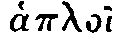
and
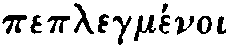
is into simple and complicated.
return to footnote mark
Footnote 2:
Stories of Achilles, Ulysses, and Æneas.
return
Footnote 3:
Poetics
, cap. xi.
return
Footnote 4:
that
return
Footnote 5:
Dediction of the Æneid; where, after speaking of small claimants of the honours of the Epic, he says,
'Spencer has a better for his "Fairy Queen" had his action been finished, or been one; and Milton if the Devil had not been his hero, instead of Adam; if the giant had not foiled the knight, and driven him out of his stronghold, to wander through the world with his lady-errant; and if there had not been more machining persons that human in his poem.'
return
Footnote 6:
or
return
Footnote 7:
Episode
return
Footnote 8:
greater
return
Footnote 9:
Poetics
, cap. xxv. The reason he gives is that when the Poet speaks in his own person 'he is not then the Imitator.' Other Poets than Homer, Aristotle adds,
'ambitious to figure throughout themselves, imitate but little and seldom. Homer, after a few preparatory lines, immediately introduces a man or woman or some other character, for all have their character.'
Of Lucan, as an example of the contrary practice, Hobbes said in his 'Discourse concerning the Virtues of an Heroic Poem,'
'No Heroic Poem raises such admiration of the Poet, as his hath done, though not so great admiration of the persons he introduceth.'
return
Footnote 10:
Letters to Atticus
, Bk. xiii., Ep. 44.
return
Footnote 11:
Poetices
, Lib. iii. cap. 25.
return
Footnote 12:
of
return
Footnote 13:
which
return
Footnote 14:
Rhetoric
, iii. ch. II, where he cites such verbal jokes as, You wish him
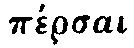
(i.e. to side with Persia—to ruin him), and the saying of Isocrates concerning Athens, that its sovereignty
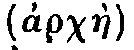
was to the city a beginning
of evils. As this closes Addison's comparison of Milton's practice with Aristotle's doctrine (the following papers being expressions of his personal appreciation of the several books of
Paradise Lost
), we may note here that Milton would have been quite ready to have his work tried by the test Addison has been applying. In his letter to Samuel Hartlib, sketching his ideal of a good Education, he assigns to advanced pupils logic and then
'rhetoric taught out of the rules of Plato, Aristotle, Phalereus, Cicero, Hermogenes, Longinus. To which poetry would be made subsequent, or, indeed, rather precedent, as being less subtile and fine, but more simple, sensuous, and passionate. I mean not here the prosody of a verse, which they could not but have hit on before among the rudiments of grammar; but that sublime art which in Aristotle's Poetics, in Horace, and the Italian commentaries of Castelvetro, Tasso, Mazzoni, and others, teaches what the laws are of a true epic poem, what of a dramatic, what of a lyric, what decorum is, which is the grand masterpiece to observe. This would make them soon perceive what despicable creatures our common rhymers and play-writers be; and show them what religious, what glorious and magnificent use might be made of poetry, both in divine and human things.'
return
Footnote 15:
in
return
Footnote 16:
Saturday's Paper
return
Contents Contents, p.4
No. 298 Monday, February 11, 1712 Steele
Nusquam Tuta fides. Virg. 'I am a Virgin, and in no Case despicable; but yet such as I am I must remain, or else become, 'tis to be feared, less happy: for I find not the least good Effect from the just Correction you some time since gave, that too free, that looser Part of our Sex which spoils the Men; the same Connivance at the Vices, the same easie Admittance of Addresses, the same vitiated Relish of the Conversation of the greatest of Rakes (or in a more fashionable Way of expressing one's self, of such as have seen the World most) still abounds, increases, multiplies. 'The humble Petition therefore of many of the most strictly virtuous, and of my self, is, That you'll once more exert your Authority, and that according to your late Promise, your full, your impartial Authority, on this sillier Branch of our Kind: For why should they be the uncontroulable Mistresses of our Fate? Why should they with Impunity indulge the Males in Licentiousness whilst single, and we have the dismal Hazard and Plague of reforming them when married? Strike home, Sir, then, and spare not, or all our maiden Hopes, our gilded Hopes of nuptial Felicity are frustrated, are vanished, and you your self, as well as Mr. Courtly, will, by smoothing over immodest Practices with the Gloss of soft and harmless Names, for ever forfeit our Esteem. Nor think that I'm herein more severe than need be: If I have not reason more than enough, do you and the World judge from this ensuing Account, which, I think, will prove the Evil to be universal. 'You must know then, that since your Reprehension of this Female Degeneracy came out, I've had a Tender of Respects from no less than five Persons, of tolerable Figure too as Times go: But the Misfortune is, that four of the five are professed Followers of the Mode. They would face me down, that all Women of good Sense ever were, and ever will be, Latitudinarians in Wedlock; and always did, and will, give and take what they profanely term Conjugal Liberty of Conscience. 'The two first of them, a Captain and a Merchant, to strengthen their Argument, pretend to repeat after a Couple, a Brace of Ladies of Quality and Wit, That Venus was always kind to Mars; and what Soul that has the least spark of Generosity, can deny a Man of Bravery any thing? And how pitiful a Trader that, whom no Woman but his own Wife will have Correspondence and Dealings with? Thus these; whilst the third, the Country Squire, confessed, That indeed he was surprized into good Breeding, and entered into the Knowledge of the World unawares. That dining t'other Day at a Gentleman's House, the Person who entertained was obliged to leave him with his Wife and Nieces; where they spoke with so much Contempt of an absent Gentleman for being slow at a Hint, that he had resolved never to be drowsy, unmannerly, or stupid for the future at a Friend's House; and on a hunting Morning, not to pursue the Game either with the Husband abroad, or with the Wife at home. 'The next that came was a Tradesman, no1 less full of the Age than the former; for he had the Gallantry to tell me, that at a late Junket which he was invited to, the Motion being made, and the Question being put, 'twas by Maid, Wife and Widow resolved nemine contradicente, That a young sprightly Journeyman is absolutely necessary in their Way of Business: To which they had the Assent and Concurrence of the Husbands present. I dropped him a Curtsy, and gave him to understand that was his Audience of Leave. 'I am reckoned pretty, and have had very many Advances besides these; but have been very averse to hear any of them, from my Observation on these above-mentioned, 'till I hoped some Good from the Character of my present Admirer, a Clergyman. But I find even amongst them there are indirect Practices in relation to Love, and our Treaty is at present a little in Suspence, 'till some Circumstances are cleared. There is a Charge against him among the Women, and the Case is this: It is alledged, That a certain endowed Female would have appropriated her self to and consolidated her self with a Church, which my Divine now enjoys; (or, which is the same thing, did prostitute her self to her Friend's doing this for her): That my Ecclesiastick, to obtain the one, did engage himself to take off the other that lay on Hand; but that on his Success in the Spiritual, he again renounced the Carnal. I put this closely to him, and taxed him with Disingenuity. He to clear himself made the subsequent Defence, and that in the most solemn Manner possible: That he was applied to and instigated to accept of a Benefice: That a conditional Offer thereof was indeed made him at first, but with Disdain by him rejected: That when nothing (as they easily perceived) of this Nature could bring him to their Purpose, Assurance of his being entirely unengaged before-hand, and safe from all their After-Expectations (the only Stratagem left to draw him in) was given him: That pursuant to this the Donation it self was without Delay, before several reputable Witnesses, tendered to him gratis, with the open Profession of not the least Reserve, or most minute Condition; but that yet immediately after Induction, his insidious Introducer (or her crafty Procurer, which you will) industriously spread the Report, which had reached my Ears, not only in the Neighbourhood of that said Church, but in London, in the University, in mine and his own County, and where-ever else it might probably obviate his Application to any other Woman, and so confine him to this alone: And, in a Word, That as he never did make any previous Offer of his Service, or the least Step to her Affection; so on his Discovery of these Designs thus laid to trick him, he could not but afterwards, in Justice to himself, vindicate both his Innocence and Freedom by keeping his proper Distance. 'This is his Apology, and I think I shall be satisfied with it. But I cannot conclude my tedious Epistle, without recommending to you not only to resume your former Chastisement, but to add to your Criminals the Simoniacal Ladies, who seduce the sacred Order into the Difficulty of either breaking a mercenary Troth made to them whom they ought not to deceive, or by breaking or keeping it offending against him whom they cannot deceive. Your Assistance and Labours of this sort would be of great Benefit, and your speedy Thoughts on this Subject would be very seasonable to, Sir, Your most obedient Servant, Chastity Loveworth.'
T.
Footnote 1:
nor
return to footnote mark
Contents Contents, p.4
No. 299 Tuesday, February 12, 1712 Addison
Malo Venusinam, quam te, Cornelia, Mater Gracchorum, si cum magnis virtutibus affers Grande supercilium, et numeras in dote triumphos. Tolle tuum precor Annibalem victumque Syphacem In castris, et cum totâ Carthagine migra. Juv.
It is observed, that a Man improves more by reading the Story of a Person eminent for Prudence and Virtue, than by the finest Rules and Precepts of Morality. In the same manner a Representation of those Calamities and Misfortunes which a weak Man suffers from wrong Measures, and ill-concerted Schemes of Life, is apt to make a deeper Impression upon our Minds, than the wisest Maxims and Instructions that can be given us, for avoiding the like Follies and Indiscretions on our own private Conduct. It is for this Reason that I lay before my Reader the following Letter, and leave it with him to make his own use of it, without adding any Reflections of my own upon the Subject Matter.
Mr. Spectator, 'Having carefully perused a Letter sent you by Josiah Fribble, Esq., with your subsequent Discourse upon Pin-Money, I do presume to trouble you with an Account of my own Case, which I look upon to be no less deplorable than that of Squire Fribble. I am a Person of no Extraction, having begun the World with a small parcel of Rusty Iron, and was for some Years commonly known by the Name of Jack Anvil1. I have naturally a very happy Genius for getting Money, insomuch that by the Age of Five and twenty I had scraped together Four thousand two hundred Pounds Five Shillings, and a few odd Pence. I then launched out into considerable Business, and became a bold Trader both by Sea and Land, which in a few Years raised me a very great2 Fortune. For these my Good Services I was Knighted in the thirty fifth Year of my Age, and lived with great Dignity among my City-Neighbours by the Name of Sir John Anvil. Being in my Temper very Ambitious, I was now bent upon making a Family, and accordingly resolved that my Descendants should have a Dash of Good Blood in their Veins. In order to this, I made Love to the Lady Mary Oddly, an Indigent young Woman of Quality. To cut short the Marriage Treaty, I threw her a Charte Blanche, as our News Papers call it, desiring her to write upon it her own Terms. She was very concise in her Demands, insisting only that the Disposal of my Fortune, and the Regulation of my Family, should be entirely in her Hands. Her Father and Brothers appeared exceedingly averse to this Match, and would not see me for some time; but at present are so well reconciled, that they Dine with me almost every Day, and have borrowed considerable Sums of me; which my Lady Mary very often twits me with, when she would shew me how kind her Relations are to me. She had no Portion, as I told you before, but what she wanted in Fortune, she makes up in Spirit. She at first changed my Name to Sir John Envil, and at present writes her self Mary Enville. I have had some Children by her, whom she has Christened with the Sirnames of her Family, in order, as she tells me, to wear out the Homeliness of their Parentage by the Father's Side. Our eldest Son is the Honourable Oddly Enville, Esq., and our eldest Daughter Harriot Enville. Upon her first coming into my Family, she turned off a parcel of very careful Servants, who had been long with me, and introduced in their stead a couple of Black-a-moors, and three or four very genteel Fellows in Laced Liveries, besides her French woman, who is perpetually making a Noise in the House in a Language which no body understands, except my Lady Mary. She next set her self to reform every Room of my House, having glazed all my Chimney-pieces with Looking-glass, and planted every Corner with such heaps of China, that I am obliged to move about my own House with the greatest Caution and Circumspection, for fear of hurting some of our Brittle Furniture. She makes an Illumination once a Week with Wax-Candles in one of the largest Rooms, in order, as she phrases it, to see Company. At which time she always desires me to be Abroad, or to confine my self to the Cock-loft, that I may not disgrace her among her Visitants of Quality. Her Footmen, as I told you before, are such Beaus that I do not much care for asking them Questions; when I do, they answer me with a sawcy Frown, and say that every thing, which I find Fault with, was done by my Lady Mary's Order. She tells me that she intends they shall wear Swords with their next Liveries, having lately observed the Footmen of two or three Persons of Quality hanging behind the Coach with Swords by their Sides. As soon as the first Honey-Moon was over, I represented to her the Unreasonableness of those daily Innovations which she made in my Family, but she told me I was no longer to consider my self as Sir John Anvil, but as her Husband; and added, with a Frown, that I did not seem to know who she was. I was surprized to be treated thus, after such Familiarities as had passed between us. But she has since given me to know, that whatever Freedoms she may sometimes indulge me in, she expects in general to be treated with the Respect that is due to her Birth and Quality. Our Children have been trained up from their Infancy with so many Accounts of their Mother's Family, that they know the Stories of all the great Men and Women it has produced. Their Mother tells them, that such an one commanded in such a Sea Engagement, that their Great Grandfather had a Horse shot under him at Edge-hill, that their Uncle was at the Siege of Buda, and that her Mother danced in a Ball at Court with the Duke of Monmouth; with abundance of Fiddle-faddle of the same Nature. I was, the other Day, a little out of Countenance at a Question of my little Daughter Harriot, who asked me, with a great deal of Innocence, why I never told them of the Generals and Admirals that had been in my Family. As for my Eldest Son Oddly, he has been so spirited up by his Mother, that if he does not mend his Manners I shall go near to disinherit him. He drew his Sword upon me before he was nine years old, and told me, that he expected to be used like a Gentleman; upon my offering to correct him for his Insolence, my Lady Mary stept in between us, and told me, that I ought to consider there was some Difference between his Mother and mine. She is perpetually finding out the Features of her own Relations in every one of my Children, tho', by the way, I have a little Chubfaced Boy as like me as he can stare, if I durst say so; but what most angers me, when she sees me playing with any of them upon my Knee, she has begged me more than once to converse with the Children as little as possibly, that they may not learn any of my awkward Tricks. 'You must farther know, since I am opening my Heart to you, that she thinks her self my Superior in Sense, as much as she is in Quality, and therefore treats me like a plain well-meaning Man, who does not know the World. She dictates to me in my own Business, sets me right in Point of Trade, and if I disagree with her about any of my Ships at Sea, wonders that I will dispute with her, when I know very well that her Great Grandfather was a Flag Officer. 'To compleat my Sufferings, she has teazed me for this Quarter of a3 Year last past, to remove into one of the Squares at the other End of the Town, promising for my Encouragement, that I shall have as good a Cock-loft as any Gentleman in the Square; to which the Honourable Oddly Enville, Esq., always adds, like a Jack-a-napes as he is, that he hopes 'twill be as near the Court as possible. 'In short, Mr. Spectator, I am so much out of my natural Element, that to recover my old Way of Life I would be content to begin the World again, and be plain Jack Anvil; but alas! I am in for Life, and am bound to subscribe my self, with great Sorrow of Heart, Your humble Servant, John Enville, Knt.'
L.
Footnote 1:
This has been said to refer to a Sir Ambrose Crowley, who changed his name to Crawley.
return to footnote mark
Footnote 2:
considerable
corrected by an
erratum
in
No. 301
.
return
Footnote 3:
an
return
Contents Contents, p.4
No. 300 Wednesday, February 13, 1712 Steele
Diversum vitio vitium prope majus. Hor. Mr. Spectator, 'When you talk of the Subject of Love, and the Relations arising from it, methinks you should take Care to leave no Fault unobserved which concerns the State of Marriage. The great Vexation that I have observed in it, is, that the wedded Couple seem to want Opportunities of being often enough alone together, and are forced to quarrel and be fond before Company. Mr. Hotspur and his Lady, in a Room full of their Friends, are ever saying something so smart to each other, and that but just within Rules, that the whole Company stand in the utmost Anxiety and Suspence for fear of their falling into Extremities which they could not be present at. On the other Side, Tom Faddle and his pretty Spouse where-ever they come are billing at such a Rate, as they think must do our Hearts good who behold 'em. Cannot you possibly propose a Mean between being Wasps and Doves in Publick? I should think if you advised to hate or love sincerely it would be better: For if they would be so discreet as to hate from the very Bottom of their Hearts, their Aversion would be too strong for little Gibes every Moment; and if they loved with that calm and noble Value which dwells in the Heart, with a Warmth like that of Life-Blood, they would not be so impatient of their Passion as to fall into observable Fondness. This Method, in each Case, would save Appearances; but as those who offend on the fond Side are by much the fewer, I would have you begin with them, and go on to take Notice of a most impertinent Licence married Women take, not only to be very loving to their Spouses in Publick, but also make nauseous Allusions to private Familiarities, and the like. Lucina is a Lady of the greatest Discretion, you must know, in the World; and withal very much a Physician: Upon the Strength of these two Qualities there is nothing she will not speak of before us Virgins; and she every Day talks with a very grave Air in such a Manner, as is very improper so much as to be hinted at but to obviate the greatest Extremity. Those whom they call good Bodies, notable People, hearty Neighbours, and the purest goodest Company in the World, are the great Offenders in this Kind. Here I think I have laid before you an open Field for Pleasantry; and hope you will shew these People that at least they are not witty: In which you will save from many a Blush a daily Sufferer, who is very much Your most humble Servant, Susanna Loveworth.' Mr. Spectator, 'In yours of Wednesday the 30th past, you and your Correspondent are very severe on a sort of Men, whom you call Male Coquets; but without any other Reason, in my Apprehension, than that of paying a shallow Compliment to the fair Sex, by accusing some Men of imaginary Faults, that the Women may not seem to be the more faulty Sex; though at the same time you suppose there are some so weak as to be imposed upon by fine Things and false Addresses. I can't persuade my self that your Design is to debar the Sexes the Benefit of each other's Conversation within the Rules of Honour; nor will you, I dare say, recommend to 'em, or encourage the common Tea-Table Talk, much less that of Politicks and Matters of State: And if these are forbidden Subjects of Discourse, then, as long as there are any Women in the World who take a Pleasure in hearing themselves praised, and can bear the Sight of a Man prostrate at their Feet, so long I shall make no Wonder that there are those of the other Sex who will pay them those impertinent Humiliations. We should have few People such Fools as to practise Flattery, if all were so wise as to despise it. I don't deny but you would do a meritorious Act, if you could prevent all Impositions on the Simplicity of young Women; but I must confess I don't apprehend you have laid the Fault on the proper Person, and if I trouble you with my Thoughts upon it I promise my self your Pardon. Such of the Sex as are raw and innocent, and most exposed to these Attacks, have, or their Parents are much to blame if they have not, one to advise and guard 'em, and are obliged themselves to take Care of 'em: but if these, who ought to hinder Men from all Opportunities of this sort of Conversation, instead of that encourage and promote it, the Suspicion is very just that there are some private Reasons for it; and I'll leave it to you to determine on which Side a Part is then acted. Some Women there are who are arrived at Years of Discretion, I mean are got out of the Hands of their Parents and Governours, and are set up for themselves, who yet are liable to these Attempts; but if these are prevailed upon, you must excuse me if I lay the Fault upon them, that their Wisdom is not grown with their Years. My Client, Mr. Strephon, whom you summoned to declare himself, gives you Thanks however for your Warning, and begs the Favour only to inlarge his Time for a Week, or to the last Day of the Term, and then he'll appear gratis, and pray no Day over. Yours, Philanthropes.' Mr. Spectator, 'I was last Night to visit a Lady who I much esteem, and always took for my Friend; but met with so very different a Reception from what I expected, that I cannot help applying my self to you on this Occasion. In the room of that Civility and Familiarity I used to be treated with by her, an affected Strangeness in her Looks, and Coldness in her Behaviour, plainly told me I was not the welcome Guest which the Regard and Tenderness she has often expressed for me gave me Reason to flatter my self to think I was. Sir, this is certainly a great Fault, and I assure you a very common one; therefore I hope you will think it a fit Subject for some Part of a Spectator. Be pleased to acquaint us how we must behave our selves towards this valetudinary Friendship, subject to so many Heats and Colds, and you will oblige, Sir, Your humble Servant, Miranda.' Sir, 'I cannot forbear acknowledging the Delight your late Spectators on Saturdays have given me; for it is writ in the honest Spirit of Criticism, and called to my Mind the following four Lines I had read long since in a Prologue to a Play called Julius Cæsar1 which has deserved a better Fate. The Verses are addressed to the little Criticks. Shew your small Talent, and let that suffice ye; But grow not vain upon it, I advise ye. For every Fop can find out Faults in Plays: You'll ne'er arrive at Knowing when to praise. Yours, D. G.'
T.
Footnote 1:
By William Alexander, Earl of Stirling (who died in 1640); one of his four 'Monarchicke Tragedies.' He received a grant of Nova Scotia to colonize, and was secretary of state for Scotland.
return to footnote mark
Contents Contents, p.4
No. 301 Thursday, February 14, 1712 Budgell
Possint ut Juvenes visere fervidi Multo non sine risu, Dilapsam in cineres facem. Hor.
We are generally so much pleased with any little Accomplishments, either of Body or Mind, which have once made us remarkable in the World, that we endeavour to perswade our selves it is not in the Power of Time to rob us of them. We are eternally pursuing the same Methods which first procured us the Applauses of Mankind. It is from this Notion that an Author writes on, tho' he is come to Dotage; without ever considering that his Memory is impaired, and that he has lost that Life, and those Spirits, which formerly raised his Fancy, and fired his Imagination. The same Folly hinders a Man from submitting his Behaviour to his Age, and makes Clodius, who was a celebrated Dancer at five and twenty, still love to hobble in a Minuet, tho' he is past Threescore. It is this, in a Word, which fills the Town with elderly Fops, and superannuated Coquets.
Canidia, a Lady of this latter Species, passed by me Yesterday in her Coach. Canidia was an haughty Beauty of the last Age, and was followed by Crowds of Adorers, whose Passions only pleased her, as they gave her Opportunities of playing the Tyrant. She then contracted that awful Cast of the Eye and forbidding Frown, which she has not yet laid aside, and has still all the Insolence of Beauty without its Charms. If she now attracts the Eyes of any Beholders, it is only by being remarkably ridiculous; even her own Sex laugh at her Affectation; and the Men, who always enjoy an ill-natured Pleasure in seeing an imperious Beauty humbled and neglected, regard her with the same Satisfaction that a free Nation sees a Tyrant in Disgrace.
Will. Honeycomb
, who is a great Admirer of the Gallantries in King Charles the Second's Reign, lately communicated to me a Letter written by a Wit of that Age to his Mistress, who it seems was a Lady of Canidia's Humour; and tho' I do not always approve of my Friend
Will's
Taste, I liked this Letter so well, that I took a Copy of it, with which I shall here present my Reader.
To Cloe. Madam, 'Since my waking Thoughts have never been able to influence you in my Favour, I am resolved to try whether my Dreams can make any Impression on you. To this end I shall give you an Account of a very odd one which my Fancy presented to me last Night, within a few Hours after I left you. 'Methought I was unaccountably conveyed into the most delicious Place mine Eyes ever beheld, it was a large Valley divided by a River of the purest Water I had ever seen. The Ground on each Side of it rose by an easie Ascent, and was covered with Flowers of an infinite Variety, which as they were reflected in the Water doubled the Beauties of the Place, or rather formed an Imaginary Scene more beautiful than the real. On each Side of the River was a Range of lofty Trees, whose Boughs were loaden with almost as many Birds as Leaves. Every Tree was full of Harmony. 'I had not gone far in this pleasant Valley, when I perceived that it was terminated by a most magnificent Temple. The Structure was ancient, and regular. On the Top of it was figured the God Saturn, in the same Shape and Dress that the Poets usually represent Time. 'As I was advancing to satisfie my Curiosity by a nearer View, I was stopped by an Object far more beautiful than any I had before discovered in the whole Place. I fancy, Madam, you will easily guess that this could hardly be any thing but your self; in reality it was so; you lay extended on the Flowers by the side of the River, so that your Hands which were thrown in a negligent Posture, almost touched the Water. Your Eyes were closed; but if your Sleep deprived me of the Satisfaction of seeing them, it left me at leisure to contemplate several other Charms, which disappear when your Eyes are open. I could not but admire the Tranquility you slept in, especially when I considered the Uneasiness you produce in so many others. 'While I was wholly taken up in these Reflections, the Doors of the Temple flew open, with a very great Noise; and lifting up my Eyes, I saw two Figures, in human Shape, coming into the Valley. Upon a nearer Survey, I found them to be Youth and Love. The first was encircled with a kind of Purple Light, that spread a Glory over all the Place; the other held a flaming Torch in his Hand. I could observe, that all the way as they came towards us, the Colours of the Flowers appeared more lively, the Trees shot out in Blossoms, the Birds threw themselves into Pairs, and Serenaded them as they passed: The whole Face of Nature glowed with new Beauties. They were no sooner arrived at the Place where you lay, when they seated themselves on each Side of you. On their Approach, methought I saw a new Bloom arise in your Face, and new Charms diffuse themselves over your whole Person. You appeared more than Mortal; but, to my great Surprise, continued fast asleep, tho' the two Deities made several gentle Efforts to awaken you. 'After a short Time, Youth (displaying a Pair of Wings, which I had not before taken notice of) flew off. Love still remained, and holding the Torch which he had in his Hand before your Face, you still appeared as beautiful as ever. The glaring of the Light in your Eyes at length awakened you; when, to my great Surprise, instead of acknowledging the Favour of the Deity, you frowned upon him, and struck the Torch out of his Hand into the River. The God after having regarded you with a Look that spoke at once1 his Pity and Displeasure, flew away. Immediately a kind of Gloom overspread the whole Place. At the same time I saw an hideous Spectre enter at one end of the Valley. His Eyes were sunk into his Head, his Face was pale and withered, and his Skin puckered up in Wrinkles. As he walked on the sides of the Bank the River froze, the Flowers faded, the Trees shed their Blossoms, the Birds dropped from off the Boughs, and fell dead at his Feet. By these Marks I knew him to be Old-age. You were seized with the utmost Horror and Amazement at his Approach. You endeavoured to have fled, but the Phantome caught you in his Arms. You may easily guess at the Change you suffered in this Embrace. For my own Part, though I am still too full of the frightful2 Idea, I will not shock you with a Description of it. I was so startled at the Sight that my Sleep immediately left me, and I found my self awake, at leisure to consider of a Dream which seems too extraordinary to be without a Meaning. I am, Madam, with the greatest Passion, Your most Obedient, most Humble Servant, &c.'
X.
Footnote 1:
the same time
return
Footnote 2:
dreadful
return
Contents Contents, p.4
No. 302 Friday, February 15, 1712 Steele
Lachrymæque decoræ, Gratior et pulchro veniens in corpore Virtus. Vir. Æn. 5.
I read what I give for the Entertainment of this Day with a great deal of Pleasure, and publish it just as it came to my Hands. I shall be very glad to find there are many guessed at for Emilia.
Mr. Spectator1, If this Paper has the good Fortune to be honoured with a Place in your Writings, I shall be the more pleased, because the Character of Emilia is not an imaginary but a real one. I have industriously obscured the whole by the Addition of one or two Circumstances of no Consequence, that the Person it is drawn from might still be concealed; and that the Writer of it might not be in the least suspected, and for other2 Reasons, I chuse not to give it the Form of a Letter: But if, besides the Faults of the Composition, there be any thing in it more proper for a Correspondent than the Spectator himself to write, I submit it to your better Judgment, to receive any other Model you think fit. I am, Sir, Your very humble Servant.' There is nothing which gives one so pleasing a Prospect of human Nature, as the Contemplation of Wisdom and Beauty: The latter is the peculiar Portion of that Sex which is therefore called Fair; but the happy Concurrence of both these Excellencies in the same Person, is a Character too celestial to be frequently met with. Beauty is an over-weaning self-sufficient thing, careless of providing it self any more substantial Ornaments; nay so little does it consult its own Interests, that it too often defeats it self by betraying that Innocence which renders it lovely and desirable. As therefore Virtue makes a beautiful Woman appear more beautiful, so Beauty makes a virtuous Woman really more virtuous. Whilst I am considering these two Perfections gloriously united in one Person, I cannot help representing to my Mind the Image of Emilia. Who ever beheld the charming Emilia, without feeling in his Breast at once the Glow of Love and the Tenderness of virtuous Friendship? The unstudied Graces of her Behaviour, and the pleasing Accents of her Tongue, insensibly draw you on to wish for a nearer Enjoyment of them; but even her Smiles carry in them a silent Reproof to the Impulses of licentious Love. Thus, tho' the Attractives of her Beauty play almost irresistibly upon you and create Desire, you immediately stand corrected not by the Severity but the Decency of her Virtue. That Sweetness and Good-humour which is so visible in her Face, naturally diffuses it self into every Word and Action: A Man must be a Savage, who at the Sight of Emilia, is not more inclined to do her Good than gratifie himself. Her Person, as it is thus studiously embellished by Nature, thus adorned with unpremeditated Graces, is a fit Lodging for a Mind so fair and lovely; there dwell rational Piety, modest Hope, and chearful Resignation. Many of the prevailing Passions of Mankind do undeservedly pass under the Name of Religion; which is thus made to express itself in Action, according to the Nature of the Constitution in which it resides: So that were we to make a Judgment from Appearances, one would imagine Religion in some is little better than Sullenness and Reserve, in many Fear, in others the Despondings of a melancholly Complexion, in others the Formality of insignificant unaffecting Observances, in others Severity, in others Ostentation. In Emilia it is a Principle founded in Reason and enlivened with Hope; it does not break forth into irregular Fits and Sallies of Devotion, but is an uniform and consistent Tenour of Action; It is strict without Severity, compassionate without Weakness; it is the Perfection of that good Humour which proceeds from the Understanding, not the Effect of an easy Constitution. By a generous Sympathy in Nature, we feel our selves disposed to mourn when any of our Fellow-Creatures are afflicted; but injured Innocence and Beauty in Distresses an Object that carries in it something inexpressibly moving: It softens the most manly Heart with the tenderest Sensations of Love and Compassion, till at length it confesses its Humanity, and flows out into Tears. Were I to relate that part of Emilia's Life which has given her an Opportunity of exerting the Heroism of Christianity, it would make too sad, too tender a Story: But when I consider her alone in the midst of her Distresses, looking beyond this gloomy Vale of Affliction and Sorrow into the Joys of Heaven and Immortality, and when I see her in Conversation thoughtless and easie as if she were the most happy Creature in the World, I am transported with Admiration. Surely never did such a Philosophic Soul inhabit such a beauteous Form! For Beauty is often made a Privilege against Thought and Reflection; it laughs at Wisdom, and will not abide the Gravity of its Instructions. Were I able to represent Emilia's Virtues in their proper Colours and their due Proportions, Love or Flattery might perhaps be thought to have drawn the Picture larger than Life; but as this is but an imperfect Draught of so excellent a Character, and as I cannot, will not hope to have any Interest in her Person, all that I can say of her is but impartial Praise extorted from me by the prevailing Brightness of her Virtues. So rare a Pattern of Female Excellence ought not to be concealed, but should be set out to the View and Imitation of the World; for how amiable does Virtue appear thus as it were made visible to us in so fair an Example! Honoria's Disposition is of a very different Turn: Her Thoughts are wholly bent upon Conquest and arbitrary Power. That she has some Wit and Beauty no Body denies, and therefore has the Esteem of all her Acquaintance as a Woman of an agreeable Person and Conversation; but (whatever her Husband may think of it) that is not sufficient for Honoria: She waves that Title to Respect as a mean Acquisition, and demands Veneration in the Right of an Idol; for this Reason her natural Desire of Life is continually checked with an inconsistent Fear of Wrinkles and old Age. Emilia cannot be supposed ignorant of her personal Charms, tho' she seems to be so; but she will not hold her Happiness upon so precarious a Tenure, whilst her Mind is adorned with Beauties of a more exalted and lasting Nature. When in the full Bloom of Youth and Beauty we saw her surrounded with a Crowd of Adorers, she took no Pleasure in Slaughter and Destruction, gave no false deluding Hopes which might encrease the Torments of her disappointed Lovers; but having for some Time given to the Decency of a Virgin Coyness, and examined the Merit of their several Pretensions, she at length gratified her own, by resigning herself to the ardent Passion of Bromius. Bromius was then Master of many good Qualities and a moderate Fortune, which was soon after unexpectedly encreased to a plentiful Estate. This for a good while proved his Misfortune, as it furnished his unexperienced Age with the Opportunities of Evil Company and a sensual Life. He might have longer wandered in the Labyrinths of Vice and Folly, had not Emilia's prudent Conduct won him over to the Government of his Reason. Her Ingenuity has been constantly employed in humanizing his Passions and refining his Pleasures. She shewed him by her own Example, that Virtue is consistent with decent Freedoms and good Humour, or rather, that it cannot subsist without 'em. Her good Sense readily instructed her, that a silent Example and an easie unrepining Behaviour, will always be more perswasive than the Severity of Lectures and Admonitions; and that there is so much Pride interwoven into the Make of human Nature, that an obstinate Man must only take the Hint from another, and then be left to advise and correct himself. Thus by an artful Train of Management and unseen Perswasions, having at first brought him not to dislike, and at length to be pleased with that which otherwise he would not have bore to hear of, she then knew how to press and secure this Advantage, by approving it as his Thoughts, and seconding it as his Proposal. By this Means she has gained an Interest in some of his leading Passions, and made them accessary to his Reformation. There is another Particular of Emilia's Conduct which I can't forbear mentioning: To some perhaps it may at first Sight appear but a trifling inconsiderable Circumstance but for my Part, I think it highly worthy of Observation, and to be recommended to the Consideration of the fair Sex. I have often thought wrapping Gowns and dirty Linnen, with all that huddled Œconomy of Dress which passes under the general Name of a Mob, the Bane of conjugal Love, and one of the readiest Means imaginable to alienate the Affection of an Husband, especially a fond one. I have heard some Ladies, who have been surprized by Company in such a Deshabille, apologize for it after this Manner; Truly I am ashamed to be caught in this Pickle; but my Husband and I were sitting all alone by our selves, and I did not expect to see such good Company —This by the way is a fine Compliment to the good Man, which 'tis ten to one but he returns in dogged Answers and a churlish Behaviour, without knowing what it is that puts him out of Humour. Emilia's Observation teaches her, that as little Inadvertencies and Neglects cast a Blemish upon a great Character; so the Neglect of Apparel, even among the most intimate Friends, does insensibly lessen their Regards to each other, by creating a Familiarity too low and contemptible. She understands the Importance of those Things which the Generality account Trifles; and considers every thing as a Matter of Consequence, that has the least Tendency towards keeping up or abating the Affection of her Husband; him she esteems as a fit Object to employ her Ingenuity in pleasing, because he is to be pleased for Life. By the Help of these, and a thousand other nameless Arts, which 'tis easier for her to practise than for another to express, by the Obstinacy of her Goodness and unprovoked Submission, in spight of all her Afflictions and ill Usage, Bromius is become a Man of Sense and a kind Husband, and Emilia a happy Wife. Ye guardian Angels to whose Care Heaven has entrusted its dear Emilia, guide her still forward in the Paths of Virtue, defend her from the Insolence and Wrongs of this undiscerning World; at length when we must no more converse with such Purity on Earth, lead her gently hence innocent and unreprovable to a better Place, where by an easie Transition from what she now is, she may shine forth an Angel of Light.